Below is a reconstruction of the 2024 48 CQ QRS RagChew newsletter designed to support full text searching. This reconstruction was built using OCR, and will contain errors.
To view the Mailchimp original, click here. To search the entire newsletter archive, click here.
Contents
- CQ QRS RagChew
- Last Tuesday’s Group
- New Team Members
- Masthead Image
- Reports
- Submissions close lunch time on Thursday.
- Reports & Comments
- Comments:
- This Week’s topic of interest
- Noise Cancelling Speaker
- Aanan VAzVWWr has an impressive Mostly- home-brewed set-up for 160m DX at Talong, including an acoustic filtered speaker for CW. Here’s a video about his set-up – the speaker is discussed at around the 30 minute mark: https://www.youtube.com/watch?v=INSq684XR_8
- Other News
- Military Wireless Museum
- The (tr)uSDX QRP Transceiver
- Across Clues
- Morse Training Net
- Brain Teaser
- Foundation-Level Questions:
- Answers from last week’s Foundation level only Quiz:
- Di-dah-di-dah-dit
- Next Tuesday’s Net
- Post Morsum
- Teamwork
- The Joy of Daylight Saving
- About the CQ QRS Group
- Frequencies and Times
- QRL?
- Speed? Rhythm?
- Matching
- PSE QRS
- Landing Zone
- CW Tips
CQ QRS RagChew
Poor propagation conditions, static crashes from thunderstorms and generally tough conditions kept our numbers down significantly last Tuesday… but those of us who battled through had a great time!
And I’m pleased to announce that despite the conditions, we had another first-time CW QSO on the net – this time Gerry VK3ZXC at Pakenham sweated out the QSB and QRM, and was successful in his very first CQ QSO – congratulations Gerry.
And thank you to the CQQRS team members who keep the net alive every week, to give people like Gerry an opportunity to have a go at first, then to practice QSOs as their training continues.
This week’s interest articles revolve around noise and external filtering – appropriate as we head into thunderstorm season of course, but these days, it’s pretty rare for any amateur operator to set up a station and not be impacted by switch mode power supply hash, especially on the lower HF bands.
I discussed phasing-type noise cancellers in RagChew edition 41/2024, but in this edition we look at external options for older receivers without CW IF filters, as well as external nose filtering.
Now that our 40m net is so busy, those of us with old receivers without CW filters need alll the help we can get – perhaps an external filter might be the answer? Thanks to Ross, John and Adrian for their efforts.
I’d also like to thank our European / UK team of Mike DL3YZ at Stuttgart, Ross MONNK from near Exeter, Simon MOKBJ at Wolverhampton and Nigel G4RWI from ‘everywhere for braving the deteriorating early morning conditions to have a go on our net using the higher frequencies.
Tough this week, but hopefully better things to come. And have a read of Mike DL8YZ’s problems getting to the radio club hut for the net; wow! The DXperiment has highlighted the usefulness of our WhatsApp Alerts group, originally established by Stuart VK6MK.
Nigel G4RWI and Simon MOKBJ are using it at the UK end, and another 61 stations are able to send alerts about who’s calling on what frequency – both during the net and at other times.
Some may think that it’s not quite kosher for CW, but considering the efforts that the European team is going to to get up early, set up in the middle of blizzards, get bogged, slide off muddy roads, beat incoming tides, avoid radial-tripping walkers, deal with a failing batteries or inadequate solar power, fight off rodents and mozzies, operate QRP despite the dollops of QRM from Europe, etc, I think the least we can do is make sure there’s people listening at the right time and frequency at this end.
If you’d like to join the team on WhatsApp and give it a try, please send me your mobile phone number to cagrsnet@gmail.com ; WhatsApp is an encrypted system that is based on mobile phone numbers.
Once set up on your phone, it can be accessed by computer application.
Last Tuesday’s Group
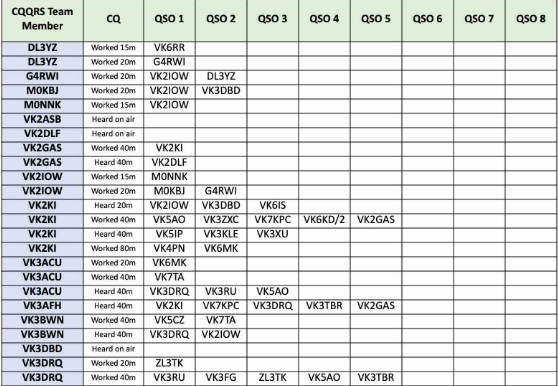
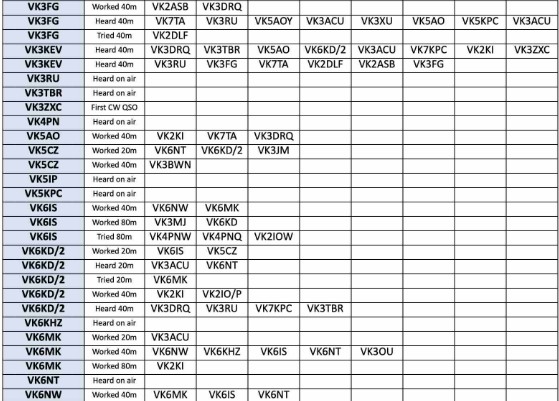
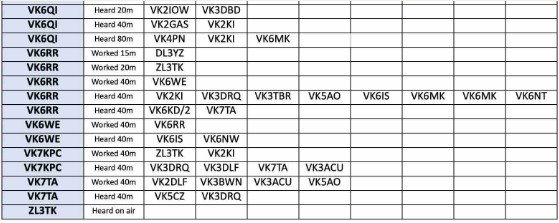
Here’s this week’s list of the 44 stations heard:
New Team Members
And welcome this week to Dean VK6DSL from The Vines; Dean has been keen to get into CW for some time, but has at last put up an antenna and join the net. Interesting to note his other interest…..
5.7GHz EME, where he’s achieved SSB QSOs into the UK, Europe and the USA via the moon!
Masthead Image
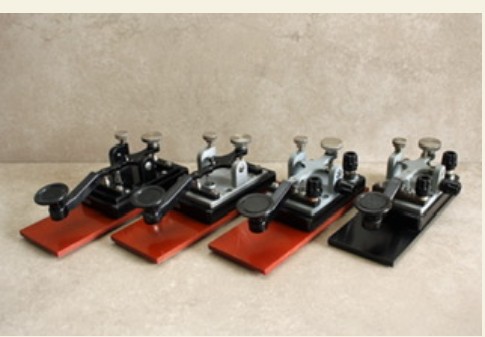
And thanks this week to Kees VK1KVS for this nice formation of Junker training keys from his collection.
Reports
After next Tuesday’s Group, please send me a list of who you worked and / or who you heard using our web form here: bit.ly/WCQQRSNET
Submissions close lunch time on Thursday. If you hear or work one of our team on a different band on Tuesday, please just use the 80m report area and annotate which bit applies to which band.
And when you enter the list of callsigns worked, heard or missed, please append an ‘@band’ to each callsign without a space (eg VK2KI@20 VK6QI@15 etc).
The head of our software department, Nigel G4RWI has continued to work furiously to produce a simple way of reporting on contacts with our team outside of 40 and 80m; I have a Beta version sitting on my pile of projects waiting to be tested.
Please help attract new and old team members to have a go by submitting your report each week.
Submissions close lunch time on Thursday.
Reports & Comments
The spreadsheets above show the known stations on last Tuesday’s Group. Comments distilled from the reports I’ve received follow:
Comments:
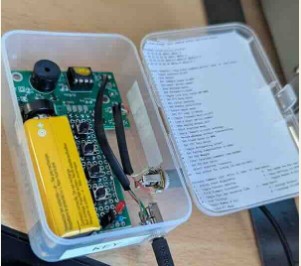
[20m] * The 20m band has opened for DX later in my morning each week. I called for 40 minutes without success with the help of my K1EL memory keyer module, which at least saved me some effort.
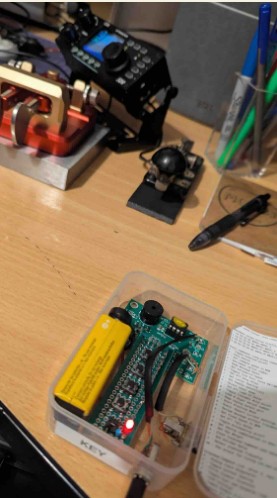
Anice QSO with Patrick VK2IOW, who told me he has no aircon in his shack so was feeling the 28C. I had not much sympathy, as it’s only 3C here in central England. We’re 150KM from the coast, so it gets cold at night under clear skies.
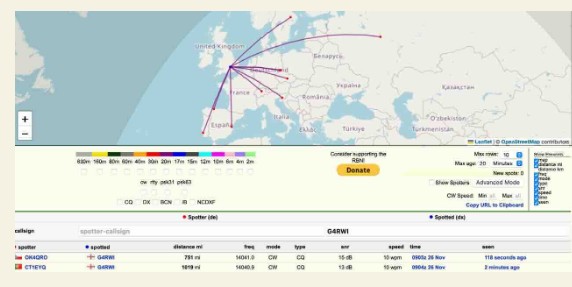
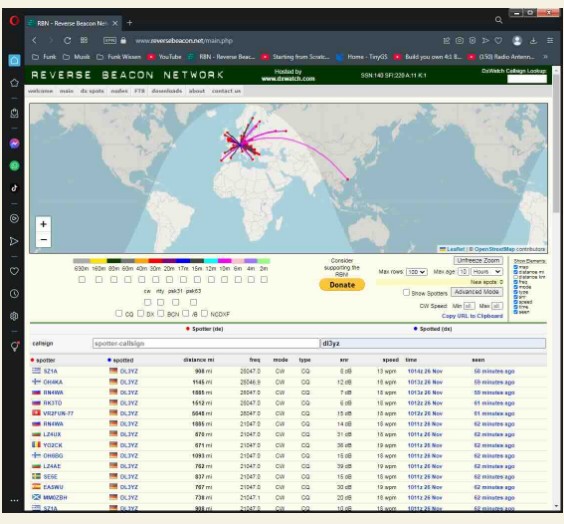
• There was a big dollop of QRM on the 20m band just up from my operating frequency and it started to slide down to me. I plied on and decided to look at the CW Club RBN Spotter page. It showed me that David VK3DBD was working just 1KHZ down the band from me.
I listened to him finish then we managed a QSO. I had to use a nearby web-SDR to receive.
[20m] * Conditions not as good as last week but Patrick was a solid signal again. It seemed as the whole of Europe also woke up, as I was constantly being called by Italians and French stations, plus a German whose idea of QRS was to drop from 30 wpm to 29 wpm 🙂 Managed a quick and first qso anth AAivoa TMI QV7 in Rarmoany at miirh marron arroanianhia enact
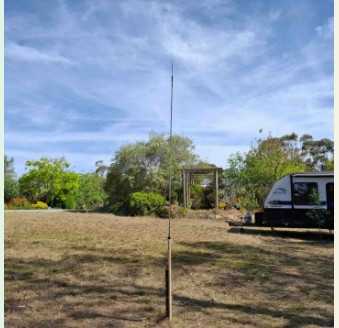
20m] 20m was ok for VK QSOs. 40m] Much QRN from thunder storms. 80m] Did not try 80m QRN bad also. ‘— Left: My Hustler portable VKFF antenna.
[20m] + Stuart was booming in on 20m and we had a great QSO.
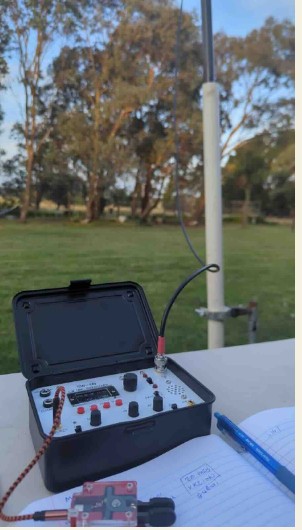
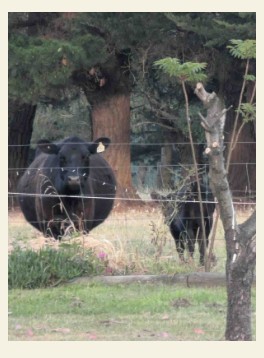
From David VK6KD/2 at Dunbogan NSW (Portable)
[40m] * Lots of QRN which sounded like lightning. None in my area this time. Lots of stations active on the 40m band.
[80m] * Gremlins are preventing my squid pole antenna to tune to 80m without shutting the radio down. I would have thought my auto tuner would match the antenna correctly however high voltage may be present on my tx line which could be causing my rig to self protect.
Bit like having a poor swr. Investigation underway. 73.
[80m] + I thought I was going to be out for a duck again but Pat VK2IOW came to the rescue. He gave me an RST 229 and I gave him an RST 339 so you can see it wasn’t an easy QSO. But any QSO UK_VK is a good ‘un and I was delighted to get it in my log..
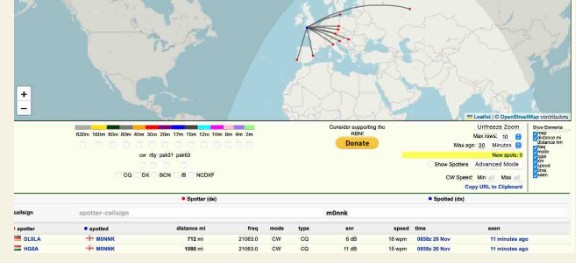
From Mike DL3YZ at Stuttgart «It was an eventful day here in the meadows. * On my quest to adapt to the changes in propagation during the winter season, I had devoted some air time in the morning for 10 /15 and 20 m.
During the normal time of the long path DX window. And some slots in the EU afternoon, where the propagation tools think. + In the morning, I underestimated the humidity of the swamp, and got stuck on the way to the site.
Using some dirt(y) tricks I came free and just made it to the 3rd shift on 20 m. + I checked my signal on the Ironstone SDR, and couldnt read anything on 10 an 15 m. My 20 m signal was audible, but very faint.
* So I was really happy as I heard Nigel G4RWI calling me and we had a nice ranchew
• I went home for lunch using the alternative route to the site, It was not travelled for some time and I had to use my machete to get trough the blackberries. On my shift in the avro I used the alternative route, which I considered being better.
Was wrong, and got stuck again. So I abandoned the car and made it to the site, only some minutes too late for the short path shift on 10 m. + Again, checking the SDR in ironstone, no signal on 10 m. But 15 m it was quite clear.
So I called CQ, and was really happy as I heard Roy VK6RR. We had a nice QSO, but he got some QSB during the chat. But I was happy to have my first @SO in the log using short path. + As it gets dark very fast these days, I just left the car where it got stuck.
And I was happy that Pit (the owner of the meadow) and his wife gave me a lift home. + So DX is sometimes a real adventure 🙂 Have a great day and thanks for reading Mike. DL3YZ. [Great story Mike – wow, what an adventure!
Here we are on this side of the world relaxing in what for some are air-conditioned radio shacks, where the drama of the evening might be having to go the the fridge to get another beer, and possibly miss a calll]
[40m] + Good conditions here in Bridgetown. From lan VK7TA at Latrobe
[40m] + Plenty of noise but no stations early on, but stations appeared later in the evening.
[20m] + None of the EU/UK Stations were heard on the announced frequencies. But I did have 2 QSOs with EA and IS on 20m.
[40m] + On 40m it was a shocking night. Too much QRN and QRM. In order to receive traffic from OM Stan, we had to QSY to 20m.
[15m] * Great to work Michael on 15m. He was RSN 552 then QSB then back 552. I listened but didn’t hear any other of the EU gang on their sked.
[40m] * Bit of a challenge tonight, visitors and other interruptions! Good to hear
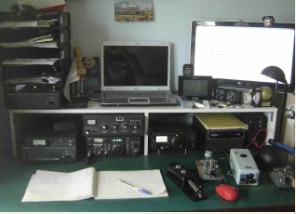
[40m] + Heard lots of stations, but due to thunderstorm activity, didn’t raise antenna.
[40m] + it’s very quiet at first, then then activity starts, with the number of stations slowly increasing until the northern noise overtakes everyone else..
[80m] + Getting the CW net spread all over the spectrum, now means having to hit even more buttons on the Yaesu, to move as quick as Mark KI seems to be able to achieve & still haven’t managed to connect with the EU teams, as yet.
[40m] + Thanks Mark VK2KI for the fine QSO but the lightning crashes were very annoying. Maitland VK5AO.
[40m] + Wiped out here in VKSLA at Chez Winkie due to horrible constant S9+++ static crashes from nearby lightning on both 40 and 80m. Real “Turn off the rig, unplug the antenna and go and do something else” stuff here unfortunately. See you next week!
[40m] + I missed out on the fun last week but made sure to at least tune in this week while getting work done. I was probably trying to do too many things at once, but I love that I get to work with code, and listen to code.
+ It was late by the time I shut down all my extra machines so no sending from me again – not yet confident enough to pause and have a quick QSO, need to be more focused and work myself up to it stil.
I feel a bit guilty for being a passive participant instead of active for a while now, but I will get more free time again soon, and until then I will keep at it and continue to try to emulate the excellent role models in this group!
Thanks for all the tales as usual, 73. [Thanks for your report Mathew – I really appreciate comments from those who can’t transmit for what ever reason. Really really hard to try to concentrate on work while listening to the Code! Won’t happen over night….
But it will happen! Catch you when your other work settles down mate.]
From your editor Mark VK2KI at Beautiful South Bowning NSW
[15m] + When I saw on the Reverse Beacon Network that Ross MONNK/p near Exeter (ever notice how the Brits seem to have copied a lot of Aussie place names?!) was calling CQ on 15m, I listened for him on the VK1CM KiwiSDR in Canberra – no luck this week.
[20m] + Ilistened out for Simon MOKBU, Nigel (G4RWI/P – our temporary / honorary Aussie traveller who was such a popular team member when he was travelling around Australia in his mobile home last Summer), Ross MONNK and Mike DL3YZ.
I heard Patrick VK2IOW up at Milthorpe working Simon, and Peter VK6IS at Wundowie and Patrick attempting to work Nigel. I couldn’t hear any of the DX this time.
[40m] + Nice to hook up with Maity VKSAO at Banksia Park… then another feather in the CQQRS team’s hat… I enjoyed working Gerry VK3ZXC at Pakenham – his very first CW QSO.
Congratulations Gerry – your keying sounded great, and I’m pleased that we made the grade despite tough conditions – both QSB and QRM.
Keep an ear out for Gerry who has been learning the Code and is comfortable with receiving around 5WPM Farnsworth (he prefers characters at a reasonable speed with long gaps between, and really struggles with slow drawn-niit charactere with narmal qaanc)
• Ihad a nice chat to Peter VK7KPC who I hadn’t heard for yonks, then what’s become just about a weekly treat… I caught up with David VK6KD/2 who had made it past Port Stevens in his clock- wise circumnavigation to a beach- side spot at Dunbogan.
+ I rounded out 40m with a chat with Armin VK2GAS at Norwest before my eyelids told me it was time for 80m.
[80m] + The 80m band was pretty quiet despite the static crashes, so it was nice to hook up with Sava VK4PN at Mount Ommaney near Brisbane, then Stuart VKeMK at Australind; I hadn’t chatted to Stuart ina long time, so it was nice to catch up again.
<~ The cause of the complaints about the static crashes on Tuesday.
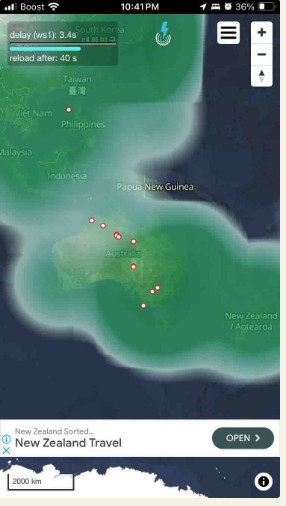
From also from your editor Mark VK6QI via the VK6QS KiwiSDR near Brookton and the Southern Electronics Group KiwiSDR newly re-located to near Northam.
[10m] + When I saw on the Reverse Beacon Network that Mike DL3YZ was calling CQ on 10m I listened on both the newly re-located Southern Electronics Group KiwiSDR at Northam and the VK6QS KiwiSDR near Brookton. No sign of Mike this week.
[16m] + I saw Ross MONNK/p calling CQ on 15m (he was being spotted on the Reverse Beacon Network around Europe), and I listened for him on the two KiwiSDRs – nothing heard in WA.
[20m] + Patrick VK2IOW and David VK3DBD at Yakandandah were coming through to both KiwiSDRs and it was interesting to do a side-by side comparison of the signals; the huge horizontal loop antenna at the Brookton SDR had marginally better signals than the 7m long wire on the Northam receiver; no sign of any of our Northern Hemispheric team members on either receiver this week though.
40m was quite late opening up across Australia this week; the Space Weather Service’s prediction of lowered Maximum Usable Frequencies may have contributed, but considering that it’s usually the lowering Absorption Limiting Frequency (weakening of the D- layer) that drives propagation across Australia at that time of day, I’m guessing that there was a general reduction in ionisation strength.
Interesting to ponder anyway. It wasn’t until I worked Armin VK2GAS at around 11007 that signals came through from
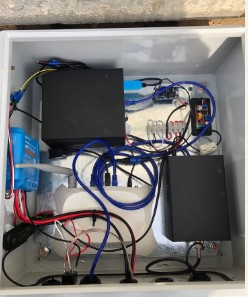
• Interestingly the signal strength on the two KiwiSDRs was marginal, despite the significant differences in antennas; sometimes one was better than the other, but it wasn’t consistent.
The variable dynamics of the KiwiSDR waterfall display made comparison of the affect of the line of thunderstorms through central Australia less straight forward.
[80m] + As expected, the difference between the two KiwiSDRs’ antennas with low-angle skywave propagation was much more noticeable on 80m.
Sava VK4PN near Brisbane was around S4 on the Northam SDR’s 7m long-wire antenna, but $8 on the Brookton receiver’s horizontal loop. I didn’t bother comparing the near vertical incidence skywave signals from Stuart VK6MK because of the different path lengths.
From Patrick Staples VK2IOW between Bathurst and Orange
[20m] + Had nice QSOs with Simon, MOKBJ and Nigel, G4RWI on 20 metres. Signals seemed a bit down compared to usual, I used my amplifier on 20 metres for the first time to give a bit of a boost to my signal, though of course that doesn’t help me to hear them, hi.
Also had a QSO with Ross, MONNK on 15 metres on my 100 watts (without the amp).
[40m] + The band seemed noisy, perhaps fewer stations than usual, though I did not listen for long.
From Nic VK7WW at Legana + HiMark. I haven’t put a report in as I was called away to help a neighbour, then meeting him at the local hospital (heart problem).
* But, I was listening intently on 20m at about 0815 Z and heard Nigel RST 459 was about to give him a call but another station came over the top calling CQ!
Anyway then a minute later I get the call to help my neighbour…rather peeved was, coz I wanted to “go all-out” for a fine CW night…ho hum… + Hope you don’t think I’ve deserted the net, I haven’t…just busy; you do great work, thanks@) 73 Nic.
VK7WW [Thanks Nic; bad luck, but well done being able to help your neighbour like that. Ditto with the superb work you do with the NTARC 80m training net on Wednesdays mate]
Hello Mark, I had no idea that the AllStar link to the VK6RLM repeater was down until you let me know. I had been chatting to Bob VK6KRC before 06:00 and all seemed fine. I tuned around but was unsuccessful in finding another linked repeater.
So my report is that Bob checked in this morning and I was AWOL last night ! Looking at the AllStar web page could not see Mulligan’s node explaining his absence as well, all in all a poor start to the day.
You said that Max VK6FN, John VKSET, David VK6KD/2 and yourself were on the Post Morsum net on the rest of the AllStar network. Hopefully the AllStar network will be better behaved next Wednesday for the Post Morsum.
I do have some good news though, have been in contact with Donald VK6JDM via Email and he has been very busy with his professional work and will be back on the key when time allows.
Thank you stay safe Richard [Thanks for trying and for your report Richard – better luck next week.]
This Week’s topic of interest
Being an “over-empathiser’”, I’ve been struck by the plight of guys on the QRS Net who have old school radios which lack a CW filter. I understand that these filters are difficult to obtain and expensive.
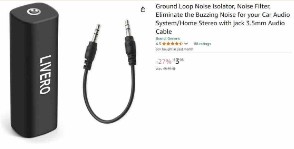
So I’ve talked this over with Mike DL3YZ and done a bit of research. This is what I’ve come up with: 1. I’ve ordered a cheap Ground Loop Isolator to plug between the radio and my headphones.
| suspect that, if this is not just some Chinese magic trick, it’ll be a simple high pass filter. It will be interesting to see what it does for such a cheap price. But I don’t think it will help. In the unlikely event that it does, I’ll let you know.
2. The DSP Audio Filter from Elekitsorparts would be good hitps://elekitsorparts.com/product/external-audio-dsp-filter-module-for-ssb- cw-ft8x7-dsp-filter/
2. The DSP Audio Filter from Elekitsorparts would be good hitps://elekitsorparts.com/product/external-audio-dsp-filter-module-for-ssb- eee STV oO
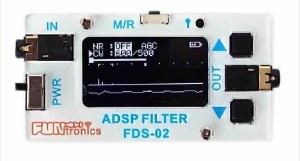
They’re not cheap – 89 USD plus taxes plus shipping from the USA. But the video is 7 years old and their online store says “Out of Stock” so I suspect that it’s no longer available.
3. Sotabeams gear is always excellent so I suspect their DSP filter will be very good. https://www.sotabeams.co.uk/laserbeam-dual-audio-filter-units-ready- to-use/
3. Sotabeams gear is always excellent so I suspect their DSP filter will be very good. https://www.sotabeams.co.uk/laserbeam-dual-audio-filter-units-ready- mie wee
And not too expensive either. They also supply this unit in kit form for a lower price https://www.sotabeams.co.uk/laser beam-dual-kit-dual-audio-filter-amplifier- and-enclosure/ Sotabeams is a British company but they
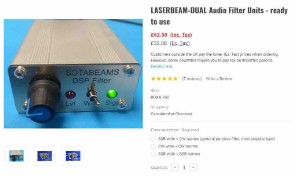
Have a Japanese distributor, which might be better for Aussie guysngirls 4. Mike suggested an audio equaliser so I downloaded the free DeskFX Audio Effects Processor from the Windows app store.
It has lots of functionality but, fortunately, it opens in the Equaliser by default. I reduced the number of frequency sliders to 8 or 10 and tested it using a KiwiSDR.
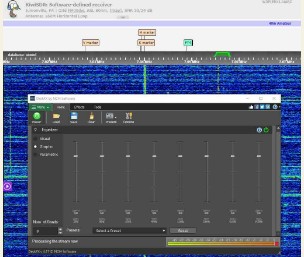
My conclusion is that it may be useful but it’s rather a lot of work with the mouse, filtering out the frequencies you don’t want, by which time the QSO has moved on. It doesn’t cost anything so it might be worth a try, especially if you’re a SWL.
Note that the KiwiSDRs already have an outstanding CW filter.
Both my QCX and my G90 have CW filters so ’m not personally affected by this problem but if I was, it would drive me absolutely CRACKERS. I feel your pain, guys. [Thanks Ross, another pearler! What news of the ground-loop isolator?
I suspect that it’s a 1:1 audio transformer without filtering – the aim being to isolate the ground of the output side from the ground of the input side – and hence to break ground/hum loops (search for ‘Ground Loop’ or ‘Earth Loop’ on Google for more about this common (hal) problem that shows up as 50 or 100HZ hum in buildings, or as alternator whine in motor vehicles’ audio system.
I’d be interested to hear from people who have tried some sort of DSP filter such as the SotaBeams product on receivers with wide IF filters. John VKSET and several others use DSP speakers to good effect on CW – see below.
Gary VK2YBX at Tecsun Radios Australia sent me a DSP to try. Although it probably works on SSB, it did not work at all on CW on my Kenwood TS-50 (with a narrow CW filter already) – it treated the CW as a heterodyne which seemed to stop the filtering of unwanted signals.
I had packed it up to send it back, but your article has prompted me to try it again with my wide TS-120S… so I’ll be unpacking it again.
Noise Cancelling Speaker
The NES10-2 Mk4 Noise Cancelling Speaker is a great unit & makes a big difference to level of noise on all modes. Compared to my VK5TM noise cancelling kit, the NES 10 wins hands- down, BIG improvement plus no dials etc to fiddle around.
It just requires plugging in to radio speaker o/p terminal.
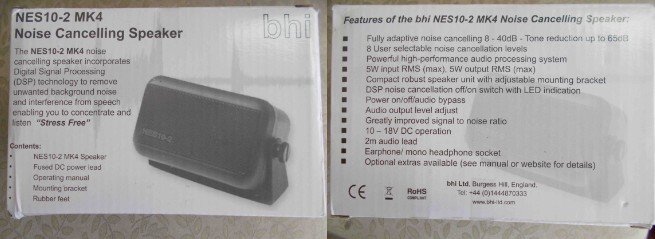
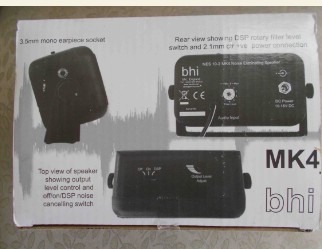
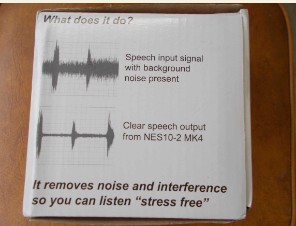
As they say … “would you recommend it ” . . .| say YES. Cost around the $200 mark from memory. I would not say its PERFECT, but it does one great job. Anyone interested may pick up more info from the internet. 73’s VK5ET, John [Thanks John.
I recall that when you started out in the very early days on our 80m net, you were struggling with the noise and could really only copy strong local stations. I remember how overjoyed you were when you first tried the speaker.
I recall that Peter VK7KPC also uses one of those speakers, but I couldn’t track dowr his email and photos on the topic.
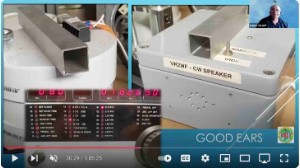
Aanan VAzVWWr has an impressive Mostly- home-brewed set-up for 160m DX at Talong, including an acoustic filtered speaker for CW. Here’s a video about his set-up – the speaker is discussed at around the 30 minute mark: https://www.youtube.com/watch?v=INSq684XR_8

Other News
Military Wireless Museum
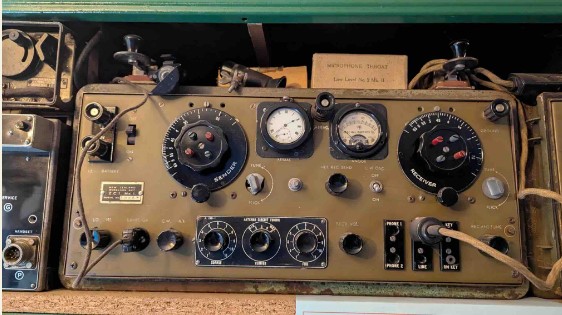
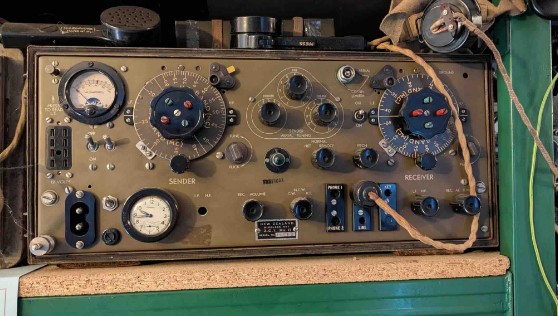
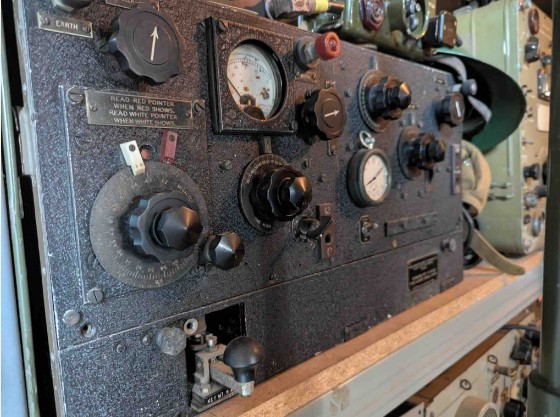
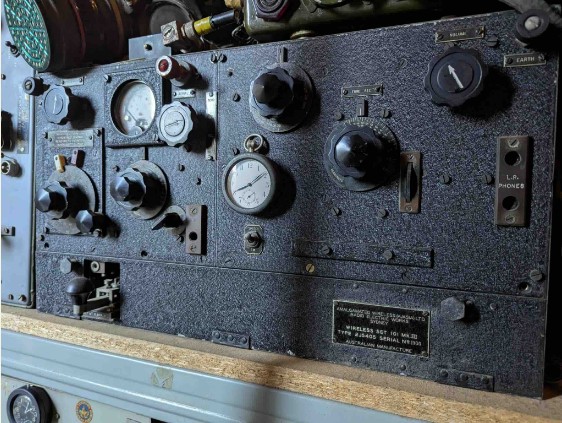
From Simon MOKBJ at Wolverhampton These Australian-built and New Zealand-built sets are a long way from home. I saw them today at the Military Wireless Museum, which is 40KM from my home in the UK https:/Avww.qsl.net/g4bxd/
The (tr)uSDX QRP Transceiver
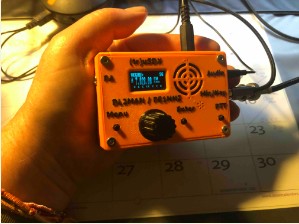
Ihe (UWJUSVA UNP lalsceiver from Richard VK6HRC I have tried the little rig out, only monitoring on Kiwi sdr receivers so far. No problem getting into VK6QS and have made it into Ironstone Range one evening, sounds fine on CW but SSB not so!
Probably needs more time setting it properly for SSB and a better mic.
All the same have really enjoyed putting it on air and like you planning on having a super-light pack. I have a 3SIP 18650 Lithium battery pack ordered and on the way, just need a suitable container to keep the whole lot together. stay safe Richard
How is it that we put man on the moon before we figured out it would to put wheels on luggage?
Across Clues
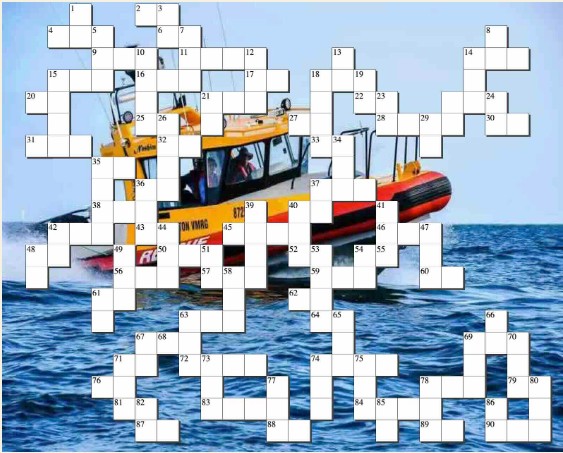
Across Clues 2. Have (2) 4, Impedance (3) 6. Wife (2) 9. So far (proword) (3) 10. Are; received as transmitted (origin of “Roger”), or decimal point (depending on context) (1) 41. Enough (4) 14, Again (8) 15. Self-addressed envelope (3) 16. Power (3) 17.
Will (2) 18. Short message service (8) 20. I say again (2) 21. Would (8) 22. Now (2) 25. That (2) 26. Zero (1) 27. Good evening (2) 28. Transmitter (4) 30. Over (2) 31. Message (3) 32. And (2) 33. Dear (2) 35. Official observer (2) 36. Operator (2) 37.
Nothing (3) 38. Text (3) 40. Conditions (2) 42. Federal Communications Commission (3) 43. Continuous wave (1 radiotelgraph) (2) 48. Frequency (4) 46. Signal-to-noise ratio (3) 48. Old boy (2) 50. Tomorrow (3) 52. From (or “this is”) (2) 54, How (2) 56.
Traffic (8) 87. Control (3) 59. Many (3) 60. Transmit, transmitter (2) 61. All between (2) 62. Here, hear (2) 63. Broadcast interference (3) 64, Good afternoon or Go ahead (depending on context) (2) 67. Antenna (3) 69. Calling (8) 71. Word before (2) 72.
Receiver (radio) (4) 74, Radioteletype (4) 76. Check (2) 78. Says (8) 79. Distance (sometimes refers to long distance contact), foreign countries (2) 81. Good night (2) 83. Milliamperes (4) 84, Self-addressed, stamped envelope (4) 87. Receiver (2) 88.
Down Glues 1. Good morning (2) 3. Very (2) 5. Please (3) 7. For (3) 8. Going (2) 10. Report (4) 12. Forward (8) 13. Old man (any male amateur radio operator is an OM) (2) 14, Address (8) 15. Signals (4) 18. Schedule (4) 19. Soon (2) 21. Word after (2) 23.
Weather (2) 24. Out (proword) (2) 26. Temperature (4) 29. Thank you (2) 34. Radio Frequency Interference (3) 35. Old old timers club (4) 36. Old timers club (8) 37. Noise; noisy (2) 39. American Radio Relay League (4) 40.
Original international Distress Call @) 41. Goodbye (Russian: qo canpanna [Do svidanya)) (3) 42. Fine business (Analogous to “OK”) @) 44, Whats the craic? (Irish Language: [Conas até tu?) (3) 47. Signal report format (Readability- Signal Strength-Tone) (3) 48.
Old timer 2) 49. Station (3) 51. Wilco (2) 53. Emergency (4) 54, Laughter (2) 55. Watts (1) 58. Television interference (3) 61. Break (to pause transmission of a message, say) (2) 63. Better (3) 65. About (3) 66. Young lady (used for any female) @) 67.
All before (similarly) (2) 68. No; nine (1) 69. Because (3) 70. Good (3) 71. Working (3) 78. Confirm (3) 74, Repeat or report (depending on context) (8) 75. Thanks (3) 77. Single sideband (8) 78. Said (3) 80. Wife (3) 82. Number (2) 85.
Allafter (used after question mark to request a repetition) (2) 86. Old chap (2) 90. Yes; correct (1)
Please let me know if you’d like me to continue with similar crossword puzzles in future editions. Is there a specific topic you’d like to see included, or would you like to have a go at creating one?
I just need a list of Clues and Solutions in a text file or spreadsheet.
Morse Training Net
Nic VK7WW runs a Slow Morse training net every Wednesday at 7pm EDST on 3580 for 30 mins. He uses the callsign of the Northern Tasmania Amateur Radio Club VK7TAZ on that net.
Many of our team learned Morse code with the support of Nic, and the weekly training session comes highly recommended for anyone who wants to learn the Code, or simply brush up. Everyone’s welcome – 3580KHZ at 7pm Eastern time every Wednesday.
The NTARC also feeds the CW live via the Discord phone / computer audio stream, and previous weeks’ recordings are available. Contact Nic VK7WW for more info nicholaschantler@hotmail.com – or just join in on Wednesdays.
Brain Teaser
Jules Perrin JP VK3JFP has created a terrific resource to help guide learning for all levels of amateur radio licenses: https://Awww.julesworkshop.net/Amateur%20Radio.html The website is being updated with the latest material after introduction of the Class license system; in the mean time, here’s more Foundation License-level example questions.
Foundation-Level Questions:
In the current Australian 240V wiring system, what colour is the earth wire? Why is an earthing system, for both mains electrical and RF signals, so important? What can happen if the antenna or the antenna tuner are not tuned correctly?
What equipment in your shack could give you an RF burn? What is EMC and EMI? If your station causes interference, what should you do? In an AM transmitter, what can happen if you over drive the AF stage of the transmitter?
What is a choke, why is it needed and how does it work? Answers next week.


Answers from last week’s Foundation level only Quiz:
Why does sunspot activity impact HF radio communications? Answer: Sunspots create solar radiation, and this affects the ionosphere. The distance a VHF or UHF signal can travel under normal circumstances is defined by four factors. What are these?
Answer: Antenna height, clear line of sight, Tx power and Rx sensitivity. What is Tropospheric ducting? ‘Answer: Where a radio signal can be channelled between layers in the atmosphere. What is the MUF?
Answer: The Maximum Usable Frequency (MUF) is the highest frequency usable that will be refracted by the ionosphere. What is the radio squelch? Answer: Silences the radio speaker when no signal is present.
What does RIT stand for and how does this help the operator? Answer: Receiver Incremental Tuning RIT allows the operator to change the receiver frequency slightly without changing the transmit frequency.
Can a Foundation licence holder modify their radio internals? Answer: Yes (this is a recent change to the Regulations). How did you go?
Di-dah-di-dah-dit
Next Tuesday’s Net
Our CQ QRS Group will be on as always on Tuesday from around 07002Z until about 1300Z; see below for details. Doesn’t matter whether you’re brand new and want to try just exchanging callsigns and RST reports, or you’re ready for a good old rag chew.
Please let me know via our Reports form bit.ly/CQQRSNET who you work or hear on Tuesday’s Group. The report form closes at lunchtime on Thursday.
Post Morsum
Richard VK6HRC will run our phone Post Morsum on the South West AllStar net (via repeaters and hotspots all over WA) from 0600 WA time, then from 0700 WA time on 80m (8605 LSB).
For the 0600 (22002) net, if you’re in WA all you need is an FM 2m or 70CM transceiver and an AllStar node nearby. If you’re elsewhere in the world, you may be able to connect your local AllStar-enabled repeater to the net, or you can connect via Echolink.
Let me know (cqqrsnet@gmail.com) if I can help with that. and if you can’t connect that way, give 3605KHZ SSB a try from 0700 (23002).
Teamwork
Thank you so much to our team of 26 contributors: DL3YZ, G4RWI, MOKBu, MONNK, VK2GAS, VK2IOW, VK2WP, VK3ACU, VK3AFH, VK3BWN, VK3DRQ, VK3FG, VK3JFP, VK3KEV, VK5AO, VK5CZ, VK5ET, VK5LA, VK6IS, VK6KD/2, VK6MK VK6NW, VK6RR, VK6WE, VK7KPC and VK7TA. Thank you team.
The Joy of Daylight Saving
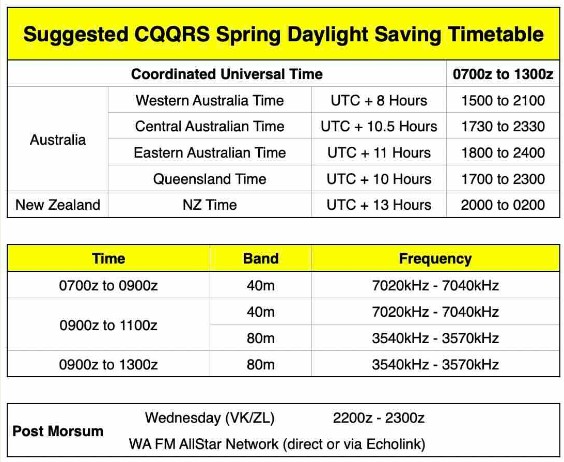
There’s usually people around until after 1300Z on the Tuesday Group – so keep calling in the segment of the band designated in the table below until you catch someone.
I should be on as usual from home in NSW or via the Remote at Bedfordale WA, and I’ll also be watching the proceedings using the VK6QS and Tecsun SDRs in WA and NSW respectively. Hope to hear you there.
GU CW on Tuesday, mb Mark Bosma VK2KI / VK6QI Beautiful South Bowning NSW mark.bosma@icloud.com non impediti ratione cogitationis

An Ode to CW – thanks to David VK3RU: In days of old, when ops were bold, And sideband was not invented, Words were passed by pounding brass, And all were quite contented. – Unknown author
About the CQ QRS Group
Frequencies and Times
QRL?
So tune around and call anyone you hear, or find yourself a quiet spot in the designated segment, send “QRL?” and if the frequency is quiet, start calling CQ QRS at about 75% of the speed you’re comfortable receiving at; hopefully responders will match (or send slower to their comfort level).
And if you are already having a QSO and someone sends “QRL?”, respond with “R”, “C”, “Y”, “YES” or QRL to let the caller know that the frequency is in use.
If we’re on 40m and you can hear that the band is open outside Australasia, perhaps consider calling 500HZ above each 1KHZ slot – to minimise the chance of having to copy our team through QRQ QRM that’s often dead-on the kHz markers.
Speed? Rhythm?
If you’re proficient at CW and can race along at 20 or 30WPM – terrific, but please remember, the Group’s aim is to encourage participation and learning, not show how fast you can hammer the key.
Please send slowly where you can and concentrate on rhythm – listen to your side-tone, get that wrist action going and make a special effort to make it sound like perfect CW; the longer we go with our Group, the more I understand just how many non-transmitting listeners we have – and they will most likely appreciate your QRS!
So, if you’re an experienced operator, please try to send nicely balanced slow CW to give them a chance to practice and gain confidence…. they’ll reward you one day by coming up on air to say g’day and thanks – how good is that?
And if you’re new or like me, just rusty…. ignore the above… just have a go – the lather of sweat will be worth it and there’s plenty of time to get the details sorted out as you practice.
Matching
And also for the oldies like me, when you hear someone new, please match their sending speed – or slower. The person you’re replying to may not be as deft on the decoding as you – it may be their first ever CW QSO – remember your first?
Lather of sweat, key that refuses to send that you tell it, brain that refuses to decode those complex letters that were right there half an hour ago, etc!
PSE QRS
And if someone is sending too fast to comfortably copy – “PSE RPT PSE QRS” or “AGN? PSE QRS’ will make life easier for everyone…. and might just encourage other listeners to have a go themselves.
The other thing to remember – most operators are writing down what they hear… so when you put it back to them, expect a delay while they read your words of wisdom, before replying.
The aim is to give everyone a go at contacting others – no-one owns their calling frequency in this Group. So unlike working DX, if you hear someone signing off – jump in and call – doesn’t matter who was first on the frequency – we really are all good mates in this Group….
And besides, at the speed we’re sending, after a QSO most of us will have forgotten who was first!
If you really want to move off frequency (eg because of a spurious switch mode power supply signal that’s just drifted into the conversation), you could try sending an abridged callsign of the person you’re after, followed by “UP 5” or “DN 5” then K; then call that person on the designated frequency and keep your fingers crossed, they may have understood you and followed…
Landing Zone
If the band goes really quiet, call and listen on 7032KHZ (7028KHZ secondary) or 3555KHZ. If you catch someone, there’s no need to QSY – enjoy the frequency.
But don’t forget to tune around if it’s quiet – we have lots of operators with crystal locked transmitters – and they could be anywhere within the segments.
For those who are locked, or can only transmit outside the segments, send a message on our WhatsApp CQ QRS – Alerts group advising of your current frequency.
And of course, put the frequencies in a memory so outside of the Group, if you’re not tuning around, leave your receiver on one of the primary frequencies – you never know who you’ll hear (7032 is used in VK and ZL for SOTA / PARKS during the day so you’ll often hear activity there).
CW Tips
As always, for newbies, operating suggestions are available from the operating hints link here: https://www.parg.org.au/_files/ugd/ebe236_ 3ca5ca08bb38429db4eee524bda2f97a. pdf. mb VK2KI / VK6QI