Below is a reconstruction of the 2024 49 CQ QRS RagChew newsletter designed to support full text searching. This reconstruction was built using OCR, and will contain errors.
To view the Mailchimp original, click here. To search the entire newsletter archive, click here.
Contents
- CQ QRS RagChew
- Last Tuesday’s Group
- Masthead Image
- Reports
- Submissions close lunch time on Thursday.
- Reports & Comments
- Comments:
- This Week’s Topic of Interest
- Other News
- Dean VK6DSL at The Vines getting the keying of his FT-817 sorted out for the —>
- From Ian VK5CZ:
- Morse Training Net
- Brain teaser
- Foundation-level Exam Questions:
- Answers from last week’s Foundation-level Quiz:
- Di-dah-di-dah-dadit
- Next Tuesday’s Net
- Post Morsum
- Teamwork
- The Joy of Daylight Saving
- About the CQ QRS Group
- Frequencies and Times
- QRL?
- Speed? Rhythm?
- Matching
- PSE QRS
- Landing Zone
- CW Tips
CQ QRS RagChew
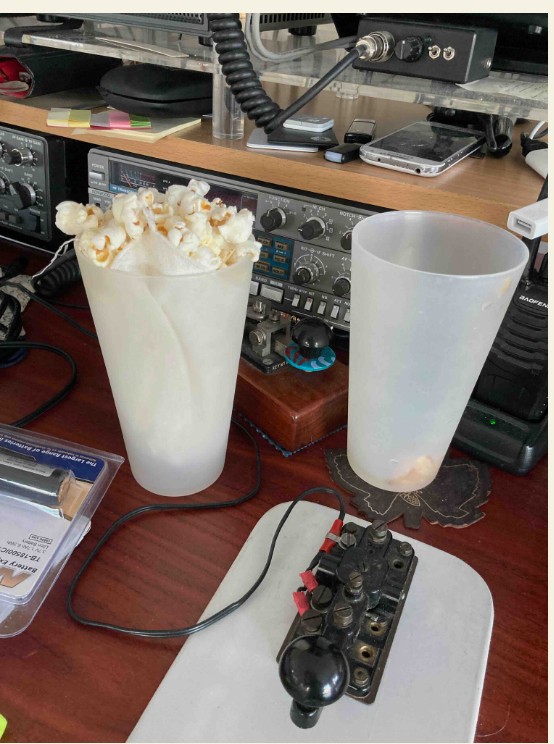
Last Tuesday’s Group
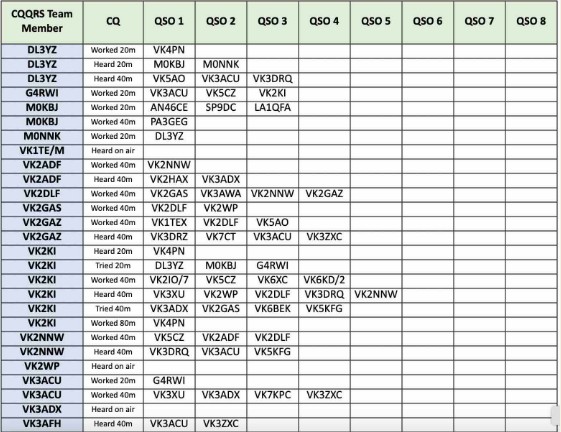
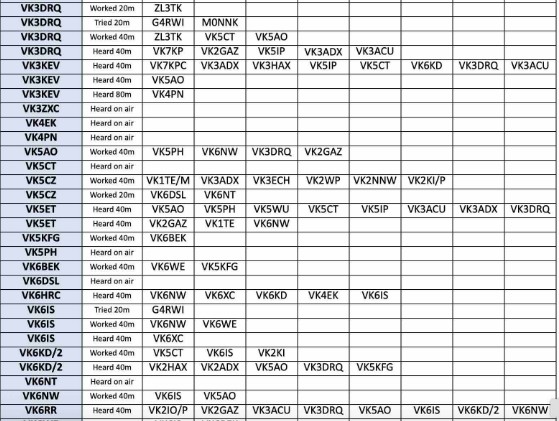
Here’s this week’s list of the 57 stations heard on the CQQRS net on Tuesday

Masthead Image
Reports

Submissions close lunch time on Thursday. If you hear or work one of our team on a different band on Tuesday, please just use the 80m report area and annotate which bit applies to which band.
And when you enter the list of callsigns worked, heard or missed, please append an ‘@band’ to each callsign without a space (eg VK2KI@20 VK6QI@15 etc).
The head of our software department, Nigel G4RWI has continued to work furiously to produce a simple way of reporting on contacts with our team outside of 40 and 80m; I have a Beta version sitting on my pile of projects waiting to be tested.
Please help attract new and old team members to have a go by submitting your report each week.
Submissions close lunch time on Thursday.
Reports & Comments
The spreadsheets above show the known stations on last Tuesday’s Group. Comments distilled from the reports I’ve received follow:
Comments:
[20m] «| had no luck with VK on 20m, although Mike DL3YZ did QSO with me to tell me that I was RST 529 in Australia on the SDRs (so I had a Euro contact). I think 20m may have gone off the boil for DX with the change of season.
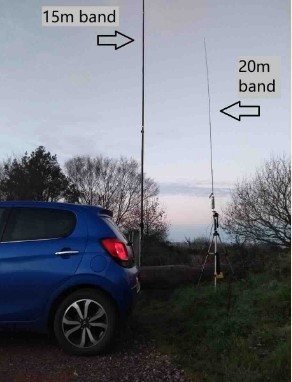
Above: I’m getting out into Europe and Scandinavia. I’m getting to Australia (just) too. But no VK contacts today.
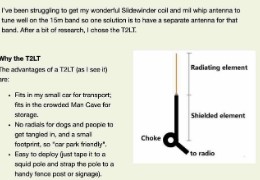
TPL fy WI ALT CHES Ome OI RE T2LT is an abbreviation for “Tuned Trans It appears to be from a German patent by Professor Fischer (Patent Number 733697) from 1939 who apparently mentions “Die T2LT”.
However, the patent applied only to the use of a tuned choke which has a capacitor across the choke for tuning, not the actual antenna. So the commonly-used (by CBers) term TALT is really a misnomer.
A more- descriptive (out longer) term might be “Resonant Feed-line Dipole”. That’s a long answer to a short questior Dene
[40m] + My first CQQRS net contacts, bet it didn’t show 🙂 thanks for your patience, Adam.. [Welcome to the CQQRS Group Bob – great to hear you on CW. And what’s more, your recent very first CW QSO was with our long-time team member, Shaun VK6BEK on 10m.]
[20m] * Today I only had some minutes to listen and do some SWL using the ironstons SDR. Great condx today. I heard Ross and Simon on the SDR at abt S 3-4. Even had a nice QSO with Sava (VK4PN ).
[Terrific that you could squeeze ina CQQRS QSO before work Mike.]
[20m] «Very cold but sunny (eventually) morning here on the SW coast of England. * 20m was in good shape. My best hau! yet with 3 VKs worked. Not sure the S meter ever moved, but it’s great fun
Hearing the weak VK signals emerging from the RF mist as earth rotates! * Great to work Jordan again, low power both ends, his 20W and my 10W…
[20m] * Great to work you Nigel – very tricky copy this end but we managed the QSO – thank you! I could just hear MOKB4J but not enough for a QSO.
Interestingly Simon and Nigel where a slightly better signal on the loop on the ground than the double extended Zepp tonight..
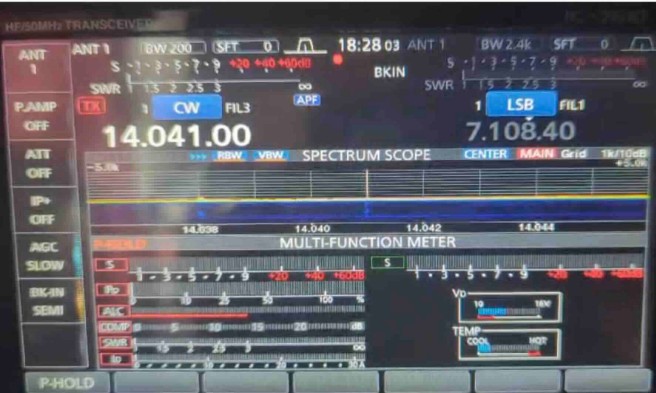
[40m] * Static crashes abound everywhere!
[40m] * The band looked empty when I tuned in and started sending CQ. After some time my final call was answered by a strong signal from VK6IS. I worked Peter with a paddle on my IC700 relying on head copying the code.
This was harder than expected so I moved to the KX3 with decoder assistance to work Shaun, VK6BEK the only signal now available. Having the decoder to fill in missed letters made things easier.
I clearly need a lot more decoding practise to become self proficient with decoding..
[40m] * Given my QTH was a bush camp at Chifley Dam (Bathurst) I was surprised to have a noise floor of S8. I progressively switched off all my switch mode pwr supplies and inverters but QRM remained present. Must have been local
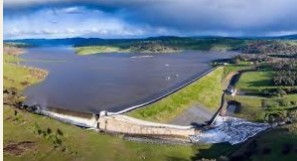
From your editor Mark VK2KI at Beautiful South Bowning NSW
[20m] + In preparation for our next Public Transport-only journey, I wanted to test my (tr)USDX QRP transceiver and in particular, a 16m inverted-L antenna fec through a tiny two-toroid 4:1 current BALUN, on a 3.6m fishing rod that collapses down to 40CM.
+ Just before I pulled the antenna down, I tried calling Simon MOKB4 at Wolverhampton and Nigel G4RWI near Devon, both of whom I could see on the Reverse Beacon Network. Unfortunately, my massive 1600MW didn’t make it around the world.
I packed up the portable gear just minutes before the heavens opened up with another nice downpour. + So after packing up and moving inside, I had a listen on my home gear; I was surprised to hear Sava VK4PN at Mount Ommaney working Mike DL3YZ at Stuttgart on 20m; Mike wasn’t planning on being on air this week.
Unfortunately by the time I tuned away to set up my antenna coupler and noise canceller, Mike had disappeared – off to work no doubt.
+ Watching the Reverse Beacon Network via the links on Mike’s webpage (the link was included as usual in my weekly reminder emai), I could see that Nigel G4RWI and Simon were still calling. I sent a QRL?
And hearing nothing, tried calling them on their designated frequencies.. + I heard Nigel very weakly, and he reported via our CQQRD WhatsApp Alerts group that he was hearing me as well.
However, despite best efforts all round, we didn’t exchange reports; Nigel was RSN 212 with me in and out of the noise, and I think I heard RST 319 – but that might have been my imagination again…
[40m] + As I said, I was testing my super compact portable set-up for next week’s journey to Lorne on the Great Ocean Road and I was pleased to hear lots of stations on at the start of the net, despite the small antenna very close to the ground.
I worked Gerard VK2IO portable VK7 on yet another VKFF PARK activation, as well as lan VK5CZ at Clare; pretty pleased with the 1.5 Watts with a 7.4 volt battery; fingers crossed that the two 18650 Lithium batteries I ordered will turn up before we leave..
+ After packing up and having dinner, I came back to 40m and listened to Greg VKSKFG at Willunga chatting to Shaun VK6BEK at Quins Rocks; I tried calling Shaun, then Greg, but missed them both..
+1 then hooked up with Ben VK6XC at Forrestfield; I had previously exchanged emails with Ben about the CQQRS net, but hadn’t heard him on before.. + I had another QSO with Gerard who had already moved to another Park – he certainly gets around!.
+ David VK6KD/2 responded to my CQs, calling in from Clifton Dam, South of Bathurst – 160KM North of here. Interesting to hear a bit of auroral warble on David’s signal over the Near Vertical Incidence Skywave path..
[80m] * Conditions weren’t great on 80m – a fair amount of QRN as well as some auroral buzz. I came cross Sava VK4PN with his usual late Tuesday CQs, and we had a nice chat.
A while later, Sava responded to one of my CQs with a report that my signal was romping in to a KiwiSDR in New Zealand. Interesting signal from Sava the second time – there was an auroral echo on his signal, that made each character quite difficult to distinguish from the next; he slowed down to make a comment, and I was able to read the characters easily – at faster speeds, the echos made the characters run together – interesting effect..
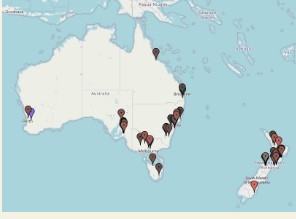
[40m] * No luck on any of the KiwiSDRs in WA this week. The VK6Q$S receiver near Brookton was stuck in a software update state, and the new Southern Electronics Group receiver at Northam wasn’t showing up on the KiwiSDR world map.
I did have listen on a receiver at Dongara while testing my
[40m] + Regretfully interruptions prevented me fully participating. Conditions somewhat strange with deep QSB ( Aurora caused?) and QRN at times. Everyone having a good QRS evening..
[40m] * Conditions were very similar from last week, too high noise level and some DX QRM.. [Funny isn’t it Manny – QRS is such fun that DX becomes QRM – HI!]
[40m] + still fairly quiet at the start of things,.. + and then warmed up, as more came onboard. + followed by the evening interference…
[80m] + would be nice if some local OPs were on 80m,. +- after 1900 awst -. + not much out-of-hours activity, this week…
[40m] + Tuned in late again, I believe I heard Jordan in a QSO with Gerry (VK3ZXC) but could only hear Jordan’s side on my radio (saw the other half on my SDR though) – I’ve noticed a pattern with where I can hear / be heard being more north/west and not south/east of me.
I thought about it some more today and makes sense based on the position of my 40m antenna (2 story buildings on 2 sides to block/reflect off).
I don’t think I can change that much due to space limitations without going portable but conveniently, most people are likely going to be north and west of my location (sorry Tasmanians!
Explains why I have to listen to the Slow Morse training net via web SDR)… + Went to key up afterwards but a bad SWR (and various USB devices dropping out) made me stop.
Tired me took a while to find the culprit: 3 radial wires into a banana plug that looked connected but were subtly not. Now in separate banana plugs and giving them a good yank will be part of my I troubleshooting rather than after getting frustrated/confused – Bananas!
It had been a long day and that seemed like a sign I should be sleeping so I took the hint. CU next week!
From John VKSET at Hope Valley + Nil heard on 20 or 15 mt bands.
• Propagation looked quite good this morning but for the first time since I joined the CQ QRS Ragchew DXperiment, I failed to make a contact with an Australian station.. «| was in the mood to send with my straight key today.
I’m not very good at it but the only way to improve is to
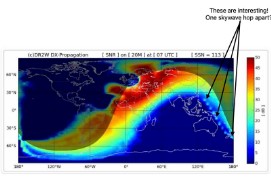
Practice so I ploughed on. My first contact was special event station AN46CE, celebrating the anniversary of the Spanish constitution, from Picasso’s hometown, Malaga. It was a very brief exchange with unequal speeds (his 30WPM versus my 12WPM)..
+ With the radio warmed up, I found my frequency on and QSOed with Polish station SP9DC, whose name I thought was “Warm”. + The highlight of the day was to chat with Wilfred LA1QFA in Sorreisa, Norway, where the sun has already set for the last time this year.
Wilfred will not see it again until 11 January when it will make a brief appearance on the horizon at noon. At a latitude of 69 degrees, he’s my most northerly contact so far.. + I finished off on 20m and looked for a more local station to end the morning.
I found Gerald PASGEG on 7027KHZ and exchanged greetings.
[40m] + As usual very quiet to start with, band was not in great shape but improved later on. Mostly monitored the activity on the Ironstone Range SDR. Thanks to all on the net.
[So overall, a terrific evening’s fun, both chasing our four team members in Europe ar the UK, and with more local activity on 40m. Thank you all for being there, spreading the joy of slow CW]
Wednesday Morning Post Morsum Report from Richard VK6HRC Thankfully the AllStar /Echolink and VK6RLM behaved and we had a good turn out. On the net : VK6QI = Mark VK6FN Max VK6NW Wayne VK6RR_ Roy VK6KD/2 David VK6HRC and Mulligan VK6MBEB.
CADIS IVIL WENWEVED LD, UE Pela Wk cus ViVi. Mark had five contacts on 40MX + nine heard and one contact on 80MX. Mark also gave his (tr)SDX rig a run in preparation for the Public transport / Backpacking trip t Lorne VK3 land.
Max also spent the evening listening out on the SDR network as his station is undergoing repair and maintenance at this time.
Wayne had two contacts on 40MX, a notable lengthy contact with VK5A0O as the band improved and then headed off to his regular SES duties. Roy monitored activities where he could while being on radio watch with his regular duties.
He let us know he won’t be on next week as he will be away taking part in a training exercise.
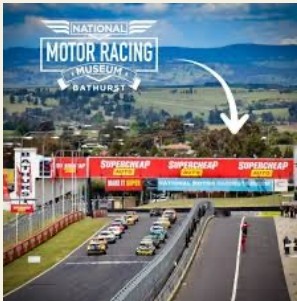
David called in from Bathurst NSW, actually outside the Motor Museum waiting for the doors to open ! They were camped out at Chifley Dam, a lovely free campsite but hampered with rain .
David had three contacts on 40MX but was still having trouble on 80MX with his trusty Icom 706 misbehaving. I spent the evening monitoring trying to improve copy, thanks to all on the net last night and this morning.
This Week’s Topic of Interest
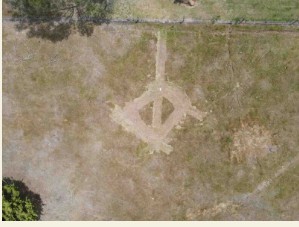
| recently built a LOG (Loop on the Ground) antenna with a perimeter of around 18 meters (approximately 15 feet per side).
It’s fed using a homebrew isolation transformer, and after experimenting with a few designs, I found the BN73-202 ferrite balun core to be the most effective. I used two turns on the primary and five turns on the secondary.
I wanted this to cover 160M to 20m I may experiment with a longer loop down the track.
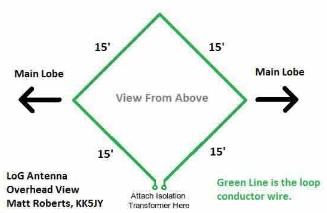
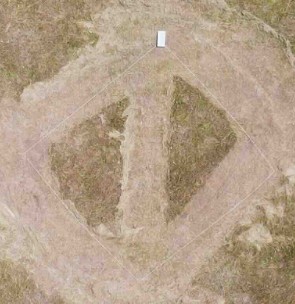
The loop is laid flat on the ground. I prepped the area by mowing the grass down to nearly bare dirt, then secured
The wire with garden weed mat staple thingies. As the grass regrows, the wire will naturally settle just below the surface. This antenna is for RX only. While signal levels are lower, the reduced noise floor makes up for it.
‘ve had better luck pulling in DX stations like Nigel and Simon with this setup. It’s a cheap, simple solution—and definitely worth a try! [Thanks Jordan.
Very interesting – and I think quite do-able even in a small back-yard – or even a flat roof (bit like the old low-profile DDRR antenna I suppose?).
The idea of a low-noise close-to-ground antenna like this or a Beverage antenna will be of interest to people suffering from switch mode power supply hash on 160M, 80m and 40m.
Our team member Phil VK6GX from Gidgegannup uses a Beverage receive antenna with great success on 80m, and similarly, Shaun VK6BEK uses a amplified vertical magnetic loop to great effect on receive.
I haven’t done any research on how the close-to-ground antennas work – I’m guessing the loop detects the magnetic part of passing electromagnetic waves (and the ground conductivity has less affect on the magnetic field), but why don’t magnetic loops pick up radiated SMPS noise?

Other News
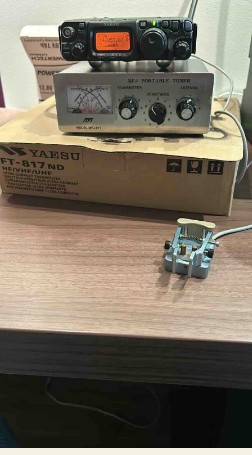
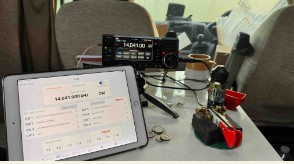
Dean VK6DSL at The Vines getting the keying of his FT-817 sorted out for the —>
From Ian VK5CZ:
From tan VRoOUZ: Been using Just learn Morse Code program on my PC. https://justlearnmorsecode.com Great program for practice with the paste copy feature for your own text. ¢ For example, go to my Blog vk5cz.com ¢ Ctrl c a paragraph.
¢ Have JLMC open ctrl v the paragraph in the hit ok. Lay back a listen. Set Farnsworth method – I run 35 20 speeds. That practice session ended up at Speed 30 WPM 37.
Morse Training Net
Nic VK7WW runs a Slow Morse training net every Wednesday at 7pm EDST on 3580 for 30 mins. He uses the callsign of the Northern Tasmania Amateur Radio Club VK7TAZ on that net.
Many of our team learned Morse code with the support of Nic, and the weekly training session comes highly recommended for anyone who wants to learn the Code, or simply brush up. Everyone’s welcome – 3580KHZ at 7pm Eastern time every Wednesday.
The NTARC also feeds the CW live via the Discord phone / computer audio stream, and previous weeks’ recordings are available. Contact Nic VK7WW for more info nicholaschantler@hotmail.com – or just join in on Wednesdays.
Brain teaser
Jules Perrin JP VK3JFP has created a terrific resource to help guide learning for all levels of amateur radio licenses: https://Awww.julesworkshop.net/Amateur%20Radio.html With thanks to Baz VK6MU for he idea, and Jules for the good learning website, here’s this week’s quiz questions from Jules’ Workshop example test questions:
Foundation-level Exam Questions:
The Jules Workshop website is being updated with the latest material after introduction of the Class license system; in the mean time, here’s more Foundation License-level example questions. What is the maximum power allowable for a Foundation licence?
On which bands is FM allowed with a Foundation licence? In some situations, a vessel or aircraft may need assistance. What are the distress and urgency signals for both telephony and telegraphy? Write the word ‘Antenna’ using the phonetic alphabet.
What is CTCSS and DTMF? What would be the call sign prefix for Tasmania and Northern Territory? What is meant when you receive a signal from a station VA3RNL? Answers next week.


Answers from last week’s Foundation-level Quiz:
In the current Australian 240V wiring system, what colour is the earth wire? Answer: Green./Yellow Why is an earthing system, for both mains electrical and RF signals, so important? Answer: Mains for safety and RF to minimise chance of interference.
What can happen if the antenna or the antenna tuner are not tuned correctly? Answer: This may cause interference to other spectrum users. What equipment in your shack could give you an RF burn? Answer: Antennas, feedlines or final stages in the Tx.
What is EMC and EMI? Answer: Electromagnetic Compatibility (EMC) – the ability of sensitive electronic equipment to operate in the vicinity of each other.
Electromagnetic Immunity (EMI) is the ability of electronic equipment to operate in strong electromagnetic fields. If your station causes interference, what should you do? Answer: Fix it and stop transmitting till you do.
In an AM transmitter, what can happen if you over drive the AF stage of the transmitter? Answer: The AM signal can be distorted and cause interference. What is a choke, why is it needed and how does it work? Answer: A choke is a form of inductor.
It helps to suppress spikes and high frequencies. It’s a low pass filter. How did you go?
Di-dah-di-dah-dadit
So back to the Slow CW QSO practice Group.
Next Tuesday’s Net
Our CQ QRS Group will be on as always on Tuesday from around 07002Z until about 1300Z; see below for details. Doesn’t matter whether you’re brand new and want to try just exchanging callsigns and RST reports, or you’re ready for a good old rag chew.
Please let me know via our Reports form bit.ly/CQQRSNET who you work or hear ot Tuesday’s Group. The report form closes at lunchtime on Thursday.
Post Morsum
Richard VK6HRC will run our phone Post Morsum on the South West AllStar net (via repeaters and hotspots all over WA) from 0600 WA time, then from 0700 WA time on 80m (8605 LSB).
For the 0600 (22002) net, if you’re in WA all you need is an FM 2m or 70CM transceiver and an AllStar node nearby. If you’re elsewhere in the world, you may be able to connect your local AllStar-enabled repeater to the net, or you can connect via Echolink.
Let me know (cqqrsnet@gmail.com) if I can help with that. and if you can’t connect that way, give 3605KHZ SSB a try from 0700 (23002).
Teamwork
Thank you so much to our team of 26 contributors: DL3YZ, G4RWI, MOKBu, MONNK, VK2ADF, VK2DLF, VK2GAS, VK2GAZ, VK2NNW, VK3ACU, VK3AFH, VK3DRQ, VK3KEV, VK5AO, VK5CZ, VK5ET, VKSKFG, VK6BEK, VK6HRC, VKEIS, VK6KD/2, VK6NW, VK6RR, VK6WE, VK7KPC, VK7WW.
The Joy of Daylight Saving
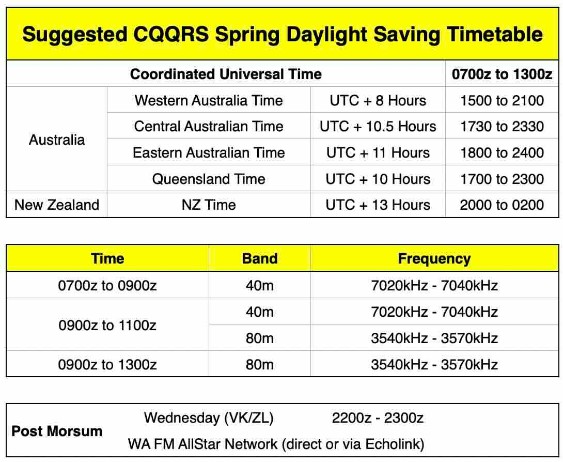
There’s usually people around until after 1300Z on the Tuesday Group – so keep calling in the segment of the band designated in the table below until you catch someone.
All things being equal on Tuesday, I should be operating portable with my QRP (tr)uSDX from Lorne on the Great Ocean Road in Victoria. I hope to hear you from there.
GU CW on Tuesday, mb Mark Bosma VK2KI / VK6QI Beautiful South Bowning NSW mark.bosma@icloud.com non impediti ratione cogitationis

An Ode to CW – thanks to David VK3RU: In days of old, when ops were bold, And sideband was not invented, Words were passed by pounding brass, And all were quite contented. – Unknown author
About the CQ QRS Group
Frequencies and Times
QRL?
So tune around and call anyone you hear, or find yourself a quiet spot in the designated segment, send “QRL?” and if the frequency is quiet, start calling CQ QRS at about 75% of the speed you’re comfortable receiving at; hopefully responders will match (or send slower to their comfort level).
And if you are already having a QSO and someone sends “QRL?”, respond with “R”, “C”, “Y”, “YES” or QRL to let the caller know that the frequency is in use.
If we’re on 40m and you can hear that the band is open outside Australasia, perhaps consider calling 500HZ above each 1KHZ slot – to minimise the chance of having to copy our team through QRQ QRM that’s often dead-on the kHz markers.
Speed? Rhythm?
If you’re proficient at CW and can race along at 20 or 30WPM – terrific, but please remember, the Group’s aim is to encourage participation and learning, not show how fast you can hammer the key.
Please send slowly where you can and concentrate on rhythm – listen to your side-tone, get that wrist action going and make a special effort to make it sound like perfect CW; the longer we go with our Group, the more I understand just how many non-transmitting listeners we have – and they will most likely appreciate your QRS!
So, if you’re an experienced operator, please try to send nicely balanced slow CW to give them a chance to practice and gain confidence…. they’ll reward you one day by coming up on air to say g’day and thanks – how good is that?
And if you’re new or like me, just rusty…. ignore the above… just have a go – the lather of sweat will be worth it and there’s plenty of time to get the details sorted out as you practice.
Matching
And also for the oldies like me, when you hear someone new, please match their sending speed – or slower. The person you’re replying to may not be as deft on the decoding as you – it may be their first ever CW QSO – remember your first?
Lather of sweat, key that refuses to send that you tell it, brain that refuses to decode those complex letters that were right there half an hour ago, etc!
PSE QRS
And if someone is sending too fast to comfortably copy – “PSE RPT PSE QRS” or “AGN? PSE QRS’ will make life easier for everyone…. and might just encourage other listeners to have a go themselves.
The other thing to remember – most operators are writing down what they hear… so when you put it back to them, expect a delay while they read your words of wisdom, before replying.
The aim is to give everyone a go at contacting others – no-one owns their calling frequency in this Group. So unlike working DX, if you hear someone signing off – jump in and call – doesn’t matter who was first on the frequency – we really are all good mates in this Group….
And besides, at the speed we’re sending, after a QSO most of us will have forgotten who was first!
If you really want to move off frequency (eg because of a spurious switch mode power supply signal that’s just drifted into the conversation), you could try sending an abridged callsign of the person you’re after, followed by “UP 5” or “DN 5” then K; then call that person on the designated frequency and keep your fingers crossed, they may have understood you and followed…
Landing Zone
If the band goes really quiet, call and listen on 7032KHZ (7028KHZ secondary) or 3555KHZ. If you catch someone, there’s no need to QSY – enjoy the frequency.
But don’t forget to tune around if it’s quiet – we have lots of operators with crystal locked transmitters – and they could be anywhere within the segments.
For those who are locked, or can only transmit outside the segments, send a message on our WhatsApp CQ QRS – Alerts group advising of your current frequency.
And of course, put the frequencies in a memory so outside of the Group, if you’re not tuning around, leave your receiver on one of the primary frequencies – you never know who you’ll hear (7032 is used in VK and ZL for SOTA / PARKS during the day so you’ll often hear activity there).
CW Tips
As always, for newbies, operating suggestions are available from the operating hints link here: https://www.parg.org.au/ files/ugd/ebe236 3ca5ca08bb38429db4eee524bda2t97a. pdf. mb VK2KI / VK6QI