Below is a reconstruction of the 2026 18 CQ QRS RagChew newsletter designed to support full text searching. This reconstruction was built using OCR, and will contain errors.
To view the Mailchimp original, click here. To search the entire newsletter archive, click here.
Contents
- CQ QRS RagChew
- Dah-di-dah-di-dah
- New Team Member
- Website
- Post Morsum 29th April 2026
- Reporting
- On My Workbench
- Oscilloscopes Part 2
- Ross MONNK
- The Things We Do to Join the CQ QRS Post Morsum
- Directional EWE Low-Band Antenna – cont
- QRZ? Who’s on the other end?
- CW Practice
- Other News
- From a CW Perspective, Sanity Has Prevailed.
- Morse Training Net
- More Emails to the Editor
- Don Edwards Memorial Slow Morse Contest
- Louis Olsen Straight Key – Looking for a Replacement Pz
- Prosign/Character/Signal of the Month
- I Hear Tell…
- Di-dah-di-dah-dit
- Next Tuesday’s Net
- Articles
- About the CQ QRS Net
CQ QRS RagChew

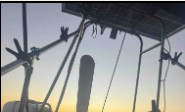
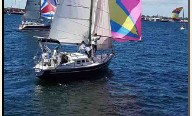
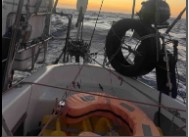
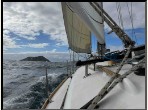
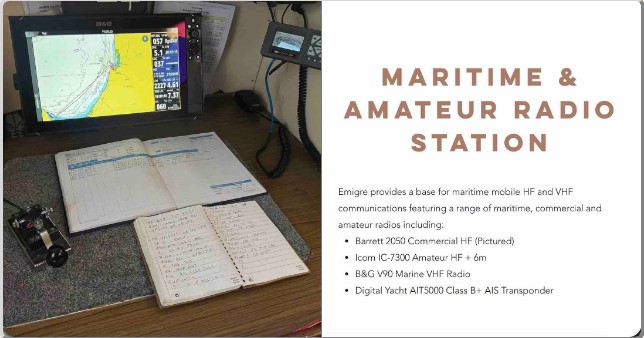
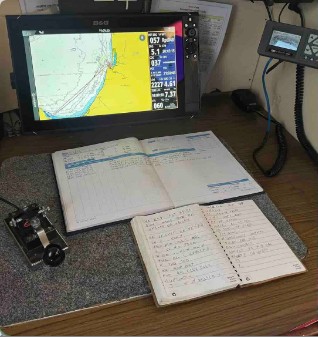
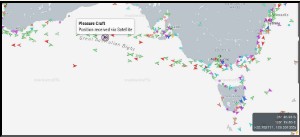
His week, Morgan VK6MTF/MM continued his journey from Dunsborough WA to Tasmania in his maritime home, Sailing Yacht Emigre.
Keep an eye on our CQQRS WhatsApp Alerts group for notification of when Morgan is on air, and perhaps have a go at our challenge to copy and plot Morgan’s progress.
Link to our Weekly CQQRS Net Reporting Form bit.ly/CQQRSNET
Dah-di-dah-di-dah
Boy oh boy – did we have fun on Tuesday’s CQQRS Slow CW Practice QSO net or what? Well, I did anyway! Conditions were favourable for most of us all the way from the DXperiment on 17m to the late-night rag-chews on 80m.
Please enjoy the reports below; thank you one and all. You can see from the masthead above, we’re following one of our Sandgropers, Morgan VK6MTF/MM who is sailing his appropriately-named 33-foot yacht Emigre from his home port of Dunsborough in WA to Tasmania.
The journey started in February, and Morgan has been replacing things, changing crews, filling the engine with seawater etc along the way. Finally after consequential engine fun in Esperance, Morgan and new crewman Kevin finally set sail for Tasmania last week.
Down in the newsletter, you can read how you might be involved in sharing this epic adventure if you like.
One of the many emails and contributions I received this week was feedback from ‘someone who called themselves The Resident POG; see below.
I really appreciate any feedback from readers – a lot of people contribute to each edition (see the list of this week’s contributors toward the end of the newsletter) – and I’m certain they also appreciate that their work is being read.
One of the Resident’s suggestions is that we regularly make a recording of our own CW, then play it back later as a critical check on our rhythm and timing; makes sense.
However, the writer says if the test fails, they’ll stay off the net until corrected – the implication is that others might think about doing that too.
However, the flip-side is discussed on our website – our net, WhatsApp groups and newsletter are inclusive – everyone can participate, everyone is supported.
And among those everyones are people for whom CW is an unusually challenging occupation – physiologically or psychologically. The net is to encourage operators to have a go, somewhere safe where no-one’s going to tell them off when they make mistakes.
So sure, what The Resident POG suggests is valid for some operators who have let their skills drop… but for those of us who are challenged rhythm and timing-wise in one way or other…. our net is for you!
And if we can help make things better or more enjoyable, please let me know. So, if you hear one of our team struggling a bit, please say g’day anyway and help them continue to enjoy their hobby as well.
‘Some readers know that I’m a presenter and technical supporter at a Community Radio station in Yass NSW; so stereotypes might bring forth an image of multiplexed FM… but not this time.
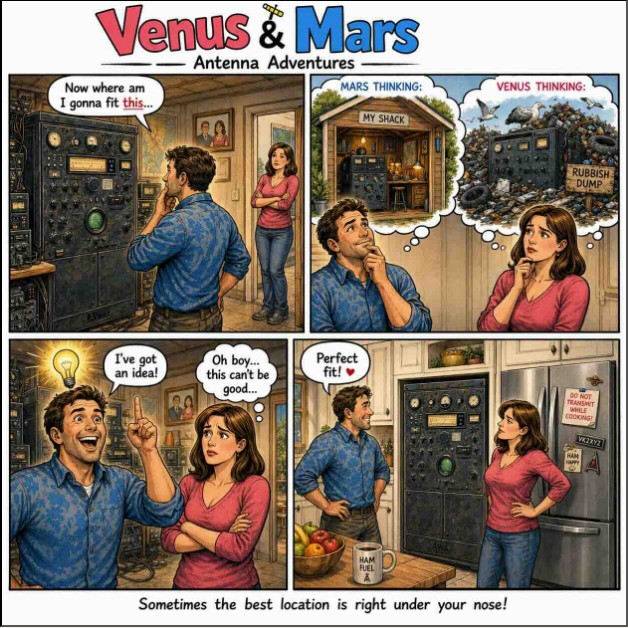
In this edition, you’ll also find an email from our cold weather portable expert Ross, MONNK. Ross is concerned that our Venus and Mars in the Ham Shack series of cartoons may be sending the wrong message about stereotypical relationships between amateurs who happen to be in a relationship and their partners.
Via the cartoons, I’m trying to show that the non-amateur partner can be supportive while still being perplexed by the amateur’s fascination with radio things. And in- turn, their support could be encouraged if possible.
Hopefully both the amateurs and their partners can have a laugh at the amateurs’ expense. So if you are in a relationship, please consider showing your partner the cartoons in this and the previous four editions; I’d be interested in feedback, positive and negative for my guidance (and definitely not to try to validate or invalidate Ross’ thoughts).
Thanks Ross and thank you everyone who contributed to this edition. And as for trying to attract more female CW participants…. I’m keen to hear any ideas from our team!
New Team Member
Welcome this week to Max VK3MXW (also VK4MCW), introduced by both James VK3JFR and Stan ZL3TK. With a callsign like 4MCW and an interest in operating portable, it’s no wonder that Max has on the CW journey – welcome Max.
Website
If you’d like to find out a bit about our net, or would like to pass information to others about our Tuesday get-togethers, here’s the link to our website. bit.ly/CQQRSWebsite So here we go – on behalf of the CQQRS Editorial team, please enjoy the newsletter.
Niall kh DOSITa VK2KI / VK6QI Patrick John Beautiful South Bowning VK2IOW VK2RU NSW Milthorpe NSW on a track somewhere cqqrsnet@gmail.com non impsditi ratione cogitationis Nigel Richard Lance G4RWI VK6HRC VK7TO our other grey nomad Padbury WA Margate TAS Jordan VK3ACU
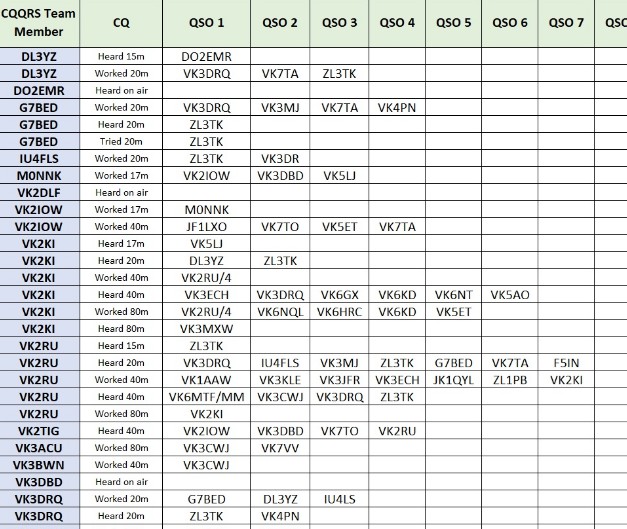
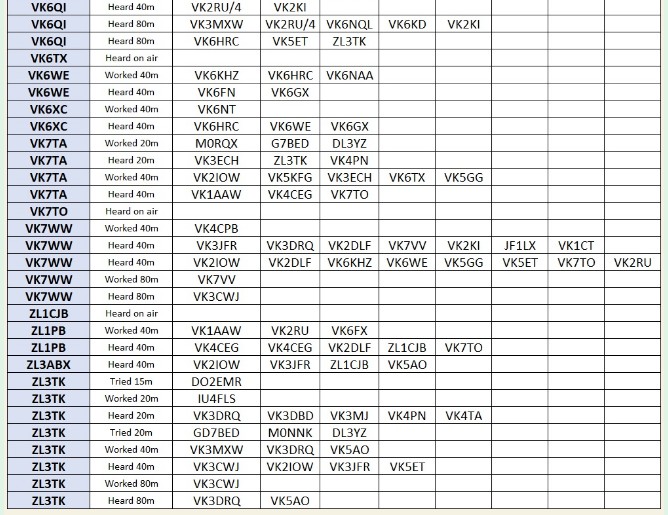
John’s spreadsheet above shows the known stations heard or worked on last Tuesday’s CQQRS Net (reported via our webform bit.ly/CQQRSNET ); the comment: in the team members’ reports follow.
The comments were also compiled for us by the software built by Nigel G4RWI, and the layout was perfected by Patrick VK2IOW. Thanks again to Nigel, Patrick and John for the work, and to every team member Onn ON on eo eA oe
From Chris G7BED at Northampton, England
[20m] Good conditions seem to prevail this morning – and nice to get some new calls in the log. I tried ‘ keep the QSOs short to get a few in the log. Thanks for trying chaps and look forward to working you all again soon.
I won’t be around ne: week, as travelling back from Bulgaria. Best 73 and Good DX.
[20m] Condx were fine again this morning and it was a pleasure tc work 3 stations during my shift. I was very pleased to hear VK stations UFB on the 17 m band here in Germany, even if I was not able to hear Ross here in Germany, that’s just too close. 73 Mike
[20m] Challenge of the Day: very long period QSB. But, thanks to David, Patrick and Lawrie, my first foray onto the 17 m band was a success.
It still amazes me that I can get all the way round the world with just a 2.85 m mil whip antenna and a 20 watt radio (with a little help from some wonderful operators at the other end!). VMT
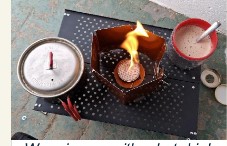
[40m] QSB and QRN was making it a challenge to hear stations’ complete overs. Static charges appearing on the waterfall display indicated presence of lightning, but my radio didn’t appear to be producing any harsh crashing sounds.
Perhaps one of the digital filters in my ICOM7610 was assisting me and (EIENELIETOLN eenewallae’ aby receiver. Earlier in the evening,
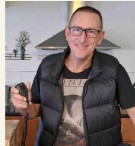
| was experiencing a noise floor of S7 but this died down to an S2 by 2220HRS WST.
[80m] Great to see both 40 and 80m open to somewhere. Previous weeks have been a bit silent on the 80m band for me so glad to see more activity. By 2224HRS WST 80m had closed again for me at my QTH with the addition of an approaching lightning storm.
Crashes are now showing on my sig meter. Background noise S1, crashes S8-S9. Maybe time to disconnect the antennas, hihi. 73 to all hope to catch you next wook
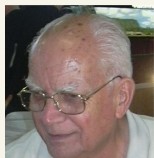
[20m] I had a listen on 15, 17 and 20m for all of the DX stations. I had no success on 15 and 17, but was pleased with the 20m results. My vertical seemed to work ok as a half wave on 20m.
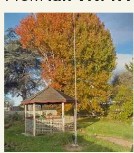
[40m] Very few stations on at the time I started to listen, 8pm NZ time but did manage to work a VK1, 2 and 6. It was really nice to work Rob, VK6FX using my QMX+ running 3 watts into my 35FT vertical, sorry Rob I made a hash of the last bit.
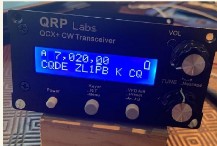
[20m] We finally succeeded, a FB QSO with IU4FLS, thanks Fausto! Most of the time when DX stations were active I was flying blind.
One of the servers in the US which routes internet packets from Mike’s wonderful ‘Live Status Monitor’ to ZL-land is kaput, rendering the PAY FR Qe Reo me OIA Ree HR AO TBR eee GK
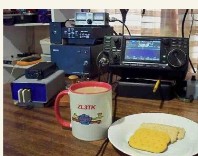
— — — Status webpage inaccessible much of the time. Then randomly a different route kicks in and all is briefly revealed, then gone again.
Although I couldn’t hear four of the DX stations well enough for a QSO, they were detectable and identifiable by their chosen frequency and from the VKs working them.
Considering propagation paths exhibit anything but reciprocal performance, I called each station immediately after a QSO had finished to test the retum path, just in case I could be heard sufficiently to be reported. Disrespectful or just plain ignorant?
Two locals who had already worked the DX stations then tried to start a QSO right on the advertised DX stations’ calling frequency. Blimey, when will they ever learn?
[40m] 40 m seemed quite good with respect to noise but marginal for propagation, no westsiders were heard however 100 % copy during longish QSOs with eastsiders OM Maitland and OM Manny.
Met Max VK3MXW, a new chum operating 4 kHz from the bottom end of the band, so directed him northwards to where it was all happening. Look out for Max, good young potential.
[80m] A.QSO with Walter VK3CWJ at Durdidwarra kicked of in fine style on 3.554 MHz with two-way signals approaching R5 S9, then quite quickly faded away to absolutely nothing.
Will have to try again, I’ve never met a ‘Walter’ who wasn’t a jolly interesting subject!
[20m] Great newsletter, had a good chuckle over Jordan’s Venus & Mars, keep them coming, Jordan. Aesop Fables, 2nd time I had a go at these, good CW practice for head copy, getting most of the characters. Listened to 20 m on Iron Stone Range SDR.
Strong signal from Chris G7BED at start of sked. VK stations
Chris had stronger sig than VK3DRQ, Manny, but did slightly improve for them to QSO. Also heard VK3MJ & VK4PN with much lower signals. Chris tried repeatedly t« get ZL3TK with no success. I did hear DL3YZ Mike ,just above the noise.
Overall, chaps from overseas had stronger sigs than VK stations.
[40m] Copy with VK3DRQ, but with QRM / QSB, had to 73, sorry Manny. Nice long chat with Patrick, VK2IOW. Have to envy his small farm location, plenty of room for antennas. His long loop antenna up 10 m was doing a great job.
Interesting chat, demo on various keys, each had their own ‘melody ‘. Tx for demo, Pat.
[80m] Good copy from you Mark, yes, condx hasn’t been as good as this on 80 m fora while. John, VKSET
[17m] Listening on 17m via the Snowline KiwiSDR while I was shopping, Lawrie VK5LJ was nice copy working Ross MONNK – but Ross wasn’t tickling the electron charges on the SDR at all.
EVEITENNs Let has’ § oe TE RAW MiMi TEE RNA ADEN MEENA VELEN TNE ENE OU NEE SALES VV YY cscs INDE INAH romping… but perfectly Q5. I couldn’t hear Manny, but Stan ZL3TK was just there.
[40m] Great to hook up with John VK2RU/P at Linville QLD – better signal than I’ve heard before – peaking S8 on my old TS-120S with its Scottish S-meter. John saw S9 on my signal with half the power; good signs for his antenna modification work.
[80m] The highlight of the net for me was 80m. Conditions seemed pretty good across the country, and good to see more people having a go there; night-time conditions (in the ionosphere) can sometimes be better than 40m.
John VK2RU/P up at Linville in SE Queensland and I had a nice rag chew, and I’m looking forward to hearing about his latest antenna experiments.
I then saw our new member Max VK3MXW calling CQ further up the band, coming through as a trace or the Southern Electronics Group KiwiSDR near Northam WA.
When I signed with John, I slipped up there to discover David VK6KD calling; I mistakenly assumed that David had been working Max and was calling CQ…
Turned out that they may not have been hearing each-other, so when I called David, Max was left wondering why this rude person had started a QSO on the frequency he was calling on; sorry about that Max.
You’ll see that our net protocol is that because we have many new operators, niceties like frequency ownership get shelved; but still, I should have known better and checked.
Anyway, great to hear a good number of people having a good time on 80m again; thanks all.
Also from your editor Mark VK6QI at Beautiful South Bowning NSW via the VK6SEG KiwiSDR at Hoddys Well.
[17m] Listening on 17m via the VK6SEG KiwiSDR near Northam WA while I was still shopping, Lawrie VK5LJ was nice copy working Ross MONNK; Ross was there but barely tickling the SDR.
Wonder whether Lawrie and Ross were beaming Long Path or Short Path – the VOACAP predictions indicated that both may have been possible, with slight preference for LP.
Might have been interesting to hear if Ross had an echo (both LP and SP together), but I couldn’t hear enough of him to know. I also heard Sava VK4PN when I checked the VKSPH KiwiSDR at Ironstone Range, but I don’t think he was working anyone.
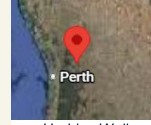
[40m] John VK2RU was coming through to the VK6SEG KiwiSDR ai Hoddys Well better than I was. Thumbs up for whatever work he’d been doing on his 1/4 wavelength vertical. [280ML
Good activity on 80m this week, despite the static crashes in the West. I could see Stan ZL3TK coming through nicely while I was having a QSO further down the band.
Bottom line – when activity on 40m drops-off during the net – please have a look dow on 80m and post an alert on our WhatsApp Alerts group so others know where to listen to too (one-one was a racehorse…). FL ALT OT
40m] There were several good signals allowing me to hree stations. However by the time I finished alking to three of them the two I had heard and wanted to contact had vanished.
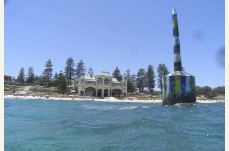
[40m] During this weeks CQ QRS Net, I heard an interesting QSO between Pat, VK2IOW and John, VKSET, discussing what hand they used for various types of Morse Key. Both indicated preferences that closely correspond to mine. I’m glad I’m not the only one!
Lam approx 75% right hand/foot dominant, although I can use most tools ambidextrously. If I were a multi-tale:
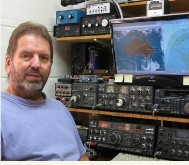
St Be ul a an et mee he nce Wager te ir gl mt ng em ge ww Sag eww pine oe aah ne Ra eee rege age Oe te I would use some instruments left-handed and others right-handed.
I’m a steicht key operator, since age 8, I write left-handed, but use a straight key right-handed. Basically a very confused person.
Many years ago, I injured my right shoulder, during the healing process, I bought a single lever paddle, as my straight key sending with my left hand is very slow, and it just doesn’t feel right.
I had never used a paddle before, but I instinctively prefer my left hand with the paddle, which I have configured as a Cootie. I have never been able to send presentable Morse with it, so it’s not heard on air.
My TS-890 allows the paddle to also simulate a bug or conventional paddle. I’m even less proficient with those types! My aging brain cells just can’t cope with any form of paddle, despite extensive practice.
So barring N1MM+ contest operations or extended CQs, when things are quiet, when the PC or rig may be generating the code, you will have to put up with my straight keys. 72 Dbl VKARY & VIANA
[40m] A very good night for me with eight QSO’s, including one ta NZ, and one to Japan. Mark – VK2KI caught the end of my QSO with ZL1PB, and missed the first dah in Z, which prompted him to ask me if I had just contacted DL land.
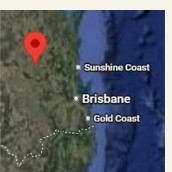
Wondering how my new antenna was going so he said ‘let’s find out’, and off we went for 25 minutes Later in the evening I contacted Nomo – JK1QYR, and when that finished, I was immediately called by Paul — VK3KLE but lost out to QSB.
Then a couple of QSO’s with James — VK3JFR, and Rob — VK3ECH, both with QSB. and a bit of noise, but good fun, and good to copy well-sent morse. Thanks to alll for the excellent contacts.
[80m] After doing some work on my new antenna, and having what seemed to be a good chance to finally get a decent contact on 80m, I gave it a go, and Mark – VK2KI and I had another good 25 minute QSO.
These extended QSO’s are what I particularly like, and make for an interesting night. There was a bit of noise for me on 80, which according to Mark, may be coming from my Starlink dish after he found a similar issue with David – VK6KD when he did his lap of the country.
[80m] After doing some work on my new antenna, and having what seemed to be a good chance to finally get a decent contact on 80m, I gave it a go, and Mark – VK2KI and I had another good 25 minute QSO.
These extended QSO’s are what I particularly like, and make for an interesting night. There was a bit of noise for me on 80, which according to Mark, may be coming from my Starlink dish after he found a similar issue with David – VK6KD when he did his lap of the country.
From Vonald VAOUJUN ¢U Km West Of Esperanc
[40m] Strong signals from the eastern states, lots of Indonesian SSB stations in the background. Significant SSB after sunset. I was only using 5 watts and did not get any replies on 40 or 80.
However, lots of good receiving practice and I am now confident receiving at about 12 wpm. As one who swore I would never use a morse key other than to tune up the aerial, I am beginning to enjoy this ancient Tuesday mac
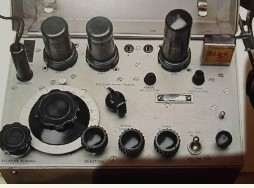
[40m] Using my freshly minted QMX tonight. Finished the kit on the weekend and it worked. (I’m not sure what I would have done if it hadn’t) My first contact, CW, was with VK2IR so that was promising.
It also made the distance to Andy VK5LA on the boat anchor net on SSB (although it is nothing like a boat anchor. Hans layers of circuit boards comprising the 5 band TRX in Ivy amazing) However it’« ctill ORP and lincon in
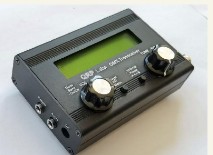
• SSB (although it is nothing like a boat anchor. Hans Summers’ ingenuity in fitting 4 layers of circuit boards comprising the 5 band TRX in such a small package, is simply amazing).
However, it’s still QRP and Lincon in Perth and lan in VK7 had to deal with fairly weak signals from me so I thank them for persevering.
[40m] Stations were mostly below noise floor for enough time to make them unreadable. Did hear some on 7.0275 and 7.0285, but I didn’t wait long enough to have a QSO as I moved to 7.032 for a clear frequency to make CW calls.
[160M] It may have been a good night for all advanced ops to go tn ton hand At laaet in nonr conditinne I hava raliahla can
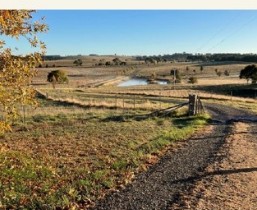
40m] Only locals to start with, then the band opened to the East, was bus for a while but went quiet as conditions changed. 80m] An electrical storm made for difficult copy at times but was fun

From Patrick VAZIOVW between Batnurst ana
[17m] The QSO with Ross on 17 metres was a bit of a struggle. I was using my wire loop, since my yagi only does 10, 15 and 20 metres. We were sending each word twice to improve intelligibility.
The last over faded to nothing, so the band appeared to be closing. This was about 08:20Z, 18:20 local time.
[40m] Signals were good into South Australia and Tassie and I even had one QSO to Japan. I swopped between cootie, bug and paddle. I use the cootie key with my left hand, so that gives my right hand a break, hi. My history on different types of keys is uneven.
Initial struggle with straight key, then learned iambic sending — many years on dual lever paddle. In more recent years I took up the challenge of the sideswiper (cootie) and bug and had another go at the straight key.
My cootie morse has a strong “accent”, which I can’t change (as much as I tried) — however most seem to copy it OK. The bug also has its own accent, but I quite like the rhythm.
The paddle sends perfect morse (except for my mistakes), but perhaps lacks character?
Post Morsum 29th April 2026
From Richard VK6HRC. Five on the VK6RLM rptr and AllStar/Echolink hub this morning. ZL3TK ~—- Stan VK6KD David VK6QI Mark VK6HRC VK6MRB Mulligan swl and others.
From Richard VK6HRC. Five on the VK6RLM rptr and AllStar/Echolink hub this morning.
AliStar/Echolink hub this morning. ZL3TK = Stan VK6KD David VK6QI Mark VK6HRC VK6MRB Mulligan swl and others.
Stan finaly managed to log a contact with Fausto IU4FLS which was a first ZL contact for Fausto. On 40m Stan noticed a signal on the waterfall display way below the the QRS segment and went to investigate.
It turned out to be Max VK3MXW so he was encourged to head up the band to join the fun. A partial contact with Walter VK3CWJ but conditions put a stop to that QSO.
David the birthday boy did very well, battled the QRN to work one on 40m heard five and on 80m worked two heard four. Mark was away from the shack for a while so listened out on the Snowline SDR heard VKSLJ on 17m and on 20m Mike DL3YZ and Stan ZL3TK.
Back in the shack Mark worked one on 40m heard six and on 80m worked five. BTW still doing a fine job of spotting on WhatsApp.
I worked five on 40m and two on 80m, At the start of the session only locals heard on 40m, later on the band opened up to the East with lots of activity but after a while propagation changed and all went quiet. So off to 80m to battle the QRN !
No report from the other Max VK6FN this week the warm bed won the battle I Thank you to all on last night and this moming, keep warm

Reporting
After next Tuesday’s Group, please remember to send me a list of who you worked and / or who you heard using our web form here:

Even if you didn’t hear anyone, we’d still like to know that you had a go. And to make your report more interesting, please consider sending a photo: cqgrsnet@gmail.com So, please help attract new and old team members to have a go by submitting your report each week.
Submissions close 1300 (Eastern Australian Summer time)_on Thursdays.
On My Workbench
Fun and Games with Measurement Tools by Ross MONNK
Oscilloscopes Part 2
From Ross MONNK Last week I described my descent into the labyrinth of oscillators, aided by my all- seeing-eye, the oscilloscope. The JYE Tech DSO138 was a great leaming tool but it only has one channel and, at only 100 KHz, is woefully underpowered.
I needed an upgrade. Ihave a theory that, to get established in any hobby, you need to invest a minimum of 2000 Aussie Dollars. But being a “tightwad” and already having a hundred other hobbies, I still didn’t want to spend much money.
That ruled out ‘proper bench-top oscilloscopes and pointed towards a 20 MHz USB ‘scope. These use software on your computer to do the heavy computational lifting and display, and are therefore cheaper as a result.
At this point some of the electronics wizards amongst RagChew’s readership might be snorting in disgust at my going for a mere 20 MHz ‘scope.
However, after a moment’s reflection, they might remember their early days when they managed perfectly well with an analog cathode ray tube oscilloscope of roughly the same performance but very many fewer features (of which, more in a mo’).
USB oscilloscopes stand or fall on the quality of that software and I’ve seen some bloody awful screen displays from even well established brands. I can’t remember
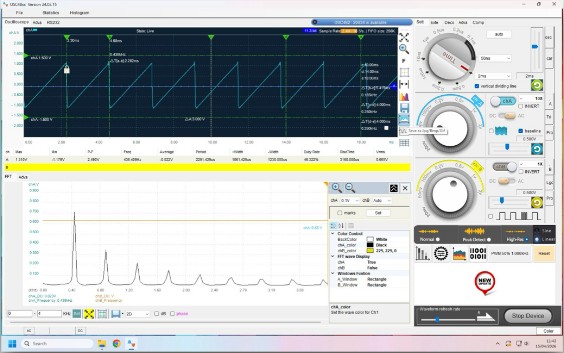
Whether I diligently researched this aspect or just got lucky but I’m jolly glad I plumped for the LOTO OSC482 (the basic version, see https://www.loto-osc.com/ produc#/245.htmi) as it has a screen interface which mimics that of a desktop model’s knobs and buttons.
Never heard of LOTO? Neither had I, so it was with some trepidation that I installed their software on my computer. But I needn’t have worried – not only does it look great but it’s been super stable, never glitching or crashing.
Apart from all the basic features of a modem digital oscilloscope, the OSC482 has: © FFT display with horizontal measurement cursor for spectrum analysis of harmonics (see image above), can be turned off to give the main display considerably more vertical space two horizontal and five vertical cursors with absolute values and deltas between adjacent cursors (see image above), can be turned off to de-clutter the display spot cursor, to show the voltage and time at any point on the waveform © five 2-channel maths functions, the X-Y plot for VI curve tracers is labelled (AB)X_Y © continuous display of: Vmax, Vmin, P-P, frequency, Vaverage, Period, +Width, -Width, Duty Rate, Rise Time, Vrms Background can be any colour (a black scope and a white FFT were chosen for the image above) All this (and more features I don’t personally use) for just 130 Aussie dollars on AliExpress.
This series of articles really needs a Part 3, extolling the virtues of an oscilloscope suitable for looking at radio frequencies. Maybe a reasonably priced 50 MHz DSO. But I’m not qualified to write it as I haven’t (yet) got one of those.
Is there any reader of RagChew who does have one, who would care to sing its Aram ae!) l saw mee serail lace Se. Baer exhueneed 2s
Ross MONNK
The Things We Do to Join the CQQRS Post Morsum!
From Adam VK4IM I can’t sleep, so did some work on my Allstar node this morning. I picked up a Yaesu FTM400 to replace my faulty Motorola GM338 node radio at Redfest last weekend.
Its programmed up and ready to go, I’m just waiting for the parts to come in for the adaptor cable between the Raspberry Pi (6 Pin Mini DIN) and the radio (10 Pin Mini DIN) The Raspberry Pi has been re-flashed, has been made echolink capable (VK4IM-L) and is pretty much ready to go.
I’ve configured it to: + Make an announcement locally at 07:55am each Wednesday advising that Post Morsum will start in 5 minutes + At 07:56am it disconnects all active nodes + At 07:57am it connects to the VK6 hub (51077).
+ And finally at 09:03 it disconnects from the VK6 hub All times are Brisbane local and happen on Wednesday. Let me know if there is a better node/ time or net duration to connect and I’ll adjust it as required.
Thanks for clarifying the day (Wednesday) Post Morsum takes place. You had times and frequencies/ Node/ echolink information both on the CQ QRS website and the newsletter but not the actual day. Maybe you can fix this up? TDone. thank vou Adam!)
The Things We Do to Join the CQ QRS Post Morsum
The node is live on the internet, but the radio is not connected yet (only intermittently for testing though a dummy load). Final RF enabling will happen once the adaptor cable is completed and I repair the node antenna.
My Comet GP9 seems to have developed a high SWR fault and I need to track this down. I have a Diamond X30 I can push into service, It just
Won’t have the same footprint at the GP9. I need to get on the roof to swap them over. I’ll let you Know when its complete and RF capable. Cheers Adam VK4IM
Directional EWE Low-Band Antenna – cont
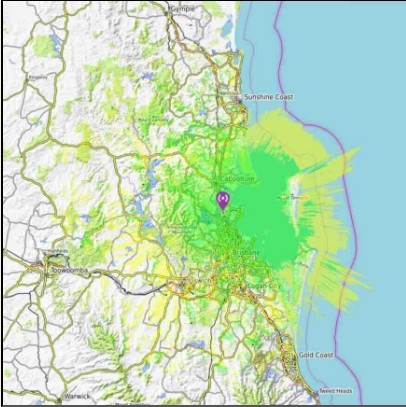
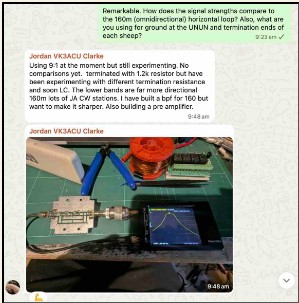
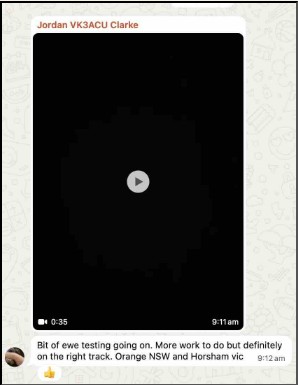
From Jordan VK3ACU Test of directivity using broadcast stations.
What’s going on on your workbench? If you have an article or two that you think might be of interest to our readers, please let Mark VK2KI know; email to cqqrsnet@gmail.com For guidance on writing for RagChew, see Articles below.
QRZ? Who’s on the other end?
CW Practice
This year we’re using Aesop’s Fables. These are short moral stories, often using talking animals, that illustrate simple truths about human behaviour and character.
‘Aesop’s Fables originated in ancient Greece, traditionally attributed to the storyteller ‘Aesop who is thought to have lived around the 6th century BCE.
The fables are generally smaller files of two to three hundred words that have been recorded at 15 wpm and run for about 15 minutes.
If 15 wpm is a bit quick for you, load it onto your phone and set the playback speed at 0.75 X or even 0.5 X- whatever works for you. 0.75 X will play the MP8 at a bit under 12 wpm. Itis suggested that you read the text file before listening to the audio file.
That will make it easier to follow the audio file and prepare you for any unusual words. Any punctuation that is not usually used with CW has been removed. This week’s fable is ‘The Woman and Her Hen’, and the MP3 and TXT files are attached here –


If you prefer a different speed or tone you can create your own MP3 files by converting the text file with the Ebook2CW app — https://fkurz.net/ham/ebook2cw.html.
You can either play the MP3 files in any media player, or load the text file into the Ditto CW: Morse Player app — https://dittocw.andro.io/.
Both options work well, however Ditto CW gives you complete control over all Morse settings, while a normal media player only allows changes to playback speed, and does that in steps (e.g. +1.25x, 1.5x, 1.75x).
Other News
As noted in the Masthead caption, Morgan VK6MTF is undertaking a very challenging journey from Dunsborough WA to Tasmania in his home, a 35 foot Duncanson 35 yacht.
When possible, Morgan will try to be on air on CW, and will post his frequency on our CQQRS WhatsApp Alerts group. So how about as a challenge to the CQQRS team on WhatsApp (and to Morgan in case he needs any more challenges)):
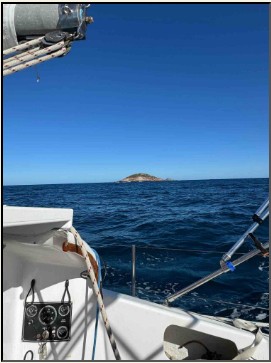
• As many people as possible ask for and try to copy Morgan’s Lat/Long as he sails from Esperance to Tasmania over the next couple of weeks.
¢ Then each receiver posts the new Lat/Long and the date-time group of the contact in the RagChews section of the WhatsApp group.
¢ And in parallel, perhaps one of our clever team members could create, maintain and posts a map showing the logged locations, DTG and receiving station. If you’d like to follow Morgan’s progress, here’s his blog: www.sailingyachtemigre.com/blog
• As many people as possible ask for and try to copy Morgan’s Lat/Long as he sails from Esperance to Tasmania over the next couple of weeks.
+ Then each receiver posts the new Lat/Long and the date-time group of the contact in the RagChews section of the WhatsApp group.
+ And in parallel, perhaps one of our clever team members could create, maintain and posts a map showing the logged locations, DTG and receiving station.
If you’d like to follow Morgan’s progress, here’s his blog: www.sailingyachtemigre.com/blog Updates: * According to Morgan’s blog, he worked Stuart VK6MEK at Australind on Friday April 24TH.
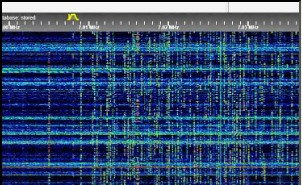
* Richard VK6HRC at Padbury and I caught Morgan at around 0900Z on 7030KHZ Saturday April 25TH. I attempted to copy Morgan’s Lat/Long to kick off the experiment discussed above…
But at RSN 311 with QSB knocking out many of the characters, I didn’t get enough of a fix despite his sending the coordinates twice. Tim VKSAV at Mount Gambier was also listening and ready to copy Lat/Lon, when Morgan’s signal faded to nothing.
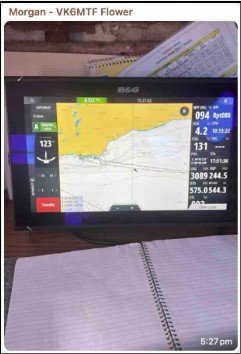
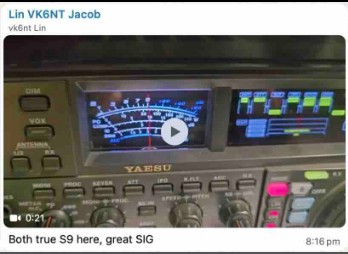
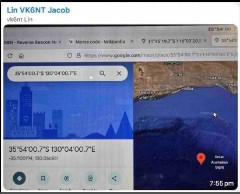
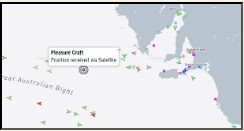
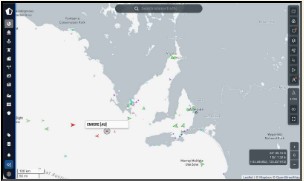
* More luck on Sunday with Tim catching part the Latitude part, but first past the post was Lin VK6NT operating the Northern Corridor Radio Group’s VK6NC station at Whiteman Park catching and plotting Morgan’s position. Click on the video below.
The CW contest above 7010KHZ made planned QSOs impossible, so Morgan moved down into the DX portion…. which was dead quiet!
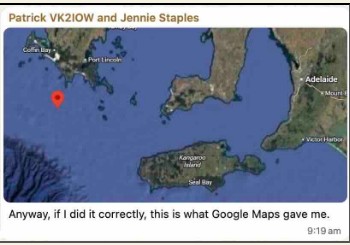
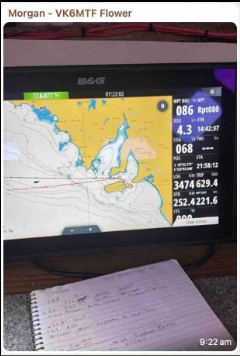
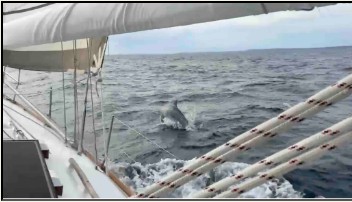
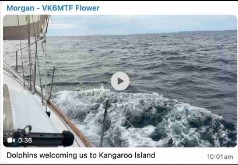
+ On Wednesday, Patrick VK2IOW at Orange also successfully copied and mapped Morgan’s position; Patrick also caught Morgan on Thursday… as did some dolphins apparently (click on the second last image as well)
According to Morgan’s blog, he worked Stuart VK6MK at Australind on Friday April 24TH. Richard VK6HRC at Padbury and I caught Morgan at around 0900Z on 7030KHZ Saturday April 25TH.
I attempted to copy Morgan’s Lat/Long to kick off the experiment discussed above… but at RSN 311 with QSB knocking out many of the characters, I didn’t get enough of a fix despite his sending the coordinates twice.
Tim VKSAV at Mount Gambier was also listening and ready to copy Lat/Lon, when Morgan’s signal faded to nothing. More luck on Sunday with Tim catching part the Latitude part, but first past the post was Lin VK6NT operating the Northern Corridor Radio Group’s VK6NC station at Whiteman Park catching and plotting Morgan’s position.
Click on the video below. The CW contest above 7010KHZ made planned QSOs impossible, so Morgan moved down into the DX portion…. which was dead quiet!
On Wednesday, Patrick VK2IOW at Orange also successfully copied and mapped Morgan’s position; Patrick also caught Morgan on Thursday… as did some dolphins apparently (click on the second last image as well)
From a CW Perspective, Sanity Has Prevailed.
They listened! Thanks to arduous and lengthy consideration by the WIA – at last in writing from the horse’s mouth – an unequivocal statement that there shall be no voice transmissions between the bottom of the 40 m band and 7.060 MHz.
This means the lowest carrier frequency shown on any AM or SSB transmitter’s tuning dial must never be lower than 7.063 MHz. (Note: the nomenclature has been corrected here to comply with SI Metric standards, but not in the table below.
WIA should be setting a far better example). But the newly released February 2026 edition of the Australian Amateur Radio Band Plan is only a voluntary ‘agreement’, a mere suggestion at best, which calls upon the exercise of ‘mutual respect’.
How well is that likely to work? Let’s be honest, it hasn’t in the past and it won’t now, unless you VK CW operators personally take an active role to ensure it does.
Since brazen entitlement holds far too great a sway in the entire spectrum of flawed human nature, best not espouse too many expectations for compliance with the band plans.
Any intervention, or attempt to enlighten offenders by observant ZLs is not going to be welcomed, leaving it squarely up to VK CW operators to educate the many SSB intruders who have traditionally shown no respect whatsoever for the lower 40 kHz, let alone 60 kHz, of the 40 m band.
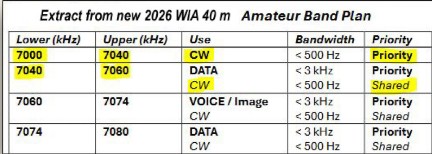
You can see all the ineele ala band plans relice https: theewove. wicory auinembera! Acknowledging WIA has produced a very pleasing, well set-out and easy to read document, but where were the engineers to ensure compliance with SI Metric standards before going to print?
How WIA expects the hoi polloi to comply with their new band plans after setting such a fine example of non-compliance themselves, completely eludes me.
Aussies, you’re not on your own. I see New Zealand’s Radio Spectrum Management, which long held to the rigid standards of S| Metric nomenclature, have allowed themselves to slip into non-compliance in recent public bulletins too.
Seems they can’t get the staff these days either! 73 de Stan
Reflections on RegChew Edition 17/2026 from the resident POG Reading RagChew has become a highlight of my week, not because I’m hard up for reading material, quite the opposite, but because it documents so many contemporary practical experiences.
It is well known by now my enjoyment from reading material structured under the mandated rules of S| Metric nomenclature. Unfortunately my delight is often tempered by the general lack of correct SI nomenclature in RagChew. Moving on.
Here’s a question: In the same way as others ‘up over’ have reported, Chris G7BED heard me seemingly well enough to ID, so with a noise floor < 2 and beautifully matched antenna, why am I not hearing the EUs?
Anyone have an answer or suggestion to put an end to this propagation asymmetry? Think how among other causes, might have something to do with the fact that 2512 km separates VK from ZL.
On 20 m that’s 125 600 wavelengths; on UHF we can make a significant change to signal strength by simply moving the antenna sideways one wavelength, so there’s no predicting what’s likely to happen on a 20 m path > 2000 km away. Food for thought.
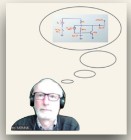
While musing in his ‘thought bubble’ about the schematic of a 10.245 MHz crystal oscillator, did Ross MONNK consider compensating for the inevitable frequency offset, albeit minor, caused by operating the crystal in that series-tesonant mode?
In old-fashioned home brewing terms, if we were to multiply the output 42 times, the offset could make the difference between transmitting legally inside or illegally outside the CW portion of the 70 cm band.
Mathematics and Nigel VK/G4RWI seem to go hand-in-hand. The analysis of his QSO success rate on Tuesday is impeccable. Wouldn’t it be nice if we could all achieve that elusive 100 % call-to-QSO ratio, regardless of whether it is one or many QSOs?
The thorough explanation provided by John VK2RU blew away nacht und nebel surrounding the loading of call signs into the QSO spreadsheet report. Who would have thought appearance was a design factor? Or is appearance simply another term for ‘centre-of-gravity’?
Now the pattern within that table has become clear, a quick check revealed the odd exception to the ‘visual width’ rule, e.g. the sequence of MONNK@20 and IU4FLS@20, otherwise all is fine and dandy. Many thanks, John, you’ve put our minds at rest.
Venus is more than likely somewhat angered by what Mars has brought home, even fearing for his sanity perhaps. She’s a lovely looking chick under normal circumstances; would the ‘head gagster’ have done her a disservice by allowing her to show her true feelings?

Ross’s discovery of the DSO138 oscilloscope and the enormous achievement in miniaturisation it represents brought to mind my first oscilloscope.
It too was home brewed but not from a kit and used the chassis from a war surplus GEE hyperbolic navigation system used in RAF bombers. But that’s for a separate article where we will compare the two, if not by performance then at least by size!
Did anyone twig to the pointed question comprising the final line of each verse of
‘Where have all the Flowers Gone’? The lesson is clear: best avoid developing bad sending habits right from the start – they stick like jam to a blanket, are jolly hard to clean up and the stain will live on to haunt following generations.
Yes, I am being haunted by a couple of bad senders – despite being of the same generation. So far neither of the two main offenders have taken any notice of my gentle admonitions. Hey – you fellow OTs! Give yourselves a regular CW fit-for-purpose test.
Discover if your sending passes muster by recording a couple of paragraphs at 25 to 30 wpm, then play it back a week later as though it’s anew QSO. Now answer truthfully, how easy is it to read? Expect some unpleasant surprises.
Any bad sending you hear springs from very annoying and entrenched bad habits. When the time comes that I’m incapable of constant vigilance when sending, a strong recommendation I will more than happily apply to myself, is simply this: if I’m not prepared to ensure high quality, consistently-readable sending 100 % of the time on the QSO FFA, then better for everyone that I stay away.
Undisciplined garbage is never acceptable. ‘When will they ever learn?’ 78 from the resident POG.
Morse Training Net
Our team member Nic VK7WW runs an on-air Slow Morse training net every Wednesday at 7pm EDST on 3580 for 30 mins. He uses the callsign of the Northern Tasmania Amateur Radio Club VK7TAZ on that net.
Many of our team learned Morse code with the support of Nic, and the weekly training session comes highly recommended for anyone who wants to learn the Code, or simply brush up.
Everyone’s welcome – 3580KHZ at 7pm Eastern time every Wednesday; you’ll hear lots of the CQQRS team on that net. Jordan VK3ACU has ralso ecorded the complete set of lessons which you can now find here:
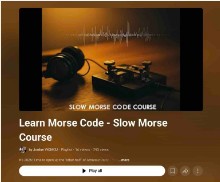
Https://www. youtube.com/playlist?list=PLHsQmZz6fBXO7swAfbT mutrbbEL17fUQL Contact Nic VK7WW for more info nicholaschantler@hotmail.com including how to join the NTARC DISCORD group to follow the action, or just come along and join in on Wednesdays.
More Emails to the Editor
Mark I know that you are keen to encourage female participation in the Net. With that in mind, it does concern me that the “Venus & Mars” cartoon strips are perpetuating gender stereotypes, suggesting that it’s a male hobby and that female partners indulge their man whilst rolling their eyes.
While this old- fashioned view of male/female relationships may be true for 99% of Ragchew’s aging readership, it is not, IMHO, the way to address the gender imbalance in the hobby.
I know it’s easy to criticize and a lot less easy to come up with something appropriate. Especially as I’m a “Words” creator, not a “Visual” creator. But I felt a strange urge to point this out. Ross MONNK [Thanks for the heads-up Ross; see my editorial above.]
Hi Mark, I have been absent from the QRS net for a couple of weeks. Was planned all good for it last night then was called in to work. I plan to be back next week anc operating from some RF quiet place. Jim VK7JZ
Good to see you active on the Snowline SDR this evening. As you’ve probably noticed, the system has had some intermittent downtime recently. This is primarily due to the seasonal shift reducing available solar input at the site.
With the sun now sitting lower, the current panel configuration isn’t maintaining sufficient charge consistency. We’te planning a corrective visit shortly to upgrade the solar setup — increasing from two panels to five and adjusting the tilt angle to better suit winter sun conditions.
That should stabilise the system and restore normal uptime. In the meantime, because of the intermittent availability, the receiver isn’t always listed on the KiwiSDR public directory/map.
Access is currently most reliable via direct bookmark rather than discovery through the main listing: http://snowlinesdr.vk1hf.com:8073/?user=CQQRS%20Net Just wanted to provide a clear status update so you and others understand what’s going on behind the scenes.
G’day Mark. Great newsletter, had a good chuckle over Jordan’s Venus & Mars, keep them coming, Jordan. Aesop Fables, 2nd time I had a go at these, good CW practice for head copy, getting most of the characters. John VK5ET
Email answers to the Editor, c/o RagChew, Beautiful South Bowning. cqgrsnet@ gmail.com
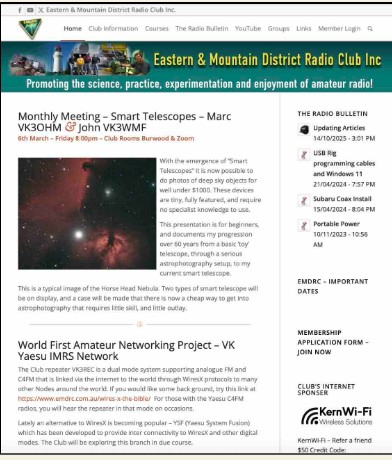
Don Edwards Memorial Slow Morse Contest Returns – 16-17 May The Don Edwards Memorial Slow Morse Contest returns 16-17 May, welcoming all amateurs to enjoy relaxed, hand-sent Morse code operation at slow speeds in memory of Don Edwards VK2NV.
From Saturday 16 May 2026 To Sunday 17 May 2026 The St. George Amateur Radio Society is pleased to announce the return of the Don Edwards Memorial Slow Morse Contest, to be held over the weekend of 16-17 May.
Held in memory of Don Edwards VK2NV—a long-time Society member and passionate CW operator—this event is designed to encourage all amateurs to get on the key and enjoy Morse code in a relaxed, welcoming environment.
Whether you’re: * returning to Morse after many years, * just learning CW, * or have never tried operating on the key before, this contest is the perfect opportunity to give slow Morse a go. What is “Slow Morse”?
Slow Morse is sent at no more than 10 words per minute, although in previous years ‘some contacts have been exchanged at speeds as low as 3 words per minute.
Contest Rules * Morse code only * Sent by hand * Received by ear Operating Times: Saturday 16 May * 6:00 pm — 9:00 pm Sydney time + 80 metres ‘Sunday 17 May + 1:00 pm — 4:00 pm Sydney time + 40 metres
Don Edwards Memorial Slow Morse Contest
Louis Olsen Straight Key – Looking for a Replacement Pz
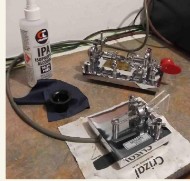
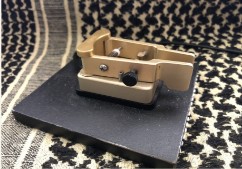
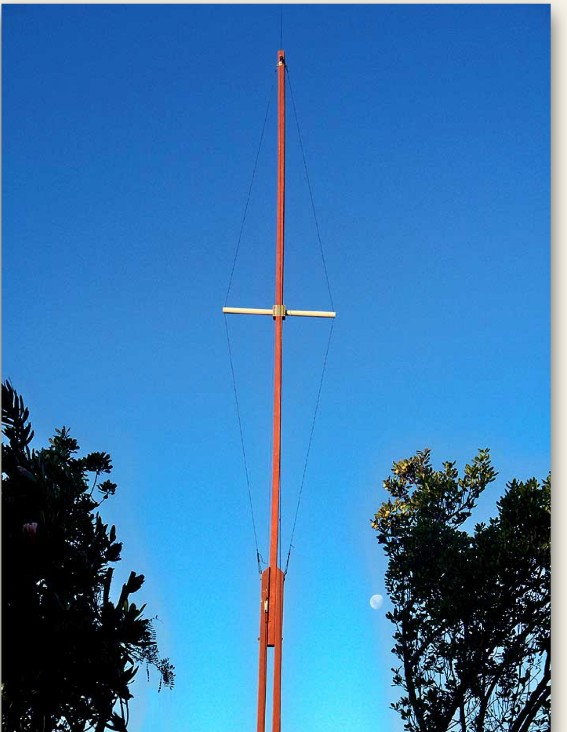
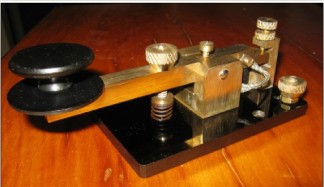
I’ve been very fortunate to get hold of a few old keys recently. One of them is a Louis Olsen straight key. Unfortunately, one of the original adjustment screws is missing, and has been replaced with a s/steel socket cap screw with a completely different diameter and thread to all other original fittings.
It’s possible that the rocker arm was tapped to suit this new screw, but I don’t know.
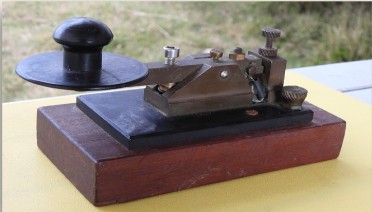
| have found this photo of a similar Louis Olsen key showing the correct adjustmen screw on the compression spring.
If you’ve read something that you think might be of interest to our readers, please email to Mark VK2KI: cqgrsnet@gmail.com
Prosign/Character/Signal of the Month
Frosign: <0AK> goog Meaning: End of Contact
[Put it on a sticky note near your key as a reminder for Tuesday… and tell us how you went!]
I Hear Tell…
• Do yourself a favor check out Nic VK7WW’s Morse training net on Wednesdays – VK7TAZ – never a dull moment especially the Discord link !
[If you have some intel about other team members… or even yourself… that’s worth sharing, please let me know cqqrsnet@gmail.com ]
Di-dah-di-dah-dit
So back to the CQQRS Slow CW QSO practice net.
Next Tuesday’s Net
Our CQQRS Group will be on as always on Tuesday from around 0600Z until about 1200Z; see https://bit.ly/CQQRSWebsite and navigate to the Net Details page for details.
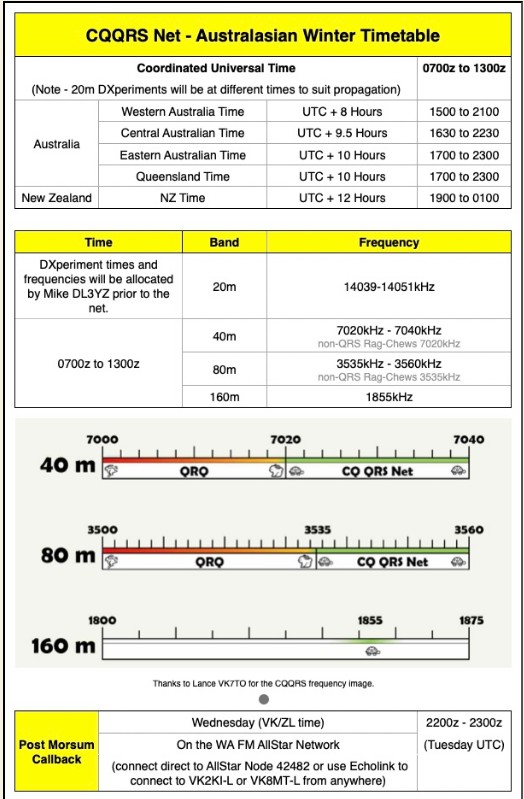
Doesn’t matter whether you’re brand new and want to try just exchanging callsigns and RST reports, or you’re ready for a good old rag chew. We’ll have fun.
There’s usually people around until after 1200Z – so keep calling in the segment of the band designated in the table below until you catch someone.
Please let us know via our Reports form bit.ly/CQQRSNET who you work or hear on Tuesday’s Group. The report form closes at 1pm (Eastern Australian time) on Thursday. And how about helping to make the reports even more interesting by sending a photo?
If you have a photo that you’d be happy to include, please email it to: cqqrsnet@gmail.com And of course, we’re always on the lookout for more photos for the newsletter, so if you have something that might be of interest aside from the reports, please send it through as well.
Email to cqgrsnet@gmail.com please. Oh and by the way, I recommend that you don’t keep the Reports Form website open between submission of reports from one week to the next.
If you’re unlucky, there’s an undocumented feature in the software that could cause your current week’s report to be combined with your previous report – it’s happened to your editor several times – much to the chagrin of our Reports editor 🙂
Richard VK6HRC will run our phone Post Morsum on Wednesday mornings on the South West AllStar net (via repeaters and hotspots all over WA) from 0600 WA time, then from 0700 WA time on 80m (3605 LSB).
See https://bit.ly/CQQRSWebsite and navigate to the Net Details page for details of how you can connect via Echolink from anywhere in the world.
Articles
Could you write a short article or articles for RagChew? You bet! Writing not your strong point? Don’t worry, I’m very happy to help as much or as little as needed.
Oh, and one more thing (actually two) – copyright material: ¢ please use your own images – don’t use images copied from the internet unless you have the producer’s permission, or they’re marked ‘Creative Commons’ or similar; ¢ if you include other peoples’ written material, unless you have permission, you may only include small snippets (unless it’s marked ‘Creative Commons’ or similar), and you’ll need to site the source and author.
For more guidance on writing for the RagChew newsletter (including how you might even try using one of the new Artificial Intelligence tools), head to our website bit.ly/CQQRSWebsite then click the menu on the top right and then click RagChew Newsletter.
A reminder; if you send me any information by email, our report form or WhatsApp – unless you specifically state that material is not to be published, I’ll assume that you’re happy to see your thoughts in the RagChew newsletter.
Thank you so much to our team of 33 contributors: DL3YZ, G7BED, IU4FLS, MONNK, The Resident POG, VK1HF, VK2IOW, VK2RU, VK2TIG, VK3ACU, VK3BWN, VK3DRQ, VK3ECH, VK3KLE, VK4CEG, VK4EV, VK4IM, VK5AO, VK5ET, VK5KFG, VK6GX, VK6HRC, VK6JDM, VK6KD, VK6KHZ, VK6MTF, VK6NQL, VK6WE, VK6XC, VK7JZ, VK7TA, VK7WW, ZL1DRS, ZL1PB, ZL3ABX and ZL3TK.
And a special thank you to our editorial
Team, Nigel G4RWI (chief cryptographer), Patrick VK2IOW (VW electrical diagnostics specialist), John VK2RU (noise chaser), Richard VK6HRC (post morsition), Lance VK7TO (director of the archive department) and Jordan VK3ACU (cartoons-r-us). Great work all!
GU CW on Tuesday, mb Mark Bosma VK2KI / VK6QI Beautiful South Bowning NSW cqqrsnet@gmail.com non impediti ratione cogitationis
About the CQ QRS Net
For the current schedule and more information about the CQQRS net, please go the the Net Details page on our website:

The opinions expressed in the RagChew newsletter are those of the individual contributors. The opinions do not necessarily reflect that of the editors or of the CQQRS Group members.
Any material and images received from members by the editor or published on the CQQRS WhatsApp groups may be published in this newsletter unless specifically requested otherwise.
The RagChew newsletter is considered to be exempt from the Australian Government’s ban on social media for under 16 year olds because it is a service that has the primary purpose of enabling users to share information about products or services, engage in professional networking or professional development services or of supporting the education of users per the Australian Government eSafety Commissioner FAQ webpage “Which platforms have been excluded from the age restrictions” dated 10DEC25.
The values, doctrine and guidelines for the Group and for the newsletter are published on the Principles page of the group’s website https://bit.ly/CQQRSWebsite