Below is a reconstruction of the 2026 19 CQ QRS RagChew newsletter designed to support full text searching. This reconstruction was built using OCR, and will contain errors.
To view the Mailchimp original, click here. To search the entire newsletter archive, click here.
Contents
- CQ QRS RagChew
- Dah-di-dah-di-dah
- Website
- Post Morsum 05 May 2026
- Reporting
- Bodging Portable
- I am at the right distance above the ground.
- On My Workbench
- Signal Generator
- Ross:
- Gemini:
- On My (Historic) Work Bench
- A Bit of Spit & Polish
- QRZ?
- Mike VK6TX/4
- Mark
- QRZ? Who’s on the other end?
- CW Practice
- Other News
- Brocante Radio De Roquefort
- A Couple of SOTA Activations
- Don Edwards Memorial Slow Morse Contest
- Morse Training Net
- Emails to the Editor
- Prosign/Character/Signal of the Month
- Di-dah-di-dah-dit
- Next Tuesday’s Net
- Reports & Photos
- Post Morsum
- Articles
- About the CQ QRS Net
CQ QRS RagChew
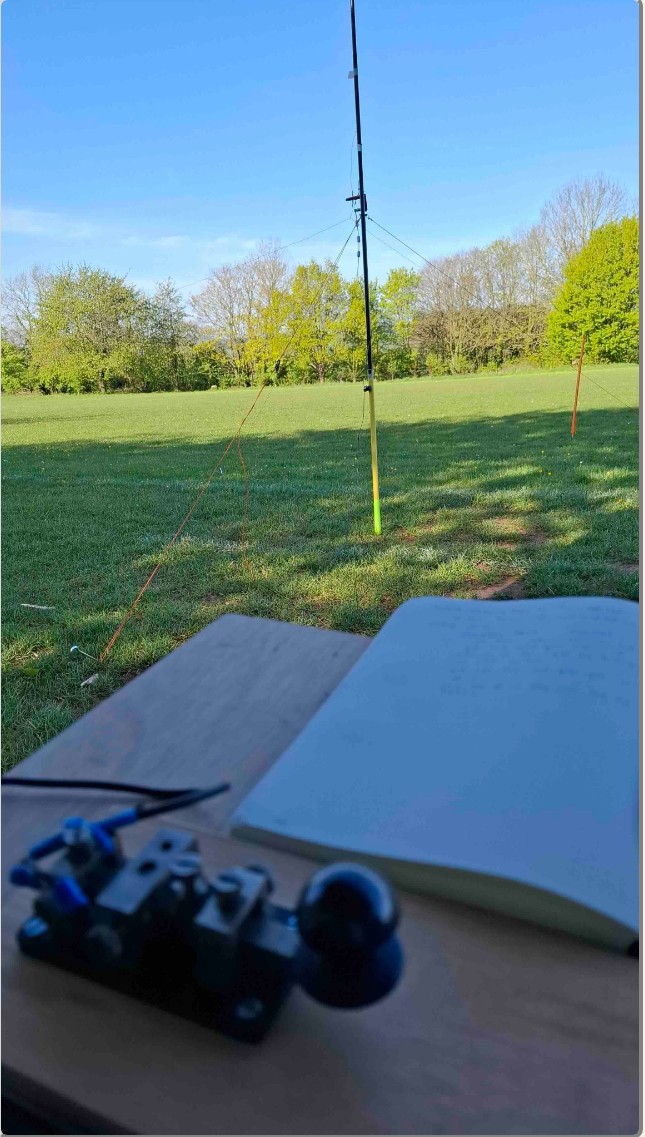
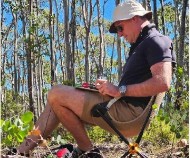
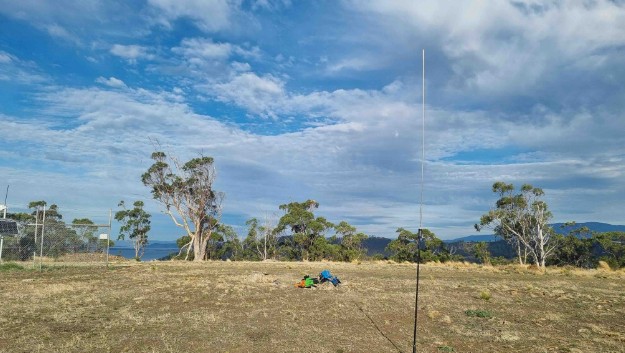
This week our prolific producer of interesting articles, Ross MONNK is off camping somewhere (hopefully dry this time!). Yet, he’s still managed to produce two excellent articles for the newsletter – thanks mate – outstanding.
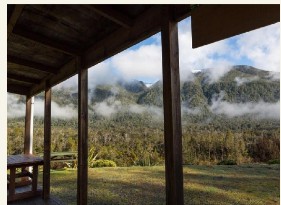
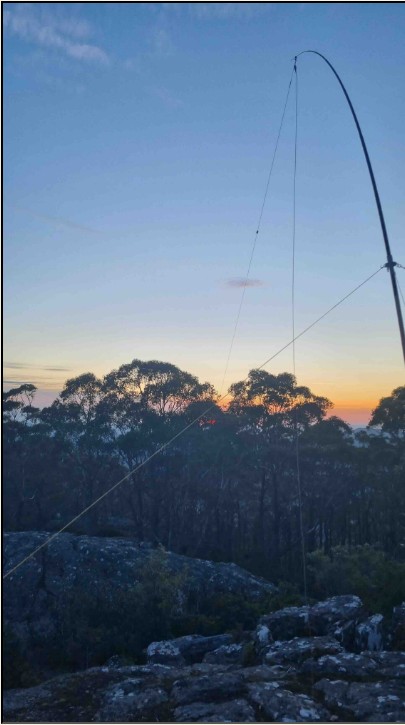
The sunny image above was Ross’ portable set up a few weeks back; hopefully, it’ll be just as sunny where he is this week.
Dah-di-dah-di-dah Sounds like most people enjoyed variable, but still reasonable conditions during our CQQRS Slow CW Practice QSO net on Tuesday.
If you can, please enjoy the read of the reports people submitted about their experience on the net; well done everyone!
And speaking of well done – if you roll down through the newsletter, you’ll find just so many outstanding articles from so many of our readers! Thank you everyone for making our newsletter really interesting for our readers.
In-turn, I hope our team members find that the outstanding friendship of our fellow QRS operators and the newsletter itself help make participation so satisfying for you. RSN? RST? What the…?
On our net, and increasingly among CW operators down this way, you’ll hear people giving RSN reports, instead of the usual RST. I think it was Stan ZL8TK that encouraged me and so many others to adopt a suggestion that may have come from FISTS Down Under.
So what is it about? We were alll taught that on CW, signal reports are supposed to follow the RST format: * Readability – one-to-five scale – something like: © 1-unreadable – barely able to hear any signal at all.
© 2- barely readable – occasional letters only distinguishable © 3- readable with considerable difficulty – but some of the letters make sense © 4-readable with only a bit of difficulty © 5 – perfectly readable * Signal Strength © 1 to 9 – what the S-meter tells you is the peak signal strength + Tone © 1 through to 9 – extremely rough through to perfect tone.
So these days, how often do you hear a Tone report that isn’t 9? And if it isn’t 9, just how long would it take a QRS operator to describe (Justify?) why they reported anything so offensive as other than 9? And what about the graduations between 1 and 9?
I do have it listed somewhere….. but now that we aren’t tested against the contents of the old (PMG?) Regulations Handbook, is my list the same as the receiving station’s? Doubtful!
So instead, here on the CQQRS net and increasingly popular out in the rest of the CW world, you’ll often hear RSN reports instead. With RSN, the R and the S are the same…
But the N could be the peak noise level as indicated on the receiving station’s S-meter – 1 to 9. And yes I know, you have a perfect S 0 noise level, so why not report it? Please do…
But remember, how accurate Is your S-meter, below S 1 (down below something like 0.2uV)? And of course, an S 0 noise floor cannot exist in theory. But no-one’s going to get wrapped around the axle in our group if you send RSN 590.
‘So now we have something that’s much more useful to the sending end than RST – how well was my signal heard (readability and strength) at the other end… and if the signal wasn’t readable 5, why not?
Ahhh, my signal strength was reported as $5, but the noise was S4 – so with QSB, my signal probably was drifting in and out of the noise.
Oh, and the readability was reported as 3 – so I’d better repeat the important things like the signal report etc, and probably not waffle-on too much about just how nice the weather is at the moment, or ask difficult questions; remember, the one thing the other operator will hear is the question mark….
But if they didn’t get the gist of the rest… that makes more pressure to ask for a repeat under difficult conditions. Now here’s a challenge – what if the duty thunderstorm somewhere is producing static crashes of S9+20dB?
Let’s say the station was S 7, and the static crashes were infrequent enough to not affect readability? Your RSN report could then be 579; looks awfully like an RST report doesn’t it?
The solution you’ll hear on the net is to send something like: “UR RSN RSN 579 579”. That way, the other dude knows that it’s an RSN report, not an RST.
If I’m working someone who may not be familiar with RSN, I might rub it in a bit more with “UR RSN RSN 579 RSN 579” or similar. So….
I’m not going to tell you how to suck eggs – or how you should operate – but perhaps have a think about making your reports on the CQQRS net even more useful? And….
Be brave, let’s start spreading the Aussie / Kiwi way of reporting to the dreaded DX world as well perhaps?! Don Edwards Memorial Slow Morse Contest Aheads-up, the St George Amateur Radio Society runs the Don Edwards Slow Morse Contest on the weekend following Mothers’ Day.
The contest remembers and pays respect to Don Edwards, a passionate CW operator and long-term SGARS member. This year, the contest is on Saturday and Sunday May 16TH and 17TH. 80m on Saturday from 0800 to 1100Z and 40m on Sunday from 0300Z to 1200Z.
The rules are simple – no more than 10 wpm, and the CW is to be sent by hand. You’ll find all the details further-down in the newsletter. Don’t go for contests?
You’re not Robinson Crusoe – but pethaps consider it an excellent opportunity to have a bit of fun and get some practice at the same time? I’ve entered a number of times – it’s just so nice to actually be able to exchange pleasantries during a contest.
And of course, if lots of our team members are on air, chances are you’ll catch up with a mate or two too (yeah, I know…one-one was a race horse So back to the business at hand…
Thank you for being here, and please enjoy the newsletter – and if you can, scan all the way to the end for this week’s Venus & Mars in the Ham Shack.
Dah-di-dah-di-dah
Sounds like most people enjoyed variable, but still reasonable conditions during our CQQRS Slow CW Practice QSO net on Tuesday. If you can, please enjoy the read of the reports people submitted about their experience on the net; well done everyone!
And speaking of well done – if you roll down through the newsletter, you’ll find just so many outstanding articles from so many of our readers! Thank you everyone for making our newsletter really interesting for our readers.
In-turn, I hope our team members find that the outstanding friendship of our fellow QRS operators and the newsletter itself help make participation so satisfying for you.
Website
If you’d like to find out a bit about our net, or would like to pass information to others about our Tuesday get-togethers, here’s the link to our website. bit.ly/CQQRSWebsite So here we go – on behalf of the CQQRS Editorial team, please enjoy the newsletter.
Niall kh DOSITa VK2KI / VK6QI Patrick John Beautiful South Bowning VK2IOW VK2RU NSW Milthorpe NSW on a track somewhere cqqrsnet@gmail.com non impsditi ratione cogitationis Nigel Richard Lance G4RWI VK6HRC VK7TO our other grey nomad Padbury WA Margate TAS Jordan VK3ACU
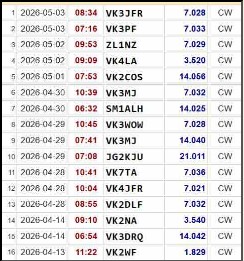
With thanks to Nigel G4RWI’s clever software, and John VK2RU’s clever spreadsheet work, here’s the 75 stations heard by 44 members of our team on Tuesday:
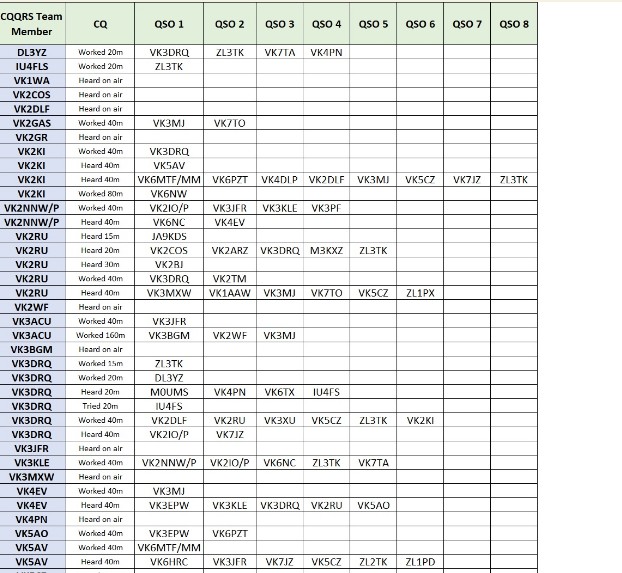
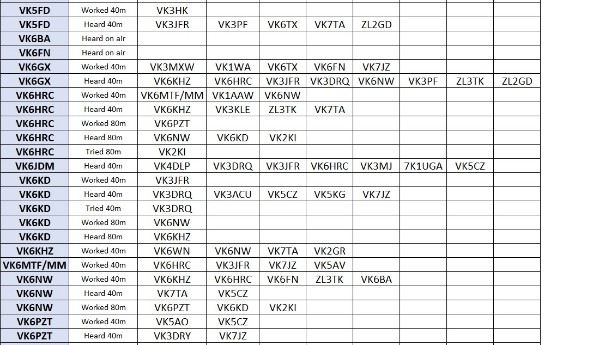
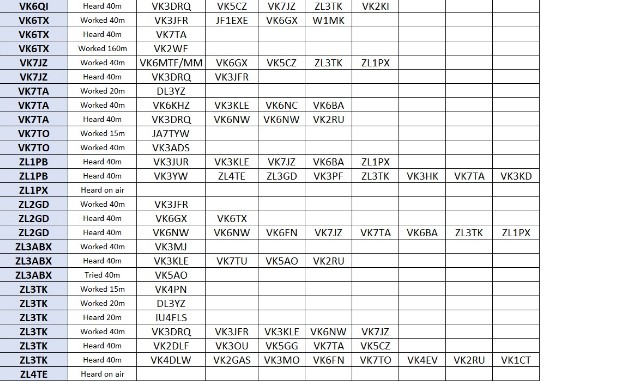
• 2 2S 2 eee Sa e John’s spreadsheet above shows the known stations heard or worked on last Tuesday’s CQQRS Net (reported via our webform bit.ly/CQQRSNET ); the comments in the team members’ reports follow.
The comments were compiled for us by the software built with the Al coordinated by Nigel G4RWI, and the layout was perfected again this week by Patrick VK2IOW.
Thanks again to Nigel, Patrick and John for the work, and to every team member who submitted a report –
[20m] The condx were challenging today, we had some QRN up here today. At 7:03 UTC a VK6 station was calling me, an we tried our best. But I was not able to get the callsign. Please try again next time.
And thanks to Stan, Manny, la and Sava for the nice beeps around the globe. Have a great week, Mike.
[40m] I was on a bit early for VK but was surprised to heard so many VK6’s on with quite good signals.
[20m] It was rainy in Bologna on the 5th. Signals arrived rather weak. I just had with pleasure a short QSO with Stan, when MMOUMH came in. Actually I do not yet know how to deal politely with non QRS NET friends during our DX.
Anyway I was unable to hear other QRS NET friends. All the best to everybody. 73 de IU4FLS – Fausto
[40m] Really enjoyed being back at the radio and headphones on. Tonight was a bit up and down as far as reception went. Peter ZL1PX was low down to me but consistent, Phil VK6GX was good, then not, then OK again.
Good chat with lan VK5CZ, but clearly I was not listening as I put is not quite what he sent. then we were distracted
Him on the plane to Peru, but that is not quite what he sent, then we were distracted by SOTA (my kryptonite I cannot resist).
I was most happy with the very brief QSO with Stan ZL3TK, this was the hardest signal to hear all night I was so pleased to copy it, but was not strong enough to me to hold a longer QSO to any effect.
I could hear Morgan VK6MTF having a QSO with someone but could not make the other party out, then Morgan was good enough to call me after he concluded a QSO with James VK3JFR.
The last couple of weeks I have been going to SOTA summits in the evenings for good conditions and an absence of city ORM. I think I need to do that next Tuesday, and put in some more head copy practice between now and then.
Thanks everyone, hear you next week I hope. 73 Jim
[80m] Great signal from Wayne, lots of QSB during QSO with Richard HRC
[80m] Great signal from Wayne, lots of QSB during QSO with Richard HRC
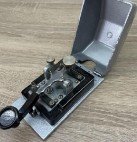
[40m] It seemed 40m was very well-behaved late afternoon WA time. Managed to get a QSO with Stan ZL3TK which was lovely, thanks Stan! Did not hear any EU stations direct, though were heard in the SDR’s.
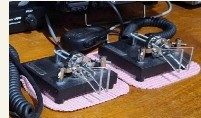
[80m] Nice to catch up with Mark and David on 80m. Some background atmospherics but was able to read the sigs well, especially with the narrow filter on the 20 year old FT- 897.
[40m] Even with my limited time, I did enjoy having so many interesting QSOs and even the BOSS was in my list. Thank you for the chat OM Mark. I am sorry the conditions were not as good as with others.
[80m] I heard OM IU4FS very faintly and I tried several times cz came my way. Maybe next time?
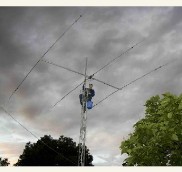
[40m] Only appeared to be getting signals from WA to SA and not SA to WA. I had to utilise the IronStone SDR for my Rx.
I – managed a QSO with VK3JFR and gave a RST of 572 as the tone I was receiving from James appeared to have a side or split tone and very difficult to decode. I moved up and down frequency on the SDR and it cleaned up a bit.
Still not sure but grateful for the QSO. I later saw some comments on the ythe enlit tana Snmethina to follow ip later
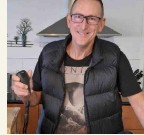
What the cause was bul grateful for he VovU, I later saw some comments on the chat group regarding the split tone. Something to follow up later.
[80m] I was too slow off the mark getting my PC fired up when I heard VK6KHZ calling CQ at 1740HRS (WST). By the time I got sorted, he was gone. Hopefully next week for a QSO Ron. 80m band was open to VKS land later in the evening.
I had finished working 40m and utilising the Iron Stone SDR for Rx when Wayne VKGNW responded to my CQ on 3555 kHz. 80m between Bridgetown and Perth was working a treat with Wayne bending my needle again with an S9 signal.
The SDR in VK5 was still on my screen and I could see our QSO blazing down the waterfall as we conversed. While I did not achieve a QSO outside VK6 land, I was more than happy for the QSO I had and the fact the 80m band is becoming useful again.
Looking forward to more activity in the future. 73s for now.
[15m] Sava VK4PN could have been a local such was his thick red line down the waterfall. Fausto IU4FLS had considerately posted a notice announcing his unavailability, ergo, calling him would be fruitless.
Highly recommend everyone wanting to work Europeans in the DXperiment ho DL3Y7 for access to his status monitoring paqes.
Wanting to work Europeans in the DXperiment hours to request a URL from Mike DL3YZ for access to his status monitoring pages, not only to keep up to date with others but also to show your own status and have the ability to leave short messages.
Knowledge is power! [20 m] Somewhat underwhelming, only a ‘sort of’ night. Could hear Fausto but don’t think he could hear me. Managed only to exchange signal reports with Mike and not ever sure I got that right, gulp!
[40m] Trans-Tasman propagation had very much reversed in favour of east-bound signals this week as demonstrated by the number of stations heard.
VK3OU was clearly no taking part in CQQRS but heard going hell-for-leather after the ‘Grand Prix’ for QRQ – was he tiding a high-rewing 1959 blue racing bug? Had a couple of skeds but neither showed.
[80m] Called stations on sked but none showed. Called CQ for ca. 30 minutes until 1200; but heard and saw nowt. Chalk it up to experience, another opportunity in seven days time.
From your editor Mark VK2KI at Beautiful South Bowning NSW
[40m] Late to the party this week; my neighbour (SWL-Jack) and I went to a Bowning Bushfire Brigade meeting… only to find I’d got the night wrong! So! missed the early starters before 40m became busy, as well as the DXperiment team on 15m and 20m.
Anyway, when I got home, there was still a number of QSOs going on on 40, and I really enjoyed listening to a nice rolling rag chew between lan VK5CZ and James VK7JZ, both of whom had nice signals here.
When they finished, lan was called by one of our founding team members, Richard VK6PZT at Dalyellup; interesting when I checked the VK6SEG KiwiSDR near Northam, lan was romping in at RSN 561, while there was absolutely no sign of Richard.
After about an hour of enjoyable listening, I came across Manny VK3DRQ calling CQ; it’d been a while since I’d chatted to him, and it was my privilege to have a quick chat…
Manny’s phasing noise canceller had been working overtime, but my signal wae nningn down tha tiihec cn wea had in qnive it away
| rounded-out 40m by listening-in to the QSO between Morgan VK6MTF/MM sheltering at Kangaroo Island and Tim VK5AV at Mount Gambier; great signals from both here – especially from Morgan – best signal from him on his Esperance to Hobart journey so far.
[80m] I needed a not too late night, but managed one uick QSO with our friendly Winomeister, Wayne ing off to bed, after a fun night. a i oS EE 0 ET = SEY os Es 0 =o
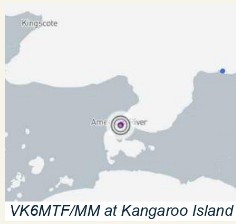
Also from your editor Mark VK6QI at Beautiful South Bowning NSW via the Southern Electronics Group’s KiwiSDR at Hoddys Well.
[40m] Interesting when I checked the QSO between lan VK5CZ at Clare and Richard VK6PZT in Bunbury, lan was RSN 561, but either the D-layer was still too strong, or the F-layer wasn’t strong enough for Richard – absolutely zip heard over the 240KM path.
From Morgan VK6MTF/MM at Kangaroo Island, SA
[40m] I turned the radio on a bit late after enjoying some Kangaroo Island hospitality at the American River Sports Club. Kevin and I caught up for a beer with Tony VKS5KI who had been my regular sked contact whilst sailing across the bight.
I called CQ rather ‘QRQ’ for my standards and somehow Richard VK6HRC managed to copy me and have a great 59¢ sidanal report.
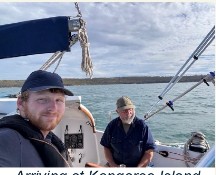
No sooner had we said 73’s James VK3JFR had matched my speed and we had a great QSO despite his side tone being a little compressed. Jim VK7JZ was my next QSO, thankfully operating at a nicer speed and giving my brain a rest.
Despite his 579 signal, he was struggling to copy me giving a 339 report. Great to get you in the log Jim. I’m sure it will get easier the closer I am to Hobart. Finally I worked Tim VKSAV who had a cracking signal from Mt Gambier.
We enjoyed a good QSO before I went QRT to save my limited battery power on board. We are still looking for a reasonable weather window to depart KI and continue our journey south-east to Tasmania. Fingers crossed for some westerlies.
Thanks to everyone I managed to work between Esperance and KI. 73’s DE Morgan VK6MTF/MM
[40m] Excellent conditions on 40m enabled me to work three stations new to me.
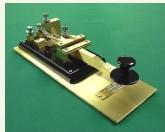
From Stephen Coote ZL3ABX at Nelson New Zealand
[40m] Once again, it seems my signal was not strong enough. Thanks for persisting Mark.
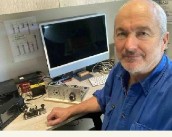
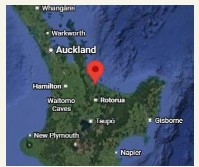
[40m] Great to catch up with MorganVK6MTF/MM big signal into Perth metro from Kangaroo Island and VK1AAW Sam doing a SOTA activation. Conditions changed and had to battle QSB to catch up with Wayne VK6NW just down the road in Bridgetown.
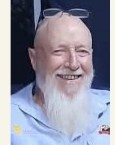
[40m] Finishing off a CW transmitter so did not have chance to transmit, heard and copied a number of stations on 40 metres while melting solder. Listened to 20 metres for the Europeans, but band had not opened during their scheduled time.
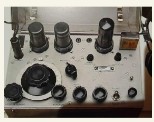
[20m] I could only just copy Mike, and it did help knowing that he was going to be calling on that frequency.
[40m] Mostly VK6 this week. I did have a look lower down the band and had a nice chat with VK1CT, which may not have been officially on this net? I was surprised to then get a call from W’
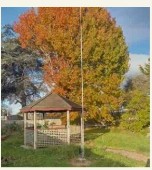
[40m] I On Tuesday night, I was operating portable from my parents place in Macksville. I was using my FT 817 running SW. I apologise to Paul VK3KLE as my battery suddenly died towards the end of my Qso! 73
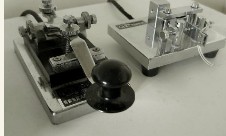
[15m] I found a short window to jump on the radio early in the evening, but was unable to raise anyone on 40. Witha narrowly closing time before I’d have to leave again, I jumped up to 15 m and found JA7TYW calling.
It was a real treat to work Masa with his excellent English, allowing us to have a nice QSO.
| wasn’t able to participate later in the evening, so tried my luck a couple of hours before normal start time, and was rewarded by a most enjoyable chat with John, VK3ADS.
As a retired ship-based RO, he was more than happy to serve my curiosity by answering a range of questions. Unfortunately, my presence elsewhere was required too soon, so had to send a reluctant 73.
[40m] Only two QSO’s tonight. The first one with Trev VK2TM was going good, until my brain decided that it was going to forget how to copy. Then another good one with OM Manny VK3DRQ, until a band of noise came in, centred on his frequency.
After that, just a bit of listening and practicing more head copy.
Post Morsum 05 May 2026
From Richard VK6HRC. Seven on the VK6RLM rpir and AllStar/Echolink hub this morning.
SAA ANI ABI DB dN ELE VK6FN Max VK6NW Wayne VK6KD David ZL3TK = Stan VK6QI = Mark VK6HRC
VK6MRB Mulligan swi and others. Max had a power outage again but luckily the power was restored in time for the QRS session. He worked three on 40 m and heard Stan ZLSTK before close.
Wayne worked five on 40 m and three on 80 m trying out his FT891 and traveling wave antenna for his portable set up. Listened out for the DX crew on a Kiwi SDR receiver as well.
David tried working Manny VK3DRQ on 40 m but the condtions not good enough to comiplete the contact, then tried 80 m where he worked Wayne VK6NW and heard Ron VK6KHZ and a Japanese station, Stan commented on the interesting conditions last night and in some cases the signals were down at times.
Stan also recommended that the people trying to contact our Northern Hemiphere friends check the URL live feed published in the Ragchew as apposed to the proposed frequencies in the spread sheet. Sometimes a frequency shift occours when trying to avoid QRM.
Mark and Jack swl (neighbour ) headed of for a Bushfire Brigade meeting only two weeks earley ! Made the most of miscalculation enjoyed the facilities of Downing pub and headed home.
Mark heard nine and possibly a tenth (VK6NW ) on 40 m had a partial contact with Manny VK3DRQ but QSB got in the way. On 80 m worked Wayne VK6NW to round the evening off I started the evening out at the NCRG clubhouse with Lin VKENT, most enjoyable listening out with the 40 m Yagi monobander in line.
Headed home after a while leaving Lin to keep on working without interuption from me. Thank you to all as usual 73 Richard.
Reporting
After next Tuesday’s Group, please remember to send me a list of who you worked and / or who you heard using our web form here:

Even if you didn’t hear anyone, we’d still like to know that you had a go. And to make your report more interesting, please consider sending a photo: cqarsnet@gmail.com So, please help attract new and old team members to have a go by submitting your report each week.
Submissions close 1300 (Eastern Australian Summer time)_on Thursdays.
Bodging Portable
Laas td by Ross MONNK When I started going portable, I had no idea what I should be doing. So, I looked around the internet, bought some gear, and got started. Unsurprisingly, I made a right ‘pig’s ear’ of it. But I leamt from my mistakes.
Now, a few years later, I have a portable set-up that suits my operating style. It’s not the lightest or the most minimalist because I’m not activating SOTA – I rarely hike more than a few hundred metres from my car.
But that short walk is enough to get me away from distracting questions from members of the public. And my modest gear regularly gets me all the way round the world to Australia and New Zealand, so I must be doing something right!
I’m a great fan of SOTAbeams, suppliers of hardware to support portable operations. SOTAbeams is a UK company but they ship all over the world and are well respected within the international hobby.
I first bought their 10 m telescopic mast, which turned out to be far too big and heavy for me, although I do use it for the rare occasions when my T2LT antenna for 15 m gets an airing.
I dropped down to a 7 m mast and that served me well for a few years, getting Velero strapped to saplings, but was still abit of a beast.
Then I discovered these ultra-light and compact cheap Chinese fishing poles – search eBay for “Short Telescopic Fishing Rod Ultralight Hard Portable Starter Fishing Pole” or some such gobble-dee-gook. Some claim to be carbon fibre (HI Hi).
I got the 7.2 m version for a measly 34 Aussie Dollars. The topmost section is very fragile so I discarded that but the mast is still tall enough for an EFHW or a vertical for 20 m.
I added a short tether to the cap (‘cuz you just know that’s going to go missing), and glued a short thread to the thinnest section to aid extracting it.
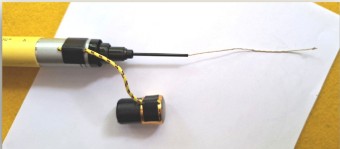
Next up: guy-line attachment. SOTAbeams does these nice 3-D printed collars to fit their 7 and 10 metre masts, sliding down over the thinner sections until they gently
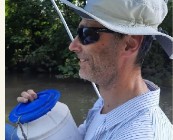
I am at the right distance above the ground.
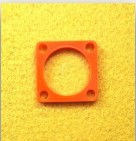
But these are too big to fit the slim Chinese masts, and anyway four guy-lines are a nightmare to rig on your own (I prefer just three). So, I make my own using Zip Ties (aka tie-wraps or cable ties).
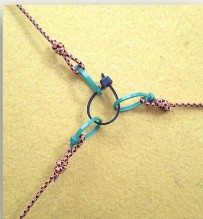
Adrop of superglue in each latch fixes their diameter once you’ve got them adjusted. Brightly coloured guy-lines are highly recommended, for reasons I don’t need to explain. Portable can seem daunting if you’ve only ever worked from a shack.
And it can seem like a hassle, having to drag your gear around and get it set up only to tear it down an hour or so later. But I’ve grown to really enjoy the adventure of it.
If you look upon the whole preparation and outing as the operating session (not just the time when you have your radio turned on) then it can make for a very enjoyable morning or afternoon in the countryside.
Next up is an interesting antenna to put up that cute whippy mast… Ross MONNK
If you have an article or two that you think might be of interest to our readers, please let me know so we can share more thoughts and ideas; for guidance on writing for RagChew, see Articles below. Please email material to Mark VK2KI: cqqrsnet@gmail.com
On My Workbench
Signal Generator
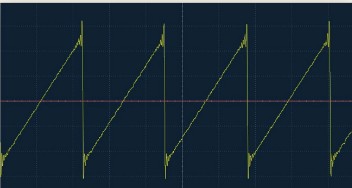
I’ve been asked what I used as a signal generator for the audio frequency waveforn in the second of my articles on oscilloscopes (BTW whilst the sawtooth and square waves have these jagged corners, the sine and triangle waves are nice and clean).
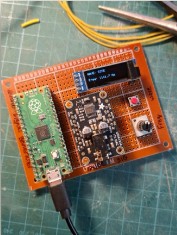
The answer is…this Frankenstein contraption:
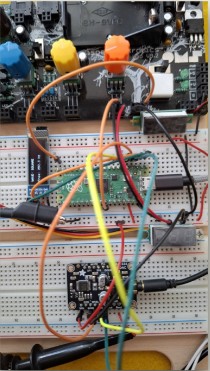
In the image, the square white button cycles through four waveform types, and the orange knob sets the frequency (from 23 Hz up to 20,000 Hz). The display shows the waveform type and frequency.
The Google Gemini Al designed the wiring and wrote the code for me:
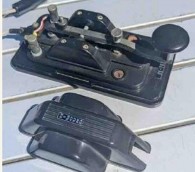
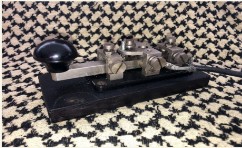
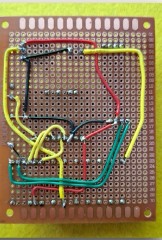
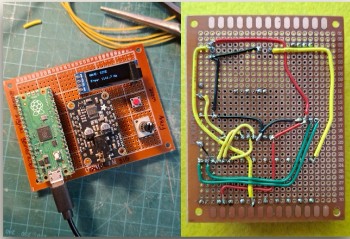
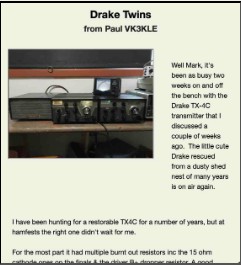
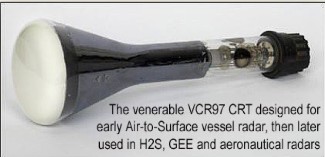
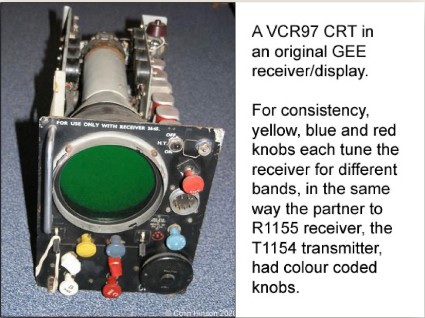
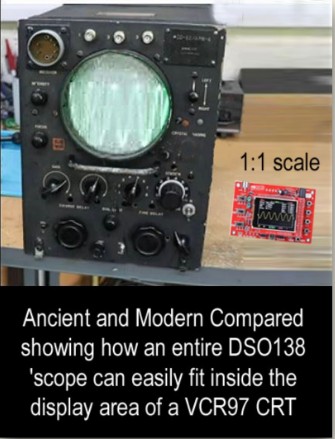
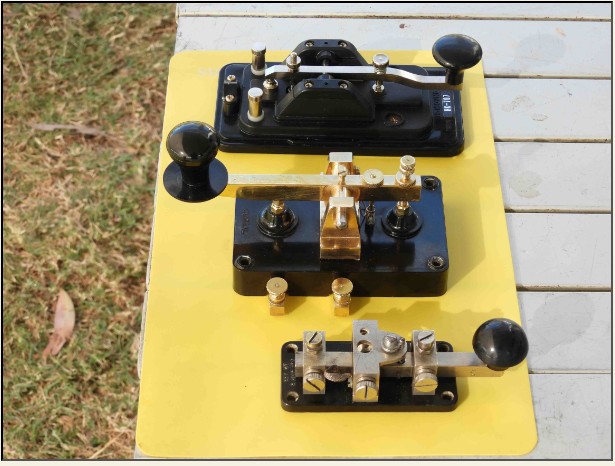
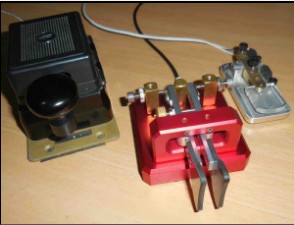
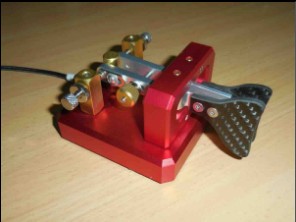
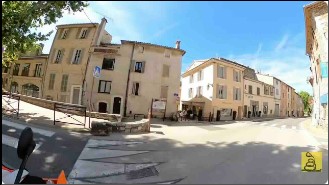
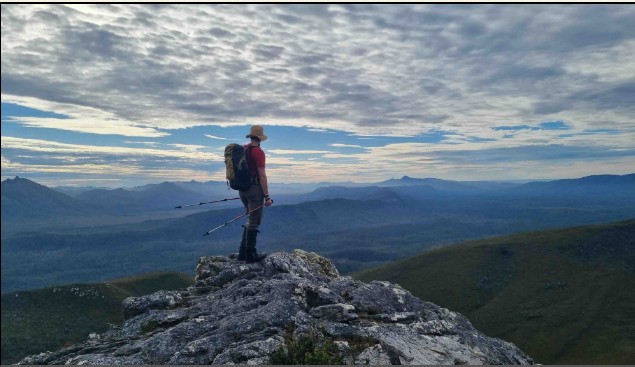
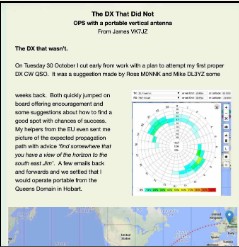
Ange Knob sets the Irequency (Irom Specifically an audio signal generator. I have a UDA1334 DAC and a 128X32 OLED display. The processor could be either a Raspberry Pi Pico, a Raspberry Pi Zero 2W, or an STM32¢ “Black Pill”. I would be able to control frequency with a potentiometer, and display that frequency on the OLED. Can you point me at any suitable projects? Gemi The Pico is arguably your best bet for this project. Its PIO (Programmable /O) blocks can handle 12S audio perfectly without taxing the CPU, and it’s much simpler to set up than a full Linux OS or bare-metal STM32. Ross: I’m familiar with CircuitPython so the Raspberry Pi Pico would be the best path for me too. Can you give me some sample code and wiring instructions? s an experiment, I made no changes to the code myself – this was my first foray into fibe Coding” a hardware project and I wanted to see how that would work out. Fer me putting a DuPont cable in the wrong hole on the breadboard, followed by me back-and-forth with Gemini to add a couple of refinements, it all worked srtectly. was impressed. In fact, it struck me as potentially a very useful workbench tool so I sdered it up… ome people will tell you that collaborating with an Al takes all the fun out of a oject. I have to say I disagree – I found the whole process very satistying and warding. Well for those ops who read the previous article on my Drake twins. The nos 6JUB6 GE brand tubes arrived from USA Tuesday morning and were fitted in short time on the bench. I emailed the seller prior to sale to confirm he had a number of GE 6JB6 tubes on hand. I was able to have 3 closely matched tubes sent ( one extra incase of shipping damage or Or a heater or grid fault) . The two marked 88 and 87 were fitted (that’s the gm test result). After resetting the bias I instantly went from a sagging 50-60 Watts to 140 Watts with headroom to spare. Its a shame I had to get caught buying from eBay with the first set But they might flash up if I ever get desperate. That’s when you double the heater volts for a few mins to de contaminate the cathode. It’s risky but can apparently work for a while. Now a word of caution for those tempted to push old rigs hard. From new many sets had known failure areas. One of which in hybrid and fully-tubes sets is the wafer switches on the PA. The can easily get too hot and become annealed and soft then loose their spring tension. The next level of degradation being the death nock and blowing bits of the silver finger contact away in a RF flash. So in general use I would only run a twin tube PA,class AB either sweep tube or 6146 to just about or slightly over 100 Watts. The extra 40-50 Watts might not make a big difference at the other op’s RX , but it will shorten the life of tubes and the rig. I generally check the tuning quickly at full power, increase load coupling to the ant slightly then reduce drive slightly. That reduces both plate current a bit and importantly screen current. I can begin to get the tuning close in the initial stage with just 20 Watts. I try and be quiet quick with carrier tuning as the tubes can definitely be fried by holding a long carrier with less than perfect tuning. So that’s another vintage rig setup all sorted now. Thankfully all the previous work paid off with just new op tubes to complete the restoration. I’m recapping my Phillips/Fluke CRO right now. I change about 6 caps at a time then test. If you change everything and introduce a new fault it’s to complex to locate after 200 new solder joints! Regards Paul VK3KLE From Stand ZL3TK Further to Ross MONNK’s experience with his DSO138 oscilloscope kit, I’m rewinding to the late 1950S, early 60s. ‘Fun and games with measurement tools’ was in full swing by the time I started fiddling with a VCR97 cathode ray tube in the years following WWII, during which began my first ‘really big’ electronic project. Although on a much larger physical scale, my home brewed oscilloscope’s performance, at least frequency-wise, was not much better than Ross’s 200 kHz, however it was monumentally inferior in terms of a providing useful information. Digital technology hadn’t been invented yet, so images the CRT produced had to be manually interpreted. How did a VCR97 CRT come into my possession? Can’t really remember, however fortunately it was already mounted in a totally stripped down chassis from a GEE hyperbolic airborne navigation system installed by RAF Bomber Command in Vickers Wallingtone and Avrn RN At AA AAT Wellingtons and Avrc Lancasters. Coincidentally, my Uncle Douglas was navigator and GEE operator in RAF 75 Squadron. On his way to bomb Duisberg on 25 March 1942 ina Wellington, he was shot down over Essen. He spent the next three years in Stalag VIIIB as a guest of the Germans. To escape advancing Russian forces, he and hundreds of other POWs embarked on the notorious forced death march westward from Lamsdorf in January 1945. After three months marching through snow, General Patton’s boys liberated the barely-able-to-walk prisoners near the French border on 12 April 1945. Uncle Doug was therefore able to positively identify my very unusual bit of kit, but how it got to New Zealand? No one could say. Because the chassis had been stripped, all the components needed to build a Y preamp, X timebase, X and Y deflection amplifiers and the 2 kV EHT supply had to be found locally. To get them free, or at minimal cost, took many months. It was built according to a schematic found in an old magazine. It specified metal, octal-base valves, but the finer details of it and the sources from which parts were scrounged have been lost in the mists of time. A camera was way beyond my means, so everything was hand-written, but even that precious documentation was lost to mould and vermin after the garage in which it was stored in Mt Eden, Auckland, was flooded while I was in American Samoa on contract in 1983. ‘The VCR97 was still under hard vacuum with a healthy silver-black getter deposit, just like in the photograph. It produced a sharply-focused green trace across the screen, a sight to behold; thrilling to all who saw it – except my parents. I was still only a kid at school when Cliff Richard and the Drifters were maliciously silenced. Mother, in true Edwardian-English disciplinary tradition, smashed my beautiful home- brewed valve stereo amplifier in a fit of rage, as punishment for some long-forgotten misdemeanour. And ‘they’ tell us domestic violence is a modern phenomenon? So it was not without foundation that I was extremely worried about the possibility my rare VCRG7 could meet the same fate, feelings which no doubt have contributed to my extreme frugality and cynicism today. Alec Binnie ZL1QW (SK), lived a few doors away beside the western, single-track railway. He was very active on HF with a 60 foot high, magnificent open-wire-fed half- wave antenna on 80 m, which served all HF bands. From him I borrowed an ancient valve signal generator, which sufficed for testing the CRO, though serious calibration was out of the question. As the frequency was increased from low audio towards 2 megacycles, the amplitude of the displayed sinewave decreased significantly, but whether that was a function of my home brewed Y preamp, or the signal generator output dropping off, I could not determine due to a lack of both equipment and ability to think laterally. ‘Anyway, that primitive oscilloscope kept me amused and served my modest needs until I started apprenticeship training at night school under the expert tutorship of a young, recently-artived-from-the-UK, ‘Jumbo’ Godfrey ZL1HV (SK), where I learned what a real CRO could do. Like Ross, I upgraded, just as soon as my meagre two pounds a week which remained from wages after paying board and lodging to mother, allowed. Today I still have a vintage dual channel, rectangular screen, 25 MHz Philips PM3212 from the 1970S, sheer luxury by comparison! From John VK2RU I’ve been fortunate to get a few old keys recently. Believe it or not, I’ve now got 2x Clipsal Cat. No. 610, and 2x WT 8 Amps and a pair of Hy-Mounds. So I decided that I would clean one set up and see how I liked it. Pleased to say that it’s so much better than the tarnished look. I will leave one set as they are. Up until now, the WT 8 Amp was my favourite, but I’m now finding the Hi-Mound HK-707 very nice to use. I stripped it all down, and gave it a good clean. Can you believe that there are 63 individual parts in that key? One thing that makes it good to use must be the ball bearings in the pivot. I’ve also got a Hi-Mound HK-702 that I still have to do some work on. From what I’ve read, that may be better than the 707. 73 John What’s going on on your workbench? If you have an article or two that you think might be of interest to our readers, please let Mark VK2KI know; email to cqqrsnet@gmail.com For guidance on writing for RagChew, see Articles below. Who’s calling me? Who’s on the other end? A couple of weeks back we hear from Mike VK6TX who now lives in Hervey Bay Queensland. Mike has followed up with a bit more about his CW journey. Ihave been listening on Tuesdays and will try to get involved. I am terrible at CW but slowly making small moves. In the past I tried to learn CW via tapes, books and Apps etc. but it always ended in being place on the shelf for another time. This time I am doing the training in an unconventional way, but it seams to be working for me as I am making more progress then all of my CW failures of the past. Like you, I went down the CW learning path of books and audio recordings, including cassettes and MP3S that I used to play in the car whilst travelling to the salt mine before my retirement. The only problems was that I never stayed the course and normally got distracted with other things. So far I appear to know about a third of the letters. So currently I also use FLdigi to help me decode some of the received code in real time. This fills my skills gap at the moment and this is speeding up my CW learning journey. I think it must be starting to work for me, because I am starting to pick up the more and more errors made by FLDIGI decodes. I find that the ears (even my old partial deaf ones) are more sensitive and better at decoding weak CW signals than the software. I do recommend the conventional CW training path for the majority of people and if it works for them that’s great, stay on that path. Unfortunately for me the conventional path wasn’t working, due to me I guess. But I still had that underlying urge to learn CW, even after 40 plus years in Ham Radio and my current learning system is producing better results for me. Now all the CW transmissions from me on air (warts and all) is me on the key, I do have a ex Soviet straight key, a small SOTA key and a lovely paddle. I do prefer to use the paddle, its a new one. Just got it off Amazon the other day and it works a treat. | have had about a few CW QSO contacts over the past weeks, including VK2,VK3, VK7, Sweden, Japan and New Zealand. Obviously I am at a very basic learning stage, but I believe I will eventually get better as this is my first serious attempt at CW. I have never needed CW for my licence as I started as a limited call VA6ZMU and over the Years they dropped the CW requirement and I picked up the two letter call around 2014. I have just worked over 12000 contacts – 200 plus countries on the digital modes, just using SS wire 40m delta Horizontal loop, mounted on some bamboo poles in my tiny backyard. That includes over 600 contacts on the 6m band! So I expect that there’ll be critics of my current approach to learning, but it’s working for me for th efirst time. Its just a hobby and I enjoy it. I will be scanning the bands on Tuesday and eventual hope to become reasonable at CW. 73s Mike VK6TX This year we’re using Aesop’s Fables. These are short moral stories, often using talking animals, that illustrate simple truths about human behaviour and character. ‘Aesop’s Fables originated in ancient Greece, traditionally attributed to the storyteller ‘Aesop who is thought to have lived around the 6th century BCE. The fables are generally smaller files of two to three hundred words that have been recorded at 15 wpm and run for about 15 minutes. If 15 wpm is a bit quick for you, load it onto your phone and set the playback speed at 0.75 X or even 0.5 X- whatever works for you. 0.75 X will play the MP8 at a bit under 12 wpm. Itis suggested that you read the text file before listening to the audio file. That will make it easier to follow the audio file and prepare you for any unusual words. Any punctuation that is not usually used with CW has been removed. This week’s fable is ‘The The Dog in the Manger’, and the MP3 and TXT files are attached here – If you prefer a different speed or tone you can create your own MP3 files by converting the text file with the Ebook2CW app — https://fkurz.net/ham/ebook2cw.html. You can either play the MP3 files in any media player, or load the text file into the Ditto CW: Morse Player app — https://dittocw.andro.io/. Both options work well, however Ditto CW gives you complete control over all Morse settings, while a normal media player only allows changes to playback speed, and does that in steps (e.g. +1.25x, 1.5x, 1.75x). By enjoying it on YouTube, it’ll save you a heap of money; then again, arriving by bike would reduce the temptations to bring home too many goodies (sorry Jordan – I guess this doesn’t help)! Perhaps our mate Mars should consider that too? Single Hill (above) is a little 1 point summit near the Hobart Airport. It’s actually got aircraft radio and positioning/signalling gear behind a fence. Short steep walk up but then a nice flat summit. I went up there early on the weekend to catch Lance who was activating Mount Field West, would be a nice starter for someone new at SOTA if not for the fact that Mount Wellington is a 10 point drive up (perhaps the only full drive up 10 pointer in VK7). The young bloke on The Needles is my son Fin, I was holding the camera.. an excuse to catch my breath! The Needles is an 8 point summit in the Southwest National Park on the way to Strathgordon, great views, big sky. Don Edwards Memorial Slow Morse Contest Returns – 16-17 May The Don Edwards Memorial Slow Morse Contest returns 16-17 May, welcoming all amateurs to enjoy relaxed, hand-sent Morse code operation at slow speeds in memory of Don Edwards VK2NV. From Saturday 16 May 2026 To Sunday 17 May 2026 The St. George Amateur Radio Society is pleased to announce the return of the Don Edwards Memorial Slow Morse Contest, to be held over the weekend of 16-17 May. Held in memory of Don Edwards VK2NV—a long-time Society member and passionate CW operator—this event is designed to encourage all amateurs to get on the key and enjoy Morse code in a relaxed, welcoming environment. Whether you’re: * returning to Morse after many years, just learning CW, * or have never tried operating on the key before, this contest is the perfect opportunity to give slow Morse a go. What is “Slow Morse”? Slow Morse is sent at no more than 10 words per minute, although in previous years some contacts have been exchanged at speeds as low as 3 words per minute. Contest Rules * Morse code only * Sent by hand * Received by ear Operating Times: Saturday 16 May * 6:00 pm — 9:00 pm Sydney time + 80 metres ‘Sunday 17 May + 1:00 pm — 4:00 pm Sydney time + 40 metres Our team member Nic VK7WW runs an on-air Slow Morse training net every Wednesday at 7pm EDST on 3580 for 30 mins. He uses the callsign of the Northern Tasmania Amateur Radio Club VK7TAZ on that net. Many of our team learned Morse code with the support of Nic, and the weekly training session comes highly recommended for anyone who wants to learn the Code, or simply brush up. Everyone’s welcome – 3580KHZ at 7pm Eastern time every Wednesday; you’ll hear lots of the CQQRS team on that net. Jordan VK3ACU has ralso ecorded the complete set of lessons which you can now find here: Https://www. youtube.com/playlist?list=PLHsQmZz6fBXO7swAfbT mutrbbEL17fUQL Contact Nic VK7WW for more info nicholaschantler@hotmail.com including how to join the NTARC DISCORD group to follow the action, or just come along and join in on Wednesdays. Hi Mark. CW Ops are often very kind and respectful people. It’s a pleasure to be part of a supportive and respectful CW community group. Recently, Australia had new anti-vilification laws come into effect. So moving forward, we may all eventually be treated more evenly in public spaces. That being said we should all be careful what we send and write, particularly in regards to protected attributes and to also consider the LCD that must be upheld with regards to content. With our CW contacts I can usually just keep it to a report, station setup and weather. I do rag-chew as well on technical radio-related subject material. As I said, CW Ops are often very kind and respectful people and it’s a pleasure to b part of such a supportive and respectful community group. Thanks for everything you do for us all Mark. Back in September last year I was still relatively new to the CW QRS Net. Our host Mark VK2KI introduced me to Ross MONNK and Mike DL3YZ and encouraged me try a for a CW DX contact them, I wrote a little piece that basically summed up my failure — but it was fun to try. Some may be aware my passion is SOTA, and I have been learning CW to improve my Activations (or reduce risks of failed activations). I have been loving being part of the CW QRS Net and benefited greatly from just having no pressure CW rag chews. When out on activations and summiting in the middle of the day, despite the fact I am in ‘quiet places’ it is rare for me to get DX. A QSO into France from time to time, one in Poland just once, but when I go looking at the pages for those chasers, these are serious operators with serious towers and serious listening capability. An as good as it gets QSO for me when calling from a summit in Tasmania is VK6 or ZL. Then, just sometimes magic happens. Abit over a week ago I tried something different, I had the day off work but other things during the middle of the day so I put some thought into a summit that was due for activation, but also a reasonably safe walk out in the dark if I was to keep operating into sunset. This led to Mount Hobbs VK7/EC-006. Except for the fenced off enclosures for emergency services communications towers, this summit is private property with a locked gate. I had previously chatted with the landowner who closes the gate to prevent 4WD’s and motorbikes, basically the types who might tear up the track. The owner said he was always happy for bushwalkers (and radio operators) to walk up the mountain and no need to call ahead. It’s about a 30 minute walk up the road from the locked gate, none of that VK7 bushwalking track stuff where it is all scrub and rocks and after dark you are going to break an ankle. I set up late afternoon ona rocky knoll a short distance past the summit, and far enough to get away from the communications towers. I have been caught out near those towers before and have never been sure if it is the towers that drown out my receive, or if it is the solar systems and battery chargers that are doing a nasty job on me. Well going up late in the afternoon and operating into the dark eliminated the solar question. I was using the ICOM IC-705, running 10w up toa EFHW antenna fed at the top of a squid pole, with the EFHW wire running in an east/west direction. I started calling on CW, then after exhausting that list moved on to My antenna setup on Mount Hobbs. Just as I was losing the light I thought “cool sunset, should probably photograph that”. SSB, then changed bands and did the CW followed by SSB thing again. lam sure there were CW operators who gave up on me because I was not fast, I was actually slow, puddling along at 15 wpm, and a few times I questioned myself ‘who was that — ask them to send it again’. I am also certain that when I put the SPOT out I requested ‘slow please’. What I heard on my end was a pile up where all the tones over the top of each other really was a bit of work to unpick. At times where I heard a ‘W’ I would respond ‘W? PSE K’ and there would still be a few responses till I could whittle it down to one clear call sign. It must be frustrating for the chasers when the bloke on the summit is not fast, but it was good fun and one by one I managed to complete the required ‘exchange with each caller. In the end I managed 24 QSO’s being 12 on CW and another 12 on SSB operating on 40m then 20m. This included 9x VK chasers, 2x ZL chasers, and then 3 from France, 2 from Czech Republic, one each from the USA, Sweden, Ukraine, Finland, Spain, Japan, Ireland, Poland. I then packed up in the dark, walked back down the road watching as various sets of eyes from the Tasmanian wildlife stared at me, and then as I got closer they would crash off through the bush. My conclusion from this, I certainly need to keep practicing my CW, but sometimes when the conditions are right… It just works. 73, Jim VK7JZ If you have something that you think might be of interest to our readers, please email to Mark VK2KI: cqgrsnet@gmail.com Prosign. Ross:
Gemini:
On My (Historic) Work Bench
A Bit of Spit & Polish
QRZ?
Mike VK6TX/4
Mark
QRZ? Who’s on the other end?
CW Practice


Other News
Brocante Radio De Roquefort
A Couple of SOTA Activations
Don Edwards Memorial Slow Morse Contest
Morse Training Net
Emails to the Editor
Prosign/Character/Signal of the Month
my eS a Meaning: Clear – going off the air.
[Put it on a sticky note near your key as a reminder for Tuesday…. and tell us how you went!]
Di-dah-di-dah-dit
So back to the CQQRS Slow CW QSO practice net.
Next Tuesday’s Net
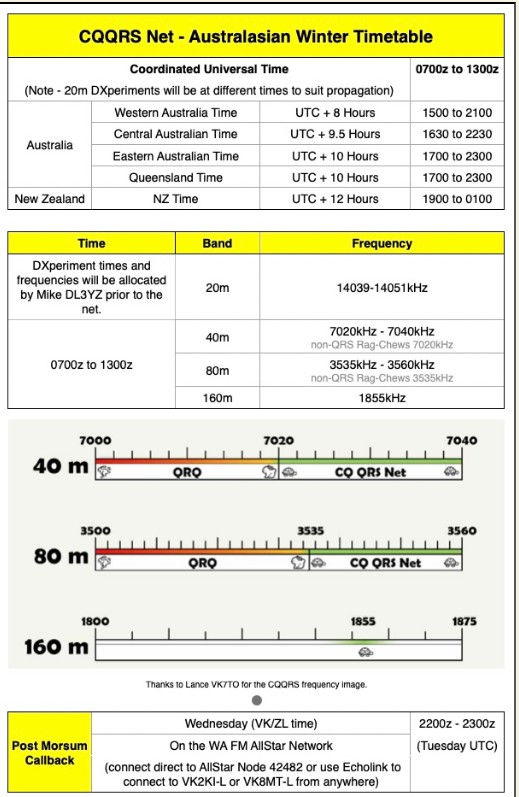
Our CQQRS Group will be on as always on Tuesday from around 0600Z until about 12002; see https://bit.ly/CQQRSWebsite and navigate to the Net Details page for details.
Doesn’t matter whether you’re brand new and want to try just exchanging callsigns and RST reports, or you’re ready for a good old rag chew. We’ll have fun.
There’s usually people around until after 1200Z – so keep calling in the segment of the band designated in the table below until you catch someone.
Reports & Photos
Please let us know via our Reports form bit.ly/CQQRSNET who you work or hear on Tuesday’s Group. The report form closes at 1pm (Eastern Australian time) on Thursday. And how about helping to make the reports even more interesting by sending a photo?
If you have a photo that you’d be happy to include, please email it to: cqqrsnet@gmail.com And of course, we’re always on the lookout for more photos for the newsletter, so if you have something that might be of interest aside from the reports, please send it through as well.
Email to cqgrsnet@gmail.com please. Oh and by the way, I recommend that you don’t keep the Reports Form website open between submission of reports from one week to the next.
If you’re unlucky, there’s an undocumented feature in the software that could cause your current week’s report to be combined with your previous report – it’s happened to your editor several times – much to the chagrin of our Reports editor 🙂
Post Morsum
Richard VK6HRC will run our phone Post Morsum on Wednesday mornings on the South West AllStar net (via repeaters and hotspots all over WA) from 0600 WA time, then from 0700 WA time on 80m (3605 LSB).
See https://bit.ly/CQQRSWebsite and navigate to the Net Details page for details of how you can connect via Echolink from anywhere in the world.
Articles
Could you write a short article or articles for RagChew? You bet! Writing not your strong point? Don’t worry, I’m very happy to help as much or as little as needed.
Oh, and one more thing (actually two) – copyright material: * please use your own images – don’t use images copied from the internet unless you have the producer’s permission, or they’re marked ‘Creative Commons’ or similar; ¢ if you include other peoples’ written material, unless you have permission, you may only include small snippets (unless it’s marked ‘Creative Commons’ or similar), and you’ll need to site the source and author.
For more guidance on writing for the RagChew newsletter (including how you might even try using one of the new Artificial Intelligence tools), head to our website bit.ly/CQQRSWebsite then click the menu on the top right and then click RagChew Newsletter.
A reminder; if you send me any information by email, our report form or WhatsApp – unless you specifically state that material is not to be published, I’ll assume that you’re happy to see your thoughts in the RagChew newsletter.
Thank you so much to our team of 30 contributors: DL3YZ, IU4FLS, MONNK, VK2EMU, VK2GAS, VK2NNW, VK2RU, VK3ACU, VK3DRQ, VK3KLE, VK4EV, VK5AO, VK5AV, VK5FD, VK6GX, VK6HRC, VK6JDM, VK6KD, VK6KHZ, VK6MTF, VK6NW, VK6PZT, VK6TX, VK7JZ, VK7TA, VK7TO, ZL1PB,
ZL2GD, ZL3ABX and ZL3TK. And a special thank you to our editorial team, Nigel G4RWI (remote software support), Patrick VK2IOW (reports editor), John VK2RU (spreadsheet guru), Richard VK6HRC (post-morsition and Sandgroper stirrer), Lance VK7TO (director of the archive department) and Jordan VK3ACU (newsletter jester).
Great work all! GU CW on Tuesday, mb Mark Bosma VK2KI / VK6QI Beautiful South Bowning NSW cqqrsnet@gmail.com non impediti ratione cogitationis

About the CQ QRS Net
For the current schedule and more information about the CQQRS net, please go the the Net Details page on our website:

The opinions expressed in the RagChew newsletter are those of the individual contributors. The opinions do not necessarily reflect that of the editors or of the CQQRS Group members.
Any material and images received from members by the editor or published on the CQQRS WhatsApp groups may be published in this newsletter unless specifically requested otherwise.
The RagChew newsletter is considered to be exempt from the Australian Government’s ban on social media for under 16 year olds because it is a service that has the primary purpose of enabling users to share information about products or services, engage in professional networking or professional development services or of supporting the education of users per the Australian Government eSafety Commissioner FAQ webpage “Which platforms have been excluded from the age restrictions” dated 10DEC25.
The values, doctrine and guidelines for the Group and for the newsletter are published on the Principles page of the group’s website https://bit.ly/CQQRSWebsite