Below is a reconstruction of the 2024 46 CQ QRS RagChew newsletter designed to support full text searching. This reconstruction was built using OCR, and will contain errors.
To view the Mailchimp original, click here. To search the entire newsletter archive, click here.
Contents
- CQ QRS RagChew
- Last Tuesday’s Group
- New Team Members
- Masthead Image
- Submissions close lunch time on Thursday.
- Reports & Comments
- Comments:
- This Week’s Topics of Interest
- adjustment thumbscrew.
- AGC vs RSN
- Affect on RSN
- Is AGC helpful?
- The T2LT Antenna
- Why the T2LT
- Other News
- From Nigel G4RWI
- From Andrew VK1DA/7:
- From our CQ QRS WhatsApp Rag Chew group
- SKCC Oceania QRS Saunter
- Morse Training Net
- Nigel VK6NI
- Brain Teaser
- Exam Questions:
- Di-dah-di-dah-dit
- Next Tuesday’s Net
- Reports
- Post Morsum
- Teamwork
- The Joy of Daylight Saving 🙁
- About the CQ QRS Group
- Frequencies and Times
- QRL?
- Speed? Rhythm?
- Matching
- PSE QRS
- Landing Zone
- CW Tips
CQ QRS RagChew
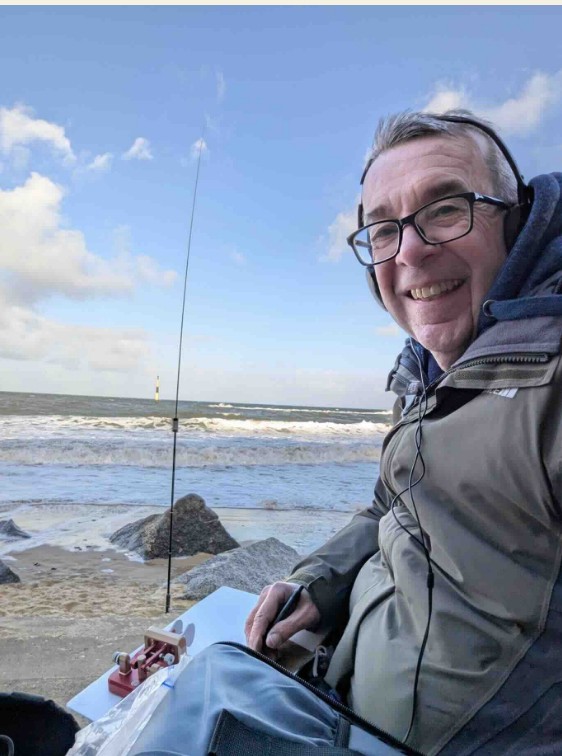
Simon MOKBJ at Sea Palling near Norfolk – testing out then abandonin« a possible location on Monday before Tuesday’s DXperiment.
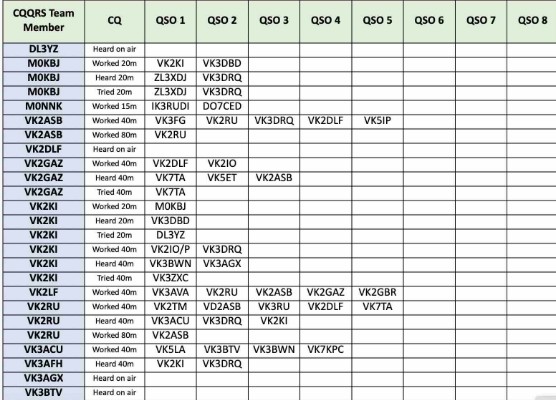
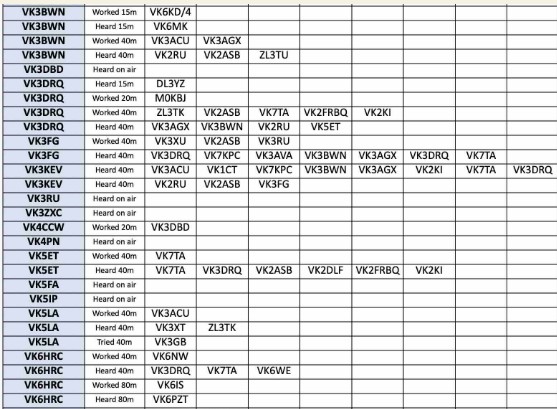
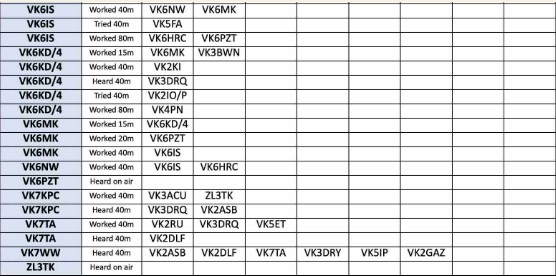
Last Tuesday’s net was a bit quieter than we’ve become accustomed to lately (we had reports of 42 stations, versus the approximately five-dozen that we normally know about… plus SWLs of course).
When I checked 40m several times during the night using the Tecsun (Araluen NSW), VK1CM (Farrer ACT) and VK6QS (near Brookton WA) KiwiSDRs, rather than the waterfall displays showing the usual half- dozen plus QSOs in progress, there was only a couple.
Perhaps I tried at the wrong times, perhaps the thunderstorms and static crashes had driven many of our team under the blankets, or maybe the frequent geomagnetic disturbances at this time of the 11-year sunspot cycle meant conditions weren’t favourable?
Anyway, there were a few stations on, lending a hand, learning and having fun – that’s the main thing. The DXperiment from our three intrepid European / UK operators was also affected by the tough conditions – thanks for venturing out before dawn guys, in what was likely to be less than ideal weather as they head toward Winter.
And thank you also to Mike DL3YZ for coordinating the activity, sending me the write-up on the Sunday before, so I can let the team know the sked details by email, and for running the web page with the three Reverse Beacon Network spottings.
Last Tuesday’s Group
New Team Members
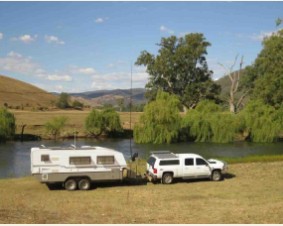
Welcome this week to Peter VK3AGX at Warrnambool and Gerry VK3ZXC at Pakenham. I had a nice chat to Peter when I was camping at the Weddin Mountains National Park near Grenfell NSW last week, and was pleased that he took up my suggestion to join the CQQRS team; great to hear him chatting to Ketut on Tuesday.
Gerry was first licensed in 1977 and returned to amateur radio during COVID19. He joined us after being encouraged to learn the Code at the Gippsland Gate Radio & Electronics Club, and has been using Learn CW On Line (LCWO.net); Gerry has found that he can receive Farnsworth CW at up tp 20WPM, providing it’s spaced at 5WPM intervals – on the other hand, like many of our team, he still struggles with evenly-spaced non-Farnsworth Code.
Welcome Gerry – I’m sure you’ll find the net terrific to gain confidence and reduce the spacing between letters… and I look forward to you having your first CW QSO before long.
Masthead Image
And thanks this week to Simon MOKBu our latest member of the European / UK DXperiment team for this terrific shot of his pre-DXperiment check of Sea Palling beach near Norfolk.
Luckily he tried the spot the day before our net, and found the surf noise too high and the position too uncomfortable, so he was able to find a better spot for the actual skeds. Read all about it on his terrific blog at https://sjharvey.org.uk/MOKBJ/.
As usual, after next Tuesday’s net, please send me a list of who you worked and / or who you heard using our web form here: bit.ly/WCQQRSNET

Submissions close lunch time on Thursday. If you hear or work one of our team on a different band on Tuesday, please just use the 80m report area and annotate which bit applies to which band.
And when you enter the list of callsigns worked, heard or missed, please append an ‘@band’ to each callsign without a space (eg VK2KI@20 VK6QI@15 etc).
The head of our software department, Nigel G4RWI has continued to work furiously to produce a simple way of reporting on contacts with our team outside of 40 and 80m; I have a Beta version sitting on my pile of projects waiting to be tested.
Please help attract new and old team members to have a go by submitting your report each week.
Submissions close lunch time on Thursday.
Reports & Comments
The spreadsheets above show the known stations on last Tuesday’s Group. Comments distilled from the reports I’ve received follow:
Comments:
From Michael Welsh VK4CCW at Kawungan QLD
[40m] + Terrible condx as the static was horrendous and no one seemed to be around..
[40m] + This QSO party is so much fun it has to be illegal.
[80m] + Again, this is too much fun it has to be illegal :). [-D]
[40m] + Had little time as I was setting up a new computer. I called CQ several times with no response. I also saw two signals on the waterfall but they didn’t repeat their calls when I called back CQ on their frequency!
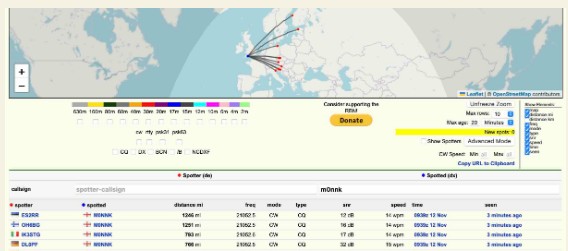
The Reverse Beacon Network (via Mike DL3YZ’s website) showed that Ross was certainly getting out… bt conditions just weren’t favouring the long-path to VK & ZL this time.
From Simon MOKB4 at Strumpshaw Fen, Norfolk + On Tuesday, after a slow start, another successful attempt to span the world in Morse code. + Yesterday I had failed to operate from the shore of the Norfolk Coast.
The sound of the surf was drowning distant stations. So I chose Strumpshaw Fen car park as a reasonable location for today. It’s compromised by an adjacent railway line, which creates an 4 swoosh of noise when a train passes every fifteen minutes.
Still, it was good enough for me to get two new Australian stations in the log and I heard others. + could tell from the Reverse Beacon Network that my signals on 1404SkHz were getting out all over Europe and into Russia but were they reaching Australia and New Zealand?
I monitored the WhatsApp channel of the CQ QRS Ragchew gang and read that they were struggling to pick me up. + I heard Brian ZL3XDJ calling me but he couldn’t hear my replies.
Mark VK2KI tried several times but again, although he was perfectly readable by me, he couldn’t hear me. Manny VK3DRQ and I attempted a QSO but although I copied him at RST539, he replied “SRI QNP QNP” meaning, sorry I don’t copy you..
+ Finally, Mark’s persistence paid off and we had a brief exchange, having to send my signal report many times for it to break through. + I had resigned myself to the fact that conditions were against us.
After all, no European stations had even attempted to answer my calls. Then, just before 0800, David VK3DBD came through clear and strong. He gave me RST559 for my 20W signal and we chatted for twenty minutes.
David is near Albury in Victoria and he held a UK callsign, G3SCD when he lived in Lincolnshire.
What have I learned? Well, that vatience and persistence are the key. I vas disappointed yesterday at learning hat the shoreline QTH wasn’t going to ork but it was well worth taking the rouble to do a rece.
Today’s ocation was among trees, which can’t rave helped, though the surrounding net fenland probably gave me a good yround plane. ve written it up in my Blog of the Log . Srradioy is » MOKB)
• What have I learned? Well, that patience and persistence are the key. I was disappointed yesterday at learning that the shoreline QTH wasn’t going to work but it was well worth taking the trouble to do a recce.
Today’s location was among trees, which can’t have helped, though the surrounding wet fenland probably gave me a good ground plane. I’ve written it up in my Blog of the Log .
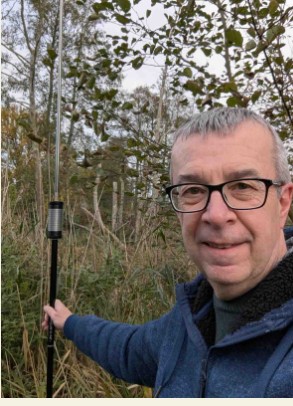
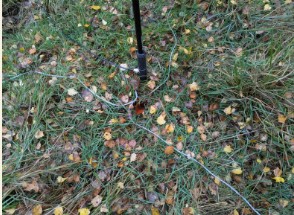
My JPC-12 came mail-order from Ali Express, and came with a 5m flat 10- core ribbon cable, which I’ve split into three. I usually spread out the three radials equally but yesterday I could onl run them in two directions, 90° apart.
It didn’t seem to make a difference. It takes less than 10 minutes to set up tha antannasa I nsaind C141A2~ «I CnaAvaor
[Great story Simon – thank you; let’s hope for better conditions next week.)
[40m] + I wasn’t getting out very well this week as I had not deployed the squidpole. Too much predicted lighting in my area.
[80m] +I could hear many static crashes from lightning. I concluded operators were staying safe with rigs and antennas disconnected. Very quiet from my QTH in Roma QLD this week.
[40m] + 40m seemed depressed early in afternoon.
[40m] + During the time I was on air, the 80M band was very quiet with few stations operating. Mostly I heard VK3 and VK2 stations. I didn’t hear any VK5 or VK6 stations until quite late in the evening when I worked VKSIP.
[80m] + 80M was noisy but no noisier than usual and as usual with very few signals. I worked John VK2RU with a good signal (699) from him but he received me poorly (249) which is a pity because this QSO was John’s first @SO on 80M.
Not a good introduction to an otherwise good band. It was at this stage I had had enough so I pulled the plug and went to bed.
[40m] +A fair bit of lightning noise but overall it was a very good night for me. I managed to get over a bit of a hurdle tonight and had 6 QSOs. + On a few of them I tried to do something different as I get bored with the same thing all the time.
So I added a bit of conversational code. Hopefully it made some sense at the other end. + When I finished answering one CQ call another station immediately called me, so I answered.
That went well until the first station came in over the top of us towards the end of our QSO and completely drowned us out. The first station had been using that frequency for some time.
+ Should I have asked the second station to QSY up or down 5 and left the frequency to the original CQ caller? Apologies if I got it wrong.
Me, so I answered. That went well until the first station came in over the top of us towards the end of our QSO and completely drowned us out. The first station had been using that frequency for some time.
+ Should I have asked the second statio to QSY up or down 5 and left the frequency to the original CQ caller? Apologies if I got it wrong.
[Hi John. Of course the normal protocol if you were concerned at taking over another operator’s frequency would be to flash out a quick ‘NXX (abbreviation of your caller’s callsign) UP 5’ or similar inviting the operator to QSY up xkHz.
However, it’s tricky on CW… and doubly so with QRS. Also, our net is usually so busy that unless you have a waterfall or other spectrum display, you could very easily plonk yourself on top of someone else’s QSO – and then there would be frowns all around!
The fact that we’re running a practice QSO net which includes many inexperienced operators, the risks increase further. So in the guidelines at the end of the CQQRS RagChew newsletter I recommend that on this net, no-one ‘owns’ the frequency they’re on…
So what you did was perfectly acceptable for the purposes of the net. I know that others will be saying to
Themselves that we should be encouraging the correct protocol on our net seeing we’re one of the world’s most popular CW get-togethers these days… however, on balance of risks, I’ve stuck with the simple principle… no one owns the frequency they’re on.]
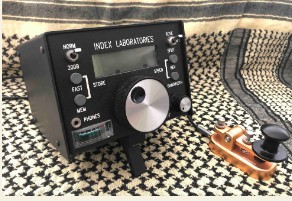
[40m] * Tried out an Index Laboratories QRP rig on loan to me, not the best time < conditions were marginal but Wayne VK6NW made it possible to exchange signal reports.
[80m] * Very quiet, called at intervals with Peter VK6IS coming to the rescue eventually and managed to log a contact, thanks Peter.
[40m] + After a couple of weeks off, due to work and other commitments, I eagerly returned to the fold only to battered back down to reality by dreadful QRN from the maelstrom of thunderstorms all around me.
Managed a brief “g’day” qso with Jordan, 3ACU, then tried with VK3GB who went QRT suddenly? Maybe he closed due to storms as well.
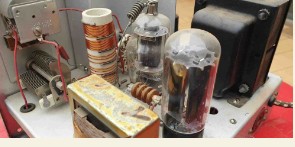
• Pulled the pin and had some dinner, went on the 80m Boat Anchor next then had a listen after for any CW, but it was a lonely band with massive static crashes not very supportive of a QSO. Next week!
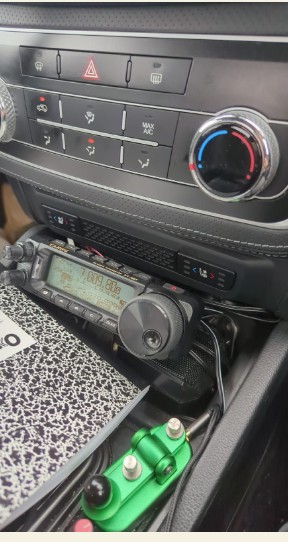
[40m] * With thunderstorms rolling in, I decided to play it safe and kept the shack disconnected, but I still had that itch to get on the air.
So, I hopped in the car, and spent the next hour making a few solid contacts while keeping a close watch on the sky on the mobile rig. Storm never happened, no lightning or rain..
[40m] + Kept an eye on the sky for any storms, but nothing too bad turned up – a work call did though (different kind of storm). Caught the tall end of a QSO sometime after 9pm here when I finished, but that was about all unfortunately.
+ I’m still keeping up my regular ICR and word practice, and this weekend I took apart an old computer mouse, added an audio socket wired to the mouse buttons, and gave the QSObot on https://hamradio.solutions/vband/ a whirl.
+ My own improvement since I last used it, plus using an actual key instead of keyboard made it much easier than before and a lot more fun!
+ I’m going to have to play with it more (when nothing better is available!) and keep an eye out for others on there (anyone else here use it?).
[40m] + it was quite noisy again this week, and signals have been down all week.
[80m] + an bit more activity for this week, but not much mid week though. + Did try to follow the EU folks, but had no luck, there. From your Editor Mark VK2K( at Beautiful South Bowning NSW
[15m] + When I went to listen for Ross MONNK on 15m in the designated DXperiment sked time, I discovered (= remembered) that my trusty old Trio TS- 1208 didn’t work above 20m any more… just one more repair to add to the pile.
I listened instead on the Tecsun KiwiSDR; strong continuous carriers or digital mode signals were again present in the sked segments, and nothing was heard of Ross.
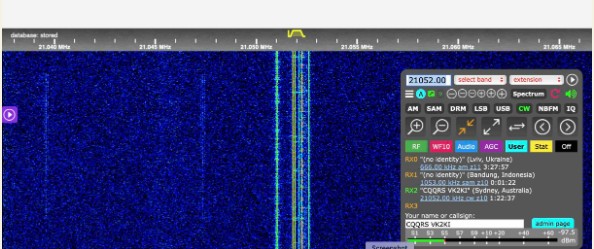
• The same problem existed on the VK6QS KiwiSDR. This has happened on previous DXperiments on the 16m sked frequencies; I’ve listened on several KiwiSDRs – most have the signals there, but some (eg Paul VK5PH‘s Ironstone Ridge SDRs) don’t.
This may be a birdie in the receivers, but without another 1m receiver, I can’t tell. + Are any other VK or ZL stations also hearing the QRM?
If the carriers are present on other non-KiwiSDR receivers in VK & ZL, we might need to recommend a different sked frequency for 15m.
[20m] + Again this week, I was a bit late getting to the net. I heard Simon MOKBR Q& calling CQ when I turned on my old Trio TS-120S.
However, by the time I’d tuned away to tune my manual antenna coupler and my phasing-type noise canceller, Simon’s signal had disappeared.
+ Simon reported via the CQQRS WhatsApp Alerts that he could hear my calls clearly using his 4m long centre-loaded mobile whip antenna, so I tried the Tecsun KiwiSDR at Araluen NSW – Simon was just copyable in the noise on the SDR.
I sent him an RSN 211 report and after many “RST AGN?” requests, I finally heard Simon’s complete RST 529 report; isn’t it funny how selective QSB can repeatedly knock out one or two of the report digits! Thanks Simon – well done!.
+ At around 09302 I tried calling Mike DL3YZ at Stuttgart but heard nothing from him, and also couldn’t see any spots from him on the Reverse Beacon Network via the links on his DXperiment web page.
[40m] + When I moved to 40m, I could see on the VK1CM KiwiSDR that there were much fewer stations on 40m this week compared to normal; instead of six to eight QSOs in progress, there was only a couple of signals on the waterfall display.
+ I listened to our new team member Peter VK3AGX from Warrnambool chatting to Ketut VK3BWN at Keilor East, and was about to give Peter a call when a stronger station came up in the wide passband of my TS-120S.
+ Later I caught up with Manny VK3DRQ at Blackburn who had a solid RSB 591 signal, thanks to my noise canceller. Toward the end of our QSO, I heard our new team member Gerry VK3ZXC calling from Pakenham.
Unfortunately, we were not able to complete a QSO – so Gerry’s first QSO award is still sitting here on the shelf waiting for another occasion when he’s ready to give it a go.
+ I rounded out the evening with a nice chat with David VK6KD/4 who was using just his 5 foot mobile whip from Roma. I’ve been really pleased to have been able to work David on most Tuesdays during his around-Australia journey – timed perfectly with the peak of this 11-year sunspot cycle.
From also from your Editor Mark VK6QI via the VK6QS KiwiSDR near Brookton WA
[16m] + I listened for Ross MONNK on the VK6QS KiwiSDR; as discussed above, there were strong carriers or digital mode signals in the sked segments on most of the KiwiSDRs I checked.
[17m] + Nothing heard on the 17m sked frequencies.
[20m] + I listened for MOKBJ on the VK6QS KiwiSDR; nothing heard. With a stereo audio mixer and two computers, I was able to listen on the WA SDR on my right ear, while monitoring the NSW Tecsun KiwiSDR in my left ear… and my home transceiver in both!
+ I tried to start the Southern Electronics Group Remote near Perth without success. Rob VK6LD reported that the Remote was turned off while the Marconi- Tee antenna was being used for a trial of a RaspberryPi WSPR beacon.
I also tried the Group’s VK6CRO Camarvon Remote, but as usual, it was in use for 6m FT-8 at the time. Luckily, there are plans in the mill for the Southern Electronics Group to add a second Remote at the site for VHF use.
So although there were far less stations on air this week, and conditions were marginal on the long-path to Europe for the DXperiment for our three amigos, I had a
| had a couple of contacts, one with Wayne on an Index Laboratories QRP rig on loan to me. I also made use of the NCRG remote to listen in on some of the DX from our European crew. Thanks to all, last night and this morning. 73 Richard VA6HRC
This Week’s Topics of Interest
These are my four Junker training keys. The one on the far right is pre-1978 and still has the spring-loaded click-stop gap adjustment mechanism.
The other three are post-1978 which is the earliest date I have found for the new rubber ‘O’-ring which provides the friction to set the gap
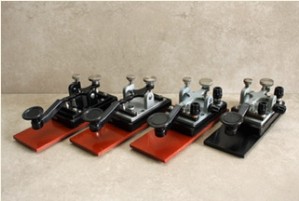
adjustment thumbscrew.
The Bakelite sub-base has the same narrow dimensions as the mobile leg-clip version, 53MM x 97MM (compared to the ‘standard’ Junker M.T. dimensions of 72MM x 97MM).
Ihave heard it said that these training keys were produced for army orders from India and Argentina, but I have no confirmation of this.
Much of the Junker archives were lost during the 1993 River Rhine flood which inundated the basement of the Junker factory at Bad Honnef where the company’s documentation was stored. Kees van der Spek VKIKVS [Thanks Kees.
Interesting problem of lost records through physical events or similar disasters. An interesting opportunity might be to use an Al tool such as ChatGPT to search for such lost information – people around the world will surely have paraphrased some of the lost information for articles like yours, collection blogs etc.
The Al information often can’t be validated of course, but some Al tools now provide reference links to the source material – which is a step in the right direction for follow- up I guess. Interesting times…
Using Artificial intelligence to source Morse key information!)
AGC vs RSN
Short bursts of loud noise (eg static crashes from lightning) could cause the AGC to turn down the audio volume unnecessarily, so some radios have an “AGC Slow” setting to delay the AGC response time.
CW operators typically use “AGC Fast” so that they can hear weak signals in the short gaps between their outgoing words.
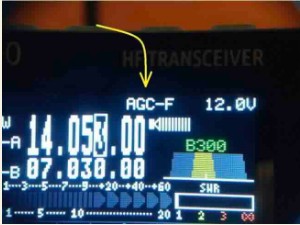
QRP-Labs admits that the AGC on their QCX series of radios is crudely implemented and, in my limited experience, it only limits the louder peaks. The Xiegu G90’s AGC, on the other hand, is much better – it seems to boost the lows as well as limit the
Affect on RSN
ENDOSC Inte lht Readability is probably improved, because the incoming signal is heard at a constant volume and your brain is not distracted by operating the controls of the radio. This is why AGC is popular.
Strength becomes difficult to judge because AGC boosts weak signals and attenuates stronger ones. Most signals tend towards an S7. Noise may be increased or decreased depending on what your noise floor is and the amount of AGC that’s being applied.
For instance, operating Portable, my noise is typically S1, but with AGC On that becomes $3 as the AGC seeks to boost weak signals.
This means that, with AGC On, I have to listen to more noise than with the AGC Off (but I’m more likely to hear something way down). If your noise is S7 (and I feel your pain if it is) then I’m guessing that AGC might reduce that to S4.
So, with AGC turned on, operating becomes (arguably) easier but it ruins your ability to make an accurate RSN report. Some operators shun AGC, preferring to listen to the incoming signal in all its noisy and chaotic glory. Is AGC helpful?
Myself, I can’t make up my mind – for me, the Pros and Cons of AGC are finely balanced. I often have it set to “AGC Fast” but turn it off whilst I’m making an
Is AGC helpful?
Cycles between Off, Slow, Fast, and Auto) so I’m distracted by a radio control when I should be listening. Thus I find it’s simpler (but less informative) to make RST reports than RSNs.
If I have AGC Off, I turn up the volume anyway (to listen for weak signals) so my perceived noise level is higher than it needs to be. And then I need to turn it down when a good signal comes in. So,
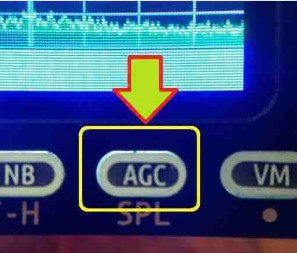
Once again, I’m fiddling with radio controls when I should be listening. How about you though – do you appreciate the assistance of AGC, or do you prefer to operate “au naturale”? [Thank you Ross.
See also Arthur VK2ASB’s previous RagChew article in Edition 23/2024 on use of the manual RF Gain control to reduce noise.]

The T2LT Antenna
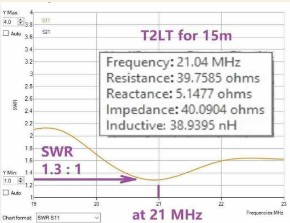
Me 42k AMLenila from Ross MONNK I’ve been struggling to get my wonderful Slidewinder coil and mil whip antenna to tune well on the 15m band so one solution is to have a separate antenna for that band. After a bit of research, I chose the T2LT.
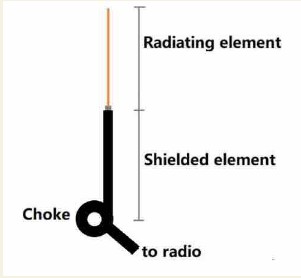
Why the T2LT
Weity thie tok The advantages of a T2LT (as I see it) are: ¢ Fits in my small car for transport; fits in the crowded Man Cave for storage. ¢ No radials for dogs and people to get tangled in, and a small footprint, so “car park friendly”.
¢ Easy to deploy (just tape it to a squid pole and strap the pole toa handy fence post or signage).
• If raised up well above ground level, the T2LT has a low angle of take-off (which is good for DX). This antenna is taped to a 10m squid pole, so the driven element is 7.5m off the ground.
+ Having the Common Mode Choke 3m off the ground means that the 12m of RGS8 feed coax can be strung above the heads of pedestrians – another “car park friendly” feature.
That 12m of feed coax will keep the metal mass of the car away from the antenna but not impose too many losses on my measly 20 watts. * It’s cheap and easy to build (RGS8 is cheap and I already had the squid pole).
However, I did use a ferrite core for this choke (because I believe it will make the antenna “better” for only a modest cost increase). The design is well known and has a good reputation, albeit with the CBers on their |1m band.
It would be nice if it had some directional gain but those types of antenna 1AVE a larger footprint and so are only suitable for summer operations away from potentially busy car parks.
As I said above, building these is fairly easy. They’re a form of dipole, so “do the math” or use an online calculator to get the theoretical length (8.39m/3.39m for 21 MHz). Cut it slightly too long and trim it later. Mine turned out to be 3.35m/3.35m.
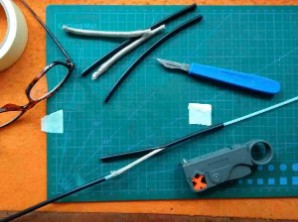
I used a continuous 20m length of coax for both the antenna and the feeder. From one end, strip off the outer black plastic and the braided shielding but leave the clear insulation on. I found it best to do this in 15 cms sections.
I used a rotary coax cutter to make the radial cut (make sure you have it adjusted correctly – not too shallow, not too deep) and then sliced along with a scalpel.
The black plastic peels off and then (if you have the rotary cutter adjusted correctly) you can slide the braided shield off. It’s not difficult but it takes patience.
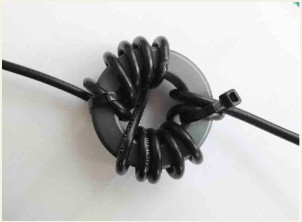
Most builders of T2LTS make an air- wound choke but I like to be different so I used a Fair-Rite FT240-52 toroid ferrite core. It’s more compact and “better”.
For what I mean by “better”, see this article Amateur Radio (G3TXQ) – Common-mode chokes Based on the same article, I chose 12 turns, which I thought would be appropriate for the 15m band.
Another advantage of using a ferrite core choke is that, during tuning, it’s easy to push or pull a bit more coax through the choke to keep the shielded and radiating sections of equal length.
Air-wound chokes are typically glued together during their construction so no such correction is possible with those.
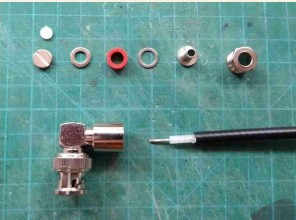
All that’s left is to fit a right-angled BNC connector on the end of the coax.
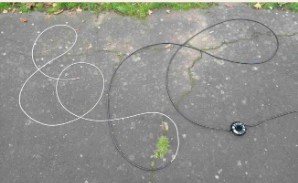
Finally, I applied a little “Liquid Tape” to the exposed sheath and centre conductor ends to prevent water contamination in the wet English climate.
They say that, “the proof of the pudding is in the eating” and this cheap and simple non-directional antenna got my 20 Watt signal all the way to Australia. You can’t give an antenna more praise than that.
So, “Breaker Breaker, got your ears on?”, this antenna is not just for the CB guys. “That’s a Big 10-4, good buddy”!
Other News
From Nigel G4RWI
## Participation Statistics – Total unique participants: 33 operators – Geographic distribution: – VK (Australia): 26 operators – ZL (New Zealand): 2 operators – M (United Kingdom): 2 operators – JH (Japan): 1 operator – DL (Germany): 1 operator – Location unknown: 1 operator ## Band Usage – Primary bands used: 1.
40m (most activity) 2. 80m 3. 20m (for DX contacts) 4. 17m (some DX attempts) 5. 15m (limited activity) 6. 160M (few contacts) ## Notable Observations 1.
“DX Contacts**: Several notable international contacts were made: – UK stations (MOKBJ and MONNK) made contacts with VK stations on 20m – JHIUSR (Japan) made several contacts – DL3YZ (Germany) was mentioned but was reported as unable to participate due to illness 2.
“Operating Conditions”*: – Generally good conditions reported across 40m – Some QRN (natural noise) and QRM (interference) noted – Strong signals reported after sunset – Some participants operated QRP (low power), including successful contacts at 4-5 watts 3.
“Equipment Notes™: – Various antenna types used including: – EFHW (End-Fed Half Wave) – Yagi tribander – 160M loop antenna – Vertical antennas – One operator (VK3KIH) attempted using a vintage WW2 RC8 receiver but found it challenging due to wide IF bandwidth ## Interesting Highlights 1.
One operator (MOKBJ) made his first appearance on the net, operating portable from a historic location near a German military cemetery in the UK 2. Several operators practiced message handling and copying skills 3.
Multiple participants operated portable or mobile stations 4. Some operators used SDR (Software Defined Radio) technology and compared reception between different antenna systems 5.
The Reverse Beacon Network was used by some operators to find potential contacts ## Technical Challenges Noted 1. VK6KD/4 reported mobile setup issues causing rig reboot problems on 80m 2.
Some operators reported challenges with QRM when stations were closely spaced in frequency 3. Several operators noted the importance of proper antenna tuning after experiencing issues ## Recommendations for Future Nets 1.
Consider dedicated time slots for 80m operation to increase activity on that band 2. Encourage more use of “KN” or “BK” for smoother QSOs once communication is established 3.
Continue supporting both QRP and standard power operations 4, Maintain the mix of casual contacts and structured message handling practice [Amazing! Thank you Nigel.]
From Andrew VK1DA/7:
Hi Mark, Ihave been in VK7 during the last week. Conditions have been atrocious. The F0F2 has been very low, at times 5 MHz. The lower HF bands have basically been either silent or unreliable. Whereas 10m does not seem to die when these CMEs hit.
I’ve been increasing my score for the SOTA 10m challenge. Now up to 27 summits activated and 120 unique calls worked from summits on 10m.
Others have a much greater score, especially in Europe, but here in VK, one of the highest scores is Gerard VK2IO, who will be in VK7 for the next 4 weeks, often QSYing to 7032, 14044, 28044 for CW contacts.
He uses a ZS6BKW doublet and often parks in parks overnight so is active on CW into the night and in the early mornings. In your most recent circular you wondered whether a new Q-code should be invented to report on static, which is normally termed QRN.
I doubt if there is any need for a new Q-code – I think there is a numeric scale from 1-5 to describe the level of QRN. ‘And a thought I had when reading of your problems receiving CW in a busy band, with no Cw filter option – use an audio filter.
I’ve had a few and found them very useful. You also mentioned Ron McMullen (SK), who lived not far from my home QTH. I offered to take some of his excess collection of keys when he became frail but he wasn’t interested in seeing them disappear out the door.
I return to the mainland on Sunday 10TH. 73 Andrew VK1DA_
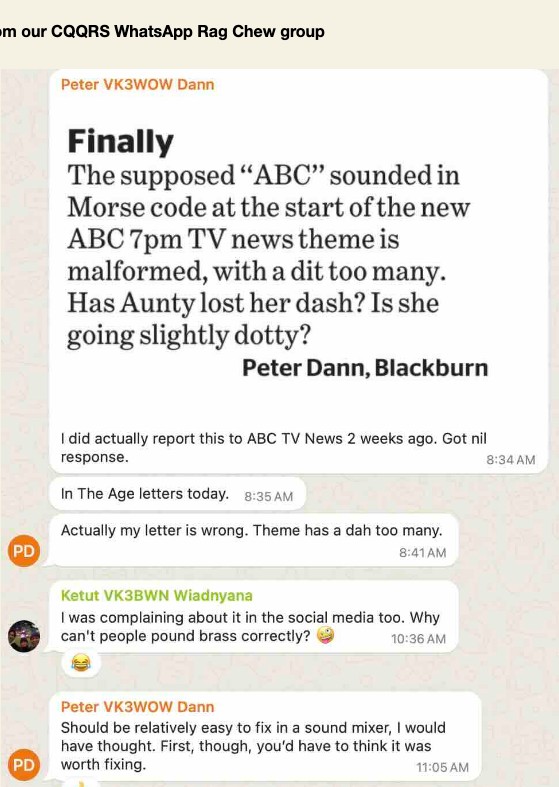
From our CQ QRS WhatsApp Rag Chew group
SKCC Oceania QRS Saunter from Garry VK2GAZ Greetings all, The SKCC Oceania QRS Saunter will take place this Saturday, 16TH November, 2024 from 00:00 UTC until 11:59 UTC a 12 hour event. All are welcome to join in!
All the details for the Oceania QRS Saunter (OQS) can be viewed on the SKCC website at: https://www.skecgroup.com/operating_activities/oas/ Please make use of the SKCC Sked Page and the CW Club RBN Spotter.
Https://sked.skcegroup.com/ https://rbn.telegraphy.de/ look forward to contacting you during the event. Best regards,
SKCC Oceania QRS Saunter
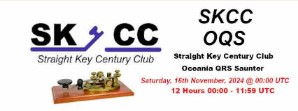
Garry VK2GAZ/VK2ZP #5460C Manager – SKCC Oceania QRS Saunter
Morse Training Net
Nic VK7WW runs a Slow Morse training net every Wednesday at 7pm EDST on 3580 for 30 mins. He uses the callsign of the Northern Tasmania Amateur Radio Club VK7TAZ on that net.
Many of our team learned Morse code with the support of Nic, and the weekly training session comes highly recommended for anyone who wants to learn the Code, or simply brush up. Everyone’s welcome – 3580KHZ at 7pm Eastern time every Wednesday.
The NTARC also feeds the CW live via the Discord phone / computer audio stream, and previous weeks’ recordings are available. Contact Nic VK7WW for more info nicholaschantler@hotmail.com – or just join in on Wednesdays.
Nigel VK6NI
Best wishes from the team to Nigel VK6NI our listener from Denmark, who’s just had an unscheduled 100,000km overhaul; Nigel says he’s on the mend and is looking forward to the next 100,000.
Brain Teaser
Jules Perrin JP VK3JFP has created a terrific resource to help guide learning for all levels of amateur radio licenses: https://Awww.julesworkshop.net/Amateur%20Radio.html With thanks to Baz VK6MU for he idea, and Jules for the good learning website, here’s this week’s quiz questions from Jules’ Workshop example test questions:
Exam Questions:
What are the four layers in the ionosphere that impact HF communications? Voltage variable capacitor (varicap or varactor) diodes behave as capacitors when: * biased in the forward direction * un-biased « saturated * biased in the reverse direction Which of the following solid state devices has the highest input impedance?
* PNP bipolar transistor « JFET * NPN bipolar transistor * MOSFET Answers next week.


Di-dah-di-dah-dit
So back to the Slow CW QSO practice Group.
Next Tuesday’s Net
Our CQ QRS Group will be on as always on Tuesday from around 07002Z until about 1300Z; see below for details. Doesn’t matter whether you’re brand new and want to try just exchanging callsigns and RST reports, or you’re ready for a good old rag chew.
Reports
Please let me know via our Reports form bit.ly/CQQRSNET who you work or hear on Tuesday’s Group. The report form closes at lunchtime on Thursday.
Post Morsum
Richard VK6HRC will run our phone Post Morsum on the South West AllStar net (via repeaters and hotspots all over WA) from 0600 WA time, then from 0700 WA time on 80m (8605 LSB).
For the 0600 (22002) net, if you’re in WA all you need is an FM 2m or 70CM transceiver and an AllStar node nearby. If you’re elsewhere in the world, you may be able to connect your local AllStar-enabled repeater to the net, or you can connect via Echolink.
Let me know (cqqrsnet@gmail.com) if I can help with that. and if you can’t connect that way, give 3605KHZ SSB a try from 0700 (23002).
Teamwork
Thank you so much to our team of 30 contributors: G4RWI, MOKBJ, MONNK, VK1DA, VK1KVS, VK2ASB, VK2GAZ, VK2LF, VK2RU, VK3ACU, VK3AFH, VK3BWN, VK3BWN, VK3DRQ, VK3FG, VK3JFP, VKSKEV, VKSWOW, VK4CCW, VK5ET, VK5LA, VK6HRC, VK6IS, VK6KD/4, VK6MK, VK6NW, VK6WE, VK7KPC, VK7TA, VK7WW Thank you team.
The Joy of Daylight Saving 🙁
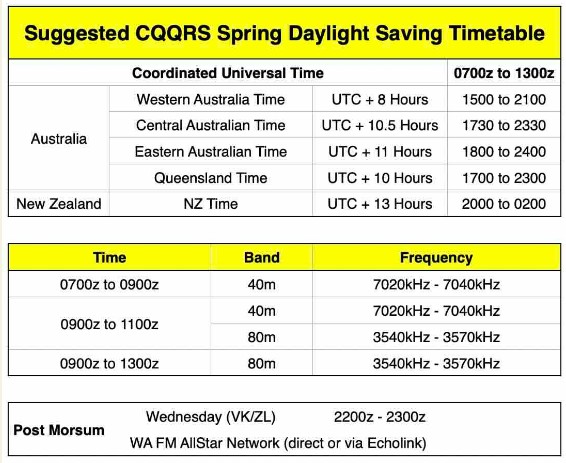
There’s usually people around until after 1300Z on the Tuesday Group – so keep calling in the segment of the band designated in the table below until you catch someone.
I should be on as usual from home in NSW or via the Remote at Bedfordale WA, and I’ll also be watching the proceedings using the VK6QS and Tecsun SDRs in WA and NSW respectively. Hope to hear you there.
GU CW on Tuesday, mb Mark Bosma VK2KI / VK6QI Beautiful South Bowning NSW mark.bosma@icloud.com non impediti ratione cogitationis

An Ode to CW – thanks to David VK3RU: In days of old, when ops were bold, And sideband was not invented, Words were passed by pounding brass, And all were quite contented. – Unknown author
About the CQ QRS Group
Frequencies and Times
QRL?
So tune around and call anyone you hear, or find yourself a quiet spot in the designated segment, send “QRL?” and if the frequency is quiet, start calling CQ QRS at about 75% of the speed you’re comfortable receiving at; hopefully responders will match (or send slower to their comfort level).
And if you are already having a QSO and someone sends “QRL?”, respond with “R”, “C”, “Y”, “YES” or QRL to let the caller know that the frequency is in use.
If we’re on 40m and you can hear that the band is open outside Australasia, perhaps consider calling 500HZ above each 1KHZ slot – to minimise the chance of having to copy our team through QRQ QRM that’s often dead-on the kHz markers.
Speed? Rhythm?
If you’re proficient at CW and can race along at 20 or 30WPM – terrific, but please remember, the Group’s aim is to encourage participation and learning, not show how fast you can hammer the key.
Please send slowly where you can and concentrate on rhythm – listen to your side-tone, get that wrist action going and make a special effort to make it sound like perfect CW; the longer we go with our Group, the more I understand just how many non-transmitting listeners we have – and they will most likely appreciate your QRS!
So, if you’re an experienced operator, please try to send nicely balanced slow CW to give them a chance to practice and gain confidence…. they’ll reward you one day by coming up on air to say g’day and thanks – how good is that?
And if you’re new or like me, just rusty…. ignore the above… just have a go – the lather of sweat will be worth it and there’s plenty of time to get the details sorted out as you practice.
Matching
And also for the oldies like me, when you hear someone new, please match their sending speed – or slower. The person you’re replying to may not be as deft on the decoding as you – it may be their first ever CW QSO – remember your first?
Lather of sweat, key that refuses to send that you tell it, brain that refuses to decode those complex letters that were right there half an hour ago, etc!
PSE QRS
And if someone is sending too fast to comfortably copy – “PSE RPT PSE QRS” or “AGN? PSE QRS’ will make life easier for everyone…. and might just encourage other listeners to have a go themselves.
The other thing to remember – most operators are writing down what they hear… so when you put it back to them, expect a delay while they read your words of wisdom, before replying.
If you really want to move off frequency (eg because of a spurious switch mode power supply signal that’s just drifted into the conversation), you could try sending an abridged callsign of the person you’re after, followed by “UP 5” or “DN 5” then K; then call that person on the designated frequency and keep your fingers crossed, they may have understood you and followed…
Landing Zone
If the band goes really quiet, call and listen on 7032KHZ (7028KHZ secondary) or 3555KHZ. If you catch someone, there’s no need to QSY – enjoy the frequency.
But don’t forget to tune around if it’s quiet – we have lots of operators with crystal locked transmitters – and they could be anywhere within the segments.
For those who are locked, or can only transmit outside the segments, send a message on our WhatsApp CQ QRS – Alerts group advising of your current frequency.
And of course, put the frequencies in a memory so outside of the Group, if you’re not tuning around, leave your receiver on one of the primary frequencies – you never know who you’ll hear (7032 is used in VK and ZL for SOTA / PARKS during the day so you’ll often hear activity there).
CW Tips
As always, for newbies, operating suggestions are available from the operating hints link here: https://www.parg.org.au/_files/ugd/ebe236_ 3ca5ca08bb38429db4eee524bda2f97a. pdf. mb VK2KI / VK6QI