Below is a reconstruction of the 2024 45 CQ QRS RagChew newsletter designed to support full text searching. This reconstruction was built using OCR, and will contain errors.
To view the Mailchimp original, click here. To search the entire newsletter archive, click here.
Contents
- CQQRS RagChew
- Last Tuesday’s Group
- New Team Member:
- Masthead Image
- Reports
- Submissions close lunch time on Thursday.
- Reports & Comments
- Comments:
- inis Week’s fopic of interest
- The Secondary Boards
- QCX-mini Build – Part 6
- Next week, Final Assembly!
- Shack Visit
- corners.
- Regards, Daniel.
- Other News
- My First Real DX Ragchew
- Simon, MOKBJ
- From one of our Founding Team – John VK5ET:
- | made up a 9 mt squid pole which i took camping with me to various locations , easy to set up & received good signal reports from it. | had the antenna wire coiled up on a plastic reel which i ran out along the ground before winding it on each section of the squid pole . My only down side of it after winding the wire around each section for many years i was developing an aching wrist ( RSI 22) From memory, i think the top sections of the squid pole collapsed only 2 or 3 times on various trips & that was during windy nights but was overcome by wrapping one layer of insulation tape around each section .
- Error in NR 157
- The Operator’s Fist
- Morse Training Net
- Rrain Teaser
- Exam Questions:
- Answers from last week’s Quiz:
- Di-dan-ali-aan-aii
- Next Tuesday’s Muster
- Post Morsum
- Teamwork
- The Joy of Daylight Saving
- About the CQ QRS Group
- Frequencies and Times
- Speed? Rhythm?
- Matching
- PSE ORS
- Landing Zone
- CW Tips
CQQRS RagChew
Last Tuesday’s Group
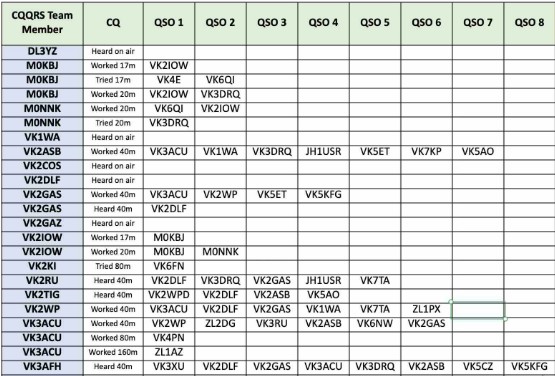
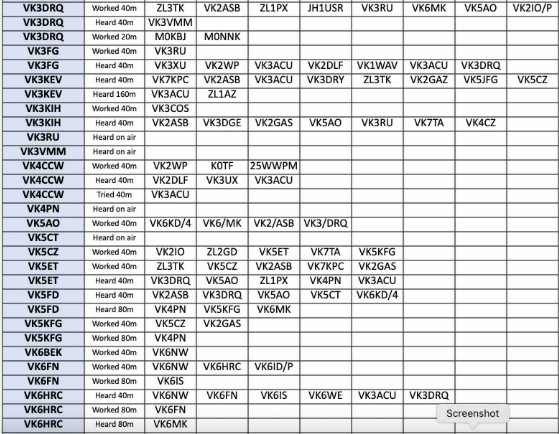
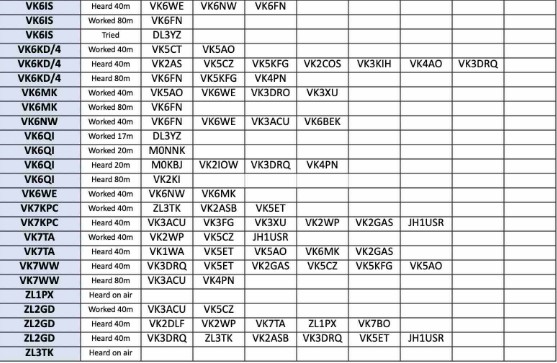
Here’s this week’s list of the 65 stations heard on the CQQRS group muster on Tuesday evening:
Here’s this week’s list of the 65 stations heard on the CQQRS group muster on Tiiacday avaninn:
New Team Member:
This week I’d like to welcome Bob VK2ADF from Galore. Bob wrote an article about his foray into CW in the latest QRM, the newsletter of the Wagga Amateur Radio Club; I hope we hear him enjoying our weekly muster as well.
Masthead Image
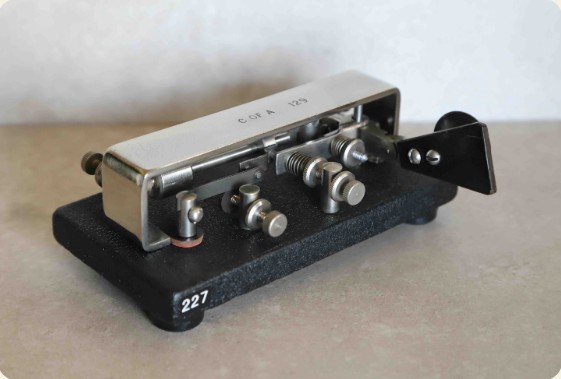
And thanks this week to Kees VK1KVS for the photo of his superb workmanship in fully restoring this very rare Simplex-Auto Model 10, designed and built by Ron McMullen in Australia.
My neighbour Jack (a previous holder of a Technician class license in the US, and now an avid antique radio restorer) found the keyer at an auction. See Kees’ article on the beautiful restoration of his new keyer below.
Reports
After next Tuesday’s Group, please send me a list of who you worked and / or who you heard using our web form here:

Submissions close lunch time on Thursday. If you hear or work one of our team on a different band on Tuesday, please just use the 80m report area and annotate which bit applies to which band.
And when you enter the list of callsigns worked, heard or missed, please append an ‘@band’ to each callsign without a space (eg VK2KI@20 VK6QI@15 etc).
The head of our software department, Nigel G4RWI has continued to work furiously to produce a simple way of reporting on contacts with our team outside of 40 and 80m; I have a Beta version sitting on my pile of projects waiting to be tested.
Please help attract new and old team members to have a go by submitting your report each week.
Submissions close lunch time on Thursday.
Reports & Comments
The spreadsheets above show the known stations on last Tuesday’s Group. Comments distilled from the reports I’ve received follow:
Comments:
From Ross MUNNK al Exeter UK [20m & 15m] «| listened to Pat VK2IOW talking to Simon MOKBJ on 20m but couldn’t hear Simon even though he was only a few hundred kilometers up the road – I was obviously in Simon’s Skip/Dead Zone.
* I worked Mark VK6QI on 20m even though he gave me an RSN of 211 and! ga him 321.
• Manny VK3DRQ called me but I don’t think he could hear my reply. +1 sent out a few “CQ VK” calls on 15m but without reply so I packed up after a rewarding and enjoyable morning.
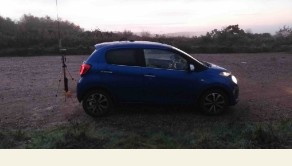
[40m] + Stations I worked where all very strong signals.
[40m] + Beautiful condx on 40m! I didn’t tx as I’m wkg on a hbrew Rx.
[80m] * Abit noisy, but excellent signals!
From Simon MOKB4J at Cannock Chase, central England L092AS [20m & 17m] + Thanks for the welcome, today was my first time.
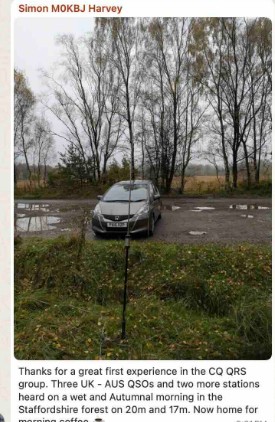
• | was excited to wake up at 5.10am and drive through the darkness and rain for half an hour to reach my chosen QTH. + I was operating portable in a forest cai park near to the German military cemetery at Cannock Chase, Staffordshire, UK, which is the peaceful resting place for 5000 soldiers from WW11 and WW2, using the full 20W from my Xiegu G90 and JPC-12 vertical antenna.
A beautiful setting at dawn, with heavy mist and golden leave all around. And thrilling to hear distant signals,
Chatting first with Pat VK2IOW and then Manny VK3DRQ on 20m, both very clear and nice relaxed CW. I switched to 17m from 0800Z and heard Mark, VK6QI and, I think, Gary VK4KE and tried to answer both of them but they couldn’t hear me.
Pat VK2IOW used his loop antenna to reach me on 17m and I noted a softer quality to the tone of his signal compared with 20m but he was very readable..
+ I need to find out why my rig’s power dropped and rose around once per second on 17m, despite a good SWR on the antenna.
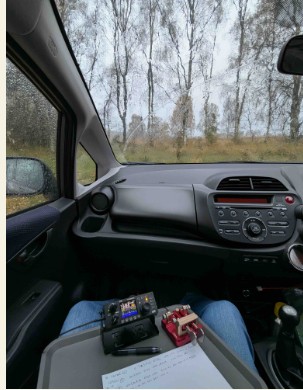
From Mike DL3YZ, crook with a lurgy at home in Stuttgart I was ill on Tuesday morning, so stayed at home and cancelled my schedule. Just listened on my home shack for the UK guys wrapped in my blanket.
Iheard Mark VK6QI you clearly at about 569 on 17 m, even with my lousy DIY full wave loop, hanging too low from some bushes (feed point just 20 cm off the ground) As Simon had some troubles getting out, I just took the chance for some quick beeps to you, then handed back to Simon immediately.
Great band. Thanks for the test 🙂 What antenna did you use Mark? Mike. [Sony to hear you were crook. Winter blues already! Well that loop worked a treat – you weren’t strong but perfectly Q5 on 17m. I was.
Using the VK6SR Southern Electronics Group Remote near Perth – Marconi Tee antenna – 12m high with a 60m flat top. Used to work really well, but there’s now something amiss and it doesn’t perform very well anymore these days.
‘Simon has joined our CQQRS WhatsApp group for QRS Alerts. Can I add you as well? Would make liaison much easier for during the skeds etc of course, and it’s great for contacts on different day of the week as well…
Plus like the rest of the Group, it’s a nice friendly team. And by the way, concerning your worry about jumping in on Simon’s frequency.
Our activities are primarily aimed at helping new operators to get on air and have a go – mistakes and omissions of etiquette are par for the course… including jumping in on a frequency that a team member is using already.
[Sorry to hear you were crook. Winter blues already! Well that loop worked a treat – you weren’t strong but perfectly Q5 on 17m. I was using the VK6SR Southern Electronics Group Remote near Perth – Marconi Tee antenna – 12m high with a 60m flat top.
Used to work really well, but there’s now something amiss and it doesn’t perform very well anymore these days. Simon has joined our CQQRS WhatsApp group for QRS Alerts. Can! add you as well?
Would make liaison much easier for during the skeds etc of course, and it’s great for contacts on different day of the week as well… plus like the rest of the Group, it’s a nice friendly team.
And by the way, concerning your worry about jumping in on Simon’s frequency. Our activities are primarily aimed at helping new operators to get on air and have a go – mistakes and omissions of etiquette are par for the course…
Including jumping in on a frequency that a team member is using already.
As our team members gain experience, they will have better skills and can start to use a quick ‘UP 5’ or ‘DN 5’ to allow < contact without stealing the original stations’ frequency - which of course is the correct etiquette... especially on the DX bands.
However, I can appreciate your being careful protocol-wise Mike. It’s interesting how like emails and SMS, it’s really easy for the meaning of our simple plain language CW to be mis-understood without the voice tones of speech and without facial expressions.
Considering that I couldn’t hear Simon and didn’t know whether my signals were making it on the long path – I really appreciated you jumping in, and I think Simon would have appreciated your help as well.]
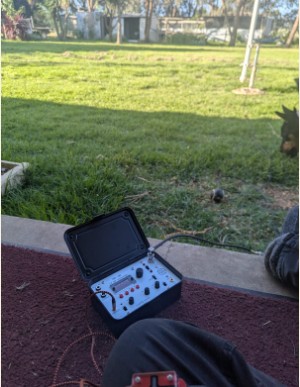
[40m] * Kicked off the QRS night with the littl Venus QRP CW rig outside enjoying the sun. I was running approximately 4 watts with a 40m EFHW with a squid pole. Great to work Grant ZL2GD who was running QRP also.
I don’t have my log with me when I’m outside usually, s my apologies if your name escapes me. I try to send my name even if we have worked quite a few times. It also just adds to the practice, and not everyone runs a log.
[80m] + I worked Sava on 80M tonight I was running 25WATTS we both turned down to 5 and still made the contact. Great to chat Sava. [160M] +l also had a contact with ZL1AZ on 160M ripper night with good conditions. Thanks everyone. Jordan VK3ACU
[40m] * Good conditions on 40m. Lots of very fast stations. I did wonder if there was a comp’ running.
[80m] + Gremlins in my mobile setup is causing my rig to reboot when tx on 80m.
This issue raised its head a couple of weeks ago but came good. More investigation required before next week’s slow cw night. * VK6 stations were booming into vk4 I was very disappointed I could not respond to their CQ calls this time.
[40m] * Quite good conditions, no thunderstorms for a change. From lan VK7TA at Latrobe
[40m] + Probably JH1USR didn’t know about our net, but I wonder, have overseas stations noticed that there does seem to be more than usual activity coming from this way on a Tuesday evening?
[40m] * Great conditions tonight, the waterfall was alive with great signals local and across the continent. Lots of longe QSOs which is great practice. Also nice to hear “KN” or “BK” without the exchange of callsigns every over once coms established.
Makes for much smoother QSOs and quick exchanges.
[80m] + Listened to 80M several times but no activity shown on the waterfall. This is a pity because 80M is a good band, if you can cope with the background noise.
[20m] + I was very happy to hear OM Simon / MOKBJ on 20m but couldn’t copy him properly, the QSB and low reading of only RSN 321didn’t help. It was even worse with OM Ross / MONNK only 321 with QSB.
[40m] + Another well enjoyed four hours and with a surprise call from OM Kiku san, JHIUSR.
[40m] + Managed to send reply to Stan’s NR157 message. I made a couple of send etfors requiring me to resend word, missed a 7 and some word spaces were missed. There was only 1 WA request from Stan.
Interesting comparing 3 replies, all had Cape Banks and Robe, but names of others were different. Different google search sites found?.
[80m] + After receiving 24N signal report from Max I realised that my coupling unit was not in line. Hope to do better next time sri Max ! Cee Pe WEET 94 Riki
[40m] + Strong signals after sunset from portable location at Dublin, 50KM north of qth. Good qso with VK7KPC, keep that “traffic” coming, Peter. Tested 30m random wire on 30w, fair signals from & to ZL3TK.
Flies & heat not ideal condx for camping, but great after sunset. Hi Hi.
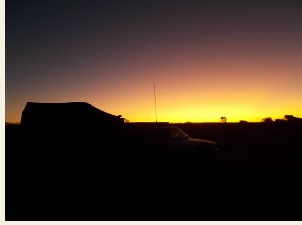
[40m] + I decided to try and use my WW2 vintage RC8 on 40m. With its wide IF bandwidth I have no idea how they managed CW contacts in the day. With stations separated by 1KHZ, hearing three stations at once was challenging.
I gave up in the end and switched to my FT897 Hi Hil.
[40m] + lots of stations heard, but not worked,. + as there was lots of qrn this week.
[80m] + still little on 80m this week,. + and some more qrn, to slow things down, again..
From Patrick VK2IOW between Bathurst and Orange
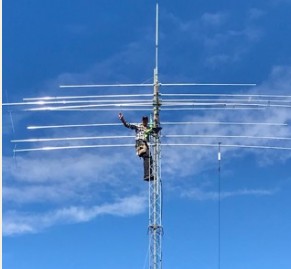
Metres. My Yagi antenna is a tribander for 20, 15 and 10 metre bands. I tried my large horizontal wire loop antenna on a QSO with Simon on 17 metres. The loop is a square loop on 4 masts, total length of 160 metres, up 10 metres.
I could partly hear Simon, but not well enough to sustain a QSO. Though Simon said he could copy me OK.. + It was nice to QSO with Simon for the first time on the net, he was working portable from a car park near Stafford, where I spent some time when I was in England for the Foot and Mouth disease outbreak in 2001.
Can’t say that remember this car park though!.
[40m] «| was sick and missed out on last week, pulled out pen and paper to practice this week.. + I was getting callsigns easy enough but the first few QSOs I tried copying came out mostly garbled – the CW area of my brain (where is that?) was not firing on all cylinders until VK5CZ came in nice and slow and it started to warm up again!
Need to spend a bit more time practicing with pen and paper again though methinks, not just in my head.. + Did some comparisons between what I was hearing on my FT891 and a vertical vs my SDR and the loop (nearly) on the ground as well.
VK5CZ and VK5KFG were 599 on my SDR (upconverter warble excluded), but the latter was much weaker on my vertical. VK2ASB on the other hand, was barely coming through on my SDR but 599 on my vertical.
I’ll have to keep making notes and see hava tha tan camnara and whathar any nattarn amarnac
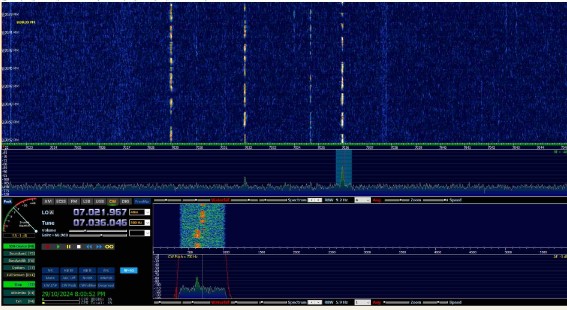
• My SDR is a Nooelec SDR, with a Ham it up Upconverter, attached to my loop around the backyard (mostly on the ground). » From what I can tell, the scale is do@RBW Peak but that’s the first I have looked closely at that to be honest!
🙂 The blue rectangle is where I was listening in at the tims – The software is HDSDR as shown above. I have been testing out a few and HDSDR nas worked the best for me so far.
[40m] + I was busy pruning back a rampant mulberry tree but snuck in a couple of contacts as work breaks. It went well using 25 watts so I might try lower power next time. From your editor Mark VK2KI at Beautiful South Bowning
[20m] + At 0700Z I checked the Reverse Beacon Network (via Mike DL3YZ‘s web page sent out in the reminder email) and I could see that Simon MOKBJ was calling CQ on 14045.4. I tried several calls but heard nothing.
[80m] + Later in the evening after dinner I had a listen on 80m and was pleased to hear a few on. I put out some CQs then tried replying toa CQ from Max VK6EN who was pouring-in to NSW; however, Peter beat me to it.
Also from your editor Mark VK6QI via the VK6SR Southern Electronics Group Remote at Bedfordale South of Perth and the VK6QS KiwiSDR near Brookton
[16m] * Called my carpel tunnel off, but unfortunately Mike DL3YZ was crook and not able to make it up the hill to the clubhouse this time.
[17m] +I checked the Reverse Beacon Network and could see that Simon MOKBJ was calling on 18085.6 but I could not hear him on either the VK6SR Remote or the VK6QS KiwiSDR. I tried calling on the off-chance, but without success.
Luckily though, Mike DL3YZ heard me from his sick bed and gave me a call – he wasn’t strong but was perfectly Q5; Mike was using a one- wavelength loop suspended in the bushes with the feed only 20CM off the ground.
And contrary to the CQQRS guidelines, Mike was overly concerned that he was transmitting using the frequency allocated to Simon’s sked… we’re all friends in this group Mike – no-one will mind if you come up on Simon’s designated frequency!
[20m] + I saw that Simon MOKBJ was calling (using the Reverse Beacon Network), but initially couldn’t hear anything. However, around 0730Z, he started coming up through the noise here and I heard him hook-up with Patrick VK2IOW at Millthorpe, then Manny VK3DR@Q at Blackburn.
I also heard ‘Sava VK4PN working another European station just up the band. + Terrific to then have a chat to Ross MONNK on 20m; signals were weak both ways and up and down around the noise level – but we exchanged RSNs before another station not hearing us came up on frequency.
Luckily Patrick was able to get through after me.
[80m] + The 80m band was wide open late in the evening with solid signals from the East. Post Morsum Report
From Richard VK6HRC We had six on the VK6RLM repeater and AllStar links for Wednesday morning’s Post Morsum call-in. VK6QI Mark VK6KD/4 David VK6FN Max VK6NW Wayne VK6KRC Bob VK6HRC Richard VK6MRB Mulligan our regular SWL and others.
Mark checked in from chilly Canberra and let us know that he focused on the DX activity for a while and later on made use of the SR remote. He also did a great job with WhatsApp alerts again.
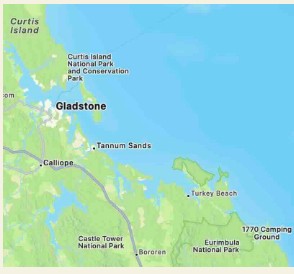
David in the quaintly named town 1770 in North Queensland enjoyed 40 Mx but had some trouble with the 80 Mx set up. Still having fun on their travels even going for a cruise on a DUCK !
FYI (amphibious vehicle ) Max had six contacts, one at a fairly rapid and enjoyable pace with Stuart VK6MK. Wayne had a good session before he had to head off for his SES duties.
Ihad a contact on 80MX with Max, hearing him fine but when he gave me a signal report of 24N. I realised too late that my antenna coupler was not in line!
Thanks to all last night and this morning 73 Richard VKeHRC ps There was also some discussion about the possibility of daily QRS contacts, rather than just the weekly group muster.
As pointed out – these are already happening regularly, aided by alerts on WhatsApp – especially from people such as Jordan VK3ACU who is trying to be on as often as he can for both rag chews and fo very slow QRS for brand new operators who want to have a go and gain some real- world experience.
inis Week’s fopic of interest
QCX-mini Build – Part 5 Oh dear. I do hope I’m not going to regret this – I’m always going on about how important it is that you follow the instructions exactly, and now I’m making it up as I go along (twice)!
The instructions say to install the power connector first and then the two adjacent 3.5mm stereo jack connectors.
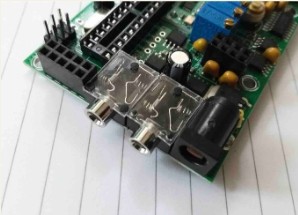
But as you can see, everything is a very tight fit. So I installed the stereo jacks first then butted the power connector up against them, checking to see that they’d all line up with the case end plate.
Next up was the RF connector, which Mike DL3YZ had warned me about with an amusing tale involving an uncle and four soldering irons.
The instructions say to install the RF connector first, then the adjacent stereo jacks, being sure that they all line up square to the board so that they’ll fit into
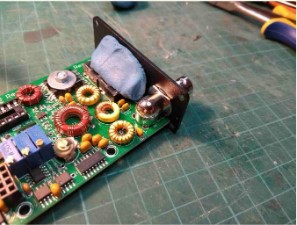
The case end plate. The RF connector didn’t sit nicely flat on the board so I decided to install the stereo jacks first and then made up a jig using the case end plate and a big gob of blu-tac.
If this is a mistake, I’m in big trouble because I don’t have an uncle and I only have two soldering irons! Wish me luck.
The Secondary Boards
QCX-mini Build – Part 6
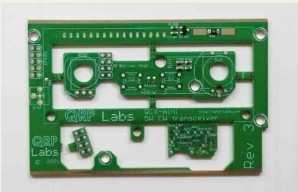
The instructions invite you to snap these off the Outer Board with pliers, taking care not to break the Outer Board whilst doing so. The joiners felt too stiff for me to feel comfortable doing that so I used my Dremel to cut them off.
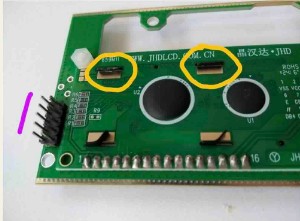
The Display Board is electrically connected to the outer board using the leads you cut off all the through-hole components (you did read the instructions and keep these, didn’t you?).
With the boards sandwiched together, you solder them on one side then flip the boards over and solder them on the other side.
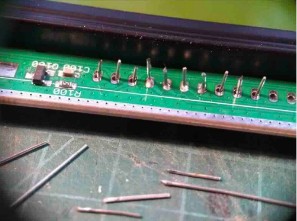
Before I soldered the 10 pin header to the Display Board, I did a trial fit to the Main Board and found that two of the tabs were fouling components on the Main Board. So I straightened these tabs and folded them out of the way.
There are traps for the unwary everywhere!
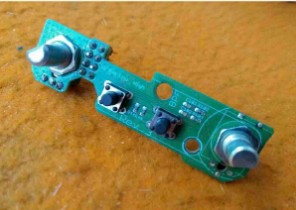
Now to the Controls Board. There’s only an 8 pin header, two buttons, a potentiometer and a rotary encoder to install. But, as with everything else on this radio, it has to fit into a very tight space so there’s a lot of fiddly soldering to be done on the underside of the board.
Doing a good job on that took me an entire session.
Next week, Final Assembly!
[Thanks again Ross – terrific article. I reckon many of our readers will be sitting on the edge of their seats waiting for next week!]

Avery rare Australian Simplex-Auto semi-automatic Morse key, before and after refurbishing.
A very rare Australian Simplex-Auto semi-automatic Morse key, before and after rafiirhiching
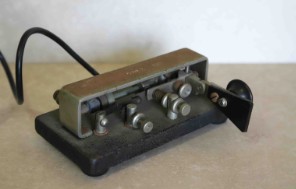
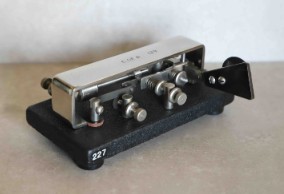
Made for the armed forces during WWIII. Designated as Model 10 by Simplex-Auto expert-par-excellence, the late Ron McMullen.
This model does not carry the typical ‘Simplex-Auto serial-numbered brass name plate on top of the bridge, but instead bears the engraved inscription ‘C OF A 129’, that is, serial number 129 issued to the Commonwealth of Australia.
This number range is outside the regular (up to four digits) Simplex-Auto serial number sequence. There is evidence that following WWII, a number of these keys came into use with the Postmaster General (RM.G) post offices, as well as possibly such other agencies as Civil Aviation, for use by their Morse operators.
However, of the ‘C OF A’ number sequence, only four are documented as still in existence, i.e. numbers 10, 45, 115, and now, number 129. Jam most grateful to Mark VK2KI / VK6QI for his most generous gift that allowed me to add this key to my collection.
Thank you, Mark! The photographs show the key in its condition before refurbishing, including non-standard weights, improvised wiring, and several non-standard screws and washers. Additional images show the key in its refurbished condition.
I am most grateful to Col VK4CC for applying his nickel- plating interests to provide much needed TLC to the bridge. Thank you, Col!
What remained was to clean all disassembled parts, de-rust the base, steel springs and screws, and touch up paint wear-and-tear on the base, as a further measure to prevent corrosion on some small, exposed areas.
During re-assembly, a replacement weight as well as some screws and washers were fitted from genuine spare parts, and a new connectivity wire was fitted underneath in its regular location, as well as new rubber ‘feet’.
Of the two non-standard holes at rear, one was used to fit a (non- standard) nylon cable clamp and ‘pigtail’ connection for ease of use. Old meets new!
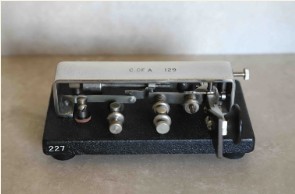
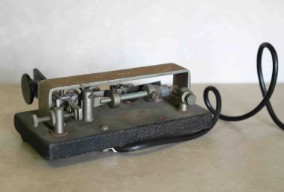
In broad terms, my philosophy when cleaning (accrued dirt adds nothing to notions of authenticity), preservation, and/or restoring a key to full functionality, is to use as much of the original parts as possible.
Where parts require replacement (including such ‘consumables’ as insulators and washers) I endeavour to use genuine parts obtained from ‘wrecked’ and unserviceable keys, which I also collect for that very purpose.
Where no genuine parts are available, I seek out new commercially available items that approximate the originals as much as possible, analogous to what the manufacturers of old would have done, when ordering certain commercially available components from external suppliers.
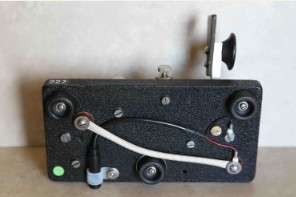
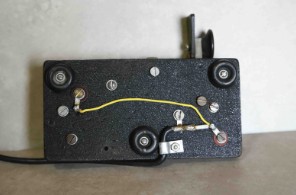
The Simplex-Auto semi-automatic Morse key was invented and manufactured by Leopold Gilbert Cohen, telegraphist, Chief Telegraph Office (C.T.0.), Melbourne, around 1920. From 1923, the Simplex-Auto was approved and adopted by the PM.G.
As a standard landline telegraphy Morse code sending device for the Commonwealth of Australia. The Simplex-Auto was also used in other Government Departments, including the Department of Defence, Civil Aviation, and by the Railway Telegraph Services.
The Simplex-Auto is a fast key, its slowest speed (weight at extreme end of the pendulum) still a decent 18 WPM. PM.G. telegraphists generally worked at speeds requiring them to send 18 telegrams within 20 minutes, and the speed range of the ‘Simplex-Auto was therefore what operators would expect from a professional key.
Significantly, the dot-spring thumb screw also carries the so-called ‘dot stabiliser’ (“a special dot contact arrangement which ensures a perfectly firm and even dot at all speeds”, in the words of Leo Cohen), a concept to be found much later in certain 1938 McElroy ‘bug’ models, and during WWIl in the Canadian Airforce Wilson ‘bug’.
‘Semi-automatic keys, or ‘bugs’, were in Australia generally called ‘Jiggers’. The concept of the semi-Automatic Morse key was developed in the USA in 1904 by Horace Greeley Martin, founder of the Vibroplex company.
Its purpose was to prevent the dreaded so-called ‘telegraphist’s cramp’ or ‘glass arm’, Carpal Tunnel syndrome, a common RSI-type of injury that could literally ruin a telegraphist’s career as a result of the extraordinary traffic flows operators were expected to handle.
Alongside the Australian Pendograph and the American Mecograph semi-automatic Morse keys, the Simplex-Auto was one of very few such keys that managed to circumvent the Vibroplex patents, due to their different ‘tension-release’ system and the mechanisms innovative right-angle design.
For further information about Leopold Cohen and the Simplex-Auto, see the late Ron simplex-auto-. pdf The key turned out beautifully and I am very happy with the result! Many thanks again Mark!
Likely a bit too fast for the CQQRS net but I’l find a spot to give ita ‘whit!’ at some point. Kees van der Spek VKIKVS October 2024
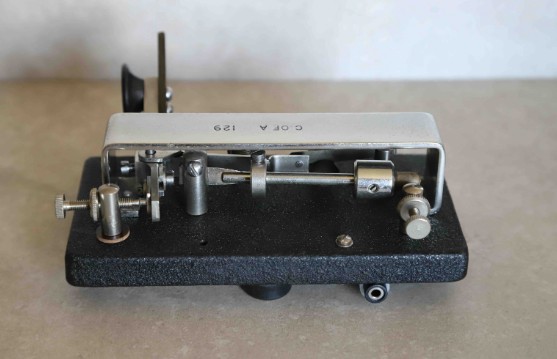
[An outstanding outcome Kees – thank you – a very special article for a very special key.]
Shack Visit
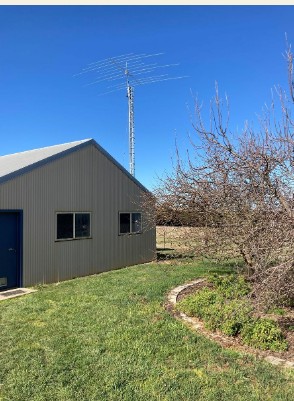
This week we’re going to visit Daniel VK6WE at Cottesloe. Thanks for your response to my report last week. Some days my CW seems to go well and be more satisfying than others.
My shack is quite minimal – being confined to a small desk in the corner of my garage.
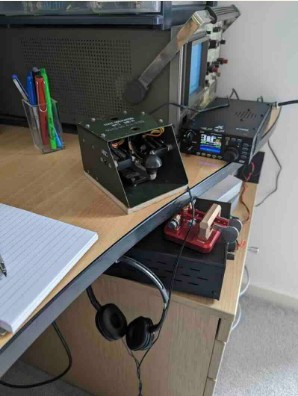
| use an Elecraft KX3 for CW with a choice of the attached paddle or a straight key salvaged from an old army field radio.
Currently I am favouring the key because I think it reinforces the coding better as you have to duplicate the proper rhythm with your wrist. I still have to fall back on the decoder in the KX3 when I miss my mental decoding.
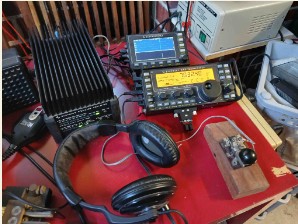
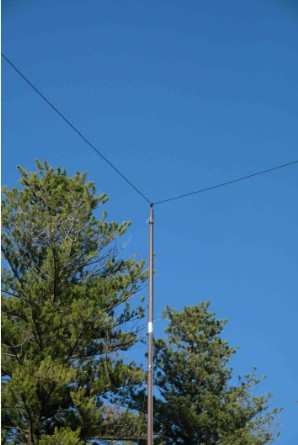
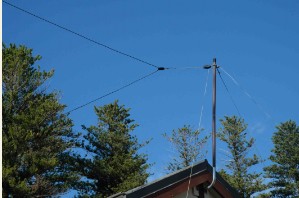
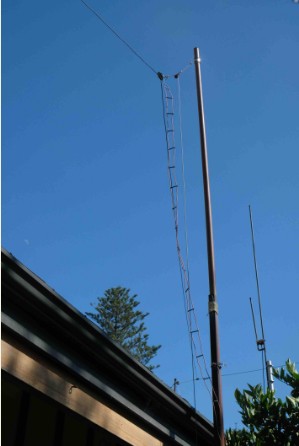
| also have an Icom 7300 for other operations (on the same desk just out of the picture). The antenna is a simple 40 m dipole fed with home made ladder line out of an SGC tuner.
It wraps around the sides of my back yard supported by salvaged windsurfer masts at the
corners.
Regards, Daniel.
Other News
My First Real DX Ragchew
My First Real DA hagcnew by Simon MOKBJ near Wolverhampton Ihad thought that my compromised station with its urban noise levels, half- size GSRV antenna and 20 Watt Xiegu G90 radio wouldn’t be capable of much DX.
I’ve been happily and slowly building my CW skills for a year, mostly using the 40m band for chats with UK and Western European stations.
Once or twice, listening on 20m at UK breakfast time has sometimes allowed me to hear VK stations on the long path but I’ve never been able to reach them until 3. October when I came across Patrick, VK2I0W, working another European.
I tailLended his QSO without much hope, willing my 20W to stretch 14,000 miles.
To my utter joy, Patrick responded and gave me a 559. With no QSB, we chatted for a full 24 minutes at a very nice steady pace. My hands were shaking as much as they were in my very first CW QSO last year!
My wife is a Kiwi and when I mentioned my new hobby to my mother-in-law, she told me that her dad used to be an amateur radio op.
She’d forgotten his callsign but with a bit of detective work and the help of NZART local branch member Gavin ZL2TVM, I found that Barrie Jackson held callsign ZL2FJ. With a bit more online searching, I discovered that he was President of NZART in 1940!
It would be wonderful to repeat my trans-global QSO with more of the CQ QRS members, especially to make a ZL contact in this anniversary year, so I’ve been listening eagerly every Tuesday. Good luck and 73 to you all.
Simon, MOKBJ
From one of our Founding Team – John VK5ET:
G’day Mark, last couple of weeks i noticed the ” old squip pole antenna ” got a mention in RagChew newsletter which brought back memories of using it from the early 2000.
I made up a 9 mt squid pole which i took camping with me to various locations , easy to set up & received good signal reports from it.
I had the antenna wire coiled up on a plastic reel which i ran out along the ground before winding it on each section of the squid pole .
My only down side of it after winding the wire around each section for many years i was developing an aching wrist (RSI 22) From memory, i think the top sections of the squid pole collapsed only 2 or 3 times on various trips & that was during windy nights but was overcome by wrapping one layer of insulation tape around each section .
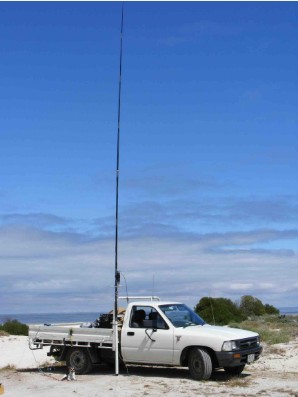
| made up a 9 mt squid pole which i took camping with me to various locations , easy to set up & received good signal reports from it. | had the antenna wire coiled up on a plastic reel which i ran out along the ground before winding it on each section of the squid pole . My only down side of it after winding the wire around each section for many years i was developing an aching wrist ( RSI 22) From memory, i think the top sections of the squid pole collapsed only 2 or 3 times on various trips & that was during windy nights but was overcome by wrapping one layer of insulation tape around each section .
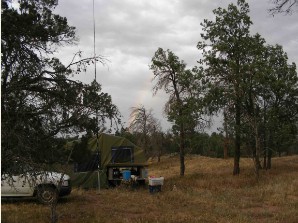
| finally gave the squid pole away & went for a 80,40 & 20 Mts, linked dipole which lan ,VK5CZ made up for me few years ago, easy to set up . Other portable option is a commercially made EFHW. 73 de John, VKSET
Error in NR 157 from Stan ZL3TK Apologies for my error in last week’s QTC. The ever-observant OM Peter VK7KPC noticed my reference to the NSW border at 286 km from Coorong National Park was implausible and straight out wrong!
It should of course have been the VIC border. Please don’t let my failure prevent your answering the question. This text complies with rules governing SI Metrics. 73 de Stan ZL3TK
Error in NR 157
The Operator’s Fist
DN by Phil VK6GX Hi Mark, Your comment about being able to identify an operator by their fist is spot on. At least as far as hand sent Morse is concerned, that is straight key, Cootie or bug.
These days it is a rarity, with most operators using paddles with keyers or keyboards, so they are not readily identifiable and transmitters are all rock stable, so you can’t pick them by their chirp, drift or key clicks etc.
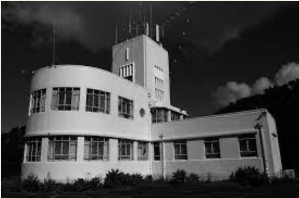
When I was at sea from ’69 to ’74, 99.9999% of traffic was CW on all but one of the ships I was on, the one exception being the last one, a passenger ship, when there was a bit more radio-telephone traffic, but even then, it was mainly CW and all with a straight key in my case, the main key in those days being a Marconi 365B, (I have one here, brings back great memories)!
One got to know coast station operators by their fist. One of the best operators I ever came across, was at ZLD, Auckland Radio.
On one Pacific cruise, which would have been ’73 or ’74, we were a couple of hours out of Auckland and people wanted to be picked up on arrival.
| called Auckland Radio on 500KHZ :- “ZLD de GHZB QTC 25 K”. He came back like a shot and we transferred to our working frequencies, both sending at around 25 WPM, so I knew he was a good Op.
I sent QTC 25 again (I have 25 messages for you), he was not phased, just sent R QRV K. Immediately I had
Completed the 1st message, he just sent “R”, so I sent the second one and same again, for the remainder of the messages without hesitation.
He would have been typing direct to a teleprinter and was doing a word count chec at the same time, not something many operators could do, (unless he trusted my word count was accurate and did not question it). A memorable QSO with a superb operator.
In those days the vast majority of R/Os were male and many took up coas station jobs when they settled down. I have no idea who he or maybe she was, but would have loved to have met him/her. Hope to catch you on the net tomorrow. 73, Phil, VK6GX. [Thanks Phil.
I look forward to lots more stories like this from you and other professional operators.]
Morse Training Net
Nic VK7WW runs a Slow Morse training net every Wednesday at 7pm EDST on 3580 for 30 mins. He uses the callsign of the Northern Tasmania Amateur Radio Club VK7TAZ on that net.
Many of our team learned Morse code with the support of Nic, and the weekly training session comes highly recommended for anyone who wants to learn the Code, or simply brush up. Everyone’s welcome – 3580KHZ at 7pm Eastern time every Wednesday.
The NTARC also feeds the CW live via the Discord phone / computer audio stream, and previous weeks’ recordings are available. Contact Nic VK7WW for more info nicholaschantler@hotmail.com – or just join in on Wednesdays.
Rrain Teaser
Jules Perrin JP VK3JFP has created a terrific resource to help guide learning for all levels of amateur radio licenses: https://Awww.julesworkshop.net/Amateur%20Radio.html With thanks to Baz VK6MU for he idea, and Jules for the good learning website, here’s this week’s quiz questions from Jules’ Workshop example test questions:
Exam Questions:
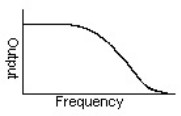
Distortion occurring in a non-linear device driven by a signal containing more than one frequency is called ¢ frequency distortion ¢ phase distortion ¢ harmonic distortion ¢ intermodulation distortion Answers next week.


Answers from last week’s Quiz:
Convention has it that VHF, UHF and mobile signals are transmitted on a vertical antenna. What antenna polarisation should the receive antenna be? Answer: Vertical This circuit diagram shows
Resistor and capacitor in parallel resistor and capacitor in series resistor and inductor in series capacitor and inductor in parallel
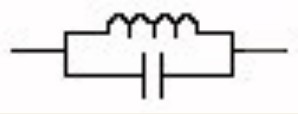
Answer: Capacitor and inductor in parallel
A television receiver suffers ghosting interference, a possible cure for this is to ¢ fit a high pass filter to the receiver antenna input ¢ change the direction of the antenna ¢ install an RF choke to the antenna lead * use a small by-pass capacitor across the antenna Answer: Change the direction of the antenna How did you go?
Di-dan-ali-aan-aii
So back to the Slow CW QSO practice Group.
Next Tuesday’s Muster
Our CQ QRS Group will be on as always on Tuesday from around 07002Z until about 1300Z; see below for details. Doesn’t matter whether you’re brand new and want to try just exchanging callsigns and RST reports, or you’re ready for a good old rag chew.
Please let me know via our Reports form bit.ly/CQQRSNET who you work or hear on Tuesday’s Group. The report form closes at lunchtime on Thursday.
Post Morsum
Richard VK6HRC will run our phone Post Morsum on the South West AllStar net (via repeaters and hotspots all over WA) from 0600 WA time, then from 0700 WA time on 80m (8605 LSB).
For the 0600 (22002) net, if you’re in WA all you need is an FM 2m or 70CM transceiver and an AllStar node nearby. If you’re elsewhere in the world, you may be able to connect your local AllStar-enabled repeater to the net, or you can connect via Echolink.
Let me know (cqqrsnet@gmail.com) if I can help with that. and if you can’t connect that way, give 3605KHZ SSB a try from 0700 (23002).
Teamwork
Thank you so much to our team of 36 contributors: MOKBJ, MONNK, VK1KVS, VK2ASB, VK2GAS, VK2IOW, VK2RU, VK2TIG, VK2WP, VK3ACU, VK3AFH, VK3DRQ, VK3FG, VK3JFP, VK3KEV, VK8KIH, VK4CCW, VK5A0, VK5CZ, VK5ET, VK5FD, VK5KFG, VK6BEK, VK6FN, VK6GX VK6HRC, VK6IS, VK6KD/4, VK6MK, VK6NW, VK6WE, VK7KPC, VK7TA, VK7WW, ZL2GD, ZL3TK.
The Joy of Daylight Saving
There’s usually people around until after 1300Z on the Tuesday Group – so keep calling in the segment of the band designated in the table below until you catch someone.
I hope to be on air portable from somewhere in NSW or via the Remote at Bedfordale WA, and I’ll also be watching the proceedings using the VK6QS and Tecsun SDRs in WA and NSW respectively. Hope to hear you there.
GU CW on Tuesday, mb Mark Bosma VK2KI / VK6QI Beautiful South Bowning NSW mark.bosma@icloud.com non impediti ratione cogitationis

An Ode to CW – thanks to David VK3RU: In days of old, when ops were bold, And sideband was not invented, Words were passed by pounding brass, And all were quite contented. – Unknown author
About the CQ QRS Group
Frequencies and Times
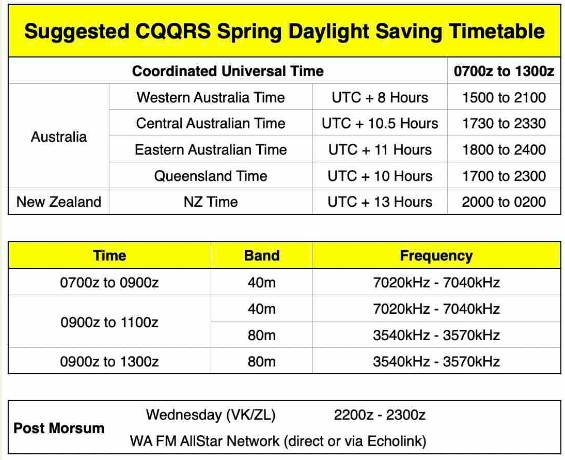
So tune around and call anyone you hear, or find yourself a quiet spot in the designated segment, send “QRL?” and if the frequency is quiet, start calling CQ QRS at about 75% of the speed you’re comfortable receiving at; hopefully responders will match (or send slower to their comfort level).
And if you are already having a QSO and someone sends “QRL?”, respond with “R”, “C”, “Y”, “YES” or QRL to let the caller know that the frequency is in use.
If we’re on 40m and you can hear that the band is open outside Australasia, perhaps consider calling 500HZ above each 1KHZ slot – to minimise the chance of having to copy our team through QRQ QRM that’s often dead-on the kHz markers.
Speed? Rhythm?
If you’re proficient at CW and can race along at 20 or 30WPM – terrific, but please remember, the Group’s aim is to encourage participation and learning, not show how fast you can hammer the key.
Please send slowly where you can and concentrate on rhythm – listen to your side-tone, get that wrist action going and make a special effort to make it sound like perfect CW; the longer we go with our Group, the more I understand just how many non-transmitting listeners we have – and they will most likely appreciate your QRS!
So, if you’re an experienced operator, please try to send nicely balanced slow CW to give them a chance to practice and gain confidence…. they’ll reward you one day by coming up on air to say g’day and thanks – how good is that?
And if you’re new or like me, just rusty…. ignore the above… just have a go – the lather of sweat will be worth it and there’s plenty of time to get the details sorted out as you practice.
Matching
And also for the oldies like me, when you hear someone new, please match their sending speed – or slower. The person you’re replying to may not be as deft on the decoding as you – it may be their first ever CW QSO – remember your first?
Lather of sweat, key that refuses to send that you tell it, brain that refuses to decode those complex letters that were right there half an hour ago, etc!
PSE ORS
And if someone is sending too fast to comfortably copy – “PSE RPT PSE QRS” or “AGN? PSE QRS’ will make life easier for everyone…. and might just encourage other listeners to have a go themselves.
The other thing to remember – most operators are writing down what they hear… so when you put it back to them, expect a delay while they read your words of wisdom, before replying.
If you really want to move off frequency (eg because of a spurious switch mode power supply signal that’s just drifted into the conversation), you could try sending an abridged callsign of the person you’re after, followed by “UP 5” or “DN 5” then K; then call that person on the designated frequency and keep your fingers crossed, they may have understood you and followed…
Landing Zone
If the band goes really quiet, call and listen on 7032KHZ (7028KHZ secondary) or 3555KHZ. If you catch someone, there’s no need to QSY – enjoy the frequency.
But don’t forget to tune around if it’s quiet – we have lots of operators with crystal locked transmitters – and they could be anywhere within the segments.
For those who are locked, or can only transmit outside the segments, send a message on our WhatsApp CQ QRS – Alerts group advising of your current frequency.
And of course, put the frequencies in a memory so outside of the Group, if you’re not tuning around, leave your receiver on one of the primary frequencies – you never know who you’ll hear (7032 is used in VK and ZL for SOTA / PARKS during the day so you’ll often hear activity there).
CW Tips
As always, for newbies, operating suggestions are available from the operating hints link here: https://www.parg.org.au/ _files/ugd/ebe236_ 3ca5ca08bb38429db4eee524bda2t97a. pdf. mb VK2KI / VK6QI