Below is a reconstruction of the 2024 43 CQ QRS RagChew newsletter designed to support full text searching. This reconstruction was built using OCR, and will contain errors.
To view the Mailchimp original, click here. To search the entire newsletter archive, click here.
Contents
- CQ QRS RagChew
- Last Tuesday’s Group
- New Team Members
- Masthead Image
- Reports
- This Week’s Topics of Interest
- by Ross MONNK
- instructed.
- One of My Volunteer Jobs
- What’s on my Bench
- Other News
- Across Australia by Squid
- Hi Mark
- Thanks David. I see things haven’t
- The Stuttgart Clubhouse
- Another QRPLabs QCX Mini
- Extra-Long Dahs
- Morse Training Net
- For Sale QRPLabs QCX Portable QRP Transceiver
- From the DXing.com.au Newsletter:
- Brain Teaser
- Exam Questions:
- Answers from last week’s Quiz:
- Di-dah-di-dah-dadit
- Next Tuesday’s Net
- Post Morsum
- Teamwork
- The Joy of Daylight Saving
- About the CQ QRS Group
- Frequencies and Times
- QRL?
- Speed? Rhythm?
- Matching
- PSE QRS
- Landing Zone
- CW Tips
CQ QRS RagChew
Yet another outstanding Tuesday; so many operators on air or listening-in enjoying the art of CW – learning, practicing, reminiscing, mentoring…. all just having fun with this strange aspect of amateur radio.
Whodathunkit that so many of us were driven away from CW after passing the AOCP Morse Code test, not only because of the many more attractive and fast-paced aspects of the hobby, but also because of the attitudes of many of the CW fraternity of the time.
But look at it now… so many new and experienced operators out there just enjoying this relaxing aspect of our hobby. How good is this?
Last Tuesday’s Group
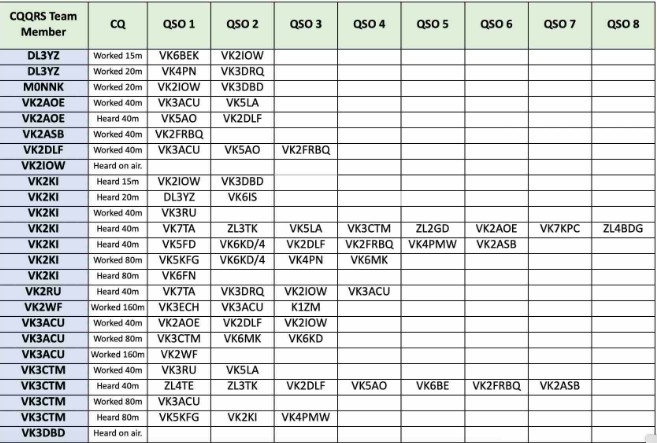
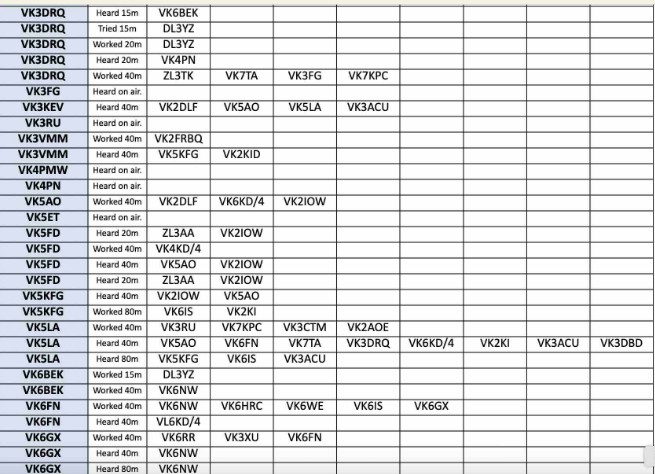
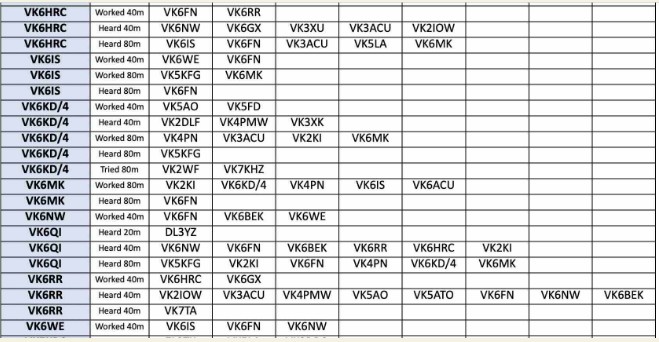
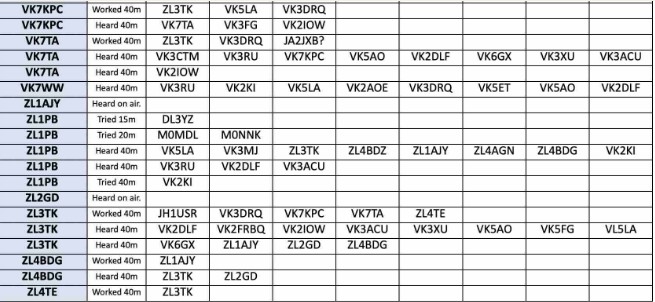
Here’s this week’s list of the 64 stations heard on our Tuesday evening Muster:
New Team Members
This week I’d like to welcome Simon MOKBJ from Wolverhampton. Simon has been on CW for just over a year, and enjoys QRS almost exclusively. Like Nigel G4RWI, Simon is a volunteer at the RSGB National Radio Centre at Bletchley Park.
Welcome Simon – perhaps we can rope you into joining the DXperiment series with Ross MONNK and Mike DL3YZ?
Masthead Image
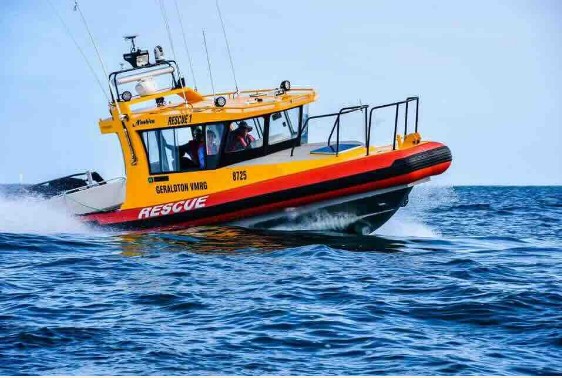
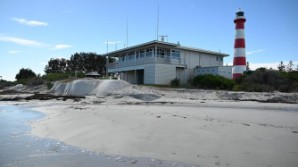
And thanks this week to Roy VK6RR for the great shot of the Geraldton Marine Rescue craft in action. See the Topics of Interest below for Roy’s article about volunteering.
Reports
After next Tuesday’s Group, please send me a list of who you worked and / or who you heard using our web form here: bit.ly/WCQQRSNET

Submissions close lunch time on Thursday. If you hear or work one of our team on a different band on Tuesday, please just use the 80m report area and annotate which bit applies to which band.
And when you enter the list of callsigns worked, heard or missed, please append an ‘@band’ to each callsign without a space (eg VK2KI@20 VK6QI@15 etc). Help attract new and old team members to have a go by submitting your report each week.
Cheers, mb Mark Bosma VK2KI/ VK6QI Beautiful South Bowning NSW mark,bosma@icloud.com ‘on impact rations cogiationis
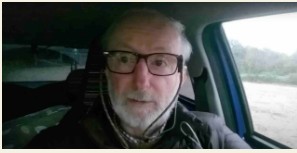
Very many thanks to Pat VK2IOW and David VK3DBD for being on the other end.
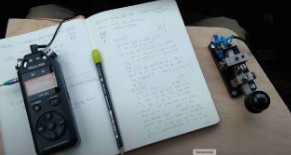
Before the DXperiment this week, Mike DL3YZ and I had been testing my “winter car park antenna”. In reality it’s nothing special – just a 1/4 wave vertical for the 15 m band using the car roof as a ground plane.
But it might enable me to continue portable DXpeditions in the warm dry comfort of my car now that the horrible English winter weather is closing in. If this antenna works, I would like to try the Long Path to Australia again during next week’s QRS “Net”.
This is very much a compromise antenna so I don’t expect much success but, as the fishermen say, “You have to put a line in the water to catch a fish”. So if any of the QRS “Net” guys enjoy a challenge, this might be something for them. [Thanks Ross.
Have a look at Ross’ excellent video – terrific to see what was going on at his end before and after the sked. https://youtu.be/hBWb-7jGrsw ]
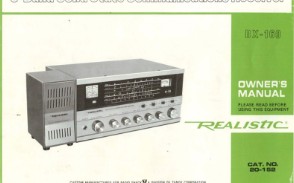
New “project” a Realistic DX-160 receiver from the 70’s and heard some QRS calls. Jumped on the Hermes and had a couple of satisfying QSO’s. Glad to hear Andy is expecting soon (A TS-520 Kenwood that is!). 73 de VK2AOE.
[40m] + Except for slight QSB, 40 m was in good condition. Much hoped-for traffic from northern SA bush didn’t eventuate but we did strike it lucky with the first traffic ever, that we know of, from Tasmania!
[40m] * Quite a few long rag chews tonight. Less stations contacted but longer QSOs Well done everyone.
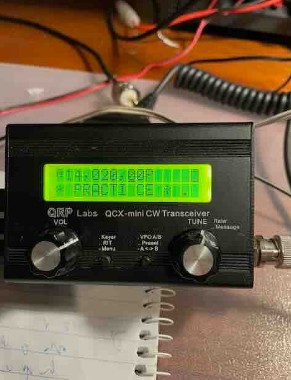
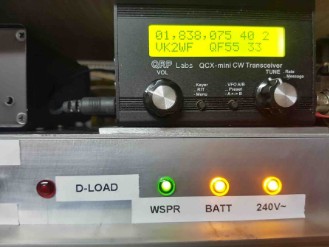
[80m] + Primarily interested in DX on 160M, but happy to give you guys a QSO. Note the interest in the QRP Labs mini CW transceiver. I have one set up for continuous use as a WSPR beacon.
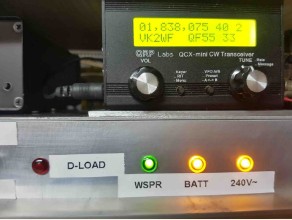
[Thanks Adrian; I’d be keen for more of our operators to give 160M a go – transmitting if their license allows, and receiving if not. Great to see a bit of activity via our CQQRS WhatsApp Group notifying of CQ calls.
Lots of challenges (license requirements, antennas, noise, challenging propagation etc… but hey, that’s what we do isn’t it? DORR Aaa 3 4G AS Nee fe emo, BR FOO ATE Wiesner De ener 7!
[80m] + I had a great DX time this morning out in the hut at Pit’s Meadow. + Its astounding, time was fleeting here – I was on the key the whole time (and of course madness takes its toll ;-)).
[It’s just a jump to the left eh Mike?) + Condx were really on our side today, making the VK stations sound like being around the corer in Germany.
+ Aside to the great fun of working DXperiment’s “core” stations Manny VK3DRQ and Pat VK3IOW, ( thanks for showing up folks!) I had the honour to welcome two new OMs : Sava ( VK4PN ) and Shaun ( VK6BEK) into the circle of people who have successfully CW’d around the world – big thanks to all of you!
+ After a nice chat with Pat on 15 m, I encountered this strange phenomena again which I had also noticed some Tuesdays before.
Being still new to the DX subject, it still fascinates me: The DX long path window “Europe-Australia” doesn’t close gradually, but within some seconds.
First some slight QSB, then the noise level goes up a bit and then suddenly I get flooded with screaming calls from European stations, and all from places which the beam isn’t even closely pointing to.
+ Now, I wasn’t able to hear my signal on the trusty SDR at Ironstone VK any more, so I decided to QRT after working my way through the European pile-up and called it a day. I even got a Japanese station in the log.
+ Thank you all for joining in the DXperiment, and a big thanks to Mark for making all this possible. 78 de Mike ( DL3YZ.). [Hey my pleasure Mike… but it’s the team members who come out most Tuesdays Fe a I Fr A RS A Ee Pa yey
[40m] + Many very strong signals on 40 metres.
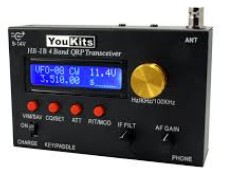
[80m] + Great fun! I will try the 10 meter band next Tuesday. I was operating my HB1B QRP CW transceiver and EFHW antenna this Tuesday.
[40m] + Good conditions at this QTH. From lan VK7TA at Latrobe
[40m] + Propagation appeared very strange with signals dropping from $9 to S2. It turned out to be a bad connection on the feedline! I barely heard a Japanese station at the end of the evening, but am not confident I copied the callsign correcty..
[40m] + Ist attempt at traffic message reply. Seemed ok except for non-standard coordinates sent. Learned a bit more from the experience. Will see how I go next time…
[40m] +1 tuned in to a wall of silence at 16:30 so called CQ intermittently. + There was no response for 15 minutes and only one very weak signal I could not copy turned up close by. + Expecting a dull session I got a strong response to CQ from VK6IS.
After a sh QSO with Peter, VK6EN (Max) chimed in to complete an arrangement made on
[40m] «| tuned in to a wall of silence at 16:30 so called CQ intermittently. + There was no response for 15 minutes and only one very weak signal I could not copy turned up close by. * Expecting a dull session I got a strong response to CQ from VK6IS.
After a short QSO with Peter, VK6FN (Max) chimed in to complete an arrangement made on a
Morning voice net for a 17:00 CW chat. After working Max I answered VK6NW (Wayne’s) call booming in close by. This went well despite some stumbles in my sending. + It was a Satisfying session but I only worked three stations in about an hour of
[40m] + mostly listened to the experienced operators on the net going at a decent pace, no time time to write much down but great trying head copy !
[40m] + The band was no too bad but the operator was not feeling the same. Gave up after 0930Z.
[80m] + I try to call Mike DL8YZ@15m, he was only RSN 321 QSB but soon disappeared
[40m] + Tried to call Mark, VK2KI but too much QRM. [Sorry Phil – a challenge with so many stations on when using the 3kHz-wide receiver on my old TS-1208S – I’ll try harder next time!]
From your Editor Mark VK2KI at Beautiful South Bowning
[16m] + For the second week in a row, I was late (I’ll blame Daylight Saving) to join the Group muster. I listened on the VK1CM KiwiSDR on 15m and just missed hearing Mike DL8YZ, but I did hear Patrick VK2IOW at Millthorpe chatting I think to David VK3DBD at Yakendandah; I’m guessing the strong solar activity was producing the short skip propagation over the 250KM and 300KM paths.
[20m] + I heard Mike DL8YZ being called by Peter VK6IS on 20m briefly before he went on to work some of the local stations calling him.
[40m] + Areasonable group of signals on 40m; nowhere near what we’ve had in the past, but still lots of activity. Early in the muster, I heard Stan ZL3TK, Grant ZL2GD and Ben ZL4BDG, but the signals were way down on previous weeks, and the ZLs seemed to disappear from the band quite early.
+ Nevertheless, I heard a good number of stations, but had only one QSO this time with David VK3RU at Burwood before disappearing for a late dinner.
[80m] + Signals across Australia were really strong on 80m by the time I moved to that band. + had a nice chat to Greg VKBKFG at Willunga.
Max VK6EN was thundering into NSW from his 160M doublet up 20m from Manjimup, but didn’t seem to be able to hear Sava VK4PN who responded to Max’s CQ; although tempted to call when Max didn’t respond, I didn’t want to barge in – I felt sure that Max would hear Sava…
But apparently not. Perhaps some one-way propagation once again? (See the series of discussions about this apparent propagation phenomenon in i ena
UbSistined + Again this week, I was amazed at how well David VK6KD/4 at Yeppoon was coming through from his portable set-up; enjoy the sunspot peak while it lasts folks.
Also good to chat to Stuart VK6MK from Australind, who has finally solved his problem with RF interference to his Internet by moving to Starlink; I hope we hear a bit more about that journey when you have a moment to write about it Stuart.
Also from your Editor Mark VK6QI at via the VK6QS KiwiSDR near Brookton
[20m] * Mike DL3YZ was coming through nicely into the West on 20m, but I didn’t get the callsign of the (non-VK/ZL) station he was working; sounds like he was having lots of fun with a European pile-up though.
[40m] + Early in the Group muster 40m wasn’t yet open to the East, but I heard Wayne VK6NW at Bridgetown chatting to Max VK6FN a stone’s throw away at Manjimup, then Shaun VK6BEK up at Quinns Rocks.
I also heard Roy VK6RR up at Geraldton calling CQ then Max chatting to Richard VK6HRC at Padbury. Lots of good CW in the West.
[80m] + Later in the evening as the dark settled on the ionosphere in the West, 80m was open really nicely across Australia with very good signals from VKS, 4, 2 and of course, VK6.
[40m] + was an bit quiet for an while,. + then the action started around 1700WST.
[80m] + it’s still fairly quiet on 80m, most times, + some more activity would ne nice…
[20m] +I could not hear the other stations MONNK and DL3YZ on 20m.
[40m] * Great conditions, worked a few before having a bit of a listen around. David 3RU terrific again on his QMX. Delighted to QSO with Peter VK7KPC, we were club mates at the South Coast Amateur Radio Club in the southern suburbs of Adelaide over 20 years ago, when he moved to Tassie and I moved to the Riverland, nice to catch up!
Ran about 25 watts tonight, that seemed more than enough power. Nice not to have S9+ static crashes for oncel.
[80m] + Repaired the 80/40M Doublet yesterday afternoon, and went down to CW after
The SSB Boat Anchor net on 3620KHZ finished and had a listen around, heard a few good sigs. Called CQ for about 1/2 hour but no takers. Great conditions. Probably a bit late!
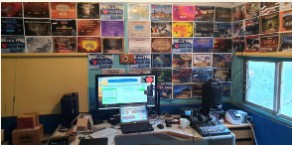
From David VK6KD/4 at Mulambin creek, Yeppoon QLD (VK4 land)
[40m] * Busy night with so many stations. Too many to get a QSO with everyone…
[80m] + 80m started to get active around 10PM in QLD at my QTH. My notepad laptop went flat at 11PM so had to QRT. Will look at options to keep it going when mobile.
[80m] + AQSO with Mark, VK2KI, has the bonus of a signal report from not only Beautiful South Bowning but also Perth.
[40m] + Good copy David 6kd. Great Morse from Phil 6gx & Wayne 6nw. Heavy QSB wit Wayne over the short hope Manjimup to Bridgetown. 30 Kims at the most. 73s.
[40m] + Not too much to comment about for this week. Signals still quite low into NZ, and getting stronger later in the evening.
[40m] + I had nice chats with Roy, Drew and Max before having to QRT, so I’m afraid I didn’t get the chance to encourage more inexperienced operators, but I hope our chats gave you good reception practice.
+ Condx on 40m seemed reasonable during the short time I had on 40m during the afternoon, with good signals locally and from VK3. Sorry, I couldn’t stay longer on 40m and didn’t even get to 80m.
* This time of year, during mid afternoon, 40m will be very quiet in VK6, barring QRN and local QRM, but eastern states operators will probably be experiencing higher band noise with DX signals appearing and growing in strength, with the likelihood of QRM.
VK6 operators will also be hearing stronger signals from over east, than the eastern states stations are hearing us. It can be frustrating calling a pretty good eastern states signal, but they can’t hear us.
It’s not their fault, just the vagaries of propagation. The same applies to 80m, but an hour or two later. + I hope to catch more of you next week, if not sooner, 73, Phil VK6GX [Thanks Phil – great report. See more from Phil in Other News below.]
By Richard VK6HRC Hello Mark, Another great net this morning / evening on the AllStar / Echolink network. On the net: VK6KD/4 David VK6FN Max VK6QI_ Mark ZL38TK Stan VK6NW Wayne DL3YZ Mike VK1JT John VK6HRC me VK6MRB Mulligan our regular shortwave listener and others.
David checked in from the shores of Lake Mulambin, North Queensland. He took the opportunity to let us know that they had a most enjoyable trip out to Great Keppel Island and of course still enjoying their holiday trip.
On the radio front enjoyed the net but QRN was making life difficult for him on 160 Mx.
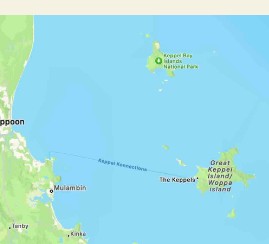
Max was relieved to have the AllStar node working and joined the net to let us know that he worked five or six stations, had a great ragchew with Phil VK6GX and also caught up with Daniel VK6WE on a pre-arranged schedule.
Mark was busy as usual spotting on WhatsApp and listening on multiple SDR nodes, and even had time for some contacts ! Stan had five contacts on 40 Mx 2 traffic exchanges and more regular contacts from ZL stations than usual.
This was probably because Stan joined the ZL Aprés ski net the previous evening and let them know. Wayne managed to work a few stations on 40MX before having to report for duty at the SES training night, he is hoping to get on and do more early next year when SES has a break in January.
Mike was burning the midnight oil and checked in, a very pleasant surprise – thank you. John checked via a Dstar link from Ainsley in the Capital Territory. Ireported that I had two contacts on 40MX and went into listening mode.
I was treated to some excellent copy practice listening to our first class operators. Thanks to all on the net last and this morning, looking forward to the reports in the RagChew.
73 Richard VK6HRC Traffic Report for 22 October 2024 by Stan ZL3TK Three stations were expected but one bush-bound enthusiast didn’t show.
He sounded well prepared for the journey with his companion terrier in tow, but maybe suffered equipent failure, or perchance the coax was chewed through by a southern hairy-nosed wombat?
Making up for that disappointment was the first traffic out of Tasmania – well done OM Peter! OM Manny’s answer came through with a solid RSN 581 signal: NR 42 RVK3DRQ CK 40/38 BLACKBURN 1040Z 200CT24 = ZL3TK = YOUR NR 146 ANSWER STOP WITH AN ELEVATION OF 1572M THE LEGGES TOR IS THE SECOND HIGHEST PEAK IN TASMANIA COMMA COORDINATES.
41R5300S, 147R65500E COMMA AIR-LINE DISTANCE FROM VK7TA 109 KM AND FROM VK7KPC IS 34 KM = VK3DRQ AR QRU QSL? K OM Peter’s inaugural appearance out of Tasmania was a little more difficult with RSN 421 and QSB, but ‘Who Dares Wins!’ NR1RVK7KPC 20/18 EVANDALE 0730 220CT24 = ZL3TK = ANSWER YOUR NR 146 STOP LEGGES TOR STOP 1572M STOP QES38TL 92AE STOP VK7TA 108KM STOP VK7KPC 34R8KM = VK7KPC AR K Finally, this weeks question is focused on coastal South Australia and is open for all to answer: QTc CT NR 157 R ZL8TK 32/26 WAITARERE 0345Z 220CT24 VK3DRQ VIACQ QRS FFA = GIVE DOMINANT COLOUR AND NAME OF LIGHTHOUSE NEAR CARPENTER ROCKS STOP NAME THE OTHER LIGHTHOUSES ON 286 KM COAST SOUTH FROM COORONG NP TO NSW BORDER = ZL3TK AR COL 286 NWFILLS?
K Looking forward to the reappearance of our bush-basher, OM John, next week. 73 de Stan ZL3TK
This Week’s Topics of Interest
by Ross MONNK
There’s more to do than I thought last week, so let’s leave the LPF for Part 4…. First, we have to install the reverse polarity protection diode.
Mike DL3YZ has built one of these radios before and he says that there’s a chance that the lead on the outside could short on the metal case, so I’ve added some insulation. I can cut it off if it gets in the way. Now the crystals.
I say “crystals” plural but I’m only going to install the 20 MHzz
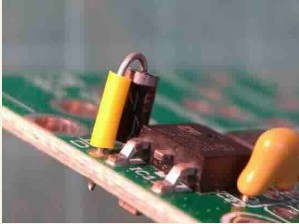
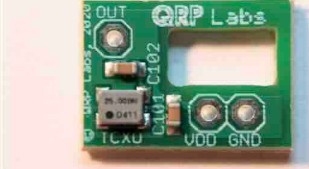
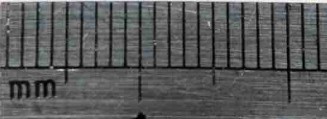
Crystal. Instead of the 27 MHz crystal, I’ll be installing the optional 25 MHz temperature controlled oscillator (TCXO) module. It’s tiny!
Then there’s three trimmer resistors, a couple of electrolytic capacitors, and 2 trimmer capacitor. The four transistors are next and have an interesting configuration…
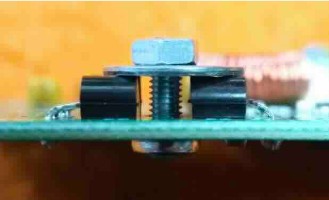
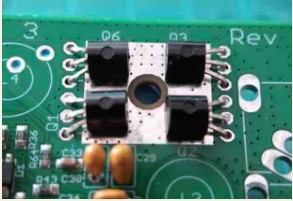
A nut and bolt presses the heatsink washer onto the transistors and brings them intc contact with the large pad on the PCB.
And, finally, three sets of header pins – one for programming firmware updates, one to connect with the display board, and one to connect with the “knobs- and-switches” board. This is the main board so far…
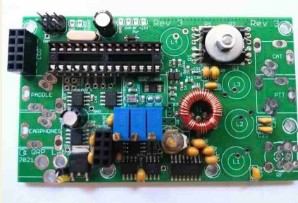
Most jobs on the QCX-mini build are fiddly and time-consuming and these were no exception. You have to enjoy this sort of thing. I do.
Finally, the LOW Pass Filter by Ross MONNK Mike DL3YZ has built a QCX-mini for 20m and offered me some advice, most of which consisted of warnings about the LPF! He says it’s a “Tschebyscheff-Filter”. He’s a smart guy so I’ll take his word for it.
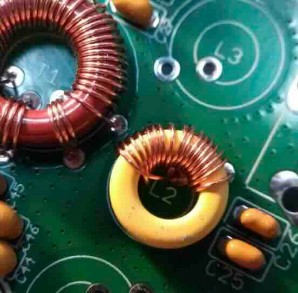
Whatever it is, it’s very sensitive to how it’s built and this will show up in the post-build calibration process. It’s easier to remove turns from the toroids than it is to add them so, to be on the safe side, you’re instructed to wind perhaps a few too many turns.
For instance, Mike had to remove 2 turns from both L1 and L3. Unfortunately, removing turns is far from easy but I’ll cross that bridge when I come to it. In the meantime, I’m going to build the filter exactly as
Instructed. L1, L2 and L3 use much thinner wire than L4 and the previously installed transformer. The turns on L2 are meant to be bunched together at this stage.
They may need to be spread out during the calibration process after the build is complete, and that’s easier to do if they start bunched together.
instructed.
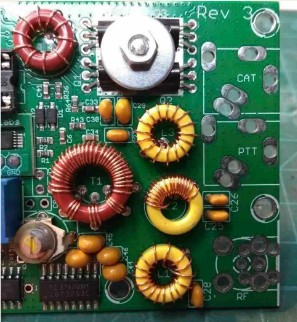
These four filter toroids are attached only by two very thin wires each so, once the calibration is complete, |’ll secure them with gobs of hot glue. Many hams are understandably wary about winding toroids.
But, in practice, the hardest part is overcoming those nerves and just getting on with it. The second hardest part, when you’ve got eyesight like mine, is counting those turns!
You may have noticed that the build (generally) goes from the smallest components to the largest, and there are some nice chunky ones in the next exciting episode of “The QCX-mini Build”. [Thanks Ross…. I can’t wait until the next episode!
For those interested in filters… https://en.wikipedia.org/wiki/Chebyshev filter is a good start.]
One of My Volunteer Jobs
EN MSN He eS from Roy VK6RR at Geraldton This isn’t amateur radio but thought it might be of interest.
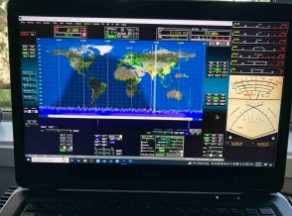
Lam a volunteer radio operator for Marine Rescue Geraldton. A watch is kept on 4 marine channels from 6am to 6pm. It uses a radio over the internet system so we can either do it from the base building or, if we have
A ROIP set up (a lap top, monitor, microphone & FM TX/RX unit), we can do it from home or anywhere that can provide a good internet connection. The actual radios are installed on a hill site some 20 odd km away. For the radio watch, we do a 4 hour shift. i.e.
The FM unit provides us with a small portable receiver so we can carry it with us. As you can see from the pictures the channels are shown on the laptop which has a touch screen. You can activate all the channels at once or just one.
A log is kept which is shown on the monitor.
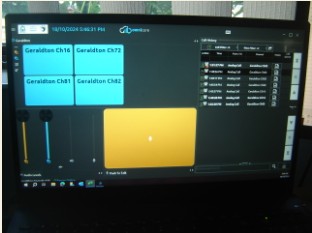
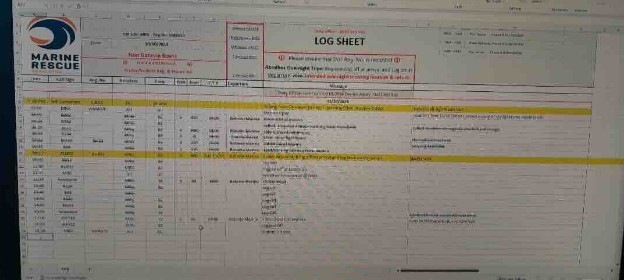
Our great base at Point Moore was demolished a few months ago as the sea was “reclaiming” the land and, it was within about a metre of the base of the building. Regretfully after many attempts to save it by sand bagging etc., the sea got it’s way.
We are now in a temporary base in the Geraldton Multi purpose facility near Francis Street boat ramp. It is planned for the future that a new base similar to our original one will be built by the Batavia Marina were our 2 rescue boats are moored.
They are the “Nashira” and “Mimosa”; Nashira is shown at the top of the newsletter this, week. Our rescue group can be found at _http://www.marinerescuegton.com and on face book. Volunteering info is found on there.
For a radio operator you have to have either the Long Range Operator Certificate of Proficiency or the Short Range Op Cert. This is regardless of what other radio operating qualification’s you have.
I have UK, German, Marshall Islands, Panamanian etc radio certificates – but still had to get the Australia one! When I started we used to watch keep on HF and CB. Being HF you had to have the Long Range cert.
Both the HF and CB channels are no longer watched at our base. Therefore you only have to have the Short Range Cert. It is a shorter exam. We do the training and exams here at the base. I am one of the 5 invigilators’ that are able to do it.
It is free, apart from the $10.00 yearly sub to the Rescue group. You also have to do on-line training for DEFES prior to going for the radio side of it. Thanks again for the interesting news letter each week. Oh I didn’t hear the DX guys at all this week.

What’s on my Bench
From John VK2RU Well it would be good to have a bench, but that’s not possible in a caravan where space and weight are critical. All of my electronics gear fits into this cardboard box
My bench is a camping table with a piece of corflute on it. The one good thing about working out of a box is that I never have a messy bench. It gets cleaned up every day. I’ve only just started building kits and |
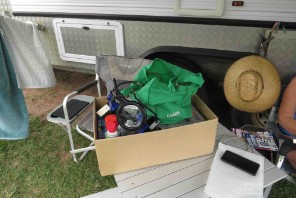
Bought a few cheap soldering practice kits on Ebay to play with. After building the first kit I decided to upgrade my soldering iron and after some research I bought a Hakko FX888D soldering station and a few other bits and pieces from Mektronics.
Mektronics are very good to deal with. Their prices and service are very good, and their product range is amazing. After doing a few kits with through hole components I did an SMD kit and successfully managed to solder components down to 0402 size.
I found that the 0.7mm 60/40 solder I was using was a bit big so I’m now using 0.46mm 63/37 Multicore wire and it seems to be going well. I’ve also settled on using a 2.0mm chisel tip at 340DEG C. Currently I’m building a QRP Labs QCX+ for 20m.
This is a 5w single band CW only kit. It appears to be a relatively easy kit to build and much better for a first attempt than the QCX mini which has a much higher component density.
The instructions for all of the QRP Labs kits are the best you will find anywhere.
One will be the next build. I eventually want to get the QMX+ which is a multiband transceiver but I thought it might be better to wait until that kit has been out for a while so that most of the bugs get ironed out before I try it.
Anyway, here’s my bench, in all its glory.
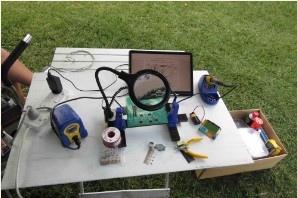
I’m in no rush and I only do about ten components in a session. That’s enough to keep me happy and gives me time to study the build instructions for the next stage. I’ll try to put an update in every now and then.
73 John [Thanks John – excellent article – a great motivator! My workshop is a shambles… and my stack of projects and broken things just keeps piling up – your article is a breath of fresh air! Soldering irons…..
After having a Weller TCP for around 55 years and needing to build AllStar node USB interfaces which involved de-soldering surface mount devices and soldering to tiny pins of other SMDs, I decided I needed a solder re-work station – soldering iron and tiny heat gun combination.
After receiving two 110 Volt units via ‘Amazon (anyone want them?) I bought another one by mail order. Heat gun works just fine on SMDs and heatshrink, but the soldering iron (which seems to be the current popular Chinese design) is pretty much unusable…
And then there’s lead-free solder… that plain doesn’t work! So would anyone like to write an article about how to buy a decent soldering iron these days?]
Other News
Across Australia by Squid
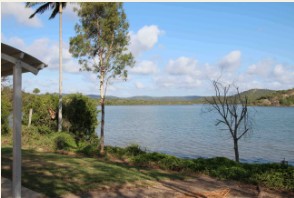
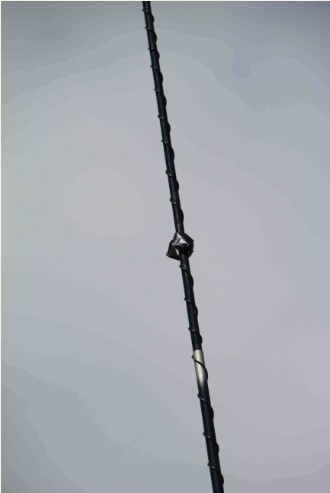
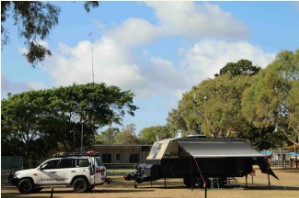
PAVE PIO CHa By we from David VK6KD/4 near Yeppoon Hi Mark My portable antenna setup appears to be working well so I have attached some photos of my Squid-pole setup adjacent to Mulambin creek near Yeppoon QLD.
The loosely wound insulated conductor on the Squid-pole has been connected to the top of my 5′ HF antenna whip on the vehicle.
Connected in this way the antenna length is anon resonant length however it is connected to an autotuner which is mounted on the roofrack. Length is long enough for the autotuner to tune in 160M.
Hi Mark
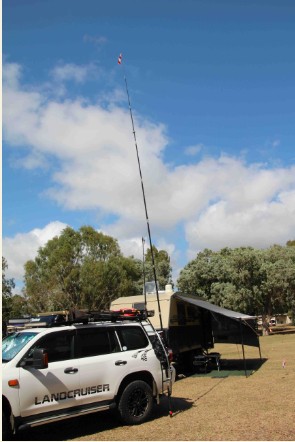
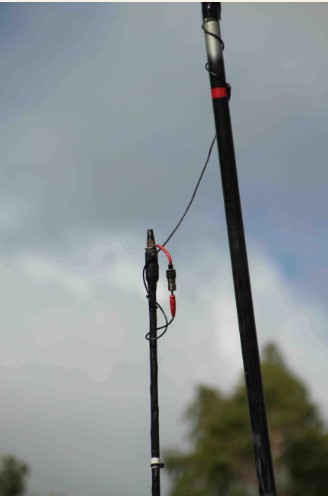
Appears to be working great on 40m and 80m. No additional ground plane has been connected. Just the vehicle.
Hope to have a QSO with as many operators as possible from my next exciting location in QLD. Our nest stop will be the towns of Agnes Waters and 1770 in QLD (VK4 land). 73s David VK6KD/4
[Thanks David. I see things haven’t changed much… except perhaps your hairstyle? –—> Your antenna continues to astound me performance-wise. I think of an off- frequency helical as a long choke…
And with only the vehicle as your ground the resistive loss is interesting to
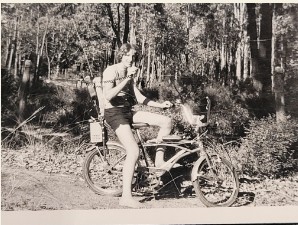
Thanks David. I see things haven’t
Contemplate – but you sure seem to be able to make it work. I look forward to catching you again on Tuesday.]
From Mike DL3YZ It was nice to hear you on phone and listening to the stations on the Post-Morsem on Wednesday morning (0130AM Wednesday herel). I was using the “VK6-HUB* conference via echolink.
Being new to HAM radio, I didn’t knew the liturgy and missed the enrollment procedure. But that wasnt bad, as I am a much better listener than speaker. Just wanted to say hello to everybody.
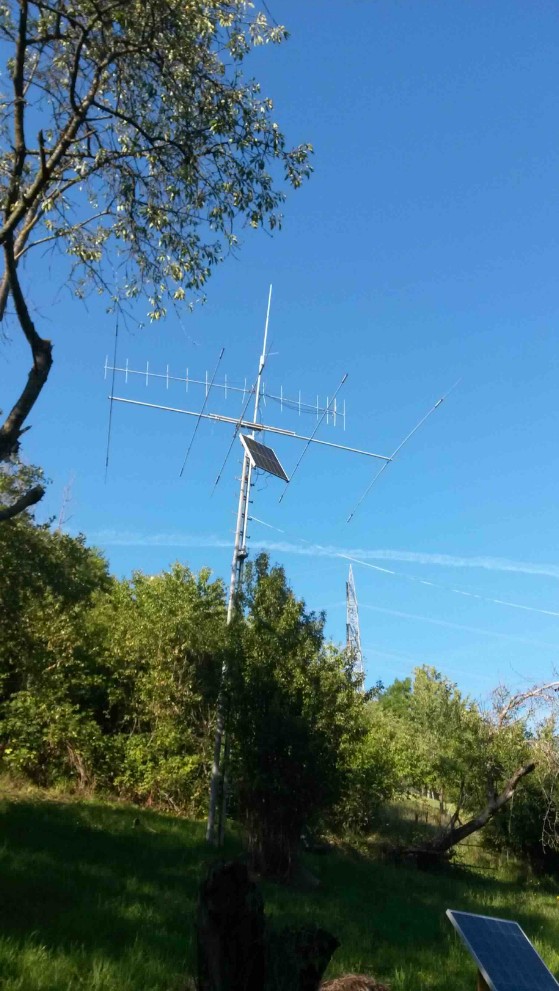
Coming back to your question about access to the Clubhouse for the DXperiments: The landslide at Pit’s Meadow happened during a period of heavy rain at the beginning of the year.
The site is halfway up the quite steep side of a hill, and the road to get there is at the bottom of the valley – parallel and on the same level to some small river that likes to flood the road when the ground water level rises…
Like so during the last 2 weeks. Today I was lucky and so was able to motor to the foot of the hill, even with my non- off-road Peugeot because it’s been dry for some days now.
But rubber boots for the ascending to the hut and a car wash afterwards are mandatory HI. The location is not an easy place for this purpose, but has one big advantage: there is no QRM around for nearly 2 miles, so the radio is extremely quiet there.
I was really amazed how his setup worked so great today. I don’t know if our group manages to make the hut a shack again before winter. If not, I’d have to think about a better antenna for my home, or find a mobile solution, like Ross.
I could work remote, but I think doing it the “natural way” is more fun. Have a nice day and pls send greetings and my apologies to Richard VK6PZT for not making it to the clubhouse the previous week to try his phased verticals. 73 – Mike.
The Stuttgart Clubhouse
Another QRPLabs QCX Mini
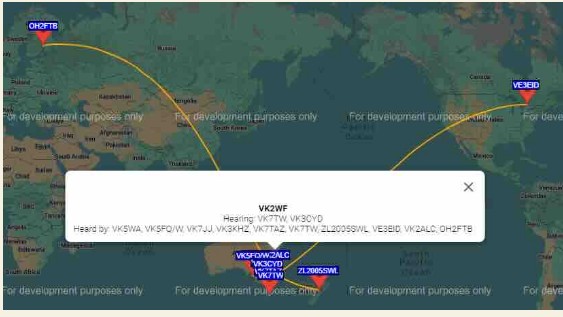
From Adrian VK2WF at Tallong I note the interest in the QRP Labs QCX mini transceiver. I use one on 160M as a standalone WSPR beacon 73 Adrian Adrian Van Der Byl VK2WF
[Cheers Roy and thank you for the really interesting read. At least one of our team is also involved in Marine Rescue – Nigel VK6NI at Denmark, and I know that Bruce VK6CX down in Mandurah does the same.. there’s sure to be others.
Perhaps some of our team might be interested in finding out more about volunteering; potentially it could be done from anywhere I guess, not just the seaside resort towns.]
Extra-Long Dahs
Extra-Long Vans from Phil VK6GX at Gidgegannup I hope you all had a good practice session on Tuesday and that some of my ad-lib abbreviations didn’t confuse people, they made sense to me at the time!
One thing that new operators may notice is that some of us old timers using
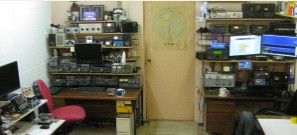
Straight keys, Cooties or bugs, particularly ex-marine operators, occasionally accentuate letters with an extra long dah during a character, e.g. “R” will sound like di daaaaaah dit, instead of di dah dit.
“R” normally means “roger”, or I received your last over or message correctly, but in this case will also indicate great approval or enthusiasm about something the other operator may have said.
It may also be sent twice to accentuate one’s approval even more and may even be mistaken for “e t e” as it’s usually sent slower than the rest of the over. It’s not the key getting stuck, but intentional QSD, old habits die hard!
I hope to catch more of you next week, if not sooner, 73, Phil VK6GX [Thanks Phil – I reckon if done well, individual fists add to the fun… even helping identify stations!]
Morse Training Net
Nic VK7WW runs a Slow Morse training net every Wednesday at 7pm EDST on 3580 for 30 mins. He uses the callsign of the Northern Tasmania Amateur Radio Club VK7TAZ on that net.
Many of our team learned Morse code with the support of Nic, and the weekly training session comes highly recommended for anyone who wants to learn the Code, or simply brush up. Everyone’s welcome – 3580KHZ at 7pm Eastern time every Wednesday.
The NTARC also feeds the CW live via the Discord phone / computer audio stream, and previous weeks’ recordings are available. Contact Nic VK7WW for more info nicholaschantler@hotmail.com – or just join in on Wednesdays.
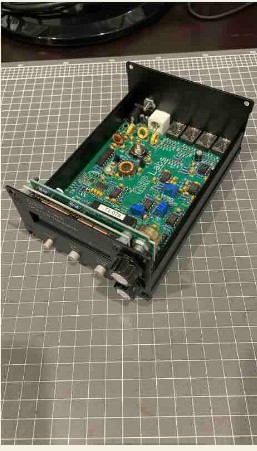
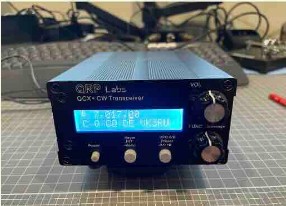
For Sale QRPLabs QCX Portable QRF from David VK3RU If anyone is looking for a QCX, mine is surplus. During winter, I built a QMX which I now use during our Tuesday nights for the last few QRS sessions. I am looking for $100 for the QCX.
It is built for 40m, in a case and was used in our earlier QRS sessions. Great little rig. Cheers David VK3RU
For Sale QRPLabs QCX Portable QRP Transceiver
From the DXing.com.au Newsletter:
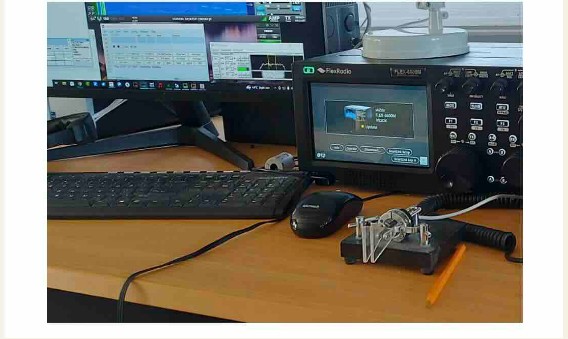
We are struggling to get ten CW participants for the 2025 CW DX Chaser of the Year. Exactly as I’ve predicted. So far, only 8 brave souls have put their hand up (depriving themselves of $29) which is still 2 short from the bare minimum of ten participants.
I would like to think that it is the administration / prize fee that is preventing our most skilled form joining the fun. Surely they are not the last remaining Morse ops left in a county of 15,000 licensed operators?
To get yourself on the list, send $29 to QSY599@gmail.com and notify us in writing so we can add you on to the list.
Brain Teaser
Jules Perrin JP VK3JFP has created a terrific resource to help guide learning for al levels of amateur radio licenses: https:/Awww.julesworkshop.net/Amateur%20Radio.html With thanks to Baz VK6MU for he idea, and Jules for the good learning website, here’s this week’s quiz questions from Jules’ Workshop example test questions:
Exam Questions:
Convention has it that VHF, UHF and mobile signals are transmitted on a vertical antenna. What antenna polarisation should the receive antenna be? This circuit diagram shows:
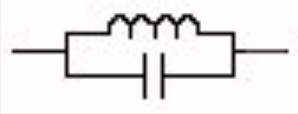
Resistor and capacitor in parallel resistor and capacitor in series resistor and inductor in series capacitor and inductor in parallel
A television receiver suffers ghosting interference, a possible cure for this is to: ¢ fit a high pass filter to the receiver antenna input ¢ change the direction of the antenna ¢ install an RF choke to the antenna lead * use a small by-pass capacitor across the antenna Answers next week.


Answers from last week’s Quiz:
What do the terms horizontal, vertical and circular polarisation mean with regards to antennas? Answer: Horizontal signal level with horizon, vertical at right angles to horizon and circular is twisting.
The RMS value of a sine wave can be calculated by * peak x 2 + peak +2 * peak x 0.707 + peak x 1.414 Answer: peak x 0.707 Image interference in a superheterodyne communications receiver is caused by an unwanted signal operating on * half the frequency to which the receiver is tuned + the same frequency as the local oscillator in a dual conversion receiver * twice the frequency to which the receiver is tuned * twice the intermediate-frequency away from the desired signal frequency Answer: twice the intermediate-frequency away from the desired signal frequency How did you go?
Di-dah-di-dah-dadit
So back to the Slow CW QSO practice Group.
Next Tuesday’s Net
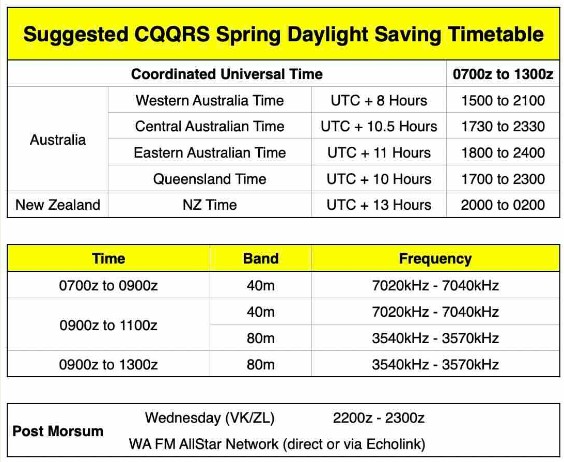
Our CQ QRS Group will be on as always on Tuesday from around 07002Z until about 1300Z; see below for details. Doesn’t matter whether you’re brand new and want to try just exchanging callsigns and RST reports, or you’re ready for a good old rag chew.
Post Morsum
Richard VK6HRC will run our phone Post Morsum on the South West AllStar net (via repeaters and hotspots all over WA) from 0600 WA time, then from 0700 WA time on 80m (8605 LSB).
For the 0600 (22002) net, if you’re in WA all you need is an FM 2m or 70CM transceiver and an AllStar node nearby. If you’re elsewhere in the world, you may be able to connect your local AllStar-enabled repeater to the net, or you can connect via Echolink.
Let me know (cqqrsnet@gmail.com) if I can help with that. and if you can’t connect that way, give 3605KHZ SSB a try from 0700 (23002).
Teamwork
Thank you so much to our team of 34 contributors: DL3YZ, MONNK, VK2AOE, VK2ASB, VK2DLF, VK2RU, VK2WF, VK3ACU, VK3CTM, VK3DRQ, VK3JFP, VK3KEV, VK3VMM, VK5AO, VK5FD, VK5KFG, VK5LA, VK6BEK, VK6FN, VK6GX, VK6HRC, VK6IS, VK6KD/4, VK6MK, VK6NW, VK6RR, VK6WE, VK7KPC, VK7TA, VK7WW, ZL1PB, ZL3TK, ZL4BDG, ZL4TE.
The Joy of Daylight Saving
There’s usually people around until after 1300Z on the Tuesday Group – so keep calling in the segment of the band designated in the table below until you catch someone.
I should be on as usual from home in NSW or via the Remote at Bedfordale WA, and I’ll also be watching the proceedings using the VK6QS and Tecsun SDRs in WA and NSW respectively. Hope to hear you there.
GU CW on Tuesday, mb Mark Bosma VK2KI / VK6QI Beautiful South Bowning NSW mark.bosma@icloud.com non impediti ratione cogitationis

An Ode to CW – thanks to David VK3RU: In days of old, when ops were bold, And sideband was not invented, Words were passed by pounding brass, And all were quite contented. – Unknown author
About the CQ QRS Group
Frequencies and Times
QRL?
So tune around and call anyone you hear, or find yourself a quiet spot in the designated segment, send “QRL?” and if the frequency is quiet, start calling CQ QRS at about 75% of the speed you’re comfortable receiving at; hopefully responders will match (or send slower to their comfort level).
And if you are already having a QSO and someone sends “QRL?”, respond with “R”, “C”, “Y”, “YES” or QRL to let the caller know that the frequency is in use.
If we’re on 40m and you can hear that the band is open outside Australasia, perhaps consider calling 500HZ above each 1KHZ slot – to minimise the chance of having to copy our team through QRQ QRM that’s often dead-on the kHz markers.
Speed? Rhythm?
If you’re proficient at CW and can race along at 20 or 30WPM – terrific, but please remember, the Group’s aim is to encourage participation and learning, not show how fast you can hammer the key.
Please send slowly where you can and concentrate on rhythm – listen to your side-tone, get that wrist action going and make a special effort to make it sound like perfect CW; the longer we go with our Group, the more I understand just how many non-transmitting listeners we have – and they will most likely appreciate your QRS!
So, if you’re an experienced operator, please try to send nicely balanced slow CW to give them a chance to practice and gain confidence…. they’ll reward you one day by coming up on air to say g’day and thanks – how good is that?
And if you’re new or like me, just rusty…. ignore the above… just have a go – the lather of sweat will be worth it and there’s plenty of time to get the details sorted out as you practice.
Matching
And also for the oldies like me, when you hear someone new, please match their sending speed – or slower. The person you’re replying to may not be as deft on the decoding as you – it may be their first ever CW QSO – remember your first?
Lather of sweat, key that refuses to send that you tell it, brain that refuses to decode those complex letters that were right there half an hour ago, etc!
PSE QRS
And if someone is sending too fast to comfortably copy – “PSE RPT PSE QRS” or “AGN? PSE QRS’ will make life easier for everyone…. and might just encourage other listeners to have a go themselves.
The other thing to remember – most operators are writing down what they hear… so when you put it back to them, expect a delay while they read your words of wisdom, before replying.
The aim is to give everyone a go at contacting others – no-one owns their calling frequency in this Group. So unlike working DX, if you hear someone signing off – jump in and call – doesn’t matter who was first on the frequency – we really are all good mates in this Group….
And besides, at the speed we’re sending, after a QSO most of us will have forgotten who was first!
If you really want to move off frequency (eg because of a spurious switch mode power supply signal that’s just drifted into the conversation), you could try sending an abridged callsign of the person you’re after, followed by “UP 5” or “DN 5” then K; then call that person on the designated frequency and keep your fingers crossed, they may have understood you and followed…
Landing Zone
If the band goes really quiet, call and listen on 7032KHZ (7028KHZ secondary) or 3555KHZ. If you catch someone, there’s no need to QSY – enjoy the frequency.
But don’t forget to tune around if it’s quiet – we have lots of operators with crystal locked transmitters – and they could be anywhere within the segments.
For those who are locked, or can only transmit outside the segments, send a message on our WhatsApp CQ QRS – Alerts group advising of your current frequency.
And of course, put the frequencies in a memory so outside of the Group, if you’re not tuning around, leave your receiver on one of the primary frequencies – you never know who you’ll hear (7032 is used in VK and ZL for SOTA / PARKS during the day so you’ll often hear activity there).
CW Tips
As always, for newbies, operating suggestions are available from the operating hints link here: https://www.parg.org.au/_files/ugd/ebe236_ 3ca5ca08bb38429db4eee524bda2f97a. pdf. mb VK2KI / VK6QI