Below is a reconstruction of the 2026 27 CQ QRS RagChew newsletter designed to support full text searching. This reconstruction was built using OCR, and will contain errors.
To view the Mailchimp original, click here. To search the entire newsletter archive, click here.
Contents
- New Team Members
- Website
- From Richard VK6HRC.
- Reporting
- Centre of Activity
- Of Trees and Artillery and Radio
- V band Part 6
- Nuisances
- The End
- Prosigns
- On My Workbench
- John’s Delta Loop
- QRZ?
- Rob VK3AUX
- CW Practice
- Other News
- CQ QRS DX Frequencies
- CW Academy Graduation
- WhatsApp Alerts
- Morse Training Net
- Readable Five
- There’s No Such Thing…
- Prosign/Character/Signal of the Month
- I Hear Tell…
- Di-dah-di-dah-dit
- Next Tuesday’s Net
- Reports & Photos
- Post Morsum
- Articles
- Material
- About the CQ QRS Net
O Uta ei 2) + Prosign of the Month + Thear Tell + Di-dah-di-dah-dit + Venus & Mars in the Ham Shack + About the CQ QRS Group Dah-di-dah- Mark VK2KI / VK6QI CQQRS Convenor dah They say, never start saying anything in public with an apology. Pah!
This week, apologies for a rather long editorial… but after all, we are celebrating five years of the CQQRS Slow CW Practice QSO net – so bear with me!_In the words of someone famous, “If I had more time I’d have written a shorter letter”.
Looking Back I started what became the CQQRS Slow CW Practice QSO Net back in 2021, when four members of the Peel Amateur Radio Group in WA started learning Morse Code.
Thanks to the nightly 2m FM MCW training transmissions by Tony VK6DQ in Mandurah, the four candidates were well on their way learning the gentle, but tricky art of CW.
When calling-in to the PARG weekly 80m net, many listeners in WA could not copy my SSB transmissions from here in Southern NSW, but they could hear my CW carrier. So from there, we started a weekly CW practice session for the four trainees.
And pretty soon, we were joined by more and more non-PARG CW operators. So! started writing a weekly email to remind participants, which as numbers grew became a Google Groups mail-out and eventually the MallChimp distributed newsletter we have today.
Each week, net participants would email me their reports which I would manually copy one callsign at a time to the spreadsheet that we still use, and comments were summarised in the emails by copy/paste.
As the net grew in popularity, this process became all-consuming. Also early in the peace, Stuart VK6MK suggested and established the WhatsApp group that we now use for live Alerts, discussions and For Sales, and also made a comment about using Google Forms to collect the reports.
Then one day, Nigel G4RWI came to visit. Nigel and Jo had spent six months travelling in their motorhome in Australia the previous year – and despite much effort, had managed to work very very few stations on CW.
A while later, after many people had suggested that we give 40m a try, it was lan VK1HF who managed to twist my arm into running the net on 40m and 80m in parallel. We never looked back…
For many people, our 20KHZZ slice of 40m became the place to find QSOs and rag chews every Tuesday. So when Nigel and Jo came back for six months the next year, Nigel happened across our net and suddenly there were people to chat to every week.
Toward the end of their Australian stay, Nigel and Jo called in to Beautiful South Bowning for a few days, and got to witness first-hand just how time-consuming the weekly newsletter had become.
Over a glass of Shiraz, Nigel casually asked a question that he came to parrot many times in subsequent years: “Why don’t you let your Apple MacBook do that?” He was looking for a little project to have a go at using artificial intelligence to compile, debug and manage software – and this was a perfect opportunity.
Within a few days Nigel had our webform and a prototype processing system working; instead of our people having to type out a long email every week, they could use the webform…
And instead of me taking many many days to process the information, Nigel’s software produced the goods instantly! We started using MailChimp to turn the words and images into something resembling a newsletter and voila, we had what you’re now reading.
And even better, about a year ago, Patrick VK2IOW, John VK2RU and Richard VK6HRC all put their hands up to take over the management of the written reports, the log spreadsheet and the weekly phone post-morsum. I could nearly start enjoying life again!
But more importantly, it’s wonderful to look back at the huge number of people who have been encouraged to either have a go on CW, or perhaps to return to the gentle art.
I know that our net has helped make that happen for many; for some, a life-long ambition has been fulfilled thanks to the patience and friendliness of our team.
We now have a tertific family of operators on air on a Tuesday, enjoying the company of others who are doing the same. Thank you one and all – terrific journey so far…
And my lady Elizabeth is still talking to me (even if she’s come to know such terms as “local QRM”! But coming back to the newsletter, we now have a mature system of communication and encouragement and it’s time to enter the next phase of the life of the CQQRS.
Net. Changing of the Guards Last week the British Monarch announced that he would no-longer be living at Buckingham Palace – a break from a long tradition. Well this week, CQQRS Headquarters has had a change in the way things will be done too.
I’m very very pleased to announce that Lance VK7TO who lives at Margate just ‘South-West from Hobart has taken-over as head Editor of the RagChew newsletter, starting with this edition.
Needless to say, after doing this for nearly five years, I’m very excited at Lance’s offer to pick-up the reigns. ‘And what’s more, Lance is taking this as opportunity to streamline the way we do things.
Not only is the RagChew newsletter the way team members’ reports from each week are circulated, it also acts as a catalyst for the net – the newsletter has.
Always been aimed at instilling a sense of belonging among members and thereby encouraging us all to get on air or just listen-in.
Well, a newsletter is just one way to achieve that team-building and coherence – there’s likely to be other more effective and certainly more efficient ways to achieve the same ends, without the overheads of compiling each newsletter edition.
So that’s Lance’s challenge – take up the reigns, but look for smarter ways of achieving the same ends. And of course, Lance won’t be struggling to do this on his own.
Patrick VK2IOW at Miltlhorpe will continue to coordinate the reports each week, and John VK2RU out on the track somewhere will produce the spreadsheet and CW Practice sessions; Richard VK6HRC at Padbury will continue to run and report on the Wednesday morning Post Morsum voice call-ins, and Jordan VK8ACU at Meredith will keep us laughing with the Venus and Mars episodes.
Support from the UK from both our resident philosopher Ross MONNK and our reports software wrangler Nigel G4RWI will continue, as will the DXperiment coordination by Mike DL8YZ; thank you team.
I will remain actively involved as the convenor of the CQQRS Slow CW Practice @SO nets, but will step back a bit from the newsletter.
However, I’ve agreed with Lance that I will continue to write the editorials for the time being and will introduce our new members each week. I will also step-up when Lance takes a break or when work pressures require.
So please join me with a huge welcome to Lance – our new editor. Thank you mate, on behalf of our 240+ readers – a fantastic outcome! So back to this week’s RagChew newsletter edited for the first time by Lance VK7TO.
This Week Well at long last we’ve changed from the previous designated CQQRS frequency ‘segments to the centres of activity on each band. See Lance’s article below for details of the changes to our weekly areas of operation; thanks Lance.
We also hear from doctor Donald, VK6JDM about one of his other passions, wood. Why you ask? Well I think like the art of CW, there’s something special about wood – the feel, the smell, the labours involved in working with it and so on.
And you’ll be surprised at just how many of our people think the same… not to mention that it’s an interest topics to rag-chew about with fellow fans.
Donald also put me on to a nice unctuous book that Elizabeth and I are reading aloud to each-other, Norwegian Wood – Chopping, Stacking and Drying Wood the Scandanavian Way by Lars Mytting – all about the art of firewood!
For instance: “A good rule of thumb is that if the chainsaw is never too small, then in actual fact it is probably too big”.
Also in this edition of RagChew, Ross MONNK completes his fantastic six-part series on VBand – the internet-based Morse Code two-way exchange system. I hope his.
Articles will attract many of our team to this fun and effective system that now brings so much pleasure to operators and normal people alike.
John VKSET tells us about the start of his new delta-loop antenna experiment, we meet one of our new team members Rob VK3AUX from Bayswater North, and John VK2RU provides another CW practice audio segment.
And some exciting news from Patagonia, our team member Sergio LU7YS tells us that grey-line propagation to Oceania on 80m is working really well at the moment – time to have a look for Sergio down there?
Lastly, ‘d like to wish Max VK6FN a speedy and complete recovery from an accident this week; Max is in ICU in Bunbury and there’s a large bunch of VK6S who are waiting on the edge of their chairs for news. Get better and back on the key mate!
Dit-dit New Team Members Welcome this week to John GOUBE who hails from Birmingham (about 150KM North- East of London). John is a good friend of David VK3DBD at Yackandandah, and they email regularly.
John worked David VK3DBD while he was visiting the UK some time back on his UK call G3SCD and he is convinced they will find a way to work him in VK land.
John tells me that David had sent a few copies of the RagChew newsletter that he found incredibly interesting, and suggested that John might like to be added to our mailing list. John is a 100% CW op and love nothing more than to rag-chew with Morse.
He doesn’t think there is much chance of his joining the net from the UK with his setup – but hopefully he’ll be able to listen-in via the KiwiSDRs…
And you never know – if Ross can get through with a bit of wire up a tree (the original DXperiment on the net), who knows? Welcome John.
Mark Bosma VK2KI/ VK6QI GQQRS Convenor Website If you’d like to find out a bit about our net, or would like to pass information to others about our Tuesday get-togethers, here’s the link to our website.
New Team Members
Welcome this week to John GOUBE who hails from Birmingham (about 150KM North- East of London). John is a good friend of David VK3DBD at Yackandandah, and they email regularly.
John worked David VK3DBD while he was visiting the UK some time back on his UK call G3SCD and he is convinced they will find a way to work him in VK land.
John tells me that David had sent a few copies of the RagChew newsletter that he found incredibly interesting, and suggested that John might like to be added to our mailing list. John is a 100% CW op and love nothing more than to rag-chew with Morse.
He doesn’t think there is much chance of his joining the net from the UK with his setup – but hopefully he’ll be able to listen-in via the KiwiSDRs…
And you never know – if Ross can get through with a bit of wire up a tree (the original DXperiment on the net), who Knows? Welcome John. Mark Bosma VK2KI / VK6QI CQQRS Convenor
Website
SAS Un PE ET IE RE) IRI) CUI LIL SS IND Lama Rasa bit.ly/CQQRSWebsite So here we go – on behalf of the CQQRS Editorial team, please enjoy the newsletter.
Dit-dit Lance Mark Bosma Patrick VK7TO VK2KI/ VK6QI VK2I0W Margate TAS Beautiful South Bowning Milthorpe NSW Editor Nsw Assistant Editor egarsrag.chew.editor@gm CQQRS Convenor ailcom ‘eqgarsnet@gmail.com John Nigel Richard VK2RU GaRWI VK6HRG ‘ona track somewhere ‘our other grey nomad Padbury WA Assistant Editor Assistant Editor Assistant Editor Jordan Ross VK3ACU.
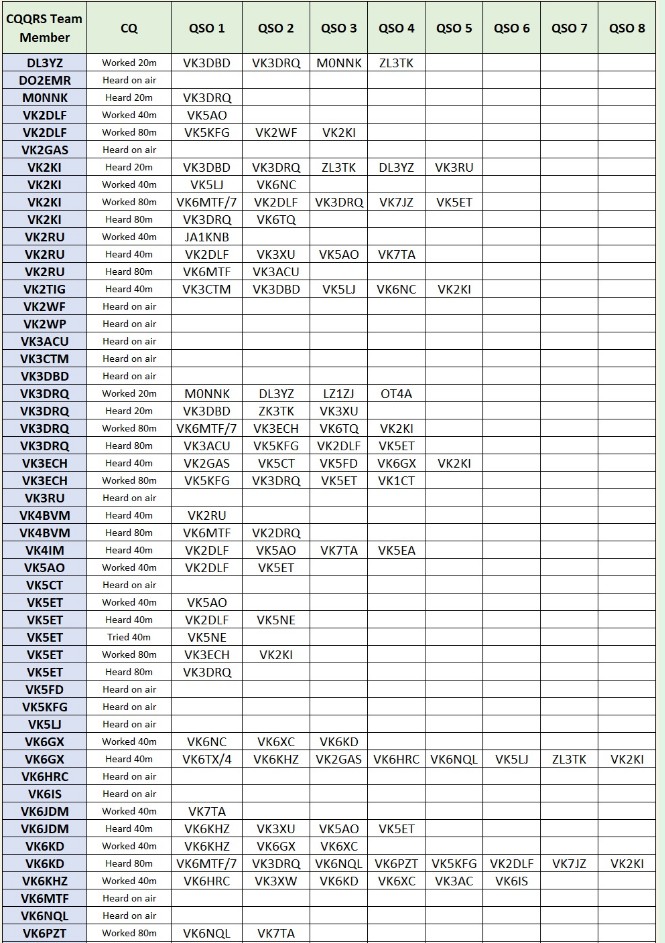
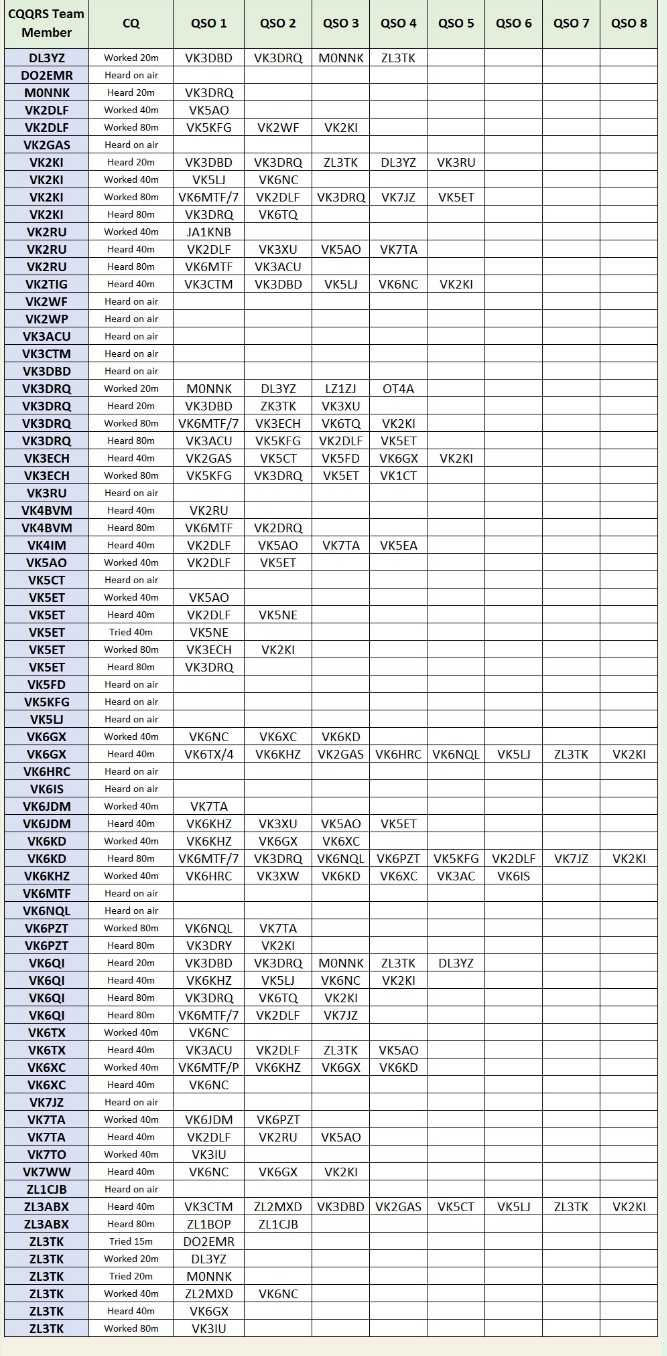
John’s spreadsheet above shows the known stations heard or worked on last Tuesday’s CQQRS Net (reported via our webform bit.ly/CQQRSNET ); the comments in the team members’ reports follow.
The comments were compiled for us by the clever software built by Nigel G4RWI and the layout was perfected by Patrick VK2IOW. Thanks again to Nigel, Patrick and John for the work, and to every team member who submitted a report –
[20m] According to NOAA we had 195 sfu, which was quite nice and on last years level. When I started, I could even hear my antenna tuner doing its work on the great Ironside SDR.
I had some pileup at the beginning, so I hope I could work all stations in the following. Thanks to Stan, David and Manny for calling me. And of course a big thanks to Mark whi his fingers and giving reports on the Live Monitor. 73 Mike
[40m] Called CQ but got no response nor was I spotted by the RBN.
[80m] I called CQ on 80 metres using my home-brewed, 3 Watt rig. Got no replies but I was spotted by three
[20m] I briefly heard Manny VK3DR@ “loud and clear” but then he faded into nothing. Thanks for trying, Manny. Stan ZL3TK could hear me weakly on a UK web SDR and suggested there might be a problem with my antenna.
So I went outside my frequency slot to call QRQ Jan EA3JBJ in Barcelona , Spain. He went QRS for me and gave me an RST 559 so I knew my antenna was okay.
I then had QSOs with Mike DL3YZ and Willie DJ9FM which were good…but nothing beats the thrill of trans-global DX! Sadly, not today though.
[15m] Could hear DOZEMR RSN 571 via Ireland NW4 SDR, but not myself this week. He sure called CQ enough but the band was closed.
Unlike last week, MUNNK was extremely weak into his ‘local’ G8JNJ SDR and even weaker into Ireland, so of course nothing was heard direct. DL3YZ booming into Ireland RSN 591, he gave me RSN 311 direct, success but I could see nothing of him direct.
Insular New Zealand is not favoured by solid F-layer ionisation, however a resolution can be found in SDRs, one at each end as described in my recent article – then something resembling armchair copy is possible.
QSOs have to be brief though, there’s always a queue despite their lack of visibility on Mike’s brilliant Live Status Monitor
[40m]. Classic 40 m skip in action here, ZL2MXD is only 61 km away across water, but I could barely hear him; obviously neither of us was using an NVIS-friendly antenna
[80m]. As noisy as could be, wide bands of noise all over the low end gradually reducing above 3.6 MHz. Sorry Klaus VK3IU, lost you in the noise.
[40m] Signal levels into my QTH in Ballajura WA were quite low on 40m. Even local VK6 stations were on the noise threshold for me. I managed to get 3x QSOs in the log with VK6 stations.
QRM levels were also surprisingly low however there was no noticeable advantage as I still struggled to hear incoming stations. There is always next week.
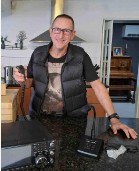
• M) 80m was alive with stations as I logged hearing 8 stations however QSB made it very difficult to get a clear call sign. Luckily many stations repeat their call signs regularly during QSOs. Even the stations having a local QSO.
This made it easier to me to eventually take down the full call. Looking forward to next week and possibly better conditions with less QSB. 73s.
[40m] Pouring with rain and wind. Called and called but only one ZL1 responded but too weak to copy.
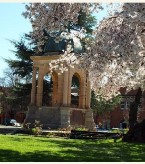
[40m] I couldn’t hear any stations on 7MHZ other than VK2RU who was sitting on top of a buzzing noise on 7019KHZ.
[40m] I couldn’t hear any stations on 7MHZ other than VK2RU who was sitting on top of a buzzing noise on 7019KHZ.
[80m] I had to use an online SDR to hear anything on the 3.5MHz » the WIA Morse beacon for ten minutes before the cold got to
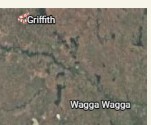
[80m] 80m was noisy here in Dalyellup, but I manage 2 contacts and listened in on a few weak QSOs also. I found copying suprisingly comfortable even after being out of the loop for nearly a month.
I guess our sending must be improving or my brain enjoyed the short break!!!
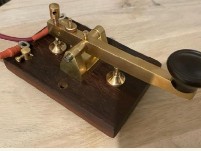
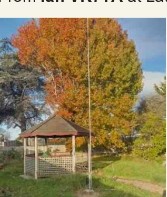
[40m] The bands were in an odd condition this week, with fairly strong RBN reports to my CQs, but received signals were too week to try and answer. I did manage a brief chat with Klaus, VK3IU, who I’d not chatted to in a while.
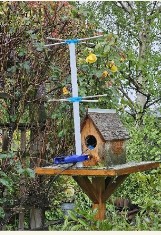
[20m] Mike DL3YZ was just perceptible in the noise here in SNSW – RSN 111 as the signal bounced around the front-end noise on my ancient Trio TS-1208 (yes, they did have front ends in the 70s!) and speckles of QRN.
Thanks for being there again Mike Ross may have been stuck in the mud somewhere – not a sausage heard at home, even though he was coming through nicely into the Ironstone Range KiwiSDR in SA and even the Northam WA receiver.
[40m] Great to chat to Lawrie VKSLJ in the Barossa Valley again after such a long time. Lin VKENT (one of our early team members) operating the VK6NC Norther Corridor Radio Club’s station at Whiteman Park was romping in here with that huge 4-element Yagil
[80m] This week I had some trouble with sprogs from a switch mode power supply that seemed attracted to any frequency I tried using.
My QSO with Morgan was the start of the sticky SMPS problem – although there was some QSB over the path from Cornelian Bay to here which also didn’t help. Great to work Morgan on his 10 Watts.
My QSO with Georg VK2DLF was a bit of a struggle for a while – which was a pity, it’d been a while since we’d chatted. The noise was being picked up locally in the shack by the noise antenna on my noise canceller, but because it wasn’t also coming from the antenna (which was about 30m away) couldn’t be phase-nulled out.
So I switched off the noise canceller and applied Arthur VK2ASB‘s technique of winding back the RF gain on my receiver. That worked a treat – perfect copy!
Manny VK3DRQ called and he followed when I sent “UP 2 UP 2”, QSYing up 2KHZ to leave Georg to his calling frequency (and as it turned out, move away from the drifting SMPS noise).
Not surprisingly, we discussed noise cancellers – Manny is a very happy owner of a VK5TM kit noise canceller – mine’s still in the packet awaiting a miraculous construction event.
It was nice to then hook up with John VKSET to round out a really nice evening’s QRS and pad quietly off to bed. Thanks everyone – great fun
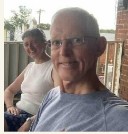
Also from the CQQRS convenor Mark VK6QI at beautiful South Bowning NSW, listening via the KiwiSDRs at Ironstone Range SA and Hoddys Well WA.
[20m] Mike DL3YZ was in and out of the noise into the VK6SEG KiwiSDR near Northam; guessing RSN 311; propagation to Ironstone Range in SA was better. Ross MONNK was about RSN 211 into Northam and RSN 411 into Ironstone Range.
Not a sausage from Ross at my place in Southern NSW.
[40m] Lawrie VK5LJ was a solid RSN 581 into Northam WA. ron…

| Sette I Morgan VK6MTF/7 was an outstanding RSN 551 into Northam with his 10 Watts from Cornelian Bay near Hobart; great conditions across the Bight from the South Island to the West Island.
Need to twist Morgan’s arm about upgrading his Foundation license to Standard, so he can wind up the power and try the other bands; then again, S5 into WA is pretty good even with the Foundation restriction.
[160M] I had a listen on 160M but didn’t happen to jag the right time. Hopefully as more people give top-band a go, we might get a few more WhatsApp alerts.
[40m] The ZL3TK list of regular net user’s callsigns, names an locations is very useful, thank you Stan for the effort.
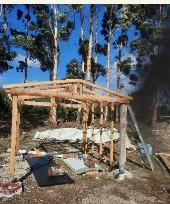
[20m] After finishing with OM Michael, DL3YZ, I looked for OM Ross, who I finally found but I am terribly sorry for not being able to finish our QSO. He was only 331 on the SDR, he started to answer my call when suddenly his transmission became corrupted (???
!!!) I still could hear his signals but nothing readable. Very long dashes and verv mixed dots and dashes without anv meaning. I ater on I went
And very mixed dots and dashes without any meaning. Later on I went back to his frequency and he was having a QSO at about 0745Z but he was then only 221 on the SDR. I am very sorry dear OM Ross and wondering what on earth was happening?
Let’s keep our fingers crossed for a better condition next time.
[80m] It was nice to hear beeps coming my way from Echuca and also from our BOSS VK2KI. Generally it was a good night that made up some of what I missed last week.
From Richard VK6HRC.
Wayne still in Kununurra but heading home soon and all being well will be on air for the QRS net. WX 16 c – 33 c and cloudy. Mark was listening on the VK5 Ironstone Range and VK6 Northam Kiwi sdr receivers and from the home station.
Heard six on 20 m, conditions not great unfortunately. On 40 m managed to work Laurie VK5LJ and Lin VK6NT out at the NCRG club using the VKENC club callsign.
After the dinner break worked five on 80 m and kept busy throughout the session spotting on WhatsApp, thank you. David back from his trip down to the South west worked three on 40 m and heard eight on 80 m, nothing heard on 160 m.
I worked two on 40m and then into sw! mode with some good ragchews going on to. improve my decoding. Conditions were variable with weak signals from the Eastern states so it was local contacts only. Thank you to all on last night and this morning 73 Richard.
The Post Morsum callback happens the every week between 2200Z – 2300Z on Wednesday morning (Tuesday UTC). You can join via AllStar node 42482, or Echolink on VK2KI-L or VK8MT– 1
Reporting
After next Tuesday’s Group, please remember to send me a list of who you worked and / or who you heard using our web form here:

Even if you didn’t hear anyone, we’d still like to know that you had a go. And to make your report more interesting, please consider sending a photo: cqarsnet@gmail.com So, please help attract new and old team members to have a go by submitting your report each week.
Submissions close 1300 (Eastern Australian Summer time)_on Thursdays.
Centre of Activity
After much discussion within the CQQRS the community, it’s finally happened. We’re moving, or perhaps better said, articulating evolved practice.
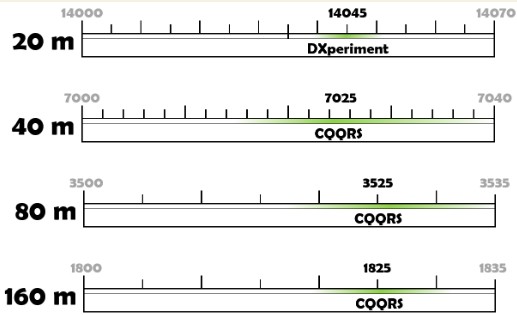
The first thing you’ll note is that there are no more upper and lower operating limits. Rather there are Centres of Activity. What are they, and how do they work?
It’s simple really, think of them like a fountain in a park, or a statue on a street corner, you know, the place you tell your friends to meet when catching up in the big smoke.
Now no-one’s necessarily standing in the fountain or on the statue, they’re just hanging around in close proximity. It’s no different to how CoA’s work in radio.
If it’s a Tuesday evening and you’re looking for other CQQRS participants, look around the CoA as that’s where you’ll find them.
As the crowd gets larger, just like standing around the fountain, there’s no need to all squash together, just spread out in the general vicinity. That will allow newcomers to still find you.
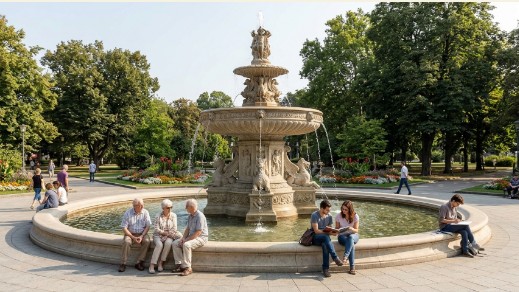
One important point to note however: we don’t own the fountain. Just because we’re meeting there doesn’t mean others can’t do the same. But fortunately for us, it’s easy to spot one another, we’ll be calling nice and slowly.
And if a passer-by chooses to rest amongst us with no idea who we are, that’s ok too, there’s plenty of space for us all, and hopefully they’ll join in for a chat. It’s also worth pointing out that a CoA is not a calling frequency.
A calling frequency is like an upturned milk crate, where you stand atop it to find your friend in the crowd. Once found, you vacate the crate and leave together, allowing the next person to hop up and find their friend.
It’s an effective system for some activities, but it’s not what we’re doing. Whichever frequency you end up on, even if it’s exactly on the CoA frequency, there’s no need to vacate it.
You may also notice a common 25 kHz has been chosen at the top of each band’s CW segment. Hopefully that’ll make it easy to find the fountain without needing to unfold your map.
Though to be honest, there’s often so many of us around that for those who have one, your radio’s waterfall will point the way. Having said all that, I expect that with the exception of vacating the SSB portion of 80 m, most will barely notice the difference.
I look forward to seeing you around the fountain next Tuesday. Lance VK7TO – Margate, Tas
Of Trees and Artillery and Radio
Southern Western Australia has grown many of Australia’s greatest trees. The tuart forest used to run from Perth to the south west corner following the band of deep sands left when the ocean retreated long ago.
The house frames of old Perth were tuart, the fishing fleet used tuart, dance floors preferred it as it was unmarkably hard and far off NSW made their rail carriages of it. Alas only 2000 hectres remain and now you can only fell and process plantation tuart.
Similar tales can be told regarding kami, jarrah and others. Now I always wanted to grow some Australian hardwoods. I always struggled with the question of why they were not being grown while exotic pines that had to be treated with poison were.
I know, pines grow fast, pines grow straight, pines are easy to mill stable timber from etc. They also produce weaker timber that is full of unwanted knots and it needs to be treated with poisons to render its timber durable.
So it was 26 years ago that I bought a grazed out paddock of deep sand and set about planting woodlots. River gum, tuart and blackwood were the early plantings, karri and spotted gum followed.
Spare time on weekends was spent pruning lower branches and thinning out the runts and misshapen ones. Thinnings supplied our wood stove, water heater and pot belly, as well as supplying free wood to numerous mates. Thinning was a form of psychotherapy.
As the trees got bigger some wayward ones would develop bent trunks, multiple heads and other unacceptable behaviours. These trees were never going to produce timber and were using nutrients and water their socially responsible neighbours could better use.
Such trees had to be ruthlessly dealt with. So I would name them after some difficult administrator, colleague or politician.
One for example with a rather red complexion to its bark had started out well enough before branching out chaotically in all directions and developing a distinct lean to the right; it was assigned the name Barnaby.
The next step was to explain to the surrounding trees, that what they were about to witness, was what happens to them if they do not grow straight and tall.
The chain saw was then displayed to the condemned tree and the felling cartied out followed by cutting off its head and limbs. It was always amazing how the surrounding trees would grow straighter after such a felling.
Now that many of the trees are of millable size, we have built a small mill which Anne and I use to produce our own timber. Much of the shelving in the sheds and
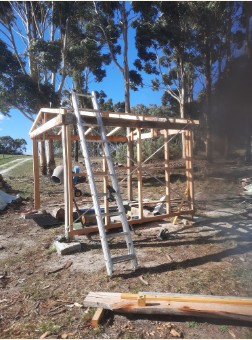
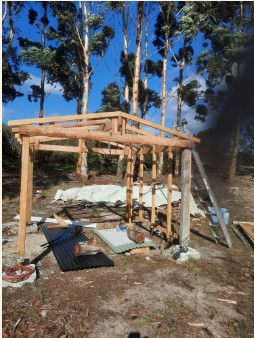
It is very satisfying milling the trees you planted 26 years ago. The flitches from the mill go in the fire and the bark is fed through a chipper to produce a great garden mulch. The saw dust makes good paths in the veggie patches.
The sawn off small limbs are scattered on the forest floor where they rot and nourish the remaining trees. Many of the trees are over 25 metres high and there is a patch of such trees on high ground behind the house.
Recently these ones have had me thinking of that silent key Trevor VK6ATB. Trevor had a great signal. If| had an S meter in my receiver his signal would have permanently bent the needle as it slammed against the right end stop.
So when travelling down the southwest a few years ago, I visited Trevor and Christine and examined his antenna. Now Trevor lived deep in a valley, the steep sides of which grew mature karri trees.
These were 200 foot plus monsters (for the POG that is about 60 metres). So the tops of the trees higher up the valley walls were many hundreds of feet above Trevor’s house and thus his shack.
Assmall homebrew cannon had been used to send a ball with attached line clear over the karti trees. (Names of his accomplices will not be revealed until they are silent keys).
The line then dragged a rope up the tree tops and an antenna was thus hoisted several hundred feet above his house. The feeder was ladder line which ran vertically up so high one could not see where it ended and the antenna was absolutely beyond visible range.
If ever there was any doubt about height being the secret to casting a good signal that antenna was the proof. I now look at the trees up behind our house and wonder what would Trevor do? Donald VK6JDM – Dalyup, WA
V band Part 6
Gosh, I expect you’ll be glad when I’ve finished this interminal series of articles about Vband. Well, this is the last leg of the journey. Almost there. Saying “Hello” A moment’s reflection will make it clear how ridiculous it is to call CQ on Vband.
And there’s no need to send your callsign or “handle” either as it’s right there on the screen for everyone to see. Vband is not radio so forget those radio habits.
If there’s just one other person on the channel, send “HELLO” and they’ll get the message that you want to chat.
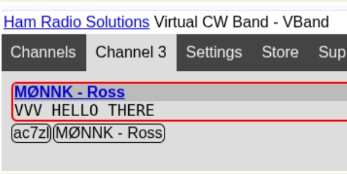
You may have to wait a short while for them to reply as I, for one, get on with other things in the Man Cave whilst waiting. If there’s a conversation going on, give it a few overs for them to notice you.
If you haven’t been invited to join in, send one short beep to let them know you’d like to chat. If they still ignore you, it probably means that they’re engrossed in their conversation and would prefer you not to join them.
Take the hint and either listen patiently or move to another channel.
Nuisances
No platform with a social element (even one using a medium as primitive as Morse) is perfect. Because, well, people. And people are not perfect.
Perhaps the most common example of this on Vband is the young person who hasn’t learnt that interrupting a conversation is rude (yes, they’re invariably young, I’m sorry to say).
Some of this may also be to do with societal norms in the disparate cultures that come together on Vband (we British do so love an orderly queue). And quite a few users don’t come from a radio background with its training in protocols.
Your callsign will identify you as a radio amateur though, and thus your behaviour will be closely observed. Be an ambassador for our hobby and help the interloper, rather than abusing or ignoring them.
That way they may become an enjoyable future contact, on Vband or even on radio. I tend to bear with them because it’s only fair to cut young people some slack as they find their way in life, and I don’t want to put anyone off as they dip their toes into the world of Morse code.
If their behaviour is troublesome to your conversation, consider muting them.
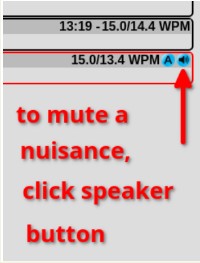
When they’re sending, a blue speaker button will appear on their row. Just click on it and you won’t be able to hear them any more. “Performance” Parameters You may be wondering what those “WPM” numbers mean.
As I understand it (and I may be wrong), they are an estimate of your character speed and your overall speed. So the difference between them reflects the amount of Farnsworth spacing you’re using.
Personally, I find it difficult to get these two values to converge and I’ve given up trying. Clarity (and therefore, Accuracy) is more important than Speed. Discord Server There’s a Discord server.
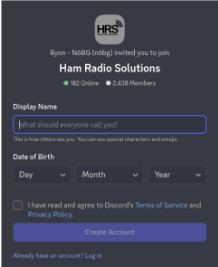
I’ve never used it so I can’t comment on it but it is, apparently, active. So you might consider joining it if that’s your bag. Pedant’s Corner As I’ve said many times before, Vband isn’t radio.
So please, please, please don’t mention the term “CW” in relation to internet Morse code. There is no Carrier Wave – it’s all Digital ones and zeroes. Digital all the way down. Phew, I’m glad I’ve got that off my chest. I feel better now.
Sometimes I can’t hold it in any longer so thank you for your understanding.
The End
Flippin’ Heck! – that was a long series of articles. Many operators are wary of “Morse-over-the-Internet”, feeling that it’s somehow Not Right. If you’re a keen Amateur Radio operator, I can understand that. To you, I would say, “Give it a miss”.
But if you’ve got an open mind and enjoy Morse code for its own sake, Vband can be a very enjoyable way to pass half an hour. I can’t operate radio from home and the weather in the English winter is too ghastly for Portable, so it’s been a Godsend to me.
And now I enjoy it for what it is – not radio, of course…but Morse Heaven. Ross, MONNK – Bundleigh Salterton UK
Prosigns
Prosigns? Prosigns are procedural signals. Many of them hark back to the days of commercial, maritime, and defence use of Morse Code. A prosign is a concatenation of two characters sent without any spaces.
It is usually written with a line over the top of the two characters. Only four or five are commonly used by Amateur Radio Operators. The other learning curve are abbreviations.
These are a little less rigid in their definition and application, but nonetheless, it’s a good idea to understand and use the most common abbreviations to improve communication efficiency and flow.
A lis of commonly understood abbreviations will be published next week. Refer this link for a succinct list of Morse Code Prosigns: https://masteringmorse.com/prosigns-procedural-signals/ If you’re not already, start using prosigns as a part of your normal QSO protocol.
Why do Morse code operators use prosigns and abbreviations? We use prosigns and abbreviations to make our communication more efficient and accurate.
When you think about all the things that can impede clear and effective communication in a typical CW QSO, such as: QSB, QRM, QRN, poorly sent morse, poorly copied morse, speed disparities, etc, anything we can do to ameliorate these impediments is a good thing.
Professionals from years gone by solved these challenges. Procedural codes and abbreviations. It stands to reason that any short commonly understood codes we can use to impart a standard message in a shorter period of time with fewer characters makes sense.
There is less chance of a mistake, less chance of QSB, QRM, or QRN interfering with the message. In addition, our communication becomes more efficient; we are sending our message with fewer characters and words; this equates to less energy, quicker QSOs, more exhange of information, and a more enjoyable experience for both operators.
Cadence and rhythm becomes more effective; the ability to quickly transmit a message and have the other operator respond in a timely manner. So, think about your standard QSO protocol.
If you’re not already, start using prosigns and abbreviations to improve your on-air experience and build your skills. examples: Normal text: “my name is chris and I live in korumburra” Abbreviated text: “op chris (BT) ath korumburra”
If you have an article or two that you think might be of interest to our readers, please let me know so we can share more thoughts and ideas; for guidance on writing for RagChew, see Articles below. Please email material to Mark VK2KI: cqqrsnet@gmail.com
On My Workbench
John’s Delta Loop
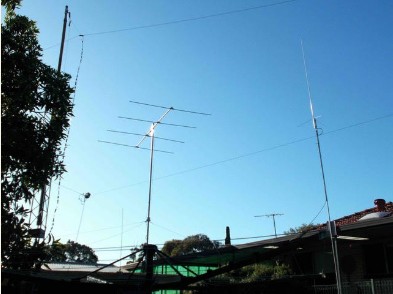
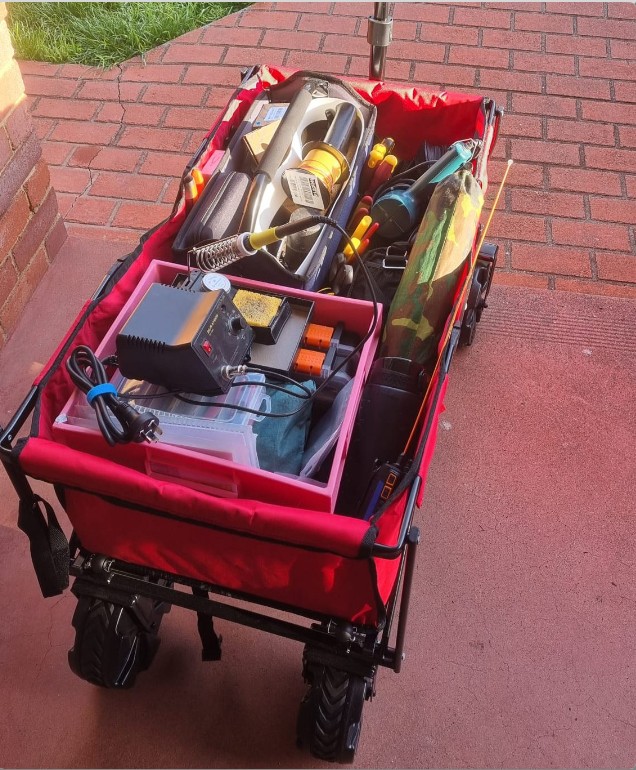
Have made up & testing an experimental Delta loop, using a 1:1 balun ,5MTS ladder line feeding West end corner loop . Total of 28 mts of wire , apex is 8MTS off ground supported with cord to tower mast , slopes down to < 3 mts over ground, & abt 1mt away from verandah metal gutter .Length of 3MTS coax from balun to the FC 901 manual tuner, FT857.
Seems bit quiet compared to the ZS6BKW. Main reason i made up the Delta Loop is to compare the mention of lower noise levels. HF has been quiet this way lately for the QRS Net. I will hear what happens Tuesday night. John VKET – Hope Valley, SA
What’s going on on your workbench? If you have an article or two that you think might be of interest to our readers, please let us know; email to cqqrsnet@gmail.com For guidance on writing for RagChew, see Articles below.
QRZ?
Rob VK3AUX
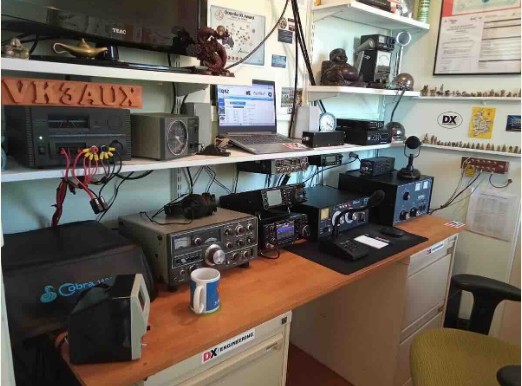
My journey into CW has always been a bit Rocky, this has been like this for some time. I was trying to teach myself through various apps and using a straight key and for some reason just could not seem to really get anything happening.
Being slightly familiar with Chris VK3QB I discovered The CW Ops Academy and the beginners class. After trading the straight key for a Dual Lever Paddle, and having Chris advise us and help steer us in the right direction, along with the curriculum it was all starting to come together.
I’m relatively happy with my Sending, feeling relatively confident about having all the characters memorized. When it comes to to Copying, some more work is needed.
Having listened to the net the last Tuesday night I was able to copy many characters and some words from the QSOs transmitted. As I’m sure many others have felt the same, rather anxious about those first QSOs.
I may be more of a listener at the start but certainly do want to get on air as that is the aim of what all the learning has been about.
Jam quite active on air as VK3AUX, with phone being my favourite mode SSB, but I have always had a respect for the code and yearned to be able to understand it.
When I do my practice I thoroughly enjoy it, there are some frustrating moments, but not so many now. My name is Robert Hoy, but everybody calls me Rob. So instead of constantly chasing DX on phone it would be a nice change to do some CW QSOs.
I’m hoping I’ve given you enough information and are looking forward to this next Tuesday night certainly to try to copy as much as possible. Last Tuesday I was receiving signals of 6/9 plus 10 DB. Rob VK3AUX – Bayswater North – Victoria
Our net is a fun get-together that people enjoy returning to each week. It’s really nice to know who’s on the other end of the QSO. So, please share some thoughts about yourself to cqqrsnet@gmail.com for a future RagChew.
CW Practice
This year we’re using Aesop’s Fables. These are short moral stories, often using talking animals, that illustrate simple truths about human behaviour and character.
Aesop’s Fables originated in ancient Greece, traditionally attributed to the storytelle Aesop who is thought to have lived around the 6th century BCE.
The fables are generally smaller files of two to three hundred words that have been recorded at 15 wpm and run for about 15 minutes.
If 15 wpm is a bit quick for you, load it onto your phone and set the playback speed at 0.75 X or even 0.5 X- whatever works for you. 0.75 X will play the MP8 at a bit under 12 wpm. Itis suggested that you read the text file before listening to the audio file.
That will make it easier to follow the audio file and prepare you for any unusual words. Any punctuation that is not usually used with CW has been removed. This week’s fable is ‘The Hares and the Frogs’, and the MP3 and TXT files are attached here:


If you prefer a different speed or tone, you can create your own MP3 files by converting the text file with the Ebook2CW app — https://fkurz.net/ham/ebook2cw.html.
You can either play the MP3 files in any media player, or load the text file into the Ditto CW: Morse Player app — https://dittocw.andro.io/.
Both options work well, however Ditto CW gives you complete control over all Morse settings, while a normal media player only allows changes to playback speed, and does that in steps (e.g. +1.25x, 1.5x, 1.75x).
Other News
| wanted to share something that may be interesting for the VK CW group. Almost every morning here in Argentina, between 1100 and 1200 UTC, I see good conditions on 80m between Patagonia and VK/ZL.
I’ve been calling CQ around 3515 kHz and the RBN often shows good reports from VK and ZL skimmers, sometimes quite strong, but there seems to be very little activity on the band at that time.
Maybe it would be worth encouraging the group to explore 80m during that window. I think there is a great opportunity for VK stations to work Patagonia on 80m CW. I’d be very happy to arrange skeds with anyone interested.
Hope to catch some VKs on the band soon! Sergio, LU7YS – San Martin de los Andes, Patagonia
CQ QRS DX Frequencies
Several times now, Manny VK3DRQ and Stan ZL3TK have suggested that the DX stations keep their QSOs to the minimum so as to give other ops a chance. I respect both these operators – they always have interesting things to say.
But, on this occasion, |’m going to offer an alternative view. DX is not easy – we’re at the mercy of “The Fickle Finger of Propagation” (is it pointing at you today?), and I have a measly 20 Watts going into a portable quarter wave vertical antenna.
This means that it’s common for me to get no contacts at all with Australian stations; one contact makes my day; two contacts is reason enough to break out the champagne.
After which there’s nothing else to do but go home – there’s no busy 40 m QRS Net for me; no 80 or 160 m either. Those few (if any) contacts have to suffice for the whole week.
In the circumstances, you can’t blame me for wanting to have a bit more of a chat than just the bare minimum. Ross, MONNK – Bundleigh Salterton UK
CW Academy Graduation
Beginners and Fundamental students complete 8 weeks of CW Academy this week. Many of them may start popping up on Tuesday nights. Please listen out for new callsigns and encourage them as they build on the skills they’ve been developing these past 8 weeks.
In case some readers are wondering, we use the Farnsworth Method for learning morse code. This means the students learn to send and copy at a character speed of between 18-25 wpm, and then slow down the effective word speed by increasing the spacing between characters and words.
This is a far more effective method for learning the code and ultimately leads to quicker skills development and avoids the traditional plateaux that plaques students learning at 5 and 10 wom.
It also establishes and develops the listening skill, rather than counting dits and dahs and then using a mental look-up table; inherently inefficient and frustrating.
Ifyou have any questions about CW Academy, or would like some hint and tips to help improve your code, please visit these website or drop me an email. Chris VK3QB – Korumburra, VIC
WhatsApp Alerts
One of the challenges we face on QRS CW is a secondary-effect of narrow CW filters. On 80m in particular where there’s all sorts of atmospheric and local noises, SSB signals and other odd things, tuning around hunting for signals can be a challenge with narrow receive filters.
With slow CW, the spaces between words, characters and in fact dits and dahs is such that if you’re tuning too fast with a narrow receiver, you can easily completely miss signals – even fairly strong ones. Fact of life / physics / mathematics etc!
Of course, those who have contemporary gear with waterfall displays, or who like me use a computer to keep an eye on one or two local KiwiSDRs’ waterfalls, it’s easier to see what’s going on, and pounce-in with their own receiver.
But for those of us who enjoy the joy and challenge of older stem-driven equipment, it’s too easy to tune across our segments and think there’s no-one there. There’s a couple of solutions for those with narrow CW filters in their receivers.
The KiwiSDRs are great, and I recommend that everyone have a go at watching one during our net to identify CW signal frequencies, then use your own receiver to listen-in.
Alternatively, switch your receiver to USB when tuning around – the 3KHZ wide filter on that mode make tuning around for slow CW much easier and quicker.
On the other hand, for those who are calling CQ but not getting any responses, please post a Spot on the CQQRS WhatsApp Alerts group; that way others can find you easily.
Time and time again I’ve found myself calling CQ during the net on 80m, to just get crickets in reply. Yet a quick ” VK2KI calling CQ on 3635KHZ” post usually brings someone to the frequency.
Similarly, if you hear someone calling CQ (that perhaps you aren’t going to reply to), particularly on 80m, please help them out by spotting them on the CQQRS WhatsApp Alerts. Don’t have our WhatsApp CQQRS group on your phone and computer yet?
Let me know cgarsnet@gmail.com and I’ll help get you set up Mark VK2KI / VK6QI CQQRS Net Convenor
Morse Training Net
Our team member Nic VK7WW runs an on-air Slow Morse training net every Wednesday at 7pm EDST on 3580 for 30 mins. He uses the callsign of the Northern Tasmania Amateur Radio Club VK7TAZ on that net.
Many of our team learned Morse code with the support of Nic, and the weekly training session comes highly recommended for anyone who wants to learn the Code, or simply brush up.
Everyone’s welcome – 3580KHZ at 7pm Eastern time every Wednesday; you’ll hear lots of the CQQRS team on that net. Jordan VK3ACU has ralso ecorded the complete set of lessons which you can now find here:
Https://www. youtube.com/playlist?list=PLHsQmZz6fBXO7swAfbT mutrbbEL17fUQL Contact Nic VK7WW for more info nicholaschantler@hotmail.com including how to join the NTARC DISCORD group to follow the action, or just come along and join in on Wednesdays.
Readable Five
If you’ve read something that you think might be of interest to our readers, please let us know cqqrsnet@gmail.com
There’s No Such Thing…
_— I think the first lesson in Teachering 101 is to always tell students “There’s no such…” (I’m sure you know the rest) and “…the only dumb questions are the ones not asked”.
John VK2RU reckons that there’s lots of questions out there among bott our new and our experienced operators – about CW, amateur radio operating and
[Do you have a question or two or a discussion starter worth sharing? cqqrsnet@gmail.com if so.]
Prosign/Character/Signal of the Month
[Put it on a sticky note near your key as a reminder for Tuesday…. and tell us how you went!]
I Hear Tell…
We’re a little light on gossip this week, so tell us what you’ve heard that made you feel amused, concerned or relieved?
[If you have some intel about other team members… or even yourself… that’s worth sharing, please let us know cqqrsnet@gmail.com |
Di-dah-di-dah-dit
So back to the CQQRS Slow CW QSO practice net.
Next Tuesday’s Net
Our CQQRS Group will be on as always on Tuesday from around 0600Z until about 12002; see https://bit.ly/CQQRSWebsite and navigate to the Net Details page for details.
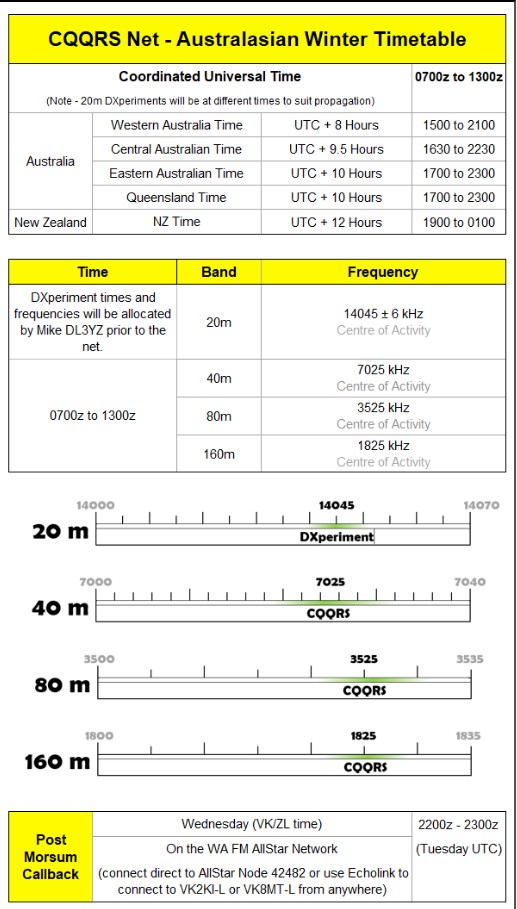
Doesn’t matter whether you’re brand new and want to try just exchanging callsigns and RST reports, or you’re ready for a good old rag chew. We’ll have fun.
There’s usually people around until after 1200Z – so keep calling in the segment of the band designated in the table below until you catch someone.
Reports & Photos
Please let us know via our Reports form bit.ly/CQQRSNET who you work or hear on Tuesday’s Group. The report form closes at 1pm (Eastern Australian time) on Thursday. And how about helping to make the reports even more interesting by sending a photo?
If you have a photo that you’d be happy to include, please email it to: cqqrsnet@gmail.com And of course, we’re always on the lookout for more photos for the newsletter, so if you have something that might be of interest aside from the reports, please send it through as well.
Email to cqgrsnet@gmail.com please. Oh and by the way, I recommend that you don’t keep the Reports Form website open between submission of reports from one week to the next.
If you’re unlucky, there’s an undocumented feature in the software that could cause your current week’s report to be combined with your previous report – it’s happened to your editor several times – much to the chagrin of our Reports editor 🙂
Post Morsum
Richard VK6HRC will run our phone Post Morsum on Wednesday mornings on the South West AllStar net (via repeaters and hotspots all over WA) from 0600 WA time, then from 0700 WA time on 80m (3605 LSB).
See https://bit.ly/CQQRSWebsite and navigate to the Net Details page for details of how you can connect via Echolink from anywhere in the world.
Articles
Could you write a short article or articles for RagChew? You bet! Writing not your strong point? Don’t worry, I’m very happy to help as much or as little as needed.
Oh, and one more thing (actually two) – copyright material: * please use your own images – don’t use images copied from the internet unless you have the producer’s permission, or they’re marked ‘Creative Commons’ or similar; ¢ if you include other peoples’ written material, unless you have permission, you may only include small snippets (unless it’s marked ‘Creative Commons’ or similar), and you’ll need to site the source and author.
For more guidance on writing for the RagChew newsletter (including how you might even try using one of the new Artificial Intelligence tools), head to our website bit.ly/CQQRSWebsite then click the menu on the top right and then click RagChew Newsletter.
Material
Areminder; if you send me any information by email, our report form or WhatsApp – unless you specifically state that material is not to be published, I’ll assume that you’re happy to see your thoughts in the RagChew newsletter.
Thank you so much to our team of 31 contributors: DL3YZ, LU7YS, MONNK, VK2DLF, VK2IOW, VK2KI, VK2RU, VK2TIG, VK2WP, VK3ACU, VK3AUX, VK3DRQ, VK3ECH, VK3QB, VK4BVM, VK4IM, VK5AO, VK5ET, VK6GX, VK6JDM, VK6KD, VK6KHZ, VK6PZT, VK6QI, VK6TX, VK6XC, VK7TA, VK7TO, VK7WW, ZL3ABX and ZL3TK
And a special thank you to our editorial team, Nigel G4RWI (head of software development), Patrick VK2IOW (reports coordinator), John VK2RU (spreadsheet manager, Richard VK6HRC (post morsition), Jordan VK3ACU (head gagster) and Ross MONNK (seconded from the Philosophy Department).
Great work all! GU CW on Tuesday, Lance VK7TO Margate TAS Editor cqqrs.ragchew.editor@gmail.com

About the CQ QRS Net
For the current schedule and more information about the CQQRS net, please go the the Net Details page on our website:

The opinions expressed in the RagChew newsletter are those of the individual contributors. The opinions do not necessarily reflect that of the editors or of the CQQRS Group members.
Any material and images received from members by the editor or published on the CQQRS WhatsApp groups may be published in this newsletter unless specifically requested otherwise.
The RagChew newsletter is considered to be exempt from the Australian Government’s ban on social media for under 16 year olds because it is a service that has the primary purpose of enabling users to share information about products or services, engage in professional networking or professional development services or of supporting the education of users per the Australian Government eSafety Commissioner FAQ webpage “Which platforms have been excluded from the age restrictions” dated 10DEC25.
The values, doctrine and guidelines for the Group and for the newsletter are published on the Principles page of the group’s website https://bit.ly/CQQRSWebsite