Below is a reconstruction of the 2026 20 CQ QRS RagChew newsletter designed to support full text searching. This reconstruction was built using OCR, and will contain errors.
To view the Mailchimp original, click here. To search the entire newsletter archive, click here.
Contents
- CQ QRS RagChew
- Dah-di-dah-di-dah
- Website
- Post Morsum 13th May 2026
- Reporting
- Proposed New CQ QRS
- Bodging Portable – Cont
- A Great Antenna for G90 Portable Ops
- Weird. But it works
- On My Workbench
- QRZ? Who’s on the other end?
- CW Practice
- Other News
- Don Edwards Memorial Slow Morse Contest
- Emails to the Editor
- Mark VK3MJ Geelong
- Morse Training Net
- Great Use of Waste Resources for the CQ QRS Net
- Free Australian Amateur Radio Training Material
- AUS/WWW.YOUTUBE.COM/watch?v=MotadTeWZW Foundation Theory and Regulations https://www.julesworkshop.net/Amateur%20Radio%20Group/3%20Foundation%20licence%20page.htm Practical https://www.julesworkshop.net/Amateur%20Radio%20Group/2%20Practical%20licence%20page.htm Standard Theory licence%20page.html Advanced Theory https://www.julesworkshop.net/Amateur%20Radio%20Group/1%20Advanced%20licence%20page.html The rationale for this material, is to encourage and support anyone anywhere who is interested in amateur radio to prepare for their exams. Feel free to use this material for anyone wishing to get a licence or endeavouring to upskill their current licence. Here in Australia, not all candidates have local access to a radio club or tutor for exam preparation. Many potential candidates also undertake shift work or work remotely. Please use this material freely to aid anyone wishing to upskill or join the service of amateur radio.
- Practical
- Jules Perrin JP
- There’s No Such Thing…
- Question
- Answer
- Prosign/Character/Signal of the Month
- Di-dah-di-dah-dit
- Next Tuesday’s Net
- Reports & Photos
- Post Morsum
- Articles
- Material
- About the CQ QRS Net
CQ QRS RagChew
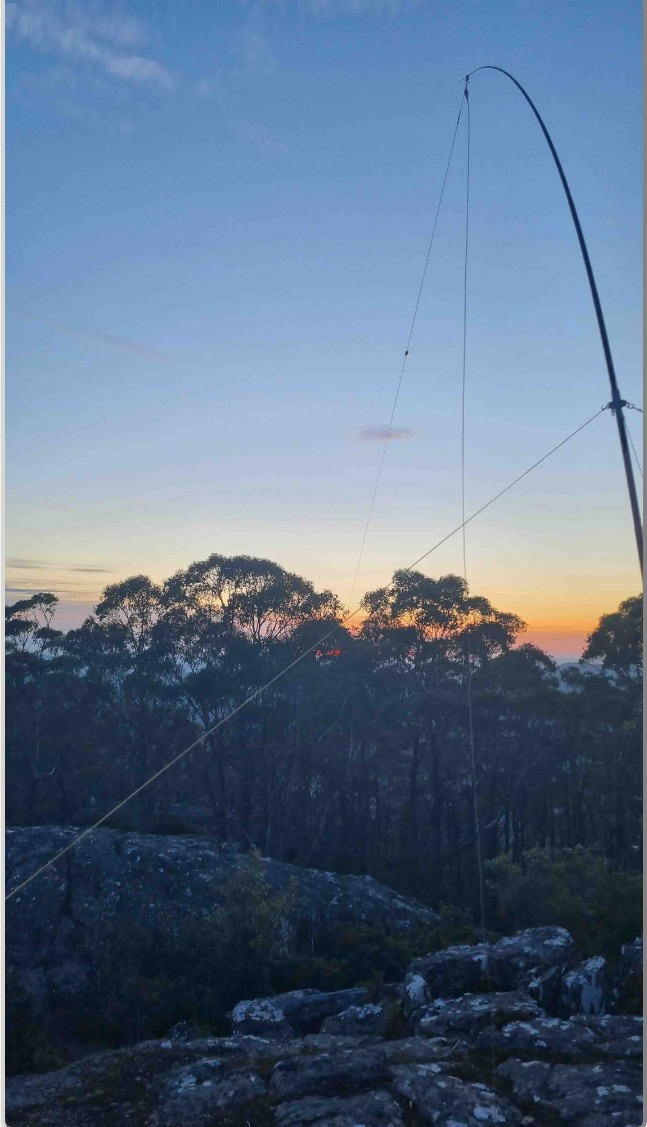
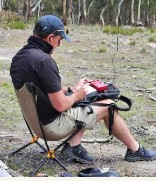
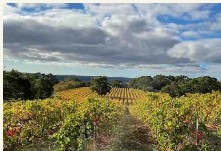
I know you’ve seen this image before – last week’s RagChew included the nice article from James VK7JZ about his SOTA activation of Mount Hobbs – but I liked the shot so much that I thought I’d share it again.
Dah-di-dah-di-dah
| was late to the party again for this week’s CQQRS Slow CW Practice QSO Net on Tuesday; but unlike the week before, where my neighbour and I ended up at the Bowning Pub because of my mis-understanding of the meeting date – the local bushfire brigade AGM actually happened this week.
By the time I got home, 40m was pretty quiet, so it was straight to 80m for me. Most everyone had gone to bed by then, but conditions into VK6 and VK5 were good, so fun was to be had.
From what I read of the reports, sounds like 40m was < bit light-on conditions-wise anyway.
But I support what Lance says in his report this week – please don’t be scared off by the noise level on 80m… wind down the FF gain if you need to, because once the band is open after dark, signals can be excellent.
But of course, don’t forget to increase the RF gain when you finish…. otherwise next time you fire up the rig, you might
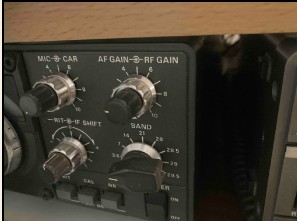
Wonder why the S-meter won’t drop to where it normally sits. Dumb advice I hear you say? Ok – but it can come as a surprise if you forget you had the gain down.
This week, one of the executive, Lance VK7TO has proposed a shift in 80m and 160M frequencies for our net. As I comment below, we had particular reasons why we started using the strange frequencies on 80m, but I’m now happy to reconsider.
Please have a think about what Lance has proposed and let me know whether you support the proposal or not. And if it’s yes, please tell me your thoughts about landing zones to replace our 3555KHZ and 1855KHZ calling frequencies.
I was also pleased to see some negative feedback about the wider use of our RSN reporting system – see Emails to the Editor for more. Please let me know what you think. So back to the rest of the newsletter.
Once again we’ve been rewarded with some nice reading material from our net reports and the other articles submitted by members – thanks everyone.
And don’t miss our Venus & Mars in the Ham Shack this week; Jordan has once again excelled; and there’s more to come! We crack ourselves up each week with creating these – and my wife Elizabeth has also joined the creative team coming up with ideas to put into images.
I hope you get as much fun out of them as we do in bringing the ideas to life.
Website
If you’d like to find out a bit about our net, or would like to pass information to others about our Tuesday get-togethers, here’s the link to our website. bit.ly/CQQRSWebsite So here we go – on behalf of the CQQRS Editorial team, please enjoy the newsletter.
Niall kh DOSITa VK2KI / VK6QI Patrick John Beautiful South Bowning VK2IOW VK2RU NSW Milthorpe NSW on a track somewhere cqqrsnet@gmail.com non impsditi ratione cogitationis Nigel Richard Lance G4RWI VK6HRC VK7TO our other grey nomad Padbury WA Margate TAS Jordan VK3ACU
With thanks to Nigel G4RWI’s clever software, and John VK2RU’s clever spreadsheet work, here’s the 54 stations heard by 40 members of our team on Tuesday:
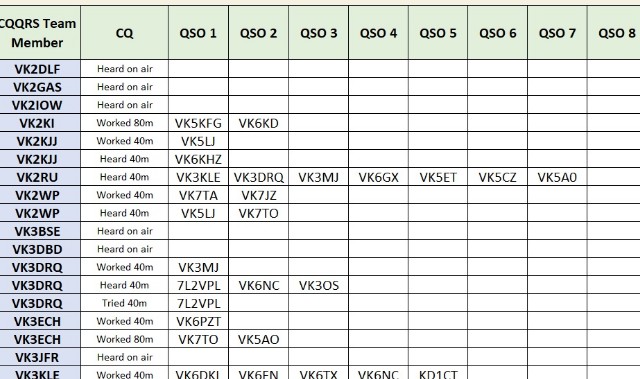
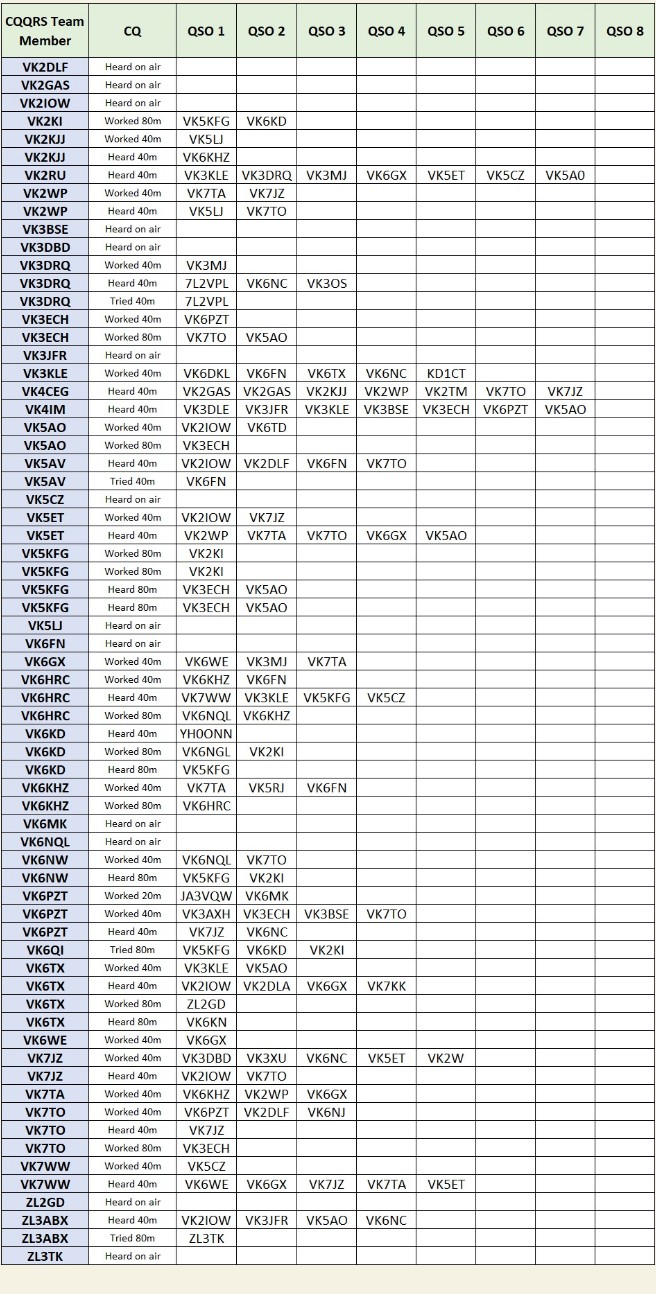
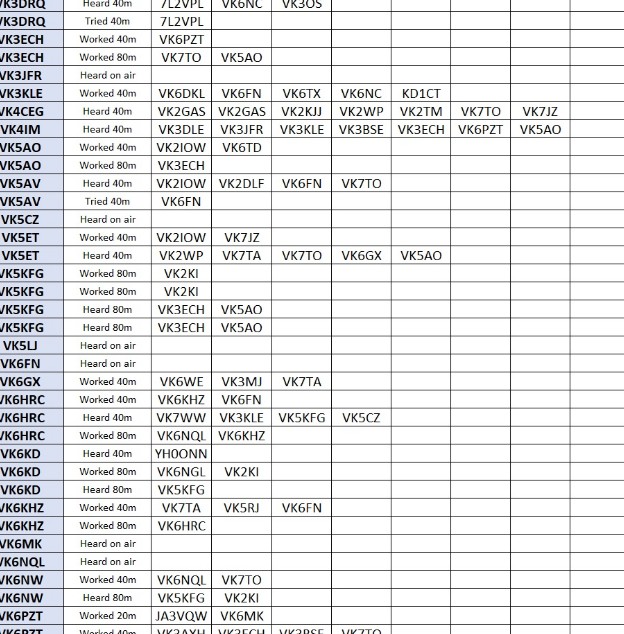
John’s spreadsheet above shows the known stations heard or worked on last Tuesday’s CQQRS Net (reported via our webform bit.ly/CQQRSNET ); the comments in the team members’ reports follow.
The comments were compiled for us by the clever software built by Nigel G4RWI and the layout was perfected by Patrick VK2IOW. Thanks again to Nigel, Patrick and John for the work, and to every team member who submitted a report –
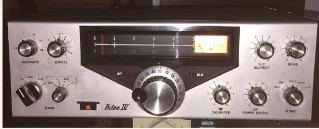
[40m] Was using a very vintage Ten Tec Triton IV set. Only worked long distance and DX to USA.
[40m] Mixed reception tonight, if I was fair I would say I had mixed to poor CW copy skills as well. After stepping away from daily drills it actually is harder, and so I need to get a cup of practice discipline.
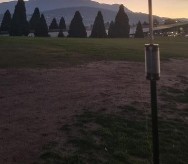
Tonight I was off in search of another better place to operate from than my QTH. I settled on the Cenotaph in Hobart stuck a spike in the ground and screwed on the mid loaded vertical antenna.
A QSO with Drew VK3XU and my skills were lacking but as Drew said ‘keep up the work in CW it is worth the effort’ well at least that is what I copied. Next was a chat with David VK3DBD, he started 599 and then started to fade.
As he got low I was still hanging in there but then another station called over the top (I don’t think rh A oon nA fen nn _ es
Was Daag Manners, I ink ey were anomer VAs and JUSTIN Nis SKIP Zone ana could not hear David sending already). That was it for me I am not good enough to discern between two signals, I finished off by sending David a thank-you for the QSO email.
Then a short QSO with Wal in Bathurst. I heard Lance VK7TO signing off with another station and called Lance, I missed him, but then received a call from Lin who was operating VK6NC from his club station.
Lin complained of similar QRM issues I have with at my QTH. Lin complimented me going portable but I omitted I was portable with 100W. Lastly a QSO with John VKSET, John started to fade for me and I was noisy to him so it was a short QSO.
In total 2 stations heard, 5 stations worked, it was hard work to get my head back into something longer than a basic call sign and signal report exchange but I was loving it.
From Stephen Coote ZL3ABX at Nelson, New Zealand
[80m] Conditions on the 80m band seemed better this week compared to the last couple of weeks. I heard some Aussie SSB operators, but no CW.
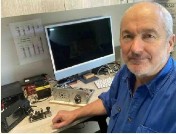
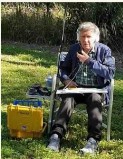
[40m] Just a short session before dinner this week, but three good chats that got progressively faster, sorry about that.
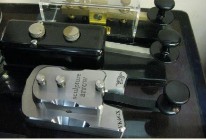
[40m] It was a terribly Miserable night. Wasted my time until 2345Z and only achieved ONE QSO. Thanks OM Mark. Also about 40 minutes waiting for 7L2VPL and when he finished his QSO and I called him, he had already CL. Well, maybe next time. Shall I try?
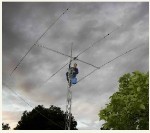
From your editor Mark VK2KI at Beautiful South Bowning
[80m] I was late to the net this week; by the time I returned from a meeting at around 1200Z, things were pretty quiet on 40m, so I went straight to 80m.
The T/R relay on my 50 year-old Kenwood TS-120S has been playing-up for a while – guess who hasn’t had time to look at it? Well on Tuesday the fault decided to cause some trouble; after a favs COe nn 2556b-Us I Raard a annnd ecinnal raniv 3 = ipet ac
Few CQs on 3555KHZ, I heard a good signal reply… just as the intermittent happened, and everything went very quiet. So after a couple of apologetic calls, I managed to hold my mouth right, and actually caught the caller – it was David VK6KD at Ballajura.
David had a nice RSN 511 signal that this week was quite stable (relay aside), and it was nice to have a QSO with him across the continent. After David I was called by Greg VKSKFG whose 50 Watts was pounding in very nicely – RSN 581.
Terrific to catch up with Greg again and discuss the boat-anchor net before padding off to bed.
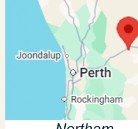
[40m] Once again conditions favoured more distant stations. Conditions enabled an extended chat with Phil, VAKGGX.
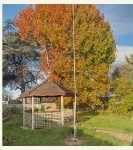
[40m] Not a lot heard here at my home QTH this week on 40m. A Japanese station calling CQ was making it through my QRM and QSB but not strong enough for me to hold a QSO. It took me a while just to hear his full call sign.
I think YHOONN is a regular heard on 40m calling CQ. His CW speed is readable d at the fast end of QRS. Have yet to find out if he will lower
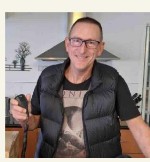
Tor those who Can read at the fast end Of Uno. Mave yet to tind OU Tf he will lower speed more to help us out. 73s
[80m] My 80m start was a bit slow with QRM at S10+. This looked very strange as usually QRM is not that bad. Not even my QRM eliminator could drop the interference.
My investigation identified a hand-held radio battery charger still running in my shack which was creating all the QRM. This was promptly switched off.
I observed a number of long QSOs on 80m and at one stage both Mark VK2KI and Greg VKSKFG were coming into WA with good signal and clarity. Unfortunately, I did not get back to Greg before he moved onto other frequencies.
Mark was using a crystal locked radio where I think the “locked” part in the description might have to be replaced with the word “drifting” HiHi. As Mark was transmitting his signal appeared to drift lower and lower so I started chasing him with my VFO.
This meant I needed to get back on frequency for me to transmit otherwise I would be off frequency too. This is where I should be using other functions on my IC-7610 but mid QSO decoding CW with QSB was not a good time to read the radio operators manual.
[40m] Very odd conditions on 40 m. Almost no stations could be heard, yet the two that did pop up were both from WA. I worked Wayne (6NJ) and Rich (6PZT) and whilst we got a couple of overs each, both QSOs dropped to RST 009 :-/ One delight however was that only the previous evening I’d worked Rich for the first time, so it was a joy to hear him again so soon.
A little later in the evening I hopped back
Onto the radio and had an enjoyable conversation with George, holder of the most musical of all callsigns, VK2DLF.
[80m] I’d been calling a while on 80 with no takers, despite very good reports on the RBN, so it was a relief when I was answered by Rob (3ECH). Despite the vagaries of 40 m, 80 m was strong and dependable. We enjoyed a nice relaxed QSO, thanks Rob.
I do wonder why there is not more activity on 80 m. Especially now that the sun is setting earlier. I wonder if some shy away from it because of the higher noise floor, but are unaware that signals are generally so much stronger that the noise floor matters far less.
I would like to encourage those who normally shy aways from it, to try winding down the RF gain on your radio to a comfortable listening level, and try calling or tuning around.
[80m] After taking part in the mammoth call back for the 1000TH week of the Boat Anchor net (well done Andy), there was nothing to be heard on 40m. There was better luck on 80m, having a nice chat with our dear leader.
I tried to follow the RSN breakthrough but may not yet have the hang of it.
Dreakinrougn Dut May not yet nave the Nang OT It. Thinking that N stood for the signal’s S points above the noise, and noise for once was registering S 0, a report of 599 was sent.
After actually reading the instructions, it looks like N stands for the noise at one’s own end and so Mark, your report is 590.
[80m] Got the day off work, so was able to get started early. Shame the DX team were having a week off. But still had fun on 20m and 40m
Post Morsum 13th May 2026
From Richard VK6HRC. Eight on the VK6RLM rptr and AllStar/Echolink hub this morning.
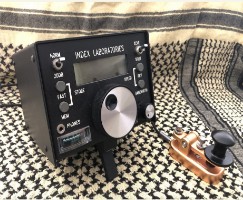
VK6QI = Mark VK6FN Max VK6NW Wayne VK6KD David VK1JT John VK6HRG
VKOMAB Mulligan, VK4IM Adam swi’s and otners. Mark had a fairly quiet session, the first part of the session was partially monitored via a Kiwi.sdr at the Bush fire brigade meeting !
Once home he monitored 40 m for a while before switching over to 80 m worked David VK6KD and Paul VK3KLE but had to give it away as the TRX/RX relay in his rig failed. Max had fun worked a couple of stations on 40 m and monitored the activity until meal time.
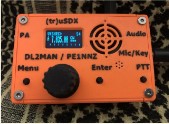
Wayne worked a couple of stations on 40 m switched to 80 m to work another two stations. David was troubled with noise once again so more work to be done in that respect. John has had success setting up his (tr)sUDX rig and has made DX contacts already.
I had a good session working two on 40 m and two on 80 m, conditions were not good, a lot of people were reporting the same, Wayne also checked out the SES HF frequencies while at the base and had the same result.
Thank you to all on last night and this moning. 73 Richard.
Reporting

Even if you didn’t hear anyone, we’d still like to know that you had a go. And to make your report more interesting, please consider sending a photo: cqgrsnet@gmail.com So, please help attract new and old team members to have a go by submitting your report each week.
Submissions close 1300 (Eastern Australian Summer time)_on Thursdays.
Proposed New CQ QRS
I’ve taken it upon myself to propose an update to the band-plans for the CQQRS net, and in so doing, moving the 80m and 160M CQQRS segments into the CW-only portion of the band.
Some reasons I think it’s a good idea: * In the lower bands, tuning of antennas has a greater effect. It seems only fitting that we should put our activity into the portion of the bands for which many have specifically cut/tuned their antennas.
* With the release of the updated WIA band-plans, we should be good neighbours, and make use of the portions of the band put aside for us. + On 80m, there is often voice activity in the lower section of the phone bands, making it unsuitable anyway.
* Now, whilst there is very little activity on 80m is a good time to move, rather than once there is, and we have to change habits.
+ And now for the selfish reason: I have band plans configured on my radio, so that when I move between different segments my radio automatically switches mode.
It’s a pain rolling the VFO between the CW and phone segments, as when entering the phone portion my lovely 500 Hz CW filter is switched out for the 3000 Hz SSB filter, and the audio blast that hits my ears is never enjoyable.
And so, for your consideration, I offer the attached proposed band-plans. Kind regards, Lance, VK7TO
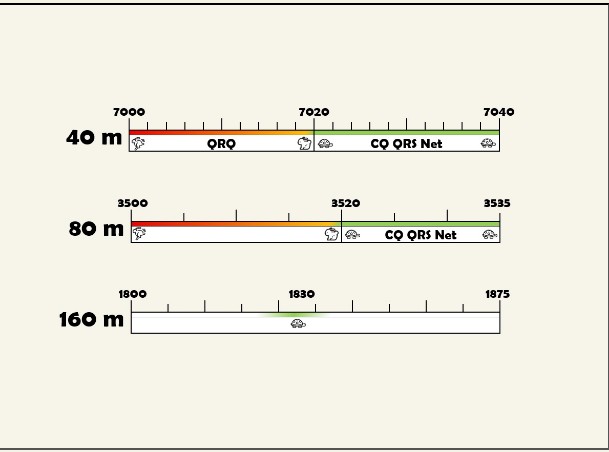
We are in the shared CW area of 80m in the new and old WIA band-plans, but I have in the past avoided changing the Net frequencies to avoid confusion. Here’s the new WIA band plans:
We are in the shared CW area of 80m in the new and old WIA band-plans, but I have in the past avoided changing the Net frequencies to avoid confusion. Here’s the new
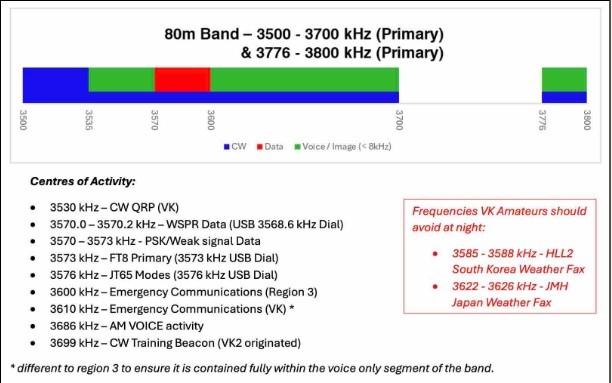
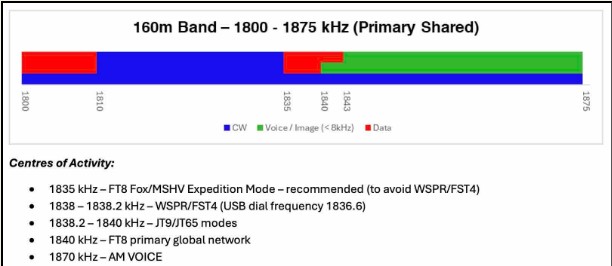
However, this time I’m happy to propose the 80m and 160M moves to the membership, based on your advice. The only risk I see is that non-CW fans with narrow-band antennas (eg trapped verticals) cut for 3600KHZ or higher might struggle to operate further down the band (this was my original reason for picking the slots near to the phone section as it turned out).
On 40m we share 7032KHZ with the SOTA / PARKS community – and I think that has worked out very well – there’s been a great cross-over between the two activities, and in Australian, many operators monitor 7032KHZ during the day anyway; when a SOTA or PARKS station has been on during our net, everyone wins.
So for 80m, I think that the 3530KHZ CW QRP frequency would be a great option for a calling frequency – hopefully, there’s lots of crystal-locked QRP and other gear out there that will benefit from the shared calling frequency. What do you think?
Thoughts about a 160M calling frequency? So Questions to members: * Would you be happy to make the changes proposed by Lance? * Would you like to propose a new 80m and 160M calling frequency based on Lance’s band-plan?
Please let me know your thoughts cgarsnet@gmail.com Cheers, mb VK2KI / VK6QI J
Bodging Portable – Cont
A Great Antenna for G90 Portable Ops
From Ross MONNK Any portable operator with even a modicum of sense would put up a (trapped or linked) dipole and never think about antennas ever again. But, as you may have gathered by now, I always prefer a less sensible approach.
Any portable operator with even a modicum of sense would put up a (trapped or linked) dipole and never think about antennas ever again. But, as you may have gathered by now, I always prefer a less sensible approach.
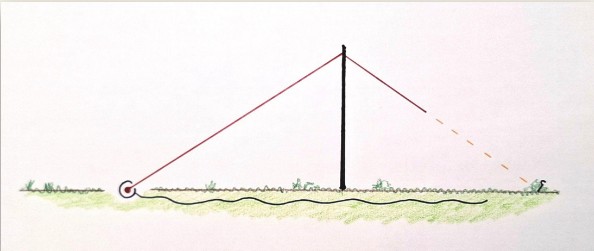
For DX, I reach for a directional mono-band antenna – an antenna optimised for a very specific task. But for local EU work, an omni-directional multi-band antenna is the way to go. For example, I recently arranged a sked with a German operator.
We agreed a frequency on the 20 m band but, after some hopping around to avoid those pesky contesters, there was nothing doing. So we moved to the 30 m band. Nothing doing there either. So, fearing it might be a total bust, we moved to 40 m. Success!
So, what antenna was I using? It was my trusty 42 ft Random Wire antenna, inspired by SOTAbeam’s Bandspringer Midi. + Not only is this a non-resonant antenna (can any RagChew reader explain, in terms a 7 year old would understand, how on earth a non-resonant antenna actually works’); * not only is the counterpoise the same length as the radiator; + but it also connects directly to the radio without any feed-line whatsoever.
Weird. But it works
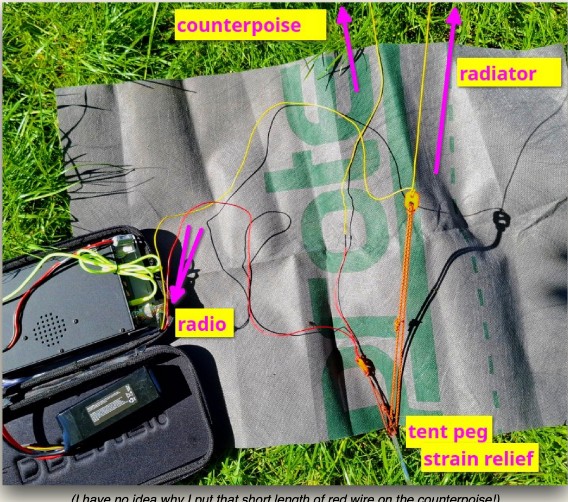
Of course, for a non-resonant antenna, you do need a radio with a good antenna tuner. And I’m pleased to say that the Xiegu G90 has one of the best tuners around. So changing bands is simply a matter of dialling in the frequency and hitting the Tune button.
It’ll work on any band between 10 and 60 m too. These antennas are trivial to make: * compact (no coax) and lightweight; * easy to deploy using a light 6 m mast; and + are very effective.
This was my standard antenna until I discovered the QRS Net via DX and, even now, it’s my back-up antenna. If you want to cast common sense to the winds and try a non-resonant wire, I can highly recommend this one.
If you have an article or two that you think might be of interest to our readers, please let me know so we can share more thoughts and ideas; for guidance on writing for RagChew, see Articles below. Please email material to Mark VK2KI: cqqrsnet@gmail.com
On My Workbench
PIU raul VINONALE This week I took an old rig i had previously worked on and replaced a few more of the remaining original 1970 axial capacitors. The rig in question a Ten-Tec Triton IV 80m-10m, has superb qsk.
I fitted an American aftermarket CW audio filter board a couple of years ago. Using my trusty TS590SG as a monitor I set 7.032 MHz as the operating frequency for the QRS net.
After a couple gentle nudges to the pto the old rig settled in to perfectly stable tx frequency with the shack electric fan heater going on high to the far end of the room.
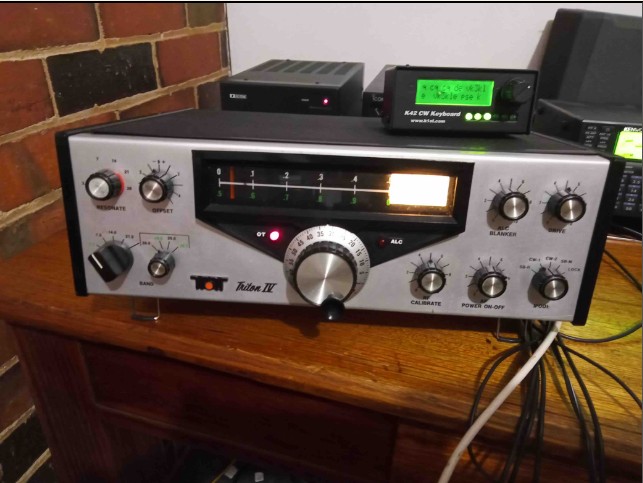
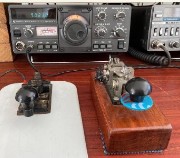
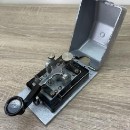
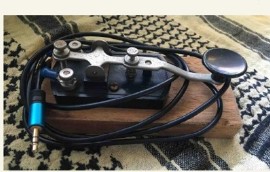
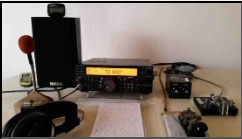
Having been practicing sending with both hands on the paddle, for a few weeks now I opted for a lazy recovery night after swimming pool laps and used a combination of both hands and a keyboard with the k42 keyer as shown in the picture.
Ihad been recapping my Phillips fluke CRO this week and had the opportunity to. test TX speed and wave shaping of the respective CW TX on it. Various rigs on hand could mostly key above 100WPM.
The Ten-Tec omni with reed relays maxed out at 120WPM on dits , the Triton faster and quiet similar to the TS590 at about 140WPM. But the Kenwood reader can only read CW to about 78 wpm. The k44 keyer about 60 as a CW reader.
Must have a look at fidigi and a good audio PC card to see what’s technical possible. For those interested most of us talk around 100 wpm and that’s above a professional typist speed. That’s why they used shorthand and the pitman method.
As a teen I’ve read out edited gov work to a professional typist, it was slowed to below my regular speaking speed to keep accuracy at 100percent. Abh the fun before memory typewriters and computers.
Incidentally the refurbished Drake TX4C had a lot of leading edge and trailing edge distortion so it maxed at 70WPM. Probably could reduce a capacitor in the keying CCT for improvement if needed.
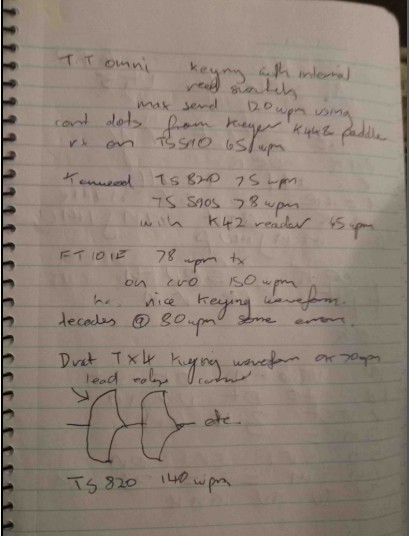
In reading about QRQ speeds previously possible during the week, apparently 1 percent of the population or below can read plain text CW very accurately at or above 50 wpm.
Ihave met a ham op in my teens that could hold in his memory a foolscap page of plain text at that speed during and post WWI. But not only plain text – a page of encrypted 5
Letter groups from an enigma machine. As an old gentleman when I saw his skill demonstrated he was happy to just head copy a plain ham QSO at 50 wpm. …
Made me feel quiet humble and very mortal when he repeated the entire both way QSO in English 10 mins later complete with QSK over injection at random. Until then I hadn’t known anything was possible at that QRQ level.
Learnt a valuable life lesson that afternoon on not making assumptions about a person’s ability or skills. I’m about 10 years younger now than that gentleman, but I haven’t ever got above 18 wpm on copy.
But sending if practiced and relaxed and not tired, well I send at 25 wpm – but not for long as it’s mentally fatigues me out. Incidentally the TS590SG has menu adjustment of CW wave shaping. It’s is really very clean compared to other sets I tested.
The most awfull CW output and last rig tested was a vintage Johnson Viking with simple LC HT filter from factory. The cap is paper in oll with a single inductor for DC filtering.
Ithas a shunt 6AQS for controlling the screen Volts via series dropping resistor off the HT 650VDC. They call this a clamper tube. The cathode keying via original power supply does not give an attractive CW RF output waveform.
The first keydown dit caves heavily before recovery into the following dah of the letter A . Better used for AM work I suspect hihi. Just for fun I did a comparison with the Johnson Valiant TX of same vintage.
It has a severely re-worked B+ ps with zener regulation up to the driver tube. Perfect CW keying waveform there, with some deterioration after the final PA stage due to the clamper 6AQ5 arrangement.
I’ve checked the CCT and it is possible to convert SW4 to enable the two gas regulator tubes to give 210 V DC screen in CW mode. But it’s working ATM so I think I will leave that be.
I did discover If the drive level is reduced it looks not too bad as is with the unregulated PA screed supply and clamper tube.
I did a comparison using a QRP Oak Hills Resurcher set as the driver with the Johnson on SSB input mode (using it as a linear amp) and it’s fairly clean op wise with good keying wave-shape.
So my conclusion is the CW wave shaping distortion is being caused by the clamper screen supply. That I can live with it as is now having tested enough sets to compare it with. Best regards Paul VK3KLE 73
What’s going on on your workbench? If you have an article or two that you think might be of interest to our readers, please let Mark VK2KI know; email to cqqrsnet@gmail.com For guidance on writing for RagChew, see Articles below.
QRZ? Who’s on the other end?
CW Practice
This year we’re using Aesop’s Fables. These are short moral stories, often using talking animals, that illustrate simple truths about human behaviour and character.
‘Aesop’s Fables originated in ancient Greece, traditionally attributed to the storyteller ‘Aesop who is thought to have lived around the 6th century BCE.
The fables are generally smaller files of two to three hundred words that have been recorded at 15 wpm and run for about 15 minutes.
If 15 wpm is a bit quick for you, load it onto your phone and set the playback speed at 0.75 X or even 0.5 X- whatever works for you. 0.75 X will play the MP8 at a bit under 12 wpm. Itis suggested that you read the text file before listening to the audio file.
That will make it easier to follow the audio file and prepare you for any unusual words. Any punctuation that is not usually used with CW has been removed. This week’s fable is ‘The Mouse, the Frog, and the Hawk’, and the MP3 and TXT files are attached here –


If you prefer a different speed or tone, you can create your own MP3 files by converting the text file with the Ebook2CW app — https://fkurz.net/ham/ebook2cw.html.
You can either play the MP3 files in any media player, or load the text file into the Ditto CW: Morse Player app — https://dittocw.andro.io/.
Both options work well, however Ditto CW gives you complete control over all Morse settings, while a normal media player only allows changes to playback speed, and does that in steps (e.g. +1.25x, 1.5x, 1.75x).
Other News
Don Edwards Memorial Slow Morse Contest
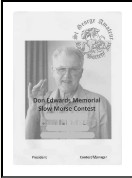
CEASMU LS ES LU CE Cd Li Rd AES Returns – 16-17 May The Don Edwards Memorial Slow Morse Contest returns 16-17 May, welcoming all amateurs to enjoy relaxed, hand-sent Morse code operation at slow speeds in memory of Don Edwards VK2NV.
From Saturday 16 May 2026 To Sunday 17 May 2026 The St. George Amateur Radio Society is pleased to announce the return of the Don Edwards Memorial Slow Morse Contest, to be held over the weekend of 16-17 May.
Held in memory of Don Edwards VK2NV—a long-time Society member and passionate CW operator—this event is designed to encourage all amateurs to get on the key and enjoy Morse code in a relaxed, welcoming environment.
Whether you’re: * returning to Morse after many years, * just learning CW, * or have never tried operating on the key before, this contest is the perfect opportunity to give slow Morse a go. What is “Slow Morse”?
Slow Morse is sent at no more than 10 words per minute, although in previous years some contacts have been exchanged at speeds as low as 3 words per minute.
Contest Rules * Morse code only * Sent by hand * Received by ear Operating Times: Saturday 16 May * 6:00 pm — 9:00 pm Sydney time + 80 metres ‘Sunday 17 May + 1:00 pm — 4:00 pm Sydney time + 40 metres
We encourage all operators— experienced or beginner—to join in and help keep the spirit of CW alive. Location In your shack or out in the field Contact contest@sgars.org Don Edwards Memorial Slow Morse Contest Rules
From Ross MONNK It’s curious how difficult cross-Australia ops seem during the QRS Net. I rana prediction through the Proppy online tool and it came up with this:
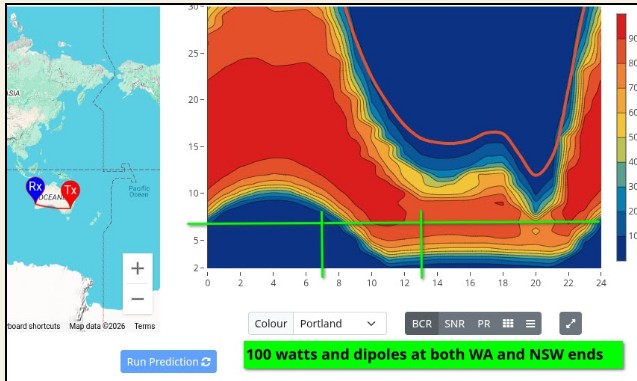
There seems no point in even trying before 0900 UTC (5 pm Western Australia Time: 7 pm Eastern Australia Time), but after that one would’ve thought the chances were reasonably good. However, the experience of RagChew reporters suggests otherwise.
Can anyone suggest why this might be so?
Emails to the Editor
Hi Mark, I’d like to make a few points in regards to you suggesting that using RSN instead of RST on the ‘public’ ham bands is a good idea (RagChew Edition 19/2026).
RSN is not valid to anyone except a couple of stations in your group. I work and listen to a lot of CW on Tuesday nights & have only ever heard three stations use RSN. All it does is confuse people who aren’t expecting it.
Ihave never seen any amateur contest or activity that requires RSN within the exchange between stations; they all say RST. All exchanges giving an RSN report would all be invalid.
Just because some of the CQQRS community think RSN is better than RST, doesn’t mean that’s how it should be! I hope they don’t decide they want to drive their cars on the right hand side of the road!
Encouraging the use of RSN when 99.999% of hams use RST is simply stupid. Please feel welcome to submit my email words into the next newsletter. Mark VK3MJ Geelong
Mark VK3MJ Geelong
Morse Training Net
Our team member Nic VK7WW runs an on-air Slow Morse training net every Wednesday at 7pm EDST on 3580 for 30 mins. He uses the callsign of the Northern Tasmania Amateur Radio Club VK7TAZ on that net.
Many of our team learned Morse code with the support of Nic, and the weekly training session comes highly recommended for anyone who wants to learn the Code, or simply brush up.
Everyone’s welcome – 3580KHZ at 7pm Eastern time every Wednesday; you’ll hear lots of the CQQRS team on that net. Jordan VK3ACU has ralso ecorded the complete set of lessons which you can now find here:
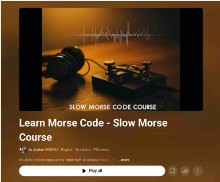
Https://www. youtube.com/playlist?list=PLHsQmZz6fBXO7swAfbT mutrbbEL17fUQL Contact Nic VK7WW for more info nicholaschantler@hotmail.com including how to join the NTARC DISCORD group to follow the action, or just come along and join in on Wednesdays.
Great Use of Waste Resources for the CQ QRS Net
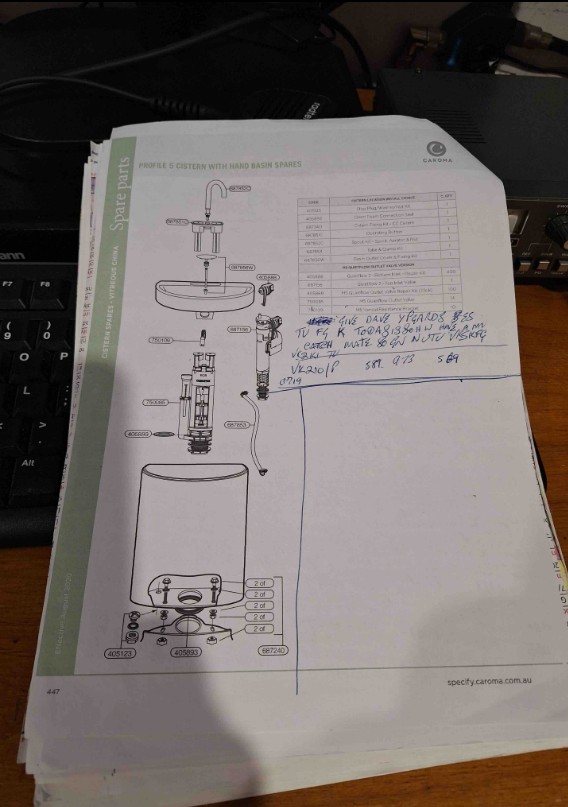
Real Use OT Waste Mesources [OF ie UUININS NET
From Wayne VK6NW at Bridgetown Hi Mark See attached example of the efficient utilisation of waste resources in this house for CW practice. Regards Wayne Douglass VK6NW
Free Australian Amateur Radio Training Material
AUS/WWW.YOUTUBE.COM/watch?v=MotadTeWZW Foundation Theory and Regulations https://www.julesworkshop.net/Amateur%20Radio%20Group/3%20Foundation%20licence%20page.htm Practical https://www.julesworkshop.net/Amateur%20Radio%20Group/2%20Practical%20licence%20page.htm Standard Theory licence%20page.html Advanced Theory https://www.julesworkshop.net/Amateur%20Radio%20Group/1%20Advanced%20licence%20page.html The rationale for this material, is to encourage and support anyone anywhere who is interested in amateur radio to prepare for their exams. Feel free to use this material for anyone wishing to get a licence or endeavouring to upskill their current licence. Here in Australia, not all candidates have local access to a radio club or tutor for exam preparation. Many potential candidates also undertake shift work or work remotely. Please use this material freely to aid anyone wishing to upskill or join the service of amateur radio.
Practical
Jules Perrin JP
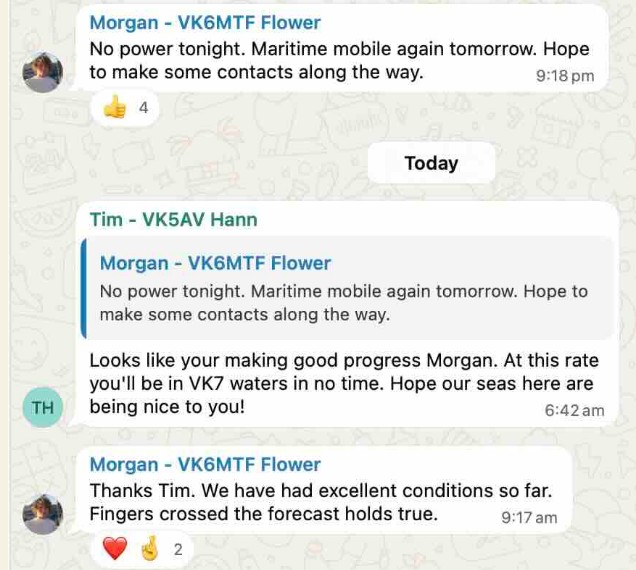
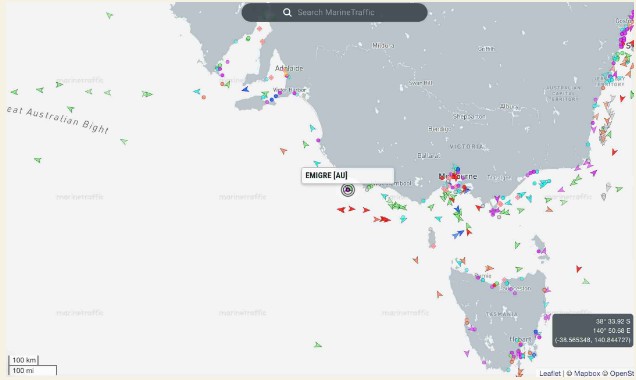
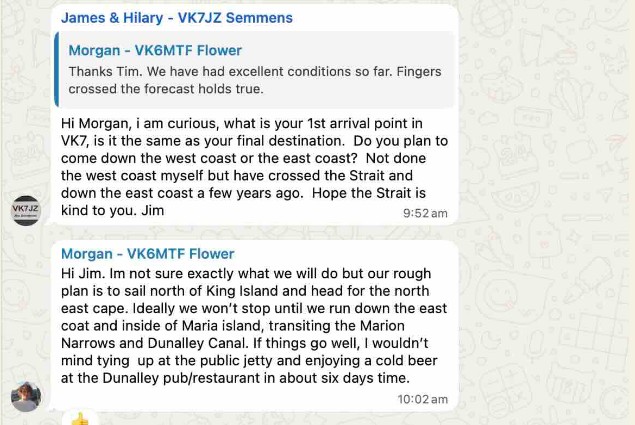
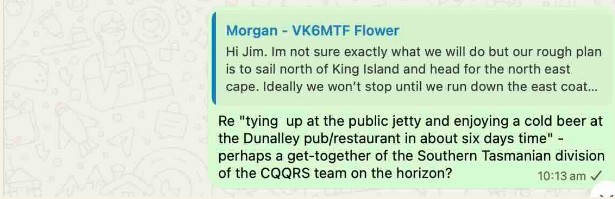
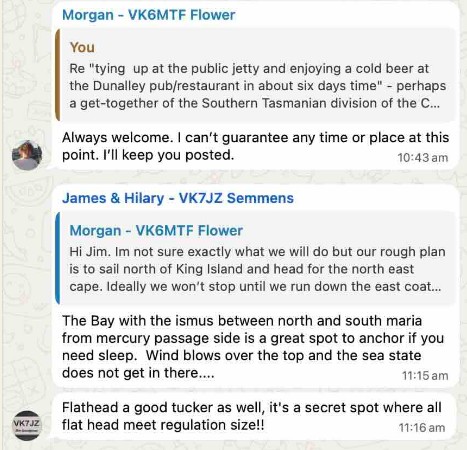
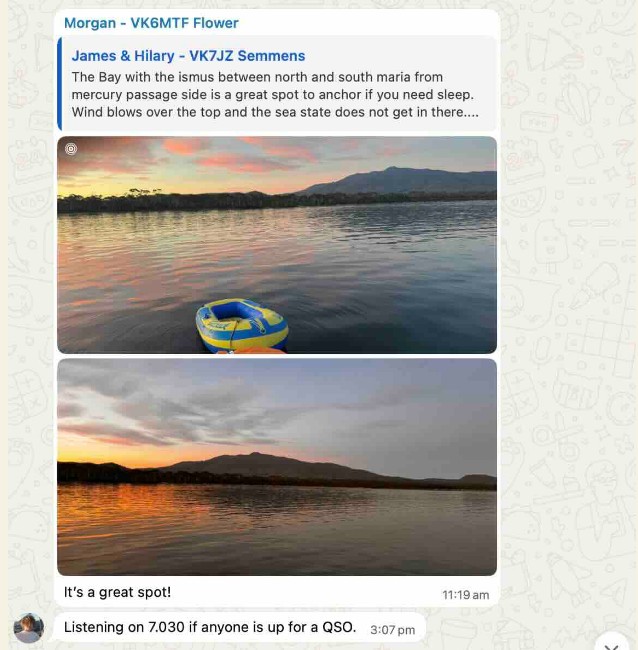
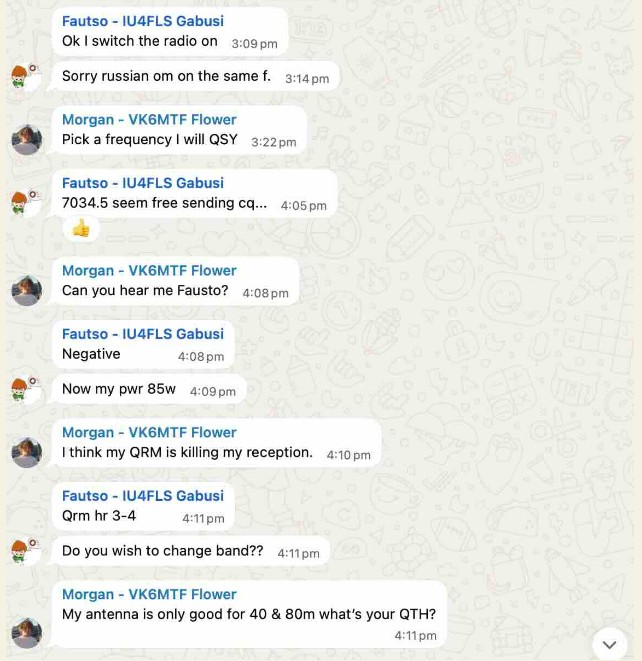
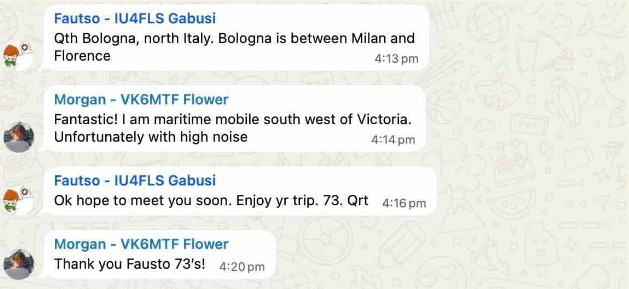
VK6MTF/MM Esperance to Hobart – Big Ocean, Great Adventure in a Tiny Yacht – and QRP QRS Too.
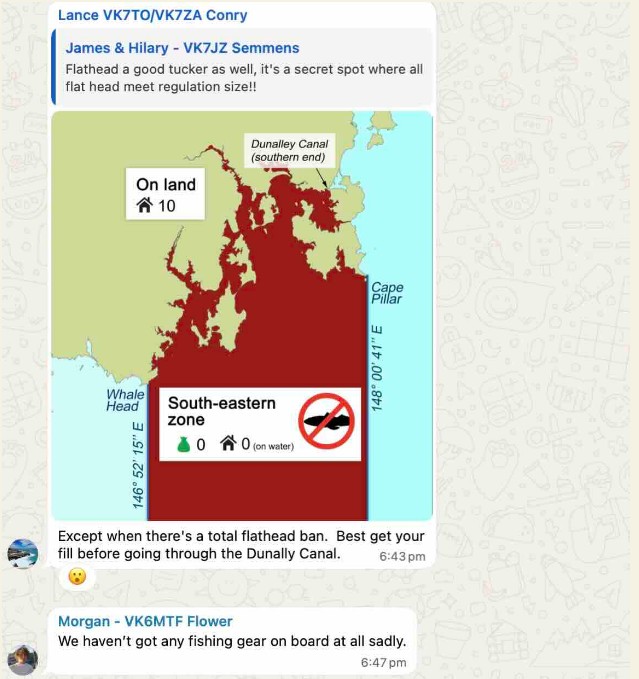
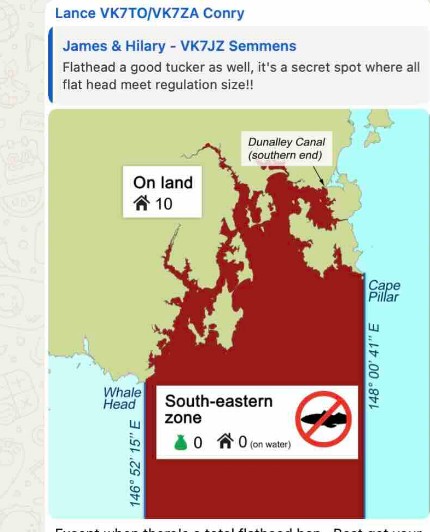
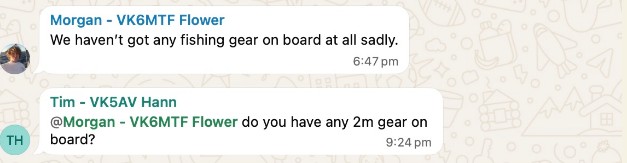
If you’ve read something that you think might be of interest to our readers, please email to Mark VK2KI: cqgrsnet@gmail.com
There’s No Such Thing…
Pho WEEN 2 YMC UlIViios I think the first lesson in Teachering 101 is to always tell students “There’s no such…” (I’m sure you know the rest) and “…the only dumb questions are the ones not asked”.
John VK2RU reckons that there’s lots of questions out there among bot! our new and our experienced operators – about CW, amateur radio operating and about theory. So here we go…
Question
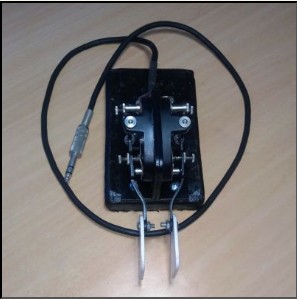
Question I made a paddle out of a couple of straight keys a while ago, I call it “Thing”. It works Ok. “Thing” is at the lightest spring tension but is still quite firm, even with close spacing.
I’m wondering if there will be any benefit on getting a paddle that is purpose built/ lighter on the touch. If so, other than a bencher what would you recommend? Adam, VK4IM
Answer
[Do you have a question or two or a discussion starter worth sharing? cqqrsnet@gmail.com if so.]
Prosign/Character/Signal of the Month
[Put it on a sticky note near your key as a reminder for Tuesday…. and tell us how you went!]
Di-dah-di-dah-dit
Next Tuesday’s Net
Our CQQRS Group will be on as always on Tuesday from around 0600Z until about 1200Z; see https://bit.ly/CQQRSWebsite and navigate to the Net Details page for details.
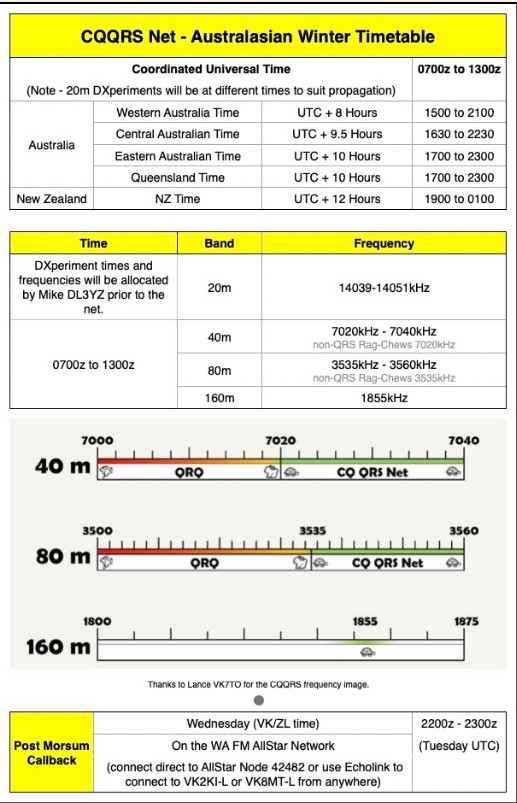
Doesn’t matter whether you’re brand new and want to try just exchanging callsigns and RST reports, or you’re ready for a good old rag chew. We’ll have fun.
There’s usually people around until after 1200Z – so keep calling in the segment of the band designated in the table below until you catch someone.
Reports & Photos
Please let us know via our Reports form bit.ly/CQQRSNET who you work or hear on Tuesday’s Group. The report form closes at 1pm (Eastern Australian time) on Thursday. And how about helping to make the reports even more interesting by sending a photo?
If you have a photo that you’d be happy to include, please email it to: cqqrsnet@gmail.com And of course, we’re always on the lookout for more photos for the newsletter, so if you have something that might be of interest aside from the reports, please send it through as well.
Email to cqgrsnet@gmail.com please. Oh and by the way, I recommend that you don’t keep the Reports Form website open between submission of reports from one week to the next.
If you’re unlucky, there’s an undocumented feature in the software that could cause your current week’s report to be combined with your previous report – it’s happened to your editor several times – much to the chagrin of our Reports editor 🙂
Post Morsum
Richard VK6HRC will run our phone Post Morsum on Wednesday mornings on the South West AllStar net (via repeaters and hotspots all over WA) from 0600 WA time, then from 0700 WA time on 80m (3605 LSB).
See https://bit.ly/CQQRSWebsite and navigate to the Net Details page for details of how you can connect via Echolink from anywhere in the world.
Articles
Could you write a short article or articles for RagChew? You bet! Writing not your strong point? Don’t worry, I’m very happy to help as much or as little as needed.
Oh, and one more thing (actually two) – copyright material: + please use your own images – don’t use images copied from the internet unless you have the producer’s permission, or they’re marked ‘Creative Commons’ or similar; * if you include other peoples’ written material, unless you have permission, you may only include small snippets (unless it’s marked ‘Creative Commons’ or similar), and you’ll need to site the source and author.
For more guidance on writing for the RagChew newsletter (including how you might even try using one of the new Artificial Intelligence tools), head to our website bit.ly/CQQRSWebsite then click the menu on the top right and then click RagChew Newsletter.
Material
A reminder; if you send me any information by email, our report form or WhatsApp – unless you specifically state that material is not to be published, I’ll assume that you’re happy to see your thoughts in the RagChew newsletter.
Thank you so much to our team of 32 contributors: MONNK, VK2IOW, VK2KJJ, VK2RU, VK2WP, VK3ACU, VK3DRQ, VK3ECH, VK3JFP, VK3KLE, VK3MJ, VK3QB, VK4CEG, VK4IM, VK5AO, VK5AV, VK5ET, VKSKFG, VK5KFG, VK6GX, VK6HRC, VK6KD, VK6KHZ, VKE6NW, VK6PZT, VK6TX, VK6WE, VK7JZ, VK7TA, VK7TO, VK7WW and ZL3ABX.
And a special thank you to our editorial team, Nigel G4RWI (Decrypter), Patrick VK2IOW (cattle wrangler), John VK2RU (maker of lists), Richard VK6HRC (cat-herder), Lance VK7TO (spectrum planner) and Jordan VK3ACU (AI navigaator). Great work all!
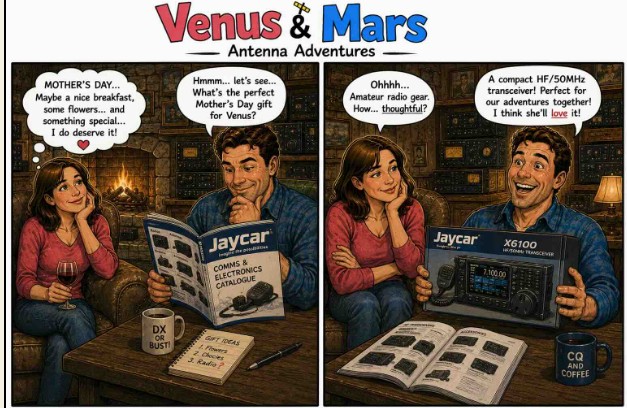
Venus & Mars in the Ham Shack is a work of fiction, created by some sad individuals who should know better. Any resemblance between the characters depicted, and real people is mere coincidence.
About the CQ QRS Net
For the current schedule and more information about the CQQRS net, please go the the Net Details page on our website:

The opinions expressed in the RagChew newsletter are those of the individual contributors. The opinions do not necessarily reflect that of the editors or of the CQQRS Group members.
Any material and images received from members by the editor or published on the CQQRS WhatsApp groups may be published in this newsletter unless specifically requested otherwise.
The RagChew newsletter is considered to be exempt from the Australian Government’s ban on social media for under 16 year olds because it is a service that has the primary purpose of enabling users to share information about products or services, engage in professional networking or professional development services or of supporting the education of users per the Australian Government eSafety Commissioner FAQ webpage “Which platforms have been excluded from the age restrictions” dated 10DEC25.
The values, doctrine and guidelines for the Group and for the newsletter are published on the Principles page of the group’s website https://bit.ly/CQQRSWebsite