Below is a reconstruction of the 2025 46 CQ QRS RagChew newsletter designed to support full text searching. This reconstruction was built using OCR, and will contain errors.
To view the Mailchimp original, click here. To search the entire newsletter archive, click here.
Contents
- CQ QRS RagChew
- Website
- POST MORSUM 12th November
- 73 Richard VK6HRC
- This Week’s Topic of Interest
- On My Workbench
- Electronic Audio CW Filters
- QRZ?
- rFee-aye
- QRZ? Who’s on the other end?
- Head Copy Practice
- You can either play the MP3 files in any media player, or load the text file into the Ditto CW: Morse Player app — https://dittocw.andro.io/. Both options work well, however Ditto CW gives you complete control over all Morse settings, while a normal media player only allows changes to playback speed, and does that in steps (e.g. +1.25x, 1.5x, 1.75x).
- Other News
- Morse Training Net
- It’s Never the Right Time to Issue a Call Sign Directory.
- Settle to Carlisle Railway, Week 9 Report
- 2025 Enigma Reloaded
- SKCC Oceania QRS Saunter
- Readable Five
- Handling a Straight Key
- Prosign/Character/Signal of the Month
- Di-dah-di-dah-dit
- Next Tuesday’s Net
- Reports & Photos
- Post Morsum
- Articles
- About the CQ QRS Net
CQ QRS RagChew
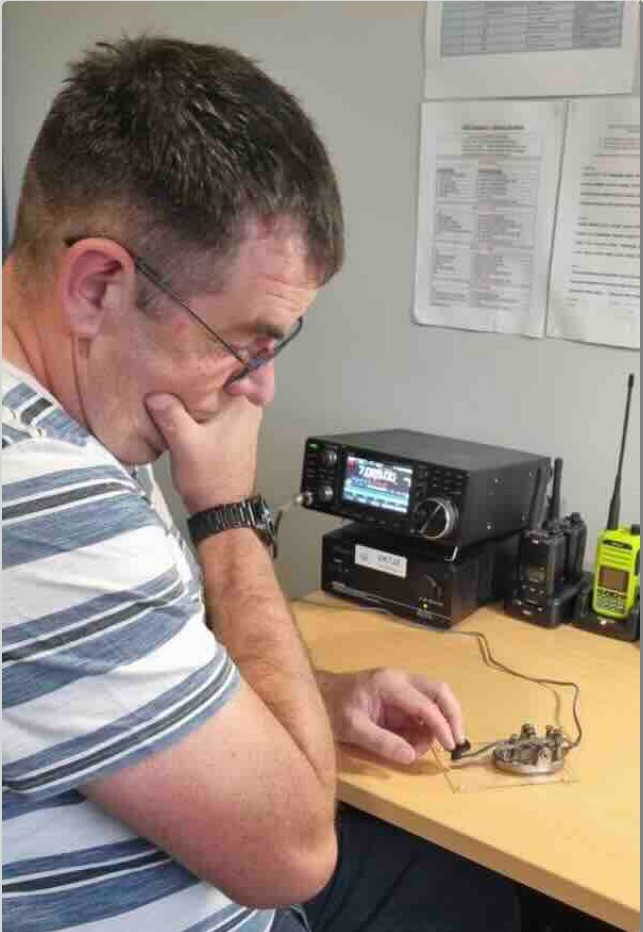
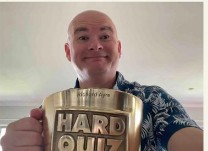
So why does James VK7JZ have a look of consternation? See the newsletter for details.
Well just goes to show…. what would I know? The arrival of the solar radiation from the Coronal Mass Ejection on Tuesday happened as predicted… the consequent geomagnetic storm activity happened…
And Aurora Australis was visible to some lucky ones on the Australian mainland… but the reports from our team on Tuesday’s CQQRS Practice QSO Net showed that not all was lost.
Yes lots of people suffered from very high QRN levels, but lots of people also reported that they had a great time. Fantastic! So once again, thank you to everyone who had a go despite the predictions, and to those who took the time to submit a report.
This week we had at least 67 stations reported by our 47 team members; marvellous! You’ll be able to see the list in the spreadsheet below and read the comments below that.
I’d like to make special mention of the team that help assemble our little RagChew newsletter each week. Patrick VK2IOW takes the reports you’ve submitted and pushes them around using Microsoft Word to include the photos that make the reports interesting to read – hours spent every Thursday when there’s a farm to look after – thanks Patrick.
Similarly, Richard VK6HRC gets up before six am and then takes the coherent, sleepy or otherwise strange ramblings from every Wednesday’s Post Morsum call- back on the AllStar / Echolink network, then turns them into something interesting for us.
Likewise, every week our Grey Nomad John VK2RU manipulates the text of our current Head Copy practice material and then converts them to CW; this also takes some hours each week.
And it’s all made possible because of the work by Nigel G4RWI to build the Google Forms database originally suggested by Stuart VK6MK, as well as the slick Python language processing software that converts the data to Word and Excel format, and produces other reports that I use to assemble the newsletter each week.
We’ll be hearing more from Nigel very soon. Then there’s our other regular contributors who fill in the gaps to produce a bumper read for our members. This week, there were 39 contributors beside myself; how good is that?
Not too many amateur radio newsletters (or even magazines) could boast such terrific support – thank you all – makes my job so much easier that the old days, that’s for sure.
So in this issue we feature both the founder and the recipient of our CW Operator Encouragement Award, Jens VK4PE in Townsville and James VK7JZ down in Hobart.
Thank you for the initiative and award donation Jens, and to James for being such a keen CW addict and good sport at what is actually a challenging time for his farnily. So…. please make yourself a cuppa, dive in and enjoy the read.
I hope to hear you on Tuesday if you can get on air – or if not, to read your report about what you heard.

To make your report more interesting, please consider sending a photo to be attached. If you have a photo that you’d be happy to include, please email it to: cqarsnet@gmail.com To make it even easier for Patrick and Mark, see if you can compress or reduce the siz of the image (preferably to less than 100KB file size).
No problems if your computer or phone can’t do that – just send it through anyway please. So, please help attract new and old team members to have a go by submitting your report each week. Submissions close 1300 (Eastern Australian Summer time) on Thursdays.
Website
Dit-dit, mb Mark Bosma VK2KI / VK6QI Beautiful South Bowning NSW cqqrsnet@gmail.com non impsditi ratione cogitationis
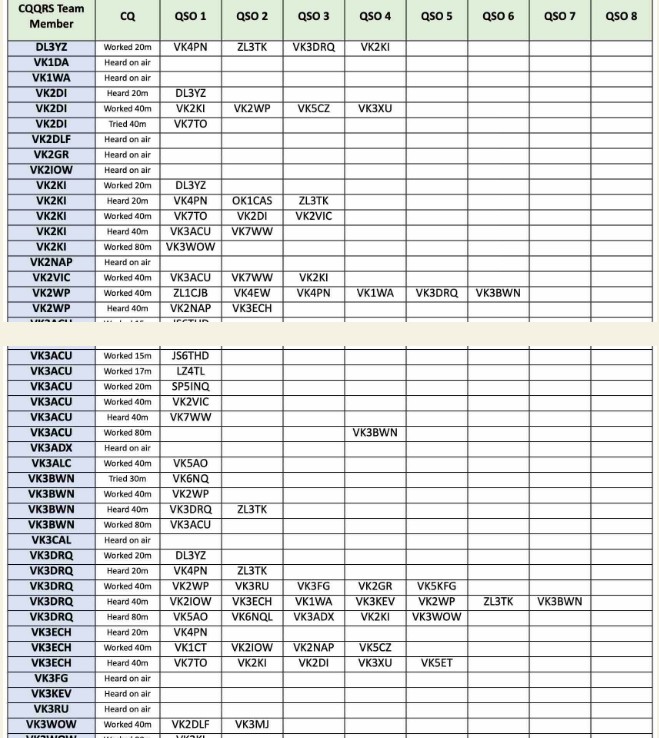
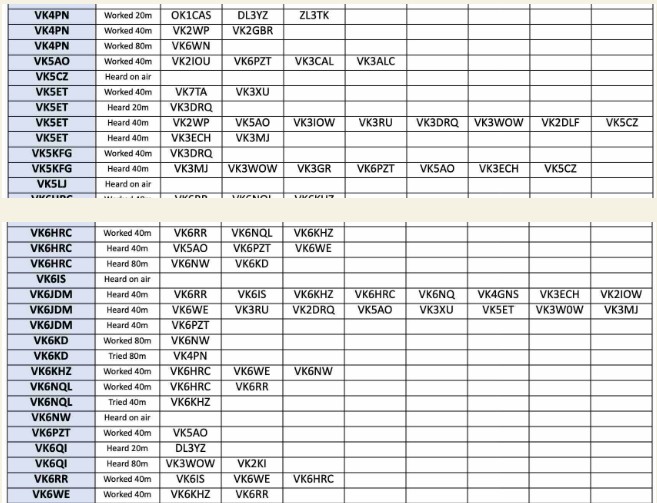
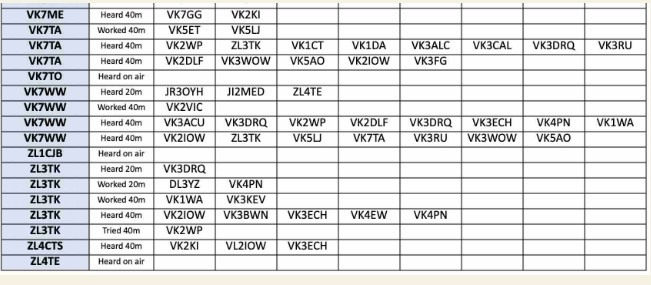
The spreadsheets above show the known stations on last Tuesday’s Group; the comments in the team members’ reports (Submitted via our webform bit.lv/CQQRSNET ) follow:
This week’s comments from our webform reports have again been compiled formatted and illustrated for us by Patrick VK2IOW; thanks once again Patrick.
Condx today were a little weaker than average. A look at the NOAA dashboard didn’t predict anything good. But it turned out better than feared, and I was able to work 4 stations. I think I have heard another one, but just couldn’t copy the call.
Sorry for that. Thanks to all the stations that joined in the fun today. May the spirit of the German carnival spread to the other side of the world and sip on a cold drink with me 🙂 Have a great week! Narri-Narro and 73 from foolish Germany.
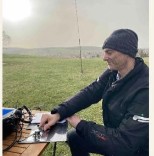
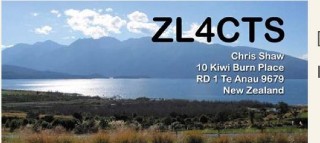
[80m] I heard Jordan calling CQ at 3555, and I replied at 12 WPM just because of his impeccable keying and strong signal. Wow, that was great fun. Moreover, I did not screw up the paddle during QSO. So, that was great all in all.
Pardon me, any station can call QRS at any time, and I will slow down to match the speed (any night, not just Tuesday). See you guys again next week, if not sooner.
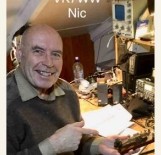
[40m] Another fun QRS Tuesday night, great to make a contact with Tony on 40m. The conditions on 80m and 160M were very difficult; no luck on 160M, but I did get a QSO with Ketut on 80m.
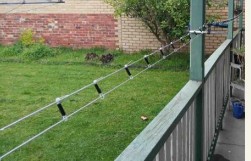
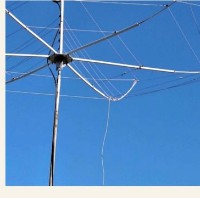
[20m] My 20m Rx signals were non-existent Tue night. I think I found at least one reason other than the solar flare (see photo). To be repaired before next CW QRS night.
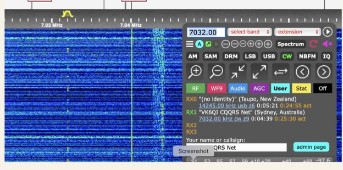
[40m] 40m was so quiet I thought I had an antenna issue. I started to log into some KIWI SDRs to check I was getting out and hear other stations. I then worked out I ee PAL tend We PEERY JRE ya Wetec ened! Mae La pee STEN I kd ba Pec rae
Ba tI = PN AI i EM ed AI TA BN ABS A NN AFI SN ANI Nt pel an PS had an internet speed issue which was resolved by rebooting my Starlink equipment. Lot of static crashes heard locally and on the remote SDRs. Probably summer storms causing havoc.
[80m] As the night drew on 80m started to open up but still lots of QSB and static crashes. Sorry Sava VK4PN, I didn’t get to exchange sig reports but gave it a good try.
From Richard VK6PZT at Dalyellup Beach WA
[40m] Big thanks to Mait for slowing down for me tonight. I only had time for a single QSO before being called to other duties.
40m] gain used my xtal locked valve transmitter. Almighty 4 atts and surprised at the number of contacts made. There Jas a lot of static more so in the later evening.
[20m] DL3YZ was very weak, I reported RSN 111. My report from Mike was RST 559, the only part of his much longer transmission that I was able to copy. Afterwards VK4PN Sava reported Mike weak also, RST 355, however confirmed my report was indee RST 559.
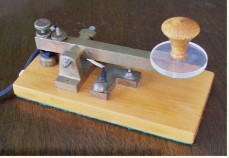
Lana) Extremely frustrating 40 m this week. Had to QSY up 1 kHz to 7.0267 MHz for STC traffic sked because, same as last week, digital voice stations were blotting out entire 2.4 kHz below 7.0261 MHz.
With filters, CW can be copied through SSB, but it’s impossible through the dense, continuous hash from DV. Then came lots of tropical QRN which rendered traffic QNP, so ended up rescheduling to Thursday or Saturday. I’m looking for help please.
My CQ sequence for STC traffic has been made very specific to discourage replies from stations without any traffic, yet still some ignore instructions and call anyway.
No matter how helpful they think they are, signal reports from stations without traffic are of no interest and waste the time of operators who do want to send traffic. It’s no wonder DXpedition operators get frustrated.
Here is my calling sequence for the STC traffic sked: QRL? QRL?
Please will somebody tell me how it can be improved to once-and-for-all eliminate waste-of-time calls from operators who are not QRS STC participants and have no traffic, in other words, how do I get to keep my remaining hair before it has all been torn out?
From Mark VK2DI at Green Point Reserve, Sydney Harbour NP
[40m] Located at AU-10598 Green Point Historical Reserve near Watsons Bay. Lots of banging and crashing on 40m. Higher bands were quieter but not a lot of activity – managed a JAon 15m. Heard Mike DL8YZ on 20m – he was about S3.
But by then the wind was gusting over 30 knots and I was worried my squid pole was going to get blown away! Time to pack up.
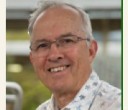
)m] ‘as working on the rig and just listened. Hear stations on 40 metres that I jotted down. iny more were out there but they identified at yments when the soldering iron was at work d the mind was focused on not letting too ich smoke out of components.
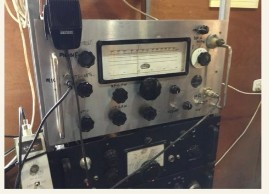
[40m] Didn’t get the opportunity to work any stations on Tuesday night but managed hear VK7GG (I think) and VK2KI around 7pm on 7036 kHz.
I was looking after m three-year-old granddaughter Heidi, wh« wanted to keep pressing buttons on the radio and was fascinated with the paddl I’ve managed to teach her letters H, E & She struggles with the letter D. Gotta te
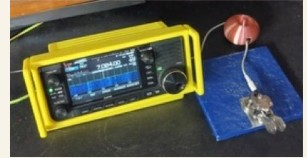
[40m] The band was quite weak this week and stations were difficult to hear or work.
[80m] The higher bands are working well, so far, this season, and there are some JAs that can be found using the CW mode.
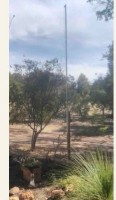
[40m] Lots of noise and QSB but managed to chat with Richard, Peter and Daniel; then had to QRT due to thunderstorm.
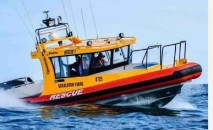
From your editor Mark VK2KI at Beautiful South Bowning NSW
[20m] I listened in to Sava VK4PN and Stan ZL38TK working Mike DLSYZ for this week’s 20m DXperiment. At the start Mike was very weak – Q1 with the occasional 2.
However as the afternoon moved on, Mike’s signal started building in strength and was Q3 with QSB when I called him. We had a nice exchange, and Mike was mostly Q4, and we exchanged the Narri-Narro greetings per the Southern German carnival tradition of telling each-other that we are fools!
I was keeping an eye out for Chris G7BED who was returning after fixing his damaged antennas; Chris was visible all over Europe on the Reverse Beacon Network, but not a sausage was heard here nor on the Snowline, VK5PH and VK6SEG KiwiSDRs this week.
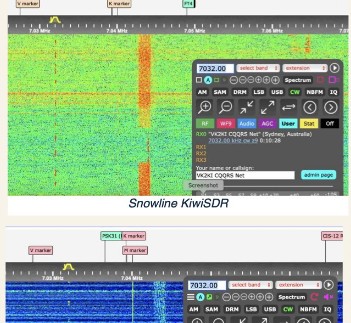
| started early on 40m this week; the predicted geomagnetic disturbances from the current Coronal Mass Ejection seemed to be in full swing further South of me; the VK1HF Snowline and VKSPH Ironstone Range KiwiSDRs showed huge levels of noise.
I heard Lance VK7TO calling and we scraped together a quick QSO; ance reported RSN 419 but he was 3SN 541; so not unexpectedly with wuroral-type QRN, the noise peared to be much worse in the igher latitudes.
Flark VK2DI called Lance, but ouldn’t make himself heard above he racket, so we had a quick QSO
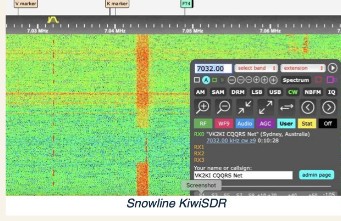
Hee B ahr nbieerabnoy i, After returning from this week’s 20m DXperiment, I was pleased to hear our latest ex- Navy light-signaller Tony VK2VIC from Wamboin having a go at this audio CW stuff.
Tony worked Jordan VK3ACU at Meredith, Nic VK7WW at Legana and then me. Well-done mate – good preparation for your up-coming Parks activation odyssey to Western Tasmania.
FAUST UNI, Phldau a Holoil arUUllU Ul 40m but the QRN was really bad, and I think most people had buried their heads in the blanket.
Interesting to loc at the KiwiSDRs at Dinner Plain (VK1HF), Ironstone Range (VK5PH) and Northam (VK6SEG); the static crashes from the line of thunderstorms off the East coast came in bursts of ha a dozen or so one after the other, and
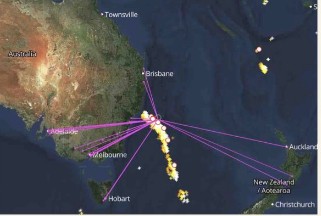
After many of the crashes, the noise on the waterfall displays continued for several seconds. It was almost as if the atmospheric discharge was causing the strongly disturbed ionosphere (from the geomagnetic storm) to ‘ring’ – for a period after each discharge.
Unfortunately I didn’t have the wherewithal to make screen shots of the three waterfall displays. Something to keep an eye on in future TS events during geomagnetic storms.
[80m] After enjoying watching the atmospherics on 40m, I had a listen down on 80m. The static crashes were up to S9, but I still saw a trace on the KiwiSDRs down on 3541KHZ. I was lucky to hook Peter VK3WOW at Blackburn before he tottled off to bed.
Our reports said it all; Peter reported RSN 477 and I reported RSN 489. Time for an early night.
[80m] Was most amused when Mark VK3MJ shared with me what I assume is some ancient CW folklore: “the faster they send, the less they have to say”. An intriguing application of the Law of Diminishing Returns!
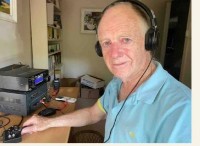
Ite again to join the party, got on air se to 17:30 and called a few CQs to e where I was picked up by the RBN t. Got almost instant report from two otters in central EU so conditions sre promising.
Scanned EU QRS gment nothing heard from that part of 2 world only ZL3TK calling DL3YZ but t ina QSO. I tuned a couple kHz
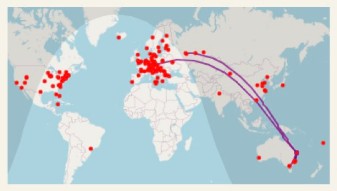
Lower and called a CQ in case EU friends were monitoring. OK1CS came back with a solid signal and we had a quick exchange. During the overs I thought I could hear another station on the frequency but almost zero beat.
After finishing with the OK station I adjusted RX RIT and could copy Mike, DL3YZ. Signal was strong, about S5, but the noise was the same. Noise never seemed to fade but Mike did, so we struggled through a QSO.
Stan ZL3TK got onto Mike as soon as I finished but signal at his place was even fainter except for his noise level which he later told me was $1. All up I had only about 30 minutes on 20m before moving to 40m.
[40m] My evening on 40 m started at 18:00 hrs for a short check-in to ZLCW net. Proceedings were over within 15 minutes so I scanned the QRS segment and heard VK2WP calling CQ. My QRP rig was not ready (I use QRO for ZLCW net) so I called Wal using QRO.
He came back and gave me a fairly meagre RST, I gave him a solid 589 by the S meter. On the return over Wal informed me he was running crystal locked QRP of 4W only. So there you go with propagation oddities again!
After finishing QSO with Wal I got my QRP up and running, checked the CW offset against my main rig and tried unsuccessfully for the rest of the evening for another QSO; no luck this time. NIL!
Called a number of stations but missed every time to the QRO competition. No one came to my CQs either. [80] After a frustrating QRP experience I moved to 80m quite late to be greeted with a wall of noise.
Boy was it bad; must be something to do with the coronal magnetic disturbance a day before, never heard that type of noise almost white with occasiona periodic fades.
Ironside SDR waterfall was almost yellow with red sticks throughout indicating shocking noise there as well. Regardless I called CQ and could see my carrier at Ironside pretty decent red most of the time.
For a while nothing was happening, then a trace appeared and I tuned in to copy with a great difficulty VK6WN in a QSO. Did not get the other call sign.
We hooked up after he finished his QSO and honestly I could copy him only during the quieter periods when white noise faded a bit. Wayne’s signal was S7 but the noise was S9+ most of the time.
Quite a bit of time spent on air for just few QSOs but still an enjoyable frustration
[40m] Enjoyed the QRS net, no interruptions this week ! The variable conditions, QAN and QSB made for difficult copy at times.
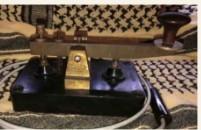
| had two enjoyable ragchew QSOs; with Rob, VK3ECH and Mait, VKSAO. Conditions were good, though a little noisy. Used a mix of straight key, paddle and Vibroplex Original bug.
POST MORSUM 12th November
From Richard VK6HRC. Six on the VK6RLM repeater and AllStar/ Echolink combination this morning.
Nader Pol Srrth a th Me NAN Neel ol VK6QI_ Mark VK6KD_ David VK6FN Max VK6NW Wayne VK6HRC
NO I/D EI LIED Got off to a fairly quiet start, eventually got going with a regular burst of noise from the DMR link (“blocked”) which almost sounded like an expletive!
Mark worked Mike DL3YZ on 20m heard three and then on to 40m to work three heard two and on 80m worked Peter VK3WOW. Mark also commented on the QRN from the solar storm and electrical storm off the East coast making life difficult at times.
David worked Wayne VK6NW on 80m tried working Sava VK4PN but no contact unfortunately, internet problems also hampered checking the KiwSDR nodes for awhile. Max was kept busy with a big clean up during the day and with energy levels low was in SWL mode.
Hoping all clear for next week. Wayne checked in after a night shift stint and let us know that he heard Mike DL3YZ on the Ironstone Ridge SDR, worked VKENT, VK6KD and VK4PN on 80m.
With no interruptions this week I had a good session, worked three on 40m listened to the 20m activity on the Northam KiwSDR and tuned around catching some fairly lengthy ragchews going on. Thanks to all on the net last night and this morning.
73 Richard VK6HRC
This Week’s Topic of Interest
Encouragement Award Why the Consternation? by Mark VK2KI / VK6QI and Jens VK4PE
| have collected many Morse keys over the years. I like to send one to a member starting CW. Please let me know if you know a good candidate.
Now there’s a dilemma. + I’m well aware of W. Edwards Deming’s teachings about the risks of giving awards, and notwithstanding + with so many candidates out there among our CQQRS community, who to choose?
Anyway after much searching of the sole, I decided to nominate James VK7JZ whc + had relatively recently started on the CW journey; + had been on just about every week, at home or portable, come rain-hail or shine; * takes the Jordan VK3ACU award for rapidly going from zero to absolutely addicted to CW; * seemed to have exactly the right attitude to CW and reflecting the team’s commitment to encouraging others; and * did not already use a straight key.
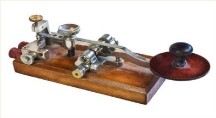
Originally planned to send an Ameco K7, but decided to give James a better key, an Ameco K4 with ball bearings. In WW2 when Morse code was used extensively, the 37 key was the workhorse and in Australia the Clipsal key or the British WT 8AMP key.
This is the reason I selected the K4 Ameco key for you. It is a time proven good design based on the j37 style. In my opinion it is more important to get the message through the first time. This is how I learned it as a ship radio operator.
This is also the reason I like the Slow CW group a lot, because it makes sense. The speed CW operation is popular with amateur operators but professional operators prefer slow good code. Ameco was an enterprise supporting radio amateurs.
They had Morse keys, training books and radio gear. The Ameco ACI transmitter kit is well known. They aimed their strategy mostly to new radio amateurs with affordable good product’s but also to more experienced radio operators.
Anyway coming back to the Morse keys. The Ameco K7 key is a Japanese made very simple key. I got this key as a first key in the 1970TH in a local electronic shop. Very often a dealer would through in a K7 key as a bonus for a new transmitter.
This keys are very common. The Ameco K4 was the luxury more expensive Morse key. In my opinion this all metal key has a nice feel, ball bearings, it was a big upgrade against the basic K1. The K1 has simple metal contacts and the K4 has silver plated contacts.
The KG is still affordable (if you can find them) and it was my favourite key for many years. I have tried much more expensive keys but there was no big difference or improvement. It is a keeper.
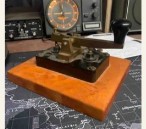
Thank you Jens. I have attached two photos, one with a smile as 1am very pleased, and one with some consternation as / am not so pleased with the quality of my straight-key CW.
Other than some dit-dits to make sure I had the IC-7300 keyer set to straight key and my connections were good, I otherwise did not key the thing till was recording and I keyed my call sign.
A fairer assessment was I keyed something a little bit like my call sign, perhaps we will say on a good day with some imagination it could be my call sign. OK lets be honest it was terrible.
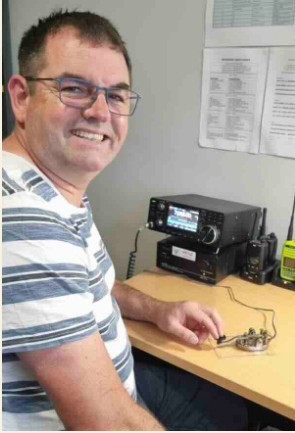
I sent the video to Jens and received instant feedback. 1am saving my first QSO with it to be with Jens, everyone else can listen to me on the paddlt…..
That straight key is going to take some getting used to; entirely different brain required to the paddle brain. So lam super-keen to get my first QSO underway and I think it would be rather special if it was with Jens and I was doing it with his key.
Part of the engineer in me I guess, I stripped the key down to its individual components, gave it a good clean, then rebuilt it. Mostly so I know how all the parts go back together. I have aligned the contacts perfectly but the gap is not right.
On first go it feels like there is no gap at all, worked fine to key but the was no ‘click click’ to tell me I was operating, only the ‘dit dit! from the radio.
Then I opened the contact gap up a little and now have a definite ‘thunk thunk’ sound, clearly too much. Jens sent me some YouTube links to old US army training videos which I have been watching this morning, these are really helpful and the first lesson was about set up of the key.
I need to close that gap to be 4 sheets of paper, no more, no less, ! am guessing about the same as 1 business card. The explanation on gaps in dit and dahs, and how to hold the key was also helpful.
[See Readable Five below] I think with some dedicated practice and tutoring from Jens and Stan I will eventually become competent.
For an oscillator — I simply used my ICOM IC-708 and turned break in OFF and volume up so that it would make some dits and dahs for me but was not transmitting.
J have got all clever now and set up the IC-705 on my desk with the straight key connected (on the right), and over on the left I have the IC-7300 with a paddle connected. My head copy is not so great but I look the part. @
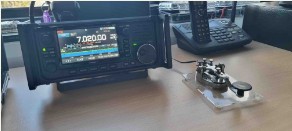
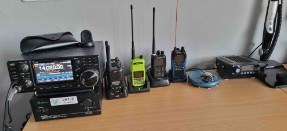
Curiously I posted a photo of the straight key in my local radio club chat server yesterday afternoon with the remark that it was key no.3 for me with no.4 on the way from BaMakKey…
And the collectors question ‘Do I have a problem Huston?’ Nobody suggested I had a problem so collecting keys must be OK?? Thanks to Jens and the CQQRS group, I am having a lot of fun.
[Terrific – thank you Jens for the initiative, and James for being a good sport. James’ constination photo was our Masthead image this week.]
If you have an article or two that you think might be of interest to our readers, please let me know so we can share more thoughts and ideas; for guidance on writing for RagChew, see Articles below. Please email material to Mark VK2KI: cqqrsnet@gmail.com

On My Workbench
Electronic Audio CW Filters
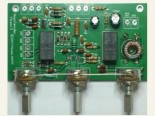
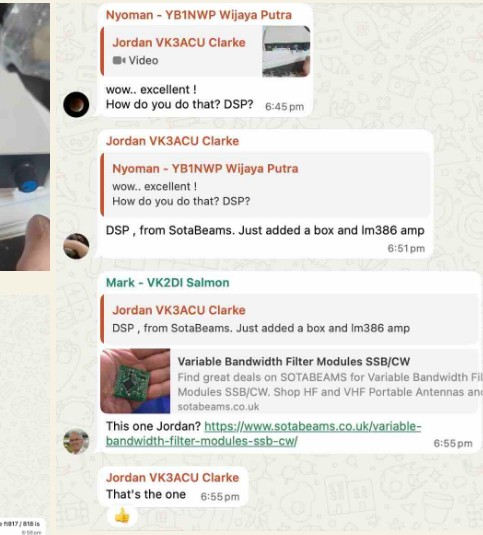
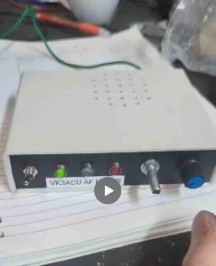
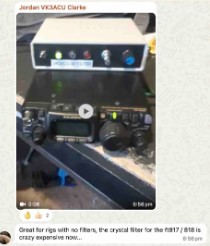
No CW Filter? We’ve seen a number of passive CW filter options in recent months from Phil VK6GX, Adrian VK2WP, Jordan VK3ACU and Nic VK7WW. Want to try an electronic version that you can (sorry) use with headphones?
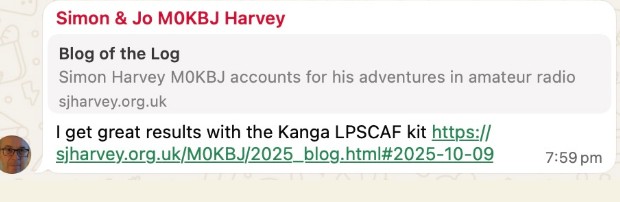
Perhaps try an audio CW filter, as Jordan VKSACU and Simon MOKBJ have? You may not get the big improvement in Signal-to-Noise ratio of an IF filter, but it might be all you need… and unlike some IF filters, no ringing!
And these days, IF filters for older receivers are made of unobtanium, so this might be the go.
What’s going on on your workbench? If you have an article or two that you think might be of interest to our readers, please let Mark VK2KI know; email to cqqrsnet@gmail.com For guidance on writing for RagChew, see Articles below.
QRZ?
Ok – not quite…. but here’s some insight into life in Southern Germany for our team member (and herder of the EU / UK DXperiment cats) Mike DL3YZ.
You may have seen Mike’s ‘I’m a Fool, You’re a Fool’ Fasnet (carnival) season segment and my foolish responses in this week’s reminder email.
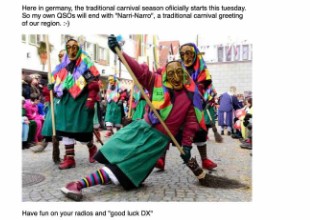
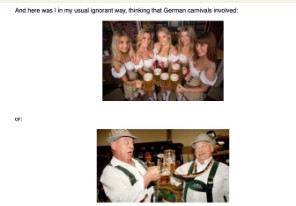
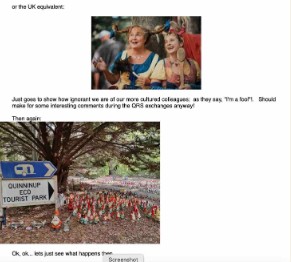
Mike has continued the cultural education segment: Hi Mark, Great to see you have gathered some
Information of silly alcoholic habits of lost foreign cultures. There are some subtle ritual nuances you may also find of interest. These lovely german maidens and the lads with the chamois bearded hats are typical Oktoberfest ( trade fair ) people.
So thats drinking for thanksgiving in the ancient traditional everyday Bavarian clothes of the common people. It’s not exactly a proper costume.
[Apparently that means no lederhosen for Mike then!) Carnival is drinking in scary costumes and committing adultery is for the Catholic part of the Germans. So some of the costumes and wooden masks are hundreds of years old.
Its based on a pre-Christian tradition to scare away the bad ghosts of the old year. The Catholic folks can proudly confess their sins on ” Aschermittwoch ” (ash Wednesday ) afterwards, whereas the evangelical are supposed to carry the sins with them, having a bad conscience till next year.
Thats the cause why Carnival is not really popular in evangelical villages, but are a real big issue on the Catholic ones; they shut down the whole village for days! We still have these differences since the confession wars of 1648.
Now the garden dwarfs stand for everyday drinking around the year, in our own little gardens, while weeding. A dwarf belongs to every proper German garden, as a good luck charm to summon Freya – the Nordic goddess of love, fertility, spring and good luck.
Its legal now to grow three hemp plants for home use these days! Unfortunately I am evangelical, have an inherited alcohol intolerance and even no time to “weed” the garden in any way. So I have to stand on the side, watching the scenes jealously…
And drive the consiousless protagonists back home late in the night; BTW: its really wise to use their own cars for it – Hl) ‘And Mark, re your 20m response “NEIN BIST DU NICHT” to my “NARRI-NARRO” sign-off on Tuesday, there is no need to cancel any admission of my foolishness – I am a proud fool 🙂 Its good to remember that we are a fool and a king, sometimes all at the same time.
And, being on the philosophical trail, I also like this one: “Sometimes we are the pigeon and sometimes the monument.” Thats a quote of a German philosophical comedian. I like when we have to think a little til we get the point.
Don’t know if it translates to something useful in English. Monument here is for example a statue of Goethe. [up – translates perfectly Mike]
| find it really funny to see that different languages come with different ways of thinking. And how imprecise language is, especially in translations. So please take my writings not too serious, I like joking around. Cheers and 73 Mike.
rFee-aye
• uye From your editor Mark VK2KI Nice to catch up with Warren VK3BYD another of our CW team, when we were holidaying in the King Valley Victoria a week or so ago.
Warren lives at Wangaratta and Elizabeth and I were lucky to be able to meet him for afternoon tea at the neat little village of Moyhu as he passed through. Warren is a keen bush walker and enjoys combining that with amateur
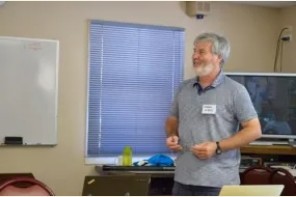
Radio; he is one of Australia’s top SOTA / PARKS CW activators (he’s forth in the SOTA CW ranking…. surrounded by our team mates Andrew VK1DA and lan VK5CZ).
When quizzed about pronunciation of some of the local area names, he confirmed that our guesses were wrong; the locals call Edi Cutting where we were camping “Ee-dye”, and indeed, near-by Greta isn’t pronounced like the girl’s name – it’s “Greet-a”.
Where I live there’s a whole raft of local pronunciations as well – when I started out as a presenter on the local community radio station I enjoyed the phone calls when I’d mis-pronounce one of the many.
Thanks for making to time to share afternoon tea with us Warren. So it was really nice to catch up with two of our team members (David VK3DBD at Yackandandah was met a couple of weeks before) on our caravan journey through Southern NSW, the Upper Murray, down the beautiful Keiwa Valley, up the Omeo Highway, down the Great Alpine Road and into the lovely King Valley.
Where to next, and who to meet I wonder?
QRZ? Who’s on the other end?
Head Copy Practice
Anyone who is just starting out with head copy should look at edition 23 ~ 2025 where we first started with Winnie the Pooh recorded at 12 wpm.
In edition 23, and for a few following Newsletters, there are instructions on how to use these files, and edition 25 – 2025 has information on the Ditto CW : Morse Player app. This week we have Wind in the Willows Chapter 8 — Toads Adventures.
Itis suggested that you read the text file before listening to the audio file. That will make it easier to follow the audio file and prepare you for any unusual words. The MP3 files have been recorded at 16 wpm and 650 Hz tone.
If you prefer a slower speed or different tone, you can create your own MP3 files by converting the text file with the Ebook2CW app ~ https://fkurz.net/ham/ebook2ew. html. Because of MailChimp’s size limits, I’ve split Chapter 8 into 4 parts.
Each part is over 1 hour playing time @ 16 wpm. Uncommon punctuation has been removed (the Ditto CW app doesn’t recognise some of it), and contractions have been simplified (for example, we’ll becomes we will).
This week’s attachments are: * Chapter 8 split into four MP3 files ne

You can either play the MP3 files in any media player, or load the text file into the Ditto CW: Morse Player app — https://dittocw.andro.io/. Both options work well, however Ditto CW gives you complete control over all Morse settings, while a normal media player only allows changes to playback speed, and does that in steps (e.g. +1.25x, 1.5x, 1.75x).
Other News
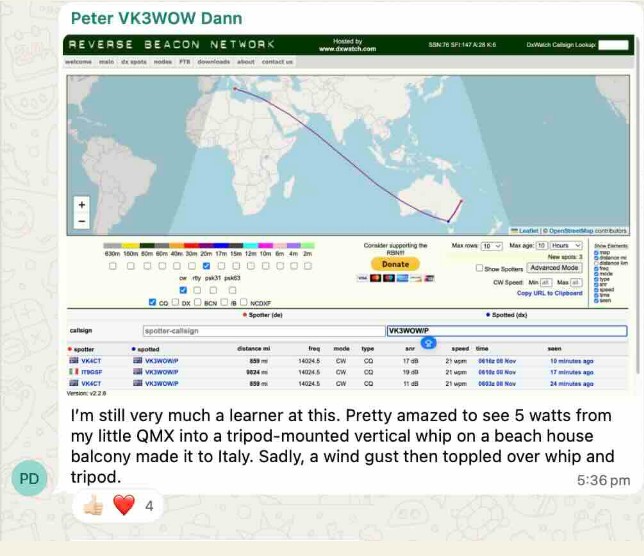
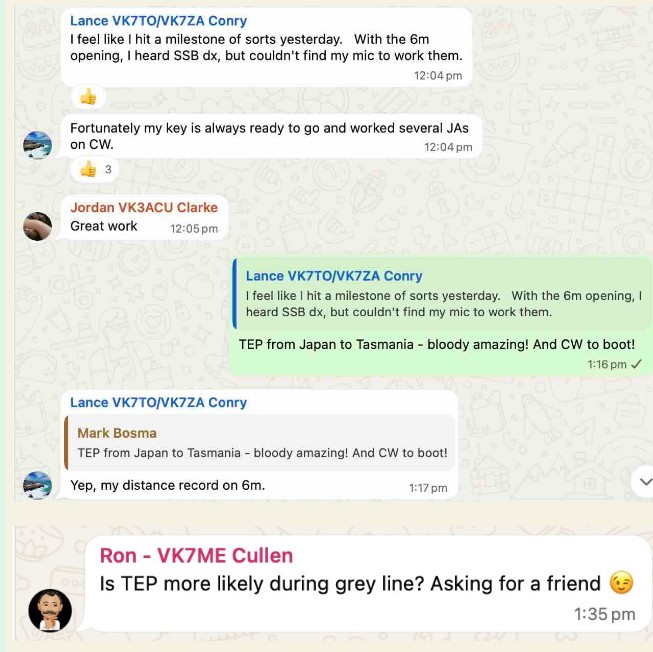
Trans Equatorial Propagation (TEP) is an unusual radio propagation mode that allow long-distance communication across the Earth’s equator, often on frequencies higher than expected.
It is characterised by two main types: an afternoon mode thal uses reflections from the equatorial anomaly crests for stronger, lower-distortion signals, and an evening mode that relies on spread F irregularities for scattering, resulting in higher frequency capabilities but with more fading and distortion.
TEP is most effective on paths that run roughly north-south and is influenced by solar activity. Afternoon Trans Equatorial Propagation (aTEP) Occurs: Late afternoon and early evening.
Mechanism: A “super F” mode where signals are reflected from the high-density ionization at the equatorial anomaly crests in one hemisphere to the crests in the other, before being returned to Earth. Characteristics: Distance: Typically up to 6,000 km.
Frequency: Low VHF band (under 60 MH2). Signal Quality: High signal strength but can experience moderate distortion due to multipath effects. Modulation: Single Sideband (SSB) is often usable.
Evening Trans Equatorial Propagation (eTEP) Occurs: Around 19:00 to 23:00 local time. Mechanism: Signal scattering from irregularities in the nighttime equatorial ionosphere, related to spread F. Characteristics: Distance: Longer distances are possible.
Frequency: Capable of reaching higher frequencies, including 144 MHz and even 43 MHz in some cases. Signal Quality: Moderately high signal strength but subject to intense, rapid fading, giving a “flutter” sound.
Modulation: Narrow-band modes like Morse code (CW) are the only practical option due to the distortion. General Factors + Path alignment: TEP is most effective on paths that are aligned close to north or south along the magnetic equator.
* Solar activity: The occurrence and intensity of TEP are positively correlated with solar activity, meaning it is more common during periods of high solar activity. 5 Oe a
Morse Training Net
Our team member Nic VK7WW runs an on-air Slow Morse training net every Wednesday at 7pm EDST on 3580 for 30 mins. He uses the callsign of the Northern Tasmania Amateur Radio Club VK7TAZ on that net.
Many of our team learned Morse code with the support of Nic, and the weekly training session comes highly recommended for anyone who wants to learn the Code, or simply brush up.
Everyone’s welcome – 3580KHZ at 7pm Eastern time every Wednesday; you’ll hear lots of the CQQRS team on that net. Jordan VK3ACU has recorded the complete set of lessons which you can now find here:
Https://www. youtube.com/playlist?list=PLHsQmZz6fBXO7swAfbT mutrbbEL17fUQL Contact Nic VK7WW for more info nicholaschantler@hotmail.com including how to join the NTARC DISCORD group to follow the action, or just come along and join in on Wednesdays.
It’s Never the Right Time to Issue a Call Sign Directory.
Hho INCVE! LIDS Pint Pe tU lsoUe a wd OI! MICULUIYy.
From Stan ZL3TK No sooner had the 140CT25 directory been released than a bunch of new QRS members were announced in RagChew. That’s a good thing of course! Those and others have been added to this latest release dated O7NOV25.
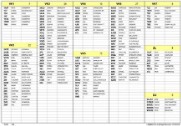
Download A4 PDF from: https://qsl.net/zl3tk/qrsffa_callsign-directory- O7nov25.pdf
What better opportunity could there be to apply the principles of ‘Morse with a Purpose’? Alert ZL3TK to any errors, modifications or additions by CW. Use the sked frequency 7.0257 MHz after STC traffic which starts at 0830Z during FFA on Tuesdays.
If anyone knows VK5WB’s name, starting with L, please let me know. 73 de Stan ZL3TK
Settle to Carlisle Railway, Week 9 Report
Vettie to Varilsie Raliway, VeeK vy Heport
From Stan ZL3TK As suggested in earlier editions of QRS RagChew, it wise to check the veracity of Al- generated information. From last week’s STC we have two examples of why this should be taken as a serious precaution.
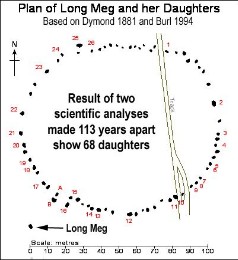
Firstly, last week’s NRO7 Q3/5 asks for the number of Long Meg’s daughters. Al tells us between 66 and 69, though there could be more. Al draws on numerous sources all sufficiently vague to avoid Al having to take responsibility for anything it prints .
How about we take a more objective approach?
Google map’s satellite view is rendered ambiguous due to deep shadows cast by trees, however a chart derived from two on- the-ground archaeological counts provide the real answer. Armed with this plan, you too can count them!
The twenty-six rocks with a red number allegedly have the best preserved carvings. I suggest, because of it’s later validation by British archaeologist Aubrey Burl, it can be considered the benchmark.
Secondly, last week’s NRO7 Q5/5 asks the purpose of the smaller building on the opposite side of the tracks to Langwathby’s main station building. A simple two-word answer is all that was required.
Should one choose to enlarge upon the basic fact requested, one can end up losing points for believing what super-clever Al claims to be the case, often with different wording at different times. Which is what happened for one participant.
Visual evidence using Google maps shows the smaller building clearly on the eastern side of the tracks, beside the southbound line to Settle, it is not beside the northbound line to Carlisle. Proof that it’s definitely worth checking Al’s credibility.
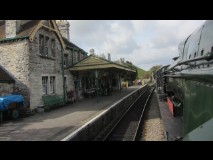
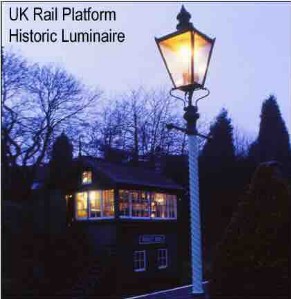
This week we stop at Lazonby station which also serves Kirkoswald village. Within easy reach, two public houses are available in which to quench one’s thirst and we examine the structure of the still-common 19TH century railway station luminaires, still being used to light the way for night-time travellers.
Albeit rather late in the day, those with more than average curiosity who want to join in STC, can still go to https://bit.ly/cwstc to get the full treatment. 73 es 77 deStan ZL3TK
2025 Enigma Reloaded
From Chris G7BED The 2025 Enigma Reloaded event at the RSGB National Radio Centre Bletchley Park was a great success! The amateur radio team from the Italian Naval College transmitted an Enigma- encrypted Morse code message to participating museums around the world, and the proficient CW operators at The National Radio Centre (NRC) at Bletchley Park successfully copied the encrypted morse transmission and made acknowledgement back to the Italian control station.
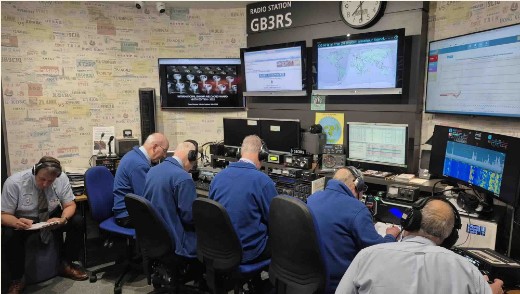
Chris on the left (the one with hair) keeping the men in blue honest. The transmission was made in real time on the 40m band.
The encrypted message was passed across to the NRC Theatre Zone where visitors learnt about why encrypted radio transmissions were important during the war years.
The Bletchley Park Learning Team then demonstrated real-time decryption using a genuine WWII Enigma machine.
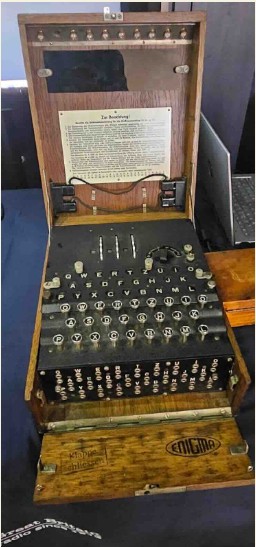
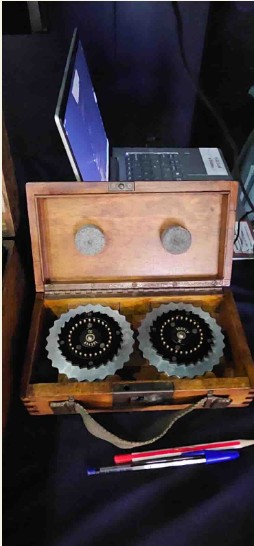
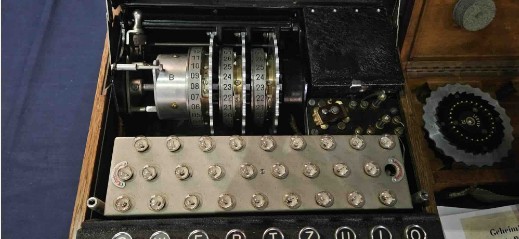
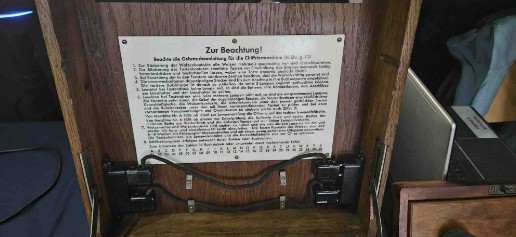
A brilliant experience for all the visitors – and I got my hands on a genuine working Enigma machine too. Best Regards, Chris G7BED
SKCC Oceania QRS Saunter
From Garry VK2GAZ The SKCC Oceania QRS Saunter will take place this Saturday, 15TH November, 2025 from 00:0 UTC until 11:59 UTC a 12 hour event. All are welcome to join in!!
All the details for the Oceania QRS Saunter (OQS) can be viewed on the SKCC website at: https:/Awww.skccgroup.com/operating_activities/oqs/ Please make use of the SKCC Sked Page and the CW Club RBN Spotter.
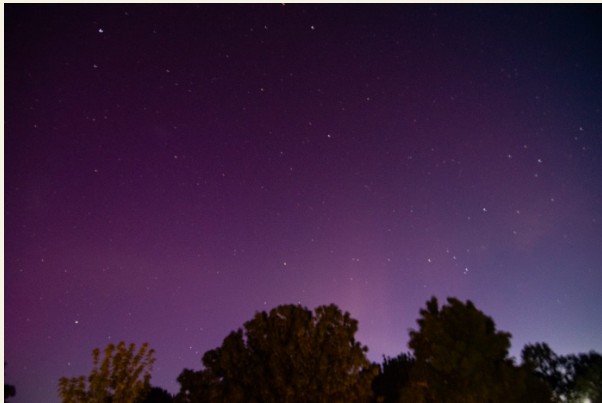
Ooking South from the Meredith home of Jordan VK3ACU during the geomagnetic Stor
If you’ve read something that you think might be of interest to our readers, please let me know. For guidance on writing for RagChew, see Articles below. Please email material to Mark VK2KI: cqqrsnet@gmail.com
Readable Five
Handling a Straight Key
There are a bunch of variations on how to hold and operate a straight key. With a couple of variations, this is a good place to start:
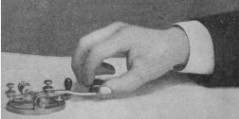
Recommended variations to K3WWP’s article: – three dits per dah – five dits between words – five paper-thickness gap seems way too high – American method has elbow on table, European method has elbow raised – try both.
Used to be that when people did their advanced license test, the testing officer (in those days, a post office telegraphist) would often show candidates how to handle the key if it looked like they were willing to learn.And here’s some more YouTube and published information on handling straight keys from Jens VK4PE:
| like the Navy clip the most. https://m.youtube.com/watch?v=Y QyP7VJqvgE https://m.youtube.com/watch?v=Li8Hiwbc664 https://m.youtube.com/watch?v=fNLIaE5616Q
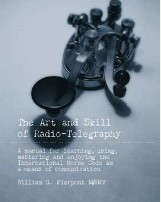
And here is an oldy but goldy. It came first out as a public donation on floppy disks from NOHHF. I got one ata hamfest from a friend in the 1990S.
It is not so bad for a free ebook: https:/Avww.n9bor.us/index.php/mors e-code/the-art-skill-of-radio- telegraphy 73 Jens
If you’ve read something that you think might be of interest to our readers, please let me know so John and I can share more thoughts and ideas. For guidance on writing for RagChew, see Articles below. Please email material to Mark VK2KI: cqqrsnet@gmail.com
Prosign/Character/Signal of the Month
[Suggestion – put it on a sticky note near your key as a reminder for Tuesday.!’ve found this to be very useful on our net – much quicker than QRX – especially in response to someone coming up with “QRL?” on the frequency you’re using.]
Di-dah-di-dah-dit
So back to the CQQRS Slow CW QSO practice net.
Next Tuesday’s Net
Our CQQRS Group will be on as always on Tuesday from around 0600Z until about 12002; see https://bit.ly/CQQRSWebsite and navigate to the Net Details page for details.
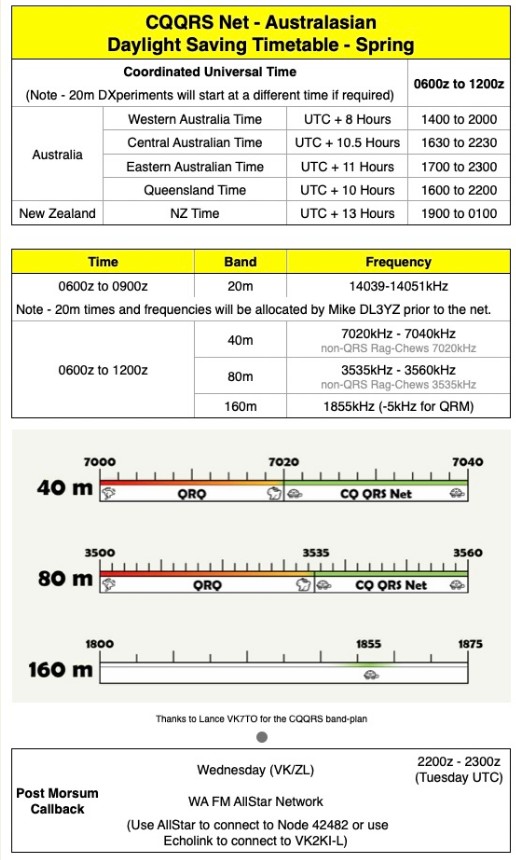
Doesn’t matter whether you’re brand new and want to try just exchanging callsigns and RST reports, or you’re ready for a good old rag chew. We’ll have fun.
There’s usually people around until after 1200Z – so keep calling in the segment of the band designated in the table below until you catch someone.
I should be on as usual from home in NSW or via the Remote at Bedfordale WA, and I’ll also be watching the proceedings using the VK6QS and Tecsun SDRs in WA and NSW respectively. Hope to hear you there.
Reports & Photos
Please let us know via our Reports form bit.ly/CQQRSNET who you work or hear on Tuesday’s Group. The report form closes at lunchtime (Eastern Australian time) on Thursday. ‘And how about helping to make the reports even more interesting by sending a photo?
If you have a photo that you’d be happy to include, please email it to: cgarsnet@gmail.com To make it even easier for our Reports editor Patrick VK2IOW, see if you can reduce the size of the image (to less than 100KB file size by preference).
No problems if your computer or phone can’t do that – just send it through anyway please. And of course, I’m always on the lookout for more photos for the newsletter, so if you have something that might be of interest aside from the reports, please send it through as well – I always enjoy the photos that our readers send – and I’m sure our readers do too.
Email them to cqqsnet@gmail.com please (reduced size if possible – but whatever you send will be great). Oh and by the way, I recommend that you don’t keep the Reports Form website open between submission of reports from one week to the next.
If you’re unlucky, there’s an undocumented feature in the software that could cause your current week’s report to be combined with your previous report – it’s happened to your editor several times – much to the chagrin of our Reports editor 🙂
Post Morsum
Richard VK6HRC will run our phone Post Morsum on the South West AllStar net (via repeaters and hotspots all over WA) from 0600 WA time, then from 0700 WA time on 80m (8605 LSB).
See https://bit.ly/CQQRSWebsite and navigate to the Net Details page for details of how you can connect via Echolink or even possibly via your local FM repeater.
Articles
The newsletter is interesting to readers because of the material contributed by so many people – be it the reports each week or the various articles. Could you write a short article or articles for RagChew? You bet! Writing not your strong point?
Don’t worry, I’m very happy to help as much or as little as needed. Here’s a thought – although our readers will much prefer your own writing, perhaps have a go at using a Large Language Model Artificial Intelligence tool such as ChatGPT, Microsoft Copilot or Google Gemini to check your writing or even to actually draft the whole article in a relaxed easy-to-read manner!
You can find out more about how to do that on the Newsletter page on our website bit.ly/CQQRSWebsite. Our website also includes a suitable prompt (the command you feed to the Al to make it do what you want).
Please remember though – you must fact-check anything that an Al tool drafts for you because Als ‘hallucinate’ – ie if an Al can’t find what you’re looking for, it will make up an answer and present it as a fact!
This is one of the dangers of using Als ~ it’s quite probable that the tool will create a very readable and convincing draft that is 100% wrong! You as the submitter are responsible for fact-checking.
But it’s a learning experience – please let us know how you went if you had a go with this new generation of tool. And by the way – lam very concerned about our future in a world of Al – but I’m pleased to see that school and university curriculums now focus on understanding the risks – for instance, kids are now learning critical thinking something that used to be taught mostly at post-graduate level.
When the typewriter was invented, people predicted the downfall of handwriting; when the word processor was invented, the art of writing was thought to be on the way out – ditto for the spreadsheet and arithmetic, AM, SSB and FT-8 for amateur radio etc.
We can ignore Al and hope that it just goes away… or we can learn to handle it through experimentation and use. For more guidance on writing for the RagChew newsletter (including help with using an Al), head to our website bit.ly/CQQRSWebsite then click the menu on the top right and then click RagChew Newsletter.
A reminder; if you send me any information by email, our report form or WhatsApp unless you specifically state that material is not to be published, I’ll assume that you’re happy to see your thoughts in the RagChew newsletter.
Thank you so much to our team of 39 contributors: DL3YZ, G7BED, K3WWP, MOKBJ, NOHHE, VK2DI, VK2GAZ, VK2IOW, VK2RU, VK2VIC, VK2WP, VK3ACU, VK3ALC, VK3BWN, VK3BYD, VK3DRQ, VK3ECH, VK3WOW, VK4PE, VK4PN, VKSAO, VKSET, VKSKFG, VK6HRC, VK6JDM, VK6KD, VK6KHZ, VK6NQL, VK6PZT, VK6RR, VK6WE, VK7JZ, VK7ME, VK7TA, VK7TO, VK7WW, ZL8TK, ZL8TK, ZL4CTS.
And a special thank you to our editorial team of Nigel G4RWI (mobile software wrangler), Patrick VK2IOW (curator of the reported words), John VK2RU (audio recordings manager), Richard VK6HRC (chief cat-herder) and Lance VK7TO (one hand in pocket classic transceiver trouble-shooter).
Great work alll UY CW on Tuesday, mb Mark Bosna VK2KI/ VKEQI Beautiful South Bowning NSW ‘eqarsnet@gmail.com non impedit ratione cogitationis

About the CQ QRS Net
For the current schedule and more information about the CQQRS net, please go the the Net Details page on our website:

The opinions expressed in the RagChew newsletter are those of the individual contributors. The opinions do not necessarily reflect that of the editor or of the CQ QRS Group members.
Any material and images received from members by the editor or published on the CQQRS WhatsApp groups may be published in this newsletter unless specifically requested otherwise.
The values, doctrine and guidelines for the Group and for the newsletter are published on the Principles page of the group’s website https://bit.ly/CQQRSWebsite