Below is a reconstruction of the 2025 45 CQ QRS RagChew newsletter designed to support full text searching. This reconstruction was built using OCR, and will contain errors.
To view the Mailchimp original, click here. To search the entire newsletter archive, click here.
Contents
- CQ QRS RagChew
- Masthead Image
- New Team Members
- Reports
- Website
- POST MORSUM 5th November
- This Week’s Topic of Interest
- On My Workbench
- Houston, We May Have a Problem
- QRZ? Who’s on the other end?
- Head Copy Practice
- Compiled on the track somewhere by John VK2RL
- Anyone who is just starting out with head copy should look at edition 23 – 2025 where we first started with Winnie the Pooh recorded at 12 wpm. In edition 23, and for a few following Newsletters, there are instructions on how to use these files, and edition 25 – 2025 has information on the Ditto CW : Morse Player app. This week we have Wind in the Willows Chapter 7 – The Piper at the Gates of Dawn. It is suggested that you read the text file before listening to the audio file. That will make it easier to follow the audio file and prepare you for any unusual words. The MP3 files have been recorded at 16 wpm and 650 Hz tone. If you prefer a slower speed or different tone, you can create your own MP3 files by converting the text file with the Ebook2CW app — https://fkurz.net/ham/ebook2cw.html. Because of MailChimp’s size limits, I’ve split Chapter 7 into 3 parts. Each part is over 1 hour playing time @ 16 wpm. Uncommon punctuation has been removed (the Ditto CW app doesn’t recognise some of it), and contractions have been simplified (for example, we’ll becomes we will). This week’s attachments are: * Chapter 7 split into three MP3 files * Chapter 7 in one text file
- You can either play the MP3 files in any media player, or load the text file into the Ditto CW: Morse Player app — https://dittocw.andro.io/. Both options work well, however Ditto CW gives you complete control over all Morse settings, while a normal media player only allows changes to playback speed, and does that in steps (e.g. +1.25x, 1.5x, 1.75x).
- Other News
- The Process
- Southern Electronics Group Get-Together
- Family Travels
- Geomagnetic Activity 1
- Geomagnetic Activity 2
- Morse Training Net
- The Fullerphone
- Prosign/Character/Signal of the Month
- Di-dah-di-dah-dit
- Next Tuesday’s Net
- Reports & Photos
- Post Morsum
- Articles
- Teamwork
- About the CQ QRS Net
CQ QRS RagChew
Well home again after three weeks of caravan camping; lots of fun, and even success on air from the three sites. Interesting to go from green Victoria to dry NSW, but then back to green Beautiful South Bowning…
Except for three weeks’ worth of weeds at my place; I don’t know if I have enough heartbeats left to get it all done! So from the looks of things, once again, some people had good conditions on air on Tuesday, others not so; but by all reports, fun was to be had anyway.
Next week, who knows what will happen – I’ve included two propagation warnings from Space Weather Services below. Thank you so much to every person who took the time to get on air on Tuesday, or have a listen – and an especial nod to those who submitted reports for our reading pleasure.
And speaking of reading pleasure, I smiled when I overheard one of our team lamenting about the RagChew newsletter – it just takes so long to read that he needed to take a break part way through every week.
This week’s edition is a little shorter – but thank you to the 31 contributors this week for making the problem possible once again.
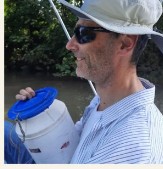
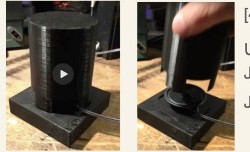
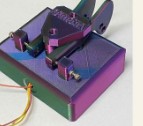
So this week we have yet another nudge about home-made passive CW filters; Nic VK7WW had sent us a demonstration of Jordan VK3ACU’s 3D Printed version; as you’ll see, the chamber makes the signal just jump out!
I hear tell that there’s yet another one out there – one of our team has a small speaker at the bottom of a Milo tin! For those of us using older receivers for which CW filters are made of unobtainium, there might be something there.
I wonder how many CW filters have ended up in rubbish dumps over the years! Many of us use (and swear by) headphones for CW… hmmm, two Milo cans? Lucky no-one’s watching.
This week we also take a look at lan VK1HF’s new KiwiSDR that he’s made available for net users; nice work, thanks lan.
Masthead Image
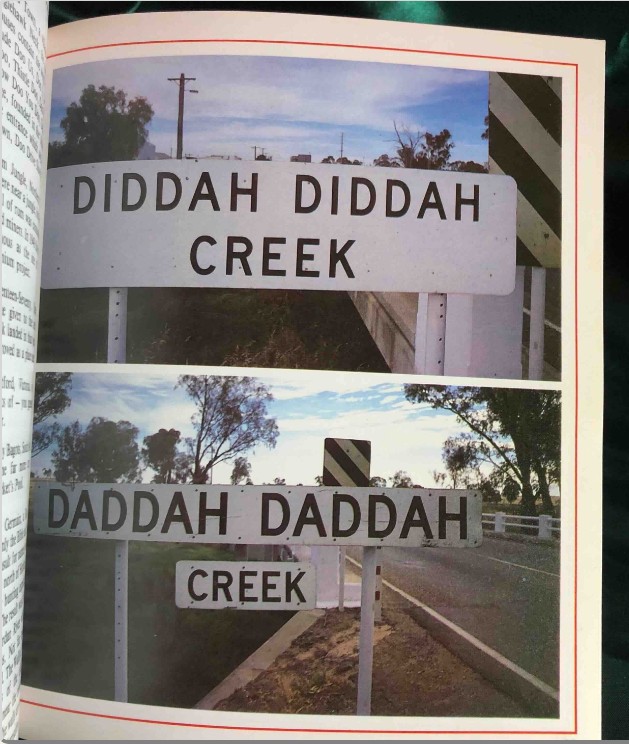
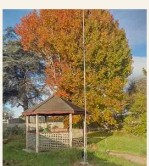
Heading toward Corowa from Edi Cutting Campground in Victoria this week, we couldn’t help but smile at the sign at the bridge over Diddah Diddah Creek. Turns out that Diddah Diddah Creek joins Daddah Daddah Creek as well.
The strange things that appeal to us Morse Codians!
New Team Members
Welcome this week to Darcy VK6DSM who hails from South Fremantle. Darcy was introduced to the group by Morgan VK6MTF; welcome mate and I hope we hear more about your CW journey soon.
Reports
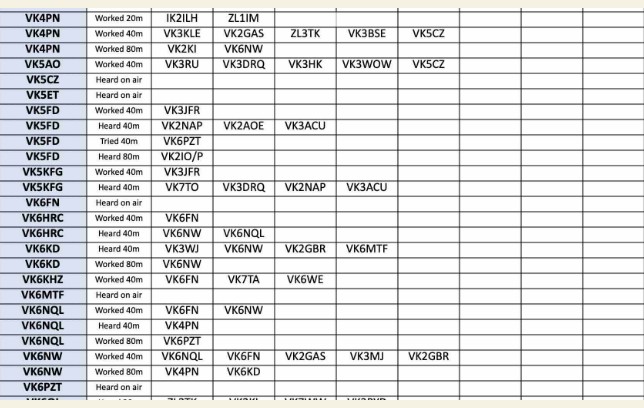
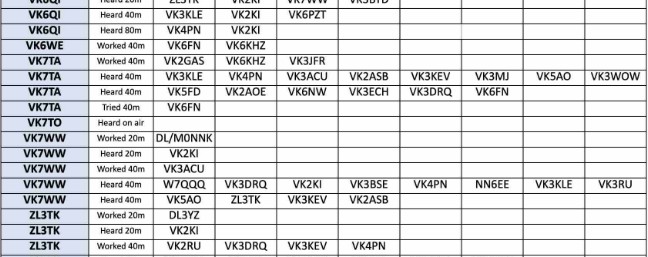
After next Tuesday’s Group, please send me a list of who you worked and / or who you heard using our web form here:

To make your report more interesting, please consider sending a photo to be attached. If you have a photo that you’d be happy to include, please email it to: cqarsnet@gmail.com To make it even easier for Patrick and Mark, see if you can compress or reduce the siz of the image (preferably to less than 100KB file size).
No problems if your computer or phone can’t do that – just send it through anyway please. So, please help attract new and old team members to have a go by submitting your report each week. Submissions close 1300 (Eastern Australian Summer time) on Thursdays.
Website
If you’d like to find out a bit about our net, or would like to pass information to others about our Tuesday get-togethers, here’s the link to our website.
Bit.ly/CQQRSWebsite Cheers, mb Mark Bosma VK2KI / VK6QI Beautiful South Bowning NSW cqqrsnet@gmail.com non impsditi ratione cogitationis
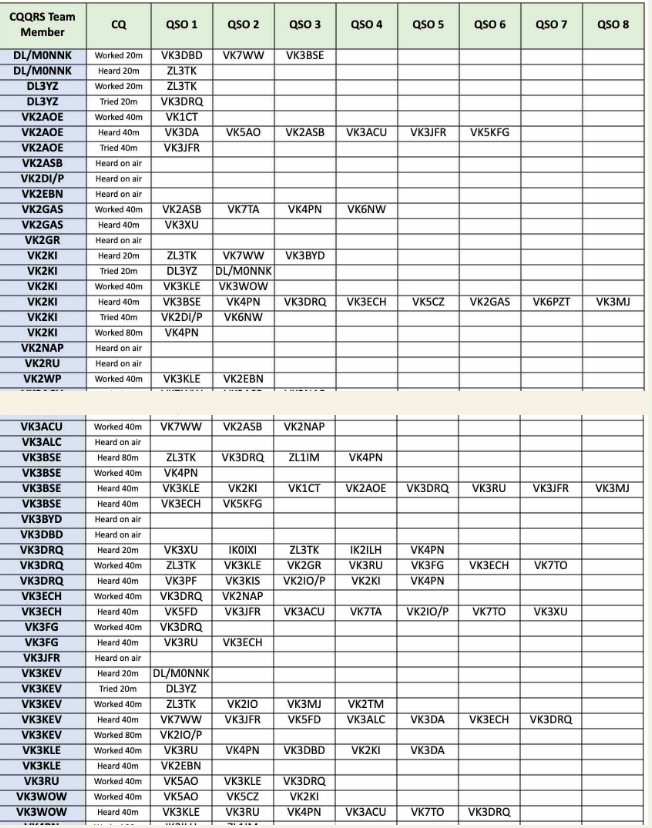
[20m] This morning the DX window was opening a little later than usual, so I was not able to hear my signal on the SDR in Ironstone at first. Or any VK stations up here in Stuttgart. Only some local traffic. About 15 min later, it slowly started up.
I was pleased to work Stan ZL3TK. Still very weak on both sides, but we got along. When Ross took over the key after some minor troubles with the internet connection, he was more lucky with the condx.
Bef They were getting to their normal state, and I was happy he was busy working VK stations for more than 1 hr. I will check the timing of the DX window during the following days, just to see if we should adapt the schedule for the next Tuesday.
[20m] Initially I had difficulties connecting to DL8YZ Mike’s radio over the internet but Mike sorted that for me whilst finishing his own DX shift – thanks, Mike.
I then had a very pleasant hour of DX, speaking with three stations, two of which were new to me. Apparently radio conditions were challenging in Australia, so I consider myself especially fortunate to have aotten these contacts – thanks. chaps!
[40m] I got on the trusty Yaesu FT101E. Despite barely acceptable VSWR managed one QSO with Chris in chilly Canberra!
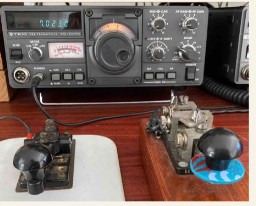
[20m] I’m 75 y/o, arthritis in my wrist, using a brass pounder! And I still get such a thrill having a DX contact into Europe – especially on QRS night! …even when I lose it momentarily 63
[20m] This week there was a BOM Space Weather Services prediction of HF propagation problems due to a solar flare rotating back into view; well certainly things were different to the previous few weeks.
Mike DL3YZ was coming through to a Reverse Beacon Network receiver in New Zealand, but here in Southern NSW he was very weak – RSN 211 on QSB peaks. Unlike the last two weeke where Mike was ahle to work mv
FR Id ht AN tt Lh A ALE this week. tt I ect ct bee eA AAR ALA eT. About an hour later, Ross DL/MONNK was coming through slightly better (RSN 311 on QSB peaks).
I noticed that Ross was a nice RSN 551 into the VKSPH Ironstone Range KiwiSDR network, and heard him working Nic VK7WW – great to hear Nic (who often listens in and does the right thing sending reports) on air this week.
I’m starting to suspect a Faraday Curtain along the VIC/NSW border, watching how the signals came through to the Southem States but not where I am; the same thing seems to happen when 40m opens up from VK6 to the East as well – or perhaps it’s my station?
Awhile later I heard Ross working Warren VK3BYD ( think) in Wangaratta, and heard him spelling the location of the Remote – STUTTGART; I wondered whether Ross had to write it down before sending it?
And Mike tells me that ‘Stute’ means ‘mare’, so Stuttgart translates to “Garden of the mares” – just in case you were wondering! I wonder what ‘Wangaratta’ translates to?
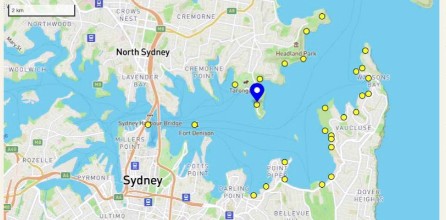
Mark was trying out his new Elecraft KX-2 and G5RV doublet. He was aiming for ten contacts (to ‘activate’ the park) but had only managed eight. I jokingly said “I’ll see if my home gear still works” on WhatsApp; well, sure enough, it didn’t!
When I went to transmit to adjust my antenna coupler, my TS-120S just sat there! Hmm – was I doing something wrong? It worked four weeks ago for the last net before I went away! Hmmm – checked that the key plug hadn’t been pulled out of the socket – nope.
Ok, tried shorting the terminals on the key with a letter opener…. voila! Hmmm… abittacrap on the contacts. Found a convenient Post-It note and gave the eT ey a Re ee a I Go Re CASE Ro A Eee eee
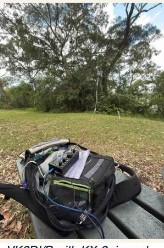
Contacts. Found a convenient Post-It note and gave the GonVantenna, contacts a bit of a rub… success! There was a storm passing through so the next challenge was to adjust my coupler – no-sooner was the SWR dipped and the power output peaked, it would change again as the wet feed-line support rope possibly dried with the RF, then got wetted by the rain.
Anyway, finally on air – Mark reported that he could hear me RSN 582, but he was extraordinarily weak here. I’m sure some readers will have experienced CW that’s so weak, you can only just sense that it’s there.
There was a bit of QSB and I managed to get his callsign and the occasional number, but we didn’t complete the exchange. The predicted solar flare at work I suspect. We gave 20m a quick optimistic try – but no luck there.
I was pleased to hear that both Jordan VK3ACU and Peter VK3WOW came to Mark’s rescue and provided the last two contacts before Mark was taken away by mozzies again.
[40m] After returning from 20m, I had a listen around on 40m – very quiet compared to normal. However, a CQ returned the distinct sound of a transmitter being netted on frequency, and I was called by Paul VK3KLE from Stawell using his Johnson Viking transmitter.
Paul started out only RSN 311, but the signals got better as we went – and by the time we finished I was missing only the occasional letter. Alter dinner, I listened around but the band was pretty quiet – just a small hand-full of QRS QSOs going on.
I came across Peter VK3WOW calling CQ. Nice to have a long chew of the rag with Peter about the long weekend in Victoria.
After Peter I tuned around 40m for a while listening to the few QSOs, and heard Wayne VKENW calling CQ; I tried as hard as I could – pressed the key quite hard, but to no avail – Wayne couldn’t hear me.
[80m] When I slipped down to 80m there was not much activity heard or seen on the KiwiSDRs I was watching. After sorting out my antenna coupler and phasing noise canceller, I heard Sava VK4PN calling CQ; signals were way down compared to normal, and Sava’s signalss into the VK5PH Ironstone Range and VK6SEG KiwiSDRs were quite a bit stronger than mine; |’l have to check my antenna again tomorrow!
However, the wet rope supporting the 40m long run of 300 Ohm TV ribbon feed-line feeding my Double-Extended Zepp probably wasn’t helping.
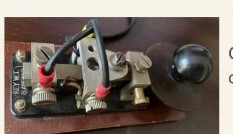
[40m] 40m sigs were ok with some east coast stations strong and some not so. Good to meet Philip, Armin and Mark for the first time, thanks guys.
[80m] Lots of QRN on 80m resulting a very high noise level.
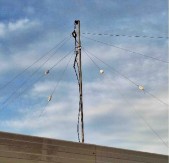
[40m] Not as active as I though it would be. Not much QRN.
[80m] Lots of static crashes heard on 80m. A thunderstorm hit my QTH so the night was cut short with antennas disconnected for safety reasons. I had early scouted around on the SA SDR receivers.
It appeared quite active over there on both 40 and 80m although I was unable to hear the stations at my QTH on my receiver.
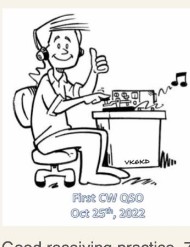
[20m] Signals from Mike DL3YZ barely readable RSN 112, just enough to swap reports otherwise QNP. Listened until 0710Z but didn’t hear Ross MONNK.
[40m] Band conditions fantastic for east coast but took a while to warm up elsewhere. Wayne, VK6NW strongest of W RSN 571
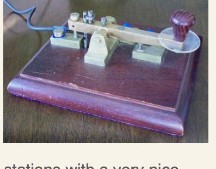
From Sava VK4PN at Mount Ommaney Brisbane
[20m] Got on air only 10 minutes before the end of suggested time slot for EU QRS DX experiment so had no time to check RBN. Scanned the 14.040 to 14.050 segment, nothing but noise so the party was already over.
Anyway called CQ at 14.047 just in case our EU friends were still monitoring, no luck but managed two quick QSOs with IK2ILH and ZL1IM before dropping to 40m.
[40m] After my brief stay on 20m I moved to 40m at around 17:20. The band was noisy and SDR at Marahau (ZL) did not show much traffic either. So this time I did not switch to QRP; I called a few CQs using my main tig at 120W.
Managed two quick QSOs with VKSKLE and VK2GAS both relatively strong at S6/7 but the local noise was similar, I had to switch off the AGC else I couldn’t copy them.
Next QSO was ZL3TK who was booming in and to my surprise he told me I was too – during our QSO and during the ZLCW net which he participates in. I could see my trace on Marahau SDR waterfall but it did not look that strong!
Next QSO was with John, VKSBSE who was very keen to rag chew and we had a marathon QSO. He said he was trying to improve his Morse on air but I found him very good already, the speed wasn’t great but he copied everything and his keying was thythmic and easy to read.
Last QSO on 40 m was a quick exchange with VK5CZ followed by a long pause before moving to 80 due to other commitments.
Ntil well after 9 pm Brisbane time. Checked Ironside SDR first, waterfall looked reasonable, not that much noise there and my trace was solid red. Promising! Called numerous CQs but no results despite RBN showing spots in ZL and Fiji.
Finally reliable (as usual) Mark, VK2K| responded, but the signal was at the noise level. We struggled through a QSO disrupted with strange fades lasting only a few characters but enough to obliterate words.
Mark was not QRP this time, he reported 50W but I did not ask him if he was working from his usual QTH nis signal is much stronger and easier to copy). It was neaning time in VK6 was two hours behind, so I paid more
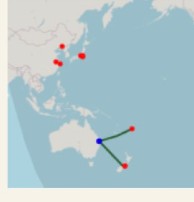
A ee eC ee a ee already after 10 pm local; meaning time in VK6 was two hours behind, so I paid more attention to Ironside SDR. There was a trace indicating a QSO in progress; segments of red trace followed up by segments of faint green trace.
I could copy VK6NW but VK6KD was down in noise at my QTH. QSO with Wayne topped up an interesting evening. Propagation can be strange at times; VK6NW from the other side of the continent running 120W was 2 S points better at my QTH than VK2KI running 50w only down the road.
That is only about 3 dB difference in power, theoretically not even an S point.
[40m] I found it a bit quiet, maybe the solar conditions.
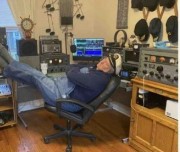
[40m] Conditions this time, for me at least, were more stable and it was nice to be able to copy OM Rob all the way from Echuca, this time without problems.
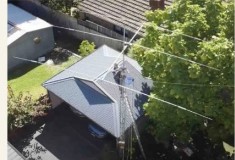
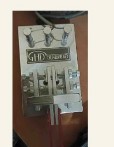
[80m] it would be nice to hear a few more WAs on 80m at night-time
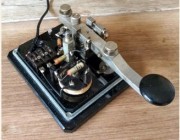
[40m] Technical problems intervened today with my straight key not working so I had to rely on the KX3 paddle. This resulted in numerous errors when I didn’t release a paddle before sending an extra signal. Some of my messages must have been confusing.
It seems like you have to concentrate more using a paddle.

[40m] It has taken time, but I am now able to conduct at least some QSOs at speeds above “QRS” (say, 20 wpm, or sometimes even 25 wpm).
This presents an interesting conundrum for me (and, I suspect, for some other ops who show up on Tuesday evening who have been
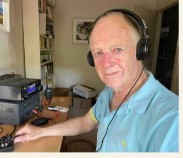
Capable of sending above QRS speeds for decades), namely, at what speed should I call CQ on the Tuesday net, and what should I do if my CQ is answered by an op who I know is capable of 20+ wpm?
Should I conduct a QSO at, say, 12-15 wpm or slower for the possible benefit of a QRS operator who might be looking for some practice at copying at such speeds, or is it OK to speed up and consolidate my nascent skills at a faster speed without a QSY to a lower frequency?
On Tuesday, I called CQ at 12 wpm and was answered immediately by OM Mait VKSAO, who I know can work faster than that. I moved to 18 wpm, and Mait to 15 wpm, and we had a long, pleasant chat.
On the same frequency (inside our window on 40 metres), I heard OM lan VK5CZ calling at 20 wpm and answered him at that speed.
As lan explained, and I should have realised anyway, he is a regular with the QRS group and often does slow down well below that for other ops.
I was enjoying the zing of sending at 20 wpm, and the fact that it’s way easier to head copy at a speed like that than for a slower speed, and so we both stayed at around 20 wpm for at least 30 minutes.
Not long after, I again put out a CQ at 12 wpm, and was immediately answered by Mr AVan himself (OM Mark, wearing his VK2KI hat), safe home after a late encounter with the madding hordes who had invaded his and Elizabeth’s lovely peaceful camping ground on account of a long weekend associated with some donkey race.
Mark was using around 15 wpm character speed, I would guess, but a significantly slower word speed — and we had a lovely chat, including about his near death experience (from surprise, I gather) following a good DX experience with OM Ross on the road.
Found the night very satisfying. I got to challenge myself at the top end of my sending/receiving range through a couple of rag chews, but also took part in a meaningful exchange at a true QRS speed also. Did I do the right thing?
This is such a polite group of radio amateurs (compared to some!) I will probably never know — but I do put the question out there.
[80m] Nice to be able to fit in a quick response to a WWFF call from OM Gerard VK2I0/P, who managed to find himself a clear slot in our pretty crowded niche of the spectrum during the evening.
/ was a public holiday for a horse race, then also no Scouts so I had a night with the key. Sondx were fairly gud so I listened to many of fou and scribbled 4 1/2 pages so there was slenty of good (slow) practice, VY TNX.
Nhile copying the QTH of VK3JFR, I was vondering where this word is going – HI: Ararat. ll good fun. In 40m I had a good QSO with Sava VK4PN. |
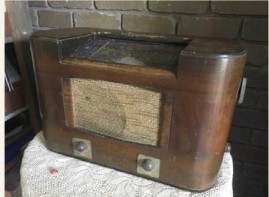
Neh Tat oh BET NTN taeda di tm Ba edn ed on Sa eton AAI BA AAD Reha ea BF oT) Add aE Eo FS Ut mentioned I first learned CW on an AWA Fisk Radiola, model R701, circa 1937. This is the “Table model”. Picture attached.
I built a BFO for it using an IF transformer. BTW, I’m changing QTH to Beechworth in December so the Somers aerials will be coming down soon.
[40m] Worked 40m QRS net with Johnson valiant and vibroplex bug with additional weights.
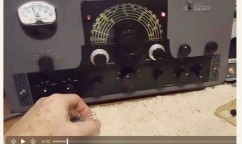
[40m] VK3JFR, James, and I had some fun with some paddle-to-bug interspersed with the slower Morse. The biggest signal of the night came from Manny, VK3DRQ, S9+10dB.
[40m] Unfortunately had to sign off early to entertain a visitor, looking forward to next week.
POST MORSUM 5th November
From Richard VK6HRC. Six on the VK6RLM repeater and Echolink combination this morning.
Ae Se Lr Se ee eae 0S ee eee VK6KD_ David VK6FN Max VK6QI Mark VK6NW Wayne VK6HRC

VK6MRB Mulligan sw! and others. The AllStar link had dropped out so I gave David a call on the VK6RLM repeater as he was on his way to work and got his report and then onto Echolink to catch up with the rest of the crew.
David worked four on 40m and one on 80m and also made use of a VK5 Ironstone Range Kiwi sdr to monitor activity over there. Max called in from a waterlogged Manjimup to let us know he worked five on 40m before pulling the big switch.
Mark back home after his trip away did not repeat last weeks success on 20m as. conditions were not favourable. Worked two on 40m heard eight and one on 80m and as usual kept busy spotting on WhatsApp !
Wayne worked six on 40m, two on 80m with QRN from the massive electrical storm making life difficult. I managed to catch up with Max on 40m and later on was listening to Wayne chatting to Peter VK6IS hoping to catch up with them when they signed but a visitor dropped in so that was the end of my QRS evening.
At the end of the net Max and the others commented on the great work Mark is doing in the background with the Ragchew newsletter and other QRS work, much appreciated by us all thank you. Thank you to all on last night and this morning, stay safe.
This Week’s Topic of Interest
Snowline KiwiSDR Another Useful Receiver for Our Net. by lan VK1HF
On the back of your eaitors request for a little info on the SnowlineSDR site, I’ve made up an info page and took a few pics etc (XYL who subscribes to the RagChew newsletter took them!). https://snowlinesdr.vkihf.com/
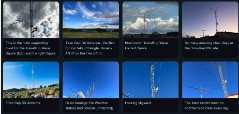
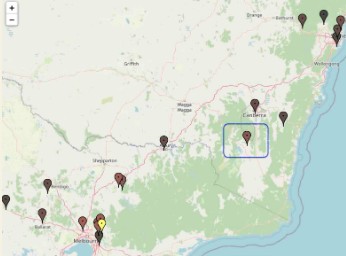
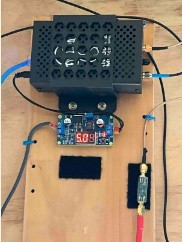
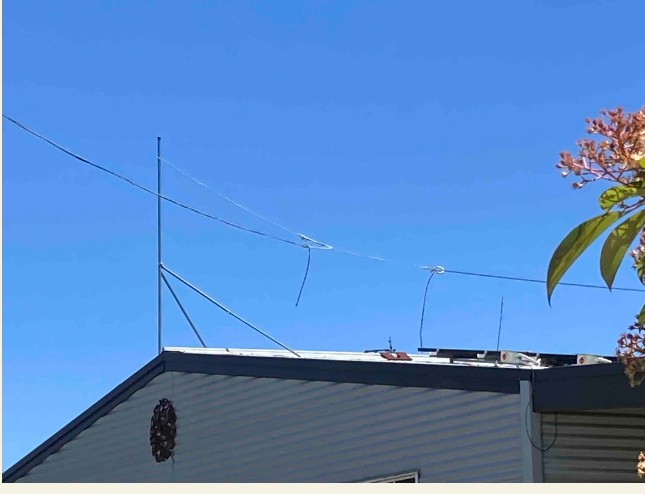
The SDR is in a nice quiet location near Dry Plain NSW and is connected to a 40m dipole oriented East-West for the time-being. CQQRS team members are most welcome to use the receiver at any time.
Here’s the link to the SnowlineSDR: http://snowlinesdr.vkihf.com:8073/ 73, lan – VK1HF
If you have an article or two that you think might be of interest to our readers, please let me know so we can share more thoughts and ideas; for guidance on writing for RagChew, see Articles below. Please email material to Mark VK2KI: cqqrsnet@gmail.com

On My Workbench
Houston, We May Have a Problem
What’s going on on your workbench? If you have an article or two that you think might be of interest to our readers, please let Mark VK2KI know; email to cqqrsnet@gmail.com For guidance on writing for RagChew, see Articles below.
QRZ? Who’s on the other end?
Head Copy Practice
Compiled on the track somewhere by John VK2RL
Anyone who is just starting out with head copy should look at edition 23 – 2025 where we first started with Winnie the Pooh recorded at 12 wpm. In edition 23, and for a few following Newsletters, there are instructions on how to use these files, and edition 25 – 2025 has information on the Ditto CW : Morse Player app. This week we have Wind in the Willows Chapter 7 – The Piper at the Gates of Dawn. It is suggested that you read the text file before listening to the audio file. That will make it easier to follow the audio file and prepare you for any unusual words. The MP3 files have been recorded at 16 wpm and 650 Hz tone. If you prefer a slower speed or different tone, you can create your own MP3 files by converting the text file with the Ebook2CW app — https://fkurz.net/ham/ebook2cw.html. Because of MailChimp’s size limits, I’ve split Chapter 7 into 3 parts. Each part is over 1 hour playing time @ 16 wpm. Uncommon punctuation has been removed (the Ditto CW app doesn’t recognise some of it), and contractions have been simplified (for example, we’ll becomes we will). This week’s attachments are: * Chapter 7 split into three MP3 files * Chapter 7 in one text file
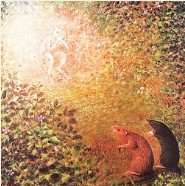

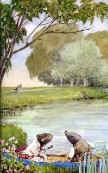
You can either play the MP3 files in any media player, or load the text file into the Ditto CW: Morse Player app — https://dittocw.andro.io/. Both options work well, however Ditto CW gives you complete control over all Morse settings, while a normal media player only allows changes to playback speed, and does that in steps (e.g. +1.25x, 1.5x, 1.75x).
Other News
Update from Last week’s RagChew This announcement is by Grant VK5GR, or behalf of the WIA Technical Advisory Committee and appeared in a recent WIA Broadcast. Please consider making a submission:

This is Grant VK5GR, your WIA Technical Advisory Committee Chairperson, with some news about a community consultation being launched looking at changes to the Australian Amateur Radio band plans.
Ithas been some years now since a wholesale review of our band plans has been conducted. In that time, we have seen various changes made to what radio spectrum amateur radio operators can access, and under what conditions they can access it.
We have also received various requests for changes, or recognition of various activities on the band plans from members of the Australian amateur radio community.
As a result, we have decided to conduct a wide-ranging review of the existing band plans, and are proposing various changes across almost all bands, addressing one of a number of issues that have arisen since the last series of changes several years ago.
The last major revision of the Australian national Amateur Radio band plans administered by the WIA was carried out almost a decade ago. At that time, major changes were mostly made to the 30m, 2m and 70CM bands.
With various changes to the Amateur Radio regulations since that time, including some spectrum losses and gains, it is now necessary to update the band plans to both reflect those regulatory changes as well as update them with information on current centres of activity.
We have also used this as an opportunity to address many of the requests that have been received over the past 2-3 years for changes to various bands. WIA TAC committee has reviewed each band and made recommendations for changes where appropriate.
Areas being addressed include: * Better highlighting centres of activity for various modes – particularly AM and Emergency call channels on the HF bands * Reviewing band plans vs current on air practice to see if better alignment can be achieved (630M, 160M and others) + Revising bands where new spectrum access has been obtained (the lower 2MHZ of 6m for Standard calls) + Revising bands where spectrum has effectively been lost (upper 200 MHz of the 9cm band) + Provision of alternate narrow band segments on 13 and 9 cm to help with adjacent band interference scenarios + Revising usage recommendations given our secondary service obligations (23CM, 9cm) ‘* Adding new segments for new areas of interest (FM repeaters on 13, 9, 6 and cm) + Promotion of new or revised wireless broadband segments (13, 6 & 3.
Cm) + Revision of ATV Segments considering the extensive adoption of Digital ATV modes today ‘+ Review of repeater sub-bands and the growth of digital voice hotspots on 2m and 70CM + Provision of band plan data for the Microwave mm wavelength bands (24-134 GHz) showing current centres of activity Along with this, the intention has been to improve the way the band plans are presented visually to make them simple to understand and follow.
Feedback on the new presentation style is also most welcome! So, as you can see, a lot has happened since the last wholesale review. Now, this is your opportunity to have a say in areas where you have an interest.
We are looking for feedback on the proposals so that we can determine which changes to take ponwardianckwnicnteslleacalbenincs
The Process
The consultation process will be conducted as follows: 1. The paper was released publicly via the WIA website on October 17TH 2. Consultation responses can be sent to wia.tac.consultations@gmail.com 3.
Responses will be accepted from any licenced radio amateur or amateur radio club based in Australia only. This is a domestic matter and is not relevant to people outside of Australia. 4.
While requests for clarification on any of the material will be answered, discussion on alternative proposals will only be received, and then be considered after the deadline closes. 5.
The Consultation will remain open to receive responses up until December 12TH. 6. Responses will not be published; however, they may be used as input to the outcomes & recommendations paper that is expected to be published before January 31ST 2026. 7.
A final revised Australian Amateur Service Band Plan will then be published by the end of the first quarter of 2026. So, over to you! Your input is valuable so now it’s time for you to have your say. How can I reply?
The consultation will be open until December 12TH and is open to All VK radio. amateurs. Details of the consultation content and process are now available on the WIA website.
So, if you are interested to see what is proposed, and wish to have a say, take a look at the WIA website, read the consultation paper and then consider making a submission. We would love to hear from you!
On the WIA TAC Consultations page, there is a feedback form you can download and fill out. This, when read in conjunction with the review paper, will guide you to answering the questions being asked about each proposed change. Head over to: http://www.
Wia.org.au/members/tac/consultation/ for more information. You can also download a copy of the consultation document at this Link and download a copy of the feedback template at this Link
The Wireless Institute of Australia, founded in 1910
Amember society of the International Amateur Radio Union
Founding member of the IARU – Region 3 Every radio amateur needs the IARU! NO BANDS NO HOBBY!!
Southern Electronics Group Get-Together
Southern Electronics Group Get- Together
From Rob VK6LD Hi All, Just a reminder that it is less than two weeks to go until Manjimup (Quinninup) Ham Feast on 17 November 2025. Thank you to those who have sent their food pre-orders to me.
If you are stil contemplating the menu choices, please have your selections to me by 8.00am next Monday 10 November 2025 to send to the chef.
The menus can be found at: Main Menu: bttps://quinninuptavern.com.au/main-menu/ Burger Menu: https://quinninuptavern.com.au/lunch/ Many thanks and look forward to see everyone at Quinninup. 73, Rob… VK6LD
Family Travels
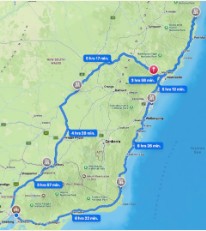
From Martin VK3FG An image from a recent road trip around NSW, a token go with my QCX rig and mag loop from Forbes and also Nambucca – a tenuous contact with David VK3RU was the result but glad I took it and will keep trying next trip.
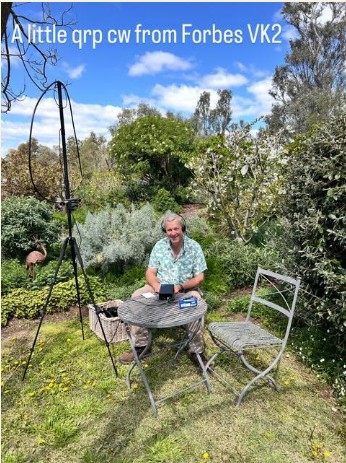
A most enjoyable circuit with a greater focus on scenery, sea views, food and wine. Garden shot is from an Air BnB just out from Forbes that recently sold so may no longer be available. Regards, Martin VK3FG
Settle to Carlisle Railway, Week 8 Report
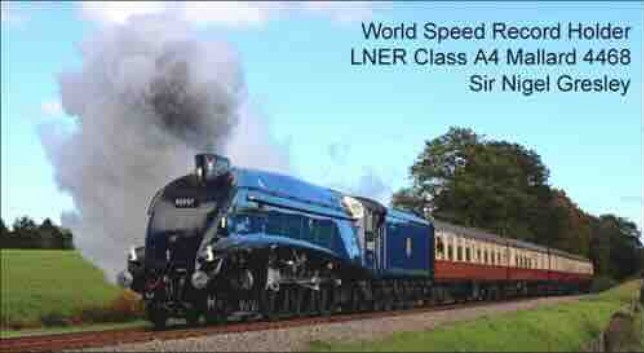
From Stan ZL3TK Not many things move me emotionally, however this week a youtube video succeeded. Watch it at https://wvww.youtube.com/watch?v=IXPSSM00e-E It shows the famous Mallard, designed by and named for the equally famous Sir Nigel Gresley, taking an enthusiasts’ excursion on the Settle and Carlisle line in all her restored glory, traversing viaducts, plunging into tunnels and passing by the stations we have been exploring during the STC Challenge.
Mallard still holds the world speed record she set on July 3, 1938 when descending Stoke Bank on the East Coast Main Line at 126 mph. What made me tear up?
_ It was the doppler as she raced past in her blue livery, blowing her steam whistle just before entering Moorcock tunnel, rather like an extended drift towards zero beat from an old-time, L/C oscillator, CW transmitter without regulated HT, sending a long dash.
Can anyone think of a more appropriate simile?
Last week Appleby-in-Westmoreland’s station revealed it has a special feature, useful and worth keeping but not used very often these days.
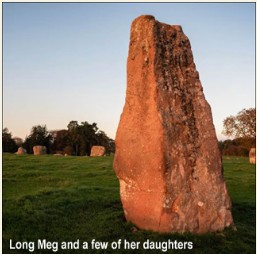
Plus, we got to see a 12TH century estate complete with a tall, square, stone keep built for the family of Ranulf Le Meschin, the 3rd Earl of Chester. This week, just north of Selkeld there’s something really worth the stop at Langwathby.
As neolithic stone circles go, Long Meg and her daughters should not be missed, they await your inspection.
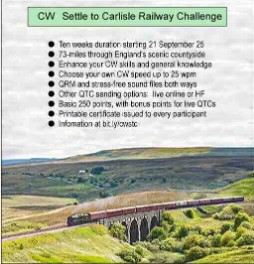
Very pleasing to hear participants week-by-week proving the value of participating in the STC challenge. Admittedly, improvements in skill are personal and subjective, however, if we equate sending quality as inversely proportional to the number of repeat requests, then there’s no mistaking that challenges such as STC work really well as a training tool.
Repeat requests, except any resulting from QRM and now possible after every answer, are simply not happening. 73 es 77 de Stan ZL3TK
Geomagnetic Activity 1
Ycomagnetic ACIVITY I From the Bureau of Meteorology Space Weather Services SUBJ: ASWFC AURORA WATCH ISSUED AT 0515 UT ON 06 Nov 2025 FROM THE AUSTRALIAN SPACE WEATHER FORECASTING CENTRE A coronal mass ejection is expected to impact the Earth within the next 48 hours, possibly resulting in significant geomagnetic activity and visible auroras during local nighttime hours.
Aurora alerts will follow if significant geomagnetic activity actually occurs. Australian Space Weather Forecasting Centre Bureau of Meteorology E: ASWFC@bom.gov.au
Geomagnetic Activity 2
SUBJ: ASWFC PRELIMINARY HF RADIO COMMUNICATIONS WARNING 25/102 ISSUED AT 0806UT/06 NOVEMBER 2025 BY THE AUSTRALIAN SPACE WEATHER FORECASTING CENTRE.
Current ongoing coronal hole high speed wind stream effects combined with anticipated CME impacts on 07-Nov are expected to produce G3-G4 geomagnetic storming, which may lead to HF depressions in the Australian region with stronger depressions at higher latitudes.
DEGRADED HF PROPAGATION CONDITIONS EXPECTED FROM 06-08 NOVEMBER 2025 IF COMMS DIFFICULTIES EXPERIENCED TRY A LOWER FREQUENCY BAND AMORE DETAILED HF WARNING WILL FOLLOW IF DEPRESSIONS EVENTUATE.
Australian Space Weather Forecasting Centre Bureau of Meteorology www.bom.gov.au I www.sws,bom.gov.au ips-hf-warning mailing list -warning@ips.gov.au
Morse Training Net
Our team member Nic VK7WW runs an on-air Slow Morse training net every Wednesday at 7pm EDST on 3580 for 30 mins. He uses the callsign of the Northern Tasmania Amateur Radio Club VK7TAZ on that net.
Many of our team learned Morse code with the support of Nic, and the weekly training session comes highly recommended for anyone who wants to learn the Code, or simply brush up.
Everyone’s welcome – 3580KHZ at 7pm Eastern time every Wednesday; you’ll hear lots of the CQQRS team on that net. Jordan VK3ACU has recorded the complete set of lessons which you can now find here:
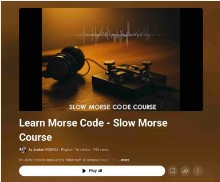
Https://www. youtube.com/playlist?list=PLHsQmZz6fBXO7swAfbT mutrbbEL17fUQL Contact Nic VK7WW for more info nicholaschantler@hotmail.com including how to join the NTARC DISCORD group to follow the action, or just come along and join in on Wednesdays.
The Fullerphone
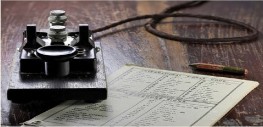
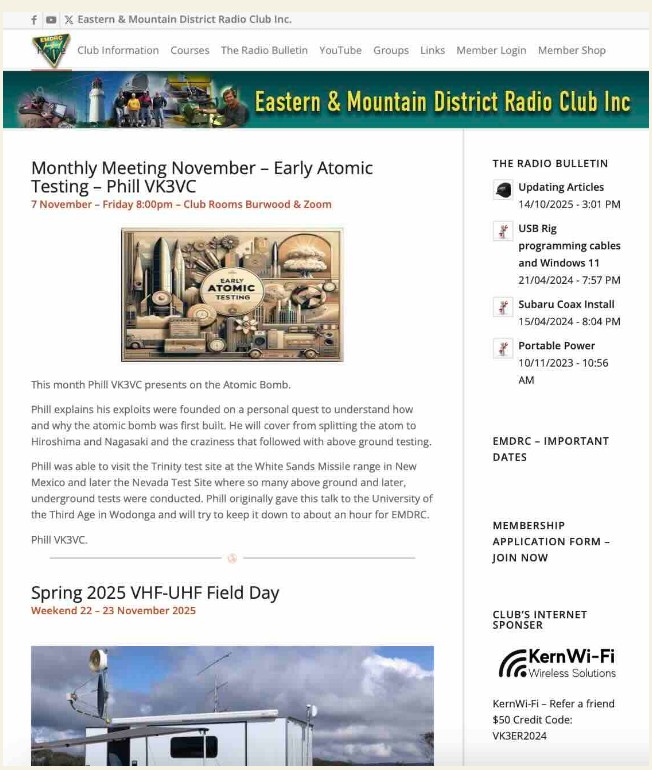
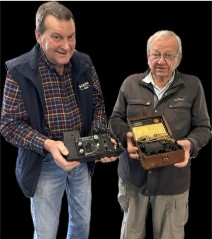
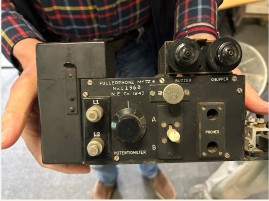
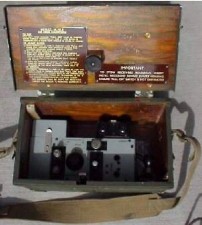
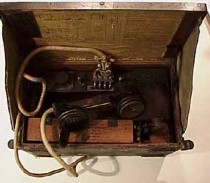
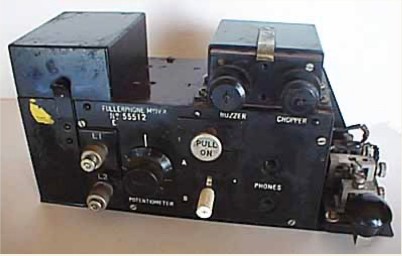
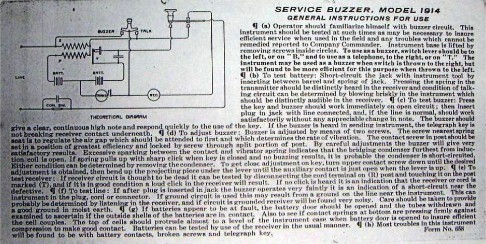
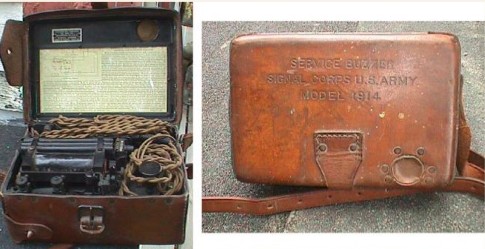
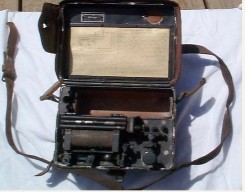
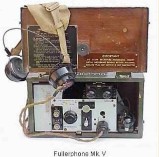
From Martin VK3FG President, Eastern & Mountain Districts Amateur Radio Club Recently VK3GUZ Graeme Zimmer, friend of EMDRC handed over some interesting gear he had collected.
As much as we would like to display this at the club, we felt it would be better appreciated on display at the Watsonia Signals Museum if it was of interest. Ravid VK3RU handed the items to Jim VK3ZGG [Major – ref].
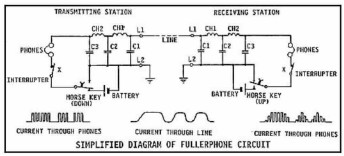
Some interesting material is provided below on the devices. Fullerphone references: Louis Meulstee wrote an article for the Antique Wireless Association, published in the The Old Timers Bulletin Vol. 30, No. 3, November 1989.
(see attached) Louis had another article “Earth Current Telegraphy” in Morsum Magnificat issue #9, ‘Autumn, 1988. Operators Manual for the Mark IV Fullerphone “The FullerPhone” by: Frank Reid WOMKV ODE TO A FULLERPHONE (By Sigmn R.MELLOR, published in ‘Jimmy’, the WW2 journal of the Royal Corps of Signals in the Middle East) What is my greatest joy in life, More precious even than my wife, So comforting ‘midst all this strife?
My Fullerphone. How well I love your merry tricks; Even when your buzzer sticks; Delighting me with faint key clicks; Oh Fullerphone. How tunefully your buzzer throbs As tenderly / turn those knobs. Most fascinating of all jobs. Oh Fullerphone.
Potentiometer, its true I’m not sure what to do with you. Yet even you add beauty to
Oh how I pity those poor souls Who daily work remote controls, Attached to crazy wireless poles. Oh Fullerphone. They never hear the tuneful tones Of perfect Morse within their ‘phones: Just atmospherics, shrieks and groans. Oh Fullerphone.
But I must cease to write more verse. Communication getting worse. No wonder that I rave and curse At Fullerphone. Asthmatic buzzers, – crazy keys. How can one live a life of ease, With damful instruments like these Foul Fullerphones!
If you’ve read something that you think might be of interest to our readers, please let me know so John VK2RU and I can share more thoughts and ideas. For guidance on writing for RagChew, see Articles below.
Please email material to Mark VK2KI!: cqqrsnet@gmail.com
Or do you have a question or two that are worth sharing? How about a discussion- starter? Please let me know cqgrsnet@gmail.com and I’ll pass them to John VK2RU for compilation each week.
Prosign/Character/Signal of the Month
[Suggestion – put it on a sticky note near your key as a reminder for Tuesday. Tell us how you went!]
Di-dah-di-dah-dit
So back to the CQQRS Slow CW QSO practice net.
Next Tuesday’s Net
Our CQQRS Group will be on as always on Tuesday from around 0600Z until about 12002; see https://bit.ly/CQQRSWebsite and navigate to the Net Details page for details.
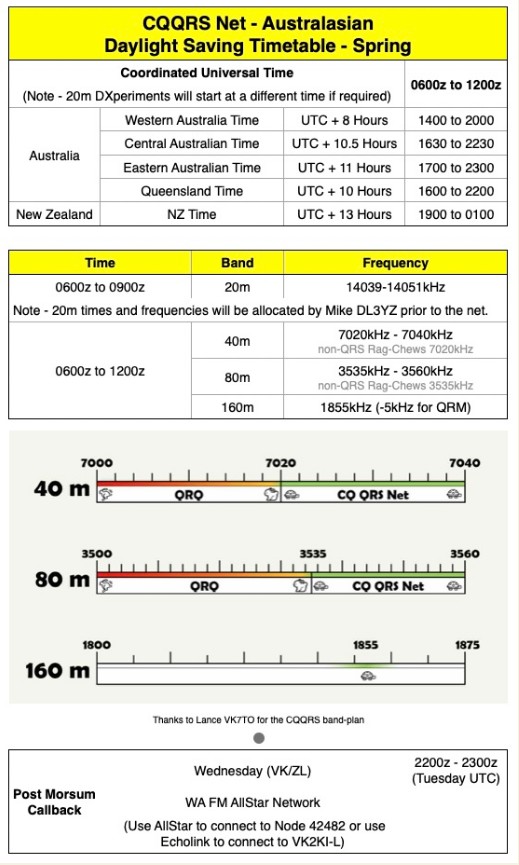
Doesn’t matter whether you’re brand new and want to try just exchanging callsigns and RST reports, or you’re ready for a good old rag chew. We’ll have fun.
There’s usually people around until after 1200Z – so keep calling in the segment of the band designated in the table below until you catch someone.
I should be on as usual from home in NSW or via the Remote at Bedfordale WA, and I’ll also be watching the proceedings using the VK6QS and Tecsun SDRs in WA and NSW respectively. Hope to hear you there.
Reports & Photos
Please let us know via our Reports form bit.Jy/GQQRSNET who you work or hear on Tuesday’s Group. The report form closes at lunchtime (Eastern Australian time) on Thursday. ‘And how about helping to make the reports even more interesting by sending a photo?
If you have a photo that you’d be happy to include, please email it to: eqqrsnet@gmail.com To make it even easier for our Reports editor Patrick VK2IOW, see if you can reduce the size of the image (to less than 100KB file size by preference).
No problems if your computer or phone can’t do that – just send it through anyway please. And of course, I’m always on the lookout for more photos for the newsletter, so if you have something that might be of interest aside from the reports, please send it through as well – I always enjoy the photos that our readers send – and I’m sure our readers do too.
Email them to cqarsnet@gmail.com please (reduced size if possible – but whatever you send will be great). Oh and by the way, I recommend that you don’t keep the Reports Form website open between submission of reports from one week to the next.
If you’re unlucky, there’s an undocumented feature in the software that could cause your current week’s report to be combined with your previous report – it’s happened to your editor several times – much to the chagrin of our Reports editor 🙂
Post Morsum
Richard VK6HRC will run our phone Post Morsum on the South West AllStar net (via repeaters and hotspots all over WA) from 0600 WA time, then from 0700 WA time on 80m (8605 LSB).
See https://bit.ly/CQQRSWebsite and navigate to the Net Details page for details of how you can connect via Echolink or even possibly via your local FM repeater.
Articles
The newsletter is interesting to readers because of the material contributed by so many people – be it the reports each week or the various articles. Could you write a short article or articles for RagChew? You bet! Writing not your strong point?
Don’t worry, I’m very happy to help as much or as little as needed. Here’s a thought – although our readers will much prefer your own writing, perhaps have a go at using a Large Language Model Artificial Intelligence tool such as ChatGPT, Microsoft Copilot or Google Gemini to check your writing or even to actually draft the whole article in a relaxed easy-to-read manner!
You can find out more about how to do that on the Newsletter page on our website bit.ly/CQQRSWebsite. Our website also includes a suitable prompt (the command you feed to the Al to make it do what you want).
Please remember though – you must fact-check anything that an Al tool drafts for you because Als ‘hallucinate’ – ie if an Al can’t find what you’re looking for, it will make up an answer and present it as a fact!
This is one of the dangers of using Als – it’s quite probable that the tool will create a very readable and convincing draft that is 100% wrong! You as the submitter are responsible for fact-checking.
But it’s a learning experience – please let us know how you went if you had a go with this new generation of tool. And by the way – lam very concerned about our future in a world of Al – but I’m pleased to see that school and university curriculums now focus on understanding the risks – for instance, kids are now learning critical thinking something that used to be taught mostly at post-graduate level.
When the typewriter was invented, people predicted the downfall of handwriting; when the word processor was invented, the art of writing was thought to be on the way out – ditto for the spreadsheet and arithmetic, AM, SSB and FT-8 for amateur radio etc.
We can ignore Al and hope that it just goes away… or we can learn to handle it through experimentation and use. For more guidance on writing for the RagChew newsletter (including help with using an Al), head to our website bit.ly/CQQRSWebsite then click the menu on the top right and then click RagChew Newsletter.
A reminder; if you send me any information by email, our report form or WhatsApp – unless you specifically state that material is not to be published, I’ll assume that you’re happy to see your thoughts in the RagChew newsletter.
Teamwork
Thank you so much to our team of 31 contributors: DL/MONNK, DL3YZ, VK1HF, VK2AOE, VK2GAS, VK2IOW, VK2RU, VK2WP, VK3ACU, VK3BSE, VK3DRQ, VK3ECH, VK3FG, VK3KEV, VK3KLE, VK3RU, VK3WOW, VKAPN, VK5AO, VK5FD, VKSKFG, VK6HRC, VK6KD, VK6KHZ, VK6LD, VK6NQL, VK6NW, VK6WE, VK7TA, VK7WW, ZLSTK.
And a special thank you to our editorial team, Nigel G4RWI (softness), Patrick VK2IOW (reports coordinator and alpaca shearer), John VK2RU (audio-file generator), Richard VK6HRC (cat-hearder) and Lance VK7TO (technical editor).
Great work alll UY CW on Tuesday, mb Mark Bosna VK2KI/ VKEQI Beautiful South Bowning NSW ‘eqarsnet@gmail.com ‘non impedit ratione cogitationis Don’t worry about the world ending today…

About the CQ QRS Net
For the current schedule and more information about the CQQRS net, please go the the Net Details page on our website:

The opinions expressed in the RagChew newsletter are those of the individual contributors. The opinions do not necessarily reflect that of the editor or of the CQ QRS Group members.
Any material and images received from members by the editor or published on the CQQRS WhatsApp groups may be published in this newsletter unless specifically requested otherwise.
The values, doctrine and guidelines for the Group and for the newsletter are published on the Principles page of the group’s website https://bit.ly/CQQRSWebsite