Below is a reconstruction of the 2025 40 CQ QRS RagChew newsletter designed to support full text searching. This reconstruction was built using OCR, and will contain errors.
To view the Mailchimp original, click here. To search the entire newsletter archive, click here.
Contents
- CQ QRS Ragchew
- Masthead Image
- Reports
- Website
- POST MORSUM 1st October
- This Week’s Topic of Interest
- CW Signals — What am I hearing
- What exactly is the BFO and how does it use mixing?
- On My Workbench
- EMR Safety Management Book — a, b, c
- a. Flowchart
- b. Document
- Impulse Purchase
- Hand Copy Practice
- Other News
- Wish I Could Fix the Bloody Thing!
- The German Amateur Radio Club
- Morse Training Net
- VK2AOE Portable ZL
- Congratulations Mark VK2KI
- Beatsworth
- Prosign/Character/Signal of the Month
- Di-dah-di-dah-dit
- Next Tuesday’s Net
- Post Morsum
- Articles
- Teamwork
- All-Nite:
- About the CQ QRS Net
CQ QRS Ragchew
Very interesting conditions on Tuesday’s CQQRS Slow CW Practice QSO net; there was a G3-level (= strong) Geomagnetic Storm and aurora visible further North than usual predicted – and a number of people reported sudden ionospheric disturbances – le very rapid fade-out – some reported great conditions, others reported hearing nothing.
What fun! ‘SUBJ: ASWFC AURORA WATCH ISSUED AT 0648 UT ON 30 Sep 2025 FROM THE AUSTRALIAN SPACE WEATHER FORECASTING CENTRE Planetary G3 geomagnetic activity is in progress with the Australian geomagnetic field currently much less aisturbed at GO.
Auroral displays are possible during local nighttime hours. Aurora alerts will follow if significant geomagnetic activity actually occurs. Australian Space Weather Forecasting Centre Bureau of Meteorology E: ASWEC @bom.gov.au
Peter VK5KDO (until recently VK7KPC) advised me last week that his beloved wife Kay passed away on Thursday. Peter and Kay moved to Encounter Bay SA this year to be nearer to family, but cancer-related problems progressed much more quickly than expected.
Peter reports that he has good family support through this tough time; but thoughts are with you mate on behalf of the many of our team who have enjoyed QSOs with you.
Oh joy! Daylight Saving will start in Australia at Sparrow’s on Sunday October 5th. So this year, we’re going to do the Easterners a favour by changing the UTC times of the net to suit…
Meaning the West Australians and Queenslanders get to start early and can tottle-off to bed early… but also might miss out on some of the late- night fun of the 80m band opening across the desert sands; we’ll see.
Apologies to our early-adopter Kiwi mates for missing your start of Daylight Saving last week.
In this edition, you’ll find the first of a series of technical articles from Lance VK7TO who will be exploring the mysteries of receivers in this and future RagChew newsletters; this week, Lance has started off with a discussion about the principles of detection of CW signals.
Lance has also provided us with his guide to simple amateur station electromagnetic radiation safety assurance – something we are all now required to do in Australia by the regulations; he’s even provided a template and a perfect example of a station EMR safety assessment record.
But Lance also explores what happens when you go too hard on the straight key! I discuss my impulse-buy of a TinySA spectrum analyser and signal generator (it’s al George’s fault!), and Mike DL3YZ gives us some insight into amateur radio clubs in Germany.
And you’ve heard of Farnsworth…. but what about Beatsworth? John VK2RU explains. John has also generated another couple of hours worth of head- copy practice material for our listening pleasure.
What a pleasure it is for me to produce these newsletters when I get such gooo support from our contributors – thank you one an all! 🙂
Masthead Image
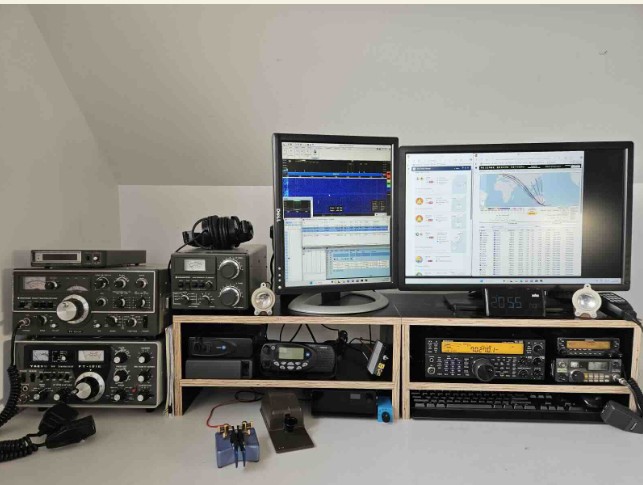
Thanks also this week to Lance VK7TO who has scored the top spot for the second week in a row; last week, Lance’s you-beaut CQQRS band-plan had pride of place…
This week it’s his beautifully neat shack, resplendent on centre-stage with his beloved Kenwood TS-590SG, TS-5208S (justifiably his favourite boat-anchor), Yaesu FT-101E, Kenwood TM-V71 and even a NZ-built Tait TM8235 if I’m not mistaken (doesn’t everyone have a couple of them on 70CM as AllStar hotspots these days?)
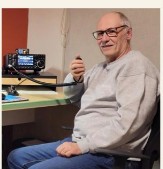
Welcome this week to Allan VK2GR who lives in Ulladulla with his wife Josette VK2FXGR; Allan is a keen CW DxXer and contester who also enjoys a good rag-chew.
Allan is also one of the Directors of the international CWops organisation which shares our aim of encouraging others into the fine art of CW (well, in my case, the rough art!).
Welcome Allan, and nice to catch up with you on the net for the first time a week or two back; will we hear Josette on soon as well?
Reports
After next Tuesday’s Group, please send me a list of who you worked and / or who you heard using our web form here:

Please help attract new and old team members to have a go by submitting your repor each week. Submissions close 1300 (Eastern Australian time) on Thursday.
Oh and by the way, I recommend that you don’t keep the website open between submission of reports from one week to the next; if you’re unlucky, there’s an undocumented feature in the software that could cause your current week’s report to be combined with your previous report – it’s happened before and happened to me again this week.
Website
If you’d like to find out a bit about our net, or would like to pass information to others about our Tuesday get-togethers, here’s the link to our website.
Bit.ly/CQQRSWebsite Cheers, mb Mark Bosma VK2KI / VK6QI Beautiful South Bowning NSW mark.bosma@icloud.com non impsditi ratione cogitationis
Southern Australian region MUFs were depressed 15-30% after local dawn on Tuesday following overnight G3 geomagnetic activity associated with a prolonged interval of southward interplanetary magnetic field (IMF) conditions.
Northern Australian region MUFs were 15-20% enhanced after local dawn. The southward IMF conditions appeared to have ended and southern Australian region MUFs were expected to gradually recover that day.
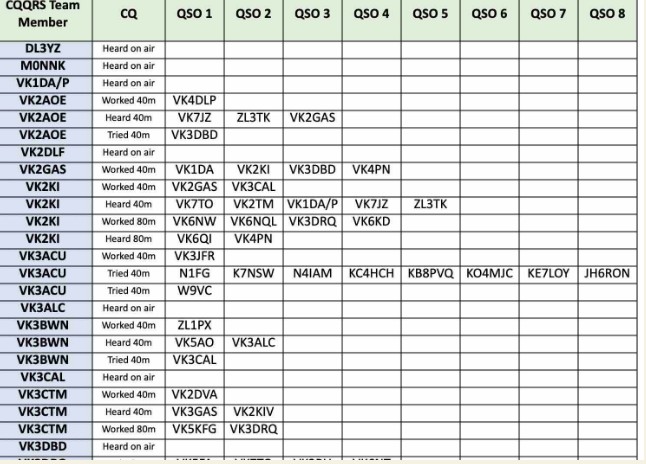
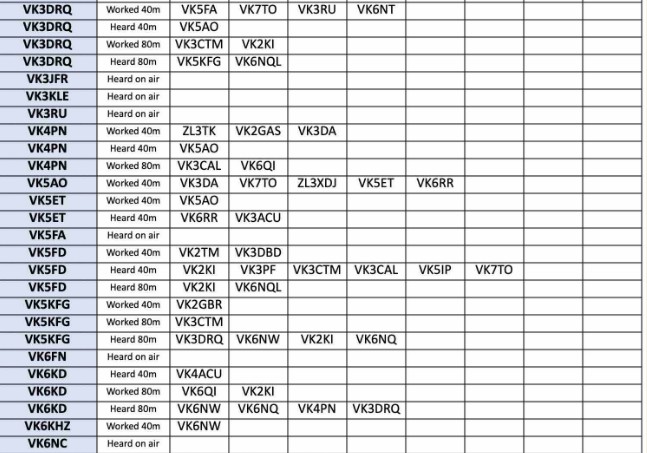
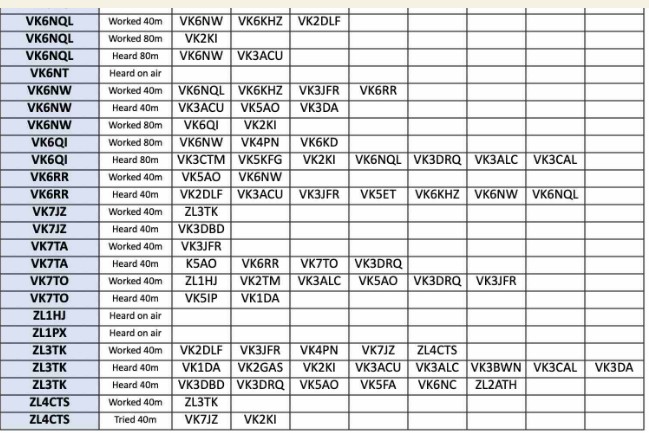
Here’s the 64 stations heard by 38 members of our team on Tuesday: a, eS a , i, SS SS a as
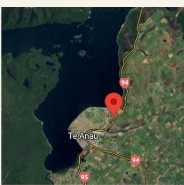
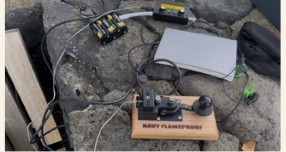
40m] forgot the time delay, so things started kicking off when the battery was low, as was the light and temperature!! Jsing QCX mini from QRP Labs and navy lameproof key.
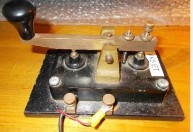
[40m] As many of you may know, I had a bit of a nasty stack on my motorbike. I severely dislocated and broke many bones in my foot and ankle. While that was certainly unfortunate, I am extremely grateful it was not my hand / CW fist!
Conditions on 40m have been strange all day. The only VK station I heard was James VK3JFR, and then all of a sudden, the DX stations started piling in like crazy!
[40m] The first two stations, VK1DA and VK2K! disappeared in the noise during the QSO. Sorry my friends. We will talk again under better conditions.
[40m] 40m band sounded dead from my QTH until about 2125 when I went back. By then the band had opened up and was crazy with signals. Pity I had an early morning start so
[80m] 80m band appeared active all night until about 2130HRS WST when the waterfall display went blank. Almost like 80m switched off and 40m switched on. I guess that’s radio. 73s to all.
[40m] Another night of great conditions for trans-Tasman to east and central VK. What a difference a week makes! Heard only one weak and fluttery VK6. Less than optimum propagation for intra-ZL contacts, heard two and worked one ZL, both much weaker than VKs.
No response to CQs for Settle-to-Carlisle traffic on 7.0257 MHz.
[40m] 40m was working OK, including ZL coming into WA very well, but east coast stations were a bit weaker.
[80m] 80m from the east coast was weak with some QSB.
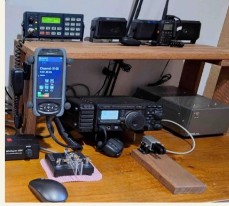
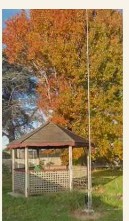
[40m] Good to QSO with Wayne and Mait. Regretfully couldn’t stay as other duties called – yet again!!!
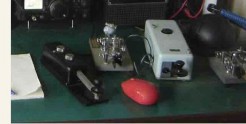
Our new family member, Calvin VK3CAL from Koondrook. This week, Calvin didn’t have the same technical problems with his key as last week, so hopefully he was able to relax and have a bit more fun.
I heard/read later about the big fade-out on 40m – one minute our bit of the band was full of signals, the next minute, nothing. I’m hoping we get a few reports about it from our other reporters.
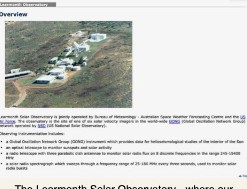
Also from your editor Mark VK6QI at Beautiful South Bowning NSW via the VK6SR Remote HF station at Jandakot and the VK5PH squadron of KiwiSDRs at Ironstone Ranae SA.
[80m] After a long dinner that involved a lot of yelling in our tiny AVan by visiting small children, it was nice to come back to the peace, quiet and gentle noises of 80m and hear a bit of activity.
I noticed a good long chew of the rag further down the band by Tony VK3CTM and Greg VK5KFG – nice signals into SA, but I ended up responding to a CQ by Wayne VK6NW at Bridgetown.
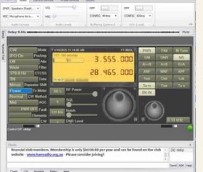
Earlier in the evening, Rob VK6LD had done a reset on the Southern Electronics Group’s VK6SR Remote HF Station for me (the software was producing a side-tone and allowed me to move some controls…. but wouldn’t allow me to switch the radio on!).
That demonstrated to me what I had concluded – the side-tone is probably generated in my computer here – which explains why there’s no latency despite delays via the internet.
Anyway, after Rob reset the system, it performed well and I enjoyed the three nice rag- chews. I’m hoping that we can twist the arms of our EU/UK operators to again join the SEG and start coming up on the Remote when the weather and propagation gods turn against them as they head into Autumn.
[40m] I explained to Colin VK2DVA that I know of an 800 square meter block of land which has located on it a 46 meter tall antenna tower and a very nice little ‘shack’! More info to come.
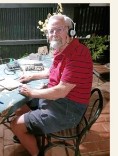
[80m] Greg VK5KFG in Willunga – ‘Who gets the job climbing to the top of it?’ I had mentioned a 46 meter tall tower in a rural setting which I had been admiring. Part of my reply was ‘Not me’.
[40m] Due to other committments I had only about a 30 minute window for 40m. Got on air at 18:15 and called a longish CQ just to see where I was picked up by the reverse beacon network. Stan ZL3TK came back with a big signal and we had a brief chat.
Did not have to call again as VK2GAS called me as soon as I finished with Stan.
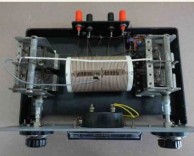
Another short QSO as I was conscious of time. Looking at the clock, I managed a quick QSO with VK3DA and that was it for the afternoon. Signed off at 18:40.
VKSDA was a new one for me never heard him before on the QRS net so it seems he is only a casual visitor.
[80m] Got back home around 22:15 and went straight to 80m. Ironside SDR was full of noise and just a single trace at 3.550 MHz.
I listened for a while for call signs but chat was slow and long so I decided to call CQ on a nearby frequency and observe the trace. Another trace was popping up intermittently on 3.535 MHz so I tuned on frequency and called QRZ.
No reply and I was just to give up as VK3CAL came back at average speed but with big delays between words and fragments of sentences. Calvin was on L-plates but after a while we exchanged all elements of a QSO. High level of QRN did not help.
I have no idea where the QRN (static) was coming from as BOM site did not show any storms within hundreds of kilometers. By the time QSO with VK2CAL was over I could see that traffic at 3.550 was one way so I moved up and waited for the next CQ sequence.
It was VK6QI with a fairly strong signal about $8 but shredded by QRN and static. Mark must have been using remote access as the overs were very slow and not flowing smoothly but we managed a short chat. By the time we finished it was almost 23:00.
Not sure why so many QRS net participants are not using 80m band. Later at night it works fine, in fact most nights after 20:00 I manage to work heaps of DX on 80. Gray line propagation to Europe in the morning is currently just fabulous.
I hope this info will give you some incentive to give 80m a go.
[40m] What a great evening. ZL1HUJ, Mick, was the first cab off the rank. I was surprised how well ZL was coming in given that it was still early in the evening. Then VK2TM, Trev, who I’d last chatted to two years and one day ago.
Quite the interlude, so was nice to re-make each other’s acquaintance. Next up was VK3ALC, Ivan, a new call for me, and new to CQ, but doing a fantastic job. He noted that he was using a cheap set of paddles, but no-one would have known based on his sending.
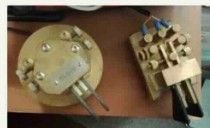
It was during my next QSO, with VK5AO, Mait, that disaster struck. Whilst sending, my straight key wasn’t making good contact, so after passing it back to him, tried to quickly clean the contacts by pulling a piece of paper between them.
Copying CW and adjusting my key to accept the paper thickness was evidently beyond my capacity, as I ended up with a massive gap, and unable to close it down during our QSO.
As I saic to Mait, it felt like I was pumping one of those hand operated water pumps of vore such was the
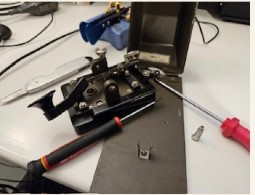
Wi te aT A aaa a Nal a OI a a a eek hand operated water pumps of yore such was the long action of the key. After we concluded our QSO I required pliers, screw drivers and a craft knife to get my key back to a state of smooth operation.
With pleasant recognition, VK3DRQ, Manny’s distinct fist found my receiver. Always an enjoyable chat, I’m sure we would have continued longer had signals not started fading
Onus. Over the space of one over he went from armchair copy to very deep QSB. The QSB was then followed by wide band QRN the likes of which I’ve not heard before, but managed to squeeze in a very brief “hello” to VK3JFR, James, before the band became unusable.
I tried looking down on 80m, but it too was unusable for me. It was only afterwards that I saw that had it been a cloudless night, we would have been treated to a very visible aurora. ‘Twas a good time to retire back into the house and the warm fire.
[40m] am afraid, the band was not as populated as last week. 80m] started with OM Mark VK2KI with little QRN but about 10 ninutes into the QSO it started getting worse and we had to ibort, only some letters but no words were possible to copy.
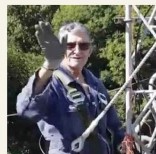
From Jim Semmens VK7JZ at Queens Domain (Hobart)
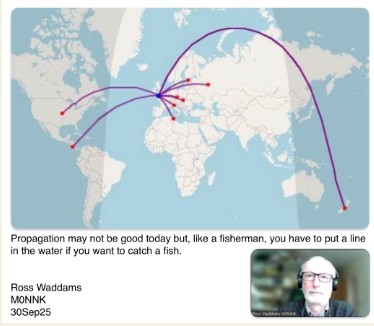
[40m] Left work early to go find high and flat ground to set up the vertical whip and see if I could make a pre-booked DX QSO with Ross DL/MONNK.
After many exchanged emails confirming Ross was calling me, and me then returning making the call – we tried on 20, 15, 10 meters arrived at no QSO with neither of us being able to hear the other on any band.
In the middle of this fun it started to rain so the radio and my key made a quick change of setup moving from the bonnet
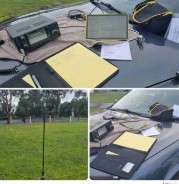
Of my vehicle onto the dash with windows wound up. I was then fortunate to have a QSO on 40 meters with Stan ZL3TK but I suffered from a fried brain and was not keeping up; Stan sent a question with a word in it that I think related to my work but I did not get the context around the question – Stan was patient but for me it was one of those nights where the brain was not switching on.
Odd how sometimes I am getting it, and other times I am not. I have been drilling and practicing and will come back next week.
[40m] I Some nice sigs until the local noise level got too high.
[80m] Are any WA folks interested in an 80m short session – on other nights?
[40m] I just did a quick check for fun on 40 m and I was able to hear my signal on 40 m on the Ironstone Range KiwiSDR! – OK just S1 but… Thats cool. Think ionisation is there, but MUF just dropped due to the geostorm.
Now I need to try to beep to someone from the VK net HI. 73 Mike. [That’s very exciting news Mike; I hope we can swing a QSO on 40m during the net soon.
Perhaps when Lin VK6NT is operating the VK6NC Northern Corridor Amateur Radio Club station with its 40m Yagi for a start? But when the grey line is correctly aligned, we might even swing 80m one of these days – wouldn’t that be something?
Flash me an SMS if possible when you hear yourself in Australia, so I can let the team know via our WhatsApp Alerts group?}
POST MORSUM 1st October
Ne thre athe Noh be th Dh Sine ctrnneMcldads bab th then oat the A}
From Richard VK6HRC. Six on the South West repeater and AllStar/Echolink hub this morning.
REIN NEE BEEN RONPRALEE Wk Tle VK6QI Mark VK6KD David VK6FN Max VK6NW Wayne VK6HRC VK6MRB Mulligan SWL.
Ae SES ae SS ee Ce ee er ae ew VK6QI Mark VK6KD David VK6FN Max VK6NW Wayne VK6HRC
Mark called in from beautiful South Bowning to let us know that he enjoyed the evening catching up with Calvin VK3CAL and Armin VK2GAS on 4m heard five others. Then there was a break in proceedings for the evening meal.
On his return he operated from the Southern Electronics group remote in Jandakot WA which performed nicely once Rob VK6LD re- booted the system and worked Sava VK4PN, David VK6KD and Wayne VK6NW on 89m.
David worked Mark VK2KI / VK6QI on 8@m and nothing on 49m thanks to the solar storm. Max missed out once again due to an untimely phone call from a friend and they had a lot to catch up on so no contacts in the log. Better luck next week Max !
Wayne called in from a cool foggy Bridgetown catching us off guard sending some nice code to start with ! He worked four on 4m and Mark VK2KI / VK6QI on 8Gm.
I also missed out, so back to the practise drills and hopefully some random pit Nady ey Wan Snes pe erat ened NT yee ER oa en Ved ea
! also missed out, SO Dack to the pract contacts before next session. Thank you to all on last night and this morning stay safe Richard VK6HRC
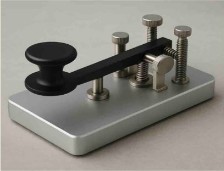
This Week’s Topic of Interest
CW Signals – What am I Hearing? A Primer on Receivers by Lance VK7TO
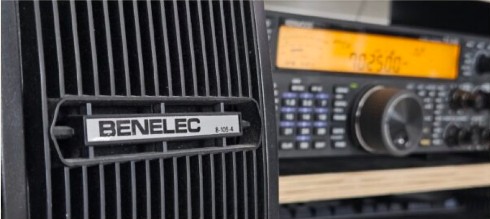
CW Signals — What am I hearing
CW Signals — What am I hearing By Lance – VK7TO If I’m listening to a CW signal on 7.025 MHz, what magic transpires such that my receiver oulputs a 500 Hz tone for me to listen to?
In the lineage of CW receivers, we went from receivers of Spark Gap signals, to the common heterodyne analogue receivers, and the more recent Software Defined Radios (SDR).
While this discussion will focus on heterodyne receivers, it is analogous to SDRs, where similar processes take place within the digital domain. The central player in our RF to AF adventure is the Beat Frequency Oscillator (BFO).
What problem does the BFO solve? ACW signal is simply a radio frequency sine wave of constant amplitude and frequency. Given that it has no modulation, if you tuned an AM or FM receiver to the signal’s frequency, you would hear nothing, other than perhaps some faint pulsing, because there’s nothing to demodulate.
The BFO then is responsible for converting a Radio Frequency (RF) signal into an Audio Frequency (AF) signal, which it achieves via frequency mixing. How does frequency mixing work? Conceptually, mixers are simple devices.
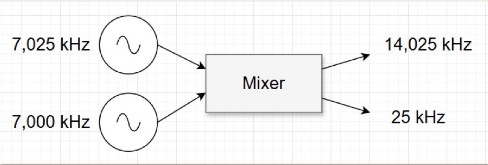
If we feed into the mixer two frequencies, we will receive two transformed frequencies out: the sum and difference of those frequencies.
Take the example below, where feeding in 7,025 and 7,000 kHz, outputs a waveform with 14,025 and 25 kHz frequencies (7025 + 7000 = 14025; 7025 — 7000 = 25)
What exactly is the BFO and how does it use mixing?
If we know that we want to output a 500 Hz tone, we need an oscillator which will generate a signal with a frequency 500 Hz away from the CW signal. That oscillator is called the Beat Frequency Oscillator (BFO).
This time we feed in our CW signal at 7,025, and our BFO signal at 7,025.5 kHz, to get 14,050.5 kHz and 500 Hz out. Of course, we care not for the summed frequency of 14,050.5, so is filtered out leaving only the 500 Hz AF tone.
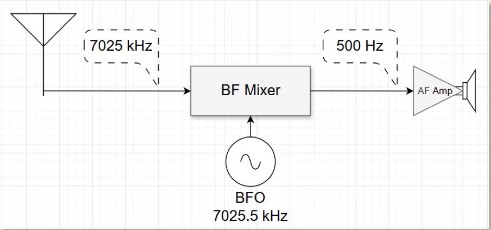
At this point we have an audio frequency, which with some amplification can drive a speaker or headphones, and ta-da, we can copy that silky smooth CW being sent by our partner!
The block diagram above is actually that of a direct conversion receiver which you can build with very few components. They are great for experimentation but rather limited and a far cry from what we use in our shacks.
Stay tuned for the next instalment where we’ll consider how the BFO is implemented in the radios we use every day, and how we tune for a CW signal. [Sensational article – thank you Lance!
As if he doesn’t have enough on his plate already, this will be the first of a number of articles relating to helping you an me understand what’s going on in our shacks – thanks mate!]
If you have an article or two that you think might be of interest to our readers, please let me know so we can share more thoughts and ideas; for guidance on writing for RagChew, see Articles below. Please email material to Mark VK2KI: cqqrsnet@gmail.com

On My Workbench
EMR Safety Management Book — a, b, c
ENN Valcly MNaGIaYCrICIn DVUUR ™ da, vy, & By Lance – VK7TO Does your amateur radio station comply with EMR safety guidelines? The WIA and RSGB tools enable you to quickly evaluate, mitigate and document your station.
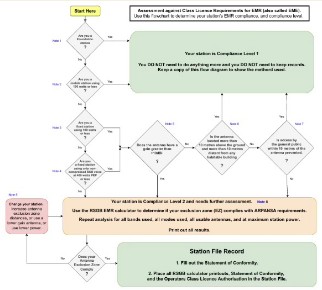
I expect that in most instances, it would take less than 10 minutes to give you confidence in your station’s safety compliance. It really is as easy as a, b, c. For each transmitting antenna, simply complete the a, b, c below:
a. Flowchart
Download a copy of the flowchart as a PDF or from the WIA’s site and work through it. If you end up with a Compliance Level 1 station, you can skip step b and go straight to c.

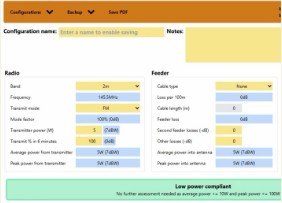
If the flowchart above resulted in your station requiring level 2 compliance, complete the RSGB calculator. Where my antennas are used on multiple bands, I ran the calculator for all bands and saved the result of the band with the largest exclusion zones.
b. Document
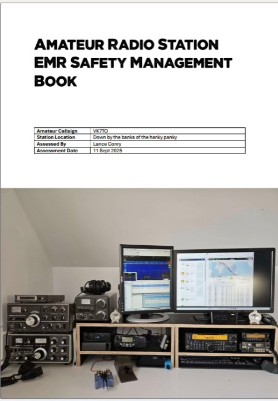
Record your antenna details with a copy of the completed flowchart and calculator (where required) for each antenna in your station’s EMR Safety Management Book. I have provided a template, and a copy of my station file for reference.
And that’s it, you’ll have satisfied your requirement to manage EMR according to the current advice from the WIA. Template: https://tinyurl.com/4a56ns8y Exampl https:/tinyurl.com/56wadwr33
A word on exclusion zones. Remember that the whole point of the exercise it to ensure you’re not causing any harm. It is up to you to determine what constitutes a exclusion zone in your context which would lead a reasonable person to not stray within it. [Wow!
Thank you very much for simplifying, explaining and sharing this with us Lance – especially your excellent template and example of your own EMR record.
Your article will help make this so easy for everyone to comply with their license responsibilities – outstanding!
Impulse Purchase
From Mark VK2KI / VK6QI In last week’s RagChew Edition 39/2025’s editorial comments, I mentioned a video of Part 3 of the rebuild of a Yaesu FT-101 by George VK2AOE (_https://youtu.be/ae2X6wJC6P8 ) that was in the Reports section.
| said I’d been excited by the prospect of the TinySA DC-to-daylight spectrum analyser with built-in signal generator – calibrated down to a fraction of a microvolt – and on the spur of the moment, impulse-bought a ZS-406 TinySA+ Ultra from the authorised manufacturer Zeenko via Ali-Express for a bit over $220.
Mark VK2DI asked me which model and manufacturer I’d chosen – he’d been considering one as well. Here’s my thinking – done with no more than about 10 minutes internet research – so a high-quality result may not have been on the cards: hp warned that a number of manufacturers had made knock-off copies of the design without authorisation; only items supplied by sellers listed on the website should be used.
So I only looked at the items sold by Zeenko on Ali-Express. + The TinySA website listed four models – selling for around $50 (2.8” screen model) to $500 from memory. * I settled on a mid-range one – the ZS-406 TinySA+ Ultra. Why?
I have a NanoVNA with a tiny screen – works wonders (DC-to-daylight as well), but a larger screen would have been nicer. So I went for a 4” screen.
Larger SCreen WOUIG Nave DEC MCer oO! Werit fOr a ¢ Note, one thing that these units can’t do yet is sync the signal generator in sweep-mode to the spectrum analyser; in fact, you can’t use the sig gen with the spectrum analyser at all.
Luckily I have a slightly faulty full-sized spectrum analyser already, and although I won’t be able to sync the scans, there’s some chance that I’ll be able to use the pair to sweep filters.
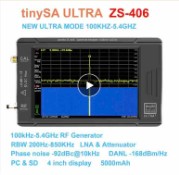
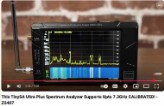
PIS o a PUM IUD VINE AVUUL LIS PIyort Ultra Plus: https://www.youtube.com/watch? v=SBNHhFtVilk&t=263s There’s bound to be other videos out there as well.
So I hope that’s provided a bit of light entertainment Mark; I’ll let you Know how my impulse buy works out when (if?) the unit arrives in a week or two.
What’s going on on your workbench? If you have an article or two that you think might be of interest to our readers, please let Mark VK2KI know; email to cqqrsnet@gmail.com For guidance on writing for RagChew, see Articles below.
Hand Copy Practice
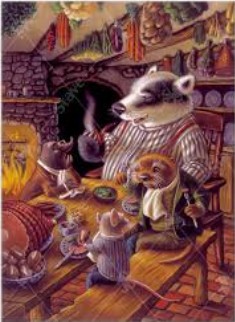
This week we have the second half of Chapter 4 — Mr Badger, and like last week, it is recorded at 16 wpm. Anyone who wants the slower speed, you can find 12 wpm audio files in previous Newsletters.
Or you can create your own MP3 files from the Chapter 4 txt file included in last week’s Newsletter. Because of MailChimp’s size limits, I’ve split Chapter 4 into 4 parts. Each part is over 1 hour playing time @ 16 wpm. Parts 3 and 4 are attached below.
If you’d like the full chapter in a single file, you can use the complete text of Chapter 4, and convert it yourself with the Ebook2CW app — hitps://fkurz.net/ham/ ebook2cw. html. I’ve made a few small adjustments to the text to keep it “Morse friendly”.
Uncommon punctuation has been removed (the Ditto CW app doesn’t recognise some of it), and contractions have been simplified (for example, we’ll becomes we will).
This week’s attachments include: Two MP3 files (second section of Chapter 4) * Two text files matching the MP3 segments


You can either play the MP3 files in any media player, or load the text files into the Ditto CW: Morse Player app — https://dittocw.andro.io/.
Both work well, but Ditto CW gives you complete control over all Morse settings, while a normal media player only allows changes to playback speed, and does that in steps (e.g. +1.25x, 1.5x, 1.75x).
Other News
Wish I Could Fix the Bloody Thing!
From Patrick VK2IOW I just saw this article. Mark and I were talking about this issue some time ago, when my pressure cleaner stopped working (I still haven’t attempted to look at it again).
Hitps:/Awww.theguardian.com/environment/2025/oct/01/appliances-were-once-built- to-last-now-theyre-built-to-break-how-do-we-fix-it
The German Amateur Radio Club
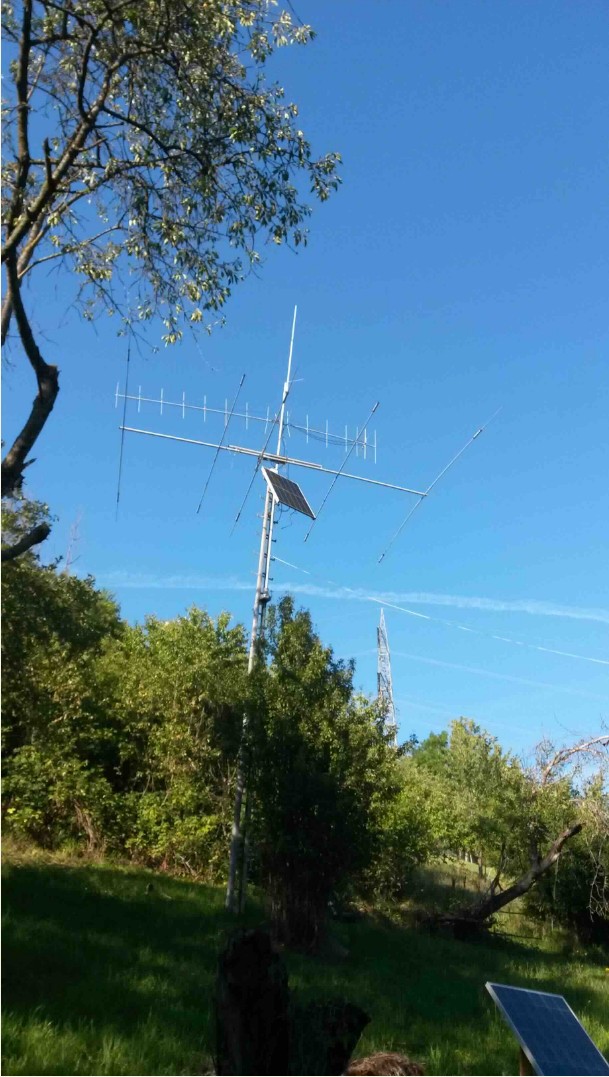
As you know, whn I can I try to operate from my local radio club hut at Pits Meadows – with its nice HF Yagi antenna. It used to be a very active group, but now the active part of group is only 4-6 people.
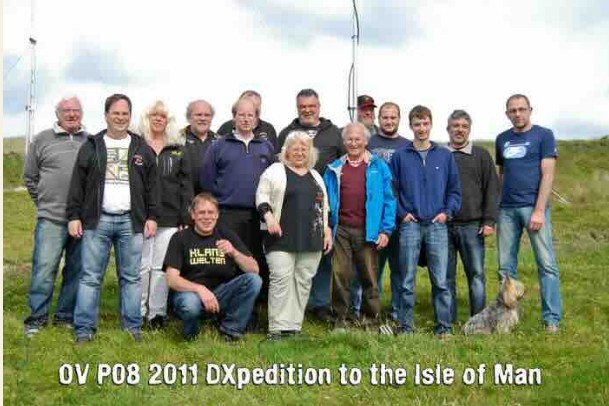
Some clubs in the cities nearby are bigger, and there are more activities around them. But I think none of them have a hut with a beam like us.
In Germany, the DARC (German Amateur Radio Club ) is not exactly the umbrella association of all the small local clubs that may have formed historically in bigger cities, like in other countries.
It’s in fact one big club, and its organized in 24 districts and about 1000 local units. We have about 32.000 members. Membership is optional for German HAMSs, so you don’t have to be there, but its a very active community.
We have a monthly print magazine called CQ-DL, which contains articles of the members (a bit like our RagChew) and of course a big craigslist of used gear, always worth a look.
The members have a insurance for the hobby, and we can ask for help in troubleshooting interferance and other troubles. We can lend measuring equipment, and have QSL cards send for free to bureaus in other countries (even if it takes years sometimes Hl).
[E2FOTO And there are workshops and educational programs in the main facility in Baunatal, and of course via their own video conference platform. There is even an online CW course. All based on voluntary work of the members, and mostly free to attend.
Local clubs get some monetary support for their events, like contests or for programs that bring in the youth into the hobby or have some external impact (like having a booth at the city festivals or go into school classes and present the hobby, etc).
But, as the local groups are no ‘local club’ per definition, we don’t fall under the support of our city, like the other local clubs do. So finding a meeting room is quite difficult.
We solved this problem by meeting in a greek restaurant and have some souvlaki with Ouzo every month. 🙂 Yamas! Mike DL3YZ [Thanks for the insight Mike.
I hope you can generate a bit of interest in your local group – to make best use of Pits Meadows and those nice-looking Yagi antennas… and friendly dormice of course.)
Morse Training Net
Our team member Nic VK7WW runs an on-air Slow Morse training net every Wednesday at 7pm EDST on 3580 for 30 mins. He uses the callsign of the Northern Tasmania Amateur Radio Club VK7TAZ on that net.
Many of our team learned Morse code with the support of Nic, and the weekly training session comes highly recommended for anyone who wants to learn the Code, or simply brush up.
Everyone’s welcome – 3580KHZ at 7pm Eastern time every Wednesday; you’ll hear lots of the CQQRS team on that net. Jordan VK3ACU has recorded the complete set of lessons which you can now find here:
Https://www.youtube.com/playlist?list=PLHsQmZz6fBXO7swAfbTmutrbbEL17fUQL Contact Nic VK7WW for more info nicholaschantler@hotmail.com including how to join the NTARC DISCORD group to follow the action, or just come along and join in on Wednesdays.
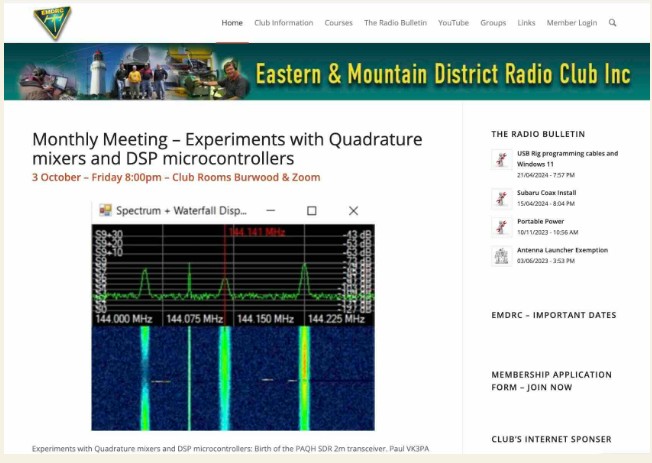
VK2AOE Portable ZL
Presently I’m on Waiheke Island, just East of Auckland untill about Oct 10TH. I have a high balcony overlooking the ocean. I forgot the Daylight Saving time difference which started this week, so I started too early!
Hoping I can find a spot for an antenna for next week’s net…. if I get the timing right this time! Hopefully hear u on the air next Tuesday 73 George ZL/VK2AOE


Uv oettie tO Vdllisie NdaliWay Ullalienge, Ween <2 MEport
From Stan ZL3TK We’re well on our journey. QNC NRO1 featuring Settle town, has been available for download for more than a week; it will remain available only until Sunday 05 OCT 25 when two weeks will have elapsed.
Last Sunday, QNC NRO2 from the ‘Morse with a Purpose Society’ took us to Ribbledale, the first stop on the up-line after leaving Settle.
In addition to its magnificent viaduct, the immediate area provides a rich source of Morse practice material and introduces a tool for managing the railway’s vulnerability in severe weather while on exposed moorland transits.
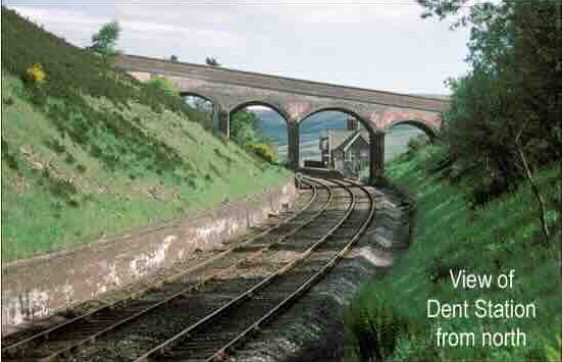
Next Sunday’s QNC NRO3 takes us up the line to Dent, a little-known station with a big claim to fame on the vast North Yorkshire Moor. Does Dent Station deserve its subtle fame? You tell ME in your QTC.
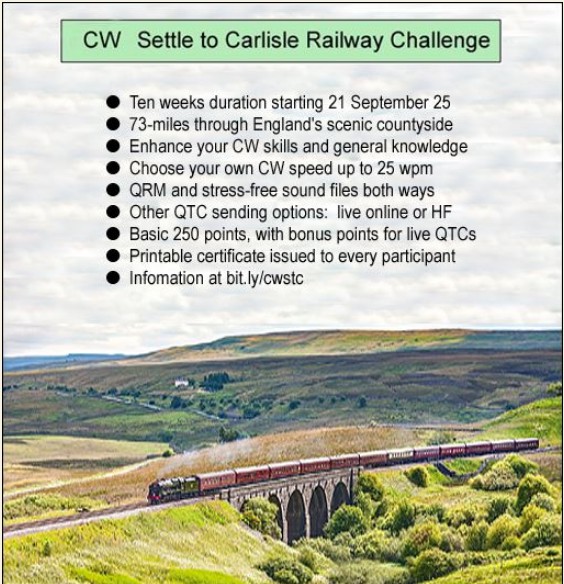
There are no short-cuts to becoming confident and competent in Wireless Telegraphy, however tools are readily available, one being the STC Challenge which provides resources in a relaxed environment, a whole two weeks in which to deal with each QNC.
So far nobody has used either of the two online Morse apps to send a QTC; will you will be first to try this ‘modern’ QRM-free option? Online QTCs attract five bonus points, or ten bonus points when sent on HF, so why not raise your sights?
Congratulations Mark VK2KI
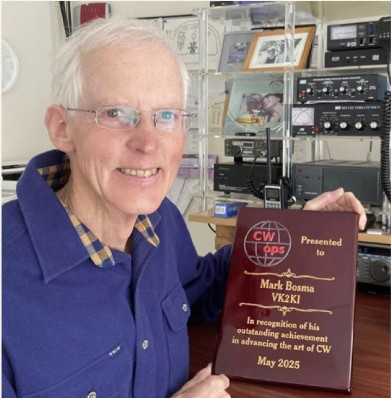
Congratulations Mark VAZAI By Lance — VK7TO I was catching up on the June edition of Solid Copy, the CW Ops newsletter, this week when I saw a familiar callsign. Congratulations to Mark for receiving the CW Ops “Advancing the art of CW” award.
This is a world-wide, annual award in recognition of individuals, groups, or organizations that have made the greatest contribution toward advancing the art or practice of radio communications by Morse code.
He was recognised for the CQ QRS Net, and our RagChew for which they thought “magazine” a more apt term than that of a humble newsletter. I’m sure I speak for all the CQ QRS family, when I say hear, hear; well deserved recognition for all that you’ve done Mark.
[Well welll Thank you Lance for letting the cat out of the bag! It was my absolute pleasure to accept one of this year’s CWops awards for advancing the art of CW on behalf of the CQQRS team.
What started out as slow CW QSOs for a hand-full of people who were on the learning journey, has grown into our weekly net with usually four to five dozen participants, most from Australia – but we also have a number of New Zealand, Europe, United Kingdom and even US participants.
But let’s put that into perspective – in Australia, we have around 15,000 licensed amateurs – that’s about the average number of amateurs for just a single US state, so getting around 40 to 60 stations on air on CW every Tuesday is to me, simply amazing.
So the aim of our six hour Tuesday evening 40m and 80m activity is of course to encourage new CW operators to have a go at a QSO or two, in a safe and encouraging environment where mistakes are expected.
And to help make that happen, we have over 230 team members available – some are themselves new to the art, but many are very experienced operators, who enjoy helping the new ones – be it basic callsign and report exchanges, or for those who are getting more comfortable with CW, a bit of a rag chew.
And what’s more, most of the experienced operators have themselves re-discovered the joy of the nice QRS rag chews that are common every Tuesday. What I fee!
Has contributed to CQQRS being so popular for so many years is the friendly team environment that’s developed. Encouraged by our weekly newsletter, most of our team members really look forward to getting together every Tuesday – great fun and great practice.
So thank you to the CWops Committee for Advancing the Art of CW for recommending this activity to the Board. I was floored when I heard from them that we’d been nominated for this award; and thank you to the anonymous person or people who took the time to nominate our group.
It is my absolute pleasure to accept the award on behalf of the whole CQQRS team. Without the 200-plus keen operators all themselves working to advance the art, this would not have been possible.
Thank you CQQRS family Mark VK2KI/ VK6QI Adapted from my acceptance video replayed at the Annual CWops dinner at the Dayton Hamvention 2025.]
If you’ve read something that you think might be of interest to our readers, please let me know. For guidance on writing for RagChew, see Articles below. Please email material to Mark VK2KI: cqqrsnet@gmail.com
Beatsworth
This week Chris Rutkowski – NW6V – added a new article to his website – https:// morsebusters.corm – in which he critiques traditional Morse code training methods, particularly Farnsworth and Wordsworth spacing, for disrupting Morse’s inherent rhythm.
These methods extend spacing between characters and words to aid learning but inadvertently train learners to perceive incorrect timing, ultimately hindering rhythm based proficiency.
Chris proposes “Beatsworth” spacing, an alternative that preserves Morse’s musical like beat by adding whole beat intervals rather than off beat delays. This ensures that all characters stay aligned to a steady rhythm, reinforcing correct neural patterning.
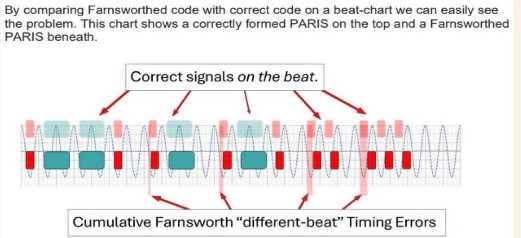
He also introduces the “Morse Metronome”, a technique that uses silent or low- pitched letters (like “e”, “i”, or “s”) to simulate whole-beat word spacing.
By manipulating pitch using features in Morse Code World’s CW Generator, learners cal maintain rhythm while training at slower speeds without disrupting flow.
Together, Beatsworth and the Morse Metronome offer rhythm preserving, customizable training tools that address the core issue overlooked by conventional methods: Morse is not just about durations, it’s about rhythmic flow.
Go to https://morsebusters.com/ for this article, and many more useful downloads.
If you’ve read something that you think might be of interest to our readers, please let me know so John and I can share more thoughts and ideas. For guidance on writing for RagChew, see Articles below. Please email material to Mark VK2KI: cqqrsnet@gmail.com
Prosign/Character/Signal of the Month
[Suggestion – put it on a sticky note near your key as a reminder for Tuesday. I’ve been using both AS and last months KW (!) each week on the net (with the help of my sticky note) – how about you?]
Di-dah-di-dah-dit
Next Tuesday’s Net
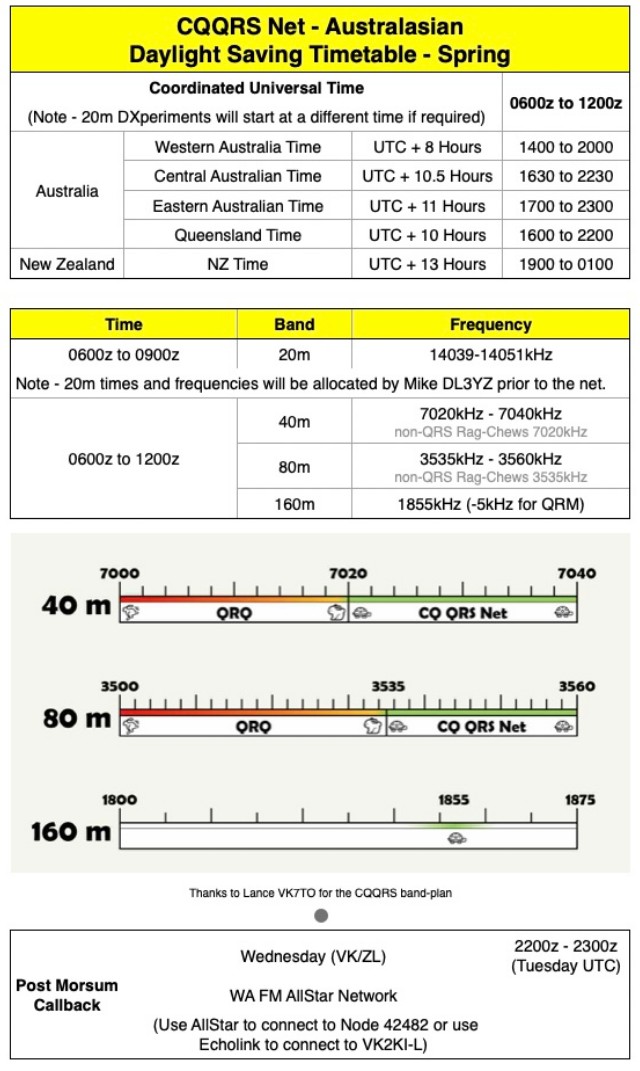
Our CQQRS Group will be on as always on Tuesday from around 0600Z until abou 1200Z; see https://bit.ly/CQQRSWebsite and navigate to the Net Details page for details.
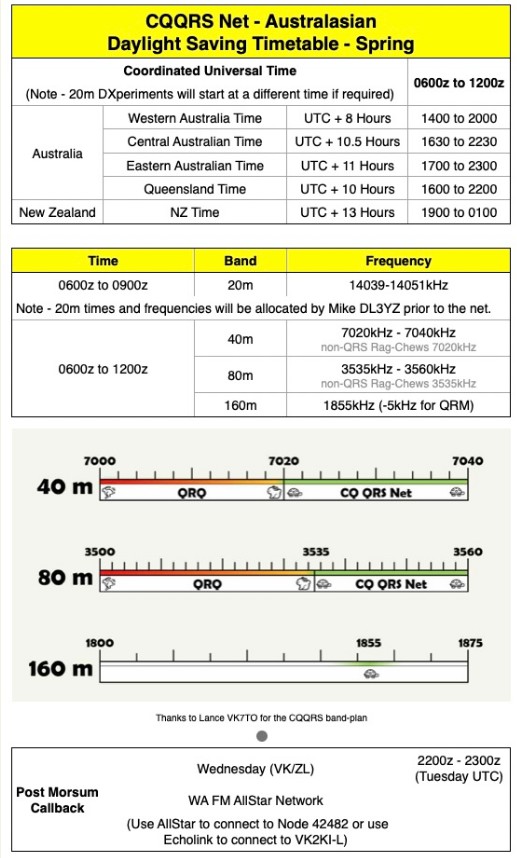
Doesn’t matter whether you’re brand new and want to try just exchanging callsigns and RST reports, or you’re ready for a good old rag chew. We’ll have fun.
There’s usually people around until after 1200Z – so keep calling in the segment of the band designated in the table below until you catch someone.
I should be on as usual from home in NSW or via the Remote at Bedfordale WA, and I’ll also be watching the proceedings using the VK6QS and Tecsun SDRs in WA and NSW respectively. Hope to hear you there.
Please let us know via our Reports form bit.ly/CQQRSNET who you work or hear on Tuesday’s Group. The report form closes at lunchtime (Eastern Australian time) on Thursday.
And by the way, a reminder; if you send me any information by email, our report form or WhatsApp – unless you specifically state that material is not to be published, I’ll assume that you’re happy to see your thoughts in the RagChew newsletter.
Post Morsum
Richard VK6HRC will run our phone Post Morsum on the South West AllStar net (via repeaters and hotspots all over WA) from 0600 WA time, then from 0700 WA time on 80m (8605 LSB).
See https://bit.ly/CQQRSWebsite and navigate to the Net Details page for details of how you can connect via Echolink or even possibly via your local FM repeater.
Articles
The newsletter is interesting to readers because of the material contributed by so many people – be it the reports each week or the various articles. Could you write a short article or articles for RagChew? You bet! Writing not your strong point?
Don’t worry, I’m very happy to help as much or as little as needed. Here’s a thought – although our readers will much prefer your own writing, perhaps have a go at using a Large Language Model Artificial Intelligence tool such as ChatGPT, Microsoft Copilot or Google Gemini to check your writing or even to actually draft the whole article in a relaxed easy-to-read manner!
You can find out more about how to do that on the Newsletter page on our website bit.ly/CQQRSWebsite. Our website also includes a suitable prompt (the command you feed to the Al to make it do what you want).
Please remember though – you must fact-check anything that an Al tool drafts for you because Als ‘hallucinate’ – ie if an Al can’t find what you’re looking for, it will make up an answer and present it as a fact!
This is one of the dangers of using Als – it’s quite probable that the tool will create a very readable and convincing draft that is 100% wrong! You as the submitter are responsible for fact-checking.
But it’s a learning experience – please let us know how you went if you had a go with this new generation of tool. And by the way – lam very concerned about our future in a world of Al – but I’m pleased to see that school and university curriculums now focus on understanding the risks – for instance, kids are now learning critical thinking something that used to be taught mostly at post-graduate level.
When the typewriter was invented, people predicted the downfall of handwriting; when the word processor was invented, the art of writing was thought to be on the way out – ditto for the spreadsheet and arithmetic, AM, SSB and FT-8 for amateur radio etc.
We can ignore Al and hope that it just goes away… or we can learn to handle it through experimentation and use. For more guidance on writing for the RagChew newsletter (including help with using an Al), head to our website bit.ly/CQQRSWebsite then click the menu on the top right and then click RagChew Newsletter.
Teamwork
Thank you so much to our team of 26 contributors: DL3YZ, VK2AOE, VK2GAS, VK2IOW, VK2RU, VK3ACU, VK3BWN, VK3CTM, VK3DRQ, VK4PN, VK5AO, VK5ET, VK5FD, VK5KDO, VK5KFG, VK6HRC, VK6KD, VK6KHZ, VK6NQL, VK6NW, VK6RR, VK7JZ, VK7TA, VK7TO, ZL38TK and ZL4CTS.
And a special thank you to our editorial team, Nigel G4RWI (software guru), Patrick VK2IOW (image consultant), John VAK2RU (diverse reader), Richard VK6HRC (Post Morsition) and Lance VK7TO (this week’s lead technical contributor). Great work all!
All-Nite:
NH = ff But thanks to the support of the editorial team – here it is – just a tad later than planned! GU CW on Tuesday, mb Mark Bosma VK2KI / VK6QI Beautiful South Bowning NSW mark.bosma@icloud.com non impediti ratione cogitationis

About the CQ QRS Net
For the current schedule and more information about the CQQRS net, please go the the Net Details page on our website:

The opinions expressed in the RagChew newsletter are those of the individual contributors. The opinions do not necessarily reflect that of the editor or of the CQ QRS Group members.
Any material and images received from members by the editor or published on the CQQRS WhatsApp groups may be published in this newsletter unless specifically requested otherwise.
The values, doctrine and guidelines for the Group and for the newsletter are published on the Principles page of the group’s website https://bit.ly/CQQRSWebsite