Below is a reconstruction of the 2025 06 CQ QRS RagChew newsletter designed to support full text searching. This reconstruction was built using OCR, and will contain errors.
To view the Mailchimp original, click here. To search the entire newsletter archive, click here.
Contents
- CQ QRS RagChew
- The RF Exchange
- Last Tuesday’s Group
- New Team Members
- Masthead Image
- Reports
- Reports & Comments
- Comments:
- This Week’s Topic of Interest
- The Solution
- Conclusion
- On My Workbench
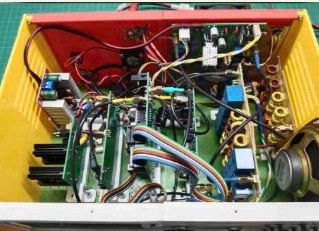
- Xiegu G90 Audio Modification
- Workshop 2 Report
- Bench Test – Yaesu FT-891 and Xiegu G90
- Johnson Valiant, B&W TR Switch and a Drake R4
- Best regards
- 3D Printed Paddle
- Other News
- Vibroplex Bug for Sale
- Morse Training Net
- Many of our team learned Morse code with the support of Nic, and the weekly training session comes highly recommended for anyone who wants to learn the Code, or simply brush up. Everyone’s welcome – 3580kHz at 7pm Eastern time every Wednesday. The NTARC also feeds the CW live via the Discord phone / computer audio stream, and previous weeks’ recordings are available. Contact Nic VK7WW for more info nicholaschantler@hotmail.com – or just join in on Wednesdays.
- Medical Authority Issues Addiction Warning
- The Reverse Beacon Network
- VK5ZAI Space Communications Ground Station
- VKCW Net
- From David ZL/VK3DBD
- Help
- From your editor Mark VK2K|I
- NZ Net
- A Three-Way QSO
- Minor Correction
- Equipment – Free to Good Home
- Di-dah-di-dah-dit
- Next Tuesday’s Net
- Post Morsum
- Teamwork
- About the CQ QRS Group
- Frequencies and Times
- QRL?
- Matching
- PSE QRS
- Landing Zone
- CW Tips
CQ QRS RagChew
Well what fun! Although we had only 43 stations on Tuesday evening, boy did we all have fun! I really went to town with rag-chews – some nearly an hour long.
For someone who hated CW and vowed to never use it again after passing the AOCP in the early 70s, I’m still amazed how relaxing and enjoyable I find our QRS practice nets.
Thank you to every single operator who takes time to get on air and share the love – especially those who then send me their report to share with the team.
The RF Exchange
On the suggestion of Jordan VK3ACU, we’ve introduced a new group to the CQQRS WhatsApp line up called The RF Exchange. See below for details.
With so many signals with perfectly phase-locked or software-managed carriers, it’s really great to hear home brewed or older less-well regulated transmissions (I put my drifting TS-120S in that category too!) on our net.
Bit like wine I guess – you can buy wine that’s always identical from one bottle to the next… or you can buy small vintages where the wine maker’s art goes into making every batch different and interesting.
A number of our team use the popular internet-based CW QSO systems like V-Band to practice and enjoy reliable interference-free QSOs; but some of those people have also said that they enjoy the challenge of on-air CW, complete with QSB and QRM, just to add a bit of character.
Keep an ear out for the less than perfect sounding signals on our net – sure as eggs, it’ll be one of the team with a bit of interesting home brewed or vintage gear having some fun! Breaking News: Medical Authority Warns of QRS Addiction – no known cure.
Last Tuesday’s Group
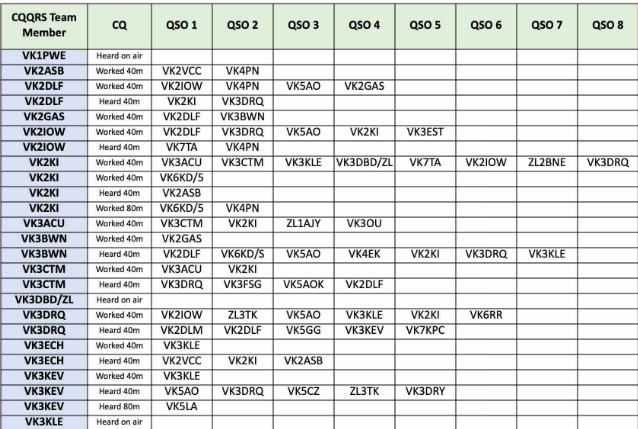
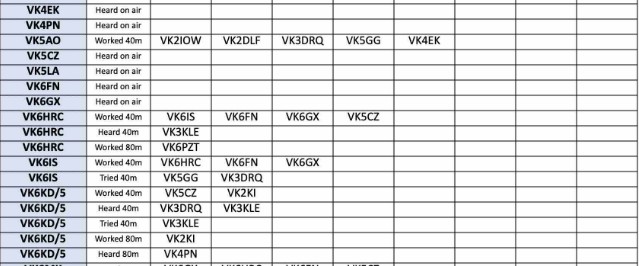
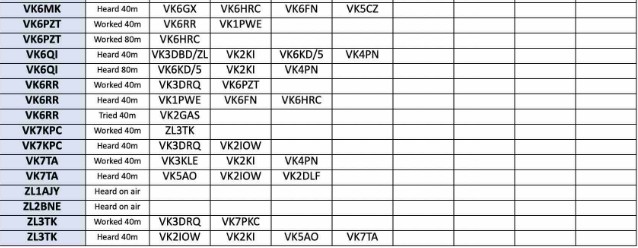
| was surprised to find that we had only 43 stations on air on Tuesday; it sounded to me like we’d had a bit of a revival – so many people enjoying the art. Here’s this week’s list of the 43 stations heard:
New Team Members
Welcome this week to Nev ZL2BNE at Blenheim; great to have another home-brew only operator on the team, and I look forward to more Chats Nev.
Masthead Image
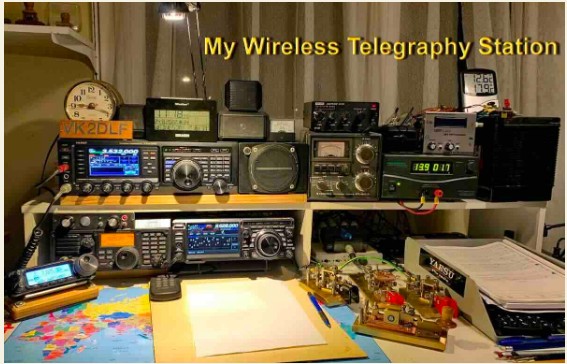
Thanks this week to Georg VK2DLF at St Marys for the great shot of his neat radio shack.
Reports
After next Tuesday’s Group, please send me a list of who you worked and / or who you heard using our web form here: nian ed alee ain’ pon aie ee pee

Please help attract new and old team members to have a go by submitting your report each week. Submissions close lunch time (Eastern Australian time) on Thursday.
If you hear or work one of our team on a different band on Tuesday, please just use the 80m report area and use the instructions to annotate which bit applies to which band.
Cheers, mb Mark Bosma VK2KI / VK6QI Beautiful South Bowning NSW mark.bosma@icloud.com non impsditi ratione cogitationis
Reports & Comments
The spreadsheets above show the known stations on last Tuesday’s Group. Comments distilled from the reports I’ve received follow:
Comments:
[40m] * Band condition is a bit difficult with static coming in strong. VK6KD/5 was coming in faint with QSB. I am pleasantly surpised on how active the band is with QSOs almost next to another..
From Stan ZL3TK at Waitarere Beach L4NM)
• Occasional mild QRN, otherwise band noise was lowest for a long time. Four QTCs were passed successfully, one being my first Traffic Quality Report from VK, or from anywhere to be fair. Splendid work by OM Manny VK3DRQ..
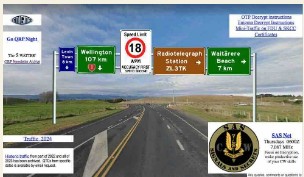
From David VK6KD/5 at Parham seaside camp, SA VK5
[40m] + My portable setup was somewhat challenged due to high winds (short vert ant deployed instead) and QRM (s8). I was working my filters to my best advantage but struggled to hear many stations..
[80m] «| was experiencing similar noise levels on 80m as 40m (s8). At least I have managed to get my rig tx on 80m again. Different combinations of extension cables on my rig both coax and head unit cable length upset the radio..
[40m] * Nice long QSO with Scott in VK1. I’ll have the straight key ready next time!!
[80m] + lots of local noise on 80m I did struggle with this QSO with Richard.
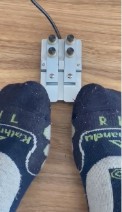
[40m] + Band seemed in good shape for this QRS night, I was running 5WATTS and hac 4 good contacts before dinner. I had intentions of coming back after tea but ended up falling asleep. Thanks all and see you next week.
Following the whole QSO yet, but will listen with interest from now on.
[80m] Switched to 80m at 9.30pm and only heard 1 station VK5LA, Andy, very quiet compared to 40m..
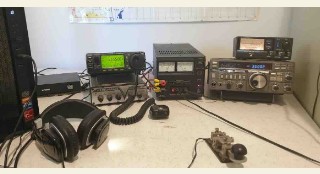
[40m] «| started late and didn’t stay too long, but at least I managed to be there this week after a few missed weeks. Heard some good strong signals but lots of QSB..
[40m] * Good to hear Paul putting a good signal into WA on his Johnson Valiant…
[80m] + Agreat evening in all, interesting band conditions making copy difficult at times…
[40m] + the band was quiet at the start,. + and then got noisy as the evening progresse Eram Roh VK2ECH at Goth Cane Tacmania

[40m] * Having a good QSO with Richard VK6PZT – then the phone went so I had to cut the QSO short. Sorry Richard. Then just about to call VK6HRC and had a power failure !! No handy 12v battery so had to close. Band very noisy and fluctuating..
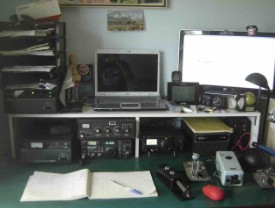
[40m] + Apart from the QRN crushes, a very enjoyed evening with a few breaks and a cupper with the XYL in between QSOs and a very delighted CONTACT of just under an hour duration with our BOSS the OM Mark/VK2KI. Tanks OM Mark, I really appreciated your time..
[Ditto mate – thank you, really nice to share a cuppa with you.]
The rig I was on last night was the T41-EP. I was surprised to only register 529 with you. The “joy” of homebrew is sometimes things fail, the real joy is identifying and fixing.
Today/tonight I will put on the bench and measure to make sure it’s still delivering 10W. A few months ago I was in a QSO with a station in Germany using the NC30B,
5W on 30m. Started off well then I noticed I was drifting, then nothing. I was on a battery and the battery wen flat! In the last part of the QSO power would have been a Watt or less but the station still copied me.
We exchanged an email post QSO and had a good old laugh at my expense I Yes I have heard about the QRS sessions. Most days I’m tucked up in bed by 10PM NZ time, work starts at 6am.
Last night I had to be up late so thought why not listen on the bands t see what’s going on at that time. 40m
Wado LIS THIMVolt AULIVE, OV, IV a ovUUl. I’m reasonably comfortable receiving up to about 16WPM, on a good day more. But my sending is atrocious! I can’t use a straight key, period. I use paddles but I can’t get a rhythm.
I think I’m still subconsciously counting dots & dashes when I send, it doesn’t flow. I don’t have a musical bone in my body so that might be a factor too. But practice practice practice.
99% of my QSOs is replying to faster guys, I miss bit but get the guts of the QSO. I send at my slow speed and the ops seem very forgiving. Bottom line is I’m really enjoying the challenge. Looking forward to catching you on the air again, and soon!
I’m reasonably comfortable receiving up to about 16WPM, on a good day more. But my sending is atrocious! I can’t use a straight key, period. I use paddles but I can’t get a rhythm.
I think I’m still subconsciously counting dots & dashes when I send, it doesn’t flow. I don’t have a musical bone in my body so that might be a factor too. But practice practice practice.
99% of my QSOs is replying to faster guys, I miss bits but get the guts of the QSO. I send at my slow speed and the ops seem very forgiving. Bottom line is I’m really enjoying the challenge. Looking forward to catching you on the air again, and soon!
Cheers, Nev. [Thanks Nev; as discussed, ‘please don’t adjust your set’; I use my fairly ancient Kenwood TS-1208, and a phasing-type noise canceller – the S/N is vastly improved by the noise canceller, but at the expense of signal strength.
I’ve also finally found and fitted a 500HZ CW filter to the receiver – and I’ve found that I lose another two S- points through the filter, but there is an improvement in S/N in my noisy environment.
But after further experimentation during the net on Tuesday, I found that I could improve signal strength by offsetting the receiver’s IF Shift – pointing to an alignment
[Thanks Nev; as discussed, ‘please don’t adjust your set’; I use my fairly ancient Kenwood TS-120S, and a phasing-type noise canceller – the S/N is vastly improved by the noise canceller, but at the expense of signal strength.
I’ve also finally found and fitted a 500HZ CW filter to the receiver – and I’ve found that I lose another two S points through the filter, but there is an improvement in S/N in my noisy environment.
But after further experimentation during the net on Tuesday, I found that I could improve signal strength by offsetting the receiver’s IF Shift – pointing to an alignment problem in the receiver. So…. please don’t adjust your set folks!]
From Patrick VK2IOW between Bathurst and Orange
[40m] * Conditions were good on 40 metres. Had a long QSO with Mait, VK5AO, and w demonstrated the old rule that doubling power from 50 to 100 watts (3 dB or half an S point) usually does not make much difference to the received signal..
[80m] «| called intermittently on the low enc of 80 meters but received no answers. QRN was at high levels..
[40m] + Visualise palm trees gently swaying in the breeze and margaritas on hand! I had such a relaxing and fun time on Tuesday’s net….
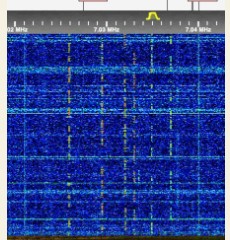
Long rag chews with such nice people, pretty well back-to- back, despite the odd conditions predicted by the BOM Space Weather Services! And what’s more, it was terrific to see the VK1CT KiwiSDR waterfall with lots of stations in our little corner of the band..
• The evening started out with a quick chat to Jordan VK3ACU who had to go QRT temporarily (| suspected a bathroom call), but after that the chats were all at least 15 minutes long, and some went for an hour; apologies to anyone who was waiting patiently on the side!
Of course, unlike phone, for most of us you can’t just listen in in the background – it’s hard work… but good practice either writing it out or seeing how much you can absorb head- copying.
Anyway, there must have been patient people out there, because pretty much as soon as I’d finish one chat, there’d be someone else ready to go.. + One of the patient ones was Tony VK3CTM at Bendigo – terrific to chew the rag with Tony again.
When we finished, I was called by Paul VK3KLE over at Stawell; Paul was using a friend’s old Johnson Valiant transmitter and a Drake Ré receiver that he’d just bought at a swap meet on the weekend.
It was such fun listening to Paul’s signal – the old transmitter had a deep chirp that really added to his perfectly keyed code to make a really nice sounding fist. Check out Paul’s article on what he was using.
I look forward to hearing more interesting signals on air..
• After Paul, I chatted to David VKS3DBD/ZL enjoying his last couple of weeks of his stay in Kerikeri, before saying g’day again to lan VK7TA down in Latrobe, followed by a quick chat to Patrick up at Millthorpe before taking a break for late nosebags..
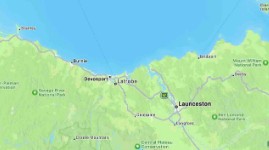
• When I came back, I had a nice QSO with our newest team member, Nev ZL2BNI at Blenheim in the beautiful Marlborough wine-making region at the North end of the South Island. Nev was using a home brewed T41-EP with 10 Watts output.
Check out Nev’s home brew projects on QRZ.com. We were enjoying our chat when some of those pesky DX stations came up mega characters per second and we had to give it away; oh well..
+ After Nev I had a nice chat with Manny VK3DRQ at Blackburn who had just had his evening cuppa of camomile with his lady wife… just as that nice Ms Elizabeth brought me a cup of sleepytime tea…
+ I rounded-out 40m with a tough QSO with David VK6KD/5 who had made it to the other side of Adelaide. Signals were giving us curry – I sent him RSN 411 and with the noise from other campers’ inverters etc, RSN 498 was his report to me using his five-foot mobile whip.
[80m] + Well 80m wasn’t playing well either; after re-tuning my antenna matching unit and lots of fiddling with my phasing-type noise canceller, RSN 222 was the best I could send and David reported RSN 387, so we gave it away.
Sava VKAPN called and also reported RSN 499 with a strange amount of noise present. He then reported a remarkable improvement – RSN 595!
He’d discovered that the new Dyson fan that he was using in his shack to keep things cool was generating the QRM; problem solved!. Also from your editor Mark VK6QI via the VK6QS KiwiSDR near Brookton
[40m] +I still hadn’t sorted out why I couldn’t key-up the Southern Electronics Group’s Remote HF station on CW, but I was content to use the VK6QS KiwiSDR near Brookton to monitor goings-on in the West..
+ When I worked David VK3DBD/ZL from home in VK2 early in the piece at 0845Z, it was interesting to see that I could copy David on the WA receiver, but couldn’t hear anything of my own signal. Later by 1030Z, my signal was starting to come through.
I imagined that earlier, the longer distance signals may have been arriving in WA at a lower radiation angle via a path
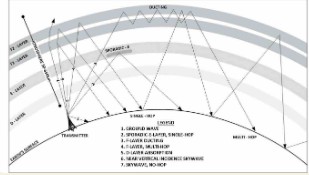
Where the D-layer had already dissipated, while mine may have beer coming down through the still active layer which was receiving solar radiation still. Or maybe David just had a better signal 🙂
[80m] + Later in the evening when I was on 80m, David VK6KD/5 at Parham SA (between Adelaide-ah and Pordagudda) was just making it to WA on his five-foot mobile whip.
I rounded-out the evening with a chat to Sava VK4PN up at Mount Ommaney, and unlike last week, my signal was just marginally stronger than Sava’s.
Such interesting conditions, and how luxurious to be able to watch your signals on a receiver on the other side of the gafa..
Max joined the net on Tuesday after tolling away on the farm all day, had a couple of contacts on 40MX and listened around for a while before going QRT.
Mark also toiled away helping his friend Dennis bottling umpteen bottles of Shiraz at the winery before getting on air. Eleven contacts in the log and a few nearly hour- long rag-chews enjoyed.
Joshua, not put off by the chaos callled in from Kalgoorlie where he and the family are going to be based for a fair while. We managed to get some details and some all important CW information will be heading his way. VK6KD/5.
Checked in from a rather crowded caravan park Parham in South Australia. The good news from David is that he is back on 80MX and had a contact with Mark VK2KI in spite of poor band conditions and local QRM.
He also caught up with a very well known local in Kingston SA who has a long history with ARISS and space communications, more in the Ragchew below. Bob called to let us know that his trip to the service bay went well and he is safe at home now.
Ihad a few contacts on 40MX one on 80MX and made use of the Kiwi SDR network to get some really good copy practise in. Thanks to all on the net last night and this morning, stay safe out there.
73 Richard VK6HRC [Thanks again Richard – great job; sorry about all the fun at your expense as you struggled with Joshua’s callsign that seemed to change every time you said it]
This Week’s Topic of Interest
Cheap Chinese RF Amplifier Test of a Simple Wide-Band Preamp by Ross MONNK
We’re in the middle of winter and the temperature is hovering around 5 degrees centigrade – not really the weather to be messing about with antennas.
But a query from Ron VK6KHZ had me digging out my Loop-on-Ground receive-only antenna to try out this little RF amplifier with my RTL-SDR V3 SDR dongle.
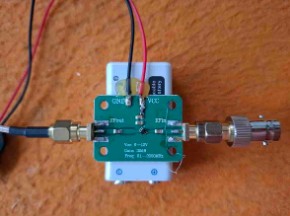
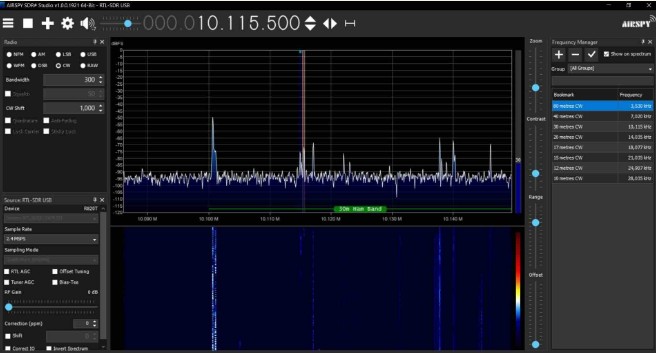
Here is the SDR on the 30m band this morning without the amp in the signal path… …a couple of weak signals around the red cursor line.
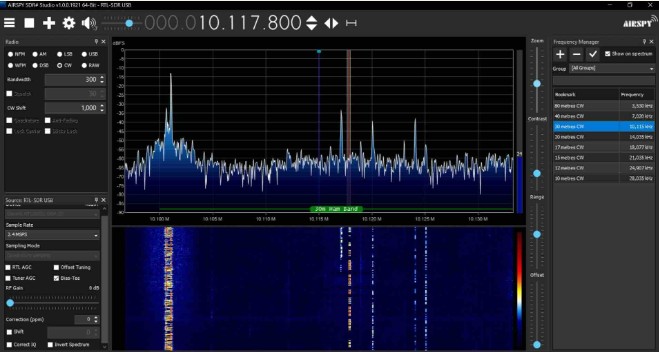
And here is the band with the amp connected and powered up. As you can see, it pushes the noise floor up from -90 dB to -50 dB but it also pulls in those weak stations very noticeably (you can see the S/N improvement on the waterfall display in particular).
The images were taken 5 minutes apart and one could argue that the first image was taken when the band was quiet, but I don’t think that was the case – for a fair comparison, look at that constant fat digital signal at the left- hand end of the band.
It’s a grey morning here with a chilly breeze and not really the weather to spend half an hour just listening to CW, so I wasn’t able to do a longer test – the Loop-on- Ground kit is meant to be deployed at a campsite on a balmy summer’s evening.
But I think the results suggest that, for the measly 13 Australian dollars (equivalent) plus a Qv battery, these things are worth having in your SWL grab-bag. [Thanks Ross – pretty amazing!
For those who want to buy local, Mark at Mini-Kits SA has a nice range of low-noise pre-amps as well as enclosures, DC injectors, isolation relays etc for mast-head use_]
Certain operators sound great when calling CQ, but as soon as their call is answered, things begin to change almost immediately and exhibit the following symptoms: 1. spacing becomes either compressed or missed out altogether; 2.
Sending quality deteriorates; 3. speed increases subtly. Not wanting to seem incompetent or cause offence, no one will provide feedback. It’s a huge mistake to fail raising the issue, repeating the mistake year-after-year.
It is a rare operator who will point these failings out, the symptoms are never spoken about and the disease continues unaddressed and unabated.
It becomes obvious from listening to both sides of a QSO where MSS is at play, the other party is not responding in context, because he can’t, yet never mentions why. Sand, ostrich, head – ring any bells?
From long experience, the author has found a request for spacing provides only temporary respite, maybe for one or two sentences at best, but it’s no panacea. Any attempt at proper spacing rarely lasts for the remainder of the QSO. Why?
Because humans are creatures of habit and quickly revert-to-type. Reappearance of MSS is a given, its only a matter of time.
The Solution
MSS sufferers will find a long-term cure only by taking a three-fold approach. 1. Record your sending. Record it while on-air and under pressure. Wait a week, then play the recording back and see how it sounds.
Critique yourself harshly, gauge the quality of your sending against electronic Morse, and compare it further with what you would like to hear from others.
Be honest, failing to quality control your own sending is fooling only yourself, and gains you a reputation as a LID, though no one will be particularly willing to inform you of that fact.
Listen to your recording then answer this question truthfully: Is my sending up to scratch, a pleasure to listen to and easy to copy? A simple Yes or No is required, no bluffing. 2.
Iflistening to your recording has revealed problems, it’s time to specify those problems, most likely recognisable bad habits. Despite any reluctance to admit them, set about eliminating those bad habits.
Be generous with your spacing without being ridiculous, 10 % Farnsworth is perfectly adequate. Sending Morse is not a race – as skill-bereft keyboard-cowboys would have you believe.
Beautifully- sent Morse is a matter of patience and respect, the other guy won’t mind waiting while you gather your wits if it means he hears sweet, musical Morse. 3.
Even if claiming to be competent, join an ad hoc group such as CW Ops Academy, where the tutor and participants are not as reticent as your peer group to honestly critique your sending.
It’s mostly the older, so-called ‘experienced’ operators who exhibit the worst symptoms of MSS. Without naming them, operators who run their characters and words together are not only well-known, but are better avoided; call this author judgemental, but after requesting spaces and getting little response, he finds working them is a tedious waste of time.
Often months later, most MMS sufferers, despite having been advised and offered help, have been demonstrably unwilling to acknowledge their malaise and are still sending garbage.
Work is required to effect improvement but most sufferers will not put in that effort, seeming to lack the motivation or self-discipline to up their game. As the old proverb says: ‘There are none so deaf as those who will not hear’.
Conclusion
In fairness to everyone, this author admits to having the potential, like everyone else, to offend against good Morse, sending poorly in subtle ways which he does not recognise. You be the judge.
Those who feel qualified are invited to give feedback on any of his sending, anywhere, anytime, on-air or by email. Don’t be afraid to come forward with constructive criticism, suggestions and advice.
Think it through, keep it objective and when possible provide recorded evidence. Contrary to harbouring fear of one’s sending being critiqued, such feedback should be warmly welcomed as lighting the road to improvement.
73 de Stan ZL3TK [Thanks for taking time to share your sage advice again Stan.]
If you have an article or two that you think might be of interest to our readers, please let me know so we can share more thoughts and ideas; email to cqqrsnet@gmail.com

On My Workbench
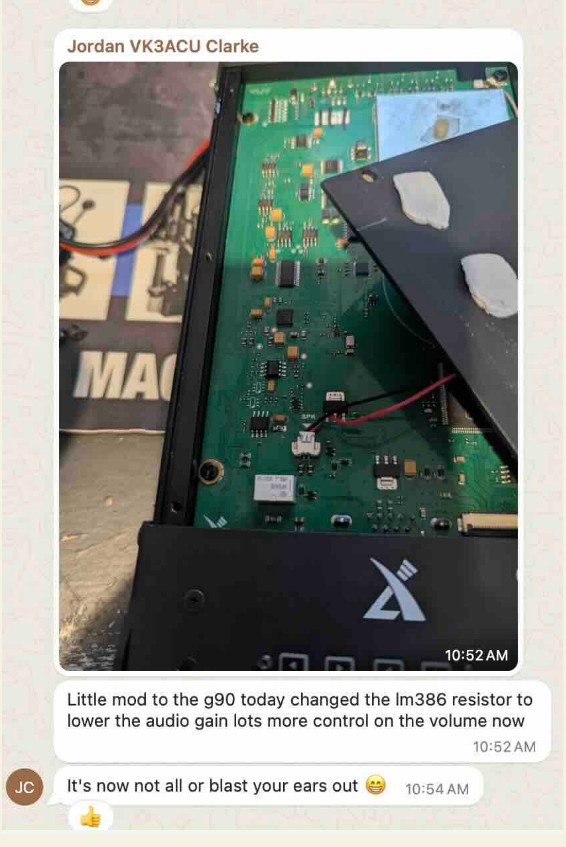
Xiegu G90 Audio Modification
Workshop 2 Report
WOrKSNnOp < MEport from David ZL/VK3DBD I have a nice workshop here at Kerikeri NZ ( as well as in VK!) and as it is two whole years since I was last here, I have been re-discovering many items I had forgotten I had.
Another simple Morse key has been made up from a few bits of brass/stainless etc and have emerged from the workshop. Time consuming stuff in between doing dog walks and socialising and there are still unfinished projects in there – often lacking some minor hard to get items all too often; ZL is even worse than VK for availability of bits.
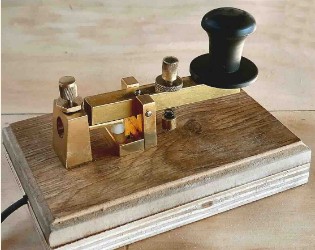
Rely on China with all the doubt of Quality of purchases? Ah well, it keeps me off the streets. Here is a photo of the latest effort – a neat straight key but with upward contacts – which i always find seem to offer a slightly different feel than the more traditional downward action.
Why? This one has a second base which I intend to modify to something neater. The plywood was not quite what I wanted, but is there for the purpose of covering the recessed cable connections. To put into perspective, it measures just 120MM long.
I will probably find it a new home in VK land – expressions of interest (as they say) are welcome ! 73 David
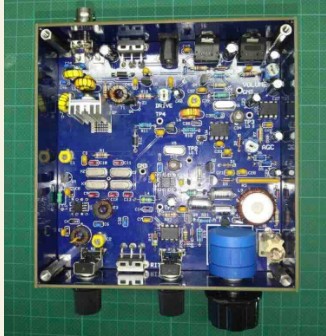
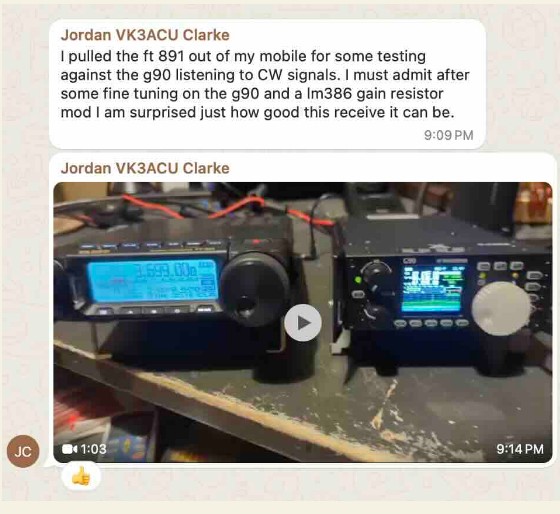
Bench Test – Yaesu FT-891 and Xiegu G90
Johnson Valiant, B&W TR Switch and a Drake R4
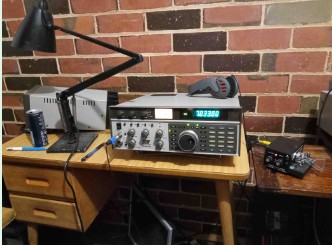
VYJONNSON Vdalidiitl, D&W In OWILCh ala dad VidKke N& from Paul VK3KLE at Stawell Thanks to all for the chats on the CQQRS Net last night. The gear I was using was as follows.
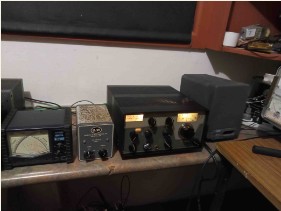
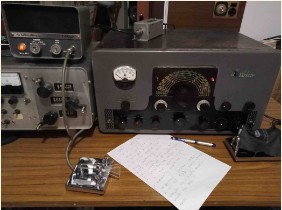
The Johnson I re-caped again this week. Don’t use nos hv electrolytic caps, they fail if not under 2 years from manufacturer. Also I reduced the value from 15 uf and 40UF to a pair of 10UF low esr caps in the b+ pi network.
On key down the rail stabilises quickly now. For am work it wouldn’t matter. I used brand new caps this time. The HT is 700V unloaded. I put in four 100UF at 450VIN series giving 1800V rating.
The tx in AM has a negative clipper, if it goes above 100percent modulation then the HT could instantaneously be 1500V or more on peaks dependant on mod transformer and the first HT choke. I have ordered high voltage metal Polly caps from a guy in Taiwan.
His stock I often use. His customers are also tube users in hifi. So I’l re-do the b+ rail with non electrolytic caps. It will have a Stella ESR, like paper in oil caps . But without the PCB’s to worry about.
The previous B+ combo of 15UF a choke and 40UF wasn’t good for CW and the nos caps physically leaked electrolyte after 12 months. On key down you could see the rail voltage sag over 20 seconds. Without the HT on, it has almost no chirp at all.
It now varies in chirp depending on grid current and final plate loading. If the Johnson wasn’t so old I’d add another buffer tube and could get it even better. But experience says if it’s working and old and reliable stop!
No mods or tinkering until next service is tequired. Then just refresh, and no mods. The Johnson is not an old class C transmitter – the final bias is around neg 52V and each stage has been reworked to run in class A except for the final in class AB.
Not just by rebiasing via the cathode resistors but also reduction of the grid input network to reduce the signal input level. I generally as also run the drive at zero to 5ma grid current; the driver tube looks more linear in this range without any distortion.
On top of the Johnson is a nice bandpass filter for 40m that will cut any out of band harmonics. The Barker and Williamson tr switch has a preamp Rx tube that goes into auto cutoff and limits the RF into the Rx, so I could use a single antenna – instead of one on the Rx and other on tx.
Without adequate protection a seperate antenna in the near field could induce about 5 watts or more into the Rx. Any current crop silicon surface mount boards would be instantly toast.
The old Rx have fairly big RF pre-selection coils and will tolerate some RF back wash. The b&w or Johnson tr switches are for tube only Rx use! The keyer HA-1 has a super fast mercury relay and flips back and forth giving excellent gsk.
It has a normally closed contact just for qsk. The normally open is the CW key contact. It’s complete restoration only required one tube replacement to reverse a high speed qrq mod by its former owner, in a class not usually encountered in our hobby.
Otherwise I replaced the black buitie’s tar foil caps, only 4 of them and also added the factory contact suppression RC network for the mercury key contact . It’s cardboard electrolytics have had a charmed life. They test above 20UF and reformed in minutes.
Right up to original ratings above 200V . In operation they run at 300V divided by 2 at 150V each per 250V 20UF cap . So that means they have 100V head room each.
Part of answer why they lasted – good construction and never being retired to a damp shed also part of the answer. These caps are 65 years old I guess. Might be a record, but the previous owner of the keyer was no ordinary CW operator.
So to all the people that have older tube gear – either store it inside a spare room in the house in a timber heavy cupboard or sell it. No out to the shed crap. It’s a cruel and slow miserable death for fine equipment in a damp hot shed.
Power up each 6 months min. And the drake R4A is awesome, but took 6 hours of fast restoration work yesterday after buying it Sunday hamfest. Open CCT can cap. Short ctt B+ to Gnd trimmer on 40m . It was a smoker wanting to get out lol.
7 new caps and a new os ceramic hv trimer and alignment (quick one). I guess good audio level at .25 uV is good enough sensitivity. It had only had modest repairs previously. One mustard cap was cut out without a second thought.
Yes it was leaky, they always are. Best regards Paul [Thanks Paul; I’m glad to hear you had so much fun getting back on air for the net… and it all worked, See previous comments about the character of a bit of chirp on our get-togethers 🙂 ]
Best regards
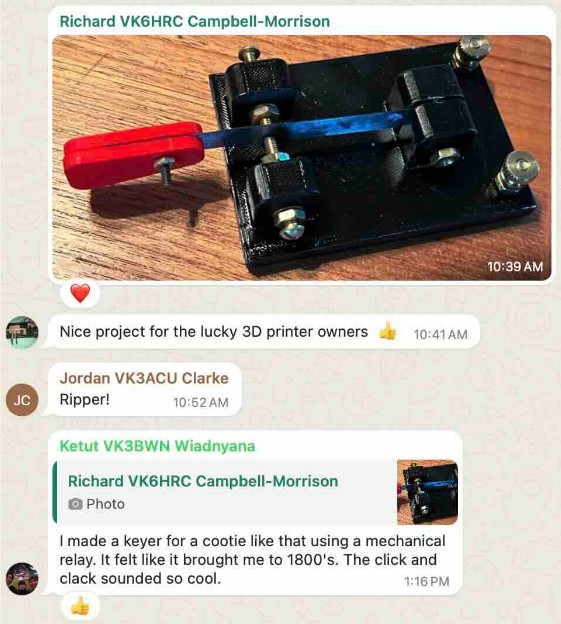
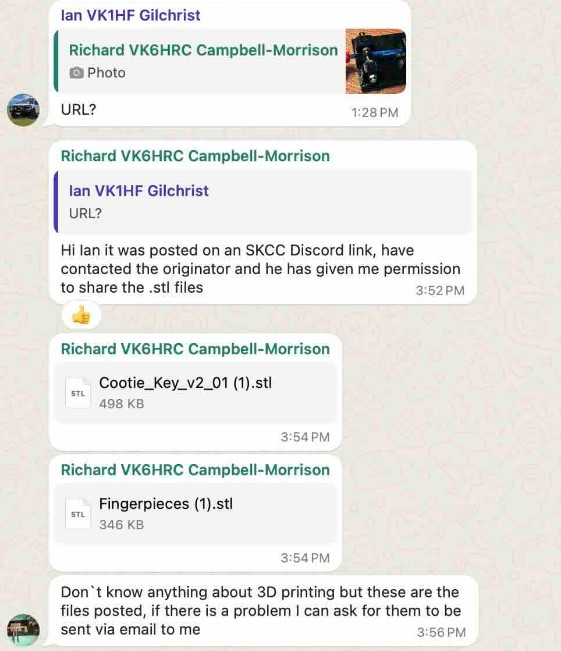
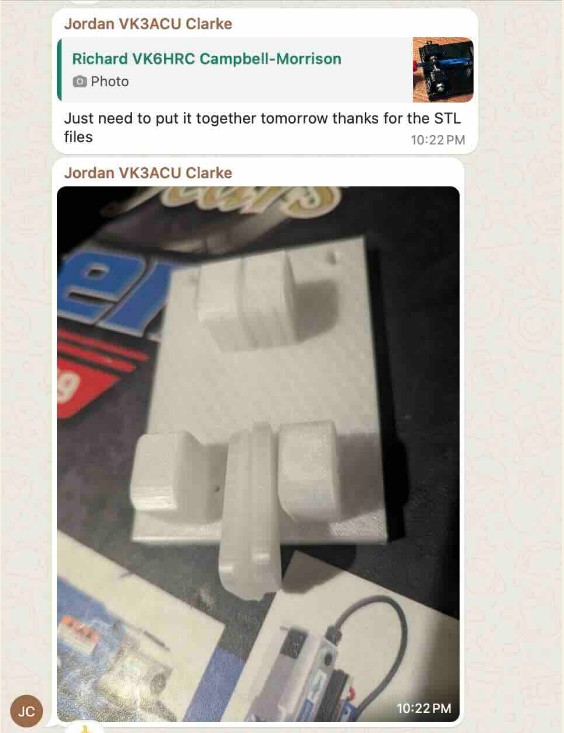
3D Printed Paddle
Other News
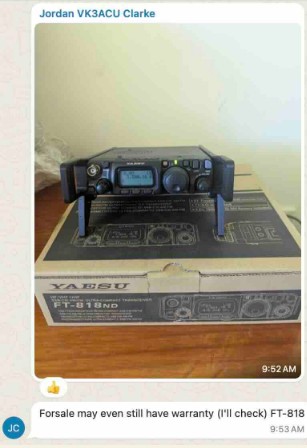
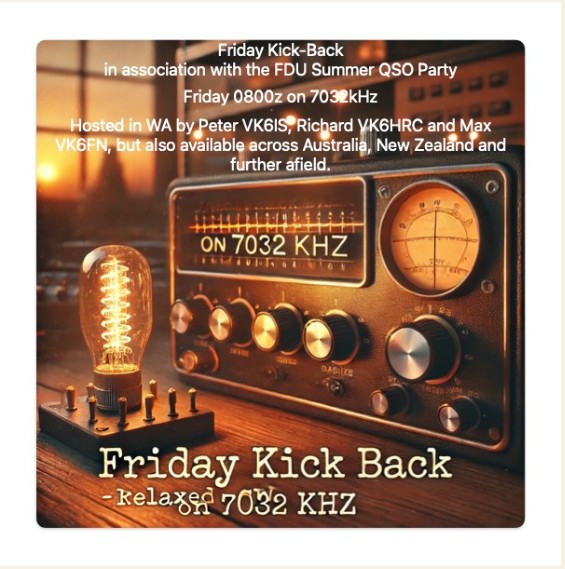
Last week, Jordan VK3ACU suggested that we add a Classifieds section to our popular CQQRS WhatsApp messaging Group. So I’m pleased to announce that we now have our new ‘sub-group called The RF Exchange, as part of the CQQRS Group on the WhatsApp phone messaging application.
So we now have Classifieds for the CQQRS team. Sell, buy, swap, give- away, wanted, events, skeds, alerts, ride shares, … even personals! (“send photo of boat and outboard motor” comes to mind). Ifit might be of interest to other CW fans, this is the place..
Vibroplex Bug for Sale
Offered for 225 is this beautiful Vibroplex BUG, bought last week in error. I didn’t do my due diligence, as I thought I needed a BUG to control the electronic keyer in my transceiver, but all I need is a single lever paddle (which I am looking for).
The seller spent two hours packing it; it was a work of art, and I have faithfully
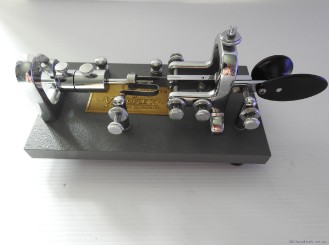
Noted how it was packed, have kept the packing, and will post in the same ‘‘bullet- proof’ packing. There are a total of Four weights supplied, permitting speed adjustments over a wide speed range. Email: vkSdon@wia.org.au Regards Don VK6DON QTHR
Morse Training Net
Nic VK7WW runs a Slow Morse training net every Wednesday at 7pm EDST on 358C for 30 mins. He uses the callsign of the Northern Tasmania Amateur Radio Club VK7TAZ on that net.
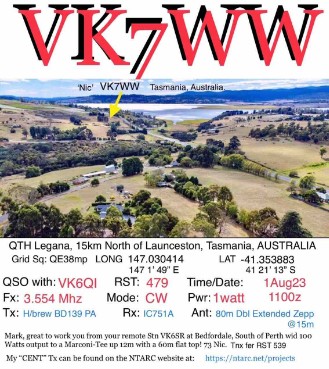
Many of our team learned Morse code with the support of Nic, and the weekly training session comes highly recommended for anyone who wants to learn the Code, or simply brush up. Everyone’s welcome – 3580kHz at 7pm Eastern time every Wednesday. The NTARC also feeds the CW live via the Discord phone / computer audio stream, and previous weeks’ recordings are available. Contact Nic VK7WW for more info nicholaschantler@hotmail.com – or just join in on Wednesdays.
Medical Authority Issues Addiction Warning
From Dr Donald VK6JDM Dear Joshua, By now you probably realise that having been in touch with Mark you will be dragged into the vortex of CW. There is no escape once Mark has infected you with his primitive communication virus.
It is a pretty friendly bunch and everyone adjusts to the slower sender’s rate. There is No pressure to improve, we just assume that if we use CW once a week we may well eventually become proficient. I never thought I would take up CW, yet alone enjoy it.
I studied for the 10 word test many years ago, chickened out and sat the 5 work test and then threw the key in the bottom drawer. When I have time to get on air I have used SSB. Mark’s virus has disrupted that simple view of wireless.
Ilive 20 km out of Esperance with my wife Anne, a dog and a half dingo cross. I come to Kalgoorlie every second week to run the Rural Clinical School – an attempt to persuade medical students that rural is the way to go.
| am in Kal this week and if you want to catch up I will be free late Thursday afternoon and the whole of Friday afternoon. My number is at the bottom of this email. 73 Donald Howarth Rural Clinical School of WA Kalgoorlie 6430
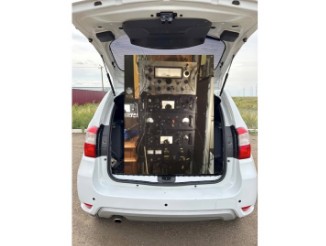
[In a poor attempt at defending my actions, I note that not everyone gets infected; there are plenty of our readers (including at least one in Kalgoorlie) who have been able to maintain a strong fight against the infection.]
The Reverse Beacon Network
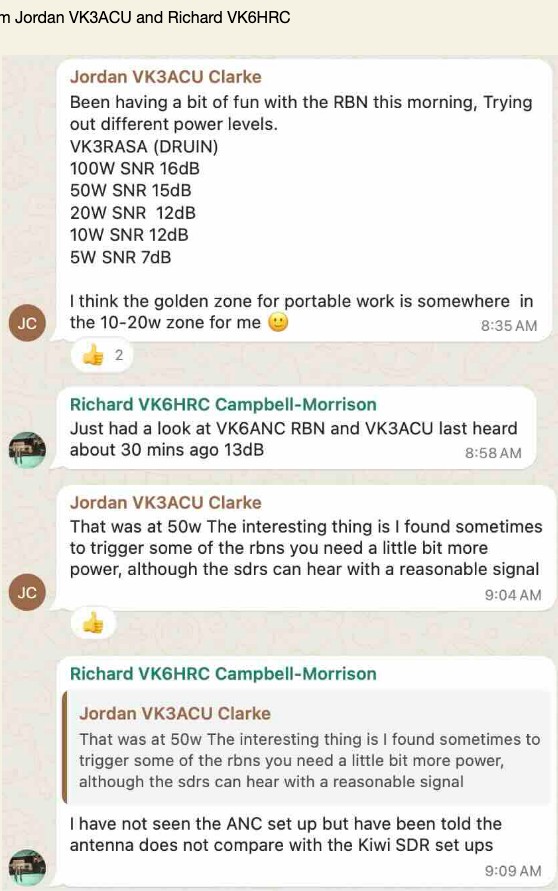
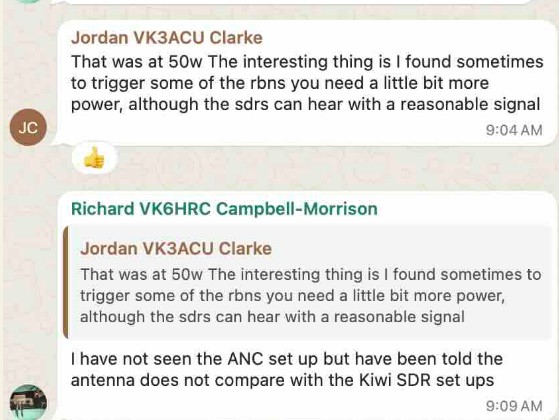
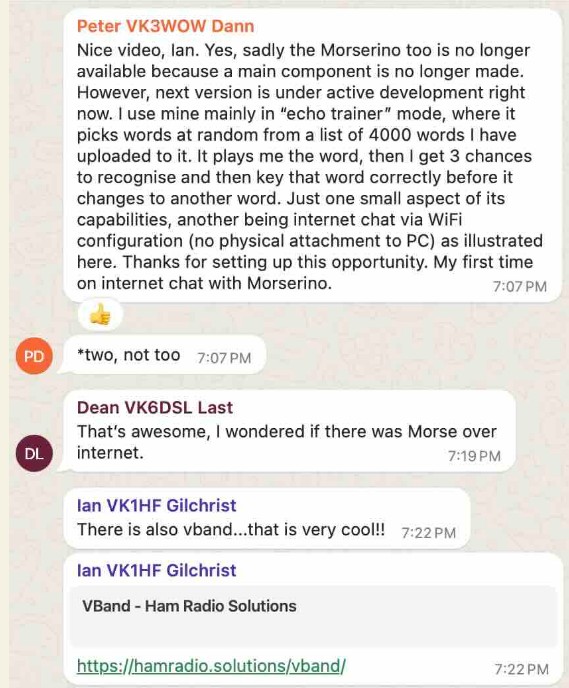
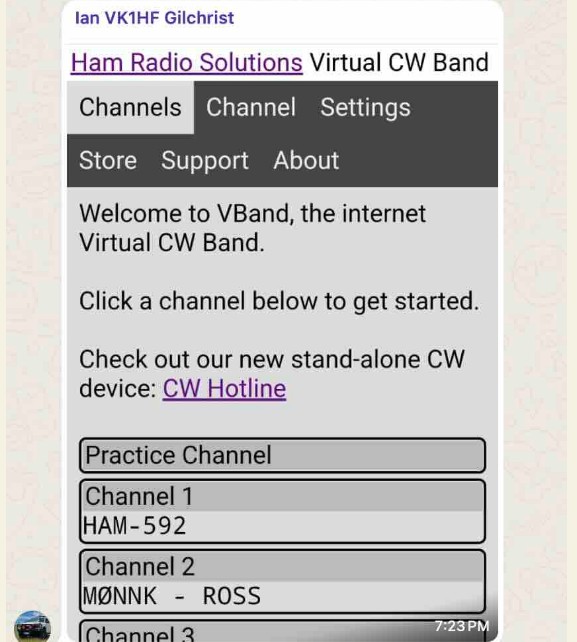
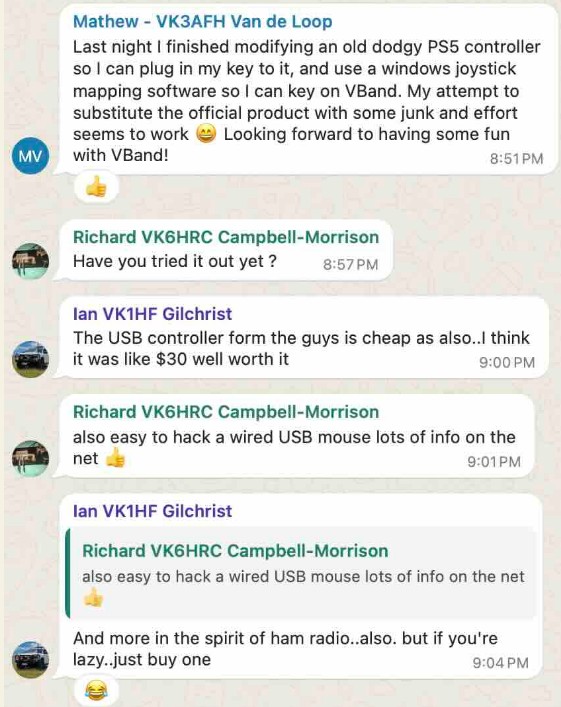
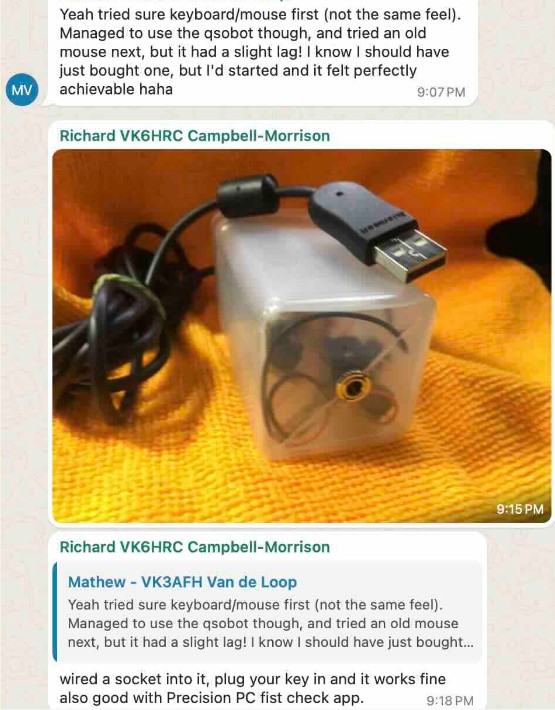
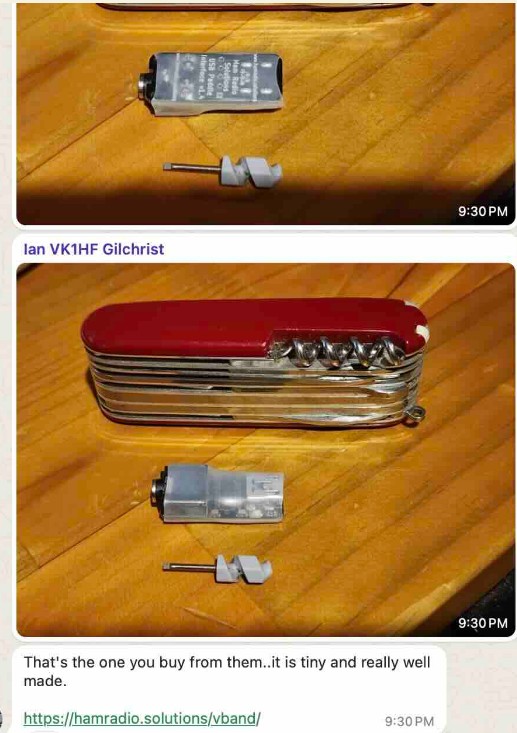
[Stand by for an article from one of the team about how the the Reverse Beacon Network works and how to access it. For instance, did you know that you don’t need to send a CQ to be picked up by the RBN? A ‘TEST DE Morserino – and V-Band for CW over the Internet From lan VK1HF, Peter VK83WOW, Dean VK6DSL and Richard VK6HRC [Thanks gents. I haven’t tried CW over the Internet using V-Band yet, but I know many of the team are on it…. including our team member Ross MONNK as you can see above. In Ross’ case, the weather is too cold, wet and miserable in the UK to get out portable; same but opposite problem in Australia – Coriolis force at work perhaps?]
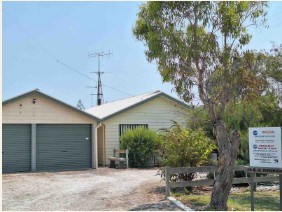
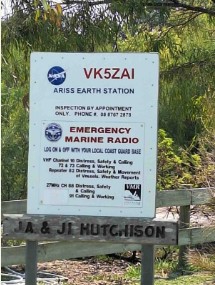
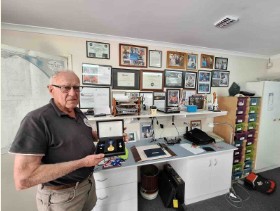
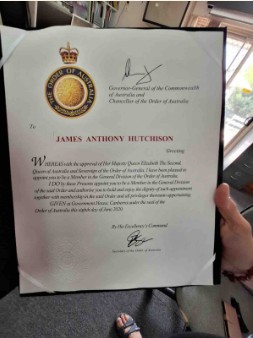
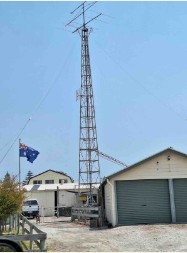
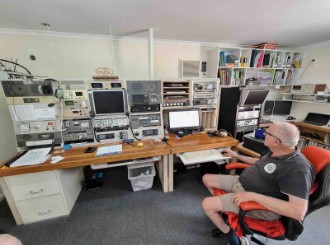
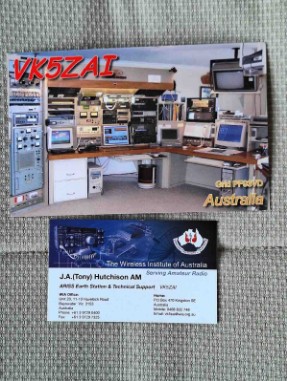
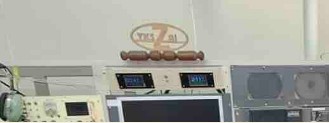
From David VK6KD/5 Gday Mark. As reported on the Post Morseum net today, when we were in Kingston SE in SA 1/2/2025 we noticed an antenna farm over the top of some houses. Being bit of a ‘sticky beak’ I drove around the roads until I found the house in question. Sign at the front reads ARISS earth station (with a phone number). The offer was too good to be true so I called the number. Tony’s wife answered and put me onto Tony Hutchison. Tony (VK5ZAI) is a recipient of the Order of Australia award for his contribution to education and communication as a HAM operator with the ISS and other space exploration campaigns. Tony and his wife Jill entertained us for about hrs explaining his work coordinating schools around the world talking to astronauts on the ISS. Please see some photos I took when there. I felt we were in the presence of fame. You can Google Tony and read more about his achievements and dedication to education and the space projects. [Thanks David – wonderful report on Tony – isn’t it just so nice how one minute you’re total strangers, and the next you’re being entertained for hours, no doubt with a cuppa tea and cake from Jill and Tony; amateur radio can be terrific! So question for our PROSIGN experts…. what’s the wooden item below Tony’s callsign above?]
From Roy VK6RR The VKCW net re-commences again on February 5th. The net is on every week on 14049khz at 0603Z, with Manny VK3DRQ net controller. It is also announced on Telegram. If you remember we get very few takers – if any at times from VK, but one or 2 check in from NZ depending on conditions. 73 Roy [Thanks Roy and Manny; good luck on Wednesdays from now on – and I hope a few of our team join in for a bit of fun.]
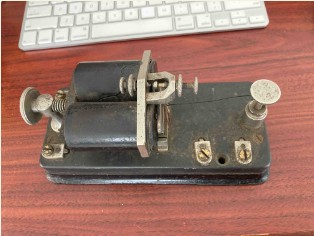
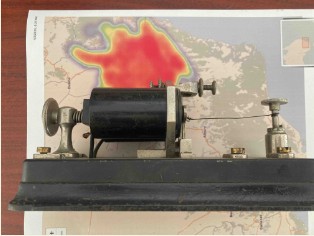
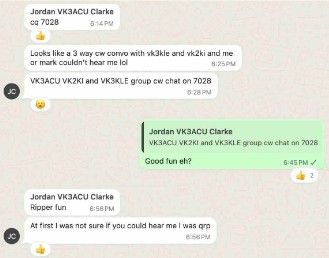
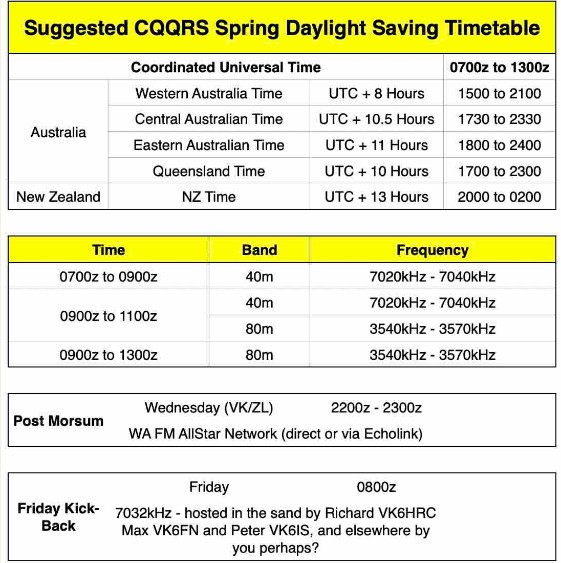
Hi Mark, I guess the QRS net et al takes up much of ur spare time! My flight back is booked for 15 Feb. Ihave a nice workshop here (as well as in VK!) nd as it is two whole years since I was last here, I have been re-discovering many items I had forgotten I had. On air activity is daily and often of course but it is surprisingly rare to hear much activity. 80 m to 10m are checked very often. Not heard a thing on 2m or 70CM for which I just have a vertical white stick dual-band (for FM only). ‘At weekends, the contesters are out in force, in general not my scene but I made an exception this last one – the FOC Marathon an annual and important one. As a member it seems right to support these events, although not too seriously. My two wire dipoles and 100W seemed to be getting out reasonably well I reckon to other continents, W, G, VE,DL, OH and SM in the log this time. But some folk never seem to sleep! I did make a point of listening and calling on the last week QRS net, no takers and I heard hardly anyone apart from Stan with his messaging exercises and an excellent signal from VK3ACU with a notably nice fist too; unfortunately, Jordan failed to hear me call. From your editor Mark VK2KI My neighbour Jack brought this sounder home from a recent Historic Radio Society meeting. My questions are: ¢ What is the black string from the moving clacker (that’s my highly technical term) to the post for? Isn’t there meant to be a spring to pull the clacker away from the electromagnets? ¢ Would someone in the group like it for a restoration? Most remiss of me for failing to mention last week an opportunity available every week night where members can get to know how a traffic net really works. Two QRS members have been checking-in to NZ Net for donkey’s years. Despite the paucity of traffic, NZ Net can be a fertile training ground. At first it will really take some effort to make sense of it, but don’t give up because, believe it or not, everything is right there to make an efficient traffic handler out of anyone willing to put in the effort, as indeed one Tasmanian member has been doing on the FFA. Net protocol is fully explained at _https://zI1.nz/about-amateur-radio/new-zealand- nets/nz-net/guide-for-newcomers/ Listen during summer months at 0800Z on 7.030 MHz + 2KHZ (sometimes necessary to QSY slightly to avoid QRM, even-numbered frequencies on 40 m can be notoriously congested). Apparently there is no VK equivalent to the NZ Net; all it would take is someone with motivation to initiate one. Please report back if you find this useful. 78 es 77 de Stan Tonight when I should have been compiling the RagChew, I was listening to Jordan VKS3ACU at Meredith having a nice chat to Paul VK3KLE at Stawell. I knew they’d both been around CW for a while now, so I thought let’s have some fun and get some different style practice. So ignoring Paul’s AR KN at the end of his transmission, I inserted a BK between the next two overs, and after acknowledgement, started a three-way QSO. What fun! Jordan’s comment on WhatsApp: Both been around CW for a while now, so I thought let’s have some fun and get some different style practice. So ignoring Paul’s AR KN at the end of his transmission, I inserted a BK between the next two overs, and after acknowledgement, started a three- way QSO. What fun! Jordan’s comment on WhatsApp –> Nice to have a small group on 40m just now . QSB was having its affect on both stations Rx on the new Drake R4A. I heard Jordan calling for a while and had the Rx warmed up. The Johnson was off, dead cold but still turned for 40m band from Tuesday nite untouched. Now most to all ops let that vintage gear warm for a good while to stabilise. But anyhow hopefully Jordan understood my message to use his rit control to net me in. He probable had to re net between overs. The Johnson drifts about 1.5 kc from cold to hot on 40m. The VFO on 160M considerably better as it’s an easier frequency for single tank CCT to operate as a VFO. Most old FT243 rocks don’t key well on 160M. The VFO is a big improvement on that band. When fully warm you can fine tune adjust all the tuning settings, load and grid drive to get the best CW tone. It’s a song and dance show for sure. As it’s been mentioned, many of our current crew are under 10 years of ham radio experience. They may have never heard a vintage set let alone got one up from a damp old shed of death to go on air. If we get a solar flare of enough size in our lifetime all modern gear will be dead unless inside a Faraday shield. Which is where you store your reservations of transistor parts. Ihave had experienced advice given from a long time seller and repair guy of Johnson gear to not replace the VFO caps. They are very close in temp compensation and difficult to replicate. Hopefully you didn’t have to chase me much over the band. If I’m setup I use a more modern set to monitor my signal and nudge the VFO as required mid over of course, one hand on key and other on VFO. Best Regards Paul If I’m setup I use a more modern set to monitor my signal and nudge the VFO as required mid over of course, one hand on key and other on VFO. [Thanks Paul – great fun, both the three-way QSO and listening to your TX. And yes, I did chase you around the band…. but I also chased Jordan, and you guys chased me – my 45+ year old Kenwood TS-120S has drifted about since the day I bought it. The other day, when looking for my old Ken Products KP-202 manual (speaking of vintage gear!), I actually came across the pair of VFO capacitors and typed / hand- drawn modification sheet that the Kenwood distributor used to supply at the time to fix the drift! The masthead photograph last week was of the TET Emtron two-band dipole and Bushcom antennas of Wayne VK6NW at Bridgetown. Wayne has pointed out that what appeared to be one feedline to both antennas, was in fact two separate feeds. Also you might have wondered about the odd-looking curly thing on the coaxes; it was in fact one of the TET Emtron twisty coax weight holders – made to support the weight of coax and take the strain off the connector. From Richard VK6HRC Hello everyone posting this with a heavy heart… ‘As much as I love Ham Radio, it takes up too much of my time and I am struggling to keep up with the everyday basics such as cleaning and maintaining my home, so something has to give. I will be getting rid of my equipment. Below is a list of what’s available. All FREE of charge, but to good homes only. Serious inquiries only please. Thanks for reading and understanding… 1. Dustpan and brush 2. Sponges 3. Dusters 4, Mop and bucket 5. Window cleaner 6. Vacuum 7. Dishwashing liquid 8. Laundry detergent 9. Fabric softener 10. Laundry baskets 11. Toilet brush 12. Cleaning sprays 18. Scrubbing brushes Had you going at first, didn’t 2 @ Cheers Our CQQRS Group will be on as always on Tuesday from around 0700Z until about 1300Z; see below for details. Doesn’t matter whether you’re brand new and want to try just exchanging callsigns and RST reports, or you’re ready for a good old rag chew. We’ll have fun. There’s usually people around until after 1300Z – so keep calling in the segment of the band designated in the table below until you catch someone. I should be on as usual from home in NSW or via the Remote at Bedfordale WA, and I’ll also be watching the proceedings using the VK6QS and Tecsun SDRs in WA and NSW respectively. Hope to hear you there. Please let me know via our Reports form bit.ly/CQQRSNET who you work or hear on Tuesday’s Group. The report form closes at lunchtime (Eastern Australian time) on Thursday. Richard VK6HRC will run our phone Post Morsum on the South West AllStar net (via repeaters and hotspots all over WA) from 0600 WA time, then from 0700 WA time on 80m (3605 LSB). For the 0600 (2200Z) net, if you’re in WA all you need is an FM 2m or 70CM transceiver and an AllStar node nearby. If you’re elsewhere in the world, if you have an AllStar node (or you may be able to connect your local AllStar-enabled repeater to the net via DTMF codes), connect to node 42482, 51077 or 42732 – these are the hubs that tie the network of repeaters and nodes together in WA. If you don’t have access to AllStar, you can connect to the network via Echolink. On Echolink, search for one of the following Nodes: * VK2KI-L * *VK6-HUB* * VK6ZGN-L * VK6RMH-R- * VK6NRA-L When you connect to one of those stations on Echolink, you’ll be automatically connected to the WA AllStar network, and you should hear us on soon after the hour; let me know (cqarsnet@gmail.com) if I can help with connecting via AllStar or Echolink. If you’re in WA and can’t connect, give Richard a call on 3605kKHz SSB from 0700 (23002). Friday Kick-Back And if you’re around on Friday arvo / evening, how about coming up on 7032KHZ at 0800Z and calling CQQRS? You never know who you’ll hear on our Friday Kick- Back. Thank you so much to our team of 28 contributors: MONNK, VK1HF, VK2ASB, VK2DLF, VK2GAS, VK2IOW, VK3ACU, VK3AFH, VK3BWN, VK3CTM, VK3DBD, VK3DRQ, VK3ECH, VK3KEV, VK3KLE, VK83WOW, VK5A0, VK6DON, VK6HRC, VK6IS, VK6JDM, VK6KD/5, VK6MK, VK6PZT, VK6RR, VK7KPC, VK7TA, ZL2BNE and ZL3TK. Thank you team. GU CW on Tuesday, mb Mark Bosma VK2KI / VK6QI Beautiful South Bowning NSW mark.bosma@icloud.com non impediti ratione cogitationis An Ode to CW – thanks to David VK3RU: In days of old, when ops were bold, And sideband was not invented, Words were passed by pounding brass, And all were quite contented. – Unknown author So tune around and call anyone you hear, or find yourself a quiet spot in the designated segment, send “QRL?” and if the frequency is quiet, start calling CQ QRS at about 75% of the speed you’re comfortable receiving at; hopefully responders will match (or send slower to their comfort level). And if you are already having a QSO and someone sends “QRL?”, respond with “R”, “C”, “Y”, “YES” or QRL to let the caller know that the frequency is in use. If we’re on 40m and you can hear that the band is open outside Australasia, perhaps consider calling 500HZ above each 1KHZ slot – to minimise the chance of having to copy our team through QRQ QRM that’s often dead-on the kHz markers. If you’re proficient at CW and can race along at 20 or 30WPM – terrific, but please remember, the Group’s aim is to encourage participation and learning, not show how fast you can hammer the key. Please send slowly where you can and concentrate on rhythm – listen to your side-tone, get that wrist action going and make a special effort to make it sound like perfect CW; the longer we go with our Group, the more I understand just how many non-transmitting listeners we have – and they will most likely appreciate your QRS! So, if you’re an experienced operator, please try to send nicely balanced slow CW to give them a chance to practice and gain confidence…. they’ll reward you one day by coming up on air to say g’day and thanks – how good is that? And if you’re new or like me, just rusty…. ignore the above… just have a go – the lather of sweat will be worth it and there’s plenty of time to get the details sorted out as you practice. And also for the oldies like me, when you hear someone new, please match their sending speed – or slower. The person you’re replying to may not be as deft on the decoding as you – it may be their first ever CW QSO – remember your first? Lather o sweat, key that refuses to send that you tell it, brain that refuses to decode those complex letters that were right there half an hour ago, etc! And if someone is sending too fast to comfortably copy – “PSE RPT PSE QRS” or “AGN? PSE QRS’ will make life easier for everyone…. and might just encourage other listeners to have a go themselves. The other thing to remember – most operators are writing down what they hear… so when you put it back to them, expect a delay while they read your words of wisdom, before replying. The aim is to give everyone a go at contacting others – no-one owns their calling frequency in this Group. So unlike working DX, if you hear someone signing off – jump in and call – doesn’t matter who was first on the frequency – we really are all good mates in this Group…. And besides, at the speed we’re sending, after a QSO most of us will have forgotten who was first! If you really want to move off frequency (eg because of a spurious switch mode power supply signal that’s just drifted into the conversation), you could try sending an abridged callsign of the person you’re after, followed by “UP 5” or “DN 5” then K then call that person on the designated frequency and keep your fingers crossed, they may have understood you and followed… If the band goes really quiet, call and listen on 7032KHZ (7028KHZ secondary) or 3555KHZ. If you catch someone, there’s no need to QSY – enjoy the frequency. But don’t forget to tune around if it’s quiet – we have lots of operators with crystal locked transmitters – and they could be anywhere within the segments. For those who are locked, or can only transmit outside the segments, send a message on our WhatsApp CQ QRS – Alerts group advising of your current frequency. And of course, put the frequencies in a memory so outside of the Group, if you’re not tuning around, leave your receiver on one of the primary frequencies – you never know who you’ll hear (7032 is used in VK and ZL for SOTA / PARKS during the day so you’ll often hear activity there). As always, for newbies, operating suggestions are available from the operating hints link here: https://www.parg.org.au/_files/ugd/ebe236_ 3ca5ca08bb38429db4eee524bda2t97a. pdf. mb VK2KI / VK6QI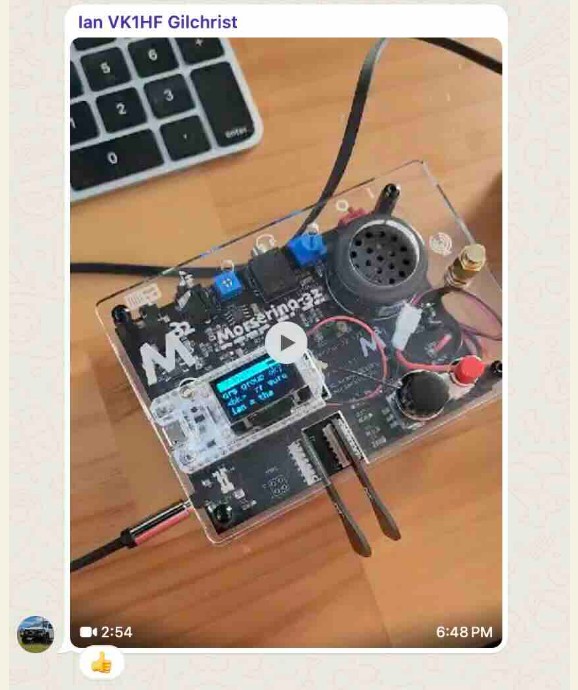

VK5ZAI Space Communications Ground Station
VKCW Net
From David ZL/VK3DBD
Help
From your editor Mark VK2K|I
NZ Net
A Three-Way QSO
Minor Correction
Equipment – Free to Good Home
Di-dah-di-dah-dit
Next Tuesday’s Net
Post Morsum
Teamwork

About the CQ QRS Group
Frequencies and Times
QRL?
Matching
PSE QRS
Landing Zone
CW Tips