Below is a reconstruction of the 2025 05 CQ QRS RagChew newsletter designed to support full text searching. This reconstruction was built using OCR, and will contain errors.
To view the Mailchimp original, click here. To search the entire newsletter archive, click here.
Contents
- CQ QRS RagChew
- Last Tuesday’s Group
- New Team Members
- Masthead Image
- Reports
- Reports & Comments
- Comments:
- Post Morsum Net Report
- CQ QRS Traffic Report
- This Week’s Topic of Interest
- On My Workbench
- A Knee Pad for Portable Ops
- Other News
- Morse Training Net
- Tuesday Traffic Net
- Waitangi Day Prefix
- Di-dah-di-dah-dit
- Next Tuesday’s Net
- Post Morsum
- Teamwork
- About the CQ QRS Group
- Frequencies and Times
- QRL?
- Speed? Rhythm?
- Matching
- PSE QRS
- andina Zone
- CW Tips
CQ QRS RagChew
As the weather continued to challenge us both on and off the airwaves, it’s been a week of persistence, innovation, and camaraderie within the group.
Whether you’ve been operating from the comfort of your home or enjoying some portable ops on your motorbike, it’s been encouraging to see such a strong turn-out for Tuesday’s net— despite the less than ideal conditions.
I was pleased to see how many stations were on again this week – check out the spreadsheets! Great to see people like Mike DL3YZ using Paul VK5PH‘s Ironstone Ridge KiwiSDR to get some real live receiving practice too.
This week, our reports offer a mix of practical insights, thoughtful reflections, and a few good stories from both local and international members.
This week also saw some interesting developments in equipment and techniques, from a 3D-printed kneepad designed for portable ops to the ongoing success of the Morse Training and Traffic Nets.
As always, there’s plenty to learn and plenty of room for improvement, no matter where you are in your CW journey. Welcome Peter VK2GN who’s returning to the amateur radio fold after a long break.
Peter’s return to CW is a reminder of how rewarding it can be to reconnect with this timeless mode of communication, and we look forward to hearing more from him in the future.
As always, the contributions of our members are what make the net such a special experience. Special thanks to those who’ve taken the time to submit their reports.
I’d like to encourage more of you to share your experiences —whether through your own QSO reports, equipment setups, or just a note on how you’re progressing with your CW practice.
Your input not only helps us stay connected but also enriches the learning experience for everyone. Your participation will always be appreciated by the team, and it’s a great way to keep the community engaged and growing.
Thank you, as always, for your continued support of the net, and for helping us keep the art of CW alive and well.
Last Tuesday’s Group
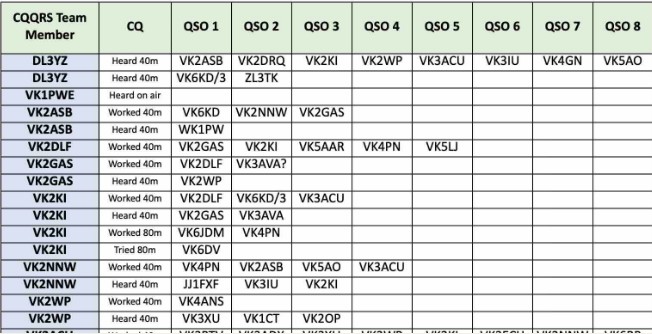
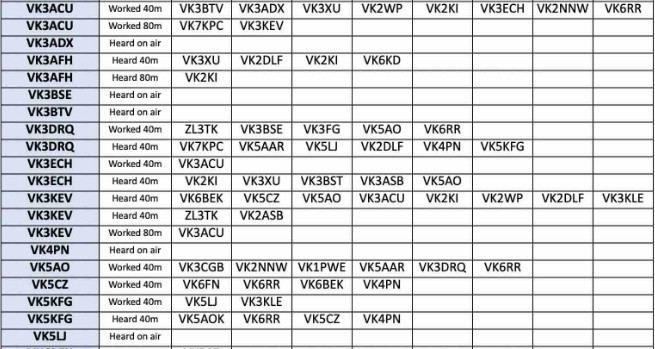
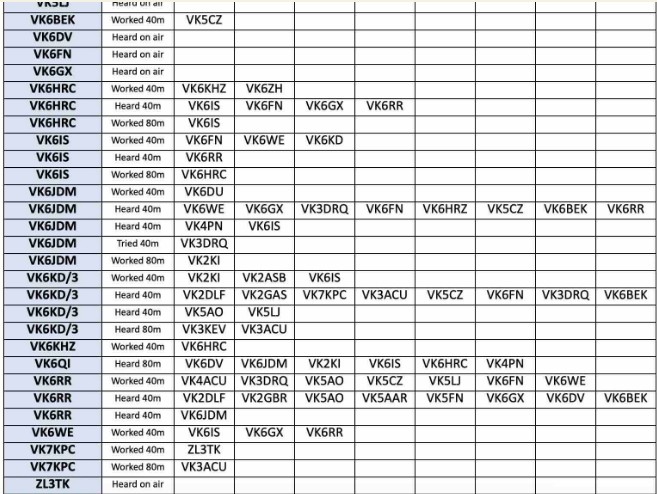
Here’s this week’s list of the 58 stations heard on the net on Tuesday evening:
New Team Members
Welcome this week to Peter VK2GN from Crookwell. Peter is returning to amateur radio after many years and is keen to get back into CW.
I look forward to hearing your return to the art of CW Peter, and like so many others, hope you find the net just the ducks’ guts!
Masthead Image
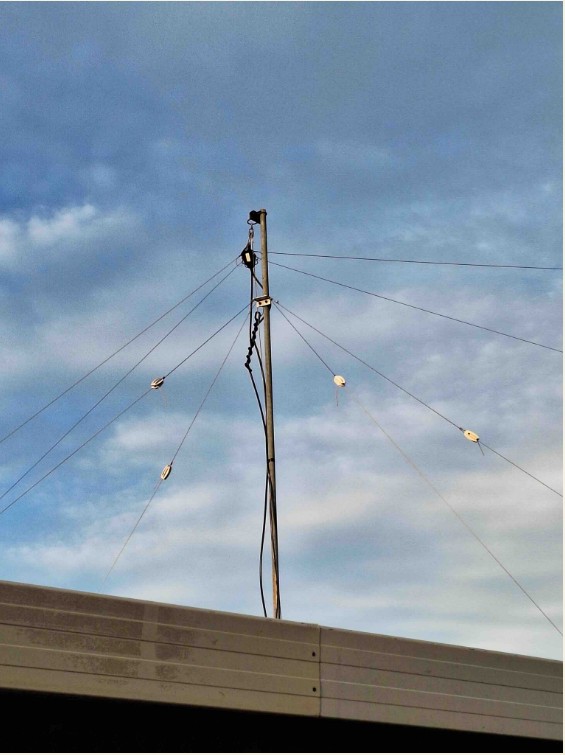
And thanks this week to another of our very active Sandgropers, Wayne VK6NW from Bridgetown for the image of his Bushcomm dipole and TET Emtron 80/40 dipole. The are fed via the single TET Emtron BALUN (the insulated wires are guys).
Reports
After next Tuesday’s Group, please send me a list of who you worked and / or who you heard using our web form here:

Please help attract new and old team members to have a go by submitting your report each week. Submissions close lunch time (Eastern Australian time) on Thursday.
If you hear or work one of our team on a different band on Tuesday, please just use the 80m report area and use the instructions to annotate which bit applies to which band. Cheers, mb Mark Bosma VK2KI!
/ VK6QI Beautiful South Bowning NSW mark.bosma@icloud.com non impediti ratione cogitationis
Reports & Comments
The spreadsheets above show the known stations on last Tuesday’s Group. Comments distilled from the reports I’ve received follow:
Comments:
• Hello and greetings from the other side of the globe. I had some time today, and so was browsing the Australasia waves using the ironstone SDR. « Its a great practice for me to hear actual QSOs and not computer generated code.
I was a bit jealous about VK5AO operating mobile with his motor bike.
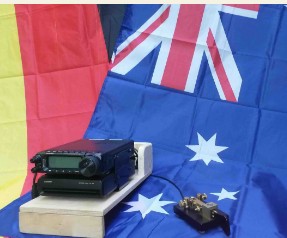
• Nice to make quite a few contacts tonight. Still got RSI issues from keying so tried out a cool little single lever paddle 3d printed looks a bit dodgy but it keys much better than it looks.
Was great to work Rob who was portable 7 on the motorbike with his G90, two of my favourite things right there portable radio operation and motorbikes.
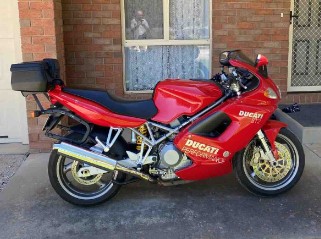
[80m] * Great to work Peter and Kevin on 80m, Kevin reminded me late last year was his first QSO. Kevin your CW is sounding great! Good to work you.
From David VK6KD/3 at 6km West of Portland Vic
[40m] * Good to hear lots of CW activity on 40m.
[80m] * With a Shr time difference between vic and wa, you need to be a real night owl on the East side of Oz to make use of the 80m when it opens, hihi..
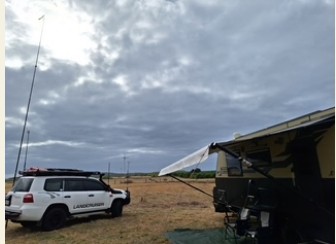
From Donald VK6JDM 20KM West of Esperance:
[80m] + I again connected with VK2K, this time on 80 metres. as the QSO progressed he was swallowed by the noise..
[40m] + 40 had a lot of stations replying to any calls, and there were lots of stations working on 40. Managed to get a lot of good reception practice… + Last week I was in Kalgoorlie and so not on air. I was actually being cooked.
A disgruntled ED patients appears to be the one that set fire to the air conditioning plant at the clinical school and the temperature topped 40 degrees every day of the week reaching 48 degrees on the Friday, falling to 45 degrees by 8 pm and still 36.5 at 4:30 in the morning when I rose to have breakfast in preparation for a retreat back to Esperance (Where it had been 50 degrees on the farm on the Friday!.
+ Still cooling off. Kind regards and 73, Donald Howarth VK6JDM. [eez!]
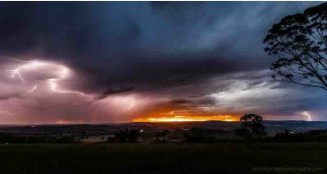
• A belt of lightning stretching from Sydney to Tibooburra pretty well wiped 40M out. Had to close down for an hour whilst a storm cell swept over Bathurst..
[40m] * Mostly listening direct or on the Kiwi SDR nodes, enjoyed the Traffic net run by Stan ZL3TK.
[80m] * Thanks to the WhatsApp traffic managed to get a contact with Peter VK6IS, and followed quite a few stations on Kiwi SDR nodes that I would have missed otherwise..
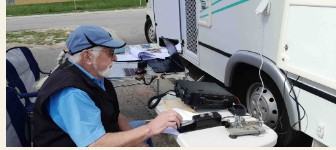
• On air late due having to change flat tyre! Good to hear a good number on the air..
[40m] * only local activity until later on,. * where some weak ES stations were being heard.
[80m] + the local bands are very quiet these days,. * with only an little amount of activity around..
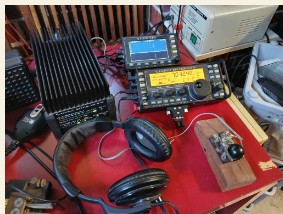
[40m] + Rushed for time and late again I expected a short session but ended up having three QSOs lasting about an hour. It is getting more comfortable and satisfying with practice. Thanks to VK6IS, VK6GX and VK6RR..
From your editor Mark VK2KI at Beautiful South Bowning NSW
[40m] * I was pleased to catch up with on of the Group’s good supporters, Georg VK2DLF at St Marys on Tuesday. Signals weren’t great and there was QSB, but Georg was happy to report a rapid temperature drop in Sydney from 42 degrees to 27; his joy was short-lived, as a storm was brewing and he had to disconnect the antennas and find something else to do for a while..
+ After Georg, I chatted to David VK6KD/3 at Portland. David’s RSN 588 was an indication of how noisy the band was there – but later he reported on our CQQRS WhatsApp group that the noise suddenly disappeared – pointing either to non-natural causes or auroral activity..
* I rounded out the pre-dinner drinks with a chat to Jordan VK3ACU at Meredith; again signals were marginal, and I hoped all was well further West with the bush fires..
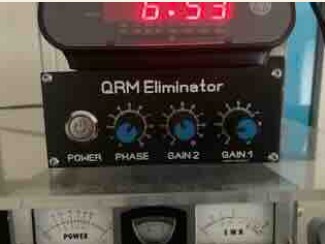
[80m] + After dinner, I listened around for a while on 40 before going through the tune- up and noise canceller adjusting routine on 80m; I love the $100 noise canceller (S9 noise dropped to S2 on Tuesday – not perfect, but much better than nothing) but it’s really tricky to adjust when there’s static crashes around!.
• On the VK6QS KiwiSDR near Brookton, I’d seen Donald VK6JDM near Esperance tuning up then calling CQ; I was surprised when he answered my call; signals were marginal among the static crashes – we sort of managed to exchange RSNs but I didn’t get a QSL back from him and I needed to use the SDR to copy much of what he sent, but it was fun trying anyway..
+ I rounded out the evening with a nice chat to Sava VK4PN up at Mount Ommaney near Brisbane. Also from your editor Mark VK6QI via the VK6QS KiwiSDR near Brookton WA
[80m] + I heard Nick VK6DV calling CQ from St James; good to hear Nick on air again. I was still having trouble keying the Southern Electronics Group remote HF station at Bedfordale, but tried from here in VK2; however, by the time I went through the antenna coupler adjustment (quick) and the noise canceller set-up (slow and difficult with the static crashes) Nick had disappeared.
+ I then listened in to my (VK2KL) QSO with Donald VK6JDM and had to rely on the SDR to copy much of Donald’s transmission.
And when I was chatting to Sava VKAPN from VK2, we were both watching the VK6QS KiwiSDR – it was interesting to note that once again this week, Sava’s signal from his off- centre-fed dipole up 8m over the 3600KM great circle path was about an S-point better than my 50 Watt signal from my huge double-extended Zepp (two five-eighth wavelengths in phase) up 5 m over the 3100KM path…
+ Great to hear a few more stations on 80m this week.
[40m] * Was looking for someone calling CQ but only came across a few ongoing QSOs. Heard Mark finishing up, but you got pounced on by David – strong sigs from Portland to here, QSB notwithstanding. I threw out my callsign but heard silence.
Saw another strong signal pop up on my SDR and realised you’d moved on, your QSOs were great for headcopy practice though!.
[80m] * Tried to see what I could hear on 80m, I think I heard Mark again in amongst the noise, but nothing from VK6 that was apparently there. [Sorry I didn’t hear you Mathew.
Glad to hear you’re having fun learning the head-copy and that the net is helping there.]
• On the VK6QS KiwiSDR near Brookton, I’d seen Donald VK6JDM near Esperanc tuning up then calling CQ; I was surprised when he answered my call; signals were marginal among the static crashes – we sort of managed to exchange RSNs but I didn’t get a QSL back from him and I needed to use the SDR to copy much of what he sent, but it was fun trying anyway..
+ I rounded out the evening with a nice chat to Sava VK4PN up at Mount Ommaney near Brisbane. Also from your editor Mark VK6QI via the VK6QS KiwiSDR near Brookton WA
[80m] + I heard Nick VK6DV calling CQ from St James; good to hear Nick on air again. I was still having trouble keying the Southern Electronics Group remote HF station at Bedfordale, but tried from here in VK2; however, by the time I went through the antenna coupler adjustment (quick) and the noise canceller set-up (slow and difficult with the static crashes) Nick had disappeared.
+ I then listened in to my (VK2KL) QSO with Donald VK6JDM and had to rely on the SDR to copy much of Donald’s transmission.
And when I was chatting to Sava VKAPN from VK2, we were both watching the VK6QS KiwiSDR – it was interesting to note that once again this week, Sava’s signal from his off- centre-fed dipole up 8m over the 3600KM great circle path was about an S-point better than my 50 Watt signal from my huge double-extended Zepp (two five-eighth wavelengths in phase) up 5 m over the 3100KM path…
+ Great to hear a few more stations on 80m this week.
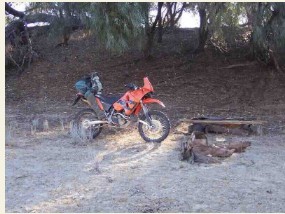
[40m] + Extremely windy and cold conditions at my campsite.. [48 degrees in some places, cold and windy in others – a land of flooding plains]
Post Morsum Net Report
WOO MS Use hee yy Lue 2) * VK6KD/3 David + VK6QI Mark * VK6FN Max * VK6HRC Richard and our SWLs including Mulligan, VK6MRB a regular checked in before the net.
The network was fairly busy just before the net with Max catching up with Mark VK6BSA and David VK6NRA before they started work for the day.
David called in 6km West of Portland in VK3 to let us know that he worked three on forty and heard two on eighty, still working through his troublesome set up on eighty. They are enjoying the cooler weather over there going bushwalking etc.
Before moving on to VK5 soon. Mark got things squared away before the morning inspection and then joined in for his report. Mark worked three on forty and two on eighty, but had a struggle working Donald VK6JDM near Esperance due to poor band conditions.
Max worked five on forty and enjoyed a few QRQ contacts to blow the cobwebs away. Not on eighty at this time due to antenna problems. I had two contacts on forty, one with Ron VK6KHZ great to hear him back on the net.
I then went into SWL mode followed the traffic net run by Stan ZL3TK and got a good workout with six and seven number groups! Thanks Stan, Manny and the others.
We also had discussion about the excellent CW training net run by Nic VK7WW and the VK7TAZ radio club on 3.580 LSB and their Discord link on Wednesday evening, starting at 7pm EDST. Thanks to all on the net last night and this morning.
CQ QRS Traffic Report
The Traffic Group convened at 0840Z on 7.0257 MHz as usual. Conditions were quite satisfactory and two formal QTCs were successfully sent: an answer from VK7KPC and a question from ZL3TK.
The speed at which the ANSWER QTC was sent has been estimated at 11 wpm character, with Farnsworth, between 4 and 5 wpm word speed. The speed at which the QUESTION QTC was sent was measured at 15 wpm character and 8.9 wom word speed.
An explanation for the character speed being only 75 % of the recommended minimum training speed, is to reduce the number of repeats in the presence of QRM and/or QSB. That compromise worked very well.
During Wednesday’s Post Morsum, one operator admitted to listening to the traffic (via an SDR). He sounded challenged by the question QTC which included four map coordinates in simple DD format to four places.
A sound recording and description of that QTC structure may be found at https://bit.ly/zicqgrs – and remember, it’s open for anyone to answer. 73 de Stan
This Week’s Topic of Interest
The Grande Dame S/S Rotterdam, the former cruise ship of the Holland America Line, now operated by WestCord as a stunning hotel with extensive facilities for business, congresses, entertainment and personal enrichment, has become the home of the Morse Academy (MA) in 2022.
Since its launch, the Morse Academy has successfully completed two comprehensive training courses. These courses have introduced amateur radio enthusiasts to the art of sending and receiving Morse code at various speeds.
To provide a deeper educational experience, additional modules are offered, designed to prepare participants to operate proficiently in CW mode and explore the world of radio communication using this most traditional form of wireless transmission.
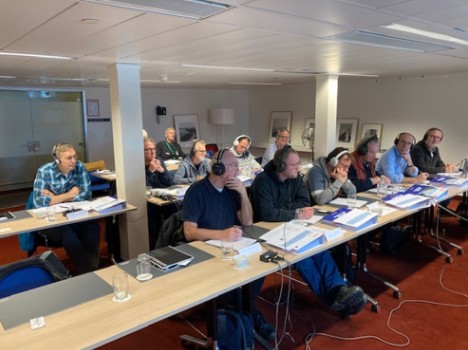
Morse Academy – first year session in 2022 Using just a simple Morse key, supported by a transmitter and receiver, participants learn how to connect with the World without relying on cables, satellites, or computers.
The Morse Academy equips its students with the skills to master this timeless and efficient form of communication, placing the world quite literally at their fingertips.
This initiative highlights the enduring relevance of Morse code and the commitment of the Morse Academy to preserve and share this invaluable skill with the next generation of radio enthusiasts To build on the success of the Morse Academy, potential participants were invited to attend an open day on January 18, 2025.
This event is aimed at introducing new enthusiasts to the Academy’s programs and showcases the opportunities it offers for mastering Morse code and exploring the fascinating world of radio communication.
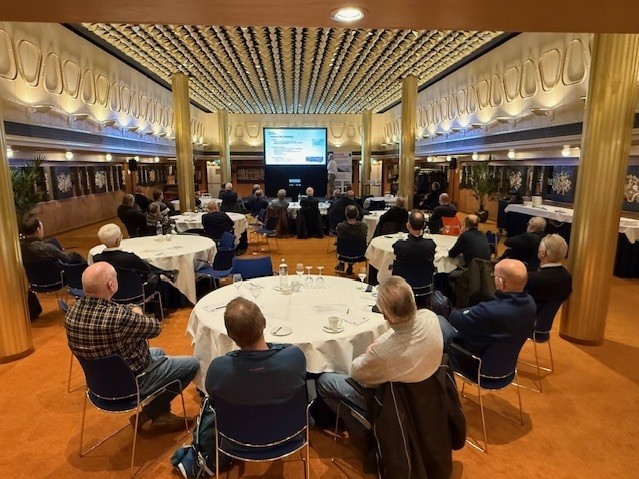
The open day of the Morse Academy was a resounding success, attracting approximately 50 amateur radio enthusiasts to an event that offered a professional and engaging introduction to Morse code.
The day was packed with activities centered around the rich history and application of Morse code. Attendees had the opportunity to explore a variety of topics, including Morse code techniques, equipment demonstrations, and the historical significance of this communication method.
The event was further enriched by well-prepared PowerPoint presentations delivered by former Radio Officers, who shared their expertise and passion for the subject.
These presenters, drawing on two years of successful teaching experience at the Academy, provide unique insights into the technical and practical aspects of Morse code.
The open day truly showcased the Morse Academy’s commitment to preserving and promoting this fascinating art and science, leaving attendees inspired and eager to. deepen their knowledge.
On March 1 2025, the Morse Academy will begin a new course year, welcoming both beginners and advanced learners. The maximum capacity of 25 participants has already been reached, reflecting the growing enthusiasm for this unique program.
Classes will take place in a dedicated classroom on board the ss Rotterdam, equipped with individual sending and receiving stations for each participant.
The classroom is also fully supported with state-of-the-art audiovisual tools to enhance the learning experience. The curriculum follows the renowned Koch method, ensuring an effective and structured approach to learning Morse code.
Additionally, advanced students will have the opportunity to enrol in the Operating Practice module, allowing them to further hone their skills and operate confidently on the airwaves as experienced CW operators.
This initiative would not have been possible without the generous support of several sponsors and the invaluable cooperation of WestCord Hotels.
The Morse Academy is proud to have established something truly unique on board the ss Rotterdam, also protecting the Morse Code recognition as intangible cultural heritage and ensuring that this timeless craft continues to thrive. 73.
Roy [Thanks Roy – nice article! Couldn’t help but let my imagination float away – wouldn’t that be fun?! Perhaps we should ask our adventurers Geoff VK6HD or Mike DL3YZ to represent us if it’s being run again in the coming Dutch Summer?]
If you have an article or two that you think might be of interest to our readers, please let me know so we can share more thoughts and ideas; email to cqqrsnet@gmail.com

On My Workbench
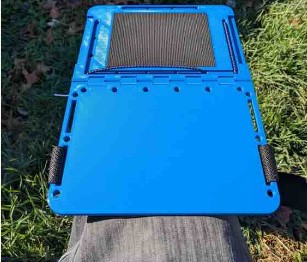
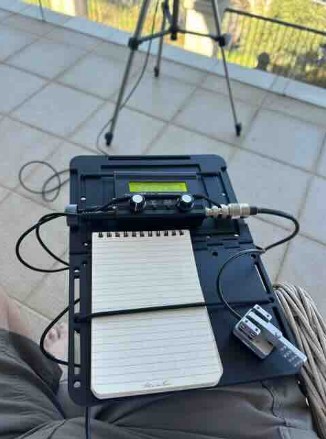
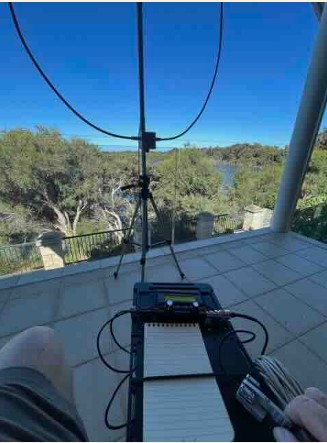
A Knee Pad for Portable Ops
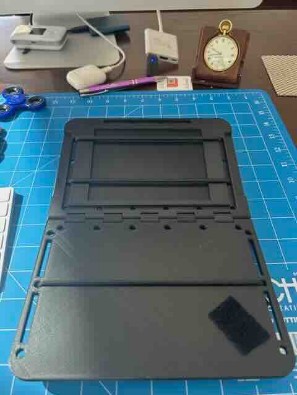
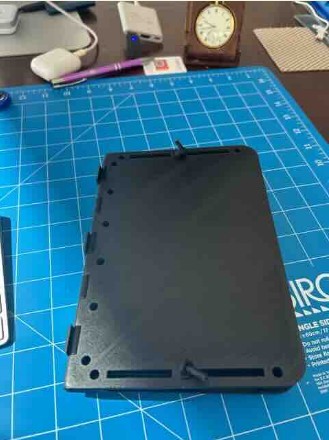
From Geoff VAK6HD I got myself a cheap 3D printer from Jaycar before Xmas – $250 for a brand new Crealty Ender 3 V3-SE. What fun, and got it across the line because I promised to design and print outdoor table cloth clips for the PLM.
Have printed up wire winders, a 4 x HT holder and am now doing a very nice aviator style knee pad for QMX et al
Other News
Morse Training Net
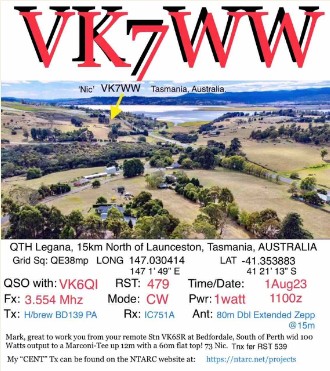
Nic VK7WW runs a Slow Morse training net every Wednesday at 7pm EDST on 3580 for 30 mins. He uses the callsign of the Northern Tasmania Amateur Radio Club VK7TAZ on that net.
Tuesday Traffic Net
From Stan ZL3TK Every Tuesday traffic with an Australian flavour is still being exchanged on 7.0257 MHz starting ~ 0840Z.
As has always been the case, traffic is sent slowly, some would say painfully slowly, and carries an invitation for QRS members to send answers to this week’s traffic the following week.
Anyone needing a repeat need only ask using the previously publicised protocol. In future there may be additional traffic in the form of AQRs (answer quality reports), intended to raise standards further as well as provide general knowledge. 73 de Stan ZL3TK
Waitangi Day Prefix
From John VK4TJ: A reminder – some of us will be looking for that exotic ZM prefix from New Zealand on February 6, Waitangi Day for the SKCC Prefix Award. Cheers & 73 John, VK4TJ
Di-dah-di-dah-dit
So back to the Slow CW QSO practice net.
Next Tuesday’s Net
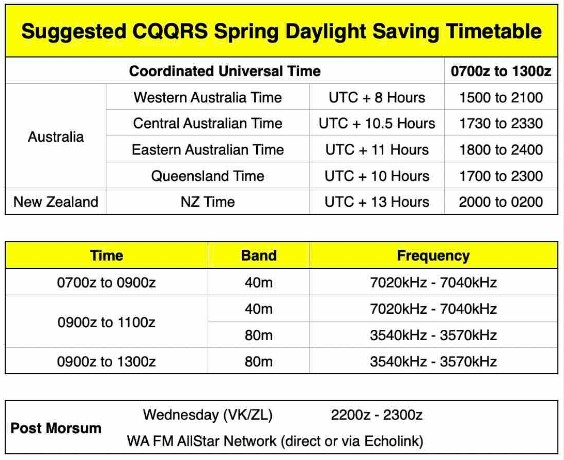
Our CQQRS Group will be on as always on Tuesday from around 07002Z until about 1300Z; see below for details. Doesn’t matter whether you’re brand new and want to try just exchanging callsigns and RST reports, or you’re ready for a good old rag chew.
We’ll have fun. There’s usually people around until after 1300Z – so keep calling in the segment of the band designated in the table below until you catch someone.
I should be on as usual from home in NSW or via the Remote at Bedfordale WA, and I’ll also be watching the proceedings using the VK6QS and Tecsun SDRs in WA and NSW respectively. Hope to hear you there.
Please let me know via our Reports form bit.ly/CQQRSNET who you work or hear on Tuesday’s Group. The report form closes at lunchtime (Eastern Australian time) on Thursday.
Post Morsum
Richard VK6HRC will run our phone Post Morsum on the South West AllStar net (via repeaters and hotspots all over WA) from 0600 WA time, then from 0700 WA time on 80m (3605 LSB).
For the 0600 (2200Z) net, if you’re in WA all you need is an FM 2m or 70CM transceiver and an AllStar node nearby. If you’re elsewhere in the world, if you have an AllStar node (er you may be able to connect your local AllStar-enabled repeater to the net via DIMF codes), connect to node 42482, 51077 or 42732 – these are the hubs that tie the network of repeaters and nodes together in WA.
If you don’t have access to AllStar, you can connect to the network via Echolink. On Echolink, search for one of the following Nodes: * VK2KI-L * “VK6-HUB* * VK6ZGN-L * VK6RMH-R * VK6NRA-L.
When you connect to one of those stations on Echolink, you’ll be automatically connected to the WA AllStar network, and you should hear us on soon after the hour; let me know (cqarsnet@gmail.com) if I can help with connecting via AllStar or Echolink.
If you’re in WA and can’t connect, give Richard a call on 3605KHZ SSB from 0700 (23002).
Teamwork
This week this old dog tried asking Staff Officer ChatGPT to generate the newsletter’s introduction. When it had finished (about three seconds later) I thanked it… and here was its response: “You’re very welcome! I’m glad I could help.
If you need anything else or have more updates to share, don’t hesitate to reach out. Enjoy your week, and happy operating!
73!” Thank you so much to our team of 27 contributors: DL8YZ, VK2ASB, VK2DLF, VK2GAS, VK2NNW, VK2WP, VK3ACU, VK3AFH, VKSDRQ, VK3ECH, VKSKEV, VK4TJ,VK5AO, VK5CZ, VKSKFG, VK6BEK, VK6HD, VK6HRC, VK6IS, VK6JDM, VK6KD/3, VK6KHZ, VK6RR, VK6WE, VK7KPC, VK7WW and ZLSTK, plus of course, ChatGPT; thank you again team.
GY CW on Tuesday, mb. Mark Bosma VK2KI/VK6QI Beautiful South Bowning NSW mark.bosma@icloud.com ‘non impeditiratione cositationis

An Ode to CW – thanks to David VK3RU: In days of old, when ops were bold, And sideband was not invented, Words were passed by pounding brass, And all were quite contented. – Unknown author
About the CQ QRS Group

Frequencies and Times
QRL?
So tune around and call anyone you hear, or find yourself a quiet spot in the designated segment, send “QRL?” and if the frequency is quiet, start calling CQ QRS at about 75% of the speed you’re comfortable receiving at; hopefully responders will match (or send slower to their comfort level).
And if you are already having a QSO and someone sends “QRL?”, respond with “R”, “C”, “Y”, “YES” or QRL to let the caller know that the frequency is in use.
So tune around and call anyone you hear, or find yourself a quiet spot in the designated segment, send “QRL?” and if the frequency is quiet, start calling CQ QRS at about 75% of the speed you’re comfortable receiving at; hopefully responders will match (or send slower to their comfort level).
And if you are already having a QSO and someone sends “QRL?”, respond with “R”, “C”, “Y”, “YES” or QRL to let the caller know that the frequency is in use.
If we’re on 40m and you can hear that the band is open outside Australasia, perhaps consider calling 500HZ above each 1KHZ slot – to minimise the chance of having to copy our team through QRQ QRM that’s often dead-on the kHz markers.
Speed? Rhythm?
If you’re proficient at CW and can race along at 20 or 30WPM – terrific, but please remember, the Group’s aim is to encourage participation and learning, not show how fast you can hammer the key.
Please send slowly where you can and concentrate on rhythm – listen to your side-tone, get that wrist action going and make a special effort to make it sound like perfect CW; the longer we go with our Group, the more I understand just how many non-transmitting listeners we have – and they will most likely appreciate your QRS!
So, if you’re an experienced operator, please try to send nicely balanced slow CW to give them a chance to practice and gain confidence…. they’ll reward you one day by coming up on air to say g’day and thanks – how good is that?
And if you’re new or like me, just rusty…. ignore the above… just have a go – the lather of sweat will be worth it and there’s plenty of time to get the details sorted out as you practice.
Matching
And also for the oldies like me, when you hear someone new, please match their sending speed – or slower. The person you’re replying to may not be as deft on the decoding as you – it may be their first ever CW QSO – remember your first?
Lather of sweat, key that refuses to send that you tell it, brain that refuses to decode those complex letters that were right there half an hour ago, etc!
PSE QRS
And if someone is sending too fast to comfortably copy – “PSE RPT PSE QRS” or “AGN? PSE QRS” will make life easier for everyone…. and might just encourage other listeners to have a go themselves.
The other thing to remember – most operators are writing down what they hear… so when you put it back to them, expect a delay while they read your words of wisdom, before replying.
The aim is to give everyone a go at contacting others – no-one owns their calling frequency in this Group. So unlike working DX, if you hear someone signing off – jump in and call – doesn’t matter who was first on the frequency – we really are all good mates in this Group….
And besides, at the speed we’re sending, after a QSO most of us will have forgotten who was first!

andina Zone
If the band goes really quiet, call and listen on 7032KHZ (7028KHZ secondary) or 3555KHZ. If you catch someone, there’s no need to QSY – enjoy the frequency.
But don’t forget to tune around if it’s quiet – we have lots of operators with crystal locked transmitters – and they could be anywhere within the segments.
For those who are locked, or can only transmit outside the segments, send a message on our WhatsApp CQ QRS – Alerts group advising of your current frequency.
And of course, put the frequencies in a memory so outside of the Group, if you’re not tuning around, leave your receiver on one of the primary frequencies – you never know who you’ll hear (7032 is used in VK and ZL for SOTA / PARKS during the day so you’ll often hear activity there).
CW Tips
The opinions expressed in the RagChew newsletter are those of the individual contributors. The opinions do nat necessarily reflect that of the editor or of the C@ QAS Group members.