Below is a reconstruction of the 2024 33 CQ QRS RagChew newsletter designed to support full text searching. This reconstruction was built using OCR, and will contain errors.
To view the Mailchimp original, click here. To search the entire newsletter archive, click here.
Contents
- CQ QRS RagChew
- Masthead Image
- Reports
- Reports & Comments
- Comments:
- Other News
- International Lighthouse and Lightship Weekend – This Weekend
- CQ QRS Net Speeds
- Hoerwache
- SKCC Oceania QRS Saunter – This Weekend
- Best regards
- Ham Crossword Solution
- Morse Training Net
- This Week’s Topic of Interest
- Brain Teaser
- Exam Questions:
- Answers from last week’s Quiz:
- Di-dah-di-dah-dadit
- Next Tuesday’s Net
- New Post Morsum HF Arrangements
- Teamwork
- About the CQ QRS Net
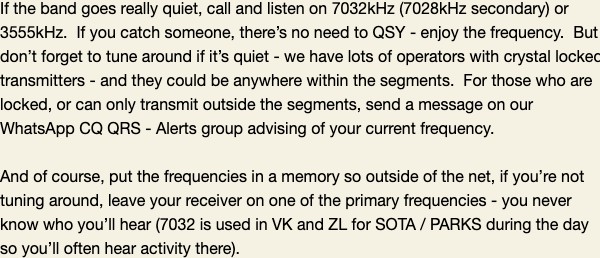
- Frequencies and Times
- PSE QRS
- Landing Zone
CQ QRS RagChew
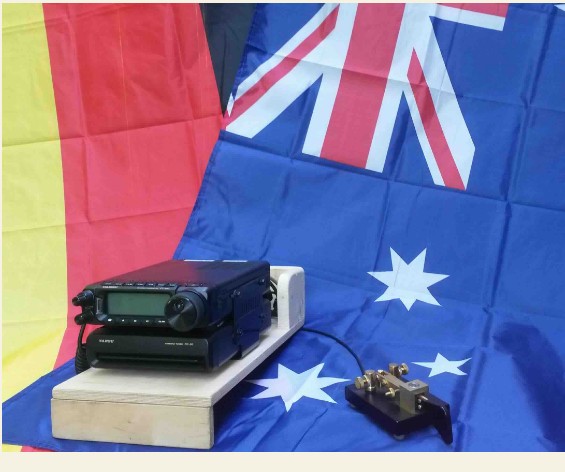
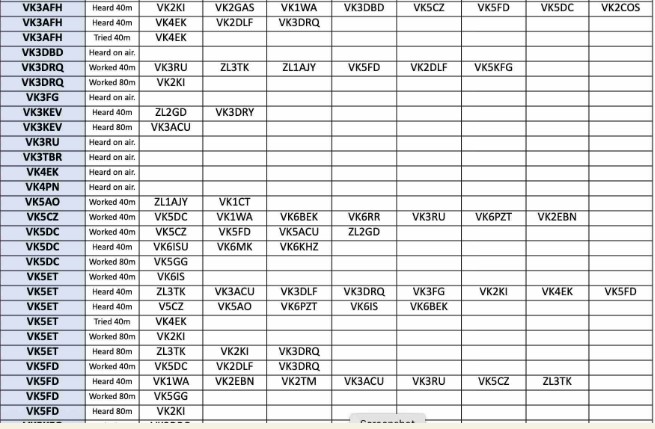
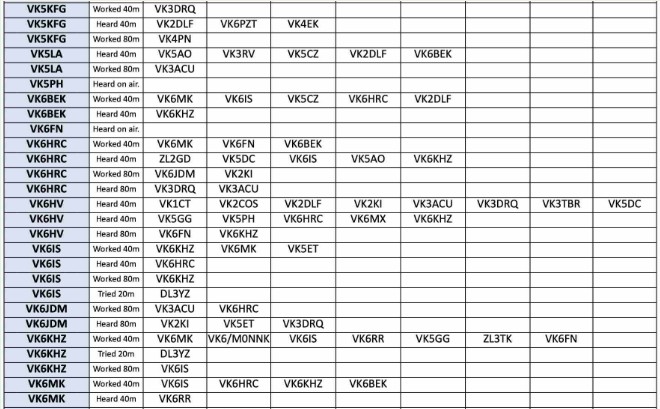
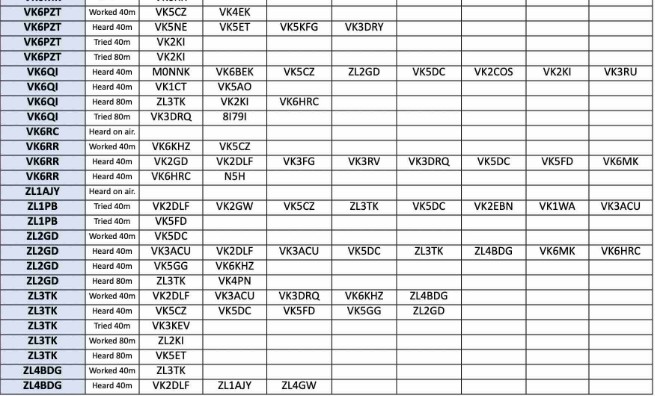
So, off the soap box, and back to the fun! Here’s this week’s list of the 60 stations Paya] FR ecm fF beer es on pret been CO
So, off the soap box, and back to the fun! Here’s this week’s list of the 60 stations heard by our team on Tuesday night:
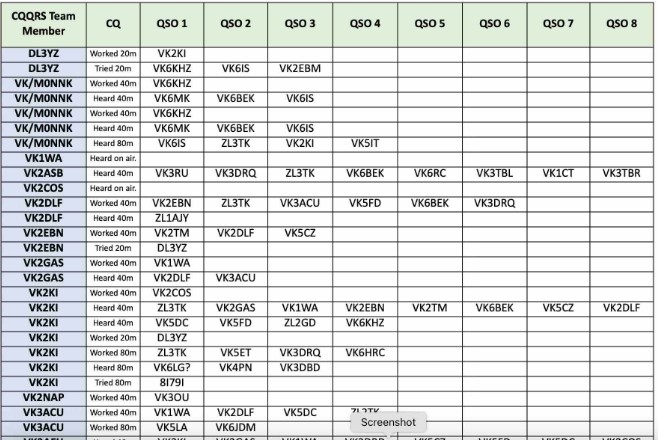
Masthead Image
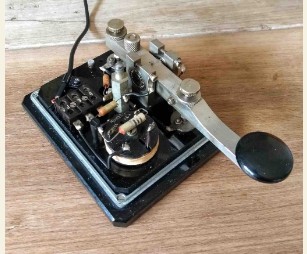
And thanks this week to Mike DL3YZ for the nice thought of combining the German and Australian flags with his Yaesu FT-891, FC-50 and nice-looking Kent single-
And thanks this week to Mike DL3YZ for the nice thought of combining the Germar and Australian flags with his Yaesu FT-891, FC-50 and nice-looking Kent single- paddle.
Reports
Here’s the URL and QR Code for your report after next Tuesday’s net: bit.ly/WCQQRSNET
We fOr YOU FEPOrt alter Next lUeSaay s Net. bit.ly/WCQQRSNET

Getting reports from stations and listeners is important to me – even if you listened and didn’t hear anyone or weren’t able to copy anything – the fact that you had a go will then be recorded so we know that the net is working and attracting new and old team members to have a go.
Cheers, mb Mark Bosma VK2KI / VK6QI Beautiful South Bowning NSW mark.bosma@icloud.com non impsditi ratione cogitationis
Reports & Comments
The spreadsheets above show the known stations on last Tuesday’s net. Comment distilled from the reports I’ve received are below:
Comments:
From Ross VK/MONNK at Exeter UK via Perth WA
[40m] * The VK6SR remote access FT-991A in Perth was having receive issues so working was difficult for me today. + The 40m band was very busy and it was difficult to get a word in edgeways!.
[80m] el ote af atmoanhericre hilt I heard 7! 2TK and VKOKI having a Inna OSD with
Random groups. + I was keen to have a QSO with ZL3TK so I waited patiently. + And waited. + And waited. * Then they finished… and VK5ET got ir with a call to VK2KI before I could hit th key. * There went my chance for a VK6-ZL3 QSO with Stan!
Yes, John had a big signal with me, so if you did call Stan, we both probably would have missed it anyway! We should think about simple protocols to allow three-ways between non- newcomers to the art; perhaps a simple BK inserted between overs will get the ball rolling; there’s probably a better prosign, to use – but for us ignorami, BK would work just fine.
1 know for new CW operators, a multi-way QSO can be really difficult – especially when QSB and QRM (or in my case, receiving skills) cause missed bits that make re- syncing difficult.
However, as you said we were having a good long old rag chew and doing two RandomGram training exchanges… but if you or any of our team would have jumpped in with a BK between overs, I’d would be very happy to have a three- some.
By the way, for anyone who would like to give this a try, I suggest: + don’t just send your callsign – there’s often multiple QSOs on frequency with stations not hearing others – and it’d be difficult to tell if you’re breaking in or just happen to be calling on the same frequency; and + don’t break in if one of the stations sends KN at the end of their transmission – that means that only the station in the QSO is invited to transmit.
See more from Ross below in Europe to Australia QRS – Not Yet and Three Portable Pet Hates.)
[40m] + DXpedtion NSH was busy working split on 7025 with the stations calling him spread from 7026 up! Lots of QRM. + Always pays to listen carefully before transmitting! + But it was excellent that there seemed to be plenty on again.
+ Not 40m but on the sked times on 20m QRXed and called DL3YZ nothing heard. [Ah, now we know what that fishing net full of squirming, struggling CW callers on 7026+ was! Well found.
Pity you didn’t hear Mike on 20m – I was lucky to nearly catch him on what was probably the long-path.]
[40m] + Thoughts of a beginner, I put out a CQ on 7035 and got a response, but for the life of me I couldn’t get the callsign. + I was expecting a VK call but this response had a Z.
+ That threw me totally and after a call to QRS I think my brain was fried as I couldn’t continue. +I spent the next hour listening across the band but everyone was too fast
• I spent the next hour listening across the band but everyone was too fast for me. * I couldn’t get this 70YR old brain into gear. mu ge
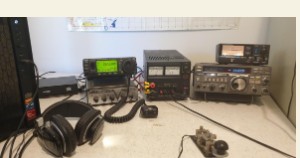
[Well done for having a go – that’s why we’re here. You’ll have seen that the ZL who called you was Stan ZL3TK – who as an avid reader of these notes, will have known that this would have been CW QSO number two for you…
And I reckon would have been happy that you had a go… another CW operator is a good thing! Keep going… even just listening-in, you’ll get used to what’s going on, and before long you’ll be copying enough to make a go of it.
The old-timer CW operators will tell you what they’ve been taught – you need to be able to copy comfortably at say 12 – 16WPM before making a fist of a QSO; I respect (but don’t necessarily agree with) that doctrine. If at first you don’t succeed…
And besides, a person who has the motor, balance, visual and cognitive skills to hover a helicopter surely can decode a few dits and dahs! Well done mate.]
[40m] + Worked VK1WA whilst I was mobile – then other stations at home in the shack. + I have finished putting up my double extended Zepp this week and Dale was kind enough to give mea report for each antenna End fed and Zepp Thanks Dale.
[80m] + The QRS group is fantastic, I want to shout out Dylan VK3AE who is just down the road from me at Ballarat. + Dylan helped me out with some new switch contacts and some advice for an Pranilamitecaininctatthastareattotcaten
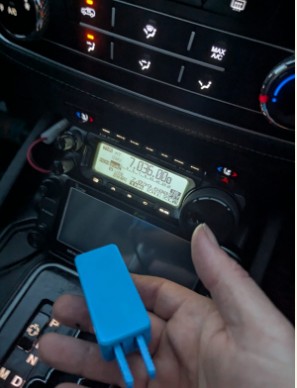
[40m] * nice signals on 40m spent more time listening to improve my copy tonight.
[80m] * way too much noise on 80m tonight, my neighbour’s have the plasma telly cranked up. * Tried to answer Mark calling on 3.555 but no luck. [Bad luck mate – one-way propagation, or my 3KHZ wide receiver not doing us any favours?
Interesting that you heard me over your neighbour’s TV though.]
[40m] + Band was noisy tonight & a there was a fair bit of QSB.
[40m] + After some adjustments of the beam, with a little help from Ross MONNK and Ron VK6KHZ, I managed to start on time. + Propagation was not as good as last Tuesday. + Mark VK6KI showed up, having a solid 539.
+ But unfortunately my signal was under some QSB on his side. + Then I tried to copy some of the signals that were coming up. + It was a good RX practice.
+ I actually heard 5 or 6 stations calling me, but I had no chance to fully copy the callsigns; apologies to those who called. + My gear was just a Yaesu FT-891 with an attached tuner FC-50. My favorite mobile rig at the moment.
I love doing QRP, but its helpful to have 100 W with me, just in case. I think the 891 is really underrated. The receiver in it is really great for the price. Way better than my FT-991a. And the CW filter works right down t
50HZ and it has a great working noise reduction. * The paddle is a Kent single paddle. I use it in paddle and sideswiper / cootie mode – the latter needs still some practice HI. « Thank you for the beeps mates, It was great fun 🙂
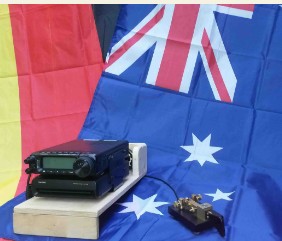
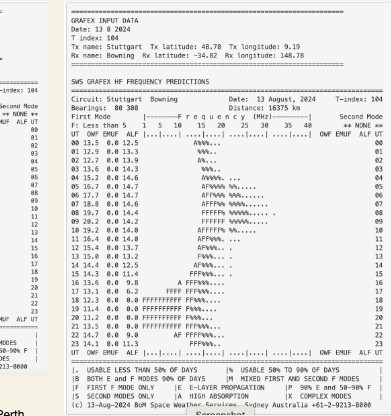
[Good fun experiment Mike. The short-path GRAFEX ionospheric predictions from the Australian Bureau of Meteorology Space Weather Services indicate that the D- Layer Absorption Limiting Frequency was above 20m at the time – see below.
Perhaps consider trying 15m next time? Unfortunately the GRAFEX prediction won’t do long-path – perhaps try the VOCAP – Ham web-based prediction next time – it allows short- and long-path predictions for various amateur band, power, antenna and noise situations and has a nice pie-chart display option that gives a prediction of propagation likelihood on each band by hour]
[40m] + QRM from dozens of QRO stations sending QRQ made QRP stations QNP and QRS trainees frustrated, as well as obliterating several times QTCs between stations QRV with traffic.
+ There didn’t seem to be any purpose to the clatter, most of the time it was nothing but callsigns. + Like me, I wager others would have happily QTHrottled every one of them.
+ Nonetheless, traffic with a heavy Australia flavour was exchanged as advertised with OM Manny VK3DRQ. + All stations are invited to participate.
[80m] * Good strength trans-Tasman signals into VK2, and VK6 so I was told. + RSN 552 and 563 are not to be sneezed at though QSB made the RandomGrams exchanged vulnerable to a few errors.
+ Still, non-contextual exchanges such as RG make for jolly useful skill-building.
[40m] + On my first Tuesday evening off in a few weeks, and after I had completed my domestic duties, I found Andy VK3OU, up the shallow end of the CW part of the band chasing SKCC contacts on 7052.
+ invited him to join in the party further down the band, but the conditions had started to wane. + A surprising 559 to him with just 20W into my patented and trademarked Poke-Out-The_Window-Tenna.
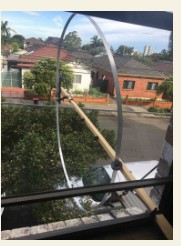
• It will take a full 100W without self-immolating, but it doesn’t take to rain all that well and subsequently after a the QSO with Andy, and couple of post QSO unspotted CQs in Pixieland on 7023, I saw my signal fade away on the web SDR I was monitoring my signal on, my SWR increase slightly…and steam rise from the tuning capacitor on the “pointy end!
Of the loop… or it could have been a reflection in the window of the steam from my coffee. + Either way it was better than blue plasma and smoke of antennas past on my continuing quest of finding ways of “How not to make a magnetic loop antenna that takes 100W”.
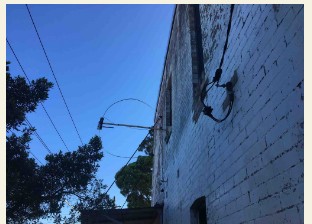
[80m] + Sadly the Poke-Out-The_Window-Tenna doesn’t yet tune for 80m and I suspect, given the size of such a loop, and the proximity of such a construction to the power lines located just outside my window in the upstairs room, it would be wise to look at other options.
+ Maybe a Tape-On-The-Wall-Tenna that I did once, a couple of years ago, when I first started out, and had a successful 80m QSO on might be an option. + The fact that the RF crashed most computerised equipment in the near field was only a slight inconvenience.
Cheers Chris 73 DE VK2NAP dit dit [Visions of people in trench coats with covert antennas poking out windows on dark nights!)
[40m] + No antenna issues this time, and I happily listened in to a few QSOs before dinner. +I could hear some VK2/VKS stations coming in reasonably well (579-599), I believe I copied most of the QSOs I tuned into, lots of other non-QRS traffic around this Tuesday though.
+I caught the end of a QSO by VK4EK and tried calling afterwards but no luck – I think I was hearing another station doing the same but it was hard to copy so I’m not positive.
+ realised time was getting away from me so I picked a free spot, sent QRL, and called CQ for 15-30 minutes but no luck.
+I didn’t replicate my previous luck getting picked up on the RBN but could hear myself on some KiwiSDRs interstate so I probably just had bad timing!
In hindsight, I should have started calling CQ earlier and spend less time listening to other QSOs / hunting for someone calling :).
+ Also, thanks Mark/Stan for the clarification re Prosigns – particularly
If I was paying attention on the first read through I would have seen it at the bottom). + Iwill be interested to hear what others think of my sending and take on feedback once I get some QSOs logged!
[80m] + 1’ll have to work on setting something up so I can swap to 80m easily, I could do it last week whilst on holidays but in my usual setup at my QTH it behaves differently, so more fiddling required before I get on 80m (yay, fun with antennas}).
[Antenna work – yay! What a pity no-one responded this time mate – I’m looking forward to reading about your first ever QSO… or even better, being on the other end! And of course, keep an eye out on our WhatsApp Alerts for people calling CQ during the net.
Most of the team know to slow down to match your speed if you give them a calll- the trick is to work hard to send at no more than 75% of your comfortable receiving speed.
And of course, if you want to be sure to be sure, tee- up the first few / many contacts via the Alerts; your First QSO certificate is being
• It will take a full 100W without self-immolating, but it doesn’t take to rain all that well and subsequently after a the QSO with Andy, and couple of post QSO unspotted CQs in Pixieland on 7023, I saw my signal fade away on the web SDR I was monitoring my signal on, my SWR increase slightly…and steam rise from the tuning capacitor on the “pointy end!
Of the loop… or it could have been a reflection in the window of the steam from my coffee. + Either way it was better than blue plasma and smoke of antennas past on my continuing quest of finding ways of “How not to make a magnetic loop antenna that takes 100W”.
[80m] + Sadly the Poke-Out-The_Window-Tenna doesn’t yet tune for 80m and I suspect, given the size of such a loop, and the proximity of such a construction to the power lines located just outside my window in the upstairs room, it would be wise to look at other options.
+ Maybe a Tape-On-The-Wall-Tenna that I did once, a couple of years ago, when I first started out, and had a successful 80m QSO on might be an option. + The fact that the RF crashed most computerised equipment in the near field was only a slight inconvenience.
Cheers Chris 73 DE VK2NAP dit dit [Visions of people in trench coats with covert antennas poking out windows on dark
[40m] + Our CW segment got busy at times making it difficult to find somewhere to call, great fun ! Des… I should be careful what ! wish for in future!] From me VK2K{ at Beautiful South Bowning
[40m] + From the get-go, I heard Stan ZL3TK at Waitarére Beach, followed by a number of other QSOs. + By 0730 it was time to slide up to 20m to see if I could hear Mike DL3YZ from Stuttgart; I’d tuned the feed line coupler on my 80m double- extended Zepp working as a five-wavelength doublet but hadn’t had time to adjust my phasing-type noise canceller.
* Mike was just there in and out of the noise with the QSB and I sent the report of RST 239, but despite repeated efforts of Mike, I just wasn’t able to pick out his report of RST 539 which he subsequently told me about by email.
+1 thought we might have more luck later, but that wasn’t to be; when I came back to 20m at 0830, there was no sign of Mike, nor did I hear any others calling him this week.
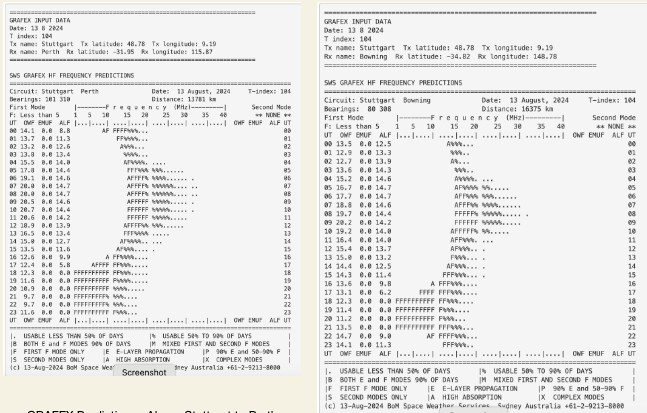
+ After the attempt, I ran the Australian Bureau of Meteorology Space Weather Services’ ionospheric prediction for the paths to PErth and NSW (see above).
+ Unfortunately I couldn’t make the web application do the prediction for the long-path (last week, Dylan VK3AE found that long-path was the go at that time of the day) – and the short path prediction showed that the short-path Absorption Limiting Frequency was hovering around 14.5MHz at that time – ie there was unlikely to be much in the way of F-layer propagation because the strong ionisation of the D-layer was absorbing signals before they got to the F-layer.
+ I tried to force the GRAFEX web prediction system to work on the long-path (by moving the station dots around on the map, but as soon as the path- length became longer than the short-path great-circle distance, it jumped to the shorter path).
+ I confirmed with the BOM the next day that the system only does the prediction for short-paths. + For future tests, I’ll need to try to find an ionospheric prediction suite (eg the VOA one) to see if long-path prediction was possible.
+ As the time approached 0800Z, the band was opening nicely into WA from NSW with many good signals from the West and SA; it was tertific to hear a good number of QSOs going on from one end of Oceania to the other, and I went on to chat to Rob VK2COS who I hadn’t caught up with for a while.
[80m] + By the time I came back from dinner, 80m was open nicely from the West and New Zealand. + Ihad a chat wit Stan ZL8TK and we had a couple of RandomGram exchanges before the QSB started getting the better of us (at least that’s my excusel).
+I then chatted to John VKSET who reiterated the success he’s been having with the digital noise cancelling speaker he’s used for years on the net to deal with the switch mode power supply hash at his home on 80m; in parallel I could see Sava VK4PN coming through nicely from Mount Ommaney on the Tecsun Kiwi SDR at Araluen NSW.
+ After John, I went on to chat to Manny VK3DRQ at Blackburn, and I was pleased to see that Sava had hooked up with David VK3DBD at Yakandandah.
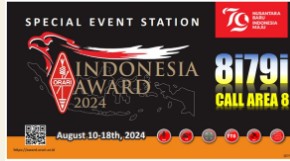
• Later in the evening I tried the 8179L special event station (Indonesia celebrating 79 years as a Republic} that was coming through on 3540KHZ with a beacon CQ- but —my signal apparently wasn’t strong enough to wake the operator.
From me VK6QI at via the VK6SR Remote HF station at Bedfordale and the VK6QS KiwiSDR near Brookton
[40m] + Using the VK6QS KiwiSDR near Brookton, I listened-in to Shaun VK6BEK at Quinns Rocks chatting to lan VK5CZ, as well as Grant ZL2GD at Oxford working Dale VKSDC at Littlehampton near Mount Barker.
+ also was able to copy Rob VK2COS and me VK2KI nicely when we had a QSO, followed by David VK3RU at Burwood, lan VK5CZ at Clare, and Marty VK5AO at Banksia Park who was chatting to VK1CT.
[80m] + When Stan ZL3TK was sending me (VK2KI) the RandomGrams, I was able to hear us both with solid signals into WA on the big loop of the VK6QS KiwiSDR at Jelcobine.
+ Similarly I was able to copy Manny VK3DRQ when we chatted; I cranked-up the VK6SR Southern Electronics Group Remote station at Bedfordale but signals the other direction were weak and Manny wasn’t able to copy me well enough for a QSO.
+ Awhile later I noticed the 81791 special event station commemorating the 79TH anniversary of the Republic of Indonesia with a beacon CQ call on 3540KHZ; however, I wasn’t able to raise the operator at the other end – too much noise, a difference in power level or a tight squelch with the QRM up there I’m guessing.
From Donald VK6JDM at 20 km west of Esperance WA
[80m] + Great signals were flowing into WA from east coast. + Spent 1 hour listening and made two contacts. + Still working on the audio injection system, not perfect yet, some things take a while. + Donald VK6JDM near Esperance WA.
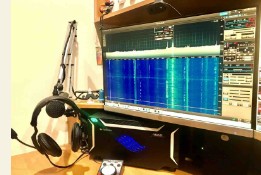
[80m] + maybe – an extra genetic section, for other band activities:. + – YBINWP/15 on the weekend shift -.
[40m] + All started fine until a hand full of QROs/ QRQs decided to QRM the little fraction we were enjoying. + Maybe we should build up our numbers and keep ourselves enjoying, hi, hi.
[80m] + I was getting ready to QSY from 40 to 2m when I decided to check on 80m. + There, to my surprise was a strong RSN 597 + 20 dB station, I waited for a moment and not known who were they, I sent my CS and who would come bac!
None other than our mate Mark/VK2KI. + Very interesting and important chat that lasted for almost one hour. + Thanks for that OM Mark. + Keep up your good job.
[40m] + Lazy evening for me, post school holidays, post flu, post work 🙂 I was surprised how many stations I heard given the propagation conditions. * VKs were faint to me, but ZLs were stronger than usual.
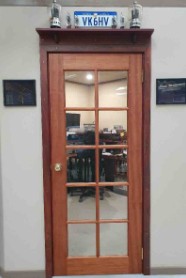
[40m] + Not feeling well, dreaded lurgy. + Did not plug the key in, just copied few stations for an hour or two.
[80m] + Just copied a few stations after din for a half hour of so.
[80m] * Couldn’t do much Tuesday night as I had to pack and prepare for a business trip. * Had a lovely contact with Jordan VKSACU on 80 with 5 watts from the IC-705 trying out my new ATU-10 QRP antenna tuner.
* Has a brief tune around 40m before getting back to packing. + Condx seemed great!
[40m] * There are times like Tuesday when I an not able to transmit. + Looking forward to next week when perhaps I can.
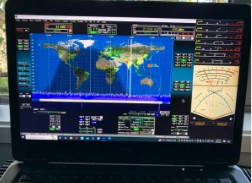
I from Stan ZL3TK Despite the challenges arising from a DXpedition and a very congested section of the 40 m band, formal traffic was again passed. It required only a small number of word- repeat requests for success.
We had listeners, one of whom, OM John VKSET, copied the exchange almost faultlessly and emailed his result. Well done that man! What’s next John? Well, we’d rather like to have you going live sometime soon!
Here is OM Manny’s very-thorough treatment of the previous week’s QTC. Itis accurate in every respect and demonstrates at the end how two OM’s minds think quite differently. The initiator of the question asked why knowledge of recent weather was important.
The answer being sought was that Melangata Station has a dry-weather-only airstrip. Outback mud from rain in previous days may have rendered it soft and unusable.
However, the respondent still had the answer correct when he implied that compliance with the regulations is paramount in any flight plan. Well done, OM Manny! This weeks QTC is again rich in Australian culture and has a major shift in subject genre:
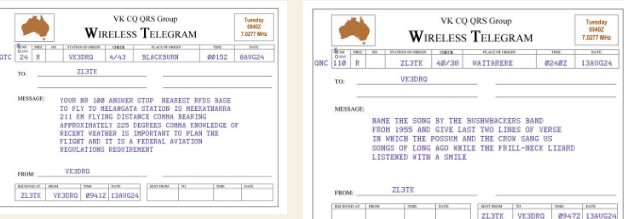
Everyone is invited to dip their toes into traffic by answering the question, even if the reply sent is devoid of preamble. The message text alone will suffice, at least until one feels confident to configure the protocol as well.
Seek help if you need clarification on any point while advancing your skills. zi3tk@qsl.net No TDIH messages were sent, however two clusters of ten 5-letter RandomGram- style groups were sent and returned. Conditions on 80 m weren’t flash.
QSB caused OM Mark VK2KI to miss a few dots, which would be no problem at all with contextual plain text. The event served as a timely reminder that if in doubt about the accuracy of any group received, simply request a repeat of that group, e.g.
GRP 4 AGN, then after the reply, if needed, ask for another group, e.g. GRP 9 AGN, etc. For efficiency there is no need for time-wasting niceties such as PSE and
This sort of exercise is magnificent for on-yer-feet training, grab every opportunity. Wishing all a splendid week, 73 de Stan.
Post Morsum Report by Richard VK6HRC Hello Mark, As you know we got off to a shaky start this morning, AllStar network problems and me adding to the confusion calling for chickens as opposed to check-ins. Thinking of breakfast maybe ?
© On the WA repeater and associated AllStar/ Echolink network: * VK6FN Max + VK6QI Mark * ZL3TK Stan * VK6KHZ Ron * VK6HRC Rich * VK6KRC Bob * VK6JDM Donald ( 80MX ) * and our shortwave listeners.
Max had two contacts before an electrical storm came in and stopped play! Mark had a busy night as usual, plus keeping people informed on the WhatsApp link. Stan had some success on 40MX but not on 80MX.
Also mention was made of message handling where Stan has been of great help to myself and others on the QRS net. Ron had a good session plus trying to work Mike DL3YZ on 20MX and Donald was having some fun with his new set up, work in progress!
Ihad fun on 40MX worked a few stations then listened out for Stan and Manny for message handling at the appropriate time but nothing was heard, propagation was against us.
80MX was fairly quiet; I called for a while and caught up with Donald, and right before curtain call had a contact with Mark in beautiful South Bowning.
After the net I had a contact with Lee VK6TY and he let me know that he had been calling on 3.555 at about 18:30 WST but no takers but hopes to be back next week. Thanks to all 73 Richard.
Ps We decided that in future will also listen out on HF 3605KHZ LSB from 0700 WA time (23002) after the net for check ins (not during! @).
Other News
~~ NS _ L Ly VIMY A I Other things I’ve received from our 190-odd reader:
Europe to Australia QRS – Not Yet! by Ross MONNK In last week’s RagChew (Edition 32/2024) I discussed my test of the word on the
Street, that 20 watts ought to be enough for a Europe-to-VK contact using CW. Well, this is another article in what promises to be a long series, but “If at first you don’t succeed…”.
This time I was in a cliff top park in my home village/town, as close to the sea as I could get, and with 100M elevation.
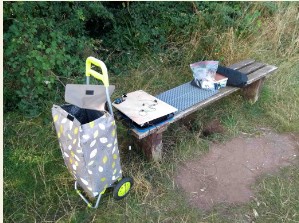
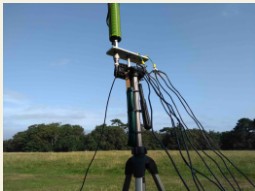
Mike DL3YZ lives near Stuttgart in Germany and, by a happy coincidence, is on the short path to Ron VK6KHZ in Perth. I set up my Sidewinder coil and mil whip with 8 radials angled in a tight fan in the
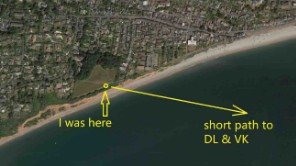
Direction of the short path. The park is popular with dog walkers and it wasn’t long before an inquisitive Labrador had got tangled up in all 8 radials, and then used the coax to drag my radio off the bench – it hit the ground with a sickening thud.
Fortunately no harm was done and I didn’t shout too much at the little old lady who was the dog’s careless owner. I also got half a dozen enquiries along the lines of “I couldn’t help noticing. Could you tell me what you’re doing?”.
Needless to say, I won’t be going back to that location again. We started at 0800 UTC on the 20m band (14.054 because the QRS frequency of 14,055 was busy). At 0820 UTC we moved to the 40m band (7.035).
The two bands were much the same but conditions sounded maybe slightly better on 40m. Unfortunately for us, there was a solar storm affecting propagation so, although Mike and I heard each other, it was no surprise that signal strength both ways was low.
Combined with the usual QSB, this meant that little information could be passed (apart from Mike’s belated warning to “Beware of the Dog”).
Ron was keeping watch at the southern end of the path and sending “just in case” but there was no magic in the ionosphere today. Nil Desperandum. We’ll try again when conditions are better. [Another terrific and fun article Ross – thank you mate.
Never give-up , never surrender! Out of interest I ran an ionospheric prediction (the Australian Bureau of Meteorology Space Weather Services GRAFEX HF prediction) for the path from your place to Perth – see below.]
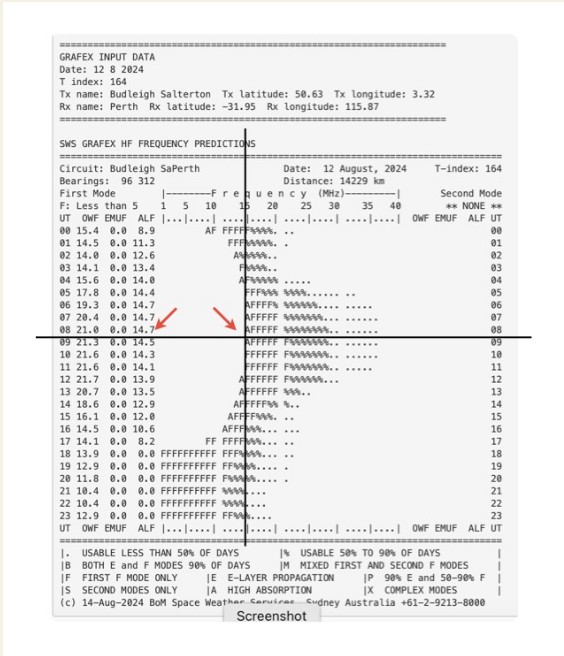
• The Optimum Working Frequency for the short-path at 0800Z is 21MHZ. * Unusually, the Absorption Limiting Frequency at that time was as high as 14.7MHz.
© The high ALF may have been the result of a high amount of solar radiation which caused such strong ionisation of the lowest D-layer of the ionosphere that the signals were shielded from the higher E and more importantly, F-layer.
+ This meant that there was unlikely to be propagation over the Budleigh Salterton-to-Perth short-path at that time on 20m and below. * You may have had more luck at say 1400Z on 20m, or 1800Z on 40m; but I reckon a trial of 17m and 15m might be the go!
As discussed elsewhere in this Edition, the Australian GRAFEX prediction can’t be configured for a long-path prediction.
Might be worth having a look at the VOCAP for Ham Radio prediction tools here: https://Avww.voacap.com/hf/ Unfortunately, it doesn’t give you the nice analysis of what’s going on like the GRAFEX tool.
I know however that the VOA tool can be configured for Long- and short-path, and can give you a nice pie-chart read-out of propagation likelihoods with different transmitting antennas and powers, different receiving antennas and different noise levels – outstanding!
International Lighthouse and Lightship Weekend – This Weekend
International Lighthouse and Lightship Weekend – [his Weekend
From Roy VK6RR This coming weekend is the International Lighthouse and Lightship weekend. This isn’t a contest – just an opportunity to contact stations around the world operating portable at lighthouses…. some even via CW!
Doesn’t matter whether you’re at a lighthouse or at home – keep an ear out and say g’day if you hear a CQ LIGHT or CQ Lighthouse call.
Here’s the link to the website where you can find who is planning to be at which lighthouse (Entrants List 2024 at the top of the page): https://illw.net/
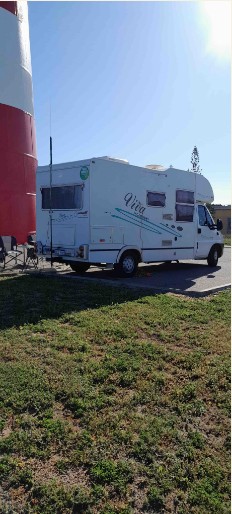
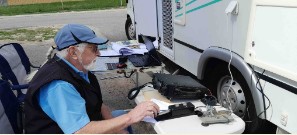
Hopefully I will be active on the Sunday ONLY, mobile from Point Moore lighthouse on 20m and hopefully on Echolink for liaison.
I see that our team mate Garry VK2GAZ is planning to be at Wollongong Head / Flagstaff Point (noting that Garry has had a change of circumstances and may or may not be able to get to Wollongong this year – we’ll see), and it’s likely that other CQQRSers (perhaps Nigel VK6NI and others) may be involved in one of the Club stations – so I’m hoping that there’ll be some more CW opportunities this weekend.
VK6RR [Good luck Roy. Terrific to work you on CW for the first time from Point Moore last year. If you can, send me an SMS with the frequency when you’re on, and I’ll forward it to our WhatsApp Alerts so our team can find you to say g’day.
Looks like there might also be one or two CW operators and their keys at the Cape Naturaliste lighthouse – I’ve suggested also that they send me an SMS when they’re on, so I can post Alerts on WhatsApp.
I really hope some of our team can have a go at working lighthouses this weekend on CW – operating from lighthouses is never easy… and CW makes it even harder to be recognised – QRP CQ LIGHTS or CQ ILLW sounds just like any other weak CW – easy to miss.
Overlay the RD Contest and the SKCC Oceania QRS Saunter… it could be busy or it could be a nightmare! Good luck every one]
CQ QRS Net Speeds
From David VK3DBD One minor problem I think which seems to have arisen is that often two station who. do not need QRS practice have a QSO not being aware of that situation! Now that is fine if others, wishing to copy QRS, are using the chat to practice.
But it is probably not happening! I was checking the 80m band quite late last night and heard Mark in QSO with VK3DRQ both QRS. Neither I presume needed that and both were about 599.
Mark activated the remote TX in WA – interesting to know 80 m would stretch that far – it was weak in Yackandandah, N. Vic but just about Q5 on the quiet band. I also heard VK4PN calling CQ QRS and called him.
We had a QRS QSO about 589/599 for some 25 mins and I formed the impression he did not need QRS practice either! He did say it was his first time the QRS net. Obviously I should have clarified the matter on air and my brain was not working at it’s best!
My excuse is that it was late But with the many stations now involved in this successful net, perhaps there ought to be some guide as to who is who(?) and some classification of what QRS speed individuals require.
In my opinion, too slow – especially with individual LETTERS is a big mistake. A Farnsworth speed of at least 16-20 wpm should be the start. Making an effort to copy faster than a comfortable speed is the only way to improve.
Ihave heard quite a few ops sending quite reasonable Morse BUT with a drawn-out letter speed of perhaps say only 8 wpm. – NO GOOD!! The timing and spacing which in the main makes Morse good or bad has gone.
73 David VK3DBD [Hi David – yes I also heard you on 80m with Sava. To clarify – I need all the QRS practice I can get… my CW ability is pretty limited!
However, yes – I always try to send Farnsworth QRS on the net: * to provide something for our fellow-QRS operators to practice decoding; * to encourage new operators to have a go, knowing they’re going to be encouraged; and * because my sending isn’t particularly flash at the best of times.
Thanks for your thoughts David. As you suggested, I recommend that if you think the
Hoerwache
MVC rwalic Also from Roy VK6RR Welcome to HOERWACHE (watch out in English), the simulation designed for former maritime radio officers and radio amateurs!
Immerse yourself in the fascinating world of maritime radio communication, where you can receive real-time weather reports and storm warnings. Our simulation allows you to send and receive messages through a WebSocket connection.
At the core of the radio station, you’ll find a main receiver with frequencies ranging
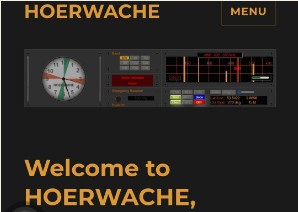
From 400 kHz to 28,000 kHz, divided into various bands that can be selected using a band selector switch. An activity indicator keeps you informed about the currently active transmissions.
Adcitionally, we have a dedicated emergency receiver operating solely on the distress and calling frequency of 500 KHz. Operate our transmitter in chat mode or key mode, and experience the thrill of classic maritime radio communication.
In chat mode, you can enter characters through a text field, which will be sent to all connected stations and converted into Morse code audible on your computer.
Choose between direct mode, where characters are directly transmitted from the keyboard through the WebSocket interface, or storage mode, where you can enter the text first and then send it with a single click.
For a truly authentic experience, you can connect a Morse key and a tone generator to the sound card (microphone) and manually key the transmitter, The simulation also features a dynamic nautical chart displaying your ship’s position, as well as its speed.
You can navigate the ship using a compass, but it will typically follow a predefined route that you can select when starting the radio station. HOERWACHE can be operated as either a ship station or a coastal radio station.
We have a comprehensive database of over 300 coastal radio stations available in the program. It’s important to note that HOERWACHE is a passion project and completely free of charge.
We believe in the spirit of sharing knowledge and fostering a sense of community among former maritime radio officers and radio amateurs. This simulation is our way of celebrating the rich history and skills of this unique profession.
Join us on this exciting journey and experience HOERWACHE without any cost or obligations. Welcome to HOERWACHE – your gateway to the world of maritime radio! ‘And now have fun with the program 73 Dieter Luepker
SKCC Oceania QRS Saunter – This Weekend
SKCC Oceania QRS Saunter – This Weekend from Garry VK2GAZ Greetings to all, The SKCC Oceania QRS Saunter will take place this Saturday, 17TH August, 2024 from 00:00 UTC until 11:59 UTC a 12 hour event. All are welcome to join in!
All the details for the Oceania QRS Saunter (OQS) can be viewed on the SKCC website at: https://www.skecgroup.com/operating_activities/oas/ Please make use of the SKCC Sked Page and the CW Club RBN Spotter.
Https://sked.skecgroup.com/ I trust you enjoy this event and that you send some comments on what you hea
Best regards
Best regalas, Garry VK2GAZ/VK2ZP #5460C Manager – SKCC Oceania QRS Saunter
Ham Crossword Solution
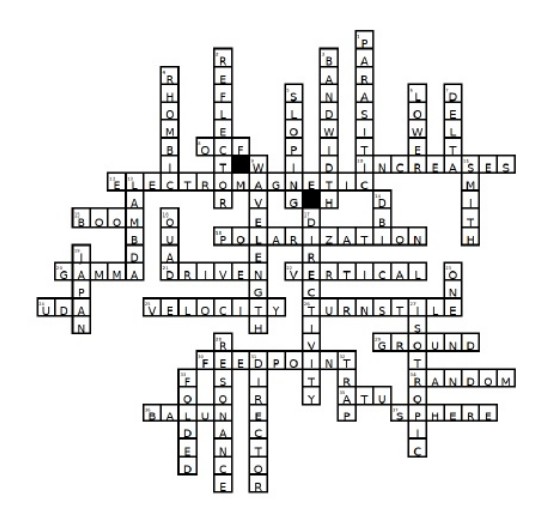
Thanks to John VK2EMF and QRM, the newsletter of the Wagga and Districts Amateur Radio Club for this one.
Morse Training Net
Nic VK7WW runs a Slow Morse training net every Wednesday at 7pm EDST on 3580 for 30 mins. He uses the callsign of the Northern Tasmania Amateur Radio Club VK7TAZ on that net.
Many of our team learned Morse code with the support of Nic, and the weekly training session comes highly recommended for anyone who wants to learn the Code, or simply brush up. Everyone’s welcome – 3580KHZ at 7pm Eastern time every Wednesday.
The NTARC also feeds the CW live via the Discord phone / computer audio stream, and previous weeks’ recordings are available. Contact Nic VK7WW for more info nicholaschantler@hotmail.com – or just join in on Wednesdays.
This Week’s Topic of Interest
PInew F VE bce Fw Pict by Ross MONNK I’m a Portable Guy so my three Pet Hates are: ¢ Guy Lines ¢ Throw Lines « Radials
Guy lines. I promise you, it’s a long tedious exercise in frustration. Do yourself a favour and leave the guy lines at home. Instead use (Velcro) straps to attach your mast to a fence post, gate, sapling, vehicle or just about any fixed structure.
Or, even simpler, just lean your mast against a low building or a tree.
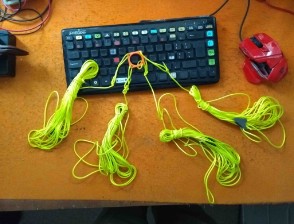
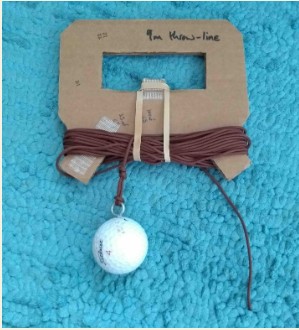
TAA LINES Speaking of trees, Throw Lines are very popular amongst our American colleagues. However, they’re less popular amongst the owners of some parks and woodlands,
Who ban their use. Why? Because it’s all too easy to get that throw-line stuck high up in branches where it becomes an eyesore and a hazard to wildlife.
The trick with them is probably a smooth heavy weight and a slippery lightweight line, preferably a proper Arborialist’s throw line kit.
But be prepared to spend half an hour untangling the line from undergrowth unless you’re VERY careful with line management (I’m looking at you, Monofilament Fishing Line).
RADIALS And speaking of untangling things, don’t get me started on Radials. The absolute bare minimum is 4 if you just want to get out, although the pundits would suggest !
For a good signal, maybe more. That’s a lot of wire. It takes up a lot of floorspace; it gets tangled up with the undergrowth; it even gets tangled up with itself. And what sadomasicist invented long elevated radials?
So, don’t bother with Verticals, because Dipoles, Slopers and Inverted-Vs are SO much easier.
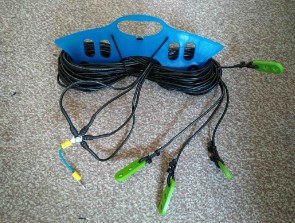
Phew, I’m glad I’ve got all that off my chest. Anyone want to challenge those? Or add a few of their own…?
For portable ops I use the ZS6BKW– design doublet (a GSRV modified to include 80m and other WARC bands) – and after much frustration, I’ve shouted myself a proper 150 foot 11 Ounce Arbourist Throw Line; it works a treat – and so far (fingers crossed) has had an equal number of take-offs and landings – sure beats every other combination of line and sinker that I tried (yes, don’t even think about monofilament fishing lined.
However, although the ZS6BKW works a treat (eh John VK5ET?) it’s a bugger to put up – it takes me about an hour to get set up every time! 1’ll probably try using my nice, strong but expensive SOTA Beams squid pole with an inverted-L (& radials!) next time.]
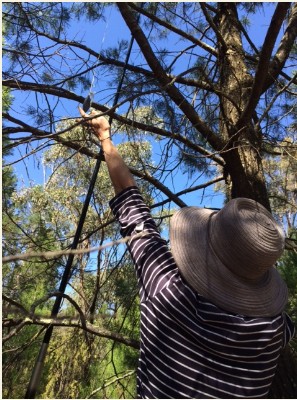
Ms E up atree – retrieving another 80z sinker!
I’m always looking for interesting articles like this for RagChew; please let me know if you’d like to write something, so we can share more thoughts and ideas; email to cqqrsnet@gmail.com

Brain Teaser
• atienetiieenstittiteeend Se How did you go?
Jules Perrin JP VK3JFP has created a terrific resource to help guide learning for all levels of amateur radio licenses: https://Awww.julesworkshop.net/Amateur%20Radio.html With thanks to Baz VK6MU for he idea, and Jules for the good learning website, here’s this week’s quiz questions from Jules’ Workshop example test questions:
Exam Questions:
What instrument would you use to test the continuity of a cable? The best method of eliminating TV set front-end overload caused by proximity to an 80, 15 and 10 metre amateur transmitter is to * use a high pass filter on the tv receiver * use a low pass filter on the transmitter * install a wave trap in the TV set’s feedline * install a power line filter ‘Two tone tests are done to test the * linearity of an FM transmitter * power output of a CW transmitter * linearity of an SSB transmitter + symmetry of an FSK transmitter Answers next week.


Answers from last week’s Quiz:
What are the two types of feedlines? Answer: Coaxial 500 unbalanced and parallel line 300-6002 balanced. When a current of 10 milliAmperes flows through a resistance of 10 ohms, the voltage drop across the resistor is * 10 millivolts * 100 millivolts * 1 volt * 10 volt Answer: 100 milliVolts An oscillator that slowly moves in frequency of “its own accord” is said to: * over modulate * drift * have distortion * chirp Answer: drift How did you go?
Di-dah-di-dah-dadit
So back to the Slow CW QSO practice net.
Next Tuesday’s Net
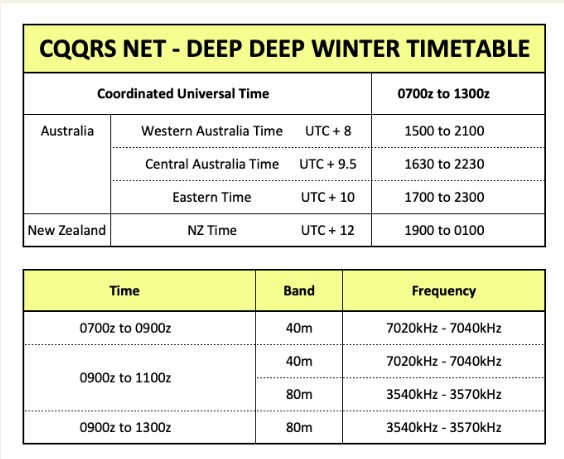
Our CQ QRS Net will be on as always on Tuesday from around 0700Z until about 1300Z; see below for details. Doesn’t matter whether you’re brand new and want to try just exchanging callsigns and RST reports, or you’re ready for a good old rag chew.
Our CQ QRS Net will be on as always on Tuesday from around 0700Z until about 1300Z; see below for details. Doesn’t matter whether you’re brand new and want to try just exchanging callsigns and RST reports, or you’re ready for a good old rag chew.
We’ll have fun. Reports Please let me know via our Reports form bit.ly/CQQRSNET who you work or hear or Tuesday’s net.
New Post Morsum HF Arrangements
Richard VK6HRC will run our phone Post Morsum on the South West AllStar net (via repeaters and hotspots all over WA) from 0600 WA time, then from 0700 WA time on 80m (3605 LSB).
For the 0600 (22002) net, if you’re in WA all you need is an FM 2m or 70CM transceiver and an AllStar node nearby. If you’re elsewhere in the world, you may be able to connect your local AllStar-enabled repeater to the net, or you can connect via Echolink.
Let me know (cqqrsnet@gmail.com) if I can help with that. And if you can’t connect that way, give 3605KHZ SSB a try from 0700 (23002).
Teamwork
Thank you so much to our team of 36 contributors: DL3YZ, VK/MONNK, VK2ASB, VK2DLF, VK2EBN, VK2EBN, VK2GAS, VK2GAZ, VK2NAP, VK3ACU, VK3AFH, VK3DBD, VK3DRQ, VK3JFP, VKSKEV, VK5AO, VK5CZ, VK5DC, VK5ET, VK5FD, VK5KFG, VK5LA, VK6BEK, VK6HRC, VK6HV, VK6IS, VK6JDM, VK6KHZ, VK6MK, VK6PZT, VK6RR, VK6TY, ZL1PB, ZL2GD, ZL3TK, ZL4BDG.
Fantastic! Thank you team. GU CW on Tuesday, mb Mark Bosma VK2KI / VK6QI Beautiful South Bowning NSW mark.bosma@icloud.com non impediti ratione cogitationis

An Ode to CW – thanks to David VK3RU: In days of old, when ops were bold, And sideband was not invented, Words were passed by pounding brass, And all were quite contented. – Unknown author
About the CQ QRS Net
Frequencies and Times
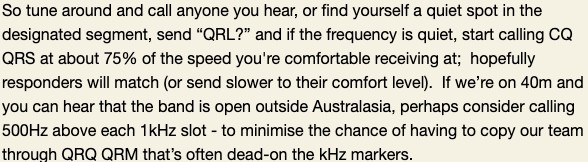
PSE QRS

Landing Zone