Below is a reconstruction of the 2024 32 CQ QRS RagChew newsletter designed to support full text searching. This reconstruction was built using OCR, and will contain errors.
To view the Mailchimp original, click here. To search the entire newsletter archive, click here.
Contents
- CQ QRS RagChew
- Reports
- Reports & Comments
- Comments:
- Other News
- From Michael VK4CCW:
- Germany to Oceania Attempt – The Full Story
- Comment on the Editor’s Reply to Mathew VK3AFH in RagChew Issue
- Update from Donald VK6JDM near Esperance
- Donald Howarth
- Europe – Australia: If at First You Don’t Succeed…
- Ham Crossword
- Yaesu CW Filter on VK Classifieds
- For Sale – Hi-Mound HK-707 Telegraph Key
- Morse Training Net
- This Week’s Topic of Interest
- Aide a la Memoire
- Brain teaser
- Exam Questions:
- Answers from last week’s Quiz:
- Di-dah-di-dah-dit
- Next Tuesday’s Net
- Post Morsum
- Teamwork
- About the CQ QRS Net
- Matching
- PSE QRS
- Landing Zone
- CW Tips
CQ QRS RagChew
Oh boy! If! could recall a suitable quote from The Hitchhiker’s Guide to the Galaxy, I’d use it…. but I can’t, so I won’t! Amazingly amazing! But needless to say, I’m just overjoyed by how good our net was last Tuesday!
Thank you to everyone who was on or listening… we had 69 stations recorded by the team as either on air or listening in. Thank you to the 38 stations who submitted reports as well – terrific reading.
But an important matter – down toward the bottom of our newsletter… a largely unexplored and probably dangerous area (beware of the leopard) you’ll find information about the current Wireless Institute of Australia 40m band-planning Consultation for the International Amateur Radio Union band planning committee.
The future of the CW allocation on 40m is under threat if we can’t convince the WIA Technical Advisory Committee that the CW-only allocation should remain as 7000 to 7040KHZ; the current musing is to reduce the segment to say 7000 to 7020KHZ to allow for the expansion of the digital modes currently above 7040KHZ.
Please please please send something to the TAC before September 6th – to lend support to my advice about how popular CW has become and that its use in the region has increased significantly – and continues to do so (69 stations this week, 59 last week, 54 the week before, 55 before that, 45 before that…
Etc). Doesn’t matter whether or not you’re a WIA member (it’s an open consultation) or where in the world you are… please flash a quick note to the TAC in your own words providing support for my contention that the CW activity has started increasing significantly, and that we need the allocation to not be reduced below 40KHZ.
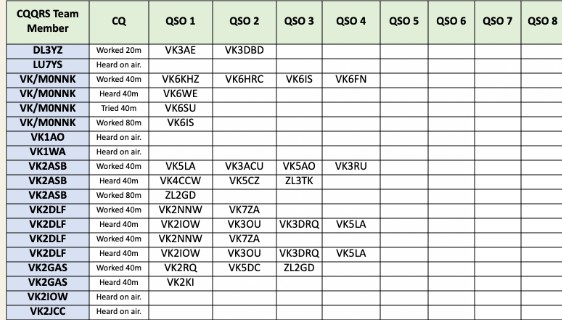
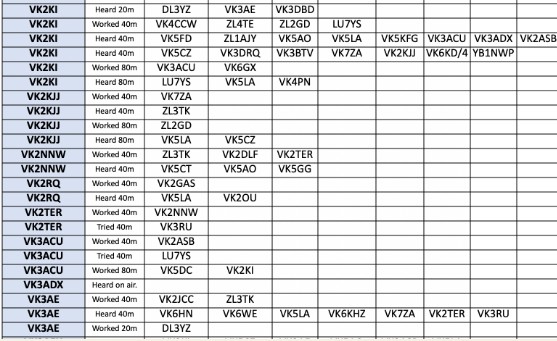
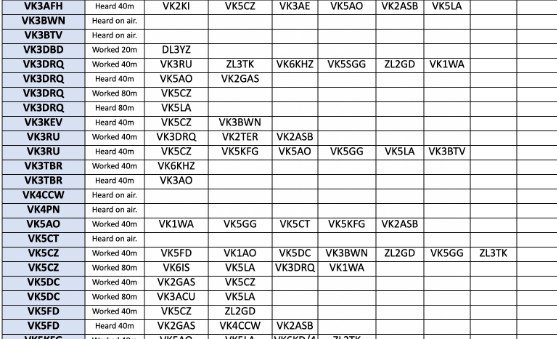
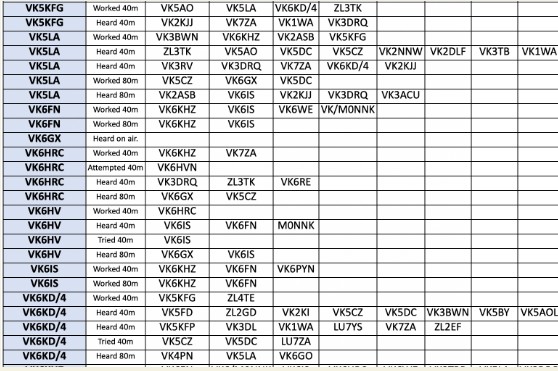
Here’s this week’s list of the 69 stations heard or know to be listening on Tuesday night’s net:
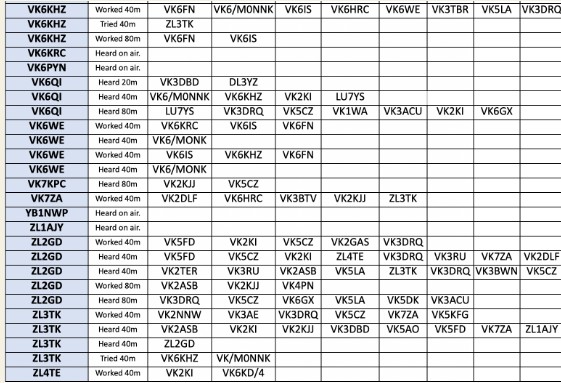
This week I’d like to introduce and welcome Nyoman YB1NWP to our team. Nyoman lives in Jakarta, and was introduced to our net by his brother Ketut VK3BWN; our first South East Asian member and our first pair of brothers in our team. Thanks to you both.
Nyoman managed to come up on the net on Tuesday and we’re looking forward to hearing him often; welcome mate and thank you to Ketut for the introduction.
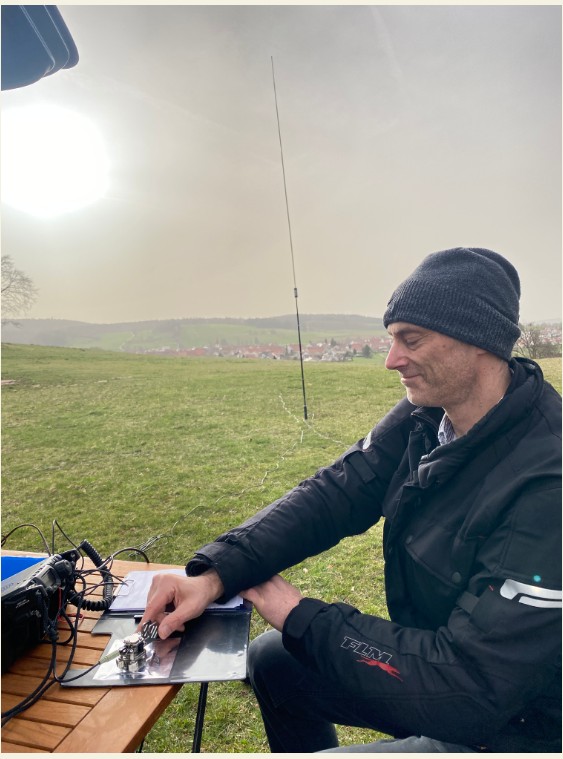
And thanks this week to one of our propagation testing team – Mike DL3YZ – seen here out and about having some fun.
Reports
After next Tuesday’s net, please send me a list of who you worked and / or who you heard using our new web form here: bit.ly/CQQRSNET

Getting reports from stations and listeners is important to me – even if you listened and didn’t hear anyone or weren’t able to copy anything – the fact that you had a go needs to get recorded so we know that the net is working and attracting new and old team members to have a go.
And while I’m thanking people – a special mention to Nigel G4RWI – our software help desk! As you’ll see below, I’ve found my self with a brand new Apple MacBook Air (thank you MS e @)…
Which was going really well until I tried to run Nigel’s Python data management software to process the data you all put in the report form every week…. of course I hadn’t installed the correct version of Python, or the various add- ins to make it work…
Another early morning WhatsApp call to Nigel (who’s now back in Cambridge after he and Jo’s travels around France)… an hour or so later, Nigel had it all sorted… and his system now even generates the complete spreadsheet you see above!
Thank you mate – I hope you and Jo enjoyed the virtual plate of Eccles Cakes.
Getting reports from stations and listeners is important to me – even if you listened and didn’t hear anyone or weren’t able to copy anything – the fact that you had a go needs to get recorded so we know that the net is working and attracting new and old team members to have a go.
And while I’m thanking people – a special mention to Nigel G4RWI – our software help desk! As you’ll see below, I’ve found my self with a brand new Apple MacBook Air (thank you MS e @)…
Which was going really well until I tried to run Nigel’s Python data management software to process the data you all put in the report form every week…. of course I hadn’t installed the correct version of Python, or the various add- ins to make it work…
Another early morning WhatsApp call to Nigel (who’s now back in Cambridge after he and Jo’s travels around France)… an hour or so later, Nigel had it all sorted… and his system now even generates the complete spreadsheet you see above!
Thank you mate – I hope you and Jo enjoyed the virtual plate of Eccles Cakes. Cheers, mb Mark Bosma VK2KI/ VK6QI Beautiful South Bowning NSW pane oy Sano aera
Reports & Comments
The spreadsheets above show the known stations on last Tuesday’s net. Commer distilled from the reports I’ve received are below:
Comments:
[40m] * Nothing outside VK6, but that’s fairly normal.
[80m] +I called CQ for 15 minutes but 80m seems to be the quiet band.
[80m] * FB QSO with OM Grant ZL2GD. Firs QSO on 80 for a couple of years !!
[40m] + It was nice to catch up with Allen VK5FD for the first time and good to hear lan VKSCZ back on again. + And thanks to Mark VK2KI for reminding me to update my QRZ.com images. + Band conditions were quite good tonight.
[80m] + WOW. Just about to go to bed and boom. VK2ASB big signal on 80m!. + Then it was all on. Great to hear 80m open up. + Thanks for the contacts guys. » From lan VK5CZ at Clare
[80m] + All ops now up to a conversation spec which is great to see.
[40m] «Very distracted with other projects tonight; made a few contacts and started falling asleep at the key as usual. + Mark that last QSO was quite amusing with my dog running in to the shack and pulling the plug mid contact on me.
+l had a bit of a temporary setup going, wires everywhere. * Hope to catch Sergio next time; your signal was fading up and down. * I also would like to thank Mark again for his efforts with the RagChew.
* Especially fixing up what I write while falling asleep after my contacts, I tend to fill it out just before I walk out of the shack so I remember. * Cheers all hope to catch you next week if not before. Av pleasure mate: thanks for a fun chat aagain.]
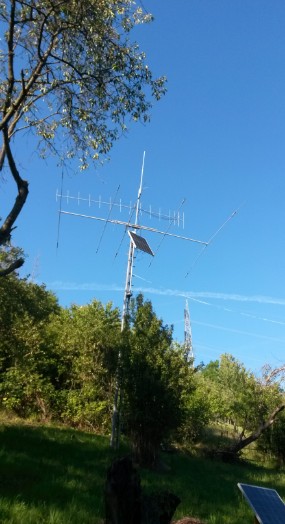
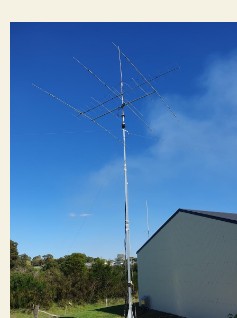
• Thanks for the chance to take part the net, its been real fun to beep rour the globe. +l had booked some air time on the Yagi of my local HAM club’s site (as pictured).
+ I hadn’t worked from there, so I hac some severe technical issues with th solar power supply in the beginning. + Troubleshooting took me abt 45 mins, and I missed most of my announced time-slots, ‘m really sorry for that.
+ Now I had to work with only 70 W, using just my 6 Ah LiFePo portable battery. + It survived quite well, and took me over 2 long QSOs, long path to VK3 Australia. + Thanks to Dylan and David.
+ Then I decided to let cool down my trusty battery and call it a day. + Greetings from Germany, Mike.
[40m] + Excellent conditions trans-Tasman on 40 m. + Unusually few QSOs but each was of high quality, two ranking as outstanding. + Traffic was passed as planned at the time and on the frequency advertised.
+ No calls with traffic were received from any other stations. + The invitation is open to step outside your comfort zone and answer this week’s QTC sent to OM Manny VK3DRQ. + There’s no gain without pain, ask any Olympic medal winner.
+ The ice has finally been broken for the RandomGram-style 5-letter groups when OM lan VK5CZ stepped forward. + Unexpectedly, he went on to request a second 10-group series.
+ The on-and-adjacent channel QRM was horrendous, even using 100 Hz IF filter, which made lan’s 97 % correct result quite remarkable, a fantastic demonstration of CW’s effectiveness, even while ‘under attack’.
+ Then came some sort of record for Today in History in the QRP stakes. + OM Greg VKSKFG was running only 4 W yet was able to pass back his complete TDIH message with only one word, Italy, unable to be fully resolved.
+ You’ve got to hand it to those guys, both were prepared to step outside their respective comfort zones to make things happen. + Well done Chaps!.
[80m] * Called CQ on 80 m twice, but it looked dead on both occasions. + Heard only one very weak station the second time. + The band was offering nothing so instead of waiting to identify him, repaired to the seriously-fruitful 40 m.
Thanks Stan – terrific report. Pity your late nights on 80m aren’t being rewarded; or previous nets, you were being heard in VK6, and surely if there were ZLs listening they would hear you. Keep trying – perhaps next week will be the one!]
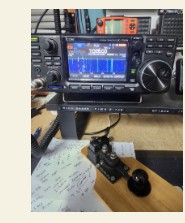
[40m] * Very cold in the shack, only hung around for one QSO – QSB got us in the end but those QSO’s are fun to try make work! Looking forward to the warmer Wx.
[40m] + Not so many stations were heard this week.
[80m] * Not that many stations on 80m either. ¢
[40m] * using my pota station as an alternative base stati « 7Ow a/n worked well
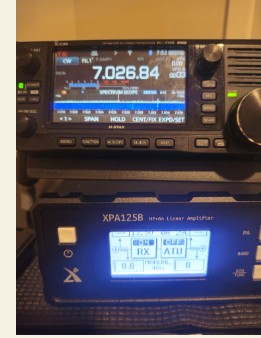
[40m] * Condx good on 40m, plenty of traffic, good RST all around.
[80m] + 80m was somewhat noisy but not badly so. * Very disappointing. + Not a soul on air apart from Grant (ZL2GD). +l went over to 80m at about 1120Z and called CQ. + Grant was just about to pull the big switch when he saw my signal on the waterfall.
+ He had been waiting around and calling CQ for some time and he was just about to give up and go to bed. + His signal came in at Wentworth Falls at 599 plus 40DB.
+ With signals running at that strength, many people could have had armchair copy with NZ and local but (I’m guessing) the noise put them off. + This is why I sent in the little article on using the RF Gain control.
+ Perhaps we could re-run the little article on RF gain control. Thanks for your nice report Arthur. Sounds like you got your antenna back up in the ir?
As it happened, I heard quite a few of our team on 80m – so I guess it depends yhen you’re listening during our long net. Readers can read your article on using the ?F Gain Control to improve signal-to-noise-ratio in RagChew 23/2024 here: https://mailchi.
Mp/8cb8bce430d4/eq-qrs-ragchew-reminder-for-next-tuesdays-net- 10329259)
• The band was brimming with stations on Tues night. * I was running 30 – 50W into my 3/8 wave doublet. + Earlier around 0750 UT I could hear DL3YZ on 20m. + He was 449 at best. + I was pretty tired so I finished up earlie
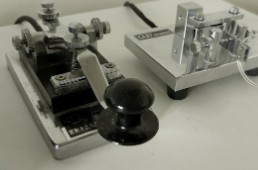
[40m] + Finally I was receiving a wall of signals from around the world. + Unfortunately I dont have a narrow pass filter in my Yaesu 857D so most of my QSOs are completed with multiple stations at different pitches in my ear.
+ Plans are in place to source a filter as Mark VK2KI has informed me the stations will become very clear once a filter is fitted.
[80m] + When 80m opened up from WA to QLD my laptop battery started to fade and then finally fail. + As I have learnt CW by typing the letters/words it is a challenge for me to swap from typing to writing.
+ Room for personal improvement with preparation with some more charging equipment when mobile and practice writing down CW on paper. * Abig night practicing my receiving and not so much sending.
+ Still not doing too bad with a 5″ whip on a SG237 autotuner and 50w out of my Yaesu 857D. +73. [Interesting challenge to swap from typing to hand-writing David!
I’ve given up using any form of electronic record when portable – the ParksnPeaks app and the CQQRS. WhatsApp group for notifications, but everything else is on paper, which I find much easier than trying to balance the gear, key, phone etc out in the open in a gale.
Boy your little whip antenna is doing such a great job! In Other News below, I’ve reproduced a VK Classifieds advertisement for a Yaesu filter that might be just the thing; as I’ve said, the narrow filter just made my FT-817 work so well on CW in noise and QRM – and the one I put in has no noticeable ringing – a problem with some receivers’ narrow filters.
By the way David, I’m pretty sure Stan was correct on Wednesday’s Post Morsur… ‘Ravens – hoe’ rather than “Raven-Shoe” – Hil]
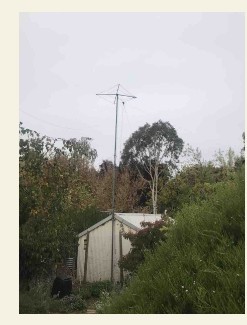
[40m] * Good conditions on 40m here in the Adelaide Hills tonight. + My first time submitting a log and enjoyed the relaxed CW being sent bac and forth.
[80m] * Good conditions on 80m as well. + The band started to fade about 9:30 local time.
[40m] * Maybe I was lucky, but I had more QSOs this time.
[80m] + First time I found the possibility of having a QSO with clarity all way through during the 23 minutes. « Yes, the noise level was S7, but VK5CZ was coming RSN 597 at about 1200Z + About OM Mike / DL3YZ, at 6:45Z, 7:00 and 7:15 Nil signs, at 7:30 was QNP but VK3AE was calling him.
* At 7:45Z again QNP but VK3DBD was chatting with him. + After that I had to QSY for some time. a SSW on AT
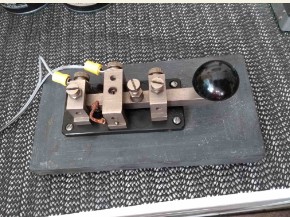
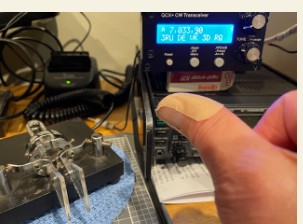
[40m] + Finally remembered about 3 pm Tuesday it was not taco Tuesday, but CW Tuesday! Hastily rounded up a 1/4 inch mono plug, some wire and an old WW2 key and joined the group. + First CW contact now in the logbook after years and years.
* Tuesday was living proof that what once was 20 wpm is well down into the single digits. * LoL. A ero fA, OT) Ae ee eT
Its of home-brewers like you on the net, so I predict some nice rag chews ahead! +
[40m] + Managed to copy part of the formal traffic report between Stan ZL3TK and Manny VK3DRQ. + Have since received additional information from Stan on how to conduct a report/exchange so not totally bewildered by it all!
+ When I was calling on 40MX a station came up and I had a bit of trouble getting his call sign so went back with the call sign I decoded ( VK6HVN ) followed by a series of question marks and got RR back to confirm but then the caller disappeared!
Maybe I scared him off © + Checked QRZ but no record of that call there; does anyone know VK6HVN? + There was another call I have not heard before VK6RE, this was early on in the net, probably our updated segment on the WIA and VK6 news is doing the trick.
[80m] + No contacts on 80MX. I was parked on the 3.555 KHz landing zone calling for a while but silence reigned supreme!
Went and topped up the coffee mug and on my return to the shack Phil VK6GX was on working stations so it was good for me to get more copy practice. A great night altogether, thanks to all on the net. + Richard.
[40m] + Managed to copy part of the formal traffic report between Stan ZL3TK and Manny VK3DRQ. + Have since received additional information from Stan on how to conduct a report/exchange so not totally bewildered by it all!
+ When I was calling on 40MX a station came up and I had a bit of trouble getting his call sign so went back with the call sign I decoded ( VK6HVN ) followed by a series of question marks and got RR back to confirm but then the caller disappeared!
Maybe I scared him off © + Checked QRZ but no record of that call there; does anyone know VK6HVN? + There was another call I have not heard before VK6RE, this was early on in the net, probably our updated segment on the WIA and VK6 news is doing the trick.
[80m] + No contacts on 80MX. I was parked on the 3.555 KHz landing zone calling for a while but silence reigned supreme!
Went and topped up the coffee mug and on my return to the shack Phil VK6GX was on working stations so it was good for me to get more copy practice. A great night altogether, thanks to all on the net. + Richard. +
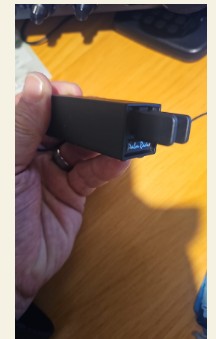
[40m] + This was my most productive session so far with three contacts in the time Thad. + It seems to be getting a little easier. *
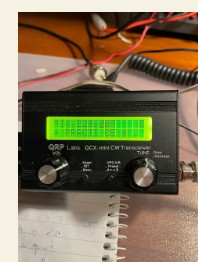
• I had a great night and whilst the new key was a bit of a learning exercise, I found my receiving skill is improving. * Currently running my QCZ from QRP Labs which has an inbuilt decoder but it needs really well sent Morse for a reliable decode.
+ Best decodes come from Manny VK3DRQ and Drew VK3XU and I find my ears. pencil and paper for best accuracy
From Mathew V VK3AFH at Wantirna (on holiday in Warburton Tuesday night)
[40m] + I was away from my usual QTH on holiday, set up in advance and listened in for a couple of hours. + At around 8:30 I decided to try answering a CQ, and then calling CQ and see if I could reach anyone only to start questioning whether I was actually transmitting.
+I quickly (not as quickly as I should have, in hindsight) discovered my SWR was less than ideal and past me had either not set up correctly and/or paid enough attention so out into the cold night (only 9 degrees, could be worse) I went to fiddle in the dark!.
+ Another lesson learnt, my USB hub disconnecting should have been the first sign, and the intemet dropping out was the second, no harm done to anything except my pride;.
+I then got a “little* distracted by the clear night sky (from one hobby to another) and started taking some photos while I got a better SWR.
+ Allittle while later I started to freeze and came back inside to warm up and get back on with what I was supposed to be doing :). +I didn’t hear too much by that time though, and I tried calling CQ for a
While if only for the practice – I was surprised in the morning to see that I was picked up on the Reverse Beaco! Network from NZ, so I couldn’t have been doing too badly and count that as a win even if I didn’t have a QSO.
+ And yes, I know I could probably reach out to the group and schedule something for my first QSO but I’m sure I can just make it happen naturally in the next week or so while I’m still o1 holidays. «I’d say wish me luck but I don’t think I’ll need it hihi.
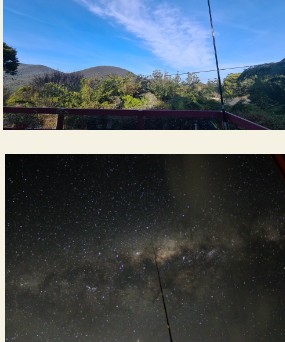
[Great adventure mate. I’m sure you’re not the first to go outside to fiddle with antennas in the dead of night… and be distracted by the night sky.
If you managed to be picked up by the Reverse Beacon network, that means your CW must be pretty good – I don’t think I’ve ever seen my sending detected! Good luck for next Tuesday Mathew.] +
From Mark VK2KI at Beautiful South Bowning
[40m] + What a fantastic night! I was pleased to chat to Michael VK4CCW up at Harvey Bay before sliding up to 20m to listen out for our German team member Mike DL3YZ from Stuttgart.
* Mike was coming through RST 419 to me, and I heard him hook up with Dylan VK3AE at Ballarat and David VKSDBD at Yakandandah.
+ I returned to 40m and chatted to Pete ZL4TE at Cambridge near Hamilton, then Grant ZL2GD continued the British University town team from Oxford near Christchurch.
+ After dinner I was pleased to see that our part of the band was busy on the waterfall display on the Tecsun KiwiSDR at Araluen NSW.
From Mark VK2KI at Beautiful South Bowning
[40m] * What a fantastic night! I was pleased to chat to Michael VK4CCW up at Harvey Bay before sliding up to 20m to listen out for our German team member Mike DL3YZ from Stuttgart.
+ Mike was coming through RST 419 to me, and I heard him hook up with Dylan VK3AE at Ballarat and David VK3DBD at Yakandandah.
+ I returned to 40m and chatted to Pete ZL4TE at Cambridge near Hamilton, then Grant ZL2GD continued the British University town team from Oxford near Christchurch.
+ After dinner I was pleased to see that our part of the band was busy on the waterfall display on the Tecsun KiwiSDR at Araluen NSW.
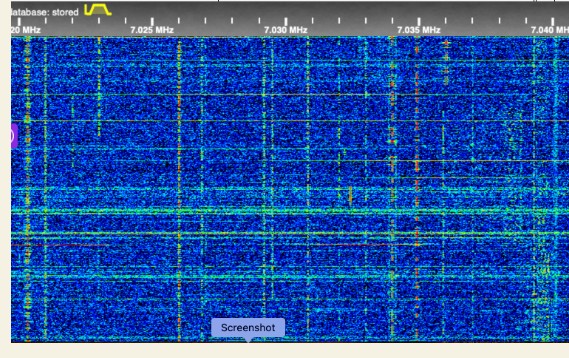
• + Earlier in the net, the SDR had been tied-up for hours for the third week in a row by an Indonesian station who had logged in to all four channels to monitor FF-8.
* But when I finally got on the SDR, there were lots of our team on and happily chatting – building their experience and providing lots for our short wave listeners to practice on.
+ At around 1130Z, our Argentinian team member Sergio LU7YS from the Patagonia region advised via our WhatsApp Alerts group that he had QSYed from 80m to 40m.
+ Sergio was up to S7 on the Tecsun KiwiSDR and I managed to work him wit 50 Watts from my old wide-band Kenwood TS-120S using my 80m double- extended Zepp antenna.
+ After our exchange Sergio tried to hook up with David VK6KD/4 – they could hear each-other but not well enough for a QSO. + Peter VKGIS at Wundowie reported via WhatsApp that he could hear Sergio weakly, as could Jordan VK3ACU at Meredith.
* As Sergio kept calling, his signal improved with me and was a comfortable QS with alittle QSB; his Elecraft K3 and 1KW amplifier to a Christman vertical array was working nicely for us.
+ With my phasing noise canceller working well, Sergio’s signal-to-noise ratio was superb despite my 3KHZ wide receiver – I wish I had recorded it to share.
Later around 12302 when I was chatting to Jordan on 80m, I could hear our new team member Nyoman YB1NWP (Ketut VK3BWN‘s brother) whc was calling on 40m; however, looks like none of our team were around on 40 at that time this week.
[80m] + As discussed above, at around 1100Z before our fun on 40m, Sergio LU7YS had advised via our WhatsApp Alerts group that he was on air at the bottom o the 80m band. + I suggested that he move up to our CQQRS segment which he did.
+ could just hear Sergio in the noise on the Tecsun KiwiSDR but not from home; Wimal VK1WA came up and tried calling Sergio but they weren’t successful.
+ After the excitement on 40m, I moved down to 80m and heard our team members from VKs 4, 5 and 6 chatting away. + had a chat with Jordan VK3ACU – we were both getting tired and enjoyed laughing at each-others’ keying…
I even made mistakes with my own callsign Interestingly, someone mentioned on Wednesday morning’s Post Morsum ch on AllStar that he knew when he was getting tired because he made mistakes with his own call; looks like I’m not Robinson Crusoe.
+ After finishing with Jordan, I had a nice chat with our member Phil VK6GX at Gidgegannup
From Mark VK6QI at via the VK6QS KiwiSDR near Brookton
[40m] + Thanks to the generosity of my lovely Elizabeth who had bought me a very early birthday present, I was using a new MacBook Air laptop to monitor the Western and Western KiwiSDRs on a split screen; however, I couldn’t get the two working together, so for a long time I wasn’t able to listen to the VK6QS KiwiSDR receiver near Brookton until I worked out what the problem was.
+ Once on air, I heard Ross MONNK chatting to Ron VK6KHZ. + Then while listening from home in NSW to Mike DLSYZ at Stuttgart working David VK3DBD at Yakandandah, I could hear David strongly into WA but Mike was very weak to the West.
[80m] + When Sergio LU7YS came up on 80m at around 1100Z, he was just visible in the noise on 80m on the VK6QS KiwiSDR; I can’t remember whether or not I could hear Wimal VK1WA when he tried calling Sergio – I suspect the Absorption Layer Frequency for the path across Australia hadn’t dropped below 80m at that time.
+ However, later in the evening I did hear Wimal and lan VKSCZ coming through nicely, as was Jordan VK3ACU from Meredith and my own signal from VK2KI at Bowning NSW. +
[40m] + Good signs on 40M at the VKSLA shack. I used the QCX Mini @ 5 watts for QSOs with VKSKFG and VK2ASB; Greg was using the same rig.
[80m] + Went to 80m a bit later not expecting much, but found signals very strong, worked a few including a nice contact into VK6 before calling it a night. + Very happy with the new doublet here. + See you next week!
Traffic Handling Report from CQ QRS Free-for-All Tuesday 6 Aug 24. By Stan ZL3TK RandomGram, created by OM Drew AF2Z, provides the basis for the RG exercise now offered every Tuesday.
The differences being it is not a contest so no points are awarded and instead of only one 5-letter group per over, ten 5-letter groups are sent before the recipient sends them back.
This is an excellent exercise in self-discipline for non-contextual traffic handling because it makes anticipation impossible. None of the 24 groups of 10 RandomGrams are shown here because it is intended they be recycled up to six times.
Suffice to say, for the ice-breaker OM lan VKSCZ, one set of ten 5-letter groups was not enough and he requested a second helping from the pot. Shows how good it must have tasted!
Only one Today in History’ QTC was sent; it was performed in an outstanding fashion by OM Greg VKSKFG who was running a4 W QRP station. Considering the adjacent-channel QRM it was amazing to receive his TDIH message back with only one incomplete word.
Here is the sentence: LINKING FRANCE AND ITALY, THE MONT BLANK TUNNEL WAS OPENED TODAY 1965 BECOMING THE WORLDS. LONGEST VEHICULAR TUNNEL AT 11.9 KM.
You can see from teletype font, lower case letters are not possible so the unit KM fails to comply with SI Metric nomenclature, and of course wasn’t being used anywhere except in Europe during the war years. And finally to formal traffic.
Our usual trusty respondent OM Manny VK3DRQ has been otherwise engaged in the past week so was unable to answer the previous week’s question. This week’s question is again open to everyone wanting to. research and answer it.
Here is last night’s QTC as transmitted: QTC
K And here it is typed on a telegram form:
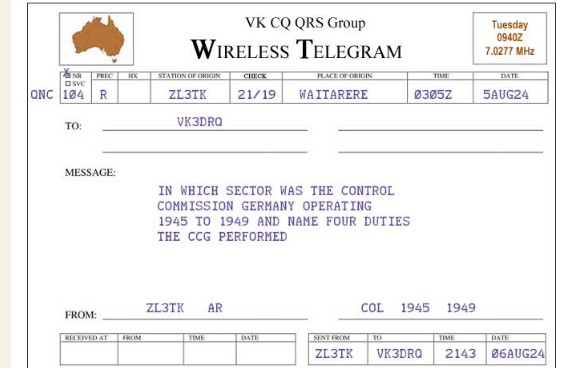
Because the traffic is not being handled on a net, answers do not need to be forme A simple sentence will suffice in order to build operator confidence.
Simply announce your callsign after formal traffic has been passed on ~ 7.0277 MHz + < kHz at ~ 0940Z to get attention. You're also welcome to compose your own question for group members to research and answer the following week.
Such opportunities as this among QRS friends simply don’t exist elsewhere. Be aware that traffic must conform to QRS Group protocol, i.e. sent at gentleman speed mimicking that of OM Manny VK3DRQ. 73 de Stan ZL3TK
• ZL3TK Stan * VK6KHZ Ron * VK6KD David * VK6FN Max * M@NNK Ross + VK6QI Mark * VK6HRC_ Rich * WA8YOB Silvio a late check in from Pennsylvania enquiring about the net * KA3BMS_ Hank another late check in * and our shortwave listeners.
It was a lively exchange with excitement at Ross MONNK from near Exeter, Mike DLSYZ from Stuttgart, Sergio LU7YS from Patagonia and Nyoman YB1NWP from Jakarta adding some international spice to the Tuesday evening net.
Needless to say, everyone reporting that they enjoyed the net despite our 40m segment being choc-a-bloc with our stations, making finding a space challenging.
As usual it was a great net with quite a few new topics in the mix, looking forward to the reports in the RagChew. As a CW newbie, the Post Morsum net is great for me getting on air feedback and coaching from our experienced crew. Thanks to all. Cheers. Richard
Other News
From Michael VK4CCW:
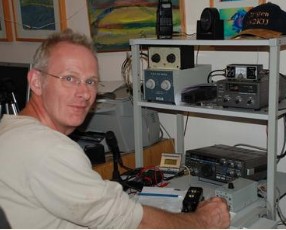
That’s a nice photo of you Mark but you need a haircut HHHHHHHHHHAAAAAAAAAAAAAA. Thanks for the QSO yesterday. 73 Michael [I wish!]
Germany to Oceania Attempt – The Full Story
Germany to Uceania Attempt – Ihe Full story from Mike DL3YZ Hello Mark. Thanks for your patience, I am really sorry for not keeping my promises and schedules. I hope you guys had fun and got some QSOs in the logbooks.
Even though I thought I had been briefed well for my operation on the local HAM group’s site and the rotary beam on Monday, I should have set everything up and tested it out on site the day before.
So on Tuesday morning, I arrived at the site and geared everything up. 1) The internet access on the site didn’t support port forwarding, so I couldn’t get on the remote radio. It also didn’t let me access any SDRs or my emails as well…
Ok, forget about the web, who needs it. Lets do radio: 2) As soon as I hit the key, my radio crashed immediately. It took me a quite a while to figure out the issue.
I found the glorious solar powered 12V on-site power system had not been able to keep my radio powered at more than 30 W RF power.
Learned that the battery cells in the shack didn’t have their maximum voltage as its early in the morning, and the fridge and the VHF repeater were hungry at night.
And the Power Pole extension cable I had soldered 30 minutes after midnight, didn’t help me either, as of course there is some loss in voltage along that cable as well.
Thanks to my dark and pessimistic instincts, I had my 6 Ah LiFePo portable battery for the QCX with me. And, using this tiny thing, I could prove my radio was still working fine – and yes, when pushed, it did deliver 21 Amps for a short time – so its within its specs.
I finally decided to turn down RF power to 70 Watt and just use this battery. So finally I managed calling CQ, only with an delay of 30 min. But I think I was a little fast on CW – my nerves were already worn out alittle bit.
During that delay, I had set up a mobile hotspot with my phone and managed to visited Ross on the VK6SR remote… but we couldn’t hear my 20m signal there.
At least I could say hello to Ross and wish him a good hunt © There was a nice station that called me, Dylan VK3AE, and he was about S5. He told me he was beaming the long path, with 120 Watts.
So as I followed his example and turned the antenna backwards, frightening some blackbirds sitting on the beam. Now he was about S8. That was cool… more than half the globe (14712.0 mi/ 23676.7 km).
Right after saying 73 to Dylan, there was another VK3 station calling me, and we had a second QSO with David VK3DBD. After that, I noticed that the poor little portable battery got alittle hot.
So I decided to beep along with just 30 Watts, using the 12V solar power from the site. But I think thats just too little juice to get around the potato the wrong way. Maybe it was already too late as well, and the band may have closed.
I don’t know if I can get some air time on the Club’s beam again. At least didn’t break anything, so maybe there is hope. Think I need to practice on the site, even as there is almost no QRM out there in the woods, I didn’t hear any other VK station.
Then there was an Italian QRP station calling CQ on my frequency. Beeped him a quick hello and finally gathered my stuff together and called it a day. I hope I can catch more QRS stations next time, and I’ll consider having a second antenna for RX. 73 Mike.
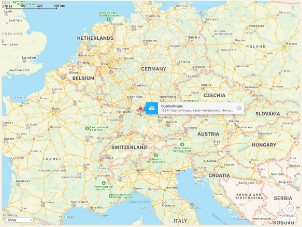
[Thanks Mike – great story 🙂 Let me know on Monday your time when you want to try again so I can put a notification in the reminder email again. And let me know if you want the ionospheric prediction for the path as well.]
Comment on the Editor’s Reply to Mathew VK3AFH in RagChew Issue
Update from Donald VK6JDM near Esperance
Have you thought of presenting at the Perth Tech meeting? There is usually a talk on CW there pushing the need for fast CW skills to be able to put your head up at that end of the bands; a view which you could easily challenge as the fast guys never manage to fill the band with signals the way your effort has, except during contests when the bands get cluttered with the AM version of speed dating.
Not only are the slow CW crowd filling much of the low end of the 40 and 80 metre bands on Tuesdays, but many are using homebrew rigs – which is great to see. Still making progress with my home-brew transmitter and receiver.
I am perfecting my audio injection system for CW transmission and it is getting there. There is no back wave now (suppressed >70DB) and there is now only one audio tone (the harmonics of the fundamental of the audio are down over 40 dB and with a filter about to be added to the audio path they will be eliminated).
I know, I can hear you saying it is a complex way to create CW. However, some of the audio is sent to the AF amp to supply the audible sidetone, which results in a system where if the audio tone you hear from your oscillator matches the incoming signal, then you are both on the same frequency and so the combined pair of signals occupy the least spectrum.
With such a set up there is no need for a separate sidetone oscillator. It also means with a free running LC based oscillator you are not adding a lowish Q tuning diode to shift the frequency.
I do not use DDS or PLL oscillators for the VFO as I found they do add significant noise to the receiver. There is also something satisfying in having a single active device creating the VFO waveform instead of countless devices hidden in a single chip.
Donald Howarth
Donala howartn VK6JDM [Thanks Donald. Good progress on your transmitter; readers may recall that Donald’s home brew transmitter and receiver were built for SSB, and he’s been poking away at upgrading them for CW; great work mate.
My nearly 50 year old Kenwood TS-1208S also allows the side-tone to be activated while on receive – allowing the operator to zero-beat to the signal being worked (in my case – often – because since day one, my transceiver has drifted…
I still have the VFO capacitor somewhere to do the mod!). I wish my much newer Kenwood TS-50 had the same facility for netting CW (actually I wish my TS-50 was working…. it’s on the repair-me pile again). Cheers.]
Europe – Australia: If at First You Don’t Succeed…
Europe – Australia: If at First You Don’t Succeed… by Ross MONNK The word on the street is that 20 Watts ought to be enough for a Europe to VK contact using CW.
“Nothing ventured, nothing gained”, they say, so I headed down to my local south-facing steep pebbly beach to try my luck.
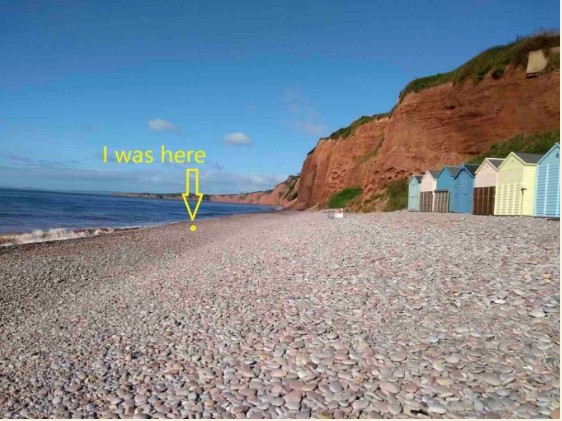
I set up my M1ECC Slidewinder coil and 2.85m mil whip antenna https://www.m1ecc-antennas.co.uk/product/limited-edition-slidewinder-dx- spike-antenna-system on a tripod, spread out four 4.5m radials towards the east, and threw a counterpoise wire into the surf.
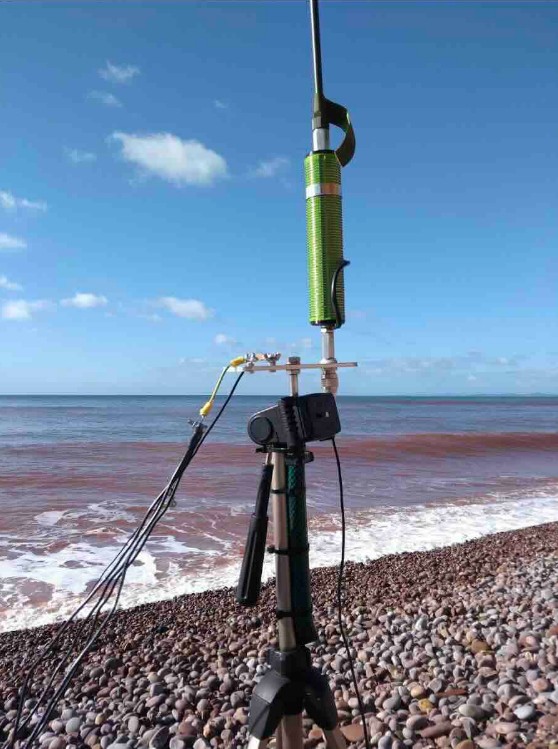
Lesson 1: make sure you have a good length of wire for your counterpoise. I didn’t, so my radio gear was in some light spray from the surf, and I couldn’t hear well because of the sound of crashing waves.
Next time I’ll use a good length of electrical extension cable for the counterpoise (bright orange so that nobody trips over it). My target was Mike DL3YZ in southern Germany and that was a big success.
He was hearing my Xiegu G90’s 20 Watts 599+ and reported that I was much clearer than when I’ve been using a wire antenna in the local woodland.
Disconnecting the radials or the counterpoise made only a small difference, so the proximity to salt water seems to be more important than the wire ground plane. Ron VK6KHZ was at the southern end of the path, listening and sending from his QTH in Fremantle.
Mike was hearing Ron 549 but Ron could only hear some very faint CW, way down in his noise floor. I couldn’t hear Ron at all but that wasn’t surprising given my ambient noise levels.
My conclusion is that there’s a magic path in the ionosphere that runs between Australia and Germany, but bypasses the UK!
The coil and whip is a surprisingly good antenna system but I’ll have another go soon, this time using a long wire antenna up on the cliff top above the beach.
Just like fishing, the more often you put a line in the water (hi hi), the more likely you are to catch a fish. [Another terrific story Ross; thanks for sharing – and in particular for the images.
When you’re ready to plan the next trial, let me know and I’d be happy to send you an ionospheric prediction for the path – that way you can see what frequencies may work over the path at the time you’re interested in, and more importantly, what times the band you’re trying is likely to not support propagation.
With that information, you can concentrate on getting a low angle of radiation antenna going – you might consider putting up both a long wire and your vertical whip for comparison… the whip may just be better over the path if your grounding is good…
Or perhaps use your squid pole to make an inverted-L – which may have a lower angle of radiation than a low long-wire. What fun! Thanks mate.]
WIA Consultation 2024-2 – 40m Band Plan Harmonisation Consultation The Technical Advisory Committee of the Wireless Institute of Australia is conducting two Consultations * Consultation 2024-1 – Australian Amateur Repeater and Beacon Frequency Planning Rules and Process Change (with the ACMA) + 2024-2 – 40m Band Plan Harmonisation Challenges (with the International ‘Amateur Radio Union Region 3 HF Band Plan Committee) The proposals are on the WIA website wia.org.au – there’s a link to the consultations on the home page.
I responded to the TAC on both matters – but for readers, here’s what I sent about the 40m band consultation. Thank you for your work with the … and Consultation 2024-2 – 40m Band Plan Harmonisation Challenges.
Unfortunately I missed the round-table briefing on Tuesday so I’m a bit behind the curve on the proposals, but please consider my comments below in conjunction with what you get back from clubs and individuals.
Comments: + Repeater etc information deleted for RagChew. * Questions and comments on the 40m Band Harmonisation proposal: + © The document seems to only refer to the 7000 to 7200 kHz segment, yet the Australian amateur segment is 7000 to 7300 kHz.
* © = Perhaps the 7200 to 7300 kHz segment isn’t shared with all countries, but irrespective, it is in the ACMA Australian Radiofrequency Spectrum Plan 2021AND our document should address the whole segment – even if Australia does not propose specific allocations for that part of the band.
= Perhaps allocate it as ‘Open’ or ‘Any authorised mode’ or similar would keep it alive. = if we don’t include 7200 to 7300 kHz in our document, we risk losing the segment through lack of use.
* © There has been a significant resurgence in CW activity on the 40m band in the past year. + ° = /runaonce-weekly slow CW practice QSO net above the DX segment, using 7020 to 7040 kHz.
= Amazingly, we are getting a huge turn-out of new and experienced operators who are attracted to the simplicity of CW – we’ve regularly had 50 to 60 stations on each week!
= Also amazingly, even though we are above most of the DX activity, the 20 kHz we use is often full, and people with 3 kHz wide receivers (fe those with older receivers without CW filtering) struggle to find quiet spots!
= With the significant upswing in interest in CW, I would be very reluctant to support any proposal that saw the CW segment reduced to anything less than 40 kHz.
= Similarly, with many operators using home-brewed crystal-locked transmitters, I would like to propose that the entire 7000 to 7300 kHz band allow CW on a non-interference basis, as is currently the case.
1 do not support the proposal to allocate separate contests segments in the band. * = Sucharrule would be un-necessarily restrictive – there is no valid reason to limit contest operation as a separate entity within the proposed band structure – to do so would be shooting ourselves in the foot in terms of future band use.
= I propose instead that radio amateurs be allowed to operate in DX, rag chews, contests, home-brew, experiments, etc via gentlemens’ agreements etc, without imposing un-necessarily restrictive rules.
Thank you for allowing me as an individual WIA member to make comment on the proposals. Although I am a member of four WIA Clubs, none of them have decided to submit a response, hence the individual application.
Congratulations on the work done to date on these complex problems. Please keep me in the loop of developments. I received a very well thought-out reply from Grant Willis VK5GR the Chairman of the Technical Advisory Committee.
Mark, Firstly thanks for taking the time to pen a reply. Your insights are most useful. While I don’t want to pre-empt the overall conclusions or analysis work that is still to come, I will say that it was not our intention to …
(repeater etc information deleted for RagChew). As for 40m, yes we don’t mention above 7200 because it is not available across [ARU Region 3 (which is where the paper originated — not the WIA).
For the domestic situation the VK bandplan will still refer to it appropriately. I was interested receiving your thoughts on CW activity.
My own monitoring from VK5 suggests that a lot of the CW band is polluted by SSB which drives activity into rather small segments. We have had a lot of feedback from the CW community but it isn’t coming with a lot of hard evidence of spectrum congestion.
It is worth noting that CW access band wide is still intended to be supported on a secondary basis. We have failed to make that clear in this paper and will need to rectify that in the next stage.
Overall, I have passed your feedback to the TAC committee for consideration and I wish to thank you again for taking the time to provide a response. It is most valuable.
Regards, Grant Willis VK5GR WIA TAC Chairman Peter VK3YE also made a submission on the 40m band planning Consultation: I wish to comment on the 40m band plan proposal and its effect on CW operators.
J operate both CW and digital modes on 40m with a mix of commercial and homebrew gear (some of which is not, or only partially, frequency agilie). All options, including the WIA’s preferred, stop the CW segment at 7025 kHz.
As opposed to the current 7000 – 7040 kHz range. Significant CW activity in the 7025 – 7035 kHz range would be displaced if digital modes, which are less compatible with CW than SSB, were to move in to this segment.
This includes perhaps the majority of inter-VK activity, since this segment tends to be more active for that purpose than (say) the bottom 10 kHz of the band.
It’s also worth noting that not all operators are frequency agile and the change could potentially render some equipment useless. The following summarises CW activity in the 7025 – 7030 kHz region.
7023: The crystal frequency of the popular Pixie transceiver kit. These have wide selectivity direct conversion receivers. While this frequency is within the proposed CW segment, heavy digital activity at 7025 would make this equipment useless.
Notable as these $10 kits are the cheapest means for anyone to assemble an HF amateur radio station. 7024: Sometimes used by POTA/VKFF/SOTA activators. Sometimes QRP in parks. 7025: Possibly the most active frequency in Australia for casual CW activity.
Also Sunday net held here. 7028: VK QRP Club calling frequency. Used during CW contests. Also used by Fists Downunder for their CW activity sessions. 7030: International QRP frequency.
Putting continuous digital transmissions here would reduce the possibility of hearing and working QRP DX stations. This is another common crystal frequency for simple QRP rigs with crystals cheaply available online or from the G-QRP Club.
Reason to limit contest operation as a separate ently within tne proposed band structure – to do so would be shooting ourselves in the foot in terms of future band use.
= I propose instead that radio amateurs be allowed to operate in DX, rag chews, contests, home-brew, experiments, etc via gentlemens’ agreements etc, without imposing un-necessarily restrictive rules.
Thank you for allowing me as an individual WIA member to make comment on the proposals. Although I am a member of four WIA Clubs, none of them have decided to submit a response, hence the individual application.
Congratulations on the work done to date on these complex problems. Please keep me in the loop of developments. I received a very well thought-out reply from Grant Willis VK5GR the Chairman of the Technical Advisory Committee.
Mark, Firstly thanks for taking the time to pen a reply. Your insights are most useful. While I don’t want to pre-empt the overall conclusions or analysis work that is still to come, I will say that it was not our intention to …
(repeater etc information deleted for RagChew). As for 40m, yes we don’t mention above 7200 because it is not available across [ARU Region 3 (which is where the paper originated — not the WIA).
For the domestic situation the VK bandplan will still refer to it appropriately. I was interested receiving your thoughts on CW activity.
My own monitoring from VK5 suggests that a lot of the CW band is polluted by SSB which drives activity into rather small segments. We have had a lot of feedback from the CW community but it isn’t coming with a lot of hard evidence of spectrum congestion.
It is worth noting that CW access band wide is still intended to be supported on a secondary basis. We have failed to make that clear in this paper and will need to rectify that in the next stage.
Overall, I have passed your feedback to the TAC committee for consideration and I wish to thank you again for taking the time to provide a response. It is most valuable.
Regards, Grant Willis VK5GR WIA TAC Chairman Peter VK3YE also made a submission on the 40m band planning Consultation: I wish to comment on the 40m band plan proposal and its effect on CW operators.
J operate both CW and digital modes on 40m with a mix of commercial and homebrew gear (some of which is not, or only partially, frequency agilie). All options, including the WIA’s preferred, stop the CW segment at 7025 kHz.
As opposed to the current 7000 – 7040 kHz range. Significant CW activity in the 7025 – 7035 kHz range would be displaced if digital modes, which are less compatible with CW than SSB, were to move in to this segment.
This includes perhaps the majority of inter-VK activity, since this segment tends to be more active for that purpose than (say) the bottom 10 kHz of the band.
It’s also worth noting that not all operators are frequency agile and the change could potentially render some equipment useless. The following summarises CW activity in the 7025 – 7030 kHz region.
7023: The crystal frequency of the popular Pixie transceiver kit. These have wide selectivity direct conversion receivers. While this frequency is within the proposed CW segment, heavy digital activity at 7025 would make this equipment useless.
Notable as these $10 kits are the cheapest means for anyone to assemble an HF amateur radio station. 7024: Sometimes used by POTA/VKFF/SOTA activators. Sometimes QRP in parks. 7025: Possibly the most active frequency in Australia for casual CW activity.
Also Sunday net held here. 7028: VK QRP Club calling frequency. Used during CW contests. Also used by Fists Downunder for their CW activity sessions. 7030: International QRP frequency.
Putting continuous digital transmissions here would reduce the possibility of hearing and working QRP DX stations. This is another common crystal frequency for simple QRP rigs with crystals cheaply available online or from the G-QRP Club.
7032-7034: Sometimes hear CW contacts here, especially during local CW contests and POTA/VKFF/SOTA activations. 7035-7040: Low CW activity in this segment and used by existing WSPR. Thus acceptable for this to be a digital segment.
While I agree that a band plan rethink is necessary, the application of a rigid method to allocating relative sub-band sizes that ignores existing significant activity is unlikely to be accepted by the broader amateur community.
In my view any proposal adopted will be much more acceptable if the CW only segment was 7000 – 7033 kHz (no less). Peter Parker VK3YE Thank you to Trevor VKSATQ for forwarding Peter’s email to me.
Now as Grant commented, the TAC has very little in the way of evidence of CW activity on 40m – I fear that without a strong evidence-based response, the desires of we CW fans, will be swallowed-up by the much stronger and more popular digital mode lobby. So….
You know what I’m going to ask don’t you? Yes… please, please, please write an email to Grant and the TAC, telling them about how popular CW has become (catalysed by both our QRS activities and SOTA / PARKS) over the past few years.
Doesn’t matter whether or not you are a WIA member – or even whether you’re in Australia – the more the better! Please advise the TAC that the number of CW operators on 40m has been growing over the last year and as an example, last Tuesday we recorded at least 69 stations on air between 7020 and 7040KHZ.
Send feedback to Grant Willis VKSGR and the TAC team at tac@wia.org.au by September 6th please. I can’t test this link, but Peter says you can learn more about the WIA’s proposals Thank you one and all! mb. VK2KI / VK6QI CQQRS Net Founder
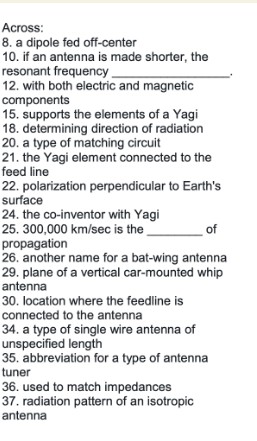
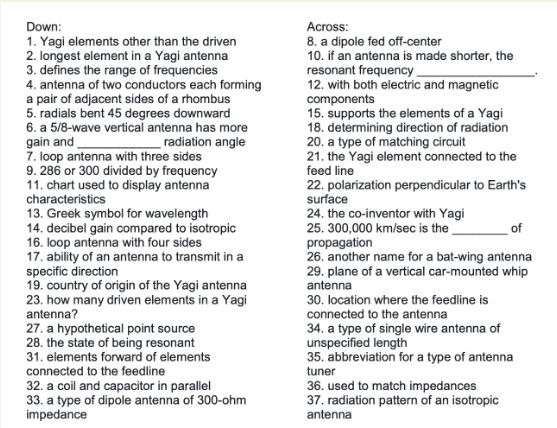
Ham Crossword
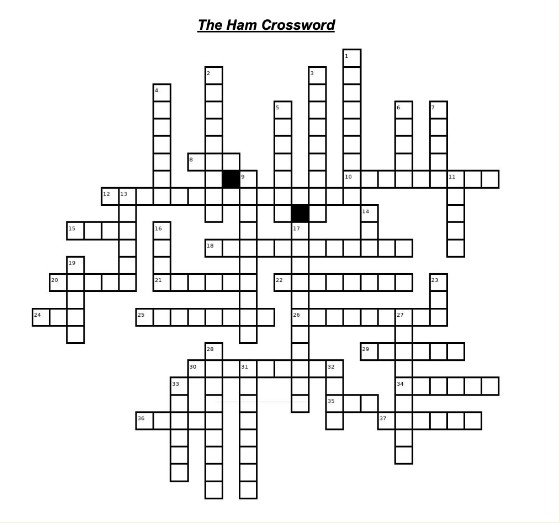
Thanks to John VK2EMF and QRM, the newsletter of the Wagga and Districts Amateur Radio Club for this one.
Yaesu CW Filter on VK Classifieds
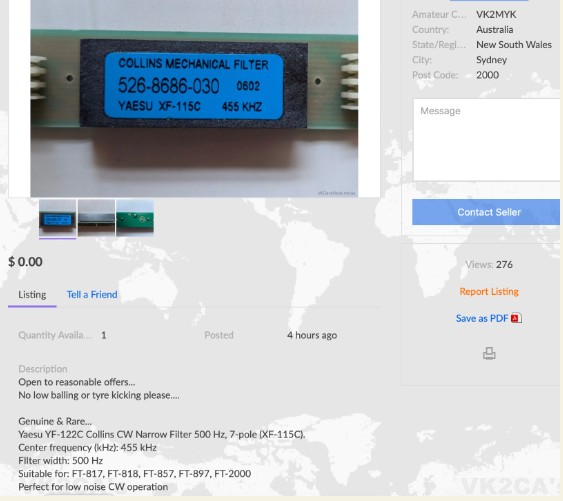
Yaesu UW riiter on VA Ulassilieads For anyone who doesn’t have a CW filter for their Yeasu FT-817, FT-818, FT-857 FT- 890 or FT-2000 – there’s a rare one advertised on VK-Classifieds – here: https://vkclassifieds.net.au/classifieds/transceivers/rare-yaesu-yf-122c-filter-817- 818-857-897-2000-45140.html.
I put a CW filter in my FT-817 a year or two back – and it’s nothing short of amazing – my S9 switch mode power supply noise all but disappears when it’s on – and suddenly the strong adjacent-frequency signals have gone.
Wish I could find one for my old Kenwood TS-120S!
For Sale – Hi-Mound HK-707 Telegraph Key
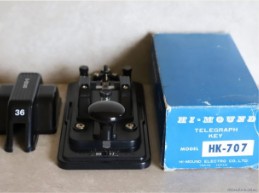
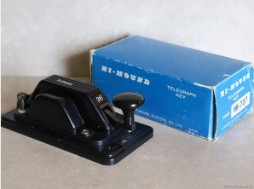
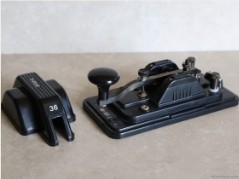
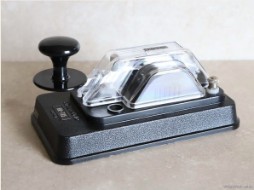
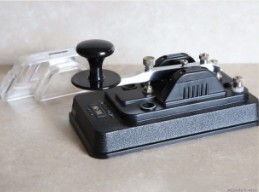
Hi-Mound HK-705 Telegraph Key on high-profile base. Comes with transparent cover which not standard for this key but helps to keep things dust-free. Also fitted with non- standard elevated so-called navy knob with skirt. $150.
Morse Training Net
Nic VK7WW runs a Slow Morse training net every Wednesday at 7pm EDST on 3580 for 30 mins. He uses the callsign of the Northern Tasmania Amateur Radio Club VK7TAZ on that net.
Many of our team learned Morse code with the support of Nic, and the weekly training session comes highly recommended for anyone who wants to learn the Code, or simply brush up. Everyone’s welcome – 3580KHZ at 7pm Eastern time every Wednesday.
The NTARC also feeds the CW live via the Discord phone / computer audio stream, and previous weeks’ recordings are available. Contact Nic VK7WW for more info nicholaschantler@hotmail.com – or just join in on Wednesdays.
This Week’s Topic of Interest
Aide a la Memoire
AlGe d la WeMmoire from Stan ZL3TK As some members of the CQ QRS Group already know, my ability to recall a name to match with a callsign can be somewhat limited. An Excel worksheet provides a fine solution to this bio-aging problem.
Data has been gathered from personal QSOs, and from a richer-source as well, lovingly known as ‘RagChew’.
As some members of the CQ QRS Group already know, my ability to recall a name to match with a callsign can be somewhat limited. An Excel worksheet provides a fine solution to this bio-aging problem.
Data has been gathered from personal QSOs, and from a richer-source as well, lovingly known as ‘RagChew’.
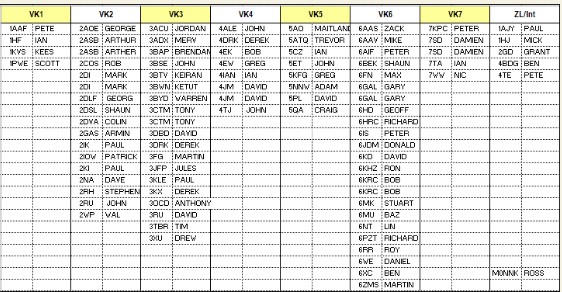
Configured with eight categories (no VK8S yet), the plan is working well. It also has an unintentioned benefit, that of revealing, not quite perfectly but close, the geographic distribution of the 88 active members who have been heard.
This is distinct from regional totals of RagChew readers, many of whom have never been heard during Tuesday Group meets. Distribution across the regions is best presented by an horizontal bar graph, and here it is:
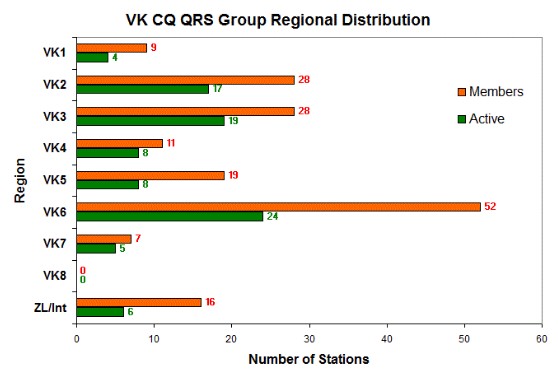
If you find these statistics interesting, maybe even useful, how about suggesting other data which could be collected to paint a bigger picture. Any suggestions why VK6 takes out the well-deserved chocolate barramundi for most active stations?
Thanks Stan – interesting too! that will help build our team relationships. And a really interesting analysis about the distribution of team members.
After writing the article (back in late June), Stan and I discussed whether or not to compare the numbers of our team versus the number of licensed amateurs in each area.
Here’s updated approximate numbers (there’s about 20 that seem to have gone missing from my list – I better do some cross-checking between my list and the Mailchimp distribution data) versus license number information published by the Wireless Institute of Australia – noting that some operators hold more than one license of course: + VK1 10 members out of 539 licenses = 1.9% + VK2 29 members out of 4348 licenses = 0.7% + VK3 31 members out of 4240 licenses = 0.7% * VK4 12 members out of 2991 licenses * VK5 20 members out of 1446 licenses * VK6 54 members out of 1533 licenses * VK7 5 members out of 640 licenses = 0.8% * VK8 0 members out of 144 licenses * VK9 0 members out of 37 licenses « ZL 11 members out of 5000 licenses = 0.2% * Overseas 7 members

Brain teaser
Jules Perrin JP VK3JFP has created a terrific resource to help guide learning for al levels of amateur radio licenses: https:/Awww.julesworkshop.net/Amateur%20Radio.html With thanks to Baz VK6MU for he idea, and Jules for the good learning website, here’s this week’s quiz questions from Jules’ Workshop example test questions:
Exam Questions:
What are the two types of feedlines? When a current of 10 milliAmperes flows through a resistance of 10 ohms, the voltage drop across the resistor is * 10 millivolts * 100 millivolts * 1 volt * 10 volt An oscillator that slowly moves in frequency of “its own accord” is said to: * over modulate * drift + have distortion * chirp How did you go?


Answers from last week’s Quiz:
What do transmission lines do? These are also referred to as feedlines or feeders. Answer: Transfer the signal to and from the transmitter to the antenna. In fitting an amateur transceiver to a motor vehicle an important matter to consider is?
+ whether there is voltage available to power the transceiver + the placement of a laptop computer for logging purposes * potential interference to the engine management system * signal reflections from the wing mirrors Answer: potential interference to the engine management system On entry to a power supply the active lead of the mains should be connected to a * indicator lamp * filter capacitor * transformer * fuse Answersfuse How did you go?
Di-dah-di-dah-dit
So back to the Slow CW QSO practice net.
Next Tuesday’s Net
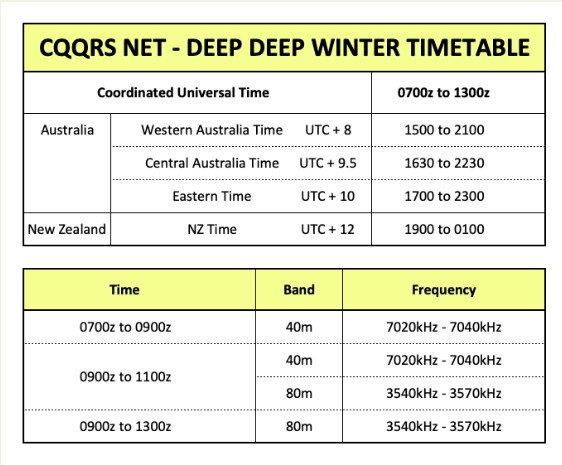
Our CQ QRS Net will be on as always on Tuesday from around 0700Z until about 1300Z; see below for details. Doesn’t matter whether you’re brand new and want to try just exchanging callsigns and RST reports, or you’re ready for a good old rag chew.
Please let me know via our Reports form bit.ly/CQQRSNET who you work or hear or Tuesday’s net.
Post Morsum
Richard VK6HRC will run our Post Morsum on the South West AllStar net (via repeaters and hotspots all over WA) from 0600 WA time. If you’re in WA, all you need is an FM 2m or 70CM transceiver and an AllStar node nearby.
If you’re elsewhere in the world, you may be able to connect your local AllStar-enabled repeater to the net, or you can connect via Echolink. Let me know (cqqrsnet@gmail.com) if I can help with that.
Teamwork
Thank you so much to our team of 41 contributors: DL3YZ, VK/MONNK, VK2ASB, VK2DLF, VK2DLF, VK2GAS, VK2KI, VK2KJJ, VK2NNW, VK2RQ, VK2TER, VK3ACU, VK3AE, VK3AFH, VK3DRQ, VK3JFP, VK3KEV, VK3RU, VK3TBR, VK3YE, VK4CCW, VK5AO, VKSATQ, VK5CZ, VK5DC, VK5FD, VK5KFG, VK5GR, VK5LA, VK6FN, VK6HRC, VK6HV, VK6IS, VK6KD/4, VK6KHZ, VK6QI, VK6WE, VK6WE, VK7KPC, VK7ZA, ZL2GD, ZL3TK, ZL4TEThank you team.
GU CW on Tuesday, mb Mark Bosma VK2KI / VK6QI Beautiful South Bowning NSW mark.bosma@icloud.com non impediti ratione cogitationis

An Ode to CW – thanks to David VK3RU: In days of old, when ops were bold, And sideband was not invented, Words were passed by pounding brass, And all were quite contented. – Unknown author
About the CQ QRS Net
Matching
PSE QRS


Landing Zone
CW Tips
As always, for newbies, operating suggestions are available from the operating hints link here: https://www.parg.org.au/_files/ugd/ebe236_ 3ca5ca08bb38429db4eee524bda2f97a. pdf.
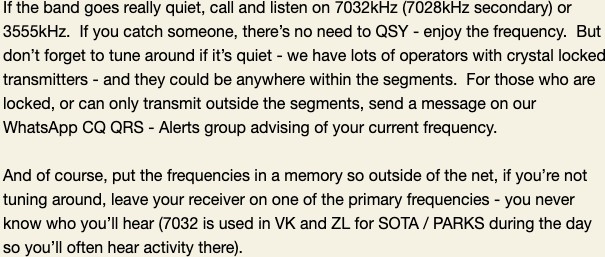
There’s usually people around until after 1300Z – so keep calling until you catch someone. I should be on as usual from home in NSW and via the Remote at Bedfordale WA, and I’ll also be watching the proceedings using the VK6QS and Tecsun SDRs in WA and NSW respectively.
The opinions expressed in the RagChew newsletter are those of the individual contributors. The opinions do not necessarily reflect that of the editor or of the CQ QAS Group members.