Below is a reconstruction of the 2025 47 CQ QRS RagChew newsletter designed to support full text searching. This reconstruction was built using OCR, and will contain errors.
To view the Mailchimp original, click here. To search the entire newsletter archive, click here.
Contents
- CQ QRS RagChew
- New Team Members
- Reports
- Website
- POST MORSUM 19th November
- This Week’s Topic of Interest
- On My Workbench
- HexBeam – Even More Ugly Than Usual
- QRZ?
- QRZ? Who’s on the other end?
- Head Copy Practice
- You can either play the MP3 files in any media player, or load the text file into the Ditto CW: Morse Player app — https://dittocw.andro.io/. Both options work well, however Ditto CW gives you complete control over all Morse settings, while a normal media player only allows changes to playback speed, and does that in steps (e.g. +1.25x, 1.5x, 1.75x).
- Other News
- Settle to Carlisle Railway, Week 10 Report
- Northern Victoria Travels
- Spring VHF-UHF Field Day – This Weekend.
- Morse Training Net
- CWops CW Academy
- CW Ops News for 21 November 2025
- MuthRusters
- Readable Five
- Sapiens by Yuval Noah Harari
- Prosign/Character/Signal of the Month
- I Hear Tell…
- Di-dah-di-dah-ait
- Next Tuesday’s Net
- Reports & Photos
- Post Morsum
- Material
- Teamwork
- About the CQ QRS Net
CQ QRS RagChew
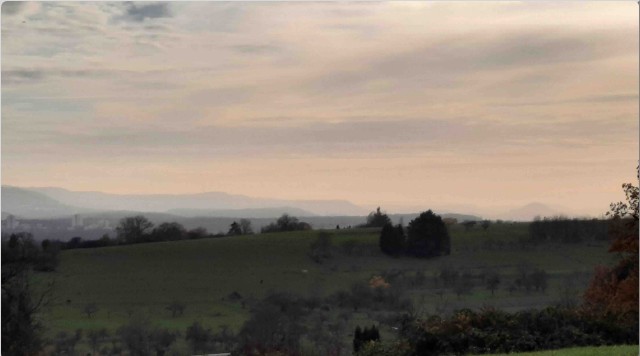
The view from Mike DL3YZ’s favourite antenna test range in Stuttgart – with dust blowing in from the Sahara Desert. Photographed by Susi.
OT IEE LESLIE RagChew newsletter late again! Sorry folks… seems this week there were too many things that got between me and my goal… which is to issue the newsletter on Thursdays. I love setting schedules and targets….. and seeing them whoosh by!
Interesting week again for our CQQRS Slow CW Practice QSO Net. Some reported a flood of stations heard or worked, others heard crickets. One left a bit out of his antenna, another built a new antenna.
One even discovered that his paddle and antenna were 2,500 km away, another was so retired that he slept through, one blamed his Uncle Fred and yet another had to console himself with hot chocolate. What fun.
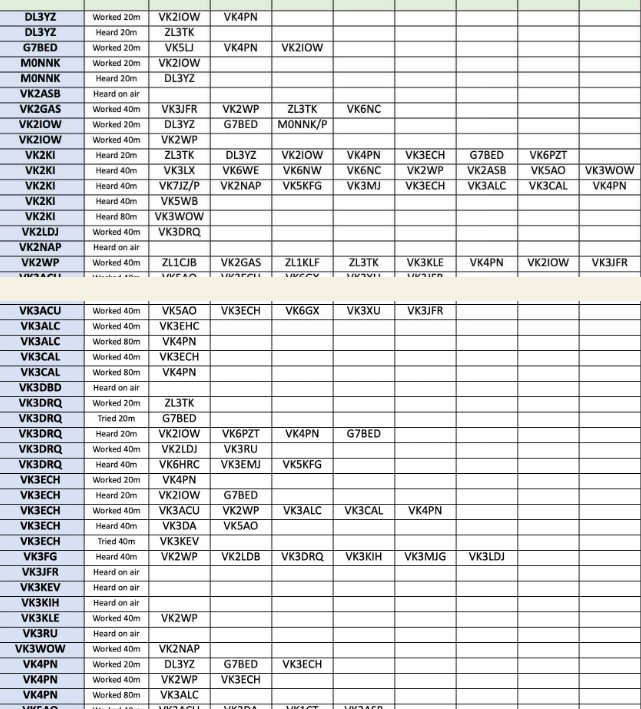
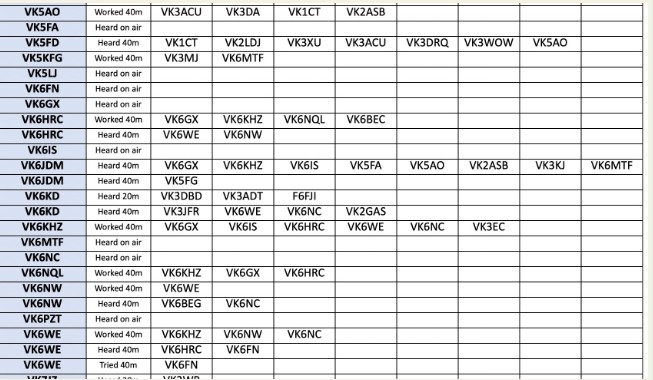
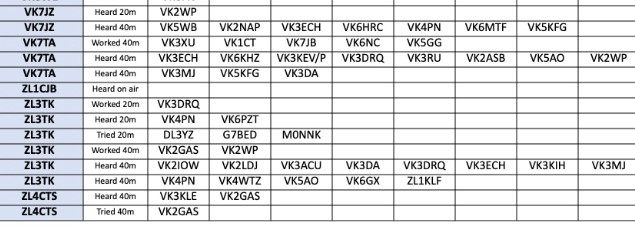
Well another world record for our net – 70 stations heard or worked by the 46 family members we know of who were there on Tuesday. Amazing! And to top it off – have a read of the outstanding reports that our folks have sent through!
These really make the newsletter interesting reading for our team; thank you so much to the wonderful contributors who put in a special effort to write an interesting report again.
DXperiment – Falling Over Each Other Each week we have a number of our team slide up to 20m to have a go at some long-path fun with our four EU and UK team members who get up so early to give us some targets to aim for.
Mike DL3YZ selects two kiloHertz slots for each at his end, and the challenge then is for each of them to find a quiet frequency among the European QRM.
Our weak signals which many stations there just can’t hear make keeping the frequency clear just that more challenging at that end. One way we can help is to try to remember to keep our overs short.
Quite a challenge considering that rag-chews rather than UR599-TU-73-QRZ? -type QSOs are what we love, what our new operators aspire to, and what brings so many of our more experienced operators back to our net every week.
The other challenge is for us to try to not generate our own QRM. It’s often tempting to say g’day to one of our team-mates that we hear calling our EU/UK team. And why not? The band is there to be used… and one frequency is as good as the next right?
So how do we still have some fun, while minimising the effect on others’ enjoyment? Here’s some suggestions to think about.
+ The team usually try to use the lowest frequency of their allocated space; eg if Mike plans to use 14048 to 14050kHz, he will normally come up on 14048 by preference if the QRM allows.
So perhaps try to avoid conversations with other members on those lower ends of each slot if you can? * Ifyou’re going to try calling one of the DX team who you haven’t yet heard… start with a couple of ‘QRL?’ calls (no callsign, just ‘QRL?’).
It’s quite possible that you may not be hearing the DX station, but others elsewhere may be; remember the grey-line is moving, and the target may be already in QSO with one of our team.
+ Ifone of the team does call ‘QRL?’ and you’re in QSO with the DX or can hear that the DX is transmitting, flash back a quick ‘
Our DX team may hear you between words or letters, but they’ll know that you’re just keeping the frequency clear. * Because our skeds are arranged with one station per 2KHZ segment, rather than call ‘CQ’ and risk starting a different QSO on one of the allocated frequencies, how about calling the specific station?
For example: ‘QRL? (listen) QRL? (listen) DL3YZ DE VK2KI ON SKED
Yes it’s nice to work some other DX, but other team members are listening-out for our guys specifically, and by accidentally starting another QSO on the calling frequency, you may be denying them the QSO they’re after.
* But what if, despite your best efforts, someone callls you on one of the lower calling frequencies, or you hear one someone who you’d like to say g’day to?
I suggest you send a quick ‘UP 2 UP 2’ and then give the caller a call 2KHZ up (hopefully the next higher slot won’t be in use at that time).
That way, if the call was on the lower calling frequency, our DX team member will still hear you in QSO at the top of their segment, but hopefully can still use the lower frequency. So first-world problem, not worth stressing over….
But perhaps this will make things abit easier for everyone? Thoughts?
In the report by VK4PN below, Sava has made a suggestion for new operators who, between overs, need to read through what they’ve written down and perhaps write down what they’re about to send.
Sava has suggested the use of sending a quick
I’ve retained
Anyway – back to the newsletter – I hope you can take some time off to read and enjoy our offerings below this week.
New Team Members
Welcome this week to Darrin VK3VDP in the Moorabbin area and Ron VK4EV at Everton Park. Darrin was introduced to our mob by Stan ZL3TK, is well on his way on the CW learning journey, and will be starting the CWops CWA Beginners class in January.
Ron is keen on AM with older tube-type equipment as well as QRP and home brewing; you’ll find lots of people on the net who share those passions Ron. Welcome to the team Darrin and Ron.
Reports
To make your report more interesting, please consider sending a photo to be attached. If you have a photo that you’d be happy to include, please email it to: cqgrsnet@gmail.com To make it even easier for Patrick and Mark, see if you can compress or reduce the siz of the image (preferably to less than 100KB file size).
No problems if your computer or phone can’t do that – just send it through anyway please. So, please help attract new and old team members to have a go by submitting your report each week. Submissions close 1300 (Eastern Australian Summer time) on Thursdays.
Website
If you’d like to find out a bit about our net, or would like to pass information to others about our Tuesday get-togethers, here’s the link to our website. bit.ly/CQQRSWebsite
6 am. The alarm clock sings its unwelcome greeting. Time to rise and shine. 6:15. Having disturbed the whole household, my porridge comes out of the microwave. It’s still inky blackers outside. I’m retired so why do I put myself through this? 6:45.
I turn the key in the ignition. It still seems rather dark – I hope I haven’t got my times wrong. But as I drive out of the village, I see the sky lightening in the east. The! it hits me – WORKING THE GREY LINE IS SO ROMANTIC!
You are waiting for the earth to turn into place so that your signals are carried safely around the dark side of the world to your friends in Australia. You can see the planet slowly revolving into position.
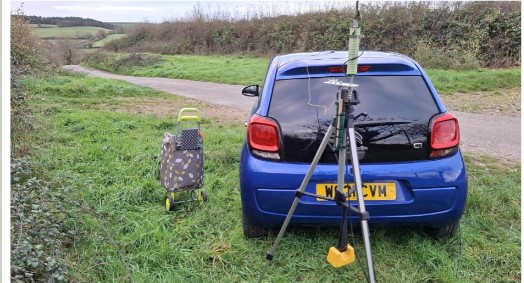
But you must be patient – timing is everything when you’re collaborating wit Gaia. She won’t be rushed. 6:53. I arrive at my portable location. You can’t see it in this photo but the car thermometer says 1 c.
It’s nippy out there so I’m glad that Il be in the car, not crouched outside in a camp chair.
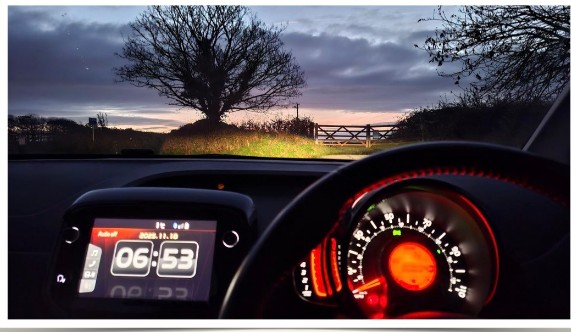
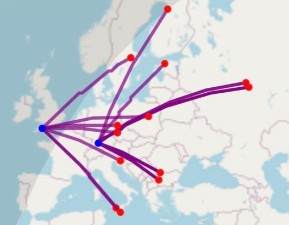
7:35. Five minutes into my shift and I hear Pat VK2IOW calling me. Excellent. But nc reply from him. Twelve minutes later, I get an email from him asking me to go up 2 (due to Manny and Stan working on the frequency).
Five minutes later, he makes m day by coming in RST 539 (he gave me 429). We have a good chat and his nice sending allows me an easy copy. 8:20. There being no response to my “CQ VK” calls, I pack up and head home for a restorative hot chocolate.
[80m] These times the DX window opens at about 6:45 UTC, so was a little earlier on the air to see when my signal is finall getting to the great SDR in Ironstone.
Finally DX kicked in I had some nice chats with Pat VK2IOW and Sava VK4PN easy copy and great signals up here. Have a great week, Mike.
Spent a good part of the day building a 20m POTA >ERformer in the back yard anticipating better ;onditions than last week, but it was not to be.
There vere no RBN traces extending outside Europe for the nree stations of interest, and no traces whatsoever showed for any Oceania stations. Really grim onditions. VK stations were much weaker than isual too, could work only OM Manny however was
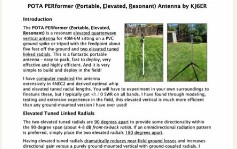
Able to recognize OM Sava, not by his call sign which was too weak to be heard, but by his unique characteristic of sending a hyphen instead of = for new paragraphs.
That one extra dot every so often always gives the game away, the sort of thing that would have absolutely delighted the RSS!
[40m] 40m was delightfully devoid of noise but trans-Tasman propagation was rather narrow geographically speaking. Due to BIG VK3 signals my RF gain was turned down which is likely why I didn’t hear a portable QRP VK3 wanting to pass STC traffic.
Deep regret, don’t want to let him down after all the hard yards he’s put in, he sure deserves the bonus 10 points for doing the job on-air, so rescheduled for Thursday.
[80m] I could hear my own CQ calls on the Ironstone SD from 100W down to 5W on 3555KHZ but no takers tonight. I should have posted my attempts on the WhatsApp chat group as I have done on previous QRS evenings.
There must have been lots of sto activity near the Ironstone SDR as I could hear lot of cracks and crackles of QRN. I heard a very str station on 20m transmitting clear and slow from m home QTH, but I wasn’t sure if the callsign was legitimate (F6FJI).
Once confirmed on QRZ page went to respond but the station had moved on. Q database shows the station located in France. OF well, a missed opportunity for next time. 73 till ne: week.
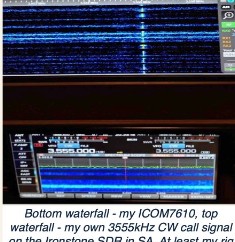
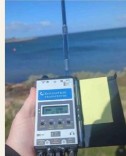
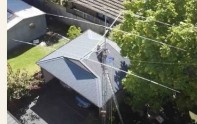
• ee erate Oe eS one bate, We ardor sme [40MM] Enjoyable night of listening, I heard 8 stations in total, being 7 on 40 5 meters and 1 on 20 meters. I called a bit, even with a bit of encouragement from Mark to “hit the paddle harder” but no QSOs for me.
I had gone to a local hill to get away from the noise floor at my QTH and it made all the difference to being able to hear signals, in fact it was a pleasure to not have to concentrate on lifting dits and dahs in the noise.
I was scratching my head, why no QSOs? The reason became clear when I went to pack up my antenna and there important section still in the bag and not fitted. So I may have been able to a¢ not really getting much signal out likely radiatina alona the around.
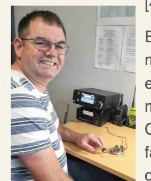
[40m] From my QTH in Stawell, propagation was weak as observed from about 1600 EDST onwards but improved after 1830 ESDT. Had fun working VK2WP also using vintage equipment.
My setup was the Johnson Valiant TX with Drake R4A receiver and a tube-based TR switch. Bug was a Vibroplex with arm 1OKING forward to better nronaasation and more
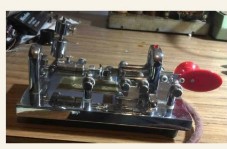
Consistent solar activity from gentle sunspots. Regards, Paul I neenatmhemmeedamenel
From Chris G7BED at Northampton, England
[20m] Despite sleeping in – oh the joys of retirement ©) … I finally fired up the rig and called CQ. Conditions were not great from my side, but my signals were being heard down-
Under, and with the help of the Ironstone SDR, I managed to work VK2IOW (Patrick), VK4PN (Sava) and VK5LJ (Lawrie). The last call was new to me, so i was great to get a new VK contact in the log – a nice quick rag chew at good speed too.
Thanks for the Net chaps – always good to work CW DX.
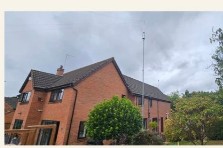
[40m] There were good signals with some QSB and I managed hree contacts, but my head copy failed me and I lost mu )f the exchanges. Wrist coordination degraded too so I nade many errors. It wasn’t a satisfying session.
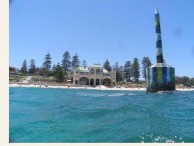
From your editor Mark VK2KI at on a train somewhere… via the VK1HF Snowline KiwiSDR
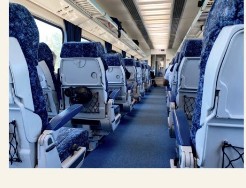
[20m] This week Elizabeth and I were on a train heading to Sydney – one of my four least- favourite Australian capital cities.
The XPT which travels between Sydney and Melbourne is among Australia’s most travelled long-distance train journeys – but the ageing rolling stock although very comfortable, is sadly lacking some of the things that could make it a tertific journey….
Internet and device charging for instance. We’te proponents of carbon-use reduction including the ideal use of public transport where possible – which poses an interesting question – would the carbon cost of replacing the fleet be outweighed by the decrease in vehicle emissions from an increase in popularity?
Victoria has a nice modern fleet of country trains… and low fares (I can travel all day on the Victorian network for a maximum of about $10) – no wonder the Victorian country trains are usually full! So back off my soap box….
The cellular network was in the main only available in our Faraday carriage when we had stopped at a station. That meant very sporadic use of the VK1HF Snowline KiwiSDR at Dry Plain; despite that, I still heard lots of activity.
Stan ZL3TK was strong into the Snowline SDR at the start, but Mike DL3YZ was very weak; I only knew he was on from the Reverse Beacon Network.
However, by the time we got to Exeter (isn’t it funny how so many English places are named after Australian towns?), Mike was up to $4 when he was chatting to Sava VK4PN.
By the time we had got to the Northern end of the Southern Highlands, Chris G7BED had charged with a morning cuppa and was on with Patrick VK2IOW at Millthorpe. Both were $3 into Snowline.
My phone battery was complaining, so Elizabeth and I went back em »sssrsussresmon to reading Yuval Noah Harare’s latest book, Nexus – very Yuval Noah insightful reading for us, and not unexpected, having lapped-up Harari four of his previous books.
[40m] was pretty quiet. However, after arriving in Sydney and having had a bite to eat, I had a listen and was pleased to log 17 a stations.
Signals were rolling in from the West, despite Wayne VK6NW‘s comment about what he called the ‘Faraday Curtain’, the apparent one-way propagation we have often noticed between the East and West (possibly as the arriving solar radiation and ionisation decreases at lower altitudes) Wayne had a nice signal when he was working Daniel VK6WE, but when our team member Lin VK6NT came up on the Northern Corridors AR Group’s station VK6NC (so many VKGN callsigns!), Lin was around $9 into Snowline.
I checked 40m regularly when I could on the train, but the band N Representing the Southern island, James VK7JZ headed out portable and was putting anice signal into Southern NSW before a long family phone call put paid to the plan. Crest la vie!
Although I was only able to receive this week, I was really pleased to hear so many of our team on air and having fun. Some are able to make the net every week, others can only get on rarely.
But thank you to every one of you for being there – I only wish I had been able to say g’day to you myselt… another time hopefully!
[80m] 80m was decidedly quiet whenever I listened this week. Peter VK3WOW was calling, calling, calling and likely agrees with me! [160M] Nothing heard on 1855KHZ when I listened a coup! of times.
[20m] The Yaesu rotator on my yagi antenna malfunctioned a few weeks ago — it would rotate in only one direction. After some head-scratching I eventually managed to get the Yagi down to ground level and removed the rotator.
I found a repairer on the internet, Peter Hastings of Duo Services in Sydney, henceforth known to me as Mr Rotator – nothing he doesn’t know about rotators.
Apparently there is a known fault of the Yaesu rotators, where they used a grub screw which is too small, which works loose. He did an excellent job of repairing,
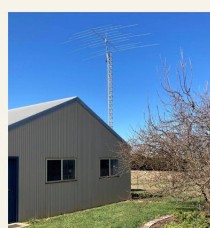
Hoi Phen F Nt a ene emi tS meh ge bb me Pentre tit Nemeth met tol rei tf merle Senet et Sell yofmmtveneht dnt —~ fF servicing and also recalibrating it.
Sometimes one has to wonder whether a tower and Yagi are worth the effort and expense, when one can do pretty well with wire antennas, hi. I managed QSOs with al three of the DXperiment.
Mike and Chris had strong signals, while Ross, operating ‘ca portable’ was fairly weak, but nevertheless a successful QSO.
[40m] There seemed to be plenty of activity. I had a few QSOs, including one with Wal, VK2WP, just down the road in Bathurst, but retired relatively early.
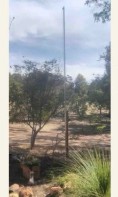
From Donald VK6JDM at 20KM west of Experance
[40m] Spent the evening listening and trying to follow the code while soldering up a new IF stage for my 40 metre receiver. I have been slowly rebuilding the receiver whicl I built about 25 years ago using Rockwell Collins filters.
There is a bit of a story to those filters. I bought them directly from Collins in USA. A Mr Cornell was a very helpful chap in their sales section. I had emailed him from an email address I had with Hotmail. I had chosen the Account name Fred WOTAM. This was
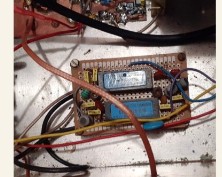
_ —_ had chosen the Account name Fred WOTAM. This was based on the name of my fictitious uncle Frederick Wotam. Now Fred was a very useful uncle for we had a neighbor who had a habit of wandering onto our farm uninvited to offer friendly advice and ‘have a look around’.
His unnerving visits seemed to diminish after I pointed out that uncle Fred had taken up occupation of the hut on top of the hill behind the house. I pointed out Fred was not the sort you would want to share the house with hence his abode on top of the hill.
The top of the hill would suit Fred for he liked to keep an eye on things and did not want anyone sneaking up on him unawares. Fred was after all described by his old military comrades as a crack shot when sober.
Our neighbor seemed to realise our farm was no longer a safe place to wander. Fred gradually became part of the family and would add his name to Christmas cards. The farm became named in his honour Wotam Hills.
Fred of course needed an email address and so the Fred WOTAM at hotmail account was born. Now back to Collins filters. Correspondence with Mr Cornell of Collins filters resulted in an order being placed.
I was then informed that I would first have to sign an end user certificate which would have to be done by real mail. An envelope arrived addressed to Mr F Wotam care of the surgery and my secretary placed it on my desk with a quizzical look.
The end user certificate was attached to a list of countries to which the filters must never be sold – I did not till then understand just how many countries were enemies of the USA. The certificate was prefilled with my name – you guessed it Fred Wotam.
So I duly signed F Wotam got a bank cheque and sent off for the filters which some weeks later arrived in a parcel addressed to F. Wotam …. This time the secretary said she thought the Fred business was going too far as he was now receiving parcels.
I opened the package, looked up at her and said missile parts. I closed the hotmail account soon after that and a good nurse friend, deciding Fred was liable to get me in trouble with the authorities, managed to get Fred’s obituary in the paper.
Luckily the neighbor does not read the paper.
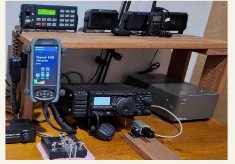
[40m] Great long chat (nearly an hour, I think) with OM Will VK3NAP, who is one very neat sender indeed on a straight key.
My difficulty in understanding the significance of the long number he sent me several times (including after a repeat request from me) sure was a wake-call to me about the quality of my decoding skills — and this at only about 14 wpm.
Tuesday nights: when all my fond delusions are forced to
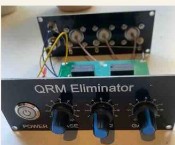
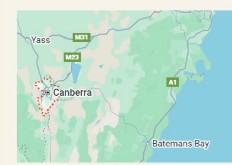
[40m] Nice chat with Mark VK3MJ and then a contact with VK6H who was operating maritime mobile. A first for me. He we R5 at my end, but I was only R3 at his end, so the contac was short. His QRZ post disclosed a QTH south of Tasmania in a 35′ yacht. Respect!
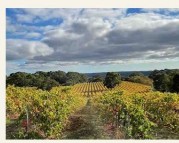
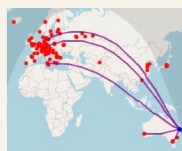
“Managed two DX QSOs this time – Mike DL8YZ and Chris G7BED. Both signals were pretty solid around $5. Unfortunately both QSOs were cut short by events out of my control, midway through the QSO with Mike my wife ~ needed me urgently so I asked Mike to stand by (AS) and went outside.
As the break took longer than I expected, Mike started calling me back, I could hear him across the house and managed to return just in time to exchange QSO greetings. Pity conditions were good for a decent reg- chew!
Similarly with Chris we started the QSO at around 18:55 HRS too close to 19:00 HRS, time for me to QSY to 40m for the Z_LCW net. Between the two DX QSOs Rob VK3ECH responded to one of my CQs.
He was rocketing in with a big signal, other VK2, 3 and 6 stations I could copy on 20m at the time were barely readable. Rob’s QTH is Echuca so he must be on a good wet patch of ground close to the Murray river.
[40m] Proceeding on 40m started at 19:00 HRS by checking into Z_LCW net at 7.030 MHz using QRO. After net finished I changed the rig to my Rat’s Nest QRP, mighty 3W. Called a lot of CQs but no takers. Better result this time responding to CQs by others.
Managed two enjoyable QSOs with Wal VK2WP who was running only 30 W and Rob VK3ECH. Conditions were pretty good first time for a while, noise at my QTH was reasonable just around S4.
One suggestion for those who need to write contents of their overs before responding, a quick AS (abbreviation for please wait) would be helpful, otherwise itis hard to determine whether the call has dropped off due to propagation or the QSO has finished Also it seems that finally I have sorted out my CW offset problem as both QSOs were conducted after tuning to somebody else’s frequency.
Very happy with the outcome, no need for hardware changes just a software tweak! [80] Assurprisingly quiet evening on 80m this Tuesday, DX conditions were great.
I logged on VK6QS Kiwi SDR to see if I was heard there and yes I could see my carrier but that was the only carrier on the waterfall. So our V6 contingent was dormant.
Regardless I kept calling CQ expecting somebody from WA to come up after 20:00 HRS Perth time but no luck. Still managed a couple of QSOs, Calvin VK3CAL who was solid 594 into Brisbane and Ivan VK3ALC who was only 554 with deep fades.
In Perth on the VK6QS Kiwi SDR both of them appear to be about equal strength – propagation quirkiness again. Out of curiosity I checked FT8 segment and the two strongest stations there were VK6ABC and VK6JX so propagation to WA was definitely on.
Pity our VK6 contingent did not turn up.
Ae Srvortunately botn USUs were cut short by events Out OF my control, midway through the QSO with Mike my wife needed me urgently so I asked Mike to stand by (AS) and went outside.
As the break took longer than I expected, Mike started calling me back, I could hear him across the house and managed to return just in time to exchange QSO greetings. Pity conditions were good for a decent reg- chew!
Similarly with Chris we started the QSO at around 18:55 HRS too close to 19:00 HRS, time for me to QSY to 40m for the Z_LCW net. Between the two DX QSOs Rob VK3ECH responded to one of my CQs.
He was rocketing in with a big signal, other VK2, 3 and 6 stations I could copy on 20m at the time were barely readable. Rob’s QTH is Echuca so he must be on a good wet patch of ground close to the Murray river.
[40m] Proceeding on 40m started at 19:00 HRS by checking into Z_LCW net at 7.030 MHz using QRO. After net finished I changed the rig to my Rat’s Nest QRP, mighty 3W. Called a lot of CQs but no takers. Better result this time responding to CQs by others.
Managed two enjoyable QSOs with Wal VK2WP who was running only 30 W and Rob VK3ECH. Conditions were pretty good first time for a while, noise at my QTH was reasonable just around S4.
One suggestion for those who need to write contents of their overs before responding, a quick AS (abbreviation for please wait) would be helpful, otherwise itis hard to determine whether the call has dropped off due to propagation or the QSO has finished Also it seems that finally I have sorted out my CW offset problem as both QSOs were conducted after tuning to somebody else’s frequency.
Very happy with the outcome, no need for hardware changes just a software tweak!
[80] A surprisingly quiet evening on 80m this Tuesday, DX conditions were great. I logged on VK6QS Kiwi SDR to see if I was heard there and yes I could see my carrier but that was the only carrier on the waterfall. So our VK6 contingent was dormant.
Regardless I kept calling CQ expecting somebody from WA to come up after 20:00 HRS Perth time but no luck. Still managed a couple of QSOs, Calvin VKSCAL who was solid 594 into Brisbane and lvan VK3ALC who was only 554 with deep fades.
In Perth on the VK6QS Kiwi SDR both of them appear to be about equal strength – propagation quirkiness again. Out of curiosity I checked FT8 segment and the two strongest stations there were VK6ABC and VK6JX so propagation to WA was definitely on.
Pity our VK6 contingent did not turn up.
[40m] I got on air around 1830 or so and started at the top of the 40m 1 ¥ s segment and almost got to the bottom before I heard anything. ; Near the bottom I found Drew, VK3XU. Around 1900 I wound my way back up and came across Chris VK1CT.
After this I continued ‘onwards and upwards’ and heard some good sigs from ZLs checking in to their net, but no QRS net to be found. Time for dinner. Retu meal break there were more stations to be found.
Conditions were good e reasonably leisurely QSO with Lin, VK6NC. I didn’t catch the name of the have just had a look on QRZ.com: wow!
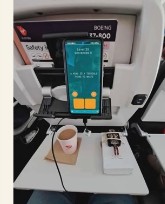
[40m] Offline for a couple of weeks while visiting family in Bundaberg. In keeping up with CW practice, I brought along my nice new shiny BaMaKey and Arduino phone interface for the Morse Mania app to fill in a bit of spare time on the flight.
[40m] Had some stray RF problems in the shack to start with but he fun after that was sorted.
[80m] A big electrical storm made life rather difficult at times.
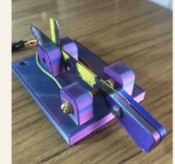
POST MORSUM 19th November
From Richard VK6HRC. Eight on the South West repeater and AllStar / Echolink hub
See S SS PEE Ue Ce eee ee this morning. VK5KD David VK6FN Max ZL3TK Stan ZL/G4RWI_ Nigel VK6NW Wayne VK6QI Mark VK6HRC
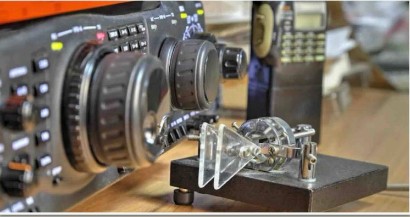
David called in before heading to work to let us know that he was hearing Mike DL3YZ on 20m via the Ironstone Range KiwiSDR but nothing heard in WA. He could hear a French station and gave a call – unfortunately no response.
Max was still busy in downtown Manjimup vacating his commercial premises so another no-show on the QRS net. Max promised back to normal operations soon!
Stan was working on a 20m vertical with one radial which did not deliver on the evening, so he switched back to the end-fed for the rest of the session. The Settle to Carlisle railway check-in did not eventuate due to conditions and was rescheduled to Thursday.
Nigel reported that he was back in the Southern Hemisphere for a while. He was a bit distracted by motorhome battery problems after landing in Australia…
And discovered after arriving in New Zealand that he’d left some crucial AR components back in Aus|_ However, with the help of our team member Nev ZL2BNE in Blenheim and several Nelson locals, Nigel will be on next Tuesday with his mighty Icom 705 and some borrowed gear.
He said he was also hoping for a promotion from head of CQQRS IT up to a much better-paid position in the organisation. Wayne eventually made himself heard after getting repeatedly getting cut off by trigger fingers on this morning’s call-back (sorry Wayne…
Note to self, leave bigger gaps between overs). Wayne worked Daniel VK6WE on 40m and Sava VK4PN on 80m, but heard Mike DL3YZ via a KiwiSDR.
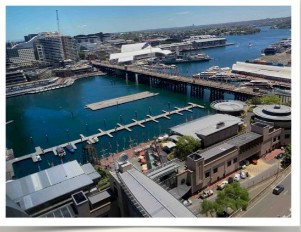
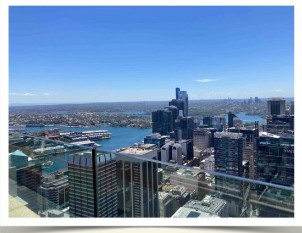
Mark made use of the new VK1HF Snowline KiwiSDR from the train during the QRS net and followed the fun on 20, 40 and 80m when mobile phone coverage appeared when arriving at stations along the way. He also did a fine job of spotting on WhatsApp for us.
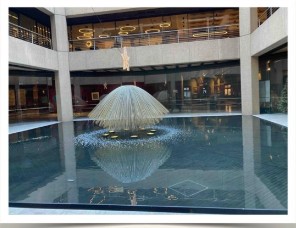
After enjoying the view from a couple of meeting venues, Mark and Elizabeth were on their way to some place called Macquarie Street.
| set up before Tuesday’s session and all was well… or so I though. On keying up, stray RF caused havoc so had to QRT until the problem was isolated.
After that, I went and found a quiet frequency and was doing some tests when Phil VK6GX spotted me and we were away after a very shaky start. Worked a few more on 40m before going into listening mode.
As conditions changed I started hearing traffic from the East but a massive electrical storm was making for unpleasant listening. Nevertheless, but an enjoyable session overall. Thank you to all on last night and this morning. 73 Richard.
This Week’s Topic of Interest
It’s fair to say that few have the faintest idea who this amazing man was or what he did, apart from maybe recognizing his erstwhile call sign, GGRV. However, Kennet!
Hill G3CSY, shows that he knew quite a lot, yet fails to mention two absolutely remarkable features of Louise Varney’s life in his copyrighted quasi-biography. It makes very interesting reading nonetheless. cf.
Https://qs|.net/zl3tk/profile-louis- varney.pdf Firstly, Louis Varney was a superb CW operator and worked during WW2 for the RSS (Radio Security Service) at Hanslope Park, ten miles north of Bletchley Park.
He was head of the Engineering Section of SCU3 (Special Communications Unit), which specialised in interception and direction finding, much of the garnered information then sent to Bletchley for decrypting and collation. cf.
Https://www.keymilitary.com/article/game-cat-morse-part-2
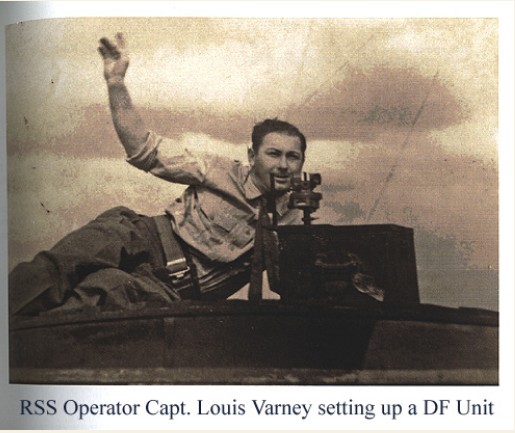
Secondly, it is commonly known that during WW2, British amateur radio licenses were cancelled for the duration. Virtually unknown is that an elite group of nine selected operators were authorised to take part in ‘Plan Flypaper’.
They were granted restricted transmitting rights and given G7 call signs. Captain Louis Varney was issued G7FJ. These operators were mandated to communicate only in CW on the 80, 40, 20 and 10 m bands.
Another example of ‘Morse with a Purpose’, if ever there was one, but this was an abortive attempt by RSS to get German DASD amateur operators who had retained their AR licences throughout the war to divulge tid-bits, and also to provide a comms channel with Britain for any who wished to change sides.
The twenty-three rules imposed on the Brits were stringent, e.g. weather was never to be mentioned for obvious reason. cf.
Https://qsl.net/zl3tk/flypaper.pdf After demob in 1946 Varney modified a 1937-design multiband antenna for optimum performance on the 20 m band in his small back yard.
The design was first published in 1957, after which the so-called GSRV antenna became very popular but has forever been misrepresented.
If you have an article or two that you think might be of interest to our readers, please let me know so we can share more thoughts and ideas; for guidance on writing for RagChew, see Articles below. Please email material to Mark VK2KI: cqqrsnet@gmail.com

On My Workbench
HexBeam – Even More Ugly Than Usual
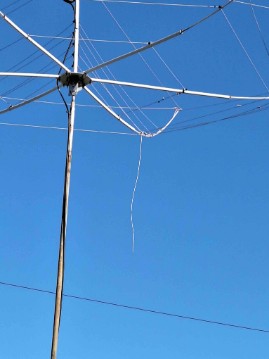
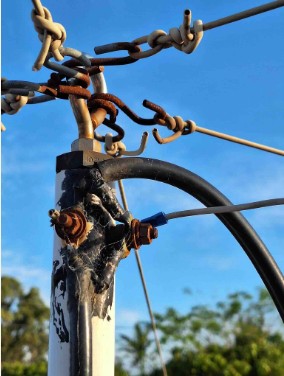
From David VK6KD So my 20m Rx signals were nonexistent on the previous Tue night’s sked. I think I found at least one reason other than the solar flare. There was some wind damage to my six-band hexagon beam antenna.
This is a regular repair as the wiring lugs don’t like the consistent buffeting from the wind. All home made with scrap materials and some bits from the hardware store. 20m band fully operational again. 73 to all and hope to exchange a QSO with you.
What’s going on on your workbench? If you have an article or two that you think might be of interest to our readers, please let Mark VK2KI know; email to cqqrsnet@gmail.com For guidance on writing for RagChew, see Articles below.
QRZ?
Again this week, we’ve featured one of our team, Wayne VK6NW. Wayne has taker the time to tell us about his recent caravan tour around the Northern Wheatbelt of WA. Thanks mate; nicely integrated transceiver in your vehicle!
The wife and I decided to hook the caravan on and take off to the northern wheatbelt to have a look around and complete parts of the Wheatbelt Way during the trip. The vehicle is fitted with a Barrett 4050 HF with a Barrett 4090 autotune antenna.
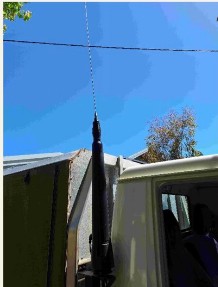
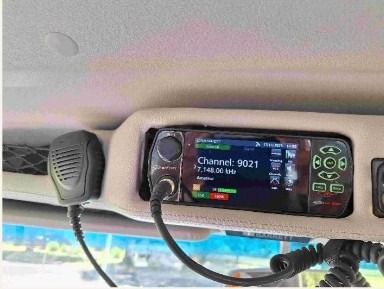
Barrett 4050 HF Radio Barrett Autotune Antenna The radio is mil spec so very hard to break, which suits me. I regularly checked in to the Austravel Radio Network by sending the GPS position via HF.
This can be done at any time (apart from during sked times) so is a convenient way for friends or family to see locations via the Out n About App. That way you don’t have to call into the skeds if it is not convenient (eg Sundowner time etc).
It is also a very good way to check propagation by beacon test calling the various bases around Australia. So back to the trip; from the Wheatbelt Way website (htips:/Avheatbeltway.com.au/) “The Wheatbelt Way self-drive trail will lead travellers on an adventurous interpreted journey to the nine regional communities of Dowerin, Wyalkatchem, Koorda, Bencubbin, Beacon, Westonia, Mukinbudin, Nungarin and Trayning.
It also highlights 24 unique sites ranging from natural attractions to sites of historical importance. There will be many opportunities to stay and experience the best the Northern Wheatbelt has to offer.” Day one we travelled from Bridgetown to Goomalling.
We did a walk around town looking at the sights. An interesting fact about the Goomalling Shire is that only 5% of original bush remains.
Next morning the GoKart track immediately behind the caravan park commenced full operation at 0800 hrs with the obligatory noise and dust, so that was the incentive to move on up the road.
From there we headed via Koorda to Billiburning Rock, about 30KMS north of Beacon, where we stayed for a couple of nights, relaxing and doing some walks.
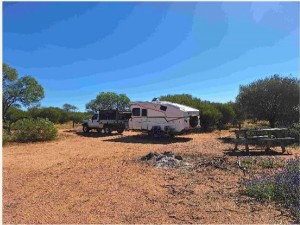
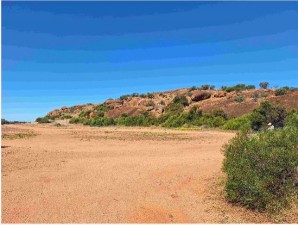
The next stop was Mukinbudin which is a great location from which to do day trips to the various sights. Day 4 places visited were – Wattoning Homestead site and gnamma hole, Elachbutting Rock, Beringbooding Rock, Marshall Rock and Pergande Sheep Yards.
A long day with a well-deserved Sundowner at the caravan park with fellow travellers.
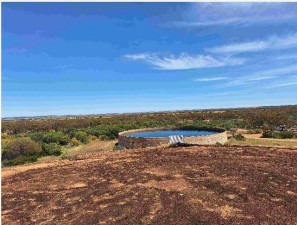
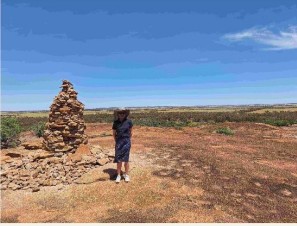
Day 5 places visited were Eaglestone Rock, followed by lunch in Nungarin. Nungarin has a military museum which is well worth visiting.
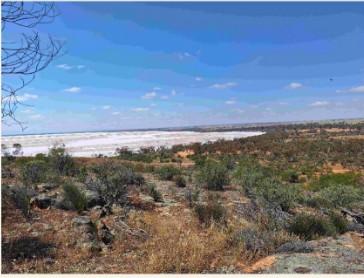
Each of the Rocks have well appointed free campsites with various facilities. Whilst I did not have CW fitted to the HF rig (yet), I had a number of amateur radio contacts throughout the trip, as well as Austravel and VKS737 contacts. Regards, Wayne VK6NW
QRZ? Who’s on the other end? From your editor Mark VK2KI / VK6QI Key to the success of our net is helping to make it a get-together that people enjoy returning to each week.
But when you’re on the key, it’s really hard to find out a bit more about the person you’re chatting to. So I’m really keen to share the backgrounds of some of our team members or interesting stories – it’s really nice to know who’s on the other end of the QSO.
How did they come to amateur radio and when, and what on earth was the motivator that got them interested in CW? How’s the journey been so far, and what’s planned? Perhaps, what they get out of the net and the newsletter, and how it can be made better?
Or maybe like Mike DL3YZ last week and Wayne this week, interesting things that you’ve been up to that others might like reading about. So, would you be willing to share some thoughts about yourself? Please let Mark AJLAZOV/I I a a SO Ge Se
QRZ? Who’s on the other end?
Head Copy Practice
Anyone who is just starting out with head copy should look at edition 23 – 2025 where we first started with Winnie the Pooh recorded at 12 wpm.
In edition 23, and for a few following Newsletters, there are instructions on how to use these files, and edition 25 – 2025 has information on the Ditto CW : Morse Player app. This week we have the first part of Wind in the Willows Chapter 9 — Wayfarers All.
Itis suggested that you read the text file before listening to the audio file. That will make it easier to follow the audio file and prepare you for any unusual words. The MP3 files have been recorded at 16 wpm and 650 Hz tone.
If you prefer a slower speed or different tone, you can create your own MP3 files by converting the text file with the Ebook2CW app — https://fkurz.net/ham/ebook2cw.html. Because of MailChimp’s size limits, I’ve split Chapter 9 into 5 parts.
Each part is over 1 hour playing time @ 16 wpm. Parts 1 and 2 are attached below. Uncommon punctuation has been removed (the Ditto CW app doesn’t recognise some of it), and contractions have been simplified (for example, we’ll becomes we will).
This week’s attachments are: * Chapter 9 parts 1 and 2 MP3 files * Chapter 9 in one text file
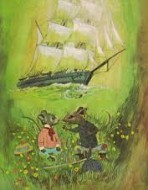
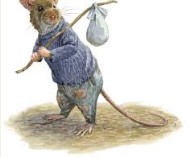
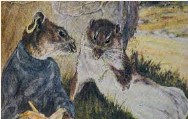
You can either play the MP3 files in any media player, or load the text file into the Ditto CW: Morse Player app — https://dittocw.andro.io/. Both options work well, however Ditto CW gives you complete control over all Morse settings, while a normal media player only allows changes to playback speed, and does that in steps (e.g. +1.25x, 1.5x, 1.75x).
Other News
Settle to Carlisle Railway, Week 10 Report
Vettie to Varilsie maliway, VeeK IV heport
From Stan ZL3TK Last week two more tiny villages gave up some of their secrets in the liquid-hop department. An inspired answer correctly pointed out business was not as brisk as i could be in Kirkoswald, one public house we planned on visiting was temporarily closed.
Oh boy, it’s getting exciting now! Ever heard of Armathwaite? This week the penultimate STC QNC NRO9 takes us to two of Armathwaite’s public houses. No danger of intoxication, it’s the physical features we’re exploring, well, at one of them anyway.
And the level crossing north of the station has some interesting statistics: 35 trains and 297 road vehicles pass over it every day, that’s 3.794 million potential crashes per year, yet there has never been any, not even one in the entire history!
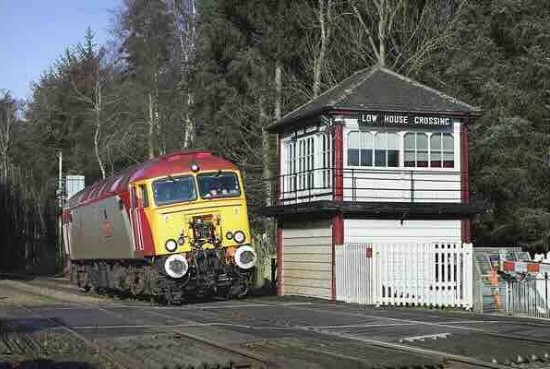
Ruth ZL4KA, voluntary contest auditor, is finding the marking an interesting task anc is doing rather well. Before marking the QTCs she’s had to research in order to make educated judgements, in the same way contestants have had to.
It’s looking like a very fair regime to me and we’re all learning a lot about the green and pleasant land that is rural England. 73 de Stan ZL3TK
Northern Victoria Travels
From Peter VK2GN Hi Mark, I received, and am reading with interest, your latest publication. It was with interest that I read that you and yours have been camping in northern- central Victoria.
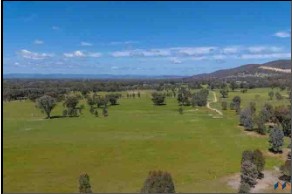
Ruth, my wife, and I have also been holidaying very close by – just near Greta, at Upper Lurg. What a picturesque area – although they could do with a little more rain just now.
When we finally return to Crookwell, one of my first jobs is to complete the installation of my OCFD antenna. Then I can finally join the Tuesday session. Cheers for now Peter VK2GN
Spring VHF-UHF Field Day – This Weekend.
The Spring VHF/UHF Contest will start on this Saturday, 22ND November, and run through until Sunday 23RD November – details here: https:/Awww.wia.org.au/members/contests/vhfuhf/documents/2025%2 OSpring%20VHF-UHF%20Field%20Day%20Rules.paf Even if it’s too late to get out and have some CW fun, perhaps have a listen around – you never know what you might hear – and if you can transmit – they’ll certainly appreciate the call.
Perhaps try a CW invite – you never know!
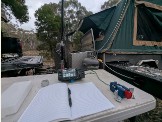
Https:/Awww.wia.org.au/members/contests/vhfuhf/documents/2025%2 OSpring%20VHF-UHF%20Field%20Day%20Rules.paf Even if it’s too late to get out and have some CW fun, perhaps have a listen around – you never know what you might hear – and if you can transmit – they’ll certainly appreciate the call.
Perhaps try a CW invite – you never know!
Morse Training Net
Our team member Nic VK7WW runs an on-air Slow Morse training net every Wednesday at 7pm EDST on 3580 for 30 mins. He uses the callsign of the Northern Tasmania Amateur Radio Club VK7TAZ on that net.
Many of our team learned Morse code with the support of Nic, and the weekly training session comes highly recommended for anyone who wants to learn the Code, or simply brush up.
Everyone’s welcome – 3580KHZ at 7pm Eastern time every Wednesday; you’ll hear lots of the CQQRS team on that net. Jordan VK3ACU has recorded the complete set of lessons which you can now find here:
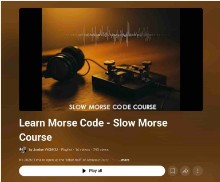
Https://www. youtube.com/playlist?list=PLHsQmZz6fBXO7swAfbT mutrbbEL17fUQL Contact Nic VK7WW for more info nicholaschantler@hotmail.com including how to join the NTARC DISCORD group to follow the action, or just come along and join in on Wednesdays.
CWops CW Academy
From Chris VK3QB Good morning Mark, Its really positive I’ve had a fair bit of interest in the CWA classes. They’ll definitely be kicked into play in 2026.

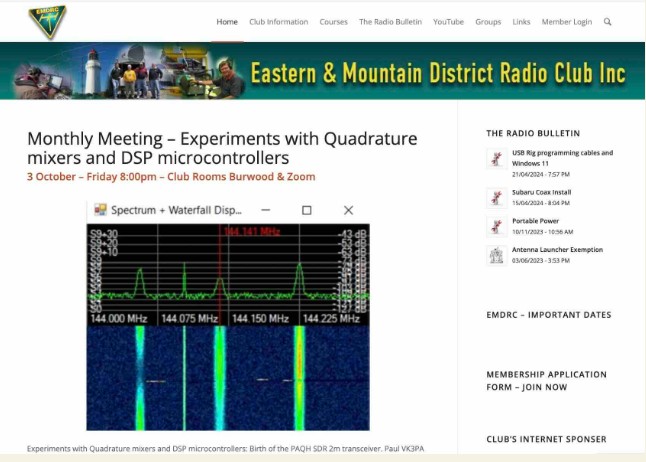
CW Ops News for 21 November 2025
Well, my wife and I had a great time in ZL. I managed only one session on-air and only one QSO with Andy VK3OU. But signals were good and it was a fun QSO. I was using an Elecraft KH-1 (5W) and PAC-12 portable antenna.
We were also fortunate to meet Chris ZL4CTS and his wife, Viv who live in Te Anau. Interest in the CW Academy Classes scheduled for January 2026 has been excellent.
I’ll definitely be holding a Beginners Class and am looking at how I can sort out the logistics for an Intermediate Class as well. If you haven’t yet registered, read on and complete the online survey.
MuthRusters

With apologies to the real MythBusters, I wanted to bust a few myths and challenge a few long-held axioms — some of which have held many of us back as we have learnt and developed our CW skills.
Myth: Morse Code is very difficult to learn Fact: Morse Code is NOT difficult to learn if proper methods are employed. Some people will learn faster depending on their background, health, and personal situation.
Myth: I am too old to learn or improve my skill in Morse Code Fact: Almost anyone can learn and improve Morse Code skill if they are willing to do commit to a training plan with proven methods.
In fact, there are a lot of credible studies that suggest learning a second language (including Morse Code) is a great way to delay or slow aging diseases such as dementia. Myth: Memorising all the Morse Code letters and numbers is the only way to learn
Courses are eight weeks long and no matter your level, you’ll come out the other side with better skills and more enjoyment from the code. CW Academy is immersive, engaging and fun.
DABS peel Ne NA ee SAT EN NAOMI There will definitely be a Beginners Class — commencing 12TH January (pending confirmation) and running for 8 weeks. I’ll almost certainly be running an Intermediate Class as well. Email me if you’d like more information.
As always, if you have any questions or feedback, please drop me an email. 73, Chris VK3QB CW Ops OC Ambassador vk3qb@hotmail.com or vk1cwo@outlook.com
If you’ve read something that you think might be of interest to our readers, please let me know. For guidance on writing for RagChew, see Articles below. Please email material to Mark VK2KI: cqqrsnet@gmail.com
Readable Five
What have you been reading lately? Compiled on the track somewhere by John VK2RI
Sapiens by Yuval Noah Harari
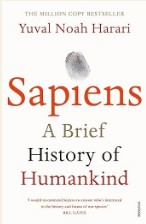
Sapiens by Yuval Noan Harari From your editor Mark VK2KI / VK6QI In my CQQRS Net report above, I mentioned that Elizabeth and I are reading Yuval Noah Harari’s latest book Nexus.
Elizabeth and I read books aloud to each-other – not only is that a nice way to share time (we don’t ever watch broadcast TV – we don’t even have one hooked up), but it helps improve my slow reading / comprehension speed.
Nexus is a fascinating and concerning future-looking take on humanity, dealing with the world’s problems in 2025 – politics, conflicts, the full works – and explains them with amazing clarity for lay-readers like us.
But I wonder whether the new book may be slightly challenging for the first bite at reading his work? Perhaps you might find his first book Sapiens to be a good lead-in?
In Sapiens, Yuval Noah Harari traces the journey of humankind from unremarkable animals on the African savannah to the planet’s dominant species.
He argues that our true superpower isn’t strength or speed, but the ability to create and believe in shared stories – religions, nations, money, and laws – that allow vast numbers of strangers to cooperate.
The author breaks human history into key revolutions, beginning with the cognitive revolution, when early humans
Developed complex language and imagination, enabling myths and culture to flourish. From there, Harari explores the agricultural and scientific revolutions, showing how each transformed society and the human experience – often in unexpected ways.
Farming, he suggests, may have domesticated us as much as we domesticated wheat, while the modern pursuit of knowledge and technology has reshaped everything from economies to ethics.
Throughout Sapiens, Harari encourages readers to step back from the everyday and look at humanity with an almost anthropological detachment, prompting thought about who we are, how we got here, and where our collective stories might lead next.
If you’ve read something that you think might be of interest to our readers, please let me know so John and I can share more thoughts and ideas. For guidance on writing for RagChew, see Articles below. Please email material to Mark VK2KI: cqqrsnet@gmail.com
Or do you have a question or two that are worth sharing? How about a discussion- starter? Please let me know cqgrsnet@gmail.com and I’ll pass them to John VK2RU for compilation each week.
Prosign/Character/Signal of the Month
[Suggestion – put it on a sticky note near your key as a reminder for Tuesday. Tell us how you went!]
I Hear Tell…
Which one of our team travelled 16,500 km around the world and brought all the goodies for three months touring in Australia. Transceiver, antenna, key etc – all good to go! So a small diversion of 2,500 km to New Zealand should be pretty painless right?
Getting ready for this week’s CQQRS net…. transceiver, mast, all good…. but wait! Oh no…. the antenna and the paddle got left behind in the motorhome back in Brisbane! Bugger!
Quick CQQRS WhatsApp note to Nev ZL2BNE over in Blenheim, about 90 minutes away – help! Nev found a quicker solution for our adventurer, and put him in touch with the President of the Nelson Amateur Radio Club….
Will it all come together in time for this week’s net? We’ll see.
| hear that Doctor Donald VK6JDM has retired – again. This time from the University of WA’s medical campus at Kalgoorlie. If any readers want his new email address, please let me know cqqrsnet@gmail.com and I’ll forward your request to him.
Best wishes for retirement number 2 (…3, 42) Donald and I hope that unlike some of us, retirement actually gives you more time to do fun hobby things.
[If you have some intel about other team members… or even yourself… that’s worth sharing, please let me know cqqrsnet@gmail.com J
Di-dah-di-dah-ait
So back to the CQQRS Slow CW QSO practice net
Next Tuesday’s Net
Our CQQRS Group will be on as always on Tuesday from around 0600Z until about 12002; see https://bit.ly/CQQRSWebsite and navigate to the Net Details page for details.
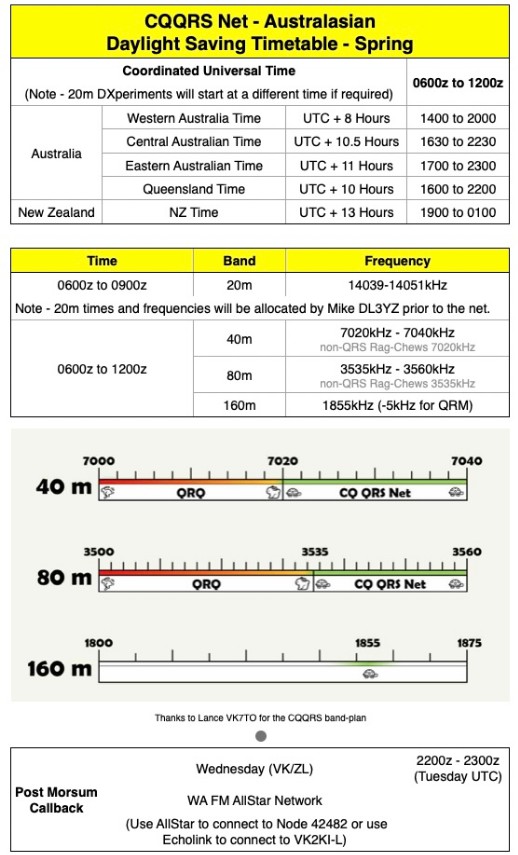
Doesn’t matter whether you’re brand new and want to try just exchanging callsigns and RST reports, or you’re ready for a good old rag chew. We’ll have fun.
There’s usually people around until after 1200Z – so keep calling in the segment of the band designated in the table below until you catch someone.
I should be on as usual from home in NSW or via the Remote at Bedfordale WA, and I’ll also be watching the proceedings using the VK6QS and Tecsun SDRs in WA and NSW respectively. Hope to hear you there.
Reports & Photos
Please let us know via our Reports form bit.Jy/GQQRSNET who you work or hear on Tuesday’s Group. The report form closes at lunchtime (Eastern Australian time) on Thursday. ‘And how about helping to make the reports even more interesting by sending a photo?
If you have a photo that you’d be happy to include, please email it to: eqqrsnet@gmail.com To make it even easier for our Reports editor Patrick VK2IOW, see if you can reduce the size of the image (to less than 100KB file size by preference).
No problems if your computer or phone can’t do that – just send it through anyway please. And of course, I’m always on the lookout for more photos for the newsletter, so if you have something that might be of interest aside from the reports, please send it through as well – I always enjoy the photos that our readers send – and I’m sure our readers do too.
Email them to cqqrsnet@gmail.com please (reduced size if possible – but whatever you send will be great). Oh and by the way, I recommend that you don’t keep the Reports Form website open between submission of reports from one week to the next.
If you’re unlucky, there’s an undocumented feature in the software that could cause your current week’s report to be combined with your previous report – it’s happened to your editor several times – much to the chagrin of our Reports editor 🙂
Post Morsum
Richard VK6HRC will run our phone Post Morsum on the South West AllStar net (via repeaters and hotspots all over WA) from 0600 WA time, then from 0700 WA time on 80m (8605 LSB).
See https://bit.ly/CQQRSWebsite and navigate to the Net Details page for details of how you can connect via Echolink or even possibly via your local FM repeater.
The newsletter is interesting to readers because of the material contributed by so many people – be it the reports each week or the various articles. Could you write a short article or articles for RagChew? You bet! Writing not your strong point?
Don’t worry, I’m very happy to help as much or as little as needed. Here’s a thought – although our readers will much prefer your own writing, perhaps have a go at using a Large Language Model Artificial Intelligence tool such as ChatGPT, Microsoft Copilot or Google Gemini to check your writing or even to actually draft the whole article in a relaxed easy-to-read manner!
You can find out more about how to do that on the Newsletter page on our website bit.ly/CQQRSWebsite. Our website also includes a suitable prompt (the command you feed to the Al to make it do what you want).
Please remember though – you must fact-check anything that an Al tool drafts for you because Als ‘hallucinate’ – ie if an Al can’t find what you’re looking for, it will make up an answer and present it as a fact!
This is one of the dangers of using Als – it’s quite probable that the tool will create a very readable and convincing draft that is 100% wrong! You as the submitter are responsible for fact-checking.
But it’s a learning experience – please let us know how you went if you had a go with this new generation of tool. And by the way – lam very concerned about our future in a world of Al – but I’m pleased to see that school and university curriculums now focus on understanding the risks – for instance, kids are now learning critical thinking something that used to be taught mostly at post-graduate level.
When the typewriter was invented, people predicted the downfall of handwriting; when the word processor was invented, the art of writing was thought to be on the way out – ditto for the spreadsheet and arithmetic, AM, SSB and FT-8 for amateur radio etc.
We can ignore Al and hope that it just goes away… or we can learn to handle it through experimentation and use. For more guidance on writing for the RagChew newsletter (including help with using an Al), head to our website bit.ly/CQQRSWebsite then click the menu on the top right and then click RagChew Newsletter.
Material
Areminder; if you send me any information by email, our report form or WhatsApp I unless you specifically state that material is not to be published, I’ll assume that you’re happy to see your thoughts in the RagChew newsletter.
Teamwork
Thank you so much to our team of 33 contributors: DL3YZ, G7BED, MONNK, VK2GAS, VI2IOW, VK2LDJ, VK2RU, VK2WP, VK3ACU, VK3ALC, VK3CAL, VK3DRQ, VK3ECH, VK3FG, VK3KLE, VK3QB, VK3WOW, VK4PN, VK5AO, VK5FD, VK5KFG, VK6HRC, VK6JDM, VK6KD, VK6KHZ, VK6NQL, VK6NW, VK6WE, VK7JZ, VK7ME, VK7TA, ZLSTK, ZL4CTS.
And a special thank you to our editorial team, Nigel G4RWI (head of software development… but I hear, hoping for a pay rise), Patrick VK2IOW (the wrangler of your reports), John VK2RU (Chief Head Copy Officer), Richard VK6HRC (Western Cat Herder) and Lance VK7TO (technical wizard).
Great work all! And if you want to have a non-CW chat to your RagChew editor on air, you’ll often find me on the VK6 AllStar network.
Easiest way to access the network is using Echolink via my AllStar node – use Echolink on your computer or phone then search for VK2KI-L. Connect and give me a call – either callsign works – if I’m in the shack Vl hear you.
Alternatively, if you’d like a bit of a laugh, tune in to my community radio programs The Vineyard Selection and Your Shed on YassFM between 1pm and 5pm Eastern Australian time. Send me an SMS or WhatsApp message to say g’day if you’re listening.
You’ll be able to hear YassFM on your smart speaker, the various broadcast receiving Apps on your phone, the YassFM website https://www.yassfm.org/ or by clicking here: https://playerservices.
Streamtheworld.com/api/ivestream-redirect/2YAS.mp3 UY CW on Tuesday, mb. Mark Bosra VK2KI/ VK6QI Beautiful South Bowning NSW

From Peter VK3WOW quoting VK3MJ: “The faster they send, the less they have to say!”
About the CQ QRS Net
For the current schedule and more information about the CQQRS net, please go the the Net Details page on our website:

The opinions expressed in the RagChew newsletter are those of the individual contributors. The opinions do not necessarily reflect that of the editor or of the CQ QRS Group members.
Any material and images received from members by the editor or published on the CQQRS WhatsApp groups may be published in this newsletter unless specifically requested otherwise.
The values, doctrine and guidelines for the Group and for the newsletter are published on the Principles page of the group’s website https://bit.ly/CQQRSWebsite