Below is a reconstruction of the 2025 41 CQ QRS RagChew newsletter designed to support full text searching. This reconstruction was built using OCR, and will contain errors.
To view the Mailchimp original, click here. To search the entire newsletter archive, click here.
Contents
- CQ QRS RagChew
- Masthead Image
- Reports
- Website
- Post Morsum 8th October 2025
- This Week’s Topic of Interest
- Making CW your easy listening station of choice.
- Receiver Incremental Tuning (RIT) to the rescue.
- On My Workbench
- Head Copy Practice
- Compiled on the track somewhere by John VK2RL
- Other News
- Update from Chris G7BED
- Maritime Radio Group on Facebook
- WIA Chris Jones Award
- Using the Reverse Beacon Network
- Morse Training Net
- CW Ops News for 9 October 2025
- CW Ops
- Support
- The Journey Continues – Whitsunday Islands On Air
- Hi Mark.
- CW Settle to Carlisle Railway Challenge, Week 4 Report
- Watchable Channels
- Prosign/Character/Signal of the Month
- Di-dah-di-dah-dit
- Next Tuesday’s Net
- Post Morsum
- Articles
- Material
- Teamwork
- About the CQ QRS Net
CQ QRS RagChew

The propagation gods sure were smiling on Tuesday’s CQQRS Net this week. So many people having so much fun! Thank you all for being there, and to those who managed to submit a log – an extra dit-cit. This week’s edition is yet another bumper job!
Rob VK3ECH at up at the Whitsundays tells us about his 2-1/2 hour climb to get signal coverage to submit his CQQRS report this week, and we find out that we may have had yet another first- ever CW QSO on our net this week; I’m standing by with the hallowed First CW QSO Award at the ready.
Donald VK6JDM’s report is a crack-up once again, and he even addresses Jon’s question about the K- and M- beacons we can hear on 40m.
This week, Lance VK7TO takes us on another journey into the bowels of our CW receivers and discusses the resolved tone frequencies, and also from the far South, James VK7JX gives us the good-guts on his new JPC-12 portable antenna.
These outstanding articles, the terrific reports from our Tuesday net reporters and a whole lot more await your reading leisure.
Masthead Image
Thanks this week to Rob VK3ECH who’s continuing his adventures on his yacht up in the Whitsunday Islands Queensland. Rob has sent us some nice photos – see below. Tough going from the looks of things Rob.
Reports
After next Tuesday’s Group, please send me a list of who you worked and / or who you heard using our web form here:

To make your report more interesting, please consider sending a photo to be attached. If you have a photo that you’d be happy to include, please email it to: cqarsnet@gmail.com To make it even easier for Patrick and Mark, see if you can compress or reduce the siz of the image (preferably to less than 100KB file size).
No problems if your computer or phone can’t do that – just send it through anyway please. So, please help attract new and old team members to have a go by submitting your report each week. Submissions close 1300 (Eastern Australian Summer time) on Thursdays.
Website
If you’d like to find out a bit about our net, or would like to pass information to others about our Tuesday get-togethers, here’s the link to our website.
Bit.ly/CQQRSWebsite Cheers, mb Mark Bosma VK2KI / VK6QI Beautiful South Bowning NSW cqqrsnet@gmail.com non impsditi ratione cogitationis
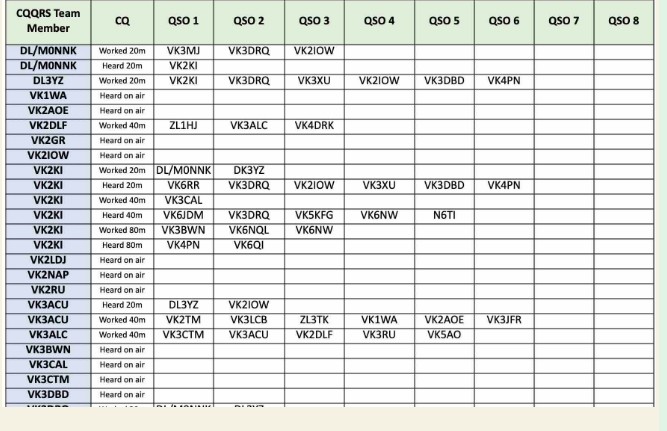
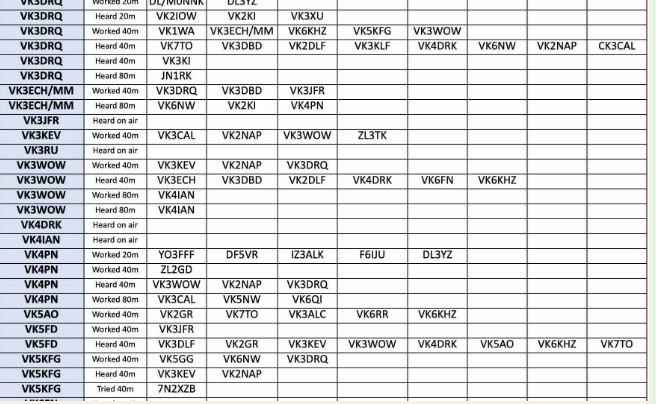
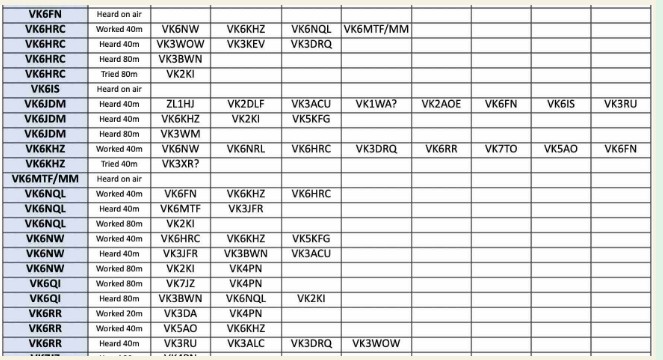
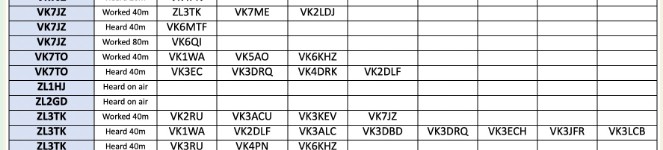
The spreadsheets above show the known stations on last Tuesday’s Group; the comments in the team members’ reports (Submitted via our webform bit.ly/CQQRSNET ) follow. Thank you one and all for making the effort to submit a oo BERR BARR
This week’s comments from our webform reports have been compiled for us by Patrick VK2IOW; thanks Patrick.
[80m] I was very pleased to work Mark VK3MJ, but the signals on 20m today were all strong and clear. Thanks, chaps – you make it feel easy.
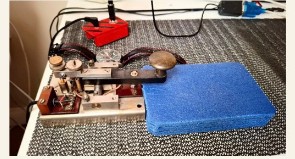
80m] lello and greetings from Germany. Today condx were ne, the DX window opened a bit later than usual. Ross nd I were sharing my radio here in Stuttgart. It’s lways nice to have a guest on my radio.
After taking ver the key, I was constantly busy, so I decided to ork a little overtime. Thanks to all the stations calling 1e, it was a great pleasure.
When Sava VK4PN called 1e at about 8:00 UTC, the DX window was already losing, and a lot of noise kicked in on my side. So I fasn’t able to copy all of Sava’s great fist. But enough
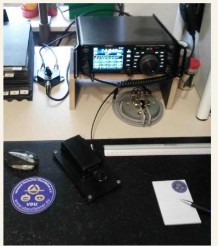
[40m] Fantastic noise-free conditions with no QSB, truly a gift from benevolent HF gods. Two contacts were stations with Settle to Carlisle traffic – excellent work.
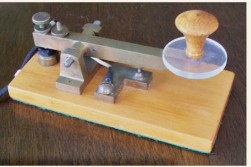
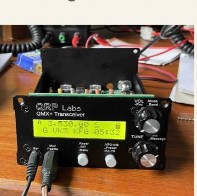
[40m] Using the (brilliant imho) QRP Labs QMX+ again, having spent much time exploring its menus and many different settings. Managed to reach Wayne in Bridgetown, Manny in Blackburn but not 7N2XZB in Kawasaki City.
[40m] Due to the east coast doing a Morris Dance with Father Time, the eastern stations came up a bit later but when they did, conditions were good. Had another great chat with Greg who was using 5W.
[80m] 80m conditions were OK, with very little QSB. Hada very nice chat with Mark with references to how much better the CW gets when fortified with a nice shiraz. Sz
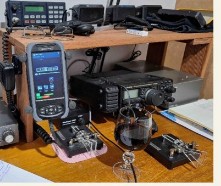
[40m] Was a fun night working, Manny VK3DRQ, David VK3DBD & ) James VK3JFR though signals not all that strong up here but # good copy even amongst the bumps and clangs onboard the yacht with a bit of swell coming through the anchorage in Cid “ Harbor on Whitsunday Island.
It all makes receiving all that little bit more challenging.
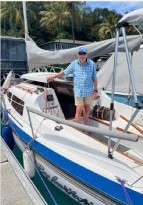
[80m] I’ve just scaled Whitsunday Island Peak a 2.5hr trek to get phone service to submit my log. The views are quite stunning and definitely worth the effort. [OK Rob – you’ve qualified for the inaugural Log Submission Effort of the Week award!]
20m] /asn’t it terrific on 20m on Tuesday? So much wr Ross and Mike doing just 30 minutes each n Mike’s Remote station…. so many people to ave a Chat to! he band was open well enough on the long- ath for me to enjoy a comfortable QSO with oth people…
And gently discourage the other >in to the frequency we were usina. I quess
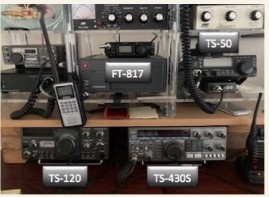
Mike and Ross are pretty good at sending our prosign of the month
Conditions were so good, that when I disappeared into the kitchen to start making dinner, I disconnected the headphones (which I always use on CW) and I could comfortably read the conversation in the other room, even while chatting to Ms Elizabeth (yeah I know…
Living on the edge a bit there!). Great fun was had by so many.
[40m] When I came back after dinner, 40m was jumping. So much DX! I heard Donald VK6JDM calling Calvin VK3CAL, but it sounded like Calvin wasn’t hearing our Doctor.
I ended up having a chat to Calvin, who was having fun learning to use his brand new TNFEEON paddle. I had to ask him to repeat the name… and Im hoping he’ll send us a photo so we can learn a bit more about this new one.
Manny VK3DRQ took over after me – great to hear our new CQQRS family member Calvin having fun on the net. also came across a beaut rolling rag-chew between Greg VKSKFG at Willunga and Wayne VK6NW at Bridgetown. More people enjoying the art of QRS!
Before slipping down to 80m, I heard a big signal from a Californian station, N6TI. From what I could see of his QRZ.com page, judging by the scale of a couple of images of him on a tower, I think he may have been using a six element Yagi on 40m!
Have a look, and see why you think – compare his body size to the tri-bander above him, then compare that to the huge Yagi on the other tower! He probably wasn’t QRP either. No wonder he was romping in while chatting to a Japanese station.
[80m] At around 1130Z I had a listen on 80m; it was pretty quiet. The VK5PH KiwiSDR. network at Ironstone Range was chock-a-block, and I couldn’t get in to any of the three receivers for the rest of the night.
However I called CQ on 3555KHZ and was rewarded by a response from Ketut, VKSBWN at Keilor East. I couldn’t remember working Ketut on 80m and did a check back through my log…
It turned out that I hadn’t worked him at all – despite his being a regular on our net for years! Just shows to go eh? I also hooked up with Peter VK6NQL at El Caballo Blanco land (you have to be a Sandgroper older than a certain age to know about that WA icon) Chidlow.
After that, Wayne VK6NW at Bridgetown and I enjoyed a nearly QSB-free chat before I changed callsigns and reverted to the VK6SR Remote.
[20m] Unfortunately the Southern Electronics Group VK6SR Remote at Jandakot wasn’t playing the game when I tried to check for long path signals this week. Like las week, I could twiddle some of the controls, side-tone worked….
But I couldn’t actually switch the FT-991a transceiver on (I’d found that it works better when switched on).
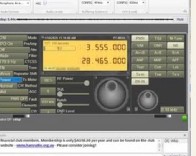
{KAAS I I sent a quick SMS to Rob VK6LD about the Remote station and after he did a re- boot, all was well. I hooked up with James VK7JZ in Hobart who was hearing me ok despite the noise level.
However, the propagation gods then stopped smiling, and James reported via WhatsApp that I’d faded into the noise suddenly.
Instead I rounded out the night with a late QSO with Sava VK4PN at Mount Ommaney before padding quietly off to bed, trying not to step on our mobile speed- bump cat. A fun night for me, that’s for sure; thank you all.
[20m] had two nice QSOs — with Ross, MONNK and Mike, IL3YZ. Conditions were good and I used the QSOs Oo compare my large horizontal loop (160 metres ong), with the 3 element yagi. On receive the signals seemed a similar strength.
However on ransmit Ross and Mike said the signals were about I or perhaps 2 S-points stronger on the yagi.
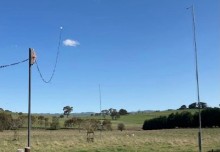
[40m] Seemed to be quite a few DX stations audible on “our” part of the band, and some of them decidedly QRQ. How dare they!! :}
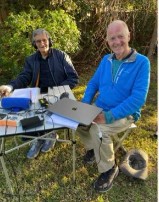
[40m] Really enjoyed the CQ QRS net this week. I could hear Sava VK4PN on 20 meters, then moving to 40 meters a QSO with Stan ZL3TK who was also kind enough to follow with an email to fill in the gaps I missed and offer some tips.
I was thrilled to get call from Ron VK7ME, it was short but very sweet. Ron is undertaking the beginner class and we had been chatting for a few weeks about when we were Sa a Rs Sel Vea ait ole Hes 5 a net ee
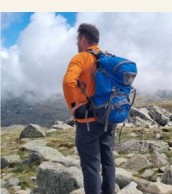
Lr 5 a ii iF as 8 is al hi Not ea Na Ot ay at Rd ig Nena te CN aaa RA Ot ICR NT as oda oN ad unexpected. I will let the hint out, Ron lives about 400 meters from my QTH so we could probably do CW on a fraction of a sneeze.
I then had a good long QSO with Jared VK2LDJ. Might have been long because my sending and copy was slow but we chatted about antennas, radios, noise situation and of course the weather, it was cold and blowing a gale here in Hobart apparently warm for Jared in Queenbeyan.
I then managed to score a QSO on 80 meters with Mark using VK6QI listening to the dah-dit-dah against lots of background noise. It was hard work for me but probably a exercise in real life conditions.
Its a bit harder than listening to clean recordings, or clean files on a training program I am taking a ‘glass half full’ approach to that one, a couple of weeks ago I could not do 80 meters from home, now I can.
Right then, Semates Piied GODOT Poa pe Spee OTT I Way ace a eee cay
[40m] This week was off to an slow start and it’s still noisy after 1800 WST, but the signals are in there.
[80m] it’s a quiet band these days 🙁 – so up for the odd week-day contact?
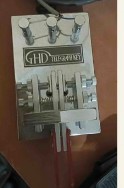
[40m] Managed to have a quick QSO with Ron and Mait then had to QRT regretfully.
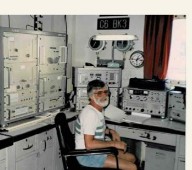
[40m] 40 was jam-packed, I could hear a great signal from ZL1HJ and was just about to repl when the local jamming service started up. Now this device puts out an S9++ signal across all HF bands.
It is a 2 kW device supposedly designed to vacuum the floor under the control of Anne who keeps forgetting that it wipes out the HF band at jus tha momaniec I wich it would not The lahel or
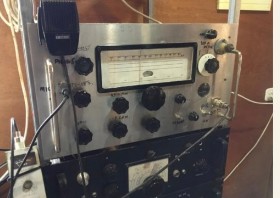
The side says it is a 2 kW vacuum cleaner, but I suspect 1.5 kW at least is consumed in the creation of RF white noise. By the time the jamming service went QRT there was no ZL1HJ to be heard.
I had hoped to have a brief gloat session with him about the Bledisloe cup which of course has remained in the hands of the superior islanders to the ease for 23 years now.
Pethaps it is best that we did not end up able to discuss such a thing, as there is, I gather, some unwritten rule about no politics, no sex and no religion on the bands; Bledisloe Cup for us Kiwis is at least 2 of these.
Now talking of unwanted signals on the band, a contributor a couple of weeks ago asked about the slow morse single letter station he heard on 7.039MHz. There are actually a cluster of these single letter stations spaced 100 Hz apart.
The signals originate in Russia and are felt to be low power naval propagation beacons. They have been there for many decades.
There are, surprisingly, folk who are more nerdy than those who communicate with CW, who have spent a great deal of time locating these beacons and trying to determine their full purpose.
Perhaps they are there to make us think they serve a purpose, in which case Putin’s mates may actually have a sense of humour. Finally Mark, your award is well deserved.
I cannot conceive of anyone else who could have marshalled so many to use a slow antiquated means of communication on a regular basis and to convince them they are having fun (which they are).
If someone had asked me if I would build a dedicated 40/80 CW transmitter a year ago I would have told then they were mad. Now I am working on a 20 metre Tx to try to.
Chat with our European members and I am fearful that folk are muttering behind my back that maybe I am finally going loopy. 73
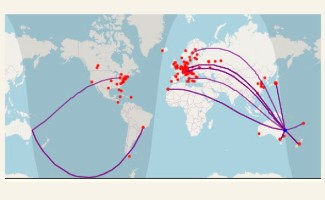
JIT) ot on air around 16:30 after collecting andkids from school. As usual called w CQs to see where I was being >ked up by the reverse beacon twork. By the look of the report INDX seemed excellent but I couldn’t ar anything around 14.045 MHz.
May come back. Yes Europeans were coming back but the wrong ones. Every now and again I would tune around 14.045 MHz just to check and finally I could hear VK2KI working DL3YZ but both signals were feeble.
Managed a QSO with DL3YZ but boy was it difficult there was more noise than signal. Knowing who was at the other end I could manage to copy enough snippets of the QSO for a log entry. Just after 18:00 I moved to 40m for NZCW net check in on 7030 MHz.
Managed to catch up with Kiwis just as net was to shut down.
[40m] Had only a short window for 40m after spending too much time on 20m. Heard a number of stations all engaged in QSOs and with no time to wait I managed just one contact with ZL2GD a mate from NZCW net which I join as often as I can.
Had to quit at 18:30 to look after my aranckids.
[80m] Got home at 21:15 (grandkids duties ) and went straight to 80m my favorite band. There was just a single trace on Araluen SDR at 3550. I guessed that would be VK2KI chatting with somebody and I was right.
Again rather than waiting I tuned few KHz lower and called CQ while observing traffic on 3550. Just to clarify I never use SDR to copy only to monitor. If I cannot copy using my home RX then QSO is not lanitimata Enr tha oantira noring !
Legitimate. For the entire period I spent on 80m band I heard only 3 stations (that is after 21:15), VK3CAI who was putting a huge signal into Brisbane, VK6NW and VK6QI.
Signals from WA were also strong bt so was the noise, so S9 signals had plenty of noise power and copy was not armchair either. I keep harping about lack of activity on 80m and this will be the last time.
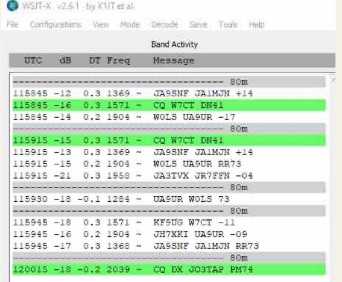
Just to prove the point that 80m is good at night have look at the 60 Sec snippet of FT8 traffic at around 22:00. DX galore!
[20m] We had winds in excess of 80 kph last weekend which my 20 m vertical, after impersonating a yoga instructor for many hours, finally gave up an lay down.
I’m hoping for the wind to ease before the weekend so that I can climb onto my roof and repair it before the weekend’s Oceania CW contest
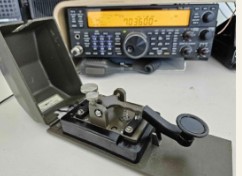
[40m] The 40 m band sounded busy and was pleased to hear several very slow ops. I worked Wimal, VK1WA with a great signal from the ACT, followed by Mait, VK5AO, also a great signal.
Unfortunately, my final contact with VK6KHZ, whose CQ was plenty strong, dropped by the time he tried giving me my report and we were unable to make the contact.
This is the second time we’ve worked, and both times have haan 4 etninnia I atie hana far hattar rAnANANnSG in tha fitira
Evening Mark, hope alll is well on your end? Just sending you a quick e-mail regarding my QSO on Tuesday night with Jim — VK7JZ on 40m. Looks like the submission form has already closed. So thought I’d e-mail you directly for next week’s update.
Btw, I’ll be part of the VKFF Team Championships this Saturday. Will be the first time I’ll be activating using CW, so that will be an experience for sure! Chat soon. Cheers, Jared — VK2LDJ. [G’day Jared.
Thanks for the note; yes, the form closes at 1300 local time on Thursdays, so we can process it into the reports for the newsletter that afternoon. I wasn’t aware of the VKFF Team Championship https://www.wwffaustralia.com/2025.html I hope you have lots of fun.
If the parksnpeaks.org SMS reflector is working ok, !ll try to copy/paste your Spots to the CQQRS WhatsApp Alerts. If you don’t see them on WhatsApp, it may mean that the reflector system is down – and if you have time, you might post an Alert yourself $0 our mob know where you’re on ai]
Post Morsum 8th October 2025
A eee ee ee eee ee a Ne I ee Ne by Richard VK6HRC. Six on the South West repeater and AllStar/Echolink hub this morning. Two checked in before the net VK6MRB Mulligan and Stan ZL3TK
DU CHOCURCYU HI UCIL VK6FN Max VK6KD David VKENW Wayne VK6QI Mark VK1JT John VK6HRC
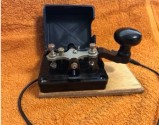
And our short wave listeners. Max was busy on his property and got on later than planned, worked Peter VK6NQL and Ron VK6KHZ on 40m and then went into listening mode enjoying some good code.
David also got on later called on 80m for a while and with no response then tuned across 40m but all had gone quiet by then.
On the upside David had a visitor that had been in the Military as a signal in- tercept operator skilled in CW receiving but not able to send, a common story.
Wayne worked five on 40m and two on 80m and let us know he will be away camping in the Northern Wheatbelt next week. He will be active on SSB whatever that is ! Mark managed to work Ross MONNK and Mike DL3YZ on 20m Ross was using Mike’s remote set up.
Apparently they stayed on longer than planned, enjoying themselves no doubt. On 40m worked VK3CAL Calvin who was taming his new paddle and then on to 80m to work Ketut VK3BWN Peter VK6NQL and Wayne VK6NW.
After that Mark logged on to the remote at Jandakot to operate from WA which needed a reboot by Rob VK6LD to get it to behave and worked Sava VK4PN and James VK7JZ to round the evening off.
John was given a brief description of what we were up to so we might hear from him in the future. He let us know of the SDR Hack RF node with CW ident that he has running, one of his many other projects.
I worked four on 40m and got a bonus Maritime Mobile CW contact with Morgan VK6MTF and on 80m heard Mark VK2KI calling tried getting back to him unfortunately he was not hearing me.
Thank you to all on last night and this morning. Have a great week 73 Richard.

This Week’s Topic of Interest
Making CW your Easy Listening Station of Choice Ice Picks and Sloppy Mud by Lance VK7TO
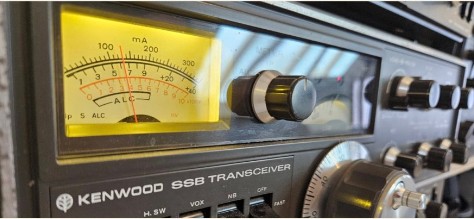
Making CW your easy listening station of choice.
ATI = BNI PA tf A II = PA I AIT I NAIA SAAT By Lance – VK7TO Following on from the previous exploration of how receivers convert a CW signal into an audable tone, we will take the next step in our journey to understand why pre-DSP receivers have a fixed pitch CW tone, and the oft overlooked feature there to ease your ears.
By Lance – VK7TO. Following on from the previous exploration of how receivers convert a CW signal into anaudable tone, we will take the next step in our journey to understand why pre-DSP receivers have a fixed pitch CW tone, and the oft overlooked feature there to ease your ears.
Ice picks and sloppy mud. Some operators love a CW tone around 1,000 Hz, which to me feels like the little people who live in my head are climbing my ear drums with ice picks. Others prefer something closer to 300 Hz.
Between aging, sensitivity, operating conditions and a range of other factors, it’s not just that we’re a pampered lot that we each have a preferred CW pitch. So why can’t older radios change their tone?
Recall that by changing the frequency we mix against an RF signal, we can alter the tone we hear. The issue is that in more perforant designs the Variable Frequency Oscillator (VFO) is used to convert the RF to an intermediate frequency and not setting the BFO frequency.
The BFO uses a fixed offset, often around 700 to 800 Hz. Moder radios don’t have this limitation as the Digital Signal Processing (DSP) extracts the CW signal and generates a synthetic tone at whichever pitch the operator chooses.
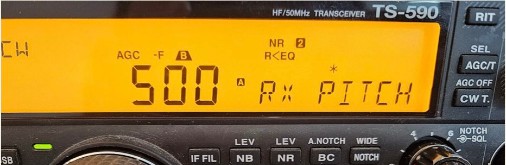
Can’t any receiver adjust the VFO knob for a different tone. Certainly, but in the context of a CW exchange, consider what would happen if two stations, each wanting to listen on their preferred, different pitch were having a conversation.
Every time they changed their VFO to their preference they would be changing their transmit frequency too, inadvertently changing their partner’s receive tone. The partner would then adjust their VFO …; they’d be chasing each other around the band.
If only there were a way to change our receive frequency without affecting our transmit frequency.
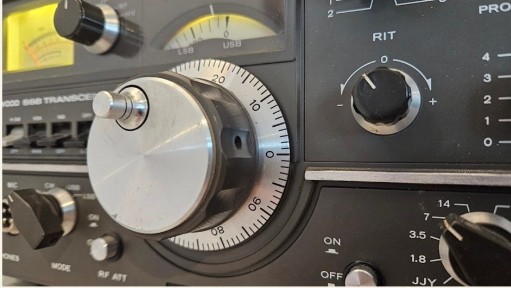
Receiver Incremental Tuning (RIT) to the rescue.
If you have an article or two that you think might be of interest to our readers, please let me know so we can share more thoughts and ideas; for guidance on writing for RagChew, see Articles below. Please email material to Mark VK2KI: cqqrsnet@gmail.com

On My Workbench
On Tuesday 30 October I cut early from work with a plan to attempt my first proper DX CW QSO. It was a suggestion made by Ross MONNK and Mike DL3YZ some
Weeks back. Both quickly jumped on board offering encouragement and some suggestions about how to find a good spot with chances of success.
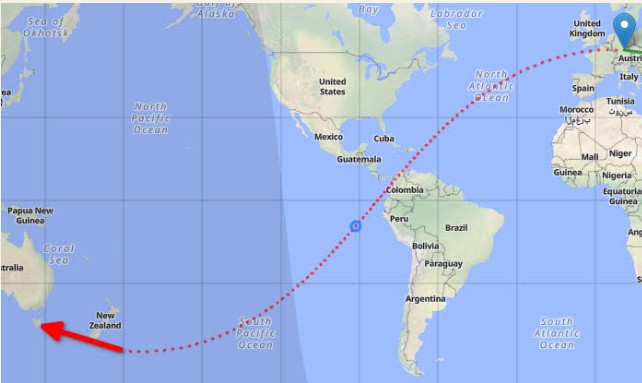
My helpers from the EU even sent me picture of the expected propagation path with advice ‘find somewhere that you have a view of the horizon to the south east Jim’.
A few emails back and forwards and we settled that I would operate portable from the Queens Domain in Hobart.
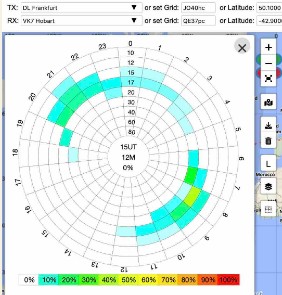
| have a vertical antenna at home however living in the suburbs my QTH is plagued with QRM. I like my bushwalking and SOTA, so all my portable antennas to date had been home made dipoles or end fed half waves as they work well on summits when you don’t know how much room you will have to work with.
In this case I wanted to try out a new antenna I had just received being a JPC-12 multiband vertical available
Online from the usual shopping sites. I had seen some reviews on YouTube and each of the reviewers had rated the antenna for a quick setup, apparently just push the stake into the ground, put the sections together, set the position of your coil and the length of whip, run out a ground plane, connect to your radio and you’re done, now start calling CQ…
So we did that, Ross and I coordinated via email taking it in turns to call each other on 20, 15, and 10 meters. I could not hear Ross on any band, he could not hear me on any band, it became the DX that did not.
Mark was listening on the side and assured me I was getting out and could be heard in VK2 and VK6. I was operating from the bonnet of my vehicle and at one point I bumped my key and I promptly got a message from Mark ‘Did you just bump your key Jim?’, so I think we established the antenna was working fine and conditions were not in our favour for DX.
During setup I had sent Ross/Mike some photos of my antenna arrangement, this led to some after action (or after no action) discussion on my setup with Mark cc into the thread.
Mark then asked I repeat same for a contribution to the CQ QRS newsletter (as he has been known to do).
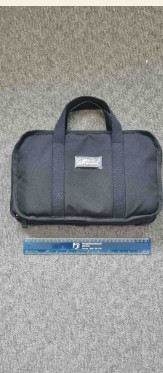
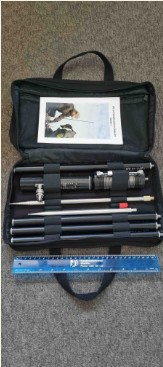
The JPC-12 in the factory supplied kit comes with an aluminium stake, a length of ribbon cable fixed at one end witha ring terminal, then a base for the feed point,
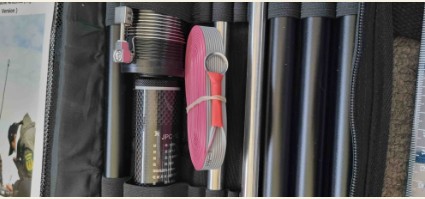
Then 4 sections of aluminium tube, a loading coil used on the 20 and 40 meter bands, then a telescopic whip. The deal is you adjust the loading coil when used on the 40 and 20 meter bands, remove it for higher bands, and on all bands extend or retract sections of the whip to be resonant on the band you are operating on.
The ribbon cable is supposed to be used as the ground plane by separating the individual wires and splaying them out on the ground. Online reviews mention the downside of this ground plane arrangement is that it gets tangled.
I have had to sort a few tangles on summits and it’s not much fun so went looking for a better approach in so far as how to get a radial plane set out, and packed up, real easy and no tangles.
In the attached photos you will see the original kit which included an aluminium spike and the ribbon cable. What I found online (same usual shopping sites) was an alternate arrangement of buying a stainless steel spike with a longer threaded section at the top, this spike comes with a machined disc with 12 radial holes in the disk suitable for inserting banana plugs, which also come with the spike and disc.
The extended thread is longer than the factory example by just the right amount to thread the disc on, then add the antenna base.
I kind of like the stainless spike as perhaps a bit less likely than the aluminium original to be damaged if I had to knock into hard ground with a mallet.
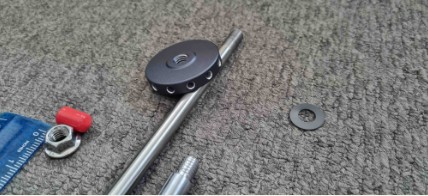
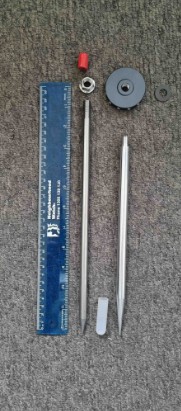
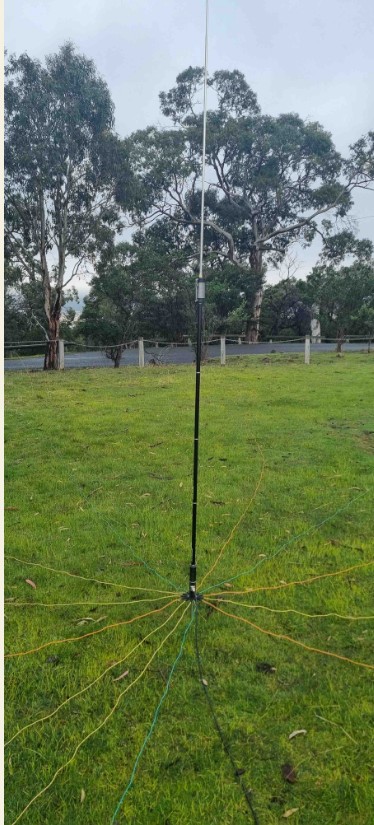
In the photo attached of my set up for the DX attempt with Ross / Mike you can see the 12 ground plane radials set out, and it truly is easy to deal with them quickly, one at atime.
Researching online articles suggested a 4 wire ground plane is OK (2 is apparently OK if you are near water), 6 is better, 8 more better, and then the law of diminishing returns starts to kick.
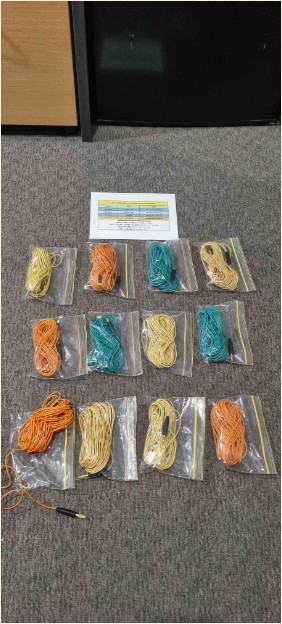
Seeing as I had a disc with 12 holes in it, and 12 banana plugs, I made up 12 radials. In the photo example my radials are a few different colours, it’s just what I had left over
From making dipole antennas, cheap wire marked up as 13 strands x 0.12mm from Jaycar. Online research told me that the radials for a ground plane should be % of the length of the lowest band you are working, then just get them out there, so given the lowest band this antenna tunes for is 40 meters, I ended up with 12 lengths of 10m radial wire.
I read quite a few articles espousing the
Importance of the right radial length for the band you are operating on so I built accordingly and cut my radials in half at 5 meters (being % of 20 meters) and inserted a 2mm RC connector then protected the outside with some heat shrink.
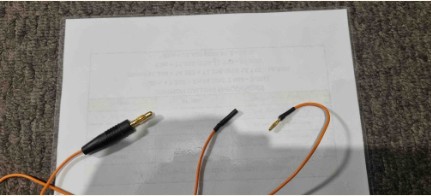
The thinking was if I was changing from 40 meters to 20 meters, I could quickly walk around the antenna, open the connectors and not waste time trying to wind up 5 meters x how ever many radials I put out.
That was my working theory but when I set up the antenna for testing purposes I found that on the 20m band, having out the full length 10m radials was better than 5m radials.
What led me to this observation was there were some CW operators keying away a bit too quick for me (not VK’s) and they were low to the noise and I would argue only workable to someone with a good ear.
Then I reconnected the radials to get the full length ground plane, the signals came up about 2 S points to make them quite workable, but the static floor did not come with them — I suppose I am saying they lifted above the floor a bit with longer radials.
I can’t explain the science of why, but I am aware that location, ground conductivity, and other factors play a part, so I just accepted it.
So, it ‘looks’ complicated, it looks like more work than getting a squid pole up in the air and hang a single wire from it, yet that was not my experience.
I accept if one can find a tree stump, or a post in the ground then it is possible to tie the squid pole to it and you are up. But setting up a squid pole on open ground can be a pain.
This was not the case with the JPC-12, I pushed the spike into the ground, two light taps with a mallet, on went the radial disc, the base, four sections of aluminium tube/mast, loading coil, whip — done in about 1 minute.
The radials I had pre-packaged in little sandwich bags and wound in figure of 8, so I could toss them and they mostly unravelled in flight, no tangles, and a little stretch to lay them out where I wanted on the ground, antenna up in under 4 minutes.
Packing up took a moment longer but was still easy because I could wind my radials up one at a time (no tangles), put them in their bag, do the next one, pack down the antenna sections and it all (including 12 bags of radials) fitted back into the JPC-12 bag.
When I undertook my first test setup prior to the DX attempt I did make use of a NanoVNA to help me adjust the whip length to get the antenna resonant on each band.
I made myself a handy table and the thinking was I did not want to rely upon memory, or want to need to bring the NanoVNA every time I went portable. I thought if I was ‘close’ then the antenna tuner would take care of any changes in
Resonance / ground etc. The fact is if one wanted a perfectly resonant antenna, then take the NanoVNA or antenna analyser with you and leave the antenna tuner at home.
So after all that there was no DX, I spent more time fluffing about getting the radio set up on the bonnet my paddle set up, and having my cheat sheets close at hand in the event of CW brain fade..
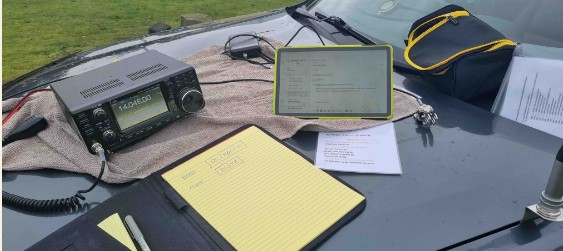
Getting the antenna up was the easy bit, easy to set up and easy to pack down, and I need not put out all 12 radials every time. The JPC-12 is rated for 100W and I think it just became my open ground / parks / paddock / portable antenna of choice.
73 Jim Semmens VK7JZ Hobart, Tasmania (or a mountain somewhere) Email: hobartjim@gmail.com QRZ: https://Awww.qrz.com/db/VK7JZ
What’s going on on your workbench? If you have an article or two that you think might be of interest to our readers, please let Mark VK2KI know; email to cqqrsnet@gmail.com For guidance on writing for RagChew, see Articles below.
Head Copy Practice
Compiled on the track somewhere by John VK2RL
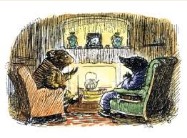
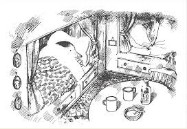
We are nearing the halfway mark of this epic tale and start the first half of Chapter 5 of Wind in the Willows – Dulce Domum in which Mole rediscovers the comforts of his little home.
It’s a simple, homely chapter that highlights warmth in everyday surroundings. Like the last two weeks, this is recorded at 16 wpm. If you want a slower speed, you can find 12 wpm audio files in previous Newsletters.
Or you can create your own MP3 files from the Chapter 4 txt file at any speed as noted below. Because of MailChimp’s size limits, I’ve split Chapter 5 into 4 parts. Each part is over 1 hour playing time @ 16 wpm. Parts 1 and 2 are attached below.
If you’d like the full chapter in a single file, you can use the complete text of Chapter 5, and convert it yourself with the Ebook2CW app – https://fkurz.net/ham/ebook2cw.htm|. I’ve made a few small adjustments to the text to keep it “Morse friendly”.
Uncommon punctuation has been removed (the Ditto CW app doesn’t recognise some of it), and contractions have been simplified (for example, we’ll becomes we will).
This week’s attachments include: + Two MP3 files (first section of Chapter 5) * Two text files matching the MP3 segments * One text file of Chapter 5
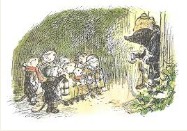
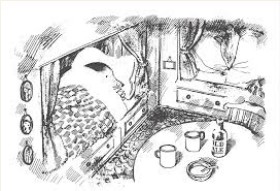

You can either play the MP3 files in any media player, or load the text files into the Ditto CW: Morse Player app — https://dittocw.andro.io/.
Both work well, but Ditto CW gives you complete control over all Morse settings, while a normal media player only allows changes to playback speed, and does that in steps (e.g. +1.25x, 1.5x, 1.75x).
Other News
Update from Chris G7BED
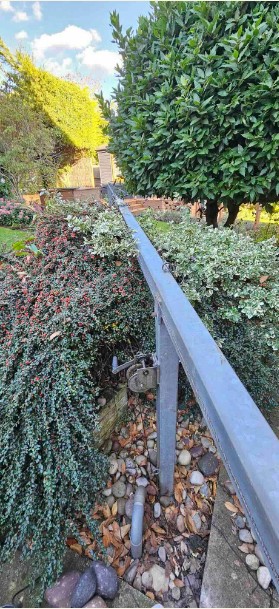
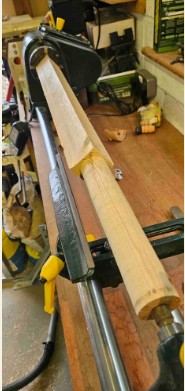
Hi Mark, Thanks, an interesting read as always. My mast and antennas are back up, but they need tuning. Unfortunately, I’m now out of time as I’m away now until end of October. Some portable ops may be possible, but I can’t commit on that just yet.
Attached also a few photos of the ongoing antenna repair.
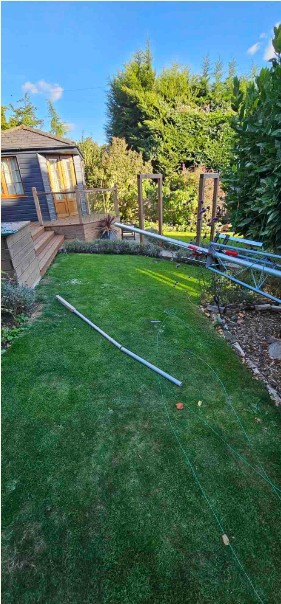
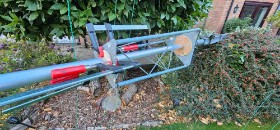
In the meantime, I did some WWII SOE ops from Bletchley Park last weekend. Photo attached. Great fun on the HRO and a straight key.
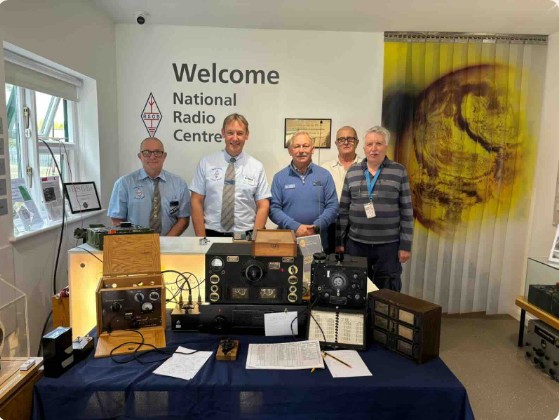
Hope to be back with you soon. Thanks Chris G7BED [Thanks for the update on your antenna repairs after the storm Chris – terrific. I really like that fold-down mast; please post it to me when you get tired of it!
The SOE ops at the RSGB National Radio Centre Bletchley Park looks like fun; and! imagine the HRO receiver would have also been a fun challenge drifting among the QRM! Love the high-tech feed-line installation.]
Maritime Radio Group on Facebook
WIA Chris Jones Award
Congratulations to our team member Rob VK6LD from Albany, who was awarded the WIA Chris Jones 2025 Award for Exceptional Contribution to Amateur Radio recently.
Rob is the main mover and shaker behind the Southern Electronics Group, has built and managed the group’s two HF and one VHF/UHF remote stations and the recent VK6SEG KiwiSDR, as well as much of the famous WA AllStar and repeater network in conjunction with that net’s founder (and fellow CQQRS family member) Mal VK8MT and John VK6RX.
Rob has also built many amateurs’ AllStar hotspot nodes in use around WA and is always generous with his
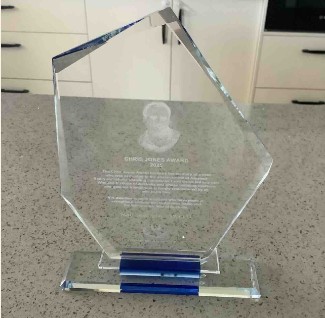
Time for people like your editor who call on him regularly for assistance with AllStar building and trouble-shooting. Congratulations Rob.
Using the Reverse Beacon Network
From Peter VK3WOW There’s been quite a bit of discussion on the CQQRS WhatsApp Rag Chew group about the Reverse Beacon Network as a tool for checking how well you’re getting out and propagation.
Normal use is for you to call ‘CQ DE
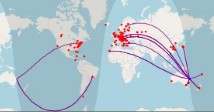
Official documentation on how to get the RBN to notice (“spot”) you is here: hitps:/Awww.reversebeacon.net/pages/How+to+get+spotted+by+the+RBN+44
Morse Training Net
Our team member Nic VK7WW runs an on-air Slow Morse training net every Wednesday at 7pm EDST on 3580 for 30 mins. He uses the callsign of the Northern Tasmania Amateur Radio Club VK7TAZ on that net.
Many of our team learned Morse code with the support of Nic, and the weekly training session comes highly recommended for anyone who wants to learn the Code, or simply brush up.
Everyone’s welcome – 3580KHZ at 7pm Eastern time every Wednesday; you’ll hear lots of the CQQRS team on that net. Jordan VK3ACU has recorded the complete set of lessons which you can now find here:
Https://www. youtube.com/playlist?list=PLHsQmZz6fBXO7swAfbT mutrbbEL17fUQL Contact Nic VK7WW for more info nicholaschantler@hotmail.com including how to join the NTARC DISCORD group to follow the action, or just come along and join in on Wednesdays.
And from one of the non-daylight-saving team:
CW Ops News for 9 October 2025
This question fraught, and the answer is “it depends”. If you’re in a contest or chasing DX, then you’ll almost certainly be going faster than your normal ragchew speed.
In fact, if you’re chasing a DXpedition, chances are you’re copying code at least at 25WPM. And contesting is often faster.
What you’ll inevitably find is that after a short contest effort, or chasing some DX, your brain will set a new (faster) baseline for copying CW. And most of us know our callsigns like — well – our names.
Hearing our callsign in Morse Code is (or should be) automatic recognition. The same goes for sending. But back to the loaded question: “How fast should I be sending?”.
Well, if you want to improve your morse code, then like any other endeavour, you need to stretch yourself – even just a little.
That means listening to good quality morse code which is just a little faster than your comfort zone, and setting aside 5-10 minutes every couple of days to practice your sending.
Like any skill, sport, musical instrument, or craft, you will only improve with practice and by setting the bar a little higher each day (or week, or month). Applying proven methods also improves your chances of success and ameliorates frustration.
So, the next time you’re in front of the radio, have a listen to stations sending just a little faster than your comfort zone.
Line up a QSO with a friend and ask them to increase their speed a few WPM – maybe suggest they increase word spacing whilst you adjust your “ears” to the new normal.
What everyone I’ve spoken to agrees, is that when it comes to skills development you must set your targets just a little higher, never lower.
If you set your operating speed lower than your level of competence, it’s almost a certainty that your level of competence will drop also. Check out this free resource by Kurt Zogimann, ADOWE.
It’s a great way to improve your copying skills and is a proven success for many operators. https://morsecode.ninja/practice Next time I’ll talk a bit about the other topic on my list… muscle memory and why it matters to Morse Gode operators.
CW Ops
CW Academy is a great learning environment, and CW Ops runs these classes three times per year. If you’re at all interested, the next intake is in January 2026. If you have any questions, please drop me an email.
Courses are eight weeks long and no matter your level, you’ll come out the other side with better skills and more enjoyment from the code. https://cwops.org/cw-academy/
Support
After two weeks on Norfolk Island as VK9NT it’s nice to be home…. As they say, it’s nice to travel, but it’s always nice to get home! Unfortunately, Luke VK3HJ and I were unable to make Zoom work properly with the limited 4G internet on the island.
So, apologies to anyone who tried to join us last month for the Zoom session. We’ll try again this month and talk about what it was like on the other side of the pileup, as well as our station and “island life”.
As always, 3″ Monday of the month, 20′” October at O830UTC. https://morsecodesessions.wordpress.com/zoom-details/ If you’re free, please join us. We’ll also run a Q&A session. As always, if you have any questions or feedback, please drop me an email.
73, Chris VK3QB & VK1CWO CW Ops OC Ambassador vk3qb@hotmail.com or vk1cwo@outlook.com
After two weeks on Norfolk Island as VK9NT it’s nice to be home…. As they say, it’s nice to travel, but it’s always nice to get home! Unfortunately, Luke VK3HJ and I wer unable to make Zoom work properly with the limited 4G internet on the island.
So, apologies to anyone who tried to join us last month for the Zoom session. We’ll try again this month and talk about what it was like on the other side of the pileup, as well as our station and “island life”.
As always, 3″ Monday of the month, 20″ October at O830UTC. https://morsecodesessions.wordpress.com/zoom-details/ If you’re free, please join us. We’ll also run a Q&A session. As always, if you have any questions or feedback, please drop me an email.
The Journey Continues – Whitsunday Islands On Air
PES VVUCY WVilihites “ FEPLOMIMGy Olio Wil Pull
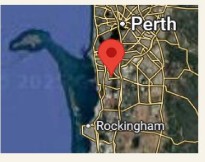
From Rob VK3ECH Hi Mark, I’ve had very limited phone service out on the Islands here. For this week’s CQQRS I was anchored in Cid Harbor, Whitsunday Island. I had to scale Whitsunday Peak 9 to get service to send in my Log!
Hi Mark.

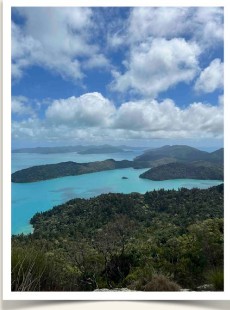
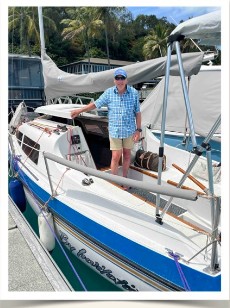
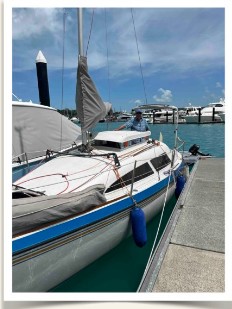
Here’s where I’m anchored in Cid Hbr, and the other two are Whitehaven Beach/Hill Inlet where I was anchored for last week’s CQQRS but not able to send in my log.
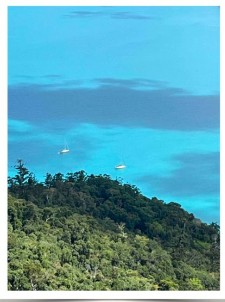


I’ll try to put a bit of an article together for the RagChew at some stage too. 73 from the sunny Whitsundays. Rob, VK3ECH. [Wow! Thanks for the tour Rob. Somehow CW and /MM just seem to go well together eh? Bit like red wine and cheese!]
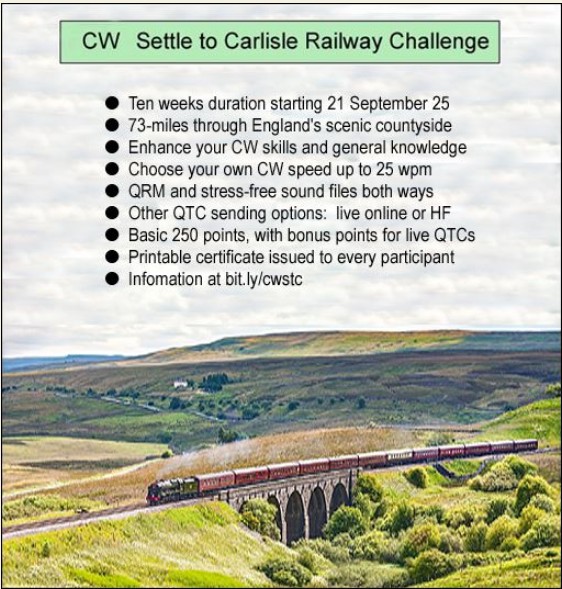
CW Settle to Carlisle Railway Challenge, Week 4 Report
From Stan ZL3TK Last Sunday, QNC NRO3 from the ‘Morse with a Purpose Society’ took us to Dentdale, the second stop on the up-line after leaving Settle. Even here on the moors, modern technology has become commonplace.
Who would have thought it would be so obvious, even along roadsides in these ancient dales. What would the Romans and Norse of old make of such strange structures? Next Sunday’s QNC NR04 introduces us to Garsdale in the lonely western Pennines.
Garsdale is reminiscent of the bleak shanty towns and tough spirit exhibited by the navvies who lived and died building the Settle to Carlisle line.
CW Settle to Carlisle Railway Challenge, Week 4 Report
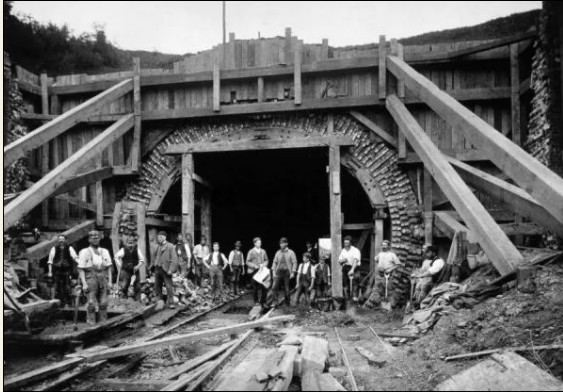
Last week it was suggested there are no short-cuts to becoming confident and competent in Wireless Telegraphy. That’s proving true again, STC is testing the mettle of entrants, all of whom incidentally are doing a sterling job.
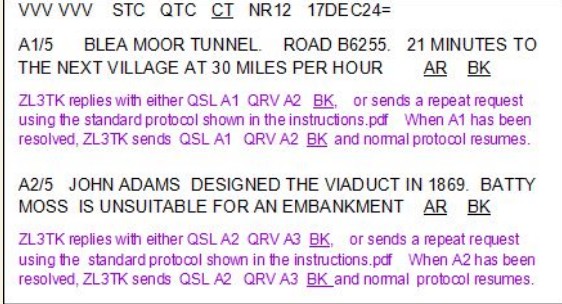
To make STC less vulnerable to errors caused by HF propagation, and hold at bay the effects of cumulative tiredness when sending long blocks of text, a revised QTC protocol is being implemented for QTC NRO4 and beyond. It is not applicable to sound files.
An example showing five notional answers is available in the instructions.pdf and also at https://qsl.net/zl3tk/stc/pdf/upgraded-qtc-protocol.pdf. A shortened version is shown below.
With the upgraded QTC protocol, despite the vulnerability to confusion being lessened, it is more important than ever to be conversant with using the extremely useful repeat request protocol, for without it much time can be wasted trying to understand what to resend should all five answers somehow need only one or two words repeated.
If you’ve read something that you think might be of interest to our readers, please let me know. For guidance on writing for RagChew, see Articles below. Please email material to Mark VK2KI: cqqrsnet@gmail.com
Watchable Channels
The Morse Ninja website – https://morsecode.ninja/# , and the YouTube channel – https://www.youtube.com/@KurtZog|mann – created by Kurt Zoglmann (ADOWE), is one of the most complete and approachable resources out there for learning Morse code.
At the heart of the site is Kurt’s free Morse code course, which is carefully structured to help learners of all levels.
It starts with simple characters and builds up to full words and sentences, with a strong emphasis on listening and recognising rhythm rather than rote memorisation.
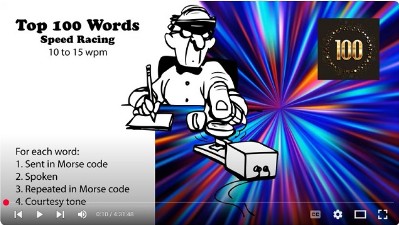
Beyond the course, the site hosts an impressive library of practice resources: MP3 drills, random code groups, word and call sign practice, and even files at different speeds so you can steadily build up your copying ability.
The material is all free and very well organised, making it easy to dip in and out depending on your schedule. Kurt is also closely associated with the Long Island CW Club (LICW), which adds a valuable community aspect to the learning process.
Through LICW, learners get access to live classes, practice sessions, and encouragement from a supportive group of fellow Morse enthusiasts.
Altogether, Morse Ninja is both practical and motivating — a one-stop hub for anyone wanting to make real progress in CW. John VK2RU
If you’ve read something that you think might be of interest to our readers, please let me know so John and I can share more thoughts and ideas. For guidance on writing for RagChew, see Articles below. Please email material to Mark VK2KI: cqqrsnet@gmail.com
Prosign/Character/Signal of the Month
[Suggestion – put it on a sticky note near your key as a reminder for Tuesday. Tell us how you went!]
Di-dah-di-dah-dit
So back to the CQQRS Slow CW QSO practice net.
Next Tuesday’s Net
Our CQQRS Group will be on as always on Tuesday from around 0600Z until about 12002; see https://bit.ly/CQQRSWebsite and navigate to the Net Details page for details.
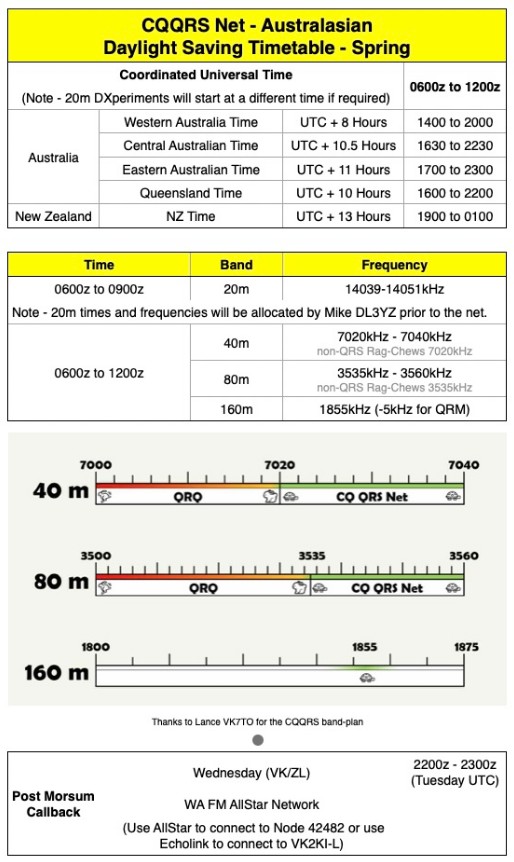
Doesn’t matter whether you’re brand new and want to try just exchanging callsigns and RST reports, or you’re ready for a good old rag chew. We’ll have fun.
There’s usually people around until after 1200Z – so keep calling in the segment of the band designated in the table below until you catch someone.
I should be on as usual from home in NSW or via the Remote at Bedfordale WA, and I’ll also be watching the proceedings using the VK6QS and Tecsun SDRs in WA and NSW respectively. Hope to hear you there.
Please let us know via our Reports form bit.ly/CQQRSNET who you work or hear on Tuesday’s Group. The report form closes at lunchtime (Eastern Australian time) on Thursday. And how about helping to make the reports even more interestingby sending a photo?
If you have a photo that you’d be happy to include, please email it to: cgarsnet@gmail.com To make it even easier for our Reports editor Patrick VK2IOW, see if you can reduce the size of the image (to less than 100KB file size by preference).
No problems if your computer or phone can’t do that – just send it through anyway please. And of course, I’m always on the lookout for more photos for the newsletter, so if you have something that might be of interest aside from the reports, please send it through as well – I always enjoy the photos that our readers send – and I’m sure our readers do too.
Email them to cqqrsnet@gmail.com please (reduced size if possible – but whatever you send will be great). Oh and by the way, I recommend that you don’t keep the Reports Form website open between submission of reports from one week to the next.
If you’re unlucky, there’s an undocumented feature in the software that could cause your current week’s report to be combined with your previous report – it’s happened to your editor several times – much to the chagrin of our Reports editor 🙂
Post Morsum
Richard VK6HRC will run our phone Post Morsum on the South West AllStar net (via repeaters and hotspots all over WA) from 0600 WA time, then from 0700 WA time on 80m (8605 LSB).
See https://bit.ly/CQQRSWebsite and navigate to the Net Details page for details of how you can connect via Echolink or even possibly via your local FM repeater.
Articles
The newsletter is interesting to readers because of the material contributed by so many people – be it the reports each week or the various articles. Could you write a short article or articles for RagChew? You bet! Writing not your strong point?
Don’t worry, I’m very happy to help as much or as little as needed. Here’s a thought – although our readers will much prefer your own writing, perhaps have a go at using a Large Language Model Artificial Intelligence tool such as ChatGPT, Microsoft Copilot or Google Gemini to check your writing or even to actually draft the whole article in a relaxed easy-to-read manner!
You can find out more about how to do that on the Newsletter page on our website bit.ly/CQQRSWebsite. Our website also includes a suitable prompt (the command you feed to the Al to make it do what you want).
Please remember though – you must fact-check anything that an Al tool drafts for you because Als ‘hallucinate’ – ie if an Al can’t find what you’re looking for, it will make up an answer and present it as a fact!
This is one of the dangers of using Als ~ it’s quite probable that the tool will create a very readable and convincing draft that is 100% wrong! You as the submitter are responsible for fact-checking.
But it’s a learning experience – please let us know how you went if you had a go with this new generation of tool. And by the way – lam very concerned about our future in a world of Al – but I’m pleased to see that school and university curriculums now focus on understanding the risks – for instance, kids are now learning critical thinking something that used to be taught mostly at post-graduate level.
When the typewriter was invented, people predicted the downfall of handwriting; when the word processor was invented, the art of writing was thought to be on the way out – ditto for the spreadsheet and arithmetic, AM, SSB and FT-8 for amateur radio etc.
We can ignore Al and hope that it just goes away… or we can learn to handle it through experimentation and use. For more guidance on writing for the RagChew newsletter (including help with using an Al), head to our website bit.ly/CQQRSWebsite then click the menu on the top right and then click RagChew Newsletter.
Material
A reminder; if you send me any information by email, our report form or WhatsApp – unless you specifically state that material is not to be published, I’ll assume that you’re happy to see your thoughts in the RagChew newsletter.
Teamwork
Thank you so much to our team of 27 contributors: DL3YZ, G7BED, MONNK, VK2DLF, VK2LDJ, VK2RU, VK3ACU, VK3ALC, VK3DRQ, VK3ECH, VK3KEV, VK3QB, VK3WOW, VKA4PN, VK5AO, VK5FD, VKSKFG, VK5KFG, VK6HRC, VK6JDM, VK6KHZ, VK6NQL, VK6NW, VK6RR, VK7JZ, VK7TO, ZL3TK.
And a special thank you to our editorial team, Nigel G4RWI (head of software development), Patrick VK2I0W (reports coordinator), John VK2RU (researcher), Richard VK6HRC (Post Morsition) and Lance VK7TO (technical editor).
Great work all UY CW on Tuesday, mb Mark Bosna VK2KI/ VKEQI Beautiful South Bowning NSW ‘eqarsnet@gmail.com non impedit ratione cogitationis

Darn daylight saving – missed Nic’s CW session!
About the CQ QRS Net
For the current schedule and more information about the CQQRS net, please go the the Net Details page on our website:

The opinions expressed in the RagChew newsletter are those of the individual contributors. The opinions do not necessarily reflect that of the editor or of the CQ QRS Group members.
Any material and images received from members by the editor or published on the CQQRS WhatsApp groups may be published in this newsletter unless specifically requested otherwise.
The values, doctrine and guidelines for the Group and for the newsletter are published on the Principles page of the group’s website https://bit.ly/CQQRSWebsite