Below is a reconstruction of the 2025 02 CQ QRS RagChew newsletter designed to support full text searching. This reconstruction was built using OCR, and will contain errors.
To view the Mailchimp original, click here. To search the entire newsletter archive, click here.
Contents
- CQ QRS RagChew
- Last Tuesday’s Group
- Masthead Image
- Reports
- Reports & Comments
- Comments:
- HNY Event – Thursday January 2nd
- Post Mortem Report
- This Week’s topic of interest
- Variductor Contraption
- Tim’s Shack
- End-Fed Half Wave for 40m & 80m
- Other News
- Portishead Radio GKA
- External DSP Audio Filter
- Morse Training Net
- Across
- Down
- RUOK?
- Brain Teaser
- Foundation Questions:
- Di-dah-di-dah-dit
- Next Tuesday’s Net
- Post Mortem
- Teamwork
- About the CQ QRS Group
- Frequencies and Times
- QRL?
- Matching
- PSE QRS
- Landing Zone
- CW Tips
CQ QRS RagChew
Last Tuesday’s Group
Masthead Image
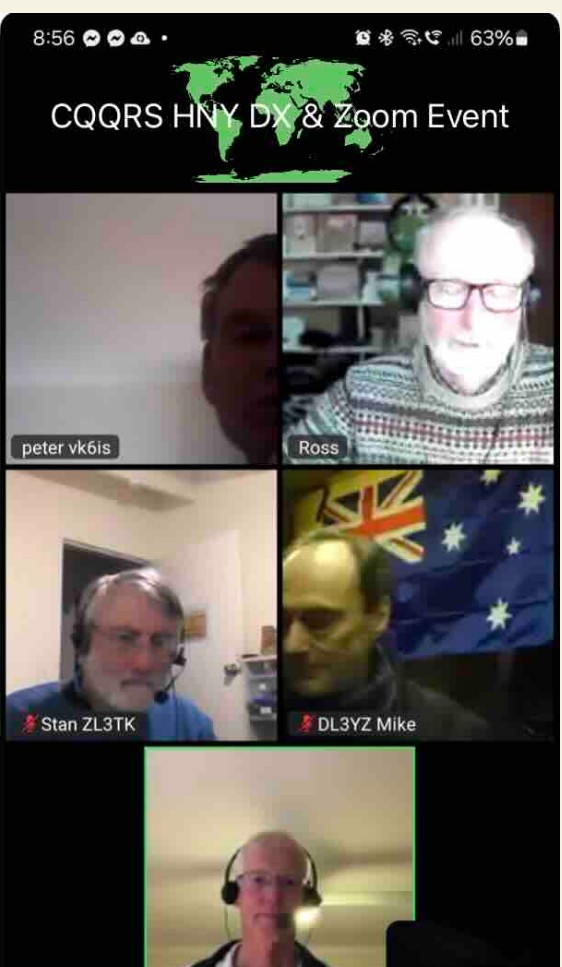
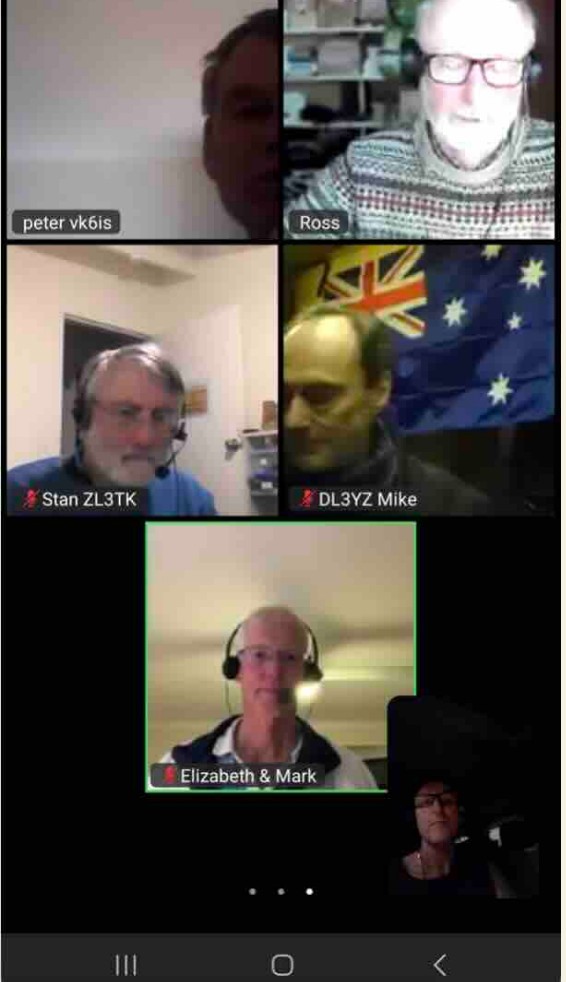
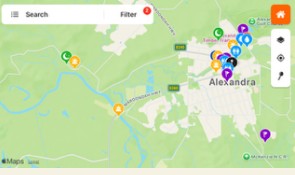
And thanks this week to David VK6KD portable near Mansfield in the Victorian High Country for the screenshot from his phone of some of the participants in our HNY 20m / Zoom event on Thursday. See below for more.
Reports
After next Tuesday’s Group, please send me a list of who you worked and / or who you heard using our web form here:

Reports & Comments
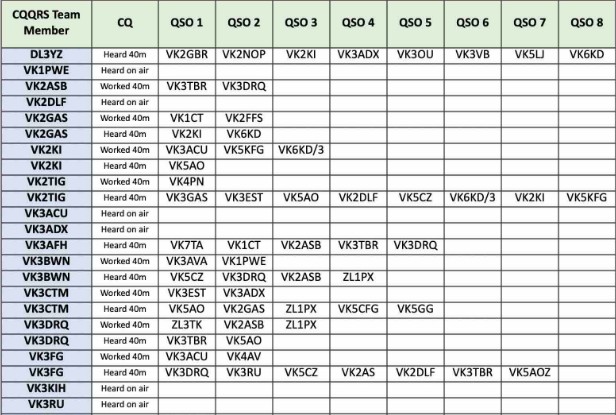
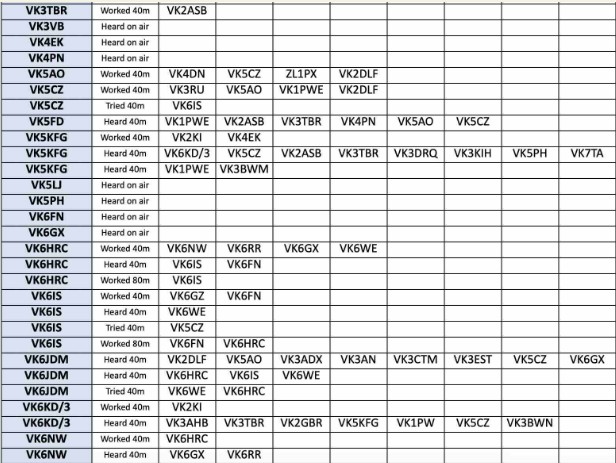
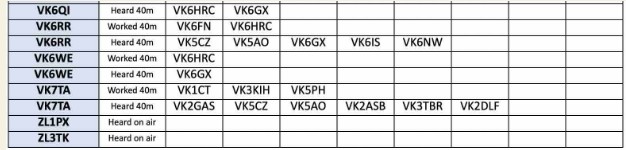
The spreadsheets above show the known stations on last Tuesday’s Group. Comments distilled from the reports I’ve received follow:
Comments:
[40m] * There was a chat underway between VK6GX and VK6HRC when I tuned in but nothing else showing on the waterfall. I called CQ several times with no reply then monitored the two stations to the end of their qso.
Richard, VK6HRC, then answered my CQ immediately afterwards. Unfortunately the band had deteriorated by then and I had trouble decoding. However we were able to exchange RST and New Year greetings..
[40m] * I was setting up for the CQ QRS evening but alas my antenna rope broke. So I had to run around maneuvering a new rope in place. Boy it was quite an endeavor. Thankfully I was able to make it on time.
Had a great QSO with Scott who speak good Indonesian. So it was nice to hear Indonesian in CW again. Tuesday evening is always fun! Thanks guys.. [Terima kasih Ketut – bagus!]
[40m] * Many thanks to VK4PN, Sava for my first very short QSO I managed to complete along with QSB conditions. [Wow – congratulations Clint for your very first CW QSO – feather in your cap, and another in the CQQRS Net’s cap!
The coveted First CW QSO award is on it’s way And congratulations also to Sava for hosting the QSO.]
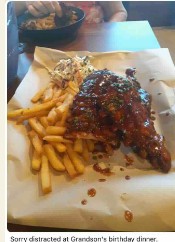
From Peter VK5KPC visiting Aldinga SA Peter’s excuse for missing this week’s CQQRS net -—>
[40m] + After switching my Starlink 240VAC- 30VDE switch mode pwr supply off, my QRM dropped by 80%. + Lots of static crashes heard on 40m..
[80m] + Like a broken record, I’m still having issues with tx on 80m. Sometimes the rig works, sometimes shuts down. Still more testing required, hihi.. [Hard work trouble-shooting when you’re on the road!
Perhaps if a reader sees you’re in their area David, there might be an opportunity for some basic testing using a dummy load to replace the automatic coupler?]
[40m] * Hello and happy new year to all of you ! Today I was just doing some SWLing on the great Ironstone SDR for some minutes, as things are getting back to normal business here. Have a great week, Mike..
[40m] + After a bit of a hiatus due to work/family commitments, I managed to join in again. * Had a lovely long ragchew with Arthur, VK2ASB. * Great to see the CW portion lighting up, as always. Cheers all, Happy New Year & 73.
[40m] * Solar wind noise, and had household “duties” interruptions so had to leave early!
[40m] * Conditions were poor on 40m, lots of QSB on the signals.
[80m] + No stations heard on 80m, I called CQ from about 1145Z for about 30MINS but no success in landing a catch.
[40m] + Was calling and at least three stations came back to me at once! But! managed to pull one callsign out and keep going … would have not been possible for me not so long ago, thanks to all on the QRS net for the support making this happen.
[80m] * Very quiet locally, fortunately Peter VK6IS came up for a nice exchange.. [Heh heh – check out how many people listened to you on air Richard!
[40m] + After a frenetic day I was not really in the mood to QSO but I put out a call which was answered by Tim VkSTBR and we enjoyed a really pleasant conversation followed by an equally pleasant conversation with Manny VK3DRQ.
One thing I will mention is, people tuning up on QSOs in progress. Ifyou must tune up, move 1KHZ above or below the signal to avoid interfering. 1KHZ is not going to make much difference to your SWR..
I’d request 5KHZ up if possible Arthur – for those of us with rather broad receivers! Then again, you might be slipping into someone else’s QSO…
Perhaps 2.5 or 3KHZ up, or even better, go down 1 to 1.5kHz to tune up; most of today’s transceivers use a USB receiver for CW (irrespective of the band in use), and with a 700 to 800HZ tone frequency, the lower passband cut-off will be 400 to 500HZ below the carrier frequency.
So if you tune up 1.5kHz below the QSO, chances are you’ll do less harm and be considered a gentleman or lady of the airwaves.]
[40m] * Good to hear 40m nice and lively. Best wishes for the New Year to all on CQQRSNET.
[80m] * Nothing on 80 whenever I checked except a fair bit of QRM.
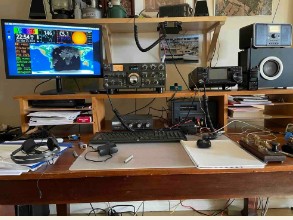
From your editor Mark VK2KI at Beautiful South Bowning NSW
[40m] + After a hard day of bottling 2022 Shiraz at friend’s vineyard, I took my blackened fingers (red wine turns black on skin when it oxidises and is really difficult to remove – imagine what your insides must be like??) to the key for a bit of QRS fun.
I was late to the party again, but was rewarded with a nice chat with Jordan VK3ACU at Meredith..
• After dindins, I had a bit of a rag che with Greg VK5KFG at Willunga, just South of McLaren Vale – another wine- growing area as it turns out. I was watching the VK1CM and VK6QS KiwiSDRs in parallel, and could see tha

The Bureau of Meteorology Space Weather Service’s prediction of a solar flare affecting propagation was correct this time; signals across Australia were marginal. Greg had an S7 signal into WA, but my signal was marginal at best..
+ When I finished up with Greg, I was called by David VK6KD portable at beautiful Alexandra Victoria. Although not strong, David’s signal was steady and we enjoyed a nice chat once again…
[80m] +I slipped down to 80m after 1100Z; there were no signals visible on either the WA and ACT KiwiSDRs. Unusually for that time of night, my signal in WA was pretty weak; in-turn, my CQs went un-answered this week..
Also from your editor Mark VK6QI via the VK6QS KiwiSDR near Brookton
[40m] + had time for only a quick listen on 40m early in the evening; there were a few stations on, but I only decoded the one QSO between Richard VK6HRC and Phil VK6GX; sounds Iike I wasn’t the only one eavesdropping!
[80m] + 80m was full of static crashes this week, and although I could hear my transmission from NSW late in the evening, it wasn’t as strong as usual, and I couldn’t see anyone else on at that time..
[40m] + It seems to me that some operators are still on holidays. Not many were heard. None from the West. And since early this morning was my first, medical appointment for 2K25, I decided to hit the sack early..
+ Nevertheless, it was a short but enjoyable time. + To everyone, 73877 from Manny.
[40m] * mostly local stations, were heard, this week..
[80m] *some extra station were heard, om 80m, this week.. *no extra curricular activities, this week.. + the higher bands have seen some activity, this week,. * but, nothing was worked..
• Heard a couple of quick QSOs early o and some longer ones after dinner. I got drawn into listening to the long ragchews and was happy to see that despite the errors/typos I made (I’ve found I’m faster typing than writing), by the power of the English language it still made sense (mostly).
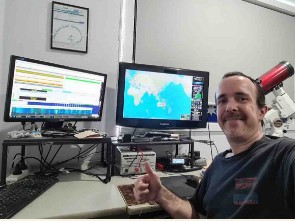
Working as well, so was a good night!. From lan VK7TA at Latrobe
[40m] + Around 1830 the band was in poor shape, but when I returned after dinner things were better..
[40m] + Bathurst hammered by storm cells one after the other so that was the end of on air activities. Another time…
From Donald VK6JDM 20 km west of Esperance WA
[40m] + No one heard me this week, but I had a great receiving practice session with plenty of lighting to make it a challenge.
I had to shut down early due to lighting closing in and next day had a near miss near the house with a lightning ground strike, tree copped it not the towers.
[80m] + Did not get heard on 80m either, but more receiving practice for a couple of hours before the storm arrived. * Will be on again next week then tied up in Kal for three weeks of setting up the year’s teaching. 73.
HNY Event – Thursday January 2nd
HINY Event – Thursday January 2nd from the editor VK2KI Congratulations to Mike DL8YZ and Ross MONNK for organising our Happy New Year 20m DX and Zoom event.
Iheard the following stations sending “HNY de [callsign]” on the 20m HNY calling frequency at five minute intervals until acknowledged: + Ron VK6KHZ at Yangebup + Stan ZL3TK at Waitarere Beach * Mike DL3YZ near Stuttgart + Peter VK6IS at Wundowie * Manny VK3DRQ at Blackburn + lan VK5CZ at Clare * Roy VK6RR at Geraldton + David VK8/VK6KD South of Mansfield * Daniel VK6WE at Cottesloe + David ZL/VK3DBD at Kerikeri
There were bound to be others who I couldn’t hear sending their simple HNY calls. I also heard HNY exchanges with Mike DL3YZ at the meadows clubhouse with: ¢ Stan ZL3TK « Manny VK3DRQ and « me VK2KI
| hope we’ll get a full report from Mike and Ross about who they heard and worked through all the European QRM. Mike reported via the Zoom videoconference that once again he had to trudge through the mud on foot for about a kilometre carrying all his gear, along with a heater on a huge gas bottle and an Aussie flag.
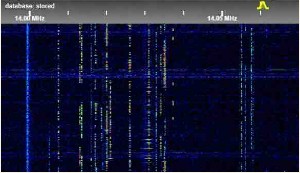
From Ross: 20m busy with European stations during our HNY event
Muddy track that Mike tried to get through in his car a few weeks ago, and ended up having to abandon the bogged vehicle, and scrounge a lift home from a local farmer until the car could be recovered.
Check out the gear that he lugged up there – outstanding effort Mike.
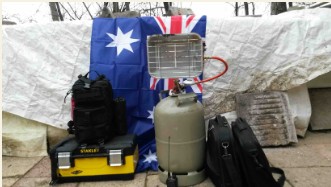
As terrific to see so many of the team on Zoom – great idea! Unfortunately, eral of our team were unsuccessful at connecting to the meeting. – Roy VK6RR up at Geraldton reported that for some reason he couldn’t get on to the Zoom meeting.
Normally he’s able to connect as he does a lot of Zoom conferences, but missed out this time. + And David VK3DBD portable at Kerikeri in the North Island of Far Eastern Australia reported: I was Intrigued by the postings about the EU contingents experiments on 20m.
I spent some time (here in ZL at moment) watching the freq around that stated as 14060.5 ( if that was not a typo meaning 14065? But that alone was not a problem, on my dipoles here.
I currently have two for 20m in different places as an experiment in locations due to a distinct lack of signals over the last 3 weeks. I did hear the odd signal pop out of the QSB for brief seconds but nothing readable – disappointing indeed.
Best DX on 20 logged lately from here has been France, Switzerland, Italy and Spain, but very little heard indeed on Thursday. Having never used or been interested in Zoom I did in fact try the link supplied.
The apparent complexity of it put me off ever dabbling in such things again; might as well have been written in Chinese. Wil be QRV again on next Tues’ session I hope – straight key Morse only (KISS).
73 David VK3DBD/ZL [Bad luck about 20m; yes the frequency was 14060.5kHz. I heard you a couple of times calling and alerted Mike on Zoom – but he could hear nothing of you, nor any of the VK6S as it turned out.
However, he did get through to Stan at the South end of the North Island perhaps 3/4 hour earlier; the band may have closed.
Happy to do some testing on 20m between your antennas some time David – or perhaps do something on Tuesday night so you get other reports from the team as well? Thoughts about Zoom. Once it’s set up, it works very well… here’s a thought…
Perhaps ask the people you’re staying with (your daughter I think) to help you set Zoom up on your phone. Once set up, you can use it to stay in touch with them when you’re back in Australia.
The free subscription gives you 45 minutes at a time – perfect for a family get-together; the paid version is unlimited.
1 know of others who have found that once set up, Zoom is just fantastic to stay in touch with distant family; perhaps you and others in our group could do the same with your family and fellow QRSers?]
Post Mortem Report
The gremlins were at it again on Wednesday morning. All but one of the Echolink gateways into the WA AllStar network were down – so the AllStar node owned by David VK6NRA at Port Headland was working overtime. Then to add to the troubles, Richard our Post

Morsum net controller was calling, calling, calling on the VK6RLM 2m repeater in Perth…. but the link into the AllStar network was also down… So no one outside the Perth metro could hear him.
However, on the bits of the WA AllStar network that was working, the rest of the team discussed the Tuesday net. David VK6KD portable at Alexandra North East of Melbourne became the surrogate Net Controller, and chatted to Max VK6FN at Manjimup, Wayne VK6NW at Bridgetown, Chris VK2NAP at Marrickville and Mark VK6QI mobile in Canberra.
Most reported that 40m and 80m band conditions weren’t good and the static crashes were bad – but they all had fun on Tuesday never-the-less.
This Week’s topic of interest
Simple Portable Antenna Couplers from Geoff VA6HD
Last week’s RagChew included images of a couple of the simple portable antenn: couplers that I’ve built. Here’s some more information on them.
Peter VK3YE’s Amateur Radio page hitps://vk3ye.com/projects/projcoupler.htm has information collected about a number of simple coupler designs.
There are a number of projects on this page – I used the “very small L Match antenna coupler “ as a guide.
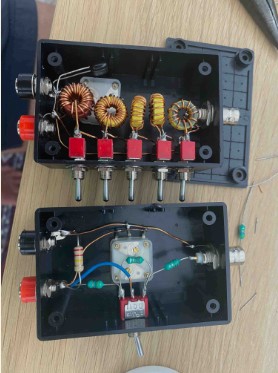
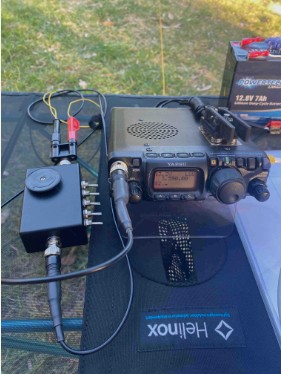
| recall Mark (quite rightly) warning me against using the axial inductors which don’t have known electromagnetic characteristics and may be lossy, but they are still going strong – admittedly only QRP levels.
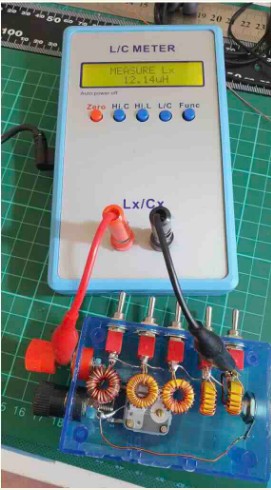
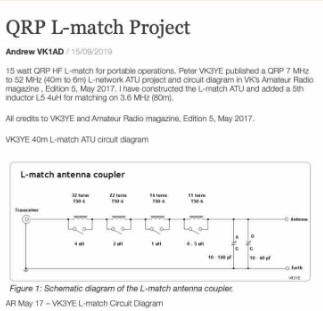
And credit to VK1AD for adding the 5th inductor to get 80m hitps://vkinam.wordpress.com/2019/09/15/qrp-l-match-project/ [Thanks Geoff.
Now we just need to drag you out kicking and screaming to a convenient nearby park on a Tuesday evening for some QRS fun again!] I’m always on the lookout articles from team members that might be of interest tc readers.
Please let me know so we can share more thoughts and ideas; email to cqqrsnet@gmail.com
And credit to VK1AD for adding the 5th inductor to get 80m hitps://vkinam.wordpress.com/2019/09/15/qrp-l-match-project/ [Thanks Geoff.
Now we just need to drag you out kicking and screaming to a convenient nearby park on a Tuesday evening for some QRS fun again!]

Variductor Contraption
From Ketut VK3BWN I thought I ‘d share with you the photo of a contraption that has been keeping me busy over the holidays. Just an FYI in case someone may want to replicate this simple variable inductor and use it for some radio projects.
This is a variable inductor (I call it “variductor contraption”). It uses an M4 screw in a plastic project box. Copper wire is 0.8mm diameter and is wound on 20MM dia (electrical) PVC pipe.
It is not a roller inductor but I think it works reasonably OK (a bit noisy when we turn the dial).
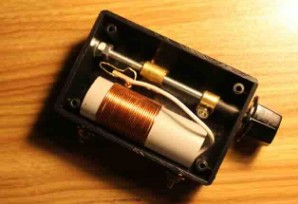
Here is a more detailed picture of the slider. The slider is made of a thin metal piece bent around in the shape of the greek letter Omega.
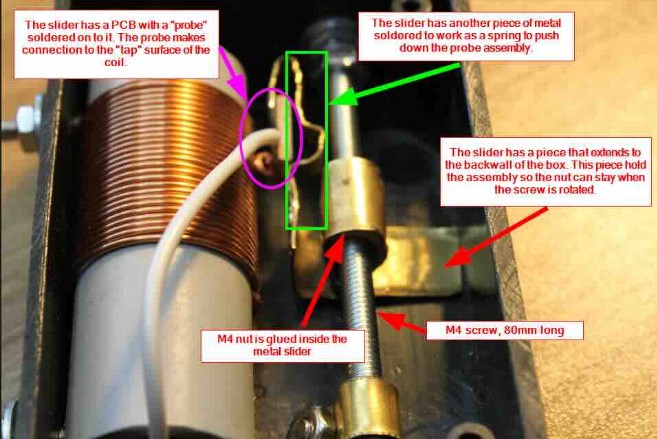
There is an M4 nut glued inside the slider and the legs of the letter Omega are extended to the back wall. This holds the screw preventing it from turning as we turr the screw. The slider has a spring made of the same metal sheet.
At the end of the spring is a PCB that provides isolation from the probe. The probe is the one making contact with the surface of the coil. The coil itself is made of 0.8mm enamelled copper wire. I scrape the surface of the coil so the probe can make contact.
I can see on my VNA that the S21 measurement (with a 100PF capacitor helper in parallel) runs across the screen as I turn the dial albeit a bit noisy as the probe slides across the coi. However, we can see in whichever application that we use (eg.
Antenna tuner, VNA, et) when the coil is making good contact with the probe. This is still a work in progress but I think this “Variductor Contraption” is usable at this point. Building this contraption does provide a lot of entertainment, HIHI.
Maybe I will continue this project with some kind of symmetrical antenna tuner. Thanks Sincerely Ketut, VK3BWN. [Thanks mate – good work. I look forward to the next step – a nice antenna coupler perhaps?]
Tim’s Shack
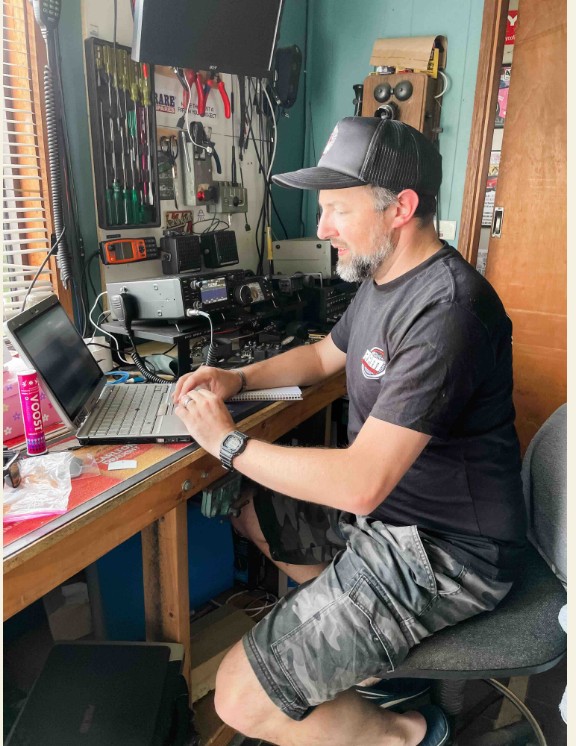
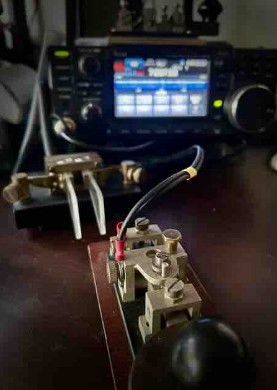
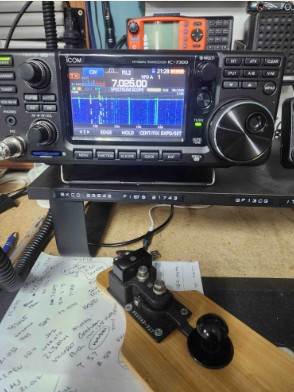
And thanks this week to Tim VK3TBR’s sister for this terrific image of Tim in his shack. Tim’s been busy recently and hasn’t been on the net as much as he’d like – so it was good that he was able to join in again on Tuesday.
Wonder what that thing hanging on the left hand side of the IC-7100 is for?
End-Fed Half Wave for 40m & 80m
Ena-red Fall Wave ror 4um & oUm from Mathew VK3AFH The 40/80M End-Fed Half Wave long wire was originally going to be an inverted-V, but raised at one end.
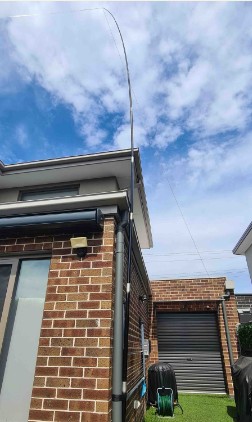
| have speaker wire held up with a squid pole, and the BALUN is near the ground. I cut and tuned the 40m band section to length (repeatedly raising and lowering while checking the nanovna, – fun times).
I then added a coil (the black thing) that I built with enamelled copper wire, coiled around the plastic spool the wire came on. I then added
The last length for 80m band with fold-back (lazier option than cutting at that point). Not sure on the exact lengths or coil inductance it ended up as, I did some rough calculations at the start and went from there.
Seems to pick up more than I could before (plus it gives me all the HF bands I can use in one), but always interested to hear what I should try instead ©) Happy new year to all. I’m looking forward to getting some more CW QSOs logged this year…
My confidence has been growing! Feel free to let me know if there are any queries or if you want me to come back with some better pictures/measurements 63 [Thanks Mathew – good job; life’s good with a nanoVNA eh?
I’ll be interested to see how it performs in the weeks ahead compared to your previous antenna (a long wire helically-wound on a squid pole I think?]
Other News
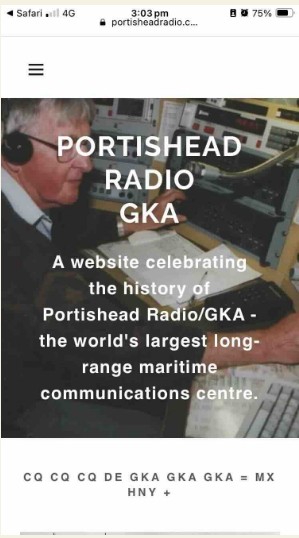
Portishead Radio GKA
From Roy VK6RR https://Awww.facebook.com/share/p/1X kHgtjWNEF/
External DSP Audio Filter
See this video regarding a Xiegu audio filter. https://youtu.be/LkWDdc1mjZg? si=v2pzyOE75EIK24Rm
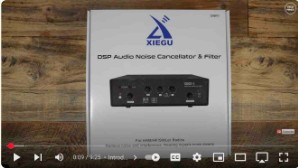
Looks like it might be just the job for old school radios without a CW filter. Ross [Thanks Ross. Garry Cratt VK2YBX at Tecsun Radios Australia lent me one of the Xiegu DSP audio noise filters for evaluation on CW.
I tested it some time ago on my Kenwood TS-50 which already had a narrow CW filter (before it developed an unrelated fault, and had to be added to the repair skyscraper pile).
On the narrow receiver, the filter was somewhat redundant – the receiver had already rejected signals outside the narrow CW passband.
I didn’t test the unit on SSB (ess-ess- what?), but interestingly on CW, the continuous CW tones totally confused the digital processor; I think the Digital Signal Processor treated the tomes as unwanted heterodynes, and notched them out automatically.
Terrific for phone in a crowded band with people tuning up, carriers from broadcast stations and out-of band front- end overloads etc, but not good for CW! The filter was effective at completely notching out even desired CW signals!
I’d packed the box up ready to send back to Garry, but Ross’ note has reminded me that I should give it a try on my 3KHZ wide-as- a-barn-door TS-120S, to see if it handles things better on that one.]
Morse Training Net
Nic VK7WW runs a Slow Morse training net every Wednesday at 7pm EDST on 3580 for 30 mins. He uses the callsign of the Northern Tasmania Amateur Radio Club VK7TAZ on that net.
Many of our team learned Morse code with the support of Nic, and the weekly training session comes highly recommended for anyone who wants to learn the Code, or simply brush up. Everyone’s welcome – 3580KHZ at 7pm Eastern time every Wednesday.
The NTARC also feeds the CW live via the Discord phone / computer audio stream, and previous weeks’ recordings are available. One of the many listeners on Wednesday: + Ihave been following the activity fromVK7TAZ on Wednesdays for a fair while now.
I make use of the SDR in Stowport normally but would like to try the audi stream to see how it compares. It is only recently that I have installed Discord and have been kept in the loop thanks to Jordan, Keiran and Phil enabling me to log on.
So with our QRS net and Nic’s net I am spoiled by being exposed tc alively and encouraging CW community. And Nic’s Icom 706 topic is very interesting to me as I have one and hope to keep it in good condition.
Stay safe Richard VK6HRC Contact Nic VK7WW for more info about the Slow CW training net and the DISCORL chat: nicholaschantler@hotmail.com – or just join in every Wednesday on 3680KHZ at 0800Z.
Contact Nic VK7WW for more info about the Slow CW training net and the DISCORD chat: nicholaschantler@hotmail.com – or just join in every Wednesday on 3580KHZ at 0800Z.
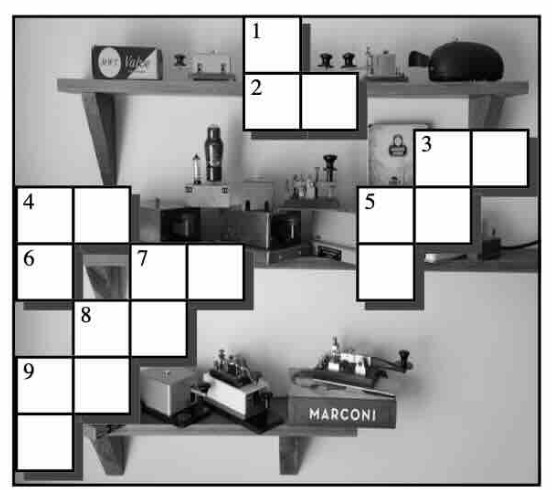
A Nad nd Bw J) Bowe rere Ee Ee from Kees VK1KVSS and Hermann VK2IXV Wikipedia definition: Procedural signs or prosigns are shorthand signals used in Morse code telegraphy, for the purpose of simplifying and standardizing procedural protocols for landline and radio communication.
The procedural signs are distinct from conventional Morse code abbreviations, which consist mainly of brevity codes that convey messages to other parties with greater speed and accuracy.
However, some codes are used both as prosigns and as single letters or punctuation marks, and for those, the distinction between a prosign and abbreviation is ambiguous, even in context.
Across
Down
Vown 1. Invite receiving station to transmit 3. All after 4. End of message 5. Understood; verified 7. Understood; verified 8. End of transmission – only called station to respond 9. Pause; Break for commencing transmission of text How did you go?
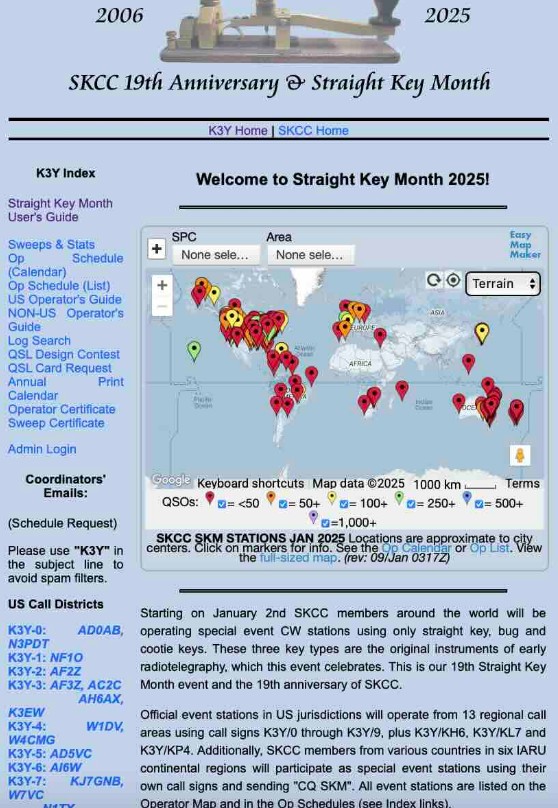
Click on the image or contact Ron VK4JE the SKCC K3Y 2025 OC Coordinator vk4je@vk4je.com for more info
RUOK?
Life’s ups and downs happen to all of us. People can experience things like relationship breakdowns, financial difficulties, health issues or periods of major change at work, home or in life.
The people in your world won’t always tell you if something’s troubling them, so it’s important that you make asking, ‘are you OK?’ a part of your everyday relationships with friends, family, teammates and colleagues.
The earlier you give someone an opportunity to open up to you, the sooner they can find appropriate support or, if needed, professional help and the greater the chance that together, you can stop small problems from becoming bigger ones.
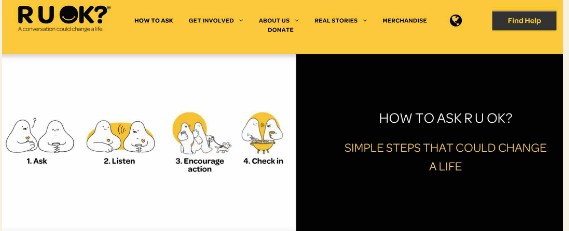
It’s not always easy to keep the conversation going when someone says they’re not OK, but it could change a life. RUOK has released interactive conversation role-play videos to help you
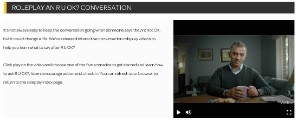
Learn what to say after R U OK? Click the image above then click play on the video and choose one of the five scenarios to get started and learn how to ask R U OK?, listen, encourage action and check in.
And if you suspect that you are not in a good space yourself, please consider having a chat to a GP, me or one of the other CQQRS team you’re friends with, or contact Beyond Blue and have a chat by phone (1300 22 46 36) or on-line https:/Avww.beyondblue.org.au/get-support/talk-to-a-counsellor/chat
You can talk to the Beyond Blue Suppor Service whenever you need brief telephone or online counselling. We’re here to listen. You might:

• be having a really bad day ¢ feel overwhelmed and not know where to start ¢ have diagnosed anxiety or depression ¢ need help to support a partner, family member or friend.
Beyond Blue can also help you find the right mental health services for you if you need extra support.
Brain Teaser
Jules Perrin JP VK3JFP has created a terrific resource to help guide learning for all levels of amateur radio licenses: https:/Awww.julesworkshop.net/Amateur%20Radio.html
Foundation Questions:
What is the difference between telegraphy and telephony? What is the distress signal in telephony and telegraphy? What is the urgency signal in telegraphy and telephony? What are the three features in a receiver? Signal reports can have three levels.
What are they? What is an RF burn and where can you get it? What is an isotropic antenna? Explain what SWR is. fan antenna is cut for a frequency range the SWR is higher only at the bottom end of the amateur frequency band, what can you do to fix this?
Fan antenna is cut for a frequency range the SWR is higher only at the top end of the amateur frequency band, what can you do to fix this? What are the colours of the wires in a 240V cable? What is the purpose of the chassis earth?
To measure voltages at the power point, how would you set the multimeter range? Answers next week.


Di-dah-di-dah-dit
So back to the Slow CW QSO practice Group.
Next Tuesday’s Net
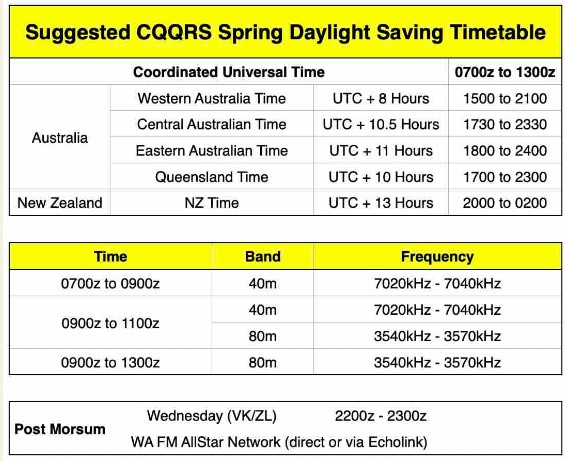
Our CQ QRS Group will be on as always on Tuesday from around 07002Z until about 1300Z; see below for details. There’s usually people around until after 1300Z – so keep calling in the segment of the band designated in the table below until you catch someone.
I should be on as usual from home in NSW or via the Remote at Bedfordale WA, and I’ll also be watching the proceedings using the VK6QS and Tecsun SDRs in WA and NSW respectively.
Doesn’t matter whether you’re brand new and want to try just exchanging callsigns and RST reports, or you’re ready for a good old rag chew. We’ll have fun. Hope to hear you there.
Please let me know via our Reports form bit.ly/CQQRSNET who you work or hear on Tuesday’s Group. The report form closes at lunchtime (Eastern Australian time) on Thursday.
Post Mortem
Richard VK6HRC will run our phone Post Morsum on the South West AllStar net (via repeaters and hotspots all over WA) from 0600 WA time, then from 0700 WA time on 80m (3605 LSB).
For the 0600 (2200Z) net, if you’re in WA all you need is an FM 2m or 70CM transceiver and an AllStar node nearby. If you’re elsewhere in the world, if you have an AllStar node (or you may be able to connect your local AllStar-enabled repeater to the net via DTMF codes), connect to node 42482, 51077 or 42732 – these are the hubs that tie the network of repeaters and nodes together in WA.
If you don’t have access to AllStar, you can connect to the network via Echolink. On Echolink, search for one of the following Nodes: * *VK6-HUB* * VK6ZGN-L * VK6RMH-R- * VK6NRA-L Let me know (cagrsnet@gmail.com) if I can help with connecting via AllStar or Echolink.
If you’re in WA and can’t connect, give Richard a call on 3605kKHz SSB from 0700 (23002).
Teamwork
Thank you so much to our team of 32 contributors: DL3YZ, MONNK, VK1AD, VK1KVS, VK2ASB, VK2FG, VK2GAS, VK2IXV, VK2TIG, VK2WP, VK3AFH, VK3BWN, VK3CTM, VK3DRQ, VK3FG, VK3JFP, VK3TBR, VK3SYE, VK5AO, VK5CZ, VK5FD, VK5KFG, VK6HD, VK6HRC, VK6IS, VK6JDM, VK6KD/3, VK6NW, VK6RR, VK6WE, VK7KPC, VK7TA.
Thank you team. GU CW on Tuesday, mb Mark Bosma VK2KI / VK6QI Beautiful South Bowning NSW mark.bosma@icloud.com non impediti ratione cogitationis

An Ode to CW – thanks to David VK3RU: In days of old, when ops were bold, And sideband was not invented, Words were passed by pounding brass, And all were quite contented. – Unknown author
About the CQ QRS Group
Frequencies and Times
QRL?
So tune around and call anyone you hear, or find yourself a quiet spot in the designated segment, send “QRL?” and if the frequency is quiet, start calling CQ QRS at about 75% of the speed you’re comfortable receiving at; hopefully responders will match (or send slower to their comfort level).
And if you are already having a QSO and someone sends “QRL?”, respond with “R”, “C”, “Y”, “YES” or QRL to let the caller know that the frequency is in use.
If we’re on 40m and you can hear that the band is open outside Australasia, perhaps consider calling 500HZ above each 1KHZ slot – to minimise the chance of having to copy our team through QRQ QRM that’s often dead-on the kHz markers.
If you’re proficient at CW and can race along at 20 or 30WPM – terrific, but please remember, the Group’s aim is to encourage participation and learning, not show how fast you can hammer the key.
Please send slowly where you can and concentrate on rhythm – listen to your side-tone, get that wrist action going and make a special effort to make it sound like perfect CW; the longer we go with our Group, the more I understand just how many non-transmitting listeners we have – and they will most likely appreciate your QRS!
So, if you’re an experienced operator, please try to send nicely balanced slow CW to give them a chance to practice and gain confidence…. they’ll reward you one day by coming up on air to say g’day and thanks – how good is that?
And if you’re new or like me, just rusty…. ignore the above… just have a go – the lather of sweat will be worth it and there’s plenty of time to get the details sorted out as you practice.
Matching
And also for the oldies like me, when you hear someone new, please match their sending speed – or slower. The person you’re replying to may not be as deft on the decoding as you – it may be their first ever CW QSO – remember your first?
Lather of sweat, key that refuses to send that you tell it, brain that refuses to decode those complex letters that were right there half an hour ago, etc!
PSE QRS
And if someone is sending too fast to comfortably copy – “PSE RPT PSE QRS” or “AGN? PSE QRS’ will make life easier for everyone…. and might just encourage other listeners to have a go themselves.
The other thing to remember – most operators are writing down what they hear… so when you put it back to them, expect a delay while they read your words of wisdom, before replying.
The aim is to give everyone a go at contacting others – no-one owns their calling frequency in this Group. So unlike working DX, if you hear someone signing off – jump in and call – doesn’t matter who was first on the frequency – we really are all good mates in this Group….
And besides, at the speed we’re sending, after a QSO most of us will have forgotten who was first!
If you really want to move off frequency (eg because of a spurious switch mode power supply signal that’s just drifted into the conversation), you could try sending an abridged callsign of the person you’re after, followed by “UP 5” or “DN 5” then K; then call that person on the designated frequency and keep your fingers crossed, they may have understood you and followed…
Landing Zone
If the band goes really quiet, call and listen on 7032KHZ (7028KHZ secondary) or 3555KHZ. If you catch someone, there’s no need to QSY – enjoy the frequency.
But don’t forget to tune around if it’s quiet – we have lots of operators with crystal locked transmitters – and they could be anywhere within the segments.
For those who are locked, or can only transmit outside the segments, send a message on our WhatsApp CQ QRS – Alerts group advising of your current frequency.
And of course, put the frequencies in a memory so outside of the Group, if you’re not tuning around, leave your receiver on one of the primary frequencies – you never know who you’ll hear (7032 is used in VK and ZL for SOTA / PARKS during the day so you’ll often hear activity there).
CW Tips
As always, for newbies, operating suggestions are available from the operating hints link here: https://Awww.parg.org.au/ _files/ugd/ebe236_ 3ca5ca08bb38429db4eee524bda2t97a. pdf. mb VK2KI / VK6QI