Below is a reconstruction of the 2025 03 CQ QRS RagChew newsletter designed to support full text searching. This reconstruction was built using OCR, and will contain errors.
To view the Mailchimp original, click here. To search the entire newsletter archive, click here.
Contents
- CQ QRS RagChew
- Last Tuesday’s Group
- Masthead Image
- Reports
- Reports & Comments
- Comments:
- From Keiran VK3BTV at Bibra Lake.
- From Richard VK6HRC at Padbury
- From Roy VK6RR at Geraldton
- Post Mortem Report
- This Week’s Topic of Interest
- On My Workbench
- David VASDBD’s set up at Kerikeri NZ
- 3D Printed Kneepad for Portable Ops
- Update on the Home Brew Amplifier
- Other News
- RST vs RSN?
- HNY Event Frequency
- From David VK6KD/P near Echuca Victoria
- Portable set-up at Kerikeri NZ
- Morse Training Net
- Practice CW Traffic Net
- Brain Teaser
- Di-dah-di-dah-dit
- Next Tuesday’s Net
- Post Mortem
- Teamwork
- About the CQ QRS Group
- Frequencies and Times
- Speed? Rhythm?
- Matching
- PSE QRS
- CW Tips
CQ QRS RagChew
It’s time to think again about this year’s International Morse Code Day quiz, held via Zoom in April. Richard VK6PZT has been running these events each year, and the participants all had a scream – great fun.
The event is anything but a serious event – it’s about having fun, not showing up how much you do or don’t know. However, I’d
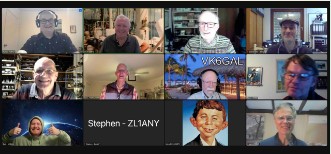
Like your feedback about whether or not you’ll have a go this year if we do run it again. Please let me know by email to cqqrsnet@gmail.com
I’d also like opinions on whether or not to run another CQQRS Corroboree – a simple contest aimed to encourage new operators to have a go – perhaps just simple callsign, RST and serial number exchanges? No prizes, just a bit of fun and some CW exercise.
Perhaps we might run it in conjunction with, or as an alternative to the International Morse Code Day quiz? Thoughts? cqgrsnet@gmail.com
CQQRS Website I’m always looking at how we can reduce the length of the RagChew newsletter – recognising that most subscribers just don’t have the time to wade through all those words!
Last weeks edition for instance – if you’d printed it out one page per A4 sheet – you would have helped destroy 35 pages worth of trees – most editions run to 35 to 45 pages!
However, some of the information is repeated every week – particularly the info about the net and the Post Morsum – which would sit better on a website.
Are you interested in helping to set one of those up using say Google Sites – which is a basic system that’s not too difficult to learn by doing?
Additionally or alternatively, do you already have a web hosting service that you haven’t used all of the hosting slots and could donate one URL to the team?
This shouldn’t cost you anything and the website would still be physically located on the Google Site – you’d be donating one URL re-direction (aka Web Hosting). Thoughts?
Last Tuesday’s Group
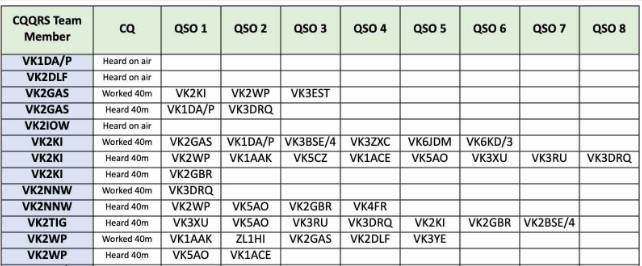
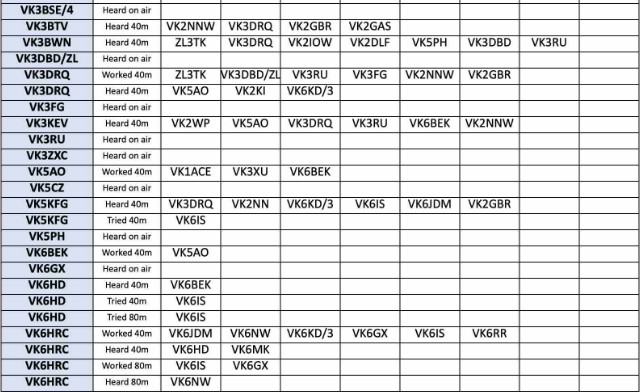
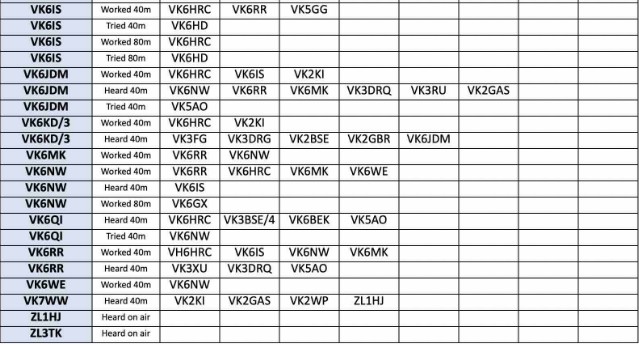
So back to this week’s net; here’s the list of the 48 stations heard:
Masthead Image
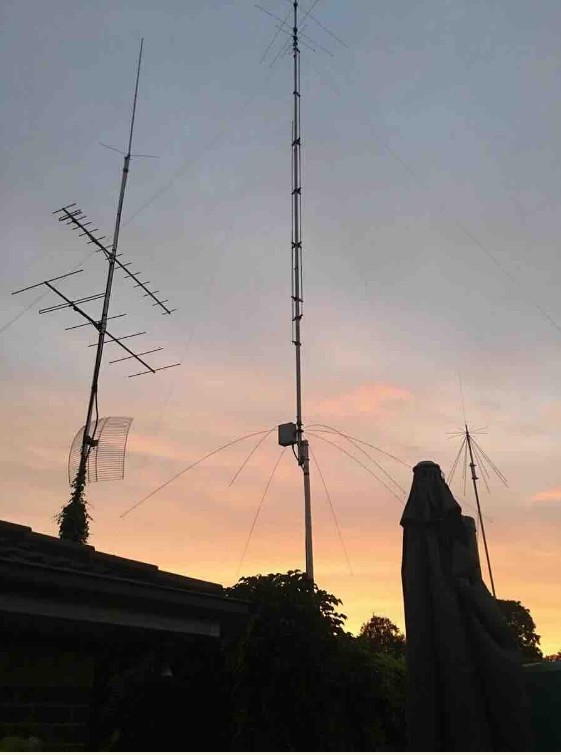
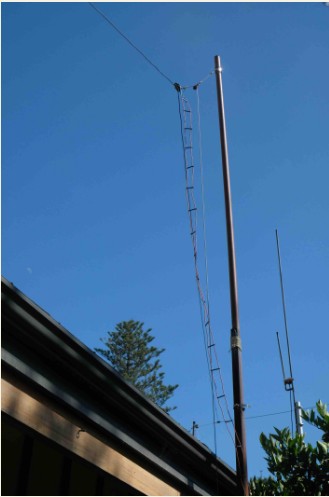
And thanks this week to David VK3RU for this nice shot of his antennas at Burwood.
Reports
After next Tuesday’s Group, please send me a list of who you worked and / or who you heard using our web form here: bit.lv/CQQRSNET

Please help attract new and old team members to have a go by submitting your report each week. Submissions close lunch time (Eastern Australian time) on Thursday.
If you hear or work one of our team on a different band on Tuesday, please just use the 80m report area and use the instructions to annotate which bit applies to which band.
Cheers, mb Mark Bosma VK2KI / VK6QI Beautiful South Bowning NSW mark.bosma@icloud.com non impsditi ratione cogitationis
Reports & Comments
The spreadsheets above show the known stations on last Tuesday’s Group. Comments from the reports I’ve received follow:
Comments:
[40m] + My electronic keyer is being serviced+updated, so I missed the CQ QRS net tonight. However, I managed to listen to the band and heard pretty good amount of activity. Good job guys!
From Keiran VK3BTV at Bibra Lake.
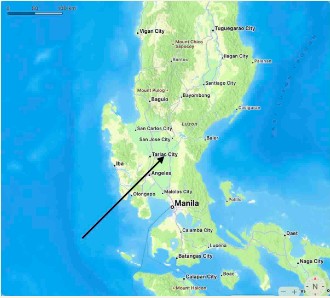
From Kelran VASBIV at Bibiciat, Nueva Ecija, Philippines
[40m] + Sitting on our front porch in a village in Northern Philippines, drinking San Miguels and getting eaten by mozzies while waiting for my XYL to return from the market. Listening via VK5PH Ironstone SDR.
From Donald VK6JDM 20KM west of Esperance
[40m] + It was good to have QSO with the man who has led me down the path of Morse depravity. Unfortunately the path was not great and a strong station came up right on top of Mark.
+ Apologies to Peter VK6IS – we managed to connect but I was interrupted and lost the contact. I was so sure that VK6KRC would join us tonight that when VK6HRC called I called him KRC in my reply.
Mind you Richard (VK6HRC) and I are both sure Bob KRC was somewhere there in the background as he promised. + Lots of stations to practice reception of Morse with..
+ The keyed amp seems to be working OK – pushing it just to 50 watts at present as I finish it off. On the analyser it has 60 dB suppression of backwave and all harmonics are 50+ dB down. On scope the keying looks a reasonable shape.
Hopefully it sounds OK to the receiving ear.. * Will miss next week but looks like I have the week after off, so excuses have gone. [Multiple examples of the proverbial leading horse to water in your report Donald!
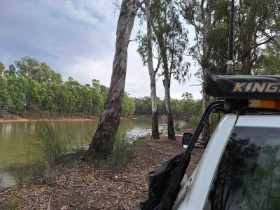
From David VK6KD/3 at Echuca VIC (Murray Riverside camp)
[40m] «Very busy on 40m. Was hard to find a clear frequ. Had to call it a night early as the mozzies were eating me alive, hihi.
From Richard VK6HRC at Padbury
[40m] * Band conditions not great – some QRM but a fun night all the same, thanks to all..
[80m] * Thanks to the operators that spared the time to come up..
From Roy VK6RR at Geraldton
[40m] + I was only on and off. The QRN clashes were very strong, having to ask several times for rpts but nevertheless, it was another well enjoyed night.. + My favourite SDR was out on holidays, so no many stations were heard with the NOISE and QRN..
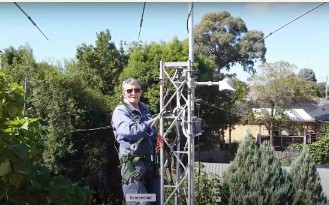
[40m] « still mostly WAs on 40m this week.
[80m] * an few stations on 80m this week,. «but not much extra curricular activity. either, this week.. * and still have difficulties in getting into Perth, from this location..
[40m] + There were no signals when I tuned in about 5 pm and, having other duties, decided to try again later. + At 7:30 I tried 80 metres with no luck but found 40 metres was tinkling with signals.
Unfortunately they were mostly fairly weak and at speeds way beyond my decoding ability. + As I was about to switch off VK6NW‘s signal sounded loud and clear at just the right speed. I answered quickly and enjoyed a @SO with Wayne.
Amazing how a recognisable signal lifts your spirits!. [There you go Daniel – well said!]
From Geoff Hart-Davies VK6HD at Mandurah
[40m] «Very quiet on 40 and about S7 on 80.
From your editor Mark VK2KI at Beautiful South Bowning NSW
[40m] * Interesting conditions on 40m on Tuesday. The band opened up and down the East coast and across to SA, but signals weren’t strong here until later in the evening.
There was plenty of DX operating in the designated segment, particularly Japanese stations – which made things interesting with my TS-1208S with only a 3KHZ filter..
«| chatted to Armin VK2GAS at Norwest then Andrew VK1DA who was portable at Mount Coree near Canberra..
• After taking a break for dinner I came back and was excited to hear John VK3BSE; John had participated in our Corroborees and International Morse Code Day Quizzes in the past – so it was terrific to hear him on again. And as an added bonus, John was
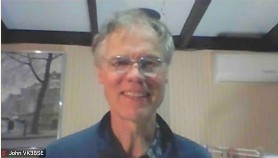
Operating portable up at Maryborough in Queensland at a Scout Jamboree using an off-centre dipole – but he had a big signal into Beautiful South Bowning.
+ I was then called by Gerry VK3ZXC who had had his first ever CW QSO with me on our net back in November; however, I was struggling with the QSB – and could only give him an RSN 232 report on peaks; great to hear Gerry on again..
+ I came across Donald VK6JDM West of Esperance calling CQ and testing his new amplifier at 50 Watts; he was RSN 342 on QSB peaks, but despite many requests, I could only get bits and pieces of his report to me – sure enough the QSB was selective and the QRM frequent!
Donald was the only VK6 making it across the Nullarbor this time..
• I rounded out the evening with the regular chat with David VK6KD/P, this time at Echuca. David’s signals were marginal, peaking at RSN 552 when the QSB and QRM allowed; like Donald, I annoyed David with multiple requests for RPT AGN until I finally got it on a peak; sorry to keep you out in the mozzie zone mate.
Also from your editor Mark VK6QI via the VK6QS KiwiSDR near Brookton
[40m] + Using the VK6QS KiwiSDR, I heard Wayne VK6NW calling CQ with a good signal. So I decided to have a go with the VK6SR Southern Electronics Group Remote HF station at Bedfordale again.
Unlike last time, it coupled to the antenna adequately, but do you think I could get it to respond to my Morse key? Nope! I also tried the Test function which provides side-tone only – nothing.
Ok, let’s try the SEG’s VK6CRO Remote up at Carnarvon; for the first time for yonks it wasn’t being used for 6m FT-8, but once again, I couldn’t get the thing to key; looks like I have a problem with my serial-to-USB adapter that goes between the key and the computer here.
Sorry, Wayne – no luck this time!. + Later in the evening when I was chatting to John VK3BSE/4 at Maryborough, saw that he was coming through to WA, but there was nothing from any of the other far Eastern staters further South, including me (VK2KI).
• A bit later though I heard Shaun VK6BEK up at Quinns Rock chatting to MaityVK5AO – interestingly Maity was marginal copy on the SDR – yet Shaun who normally struggles with local switch mode power supply and solar inverter noise was able to work him; hopefully that meant that Shaun was well on the way to solving the noise problem perhaps?
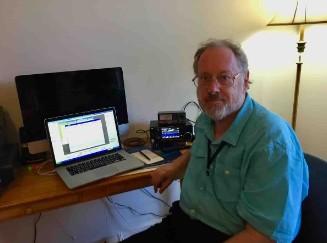
[40m] ¢ I looked around 40 and worked Peter VK3YE and then waited for my old friend Drew VK3XU, but at changeover Drew was grabbed by a VK5 for a long chat. ¢ Sol tuned around and heard VK2KI having a lengthy chat but then found my CW Elmer Manny VK3DRQ.
Always good to chat with Manny. At that point it seemed Drew had gone QRT and the band was becoming quiet, so I switched off and SK.
Post Mortem Report
I’m happy to report that the AllStar/Echolink and VK6RLM network was in better shape for this week’s Post Morsum net on Wednesday.
On this morning: VK6KD /3 David VKeQI/M Mark VK6NW Wayne VK6HD Geoff VK6HRC and VK6MRB Mulligan, VK6KRC Bob our regular SWLs checked in before the net.
David checked in from Echuca/ VK3 land where it has been hot, prompting the need to spend quality time cooling down in the Murray river. David had a good evening until the the mozzies took over!
David and Pauline were about to get back on the road heading on to the next camp, hopefully fewer mozzies there. Mark checked in from the mobile shack to report that he had fun working the Eastern states, tried to operate from the remote stations in WA but unable to unfortunately.
No doubt there will be more about that in the Ragchew. Wayne iwa enjoying his time off from his regular duties with SES to have fun on 40 Mx and 80 Mx and also get a bike ride in between sessions.
Geoff called in while on his regular morning walk around the Mandurah Estuary to let us know that he tried 40 Mx but was unsuccessful. On the bright side he hopes to on air next week with his new QMX and linear.
I managed to get on and annoy a few very patient operators in spite of the savage QRM! I think a nearby solar installation might be the culprit, luckily it was not there all the time.
Thanks to all on the net 73 Richard VKGHRC [Thanks again for running the call-back and running up the report Richard]
This Week’s Topic of Interest
Our beloved leader asked if I could shed some light on how amateur radio licences work in the UK; you might be (incorrectly) assuming that they work in a similar manner to licences in Australia and New Zealand.
I’m by no means an expert, but I am in the UK, and do hear UK callsigns every day, and of course have a UK callsign, so I have a little experience! To help decipher what’s going on, there are two important things to bear in mind. 1.
UK Amateur Radio licences are not recycle; once issued they are gone forever! There is a possibility of claiming an old callsign, for example a callsign once used by your grandfather, but in general you get issued a brand new one.
One reason for this is that the licence is free and for life. The regulator (Offcom) has no idea once it’s issued a licence whether you still want it or are even alive.
The only obligation on the licensee is to revalidate their licence every 5 years (online and free). 2. Like Australia, the model has been tweaked over the years, but the tweaks are not retrospective (your licence is for life), so it can be a little confusing!
Like all countries, the UK has a number of prefixes allocated to it for licensing things like radio amateurs, ships, planes etc. You will probably recognise G as a UK prefix, but because of my first point, we have now run out of G callsigns to issue.
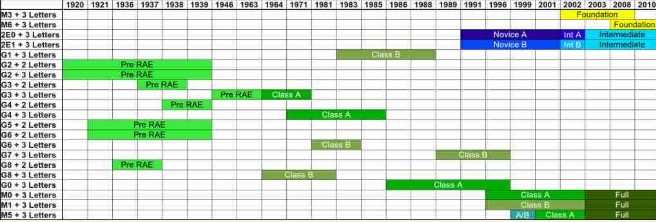
There are 3 classes of Amateur Radio licences * Foundation * Intermediate * Full Your privileges increase as you move through the classes, for example power levels. Atypical UK callsign has the format: [Prefix] + [Region Number] + [Suffix] 1.
Prefix + The prefix indicates the type of license: + M— Modern prefix used since the 1990S – full Licence + G— Older prefix; often associated with licenses issued before the 1990S – full Licence + 2—Used for intermediate license holders.
+ Mé / M7 / M3 — Used for foundation license holders. 2. Region Number This number can mean something, for example foundation licences are always Mé/M7 or M3, but as the licensing model has changed several times you cant reliably infer anything from it.
A bit like VK7 always used to mean Tasmania – but that may not always be true after the Class license was introduced in Australia. 3. Suffix The suffix is unique to the operator and typically consists of two or three letters.
Examples: + G4XYZ — A {ul license holder in England. + M1ABC – A full license holder with a modern prefix. + 2EQDEF — An intermediate license holder in England. + M7GHI — A foundation license holder.
There used to be a requirement (no longer required by the regulator) to add a regional designator after the prefix to show where you were operating from. So G4XYZ operating in Wales would become GWAXYZ.
This is now entirely optional but most amateurs still use it. So G4XYZ is valid anywhere in the UK, whereas GW4XYZ is only used when operating in Wales. Just so England can join the party, G4XYZ could use GE4XYZ in England. This most useful on VHF and up.
These regional designators can be used on all licence types, but are entirely up to the operator if they want to do so. All callsigns issued before the current system (which also did away with the Morse test) became full licences.
Special event callsigns always start with GB. ‘Adding a /p or /m etc to designate you are a portable or mobile station is entirely optional now, and indeed you can invent your own suffix if you want. So G4XYZ/QRP a
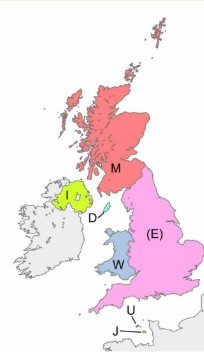
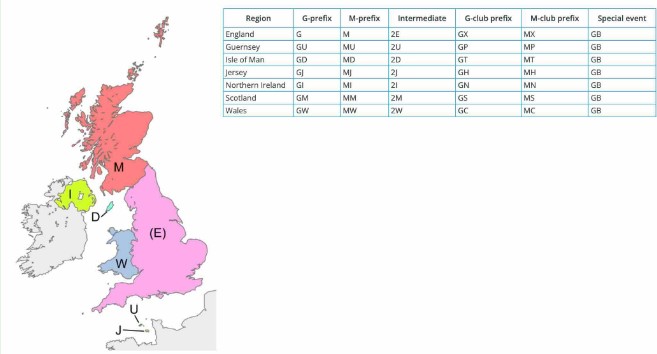
So in summary, if you want to learn the entire Morse alphabet and numbers, work the UK! And thanks to the South Bristol Amateur Radio Club for the images. [Phew! Thanks so much for the research Nigel! Trés compliqué, non? You’ll recall !
Fell over when you visited here and told me that the Office of Communications would not re-issue disused callsigns; I guess the RSGB has run out of puff trying to fix that that rather quaint and unique bit of bureaucracy?
Lots of (I’d suggest most) amateur operators in Australia and New Zealand consider both countrys’ regulators’ decision to disconnect the calisigns from regions (NZ) and States (Australia) to be just plain stupid!
Oh and by the way speaking of that, considering you’re planning on spending considerable time in Australia again, perhaps it’s time to consider getting an Aussie callsign, similar to our member Gary WAGAL / VK6GAL has done so that he can operate the VK6 Southern Electronics Group Remote station without causing too much confusion?
There’s lots of VK1, VK7 and VK8 two-letter cailsigns available. Thanks again Nigel.) If you’d like to contribute something of interest to the QRS community, please let me Loe er po oP ee Fa Teg a ay aT pe a pa

On My Workbench
David VASDBD’s set up at Kerikeri NZ
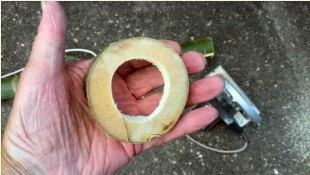
Here in Kerikeri I have a dipole for 20m and one for 40m the centres supported on a bamboo pole which as you may know are pretty well almost weeds here in New Zealand – they grow to about 50-60 ft.
The Kiwis plant hedges of them for windbreaks – prolific growth and very effective. Just a couple hundred yards away a clump grew and two years ago when last here I asked permission from the owner – he said help yourself – so I got two plus three in stock.
They were green then and I trimmed off the surplus growth and chopped /planed sawed most of the knots off – which was no easy task – tough as old boots. The poles were laid behind the sheds to dry out for future possible use.
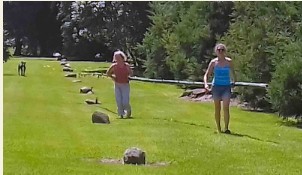
One of the ‘staff’ kindly carrying a 40 foot bamboo pole back home
Toroid? Avocado? Nope – bamboo – 6 inch diameter at the base, but unbelievably light
I had made use of one and lashed it up to an existing post to support my wires, but that one was taken down some time ago in the interests of keeping the place tidy (22), so this time I used a dry one which at about 40FT of usable height .
It is hard, unbelievably light and was so easy to rear up to a vertical – amazing. So this time I made up a pair of resonant dipoles one for 20m and one for 40m – fed with same coax.
I used 234 divided by freq to arrive at feet for a 1/4 wave – the GDO (dip oscillator actually, as it’s solid state) said they were about right, but something seemed amiss – although I have logged around 70 QSOs from here, I am not happy and have added another dipole for 20m – an inverted-vee on a raised veranda for comparison – and it is just a shade better that the high one.
The 40m dip is giving me suspicious readings and I have a hunch something is wrong; just a suspicion but contacts have been made, which almost restores my faith – but not quite.
So I spent most of the day removing checking and changing the length by a couple of feet, which I had calculated it needed.
As a flyer you will well know the good advice “Always believe your instruments” but today mine have baffled – the suspicious readings were completely unchanged in the least after all the time I spent out there with a soldering iron an a very long mains cable.
I even changed the coax length as I am aware that certain lengths can cause confusion. It was most of a day wasted I feel and now a decision has to be made: scrap the lot and do it all again! So I have a dipole I made for 80m probably two years ago with traps in that for 30 and 40m.
Often these sort will also load up reasonably well on other bands with an aerial matching unit (| hate calling them ATUs as they just DO NOT tune aerials); my Elecraft K3 has a very capable one built in.
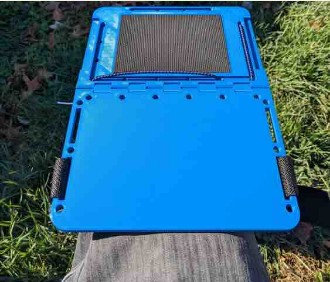
From Geoff VK6HD The other day I bought a cheap 3D printer from Jaycar – $250 for a brand new Crealty Ender 3 V3-SE.
3D Printed Kneepad for Portable Ops
What fun, and got it across the line because I promised to design and print outdoor table cloth clips for the Plucky Little Memsahib. Have printed up wire winders, a 4 x HT holder and am now doing a very nice aviator style knee pad for my new QMX et al.
Update on the Home Brew Amplifier
Update on the Home Brew Amplifier from Donald VK6JDM On Tuesday evening I was driving the my new home brewed amp (see RagChews 52/2024 and 1/2025) with a Direct Digital Synthesis oscillator. The amp has two stages that are keyed in the preamp stages.
It accepts tens of milliwatts and puts out 100 watts. I am just running it at 50 watts currently while I check all the heat sink temps stay cool etc.
It looks clean on spectrum analyser – back wave -60DBE, harmonics all 50DB or more down and key shaping looks OK to my non-CW eye on the oscilloscope. Hopefully it sounds OK. Ithas been a few months in the making.
I decided it was silly having power amp stages for 100 W in each of my single-band rigs so I have built this to cover 80, 40 and 20 and I will drive it with low level transmitters from now on.
I have built the SWR meter into the amp and despite being housed in a RF saturated environment it performs correctly when run forward and back with test mismatches. 73 Donald Howarth VK6JDM.
Other News
Other things I’ve received from our 200-odd readers.
RST vs RSN?
From Mark VK2KI / VK6QI David VK3DBD recently asked about the new-style signal reports he’d heard on our net. Rather than the common RST – eg 599 reports – he’d heard people sending reports of 594 or even 590, and wondered what that was all about.
Well, perhaps we should ask Stan ZL3TK who introduced the style to the CQQRS net some time back? Stan sald it was actually an Aussie idea that made sense to him, and he suggested that the CQQRS net might be a good way of floating it.
The thought of changing what had become a rusted-on tradition of radio telegraphy seemed to me to be a “very brave move Minister”.
However, it made sense; instead of sending a Tone report of less than 9 once in a six-sigma, why not replace the Tone score with a more useful bit of data – the strength of the background noise.
This would give a bit of an indication to the sending station just what sort of signal-to- noise ratio he or she was achieving at the other end.
And yes, I know, that with Automatic Gain Control in the receiver, the difference between the signal strength and the background noise bears little resemblance to S/N in the listener’s shell-like ears – but you get the drift I’m sure. ‘Some examples might help.
* An RSN of 554 indicates that the signal is S5 and the background noise is S4 – so there is still a 6dB fade margin available. + An RSN of 355 indicates that the signal is at about the noise level, and hence the readability is 3 – marginal (especially in QSB).
+ RSN 354 might indicate either QSB or QRM is causing the readability to drop. So on the CQQRS net, I now often use RSN instead of RST; I usually precede the report with the letters RSN to indicate that I’m using that system.
For a new operator, I may revert back to RST to make it easier to decode the report – most ops having practiced RST when learning the code.
Similarly, the other time I use CW is for SOTA/VKFF Parks contacts – and if conditions are marginal or I’m working someone who I think may not be familiar with RSN, I’ll revert to an RST with its redundant 9.
So when you hear UR RSN 574 RSN 574 RSN 574 on the net, you’ll be able to refer back to this article to be reminded about what it means. Cheers, Mark VK2KI / VK6QI
From Ross MONNK In the last edition of RagChew, David VK3DBD asked if the published frequency of the HNY DX Event (14.060.50) was a typo. The Editor replied that it wasn’t but I thought I’d briefly explain why it was chosen.
We were operating on the 20 m band (one of the most popular bands with European stations) between 10 am and 11 am on a European morning. That meant that, at our end of the Long Path, the band would definitely be crowded.
Lower down the CW portion of the band is often occupied by contest mayhem. The European QRS frequency is 14.055 so we didn’t want to block that. Instead we went even higher in the band.
That strange frequency was intended to fit in between operators using the exact KHz frequencies – with a narrow CW filter, you can easily squeeze into the gap between those, and they’re not so often used.
HNY Event Frequency
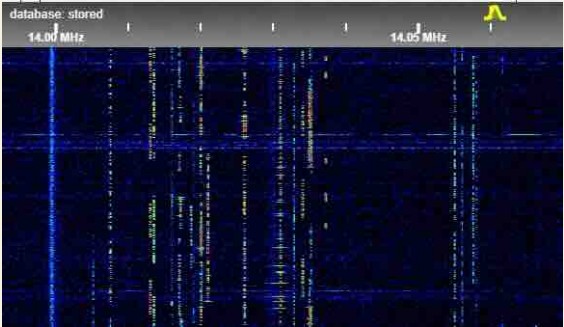
As it turned out, there was a lot more activity around us than we expected. In retrospect, we should have chosen something around 14.045 MHz.
In fact, Mike DL3YZ and I were using 14.045.50 a few days ago for a DX experiment and, despite the band being busy all around us, we weren’t troubled by other stations at all.
So there’s a lot to be said for organising a sked on one of those odd (not a typo) frequencies. Ross MONNK
From David VK6KD/P near Echuca Victoria
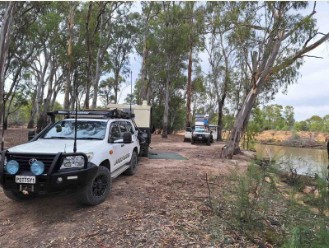
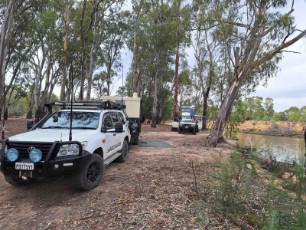
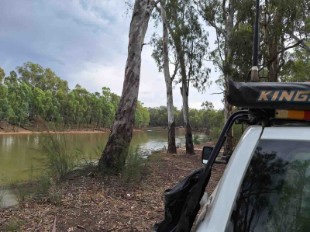
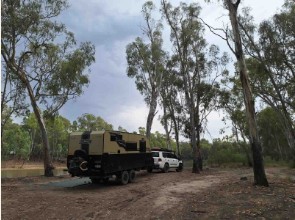
A quick snapshot of my camping site at River’s Edge bush camp, 15 min out from Echuca. We had some friends camping with us in their Troop carrier/camper. They were on there way back from Tasmania to Perth. 73s David VK6KD/3
Portable set-up at Kerikeri NZ
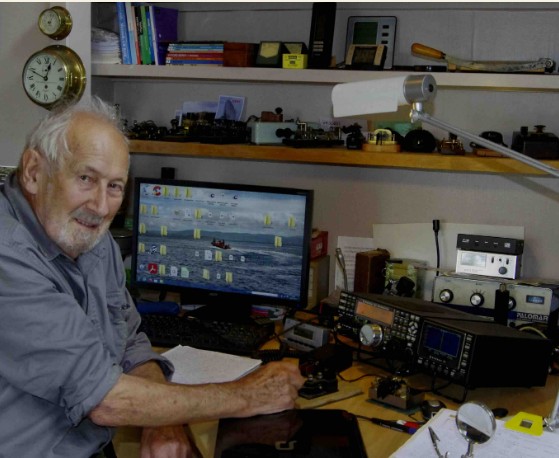
Rortable set-up at Kerikeri NZ from David VK3DBD I have rather too much gear here at my sister’s home in Kerikeri, which happened purely by chance.
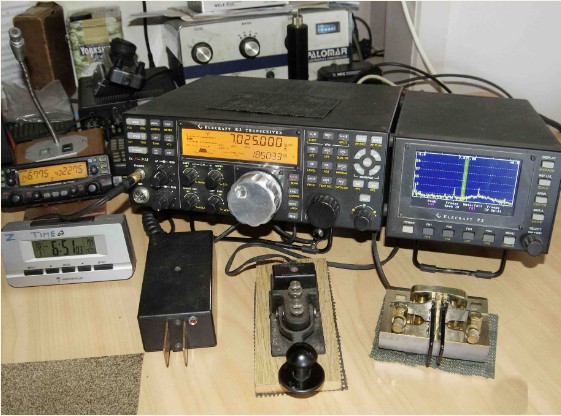
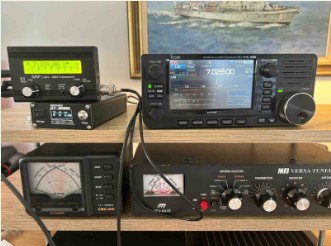
So this is my preference – the Elecraft K3, surely the most user-friendly ergonomic radio ever made for a CW op. With itis a “gimmick” that I added long ago, ina mad moment – the P3 visual display, which to my surprisel I found so useful that I bought another for my K3s.
I can glance at the screen and see any signals over about 12 kHz of the band or much – more or less – my choice. You can also see my touch key (left), the USA flameproof and one of my home brew paddles.
Left of main radio is a UTC clock and behind is a VHF dual band (IC-2720) monitoring the local repeater (nothing heard on it in the last month).
‘Sundry items behind on the shelf are a Palomar HF amp (not working-another pending task) and tucked away out of sight a TS-50 and an IC-7000 – the neatest most compact all-mode all-band 160M to 70CM 100 Watt radio…
And the most difficult to use that I know of! Time I had a disposal sale maybe? If any other user of the K3 notices the shiny tuning knob, it too is a home brew add- on – solid alloy and an exercise in milling…
It does not work any better than the original black one, but it looks nice! All these things keep me off the streets. Sldinte:- David
Morse Training Net
Nic VK7WW runs a Slow Morse training net every Wednesday at 7pm EDST on 3580 for 30 mins. He uses the callsign of the Northern Tasmania Amateur Radio Club VK7TAZ on that net.
Many of our team learned Morse code with the support of Nic, and the weekly training session comes highly recommended for anyone who wants to learn the Code, or simply brush up. Everyone’s welcome – 3580KHZ at 7pm Eastern time every Wednesday.
The NTARC also feeds the CW live via the Discord phone / computer audio stream, and previous weeks’ recordings are available. Contact Nic VK7WW for more info nicholaschantler@hotmail.com – or just join in on Wednesdays.
Practice CW Traffic Net
Practice CW Iraitic Net from Stan ZL3TK Every Tuesday, traffic with an Australian flavour is still being exchanged on 7.0257 MHz starting ~ 0840Z.
As has always been the case, traffic is sent slowly, some would say painfully slowly, and carries an invitation for QRS members to send answers to each week’s traffic the following week.
Anyone needing a repeat need only ask using the previously publicised protocol.
In future there may be additional traffic in the form of AQRs (answer quality reports), intended to raise standards further as well as provide general knowledge. 73 de Stan ZL3TK
Brain Teaser
Jules Perrin JP VK3JFP has created a terrific resource to help guide learning for all levels of amateur radio licenses: https:/Awww.julesworkshop.net/Amateur%20Radio.html
What is the distress signal in telephony and telegraphy? Answer: Mayday and SOS in morse code What is the urgency signal in telegraphy and telephony? Answer: XXX and pan What are the three features in a receiver?
Answer: Sensitivity, selectivity, and stability Signal reports can have three levels. What are they? Answer: Readability, signal strength and tone What is an RF burn and where can you get it? Answer: Burn from an RF signal.
Transmitter, transmission lines or antenna. What is an isotropic antenna? Answer: A theoretical standard antenna. Explain SWR. Answer: Standing wave ratio is the ratio of power up to power back.
Fan antenna is cut for a frequency range the SWR is higher only at the bottom end of the antenna frequency band, what can you do to fix this?
Answer: Antenna is too long Ifan antenna is cut for a frequency range the SWR is higher only at the top end of the antenna frequency band, what can you do to fix this? Answer: Antenna is too short What are the colours of the wires in a 240V cable?
Answer: Active – Brown, Neutral – Blue, Earth – Green Yellow What is the purpose of the chassis earth? Answer: If a component fails and allows the chassis to become live, the earth wire will prevent the operator getting electrocuted.
To measure voltages at the power point, how would you set the multimeter range? Answer: 240V or greater and AC.
Di-dah-di-dah-dit
So back to the Slow CW QSO practice net.
Next Tuesday’s Net
Our CQQRS Group will be on as always on Tuesday from around 0700Z until about 1300Z; see below for details. Doesn’t matter whether you’re brand new and want to try just exchanging callsigns and RST reports, or you’re ready for a good old rag chew.
We’ll have fun. There’s usually people around until after 1300Z – so keep calling in the segment of the band designated in the table below until you catch someone.
I should be on as usual from home in NSW or via the Remote at Bedfordale WA, and I’ll also be watching the proceedings using the VK6QS and Tecsun SDRs in WA and NSW respectively. Hope to hear you there.
Please let me know via our Reports form bit.ly/CQQRSNET who you work or hear on Tuesday’s Group. The report form closes at lunchtime (Eastern Australian time) on Thursday.
Post Mortem
Richard VK6HRC will run our phone Post Morsum on the South West AllStar net (via repeaters and hotspots all over WA) from 0600 WA time, then from 0700 WA time on 80m (3605 LSB).
For the 0600 (2200Z) net, if you’re in WA all you need is an FM 2m or 70CM transceiver and an AllStar node nearby. If you’re elsewhere in the world, if you have an AllStar node (or you may be able to connect your local AllStar-enabled repeater to the net via DTMF codes), connect to node 42482, 51077 or 42732 – these are the hubs that tie the network of repeaters and nodes together in WA.
If you don’t have access to AllStar, you can connect to the network via Echolink. On Echolink, search for one of the following Nodes: * VK2KI-L * *VK6-HUB* * VK6ZGN-L * VK6RMH-R- * VK6NRA-L When you connect to one of those stations on Echolink, you’ll be automatically connected to the WA AllStar network, and you should hear us on soon after the hour; let me know (cqarsnet@gmail.com) if I can help with connecting via AllStar or Echolink.
If you’re in WA and can’t connect, give Richard a call on 3605KHZ SSB from 0700 (23002).
Teamwork
Thank you so much to our team of 27 contributors: G4RWI, MONNK, VK2GAS, VK2NNW, VK2TIG, VK2WP, VK3BTV, VK3BWN, VK3DBD, VK3DRQ, VK3JDM, VK3KEV, VK3RU, VK5AO, VK5KFG, VK6BEK, VK6HD, VK6HRC, VK6IS, VK6JDM, VK6KD/3, VK6MK, VK6NW, VK6RR, VK6WE, VK7WW and ZL3TK.
Thank you team. GU CW on Tuesday, mb Mark Bosma VK2KI / VK6QI Beautiful South Bowning NSW mark.bosma@icloud.com non impediti ratione cogitationis

An Ode to CW – thanks to David VK3RU: In days of old, when ops were bold, And sideband was not invented, Words were passed by pounding brass, And all were quite contented. – Unknown author
About the CQ QRS Group
The team will be on again for our usual Tuesday arvo / evening Practice QSO Group.
Frequencies and Times
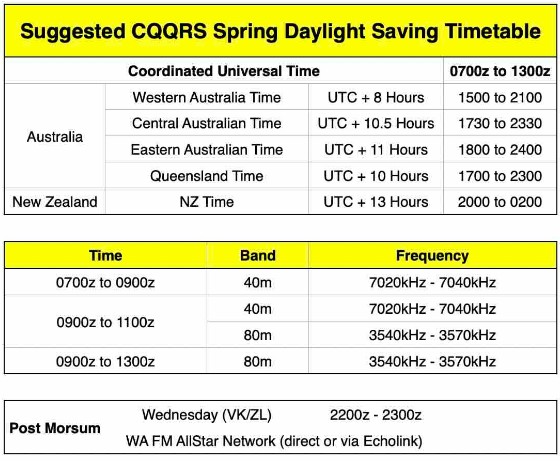
So tune around and call anyone you hear, or find yourself a quiet spot in the designated segment, send “QRL?” and if the frequency is quiet, start calling CQ QRS at about 75% of the speed you’re comfortable receiving at; hopefully responders will match (or send slower to their comfort level).
And if you are already having a QSO and someone sends “QRL?”, respond with “R”, “C”, “Y”, “YES” or QRL to let the caller know that the frequency is in use.
If we’re on 40m and you can hear that the band is open outside Australasia, perhaps consider calling 500HZ above each 1KHZ slot – to minimise the chance of having to copy our team through QRQ QRM that’s often dead-on the kHz markers.
Speed? Rhythm?
If you’re proficient at CW and can race along at 20 or 30WPM – terrific, but please remember, the Group’s aim is to encourage participation and learning, not show how fast you can hammer the key.
Please send slowly where you can and concentrate on rhythm – listen to your side-tone, get that wrist action going and make a special effort to make it sound like perfect CW; the longer we go with our Group, the more I understand just how many non-transmitting listeners we have – and they will most likely appreciate your QRS!
So, if you’re an experienced operator, please try to send nicely balanced slow CW to give them a chance to practice and gain confidence…. they’ll reward you one day by coming up on air to say g’day and thanks – how good is that?
And if you’re new or like me, just rusty…. ignore the above… just have a go – the lather of sweat will be worth it and there’s plenty of time to get the details sorted out as you practice.
Matching
And also for the oldies like me, when you hear someone new, please match their sending speed – or slower. The person you’re replying to may not be as deft on the decoding as you – it may be their first ever CW QSO – remember your first?
Lather of sweat, key that refuses to send that you tell it, brain that refuses to decode those complex letters that were right there half an hour ago, etc!
PSE QRS
And if someone is sending too fast to comfortably copy – “PSE RPT PSE QRS” or “AGN? PSE QRS’ will make life easier for everyone…. and might just encourage other listeners to have a go themselves.
The other thing to remember – most operators are writing down what they hear… so when you put it back to them, expect a delay while they read your words of wisdom: before replying.
If you really want to move off frequency (eg because of a spurious switch mode power supply signal that’s just drifted into the conversation), you could try sending an abridged callsign of the person you’re after, followed by “UP 5” or “DN 5” then K; then call that person on the designated frequency and keep your fingers crossed, they may have understood you and followed…
If the band goes really quiet, call and listen on 7032KHZ (7028KHZ secondary) or 3555KHZ. If you catch someone, there’s no need to QSY – enjoy the frequency.
But don’t forget to tune around if it’s quiet – we have lots of operators with crystal locked transmitters – and they could be anywhere within the segments.
For those who are locked, or can only transmit outside the segments, send a message on our WhatsApp CQ QRS – Alerts group advising of your current frequency.
And of course, put the frequencies in a memory so outside of the Group, if you’re not tuning around, leave your receiver on one of the primary frequencies – you never know who you’ll hear (7032 is used in VK and ZL for SOTA / PARKS during the day so you’ll often hear activity there).
CW Tips
As always, for newbies, operating suggestions are available from the operating hints link here: https://www.parg.org.au/_files/ugd/ebe236 3ca5ca08bb38429db4eee524bda2f97a. pdf. mb VK2KI / VK6QI