Below is a reconstruction of the 2024 50 CQ QRS RagChew newsletter designed to support full text searching. This reconstruction was built using OCR, and will contain errors.
To view the Mailchimp original, click here. To search the entire newsletter archive, click here.
Contents
- CQ QRS RagChew
- Last Tuesday’s Group
- Reports
- New Team Member
- Reports & Comments
- Comments:
- Post Morsum Report
- Other News
- From Beth VK2AO:
- From Gerry VK3ZXC:
- From Phil ZL1PB:
- From Jordan VK3ACU:
- From Noel Whittaker’s Noel News Investment Newsletter:
- Morse Training Net
- Brain Teaser
- Exam Questions:
- Answers from last week’s Quiz:
- How did you go?
- Di-dan-ali-aan-ait
- Next Tuesday’s Net
- Post Morsum
- Teamwork
- GU CW Tuesday
- About the CQ QRS Group
- Frequencies and Times
- QRL?
- Speed? Rhythm?
- Matching
- PSE QRS
- Landing Zone
- CW Tips
CQ QRS RagChew
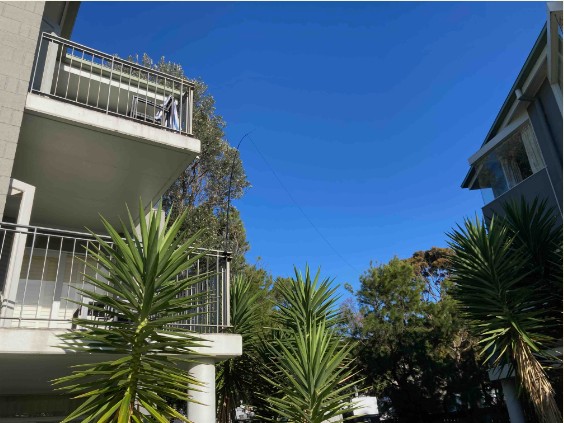
Inverted-L on a 3.6m collapsable fishing pole at our hotel in Lorne. Neat unobtrusive installation… pity it didn’t work!
Last Tuesday’s Group
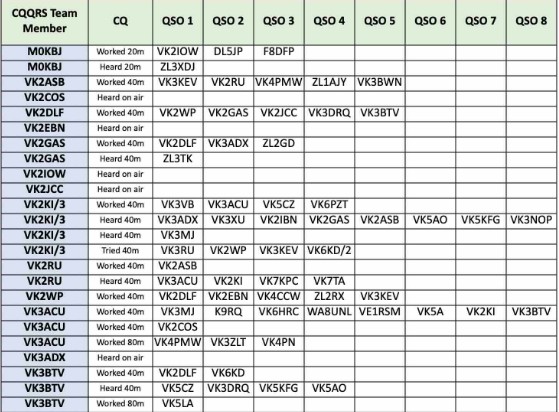
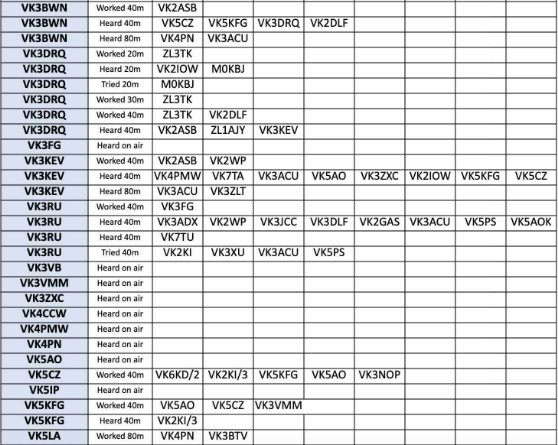
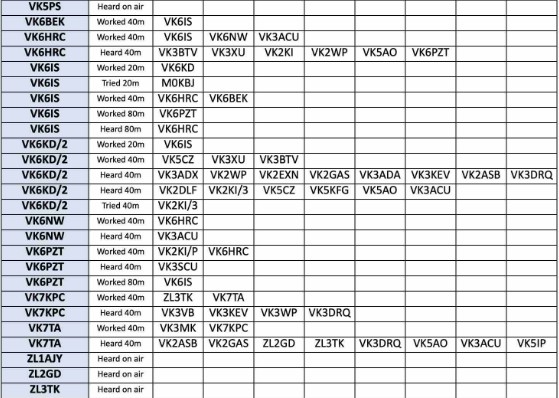
Here’s this week’s list of the 64 stations heard by our team members:
Reports
Many people have told me how much they enjoy reading our weekly RagChew. I enjoy compiling the newsletter, despite the time taken; reading the interesting reports from fellow QRS fans is nearly as much fun as being here and having a go – so thank you to everyone who makes the time to write a report each week – your efforts are very much appreciated by our readers and me.
So after next Tuesday’s Group, please send me a list of who you worked and / or who you heard using our web form here: bit.ly/CQQRSNET

Submissions close lunch time on Thursday. Thanks to the Superintendent of our Software Department, Nigel G4RWI, our web form makes submission just so easy! Thank you mate.

New Team Member
Welcome this week to Rob VK3ECH from Echuca. Rob has just starting out on CW and had been making a few slow Morse contacts on air when he came across our Tuesday evening QRS Practice QSO net. Welcome Rob and I’m sure you’ll have lots of fun.
I suggest to start out that you send CQs at about 75% of the speed you’re comfortable receiving at – most of our team members will respond at the same speed, which will make for relaxing QSOs (and yes, CW can be relaxing and fun on our nets as you gain confidence).
Cheers, mb Mark Bosma VK2KI/ VK6QI Beautiful South Bowning NSW mark,bosma@icloud.com ‘on impact rations cogiationis
Reports & Comments
The spreadsheets above show the known stations on last Tuesday’s Group. Comments distilled from the reports I’ve received follow:
Comments:
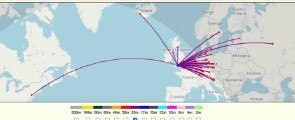
From Simon MOKBJ at Wolverhampton, UK + At 0730, I checked the International Beacon Project signals on 14100kHz and couldn’t hear any at all. I thought it was going to be a poor morning but I was pleased my persistence was rewarded.
It just shows how the bands can open up very quickly..
• Half an hour later and with the teapot poured, I kicked off a fun hour with nice natter with Pat VK2IOW. During our QSO I dropped my power from 20W to 10W and his excellent antenna was able to pick out the signal..
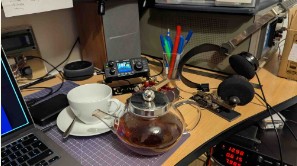
• I slowed down my CQ calls to about 8WPM Farnsworth and had a very good QSO with a new CW op John DLSJP, who was using his brand new IC-7610 for the very first time, and then with Mike F8DFP.
Every time I call at 12WPM or less I make great QSOs with ops who are looking to get on the air at a friendly speed.. + Another first for me: While I set my K1EL keyer to send a CQ call, I recorded my signals on the Ironstone Range Kiwi-SDR.
It’s great to hear how our own signals sound half a planet away.. [Great report again Simon – thank you. Your transceiver is smaller than your teacup! I hope that teapot is legal.
Hey, perhaps an email to John and Mike from you might encourage them to join our growing European bureau? By the way, I could have told you about the friendly operators who use 12WPM or less – we have a couple of hundred on our team down this way!]
From Ross MONNK at Once again, I had no luck on 20m during the DXpedition along the Short Path. It’s too cold now to sit outside on my camp chair with a directional antenna beside saltwater, so I’m limited to what I can do in a busy car park.
| was certainly getting out but obviously not as far as Australia and NZ. My theory is that something has happened to Propagation with the change of season. But I don’t know what.
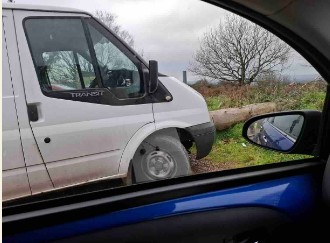
It doesn’t help when idiots like this park right next to my antenna. He had all the car park to park in, so why did he park right there? It’s not as if he wanted to admire the view – he jumped out and went for a walk.
Today I was trying out a MAT-50 – a magnetic mat for capacitively coupling roof-rack mounted antennas to the
Bodywork of a vehicle. It does the same job as my mag mount, which is now getting somewhat beat up. I tried it on its own; in combination with the mag mount; and the mag mount on its own.
Results were inconclusive – I got strange SWR scans from all configurations. My Li- Po battery might be reaching the end of its life but I don’t think a 1 v voltage drop during
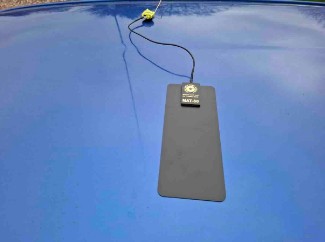
Transmit was causing the SWR scan issues. In the end I used both the mag mount and the MAT-50 together. Despite the lack of DX, all was not lost because, when I gave up calling “CQ VK”, I had a lengthy but pleasant natter with Mike DL3YZ (near Stuttgart, Germany) at a steady 13 wpm.
Then I did the same with Samuele IU2QBW (near Milan in Italy) at the same speed. Both Mike and Samuele had beautifully slow steady accurate sending that was a delight to copy. You don’t have to go “hell for leather” to get a glow from CW.
QRS has a quality all of its own. [The simple pleasure of QRS eh Ross? Interesting experiment with the different methods of capacity-coupling the ground connection to your car roof.
I’d be interested to see that the Smith Charts or SWR curves look like for the two options, along with a direct electrical connection to the vehicle chassis…if you can find one!
Also once the Winter weather becomes too lousy for portable operations, a summary of all of the antenna configurations might make an interesting read for us down here where the sun always shines and the sky is perpetually blue.]
[40m] + Pleased to work Mark portable in VK3 via a sdr in VK5. Then he broke thru to vk6 later in the QSO from the first floor balcony in Lorne. [Thank you Richard. Amazing, considering the poor antenna I was using with my plastic QRP transceiver]
[40m] + No DX for me as my hex beam is down on the ground being repaired. Next Tuesday will be ready..
[40m] + Lots of activity and QSOs. This gives me great opportunity practising receiving CW at different speeds..
[80m] + I connected my whip extension to my existing whip antenna hoping to tune up 80m. Radio still doesn’t like transmitting on 80m so played on 40m and 20m. I’ll try something different next week and hope to make some 80m contacts. 73.
[I’d hoped you could swing past our place on your way heading South, so we could do some trouble-shooting on your 80m problem David; what a pity that just when you’re in the vicinity, we’re down in Victoria on holiday :(]
• | was a late starter but heard some good sigs. Received wisdom is that a vertical antenna is no good for nearby stations: and it seems to be the case. Peter, VK7KPC near Launceston was only 429 here. What is the opposite of dx?.
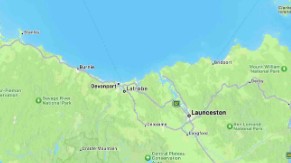
[40m] * Band conditions not good to start with, later on started hearing traffic from the East as propagation improved. Made good use of the VK3FSK Kiwi SDR to follow activity as well..
[80m] * Called at intervals but no luck !.
[80m] * Checked 80m at 1030UTC but there were no si
• Didn’t get a chance to look at 40m as I was home late, but fired up the TS-520 and hopped on the Boatanchor Net after dinner. At the conclusion I slipped down the band and heard VK4PN calling CQ QRS, so of course I answered.
Had a nice QSO with OM Sava with good sigs both ways. After we finished I went a bit further down the
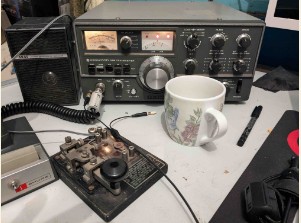
Band and called CQ QRS, where I was promptly answered by VK3BTV. Again, good sigs both ways and nice to get OM Kieran in the log again…See you next week!.
[40m] + it does get somewhat noisy after 6PM awst. + but there is still some signals to be heard, nether-less..
[80m] * signals have fairly fairly weak on all bands, for a few weeks now,. * and it’s difficult to get some contacts, as an result of those condition:
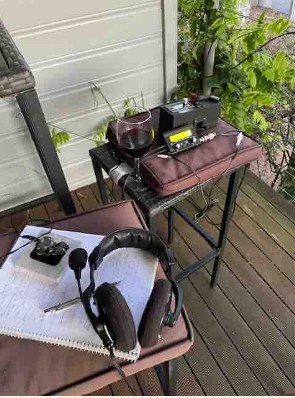
[40m] * Good monitoring spot and fun to set up on Phillip Island on a holiday break. * The antenna is a 10m squidpole (from sotabeams) – just visible (grey) on the rail. Antenna is a 40m inverted V. « That mystery box above the QSX-mini is my battery.
3D printed box, lipo battery, Anderson PP connections and importantly a buck boost module used in many situations from portable to my oppshop work to test items needing awkward battery voltages when we don’t have spares.
[40m] + After working Stan in ZL using my inverted V I could copy lan VK7TA 599 but he had difficulty copying my 90W signal. He was apparently using a vertical. Such is life on HF. HI HI.
From your editor Mark VK2KI portable at Lorne
[40m] + This week, Elizabeth and I were visiting Lorne, on the Great Ocean Road in Victoria on yet another public transport-only adventure.
With much twisting of my arm, Elizabeth convinced me that I should try to take my (t)uSDX plastic portable QRP transceiver, that I had had for years but used for the first time only a few weeks ago at Weddin Mountains…
+ So last week at the start of the CQQRS net, I set up the transceiver in my backyard with a 3.6m telescopic fishing rod supporting a Rybakov (Russian for fisherman) inverted-L (see the article by Brendan VKBAP in the 17FEB24 edition of RagChew, and repeated in Other Topics of Interest below).
I used Brendan’s recipe with a 16m radiator but used a 7.6m counterpoise. + I was running out of time, and instead of making up a 4:1 voltage BALUN per Brendan’s article, the test confirmed that the antenna was going to work via a tiny two-core 4:1 current BALUN that I’d built for some antenna tests a few years back, and that I could cram the whole lot into a Kathmandu toiletry bag, plus the 40CM collapsed fibreglass fishing pole.
Important when carrying clothes for two weeks in a single backpack.
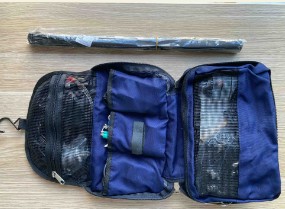
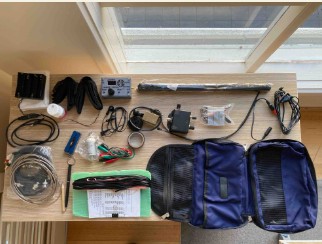
• All that was missing was two more 18650 3.7V 2.6AH lithium batteries that I’d ordered from an Australian distributor… that I didn’t realise was just having the batteries shipped to the customer from China! So of course they didn’t turn up before I left.
Luckily, we stopped in to see the friendly staff at Jaycar in Albury on the way down, and I then had the full complement of four batteries, which I was able to charge on the V-Line train on the way from Albury to Melbourne (the very nice, clean country trains in Victoria have USB outlets on all seats….
And what’s more, passengers can travel all day anywhere in Victoria for a maximum of $10.60 or $5.30 concession)).. * Fast forward to Tuesday, having arrived the previous day and settled in to our nice apartment close to the beach-front for the week.
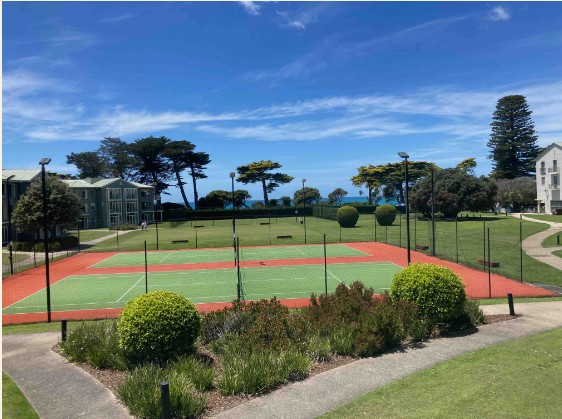
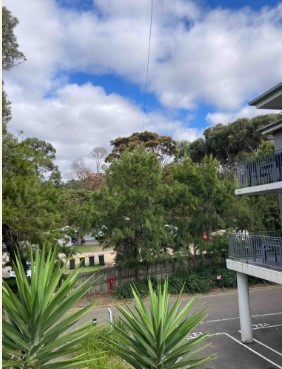
• Up at 6:30am before the too many other guests were out and about, and I tied the fishing pole to the outside corner of the apartment’s balcony, then used a small plastic pill container full of water to send a length of builder’s twine up a convenient conifer.
Another water bottle was part-filled with water and attached to the end of the twine,
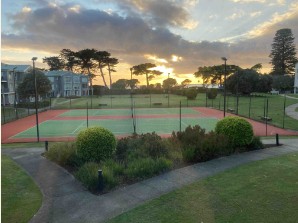
Without putting too much strain on the antenna. THE16M radiator was wound loosely up the fishing pole and then run horizontally via the twine to the tree; being on the first floor, the horizontal part of the antenna would have been about 6m up.
The counterpoise was run along the balcony roughly parallel to the antenna then, vertically down to the ground with my water-filled pill bottle on the end.
Arun of the light- weight RG-179 coax was passed obliquely around the seals of the balcony doors and I was set. A very nice-looking inoffensive antenna, ready to go… bu
• After breakfast, I gave the antenna a test…. and of course, Murphy’s Law…. it refused to couple on 40 or 80m; an SWR over 2:1 was the best I could get – bugger!.
* So having got off to such a good start, I spent the rest of the day trying different combinations of things to try to get the antenna working, as it had a week ago at home.
I swapped the 7.6m piece from the counterpoise with the 16m piece which improved things a bit, and tried various ways of routing the counterpoise around and off the balcony; no luck.
I even tried connecting one side of the BALUN to the galvanised balcony railing using a clip lead – and voila – I could get it to return a 1.5:1 SWR on 40m – no luck on 80m or 20m though. Ok – I’ll just add the 16m wire in parallel for some extra grounding….
Nope – SWR shot up again! Ok, getting close to net time…. give up on the long counterpoise and just go with the clip leads onto the galvanised steel..
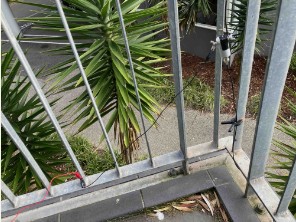
| tried disassembling the two-core BALUN which was in a short section of 20MM conduit to check if something had come adrift – nope – all secure, so the cap was put back on the BALUN with a bit of electrical tape that I had managed to squeeze into the kit.
• So with just a 7.6m inverted-L radiator and a who-knows-what ground, I was able to get on air on 40m with about 6 Watts. + Signals weren’t great to start off – but I could hear a number of VK8S and VK2S on 40m.
I was called by David VK3RU over on Phillip Island about 130KM away, but we just couldn’t get through via ground-wave (the ALF would have been well above 40m).
I also tried Wal VK2WP up at Bathurst and Kevin VK3KEV near Seymour without success, but finally hooked up with Phil VK3VB at Cranbourne.
+ After stopping for a bite to eat, I continued on 40m and chatted to Jordan VK3ACU not far away in Meredith, then lan VK5CZ with a big signal from Clare; lan reported that he had been riding the near-by rail trails that day which reminded me of our day walking the rall-trail around the Clare wineries about 10 years ago.
Luckily we had our small caravan so we had room to pack all the purchases the next day when we re-traced our steps by car.
By coincidence, just the last week we had finished the last of the wine we bought that time – a 10+ year old bottle of Mitchell riesling…. that remarkably had stood the test of time (modern white wines simply aren’t made to last it seems)..
+ After lan, I used our WhatsApp group to try to hook up with David VK6KD/2 at Katoomba in the Blue Mountains. We’d been able to hook up just about every week since David left WA on his around-Australia trek; but it wasn’t to be this time.
I could hear his 100 Watts with some QSB, but he just couldn’t hear my two S-point weaker 6000 mW.. + Things were getting quiet / late, so I set the beacon on the (tuSDX going with a repeating CQ call.
After a while, I heard a calller – and I had to ask for a repeat, because I couldn’t believe I was being called by Richard VKG6PZT in Bunbury.
I thought we were getting some one-way propagation like we’ve had in the past on 80m as the low-angle solar radiation effectively tilts the ionosphere layers – surely he couldn’t hear my QRP, when he was RSN 351 with me! Sure enough – he couldn’t!
His RSN 552 report was from one of Paul VKSPH’s KiwiSDRs at Ironstone Ridge. Terrific to hook up with Richard again – he’s been a tad busy of late setting up his own new business out at Busselton..
+ Unfortunately my antenna dramas meant that I couldn’t listen out for the
European contingent this week, but I did check the Reverse Beacon Network on my phone when I could.. « But despite the antenna challenges here, I really enjoyed the simple pleasure of operating a basic low-power transmitter, and I’m looking forward to trying again next week, this time from Portarlington on Port Phillip Bay, further around from Geelong.
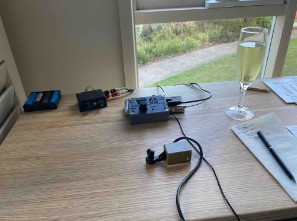
[40m] + Had some great QSOs and 3 DX stations on 40M.
[40m] «I’ve had a few weeks off tied up with other things and no access to my radios. I did manage to build a 40m QCX+ which I smoke tested on the weekend with a contact with Jordan, and had a QSO with Arthur last night.
Unfortunately after a few weeks off my sending is awful.. * The new radio is brilliant. There’s something special about making contact with a simple kit radio on 3w and going out on a 10m length of wire..
+ I soon got used to not having a waterfall and found that setting the tune rate on 500HZ worked best. The CQQRS WhatsApp notifications were a great help..
Post Morsum Report
PMOL NIVEOMITE iS wVret from Richard VK6HRC Hello Mark, on the net this morning : VK6KD/2 David VK6QI/P Mark VK6HRC VK6KRC Bob SWL and others.
David checked in from Katoomba in the midst of packing up in preparation for their onward journey to Parkes to check out the Dish. Worked three on 40, one on eighty plus heard thirteen.
Mark had a few trials and tribulations to start with but got on air with his (tr) uSDX worked three on forty and enjoyed the evening. I worked three on forty and made the most of the VK3FSK Kiwi SDR to hear what was going on over East.
Thanks to all on last night and this morning, have a great week 73 Richard VK6HRC
This week, I’ve re-printed the article by Brendan VK3BAP about the Rybakov inverted-L antenna that he’s had so much success with (unlike myself – work in progress still). The article first appeared in the RagChew newsletter on February 17TH this year.
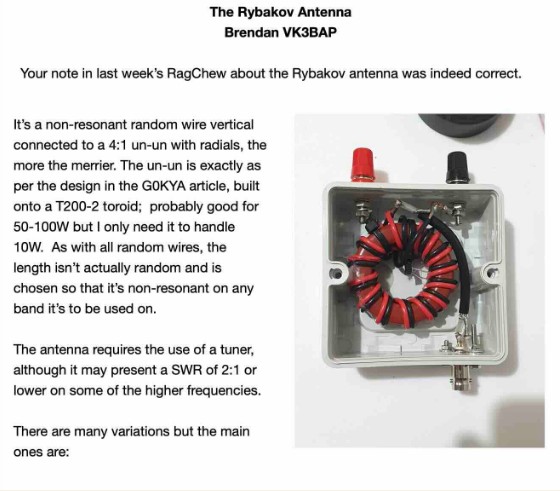
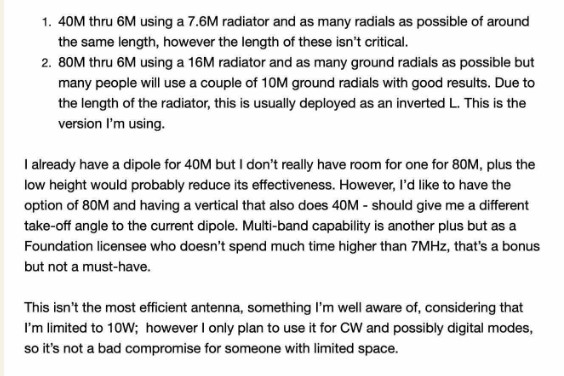
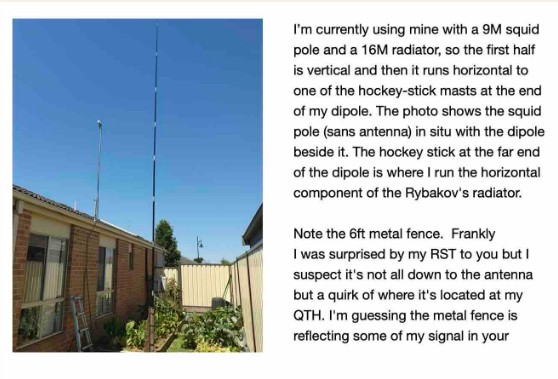
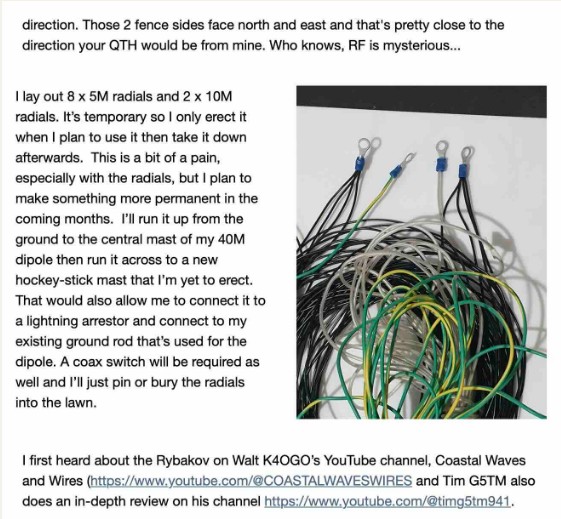
Here’s the links from Brendan’s article: hitps:/Avww.youtube.com/@COASTALWAVESWIRES hitps://Awww.youtube.com/@timg5tm941 https://youtu.be/akjMmt3d9i0?si=LRQ5Ja9l2rEyxJOH hitps:/Avww.
Youtube.com/watch?v=W8esOsVTLyc&t=0s hitps:/Awww.learnmorsecode.com/iv3sbe/rybakovantenna.html https://gOkya.blogspot.com/2009/02/rybakov-vertical.html https:/Awb3gck.com/2018/12/09/revisiting-the-rybakov-806-vertical Thanks Brendan; when I get home I’ll try making a tiny version of your 4:1 voltage BALUN for portable use, and see if it works better than the two-core 4:1 current BALUN that I took away with me this time.
I’m keen to get more Topic of Interest and On My Workbench articles for future newsletters. If you’d like to contribute something, please let me know so we can share more thoughts and ideas; email to cqqrsnet@gmail.com

Other News
From Beth VK2AO:
Hi Mark, Ihave moved to Lithgow and keen to get an antenna up and Morse going. I am in need of assistance and wondered if you could put the word out and ask if anyone could spare a Saturday or week day to help me put an all band inverted V up and a pole to put it up in the air.
I would be willing to pay for their time and put a lunch on with a beer or two. Cheers, Elizabeth beth.langley@bigpond.com [Can anyone help Beth get back on air? If so, please send her an email; I also have her phone number if you’d prefer to call her direct.
Thanks in advance – I’m really looking forward to hearing Beth back on air on CW. We have three other YL members and it’d be terrific to attract some more to simple pleasures of QRS CW]
From Gerry VK3ZXC:
Last night (Tue) I had a QSO with VK2IOW (Pat). My trouble is following the Standard QSO pattern. It is too long for me. May I suggest a “Newbie” format?
CQ NEW CQ NEW CQ NEW DE VK3ZXC VK3ZXC VK3ZXC_ K VK3ZXC DE VK2KI VK2KI K VK2KI DE VK3ZXC = UR RST 599 599 = VK2KI DE VK3ZXC_ K VK3ZXC DE VK2KI = UR RST 599 599 = VK3ZXC DE VK2KI K VK2KI DE VK3ZXC = MY NAME GERRY GERRY = VK2KI DE VK3ZXC_ K VK3ZXC DE VK2KI = MY NAME MARK MARK = VK3ZXC DE VK2KI K VK2KI DE VK3ZXC: = MY QTH =PAKENHAM PAKENHAM = VK2KI DE VK3ZXC_ K VK3ZXC DE VK2KI = MY QTH SYDNEY SYDNEY = VK3ZXC DE VK2KI K VK2KI DE VK3ZXC = MSG LONGER MESSAGE = VK2KI DE VK3ZXC_ K VK3ZXC DE VK2KI = MSG LONGER MESSAGE = VK3ZXC DE VK2KI K VK2KI DE VK3ZXC = TNX MARK 73 73 = VK2KI DE VK3ZXC SK 73 73 GERRY = VK3ZXC DE VK2KI EE EE Let’s leave out the GMs GAs and OMs etc for the time being.
I get lost with all the things like that. Once I lose track I just stop listening until I hear the callsigns handover. By breaking the QSO into shorter overs I will be able to keep up. The Longer Message section can be expanded until I am puffed out. [Hi Gerry.
Good idea, that’s worth a shot. Couple of thoughts: * Don’t worry about losing the plot until you hear the callsigns – you’re not Robinson Crusoe – until fairly recently ! was the same. Callsigns and reports to oo Oe ane es peer Pert ta eet ar Tg Tg Eager
UR RST 599 599 = VK2KI DE VK3ZXC_ K VK3ZXC DE VK2KI = UR RST 599 599 = VK3ZXC DE VK2KI K VK2KI DE VK3ZXC = MY NAME GERRY GERRY = VK2KI DE VK3ZXC_ K VK3ZXC DE VK2KI = MY NAME MARK MARK = VK3ZXC DE VK2KI K VK2KI DE VK3ZXC: = MY QTH =PAKENHAM PAKENHAM = VK2KI DE VK3ZXC_ K VK3ZXC DE VK2KI = MY QTH SYDNEY SYDNEY = VK3ZXC DE VK2KI K VK2KI DE VK3ZXC = MSG LONGER MESSAGE = VK2KI DE VK3ZXC_ K VK3ZXC DE VK2KI = MSG LONGER MESSAGE = VK3ZXC DE VK2KI K VK2KI DE VK3ZXC = TNX MARK 73 73 = VK2KI DE VK3ZXC: SK 73 73 GERRY = VK3ZXC DE VK2KI EE EE Let’s leave out the GMs GAs and OMs etc for the time being.
I get lost with all the things like that. Once I lose track I just stop listening until I hear the callsigns handover. By breaking the QSO into shorter overs I will be able to keep up. The Longer Message section can be expanded until I am puffed out. [Hi Gerry.
Good idea, that’s worth a shot. Couple of thoughts: * Don’t worry about losing the plot until you hear the callsigns – you’re not Robinson Crusoe – until fairly recently ! was the same.
Callsigns and reports to start; then as you get better, names, locations and eventually the tricky one…. equipment and antenna.
* You’ll be surprised though that after not too many weeks on the net, you’ll be copying more and more, and will also be able to pick up again where you lost the thread. * We use lots of dah-di-di-di-dahs to separate thoughts or for thinking time…
They’re a good place to re-start your copy. * Before long, you’ll find you can do the same during words where you fall off the rails…. and can often guess the word after you look back at your text (same goes for head-copying…. but walk first, then run!
* Most of our team are there because they want to learn themselves, or want to help others along the journey – so no-one’s going to get their nose out of joint if you don’t copy much of the transmission, limit the QSO to callsigns and reports, ask for many repeats, ask PLS QRS etc….
From Phil ZL1PB:
A BBC podcast about the World Morse Code championships: https:/Awww.bbc.co.uk/sounds/play/p0k8y9kq? partner=uk.co.bbc&origin=share- mobile 73 de Phil ZL1PB
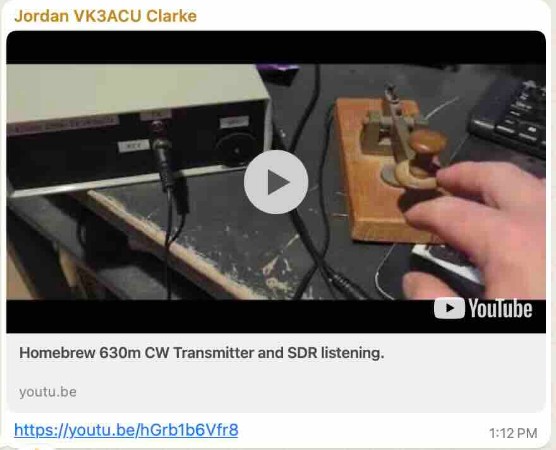
From Jordan VK3ACU:
From Noel Whittaker’s Noel News Investment Newsletter:
How important does a person have to be before they are considered assassinated instead of just murdered? Why do you have to ‘put your two cents in’ but it’s only a ‘penny for your thoughts’? Where’s that extra penny going to?
Once you’re in heaven, do you get stuck wearing the clothes you were buried in for eternity? Why does a round pizza come in a square box?
Morse Training Net
Nic VK7WW runs a Slow Morse training net every Wednesday at 7pm EDST on 3580 for 30 mins. He uses the callsign of the Northern Tasmania Amateur Radio Club VK7TAZ on that net.
Many of our team learned Morse code with the support of Nic, and the weekly training session comes highly recommended for anyone who wants to learn the Code, or simply brush up. Everyone’s welcome – 3580KHZ at 7pm Eastern time every Wednesday.
The NTARC also feeds the CW live via the Discord phone / computer audio stream, and previous weeks’ recordings are available. Contact Nic VK7WW for more info nicholaschantler@hotmail.com – or just join in on Wednesdays.
Brain Teaser
Jules Perrin JP VK3JFP has created a terrific resource to help guide learning for all levels of amateur radio licenses: https:/Awww.julesworkshop.net/Amateur%20Radio.html The Jules Workshop website is being updated with the latest material after introduction of the Class license system; in the mean time, here’s more Foundation License- level example questions.
Exam Questions:
What should you do, as a licenced amateur operator, if you change your address What is meant by QRN causing you to QSY? Can any amateur transmit any entertainment or advertisements? What does the giving of a signal report of 5/9 mean?
What is the third number in a signal report and when is it used? You see someone being electrocuted, what should you do? Why should your amateur station be secured at all times? How do you calculate the wavelength of a frequency? Define a wavelength.
How do you calculate the power in a circuit knowing the voltage and current? What are the four ionospheric layers? Answers next week.


Answers from last week’s Quiz:
What is the maximum power allowable for a Foundation licence? Answer: 10 watts peak power Px On which bands is FM allowed with a Foundation licence? Answer: All bands In some situations, a vessel or aircraft may need assistance.
What are the distress and urgency signals for both telephony and telegraphy? Answer:

Write the word ‘Antenna’ using the phonetic alphabet. Answer: Alpha November Tango Echo November November Echo Alpha What is CTCSS and DTMF? Answer: Continuous Tone Coded Squelch System for shared resources.
Dual Tone Multiple Frequency send digital info by audible tones. What would be the call sign prefix for Tasmania and Northern Territory? Answer: VK7 and VK8 What is meant when you receive a signal from a VK3RNL? Answer: A repeater station operating in Victoria.
How did you go?
Di-dan-ali-aan-ait
Next Tuesday’s Net
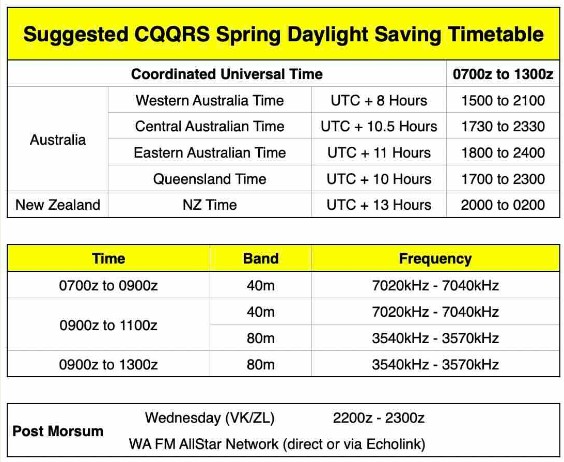
Our CQ QRS Group will be on as always on Tuesday from around 07002Z until about 1300Z; see below for details. Doesn’t matter whether you’re brand new and want to try just exchanging callsigns and RST reports, or you’re ready for a good old rag chew.
We’ll have fun. There’s usually people around until after 1300Z on the Tuesday Group – so keep calling in the segment of the band designated in the table below until you catch someone. I should be on portable from Portarlington this time – if my antenna allows.
Hope to hear you there. I’m off to do some more antenna experiments somewhere nice at Lorne.
Please let me know via our Reports form bit.ly/CQQRSNET who you work or hear on Tuesday’s Group. The report form closes at lunchtime on Thursday.
Post Morsum
Richard VK6HRC will run our phone Post Morsum on the South West AllStar net (via repeaters and hotspots all over WA) from 0600 WA time, then from 0700 WA time on 80m (8605 LSB).
For the 0600 (22002) net, if you’re in WA all you need is an FM 2m or 70CM transceiver and an AllStar node nearby. If you’re elsewhere in the world, you may be able to connect your local AllStar-enabled repeater to the net, or you can connect via Echolink.
Let me know (cqqrsnet@gmail.com) if I can help with that. and if you can’t connect that way, give 3605KHZ SSB a try from 0700 (23002).
Teamwork
Thank you so much to our team of 29 contributors this week: MOKBJ, MONNK, VK2A0, VK2ASB, VK2DLF, VK2GAS, VK2RU, VK2WP, VK3ACU, VK3BAP, VK3BTV, VK3BWN, VK3DRQ, VK3JFP, VK3KEV, VK3RU, VK3ZXC, VK5CZ, VKSKFG, VK5LA, VK6BEK, VK6HRC, VK6IS, VK6KD/2, VK6NW, VK6PZT, VK7KPC, VK7TA and ZL1PB.
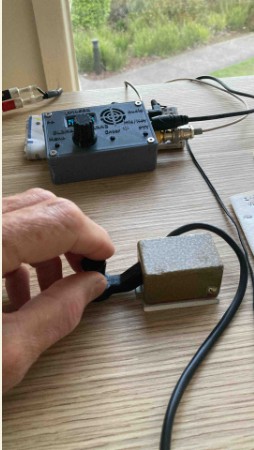
GU CW Tuesday mb Mark Bosma VK2KI / VK6QI Beautiful South Bowning NSW mark.bosma@icloud.com non impediti ratione cogitationis
GU CW Tuesday

An Ode to CW – thanks to David VK3RU: In days of old, when ops were bold, And sideband was not invented, Words were passed by pounding brass, And all were quite contented. – Unknown author
About the CQ QRS Group
Frequencies and Times
QRL?
So tune around and call anyone you hear, or find yourself a quiet spot in the designated segment, send “QRL?” and if the frequency is quiet, start calling CQ QRS at about 75% of the speed you’re comfortable receiving at; hopefully responders will match (or send slower to their comfort level).
And if you are already having a QSO and someone sends “QRL?”, respond with “R”, “C”, “Y”, “YES” or QRL to let the caller know that the frequency is in use.
If we’re on 40m and you can hear that the band is open outside Australasia, perhaps consider calling 500HZ above each 1KHZ slot – to minimise the chance of having to copy our team through QRQ QRM that’s often dead-on the kHz markers.
Speed? Rhythm?
If you’re proficient at CW and can race along at 20 or 30WPM – terrific, but please remember, the Group’s aim is to encourage participation and learning, not show how fast you can hammer the key.
Please send slowly where you can and concentrate on rhythm – listen to your side-tone, get that wrist action going and make a special effort to make it sound like perfect CW; the longer we go with our Group, the more I understand just how many non-transmitting listeners we have – and they will most likely appreciate your QRS!
So, if you’re an experienced operator, please try to send nicely balanced slow CW to give them a chance to practice and gain confidence…. they’ll reward you one day by coming up on air to say g’day and thanks – how good is that?
And if you’re new or like me, just rusty…. ignore the above… just have a go – the lather of sweat will be worth it and there’s plenty of time to get the details sorted out as you practice.
Matching
And also for the oldies like me, when you hear someone new, please match their sending speed – or slower. The person you’re replying to may not be as deft on the decoding as you – it may be their first ever CW QSO – remember your first?
Lather of sweat, key that refuses to send that you tell it, brain that refuses to decode those complex letters that were right there half an hour ago, etc!
PSE QRS
And if someone is sending too fast to comfortably copy – “PSE RPT PSE QRS” or “AGN? PSE QRS’ will make life easier for everyone…. and might just encourage other listeners to have a go themselves.
The other thing to remember – most operators are writing down what they hear… so when you put it back to them, expect a delay while they read your words of wisdom, before replying.
The aim is to give everyone a go at contacting others – no-one owns their calling frequency in this Group. So unlike working DX, if you hear someone signing off – jump in and call – doesn’t matter who was first on the frequency – we really are all good mates in this Group….
And besides, at the speed we’re sending, after a QSO most of us will have forgotten who was first!
If you really want to move off frequency (eg because of a spurious switch mode power supply signal that’s just drifted into the conversation), you could try sending an abridged callsign of the person you’re after, followed by “UP 5” or “DN 5” then K; then call that person on the designated frequency and keep your fingers crossed, they may have understood you and followed…
Landing Zone
If the band goes really quiet, call and listen on 7032KHZ (7028KHZ secondary) or 3555KHZ. If you catch someone, there’s no need to QSY – enjoy the frequency.
But don’t forget to tune around if it’s quiet – we have lots of operators with crystal locked transmitters – and they could be anywhere within the segments.
For those who are locked, or can only transmit outside the segments, send a message on our WhatsApp CQ QRS – Alerts group advising of your current frequency.
And of course, put the frequencies in a memory so outside of the Group, if you’re not tuning around, leave your receiver on one of the primary frequencies – you never know who you’ll hear (7032 is used in VK and ZL for SOTA / PARKS during the day so you’ll often hear activity there).
CW Tips
As always, for newbies, operating suggestions are available from the operating hints link here: https://www.parg.org.au/_files/ugd/ebe236_ 3ca5ca08bb38429db4eee524bda2f97a. pdf. mb VK2KI / VK6QI