Below is a reconstruction of the 2026 02 CQ QRS RagChew newsletter designed to support full text searching. This reconstruction was built using OCR, and will contain errors.
To view the Mailchimp original, click here. To search the entire newsletter archive, click here.
Contents
- CQQRS RagChew
- Website
- Reporting
- POST MORSUM 07th January
- 73 Richard.
- This Week’s topic of interest
- Ultimatic
- On My Workbench
- Home-Brewed Paddle
- ORZ?
- John VK3BSE
- QRZ? Who’s on the other end?
- CW Practice
- Other News
- Summerland ARC Remote Access Radio Status Report
- My Own Vintage Gear Restoration
- Morse Training Net
- Prosign/Character/Signal of the Month
- Di-dah-di-dah-dit
- Reports & Photos
- Post Morsum
- Articles
- Material
- About the CQQRS Net
CQQRS RagChew
Website
If you’d like to find out a bit about our net, or would like to pass information to others about our Tuesday get-togethers, here’s the link to our website. bit.ly/CQQRSWebsite So here we go – please enjoy the newsletter.
Cheers, mb Mark Bosma VK2KI / VK6QI Beautiful South Bowning NSW cqqrsnet@gmail.com non impsditi ratione cogitationis
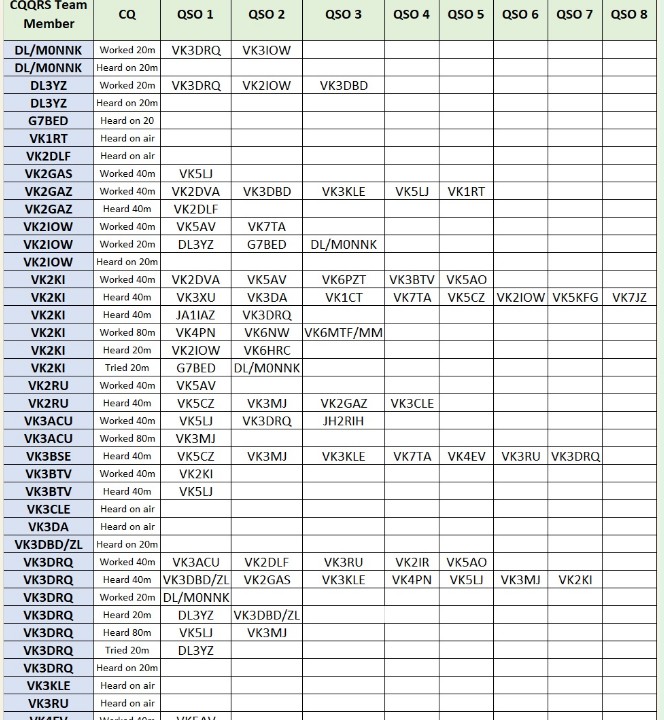
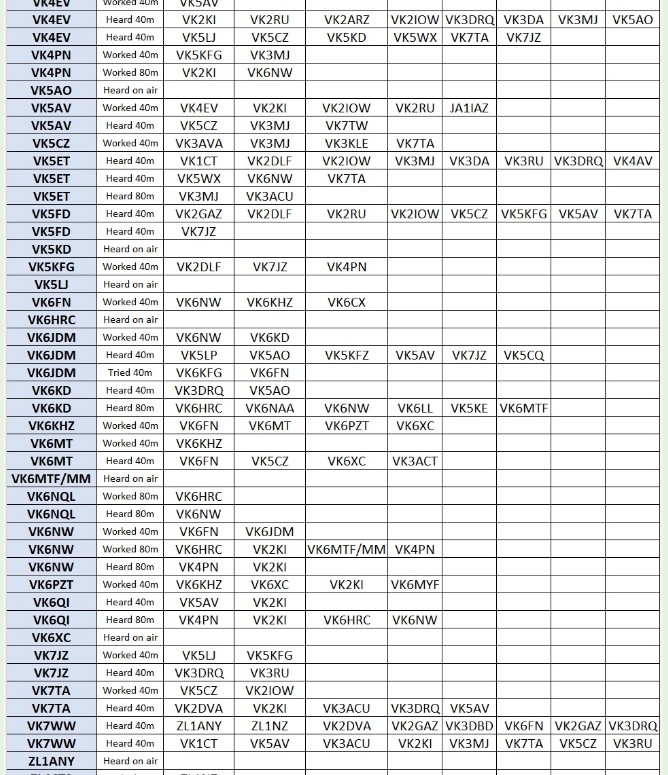
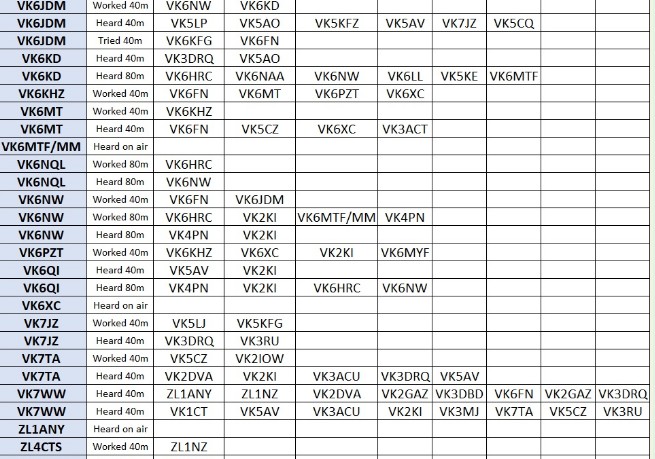
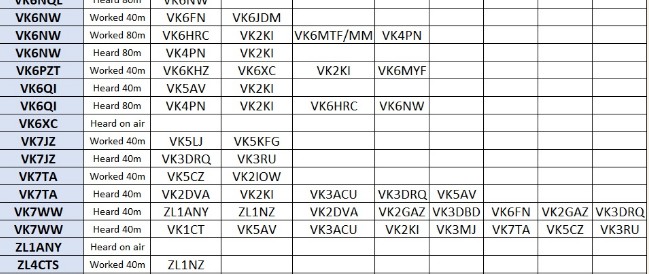
Thanks so much to John VK2RU for producing the spreadsheet above. The table shows the known stations on last Tuesday’s Group (Submitted via our webform hit h/COORCNET)
This week’s comments from our members’ webform reports have been compiled for us by the clever software built by Nigel G4RWI and the layout perfected by Patrick VK2IOW; thanks once again Patrick.
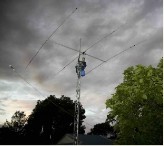
[20m] Condx were good, but WX here was -8 C/ 18 F. But that didn‘t hold us back, and when Pat called me, tried to QRP to 10 Watts, and still were able to copy each other. Great antenna, Pat.
As Ross took over the key, snowfall was setting in here in Stuttgart, and that may have dampened our signals a little. Thanks for the fun and have a great week, Mike
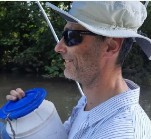

Net NN ND ee LE 40m] istening mode only tonight on Iron Stone Range KiwiSDR. Better ignals compared to my antenna.
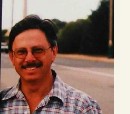
From Donald VK6JDM at 20 km west of Esperance
[40m] On 40 metres the CW segment was full of signals. Managed momentary exchange with VK6KD and had a QSO with Wayne in Bridgetown (VK6NVW). Max (VK6FN) called CQ which on the superior Wotam Hills receiver was Q5 S7.
However Max did not hear me which I take to mean he is still usit null antenna. That unkind soul VK6KRC has even suggested he I first antenna with a 360 degree null. Absence of a response from
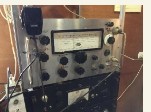
[80m] I had a “Senior Moment” and unintentionally interrupted Mike DL3YZ and Manny VK3DRQ having a DX QSO. They both recovered well from my sudden appearance in their midst. Next time I will pay more attention before jumping on the key.
When it really was my K” sor 25 minutes without reply. Juste as } was
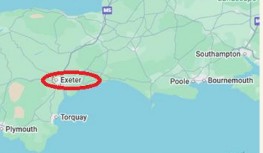
From Patrick VK2IOW between Bathurst and Orange
[20m] Conditions were only average but still managed good QS¢ with the 3 European stations.
[40m] Conditions seemed good with lots of activity. Strong signe between me and South Australia / Tasmania.
[40m] The 40m band appeared to open up, go crazy strong, then closed. Lots of QSB. Later on, 40m opened up again with lots of fast CW stations. Too fast for me. I called CQ on 7032 for a while but no QSOs.
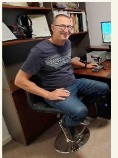
From Keiran VK3BTV at Lilydale, Victoria
[40m] I gave myself a New Years challenge — give up beer, or get back onto CW at decent speed. So, I chose the tougher option and put out a CQ on 40m QRS. The omnipresent VK2KI Mark came back to me and we hax

A great chat at a lazy 10 wpm (while savouring my latest Choc Malt Stout HB) Mark Bosma is truly a champion of CW in Australia — his enthusiasm is contagious! Thanks for the chat Mark (and sorry for calling you MARL — I must have been slurring my CW?
@) I think this is the year that I’ll get back to 2OWPM send (on a straight key) and 25WPM receive. Cheers, Keiran VK3BTV

Fun evening with mixed results including a silly error on my part. I was operating from my QTH and came online for the net after concluding a CW Academy Session. The conditions at my QTH were far better than normal.
I am a regular complainer about QRM in my shack but not tonight, I could hear lots going on. I had a good listen to Manny VK3DR@Q chatting with David VK3RU and was copying more than usual.
One of them was only on 5w (I think it was Manny) and it was coming through strong and clear in Hobart. I then had a shor QSO with Lawrie VKSLJ in the Barossa Valley, I copied most and think I could ‘brain fill’ what I missed.
Then a longer QSO with Greg VKSKFG, we got chatting about location and the weather, hot in Adelaide at the moment. I think I almost had Greg persuaded to move to Hobart where it was 15 degrees cooler then my radio cycled off while sending.
The first time is shut down for 10 seconds then powered up, a minute later is shut down for 30 seconds. I ended up sending Greg an apology email. I think I have sussed my problem.
Last week I was using the radio portable on a different antenna and tuned accordingly. I had very high SWR tonight, realised I failed to tune, and I think the radio was shutting down to protect itself – so totally operator error on my part.
I will be back next week. From your editor Mark VK6QI at Beautiful South Bowning NSW via the VK6SEG KiwiSDR at Hoddys Well near Northam WA
[15m] Not a peep heard from Edi DO2EMR on the VK6SEG KiwiSDR near Northam this week. Thanks for trying Edi.
But I couldn’t be sure – so I was glad to hear Patrick VK2IOW from near the pretty town of Millthorpe gave Ross a decent signal to enjoy.
[40m] I blame John VK2RU for me being late this week; too much fun ona videoconference while we talked spreadsheets. So at around 0630Z I had a listen on my 50 year old Trio TS-120S; 40m sounded remarkably quiet – no sign of the normal switch mode power supply hash – so I didn’t even need my phasing noise canceller.
Very strange – and as I was using it, the band noise seemed to come and go. So either very strange conditions, or abittacrap on my transceiver’s T/R relay.
Luckily Patrick VK2IOW had recently sent me a spare 120S so there might be a bit of Dr Frankenstein-inspired work needed.
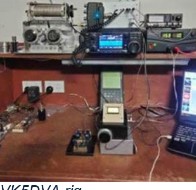
Nene F AA NAB thtnct tad AD emenf rane Seem eet Mee meet Doe) eH eAen imrae Drnt men) Anyway, I heard a nice signal from Colin VK2DVA at Blacktown from his home-brewed 5 Watt transmitter and horizontal loop antenna.
After coming down from this week’s 15m & 20m DXperiment, 40m seemed to have a reasonable number of QSQs in train. I caught Tim VKSAV at Mount Gambier who was getting used to the rag-chew: on our net by sending Straight Key Century Club numbers for the Club’s Straight Key January.
Luckily wae ahilo tn erratch arniind and find my mambharchin n;
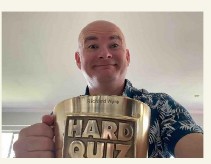
Was able to scratch around and find my membership number in reply, just as I was responding Abit later the band started cracking open into WA – and I hooked up with Mister Hard Quiz, Richard VK6PZT at Dalyellup; we exchanged reports ok despite the deep QSB.
After Richard, I heard more rare DX – Keiran VK3BTV down at Lillydale – my old transceiver’s S-meter very rarely goes over $9 (there’s probably abittacrap in that movement too) but Tech’s signal was $9+10 – amazing.
I rounded-out 40m with a nice chat with Maity VKSAO at Banksia Park, who assured me that Val would be onto the task of writing up the report for the newsletter this week; thanks Val.
[80m] I was pleased to see a couple of traces on the Snowline and Hoddys Well KiwiSDRs and started tuning up on 3553KHZ. Sava VK4PN was on to my cartier and Vs like a flash, and we enjoyed a nice chat.
I had to ask him to QRX and added a few
While chatting to Sava, my spare brain was on the KiwiSDRs listening to a QSO a couple of kiloHertz up between Richard VK6HRC at Padbury and Wayne VK6NW at Bridgetown.
Wayne then QSYed and started calling CQ, and I know Richard was called by another station (sounded like Peter VKGIS….. but I can only listen to two QSOs at once, not three… and besides that would require another instance of the KiwiSDRs running).
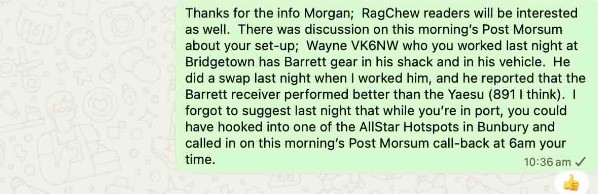
Wayne was about to head off to slumberland when I called him after sending TUs to Sava. Wayne was coming through nicely at RSN 542 and swapped transceiver mid-QSO to compare his Barrett and Yaesu transceivers; when chatting to him on the Richard’s Wednesday morning’s CQQRS Post Morsum call- back, Wayne reported that the Barrett’s receiver seemed better than the FT-891 (Rob VKGLD will have been sagely nodding with one of those “I told you so” nods).
The clock was approaching the bewitching hour (the local police Inspector says nothing good happens after midnight), but I listened to Wayne chat to Morgan VK6MTF/MM along-side in Bunbury.
Morgan’s 10 Watt Barrett transceiver and 10m mast back-stay was RSN 422 here, and I was pleased to work him ok before heading off to places darker.
[40m] The band was very noisy tonight, and few stations were even heard.
[80m] This band is very quiet during the week, thus, it would be nice, to see some CW act Fridays in WA.
[20m] OM Edi was again nothing heard of him and OM Ross only RSN 332 QSB.
[40m] I had a quick listen around 1830 local time and only heard VK2DVA and VK2KI. When I returned after dinner things had picked up a bit.
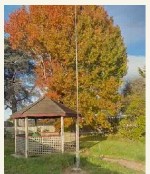
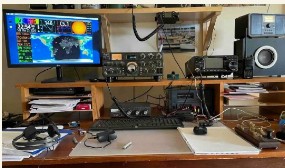
[40m] Hello QRS group. Having moved to Beechworth 4 weeks ago the aerials and coax are still rolled up but the shack at least “looks functional” with radios, key and test gear about.
So far I manage to fill in my time unpacking boxes, cutting back many weeds and shrubs, pace for the tower. Cleaning gutters and drains, one drain
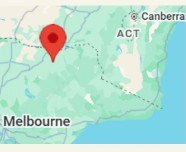
Still blocked. Inside is also getting cleaner. I think this house had become “low maintenance”. So in the absence of a useful interface to the EMF I listened to the Snowline Kiwi SDR in NSW.
Signals were generally S9 with a sprinkling of OSB after 8.30 VK3 time. Most of the QSOs were really chewing the rag, good CW practice for all.
From Ron Everingham VK4EV at Everton Park Brisbane
[40m] Had the QSO using a paddle thinking all would be fine after done plenty of practice. Well I started OK with VK5AV and then started to make a few mistakes. I kept the QSO short and have decided I need more on air practice.
I will contact a friend to do some on air practice.
[40m] 40m was noisy at my QTH, however with the exception of the JA station, all were easy to copy. Thank you to those stations that exchanged their SKCC number with me. I am participating in the Straight Key Month (SKM) event throughout January.
Even contacts with non SKCC members me meeps BIT 2 hid pope
[40m] Mostly working local VK6 stations on 40m, with one DX contact with VK2KI, great for weak signal copy practice. My last contact with VK6MTF confused me a bit when my wife returned home during the contact and asked if I was chatting to Morgan. WTF?
How did she know that? Turns out Morgan’s friend, Gary told his wife, who then messaged my wife on her way home. Clearly
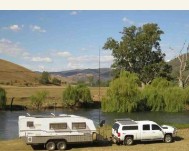
[40m] Only one QSO tonight with VKSAV with SKCC number exchange. I had to choose between using the radio or keeping the 12v fans running. Given the heat, the fans won.
[40m] Very late to get on air again so completely missed the EU DX experiment. 40m was rather quiet by 20:30 QLD time so I just kept calling CQ. I was running QRP as usual and was pleasantly surprised to see RBN reports from ZL. I managed two nice QSOs.
VKSKFG gave me a massive 579. After I told him I was running QRP he dropped his power to ° still RSN 577 at my QTH (more about RSN latter). The seco!
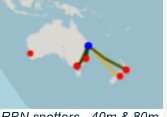
After I told him I was running QRP he dropped his power to 10 W and his signal was still RSN 577 at my QTH (more about RSN latter). The second QSO was with VK3MJ who gave me RST of 439, at my QTH he was RSN 577.
The last-half hour of the Rag-Chew net I always devote to 80m.
[80m] Just two QSOs on 80m, both with regulars. VK2KI was 577 so it was a struggle again but we had a lengthy and enjoyable chat. It was already after the end of the net when we finished our chat and I was about to QSY but noticed some activity at 3540 KHz.
Tuned in to check and it was VK6NW in a QSO with Mark. So our VK6 contingent is active even after net officially finishes. Something to keep in mind. QSO with Wayne VK6NW was brief and I decided to give him RST report rather than RSN.
Wayne gave me 559 I could only give him 439. RST is a subjective report and based on experience as S meter reading is totally useless in a high noise environment.
Al report on signal to noise states that Morse requires CW signal to be about 1dB above noise to be perceptible. I could have given Wayne 477 (by the S meter) which would mean his signal was S7! To me (subjectively) he was only around $3.
So RSN makes sense only if the difference between signal and noise is couple S points otherwise it is misleading.
Reporting
After next Tuesday’s Group, please remember to send me a list of who you worked and / or who you heard using our web form here:

Even if you didn’t hear anyone, we’d still like to know that you had a go. And to make your report more interesting, please consider sending a photo to be attached.
If you have a photo (compressed if possible) that you’d be happy to include, please email it to: cqarsnet@gmail.com So, please help attract new and old team members to have a go by submitting your report each week.
Submissions close 1300 (Eastern Australian Summer time) on Thursdays.
POST MORSUM 07th January
See we CR Ne 2) SNe ee See ee oes) ee ane eee
From Richard VK6HRC. Six on the South West repeater and AllStar / Echolink hub this morning.
David called on 40 m but no response so checked on various Kiwi sdr nodes to make sure he was getting out. There were few humorous theories from the group as to why he was not getting any response to his calls !
Wayne worked two on 40 m and a few more on 80 m one of them being Morgan VKEMTF Maritime Mobile in the Bunbury area. Mark listened out on various Kiwi sdr nodes, nothing from Edi DO2EMR on 15 m and on 20 m was only just hearing weak signals from Chris G7BED and Ross DLUMONNK remote from the DL3YZ station of Mike.
Worked five on 40 m heard ten, enjoyed a contact with Colin VK2DVA who was using his home brew 5 Watt tig and loop antenna. On 80 m Mark worked several stations and even heard some activity from the West.
The subject of SKCC exchanges came up as a result of a contact with Tim VK5AV something to be aware of as it is a special straight key event for January.
Max braved the poor conditions at the start of the net, got some contacts in the log on 40 m and then went into swl mode. Nothing for me on 40 m was just following along as signals were very varied, the band improved later on though.
Happy to work two on 80 m before the end of the

73 Richard.
This Week’s topic of interest
In the RagChew Newsletter 1/2026, Ross MONNK wrote about his ah-ha moment when he discovered the Ultimatic mode for electronic paddles.
In fairly normal ignorance, your editor thought Ross was referring to a particular paddle type – rather than a mode of operation.
Which of course then led to more arm-twisting (not really) for Ross to tell us more about the various modes that modern squeeze paddles can be used in. What follows is the result of Ross’ work; thanks mate – nicely done!
From Ross MONNK This article assumes you’re right-handed. Software can reverse things for left- handers, but here we’ll cleave to the majority.
Unlike the simple straight key, double paddles generally require some software to interpret your paddle presses for the transmitter.
This, however, makes double paddles into flexible critters – with the right software they can be used in several ways: © By rocking your hand back-and-forth, they can act as a single paddle (sending a stream of dahs when pressing the right paddle with your index finger, and a stream of dits whilst pressing the left paddle with your thumb).
¢ Most software will also allow your paddle to mimic a cootie/sideswiper or a semi-automatic bug key. But these use cases are using a sledgehammer to crack a nut. Double paddles really come into their own when you use a “squeeze mode” for certain characters.
That is, when you squeeze both paddles together to create Morse shortcuts. Let’s talk about what those shortcuts look like and how you use them to reduce arm strain and speed up your Morse.
Ultimatic is a good place to start because (for me, at least) it’s the easiest to explain. Ultimatic In Ultimatic, the keyer will repeat the last paddle that was touched in the squeeze. So…
© Ifyou hit the left paddle first and then squeeze the right you get dit-dah-dah- dah-dah… © Ifyou hit the right paddle first and then squeezed the left you would get dah-dit- dit-dit-dit-ait…
© When you stop squeezing, you continue to get whatever paddle is still pressed. To send the letter “p’, ¢ hit the left paddle with your thumb (dit); « then squeeze with your index finger for two dahs; © then release your index finger; © wait for the dit and then release your thumb.
The prosign
Ultimatic is good for those characters with repeating dits or dahs. For instance, the punctuation “,” and “2”, the letters “x” and “p’, and the prosign
Those happen to be the strengths of the lambic modes though… lambic lambic A and lambic B are the most common squeeze modes by far. In the terminology of poetry going back to ancient Greece, an “iamb’ is a short-long syllable combination.
Let’s have a geeky moment. The famous poetry line “The boy stood on the burning deck whence all but he had fled” is an example of “lambic Heptameter” because it consists of seven iambs in a row. de-DUM, de-DUM, de-DUM, de-DUM, de-DUM, de-DUM, de-DUM.
You can see where I’m going with this – an iamb is dit-dah in Morse (otherwise known as the letter “a”). The letter “c” is two iambs; a full-stop is three iambs (“lambic Triameter”?). Conversely, the letter “n”, dah-dit, is a trochee.
With your double paddle in hand, press-and-hold the left paddle with your thumb and immediately press-and-hold the right paddle with your index finger. A stream of iambs sounds. Now try it but starting with the right paddle. A stream of trochees sounds.
Lambic mode is sometimes called Curtis mode, presumably because squeezing generates trochees as well as iambs? The difference between lambic A and lambic B is what happens when you release both paddles simultaneously: © In lambic A, the keyer will finish with the last dit or dah that it was sending at the time of release.
¢ In lambic B, if it was sending a dah when you release the paddles, it will add one more dit. If it was sending a dit, it will add one more dah. It has been suggested that lambic B is by far the most popular squeeze mode.
I would be delighted if someone out there could tell me in which bizarre universe the mental gymnastics of lambic B makes any sort of sense. But, hey, I’m an Ultimatic guy, what do I know?
Ultimatic
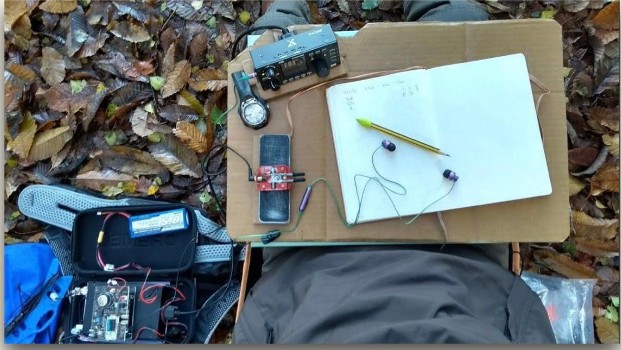
Weiry Vuulers Having read the above (you are still with me, I hope), those of you who haven’t tried squeeze modes are probably wondering why on earth anyone would go through the mental torture of getting to grips with them.
I’m also a straight key man so, like you, I appreciate the simplicity and directness of that technique. But apart from the previously stated benefits of technical speed and reduced RSI, I can compare squeeze sending to touch typing; or riding a bicycle downhill; or running along an airport travelator.
One feels exhilaration, the miraculous thrill of flying along effortlessly. And I only send at 25 wpm. I can only imagine what it must be like at 30+ wpm. I love my straight keys but sometimes it’s sooo good to feel the adrenaline rush of a paddle.
Like learning to copy Morse, the juice is definitely worth the squeeze.
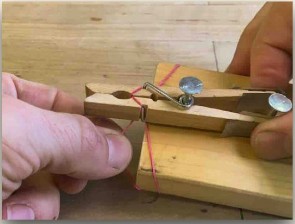
If you have an article or two that you think might be of interest to our readers, please let me know so we can share more thoughts and ideas; for guidance on writing for RagChew, see Articles below. Please email material to Mark VK2KI: cqqrsnet@gmail.com

On My Workbench
Home-Brewed Paddle
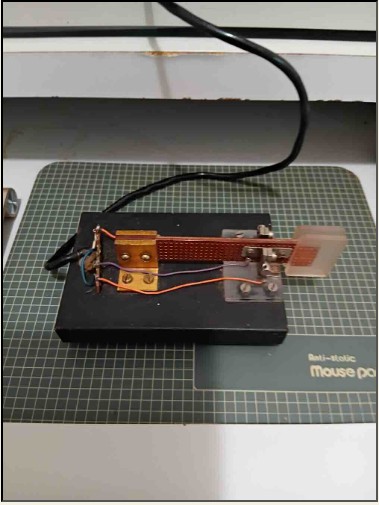
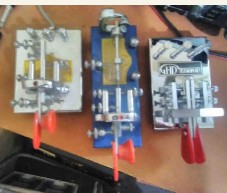
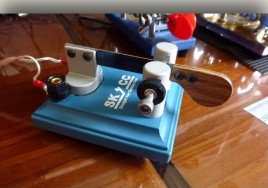
Here’s my new home-brewed paddle. The base is a piece of steel and the adjustable contacts are from a telegraph relay; the arm is 2 pieces of circuit board glued together. Regards Ron VK4EV
What’s going on on your workbench? If you have an article or two that you think might be of interest to our readers, please let Mark VK2KI know; email to cqqrsnet@gmail.com For guidance on writing for RagChew, see Articles below.
ORZ?
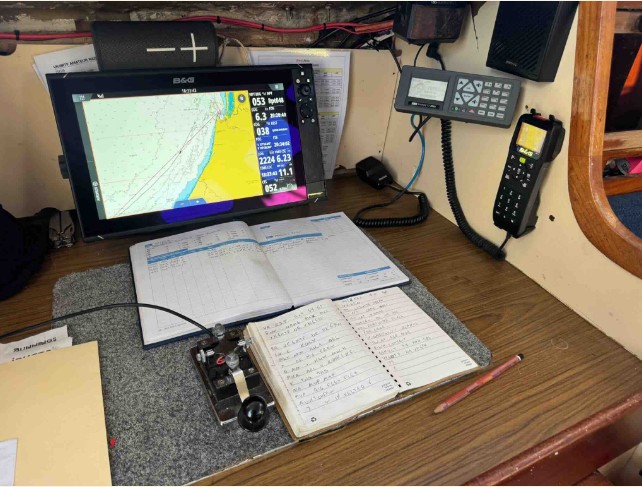
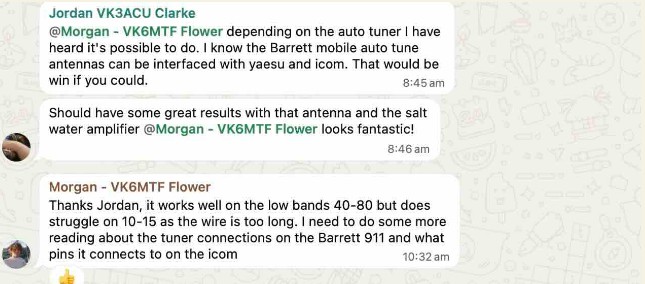
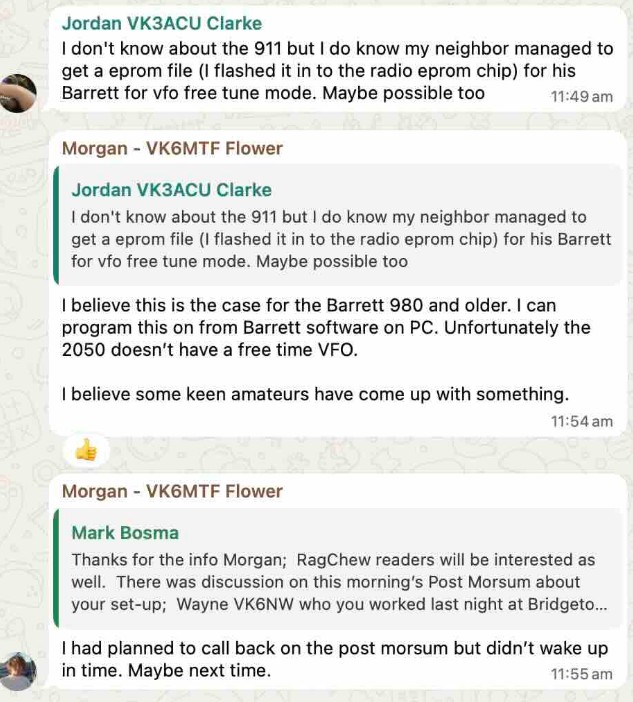
This week Morgan takes us over his Duncanson 33’ sail boat. This was reproduced from our CQQRS WhatsApp groups.
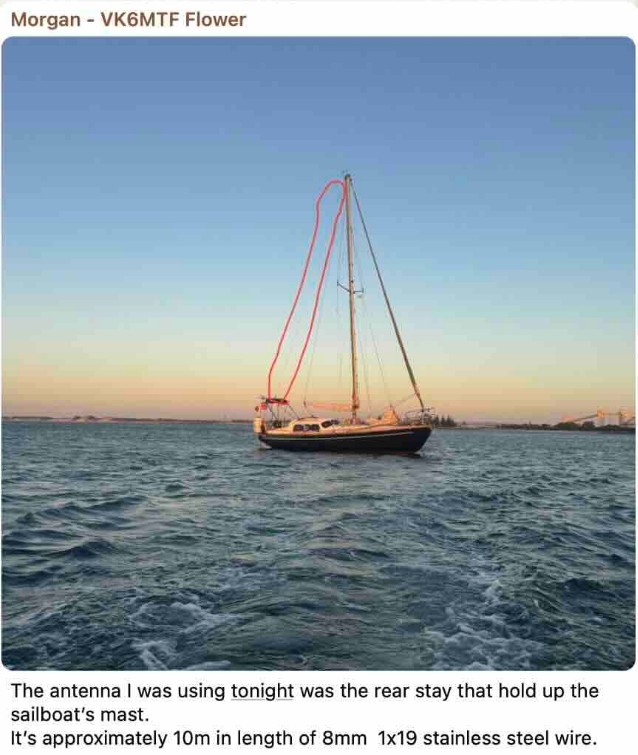
It has two structural insulators in it top and bottom and a feed line from insulated solid core spark plug wire that is separated from the metal railings by some reticulation tubing stand offs and cable ties. A very common solution on yachts.
Itis fed from a Barrett 911 auto tuner that is mounted just below the deck of the yacht. The radio is a remote head Barrett 2050 commercial radio that has the option to be reprogrammed from the front panel.
I have programmed a few frequencies in each amateur band along with the Austravel HF Safety Net and marine HF Frequencies. Every time I want to change mode, frequency or power level I need to reprogram the radio from the front panel.
Not great for quick VFO adjustments but okay for planned skeds. My intention is to figure out how to connect my Icom 7300 to the Barrett auto tuner so I can enjoy the VFO 12:26am ba
John VK3BSE
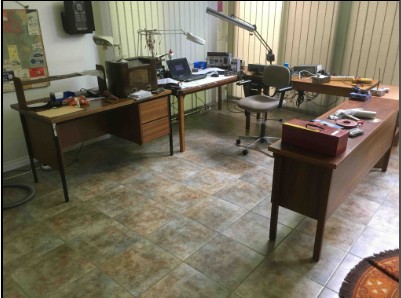
Well there’s always KiwiSDRs to listen-in on! Snowline SDR is a beauty; I also use it to listen to the Sunday morning broadcast from VK7 at 9.30 on 7140KHZ.
Ihave now retired from training at Cerberus which should give me more time for my community activities, mainly Scouts, environmental groups, AR, Petanque, family and…. look for a house.
I moved to Beechworth in mid-December and am now in the process of crafting it to suit its future better… along with a lot of cleaning up. In my opinion the house was not ready to sell.
But the glossy brochure showed it favourably and well presented (on the surface). If I opened more cupboards and wiped more surfaces I would have had a better idea of what I was in for.
But anyway, It’s a nice house, with a cottage to boot, and will support various RF activities. The block is long enough for 80m half wave, tower and come what may.
I do need to get feed lines through the wall for which I’m thinking of 50MM PVC pipe with a packing of towel to allow for changes, that will be, any ideas?
I might add, and should have mentioned it in my CQQRS report that while talking with the local Scout leader, he mentioned that Beechworth has a… wait for it… a Telegraph Office! How good is that!
Ihave spoken with the volunteers there and when the dust settles here I will do some volunteer work there. They have quite a good display and there is a lot of interest, particularly from younger visitors who love codes.
73 de John VK3BSE Didah didah dit dar di dar
QRZ? Who’s on the other end?
CW Practice
This year I’m using Aesop’s Fables. These are short moral stories, often using talking animals, that illustrate simple truths about human behaviour and character.
‘Aesop’s Fables originated in ancient Greece, traditionally attributed to the storyteller ‘Aesop who is thought to have lived around the 6th century BCE.
The fables are generally smaller files of two to three hundred words that have been recorded at 15 wpm and run for about 15 minutes.
If 15 wpm is a bit quick for you, load it onto your phone and set the playback speed at 0.75 X or even 0.5 X- whatever works for you. 0.75 X will play the MP8 at a bit under 12 wpm. Itis suggested that you read the text file before listening to the audio file.
That will make it easier to follow the audio file and prepare you for any unusual words. You will hear some unusual punctuation here. In addition to .
, and ?, listen out for di dah di di dah dit — inverted comma (also known as quotation marks), dah di dah di dah dah – exclamation mark, and dah di dah di dah dit – semicolon.
This week’s fable is ‘The Fox and the Lion’, and the MP3 and TXT files are attached here –
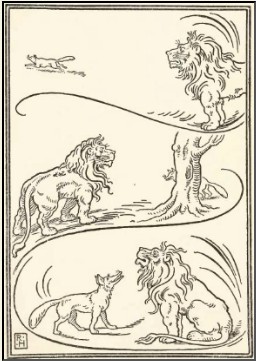
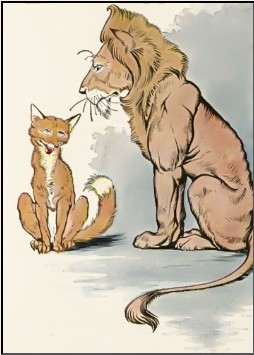
If you prefer a different speed or tone you can create your own MP3 files by converting the text file with the Ebook2CW app — https://fkurz.net/ham/ebook2cw.html.
You can either play the MP3 files in any media player, or load the text file into the Ditto CW: Morse Player app — https://dittocw.andro.io/.
Both options work well, however Ditto CW gives you complete control over all Morse settings, while a normal media player only allows changes to playback speed, and does that in steps (e.g. +1.25x, 1.5x, 1.75x).
Other News
Summerland ARC Remote Access Radio Status Report
The Summerland (Northern NSW) club’s ICOM-7300 is now up and running again for SSB (but who wants to use that uncivilised mode?) via RCForb Client software.
Unfortunately, I can’t get it to transmit any Morse yet. I’m working with the radio custodian (also called Ross), but I have no idea when we’ll be able to claim success. Ross MONNK
My Own Vintage Gear Restoration
From Jeff WB2GDZ from Seminole FL I own two vintage transmitters. One is a KnightKit T-60 that works great and is in fantastic condition. The only thing I had to do was replace the power supply caps.
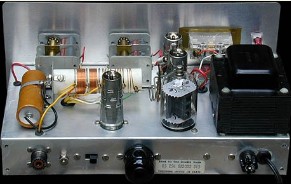
Lalso have a Johnson Adventurer transmitter and matching Model 122 Johnson VFO that both need restoring. I am using ‘Wireless Gir! for tips on how to do it.
Https://www.wireless-girl.com/ I really am new to restoring equipment and even though I made a living as a power electronics technician, I now only own a Fluke DVM and no other test equipment.
Aweek ago I picked up a Drake 2-C in an estate sale for $70 in perfect, museum quality condition inside and out. I have the “re-cap kit” on the way in the mail.
Obviously this receiver could be harder to get going than the simple Johnson Adventurer transmitter because it is more complex. I should note that I learned the hard way that not all FT-243 crystals are the same.
I have a real vintage 7.1mhz crystal that the guy who sold me the T-60 included with it and it works fine in the T-60 with just a bit of chirp at 7.1MHz which gets a bit worse at 14.2MHz.
I went online to a well known ham crystal website and purchased a crystal for 7.03mhz which would then be 14.06mhz on 20 meters. This crystal, although looking the same as the other one, actually has a much smaller crystal installed in the FT-243 holder.
Therefore the crystal current heated the smaller internal crystal up much more and the chirp and some drift at key down were unacceptable. Iread online to try a series resistor with the crystal that is not so large so that oscillation stops completely.
I ended up using a 300 ohm 2 Watt resistor in series with the crystal (I soldered it inside the 7-60) and that did the trick.
Morse Training Net
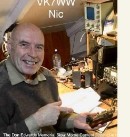
Our team member Nic VK7WW runs an on-air Slow Morse training net every Wednesday at 7pm EDST on 3580 for 30 mins. He uses the callsign of the Northern Tasmania Amateur Radio Club VK7TAZ on that net.
Many of our team learned Morse code with the support of Nic, and the weekly training session comes highly recommended for anyone who wants to learn the Code, or simply brush up.
Everyone’s welcome – 3580KHZ at 7pm Eastern time every Wednesday; you’ll hear lots of the CQQRS team on that net. Jordan VK3ACU has recorded the complete set of lessons which you can now find here:
Https://www. youtube.com/playlist?list=PLHsQmZz6fBXO7swAfbT mutrbbEL17fUQL Contact Nic VK7WW for more info nicholaschantler@hotmail.com including how to join the NTARC DISCORD group to follow the action, or just come along and join in on Wednesdays.
If you’ve read something that you think might be of interest to our readers, please let me know so John and I can share more thoughts and ideas. For guidance on writing for RagChew, see Articles below. Please email material to Mark VK2KI: cqqrsnet@gmail.com
Or… do you have a question or two that are worth sharing? How about a discussion- starter? Please let me know cqgrsnet@gmail.com and I’ll pass them to John VK2RU for compilation each week.
Prosign/Character/Signal of the Month
[Suggestion – put it on a sticky note near your key as a reminder for Tuesday. Tell us how you went!]
Di-dah-di-dah-dit
So back to the CQQRS Slow CW QSO practice net.
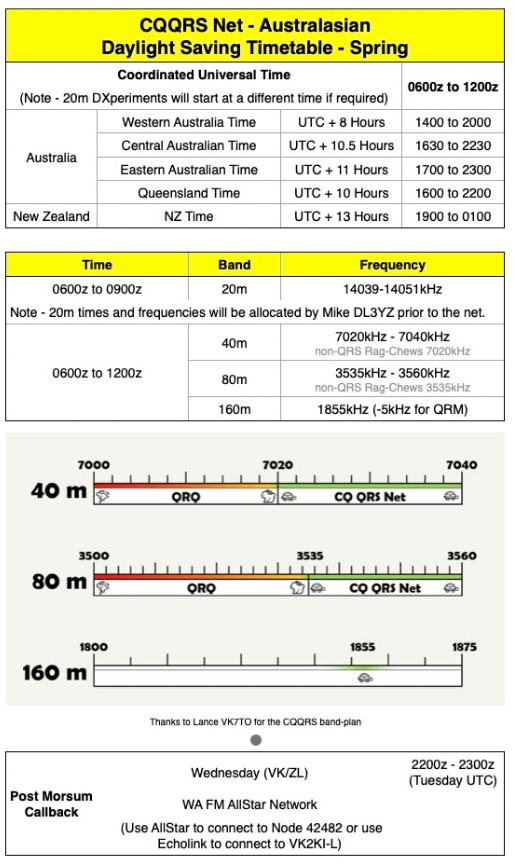
Doesn’t matter whether you’re brand new and want to try just exchanging callsigns and RST reports, or you’re ready for a good old rag chew. We’ll have fun.
There’s usually people around until after 1200Z – so keep calling in the segment of the band designated in the table below until you catch someone.
I should be on as usual from home in NSW or via the Remote at Bedfordale WA, and I’ll also be watching the proceedings using the VK6QS and Tecsun SDRs in WA and NSW respectively. Hope to hear you there.
Reports & Photos
Please let us know via our Reports form bit.ly/CQQRSNET who you work or hear on Tuesday’s Group. The report form closes at lunchtime (Eastern Australian time) on Thursday. ‘And how about helping to make the reports even more interesting by sending a photo?
If you have a photo that you’d be happy to include, please email it to: cgarsnet@gmail.com To make it even easier for our Reports editor Patrick VK2IOW, see if you can reduce the size of the image (to less than 100KB file size by preference).
No problems if your computer or phone can’t do that – just send it through anyway please. And of course, I’m always on the lookout for more photos for the newsletter, so if you have something that might be of interest aside from the reports, please send it through as well – I always enjoy the photos that our readers send – and I’m sure our readers do too.
Email them to cqqrsnet@gmail.com please (reduced size if possible – but whatever you send will be great). Oh and by the way, I recommend that you don’t keep the Reports Form website open between submission of reports from one week to the next.
If you’re unlucky, there’s an undocumented feature in the software that could cause your current week’s report to be combined with your previous report – it’s happened to your editor several times – much to the chagrin of our Reports editor 🙂
Post Morsum
Richard VK6HRC will run our phone Post Morsum on the South West AllStar net (via repeaters and hotspots all over WA) from 0600 WA time, then from 0700 WA time on 80m (8605 LSB).
See https://bit.ly/CQQRSWebsite and navigate to the Net Details page for details of how you can connect via Echolink or even possibly via your local FM repeater.
Articles
The newsletter is interesting to readers because of the material contributed by so many people – be it the reports each week or the various articles. Could you write a short article or articles for RagChew? You bet! Writing not your strong point?
Don’t worry, I’m very happy to help as much or as little as needed. Here’s a thought – although our readers will much prefer your own writing, perhaps have a go at using a Large Language Model Artificial Intelligence tool such as ChatGPT, Microsoft Copilot or Google Gemini to check your writing or even to actually draft the whole article in a relaxed easy-to-read manner!
You can find out more about how to do that on the Newsletter page on our website bit.ly/CQQRSWebsite. Our website also includes a suitable prompt (the command you feed to the Al to make it do what you want).
Please remember though – you must fact-check anything that an Al tool drafts for you because Als ‘hallucinate’ – ie if an Al can’t find what you’re looking for, it will make up an answer and present it as a fact!
This is one of the dangers of using Als ~ it’s quite probable that the tool will create a very readable and convincing draft that is 100% wrong! You as the submitter are responsible for fact-checking.
But it’s a learning experience – please let us know how you went if you had a go with this new generation of tool. And by the way – lam very concerned about our future in a world of Al – but I’m pleased to see that school and university curriculums now focus on understanding the risks – for instance, kids are now learning critical thinking something that used to be taught mostly at post-graduate level.
When the typewriter was invented, people predicted the downfall of handwriting; when the word processor was invented, the art of writing was thought to be on the way out – ditto for the spreadsheet and arithmetic, AM, SSB and FT-8 for amateur radio etc.
We can ignore Al and hope that it just goes away… or we can learn to handle it through experimentation and use. For more guidance on writing for the RagChew newsletter (including help with using an Al), head to our website bit.ly/CQQRSWebsite then click the menu on the top right and then click RagChew Newsletter.
Material
Areminder; if you send me any information by email, our report form or WhatsApp – unless you specifically state that material is not to be published, I’ll assume that you’re happy to see your thoughts in the RagChew newsletter.
And if you want to have a non-CW chat to your RagChew editor on air, you’ll often find me on the VK6 AllStar network. Easiest way to access the network is using Echolink via my AllStar node – use Echolink on your computer or phone then search for VK2KI-L.
Connect and give me a call – either callsign works – if I’m in the shack I’ll hear you. Alternatively, if you’d like a bit of a laugh, tune in to my community radio program The Vineyard Selection on Fridays on YassEM between 1pm and 4pm Eastern Australian time, or Your Shed between 4pm and 5pm.
Send me an SMS or WhatsApp message to say g’day if you’re listening. You’ll be able to hear YassFM on your smart speaker, the various broadcast receivin.
‘Apps on your phone, the YassFM website https://www.yassfm.org/ or by clicking here: https://playerservices.streamtheworld.com/api/livestream-redirec/2YAS,mp3
Thank you so much to our team of 33 contributors: DL3YZ, MONNK, VK2GAS, VK2GAZ, VK2IOW, VK2RU, VK3ACU, VK3BSE, VK3BTV, VK3DRQ, VK4EV, VK4PN, VKS5AV, VK5CZ, VK5ET, VK5FD, VKS5KFG, VK6FN, VK6HRC, VK6JDM, VK6KD, VK6KHZ, VK6MT, VK6MT, VK6MTF, VK6NQL, VK6NW, VK6PZT, VK7JZ, VK7TA, VK7WW, WB2GDZ and ZL4CTS.
And a special thank you to our editorial team, Nigel G4RWI (head of software development), Patrick VK2IOW (report production), John VK2RU (spreadsheeterer), Richard VK6HRC (Post Morsition) and Lance VK7TO (technical editor and bit wrangler). Great work all!
Thank you so much to our team of 33 contributors: DL3YZ, MONNK, VK2GAS, VK2GAZ, VK2IOW, VK2RU, VK3ACU, VK3BSE, VK3BTV, VK3DRQ, VK4EV, VK4PN, VKSAV, VKSCZ, VK5ET, VK5FD, VKSKFG, VK6FN, VK6HRC, VK6JDM, VK6KD, VK6KHZ, VK6MT, VK6MT, VK6MTF, VKENQL, VK6NW, VK6PZT, VK7JZ, VK7TA, VK7WW, WB2GDZ and ZL4CTS.
And a special thank you to our editorial team, Nigel G4RWI (head of software development), Patrick VK2IOW (report production), John VK2RU (spreadsheeterer), Richard VK6HRC (Post Morsition) and Lance VK7TO (technical editor and bit wrangler).
Great work alll UY CW on Tuesday, mb Mark Bosna VK2KI/ VKEQI Beautiful South Bowning NSW ‘eqarsnet@gmail.com non impedit ratione cogitationis

About the CQQRS Net
For the current schedule and more information about the CQQRS net, please go the the Net Details page on our website:

The opinions expressed in the RagChew newsletter are those of the individual contributors. The opinions do not necessarily reflect that of the editor or of the CQQRS Group members.
Any material and images received from members by the editor or published on the CQQRS WhatsApp groups may be published in this newsletter unless specifically requested otherwise.
The RagChew newsletter is considered to be exempt from the Australian Government’s ban on social media for under 16 year olds because it is a service that has the primary purpose of enabling users to share information about products or services, engage in professional networking or professional development services or of supporting the education of users per the Australian Government eSafety Commissioner FAQ webpage “Which platforms have been excluded from the age restrictions” dated 10DEC25.
The values, doctrine and guidelines for the Group and for the newsletter are published on the Principles page of the group’s website https://bit.ly/CQQRSWebsite