Below is a reconstruction of the 2026 15 CQ QRS RagChew newsletter designed to support full text searching. This reconstruction was built using OCR, and will contain errors.
To view the Mailchimp original, click here. To search the entire newsletter archive, click here.
Contents
- CQ QRS Ragchew
- Dah-di-dah-di-dah
- New Team Members
- Website
- Post Morsum 8th April 2026
- As usual a very brief and inaccurate record of the get together, a lot of very interesting topics were discussed.
- Reporting
- Writer’s Block?
- The Beverage Antenna
- Where Did I See It?
- On My Workbench
- CW Copy Practice
- Other News
- The Missing Q Signals
- Wonky Paddles
- Amazing QCX-mini
- Morse Training Net
- Letters to the Editor
- There’s No Such Thing…
- Prosign/Character/Signal of the Month
- Di-dah-di-dah-dit
- Next Tuesday’s Net
- Reports & Photos
- Post Morsum
- Articles
- Material
- Teamwork
- About the CQ QRS Net
CQ QRS Ragchew
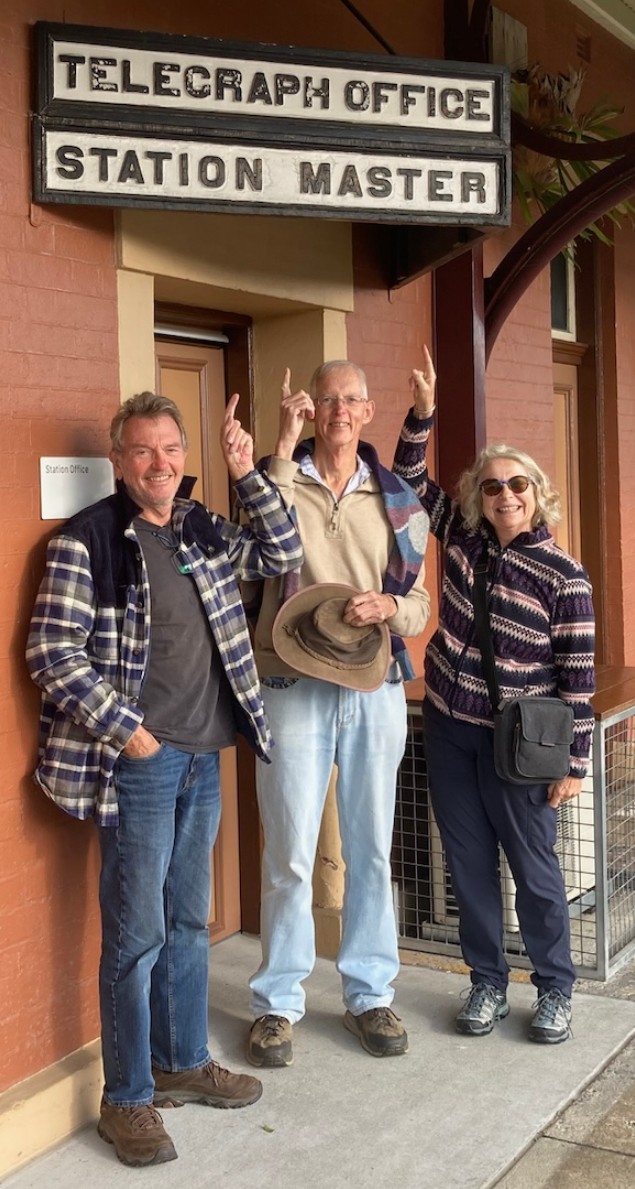
This week we bid farewell to Nigel G4RWI and Lady Josephine as they headed to Queensland for the last nibble of their six month visit to Australia and New Zealand before returning down-under to the UK.
Nigel had been singularly unsuccessful at taking out a VK7 callsign for a future stage – so when he re-appears in seven months time, that complicated VK/G4RWI/P will return to the airwaves no-doubt! See you in November guys.
Link to our Weekly CQQRS Net Reporting Form
Dah-di-dah-di-dah
Bit of a noticeable down-turn in people on air for our CQQRS Slow CW Practice QSO net this week (a down-turn in turn-up?); but then again, we had an up-swing in the numbers on 80m this time (higher lower?).
42 team members were reported, so maybe everyone else was out celebrating the end of daylight saving in VK & ZL perhaps?
As you’ll read below, conditions on 40m were strange, 80m was ok, 20m was fairly poor, but at least, Edi DO2EMR was heard in Australia on 15m – albeit very very weakly.
So all in favour of trying again next week, please say ‘di-dah dah-di-dah-dah dit’, those against say ‘dah-dit dah-dah-dah’. I think the “di-dah dah-di-dah-dah dits” have it.
This week I was trying a new noise canceller that Craig VK3CLD from Alexandra sent me. The phasing-type noise cancellers have been a bit of a drama here at CQQRS HQ. You may
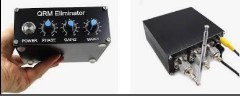
Recall that Nigel G4RWI, operating under inadequate supervision on my part, decided to see what happens when you feed transmitter power to the noise canceller without the PTT (bypass) circuitry connected (actually, I thought I’d connected the transmitter to the other side of the noise canceller…
Apparently not!). I considered replacing it by finally building the VK5TM noise canceller kit that’s been waiting so patiently, but decided that seeing I was going to be away for much of March, a $70 replacement from Amazon would be more practicable.
The unit was posted from China but luckily, Amazon is pretty good at sorting out problems… sure enough when I arrived back home three or four weeks later, no package. So the supplier said it had got lost in the post – and sent a second one.
When it turned up it was obvious to me that it wasn’t new – scratches and fingerprints on the front panel and the case, the warrantee voiding stickers were missing, and there was slight screwdriver damage to where the two halves of the case joined.
Sure enough – I tested it before applying RF power – the PTT bypass relay wasn’t operating at all. Back to the supplier – ok, “post it back” (at my expense) “and they’ll give me a refund”.
Then followed a couple of days later by “please send a video of the fault”. Once that was done, they said ok, we’ll give you a 50% refund! No thanks!
“Ok, to ‘save you posting it back to China, we’ll give you an 80% refund” (which would work out about the same cost-wise). Ok. Meanwhile, for reasons unknown…. another one turned up in the post! Possibly the original one that had been lost – who knows?
Tested first – guess what? Same fault, plus the power switch didn’t light up… and it was also missing the warrantee void stickers – another repaired or returned item I think! Anyway, I was now sans-noise canceller, and Craig VK3CLD came to my rescue!
He had one that he didn’t need (lucky location mate!), which he promptly posted to me. Fantastic, thank you Craig! Interestingly, I had modified my original bought unit by removing the nasty little balance bridge transformer and replacing it with a hand-wound toroid from the VK5TM design; I’d forgotten how tricky the commercial unit was to adjust – still works, but tricky.
I also noticed that Craig’s unit had slim adjustment knobs, which meant when adjusting, noise was coupled through to the potentiometer shafts from your hand… making adjustment even more tricky – things changed as the fingers were taken away.
I also wondered if the front panel of the case was just plastic instead of shielding material like PC board? So I’ve now gone from recommending these things for anyone with 40m / 80m noise problems, to advising caution! When they work, they work…
But the VK5TM kit is a much better solution, as at least two of our team have found. A Lesson in Contemporary Software Writing Our visiting Brit, Nigel G4RWI stayed with us for a few days in February, which tured into a month-long house sitting job when our intended sitter had to cancel for reasons beyond his control.
After that Nigel and Lady Josephine went to Tasmania for a while before returning here for a re-group. When here, Nigel gave me a demonstration of how he uses the GitHub website to manage some of the software updates to the Python software that’s used by Patrick VK2IOW and John VK2RU to process your reports for the RagChew newsletter after each week’s net.
The change involved correcting the text colour in the generated Word document, and was done easily by hand. He then demonstrated how he used an Artificial Intelligence tool to make a second more complex software change – changing the background colour for the reports produced by Patrick.
Amazing to watch an Al do the work… and you’ll see the results in the reports below. MailChimp Email Bounce Problems One day recently, suddenly our RagChew subscriber numbers went from over 250 in the morning, down to 230-something.
MailChimp is made for spam advertising – and automatically removes email addresses that bounce. Well for reasons unknown, a large number of subscribers were deleted because their MallChimp email bounced that week.
So if you’re reading this on Monday when I send out the weekly reminder email, and didn’t get the original mail-out of the newsletter (Thursday), please let me know so I can manually re-add you: cgarsnet@gmail.com
• This week, Ross MONNK has invited you to dip your toes in the water and have a go at writing something for the newsletter.
Ross has outlined a great way to assemble an article, and I think, provided encouragement for those who may think they can’t write, or don’t know what to write about. Well-done mate!
* My next door neighbour and SWL Jack has also written about the mysterious Beverage antenna. + Peter VK3WOW discusses is venture into neural network programming – to see if he can crack the code of making the images containing text in our RagChew newsletters searchable (you may recall Nigel G4RWIS previous article about cat pictures and neural networks).
Most of the newsletter you read is actually images of text (for reasons I’m happy to explain off line); this has presented a few hurdles for our software team, Lance VK7TO and Nigel G4RWI, who have been working on newsletter archive search tools for our website.
+ Paul VK3KLE updates us on his new refurbishment project – his Drake TX-4C. * And… there’s all the great reports you’ve submitted after Tuesday’s CQQRS. Practice QSO net and Wednesday’s Post Morsum; check out Richard’s running gag. Plus a whole lot more.
New Team Members
Welcome this week to our first Italian member, Fausto IU4FLS who lives at Bologna in Northern Italy. Fausto was introduced by our European Desk Mike DL3YZ, and was on air in our DXperiment on Tuesday.
Welcome to our family Fausto and I look forward to working you on 20m soon when conditions favour.
Website
If you’d like to find out a bit about our net, or would like to pass information to others about our Tuesday get-togethers, here’s the link to our website. bit.ly/CQQRSWebsite So here we go – on behalf of the CQQRS Editorial team, please enjoy the newsletter.
Niall kh DOSITa VK2KI / VK6QI Patrick John Beautiful South Bowning VK2IOW VK2RU NSW Milthorpe NSW on a track somewhere cqqrsnet@gmail.com non impsditi ratione cogitationis Nigel Richard Lance G4RWI VK6HRC VK7TO our other grey nomad Padbury WA Margate TAS
With thanks to Nigel G4RWI’s clever software, and John VK2RU’s clever spreadsheet work, here’s the 58 stations heard by 42 members of our team on Tuesday:
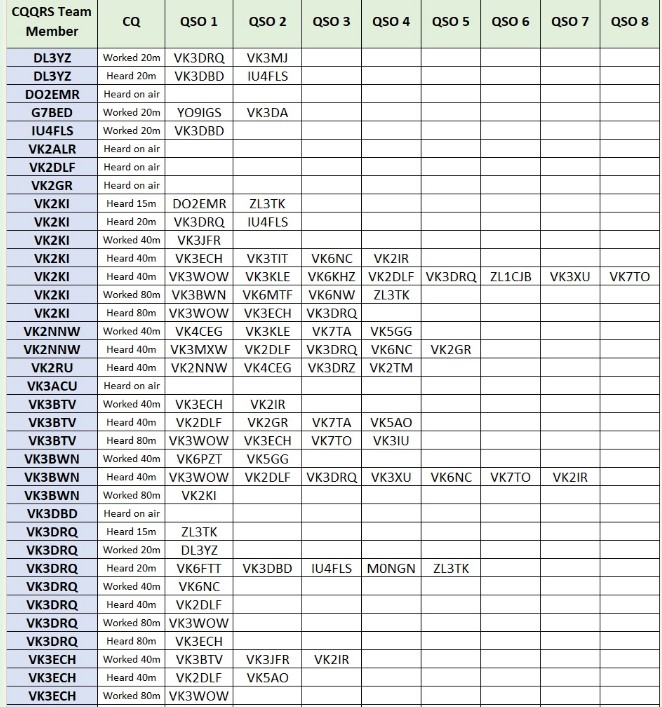
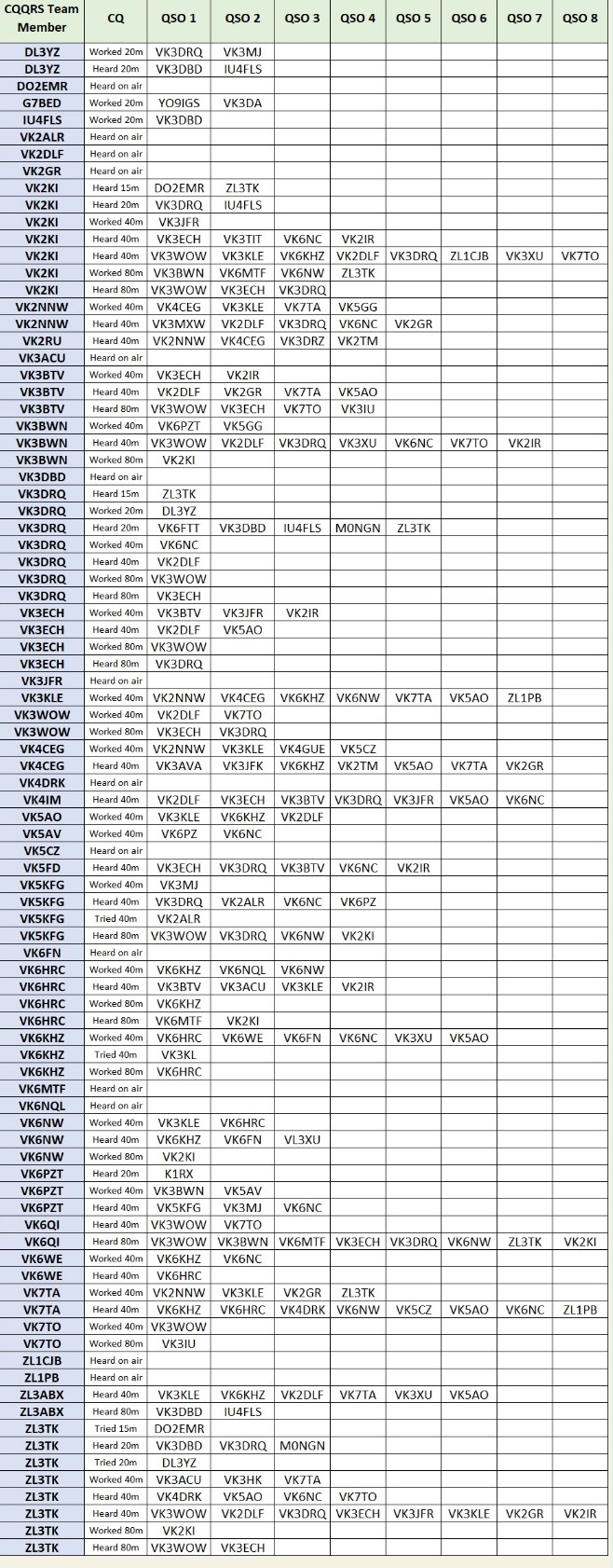
John’s spreadsheet above shows the known stations heard or worked on last Tuesday’s CQQRS Net (reported via our webform bit.ly/CQQRSNET ); the comments in the team members’ reports follow.
The comments were compiled for us by the clever software built by Nigel G4RWI and the layout was perfected by Patrick VK2IOW. Thanks again to Nigel, Patrick and John for the work, and to every team member who submitted a report –
From Keiran (Bad Tempered Victorian) VK3BTV at Lilydale Vi
[40m] Enjoyed catching up with old mate Rob VK3ECH – his CW is “Easy listening” like the old 3MP. Also contacted Tom VK2IR. Tom was sending 15WPM with regulation spacing (according to MorseExpert on my phone) and I struggled!
Lesson – get off my behind and practice more!

[15m] Neither heard nor saw any sign of Edi DOZEMR
[20m] Could detect his presence but not copy Mike DL3Y; 140M]
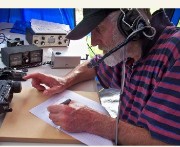
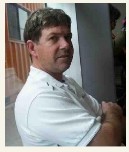
[20m] I was not on the official schedule today, but I took over Ross’ shift as he posted he had technical problems and will not be on the air. So I think Manny was surprised to hear me instead of Ross :-).
Fausto did great on his first DX QSO in the CQ QRS net. Have a great week, Mike.
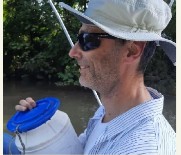
[40m] Lots of static crashes from storms east of Kalgoorlie causing lots of QRN
[80m] Great to hear Mark finishing up a QSO on 80m. Thought I had stepped on some toes for a while but apparently just missed.
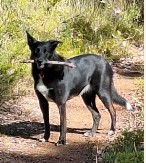
[20m] I only managed a short session this morning, as I had some urgent errands to run. However, I was still able to get a couple of stations in the log. Big thanks to Paul VK3DA for his patience whilst I got the call sign.
Conditions weren’t great, so I used a combination of the rig and a WebSDR to pull him out of the noise. But once I had, or maybe because I’d then got my ear in, we managed a nice short QSO. As ever, always great to get distant j.
Thanks all and wishing you all good DX and hope to catch you

From Stephen Coote ZL3ABX at Nelson, New Zealand
[80m] Some signals were very weak at my QTH and I could only copy the callsigns when the stronger party sent them. I called CQ on both 80 and 40 metres, but didn’t get a response. Next time maybe.
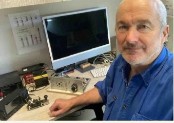
[40m] Conditions were excellent from my portable station on the western downs Queensland. A good Antenna and 5 watt QCxX is all I need on holiday. Don’t use cheap paddle cables is a lesson for next time. Worked all states is my next goal from Jandowae.

[80m] A rather poor evening. Both QSQs, one on 40 and the other on 80, suffered from deep QSB and so the 73s came far too scon.
I spent a lot of time calling, but got no takers on 40, 80 and even 30 m, despite the RBN showing workable signals across the southem states. Hopefully conditions improve next week.
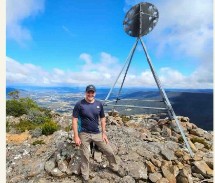
[40m] Quite challenging propagation conditions on the 40m band. A couple of my QSOs started with pretty marginal signal reception at the beginning and then changed into DX QRM in the middle. All in all, as always, a pretty good evening of CQ QRS net.
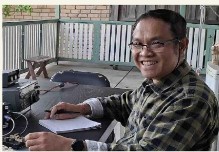
[20m] QSO started at 08.08 and ended 15 minutes later due to QSB.
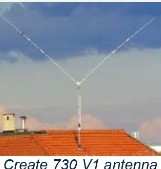
[15m] This week I heard Edi DO2ZEMR at Stuttgart calling CQ. Edi was RSN 311 into the Snowline KiwiSDR in Southern NSW, but was not heard on the VK6SEG KiwiSDR near Northam WA. This week I also heard Stan ZL3TK calling Edi again.
[20m] I heard our new Italian team member Fausto IU4FLS from he Snowline KiwiSDR, but only on QSB peaks where he was to was either working Manny VK3DRQ, or Manny was attempting
Bologna coming-in to the Snowline KiwiSDR, but only on QSB peaks where he was RSN 111. I think Fausto was either working Manny VK3DRQ, or Manny was attempting to hook-up; Manny’s signal was pretty weak with me, so I wasn’t sure.
Anyway, great to hear Fausto for the first time on our net; welcome mate!
[40m] After the DXperiment, I came down to 40m to see what was happening. Paul VK3KLE from Stawell was chatting happily to Ron VK6KHZ at Yangebup South of Perth, and Clive ZL1CJB was coming through from Auckland, chatting to VK3XU.
After dinner, I hooked up with James VK3JFR at Ararat, who I hadn’t heard for a while; solid RSN 591 signal over the 700KM hop from Western Victoria.
For the next few hours conditions were very strange; some stations from the South were very strong with me, while others were noticeably unusually weak.
For example, Rob VK3ECH at Echuca usually romps in here, yet on Tuesday, I was struggling to copy him at the time. Meanwhile the VK6S were coming through nicely – leading the push signal-wise was Lin VK6NT operating that huge 4 element 40m Yagi at Whiteman Park using the Northem Corridor Radio Club’s VK6NC call.
[80m] I dropped down to 80m after 1100Z and after doing the one-armed paper-hanger trick to. adjust my pi-coupler and phasing noise canceller, I noticed that Rob VK3ECH and Peter VK3WOW must have decided to establish an 80m beacon network – they had such a long rag chew on 3535KHZ that they may as well have been beacons!
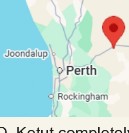
Good stuff, and suich good practice for them and listeners alike. Meanwhile further up the band, Ketut VK3BWN and I struggled a bit to have a decent conversation – signals both ways were in and out of the noise – the beauty of the RSN reporting system was that my report of RSN 323 and Ketut’s report of RSN 413 told both ends that signals were in and out of the noise, without having to try to communicate that in words.
After Ketut I heard Stan ZL3TK calling CQ approaching his midnight; comfortable RSN 542 sent 522 received. I suggested that surely, Rob or Peter on 3535 would like a chat, when they finished, and guessing from the pause that Stan had QSYed, I responded without suggesting a QSY to Wayne VK6NW who called me.
Nice chat with RSN 542 sent and RST 539 back. I also noticed on the VK6SEG KiwiSDR that Manny was. calling CQ.
The fun on 80m was rounded-out when Morgan VK6MTF at Albany called me; pretty good RSN 532 in response to his 10W signal, and he responded with RSN 534. Great to work across Australia on 80m with just 10 Watts!
Morgan advised that he was departing for Tasmania the next day in his yacht; hopefully he’ll have fair seas and trailing winds for the 14 day journey across the Great Australian Bight and Bass Straight….
And perhaps we might hook up during the transit as well? So 80m was the highlight of Tuesday’s net for me – terrific to see so many people again on the band that we started the net on, nearly five years ago.
[80m] Check that out! Eight 80m stations heard on the KiwiSDR near Northam WA; just so pleasing that more of our team are finding their way back to 80m.
Interesting that during the chat to Ketut VA3BWN, he started off having a readable signal as did I, but part way through our Q: disappeared from the receiver, but my signals continued to get s
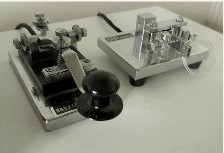
[40m] I had my QCX mini out on Tuesday night. I and Graham VK4CEG were using the same rigs. It was fun working everyone with SW.
[20m] Just a short session, finishing up with a 20m DX contac with a massive 1kW operator in Boston USA
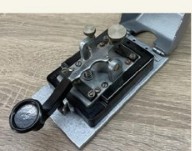
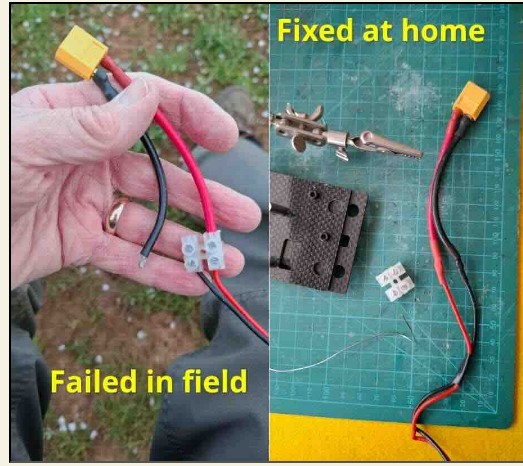
4 Failure Waiting to Happen rom Ross MONNK ‘d almost finished setting up for my Tuesday Portable DX session when I discoverec sp tla ns ne Wl a Ell pn wa
From Ross MONNK ‘d almost finished setting up for my Tuesday Portable DX session when I discovered something I couldn’t fix….
Post Morsum 8th April 2026
From Richard VK6HRC. Seven on the VK6RLM rpir and AllStar/Echolink hub this morning.
NAA AN ES AB IDDM aN ELEN A I DA} ZL8TK = Stan VK6QI_ = Mark VK6NW Wayne VK6KD David VK6FN Max VK6HRC VK6MRB Mulligan swl.
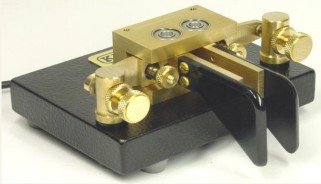
Stan at the top of the list heard only just heard Mike DL2YZ on 20m and Edi DO2EMR on 15m nothing from the rest of the crew over there. On 40m QSB was causing problems. 19 degrees in Waitarere Beach.
Mark heard Stan ZL3TK and Edi DO2EMR on 15m via the Snowline Kiwi sdr worked two on 40m and four on 80m, also happy to see more activity on this band. 12.9 degrees in Beautiful South Downing.
Wayne happy to be home after his country trip worked two on 40m and one on 80m, 5 degrees in Bridgetown. David had a good evening not in the shack though as he was entertaining visitors so he heard about all the fun he missed this morning.
9 degrees in Baladura. Max worked one on 40m and then into sw! mode until dinner time, he was multi tasking this morning working our friend Mark VK6BSA in Cocas (Keeling) island on 40m during the Post Morsum ! Too busy for a weather report.
I heard Mike DL2YZ and Manny VK3DRQ on 20m via a local Kiwi sdr and later on worked three on 40m and one on 80m. 8 degrees in Padbury. A big thank you to all. 73 Richard. P.S.
As usual a very brief and inaccurite record of the get together, a lot of other very interesting topics were dicussed.
As usual a very brief and inaccurate record of the get together, a lot of very interesting topics were discussed.
Reporting
After next Tuesday’s Group, please remember to send me a list of who you worked and / or who you heard using our web form here:

Even if you didn’t hear anyone, we’d still like to know that you had a go. And to make your report more interesting, please consider sending a photo: cqgrsnet@gmail.com So, please help attract new and old team members to have a go by submitting your report each week.
Submissions close 1300 (Eastern Australian Summer time)_on Thursdays.
Writer’s Block?
Every week Mark, our editor, and his editorial team perform a minor miracle – another copy of the mighty RagChew arrives in our inboxes. And I say “mighty” in its literal as well as its figurative sense, because it’s HUGE.
Many a monthly newsletter out there would be glad to have even half the content of RagChew’s weekly editions. The quantity and quality of the weekly Net reports certainly makes for great reading, but articles seem much harder to come by.
No wonder, then, that each of those editions contains a request for articles (and to keep those activity reports coming too, of course).
As a regular contributor myself, I’m now going to stick my neck out (oh dear) with some suggestions for those of you who might be dithering on the side of the swimming pool, nervous about taking the plunge.

You’re an amateur radio operator. You know stuff. Interesting stuff. So, write about something you know. This is very important because it means you’ll be on familiar ground.
It doesn’t matter if i’s already a well-known topic – you’re going to express your own opinion of it. “Your own opinion…” is, in fact, what will make it interesting to readers. These days, if we want information, we can just look it up on the internet.
What we find interesting is what our fellow hobbyists are up to; how they feel about the things we know about. So, share those feelings or tell us what you’ve been doing. Keep the subject matter simple.
Last week I wrote an entire article about folding a short length of garden hosepipe in half (I think I was really “pushing the envelope” therel).
Seriously though, many people find it difficult to absorb complex information from the printed page (“Don’t tell me how…show me how”). And anyway, there isn’t room in a RagChew article to go into complex topics, no matter how interesting you might think them.
So, no articles about updating the firmware on the YaeCom XYQ-6993. But, please, do tell us why you love that radio! That’s the sort of thing we like to hear.
When I was a young man in the Navy, away at sea for months at a time, whenever we came into port I would look forward to letters from my mother.
My mother is a poorly educated woman (probably with a touch of Dyslexia) so random capital letters, random punctuation, and eccentric phonetic spellings were features of her letters.
But (and here we come to the crucial point), knowing no better, she wrote exactly as she spoke. And in doing so she was right there in the ship’s cabin with me. What a wonderful (unintentional) gift that was. So, don’t try to force it – just write as you speak.
It’ll be easier for you to write and enjoyable for us to read. Inspiration can be hard to come by, so comment on an article you’ve seen in RagChew.
An existing article may have triggered some of your own thoughts on that subject and thus provides the impetus you need to get started – disagree with it; agree with it; expand on it. That’s what I did with my recent article on the VI Curve Tracer.
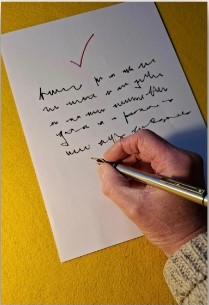
The hardest part (after deciding what to write about) is getting started. My advice is: don’t start by writing the article! Instead, get a sheet of paper and a writing instrument of your choice, and bash down as many things you can think of on the subject.
One or two words only for each idea, as a reminder. Then go away for an hour and consume a beverage of your choice. It’s amazing what additional thoughts will crop up in that hour (if you don’t overdo the beverages, that is). Get those extra ideas down too.
Finally, cross out anything that’s not relevant. By now you’ll have a much clearer idea of what you want to say. Okay, now you can start writing.
If you’re worried that others might think you’re stupid or eccentric, I’ve got news for you – RagChew readers will not judge you.
You only have to read a few copies of RagChew to realise that the QRS Net is jam packed with operators who are either terribly supportive of anyone that “has a go”, or are just as stupid and eccentric as you are! All my life, I’ve been “average” at what I do.
Sometimes, after considerable application on my part, I’ve managed to claw my way up to “above average” in a very few areas. I’m guessing that you’re the same. We’re all the same, and nobody is in a position to judge others (except Juries and Judges, I guess).
One of the curious things about RagChew and the QRS Net is that the opinions and experiences of newbies are just as interesting as those of the crusty old salts (arguably, more so). So, everyone is a potential contributor.
Writing your first RagChew article may well be a similar experience to your first CW QSO – nerves, errors, confusion, the whole shebang. But afterwards…well, I don’t need to tell you about that, do |?
Our editor, Mark, has often suggested to RagChew readers that an Al might assist them with the writing process. As you can tell, I don’t use Al myself, but I think it’d be a fun experiment to try.
So, next week I’ll pretend to be a keen but struggling contributor to RagChew and enlist Google Gemini’s help. I have no idea how that will work out. Watch this space for next week’s article!
If you have an article or two that you think might be of interest to our readers, please let me know so we can share more thoughts and ideas; for guidance on writing for RagChew, see Articles below. Please email material to Mark VK2KI: cqqrsnet@gmail.com
The Beverage Antenna
No Mark, you can’t drink it! by Mark’s Neighbour SWL-Jack
Named after engineer Harold H. Beverage (1922), this is one of the most elegant receiving antennas ever built — and it’s simply a long wire stretched very low across a field.
Here’s how it works: run a wire 100M to 1000M+ low to the ground (just 1-2 metres high), point it toward your target — say Europe — and terminate the far end with a 470-6000 resistor to ground.
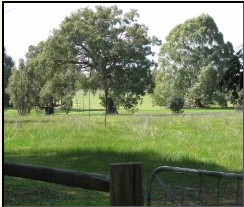
That termination turns it into a traveling wave antenna, absorbing rearward signals and leaving you with clean, directional reception. The result?
A dramatically quieter noise floor and a front-to-back rejection that makes weak signals suddenly appear out of nowhere.
It’s perfect for: = AM broadcast DX Pow §ssB ® Low-band HF (160M, 80m, 40m) Pair it with a modern SDR receiver and the combination is extraordinary — signals you simply cannot hear on any other wire antenna. A RECEIVE ONLY — do not transmit into it.
Got one in your field? Tell us your length and what you’re hearing! Here’s some Facebook links about this remarkable antenna “
Where Did I See It?
Searching back issues of this newsletter has proved to be quite difficult. This is largely because much of what looks like text in this newsletter is actually images of text.
In an attempt to address this issue, I have created a text-based replica archive of CQ QRS RagChew newsletters going back to issue 2024 16 (the first RagChew to adopt this numbering scheme) with substantial help from ChatGPT and set up a mechanism for searching this replica archive.
Part of the work in building the replica archive involved my training a neural net to recognise, in any issue of RagChew, major headings, minor headings, body text, images and the newsletter’s table of contents.
Among other things, this involved my drawing rectangles around every instance of these in ten newsletters. Serious fun — not!
Because the replica newsletters are ultimately based on OCR (optical character recognition), they are NOT perfect replicas of the original newsletters. They contain garbage text, omissions, and sometimes duplicate text.
However, they seem to be good enough to support a useful search function. Importantly, each replica newsletter contains a link at its top to its Mailchimp original.
‘As an example of how this works in practice, let’s say you are trying to locate an article that you recall seeing in RagChew recently about a World War Two radio set.
You can’t remember its name, but you remember it was used by agents operating behind enemy lines. You enter the search term “behind enemy lines”.
Note that in the reconstructed versions of each newsieter prosented hee: + You cin view the Maichine criginal by clicking a irk al the lop of the page + Giicking any caving highlighted in ban wil nhow yous cbr hits in the archto for that calleign Search the CO QRS RagChew archive; peertoeccmchses I cn |
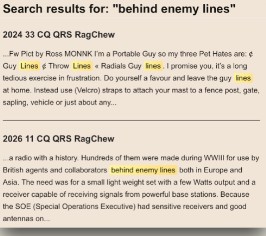
You click the heading of the second snippet and are taken to the paragraph in the 2026 11 edition of RagChew where that phrase occurs. This is clearly the article you were looking for.
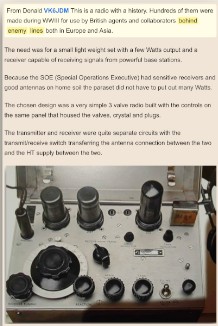
To see the original article in its Mailchimp form, all you need to do is click the link to the original at the top of the page.
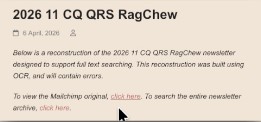
If you’d like to try this for yourself, visit https:/Awww.peterdannauthor.com/vk3wow/ I’m hoping that in time Google will judge this replica archive is of enough informational value to be worth crawling.
If that happens, users should eventually be able to find old items of interest in RagChew using Google — something that is not possible at the moment. — Peter VK8SWOW
On My Workbench
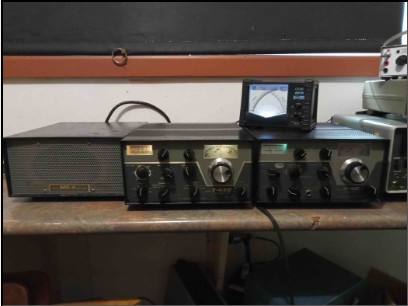
Well Mark, it’s been as busy two weeks on and off the bench with the Drake TX-4C transmitter that I discussed a couple of weeks ago. The little cute Drake rescued from a dusty shed nest of many years is on air again.
| have been hunting for a restorable TX4C for a number of years, but at hamfests the right one didn’t wait for me. For the most part it had multiple burnt out resistors inc the 15 ohm cathode ones on the finals & the driver B+ dropper resistor.
A good number of ceramic caps that were way off value were replaced too. The Drake does pass the dummy load test on carrier with local receiver. But finals are sagged out and can’t get the bias high enough…
Will be fixed very soon with Svetlana 6JB6 tubes from USA. After all of the above a few fresh tubes including a driver and two mixer tubes, leaving a set of tired PA tube – they’re still on order to be fitted when they arrive from USA in a few weeks.
A new set of case screws is also on order as many were missing. The 20m xtal was also dead so that’s been ordered too; I borrowed one from another Drake RX in the interim. On the band switch, multiple fingers needed adjusting and a couple were bent.
None were actually burt – that means no problems further on. Thankfully the nest had been kept dry all the sleeping years so there was no green corrosion in the loom or on the wafer switches. All pots are still good.
This little duck wasn’ta taxi; just light duty rather than heavy duty radio work over the decades. The meter shunt needs to be replace – it has a hairline crack; resistor in the mail .
The pto has been out and cleaned and lightly reamed as it had been oiled on the nylon shaft. It’s silky smooth now with a tiny bit of nylon-safe Permatex silicone grease. The tracking is amazingly accurate and the transmitter has only warm-up rift.
The AC4 power supply is beefed up with some additional parallel caps on HT and b+ rails. The original caps have never swelled their jackets and seemed to reform all arvo on a Variac. Overall, i’s a good set now.
I wonder how many ops have working Drake twins on air these days.m The stability and quality still there after longer than I’ve been around and I’m old – LOL. I’ve been on 7032 most evenings.
Only thing I’d really be interested in is how wide the Drake TX4C looks on a modern scope, as well as any drift and hum of course.
We accept some hum as I have tried to save 66 year old electrolytic caps because they are working and deserve a chance at more years of CW.
I’ll welcome any reports; I won’t be surprised to have to get some new big can caps at a later date if hum becomes an issue. The Drake RC4 shown in the image above was sorted a few years ago and was just plug and play.
CW Copy Practice
This year we’re using Aesop’s Fables. These are short moral stories, often using talking animals, that illustrate simple truths about human behaviour and character.
‘Aesop’s Fables originated in ancient Greece, traditionally attributed to the storyteller ‘Aesop who is thought to have lived around the 6th century BCE.
The fables are generally smaller files of two to three hundred words that have been recorded at 15 wpm and run for about 15 minutes.
If 15 wpm is a bit quick for you, load it onto your phone and set the playback speed at 0.75 X or even 0.5 X- whatever works for you. 0.75 X will play the MP8 at a bit under 12 wpm. Itis suggested that you read the text file before listening to the audio file.
That will make it easier to follow the audio file and prepare you for any unusual words. Any punctuation that is not usually used with CW has been removed. This week’s fable is ‘The Ox and the Frog’, and the MP3 and TXT files are attached here –


If you prefer a different speed or tone you can create your own MP3 files by converting the text file with the Ebook2CW app — https://fkurz.net/ham/ebook2cw.html.
You can either play the MP3 files in any media player, or load the text file into the Ditto CW: Morse Player app — https://dittocw.andro.io/.
Both options work well, however Ditto CW gives you complete control over all Morse settings, while a normal media player only allows changes to playback speed, and does that in steps (e.g. +1.25x, 1.5x, 1.75x).
Other News
The Missing Q Signals by John Queen, KAQSEY & Mike Colyar, K7ITL. Forwarded by David VK3RU Some Q signals have never made it to the ARRL’s offi some may agree would be useful in appropriate situat each can be a statement or a question, depending on follows it.
QLF 1am sending with my left foot. QLF? Are you sending with your left foot? QRC Warning, rag chewer on frequency. QRC? Are you a rag chewer? QOK Your last transmission was Okie Dokie. QOK? Was my last transmission OK? QFH This frequency is MINE!
– go elsewhere. QFH? Is this frequency hogged? QBS It’s getting deep in here. QBS? Did I tell you about the one that got away? QZ I fell asleep at the mike. QZZ? Is that a 60HZ hum, or are you snoring? QBA My antenna is BIG! QBA? How big is your antenna?
QHI I am jumping in quick to say hi, then going QRT. QHI? Are you leaving after only one transmission? QBO Don’t sit next to that guy in the meeting. QBO? Buddy, can you spare some soap? QNO 1am sending through a non-standard orifice. QNO?
Are you sending through a non-standard orific QCW Iam going to whistle Morse Code on FM (or SS QCW? Why are you whistling Morse? QET Phone home. QET? Has anyone called me from another planet?
The Missing Q Signals
Wonky Paddles
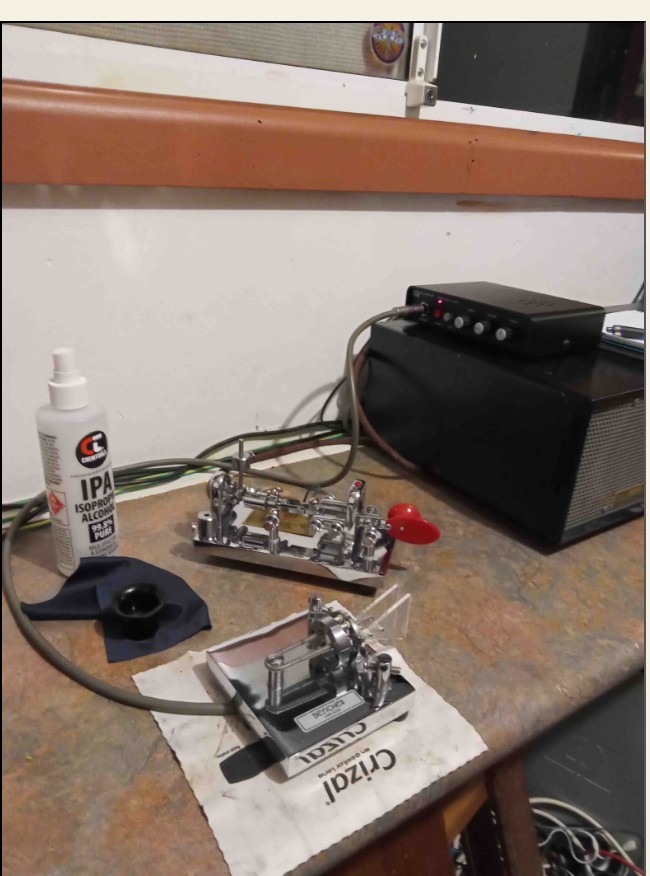
Wonky Paddles from Paul VK3KLE at Stawell Hi Mark According to Maitland VK5AO, my paddles are wonky. I swear it’s the bourbon and drum sticks.
I have a nice used Palstar CW50A keyer and have been swapping back and forth from Bencher paddle to Vibroplex bug mid-CW over and also while calling CQ. The keyer has a double-port, so both keys are available immediately.
My bug hand is getting quiet fluid and it’s sharpening up my bug skills and timing, but I bet it’s annoying to some listening… well it is a practice nite! I have before tonight’s practice Cleaned my keys , evedance on the bench including jewelers look .
Amazing QCX-mini
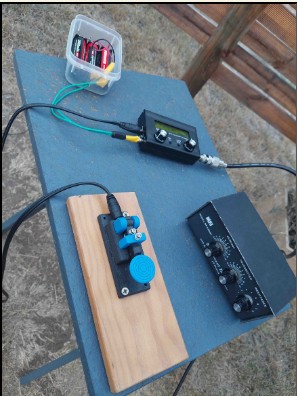
AMAZING GUAT from Adam VK2NNW at Deepwater Hi Mark Here’s a picture of my set-up with the QCX mini. 73 Adam VK2NNW [Making me jealous Adam! My QMX is still in its postage parcel.]
Morse Training Net
Our team member Nic VK7WW runs an on-air Slow Morse training net every Wednesday at 7pm EDST on 3580 for 30 mins. He uses the callsign of the Northern Tasmania Amateur Radio Club VK7TAZ on that net.
Many of our team learned Morse code with the support of Nic, and the weekly training session comes highly recommended for anyone who wants to learn the Code, or simply brush up.
Everyone’s welcome – 3580KHZ at 7pm Eastern time every Wednesday; you’ll hear lots of the CQQRS team on that net. Jordan VK3ACU has ralso ecorded the complete set of lessons which you can now find here:
Https://www. youtube.com/playlist?list=PLHsQmZz6fBXO7swAfbT mutrbbEL17fUQL Contact Nic VK7WW for more info nicholaschantler@hotmail.com including how to join the NTARC DISCORD group to follow the action, or just come along and join in on Wednesdays.
Letters to the Editor
Hi Mark, I have been MIA as all my gear and antennas are presently packed or being packed as we are about to move QTH next month. Still, I remain interested and routinely read your weekly missive.
I will listen with interest on the AREG SDR on Tuesday evenings. 73 David VK3RU
Ihave been MIA as all my gear and antennas are presently packed or being packed as we are about to move QTH next month. Still, I remain interested and routinely read your weekly missive. I will isten with interest on the AREG SDR on Tuesday evenings.
73 David VK3RU. I enjoy skimming through the newsletter and reading the bits that interest me. I even recently got a Morserino 32 from QRP Labs to learn morse again.
Unfortunately I don’t seem to be able to find my roundtoit @ Cheers, Nigel VK6NI Hi Mark, Please re-subscribe me, I enjoy reading it. Thanks & 73 Derek, VK4DRK
| enjoy skimming through the newsletter and reading the bits that interest me. I even recently got a Morserino 32 from QRP Labs to learn morse again.
Unfortunately I don’t seem to be able to find my roundtoit © Cheers, Nigel VK6NI Hi Mark, Please re-subscribe me, I enjoy reading it. Thanks & 73 Derek, VK4DRK
If you’ve read something that you think might be of interest to our readers, please email to Mark VK2KI: cqgrsnet@gmail.com
There’s No Such Thing…
Pho WEEN 2 YMC UlIViios I think the first lesson in Teachering 101 is to always tell students “There’s no such…” (I’m sure you know the rest) and “…the only dumb questions are the ones not asked”.
John VK2RU reckons that there’s lots of questions out there among bot! our new and our experienced operators – about CW, amateur radio operating and about theory. So here we go…
You’ll get a No Results window but if you then click on the Embedded Files tab at the top, it’ll list the files it finds on our website (including the embedded back-issues of our newsletter) with that text.
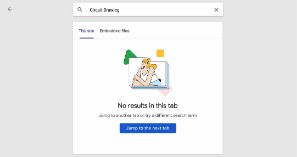
But don’t get too excited yet… it’s still under development and not working perfectly yet – for instance, the other day I tested the search term “Circuit Drawing” which was in the index of newsletter 13/2026 – but that archived newsletter wasn’t among the ones the search found.
So something was broken – but our Software team of Lance VK7TO and Nigel G4RWI have already sprung into action, burning the midnight oil again to try to solve our problem!
And you’ll see above that Peter VKSWOW has tried a neural network learning approach to optical character recognition see if the embedded image problem we have can be cracked as well. Stay tuned.
[Do you have a question or two or a discussion starter worth sharing? cqqrsnet@gmail.com if so.]
Prosign/Character/Signal of the Month
[Put it on a sticky note near your key as a reminder for Tuesday… and tell us how you went!]
Di-dah-di-dah-dit
So back to the CQQRS Slow CW QSO practice net.
Next Tuesday’s Net
Our CQQRS Group will be on as always on Tuesday from around 0600Z until about 12002; see https://bit.ly/CQQRSWebsite and navigate to the Net Details page for details.
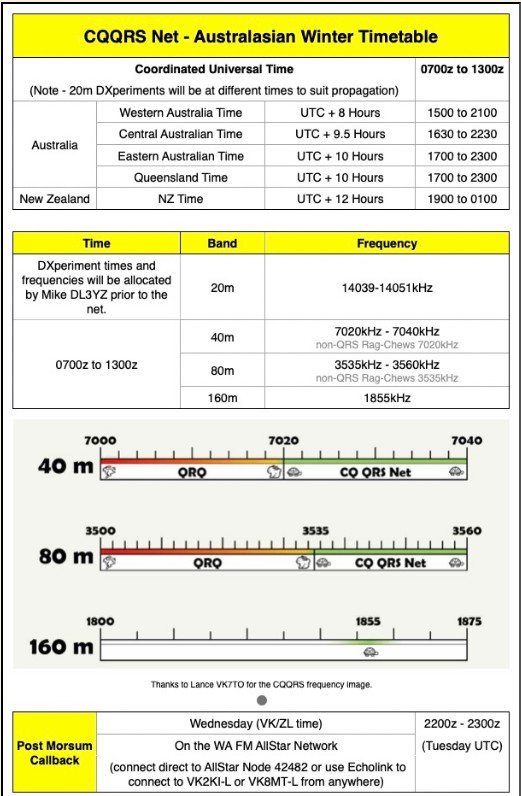
Doesn’t matter whether you’re brand new and want to try just exchanging callsigns and RST reports, or you’re ready for a good old rag chew. We’ll have fun.
There’s usually people around until after 1200Z – so keep calling in the segment of the band designated in the table below until you catch someone.
Reports & Photos
Please let us know via our Reports form bit.ly/CQQRSNET who you work or hear on Tuesday’s Group. The report form closes at 1pm (Eastern Australian time) on Thursday. And how about helping to make the reports even more interesting by sending a photo?
If you have a photo that you’d be happy to include, please email it to: cqqrsnet@gmail.com And of course, we’re always on the lookout for more photos for the newsletter, so if you have something that might be of interest aside from the reports, please send it through as well.
Email to cqgrsnet@gmail.com please. Oh and by the way, I recommend that you don’t keep the Reports Form website open between submission of reports from one week to the next.
If you’re unlucky, there’s an undocumented feature in the software that could cause your current week’s report to be combined with your previous report – it’s happened to your editor several times – much to the chagrin of our Reports editor 🙂
Post Morsum
Richard VK6HRC will run our phone Post Morsum on the South West AllStar net (via repeaters and hotspots all over WA) from 0600 WA time, then from 0700 WA time on 80m (8605 LSB).
See https://bit.ly/CQQRSWebsite and navigate to the Net Details page for details of how you can connect via Echolink from anywhere in the world.
Articles
Could you write a short article or articles for RagChew? You bet! Writing not your strong point? Don’t worry, I’m very happy to help as much or as little as needed.
Oh, and one more thing (actually two) – copyright material: * please use your own images – don’t use images copied from the internet unless you have the producer’s permission, or they’re marked ‘Creative Commons’ or similar; * if you include other peoples’ written material, unless you have permission, you may only include small snippets (unless it’s marked ‘Creative Commons’ or similar), and you’ll need to site the source and author.
For more guidance on writing for the RagChew newsletter (including how you might even try using one of the new Artificial Intelligence tools), head to our website bit.ly/CQQRSWebsite then click the menu on the top right and then click RagChew Newsletter.
Material
Areminder; if you send me any information by email, our report form or WhatsApp – unless you specifically state that material is not to be published, I’ll assume that you’re happy to see your thoughts in the RagChew newsletter.
Teamwork
Thank you so much to our team of 34 contributors: DL3YZ, G7BED, IU4FLS, KAQSEY, K7ITL, MONNK, SWL-Jack, VK2NNW, VK2RU, VK3BTV, VK3BWN, VK3DRQ, VK3ECH, VK3KLE, VK3RU, VK3WOW, VK3ZXC, VKACEG, VKADRK, VK4IM, VK5AO, VKSAV, VK5FD, VKSKFG, VK6HRC, VK6KHZ, VKENI, VK6NW, VKG6PZT, VK6WE, VK7TA, VK7TO, ZL3ABX and ZL3TK.
And a special thank you to our editorial team, Nigel G4RWI (head of software development), Patrick VK2IOW (reports coordinator), John VK2RU (spreadsheet pilot), Richard VK6HRC (Post Morsition) and Lance VK7TO (archiving bit wrangler). Great work all!
GUY CW next Tuesday… when we’ll do it all again! Dit-dit mb. Mark Bosra VK2KI/ VK6QI Beautiful South Bowning NSW

An Ode to CW – thanks to David VK3RU: In days of old, when ops were bold, And sideband was not invented, Words were passed by pounding brass, And all were quite contented. ~ LInknown aithor
About the CQ QRS Net
For the current schedule and more information about the CQQRS net, please go the the Net Details page on our website:

The opinions expressed in the RagChew newsletter are those of the individual contributors. The opinions do not necessarily reflect that of the editors or of the CQQRS Group members.
Any material and images received from members by the editor or published on the CQQRS WhatsApp groups may be published in this newsletter unless specifically requested otherwise.
The RagChew newsletter is considered to be exempt from the Australian Government’s ban on social media for under 16 year olds because it is a service that has the primary purpose of enabling users to share information about products or services, engage in professional networking or professional development services or of supporting the education of users per the Australian Government eSafety Commissioner FAQ webpage “Which platforms have been excluded from the age restrictions” dated 10DEC25.
The values, doctrine and guidelines for the Group and for the newsletter are published on the Principles page of the group’s website https://bit.ly/CQQRSWebsite