Below is a reconstruction of the 2025 51 CQ QRS RagChew newsletter designed to support full text searching. This reconstruction was built using OCR, and will contain errors.
To view the Mailchimp original, click here. To search the entire newsletter archive, click here.
Contents
- CQ QRS Ragchew
- New Team Members
- Website
- POST MORSUM 17th December
- On My Workbench
- QRZ? Who’s on the other end?
- Head Copy Practice
- This week’s attachments are:
- Other News
- Breath of Fresh Air
- Across the Tasman
- Morse Training Net
- Remotes in Australia
- Dit-Dit Bad… or Dit-Dit Good?
- Straight Key Introduction Course
- Thoughts After This Week’s Reminder Email
- We Are Sinking
- Straight Key Century Club QRS Saunter
- Fact Checking takes a Holiday, Imagination pays a Visit
- Addictive!
- Congratulations!
- Readable Five
- Contests and Automated Exchanges
- Morse for the Younger Generation
- Hi Mark
- Ten Commandments of Electrical Safety
- There’s No Such Thing…
- Prosign/Character/Signal of the Month
- Di-dah-di-dah-dit
- Next Tuesday’s Net
- Post Morsum
- Articles
- Material
- Teamwork
- About the CQ QRS Net
CQ QRS Ragchew
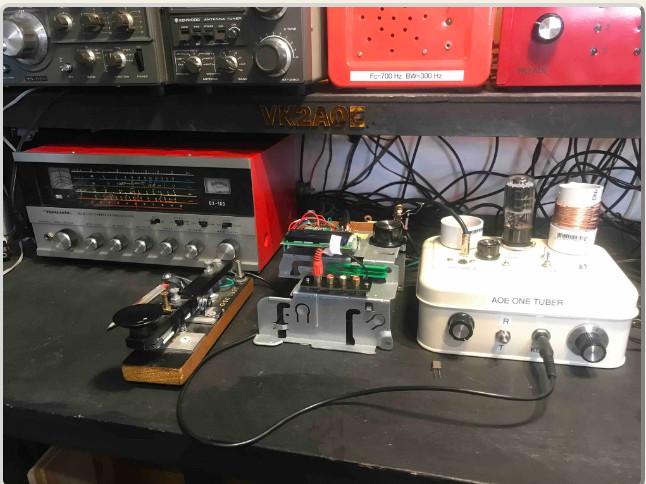
Thanks this week to George VK2AOE for the hybrid delight… one-tube transmitter, DX-160 receiver… and a novel use of a 5-1/4″ disk drive mount for what appears to be a digital VFO
Looks to me like on the whole, we had a pretty good CQQRS Slow CW Practice QSO net on Tuesday once again. There was at least 61 stations heard or worked by at least 43 of our team members this week.
Most reported good conditions, but East-West propagation was only so-so, and later in the evening the ionosphere treated us to a goodly amount of auroral QRN. So hands up who didn’t have fun?
I certainly did, and I suspect those of us who hadn’t visited a dentist, or weren’t scheduled to do so also did. Must be tough being as popular as dentists seem to be!
Scurry Now behind the scenes, there’s been a scurry of activity in the back rooms of RagChew Headquarters. Some readers may be aware of questions being asked and discussed about indexing the RagChew newsletter.
Apparently some of our readers would like to be able to find articles and material that they’ve read in the newsletter! This is very good news to me as editor – first that the material is of interest, and second, that the effort people have made to write will be rewarded by being read many times now and in the future.
So our Software Development team has doubled in size, with Lance VK7TO (our Technical Editor) joining Nigel G4RWI to work on this tricky problem. Why tricky you ask?
The last 120 editions of RagChew were produced using MailChimp – a web- based HTML editor (intended to be used to generate email (spam) advertising).
Not only do the newsletters not exist in some sort of accessible file form, but much of the text content exists as embedded images rather than text.
Half an hour after we formed the team (we use a ‘development environment’ – a web- based repository called GitHub to coordinate development and configuration), Lance had the last 120 editions archived up on our CQQRS website bit Jy/CQQRSWebsite , and had a plan for producing something searchable.
A day later, Lance had them searchable and Nigel was up to his armpits in a system for indexing the files using our website’s built-in search function! Bloody marvellous! Meanwhile I faffed about, waving my arms around and nodding sagely.
So the system is working in a basic form – there’s lots to sort out yet (the searchable files are pretty ugly – so there’s lots more to do – stay tuned for updates in the first quarter of 2026.
A huge thank you to Lance and Nigel for this outstanding effort in the run-up to Christmas. DXperiment Status Reporting And speaking of software development, down under on the other side of the globe, Mike DL3YZ and Ross MONNK have been working on the DXperiment Status Reporting tools – to allow us on the top-side to know what’s going on at their end.
Mike is keen to get user input on the system (the URL to access it during the net was in the net reminder email); so if you have any comments from this week or from future nets, please send me an email which I’l pass to Mike and Ross: cagrsnet@gmail.com Straight Key Training Further down the newsletter you’ll find an invitation from Jens VK4PE up in Townsville to join his inaugural Straight Key Introduction training session on Sunday December 28TH.
Jens is a retired maritime radio operator – so he is well-placed to teach. The session will be short (40 minutes maximum), and is intended to help new operators who are learning the code, have got to about 5WPM, but would like to learn about the art of straight key operation.
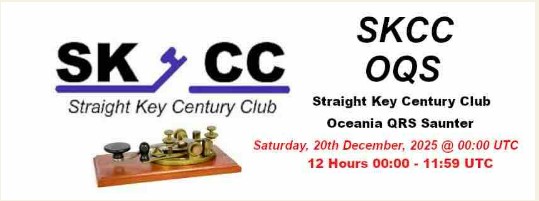
Jens would prefer small groups – one or two would be fine – so please give him a hoy if you’d like to join in. SKCC Oceania QRS Saunter This weekend sees the final Straight Key Century Club Oceania QRS Saunter being held.
This is a fun event – not a contest, just an opportunity to get on air, have some QRS fun and meet other QRS fans. Thank you so much to Garry VK2GAZ for running the Saunters over the years, and I’m sure that many of our team will be sad to see them go – however, Garry has other plans in the wind – so stay tuned.
See below for the details for the Saturday (UTC) event. Contributions Paving ea tegen Ory ern er Fa pare tag el OT oe TH ee
VOntipuuons And once again, thank you to everyone who contributed to this week’s newsletter – see the long list of people, just before the end.
New Team Members
Welcome this week to Michael VK3CMV at Chiltern VIC and Tom N4TTU at Athens GA. Michael has been reading the RagChew newsletter for some time, but I only recently came across him in the distribution list; welcome Michael.
Tom is an active CW operator who is also very keen on QRP and portable operation; welcome Tom – you’ll fit right in with this crowd!

To make your report more interesting, please consider sending a photo to be attached. If you have a photo that you’d be happy to include, please email it to: cqgrsnet@gmail.com To make it even easier for Patrick and Mark, see if you can compress or reduce the siz of the image (preferably to less than 100KB file size).
No problems if your computer or phone can’t do that – just send it through anyway please. So, please help attract new and old team members to have a go by submitting your report each week. Submissions close 1300 (Eastern Australian Summer time) on Thursdays.
Website
If you’d like to find out a bit about our net, or would like to pass information to others about our Tuesday get-togethers, here’s the link to our website. bit.ly/CQQRSWebsite So here we go – please enjoy the newsletter.
Cheers, mb Mark Bosma VK2KI / VK6QI Beautiful South Bowning NSW cqqrsnet@gmail.com non impsditi ratione cogitationis
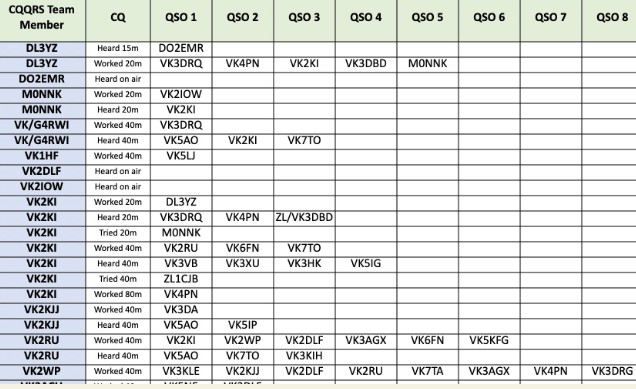
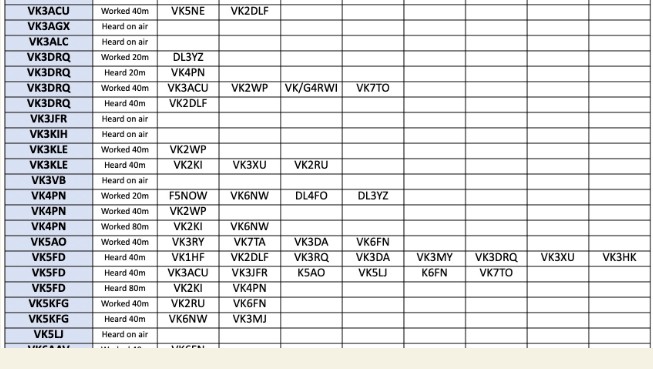
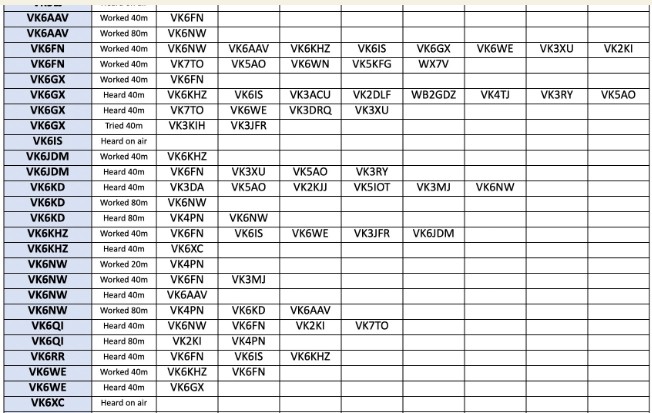
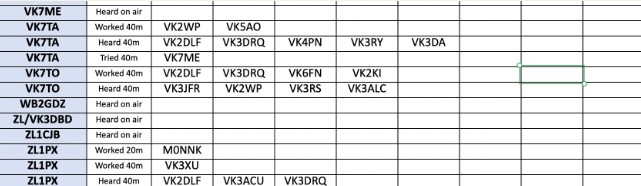
The spreadsheets above show the known stations on last Tuesday’s Group; the comments in the team members’ reports (Submitted via our webform bit lv/COORSNET ) follow:
The spreadsheets above show the known stations on last Tuesday’s Group; the comments in the team members’ reports (Submitted via our webform bit.ly/CQQRSNET ) follow:
This week’s comments from our webform reports have been compiled for us again by Patrick VK2IOW; thanks Patrick.
Boas cane Today the band was quite noisy in the beginning. But when the DX window was finally open, we had some nice ragchews around the globe. The new Live Status monitor was working fine, so I think this was a successful DX Tuesday. Thanks to all stations.
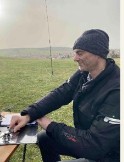
20m] Great signal from Pat VK2IOW again, and an enjoyable chat too. Mark VK2KI said that he only heard a few of my beeps and that those had probably reflected off meteor trails. If true, what a wonderfully romantic way to reach Australia!
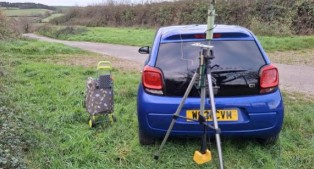
From Nigel VK/G4RWI at Oxley nr Brisbane
[40m] Bit a rush to get set up at the new temporary QTH nr Brisbane. This is a small property so squeezing a 40m EFHW in was a challenge. Given the density of population I thought noise was going to be much more of a problem.
Best bit was I am now reunited with my paddle, so I can send perfectly spaced mistakes again.
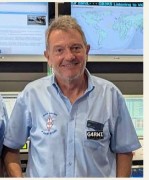
More stations could be heard this week on 40m than last week.
From Perth to Manjimup area, propagation looks to be working well on 80m.
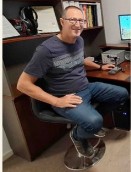
[20m] started a bit late by checking 20m first. The EU DX vindow was quiet, not a squeak so I camped on 14045 kHz and called a few CQs. RBN looked easonable I could see spotters both in EU and around the Pacific.
ZL and southern states were y0omIing in but VK6NW who responded to one of ny calls was feeble. Most of the EU DX who called as Mike DL3YZ who was just above the noise. |
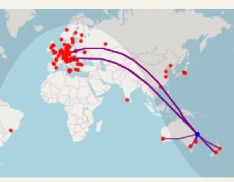
Me were also solid signals as well as Mike DLSY2 who was Just above the noise. I often wonder when noise is say $6, does that mean all signals detectable are S6 and higher.
[40m] Again worked QRP only on 40m. Only one QSO this time but what was surprising is that RBN reported my puny signal was detected in ZL with a respectable RSN. Makes it even more puzzling why I am having so little success working QRP.
[80m] Last 30 min of the QRS time slot I spent on 80m. First, as usual, is a check of lronside SDR. Boy did it look ugly, strange pulsing noise wall to wall. Regardless I called CQ at 3550 KHz and could just see my carrier between the noise bursts.
Mark VK2KI came back floating in and out of noise, which at my place was steady S8. We struggled for a while but meaningful rag-chew was impossible.
Five or ten minutes after I finished QSO with Mark the noise at Ironside SDR cleared and few faint carriers were visible but I could not hear them at my QTH. Kept calling as there were still 10 min left to 23:00 HRS and was rewarded with another QSO, VK6NW.
His signal on 80m was far better than in our QSO on 20m. I gave him RSN of 568, does this make sense? If noise is SB so should be the signal, I need to refresh my understanding of Shannon’s law again.
[40m] 40m seemed to be in reasonably good condition for a change. On 20m no propagation from EU to VK6 was detected, though the eastern stations working EU were heard here in VK6.
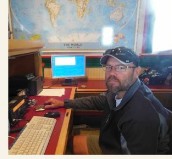
[40m] Listened to four conversations on 40 which took so long to end. Is there a ‘breaker’ CW code ops can use to let people know someone wants to join their conversation – or at least prompt them to finish their present one and let others make a QSO.
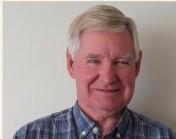
[40m] After 2 weeks absence, due to other commitments, I happily fired up my dear old 1C730 went to call VK6FN and pop came out from the power supply and smoke!! On
Inspection oily substance dripping out the bottom. Suspect a blown capacitor big time!! Can’t complain it has been working since the 70’s! Happy Christmas to all 73 & 77
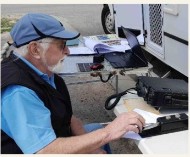
[40m] I replied to VK7ME and another station then replied to me, so it got a little confusing and I lost Ron. Maybe next time.
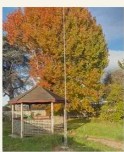
From your editor Mark VK2KI at Beautiful South Bowning NSW
[15m] Nothing at all heard of Edi DO2EMR via the excellent Snowline KiwiSDR at Dry Plains in the NSW Alps this week.
[20m] At around 0630, Mike was coming through to SNSW RSN 411 – better than Manny VK3DRQ who was RSN 311 here in the skip-zone. Signals got better as Mike worked Sava, and I was pleased to hook up with Mike right at the end of his scheduled half hour…
Before he traipsed sadly off to work. When it was Ross’ turn, I was off chopping vegetables (as you do); when I got back, at around 0820Z, I gave him a couple of calls – and heard a couple of very weak replies – RSN 111 – except I heard the occasional character (on meteor pings pethaps – but more likely just bubbles of ionisation) – but not even enough to call RSN 211.
I suddenly heard a signal though and got all excited… but it was Mike calling Ross! I sent a few calls Ross’ way, and could hear him responding (or was it my imagination?); I picked out an M, an N and a 78 from the QSB bubbles.
Prevent) Kicked off at O0600Z – the band was very quiet in the East and I could see on the VK6SEG KiwiSDR that Wayne VK6NW was calling CQ; nothing from him visible on the Snowline KiwiSDR or here at home.
I tried calling Clive ZL1CJB in Auckland – however, sounds like he couldn’t hear me. Terrific to catch up with John VK2RU down at Mundaroo (between Tumbarumba and Jingellic on the Murray) again.
After dinner, I came across Max VK6FN calling CQ – great to welcome him back to transmitting on the net after work commitments had kept him away for weeks. Max worked Lance VK7TO, and at the end of the QSO, I sent “UP 5 LANCE”.
Of course, I forgot what frequency they were on… and guessed wrong; Lance found me, but I had to send “DN 2” to clear some QRM. So after much VFO work, we had a nice chat before I slipped down to 80m for a nightcap.
OUIT! Was DOU! Quiet alld TOL terms of auroral buzz. The buzzing was about $5 < my location, and really stron on the VK6SEG KiwiSDR in WA. In fact the waterfall display could be described ¢ picturesque!
It’s amazing to thing that such a repetitive noise could be produced by natural process (apparently related to the waves-like nai
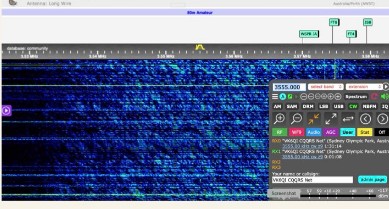
Related to the waves-like nature of the energy coming from the sun). Anyway, Sava VK4PN was strong enough with me to make a go of a QSO which was a nice way to round out the evening for me before hitting the hay.
[15m] Nothing at all heard of Edi this week on 15m in the West either.
[20m] Also, nothing heard of Mike or Ross on 20m in WA.
[40m] I heard Wayne calling on 7034 early in the net – nothing heard all of him in the East at the time though. Luckily, the band
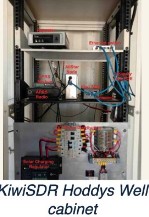
[40m] Good conditions, a few stations on before 18:30 AEDST, then nothing much till later on after dinner wi a fairly full band of CW from then on.
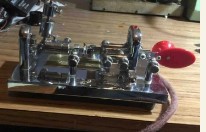
20m] had only limited time and also it seems to me that OM Mike was 1e only brave one to face the WX on 20m, he started RSN 231 nd then he was 331 and improving like the wine.
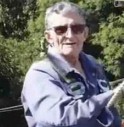
[40m] My first Tuesday night for a few months started with 3 stations I had worked before, followed by 3 new ones. Generally reasonable signals all night except across to WA.
Too much noise and fading for both Max VK6FN and myself and we couldn’t continue the QSO. Good to catch up with Peter VK3AGX. and Grea VK5KFG
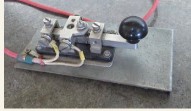
40m] uckily my antennas survived another violent thunderstorm vent on Sunday arvo. Good conditions on 40m today on a ery quiet band. Jeff, WB2GDZ was using a remote station in ieorgia and was 559 on my phased Beverages and S2 on my Om delta loop.
The stations I tried and failed to contact were 90 weak to work on my delta loop.
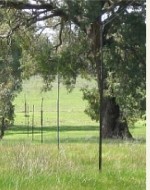
From Lance VK7TO at Hobart [20] When I first came on air, no-one was calling and I got no takers for my CQ calls so popped up to 20 m to see what was happening. There was only one signal, avery I strong SMOBRF, Ron.
We’ve had several QSOs before and with the great conditions was able to enjoy a very relaxed QRQ QSO as we caught up and compared our experiences of dealing with snow, though I feal like a light relative to his Swedish winters.
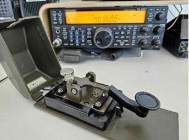
• xperiences of dealing with snow, though I feal like a lightweight in that department relative to his Swedish winters.
[40m] What a wonderful evening. Very good propagation to my station in Hobart, allowing 2 rare treat of armchair copy. VK2DLF, George and I kicked the evening with our differing interpretations of what constitutes a heat wave.
I don’t think he was much convinced that 28 C represents a suitable threshold. Next up was a great ragchew with VKSDRQ, Manny. We shared our various Christmas plans and changes brought about when children depart the nest.
I must admit that keying “Christmas” several times got old rather quickly, so adopted Manny’s quicker “Chrisy”. Anice treat was hearing VK6FN, Max chatting to Mark.
It’s been a while since copying a VK6 clearly enough to QSO so waited until they signed before calling. Conditions held for a couple of overs, but then faded quite severely, leading us parting ways earlier than either of us would have liked.
With a couple of great ragchews and a VK6 in the bag I was just thinking about calling it a night when VK2KI, Mark called me. Another most enjoyable ragchew followed with discussions about bottling wine and a fellow CQ QRSer’s tooth extraction.
With a couple of great ragchews I managed to work Max and Wayne “35 from Bridgetown on Tuesday night “| With good signals. Now that the holidays are here I should be a regular on the net. All the best for the season.
With a couple of great ragchews I managed to work Max and Wayne from Bridgetown on Tuesday night with good signals. Now that the holidays are here I should be a regular on the net. All the best for the season.
POST MORSUM 17th December
LD ect atnhe ohh ine ath IA San crn cAahdads tat LM td DN A dS
From Richard VK6HRC. Eight on the South West repeater and AllStar / Echolink hub this morninc
Ih = A OY nate AY VK6FN Max VK6KD David VK6NW Wayne VK6QI Mark KM7CVW_ Darren ZL3TK Stan VK6HRC
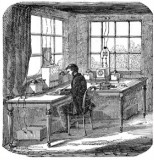
Another lively and chaotic get together! Darren called in from Washington State just before start time and he was brave enough to stay the distance.
Max was back with a vengeance and made the most of the better conditions this week with twelve in the log on 40 m before going QRT. David heard five on 40 m signals fairly weak though and went on to work Wayne VK6NW on 80 m where conditions where much better.
Looking forward to retiring early next year and having more radio time. Wayne made use of a KiwiSDR over East at the start, heard six on 40 m and worked David VK6KD and Sava VK4PN on 80 m later on. Mark listened out for Edi DO2EMR on 15 m but nothing heard.
Worked Mike DLSYZ on 20 m giving him an rsn of 421, tried Ross MONNK only heard a 73 as signals dropped away. Worked three on 40 m heard four and on 80 m worked Sava VK4PN.
Also noted that the Aurora was creating some very interesting patterns on the waterfall display. Atimely check in from Stan ZL3TK as I was getting the Post Morsum draft together for our all suffering editor!
Stan has had some computer problems but all nearly back to normal. The HF antenna is down for maintenance and will be operational early next year, so very quiet from Waitarere Beach.
UPSTAUVUlial Cally Heat Yoal, oY Very Quiet YU I was AWOL so nothing from me. Thank you to all on this morning, stay safe. 73 Richard.
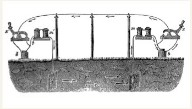
If you have an article or two that you think might be of interest to our readers, please let me know so we can share more thoughts and ideas; for guidance on writing for RagChew, see Articles below. Please email material to Mark VK2KI: cqqrsnet@gmail.com

On My Workbench
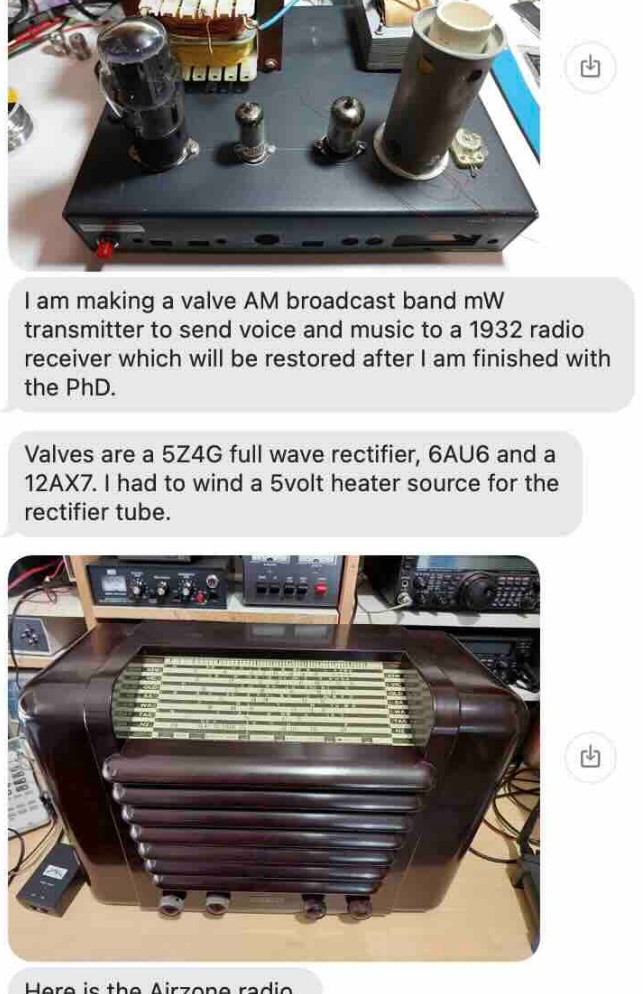
What’s going on on your workbench? If you have an article or two that you think might be of interest to our readers, please let Mark VK2KI know; email to cqqrsnet@gmail.com For guidance on writing for RagChew, see Articles below.
QRZ? Who’s on the other end?
Head Copy Practice
Anyone who is just starting out with head copy should look at edition 23 ~ 2025 where we first started with Winnie the Pooh recorded at 12 wpm.
In edition 23, and for a few following Newsletters, there are instructions on how to use these files, and edition 25 – 2025 has information on the Ditto CW : Morse Player app.
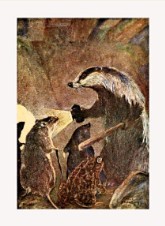
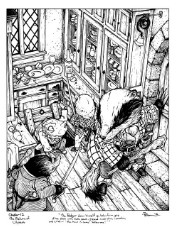
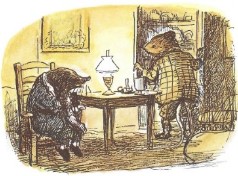
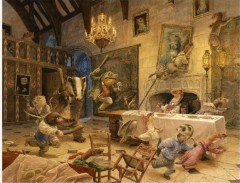
This week we have the final chapter of Wind in the Willows – Chapter 12 – The Return of Ulysses. Itis suggested that you read the text file before listening to the audio file.
That will make it easier to follow the audio file and prepare you for any unusual words. The MP3 files have been recorded at 16 wpm and 650 Hz tone.
If you prefer a slower speed or different tone, you can create your own MP3 files by converting the text file included in last week’s Newsletter with the Ebook2CW app — https://fkurz.net/ham/ebook2cw.htm|.
Because of MallChimp’s size limits, I’ve split Chapter 12 into four parts, and all four parts are attached below. Each part is over 1 hour playing time @ 16 wpm.
Uncommon punctuation has been removed (the Ditto CW app doesn’t recognise some of it), and contractions have been simplified (for example, we’ll becomes we will). This week’s attachments are:
This week’s attachments are:
• Chapter 12 parts 1, 2,3, and 4 MP3 files ¢ Chapter 12 text file
You can either play the MP3 files in any media player, or load the text file in last week’s Newsletter into the Ditto CW: Morse Player app — https://dittocw.andro.io/.
Both options work well, however Ditto CW gives you complete control over all Morse settings, while a normal media player only allows changes to playback speed, and does that in steps (e.g. +1.25x, 1.5x, 1.75x).
Other News
Breath of Fresh Air
Hi Mark, That is quite a newsletter and I have read a large part of it. What an effort you and your guys have put into it and I commend you for doing so!
I wanted to say to you and the others (| may have already said this but at 70 my memory is going lol) that it is a breath of Pee ee EEE: esau
Memory is going lol) that it is a breath of fresh air joining your group. It is very sad what seems to me to have happened to ham radio over here in the USA. The contesters don’t seem to be too bad in regards to having retired, intelligent hams in radiosport.
One of the reasons I joined your great group in VK land was that I really felt the need to get away from some of the
Need to get away from some of the nonsense in the USA especially in our ham community. In regards to ham radio, I literally wished I lived in VK land and would find the hobby more enjoyable in your country. Thanks again – Jeff Pohl (WB2GDZ)
Across the Tasman
From David ZL/VK3DBD Good Morn Mark (and of course Elizabeth!) Having just skimmed thru your lengthy missive this morn, I am reporting that Thursday evening I arrived in the “Land of the Long White Cloud” and will be spending about the next eight weeks up in the Bay of Islands area with my daughter and family.
Here I have a section of the house I can call mine and needless to say a radio shack set up complete with a display of collectable (and very useable) Morse keys, a hardly ever used VHF/UHF rig or two, a Elecraft K3 and a TS-50.
Friday of course was soon spent connecting wires and fittings in some semblance of order after virtually a year of non use. Aftera break and visit to the local Farmers Market nearby in Kerikeri (seemingly, a Sat morn routine for the occupants of the
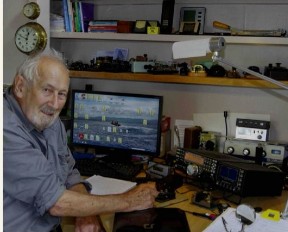
Morn routine for the occupants of the residence) I can now report that a dipole for 20m is now in service, supported in a sort of inv vee with a fibreglass fishing pole producing a good SWR.
Scanning all the HF bands on receive in the afternoon showed – as I expected – a lot of absolutely nothing to be heard. That seems to be a normal situation in Oceania……..
Round about early evening (circa 0500Z or UTC whichever you wish to call it) there were just a few signs of life and a few CQ calls using ZLVK3DBD brought replies of a few “22” … to which I sent my call… with no response.
Now I digress – as this ‘?’ habit a large number of folk seem to have these days is something which makes little sense. If you hear someone calling CQ say or are not sure, sending a question mark and no calll sign IS NOT THE SOLUTION… ‘QRZ 7!
Followed by your call would be correct and usually effective. Then at least one party will know who the other one is!! Does not take much effort and a big improvement on two stations sending each other “2?” Inthe above instance I did return my call to the ?
Stn (s) but had no reply. A few mins later ZL2AIM lan was heard calling CQ from his QTH on the Coromandal and was a full S9 signal; we had a good chat…… The first entry in my log for this ZL Visit.
Todays activities will be the erection of more wires to provide a few more bands and to that effect I have a previously used dipole with some traps in it. I’ve used in the past, it’s been laid out on the lawn for checking. I have permission to help myself
To one or two of the tall bamboo poles growing nearby, so by later today the wires will surely be radiating some RF on 40, 30 and perhaps other bands – one has to try eh? Tues evening I hope to hear – and QSO with some of the ORS contingent.
At risk of waffling on too long… _@ problem I notice on Tuesday evening is knowing who wants to listen to QRS and at what speed? Agreed to listen to experiened ops send QRS to each other might – just MIGHT – be of interest to someone wanting m practice.
But I often get the impression that far too many new ops seem to think they need to practice their sending…. With respect I say in general that is wrong.
They need to practice receiving and I stress the Morse they listen to should be well sent as we learn by listening and copying. Which means each letter character really MUST be sent as a sound recognisable as a letter.
NOT dots and dashes to be interpreted to aletter. A Farnsworth character speed of preferably 18-20 WPM with reasonable spaces between each would be good for learning.
But the way to make rapid gains in rx speed is to regularly listen to good Morse at a speed faster than comfortable – writing what makes sense and ignoring the failures. Then go back to a happy speed and it will invariable be noticed it has become much easier.
Doing this on a daily basis for just a few minutes will show big speed improvements in a week or less. Twice a day is even better. If that fails all I can say is you are doing something wrong!
Very 73 David ZLNVKSDBD, VK3DBD/ZL or even ZLIG3SCD if I feel inclined……
Morse Training Net
Our team member Nic VK7WW runs an on-air Slow Morse training net every Wednesday at 7pm EDST on 3580 for 30 mins. He uses the callsign of the Northern Tasmania Amateur Radio Club VK7TAZ on that net.
Many of our team learned Morse code with the support of Nic, and the weekly training session comes highly recommended for anyone who wants to learn the Code, or simply brush up.
Everyone’s welcome – 3580KHZ at 7pm Eastern time every Wednesday; you’ll hear lots of the CQQRS team on that net. Jordan VK3ACU has recorded the complete set of lessons which you can now find here:
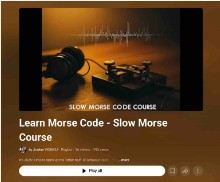
Https://www. youtube.com/playlist?list=PLHsQmZz6fBXO7swAfbT mutrbbEL17fUQL Contact Nic VK7WW for more info nicholaschantler@hotmail.com including how to join the NTARC DISCORD group to follow the action, or just come along and join in on Wednesdays.
Remotes in Australia
From Jeff WB2GDZ By the way, are any of those other RemoteHams remotes listed for Australia available for use for hams in the USA? I was looking at https://harg.org.au/ but really don’t know which clubs in Australia limit the use to the VK guys only.
I would of course pay the club dues and limit my operating on it to certain times if that is in the rules; I certainly follow “remote etiquette”. Generally over here I just bring up a remote, hit the “Ask” button and if no one is using it I just operate.
If someone breaks in saying they would like to use the remote for a net or some other activity I just hand it over and disconnect. After learning the schedule of the remote users, I know when not to operate.
I really don’t want to get in the way of hams who really need the remote on a schedule. Thanks – Jeff (WB2GDZ) [Hi Jeff.
I’ma member of the Southern Electronics Group that operates the three Remotes in Western Australia (VK6SR HF at Jandakot South of Perth, VK6CRO HE VHF and UHF up in the tropics at Carnarvon and VK6SEG VHF & UHF beaming East across the Great Australian Bight from Albany.
As you’ve found, these are excellent, but occasionally the systems need a re-boot to connect – however, Rob VK6LD (one of our avid readers) is usually able to respond very quickly and do a re-boot – probably from his Dick Tracey watch – in response to an SMS request (Vl send you his SMS number if you don’t have it already).
Most times that I’ve asked, Rob has been able to bring the system back up in a few minutes. I’m also a member of the Hills Amateur Radio Group which as you’ve found has a Remote – VK6AHR.
However, I think it’s not configured for CW; I only use a straight key on the Remotes, and last time I checked, it didn’t have an SK interface – but ! think it also doesn’t have the keyboard interface set up.
Rob can probably help with that one too if needed (he’s one of WA’s centres of all things Remotes/AllStar/repeater and just a helluvaniceguy!) There is one Club Remote at the Summerland Amateur Radio Club in Northern New South Wales that Ross MONNK has used in the past; Ross did have some problems with the CW interface, but hopefully that’s been fixed by now.
[Hi Jeff. I’ma member of the Southern Electronics Group that operates the three Remotes in Western Australia (VK6SR HF at Jandakot South of Perth, VK6CRO HE VHF and UHF up in the tropics at Carnarvon and VK6SEG VHF & UHF beaming East across the Great Australian Bight from Albany.
As you’ve found, these are excellent, but occasionally the systems need a re-boot to connect – however, Rob VK6LD (one of our avid readers) is usually able to respond very quickly and do a re-boot – probably from his Dick Tracey watch – in response to an SMS request (Vl send you his SMS number if you don’t have it already).
Most times that I’ve asked, Rob has been able to bring the system back up in a few minutes. I’m also a member of the Hills Amateur Radio Group which as you’ve found has a Remote – VK6AHR.
However, I think it’s not configured for CW; I only use a straight key on the Remotes, and last time I checked, it didn’t have an SK interface – but ! think it also doesn’t have the keyboard interface set up.
Rob can probably help with that one too if needed (he’s one of WA’s centres of all things Remotes/AllStar/repeater and just a helluvaniceguy!) There is one Club Remote at the Summerland Amateur Radio Club in Northern New South Wales that Ross MONNK has used in the past; Ross did have some problems with the CW interface, but hopefully that’s been fixed by now.
There’s others that are also publicly accessible in Australia and New Zealand, but I don’t have any experience with them. Can anyone help Jeff with more information?
Down this way as far as I know, the clubs that operate the Remotes limit transmit to Club members only – but there’s no limitation on where those members are operating from – and nor should there – a member’s a member, and discrimination on the basis of where their ISP is located would seem a bit narrow-minded]
Dit-Dit Bad… or Dit-Dit Good?
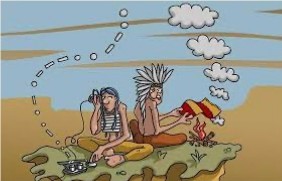
JAi-Wit Dad… OF Vil-wVil “OOO: rom Ross MONNK I remember very vividly my first Morse code ‘lightbulb moment’. I had heard for the first time, the closing “73 73”, and suddenly understood what Morse code was all about.
To all the very many voice operators out there, “73 73” is just an obscure two-digit code for wishing the other operator well at the end of a QSO.
But when I heard it in Morse, I realised that it wasn’t just a two-digit code – it was a delightful little rising-and-falling tune. “73 73” is collectively a sound in itself, and a lovely one at that.
Those old-time operators had certainly chosen it for its musical qualities. It was a (probably obvious to you) revelation – Morse code is aural.
Later, when I started fumbling my way through radio QSOs, my heart would give a flutter when I heard the tune “CQ CQ”. It wasn’t just letters “c” and “q”; it was a fanfare heralding an exciting/ frightening new contact.
Much, much later, I started to pick up more tunes, but the ability to hear most words as complete sounds looks as if it will be forever out of my reach, alas.
Before I get to the point of this article (hurry up, Ross, we’re getting impatient), I want to say a very quick word about the on-air protocols we use.
These are derived from the standard operating practices of yore (of which Stan ZL3TK is such a strong advocate). But, like any vibrant modern language, these protocols are evolving with the society that uses it.
And, these days, that society consists solely of amateurs. It is a curious thing that these protocols are only lightly codified by the ITU and the various national authorities.
The purpose of Morse code now is recreational communications between amateurs, so presumably they leave it up to us to be mutually understood.
In last week’s Ragchew, Andrew VK1DA/ VK2DA expressed his frustration at the non-logical use of “dit-dit” at the end of QSOs. In many ways, I agree with him. I certainly use ‘dit-dit’ in the logical way. For example, “tu e e” at the VERY end, or just “ee”.
BUT I also love the musical quality of “73 73
“ee”. BUT I also love the musical quality of “73 73

Straight Key Introduction Course
From Jens VK4PE I am planning to give the straight key introduction course on the Sunday 28.12.2025 at 7 p.m. Brisbane time (0900Z) on Zoom. 2 to 4 participants would be perfect.
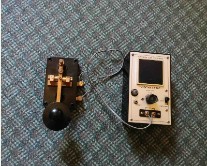
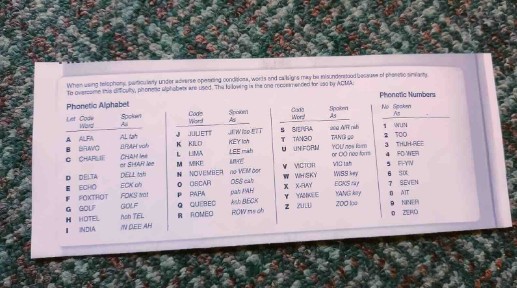
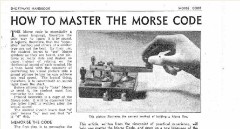
Also needed is a NATO spelling alphabet (above) and the two page “How to master Morse code” instructions – (click to download).
Zoom meetings are limited to 40 minutes if you use the free version of Zoom. This short course is for people who like to learn and to send Morse code with a straight key.
The participants should know Morse code 5 WPM or better, because we will not learn code in this short course. We will have some jokes and fun along the way; people without humour are not allowed to join the course!
Those interested, please contact me by email jensgrigull@gmail.com and I will send you the Zoom videoconference invitation. Cheers. Jens VK4PE [Terrific initiative – thank you Jens.
I’ve had two Zoom videoconferences in two days where we’ve had trouble connecting. Zoom now has an Al assistant – however, I suspect the assistant isn’t yet!
Probably worth checking the Zoom connection with all of your participants before the 28TH; you don’t want to lose all 40 minutes (which by the way goes very very quickly in videoconferences!) trying to get everyone connected]
Zoom meetings are limited to 40 minutes if you use the free version of Zoom. This short course is for people who like to learn and to send Morse code with a straight key.
The participants should know Morse code 5 WPM or better, because we will not learn code in this short course. We will have some jokes and fun along the way; people without humour are not allowed to join the course!
Those interested, please contact me by email jensgrigull@gmail.com and I will send you the Zoom videoconference invitation. Cheers Jens VK4PE
Thoughts After This Week’s Reminder Email
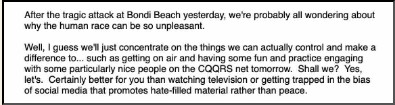
James VK7JZ: Jam saddened that another community is now experiencing the grief that we in Tasmania experienced in 1996.
The plan of terrorism, no matter it’s flavour, is to disturb society, to sow fear, cause us to change, and to have internal division and internal hate.
While we cannot forget these tragic events, the way to prove we will not be defeated is to continue what we did last week, do it next week, do it the week after, our families, our gatherings, our CW. If we remain who we are then terrorism can never prevail.
Jeff WB2GDZ: I feel so sorry for the shooting in your country. I just saw a video from your country about the shooting. It seems like you Aussies have some sanity about this in regards to considering additional well thought out gun regulations.
Over here in the USA probably more people rush out to buy MORE guns after something tragic like this. In America, gun culture can almost become cult-ike. I find all of this both sad and stressful.
I would say that I really feel embarrassed to call myself an American at this point. My SWL Neighbour Jack A It’s all s0 very ead. There isn’t one star in a trillion where life.
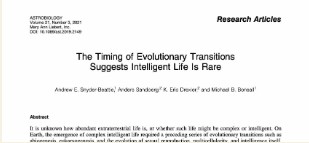
My SWL Neighbour Jack It’s all So very sad. There isn’t one star in a trillion where life such as ours could evolve. We are such a miracle. Yet here we are killing each other and our planet.

We Are Sinking
From Jens VK4PE https://m.youtube.com/shorts/PzimJy35PTQ
Straight Key Century Club QRS Saunter
Fact Checking takes a Holiday, Imagination pays a Visit
RaCl CHECKING lanes ad MONGAY, IMagmation Pays a VISiIlL
From Stan ZL3TK This editorial comment followed the results presented at the conclusion of the Settle to Carlisle Railway Challenge.
Except for two correctly-identified participants, everything else seems to have been drawn from the International Flight Contest

Four errors and one non-experiential opinion out of six purported facts are presented. Itis a shining example of today’s sensationalist reporting and ever-lowering standards of editorial responsibility. 1. Of the three participants, none were named Armin.
(An apology is due to Garry) 2. Where did the “six other participants” suddenly come from? None were alluded to in any of the weekly STC reports. 3. Who are the undoubted participants who didn’t submit ‘reports’?
None of these were alluded to in weekly STC reports either. 4, Reports? No reports were required from or have been submitted – to date – by the three, and only three participants. 5.
Without actually participating, how is it possible to be “sure that the experience would have been great”? Looks no better than tabloid-quality reporting to me, and probably not written to deliberately deceive, but are the ho/ polfoi to be unsuspecting victims of serious liberty-taking again?
Addictive!
Some readers may have seen the report in a previous RagChew from my neighbour Jack who had picked up Jordan VK3ACU during our net, using his classic Lafayette shortwave receiver.
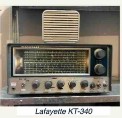
Well this week, Jack dropped by for a cup of coffee and to pick up some home- made sauerkraut from Ms e (Jack likes Ruben sandwiches too!). When he walked in he said “di-di-di-dit di-dit”. I had warned him that this CW business can be just a tad addictive!
Congratulations!
Congratulations to Andrew VK2ZRK from Tarago for passing the Advanced license. Now where did you put that nice new paddle Andrew?
If you’ve read something that you think might be of interest to our readers, please let me know. For guidance on writing for RagChew, see Articles below. Please email material to Mark VK2KI: cqqrsnet@gmail.com
Readable Five
What have you been reading lately? >ompiled on the track somewhere by John VK2RL
Contests and Automated Exchanges
From Jeff WB2GDZ Ireally am not a contester myself but do like to follow along using the online live scoreboards. The ARRL 10 meter contest is this weekend and I will be following the scoreboard especially for the FCG (Florida Contest Group) members.
The issue of “bots” in contesting has come up. Personally I like the idea of young, ‘smart hams trying their hand at automated contesting although I certainly think that there should be a “bot assisted” category for this in the results.
Totally automated contesting I think is fascinating in regards to the advanced software involved using CW skimming software and everything else that goes into a program that does such a thing.
Https://groups.google.com/a/hamclub.org/g/tarc/c/cCH9ARZ5dQ8Y https:// www.facebook,com/Iu9esd/posts/bots-vs-humans-a-wake-up-call-to- share-public/10239243588764131/ Thanks again – Jeff Pohl (WB2GDZ) ‘Seminole FL
Morse for the Younger Generation
BUENOE Ne ENE BENS EB NREE Bel WANE EE CREWE
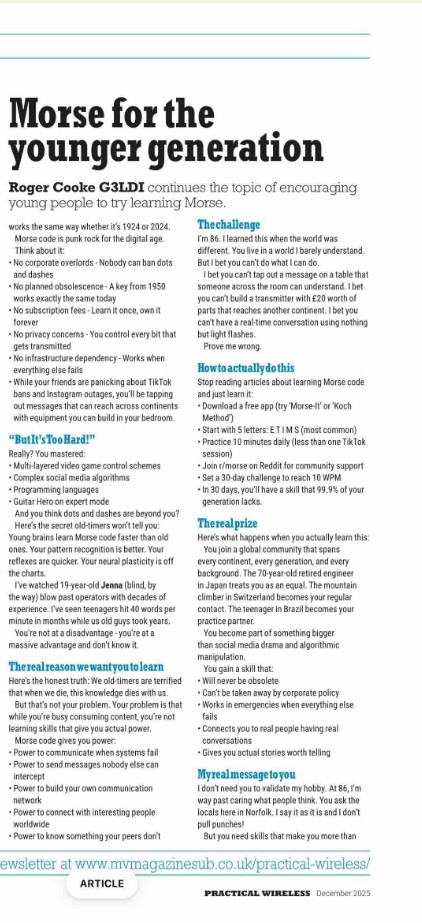
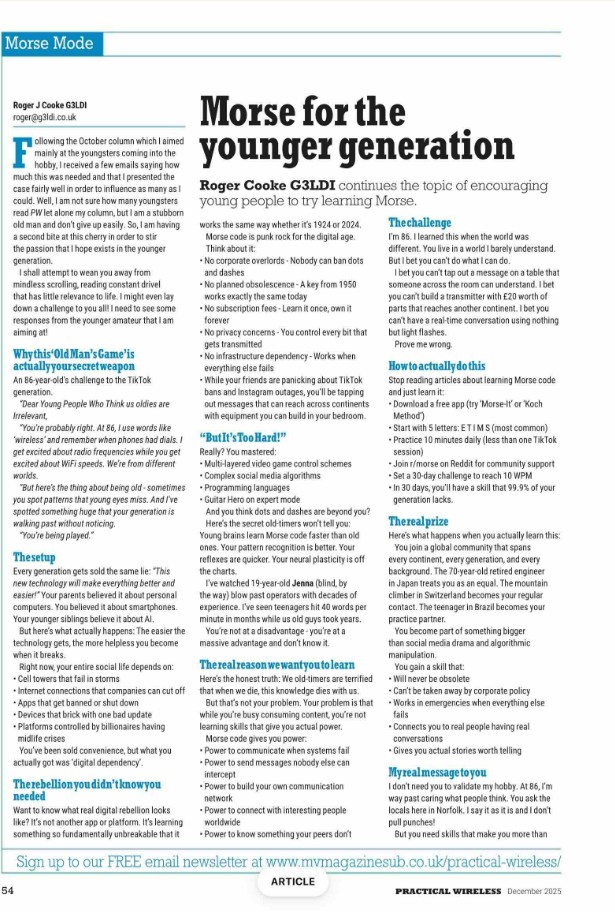
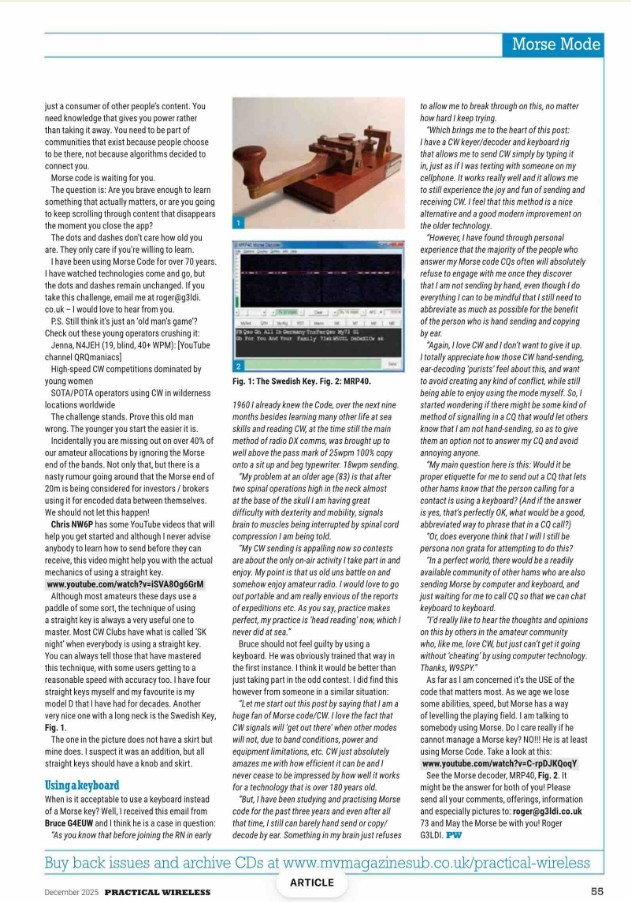
From Geoff VK6HD Hi Mark Just sitting reading Dec issue of (UK) Practical Wireless and found this article which actually makes a good argument for young people to learn CW. Thought you might like it for RagChew. Ciao G
Hi Mark
Ten Commandments of Electrical Safety

1) Beware of the lightning that lurketh in seemingly uncharged capacitors, lest it cause thee to bounce upon thy buttocks in an unseamanlike manner and cause thy hair to stand on end, thereby exceeding regulation length.
2) Cause thou the switch that supplieth large quantities of juice to be opened and thusly tagged, that thy days may be long in this earthly vale.
3) Prove to thyself that all circuits that radiateth and upon which thou worketh are grounded and thusly tagged, lest they lift thee to radio frequency potential and cause thee to radiate with the angels.
4) Tarry thou not amongst those fools that engage in intentional shocks, for they are not long of this world and are surely unbelievers.
5) Take care thou useth the proper method when thou taketh the measure of high voltage so that thou dost not incinerate both thee and
Thy test meter. For verily, thou art not on charge and can be easily replaced, but the test meter is, and as a consequence, bringeth much woe unto thy supply officer.
6) Take care thou tamperest not with interlocks and safety devices, for this incurreth the wrath of thy department head and bringeth the fury of thy commanding officer on thy head.
7) Work thou not on energised equipment without proper procedures, for if thou dost so, thy colleagues will surely be buying beers for thy widow and consoling her in certain ways not generally acceptable to thee.
8) Verily, verily I say unto thee, never service equipment alone, for electrical cooking is a slow process, and thou might sizzle in thy own fat upon a hot circuit for hours on end before thy maker sees fit to end thy misery and drag thee into his fold.
9) Trifle thee not with radioactive tubes and substances lest thou commence to glow in the dark like a lightning bug and thy wife be frustrated and have no further use for thee except for thy wages.
10) Commit thou to memory all the words of the prophets which are written down in the first chapter of thy bible which is the weapon and electrical engineering practice (br 2553) and giveth out with the straight dope and consoleth thee when thou hast suffered a ream job by thy division CPO.
If you’ve read something that you think might be of interest to our readers, please let me know so John and I can share more thoughts and ideas. For guidance on writing for RagChew, see Articles below. Please email material to Mark VK2KI: cqqrsnet@gmail.com
There’s No Such Thing…
Fills WOUR o YUCOLVIlS. I think the first lesson in Teachering 101 is to always tell students “There’s no such…” (I’m sure you know the rest) and “…the only dumb questions are the ones not asked”.
John VK2RU reckons that there’s lots of questions out there among both our new and our experienced operators – about CW, amateur radio operating and about theory.
So John didn’t step backwards quickly enough when asked to volunteer to compile readers’ questions; thanks mate. So here we go…
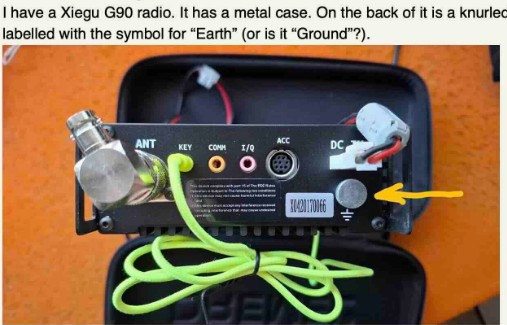
Most commercially made amateur radio transmitters have a ground stud, wing-nut, etc; the connection is meant to be used to bond all items in the shack to common ground point – ideally via a heavy (but not braided) conductor a ground stake.
The single-point grounding is for safety (in case of nearby lightning strikes or mains faults) and to minimise stray RF in the shack which could be hazardous and cause RF feedback problems.
If two pieces of gear are at different RF potentials (to ground for instance) but are connected together (eg via a piece of shielded cable which has both resistance, series inductance and capacitance to ground), the potential difference across the two ends of the shield may induce an RF current.
RF in the wrong parts inside your transceiver, power supply, household appliences etc can cause all sorts of interesting and usually undesirable effects. So the best approach from the get-go is to bond everything to a common ground point and go from there.
Now – if you’re out in the field with your 20W transceiver, should you worry about the grounding? Well… that depends on your antenna! For example, if you have just a quarter wavelength of wire connected to your antenna socket…
You’ll be trying to feed a low impedance/high current point against nothing. Your ground losses will exceed your radiation resistance… an you’ll be wasting your power trying desperately to heat what capacitive and resistive connection it might find to ground.
So your ground stake will make a big difference in that situation. However, if your antenna has it’s own other side (eg it’s a doublet, or perhaps it’s fed at a high impedance point in your feedline), the grounding may make no difference.
For more information, find your favourite ARRL, RSGB or other Handbook and look up Grounding, Earthing, RFI, EMR Safety, EMC etc.
Alternatively, when our Technical Editor Lance VK7TO returns from his travels, we might twist his arm for a more in-depth review of this really interesting topic perhaps?
[Do you have a question or two that are worth sharing? How about a discussion- starter? Please let me know cqgrsnet@gmail.com and I’ll pass them to John VK2RU for compilation each week.]
Prosign/Character/Signal of the Month
[Suggestion – put it on a sticky note near your key as a reminder for Tuesday. Tell us how you went!]
[If you have some intel about other team members… or even yourself… that’s worth sharing, please let me know cqqrsnet@gmail.com J
Di-dah-di-dah-dit
So back to the CQQRS Slow CW QSO practice net.
Next Tuesday’s Net
Our CQQRS Group will be on as always on Tuesday from around 0600Z until about 12002; see https://bit.ly/CQQRSWebsite and navigate to the Net Details page for details.
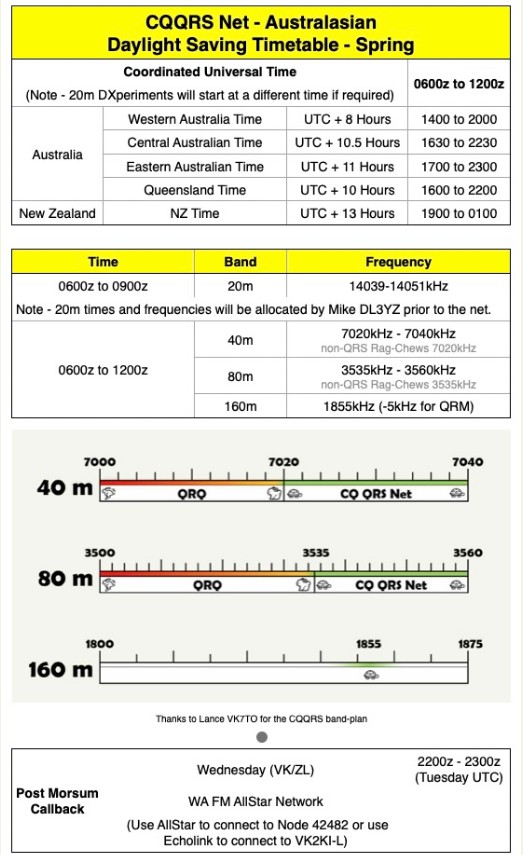
Doesn’t matter whether you’re brand new and want to try just exchanging callsigns and RST reports, or you’re ready for a good old rag chew. We’ll have fun.
There’s usually people around until after 1200Z – so keep calling in the segment of the band designated in the table below until you catch someone.
I should be on as usual from home in NSW or via the Remote at Bedfordale WA, and I’ll also be watching the proceedings using the VK6QS and Tecsun SDRs in WA and NSW respectively. Hope to hear you there.
Please let us know via our Reports form bit.Jy/GQQRSNET who you work or hear on Tuesday’s Group. The report form closes at lunchtime (Eastern Australian time) on Thursday. ‘And how about helping to make the reports even more interesting by sending a photo?
If you have a photo that you’d be happy to include, please email it to: cgqrsnet@gmail.com To make it even easier for our Reports editor Patrick VK2IOW, see if you can reduce the size of the image (to less than 100KB file size by preference).
No problems if your computer or phone can’t do that – just send it through anyway please. And of course, I’m always on the lookout for more photos for the newsletter, so if you have something that might be of interest aside from the reports, please send it through as well – I always enjoy the photos that our readers send – and I’m sure our readers do too.
Email them to cqqrsnet@gmail.com please (reduced size if possible – but whatever you send will be great). Oh and by the way, I recommend that you don’t keep the Reports Form website open between submission of reports from one week to the next.
If you’re unlucky, there’s an undocumented feature in the software that could cause your current week’s report to be combined with your previous report – it’s happened to your editor several times – much to the chagrin of our Reports editor 🙂
Post Morsum
Richard VK6HRC will run our phone Post Morsum on the South West AllStar net (via repeaters and hotspots all over WA) from 0600 WA time, then from 0700 WA time on 80m (8605 LSB).
See https://bit.ly/CQQRSWebsite and navigate to the Net Details page for details of how you can connect via Echolink or even possibly via your local FM repeater.
Articles
The newsletter is interesting to readers because of the material contributed by so many people – be it the reports each week or the various articles. Could you write a short article or articles for RagChew? You bet! Writing not your strong point?
Don’t worry, I’m very happy to help as much or as little as needed. Here’s a thought – although our readers will much prefer your own writing, perhaps have a go at using a Large Language Model Artificial Intelligence tool such as ChatGPT, Microsoft Copilot or Google Gemini to check your writing or even to actually draft the whole article in a relaxed easy-to-read manner!
You can find out more about how to do that on the Newsletter page on our website bit.ly/CQQRSWebsite. Our website also includes a suitable prompt (the command you feed to the Al to make it do what you want).
Please remember though – you must fact-check anything that an Al tool drafts for you because Als ‘hallucinate’ – ie if an Al can’t find what you’re looking for, it will make up an answer and present it as a fact!
This is one of the dangers of using Als – it’s quite probable that the tool will create a very readable and convincing draft that is 100% wrong! You as the submitter are responsible for fact-checking.
But it’s a learning experience – please let us know how you went if you had a go with this new generation of tool. And by the way – lam very concerned about our future in a world of Al – but I’m pleased to see that school and university curriculums now focus on understanding the risks – for instance, kids are now learning critical thinking something that used to be taught mostly at post-graduate level.
When the typewriter was invented, people predicted the downfall of handwriting; when the word processor was invented, the art of writing was thought to be on the way out – ditto for the spreadsheet and arithmetic, AM, SSB and FT-8 for amateur radio etc.
We can ignore Al and hope that it just goes away… or we can learn to handle it through experimentation and use. For more guidance on writing for the RagChew newsletter (including help with using an Al), head to our website bit.ly/CQQRSWebsite then click the menu on the top right and then click RagChew Newsletter.
Material
A reminder; if you send me any information by email, our report form or WhatsApp unless you specifically state that material is not to be published, I’ll assume that you’re happy to see your thoughts in the RagChew newsletter.
Teamwork
Thank you so much to our amazing team of 36 contributors: DL3YZ, G3LDI, G4RWI, MONNK, SWL Jack, VK2GAZ, VK2IOW, VK2KJJ, VK2RU, VK2WP, VK3ACU, VK3DBD, VK3DRQ, VK3KLE, VK4PE, VK4PN, VK5AO, VK5FD, VKSKFG, VK6EN, VK6GX, VK6HD, VK6HRC, VK6JDM, VK6KD, VK6KHZ, VK6MJ, VK6NW, VK6RR, VK6WE, VK7JZ, VK7TA, VK7TO, WB2DGZ, ZL1PX and ZL3TK.
And a special thank you to our editorial team, Lance VK7TO and Nigel G4RWI (our burgeoning software development department), Patrick VK2IOW (gestionnaire de rapports), John VK2RU (head head copy department) and Richard VK6HRC (berger de chats).
Great work alll UY CW on Tuesday, mb. Mark Bosra VK2KI/ VK6QI Beautiful South Bowning NSW


About the CQ QRS Net
For the current schedule and more information about the CQQRS net, please go the the Net Details page on our website:

The opinions expressed in the RagChew newsletter are those of the individual contributors. The opinions do not necessarily reflect that of the editor or of the CQ QRS Group members.
Any material and images received from members by the editor or published on the CQQRS WhatsApp groups may be published in this newsletter unless specifically requested otherwise.
The RagChew newsletter is considered to be exempt from the Australian Government’s ban on social media for under 16 year olds because it is a service that has the primary purpose of enabling users to share information about products or services, engage in professional networking or professional development services or of supporting the education of users per the Australian Government eSafety Commissioner FAQ webpage “Which platforms have been excluded from the age restrictions” dated 10DEC25.
The values, doctrine and guidelines for the Group and for the newsletter are published on the Principles page of the group’s website https://bit.ly/CQQRSWebsite