Below is a reconstruction of the 2025 49 CQ QRS RagChew newsletter designed to support full text searching. This reconstruction was built using OCR, and will contain errors.
To view the Mailchimp original, click here. To search the entire newsletter archive, click here.
Contents
- CQ QRS RagChew
- New Member
- Website
- Dit-dit… catch you on Tuesday I hope.
- POST MORSUM 3rd December
- This Week’s Topic of Interest
- On My Workbench
- QRZ? Who’s on the other end?
- Head Copy Practice
- Compiled on the track somewhere by John VK2R
- You can either play the MP3 files in any media player, or load the text file in last week’s Newsletter into the Ditto CW: Morse Player app — https://dittocw.andro.io/. Both options work well, however Ditto CW gives you complete control over all Morse settings, while a normal media player only allows changes to playback speed, and does that in steps (e.g. +1.25x, 1.5x, 1.75x).
- Other News
- DXperiment Bands
- Some People Need More Help Than Others
- Morse Training Net
- Some Mothers
- Regards Ron
- Sava’s Popular
- Hi Sava
- Cheers
- Noise Floor & RSN
- Critical Thinking
- DXperiment – Status Monitor
- 160m Inconsistency
- WIA Band Planning Consultation
- W1TP Collectors’ Website
- There’s No Such Thing…
- Answer
- The Definitive S/ Rule
- Conclusion and Recommendation
- Where Do I Send the Invoice?
- Prosign/Character/Signal of the Month
- Di-dah-di-dah-dit
- Next Tuesday’s Net
- Reports & Photos
- Post Morsum
- Articles
- Material
- Teamwork
- About the CQ QRS Net
CQ QRS RagChew
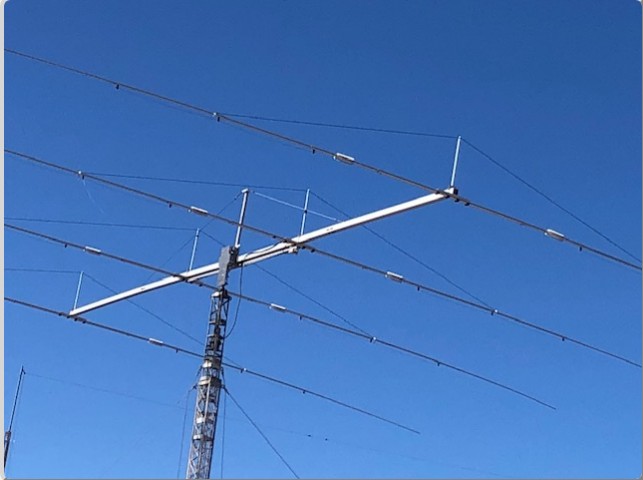
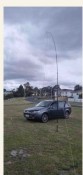
Last week our team-mate Lin VK6NT operated from the Northern Corridor Radio Group’s station VK6NC at Whiteman Park… using this four-element 40m Yagi! Yowzal!
Thanks to Richard VK6HRC for the image and correction to my report; turns out that the NCRG now has two 40m Yagis; apparently you can’t have too many!
This week we had at least 47 CQQRS team stations on air for our Tuesday night net, and at least another 13 others worked. Some reported static crashes, for others there was a bit of auroral buzz and some one-way propagation.
And our DXperiment team in Europe and the UK had a bit of success as well. A fun session for most people I think. And especially fun for Mal VK8MT in Darwin who had his first-ever CW QSO on our net on Tuesday.
I was confused of course – I thought I’d worked him before when he was camping somewhere in the Territory, but it turns out, he’d reported hearing stations on his portable gear, but hadn’t actually been transmitting.
So well done Mal and Sava VK4PN who had the pleasure of working him on 20m during the DXperiment. Also this week, we had an Short Wave Listener report – my next door neighbour who reported that he could hear me on an old short wave receiver he’d bought recently – DX – our antennas would be about 500M apart!
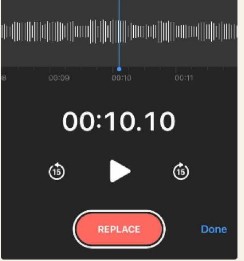
However, when I listened to his iPhone recording on our daily walk – it wasn’t me at all – Jack was actually listening to Jordan VK3ACU 600KM away at Meredith Victoria. The recording is attached to Jack’s report below – the distance explains the QSB.
Interesting to learn about the Lafayette receiver – it has a regenerative detector – but in the IF stage, rather than the usual front-end. You can hear the detector squegging in the recording. Good thing for me that the detector was in the IF…
For those not familiar with regenerative receivers, the detector is actually an oscillator that falls in and out of oscillation at the received frequency; very high gain (because of the positive feedback) but they radiate a rushing noise on the received frequency.
I recall the excitement caused in my high school days when parked near the tower at Jandakot airport using a home-brewed regenerative air-band receiver!
Around the same time, there was an SWL named Doug Maley who lived in Kalgoorlie who would listen to the locals on 80m using his regen receiver (carefully adjusted regenerative detectors can decipher SSB, CW and even FM in addition to AM); they called him “QR Maley” because of the noise generated by his receiver that they could all hear!
Appropriately, Doug went on to become VK6QR. If any of our team know of Doug’s email address, please pass our newsletter on to him – I’m sure he’ll smile at the memory. Anyway, on to this week’s newsletter.
As always, you’ll find reports from the participants below, but this week I noticed a glitch in one of the reports – Ross MONNK reported stations worked and heard – but when I processed the web-form’s data, the spreadsheet was missing his reports.
We’ve had odd behaviour from the Google Forms system in the past, but as far as I can tell, this is the first time that our you-beaut bespoke Python software created by team-member Nigel G4RWI has mis- behaved.
Nigel and Jo’s nice holiday in New Zealand will be punctuated by a GitHub service request from me shortly! Sorry mate! As usual this week, there’s lots and lots of contributions from team members – thank you again one and all.
There’s also an article about Australian CW power limits… you may be surprised! Thank you to Patrick VK2IOW for assembling the written reports from members, and I’d like to especially thank John VK2RU who puts together the head copy training audio segments every week – lots of work needed to break the chapters down into small chunks to suit the MailChimp file size limitations.
New Member
This week, Mal VK3MAL / VK3PP joined our team, on the invitation of Jordan VKS3ACU. Mal has dabbled with CW for a long time, but has recently had a real crack and reports that he’s loving it; welcome Mal – warning, it’s addictive!

To make your report more interesting, please consider sending a photo to be attached If you have a photo that you’d be happy to include, please email it to: cqarsnet@gmail.com To make it even easier for Patrick and Mark, see if you can compress or reduce the siz of the image (preferably to less than 100KB file size).
No problems if your computer or phone can’t do that – just send it through anyway please. So, please help attract new and old team members to have a go by submitting your report each week. Submissions close 1300 (Eastern Australian Summer time) on Thursdays.
To make your report more interesting, please consider sending a photo to be attached Ifyou have a photo that you’d be happy to include, please email it to: eqqrsnet@gmail.com To make it even easier for Patrick and Mark, see if you can compress or reduce the siz of the image (preferably to less than 100KB file size).
No problems if your computer o1 phone can’t do that – just send it through anyway please. So, please help attract new and old team members to have a go by submitting your report each week. Submissions close 1300 (Eastern Australian Summer time) on Thursdays.
Website If you’d like to find out a bit about our net, or would like to pass information to others about our Tuesday get-togethers, here’s the link to our website.
Website
Dit-dit… catch you on Tuesday I hope.
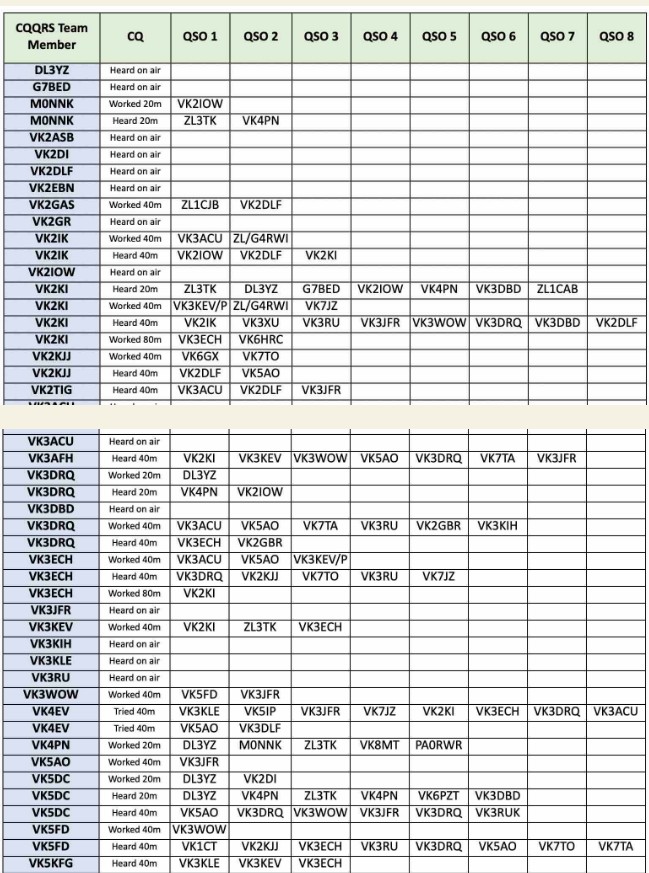
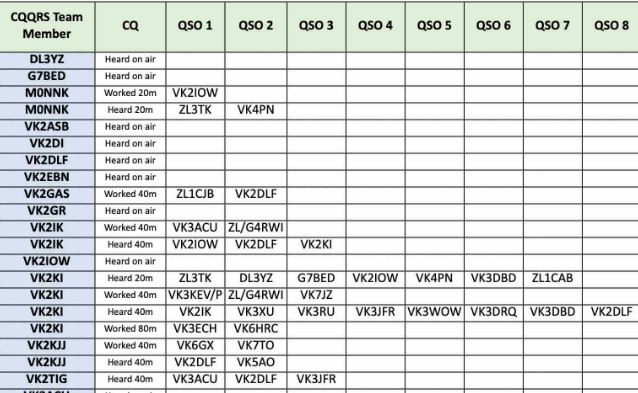
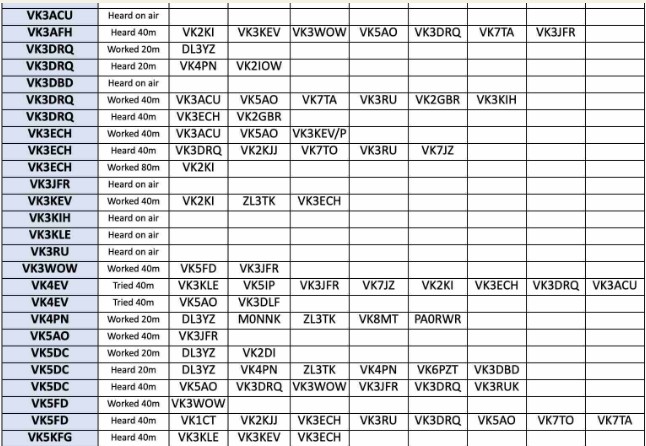
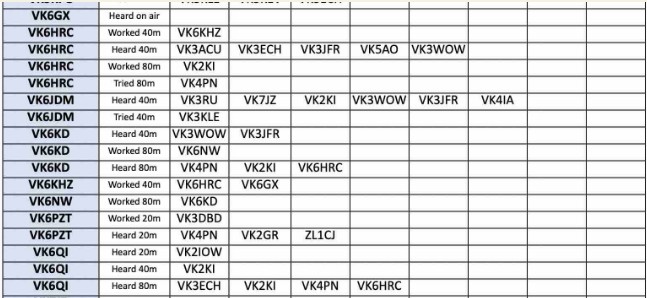
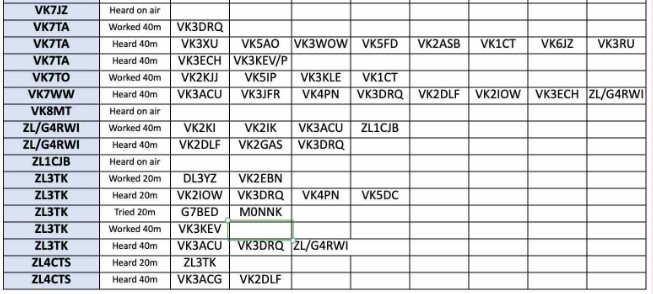
As discussed above, for reasons apparent only to Nigel our Executive Software Manager, at least one of the reporter’s callsign data was omitted from the generated spreadsheet this week; I attempted to correct any omissions, but please let me know via cggrsnet@gmail.com if you find more errors.
Notwithstanding, the spreadsheets above should show the known stations on last Tuesday’s Group; the comments in the team members’ reports (submitted via our webform bit.ly/CQQRSNET ) follow:
After a fine QSO with Pat VK2IOW, I heard some Morse, but it was too wea for me to pick anything out. I subsequently found out that it was Sta ZL3TK. Later I almost missed Sava VK4PN (I have now set my CW filter a little wider) but, once I’d gone up 0.2 kHz, h
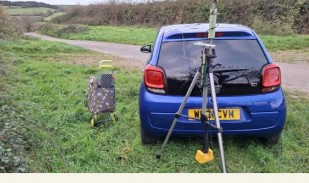
[20m] I Worked VK4PN on 20m. My first CW QSO! I |

[40m] While the noise floor was low, Rx sig levels were also very low in the noise.
[80m] Noise floor was quite low but not many stations
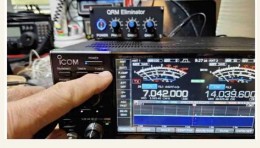
Getting through to my QTH. I logged onto the Ironstone SDR to hear activity from SA. There were stations lower than our landing frequency but Tx speeds were too fast for me to copy call signs. Good to have some CW practice with Wayne VK6NW.
I started off at 100W but dropped to 50w. My testing earlier to a SDR in the SW proved I was getting there or 1W so 100W might have been overkill. Till next week 73s to all.
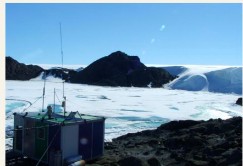
[40m] Much better conditions than last week, the band seemed quiet around 8:30pm (NZ) but got much livelier around 10PM. Really pleased to work into VK with my measly 5W anda
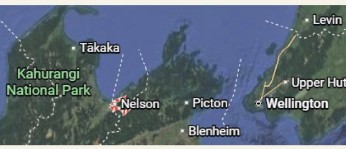
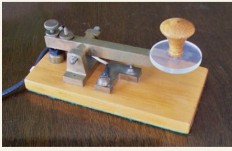
Compromised antenna. Thanks to all who persevered with sometimes erratic sending with an unfamiliar straight key from the 18TH century. I’ve managed to free-up some of the adjusters, which has tamed the beast a little.
40m] Jid not hear any VK6 stations on 40m. Among the eas oast stations one was using 10 watts in a park in elbourne, this station’s signal was readability 5. ut out a few CQs but no reply.
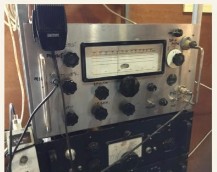
[20m] My focus was on 20m this week. Started with listening to our European stations via a VK5 and one ZL SDR, whist shopping with the XYL. Later I managed one contact with VK3DBD who blew me away when he turned his beam in my direction.
His signal went from S3 to S9+, as he turned the beam and transmitted at the same time. I swear, I could hear the gears of the rotator working as it turned. Unfortunately, I could not hear the DX team here in WA on my rig or the local SDR.
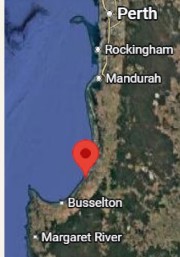
Indonesia, Germany and Italy. suspect this was all short path, as Europe was heading into darkness at this time. Back in Bunbury this week hence got to have ago athe D team yesterday. Normally they have finished by the time I get
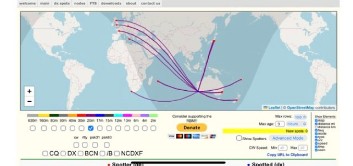
[40m] Despite only getting on-air later in the evening, it kicked off with a very satisfying long rag-chew with Joe, VK2KJJ. By the time we 73d each other, it was getting late, but Ip VK5IP, called on frequency so went back for a short QSO.
That was followed by a brief QSO with Paul, VK3KLE.
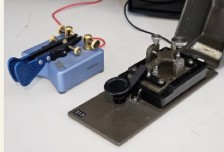
| was about to sign off when I noticed someone calling a little lower, only to recognise Chris, VK1CT‘s, call. After answering we decided to QRQ for some fun. It’s been a while since we last chatted so was very pleasant to catch up again.
Allin allitwasa great evening with four contacts to four different states.
[80m] I tried calling on 80 m a couple of times between QSOs, but was only answered by the steady light crackle of the universe whispering back at me. The bands did seem odd with good signals, yet my CQs weren’t picked up by any RBN nodes.
All in all it’s been a good week of playing radio with the CQ WW CW contest on the weekend, followed by a great CQ QRS net on Tuesday. Can life get any better?
From your editor Mark VK2KI at Beautiful South Bowning NSW
[20m] Signals from Europe and the UK were very weak to start with, but were getting better as the sked progressed. Mike DL3YZ was very weak with me – just strong enough on QSB peaks to pick out his call letters.
Similarly, Chris G7BED was also up and down in the QSB. The good thing was that there was a goodly number of Oceania stations for them to work.
At the changing of the guard when Ross MONNK was about to start his scheduled calls, my phone beeped – my next-door neighbour had arrived aE = aey? oe et eee Pee ee ae OE Ee a rec ee ee eee a)
Calls, my phone beeped – my next-door neighbour had arrived home and was on his way over with his little All-Terrain Vehicle (these things are replacing quad bikes on rural properties because of quads’ high fatality rates) to tow my tractor home.
Part way through today’s slashing, my little old Kubota 27HP decided to dump the contents of the cooling system in the paddock (luckily I just happened to have stopped to mark some more rocks with electric fence posts… so I saw it happen).

Amazing that the 600CC 600KG buggy could tow the approximately 1100KG tractor quite happily. By the time I got back, Ross had packed up and was back at home – hot chocolate no doubt! Time to head back to 40m.
[40m] While carefully watching the clock before the DXperiment (using Mike’s handy-dandy GMT clock on his new station status monitor), I had a tune around 40m.
Great to hook up with Kevin VK3KEV who was portable at Gulgong, operating portable with a (t)uSDX, putting out SW into a half wave antenna up 8m.
When I returned to 40m after the tractor rescue and a bite to eat, the first QSO I came across was Paul VK2IK at Moss Vale chatting to our aspiring IT executive Nigel G4RWI portable in Nelson NZ.
I was pleased to hook up with Nigel – his massive 5 Watts was RSN 431 in the static crashes and QSB. After a nice chat with Nigel, I came across the nice strong RSN 581 signal from James VK7JZ operating portable in Hobart.
After a bit of QSY practice with two frequency changes, we enjoyed a nice QSO that included a discussion about what might happen if the residents behind where James was parked called the police.
| can just see the headlines… “Police Inspector Nabbed for Causing mo Radio Interference to Stereo System”; James sounded pretty confident . that he’d know all the excuses.
However, there was a rapid re- — deployment of the portable gear when James realised that he’d told She Who Must Be Obeyed that he’d be home 15 minutes earlier; how’s your satchel full of excuses looking mate?
| had a look on 40m from around 1100Z – and it was nice to see I had a reasonable signal into the Southern Electronics Group KiwiSDR near Northam WA.
Interesting to look at the auroral buzz on the waterfall display (see image) – fairly strong in WA, just noticeable at Ironstone Range SA and nothing on the Snowline
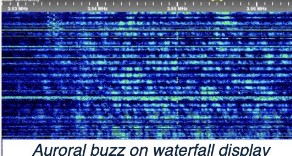
SDR at Dry Plain or here in Beautiful South Bowning. I hooked up with Rob VK3ECH at Echuca who was a respectable RSN 571; Rob was also visible in WA.
When I signed after we got the callsigns sorted out, I heard weak signal calling me – Q5 on QSB peaks, but mostly RSN 211. After several “AGN?” calls, I unpicked Richard VK6HRC‘s callsign and after many more goes, finally copied the RSN report from him.
Fun when you get one number, then one number, then another single number…. hoping, hoping, hoping for a QSB peak where all three might happen to come through together so I know the order. The joys of QRS! Thanks Richard.
I also was watching the VK6SEG KiwiSDR at Hoddys Well near Northam (but I had the audio muted); interesting to see that Richard’s signal was fairly poor over the 50KM distance whereas I would have expected a solid signal from the upper F2 layers at that time.
Also interesting looking back through my log at past QSOs with Richard – for most of the 80m ones I reported Q2 from Richard’s 100 Watts, yet Richard reported Q4 or 5 from my 50W; Wayne VK6NW calls it the Faraday Curtain and it might be loss through my phasing-type noise canceller, but I’m going with the one-way propagation I’ve seen many times between here and WA on 80m as the lower part of the ionosphere weakens around dusk while the upper parts remain illuminated with solar radiation.
Good fun anyway – thanks for persisting Richard.
From Stan ZL3TK at Waitarere Beach [20] Results consistent with previous weeks, RSN 331 into and RSN 311 from Germany. QRP and somewhat geographically offset to the east from long path to VK might account for UK stations not being heard.
Again RSN reporting instead of obsolete RST proved its worth in understanding the conditions.
[40m] Another night with exploding thunderstorm- generated QRN up and down ZL, hence a very low body count. Nonetheless, it provided a rare teaching opportunity in which traffic handling skills were pushed to the limit.
A portable 5 watt signal out of back country NSW, torn to shreds by constant ORN proved how Morse combined with sI
Data Sag atte elarStes ateti oo bee ad Sadr ee ah ee te ae fF constant QRN proved how Morse combined with sheer British guts and determinatior at both ends can conquer the worst of conditions; it’s not often that QSZ is called into action and to still be followed by numbers of repeat requests.
Instead of taking the usual 10 minutes for successful data transfer, this final QTC in the STC challenge series took 45 minutes; the sender who manned-up more than deserves his 10 bonus points. Endurance, well done that man!
Very quiet to start with, worked a local station and started hearing Eastern states signals coming up much later with slow QSB making copy difficult.
[80m] Hope to work Sava VK4PN someday! He put in a good effort calling repeatedly to no avail.
From Jack SWL at Beautiful South Bowning
[40m] Hi Mark, Bought this comms radio at the HRSA meet from the fellow who made the modifications, which are described in the attached schematic.
Tuned in last night thinking I had your broadcast at 7.0xx MHz(?) but it turned out to be your KAS ee ion Lippe Ry Ur gor mimeo mmegt eels pei tn es pt we co cu erire GFE Blea:
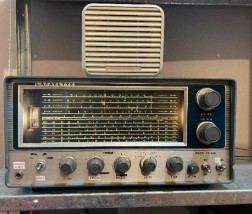
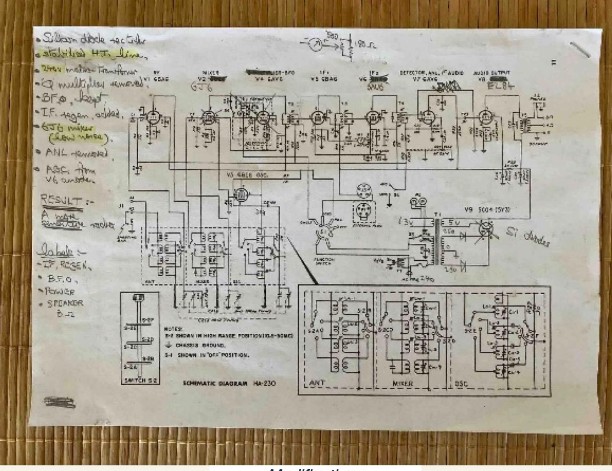
I’ll try again next week. Recorded a bit with my phone just for fun, discovered I could ‘see’ the characters in the recording. “C-U-T…..”? Probably not a great receiver, but it was only $50
[40m] I was late to the party and did not stay long, but I did hear some good signals.
From Sava VK4PN at Mount Ommaney Brisbane
[20m] Got on air late so did not waste time checking RBN just scanned the 10 kHz EU DX window and heard VK3DRQ finishing QSO with Mike DL3YZ. Mike was very readable and we had an easy exchange, did not keep him too long assuming others were
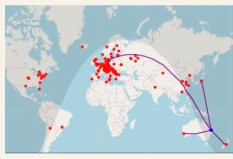
Queuing up. Kept scanning the segment and heard VK3DBD chatting with MONNK. Ross was faint but readable so I camped on the frequency and waited for them to finish the QSO in progress.
Ross responded to my call but almost at the same time a couple of strong VK stations started chatting on Ross’s frequency. I could copy him only in the breaks between overs of two VKs chatting.
I could also hear his carrier between dots and dashes to ascertain when he finished sending to start my over. Managed to copy only the RSN and not much else but enough for a log entry.
VK8MT called me a few times while I was struggling with Ross but I couldn’t respond and wanted to clear Ross’s frequency anyway. Moved to 14050 kHz and started to call CQ to get RBN report which for some reason did not come back for a good while.
In the meantime VK8MT and PAORWR came back to my CQs so I logged two more QSOs on 20m.
[40m] Had a big break between 19:00 and 21:00 HRS so missed the rush hour on 40m. Still made a few calls using my QRP rig but no luck, only a few stations were still on air this late.
Checked my signal on Araluen (VK2) and Ironside (VK5) SDRs and could see my carrier so propagation was ok. I hope that QRS net participants will check occasionally 7028 KHz which is the QRP calling frequency in Australia. I hang around this frequency a lot.
[80m] The last 30 minutes of the QRS net time slot I spent calling and looking for any carriers on Ironside (VK5) and VK6QS Kiwi SDRs. I could see my carrier on both sites, but I was the only one on 80m again.
It seems that most of QRS net activity is over by this time of the evening (22:30).
[40m] First time listening for more than 12 months, conditions were pretty good to my Bushcomm dipole at 6 meters…
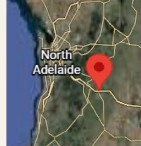
POST MORSUM 3rd December
LDN ethane! ohh nn ath IAS cnn cMaahdads Bronce EE ae ee ee ee
From Richard VK6HRC. Nine on the South West repeater and AllStar/Echolink hub this morning.
EEE DNs NEE BEEN? WEE OF VK6KD David VK6QI Mark VK6FMPM Kim ZL/G4RWI_ Nigel VK6FN Max VK6NW Wayne ZL3TK Stan VK6MRB_ Mulligan VK6HRC
David had a contact with Wayne on 80 m and heard Sava VK4PN just above the noise also made use of several Kiwi sdr receivers around the country to check on ‘the activity. Called it an evening at 11:30 WST and headed off to slumberland.
Mark monitored the activity on 20 m hearing seven stations including weak signals from Mike DL3YZ and Chris G7BED. On 40 m worked three (including ZL/G4RWI – boy that’s a long callsign!) and heard eight.
On 80 m worked Rob VKSECH at Echuca and and managed to exchange signal reports with me despite the poor conditions! A sick tractor on the list to sort out adding to the already overloaded man from Beautiful South Bowning.
VK6FMPM Kim checked in and heard all about the QRS evening before getting back to work. Nigel ZL/G4RWI had a much better session this time, listened to some local QRQ traffic on 40 m until conditions improved to East coast Australia and worked several VK stations.
Max was in SWL mode after another full day with the big clean up, a crew is turning up later this week to collect a load of AM20 and AM 25 units for disposal.
Wayne got the dog walking out of the way and joined us; he worked David VK6KD on 80 m and also checked the Kiwi sdr network. With the approaching fire season lots of prep work going on with SES as well.
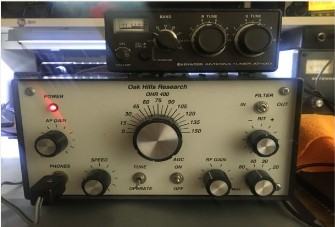
| started the session using the Oak Hills Research 400 lent to me by a friend -a fun QRP CW-only rig. Making use of the VK6BL Kiwi sdr knew I would be heard locally and went on to work Ron VK6KHZ.
As signals from the East started coming through I was amazed how good the receiver on this rig was. At the end of the session used the IC 7300 and managed to exchange signal reports with Mark VK2KI on 80 m after several repeats, conditions variable quite noisy and some QSB.
Thank you to all on last night and this morning 73 Richard.
This Week’s Topic of Interest
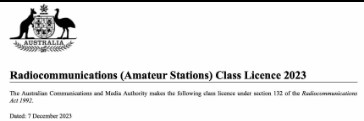
Confused about the Australian amateur power limit for CW? Do you think it’s 400 Watts for Advanced, 100 Watts for Standard and 10 Watts for Foundation licensees?
Since starting our newsletter, I’ve edited a number of contributors’ comments where they’ve stated what power they were running on CW; I emailed to them after to explain, and all have expressed surprise at our 120W mean output limit in Australia; they thought the Australian limit was 400W!
I wonder if the license training process used today doesn’t emphasise the difference for CW and other non-SSB modes? The other point is to wonder why bother with an amplifier on CW in Australia – the difference between the normal 100W output of modern transceivers and the maximum 120W is less than one decibel…
(1/6 s-point) unlikely to make any difference in most circumstances. So I think it’s time to remind our team about the limits in Australia again; I’ve done it couple of times to date.
So back in ancient history when I was first licensed, the regulations that we all learned by heart stated that our power limit for carrier-type emissions like CW, AM, FM etc was “150 Watts DC Input”. The License Condition Document for amateur
Licenses now states that the limit for Advanced licenses (on 160M and above) is 120 Watts py, for Standard licenses is 30 Watts pY and for Foundation is 10 Watts pX. pyY is the ‘mean power’ and pxX is peak envelope power.
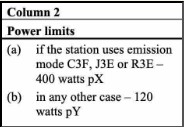
I’ve never been able to find the ACMA (or regulation / Act) definition of ‘mean power’; is it the mean of the emission over 1mS, 100MS, 1 second, one minute, 24 hours, a year? Is it an biological exposure safety limit or something else?
For example, transmitting with 1kW for three hours a day, averages out to a mean exposure over 24 hours of 125 Watts. Somehow I don’t think that’s what the LCD drafters intended.
I have never found out if there’s some science to 120W – for instance, does 120W of carrier cause the same biological heating to a human as 400W SSB in safety terms?
Or is 400W of SSB average to about 120W on an analogue power output meter (which may be the same as the biological heating effect)?
Oris it simply that the original carrier limit was “150W DC input” (ie the plate voltage times plate current) and that Class C amplifiers are about 75% efficient – so someone’s used that to determine that 150W DC Input in a (non-linear) Class C amplifier could produce say 120W output?
Maybe it’s that these days, output power is easy to measure and more practicable in terms of radiated power for both safety and radiation effectiveness measurements than DC Input perhaps?
Out Technical Editor Lance VK7TO will look into the background when he’s got some spare time (he’s not retired, so he must have heaps of spare time, right).
Lance and I would be interested to hear if and readers can find information that sheds more light on the subject. One of the members responded to my thoughts with this from ChatGPT: 4 UK Amateur Licence Power Limits Licence level Max permitted power (general) Foundation 25 Watts PEP Intermediate 100 Watts PEP Full (“Full 1000 Watts PEP (in bands where amateur use is a primary Licence”) allocation) In the United Kingdom, all amateur power limits are expressed in PEP (Peak Envelope Power), and this applies to all modes, including CW.
Why CW has no separate limit CW (AIA) is a constant-carrier mode when the key Is down, so: + PEP = carrier power = mean RF power (unlike SSB, where mean power is much lower than PEP) Therefore, when Ofcom says: + 25 W PEP (Foundation) + 100 W PEP (Intermediate) + 1000 W PEP (Full licence) those values apply directly to CW as well.
Practical implication Ifyou are a UK Full licensee: * You may run up to 1000 W RF output in CW on bands where that power is permitted.
* On secondary allocation bands with reduced limits, the reduced PEP still applies to CW, exactly the same as SSB or any other mode.
Summary No separate CW limit CW uses the same PEP limits as all other modes For CW, PEP = key-down carrier power, so the number is directly the allowable transmitter output So in fact if this is true (it comes from an Al so it is very possible that it’s not accurate), the UK Office of Communications considers the SSB PEP output power and CW output power to be the same!
Interesting! Anyway, back top-side – in Australia we’re stuck with 120W (advanced), 30W (Standard) and 10W (Foundation). Hopefully, Lance might be able to find out a bit more about the origin of our 120W/30W/10W limits.
If my thinking is correct, in that our 120W average limit might be driven by our EMR safety limits, perhaps that’s a good reminder to have another look at Lance’s excellent station safety documentation discussed in RagChew 40/2025? It’s on my list.
I’ve never been able to find the ACMA (or regulation / Act) definition of ‘mean power’; is it the mean of the emission over 1mS, 100MS, 1 second, one minute, 24 hours, a year? Is it an biological exposure safety limit or something else?
For example, transmitting with 1kW for three hours a day, averages out to a mean exposure over 24 hours of 125 Watts. Somehow I don’t think that’s what the LCD drafters intended.
If you have an article or two that you think might be of interest to our readers, please let me know so we can share more thoughts and ideas; for guidance on writing for RagChew, see Articles below. Please email material to Mark VK2KI: cqqrsnet@gmail.com

On My Workbench
What’s going on on your workbench? If you have an article or two that you think might be of interest to our readers, please let Mark VK2KI know; email to cqqrsnet@gmail.com For guidance on writing for RagChew, see Articles below.
QRZ? Who’s on the other end?
Head Copy Practice
Compiled on the track somewhere by John VK2R
Anyone who is just starting out with head copy should look at edition 23 ~ 2025 where we first started with Winnie the Pooh recorded at 12 wpm.
In edition 23, and for a few following Newsletters, there are instructions on how to use these files, and edition 25 – 2025 has information on the Ditto CW : Morse Player app. This week we have Wind in the Willows Chapter 10 – The Further Adventures of Toad.
Itis suggested that you read the text file before listening to the audio file. That will make it easier to follow the audio file and prepare you for any unusual words. The MP3 files have been recorded at 16 wpm and 650 Hz tone.
If you prefer a slower speed or different tone, you can create your own MP3 files by converting the text file included in last week’s Newsletter with the Ebook2CW app — https://fkurz.net/ham/ebook2cw.htm|.
Because of MallChimp’s size limits, I’ve split Chapter 10 into five parts, and all five parts are attached below. Each part is over 1 hour playing time @ 16 wpm.
Uncommon punctuation has been removed (the Ditto CW app doesn’t recognise some of it), and contractions have been simplified (for example, we’ll becomes we will). This week’s attachments are: * Chapter 10 parts 1, 2, 3, 4 and 5 MP3 files * Chapter 10 text file
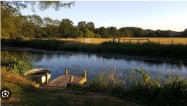



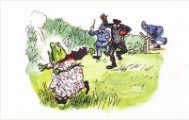
You can either play the MP3 files in any media player, or load the text file in last week’s Newsletter into the Ditto CW: Morse Player app — https://dittocw.andro.io/. Both options work well, however Ditto CW gives you complete control over all Morse settings, while a normal media player only allows changes to playback speed, and does that in steps (e.g. +1.25x, 1.5x, 1.75x).
Other News
DXperiment Bands
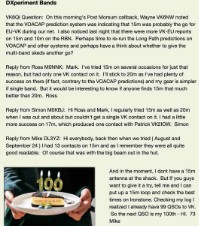
Last week we discussed the comment from Wayne VK6NW about 15m being likely to be a better band for Western Australia for the DXperiment – and the replies we received. More from Wayne on the topic follows:
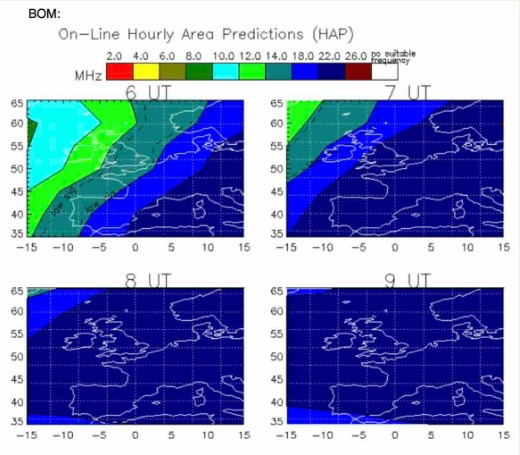
Hi Mark Looks like a 50/50 yeah nah. All we can do is give it a go. Not to bang on needlessly, but I have tried three different HF propagation prediction tools for the London/Perth long path and they all say the same thing – 20m is very marginal at 0700 UTC.
BOM suggests that 20m should work at 0600 UTC but falls away after that, hence the NZ/east coast station success but NFG here in WA. They suggest 15m or higher.
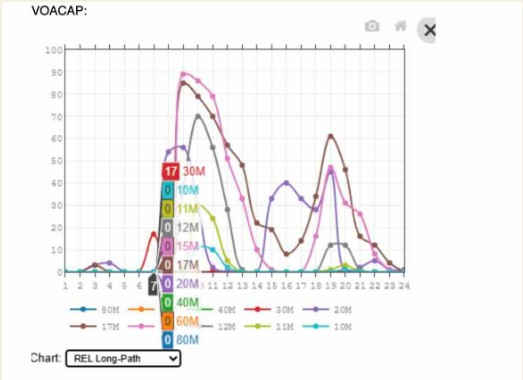
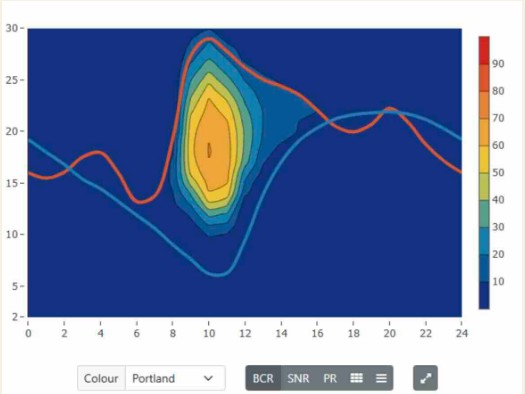
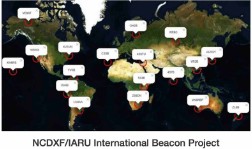
The other good indicator I suggest we tap into is the NCXDF Foundation beacons. That is the real time signal, not a predictor. Oh well, see what happens Thanks again for the newsletter, FB read! Regards Wayne VK6NW
Some People Need More Help Than Others

Morse Training Net
Our team member Nic VK7WW runs an on-air Slow Morse training net every Wednesday at 7pm EDST on 3580 for 30 mins. He uses the callsign of the Northern Tasmania Amateur Radio Club VK7TAZ on that net.
Many of our team learned Morse code with the support of Nic, and the weekly training session comes highly recommended for anyone who wants to learn the Code, or simply brush up.
Everyone’s welcome – 3580KHZ at 7pm Eastern time every Wednesday; you’ll hear lots of the CQQRS team on that net. Jordan VK3ACU has recorded the complete set of lessons which you can now find here:
Https://www. youtube.com/playlist?list=PLHsQmZz6fBXO7swAfbTmutrbbEL17fUQL Contact Nic VK7WW for more info nicholaschantler@hotmail.com including how to join the NTARC DISCORD group to follow the action, or just come along and join in on Wednesdays.
Some Mothers
From Ron VK6KHZ Hi Mark Fun fact: I was listening to the ABC night quiz and found out that the opening theme for the British TV show Some Mothers Do Ave Em is spelling out the show title in Morse code. Did you know? Regards Ron
Regards Ron
Sava’s Popular
Sava VK4PN featured in several reports this week – and was especially appreciated by a couple of our team; must be his terrific CQQRS reports!
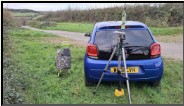
Can you pass on my thanks to Sava VK4PN for trying so hard to make a contact with me. He was RSN 532 so fairly readable here, but he was having problems with QRM and couldn’t copy much of what I was sending. But it was great to hear him.
I think I might have my CW filter set too narrow as I almost missed him. There’s always something to improve in this game. Ross MONNK Sava’s reply to Ross: Hi Ross, thanks for the email.
Yes it was difficult, you were clobbered by two local hams having an extended chat right on top of you. We all know frequencies EU contingent uses still there are clumsy ones who take little care.
I could read only fragments of your transmissions during the pause between the overs of the two chaps chatting else I would listen to your carrier between theirs dits and dots to know when to come back to you.
I did copy the RSN so I knew you could copy me but my copy of your traffic was very sporadic. Mind you I grew up under similar conditions in my YU days. As a teenager I worked from a club station in Belgrade which had a BC348 receiver ex US air-force surplus.
It was as brad as Danube and you could receive half a dozen of stations simultaneously. So trying to dig out week signal under thundering Russians or Bulgarians in particular was a daily affair.
I know that you make a special effort to get up early and work from the car with inadequate antenna ina freezing UK winter morning so I did my absolute best to make the QSO. It was like the god old days again! 66 years ago would you believe it.
I will be looking for you next week again. This Tuesday apart from our QSO I managed to work Mike as well but did not hear Chris, I was hoping for a trifecta. Cheers mate and thanks for perseverance Sava VK4PN
Hi Sava
Thanks for the contact. It was my first Q6O via CW. Sorry for the very bad sending, but we got there! We have broken the ice, so to speak. I trust, we can make some headway. Thanks for your patience. Cheers.
Mal Good VK8MT / VK6MT AllStar Node 28611 Echolink VK8MT/L D-Star Rapid Creek, Darwin NT
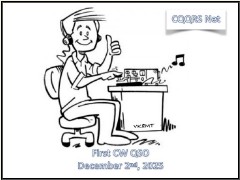
NEL OE Hi Mal, During our CW QSO I never thought it was your first or one of the first CW QSOs. Your keying was rhythmic and fluent, also you responded to my question (asking for the RSN) promptly – no need for repeats or even to slow down so your copying is fine as well.
Sending Morse is usually not a problem but copying requires lot more work. So it is much more important to listen and push yourself to head copy or to copy above your comfort. Longer rag chews at one’s comfortable speed is probably the best way to improve.
Another helpful accessory in early stages of CW work would be a template of a standard QSO written down with gaps for RST(N), name and call sign. I am sure there would be samples on the WEB.
I ran few Morse courses for SCARC and always encouraged participants to write down their own templates. Also first few QSOs were always under supervision in the club rooms as many beginners simply fall apart during their first @SO.
So you did exceptionally well. 1am on air almost every Tuesday and will be looking for you. If you call me on 20m I will ask you to QSY outside the EU DX window else you may check 7028KHZ where I work QRP or 3550 KHz after 11:00 UTC where I work QRO.
Cheers
Noise Floor & RSN
From Ross MONNK I love the term “Noise Floor” – it has a wonderfully obscure and techy ring to it… Anyway, that’s enough poetic rambling for one day. Now let’s get onto something simple and obvious.
I completely get why you chaps are so keen on RSN – it conveys more useful information than the more-conventional RST. Except outside of our QRS Net, where it simply wouldn’t be understood.
One of the arguments against RST is that, in these days of modern mass-produced radios, the final digit is always 9 (and thus, pointless). Well, when I’m out Portable, the final digit of any RSN I pass is always 1.
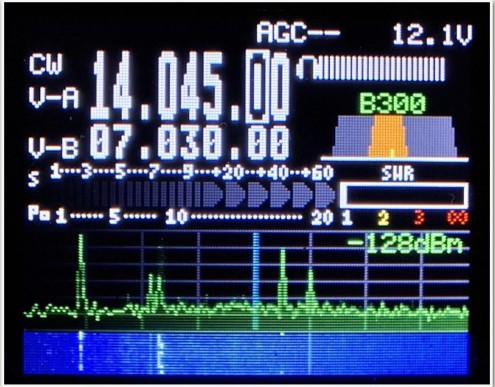
‘When you have a Noise Floor of -128 dBm, the last digit is of purely procedural interest. Surely this will be the same for all Portable operators? [Thanks Ross. At this time of year here top-side, static crashes are the order of the day…
And portable stations aren’t imune! To-date, if for example the signal is S 5, the noise floor is SO (I have a wonderful <$100 phasing-type noise canceller) but the static crashes are S7 say, I've been reporting RSN 451 which actually doesn’t tell the other station why they are Q4 only.
I think I’m going to adopt a new way: if the static crashes are S7, the report will become RSN 457. I wonder if any of our UK or EU team members are members of any of CW groups over there?
If so, perhaps a note or three about the strange RSN system that’s been successfully introduced in VK & ZL? I’m pretty sure I know what the response will be… but at least some of the readers there will have some idea what those Colonials are up to….
And you never know… Thanks for your thoughts Ross; I think you’ll have catalysed a change to what I’m doing (wonders never cease!).]
Critical Thinking
From Richard VK6PZT at Dalyellup I asked Al if i could use RBN to determine if my contact was long or short path! And here is its response.
4. laentity the patn: 1. Short Path (SP): If the majority of the receiving stations are located in the geographically “shortest” direction from your transmitter, your signal is likely taking the short path. 2.
Long Path (LP): If a significant number of receiving stations are located in the opposite direction (more than halfway around the world), your signal is likely taking the long path. 5.
Use visualization tools: For a more comprehensive view, use a tool like dxlook.com, which pulls data from the RBN and other propagation networks to create live, visual heatmaps of signal paths. @ Built a real-time HF
The Missing Middle stage of the CW Journey
From Peter VK3WOW Beneath the heading “Principles” on the CQ QRS website, Mark has provided two graphics that he describes as “Some of the sources of the thinking” and “The CW journey” (see https://sites. google.com/view/cgars/home/principles).

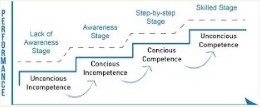
Either way this journey is envisaged, it clearly ends with the learner achieving a fairly high level of competence, reaching the “skilled stage” or becoming a “motivated master”.
At the same time, the text on the Principals page makes it clear that our Tuesday night gatherings are for “slow” CW practice. The page defines “slow’ as sending “below about 12-15 wpm”.
In short, the group is intended to function, in effect, as a “CW primary school”. Now there is certainly a need for that.
And indeed it seems to me our group currently serves as a quite wonderful “CW primary schoo!” with a caring Principal who leads by example, takes time to get to know all his students, and has nurtured a very strong sense of community.
Now, anyone with a shortwave radio can hear for themselves, by listening around, that “motivated masters” who have reached the “skilled stage” referred to in the charts above are likely, in practice, to be conducting the bulk of their QSOs at around 22 wpm.
Ifyou like, these operators have made it into “CW high schoo!” (and often beyond). They operate with fluency and ease at speeds that are, to put it mildly, quite a stretch from the 12 – 15 wpm maximum speed encouraged in “CW primary school”.
Where, then, I find myself asking, is “CW middle school”? The “sources of some of the thinking” graphics on the group’s Principles page appear to envisage a CW learning journey that will comprise a number of relatively even steps from a low level of CW performance to a high one, However, the text of the Principles makes it clear that ‘Tuesday nights are to be a siow CW practice opportunity, and are not seriously intended to provide an opportunity to move into that middle range of sending and receiving between, say,15 wpm to 20 wpm where mid-level competencies like head copying become viable, and where “CW high schoo!” speeds and other competencies feel like they are almost within reach.
I realise it would amount to quite a significant change in the way we think about Tuesday nights, but might it not be possible for us to add what would be, in effect, a “CW middle schoo!” to our existing “CW primary school” — a “CW middle schoo!” that could help prepare highly motivated learners not yet quite ready to step up into “CW high school” to get ready to play with the true “CW big kids”?
Our current band plan, published each week in this newsletter, nods to the possibility that “non-QRS rag chews” might occur on the 7020 kHz and 3535 kHz.
I have found in practice, however, that any rare, faster QSO conducted on one of these spots is just as likely as any other to be tailed-ended by someone calling at quite a slow speed.
The idea that these spot frequencies are intended for a special purpose does not seem to have caught on at all. And indeed, why would it?
Who, in their right mind, would want to attend a “middle schoo!” that’s being conducted in what amounts to a broom cupboard?
In support of my idea that we add a “CW middle school” to our existing “CW primary school”, I would like to put forward for discussion an alternate CW band plan for our
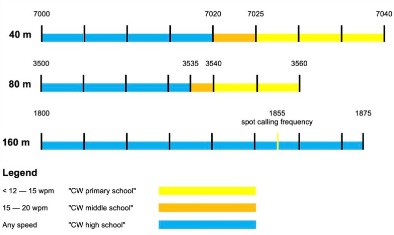
Tuesday nights. I hope, in the light of my comments above, this proposed band plan will be self-explanatory. If you do have any thoughts about this, I hope you will share them here in the newsletter. Email to: cqgrsnet@gmail.com — Peter VKSWOW
DXperiment – Status Monitor
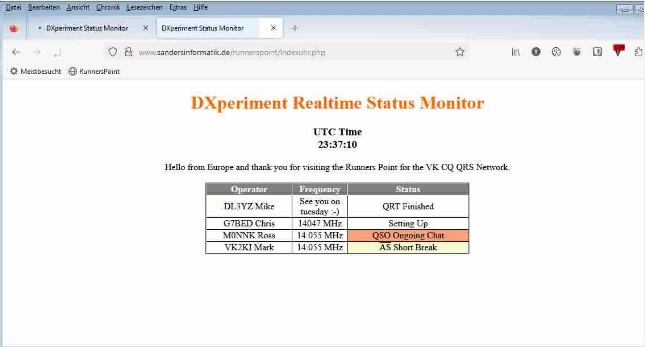
From Mark VK2KI If you read this week’s email reminder about our CQQRS Net, you may have seen the comment from our DXperiment coordinator Mike DL3YZ about his prototype status monitor.
Mike had allowed a few of the team to input their operating or monitoring status during the net – and a bit like the CQQRS WhatsApp Alerts group, allowed the 20m team to see what was going on without relying on the phone App. Did you have a look?
If so, let me know so I can pass feedback to Mike. cqarsnet@gmail.com
160m Inconsistency
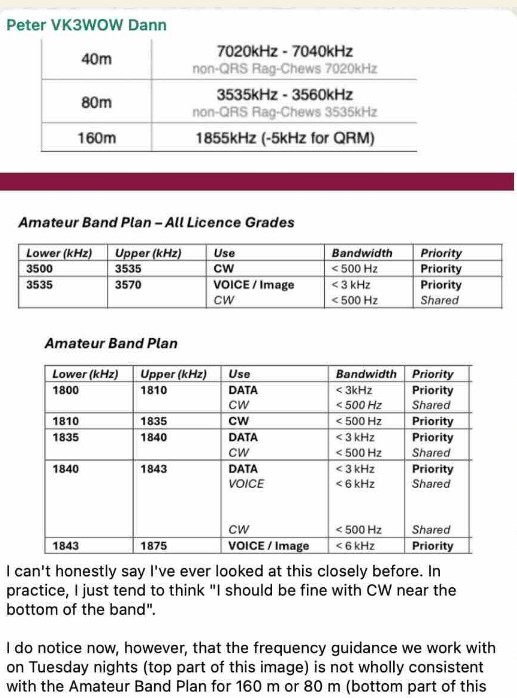
LL ‘see I ef YVIVE/ Meee I SORFIC Lrrorny I I can’t honestly say I’ve ever looked at this closely before. In practice, I just tend to think “| should be fine with CW near the bottom of the band”.
I do notice now, however, that the frequency guidance we work with on Tuesday nights (top part of this image) is not wholly consistent with the Amateur Band Plan for 160 m or 80 m (bottom part of this image).
[Well spotted Peter. I’m happy to change our 160M calling frequency, but will live with our 80m slot. My thinking about 80m is that there will occasionally be 80m SSB listeners who venture down into our sand pit, intending to listen to phone.
However, some of them may be surprised to discover that they can actually copy some bits ana pieces of our slow CW – especially callsigns – and may even be encouraged to listen more often (see the report by Jack my neighbour).
Probably won’t happen so much on 40m and 20m where their interest and tuning stops when they hear the digital signals above our sand pits.]
WIA Band Planning Consultation
Reminder – the public consultation on the new proposed band plans closes on December 12TH. This is the original consultation document: https:// www.wia.org.au/members/tac/consultation/documents/ WIA%20Australian%20Band%20Plan%20Review%20v6.0%20- %20RELEASE%20VERSION.paf And this is the link to the feedback form.
Https://www.wia.org.au/members/tac/consultation/documents/WIA%20Australian% 20Band%20Plan%20Review%20-%20REPONSE%20TEMPLATE.paf The news article was here: And here’s a link to a video by Hayden VK7HH discussing the proposals with the Chair of the WIA Technical Advisory Committee, Grant VK5GR: https://www.
Youtube.com/live/DWVhHfqlh3E Grant tells me that he is looking forward to replies from the team!
If you’ve read something that you think might be of interest to our readers, please let me know. For guidance on writing for RagChew, see Articles below. Please email material to Mark VK2KI: cqqrsnet@gmail.com
W1TP Collectors’ Website
What have you been reading lately? Compiled on the track somewhere by John VK2R
I’ve taken this directly from LICW Groups.io site. There is an incredible amount of information on keys on this website.
WITP TELEGRAPH & SCIENTIFIC INSTR S: http2/wltpcom Welcome from: – Tom Perera – W1TP ‘These Cmline MUSEUMS are dedicated to the PRESERVATION of TELEGRAPH, RADIO and SCIENTIFIC Elistory, Instrumentation: and Lore since time gradually makes familiar objects unfamiliar.
These are no-frills museums designed in 1990 for rapid end casy searching and downloading to fasibitale nescarch by scriaus collectors au hintociims but accessible lv anyone who is interested im telegraph, radio and sciemilie instruments.
As a radio and telegraph operator and collectce for aver 70 years, [ have assembled a collection af over 3000 telegraph keys, radias, microphones and sclestific instrument deseniptiars and pheoagrnphs and pat them in these online eveseums to make thers accessible for gesterations to come.
Hi Gwe SCROLL down this Long Page to View Entire Website ( ..in this order ) PREE TELEGRAPH COLLECTORS GUIDEBOOK & PREE TELEGRAPH LIBRARY COLLECTION, Telegraph Key Museum, History. Projects, References Everts and Publications.
OTHER MUSEUMS: Enigmas & other Cipher Machines, Sciertific Instruments, Medical & Quack Medical instruments, Radios, Microphones, Contact Infuriation.
From Tom Perera — W1TP During his 73 years of collecting and writing about telegraph keys and telegraph key history as a key collector and ham radio operator, Tom Perera – W1TP has created an online museum with over 3000 photos of the older historic keys mostly between the 1840S and 1970S as well as lots of other information about the history of telegraphy.
His Telegraph Museum is located at http:/Avitp.com ‘Tom has also sold thousands of copies of his “Telegraph Key Collectors Guidebook”.
It shows pictures of and describes hundreds of telegraph keys and includes lots of useful historic information and even a price guide. It is designed to provide a quick reference guidebook.
It may now be viewed and/or downloaded FREE and used to help identify and learn the stories and values of hundreds of historic keys. Take your smartphone to a hamfest and have Tom’s book instantly available.
It is the first link in his telegraph museum: http:/Av1tp.com ‘Tom has also sold thousands of copies of his “Telegraph Collectors Reference Library CD-ROM”.
It contains a great deal of historic information, historic books, the amazing K9WDY bug collection, old telegraph catalogues and early maps. It can now be viewed and/or downloaded FREE as a .pdf file as the second link in his Telegraph Museum: http:/iwttp.com
If you’ve read something that you think might be of interest to our readers, please let me know so John and I can share more thoughts and ideas. For guidance on writing for RagChew, see Articles below. Please email material to Mark VK2KI: cqqrsnet@gmail.com
There’s No Such Thing…
Fills WOUR o YUCOLVIlS. I think the first lesson in Teachering 101 is to always tell students “There’s no such…” (I’m sure you know the rest) and “…the only dumb questions are the ones not asked”.
John VK2RU reckons that there’s lots of questions out there among both our new and our experienced operators – about CW, amateur radio operating and about theory.
So John didn’t step backwards quickly enough when asked to volunteer to compile readers’ questions; thanks mate. So here we go…
To space or to not space? [here are more important problems in life, but notwithstanding, I see some articles where the amateur bands are referred- to for example as “40m” and others use the designation “40 m”. What should I use?
Answer
The Definitive S/ Rule
Why You Almost Always See “40m” in Radio Communications This is where standard practice within a specific field (radio) diverges from the strict SI rule. In radio, terms like “40m”, “20m”, “80m”, and “2m” are treated as compound adjectives or fixed names. 1.
It functions as a single concept: “40m bana” is read as “the forty-metre band,” where “forty- metre” is a single descriptor. In English, we hyphenate such compound adjectives. The written form 40m is a concise, unhyphenated representation of this idea. 2.
Common Industry Practice: This style is used universally by international bodies like the International Telecommunication Union (ITU), in equipment manuals (e.g., “a 40m dipole”), and in everyday communication among radio amateurs.
It has become the de facto standard within the hobby and profession.
Conclusion and Recommendation To resolve the conflict: : For strict scientific and technical writing where adherence to SI is paramount, you should use 40 m.
: For all radio communication contexts (logbooks, forums, manuals, club newsletters), the universally accepted and expected form is 40m. Using 40 m in this context, while technically correct per SI, would look out of place to the community.
In summary: : SI Specification: 40 m (with a space) is definitively correct. – Radio Industry & Hobby Standard: 40m (without a space) is the conventional and expected forn Since your question specifically asks about the radio “forty metre band,” the answer you will find I virtually all radio-specific documentation is “40m”.
Conclusion and Recommendation
Where Do I Send the Invoice?
From Nigel G4RWI – on the South Island Dear Editor Perhaps you could clear up some confusion? Whilst exploring the South Island of New Zealand, we came across Cable Bay.
Apart from being beautiful, it is also the location where the first undersea telegraph cable from ZL to VK was laid.

Prompted by the beloved leader of the free world (‘The Donald’), I realised for years Australians have been ripping off poor New Zealanders.
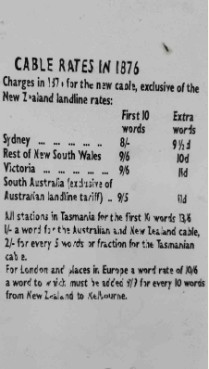
Helpfully there was a list of reciprocal tariffs for CW messages between ZL and VK. I realise these are a little out of date, and there must have been some inflation since 1876, but even at these prices. I am owed ‘over NZ£30 for last night’s CW
[Do you have a question or two that are worth sharing? How about a discussion- starter? Please let me know cqgrsnet@gmail.com and I’ll pass them to John VK2RU for compilation each week.]
Prosign/Character/Signal of the Month
[Suggestion – put it on a sticky note near your key as a reminder for Tuesday. Tell us how you went!]
Di-dah-di-dah-dit
So back to the CQQRS Slow CW QSO practice net.
Next Tuesday’s Net
Our CQQRS Group will be on as always on Tuesday from around 0600Z until about 12002; see https://bit.ly/CQQRSWebsite and navigate to the Net Details page for details.
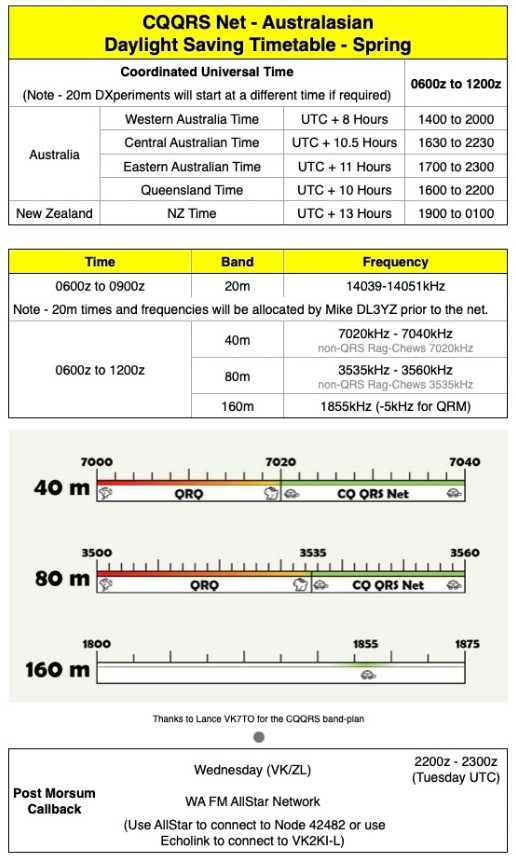
Doesn’t matter whether you’re brand new and want to try just exchanging callsigns and RST reports, or you’re ready for a good old rag chew. We’ll have fun.
There’s usually people around until after 1200Z – so keep calling in the segment of the band designated in the table below until you catch someone.
I should be on as usual from home in NSW or via the Remote at Bedfordale WA, and I’ll also be watching the proceedings using the VK6QS and Tecsun SDRs in WA and NSW respectively. Hope to hear you there.
Reports & Photos
Please let us know via our Reports form bit.Jy/GQQRSNET who you work or hear on Tuesday’s Group. The report form closes at lunchtime (Eastern Australian time) on Thursday. ‘And how about helping to make the reports even more interesting by sending a photo?
If you have a photo that you’d be happy to include, please email it to: eqqrsnet@gmail.com To make it even easier for our Reports editor Patrick VK2IOW, see if you can reduce the size of the image (to less than 100KB file size by preference).
No problems if your computer or phone can’t do that – just send it through anyway please. And of course, I’m always on the lookout for more photos for the newsletter, so if you have something that might be of interest aside from the reports, please send it through as well – I always enjoy the photos that our readers send – and I’m sure our readers do too.
Email them to cqqrsnet@gmail.com please (reduced size if possible – but whatever you send will be great). Oh and by the way, I recommend that you don’t keep the Reports Form website open between submission of reports from one week to the next.
If you’re unlucky, there’s an undocumented feature in the software that could cause your current week’s report to be combined with your previous report – it’s happened to your editor several times – much to the chagrin of our Reports editor 🙂
Post Morsum
Richard VK6HRC will run our phone Post Morsum on the South West AllStar net (via repeaters and hotspots all over WA) from 0600 WA time, then from 0700 WA time on 80m (8605 LSB).
See https://bit.ly/CQQRSWebsite and navigate to the Net Details page for details of how you can connect via Echolink or even possibly via your local FM repeater.
Articles
The newsletter is interesting to readers because of the material contributed by so many people – be it the reports each week or the various articles. Could you write a short article or articles for RagChew? You bet! Writing not your strong point?
Don’t worry, I’m very happy to help as much or as little as needed. Here’s a thought – although our readers will much prefer your own writing, perhaps have a go at using a Large Language Model Artificial Intelligence tool such as ChatGPT, Microsoft Copilot or Google Gemini to check your writing or even to actually draft the whole article in a relaxed easy-to-read manner!
You can find out more about how to do that on the Newsletter page on our website bit.ly/CQQRSWebsite. Our website also includes a suitable prompt (the command you feed to the Al to make it do what you want).
Please remember though – you must fact-check anything that an Al tool drafts for you because Als ‘hallucinate’ – ie if an Al can’t find what you’re looking for, it will make up an answer and present it as a fact!
This is one of the dangers of using Als – it’s quite probable that the tool will create a very readable and convincing draft that is 100% wrong! You as the submitter are responsible for fact-checking.
But it’s a learning experience – please let us know how you went if you had a go with this new generation of tool. And by the way – lam very concerned about our future in a world of Al – but I’m pleased to see that school and university curriculums now focus on understanding the risks – for instance, kids are now learning critical thinking something that used to be taught mostly at post-graduate level.
When the typewriter was invented, people predicted the downfall of handwriting; when the word processor was invented, the art of writing was thought to be on the way out – ditto for the spreadsheet and arithmetic, AM, SSB and FT-8 for amateur radio etc.
We can ignore Al and hope that it just goes away… or we can learn to handle it through experimentation and use. For more guidance on writing for the RagChew newsletter (including help with using an Al), head to our website bit.ly/CQQRSWebsite then click the menu on the top right and then click RagChew Newsletter.
Material
Areminder; if you send me any information by email, our report form or WhatsApp – unless you specifically state that material is not to be published, I’ll assume that you’re happy to see your thoughts in the RagChew newsletter.
Teamwork
Thank you so much to our team of 33 contributors: DL8YZ, MONNK, SWL Jack, VK2GAS, VK2IK, VK2IOW, VK2KJJ, VK2RU, VK2TIG, VK8AFH, VK3DRQ, VK3ECH, VK8KEV, VK3WOW, VK4EV, VK4PN, VK5AO, VKSDC, VKSFD, VK5KFG, VK6HRC, VK6JDM, VK6KD, VK6KHZ, VK6NW, VK6PZT, VK7TA, VK7TO, VK7WW, VK8MT, ZU/G4RWI, ZL3TK, ZLACTS.
And a special thank you to our editorial team, Nigel G4RWI (software development executive), Patrick VK2IOW (reports coordinator and hay baler), John VK2RU (head-copy manipulator and Murray explorer), Richard VK6HRC (post morsition and used of strange gear) and Lance VK7TO (CQWWer and technical editor).
Great work all! UY CW on Tuesday, mb Mark Bosna VK2KI/ VKEQI Beautiful South Bowning NSW ‘eqarsnet@gmail.com non impedit ratione cogitationis

About the CQ QRS Net
For the current schedule and more information about the CQQRS net, please go the the Net Details page on our website:

The opinions expressed in the RagChew newsletter are those of the individual contributors. The opinions do not necessarily reflect that of the editor or of the CQ QRS Group members.
Any material and images received from members by the editor or published on the CQQRS WhatsApp groups may be published in this newsletter unless specifically requested otherwise.
The values, doctrine and guidelines for the Group and for the newsletter are published on the Principles page of the group’s website https://bit.ly/CQQRSWebsite