Below is a reconstruction of the 2025 43 CQ QRS RagChew newsletter designed to support full text searching. This reconstruction was built using OCR, and will contain errors.
To view the Mailchimp original, click here. To search the entire newsletter archive, click here.
Contents
- CQ QRS RagChew
- New Team Members
- Reports
- Website
- Post Morsum 22nd October 2025
- This Week’s Topic of Interest
- Frequency mixing? Again?
- Side-tone Zero-Beat
- On My Workbench
- Head Copy Practice
- Head Reading for Children?
- Other News
- We had a good day with the family on my son’s Beneteau 473 yacht on Saturday.
- Morse Training Net
- CW Ops News for 24 October 2025
- Skills Development — Muscle Memory
- CW Ops
- Zoom Morse Code Sessions
- Flowerpot Antenna
- QRS or QRQ
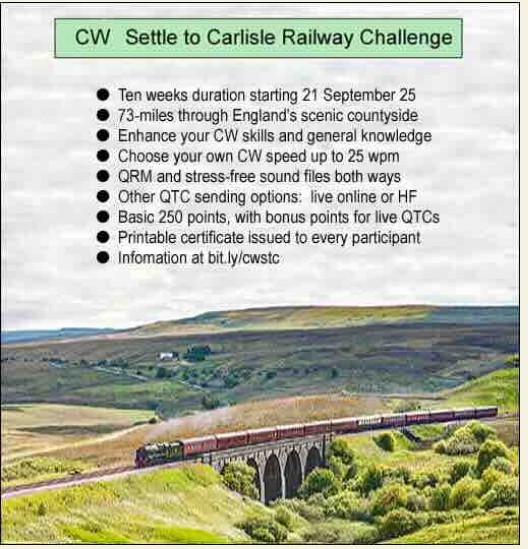
- CW Settle to Carlisle Railway Challenge, Week 6 Report!
- Fact vs Fiction
- A Rare QRZ.com Trophy
- Readable Five
- How to Master the Morse Code
- Watchable Channels
- Prosign/Character/Signal of the Month
- Di-dah-di-dah-dait
- Next Tuesday’s Net
- Reports & Photos
- Post Morsum
- Articles
- Material
- Teamwork
- About the CQ QRS Net
CQ QRS RagChew
You know, I can’t think of another interest group that works as well together as our own CQQRS net team. Reading through the huge set of contributions to this week’s newsletter is just fantastic for me!
Not only have we received a number of articles for the RagChew, our reports from Tuesday’s net make such interesting reading – thank you one and all for sharing! Last Tuesday’s net was again very good for some, and less so for others.
The first of the Spring-time storm fronts was on its way, along with the static crashes. However, I think most of us had fun.
The predicted storms drove Elizabeth and I out of our campsite at Angler’s Rest in the Alpine National Park – I didn’t even get time for an antenna photo, and we ended up very comfortable in a motel in Bright for a few days while the weather passed.
There’s worse places to be compiling a newsletter, that’s for sure. Ihope you can relax with a cuppa and enjoy the read of all this good stuff from our team members; thanks everyone.
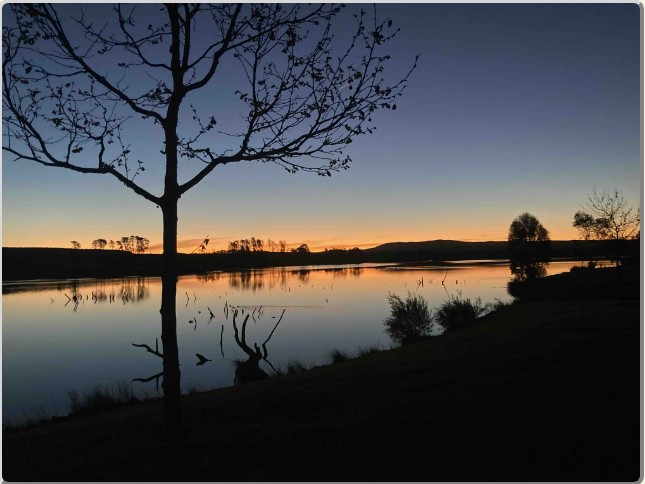
Mannus Lake near Tumbarumba NSW where we camped for the previous week’s net. As I said, no images available for Angler’s Rest where we stayed for this week’s net – we had to pack up quick-smart on Wednesday morning – and didn’t get time for a photo.
New Team Members
Welcome this week to Peter VK3PWG from Ballarat; we now have four CQQRS team members in that town. I look forward to hearing from you about your CW journey Peter, and hoping that we can help add to the fun.
Reports
After next Tuesday’s Group, please send me a list of who you worked and / or who you heard using our web form here:

To make your report more interesting, please consider sending a photo to be attached. If you have a photo that you’d be happy to include, please email it to: cqqrsnet@gmail.com To make it even easier for Patrick and Mark, see if you can compress or reduce the size of the image (preferably to less than 100KB file size).
No problems if your computer or phone can’t do that – just send it through anyway please. So, please help attract new and old team members to have a go by submitting your report each week. Submissions close 1300 (Eastern Australian Summer time) on Thursdays.
Website
If you’d like to find out a bit about our net, or would like to pass information to others about our Tuesday get-togethers, here’s the link to our website.
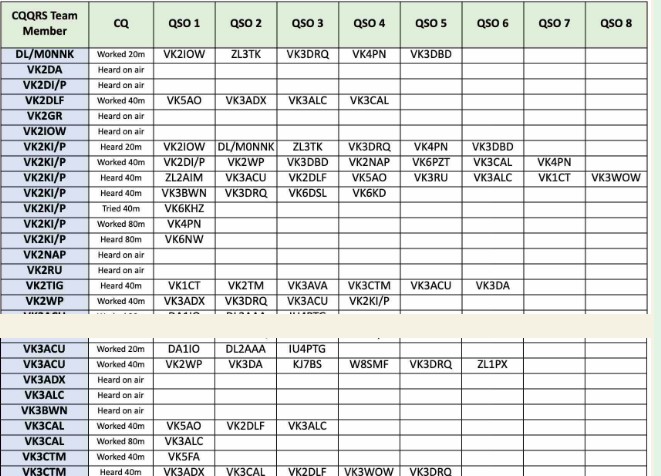
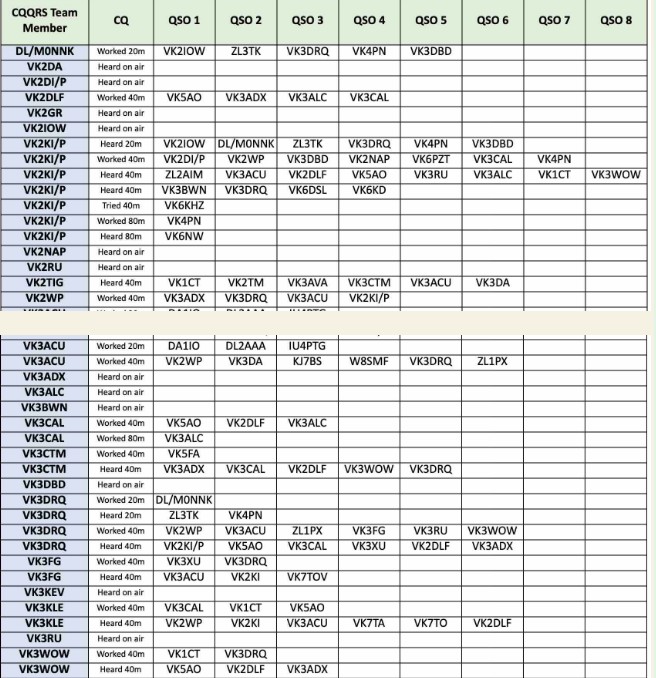
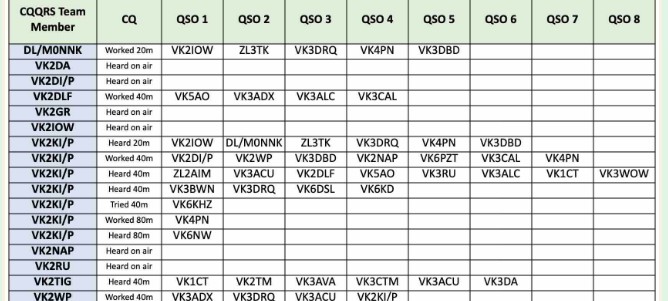
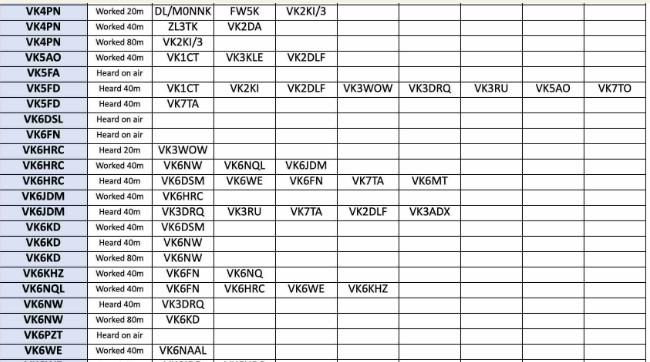
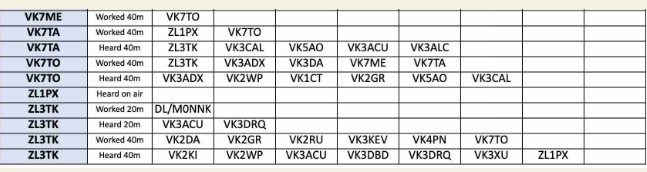
The spreadsheets above show the known stations on last Tuesday’s Group; the comments in the team members’ reports (Submitted via our webform bit.ly/CQQRSNET ) follow: Comments: This week’s comments from our webform reports have been compiled for us by
The spreadsheets above show the known stations on last Tuesday’s Group; the comments in the team members’ reports (Submitted via our webform bit.ly/CQQRSNET ) follow:
This week’s comments from our webform reports have been compiled for us by Patrick VK2IOW; thanks Patrick.
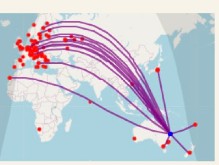
[20m] A great morning’s work, the highlight of which was a QRP-to-QRP contact with Pat VK2IOW. Amazing. For the information of readers who don’t know, I’m physically located in Exeter UK but was working the radio of Mike DL3YZ in Stuttgart Germany using an internet link.
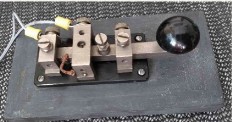
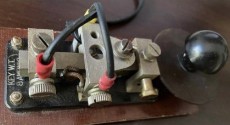
From Donald VK6JDM at 20 km west of Esperance
[40m] Richard VK6HRC responded to my CQ with a cracking signal then disappeared in the trough of a QSB about 30 + dB deep and so disappeared into the background static.
Background noise was quite high but I was able to copy several east coast stations and one in Tasmania, though not well enough to make a QSO worth trying.
40m] in this occassion used my xtal locked Paraset TX and an I valve Drake R4A receiver. A newly installed coaxial relay d aerial switching. Only 4 watts but did well.
[20m] A watershed moment … after months, dare I say year of trying, well at least since Ross MONNK first made hi presence felt down under, we have had a number of skeds but never quite made it. Signals out of D-land weren’t great tonight.
Although Ross was RSN 421 hafnre ckad time nn 14 OAR MHS after OSV 11n DO kKHS
Before Sked time On 14.045 MZ, alter QoY up ¢ KAZ his signal dropped to only 211, so poor that for the first two overs I wasn’t sure whether he was working me or someone else. Then suddenly heard my call sign and 539.
As Edmund Hillary exclaimed triumphantly after reaching the summit of Everest in 1953, “We knocked the bastard off!” 73 and thanks for the adventure Ross.
[40m] Interesting to watch the band noise almost linearly decline and signal strengths increase as the night wore on. A strange feature is the how the level of digital hash from my computer monitor on 40m, the only band affected, is most visible and audible when there is a lot of band noise and propagation is poor, yet although it must still be there, is invisible and has no detrimental effect at all when the band is open.
[40m] 40m seemed a bit flaky with east coast stations weak again.
[80m] On 80m I called and called but very quiet, only VK6KD was alive fora QSO so thank you David.
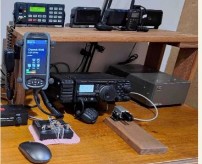
• rom Richard VK6HRC at Padbury 40m] A good session with lots of traffic to practice decoding, thanks to all. 80m] Called on 80m for a while later on, no contacts infortunately.
20m] roceedings started in the usual manner, RBN neck first. After only a couple of CQs the RBN 2PORTED multiple decodes in EU so prospects for ontacting our EU friends looked great.
Did not take ing to stumble on VK3DRQ chatting with Ross but ignals from EU were feeble at my QTH. I do not
Vas full of big signals from everywhere and I kept alling but no luck. Called a few CQs in between and inally VK2DA came back and we had a lengthy QSO. 0 my surprise he was running almost QRP himself, 5W. Surprisingly good signal I gave him RSN of 595.
/ly RST in return was 549 not bad for 3W I thought. fter a long break I returned to the shack and ‘Antiniiad tn chaca hig cinnale ctill no lick! Called
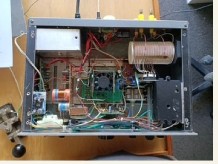
Couple of CQs just in case and to my surprise VK2KI/3 came back to my CQ. Mark was not his usual big signal and I gave him RSN of 475 due to big static crashes. He knew I was running QRP so I was amazed with a RSN of 588.
In disbelief I asked him to confirm and he was adamant. But surprise was yet to come he was running QRP also 5W from the Alpine National park. So both ways QRP in heavy static and a slow and deep fading at times. Very satisfying chat under trying conditions.
One issue that caught my attention was that both successful QSOs were replies to my CQ and on each occasion the CW pitch was very high.
The penny dropped, my CW offset was wrong so calling stations with big signals and presumably modern transceivers would put me out of their CW filter by a mile.
Generating CW pitch with a BFO is obviously not the way to go, so some work required before next Tuesday’s net. Towards the end of the QSO with Mark I suggested we QSY to 3555.
It was getting late (| again forgot about daylight saving down south), but Mark obliged. [80] It was close to 23:00 hrs at Mark’s QTH so I tuned quickly to 3555 and called CQ. The band was full of static but I could copy Mark reasonably at RSN 344.
Fading was favorable mostly up from $4, Mark gave me RST of 599 so I suggested to try QRP both ways and dropped the power down to SW. To my surprise Mark could copy me at RSN 488! Another surprise, what @ night!
[40m] We started with very good conditions, but it deteriorated quickly and not many stations were heard. I did have an EXCELLENT QSO with OM and only 3.4 km between us, VK3WOW, Peter. Thank you for that enjoyable and rarely met QSO.
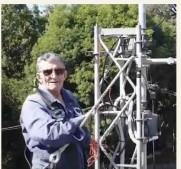
Dmittedly I had only two QSOs (both extended, and one articularly so) but at the end of the evening, I looked at my otes, and realised that for the first time ever on a Tuesday ight I had jotted down only a few notes at the top of one heet of paper.
Basically, without even setting out to do so, I ad “head copied” the whole night. I still get mighty tangled p in my sending at times – but that has to be progress!
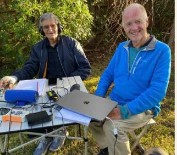
[40m] What a busy band. I started out using my TS-520s, but witl all the activity, and having no CW filter, I ended up switchins to my TS-590 later in the evening when it simply became tc hard.
I had two firsts this week: 1) Shooing someone away with a polite “QRL QRL” when they tried answering me during an existing QSO with Ron, VK7ME, and 2) Orchestrating and perfectly executing a QSY with lan, VK7TA, when some DX ended up right on our frequency.
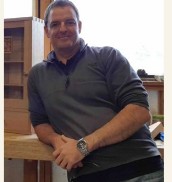
[40m] My CQ into an apparently quiet band was answered by Pe whose callsign I had trouble decoding but I settled on VK6NAAL. I hope that’s right.
Later I heard VK6JDB and VK6HRC in conversation but there were strange wind-like noises and QSB making copying difficult.
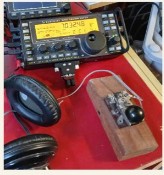
Ind was quieter than normal Tuesday evening. Still trying o find my way, I called maybe 6 – 8 times over about an iour with not much success. I did see other QSO’s going )n but way faster than I could copy.
I was just about to hrow in the towel but gave it one more try and Lance /K7TO responded. It was great to get a bit more practice n and Lance accommodated my slow pace very well. A irst for me was another station jumping in during our QSO vhich really threw me.
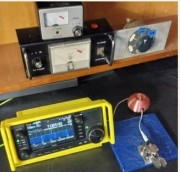
[40m] Good copy on most stations , fair amount of QRN in band from lightning crashes.
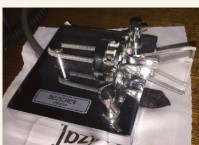
From your editor Mark VK2KVP portable at Angler’s Rest campground, North of Omeo in the Victorian Alpine National Park
[20m] By the start of the net, I had just managed to get my ZS6BKW designed doublet (a modified GSRV) up in the trees at 8m at the Angler’s Rest Campground in the Victorian Alpine National Park, North of Omeo.
No photos unfortunately – Old Mate passing through the campground on Wednesday morning said there was a 120KPH wind warning – not a good situation for an AVan – so we packed up in a hurry and headed for Omeo before I had time for a photo.
So back to Tuesday, at DXperiment time I slipped up to 20m and re-matched my doublet in the trees; Ross DL/MONNK from Mike’s Stuttgart Remote was on with Patrick VK2IOW at Orange – the short skip and long-paths both working well; Ross was up to RSN 471 with deep QSB.
I then listened to Ross enjoying the chats with Stan, Manny, Sava and David, all of whom I could hear – the 20m short-skip signals indicated that the ionosphere was strong this week.
It was funny listening to David VK3DBD at Yackandandah chatting to Ross – Elizabeth and I had been in David’s shack just two days before while we stayed at a campground, just South West of there.
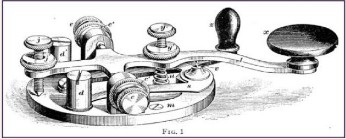
Side-note: While listening to the 20m QSOs, I noticed a reflection from a bit of metal ee eee ey ae) lien ro cog NS
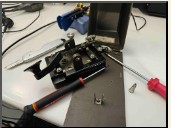
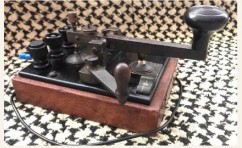
60 key I was using. Last week when I was in cellular nternet coverage I’d exchanged photos with Richard VK6PZT (the Bunbury Radio Club Morse-key restoration officer) and noticed that his key had an extra screw Jown the pivot end – which didn’t make sense; mine had a threaded hole through the beam where the screw should have been.
Anyway the glint of metal led to a closer look – and sure enough, what I could see appeared to be the end of a little lever that may have allowed adjustment of the spring tension – so mystery solved…. the key could have had a tension adjustment. if
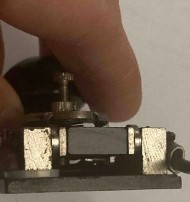
Soived…. né key Could Nave Nad a tension agjusitment, if it had the missing screw. Something to have a play with when I get home.
[40m] I was pleased to hear the big signal from Mark VK2DI operating Parks On The Air from Kamay Botany Bay; Mark’s 10W and G5RV antenna was thundering in to the Alpine National Park – with QSB but often full-scale on my FT-817’s S-meter.
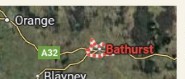
Mark had to go QRT though – mozzie time. Caught up with Wal VK2WP at Bathurst, using his crystal-locked valve transmitter and receiver, complete with vibrator power supply if my memory serves – lovely to listen to the gentle chirp.
When I finished with Wal, David VK3DBD came up with a
QRZ; we QSYed up 4KHZ to give Wal plenty of room – nice to have another chat with David and be able to visualise him in his Yack shack.
After dinner, I heard Ron VK6KHZ calling CQ with a decent S8 signal among the static crashes; unfortunately Ron couldn’t hear my milli-Waitts. Another rare station for me was Chris VK2NAP up at Marrickville, who reported that Tuesday night frolics
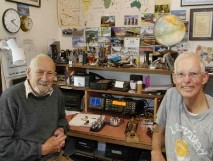
Had been somewhat rare of late because of work commitments; gotta work to pay for toys I guess. I then came across Richard VK6PZT rolling in nicely RSN 588 from Bunbury (with the static crashes matching his strength); Richard struggled with my QRP of course.
Much stronger was Calvin VK3CAL on the Murray River, then Sava VK4PN near Brisbane. Sava was using his home-brewed transmitter with 3 Watts – but he was still a nice RSN 588.
[80m] Sava VKAPN and I had agreed to give 80m a try for comparison; earlier I’d tried calling CQ on 80m without success, although I had heard weak stations on 3555KHZ.
Anyway, when Sava was re-jigging the gear for 80m, I heard Wayne VK6NW very weakly on 3555kH2z; I think Wayne was still away camping as well, so pity his signal wasn’t strong enough to make a go of it. Al-in-all.
Anyway, in summary, a terrific night with good propagation conditions for me, despite the static crashes that appeared mid-evening. I hope you had as much fun as I did.
From Patrick VK2IOW between Bathurst and Orange
[20m] Ross, MONNK and I had a QSO where we started at a power level of 80 to 100 watts, and then reduced power down to 5 watts. Ross was operating the station of Mike,
DL3YZ remotely. We could both still copy each other, though my readability on Ross dropped from 5 to 4. We were both using wire antennas, I was using my large, horizontal loop; I think Mike has a dipole.
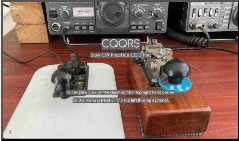
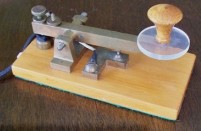
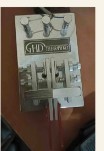
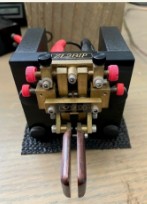
I was using the paddle in the picture, acquired about 30 years ago when I was living in New Zealand. It is a V22, handmade by Stan Hails, W9WBL. I think he made about 150 of this model.
It can be configured as a single or double lever paddle; I use it iambically as a double lever paddle.
Post Morsum 22nd October 2025
By Richard VK6HRC. On this morning : VK6KD David VK6NW Wayne VK6FN Max ZL3TK Stan VK6HRC
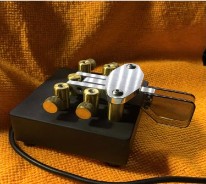
VK6MRB Mulligan sw] and others. David managed to get on after 18:00 WAST time and caught up with Wayne VK6NW and then on to his first Maritime CW contact with Darcy VK6DSM and Morgan VK6MTF in Dunsborough.
Wayne back from his camping trip out into the Northern Wheatbelt WA worked four stations on 40m before all went quiet. Max worked Peter VK6NQL, Wayne VK6NW and Ron VK6KHZ on 40m. Max also tried working a VK4 but QRM put a stop to that unfortunately.
He is also enjoying QAP with his 1C705 and looking forward to field trips soon. Stan had a busy evening, looking forward to his report in the next Ragchew. Mark still glamping Omeo way Victoria and no internet looking forward to his report as well.
I worked three on 40m and then into SWL mode tuning up and down the band a good session indeed. Thank you to all on Last night and this morning.
This Week’s Topic of Interest
Humming, Trains and the Joys of Zero-Beating or Gesturing at Youths Wearing Headphones by Lance VK7TO
We’ve all heard the term “zero-beat”. “Please zero-beat to me”, or “when listening to two stations that are zero-beat, I don’t know who’s who” or “to bust the pile-up, make sure you don’t zero-beat”.
In modern parlance, people just mean “exactly match the frequency”. To “zero-beat” however does refer to a specific technique with some interesting physics behind it.
Frequency mixing? Again?
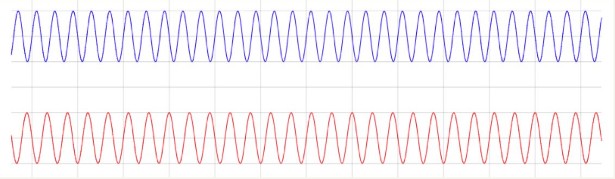
To improve clarity, let’s overlay them. They’re not mixed yet, just displayed together. OA ACMA AU It should now be obvious that they’re not the same frequency, and as such, at times the waveforms are perfectly in phase, and at other times, they’re out of phase by 180 deg.
With the cycle repeating. Here’s the interesting physics: when frequencies are mixed, they’re summed, in- phase frequencies are added, and out of phase frequencies subtracted. Mixing the above wave forms then results in a new waveform thus:
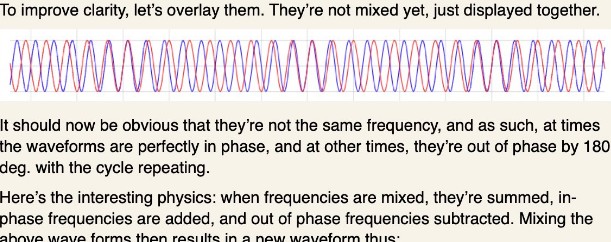

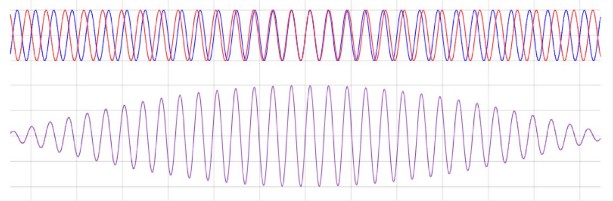
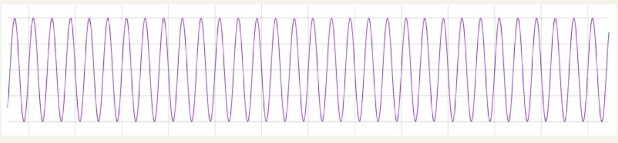
Observe that the cycles between 0 and 180 deg. phase offsets have gotten a lot longer with less beating. If we continued to raise fR to the same frequency as fB, the waveforms would *align, with no beating, or… wait for it… zero-beating.
Side-tone Zero-Beat
VMIMENIVINS BCU weal Set your mode to CW, configured such that your key activates the sidetone without transmitting. Depending on your radio, this may be labelled “VOX” or “Break-In”.
Now with your key depressed you should hear the side-tone and the target signal at the same time. As you tune to within about 30 Hz, you should hear the tones beating against each other, getting slower and slower until… congratulations, you’re zero- pars
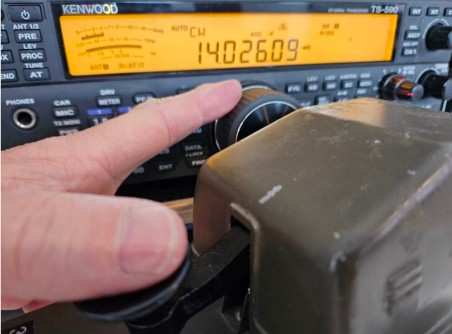
There is however a limitation with side-tone zero-beat. For it to work your side-tone must be the exact pitch of your radio’s CW tone.
Whilst not a problem with modern rigs, older analogue radios often suffer misalignment between the separate side-tone and RF oscillators. Fortunately, radios with an analogue RF meter have another trick up their sleeves.
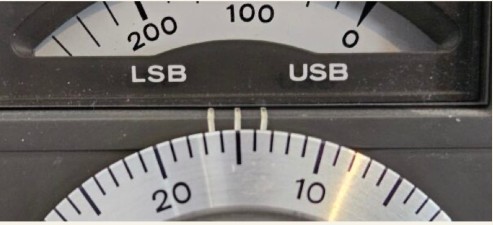
LOCd! VStilialOr LETOU-beal The frequency your radio generates for demodulation can also be used to beat against. Setup for receive is straight forward, however if you want your transmitted signal to also be zero-beat, you need to understand which modes on your radio use the same local oscillator (LO) frequency for receive and transmit; generally, LSB, USB, AM.
Many old valve radios also have a Tune mode, which often uses the CW TX LO for transmit and receive. With the mode selected, watch the RF meter as you tune towards the target signal.
Again, when you get to within about 30 Hz, you should see the needle start wobbling back and forth as the signals start beating against one another. Continue tuning until the beating stops.
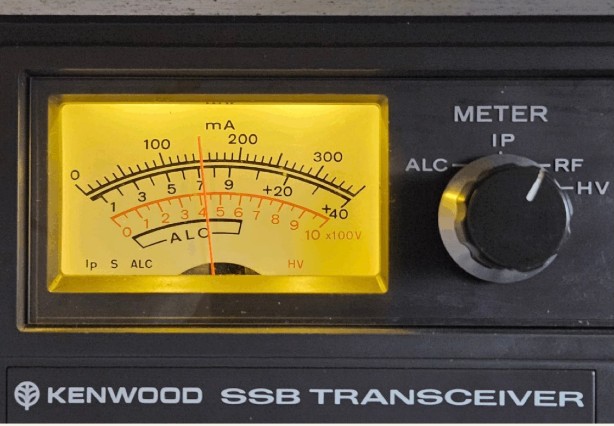
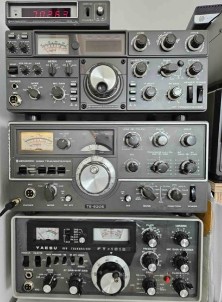
In reality, you’d need the steady hands of a surgeon to find the perfect zero-beat on older rigs like the TS-520s, where each 1 deg. of VFO rotation equates to about 280 Hz!
Using zero-beat for tuning Now before you get too excited and vow to zero beat your CW contacts from now on, let me offer a couple of practical considerations. 1. It’s hard to detect beating against a CW signal, as the dits and dahs are just too brief. 2.
Being a little off from your partner actually makes for more pleasant listening for third parties, as it’s easier to determine who’s who. And in pileup situations, being zero-beat with the target station is a terrible strategy. So what use is it then?
Well, i’s a great way to calibrate older radios where the dial frequently needs a tweak or verify your radio’s displayed frequency without a frequency counter.
Additionally, using your sidetone to get close to another station, even if not technically zero-beating, is a simple method to get in the ballpark quickly.
Of voice boxes and trains Aparting gift for you: the next time you’re on the train between Sydney city and the airport, try and zero-beat your voice against the train note.
It’s fun because you can actually get quite loud without anyone noticing, and if someone does look at you oddly, just gesture at the nearest youth wearing headphones with a commiserating tut-tut. Such fun!
If you have an article or two that you think might be of interest to our readers, please let me know so we can share more thoughts and ideas; for guidance on writing for RagChew, see Articles below. Please email material to Mark VK2KI: cqqrsnet@gmail.com

On My Workbench

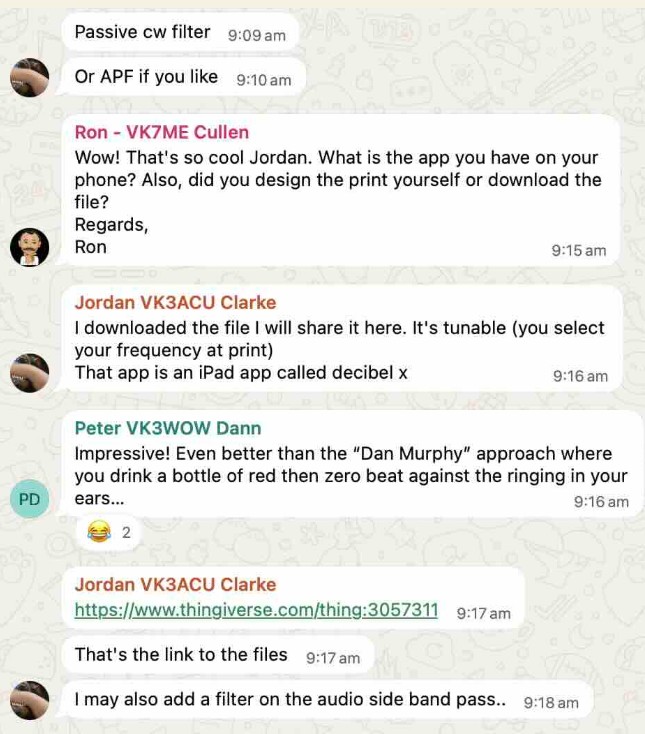
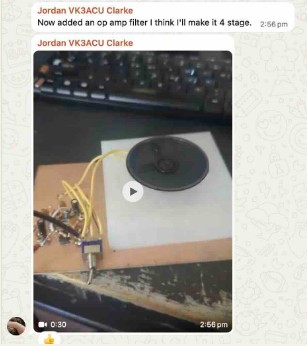
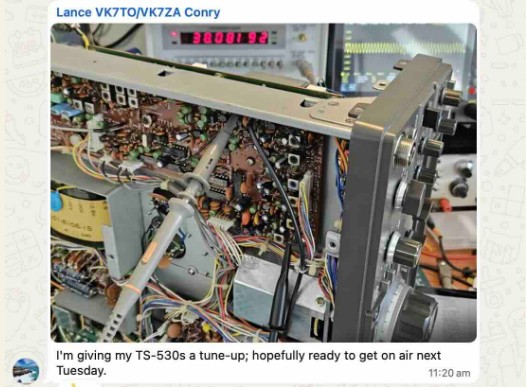
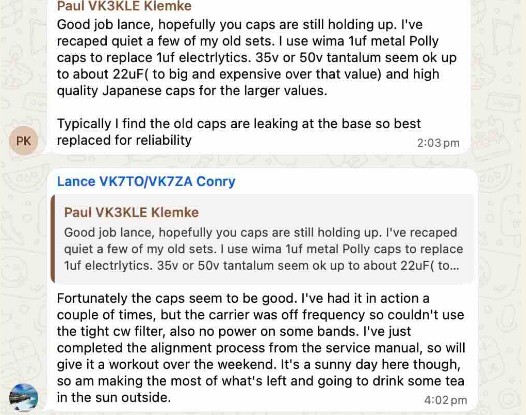
What’s going on on your workbench? If you have an article or two that you think might be of interest to our readers, please let Mark VK2KI know; email to cqqrsnet@gmail.com For guidance on writing for RagChew, see Articles below.
Head Copy Practice
Anyone who is just starting out with head copy should look at edition 23 – 2025 where we first started with Winnie the Pooh recorded at 12 wpm.
In edition 23, and for a few following Newsletters, there are instructions on how to use these files, and edition 25 – 2025 has information on the Ditto CW : Morse Player app.
This week we move on to Chapter 6 of Wind in the Willows – Mr Toad, where Toad becomes obsessed with motorcars. His reckless enthusiasm and lack of self control are both amusing and exasperating.
The chapter contrasts Toad’s impulsiveness with the steady loyalty of his friends, Rat, Mole and Badger, who try in vain to rein him in. Itis suggested that you read the text file before listening to the audio file.
That will make it easier to follow the audio file, and will prepare you for words such as wonted, panoply, portcullis, halberds, murrain, and a few others in Chapter 6 that could lead to some confusion. The MP3 files have been recorded at 16 wpm.
If you prefer a slower speed, you can create your own MP3 files from the Chapter 6 txt file at any speed as noted below. Because of MailChimp’s size limits, I’ve split Chapter 6 into 4 parts. Each part is over 1 hour playing time @ 16 wpm.
Parts 1 and 2 are attached below. If you’d like the full chapter in a single file, you can use the complete text of Chapter 6, and convert it yourself with the Ebook2CW app – https://fkurz.net/ham/ebook2cw.htm|.
I’ve made a few small adjustments to the text to keep it “Morse friendly”. Uncommon punctuation has been removed (the Ditto CW app doesn’t recognise some of it), and contractions have been simplified (for example, we’ll becomes we will).
This week’s attachments include: + Two MP3 files (first section of Chapter 6) * Two text files matching the MP3 segments * One text file of Chapter 6

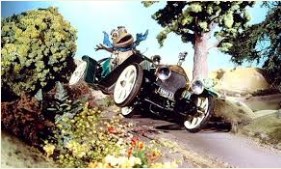


You can either play the MP3 files in any media player, or load the text files into the Ditto CW: Morse Player app — https://dittocw.andro.io/.
Both options work well, however Ditto CW gives you complete control over all Morse settings, while a normal media player only allows changes to playback speed, and does that in steps (e.g. +1.25x, 1.5x, 1.75x).
[Thanks so much for the work you put in to the Head Copy Practice sessions John. Can’t be easy doing all this while Grey Nomading – but your work is very much appreciated, and because it’s available on our website bit.ly/CQQRSWebsite readers who aren’t ready to take this next step just yet will be able to use the material in the future when they are.]
You can either play the MP3 files in any media player, or load the text files into the Ditto CW: Morse Player app — https://dittocw.andro.io/.
Both options work well, however Ditto CW gives you complete control over all Morse settings, while a normal media player only allows changes to playback speed, and does that in steps (e.g. +1.25x, 1.5x, 1.75x).
Head Reading for Children?
From Stan ZL3TK One might wonder how a children’s novel by Kenneth Grahame could be of the slightest interest to any budding Morse operator. Wonder no more, but first a little background.
Not just children, but many of the unqualified school teachers now employed in New Zealand schools would probably struggle to spell most of the eighteen words listed below.
It’s no joke when a significant proportion of first year University students, before qualifying for acceptance, are directed to undertake remedial reading classes. What has this got to do with AR you ask? A great deal as it goes.
While head-reading Morse is not mandatory, it is a most desirable and enviable skill, without which some would argue, one is not competent.
From ofan ZLolhk: One might wonder how a children’s novel by Kenneth Grahame could be of the slightest interest to any budding Morse operator. Wonder no more, but first a little background.
Not just children, but many of the unqualified school teachers now employed in New Zealand schools would probably struggle to spell most of the eighteen words listed below.
It’s no joke when a significant proportion of first year University students, before qualifying for acceptance, are directed to undertake remedial reading classes. What has this got to do with AR you ask? A great deal as it goes.
While head-reading Morse is not mandatory, it is a most desirable and enviable skill, without which some would argue, one is not competent.
Conducting an analysis of the sound files prepared by John VK2RU for RagChew Edition 42, among the 2761 words from ‘Wind in the Willows’ we find 18 words with 11 or more letters, quite extraordinary in a children’s book.
Consider what a wonderful gift it is to have non-intuitive, powerful words in a head-reading learning tool right here in the QRS newsletter.
Neighbourhood reproachfully unconsciously conversation remembrances respectfully accordingly alternating approvingly contentment desperately forefathers generalship inspiriting institution observation possessions regulations

Head- reading is a very memory-intensive activity, so to have quick access to a broad-spectrum learning tool containing such a wide range of word-lengths is without doubt a huge advantage.
Each time you encounter one of those challenging words while listening to John’s sound files, and are then able to recall it in sentence-context correctly – congratulate yourself – and silently thank him for a magnificent gift which just keeps on giving!

Other News
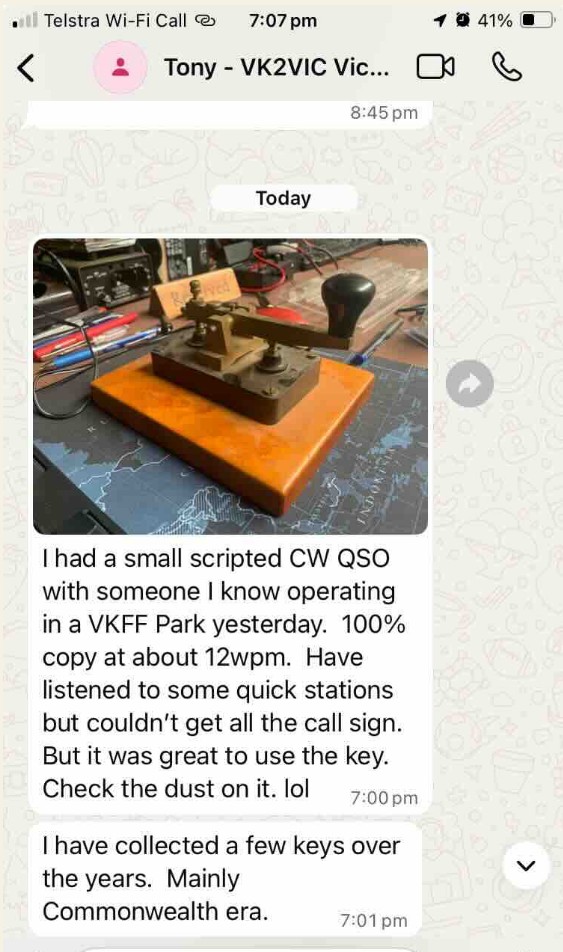
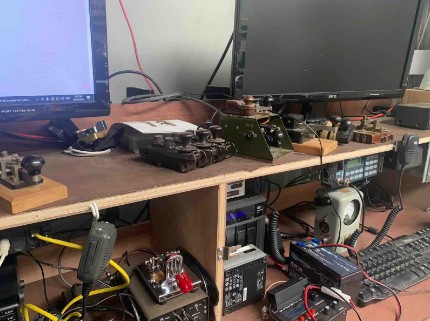
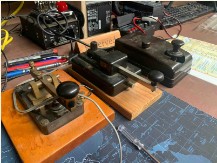
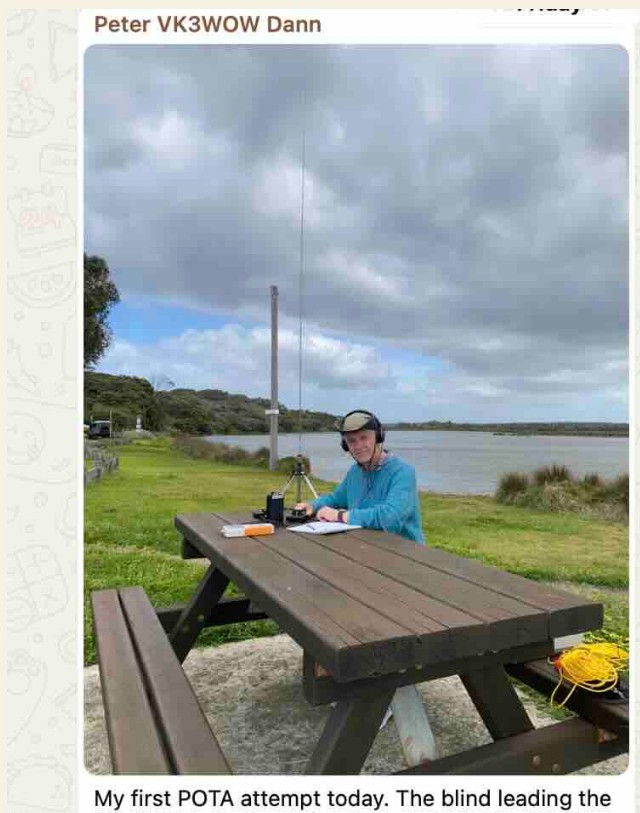
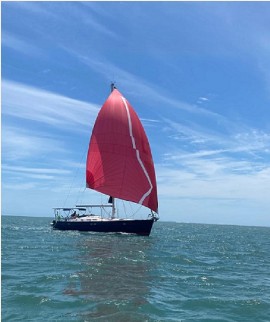
We had a good day with the family on my son’s Beneteau 473 yacht on Saturday.
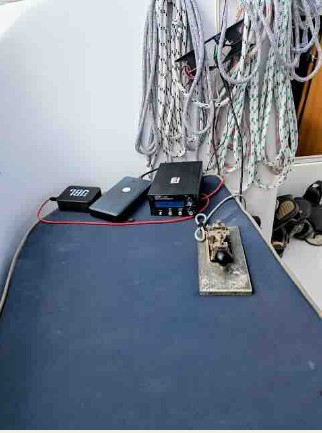
| took the QRP radios out, put the 20m EFHW up on a halyard, and got absolutely nothing except mega QRM. Far too much electronics on the yacht, and on adjacent yachts I think.
Morse Training Net
Our team member Nic VK7WW runs an on-air Slow Morse training net every Wednesday at 7pm EDST on 3580 for 30 mins. He uses the callsign of the Northern Tasmania Amateur Radio Club VK7TAZ on that net.
Many of our team learned Morse code with the support of Nic, and the weekly training session comes highly recommended for anyone who wants to learn the Code, or simply brush up.
Everyone’s welcome – 3580KHZ at 7pm Eastern time every Wednesday; you’ll hear lots of the CQQRS team on that net. Jordan VK3ACU has recorded the complete set of lessons which you can now find here:
Https://www. youtube.com/playlist?list=PLHsQmZz6fBXO7swAfbT mutrbbEL17fUQL Contact Nic VK7WW for more info nicholaschantler@hotmail.com including how to join the NTARC DISCORD group to follow the action, or just come along and join in on Wednesdays.
CW Ops News for 24 October 2025
From Chris VK3QB, CWops Ambassador This week I’ll move onto the second topic I was discussing with a couple of mates recently… muscle memory, and its importance for Morse Code operators.
Skills Development — Muscle Memory
Muscle memory for Morse code involves using repetitive physical actions, like straight key presses, bug or paddle combinations to build and reinforce neural pathways for the dot-dash sequences, making it an automatic, unconscious process.
A good analogy is driving a manual car. Those of us who learnt on a manual gearbox will remember the confusion and concentration required to work through the gear changes; pressing the clutch, changing gear, releasing the clutch, working the indicators, steering, and trying to ignore all the helpful advice from Mum and Dad.
© Yet a few short weeks later, changing gears became easier, and after some time a completely automatic process. A good example of muscle memory at work. This phenomenon was demonstrated very well on my recent trip to Norfolk Island.
Over the years I have built a strong muscle memory for sending my callsign “VK3QB“, as well of course as my name, QTH and a few other important brief phrases. Well, it took a good few hours to force a new callsign into my muscle memory, that being “VKQNT”.
Even after a few days, if I was tired and operating on auto-pilot, I was aware of a propensity to revert to my VK3QB muscle memory.
Improves neuroplasticity, altering the brain’s white matter and enhancing the inferior longitudinal fasciculus (ILF), a region associated with object recognition, language and cognition.
While the term “muscle memory” typically refers to motor skills, a study demonstrated that learning Morse code, a skill involving acoustic patterns and short-term memory, also leads to structural changes in the brain’s white matter.” Source: Google Al

In other words, as we commit a letter, word, or phrase to memory it forms a pattern in our brains, thereby enabling faster, more “automatic” recognition.
This is far quicker and more efficient that the old fashioned “look up table” so many of us learnt when we first started with Morse Code. And it works for both sending and receiving. The key to building your muscle memory is repetition and reinforcement.
Most simply: Initial Learning: When you first learn Morse code, you rely on conscious effort to recall and execute each dot and dash sequence. To make your end game more efficient and easier to achieve, learn the code at least at 18-20WPM.
At these speeds you are hearing the dot-dash sequence from the outset, and not trying to count dits and dahs. Practice and Automation: With practice, your brain begins to process these patterns more efficiently. Practice daily, both sending and receiving.
By using more than one mode (je. sending and receiving) you are creating a more effective learning environment. Automatic reflex: Eventually, the sequence of movements for sending or recognising a character becomes semi-automatic, requiring less conscious thought.
This is when it’s considered “muscle memory”. Also, make sure you are developing an accurate muscle memory. Record your sending, and practice off-air to make sure the rhythm and timing is accurate. The best way to develop muscle memory is regular practice.
Daily is ideal… at least 10-15 minutes. If you can manage 20-30 minutes that’s even better. Give ita try… you’ll start seeing progress in just a few days.
CW Ops
CW Academy is a great learning environment, and CW Ops runs these classes three times per year. If you’re at all interested, the next intake is in January 2026.
I’m running a survey until the middle of November to see if there is sufficient interest here in VK and ZL. If you are at all interested in a class in January/February 2026, please complete the survey.
Https://forms.gle/j6YCUcgdDARDFxnZ9 If you have any questions, please drop me an email. Courses are eight weeks long and no matter your level, you’ll come out the other side with better skills and more enjoyment from the code.
CW Academy is immersive, engaging and fun. https://cwops.org/cw-academy/
Zoom Morse Code Sessions
Due to a global Amazon Services outage this week, Zoom wasn’t working so the monthly session has been rescheduled — it’s now on the 27″ at 0830UTC. I’ll be chatting with Luke VK3HJ about our recent trip to Norfolk Island.
If you’d like to joir and hear about a DXpedition and ask questions please follow this link for details. https://morsecodesessions.wordpress.com/zoom-details/ As always, if you have any questions or feedback, please drop me an email.
73, Chris VK3QB & VK1CWO CW Ops OC Ambassador vk3qb@hotmail.com or vk1cwo@outlook.com [Thanks Chris. Good material again; I bump into the so-called muscle-memory problem often when I operate two callsigns on Tuesday nights – VK2KI from home and VK6Q1I via a Remote…..
There have been times when I’ve put post-it notes on each key to remind me on the fly which is which.]
Flowerpot Antenna
The so-called Flowerpot antenna is commonly used by SOTA operators around where I live; I still don’t know why it’s named as such… perhaps some of our readers might know? cqgrsnet@gmail.com if so.
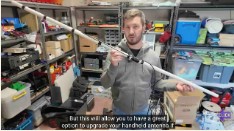
Anyway, it’s an adaptation of a coaxial dipole, but instead of using a quarter-wavelength coaxial sleeve, it uses a simple coaxial choke at the end of the bottom section.
There’s lots of designs around – many AR club and individuals’ websites have construction details. One example is from Hayden VK7HH, one of the most prolific YouTube AR trainers we have in Australia.
Click on the image to open the video which runs after skipping the annoying advertising.
When I was much younger, I had an ex-paging system coaxial dipole which I cut down to 6 metres; it performed well for the 6m AM and FM channels.
On the strength of that performance, a few years back I built a coaxial dipole for the aircraf band, and installed it in the fibreglass body of our RotorWay.
That arrangement use the braid of the coax folded back on the outside of the cable for a quarter wavelength. Not only was this really hard to build (copper braid doesn’t like being treated like a fold-over sock-top), I had a devil of a time trying to get it to resonate, using just a hand-held aviation transceiver and an SWR meter (at that stage, the NanoVNAs were an impossible dream).
I reckon when I re-start the project, |’ll try something like this design…. or perhaps try using clamp-on ferrite chokes?
QRS or QRQ
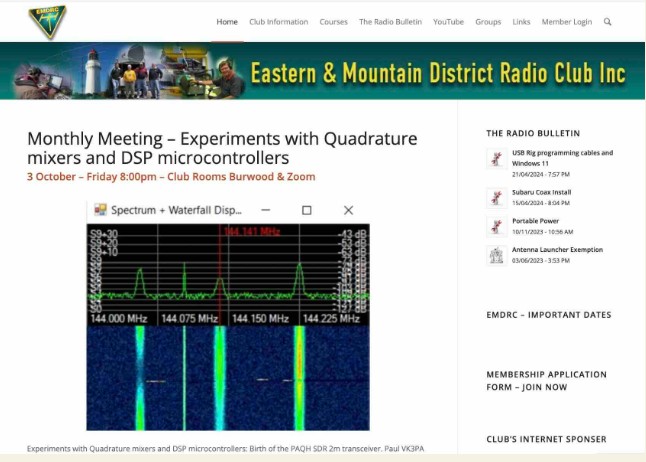
Oh, one thing I meant to and failed, to discuss when Mark VK2KI visited: – if for instance I call CQ on one of the usual QRS frequencies and obviously at a QRS speed, I do often send “CQ QRS NET?” too.
Sometimes a station who does not need QRS will answer me and whereas what follows just might be useful to beginners to copy but do they ever?? The majority seem to think they need to send Morse code to learn – whereas they only really need to listen and copy.
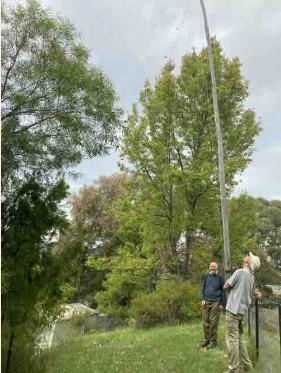
Ween a tutor desiring to help and a learner hoping to practice – if you follow my t. David anks for the question David.
Lots of points: * Ifyou know who you’re talking to, the question Is whether there’s value in operating at QRS speed for the benefit of our newer learning operators, or operate at a slightly more QRQ speed for the benefit of listeners who are a bit further along the yellow brick road, Personally, I try to cater for newer listeners….
But I have to say, after being on the net for a number of hours on a Tuesday, sometimes I’ll forget myself and rattle along a bit…. hopefully slowing down (Farnsworth-wise) when I send my own callsign.
But I don’t want newcomers who happen to be listening to think that his is just another QSO that they can’t copy – so why bother with the net?
However, you never know who fs listening – there will still be people out there who will benefit by being stretched beyond their comfort – and will be surprised that they can in fact copy enough to know what’s going on, and who’s on.
* Of course, I know that very new operators will often send beyond their comfortable receiving speed – for various reasons. Some I know from their posts in the RagChew newsletter are very new – and would struggle if you respond at their speed.
This is why I recommend that new operators try to send at 75% of the speed that they are comfortable receiving. Teaching advanced driving is the same – drive at 80% of top performance speed – provides a safety buffer, while still teaching the balance techniques (I could tell an embarrassing story about Calder Park raceway West of Melbourne – but you can probably guess).
* And an interesting aside – I’ve come across surprisingly many new operators who actually find receiving easier than sending! So you never know.
And unlike the AOCP days of old when the testing officer might actually advise and help candidates with key-hanaling techniques, or when every amateur radio club had ex-commercial operators on hand…
Many new operators today have never been shown how to correctly handle a key. * Ohand by the way, for those who would like to have a go at a nice QRQ QSO or two, don’t forget that we have designated QRQ frequencies 7020KHZ and 3535KHZ.
On those frequencies, there’s no need to feel embarrassed about how fast you’re sending – Hill David – great question; how long is that piece of string?]
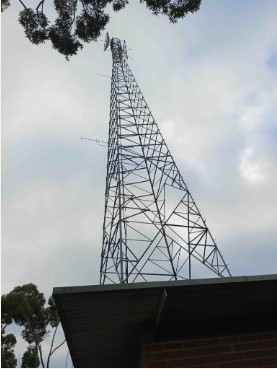
Recently the Bendigo Amateur Radio and Electronics Club purchased a small property at Gredgwin on the Boort – Quambatook Road in north – central Victoria. Details are on the club’s website!
What on earth are we going to do with that tower (46 meters tall) and the very well constructed equipment building? Just joking. The ideas are coming thick and fast. Regards, Tony VK3CTM
CW Settle to Carlisle Railway Challenge, Week 6 Report!
Uw vettie to Carisie hallway Unalienge, vveeK 0 Mheport
From Stan ZL3TK Last week we explored bustling Kirkby Stephen, a market town and hub from whic’ to explore the north Pennines, an area of outstanding natural beauty.
Our next destination is Appleby-in-Westmoreland, historic eastern gateway to Lancashire and the west riding of Yorkshire.
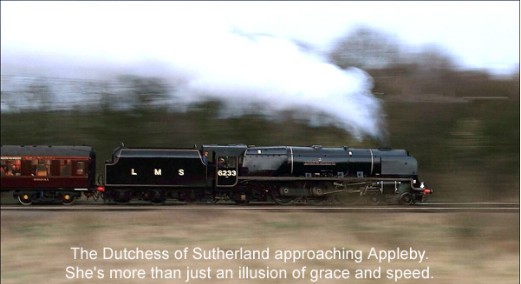
The usual suspects continue to display their dedication, reliability and consistency, laudable traits when it comes to gaining competence in CW, and in particular the art of traffic handling.
They are the ones who keenly ensure every week, not to miss out on the challenge provided by STC. For example, how many down under know what is meant by a ‘changing beer’? STC is a great place to start research.
Fact vs Fiction


A Rare QRZ.com Trophy
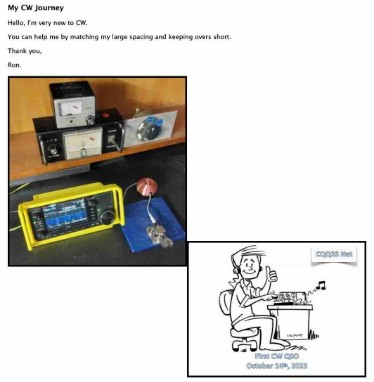
How many people can proudly display this rare award on their QRZ.com page? Does anyone else have one of these on their QRZ.com page I wonder? It’s a better alternative than the Pool Room!
Readable Five
What have you been reading lately? Compiled on the track somewhere by John VK2RL
How to Master the Morse Code
From Jens VK4PE I learned Morse Code many years ago in the German Navy. You can learn Morse code with a key, a buzzer and a battery with no problems, but he best way is to learn it is with a buddy, because you will get valuable feedback.
Morse code is a sound language and it can only be learned via sound. Throw all your printed charts away!
What I recommend to you, please read the two page article carefully (click on the image to the right). It will guide you in the right direction. Do the little exercises. You can only learn by doing it.
There is something about the simplicity of a straight key. In WW2 when Morse code was used extensively, the [37 key was the workhorse and in Australia the Clipsal key or the British WT 8AMP key.
In my opinion it is more important to get the message through the first time. This is how I learned it as a ship radio operator. This is also the reason I like the Slow CW group a lot, because it makes sense.
The speed CW operation is popular with amateur operators but professional operators prefer slow good code. General speaking a straight key is good to about 15 words a minute and a paddle is recommended 16 words a minute and up.
Here are some figures: + 13 Words a minute was the benchmark for Morse code operators in WW2. + 18 Words a minute for ship radio operator in Australia with a straight key. Most traffic on the Amateur bands today is about 10 Words a minute.
We have enough time, we are not ina hurry. Oh, one final thought about operating on CW; of course, respect others and ask if the frequency is free (‘QRL?’) before you start transmitting. You’ll often hear that courtesy on the net. VY 73. Jens VK4PE
Watchable Channels
Here is another good YouTube video on electronics from Lake Washington Technical College near Seattle – https://www.youtube.com/watch?v=nb4ovfwqup8&t=6508s .
The course is run by Joe Gryniuk who started in electronics with the US Navy and he spent many years in US submarines as an electronics technician.
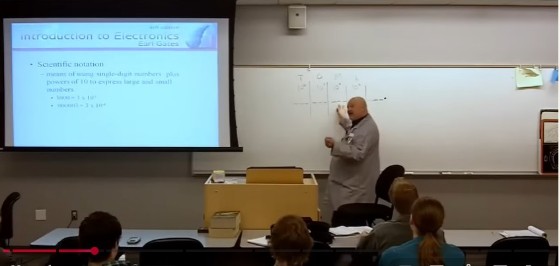
There is almost 11 hours of lectures here, and while that sounds like a lot, Joe’s passion for electronics and interest in passing his knowledge on to his students makes the time go quickly.
Overall, for learners who want a serious and structured dive into electronics (rather than quick hacks), this video is a strong pick: clear, detailed and dependable. The book that goes with this course is ‘Introduction to Electronics’ by Earl Gates.
A quick Google search will find Edition 5 in pdf form.
If you’ve read something that you think might be of interest to our readers, please let me know so John and I can share more thoughts and ideas. For guidance on writing for RagChew, see Articles below. Please email material to Mark VK2KI: cqqrsnet@gmail.com
Prosign/Character/Signal of the Month
[Suggestion – put it on a sticky note near your key as a reminder for Tuesday. Tell us how you went!]
Di-dah-di-dah-dait
So back to the CQQRS Slow CW QSO practice net.
Next Tuesday’s Net
Our CQQRS Group will be on as always on Tuesday from around 0600Z until about 12002; see https://bit.ly/CQQRSWebsite and navigate to the Net Details page for details.
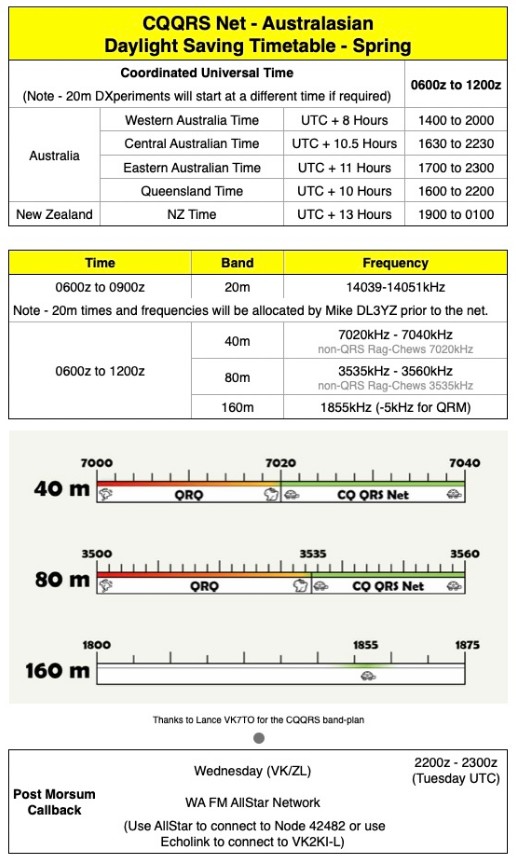
Doesn’t matter whether you’re brand new and want to try just exchanging callsigns and RST reports, or you’re ready for a good old rag chew. We’ll have fun.
There’s usually people around until after 1200Z – so keep calling in the segment of the band designated in the table below until you catch someone.
I should be on as usual from home in NSW or via the Remote at Bedfordale WA, and I’ll also be watching the proceedings using the VK6QS and Tecsun SDRs in WA and NSW respectively. Hope to hear you there.
Reports & Photos
Please let us know via our Reports form bit.Jy/GQQRSNET who you work or hear on Tuesday’s Group. The report form closes at lunchtime (Eastern Australian time) on Thursday. ‘And how about helping to make the reports even more interesting by sending a photo?
If you have a photo that you’d be happy to include, please email it to: eqqrsnet@gmail.com To make it even easier for our Reports editor Patrick VK2IOW, see if you can reduce the size of the image (to less than 100KB file size by preference).
No problems if your computer or phone can’t do that – just send it through anyway please. And of course, I’m always on the lookout for more photos for the newsletter, so if you have something that might be of interest aside from the reports, please send it through as well – I always enjoy the photos that our readers send – and I’m sure our readers do too.
Email them to cqqrsnet@gmail.com please (reduced size if possible – but whatever you send will be great). Oh and by the way, I recommend that you don’t keep the Reports Form website open between submission of reports from one week to the next.
If you’re unlucky, there’s an undocumented feature in the software that could cause your current week’s report to be combined with your previous report – it’s happened to your editor several times – much to the chagrin of our Reports editor 🙂
Post Morsum
Richard VK6HRC will run our phone Post Morsum on the South West AllStar net (via repeaters and hotspots all over WA) from 0600 WA time, then from 0700 WA time on 80m (8605 LSB).
See https://bit.ly/CQQRSWebsite and navigate to the Net Details page for details of how you can connect via Echolink or even possibly via your local FM repeater.
Articles
The newsletter is interesting to readers because of the material contributed by so many people – be it the reports each week or the various articles. Could you write a short article or articles for RagChew? You bet! Writing not your strong point?
Don’t worry, I’m very happy to help as much or as little as needed. Here’s a thought – although our readers will much prefer your own writing, perhaps have a go at using a Large Language Model Artificial Intelligence tool such as ChatGPT, Microsoft Copilot or Google Gemini to check your writing or even to actually draft the whole article in a relaxed easy-to-read manner!
You can find out more about how to do that on the Newsletter page on our website bit.ly/CQQRSWebsite. Our website also includes a suitable prompt (the command you feed to the Al to make it do what you want).
Please remember though – you must fact-check anything that an Al tool drafts for you because Als ‘hallucinate’ – ie if an Al can’t find what you’re looking for, it will make up an answer and present it as a fact!
This is one of the dangers of using Als – it’s quite probable that the tool will create a very readable and convincing draft that is 100% wrong! You as the submitter are responsible for fact-checking.
But it’s a learning experience – please let us know how you went if you had a go with this new generation of tool. And by the way – lam very concerned about our future in a world of Al – but I’m pleased to see that school and university curriculums now focus on understanding the risks – for instance, kids are now learning critical thinking something that used to be taught mostly at post-graduate level.
When the typewriter was invented, people predicted the downfall of handwriting; when the word processor was invented, the art of writing was thought to be on the way out – ditto for the spreadsheet and arithmetic, AM, SSB and FT-8 for amateur radio etc.
We can ignore Al and hope that it just goes away… or we can learn to handle it through experimentation and use. For more guidance on writing for the RagChew newsletter (including help with using an Al), head to our website bit.ly/CQQRSWebsite then click the menu on the top right and then click RagChew Newsletter.
Material
Areminder; if you send me any information by email, our report form or WhatsApp – unless you specifically state that material is not to be published, I’ll assume that you’re happy to see your thoughts in the RagChew newsletter.
Teamwork
Thank you so much to our team of 31 contributors: DL/MONNK, VK2DLF, VK2IOW, VK2RU, VK2TIG, VK2VIC, VK2WP, VKSACU, VK3CAL, VK3CTM, VK3DBD, VK3DRQ VK3FG, VK8KLE, VK3QB, VK3WOW, VK4PN, VK5AO, VKSFD, VK6HRC, VK6UDM, VK6KD, VK6KHZ, VK6NQL, VK6NW, VK6WE, VK7HH, VK7ME, VK7TA, VK7TO and ZL8TK.
And a special thank you to our editorial team, Nigel G4RWI (our head software developer), Patrick VK2IOW (our eports coordinator), John VK2RU (Mister head-copy and researcher), Richard VK6HRC (our Post Morsition) and Lance VK7TC (our technical editor).
Great work all UY CW on Tuesday, mb. Mark Bosra VK2KI/ VK6QI Beautiful South Bowning NSW

An Ode to CW – thanks to David VK3RU: In days of old, when ops were bold, And sideband was not invented, Words were passed by pounding brass, And all were quite contented. – Unknown author
About the CQ QRS Net
For the current schedule and more information about the CQQRS net, please go the the Net Details page on our website:

The opinions expressed in the RagChew newsletter are those of the individual contributors. The opinions do not necessarily reflect that of the editor or of the CQ QRS Group members.
Any material and images received from members by the editor or published on the CQQRS WhatsApp groups may be published in this newsletter unless specifically requested otherwise.
The values, doctrine and guidelines for the Group and for the newsletter are published on the Principles page of the group’s website https://bit.ly/CQQRSWebsite