Below is a reconstruction of the 2025 30 CQ QRS RagChew newsletter designed to support full text searching. This reconstruction was built using OCR, and will contain errors.
To view the Mailchimp original, click here. To search the entire newsletter archive, click here.
Contents
- CQ QRS RagChew
- Masthead Image
- New Team Members
- Reports
- Website
- Post Morsum – July 23, 2025
- Post Morsum Callback
- Wednesday (VK/ZL) 2200z-2300z VK6RLM / WA FM AllStar Network Connect direct to AllStar Node 42482 or use Echolink to connect to VK2K
- Thanks to all, stay safe Richard.
- [Thanks for getting up so early to run the net every week Richard – and assembling the report again.]
- This Week’s Topic of Interest
- On My Workbench
- Satellite Ground Station – Continued
- Other News
- Collaboration with CWops
- The Walrus Project
- Bailed, No Parachute
- Morse Training Net
- Head Copy Practice
- Prosign/Character/Signal of the Month
- Di-dah-di-dah-dit
- Next Tuesday’s Net
- Post Morsum
- Articles
- Teamwork
- About the CQ QRS Net
CQ QRS RagChew
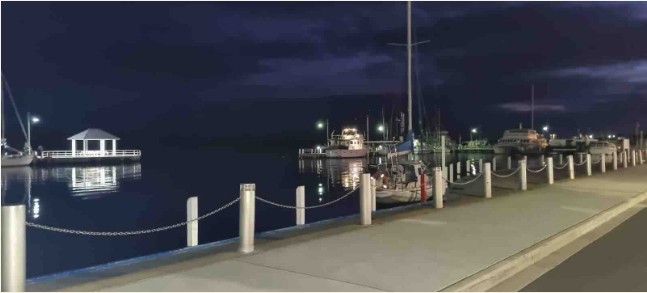
What a great week we’ve had! The band conditions gods were smiling on Tuesday and so many people had just so much fun on air, or just listening.
We had reports of 46 of our team on air, and 77 stations were reported as being worked (and by the way, this doesn’t even include duplicate QSOs on different bands)! Wow!
So this week we have what I hope is another interesting read – I really hope you can make time to kick-back, relax and enjoy the newsletter – thanks mostly to the 31 members who contributed to this edition.
And by the way, to make things easier for me, please check-out the information toward the end of the newsletter about formatting articles for RagChew.
And even though I’ve been rabbiting-on about giving the newsletter editing away to earn myself a life again (see The Walrus Project below), I think it’s obvious how much I enjoy contributing to what’s become this, hemisphere’s best CW activity.
So ahead this week, Ross MONNK has followed-on from last week’s article about portable directional antennas, and his fellow countryman Chris G7BED has provided us with an outline of his new satellite ground station for the fabulous QO-100 geostationary high-altitude satellite with its coverage of nearly half of the Earth’s surface.
The satellite’s broadband linear transponder is being even being used for perfect digital amateur television! We have also started exploring a new level of collaboration between CQQRS and the international CWops organisation, information about the two QRS contests under-way in our region, and we have this week’s instalment of our head-copy practice segments – which double as a café amusement should you decide to read the chapter out-loud to your loved one as I did recently.
So – on, on… will I hear you on air on Tuesday, or if not, will you have a listen anyway? I really hope so.
Masthead Image
How nice is that shot? Thanks to James VK7JZ for the image of Lakes Entrance Victoria when he was out portable at night last week. Feels pretty cold though
New Team Members
And welcome this week to Chris VK3QB, who is the Oceania Ambassador for the CWops organisation. Having recently retired as the editor of QTC Magazine, Chris now has a moment to spare to check out our offerings.
Welcome Chris and I hope we hear you on a Tuesday evening soon.
Reports
After next Tuesday’s Group, please send me a list of who you worked and / or who you heard using our web form here:

Please help attract new and old team members to have a go by submitting your repo! each week. Submissions close 1300 (Eastern Australian time) on Thursday.
Website
If you’d like to find out a bit about our net, or would like to pass information to others about our Tuesday get-togethers, here’s the link to our website.
Bit.ly/CQQRSWebsite Cheers, mb Mark Bosma VK2KI / VK6QI Beautiful South Bowning NSW mark.bosma@icloud.com non impsditi ratione cogitationis
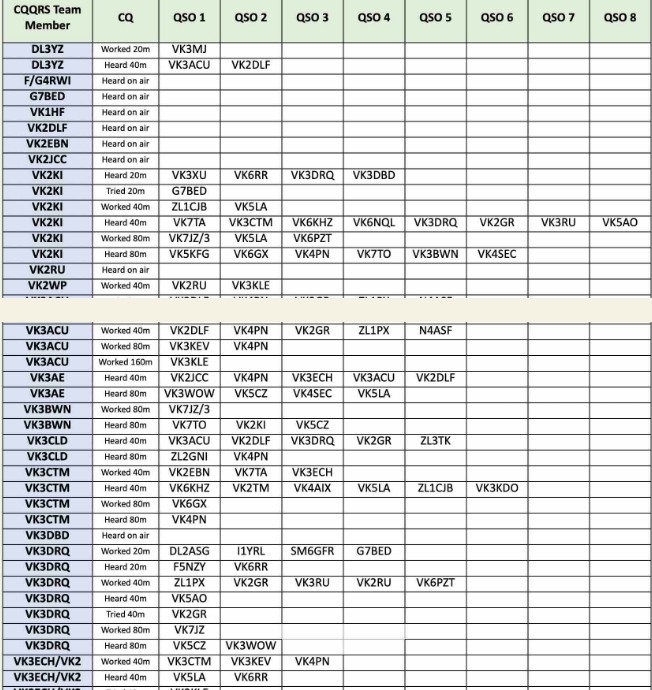
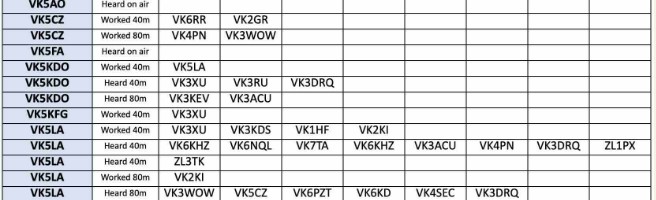
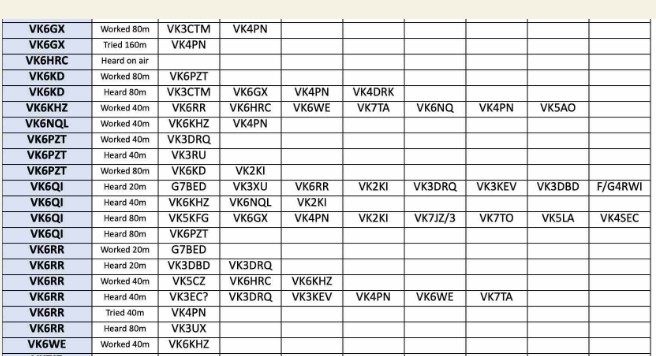
Spreadsheets above show the known stations on last Tuesday’s Group; the nents in the team members’ reports (submitted via our webform /CQQRSNET ) follow:
[40m] 40 m wasn’t what one would call a lively band, however ther were plenty of stations to work, evidenced by VK6HRC in the mix.
[80m] Great code from VK6KD and VK3DRQ. Good results from VK2KI low down in the noise on 80m.
[80m] Very quiet this evening with regards to hearing other sté
[80m] Today I planned to do just an propagation test on my usual RG on 20 m and see how my signal is getting to the Ironstone SDR. When sending my ? to see if the frequency is clear, Mark – VK3MJ was suddenly answering. We had a nice QSO, thanks ar the fin *-)
From Rob VK3ECH/VK2 at Bogan River near Nyngan
[40m] After a very wet rainy day we set up camp on the Bogan river near Nyngan and ran out an end fed 40m half wave antenna.
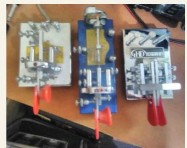
I tried to work Paul VK3KLE but had trouble sending with strange sounding side tone and intermittent keying so I cleaned the key contacts with a piece of paper but still no
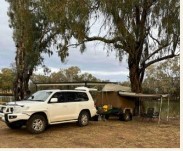
Good. After much head scratching finally found a loose contact on the key base probably caused from rattling round on corrugated backroads on our travels. After fixing the problem I managed to make some enjoyable 40m contacts for the evening.
I hope to work some more on the QRS Net on our travels from further north next week.
[40m] I had 8 QSOs, or 9 if you include a lunchtime contact with VK3MV. It was great to work Sava on both 40 and 80 meters. I also put out a few calls on 160 meters but I didn’t stay on 160M for long. I did work VKS3KLE Paul on 160 – cracking signal Paul.

My dabbling with 160 meters proved to be an interesting experiment. My antenna is an 80-meter double extended Zepp, consisting of approximately 105 meters of wire elevated about 25 meters high, fed with homemade 600-ohm ladder line.
My matching unit is a homemade, balanced L-match with two motorized roller inductors and one variable capacitor
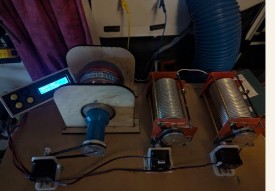
Interestingly, I can load the antenna for 160 meters using the L-match in its standard Zepp configuration. However taking one leg of the L match to ground and bridging the ladder line where it enters the shack.
This created a kind of Marconi T-type configuration, with the ladder line acting as a vertical element and the horizontal wire becoming a capacity hat. I believe this setup improved my outgoing signal on 160 meters.
For reception, though, I found the antenna provided stronger incoming signals and significantly less noise when left in the Zepp configuration and loaded. More testing is needed to fully understand the optimal setup for 160 meters.
[40m] As always I called my friend and mentor Manny VK3DRQ and we chatted for almost 45 minutes and as my fire was calling for some more wood, we ended. Almost made it to the fire, heard Mait VK4A0 calling.
Now Mait is my first VK4 on CW and do you think I could send a complete and correct 4? Funny isn’t it? You become comfortable with the words and callsigns used regularly, but something different coming along presents complete confusion. Heaven help me if a VK!
Calls. Thanks for putting up with the Hs, 3s, etc and wrong stuff Mait and as Manny says: practice, practice is the only way.
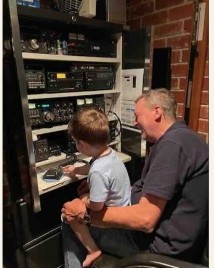
[80m] Really great to rag chew with Peter, he has no issues running a sentence together with some big fancy words to mix.
[40m] Great condx on 40m, Great to QSO with Drew, VK3XU who patiently waited after my battery went flat to come back on air. People hearing me with 5 watts from my QMX, consistently amazed by the performance of this little rig!
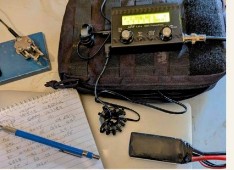
[80m] Janaged to QSO with Chris, G7BED. Made i 1EEDING to QSO with him!
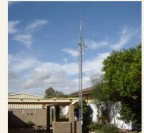
[40m] After a quiet start it seems condition were improving like the good wine. Had a call from VK2GR, we exchanged callsigns and suddenly he went QNP. I don’t know what happened to his good signal! IWe had to look that one up Manny: the Gooale
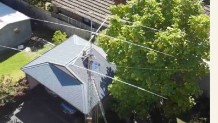
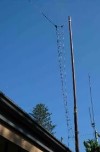
[40m] Reception was particularly poor today, weak signals with QSB. I only managed a brief contact with VK6KHZ; no other signals were ‘eadable to me.
[80m] Mast was only about half height because of the winds so operation was a bit marginal. Fortunately no damage here. Used Xiegu 108 with 20W for 40m contact with Andy VK5LA. I didn’t get to try my Racal transceiver from my new location though.
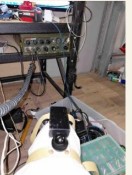
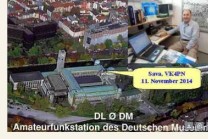
Pel hhcl bamaticehnelp helt AD, yh lagehetel hitmen} ninth for a chat, we had QSOs before. He was barely readable at 445 but he gave me 569. I know that he runs 800 W and a 3 el Yagi so. he should have been at least 6dB better than me or one S point!?
So I concluded that most likely I had no chance of copying QRP signals of our EU friends. Out of curiosity and before dropping to 40 m I had a look at the FT8 window on 20m to see what was around.
To my surprise there were quite a few EU signals at reasonable levels between -10DB and 0 dB so I may have given up on our EU friends a bit too soon.
[40m] 40 mwas lively with few regulars, ZLs and VK6S were coming through with good signals as well. Managed to hook up VK6IKHZ who emailed me later delighted with his first V4 on 40m.
[80m] Had to break at 19:00 for ZLCW net on 80m so after that net finished I stayed on 80m as KiwiSDR in NSW was full of traces.
After a few QSOs with regulars I picked up a week trace looking interesting and after tuning on the trace frequency I could copy VK6GX quite well We had a long chat and I mentioned to Phil I would be dropping to 160M if he wanted to listen on 1855 KHz.
He said he would but it will be between the overs on the VK6 SSB net which runs on that frequency. So I told Phil to listen on 1850 instead.
It was getting late when I returned to 80m but I decided for another CQ on 80m and to my surprise I got a call from VK4DRK, first VK4 I have heard on QRS net since I joined. He is up on Toowoomba range some 120 km west of my QTH so the signal was big.
Anice surprise. During our chat I noticed another week trace on the NSW Kiwi SDR. I thought it could be another VKG so I tuned to the trace frequency and send a QRZ. A booming signal came back VK4SEC, two VK4S on the QRS net! Must be a record.
Johnathan is a ham for whom the QRS network exists, he is trying to improve his CW skills. He emailed me too after the QSO to tell me how proud he was to copy everything without the decoder.
We went slow with repeats but he copied everything and I am sure he will be getting better and more confident if he sticks with the QRS net. Listen for VK4SEC. [160M] I called CQ on 160M for about 10 min hoping for VK3ACU to pop up but nothing only noise.
I have to say I did not pay due attention, because there was something in that noise. Phil VK6GX was responding to my CQ and he was readable at the peaks of QSB. After few overs we manages to exchange all elements of a legitimate QSO.
I know that propagation on Tuesday was not good since during our QSO I was monitoring Reverse Beacon Net and couldn’t see my signal being picked up anywhere, usually I am picked up in NSW and Victoria. So when conditions are good V4 to VK6 should be certain.
What was surprising to me is that my antenna although sufficient in length and tuned to no reflected power is very low and the main lobe of 9 dB gain is straight up so most of my power is doing nothing but warming the ionosphere.
In fact the QSO with Phil would have been at a QRP level since my radiation under 45 degrees is negligible. For those who can operate on 160 m please listen on 1850 KHz after 10:00 UTC if I am not on 80m I will be on top band.
From Ketut VK3BWN at Keilor near Melbourne
[80m] During the QSO, my antenna VSWR suddenly goes up. I had to throttle back and re-tune but thankfully Jim was patiently waiting. It was a pretty dicey situation but I was able to bring the QSO to a decent ending at very low power.
Not sure what the cause of the temporary VSWR increase. Condx was rainy and windy. Could be water coming into the right place at the right time (I doubt the creepy crawlers can get near). Thanks guys, see you next time.
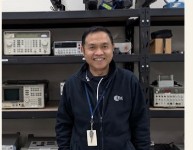
[40m] _ots of local noise, lotsa cold in shack, toa
[80m] Not much local action, until much later. Nothing from the DX experiment, either.
From Phil VK6GX at Gidgegannup [80m & 160M]] At the end of our 80m QSO, Sava, VK4PN requested we QSY to 1855KHZ, but I advised him there is a VK6 SSB sked on that frequency at 1930 WST, so we tried 1850KHZ and managed to exchange reports before the SSB sked started, then splatter from one SSB station on 1855KHZ made further contact impossible, as our signals were borderline.
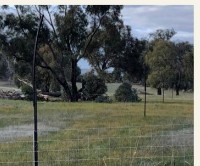
[20m] Lots of fun on 20m – in fact there was a pile-up of VKs, ZLs and even one of our team in France calling our flag-waving Europe-area representative, Chris G7BED at Northamptonshire just North of London.
I tried Chris as well, and caused lots of confusion with calls from Kevin with his similar-sounding VK3KEV
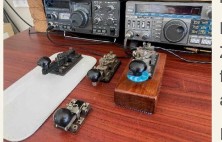
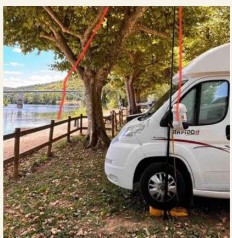
Calls HOTT FNOVITT With callsign (I couldn’t hear Kevin here). Our previous VK & ZL motorhome-touring mate Nigel G4RWI could hear Chris ok from his rather pleasant location on the River Lot, just east of Cahors in France.
At one stage I heard Nigel’s 10 Watts to a bit of wet string coming through to the VK5PH Ironstone Range KiwiSDR network.
[40m] Nice to hook up with Clive ZL1CJB in Auckland again before having what’s become a regular weekh chat about the Chef’s Special on the Williss dinner menu with Andy VK5LA at Berrie. This week we hac faa FS SRSA DEES Se ae eee) poses TR eR ag pes A)
Io ahaa tien chord eats ed atta beth eect Aol t tL menu with Andy VKSLA at Berrie. This week we had the interesting question about how to send ‘spaghetti bolognese’ on the fly without having written the words down first!
Trust it was superb Andy, and I’m looking forward to next week’s food adventure.
[80m] Well 80m bounced back into action this week. So many stations on again – woohoo! I hooked up with James VK7JZ portable in a park at Lakes Entrance Victoria. James was putting in a nice signal, before he headed off to the nearest pub to warm up…
Only to find it had closed two minutes before he go there; so near yet so far! I rounded out the evening with a QSO with one of the net’s founders, Richard VK6PZT in Bunbury.
Richard used to be plagued with switch mode power supply hash, so it was great to see that with the help of a 300HZ filter on his IC-7200, he was able to pick out my weak signal and exchange reports. Similarly, Richard wasn’t strong here, but we got there.
Also from your editor Mark VK6QI at Beautiful South Bowning via VKSPH and VK6SEG KiwiSDRs.
[20m] Check out the number of stations heard on 20m on either the VKSPH Ironstone Range KiwiSDRs or the Southern Electronics Group VK6SEG one at Hoddys Well – eight stations in total. Great to hear so much activity.
Chris was coming through nicely this week – RSN 431 into WA and RSN 451 into SA. And as I said above, ever Nigel G4RWI‘s 10 Watts to a bit of wire tangled up in a Faraday tree was heard in South Aussie.
[40m] I wasn’t using the VK5PH or VK6SEG KiwiSDRs much while I was on 40m this week but did notice our European desk manager, Mike DL3YZ logged on to one of the lronstone Range receivers at one stage; just checking to make sure we were all behaving ourselves and having fun I guess.
[80m] Eight stations heard on 80m this week via the KiwiSDR receivers at Ironstone Range (established by our CQQRS family member Paul VKSPH) and Hoddys Well near Northam (established by the Southern Electronics Group).
Good to hear Lance VK7TO back on solid ground in Tasmania after spending time in Europe. I noticed a strong auroral presence on the South Australian KiwiSDRs from around 11152.
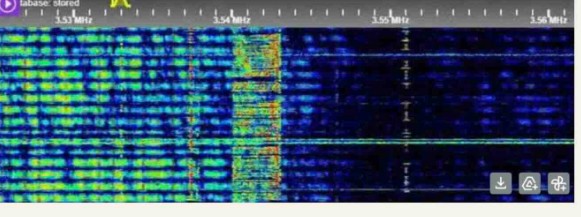
| wonder why the auroral buzz seems to hang around the bottom of the band before slowly creeping upwards. See previous RagChews for more discussion about the theories about the causes of auroral noise – but the creeping up the band phenomenon through the evening might be another thing to postulate.
All in all – a terrific night on the CQQRS net; great to see an end to the geomagnetic disturbances of recent weeks.
Post Morsum – July 23, 2025
Four on the VK6RLM RPTR and South WestEcholink / AllStar hub. VK6KD David VK6QI_ Mark VK6HRC VK6MRB Mulligan sw! and others. Slightly more organised this morning got moving once the alarm went off!
Caught up with Mulligan before the net and then again when he gave David a call at 06:00 after that we got on with the net. David had a fairly quiet night but had good contact with Richard VK6PZT on 80m .
Mark monitored the 20m activity on various Kiwi SDR nodes hearing five, eight on 40m working two and on 80m heard six worked three. He also tried the Carnarvon remote but it was not behaving so no joy from there.
Mark also did a fine job spotting on WhatsApp with some subtle stirring here and there. For me it was fairly quiet on 40m to start with, working the locals until East West propagation kicked in.
I had a look at the VKGANC reverse beacon to see that Stan ZL8TK had been spotted so went to that frequency and gave a few calls and VK2GR Allan came up and had a chat and signed off, fortunately Stan came back up and we had a brief contact as conditions were not great at that time.
Tried 80m probably a bit early so no contacts but followed along when it got busy later. ‘Two of our regulars Max VK6FN and Wayne VK6NW are taking a break for now so looking forward to their return.
Areminder for anyone wanting join the get together to compare notes on how the evening went for you : See
Post Morsum Callback
Wednesday (VK/ZL) 2200z-2300z VK6RLM / WA FM AllStar Network Connect direct to AllStar Node 42482 or use Echolink to connect to VK2K

Thanks to all, stay safe Richard.
[Thanks for getting up so early to run the net every week Richard – and assembling the report again.]
This Week’s Topic of Interest
More on Portable Directional Antennas I thought I was mistaken, but I was wrong! by Ross MONNK
There are many ways to learn. Learning from your mistakes is just one of them, but one in which I specialise. For example…
As discussed in last week’s RagChew newsletter, Mike DL3YZ and I are working on directional antennas for low power portable DX, specifically Yagis at the moment. My last experiment saw me placing the Reflector 5 metres behind the Driven Element.
But I now realise that’s too far away (naturally, other mistakes were made which I won’t mention here). The Wisdom is that the Parasitic Reflector should be 0.12 to 0.15 times the wavelength away, which for the 20 m band is about 3 metres.
On the subject of directional antennas for portable, I’ve also come to realise that, whilst the directional gain obtained by focussing most of your radiated power into one tight beam is a benefit, if you don’t have that beam pointing in exactly the right direction, your target station is probably not going to hear you
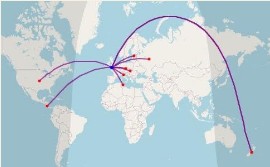
Because the radiated power off-beam will be less than that of an omni-directional antenna. Think of a searchlight (or a laser beam) – it can illuminate objects far away but it has a very narrow field of view.
This is not a problem for the people fortunate enough to have steerable Yagis – they just rotate the antenna to maximise the received (and thus, the transmitted) signal.
But portable, the direction is fixed so you’d better be confident it’s pointing in the right direction. I think the answer is to have a modest amount of directional gain whilst still retaining enough beam spread for the direction to not be critical.
So that probably means a 2- element Yagi (3-elements if you’re an inveterate tinkerer). As with many things in life, restraint is a virtue. The weather is looking better for the week ahead so more experiments will be undertaken. Watch this space!
If you have an article or two that you think might be of interest to our readers, please let me know so we can share more thoughts and ideas; for guidance on writing for RagChew, see Articles below. Please email material to Mark VK2KI: cqqrsnet@gmail.com

On My Workbench
Satellite Ground Station – Continued
From Chris G7BED Update on the project bench … probably not a topic of interest as such to the Oceanic community, as unfortunately you don’t get visibility of the QO-100 satellite. But, here’s the latest anyway – still may make an interesting read.
Attached my basic system design and link budget ….
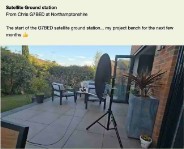
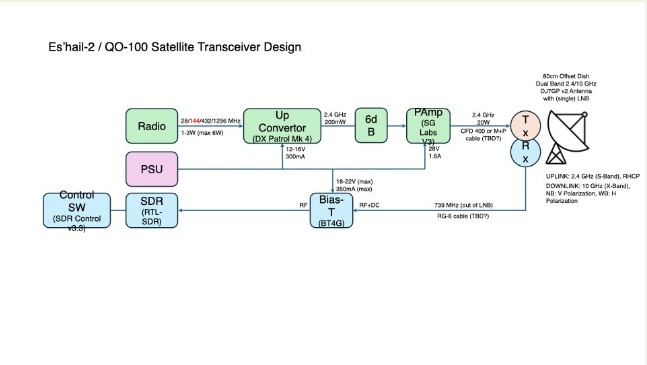
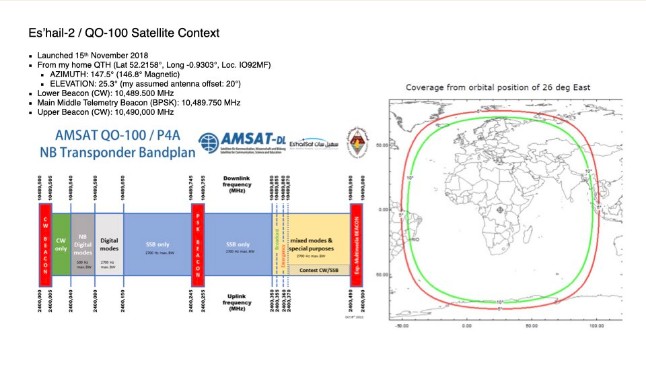
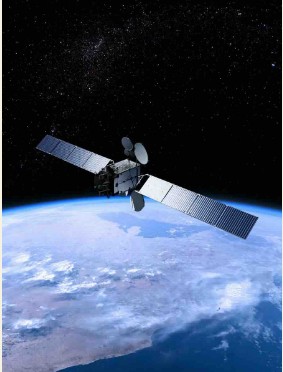
Receive or downlink is operational with a simple bias-T providing power to the LNB (Low-Noise Block 10GHZ down-converter) for vertical polarisation. This is fed straight into the RTL-SDR receiver at about 739 MHz and controlled by SDR Control v3.3.
Really simple to set-up. The next stage is to get the up-convertor and power amps I’ve ordered. This will be driven by an old ICOM 706 with an IF on the 2m band driving 3W into the up-converter. The uplink to the satellite’s linear transponder runs at 2.4GHz.
Whilst I’m awaiting the delivery, I shall be taking another holiday 🙂 … this time to Provence. I hope to still be able to make some of the QRS nets, but will be running on a portable set-up … an old FT818.
However, I have a 50W power amp up my sleeve, and will be using a fairly decent inverted V up on a 6m mast – so, I’m hoping I will be just as strong into VK conditions permitting.
However, I’m probably going to miss Tuesday but will post Alerts on the CQQRS WhatsApp group. Wishing you good DX and hope to catch-up with some of you from France. Best Regards 73, de Chris, G7BED
What’s going on on your workbench? If you have an article or two that you think might be of interest to our readers, please let Mark VK2KI know; email to cqqrsnet@gmail.com For guidance on writing for RagChew, see Articles below.
Other News
Collaboration with CWops
Readers may recall that the Oceania area CWops has been running the eight-week Morse Mania Winter 2025 contest. This year, the team has included one segment for an hour on 40m and 80m on Tuesday nights to coincide with the CQQRS net – aiming to encourage our family members to have a go as part of the normal CQQRS net.
See CWops Morse Mania – Winter 2025 below for more info – this year’s event finishes in a couple of weeks, so it’s not too late to have a go just for fun – you never know.
Chris VK3QB the CWops Ambassador for the Oceania area and I are keen to forge closer ties between CWops and the CQQRS Net.
Although the two organisations’ approaches are different, our fundamental aims align – to promote CW and encourage newcomers to have a go at this very rewarding mode.
Chris has been a member of many clubs over the years and genuinely believes that CW Opsis, on balance, the best all-round club with its culture, activities, and support programs. See https://ewops.org/ for more information.
CQQRS already works closely with Nick VK7WW to take advantage of his excellent Northern Tasmanian Amateur Radio Club’s weekly on-air (or YouTube recordings thanks to Jordan VK3ACU) Morse code training (see Morse Training Net below for more details); and Nick promotes our net as a great way for learners to have a go on air when they’re ready and for old timers like me to just re-discover the joy of QRS.
Contacts or rag chews. But for those who are perhaps ready to go further and accelerate their CW ability, which of the many options should they choose to get over the dreaded speed plateau? CWops and the associated CW Academy provides opportunities to help.
Chris says that whilst not for everyone, CW Academy is world class. And it has the tuns on the board with well over 12,000 successful students and over 60 Advisors information. Meanwhile, don‘t forget the Morse Mania contest currently under-way.
And in future editions, Chris will be providing more information about the organisation and how our QRS family can benefit.

Our net Is strongly supported by our VK3 family members, many of whom are involved in the Easter and Mountain District Radio Club, a very successful and active club with a long history of serving the wider amateur community behind the scenes.
Thank you to the EMDRC for offers of support to the CQQRS net.
The Walrus Project ‘Also known as Mark Needs to Get a Life From your editor Mark VK2KI In recent RagChews there’s been discussion (mainly self-centred on my part!) about future options for management of the RagChew newsletter; in summary, I need to find a better way of supporting and building the CQQRS net that doesn’t involve days and days every week to produce the newsletter (which I believe is key to the growth and enjoyment of our beloved CQQRS net).
I’d been trying to find another RagChew editor, and one of our team suggested a roster – a different editor each week – which would be a brilliant idea.
The Walrus Project

What my rants have achieved is an increase in the support Im getting from members of our community – thank you my friends – your help is very much appreciated by me, and by our readers.
In last week’s RagChew, Peter VK3WOW supported previous suggestions from others about the use of the groups.io system – allowing individual members to post material without needing any editorial input, and using weekly summaries instead of aweekly newsletter.
My comment at the time was that although I liked the idea, found the look and feel of the other groups.io groups I’m in to be pretty uninspiring – lots of text with only links to downloadable images.
Peter’s article indicated that embedded images are possible – but I haven’t followed-up to see if that’s only via the paid-subscription versions of groups.io.
Anyway, I’ve had another member’s input – this time anonymous: One of my suggestions in that first note I wrote regarding the future of the Newsletter was to go to Groups IO. I really think that is the way to go. I’m in a number of the. groups.
For three of those, each morning around 8am, I receive an email with a daily summary of new topics and new replies from the previous day. It works well. A combination of Groups IO, and the WhatsApp groups would work well.
There may be a way to feed the weekly reports and comments directly into Groups IO. The comment by Peter re finding previous articles is probably the most pertinent.
You’ve managed to get some help with the newsletter, but I don’t believe that’s going to be enough. If the newsletter were to be handed over entirely to someone else, there’s a real possibilty it would become something quite different.
Its current success is a direct result of your ability to consistently produce a high quality, engaging, and accessible publication. It is one that stands out precisely because it’s free from personal bias or opinion.
Not many have the skill set to achieve this. Thank you to our contributor for your positive thoughts.
Do you have thoughts on the future of the RagChew newsletter or other ways of supporting and encouraging our CQQRS family members? Please let me know: cqqrsnet@gmail

Bailed, No Parachute
From Peter VK3WOW Come into my parlour, Said the spider to the fly, And we’ll play a game together. Ihope you’ll have a try. The rules are very simple, All laid out nice and clear, And if you make a booboo, I’ll whisper in your ear.
I won’t exactly help you, But I’ll have enormous fun While you struggle to remember Why this game you first begun. And when you are exhausted, Demoralised and flat, I’ll raise my little fly swat. Are you ready for the “Splatt”?
Morse Training Net
Our team member Nic VK7WW runs an on-air Slow Morse training net every Wednesday at 7pm EDST on 3580 for 30 mins. He uses the callsign of the Northern Tasmania Amateur Radio Club VK7TAZ on that net.
Many of our team learned Morse code with the support of Nic, and the weekly training session comes highly recommended for anyone who wants to learn the Code, or simply brush up.
Everyone’s welcome – 3580KHZ at 7pm Eastern time every Wednesday; you’ll hear lots of the CQQRS team on that net. Jordan VK3ACU has recorded the complete set of lessons which you can now find here:
Https://www. youtube.com/playlist?list=PLHsQmZz6fBXO7swAfbT mutrbbEL17fUQL Contact Nic VK7WW for more info nicholaschantler@hotmail.com including how to join the NTARC DISCORD group to follow the action, or just come along and join in on Wednesdays.
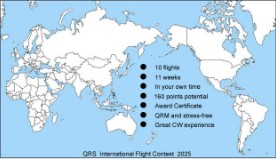
Flight NR 06 took off from a tropical pseudo-democracy on Wednesday O0000Z, heading for a cold, unrepentant kleptocracy.
The contest is passed half way now, so what have entrants been learning from participating in the IFC and have they enjoyed their experience? To answer that question, reviews are invited, even from those who decided to bail out prematurely.
Please email reviews to zi3tk@qsl.net Why are we seeking reviews now? Because the next contest is being prepared ready for release in circa seven weeks. Any suggestions for improvement or novelty features will be considered.
As if any demonstration of proof for 100 % accuracy was needed, the sound file for Flight NR 06 had one letter wrong, mea maxima culpa. Fortunately an observant competitor noticed all was not well and pulled the emergency cord.
Thanks to his eagle-eye, a quick correction was made before any real damage.
All IFC information is still available at bit.ly/qrsife Seats are unlimited, anyone is welcome to travel with us on the remaining five flights. 73 de Stan
Objectives: This eight-week event has the following objectives: 2 To promote regular on-air QSOs primarily between VK and ZL operators. Other DX operators and contacts are welcome.
O For CW operators to have as many QSOs as possible whilst meeting the minimum criteria for a QSO. © To provide an event that meets the needs of different tvpes of CW operators.

Types of CW operators. © Touse these sessions to build on existing skills and satisfy your own goals. For a person who normally operates POTA/SOTA, this might mean extending their QSO vocabulary to include a few new words or phrases.
© For an operator comfortable at 12WPM and basic QSOs, this might mean aiming to increase speeds by 2-3 WPM once a week. © For acontester this might mean exchanging station details they don’t normally exchange.
Participants are encouraged to notify the Event Administrator of their personal goals prior to the event. When: Start date: Tuesday 17 June 2025.
End date: Sunday 10 August 2025 This is an eight-week event aimed at our CQQRS family, with one-hour sessions commencing 17 June 2025 and taking place on Tuesdays, Thursdays, and Sundays at 0930-1030z. And there’s a bonus for QRS operators as well.
How about having a go? Read more and review the rules here: https://morsecodesessions. wordpress.com/morse-mania-winter-2025/ To participate during our net, when you hook up with someone on 40m or 80m between 0930 and 1030Z, ask whether they’d like to participate.
You’ll see from the tules, all they need to do is exchange some of the usual rag chew information such as reports, location, equipment, key details and so on. No serial numbers, nothing different ftom what you’ll hear on our net anyway.
And you can get extra points for QRS and if you have a rag chew that’s long enough. Easy-lah! So have a go next Tuesday and the final week following. And you could even arrange a sked for the following Thursday and/or Sunday and do it all again.
If you’ve read or heard something that you think might be of interest to our readers, please let me know. For guidance on writing for RagChew, see Articles below. Please email material to Mark VK2KI: cqgrsnet@gmail.com
Head Copy Practice
Compiled on the track somewhere by John VK2RU
Over the last two months, each newsletter has contained a chapter from A.A. Milnes classic, Winnie the Pooh. This week, Winnie and friends go on an expotition to find the north pole.
The book, ‘Winnie the Pooh’ was chosen for head copy practise because it contains simple, familiar, and sometimes predictable words that makes learning to head copy a bit easier.
Previous ‘Winnie the Pooh’ chapters and suggestions on how you might use them can be found at the CQ QRS website – https://bit.lv/CQQRSWebsite . Here are this week’s files for Chapter 8.
There is one .txt file with the whole chapter, three .mp3 files with about a third of the chapter each, and three text files containing the text for each .mp3 file. We have to split the .mp3 files because of size limitations in Mail Chimp.
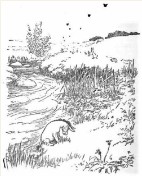
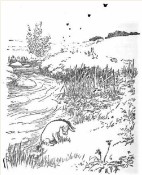
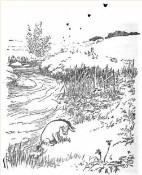
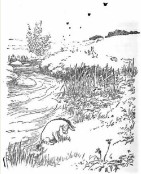
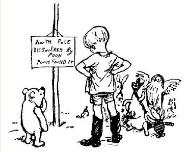
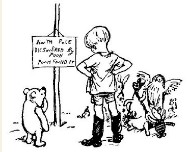
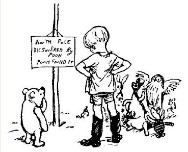
The original text contains some punctuation that is not normally used in morse today. This punctuation is not recognised by the Ditto CW app, and it also causes the ebook2cw app some headaches, so I’ve removed it.
Where a word contains an apostrophe such as ‘ won’t‘ I have removed the apostrophe. Some word such as ‘ we’ll‘ , have been changed to ‘ we will ‘ to avoid confusion. I checked today why the contraction “won’t” for “will not’ doesn’t follow a typical pattern.
It originated from an older form, “woll not’, which was a variant of “will not”. Over time, “woll not” evolved into “wonnot’, and eventually, became “won’t”. Which is probably a good thing, or we could be saying “willn’’t’.
I’ve found that sometimes when the text file is added to Ditto CW, some spacing between words is missed, and some sentences are repeated. I’ve checked the text files and they are correct so I don’t know what’s going on there. It’s not a big problem.
Most of it plays perfectly. [Thanks John – outstanding work!]
So if you’ve read something that you think might be of interest to our readers, please let John know so we can share more thoughts and ideas with our CQQRS family. For guidance on writing for RagChew, see Articles below.
Please email material to Mark VK2KI: cqgrsnet@gmail.com
Prosign/Character/Signal of the Month
[Suggestion – put it on a sticky note near your key as a reminder for Tuesday. Tell us how you went!]
Di-dah-di-dah-dit
So back to the CQQRS Slow CW QSO practice net.
Next Tuesday’s Net
Our CQQRS Group will be on as always on Tuesday from around 0700Z until about 1300Z; see https://bit.ly/CQQRSWebsite and navigate to the Net Details page for details.
Doesn’t matter whether you’re brand new and want to try just exchanging callsigns and RST reports, or you’re ready for a good old rag chew. We’ll have fun.
There’s usually people around until after 1300Z – so keep calling in the segment of the band designated in the table below until you catch someone.
I should be on as usual from home in NSW or via the Remote at Bedfordale WA, and I’ll also be watching the proceedings using the VK6QS and Tecsun SDRs in WA and NSW respectively. Hope to hear you there.
Please let us know via our Reports form bit.ly/CQQRSNET who you work or hear on Tuesday’s Group. The report form closes at lunchtime (Eastern Australian time) on Thursday.
And by the way, a reminder; if you send me any information by email, our report form or WhatsApp – unless you specifically state that material is not to be published, I’ll assume that you’re happy to see your thoughts in the RagChew newsletter.
Post Morsum
Richard VK6HRC will run our phone Post Morsum on the South West AllStar net (via repeaters and hotspots all over WA) from 0600 WA time, then from 0700 WA time on 80m (8605 LSB).
See https://bit.ly/CQQRSWebsite and navigate to the Net Details page for details of how you can connect via Echolink or even possibly via your local FM repeater.
Articles
The newsletter is interesting to readers because of the material contributed by so many people – be it the reports each week or the various articles. Could you write a short article or articles for RagChew? You bet! Writing not your strong point?
Don’t worry, I’m very happy to help as much or as little as needed; here’s a thought – perhaps have a go at using an Artificial Intelligence tool such as ChatGPT to do some research, to check your writing or even to actually write the whole article ina relaxed easy-to-read manner!
For guidance on writing for the RagChew newsletter, head to our website bit.ly/CQQRSWebsite then click the menu on the top right and then click RagChew Newsletter.
Teamwork
Thank you so much to our team of 31 contributors: DL3YZ, G7BED, MONNK, VK2RU, VK2WP, VK3ACU, VK3AE, VK3BWN, VK3CLD, VK3CTM, VK3DRQ, VK3ECH/VK2, VK3KEV, VK3QB, VK3RU, VK3WOW, VK4PN, VK5CZ, VKSKDO, VKSKFG, VK5LA, VK6GX, VK6HRC, VK6KD, VK6KHZ, VK6NQL, VK6PZT, VK6RR, VK6WE, VK7JZ, ZL3TK & one anonymous.
And a special thank you to our editorial team, Nigel G4RWI (head of our software development department), Patrick VK2IOW (our reports coordinator), John VK2RU (our head-copy generator) and Richard VK6HRC (our post-Morsition). Great work all!
UY CW on Tuesday, mb. Mark Bosra VK2KI/ VK6QI Beautiful South Bowning NSW mark,bosma@icloud.com non impediti ratione cogitationis


About the CQ QRS Net
For the current schedule and more information about the CQQRS net, please go the the Net Details page on our website:

The opinions expressed in the RagChew newsletter are those of the individual contributors. The opinions do not necessarily reflect that of the editor or of the CQ QRS Group members.
Any material and images received from members by the editor or published on the CQQRS WhatsApp groups may be published in this newsletter unless specifically requested otherwise.
The values, doctrine and guidelines for the Group and for the newsletter are published on the Principles page of the group’s website https://bit.ly/CQQRSWebsite