Below is a reconstruction of the 2025 16 CQ QRS RagChew newsletter designed to support full text searching. This reconstruction was built using OCR, and will contain errors.
To view the Mailchimp original, click here. To search the entire newsletter archive, click here.
Contents
- Last Tuesday’s Group
- New Team Member
- Masthead Image
- Website
- Reports
- Reports & Comments
- Comments:
- Post Morsum Report
- This Week’s Topic of Interest
- Wal said
- On My Workbench
- Yeter VK7KPC’s new shack – South Coast of South Australia:
- QORZ7?
- Other News
- Ionospheric Scintillation
- VK3ECH Maritime Mobile
- Morse Training Net
- The Decision to Invest in a Flex Transceiver.
- DXperiments Northern Hemisphere Summer
- Snip and WhatsApp Help
- Last week’s net
- Web SDRs
- Readable File
- Instructions for Learning International Morse Characters Department of the Army Technical Manual TM11-459 — June
- I Hear Tell…
- I hear tell that some of our team tried
- Di-dah-di-dah-dit
- Next Tuesday’s Net
- Post Morsum
- Teamwork
- About the CQ QRS Net
Well well… what fun on Tuesday – Simon out portable early on a rainy morning on the Italian Mediterranean, Rob maritime mobile, me fiddling with Remote stations in WA and finding how hard it was to transmit without decent side-tone (sorry Greg VKSKFG who was trying to ask me questions at the time!).
Conditions seemed ok to me – and see below for what Jordan in Victoria and Simon on the Italian Mediterranean (both operating portable and QRP) thought of the conditions; the resulting geomagnetic storm and auroral activity from the double coronal mass ejection hadn’t taken hold apparently!
This week, John VK2RU has started a new section in the RagChew newsletter called Readable Five; the section is for interesting reads relating to CW.
Please let me know if you’ve been reading something that you think might be of interest to some of the 200+ readers of our newsletter? Imagine that – relaxing and reading about Morse code!
Also in the newsletter, John VK2RU has captured some of the conversations in our CQQRS WhatsApp groups – including two discussions started by lan VK1HF about distress calls heard, and about how our team members came to CW.
And Ross MONNK is working up the energy to brave the UK summer elements with his article about the portable operator’s dilemma – what and what not to pack.
So not only are there the weekly reports about Tuesday’s net (thank you again to our contributors), you’ll find a whole bunch of interesting information and articles below. Please take five minutes to read and enjoy.
Last Tuesday’s Group
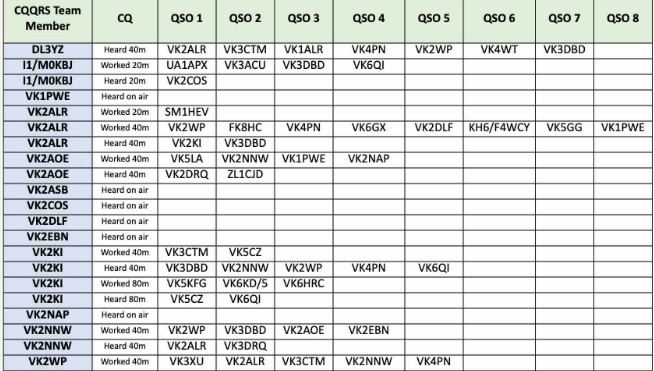
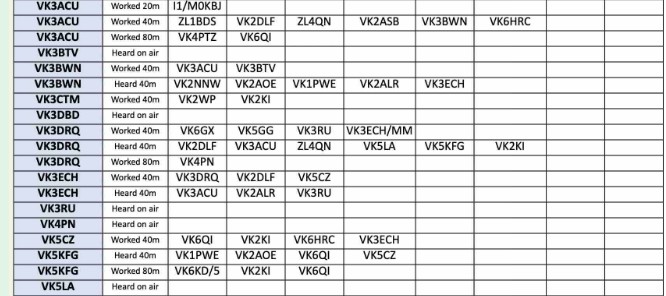
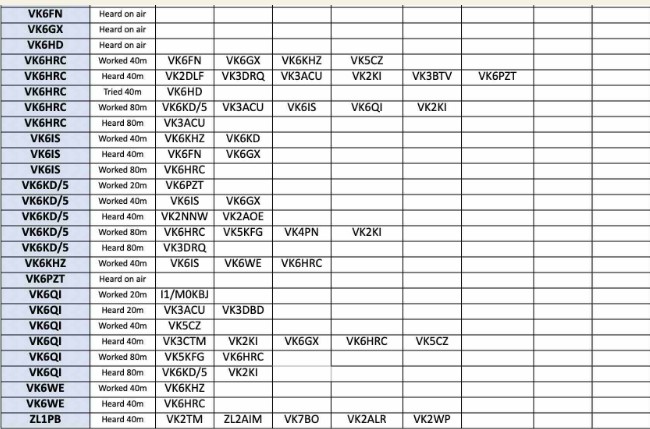
Here’s this week’s list of the 54 stations heard by 36 of our team members:
New Team Member
Welcome this week to our forth UK member; Chris G7BED who lives at Northamptonshire in the East Midlands (100KM north of London).
Chris is an almost CW-only operator who also volunteers at the RSGB National Radio Museum Bletchley Park (along with Nigel G4RWI and Simon MOKBJ – who suggested to Chris that he might be interested in our team).
Welcome Chris, and I hope you can join in on our activities and have a ball with this new avenue.
Masthead Image
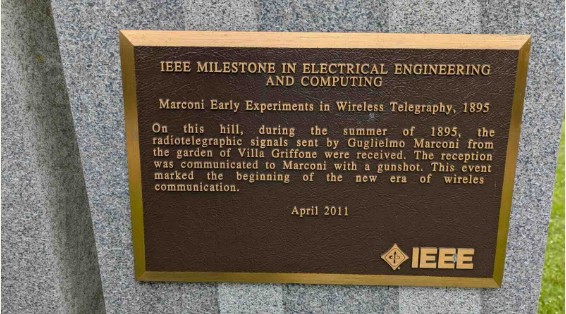
And thanks this week to Simon MOKBJ who’s travelling around Italy with his lady wife, and stopped at the Museo Marconi at the Marconi family home Villa Griffone, 20KM from Bologna.
See more from Simon about his attempt to replicate Marconi’s work 130 years ago, in the Other News section below.
Website
If you’d like to find out a bit about our net, or would like to pass information to others about our Tuesday get-togethers, here’s the link to our website. bit.ly/CQQRSWebsite
Reports
A reminder – after next Tuesday’s Group, please send me a list of who you worked and / or who you heard using our web form here:
Please help attract new and old team members to have a go by submitting your report each week. Submissions close 1300 (Eastern Australian time) on Thursday.
Cheers, mb Mark Bosma VK2KI / VK6QI Beautiful South Bowning NSW mark.bosma@icloud.com non impsditi ratione cogitationis
Reports & Comments
Once again, a huge thank-you to our part-time Aussie Nigel G4RWI for building both the webform that we all use to submit our reports, and the outstanding software too!
That I use to convert the collected reports into the Excel spreadsheet above and individual reports that you’ll see below. So the spreadsheets above show the known stations on last Tuesday’s Group; the comments distilled from the team members’ reports follow:
Comments:
[40m] + As always, great fun on the air tonight. For a moment, I thought the frequency quiet down a bit but it came back alive as soon as I called CQ. I was a bit lazy so I pulled out my keyboard keyer. I thought it would help
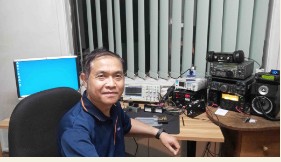
The new ops out there if my keying is good with no mistakes which would not be the case if I used my paddle (and added more dits than necessary hihi).. * So it was great running into Jordan VK3ACU.
It was a quick hello and signal check QSO but that is always great to run into him again. I enjoyed the rag chew with Keiran VK3BTV and talked about his trip in Bali. That was epic.. * So thanks again folks. I enjoyed listening in to your QSOs too. Keep it up.
Hope to catch you again next week if not earlier. 73…
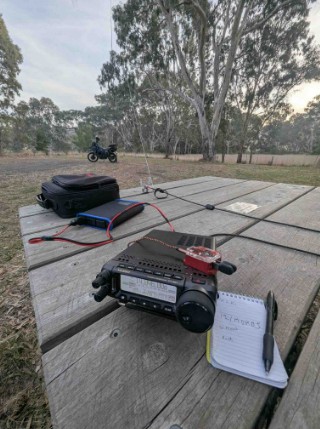
[40m] + Managed a quick lunch QSO with Mark via the VK6 20m – thanks again Mark + Later, on my way home, I stopped at a nice spot where contacts haven’t always been easy, but it’s a pleasant location, so I often give it a try.
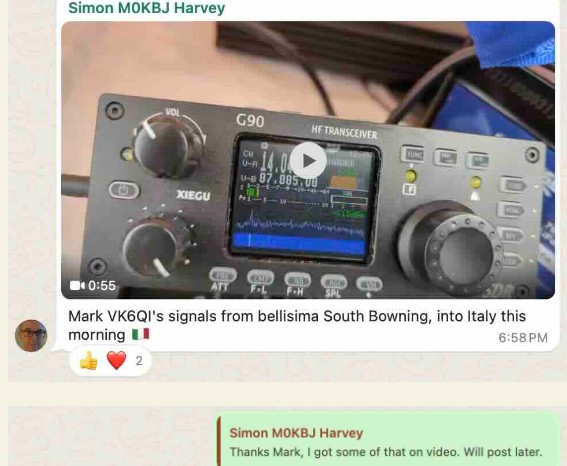
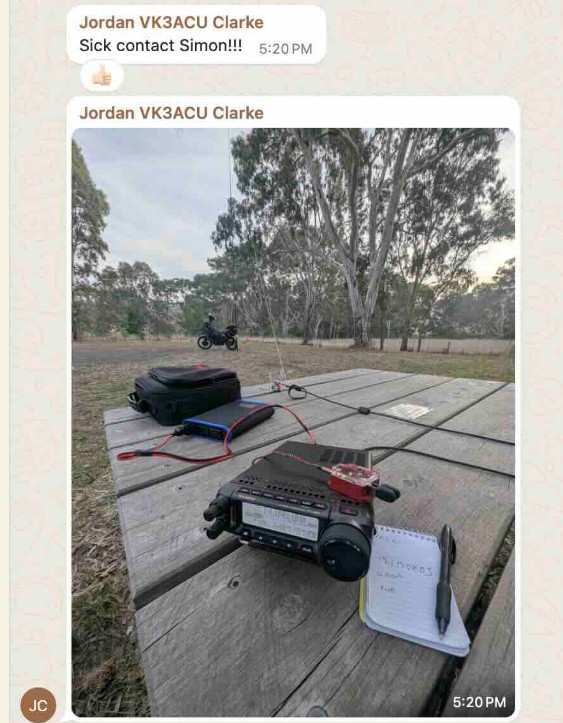
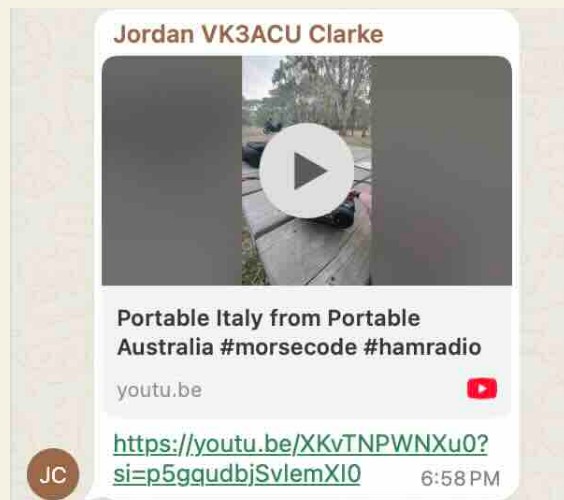
+ I worked Simon MOKBUJ portable in Rome signals were down, but we made the contact portable-to-portable at 20 Watts with good readability Great contact, Simon, thank youl.
+ Just a reminder to anyone who hears me calling on the air any day of the week: please don’t hesitate to send QRS if you need it. I’m always happy for a contact at any speed. Hope to
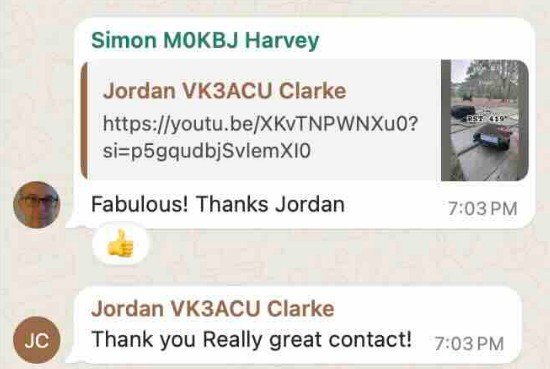
Catch you all on the air again soon.. + PS. Really enjoyed reading the CW stories on the WhatsApp group! [Thanks Jordan – and congratulations to you both on the VK to !1, /p to /p, QRP to QRP. QRS to QRS QSO!
See further down the newsletter for more from Simon in two locations in Italy, for two short videos of the contact, and for the CW discussion (with thanks to John VK2RU for compiling).]
[80m] + Marginal conditions, managed to scrape through ! + Although conditions were not great, I managed to get a few contacts in the log.
+ Mark VK6QI / VK2KI nearly caught me out as we were chatting the callsign changed from VK2KI to VK6QI took me a moment to realize
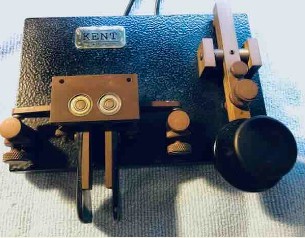
That Mark was using the VK6SR remote ! « Another fun night thanks to all..
[40m] + I worked 3 stations on the night. * Most notable was my first QSO, which was Andy on 40m. I was on my One Tuber homebrew 1.5 Watt QRP rig. Andy was also on a TUBE rig, his glorious Johnson Viking putting out 25 Watts… so we were tube rig to tube rig!
I was listening on my venerable Realistic DX-160 single conversion
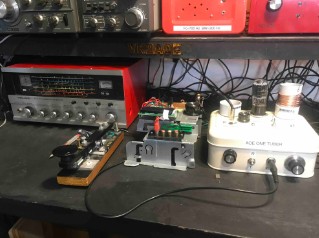
Superhet. Andy (I think) was listening on Kiwi online SDR. * The box in the picture is a steampunk QRP labs VFO – puts out 14 MHZ which I have built a circuit for to divide by 2 to 7MHZ and buffered and voltage multiplied tc tickle the tube and get me frequency agile.
I switch off the divide cct on receive so it isn’t heard in receiver. Tube is a 6V6 Chinese audio tube gives me about 4-5 watts with a rock and 1.5-2 watts with the VFO.
* Thanks also to Adam VK2NNW and Scott VK1PWE for their FB QSO and lastly (but not leastly) Chris VK2NAP. I had fun night! 73 de George VK2AOE.
[40m] «Very active with plenty of stations to reply to..
[80m] + Magic night with a noise floor aroun s0. Some static crashes but not a problem. Still trying to work out how to reproduce the great conditions..
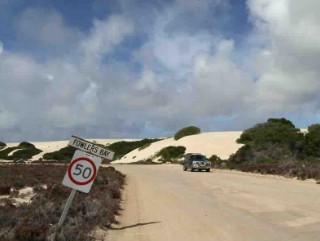
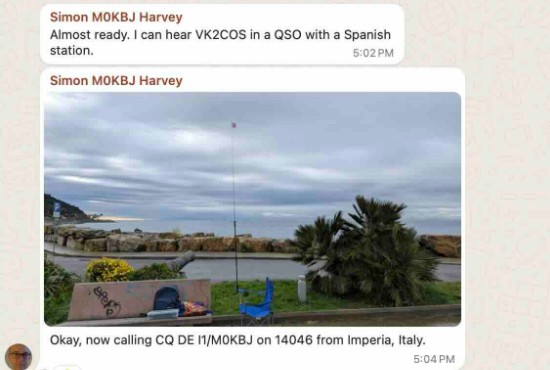
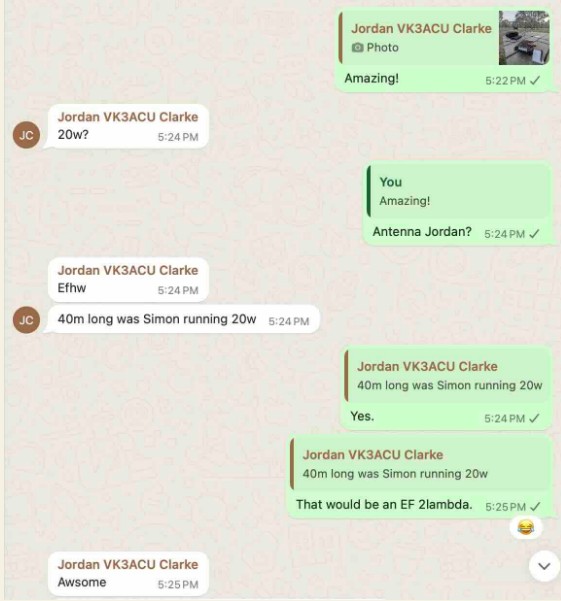
[80m] + An absolute blast. I’ve never worked so close to the sea and I’ve never had such good DX. With 20W and a JPC- 12 loaded vertical antenna, I heard VK2COS in a QSO as I got ready. Jordan VK3ACU was only running 20W into an end-fed
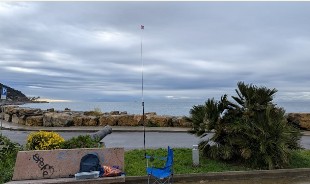
Double-wave but it was a sweet, sweet QSO. A great chat with David VK3DBD and rounded off with Mark VK6QI from bellisima South Bowning.. [How good is this Simon? Well done! See more below.]
[40m] * This net ran my all valve Paraset radio, xtal locked valve giving a bodacious 4W. Along with the two valve regenerative receiver. Surprise as to how well it worked and shall make the Paraset my radio for future nets..
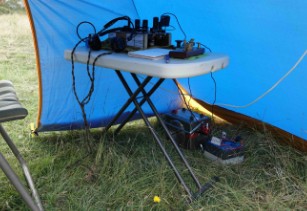
[I love how our net attracts older gear that otherwise might be gathering dust (electrolytic failures, noisy contacts etc) in the corner! See more below. Good stuf Wal]
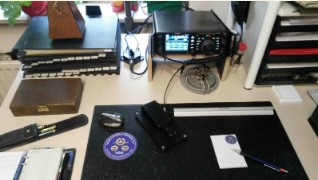
[40m] * Great to hear many new stations, great job. Have a great week :-).
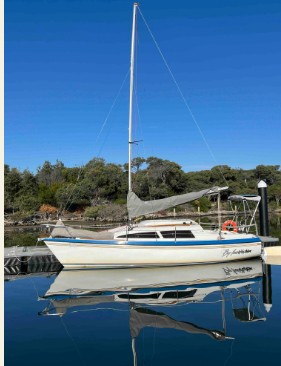
[40m] * Onboard our Noelex 25’ Yacht “By Invitation”. « The evening was a little testing and my RXing needs much improvement especially with all the goings on both the boat and electrical disturbances from fridge and other accessories running in the background even though sigs from Manny, George and lan were very good.
• Overall a fun QRS net and looking forward to next week and hopefully make some more contacts Maritime Mobile in the meantime.. [Thanks Rob – great fun!
Perhaps join the team on our CQQRS WhatsApp Alerts group for the time you’re there – then when you’re calling CQ you can send an alert so we can listen out for you perhaps? See more from Rob in Other News below.]
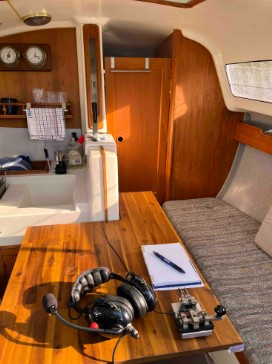
[40m] * I gave a few CQ calls with my Sw but no takers.
[80m] * conditions seemed good I was on for a short while around 08-30. [Great to hear you on again Phil.]
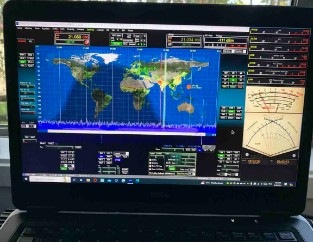
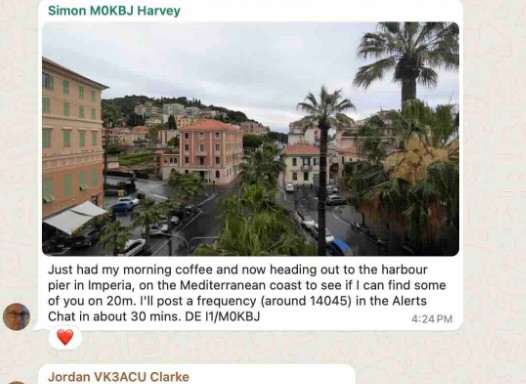
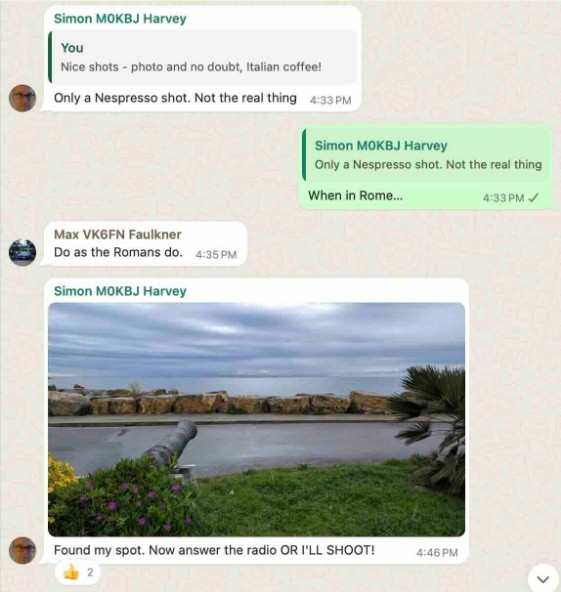
[20m] Tuesday’s net started nicely fo me on 20m using the Southern Electronics Group VK6SR Remote HF station at Bedfordale WA. Having received the nice coffee alert on our CQQRS WhatsApp Alerts group from
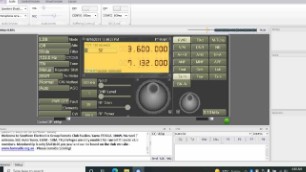
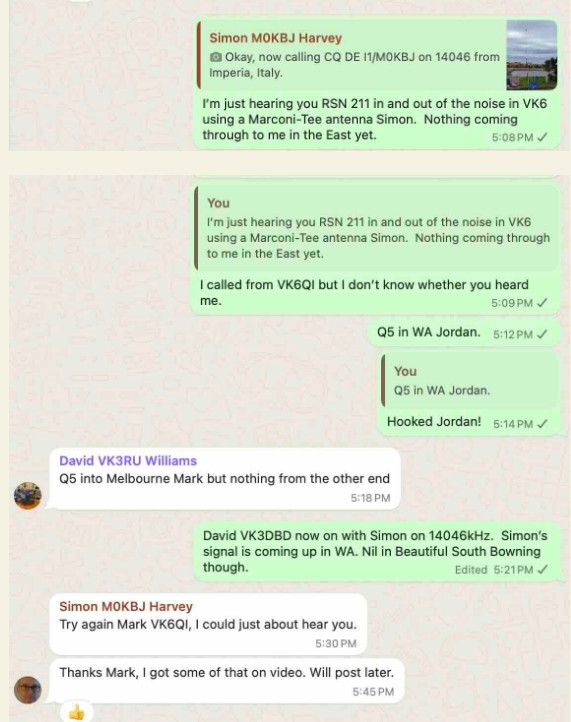
Simon MOKBJ at Imperia on the Italian Mediterranean, all ears were pointed toward the long path to Europe. Jordan VK3ACU portable was first to work Simon, followed by David VK3DBD at Yakandandah (try sending that in CW from memory).
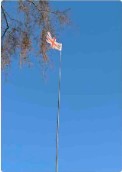
Simon’s 20 Watts to his 5m loaded vertical (with virtual capacity hat – the little Union Jack flag) was RSN 311 in- and out- of the noise on the Remote’s 12m high by 60m flat-top Marconi-Tee antenna, but he gave me RST 539.
Great work Simon, and thank you for getting up early and out into the rainy Italian morning. I hope he celebrated with a visit to a café for some nice Italian espresso?.
[40m] +1 could hear a number of QSOs on the Perth Remote and hooked up with lan VK5CZ at Clare. I hadn’t used the key connected to the computer here for a while… so sorry about my mis- handling lan.
I upped the spring tension a bit which helped, but boy was I having trouble sending the number six! My old WT 8 AMP No 2
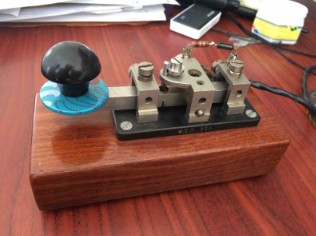
Remote key has some wear in the hole on one side of the pivot block – so it has a notchy feel when depressed, and upping the spring tension reduced the problem only a tad. What is it they say about bad tradesmen blaming their tools?
[80m] + With the VK6SR Remote still refusing to couple nicely to the Marconi-Tee in our little segment of 80m (| still don’t know how Rob VK6LD got it to work up on the phone frequencies, but not our segment), I fired up the Southern Electronics Group’s VK6CRO Remote station at the Camarvon Space and Technology Museum for the first time for yonks.
When the LED lights are on in the museum, the noise makes the Remote pretty unusable for 80m. I was chatting to Greg VKSKFG from home, and fiddling with the various digital noise reduction toys on the Remote’s FT-991, mostly without success (the Remote software shows a generic display, but not having studied how the FT-991 does things, there was lots of fiddling and adjusting trying to get rid of the noise).
Without preamps Greg’s signal disappeared, and using the front end attenuator had the same effect… + Anyway, after annoying Greg with my distractions, we finally hooked up via Carnarvon.
However, all wasn’t well with the Remote; the break-in wasn’t working nicely – if I sent a dit as the first bit of a letter, the change from RX to TX was a bit slow and I couldn’t actually hear the dit in the side-tone – it was buried in the noise stil…
Very distracting to miss the first dit when sending! More fiddling, and I found a setting in the RCForb remote control software to increase the side-tone level a bit.
I suspect I’ll need to also make some changes to the latency or buffering settings to make it useable in future.. + After Greg I chatted with Richard VK6HRC and asked him to have a listen to the break-in side-tone problem; by the time he logged in to the Remote, I’d found the side-tone setting in the application, and he was able to head off; being 11PM here, I was also going to have an early night…
But ended up fiddling with a newsletter problem… an hour later I was still herel. + Interestingly, despite the aurora and double-coronal mess ejection warnings from the Bureau of Meteorology, I didn’t see or hear any evidence of auroral activity on the VK6SEG KiwiSDR near Northam on the night..
Also from your editor Mark VK2KI at Beautiful South Bowning NSW
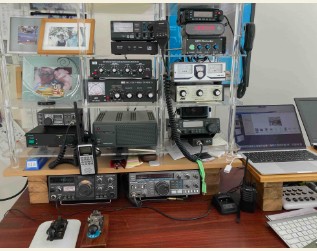
[40m] + Sounded like there was activity on 40m by the time I came down from the 20m sked with Simon. * I hooked up with Tony VK3CTM at Bendigo and after dinner, lan VK5CZ at Clara
[80m] + With the expected arrival of the solar wind from the double coronal mass ejection, I wasn’t sure what would happen on the low bands, D-layer wise.
Around 1100Z I moved to 80m and could hear signals from VK5 and 6, and was pleased to hook up with Greg VKSKFG. As previously reported, Greg at Willunga SA is still in drought, hot and dry and hanging out for rain; interesting as the very long drought experienced here up until a couple of years back is a distant memory – we are now getting much more rainfall each year than usuall.
+ Anyway as mentioned in my VK6QI report, while chatting to Greg, I was fiddling with the VK6CRO Remote at Carnarvon, hoping to get the noise level low enough to work Greg. Murphy’s Law… Greg asked me a question while I was distracted….
And I had to ask for a repeat…. QSB…. repeat again….. local QRM (sorry Ms E)…. repeat again! So apologies Greg… 1’l sit in the corner writing lines for a while so I learn to concentrate better! Hopefully Greg will talk to me again!.
+ Anyway, after Greg I chatted to David VK6KD/5 who was enjoying 1) being able to transmit ok on 80m, and 2) having an S-0 noise level for the first time in history; I could hear the joy in his keying}.
+l rounded out the evening with a QSO with Richard VK6HRC – only RSN 221 to me, but Richard reported RSN 542 – one-way propagation, loss through my phasing-type noise canceller, or most likely, my trusty old Trio TS-120S, struggling.
+ Thanks to everyone who was on air on Tuesday – what fun!.
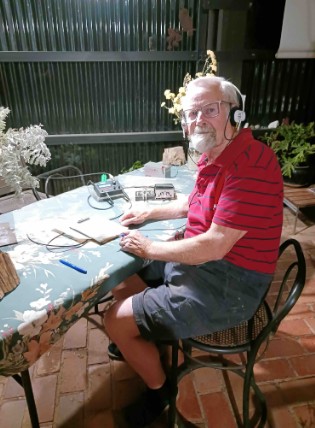
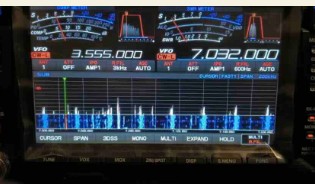
Here’s my QRP setup for the Tuesday, 15TH of April QRS net. My station consisted of an HB1B QRP CW 4 band (80, 40, 30 and 20) transceiver, Bencher iambic paddle with MFJ keyer, 5 Ah sealed lead acid battery and Sennheiser headphones.
The antenna is a half wave end fed on 40 metres with an inductor plus tail to get it to load on 80 metres. I believe that simple, inexpensive transceivers and low visibility end – fed wire antennas are a good introduction to amateur radio for potential new AROs.
[40m] * Still a quiet band, untill 1700, then some CW activity is heard, followed by the usual noise level after 1830 or so..
[80m] «it’s still a very quiet 80m band, these days with even the usual SSB natter is not being heard..

Post Morsum Report
Hello Mark Wednesday morning’s activity on the AllStar / Echolink and the WA linked repeater network. VK6QL Mark VK6KD/5 David VK6KRC Bob VK6HRC VK6MRB Mulligan SWL and others.
Missing in action VK6NW Wayne (in Kalgoorlie this week) and Max VK6FN (tightly snuggled up in bed still). Mark checked in from Beautiful South Bowning with a view of the home paddock and the not so welcome Easter rabbits!
Another busy night starting on 20 Mx with ‘Simon in rainy Italy and then on to 40 Mx from home and the VK6SR remote, no go transmitting on 80 Mx due to tuning problems.
Mark also did the usual spotting on WhatsApp and ended the evening getting to grips with the settings on RCForb remote. David checked in from his RF quiet bush camp in beautiful Fowlers Bay SA also being spoiled with a cup of coffee on the flight deck provided by Pauline!
Enjoying Zero noise levels worked two on 40 Mx heard two and then on to 80 Mx to work Mark VK2KI, and heard Manny VK2DRQ. David also caught up with Richard VK6PZT on 20 Mx . Temperatures in the thirties but not far from the ocean for a quick dip to cool down.
Bob checked in and commented on the spectacular sunrise with possible auroral activity, also caught up with the QRS news / activity. also had a fun night working four on 40 Mx and five on 80 Mx. Some contacts were fairly short due to the conditions.
Thank you to all for your support and patience. 73 Richard VK6HRC PS just found out why Lin was not on the net last night, as he is holidaying in Bali where he has hopefully caught up with a nearby local amateur. Will cut him some slack this time!
[Thanks again Richard for getting up early to run the net every week, and for compiling the notes – gold star and an elephant stamp coming your way.)
This Week’s Topic of Interest
Portable, especially QRP Portable, lends itself to Minimalism. But how far do you take it? My feeling is that you should lean into Minimalism and take only the bare minimum. Here is my current ‘Kit List’:
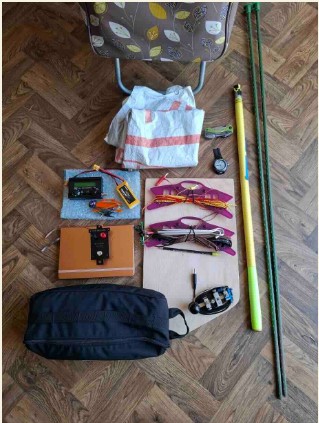
Shopping trolley waterproof ground sheet 6m ‘carbon’ mast 2 stakes for elevated radials multi-tool watch set to UTC radio battery earbuds winder with antenna and elevated radials winder with mast guy lines and pegs log book & pencil 4:1 Balun lap desk & Morse key folding camp chair
BUT if you have an important sked to keep, I think (shock, horror) that you should take two of everything! Okay, you can always sit on the ground so you don’t need a second camp chair.
And you can back-up the elevated radials with a compact set of ground radials. ‘And you don’t need a log book if you have that sked with only one operator and you can head copy.
That keeps a second (back-up) kit compact and light, so it’s not such an outrageous suggestion as you might first think. So, are you a Minimalist portable operator? Or do you take everything except the kitchen sink? Ross MONNK [Thanks Ross.
Interesting how portable operation these days has opened up a whole world of sub-interests… especially for SOTA and similar activities off the beaten track or up hill…
Battery technology and charging, antenna wire weight, throwing devices, poles and holder-uppers of various kinds, BALUNs, tiny antenna couplers, mobile devices, work surfaces, chair technology, light weight water, combination tools, light weight hammers, pegs and grounding stakes, light weight coax, compact keys, connectors and adapters, vehicles, toilet paper, light weight clothing, emergency gear, carrying gear, light weight transceivers, etc!
But what do you really need, then halve it and try again! I’ve yet to be caught so short that I couldn’t get on air. But the question buzzing around my head… why does it still take me an hour to set up an antenna and get on air?
Perhaps one of our portable gurus could help – lan? Warren? Lance? Andrew? James? John?
Wal said
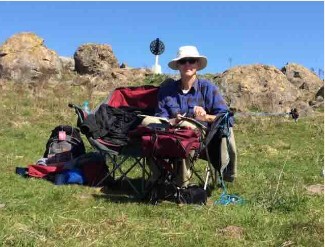
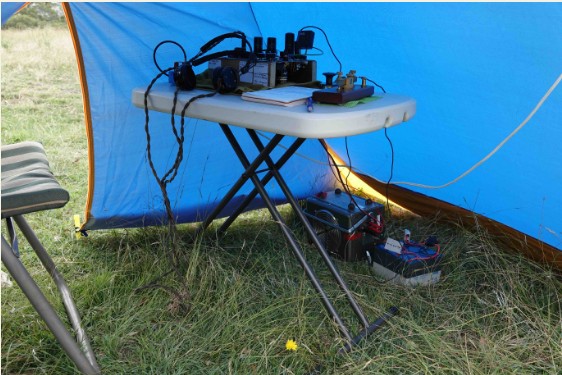
Here’s a photo of my Paraset radio in action at Mt Lambie a SOTA summit. The Paraset works quite ok although the regen receiver is rather fiddly to tune. It’s powered by a 6 volt battery and uses the vibrator supply from an old Ferris car radio.
The battery is the weighty thing. Actually over in the UK a enthusiast carried a WW2 military radio up to a summit, his 20 year old son carried a car battery in a frame pack. A few other ops have built valve sets and taken them to SOTA summits lately.
If you have an article or two that you think might be of interest to our readers, please let me know so we can share more thoughts and ideas; email to cqqrsnet@gmail.com

On My Workbench
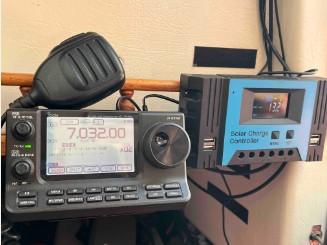
Yeter VK7KPC’s new shack – South Coast of South Australia:
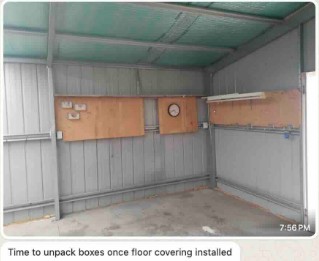
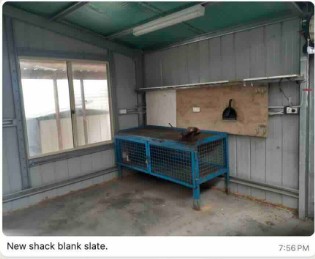
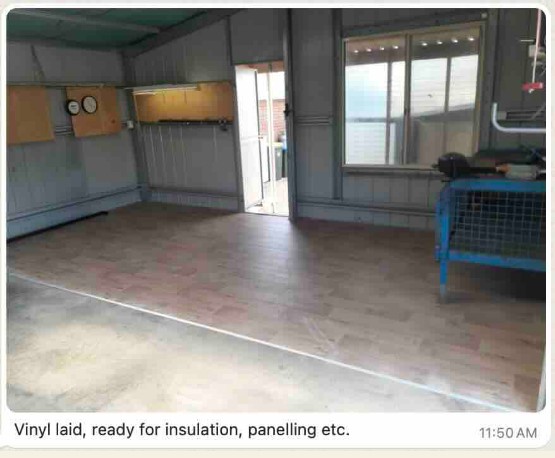
Memote CONUO! Of ad FICA faalO OVEr otdiill Continuing from last week from lan VK1HF.
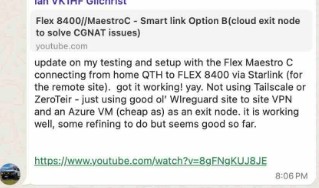
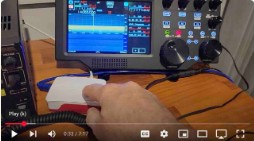
}ee more on lan’s decision to buy a Flex radio in Other News below.
QORZ7?
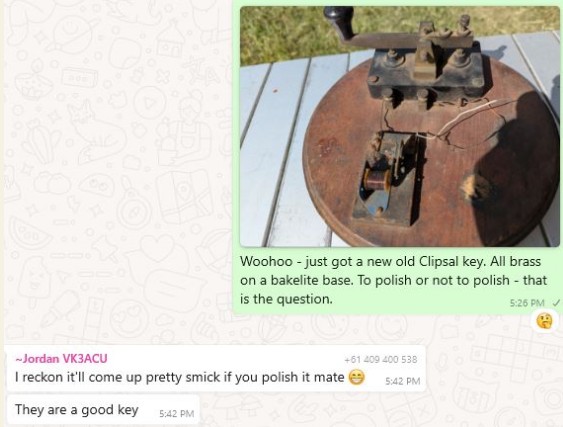
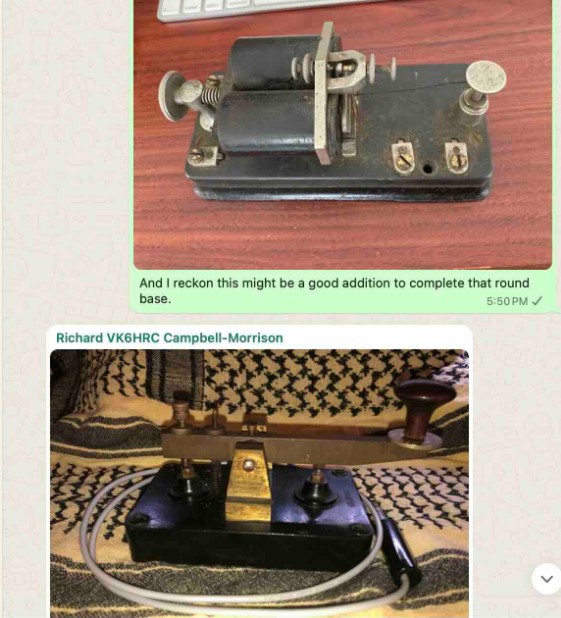
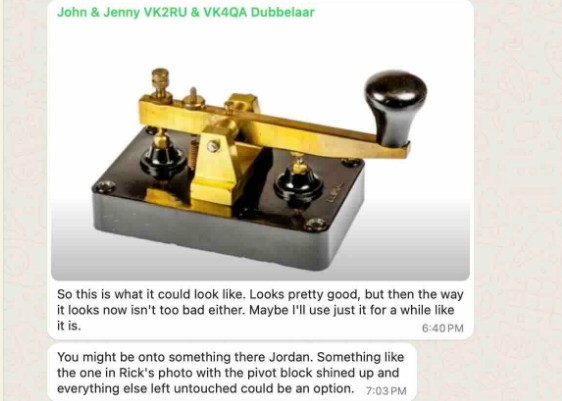
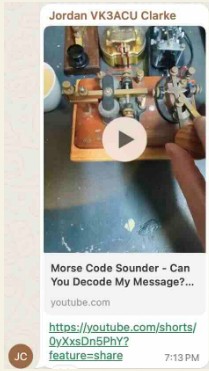
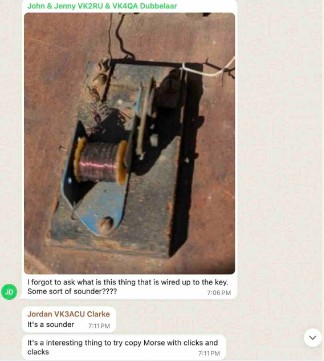
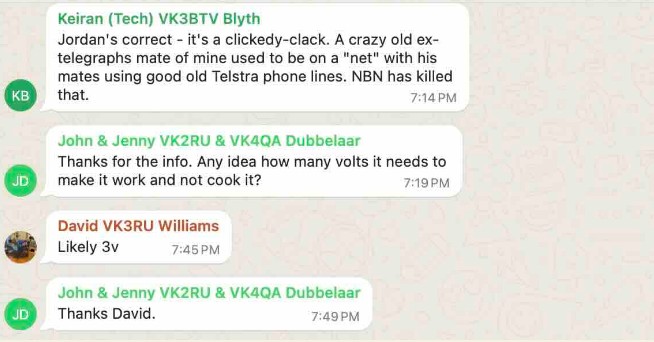
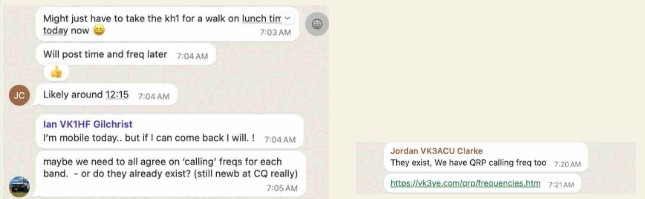
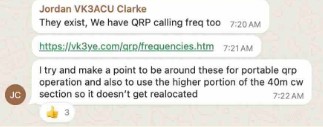
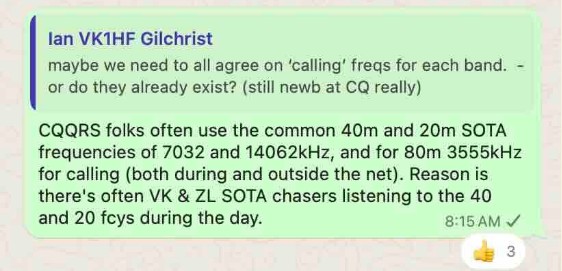
Something different this week… but hopefully, just as insightful about some of our team members. Editorial mate John VK2RU has compiled the following from a conversation in the CQQRS WhatsApp Rag Chews group – thanks John.
First Distress Calls – led by lan VK1HF:
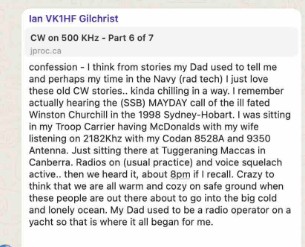
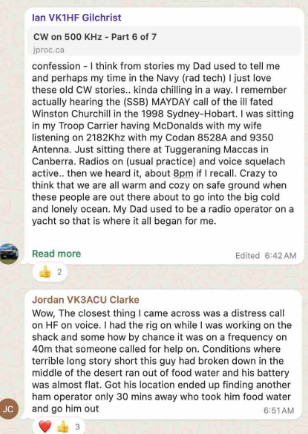
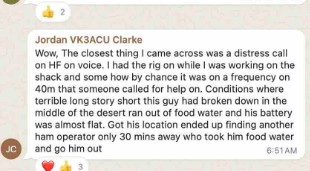
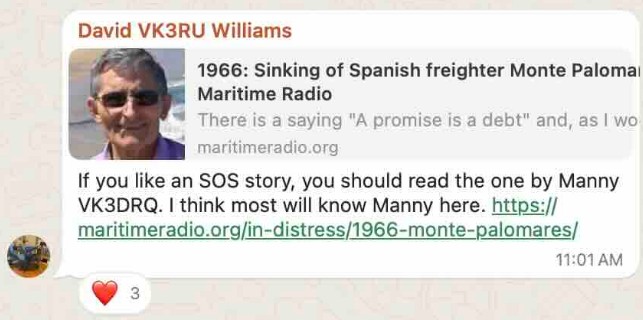
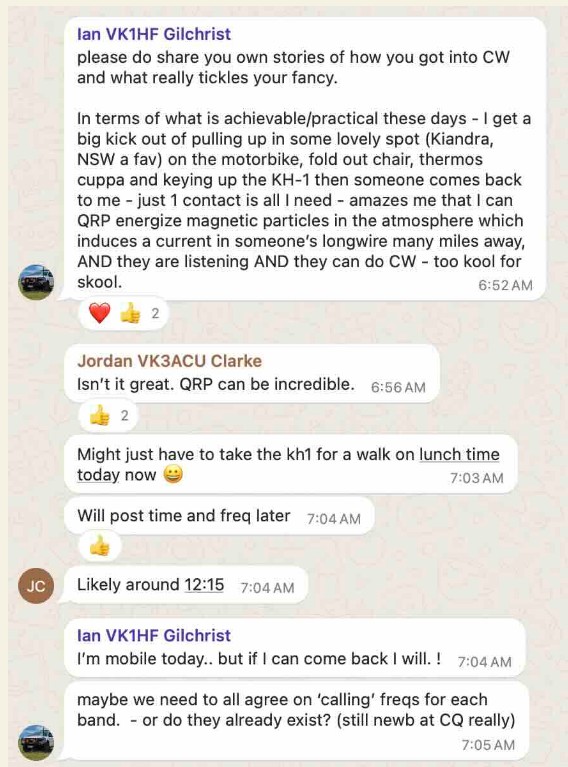
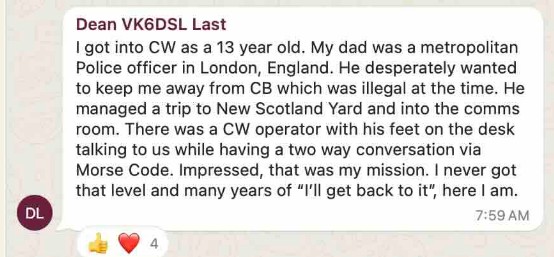
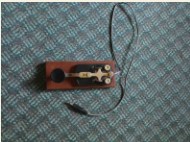
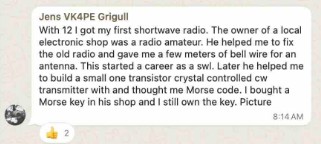
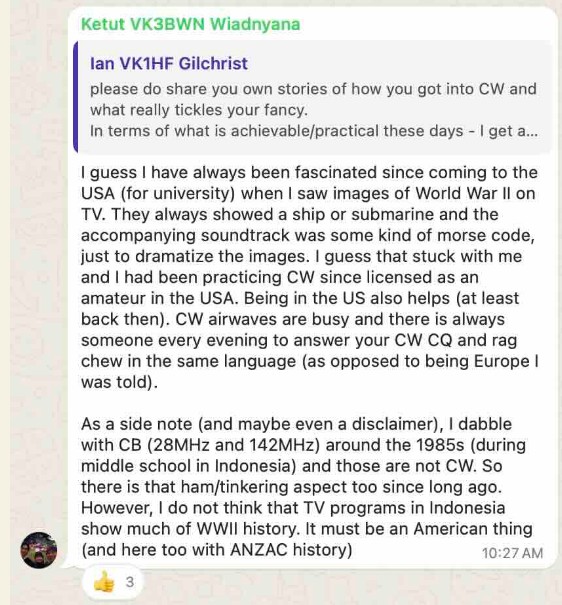
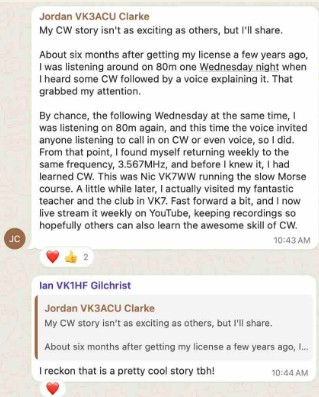
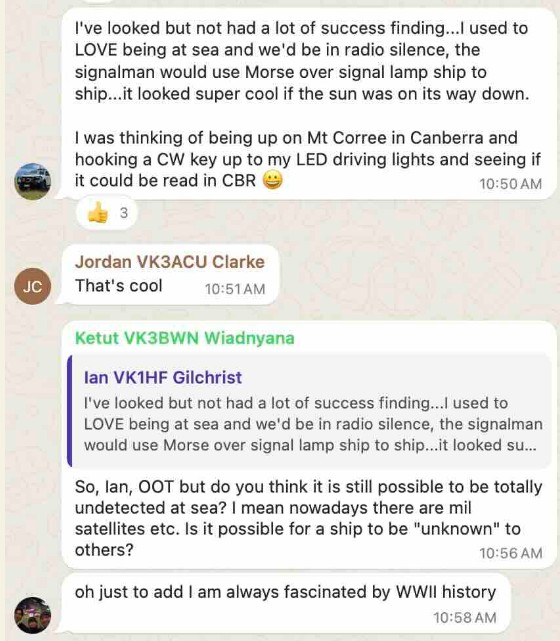
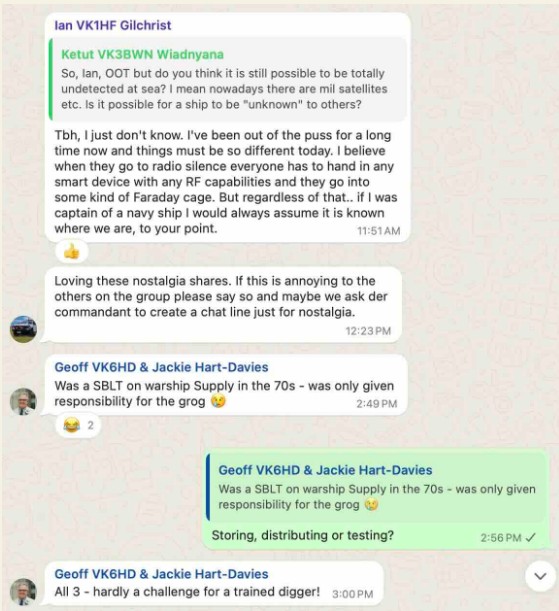
QRZ? Who’s on the other end? Key to the success of our net is helping to make it a get-together that people enjoy returning to each week. When you’re on the key, it’s really hard to find out a bit more about the person you’re chatting to.
So I’m really keen to share the backgrounds of some of our team members – it’s really nice to know who’s on the other end of the QSO. How did they come to amateur radio and when, and what on earth was the motivator that got them interested in CW?
How’s the journey been so far, and what’s planned? Perhaps, what they get out of the net and the newsletter, and how it can be made better? Would you be willing to share some thoughts about yourself?
Please let me know: cagrsnet@gmail.com Alternatively, lan VK1HF is keen to record and produce some short audio segments for RagChew about some of our team members.
If you’d like to have a chat with lan rather than writing something, send me an email and I’ll pass your details to him. So… QRZ?
Other News
From Simon MOKBJ Villa Griffone was the main residence of the Marconi family starting from the mid 1800S. It was here, in his family residence, that Guglielmo Marconi set up his first workshop and performed his first experiments on radio-telegraphy.
In the year after the death of the scientist (1937) the Villa became the site of the Marconi Foundation that housed the Library, the Archive and the Catania-Meucci fund.
The Villa is also the site of the Marconi Museum (Museo Marconi) where visitors can retrace the origins and the developments of telecommunication as well as the training and the activities undertaken by the Bologna inventor.
This was the first transmitter and receiver to make a non-line-of-sight radio communication. The transmission took place in the garden of Villa Griffone, in 1895.
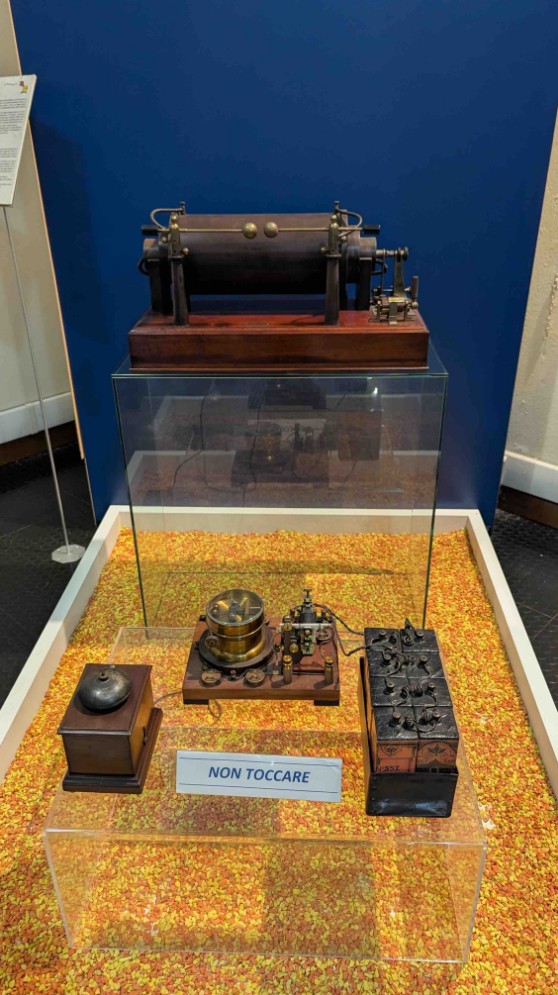
And this was the last in the same spot. My own station running 15W into a grounded vertical antenna, just like Marconi innovated, today, 13 April 2025.
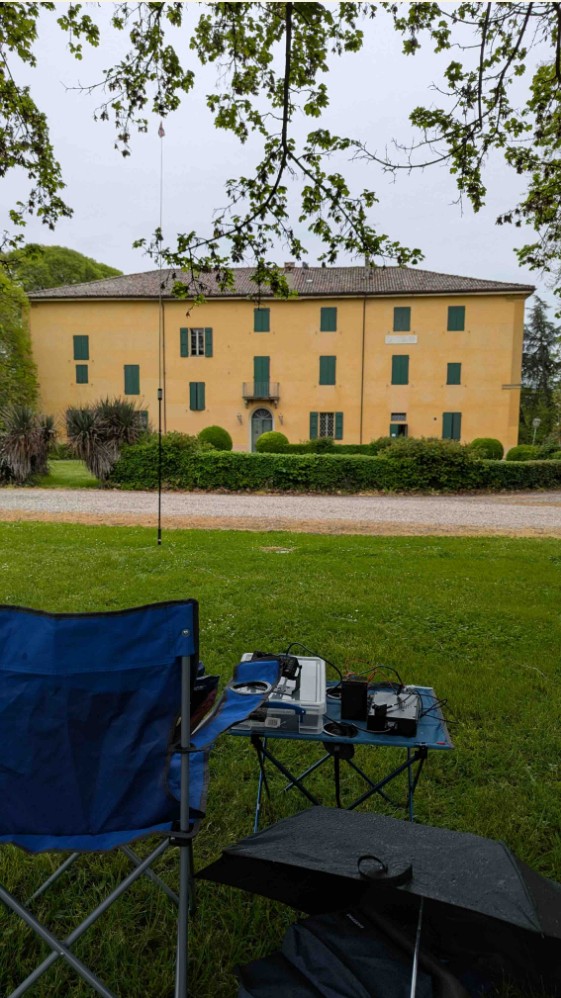
It was a great privilege to use this hallowed QTH, operating as 14/MOKBJ and making contact with some UK mates in glorious Morse, just like Senor Marconi. I’ll write a fuller report on Villa Griffone, when I get back home.
Ionospheric Scintillation
The Bureau of Meteorology’s Australian Space Weather Forecasting Centre issued this routine warning during this week’s geomagnetic storm resulting from the sun’s double coronal mass ejection. I wondered what “scintillation” in propagation meant?
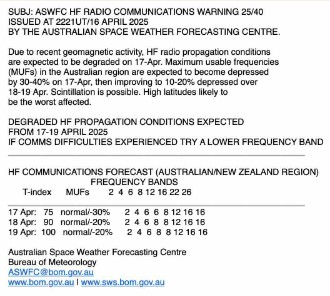
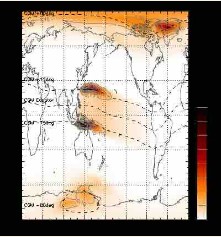
Well the BOM’s website tells us that “lonospheric scintillation is a rapid fluctuation of radio-frequency signal phase and/or amplitude, generated as
A signal passes through the ionosphere. Scintillation occurs when a radio frequency signal in the form of a plane wave traverses a region of small scale irregularities in electron density.
The irregularities cause small-scale fluctuations in refractive index and subsequent differential diffraction (scattering) of the plane wave producing phase variations along the phase front of the signal.
As the signal propagation continues after passing through the region of irregularities, phase and amplitude scintillation develops through interference of multiple scattered signals”. Sounds like it’s what amateurs call ‘auroral flutter’.
The ionospheric scintillation affecting HF is most prevalent in the F-layer in sub-equatorial regions, and usually peaks several hours after dusk.
Luckily we now have a team member in Darwin – Mal VK8MT – I wonder if he can give us more information on his observations?
From the sound of the warning message, the SWS is predicting that the scintillation may be possible at higher latitudes at the moment; we’ve certainly had some interesting propagation conditions in the last year or so on our net from time to time – have you heard it this time?

And thanks to Keiran VK3BTV for this helpful suggestion.
| also wonder how this relates to the auroral buzz that we often hear on 80m, that appears to move slowly over time in a lower to higher direction (and possibly more frequently in WA than over East)?
But as I asked in a recent RagChew, why a buzzing sound and cloud-like blobs on the SDR waterfall
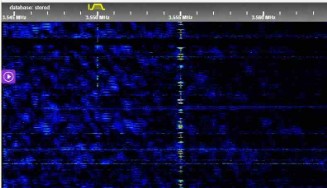
(frequency vs time) display? Perhaps something is perhaps being scintillated – some sort of broad-band noise source perhaps? But what? Sun noise? Background space radiation? Something else? Anyone know? cqqrsnet@gmail.com if you have any thoughts.
VK3ECH Maritime Mobile
Hi All. I was a bit late for Post Morsum on Allstar this morning and only heard the tail end chatter so didn’t bother to check in.
| keep the boat at home so it lives in the shed, out of the weather and trailer it down usually via Bright and Mt Hotham, which is a pretty good run from Echuca.
So on Tuesday, I was anchored in Box’s Ck near Metung in Gippsland and the picture was taken at Barrier Landing which is a bit further towards Lakes Entrance.
I’ll be down here for a couple more weeks if everything works out and weather permitting so I’ll try to be on time next week. Hope to catch you while I’m down this way, using the saltwater amplifier. Cheers, Rob VK3ECH
Morse Training Net
Our team member Nic VK7WW runs an on-air Slow Morse training net every Wednesday at 7pm EDST on 3580 for 30 mins. He uses the callsign of the Northern Tasmania Amateur Radio Club VK7TAZ on that net.
Many of our team learned Morse code with the support of Nic, and the weekly training session comes highly recommended for anyone who wants to learn the Code, or simply brush up.
Everyone’s welcome – 3580KHZ at 7pm Eastern time every Wednesday; you’ll hear lots of the CQQRS team on that net. Jordan VK3ACU is recording this round of training lessons – you’ll find the link to the YouTube recordings on our website here:
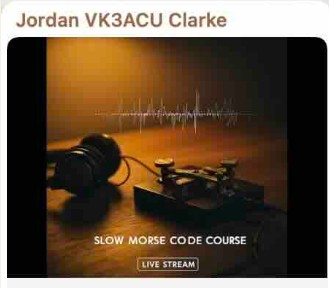
Bit.ly/CQQRSWebsite then navigate to: useful-resources-and-links Contact Nic VK7WW for more info nicholaschantler@hotmail.com including how to join the NTARC DISCORD group to follow the action, or just come along and join in on Wednesdays.
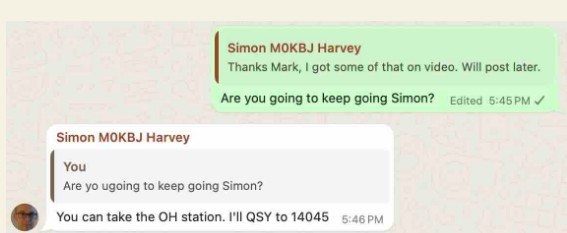
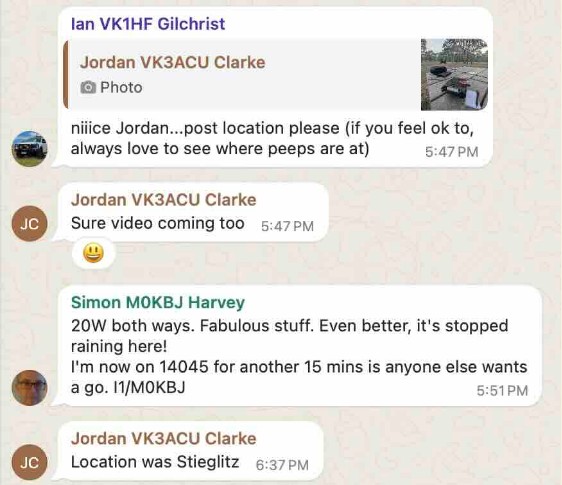
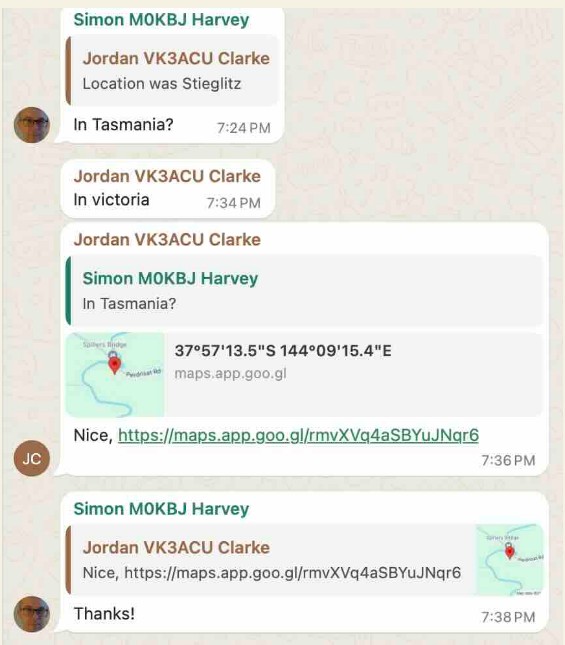
From Simon MOKBJ on the Italian Mediterranean Sea Compiled by John VK2RU from our CQQRS WhatsApp Rag Chews group posts

The Decision to Invest in a Flex Transceiver.
Continuing with the Flex radio story from On my Workbench above, and last week, lan VK1HF outlines the decision to go down this path in this video.

DXperiments Northern Hemisphere Summer
I’m very pleased to announce that Mike DL3YZ will again be coordinating the summer season DXperiments by our Northern Hemisphere
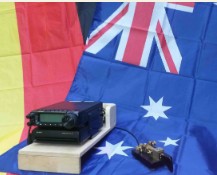
Team members; Mike will coordinate the sked frequencies and times between the members and will let me know what’s planned each week for inclusion in the weekly email reminder.
Thank you very much for offering to do this again Mike – very much appreciated down this way.
Snip and WhatsApp Help
Much of this week’s RagChew newsletter was the result of a heap of hard work by John VK2RU; pretty amazing considering he and his lady wife are permanently on the road as professional grey nomads.
However, John has faced a bit of an uphill battle because he’s using a Windows computer – I’m pretty lucky that Ms Elizabeth bought me a brand new MacBook M3 for my birthday last year – and imagery is what it does best!
However, John’s been struggling with the resolution of the images that he’s captured off his Windows screen using the Windows Snip program. I’ve also been struggling a bit with MailChimp not liking some of the image files generated – and doing odd things.
Do any of our readers have experience with ways of improving the resolution of Snip images (this doesn’t appear to be controllable in Snip), or perhaps, suggestions for other better pixel capture applications?
Similarly, John has volunteered to find newsletter material in our WhatsApp conversations each week (what you see in this edition was what John found).
However, on John’s Windows computer, each of the WhatsApp text images include the phone number of the originator; the numbers don’t appear on my computer (possibly because I have all of the team members’ phone numbers in my WhatsApp contacts list?).
Many of our team members don’t want their phone numbers published, so I’ve had to replace John’s captured images woth ones from my computer – so there’s no phone numbers shown.
However, does anyone know how to stop the Windows version of WhatsApp from displaying the senders’ phone numbers? Ifyou can help with either problem, please email me at cqqrsnet@gmail.com
Last week’s net
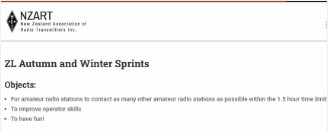
Last weeks net from Andrew VK1DA Noticing I was heard on air by someone last Tuesday, I thought I should mention that i was operating in a sprint (Short contest) run by NZART every Tuesday in April at 0800 UTC on 80m.
The first 30 minutes is CW, then follows 30 mins on ssb, then FT4 for 30 mins.
That week I operated from Mount Stromlo in the ACT and setup was assisted by Al VK1RX. We hauled an 80m dipole up a decent tree and the feedpoint was about 10m up. Signals were strong, worked 10 contacts on CW and 12 on SSB. Used 100W from
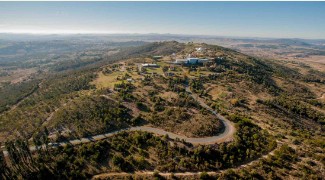
The IC-706. At 0900 we packed up and were gone by 1000. The dipole was a 40m linked dipole with 10m extensions added to each end. Later by email I was told that my signal was 10DB over 9 in ZL3.
Details of the sprint are here. https://nzart.org.nz/activities/contests/ sprints/ Speeds used were probably about
16WPM, some faster, some slower. Good copying practice even if people don’t want to join in the event. Everything is predictable, callsigns, 599 nn bk. No names or antenna details, or the recipe for scones. #SFP.
The cyphers in this event are your outside air temp. I gave 15. A few ZL3/4 gave lower, like 4 or 5c. Despite the 3520-3550 segment being full of good strength signals for that time 0800-0830z, noticed some reporting no activity heard. Something wrong there.
In my rx many were s9, some as low as s5 but nothing impossible to copy. Also was told that VK-VK contacts are ok for the event.
Web SDRs
From Andrew VK1DA For the benefit of people looking for a web-sdr site, there are several indexes of web sdrs that are free to users. Google is your friend.
Readable File
What have you been reading lately? on the track somewhere by John VK2F
What have you been reading lately? on the track somewhere by John VK2RU / VK4QA
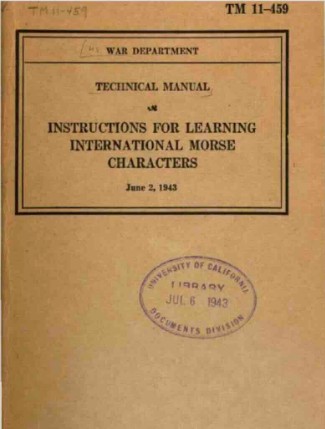
Instructions for Learning International Morse Characters Department of the Army Technical Manual TM11-459 — June
The manual breaks down everything from the basics of dot-and-dash signals to how to send and receive messages accurately and quickly. The manual includes tips for memorising the code, using rhythm to improve speed, and practicing with audio signals.
It also covers proper procedures, like how to handle message traffic and keep things efficient in the field. Even though it’s was a technical manual, the goal was simple: train soldiers to be fast, reliable communicators under pressure.
Think of it as a wartime crash-course in Morse, with no fluff—just what you
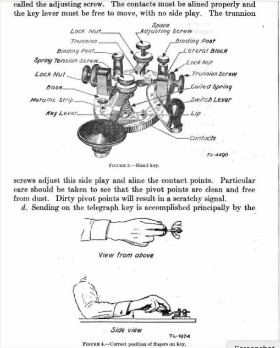
If you’ve read something that you think might be of interest to our readers, please let me know so we can share more thoughts and ideas; email to cqqrsnet@gmail.com
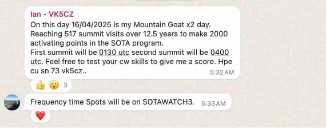
I Hear Tell…
I hear tell that some of our team tried
To convince the members of the WA Southern Electronics Group to include Morse keys as essential packed items

| hear tell that one of our volunteer Marine Rescue radio operators has been involved in trials of a new boatie logging system called DECKEE. The trial has been a great success and should be deployed in the next year. Well done to all our volunteers out there!
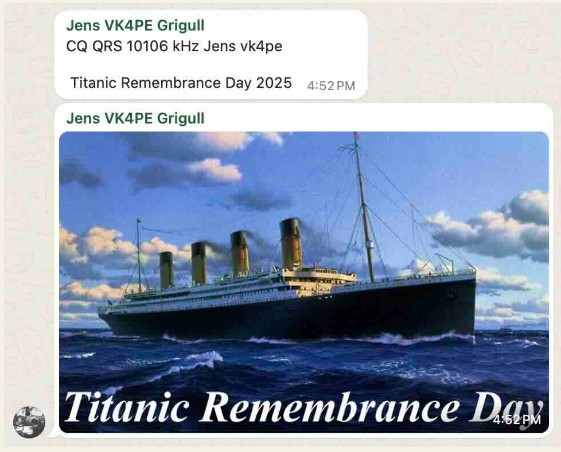
| hear tell that Jens VK4PE commemorated the April 15TH Titanic disaster and the role that radio and CW played this week.
From Lin VK6NT – one of our very early team members
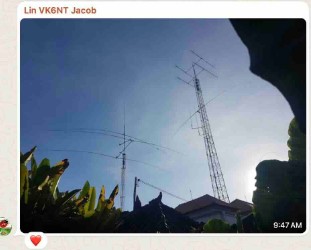
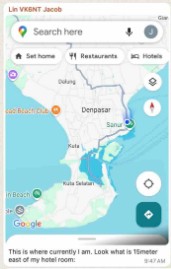
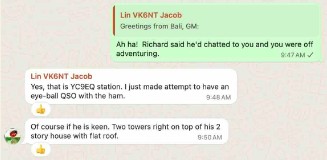
| hear tell that one of our lot was trying to tell a story about how to pick up a 50 cent coin with a fork-lift this week.
Every time he got to the critical bit about how to do it, his signal dropped out; I could imagine dozens of listeners sitting on the edge of their seats as the critical bit dropped out each time 🙂
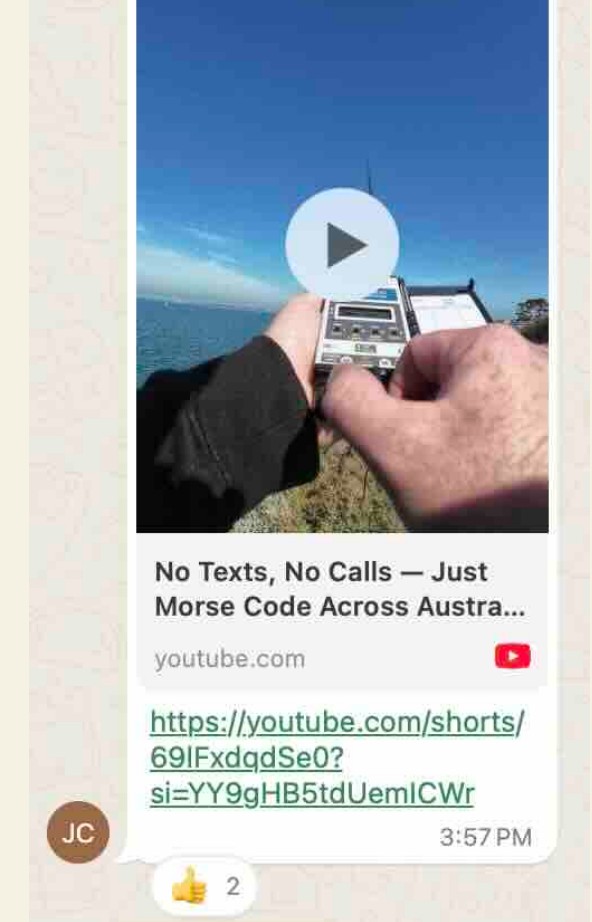
[If you have some intel about other team members… or even yourself… that’s worth sharing, please let me know cqqrsnet@gmail.com J
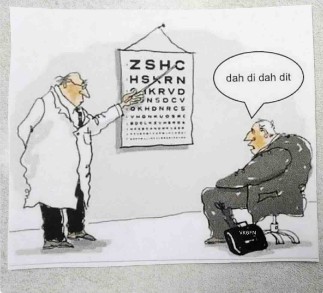
Di-dah-di-dah-dit
Back to the CQQRS Slow CW QSO practice ne
Next Tuesday’s Net
Our CQQRS Group will be on as always on Tuesday from around 0700Z until about 1300Z; see https://bit.ly/CQQRSWebsite and navigate to the Net Details page for details.
Doesn’t matter whether you’re brand new and want to try just exchanging callsigns and RST reports, or you’re ready for a good old rag chew. We’ll have fun.
There’s usually people around until after 1300Z – so keep calling in the segment of the band designated in the table below until you catch someone.
I should be on as usual from home in NSW or via the Remote at Bedfordale WA, and I’ll also be watching the proceedings using the VK6QS and Tecsun SDRs in WA and NSW respectively. Hope to hear you there.
Please let me know via our Reports form bit.ly/CQQRSNET who you work or hear on Tuesday’s Group. The report form closes at lunchtime (Eastern Australian time) on Thursday.
Post Morsum
Richard VK6HRC will run our phone Post Morsum on the South West AllStar net (via repeaters and hotspots all over WA) from 0600 WA time, then from 0700 WA time on 80m (8605 LSB).
See https://bit.ly/CQQRSWebsite and navigate to the Net Details page for details of how you can connect via Echolink or even possibly via your local FM repeater.
Teamwork
Thank you so much to our team of 32 contributors: DL3YZ, 11/MOKBJ, MONNK, VK1DA, VK1HF, VK2ALR, VK2AOE, VK2NNW, VK2RU, VK2WP, VK3ACU, VK3BTV, VK3BWN, VK3CTM, VK3DRQ, VK3ECH, VK3RU, VK3TBR, VK4PE, VK5CZ, VK5KFG, VK6DSL, VK6HD, VK6HRC, VK6IS, VK6KD/5, VK6KHZ, VK6NT, VK6RR, VK6WE, VK7KPC, ZL1PB.
Thank you team. GU CW on Tuesday, mb Mark Bosma VK2KI / VK6QI Beautiful South Bowning NSW mark.bosma@icloud.com non impediti ratione cogitationis


About the CQ QRS Net
For the current schedule and more information about the CQQRS net, please go the the Net Details page on our website:
The opinions expressed in the RagChew newsletter are those of the individual contributors. The opinions do not necessarily reflect that of the editor or of the CQ QRS Group members.
Any material and images received by the editor or published on the CQQRS WhatsApp groups may be published in this newsletter unless specifically requested otherwise.