Below is a reconstruction of the 2025 12 CQ QRS RagChew newsletter designed to support full text searching. This reconstruction was built using OCR, and will contain errors.
To view the Mailchimp original, click here. To search the entire newsletter archive, click here.
Contents
- CQ QRS Rag Chew
- Post Morsum 1st April 2026
- Reporting
- On My Workbench
- Whipping up a Tripod
- CW Practice
- Other News
- Spring Has Sprung
- Back Porch On The Air
- Sincerely
- Kangaroo Island Mobile CW
- The REALLY Long Path
- Solar Eclipses: What the Bands Revealed.
- Regulations
- Morse Training Net
- French Perhaps?
- Spanish Amateur Visiting Melbourne – SOTA and POTA Activity
- CW Academy Classes for May/June
- 1. Beginner
- 2. Fundamental
- There’s No Such Thing…
- Question:
- Another Answer:
- Prosign/Character/Signal of the Month
- Di-dah-di-dah-dit
- Next Tuesday’s Net
- Reports & Photos
- Post Morsum
- Articles
- Material
- Teamwork
- About the CQ QRS Net
CQ QRS Rag Chew
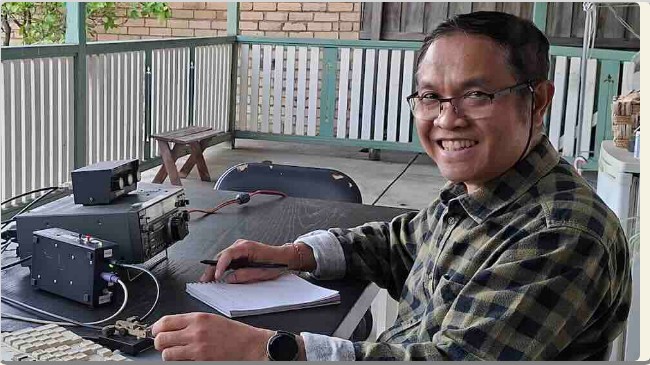
Thanks this week to Ketut VK3BWN – we could just about hear the grin on his face when he was operating from his back porch on Tuesday night! See Other News for Ketut’s terrific report – thanks for sharing your experience mate.
_ink to our Weekly CQQRS Net Reporting Form
Sounds to me like most people had lots of fun on Tuesday’s CQQRS Slow CW Practice QSO Net this week; I know I did. We had at lest 50 of our team on air or listening in – terrific, once again!
I trust that you’ll enjoy reading this week’s reports from our team below – I most certainly did. And similarly, ‘m sure you’ll enjoy reading the other articles that’ve been submitted again this week – huge thank you to everyone who took the time to put words and images together for your reading pleasure.
In Australia and New Zealand, the annual Daylight Savings nuisance is coming to an end this weekend, and I think the Europeans and UK team members (being six months behind us) have already started theirs.
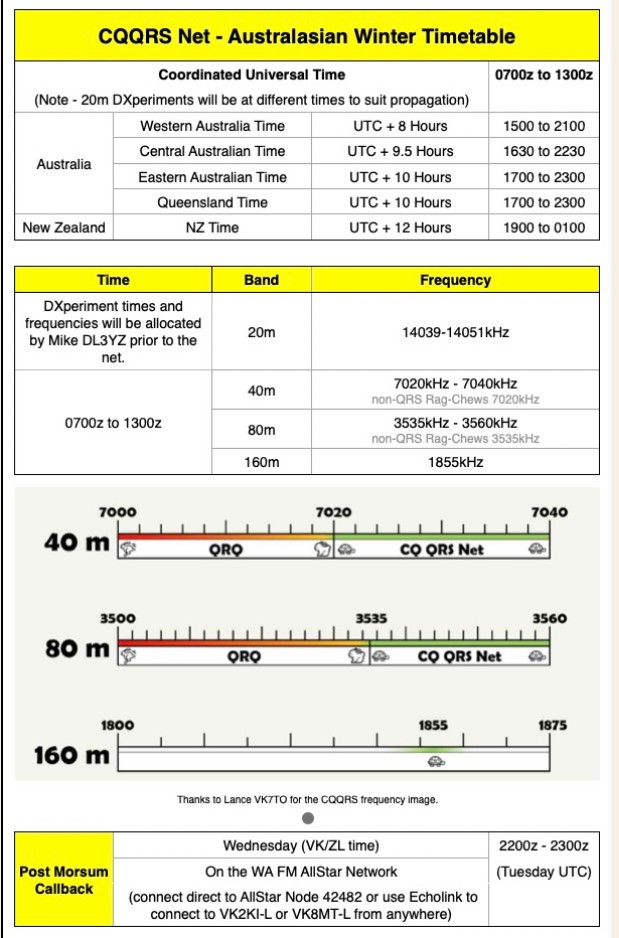
This means three things: * ‘llbe able to stop whinging about Daylight Saving for a while + The Kiwis and Eastern Australians will enjoy the 80m openings to WA an hour earlier * And this is yet another opportunity for me to get the timetable wrong again.
So putting the last dot-point to the test – here’s what I hope will be the new schedule for the CQQRS Slow CW Practice QSO Net, starting from Tuesday April 7th.
| hope you can make the time to scan through and enjoy our newsletter – with thanks again to all of our contributors.
If you’d like to find out a bit about our net, or would like to pass information to others about our Tuesday get-togethers, here’s the link to our website. bit.ly/CQQRSWebsite So here we go – on behalf of the CQQRS Editorial team, I present to you….
WVlarK bosma VK2KI / VK6QI Patrick John Beautiful South Bowning VK2IOW VK2RU NSW Milthorpe NSW on a track somewhere cqqrsnet@gmail.com non impsditi ratione cogitationis Nigel Richard Lance G4RWI VK6HRC VK7TO our other grey nomad Padbury WA Margate TAS
With thanks to Nigel G4RWI’s clever software, and John VK2RU’s clever spreadsheet work, here’s the 72 stations heard by 50 members of our team on Tuesday:
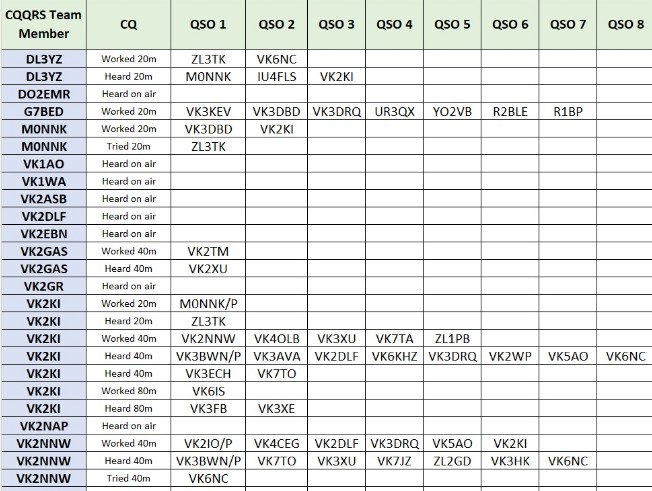
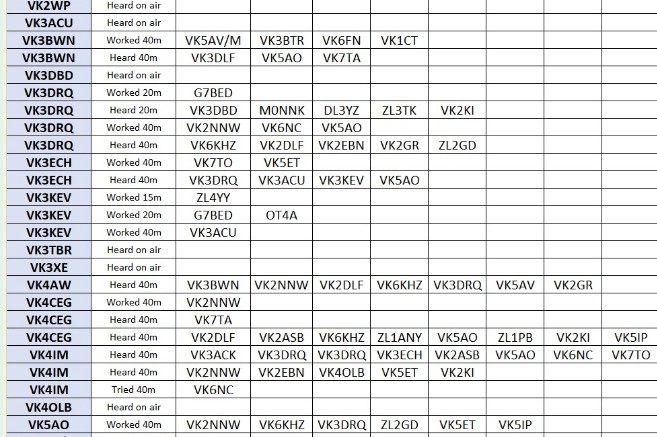
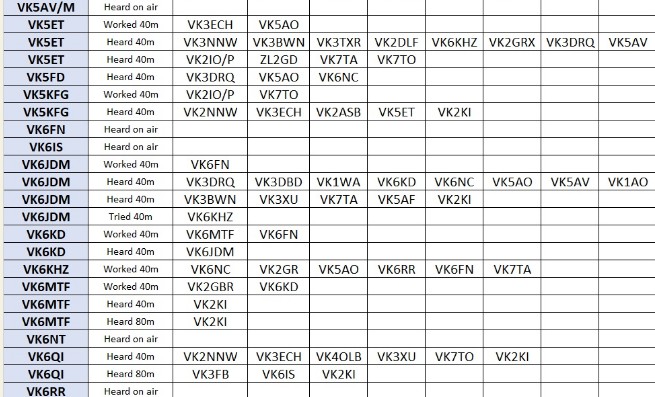
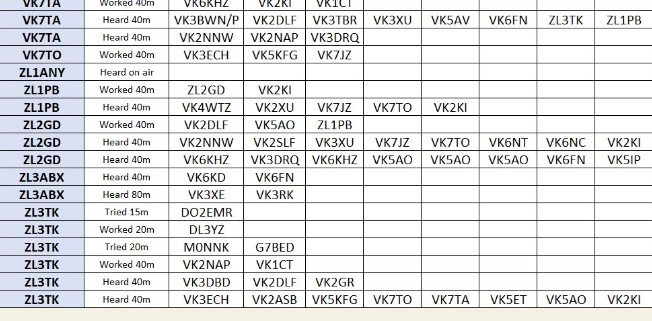
John’s spreadsheet above shows the known stations heard or worked on last Tuesday’s CQQRS Net (reported via our webform bit.ly/CQQRSNET ); the comments in the team members’ reports follow.
The comments were compiled for us by the clever software built by Nigel G4RWI and the layout was perfected by Patrick VK2IOW. Thanks again to Nigel, Patrick and John for the work, and to every team member who submitted a report –
From Chris G7BED at Northampton, England
[20m] Conditions seemed good tonight, with my signals landing nicely into the Ironstone SDR. I couldn’t get Mike’s spotting page to work (URL not found) so couldn’t announce QRY, but called anyway.
My usual CQ CQ CQ OC OC managed to rustle up the obligatory none OC stations 🙂 … which I worked briefly anyway. F Ukraine QSO, many Russians called … that always hap
Ctl nate Wt lt taal re hatin et elated OF A mmaatend 0 Mitchie fiat ae A 2 tia ore aera trent tetas A Ukraine QSO, many Russians called … that always happens. I did manage to get Kev VK3KEV in the log though but only via the WebSDR.
A Russian then pinched my frequency, just as I heard David VK3DBD calling me, so I put in a quick ‘up 2′ and called him back, finally getting him. We had a nice chat comparing different keys. I managed to also get Manny VK3DRQ before going QRT.
So, all in all, a very successful session. As always, many thanks for trying chaps, and hope to get more of you in the log soon. Best 73 de Chris G7BED
[40m] It is great to be back on the QRS Net….it has been a wee while since I have been on air on a Tuesday night. Conditions are improving between VK and ZL and with daylight savings ending here on 5 April things should improve even more.
All stations heard tonight were S5 or better. 73 Grant
From Graham Vayro VK4CEG at Logan Village, Queensland
[40m] There were several very fast QSOs I think JA stations. I called CQ a few times unsuccessfully. I did make several CW QSOs on other days from QRS Net members.
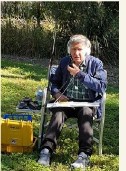
[20m] Propagation is a funny thing – but then I don’t need to tell you that! VK3DBD David was so strong I had to turn the Volume right down. I gave him RST 559 and he gave me 569. But Mark VK2KI was barely readable.
I gave him RST 519 and he gave me RSN 421 (using the Snowline web SDR for rx). As for Stan ie couldn’t hear me even though I heard him calling
[40m] Was a surprise to hear VK6NC coming into Brisbane tonight. There was quite a bit of OSB on his signal. Sad he did not hear me when I tried calling him.
Also heard VK2NNW quite low down on his 50 watts chatting to VK2KI, a nice challenge to pull out of the no! However, next time Mark is in my kitchen I’ll have to ge
20m] I’m really sorry, I have overslept due the DST time change over here in Germany. But Stan kept believing in my appearance, and we managed to have a chat. Here was some QSB, but he was about S5 here in Stuttgart.
After that, I met Lin in the new chat window on our DXPeriment website, and so we shared some beeps as well. We also ir EU DXPeriment team. Fausto – IU4FLS from st CQ VK today. A proper introduction will follow. Thanks
[40m] I was late to the party this week with a poor excuse of an antenna at washing line height, strung up around the back yard of my temporary QTH.
I had a difficult contact with Geoff VK2GBR and was resigned to the fact that my operating conditions were less than ideal before hearing David VK6KD pop up further down the band.
David and I had a good QSO for about 15 minutes with him giving me an RST of 419 and doing the heavy lifting compared to his comfortable 579 at my end.
[40m] I could hear Max VK6FN (Manjimup) in a QSO with Donald VK6JDM (Esperance) however Donald’s signal was experiencing QSB.
Donald’s CW tone appeared consistently changing/bending which made me think perhaps the transmitter was wavering off frequency when transmitting. It A Pea Peeve) eee Ot Fie ee eee Or OR
• eee re ee ie eee eT EEE CEI CU Re WANE BE Ne Uae Neng SE EUR BEN EWES Ne Yes, another topic for discussion. Great QSO with Morgan VK6MTF (Albany) with Morgan only running 10W and QSB on his receiver.
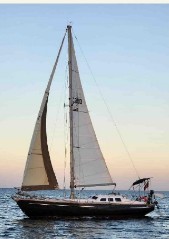
Look forward to tracking your soon-to-begin sailing trip from Albany to Tasmania and establishing a few HF contacts while you’re mobile at sea. Pretty good conditions on 40m tonight.
[80m] I called CQ for a while on 3.555 without hearing any response. I checked my received signal from a KIWI SDR in Yarloop (WA), Augusta (WA), Iron Stone (SA) with a test on 10W making it through clearly to VK5 land. Nothing heard on the VK4 SDR.
Well at least I was getting out to some locations, hihi. I think 80m is starting to open up again. 73 David VK6KD
From Donald VK6JDM 20 km west of Esperance
[40m] Mainly listened to the very crowded CW segment on 40 metres. The Bosma effect had the 40 metre band packed solid. With a 2.5 kHz wide filter there were an average of 4 stations per 2.5 kHz. Had a QSO with Max VK6FN.
His 360 degree null antenna was down and had in effect become an absolute
Antenna was down and had in effect become an absolute null antenna. He was using a lower-slung 40 metre sloper which threw a 5/9 signal at my QTH about 600 km away. In turn he heard my 5 watt paraset signal 5/7.
[80m] 80 metres was very quiet. Put out CQs but no response. VK6FN could hear my signal via a remote receiver but not at his QTH because of his downed antenna for 80. Thus a signal was getting out but no one was there.
On another note, I am having a perverse pleasure driving our EV past the queue at the local petrol station when we go to town. I know, sick mind – already been told.
[80m] Once again I wasn’t home until well after NZ midnight. I didn’t listen in for long… and hopefully I copied my ‘heard’ stations’ callsigns correctly. Thanks everyone.
[40m] Only a Short listen on 40 m, but pleased to hear a VK6 at nood ctrandcth
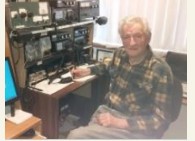
[40m] After working Grant ZL2GD I heard VK2XU working Mark, VK2KI. At that stage Mark was very weak with me and in and out of the QSB.
I thought after VK2XU had completed his QSO with Mark I would give hima try, I was using my QMX+ 3 watts into a vertical, after yack to me which really surprised me, at that stage Mark Pee OO Oe ne em Oe ee RA
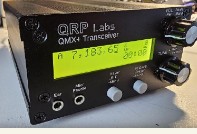
Was getting a bit better, I gave him 339. I had not long installed the new firmware into the QMXt+, I was very pleased with the result and good to work Mark again. I can’t always transmit but listen when I can.
[80m] Conditions on 40 were not too bad, I most of the VK’s were good copy. Our clocks go back next weekend so conditions in the early evening may improve.
From your editor Mark VK2KI at Beautiful South Bow!
[15m] Nothing heard from Edi DO2EMR this week.
[20m] Great to hear Ross on this week. Going to UK Summer Daylight Saving time must have meant he had to get up before he went to bed; hope he brough a thermos of coffee with him. Ross was only RSN 21
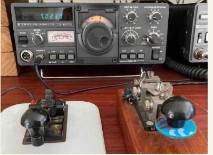
A thermos of coffee with him. Ross was only RSN 211 with me – and I could only make out characters on QSB peaks – so instead I reverted to listening on the Snowline KiwiSDR, where he was RSN 431.
[40m] An early start to the net this week – and I started with a nice 35 minute chat with Drew VK3XU out at Wonga Park.
After that I had a nice QSO with lan VK7TA at Latrobe who I hadn’t worked for a while, followed by a call from Phil Z_1PB possibly at Tauranga, and possibly QRP. We both struggled, but managed to get through and exchange reports.
After the 15/20M DXperiment and dinner I returned to find the band busy with signals – but mostly what sounded like a DXpedition or similar; luckily there was plenty of room left for QRS… and I heard lots of our family happily chatting.
I settled back and enjoyed listening to a really nice QRS rag chew between Lance VK7TO at Margate and Rob VK3ECH at Echuca. It was nice to hook up with Adam VK2NNW at Deepwater again after more than a year. Ditto with Otto VK4OLB North of Brisbane.
[80m] Peter VK6IS and I struggled to get through and exchange the bare necessities – but we got there in the end. After that I noticed signals down the band and heard Alan VK3XE working VK3FB; however, needing an early night for an early start, I didn’t try to catch Alan this time.
Also from your editor Mark VK6QI at Beautiful South Bowning NSW listening via the
[15m] Nothing heard from Edi DO2EMR in WA this week.
[20m] I got so excited that I forgot to write down what I heard i WA on 20m.
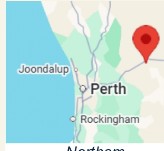
From Stan ZL3TK at Waitarere [20] Unable to hear any EU stations except for a surprising report of RSN 552 from DL3YZ. Despite extremely weak signal Mike’s careful sending saved the day.
Could just detect MONNK but QNP; he kindly reported by email hearing me RST 539.
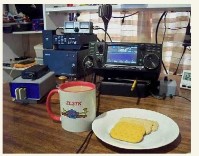
[40m] Trans-Tasman condx not great however could hear plenty of VKs and unfortunately two of the mostly-unreadable no-space merchants, except for their call signs of course. Nothing heard from VK6.
[80m] Sent CQ at random times on 80 m but saw and heard no one, the band was deserted.
[40m] It was a busy night on Tuesday. There was a lot ¢ QRM about which made some QSO’s difficult. I was running SOW into my doublet. I’ll have to try QRP sometime. Thanks to everyone who worke¢ me.
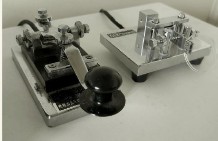
From John VK5ET at Hope Valley [40 & 80m] Spent most of night listening, good practice noting down call signs amongst the noise. Managed to have good QSO with Rob, VK3ECH, followed by Maitland, VKSAO. Forty metres went quiet around 10:50 Z.
Tried 80 metres but nothing heard. Went back to 40 metres, heard WWEFF VK2IO/P calling CQ, may have been a contest ???. He got a few contacts before I pulled the plug at 11:15 Z. Condx were reasonable tonight apart from OSB, some stations very weak to be heard.
[40m] An ominous start to the evening when my QSO with Jim, 7JZ, went from 559 to 009 after our first couple of overs. I walked away, went for a run and had some dinner before trying again a couple of hours later, and what a difference.
Two areat lona conversations followed. with
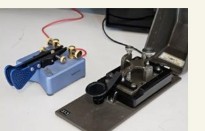
Post Morsum 1st April 2026
From Richard VK6HRC. Five on the VK6RLM rptr and AllStar/Echolink hub this morning.
PEW Ne NEE CE ENe FEE CEE Oh VK6KD David VK6QI_ = Mark VK6FN Max VK6HRC VK6MRB Mulligan swl.
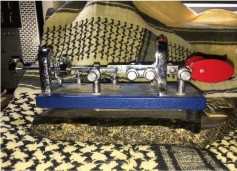
David was first up this morning, he was still busy getting the new caravan sorted but manged to spare some time to get on and have fun. On 40m he listened in on Max VK6N and Donald VK6JDM and went on to work Max after Donald signed off.
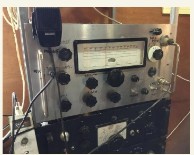
He commented on the distinct sound of Donalds home brew rig so Max gave him quick run down of the Para set and 6v6 tubes.
The ever busy Mark was mobile in the ACT called in and reported that nothing was heard of Edi DO2ZEMR ON 15M but managed a contact with Ross MONNK/P. ‘on 20m. Then on to 40m worked five and heard ten and on 80m worked Peter VKGIS.
Max heard Ketut VK3BWN on 40m gave a call but conditions were against them 80 unfortunately not able to complete the contact, had better luck with the locals though.
A highlight was working Donald VK6JDM whom was on his homebrew rig only had limited time in the shack, heard Lin VK6NT out at the NCRG club using the VK6NC call sign working Wayne VK6NW on 40M.
Making use of the Mount Barker Kiwi sdr listened in on the action between Max and Ketut.

Reporting
After next Tuesday’s Group, please remember to send me a list of who you worked and / or who you heard using our web form here:
Even if you didn’t hear anyone, we’d still like to know that you had a go. And to make your report more interesting, please consider sending a photo: cqgrsnet@gmail.com So, please help attract new and old team members to have a go by submitting your report each week.
Submissions close 1300 (Eastern Australian Summer time)_on Thursdays.
On My Workbench
Whipping up a Tripod (Ido enjoy making up silly titles for these articles!)
From Ross MONNK My winter antenna (soon, hopefilly, to be stored away for the northern summer) is optimised for sitting in the shelter of my car in a car park.
I live on a crowded island (compared to Australia), so it has to have a small footprint and not require ground stakes. That eliminates long wire antennas and strongly suggests a vertical of some sort.
I could use a drive-on pole mount (as favoured by those flag-flyers at caravan meets) and put a quarter-wave wire up a carbon fibre mast. Maybe one day I’ll do that.
Having a cheap car, the metal on the roof is too thin and weak to support a tallish mag-mounted whip. I could bolt an antenna to a roof rack bar but I’m vain of the appearance of my cute little motor and don’t want to spoil her looks like that.
Instead, I’ve chosen to mount a military-style 2.85 metre folding whip antenna and a British “Slidewinder” loading coil… onto a camera tripod which stands close beside
Whipping up a Tripod
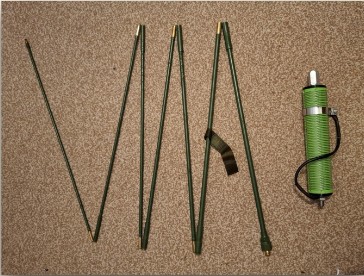
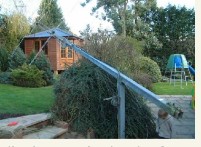
• levated radials are going to be a hazard in a car park (ask me how I know). To get round that, I use a capacitively- coupled “Diamond MAT-50” magnetic counterpoise pad slapped on the roof of the cai – the car body then becomes the ground plane.
There ought not to be any problems with this but, just to be on the safe side, the ignition is off whenever there’s power on the radio.
• levated radials are going to be a hazard in a car park (ask me how I know). To get round that, I use a capacitively- coupled “Diamond MAT-50” magnetic counterpoise pad slapped on the roof of the car – the car body then becomes the ground plane.
There ought not to be any problems with this but, just to be on the safe side, the ignition is off whenever there’s power on the radio.
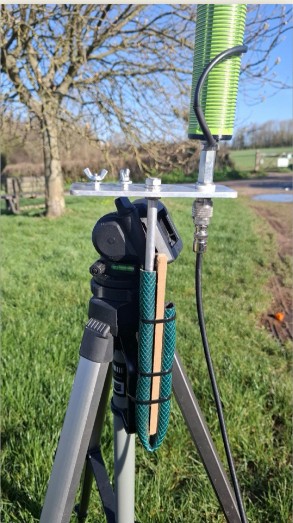
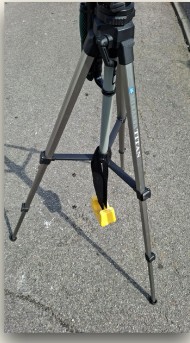
EO By the way, not being able to use guy lines in car parks, I have an old iron weight hanging from the base of the tripod. This considerably increases the stability with the whip antenna on top, in the breezy conditions prevalent in the UK winters.
A bag of stones or sand would do the job just as well though. Have you ever cobbled together anything that you feel particularly smug about? You’re an amateur radio operator so, of course you have!
Send the Editor a photo so we can all admire your handiwork (and postulate how we would have done it better HI Hl).
What’s going on on your workbench? If you have an article or two that you think might be of interest to our readers, please let Mark VK2KI know; email to cqqrsnet@gmail.com For guidance on writing for RagChew, see Articles below.
CW Practice
This year we’re using Aesop’s Fables. These are short moral stories, often using talking animals, that illustrate simple truths about human behaviour and character.
‘Aesop’s Fables originated in ancient Greece, traditionally attributed to the storyteller ‘Aesop who is thought to have lived around the 6th century BCE.
The fables are generally smaller files of two to three hundred words that have been recorded at 15 wpm and run for about 15 minutes.
If 15 wpm is a bit quick for you, load it onto your phone and set the playback speed at 0.75 X or even 0.5 X – whateve works for you. 0.75 X will play the MP3 at a bit under 12 wpm. Itis suggested that you read the text file before listening to the audio file.
That will make it easier to follow the audio file and prepare you for any unusual words. Any punctuation that is not usually used with CW has been removed. This week’s fable is ‘The Ant and the Dove’, and the MP3 and TXT files are attached here –


If you prefer a different speed or tone you can create your own MP3 files by convertinc the text file with the Ebook2CW app – https://fkurz.net/ham/ebook2cw.html.
You can either play the MP3 files in any media player, or load the text file into the Ditto CW: Morse Player app — https://dittocw.andro.io/.
Both options work well, however Ditto CW gives you complete control over all Morse settings, while a normal media player only allows changes to playback speed, and does that in steps (e.g. +1.25x, 1.5x, 1.75x). John VK2RU
Other News
Spring Has Sprung
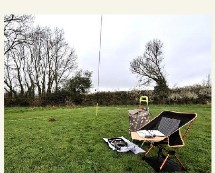
From Ross MONNK Tuesday’s CQQRS DXperiment was an opportunity got my first out in the open air portable session of the year. STE e IN ff kere-s
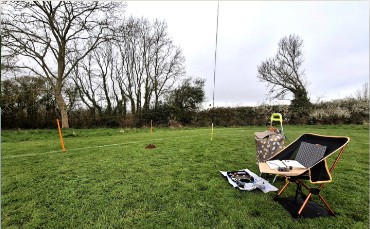
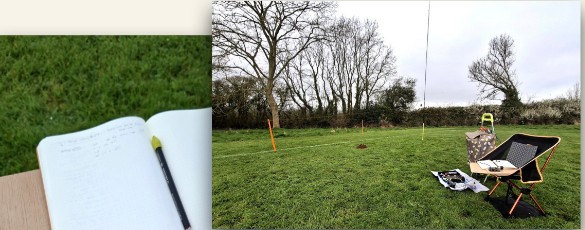
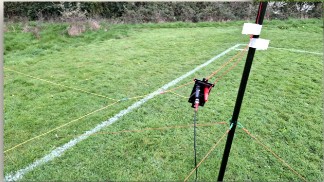
Quarter wave vertical and two elevated radials for the 20 m band, joined to the coax by a 1:1 UnUn.
Back Porch On The Air
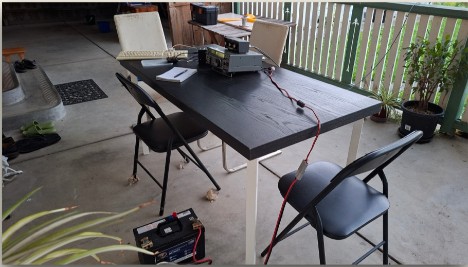
From Ketut VK3BWN On Tuesday evening net, I operate a backyard portable operation. My station is the usual ICOM IC-735, but this time, the power is provided by a 70 Ah car battery, and the antenna is a 40m Diamond HF40CL whip antenna.
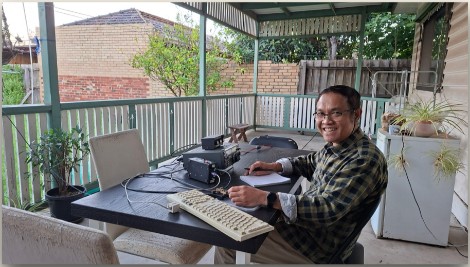
To make the story short, I have had this antenna for a long time, but was never very successful in making any contact until tonight.
So, after a journey of checking the antenna in a semi-anechoic chamber, the antenna finally comes resting on the backyard clothes hanger with 2 pieces of wires and the clothes hanger as the counterpoise.
The VSWR looks stable, and I can operate about 40W without any issues.
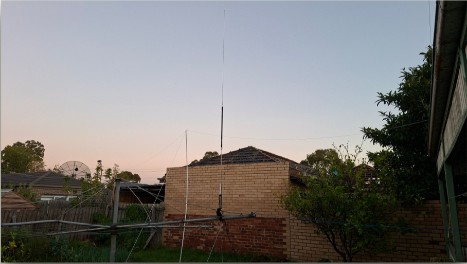
| am pretty happy to have reached as far as Max VK6FN in Manjimup, which is as good as DX for me. Who knows, maybe the whip gives me a pretty good take-off angle. I had 3 more contacts, one of which is Tim, VKSAV/M who is mobile. That is pretty cool.
Along with VK1CT and VK3BTR, this is quite a lot of contacts with this antenna. I am very happy and thankful we have this Tuesday evening get-together, which makes experimentation and self-learning so much easier.
I call portable operation this evening “back porch on the air”, with the key learnings of: 1. My whip antenna still has future; I may still need the right counterpoise to make it work somewhere else 2. Keyer, as always, is important and needed 3.
The paddle works great; a keyboard may not be necessary 4. A tuner is still needed 5. Anice table is definitely needed 6. The battery is holding strong with still 12.4V open circuit voltage at the end of the evening, barely budging.
Sincerely
Kangaroo Island Mobile CW
From Tim VK5AV While over on Kangaroo Island for a couple of days for work, I took the opportunity to operate portable / mobile on Tuesday night’s QRS Net.
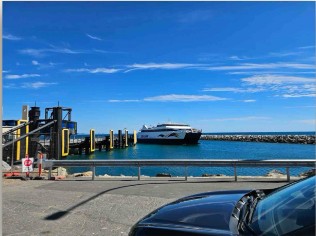
Equipment used were my FT891 running about 30W into a 40m mobile whip connected to a magnetic mount on the roof of the car, and my paddle.
| was located at the Muston Lookout above Americal River. I managed 3 contacts: Tim VK3TBR in Horsham, Ketut VKS3BWN portable in the back yard near Melbourne, and David VK3DBD at Yackandandah.
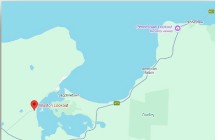
All were very good signals, with some QSB on the band. I may need to do some maintenance on the paddle as at times I had trouble with my dits not sending. Maybe it was just the operator cramped up in the car in an awkward position.
Darkness arrived fairly early so I packed up and headed back to my accomodation. Hope to do more portable work on Tuesday nights some time soon. Regards, Tim VK5AV
The REALLY Long Path
From Ross MONNK It was interesting to read in Ragchew’s Net reports that Chris G4BED heard me calling him on 20m last week. We were both in the UK, but I was using a radio in Germany via an internet connection, and he was using a web SDR in Australia.
So my beeps were going from my key in the UK –> Germany –> Australia –> UK and into his headphones. Now that really is The Long Path!

Mark, I must apologise for not getting my log in on time last week, sorry. I was out doing POTA. I had a very good night Tuesday, the best so far, and contacted 7 stations, using slow CW, plus I heard 13 that I logged.
I spoke to Gus VK2SB and he said he was on QRP rig, but surprised me by another contact Wednesday evening
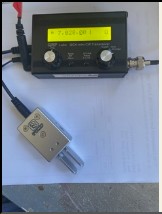
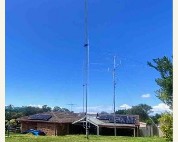
When we had a much more lengthy QSO where I learned about his TenTek Argonaut. Attached is a pic of my rig, 5 watts monoband on 40. I will get the log in faster next week. 73s Graham VK4CEG
Solar Eclipses: What the Bands Revealed.
What effect does a solar eclipse have on HF propagation? That was the basic question posed by researchers enlisting ham radio operators’ help during three Solar Eclipse QSO Parties in the last 10 years.
The results of that research were presented at the 2026 HamSCl Workshop, held earlier this month in Connecticut and hosted by ARRL.
Data was collected based on spots on the Reverse Beacon Network (RBN), WSPRNet, and PSKReporter during total solar eclipses in 2017 and 2024, as well as an annular (partial) eclipse in 2023.
In the 2024 eclipse, there was a drop in the number of contacts on 21 MHz as the eclipse neared totality, while there was an increase in the number of QSOs recorded on 14 MHz.
The 30-meter band opened earlier than usual; and 40 meters opened earlier than usual for transatlantic contacts, faded out, and then opened up again.
Researcher Kuldeep Pandey of the New Jersey Institute of Technology concluded that effects of the eclipse crossed over with the sunset terminator, accounting for the second opening on 40.
Effects on 80 and 160 meters were unclear, as only a few stations were active on those bands during the eclipse. It was also noted that there were differences in results between 2017 and 2024, attributed to different phases of Solar Cycle 25 (2017 was relatively early in the cycle; 2024 was at its naak
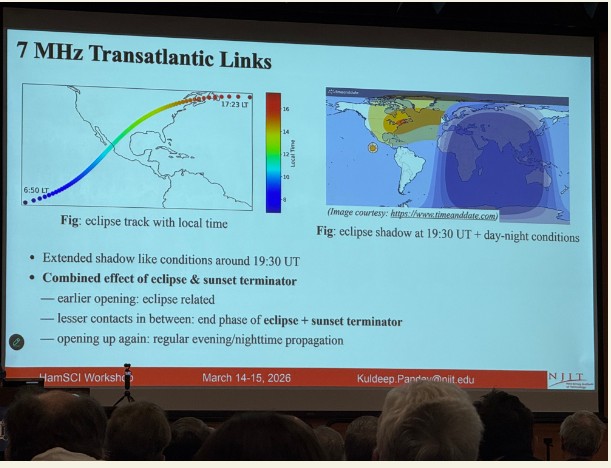
Slide illustrating the combined effects of the 2024 solar eclipse and sunset on transatlantic contacts on 40 meters. [Photo by Rich Moseson, W2VU; slide by Kuldeep Pandey, NJIT]

| was asked last year if I planned to make training videos for the amateur licences. Thanks to the aid of Al, this project is started. Foundation theory and the Practical Exam videos are completed; Standard and Advanced are in progress.
Foundation licence videos complete. See https://www,julesworkshop.net/Amateur%20Radio%20Group/3%20Foundation%20i ence%20) Practical Exam video complete See https://www.julesworkshop.net/Amateur%20Radio% 20Group/4%20Practical%20pag e.html Standard licence starting See https://www.julesworkshop.net/Amateur%20Radio% 20Group/2%20Standard%20lice nce%20page.html Advanced licence video ongoing See https://www.julesworkshop.net/Amateur%20Radio% 20Group/1 %20Advanced%20lici nce%20page.html
Regulations
Morse Training Net
Our team member Nic VK7WW runs an on-air Slow Morse training net every Wednesday at 7pm EDST on 3580 for 30 mins. He uses the callsign of the Northern Tasmania Amateur Radio Club VK7TAZ on that net.
Many of our team learned Morse code with the support of Nic, and the weekly training session comes highly recommended for anyone who wants to learn the Code, or simply brush up.
Everyone’s welcome – 3580KHZ at 7pm Eastern time every Wednesday; you’ll hear lots of the CQQRS team on that net. Jordan VKS3ACU has ralso ecorded the complete set of lessons which you can now find here:
Https://www. youtube.com/playlist?list=PLHsQmZz6fBXO7swAfbT mutrbbEL17fUQL Contact Nic VK7WW for more info nicholaschantler@hotmail.com including how to join the NTARC DISCORD group to follow the action, or just come along and join in on Wednesdays.
French Perhaps?
Excellent news update as Usual Mark, thank you. I thought Lance’s article interesting and have a minor theory that at the time, French played a large part in international comms. For example:
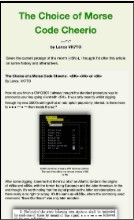
• AR – perhaps short for ‘arrette” – stop ¢ VA – ‘va’ as in go – as in leave. ¢ The “V” before Tx might also be ’ST’ a more English/US abbreviation for start.
In any case, it doesn’t matter how one remembers the sequence, especially for punctuation – if used hihi. Regards, 73 Martin VK3FG
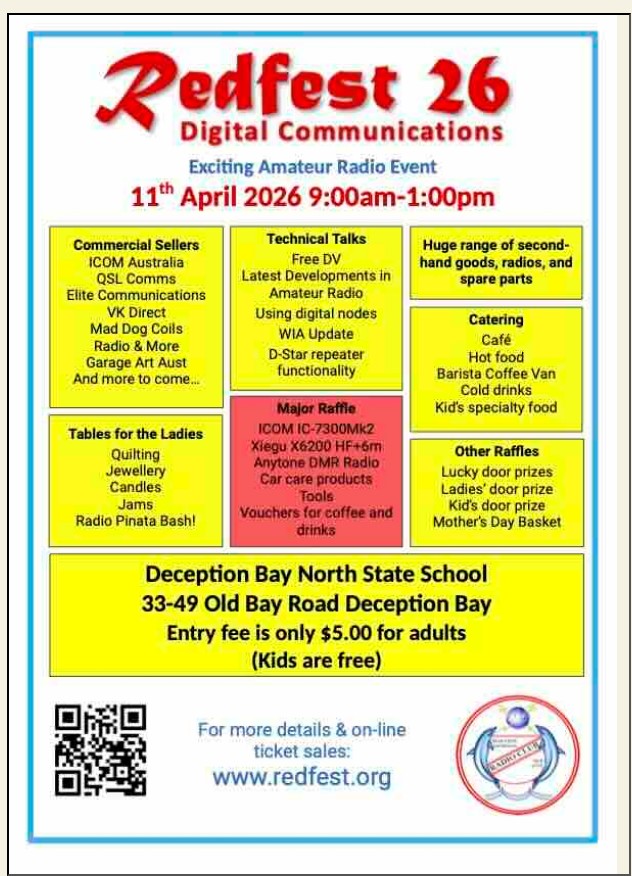
Spanish Amateur Visiting Melbourne – SOTA and POTA Activity
VPA FATIGLOUT WISI MWICINUUITIC – OW PA CIM to PA PAUUIVCLIUIIS
From Martin VK3FG Hi Mark, I will circulate the email below to EMDRC members but thought why not a little wider if you think appropriate. Hopefully we can assist Manuel. 73 Regards, Martin VK3FG President, EMDRC Begin forwarded message:
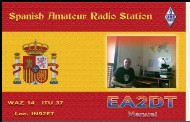
From: Manuel Villasuso EA2DT
I am looking for a POTA/SOTA guy Who could share with me a POTA activation with the goal in Europe/Spain contact. I would be ready for a POTA/SOTA adventure the following dates: 4th 5th 6th April 11TH 12TH April.
Ihave previous experience on POTA/SOTA and for me is one of the most interesting reas of ham radio. The VK experience is unique for me I My email is ea2dt@ure.es also for whatsaap +34618766173 Many thanks 73!
This email was sent from a contact form on EMDRC website (https:/Avww.emdre.com.au)
Message Body: Good night, I am EA2DT Manuel I am on a work trip in Australia I will be at Melbourne area. I am looking for a POTA/SOTA guy Who could share with me a POTA activation with the goal in Europe/Spain contact.
I would be ready for a POTA/SOTA adventure the following dates: 4th 5th 6th April 11TH 12TH April. I have previous experience on POTA/SOTA and for me is one of the most interesting reas of ham radio.
The VK experience is unique for me I I My email is ea2dt@ure.es
CW Academy Classes for May/June
From Chris VK3QB Ops) Celebrating the unique art form of Morse Code —=—Nle Would you like to finally learn Morse code? Or have you mastered the letters and numbers but are struggling to make it to the next step.
If 80, I’llbe running Beginners and Fundamental classes in May and June. Classes for Intermediate and Advanced will be available but will be hosted from North America or Europe.
Semester Overview * Duration: Eight-weeks long and held three times per year (Jan-Feb, May-Jun, and Sep-Oct). * Schedule: Twice weekly sessions held on Mondays and Thursdays, starting at 7.30 PM or 8.30 PM.
+ Format: Virtual training via Zoom or Skype (audio/video). Students and advisors can see, hear, and send Morse to each other in real-time. * Grouping: Advisors and students are generally grouped by time zone. * Language: Most classes are conducted in English.
* Workload: Students are given daily assignments prior to each meeting. We use the Famsworth Method; you’ll be learning at a character speed of 18-20 wpm, but we increase the spacing to slow down the effective speed. This method is.
Proven as being the most effective and provides a pathway to improvement and true CW competence!
1. Beginner
2. Fundamental
Prerequisite: Familiarity with Morse Code characters. Operating at 6 wpm+ and desire to increase proficiency. Class Objectives: * Increase head copy and send skills using Instant Character Recognition. + Increase skills for on-air conversational QSOs.
+ Introduction to contesting skills. * Goal: Learn Morse Code to 10 wom+. If you’d like to register, please head to the CW Academy website. https:// cwa.cwops.org/ Ifyou have any questions or would like to discuss, please send me an email.
78, Chris VK8QB__vk8qb(at)hotmail.com What our graduates say:
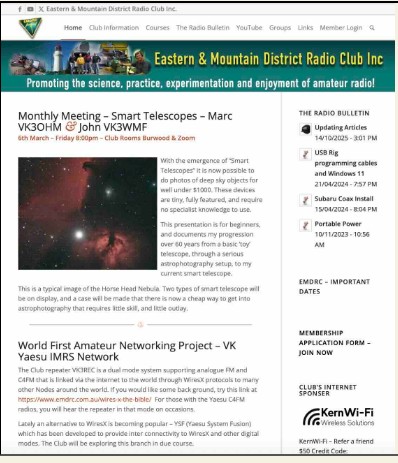
| saw the recent email in the Newsletter from Peter VK3WOW in relation to band police and also the question from David VK6KD regarding CW speed. It made me wonder about some of the perceptions we share with regards to Band Plans, Nets, CW speed, and protocol.
The QRS Net has been on Tuesdays for five+ years and is enjoyed by countless new and old hands alike. But to those who aren’t on “the in”, it may not be clear exactly what it’s all about. Indeed, I had never heard of the QRS Net until
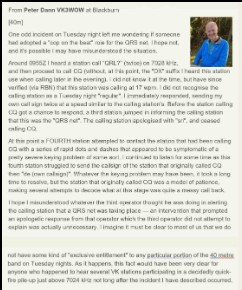
Somebody replied to my CQ about 7-8 months ago; during the QSO, which was around 20-22 wpm, the other op asked me if I was in the QRS Net… which confused me as I had been calling CQ and he had responded to my call.
“How could I be ina net, and did he consider my sending to be slow?” I asked myself. I explained I was not, and we completed our pleasant QSO without further ado.
It was only then that I did some research and came across the QRS Net and the Tuesday night activity, along with the weekly newsletter. And here comes the matter of perception and shared understanding across the broad church we call Amateur Radio.
It may (or may not) surprise some that to most amateurs, a Net is an organised gathering of operators who meet on a specific frequency to co-ordinate communication for some agreed purpose.
Operators check- in to the net which is controlled by a Net Control Station. Nets exist for a variety of reasons, but they all share some common characteristics: They occur at a scheduled time, on an agreed frequency, and operate under the control of a Net Control Station (NCS) who maintains a roster, determines who transmits next, and handles the traffic.
There is a level of formality to Nets. A good local example is the NZ Net: https://zI1.nz/about-amateur-radio/new-zealand-nets/nz-net/ Another is the ANZA DX Net /fanzadx.net/ By contrast, our QRS Net is more of an informal activity, between agreed times and generally within defined segments of the spectrum.
It doesn’t have a Net Control Station, and it doesn’t have a specific frequency. To those unfamiliar with the QRS Net, they would probably think of it more as an activity or event. If we were in North America, it might be called a QSO Party.
On Wednesday evenings FISTS Down Under runs a similar event called the Wednesday Wrap; which is really just an activity or event, but certainly not a net.
Https:/Awww.fdu.org.au/events/ Of course, many of these erstwhile traditions aren’t as rigid as they once were, and certainly to those “in the know”, the QRS Net is very well understood for what it is.
So, for the “others”, all they hear is a bunch of QSOs taking place on (say) 40 metres typically at speeds between about 10 – 20 wpm. Hence, “others” see a busy band, so they find a spare frequency and call CQ.
Some simply won’t know they are dropping in on the friendly QRS “net” activity. 40 metres is a great workhorse band and DX is commonplace as soon as the sun sets, as are QSOs across VK. It’s a go-to band for a lot of people.
Some clubs have spot frequencies that members frequent if they’re not in use. So, the next time you hear a signal during the allotted QRS “Net”, consider that the operator may have no idea that he or she finds themselves amongst “us”.
Yet they are as entitled as the next person to call CQ and have a QSO if the frequency is clear. From “their” perspective, there is no Net Control Station; ergo, there is no Net.
Peter’s comments are quite right; “we” do not have any entitlement to a band segment or frequency during the QRS “Net”.
| also saw David’s (VK6KD) question and the answer, and I hope Mark doesn’t mind if I offer another perspective in considering the topics that David raised.
Set against the backdrop of the discussion about Nets and given many “others” out there would simply be looking for a clear frequency, the concept of a segment (or Net frequencies)
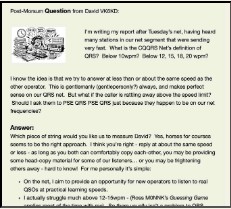
For the QRS Net are not helpful. And, as David rightly asks, what is the speed limit, and how are “others” supposed to know about said limit? Everyone would probably agree that normal CW protocol comes into play.
If I hear someone calling CQ at a given speed, I will generally respond to them at about the same speed. I could go back slower, and in some cases the operator may match my speed; or at least use Farnsworth spacing to slow things down a bit.
Most experienced operators will adjust their sending speed and style accordingly if they sense they are having a QSO with a new guy… and this is a great quality of the Tuesday night activity. Now to the fraught topic of speed.
Irecall when I got my full licence in 1986 and I came home with a Certificate of Proficiency, proudly demonstrating to anyone who would listen that I was qualified at 10 wpm.
This was the fastest speed requirement set by the Commonwealth Government for amateur radio operators. Slow code (Novice) was 5 wpm.
I fondly remember listening to the operators at 15 – 18 wpm, being in awe of their skills and hoping that one day I might be able to send and receive at such a high speed! QRS was a Q-code requesting the other operator send slower, and QRQ was for faster.
There were no speed limits, per se. It was all relative. Now, 5 wpm is truly hard work. And I don’t mean that as a criticism or reflection on new operators.
It’s simply a reflection that my skills have developed and the rhythm and cadence that comes with faster code is far more enjoyable to send and receive.
I know that students in the recent CW Academy classes will attest to the benefits of learning the code at the character speed of 18-20 wpm and using the Farnsworth methods to slow things down a bit.
In fact, it’s probably fair to say that most operators on Tuesday nights are sending and receiving faster than was required (10 wpm) when Morse code was a regulatory requirement. Calling CQ at any speed at which an operator is competent is not showing off.
When I was competent at 10 wpm, I did not regard those calling at 15 – 18 wpm as showing off. In fact, they inspired me. I’d sit and listen and see how much of what they sent I could copy.
I’d move into my uncomfortable zone and gradually my own speed of competence increased. So, David, as an alternative response to your question, I’d encourage you to listen to some of the faster code; relax and copy what you can, this is how you’ll develop your skills.
You might not respond to their CQ just yet, but you’re not ignoring them, and I certainly wouldn’t suggest that they aren’t interesting. None of this needs to change the way Tuesday night runs for us.
But perhaps this perspective might bridge the gap between our Tuesday night eco-system and the broader CW community. For those new to CW and our QRS Net, there is still a very large number of amateurs out there — both in VK as well as DX — who have no/little idea about the Tuesday night QRS Net.
Ihope this provides a different perspective and clears up any confusion for those who are new to the vagaries of amateur radio and CW protocols.
And there is an updated Australian Band Plan which is worth reviewing (this is nice one-pager for the shack wall): https://www.
Wia.org.au/members/bandplans/data/documents/WIA%20AUSTRALIA% 20LF-HF%20BAND%20PLANS%202026%20-%20POSTER.pdf Finally, to clarify the role of the “Band Police”, refer this great YouTube video from Callum at DX Commander.
And if you’re wondering, the CW Band Cop isn’t much different https://www.youtube.com/watch?v=oQItPessHWU&t=17s_ 73, Chris VK3QB
If you’ve read something that you think might be of interest to our readers, please email to Mark VK2KI: cqgrsnet@gmail.com
There’s No Such Thing…
Pho WEEN 2 YMC UlIViios I think the first lesson in Teachering 101 is to always tell students “There’s no such…” (I’m sure you know the rest) and “…the only dumb questions are the ones not asked”.
John VK2RU reckons that there’s lots of questions out there among both our new and our experienced operators – about CW, amateur radio operating and about theory. So here we go…
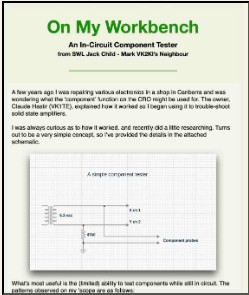
Question:
Another Answer:
Family. Well, he may have seen the article because he popped up this week and suggested QElectroTech. https://gelectrotech.org/ QElectroTech or QET, is free public domain software to create industrial complex electric diagrams.
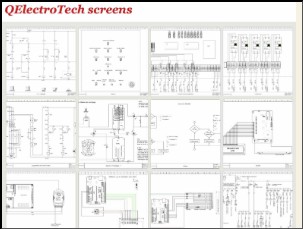
Geothermal, air-conditioning, layout, hydraulics, pneumatics, domotic, PID, photovoltaic, swimming pool plumbing, etc…! The collection contains over 8000 symbols. 73 k
[Do you have a question or two or a discussion starter worth sharing? cqqrsnet@gmail.com if so.]
Prosign/Character/Signal of the Month
Frosighi. soA> foe Meaning: End of Contact
[Put it on a sticky note near your key as a reminder for Tuesday… and tell us how you went!]
Di-dah-di-dah-dit
So back to the CQQRS Slow CW QSO practice net.
Next Tuesday’s Net
Our CQQRS Group will be on as always on Tuesday from around 0600Z until about 12002; see https://bit.ly/CQQRSWebsite and navigate to the Net Details page for details.
Our CQQRS Group will be on as always on Tuesday from around 0600Z until about 12002; see https://bit.ly/CQQRSWebsite and navigate to the Net Details page for pg ee
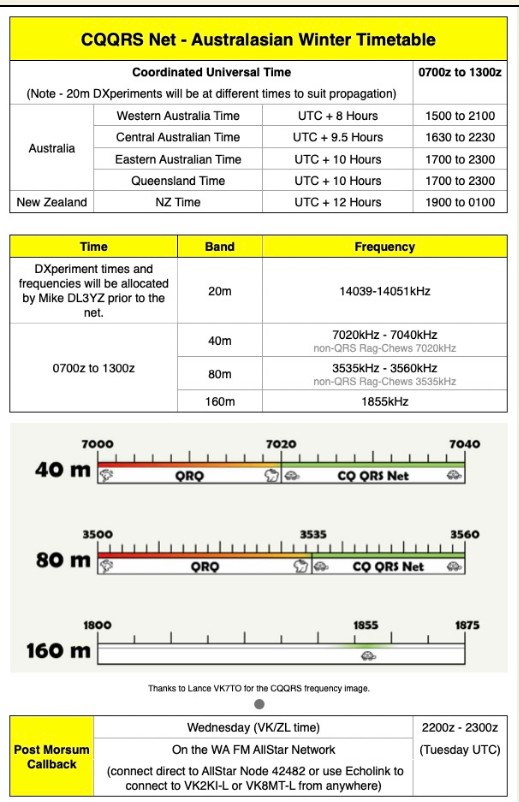
Doesn’t matter whether you’re brand new and want to try just exchanging callsigns and RST reports, or you’re ready for a good old rag chew. We’ll have fun.
There’s usually people around until after 1200Z – so keep calling in the segment of the band designated in the table below until you catch someone.
Reports & Photos
Please let us know via our Reports form bit.ly/CQQRSNET who you work or hear on Tuesday’s Group. The report form closes at 1pm (Eastern Australian time) on Thursday. And how about helping to make the reports even more interesting by sending a photo?
If you have a photo that you’d be happy to include, please email it to: cqqrsnet@gmail.com And of course, we’re always on the lookout for more photos for the newsletter, so if you have something that might be of interest aside from the reports, please send it through as well.
Email to cqgrsnet@gmail.com please. Oh and by the way, I recommend that you don’t keep the Reports Form website open between submission of reports from one week to the next.
If you’re unlucky, there’s an undocumented feature in the software that could cause your current week’s report to be combined with your previous report – it’s happened to your editor several times – much to the chagrin of our Reports editor 🙂
Post Morsum
Richard VK6HRC will run our phone Post Morsum on the South West AllStar net (via repeaters and hotspots all over WA) from 0600 WA time, then from 0700 WA time on 80m (8605 LSB).
See https://bit.ly/CQQRSWebsite and navigate to the Net Details page for details of how you can connect via Echolink from anywhere in the world.
Articles
Could you write a short article or articles for RagChew? You bet! Writing not your strong point? Don’t worry, I’m very happy to help as much or as little as needed.
Oh, and one more thing (actually two) – copyright material: * please use your own images – don’t use images copied from the internet unless you have the producer’s permission, or they’re marked ‘Creative Commons’ or similar; ¢ if you include other peoples’ written material, unless you have permission, you may only include small snippets (unless it’s marked ‘Creative Commons’ or similar), and you’ll need to site the source and author.
For more guidance on writing for the RagChew newsletter (including how you might even try using one of the new Artificial Intelligence tools), head to our website bit.ly/CQQRSWebsite then click the menu on the top right and then click RagChew Newsletter.
Material
Areminder; if you send me any information by email, our report form or WhatsApp – unless you specifically state that material is not to be published, I’ll assume that you’re happy to see your thoughts in the RagChew newsletter.
Teamwork
Thank you so much to our team of 35 contributors: DL3YZ, G7BED, MONNK, VK1TE, VK2GAS, VK2IOW, VK2NNW, VK2RU, VK3BWN, VK3DRQ, VK3ECH, VK3FG, VK3JFP, VKSKEV, VK3QB, VK4AW, VK4CEG, VK4IM, VK5A0O, VKS5AV, VKSET, VK5ET, VK5FD, VK5KFG, VK6HRC, VK6JDM, VK6KD, VK6KHZ, VK6MTF, VK7TA, VK7TO, ZL1PB, ZL2GD, ZL3ABX and ZL3TK.
And a special thank you to our editorial team, Nigel G4RWI (head of software development), Patrick VK2IOW (reports coordinator), John VK2RU (spreadsheet pilot), Richard VK6HRC (Post Morsition) and Lance VK7TO (archiving bit wrangler). Great work all!
GU CW on Tuesday, mb Mark Bosma VK2KI / VK6QI Beautiful South Bowning NSW cqqrsnet@gmail.com non impediti ratione cogitationis

About the CQ QRS Net
For the current schedule and more information about the CQQRS net, please go the the Net Details page on our website:
The opinions expressed in the RagChew newsletter are those of the individual contributors. The opinions do not necessarily reflect that of the editors or of the CQQRS Group members.
Any material and images received from members by the editor or published on the CQQRS WhatsApp groups may be published in this newsletter unless specifically requested otherwise.
The RagChew newsletter is considered to be exempt from the Australian Government’s ban on social media for under 16 year olds because it is a service that has the primary purpose of enabling users to share information about products or services, engage in professional networking or professional development services or of supporting the education of users per the Australian Government eSafety Commissioner FAQ webpage “Which platforms have been excluded from the age restrictions” dated 10DEC25.
The values, doctrine and guidelines for the Group and for the newsletter are published on the Principles page of the group’s website https://bit.ly/CQQRSWebsite