Below is a reconstruction of the 2025 24 CQ QRS RagChew newsletter designed to support full text searching. This reconstruction was built using OCR, and will contain errors.
To view the Mailchimp original, click here. To search the entire newsletter archive, click here.
Contents
- CQ QRS RagChew
- Back to Tuesday
- RagChew
- Masthead Image
- New Team Members
- Reports
- Website
- Post Morsum Report
- Post Morsum – Part II
- On My Workbench
- 40m Quarter Wave Vertical
- My New Shack
- Boat Anchor Manual Library
- My Birthday IC-7610 Lights Up
- A Pretty Fancy Hacksaw Blade
- Intermittent Antenna
- Other News
- 18 June.
- Tech Museum Sinsheim U-17 Submarine on Air
- Bletchley Park Code Breakers
- Morse Training Net
- From Morgan VK6MTF:
- Technik Museum Sinsheim U-17 Submarine
- Head Copy Practice – Winnie the Pooh – Chapter 2
- Readable Five
- I Hear Tell…
- Di-dah-di-dah-dit
- Next Tuesday’s Net
- Post Morsum
- Teamwork
- About the CQ QRS Net
CQ QRS RagChew
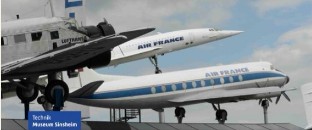
No doubt the highlight of the week was the Museum Ship Radio weekend with our team member Mike DL3YZ operating from the Technik Museum Sinsheim near Stuttgart.
U-17 Submarine Activation HF conditions were tough so contacts to VK and ZL were few and far between, but we did have a very successful hook-up via Echolink to the WA AllStar network, which allowed our team members around Australia and sian 1 ILS dn.
LuOWEO OUF Lean Memvers around AUSU alia and the UK to chat by audio with Mike. Probably the highlight of that session for me was a lecent chat between Ross MONNK (a retired Royal Navy anti-submarine helicopter pilot) and Oliver (a retired U-17 officer); they had had complementary military jobs – one hunting, ne avoiding being hunted!
Interesting to hear that when they retired, they both became jirline pilots; Ross on Boeing 737S and Oliver on Airbus A380S. Mike reported later “Oliver and I had fun on Echolink, thanks for the idea. I will send QSL cards to all of the
A terrific weekend Mike – thank you for involving the COQQRS team and I look forward to reading all about the weekend in a future edition.
In parallel, Stan ZL3TK also participated in a hook-up with the operators for an Enigma-coded transmission using the Vail Internet CW system; Stan has recorded the transmission for our team to have a go at decoding via one of the web-based virtual Enigma machine decoders available on the Internet.
See his article and links in Other News below.
Back to Tuesday
Back down to earth and propagation conditions were tough for Tuesday’s CQQRS Slow CW Practice QSO Net; but despite that – we still had at least 44 of our team members on air, reporting 56 different stations contacted; well done all. See the reports below.
RagChew
So in this week’s RagChew newsletter, in the reports received from Tuesday’s net we’ll see ‘that some of our team had full dance cards, others heard nothing.
Our topic of interest this week is a report from James VK7JZ who discovered even in Australia, SOTA activations can be tricky weather-wise. James has taken the first steps toward using CW on future SOTA activations…
Some of us don’t even take microphones – will we convert James as well? In Other News, we see that the International Flight Contest starts next Wednesday, and see that least one of our team managed a CW contact with DLOVDU at Sinsheim.
There’s an interesting video about the Bletchley Park Code Breakers and the secret so-called Y Stations, you’ll read about how you can have a go at decrypting the Enigma-encoded transmission from the Sinsheim submarine, and John VK2RU provides another head-copy practice session – this week, Winnie-the- Pooh Chapter 2.
And in Readible 5, John reviews Instant Recognition and Go with the Flow, and article by Nancy Kott WZ8C.
Masthead Image
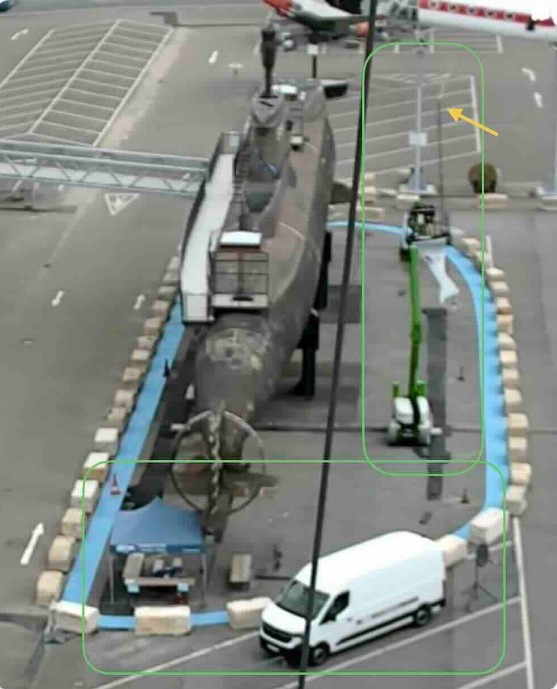
Thanks this week to the live feed from the Technik Museum Sinheim, we can see the radio club tent, the operations van and the famous rabbit-ears antenna 18m up ona cherry-picker.
The image was caught before the Museum opened – and despite the rain on Sunday morning, the Museum was packed with people on both days.
New Team Members
Welcome this week to Morgan VK6MTF who is quickly learning the ropes of CW while he travels around Tasmania; see more from Morgan below.
Reports
After next Tuesday’s Group, please send me a list of who you worked and / or who you heard usina our web form here:

Please help attract new and old team members to have a go by submitting your repor each week. Submissions close 1300 (Eastern Australian time) on Thursday.
Website
If you’d like to find out a bit about our net, or would like to pass information to others about our Tuesday get-togethers, here’s the link to our website.
Bit.ly/CQQRSWebsite Cheers, mb Mark Bosma VK2KI / VK6QI Beautiful South Bowning NSW mark.bosma@icloud.com non impsditi ratione cogitationis
Here’s the 56 stations heard by 44 members of our team on Tuesday:
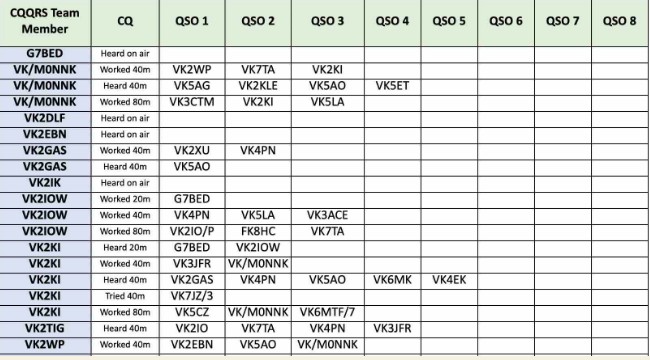
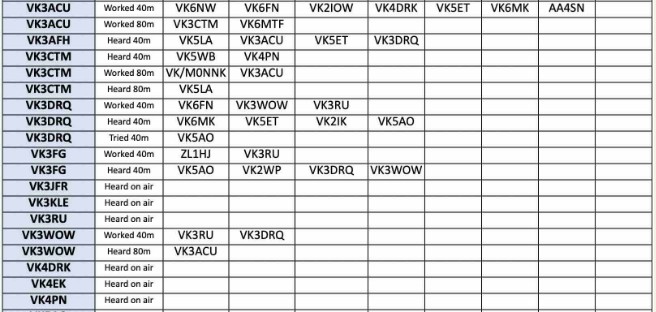
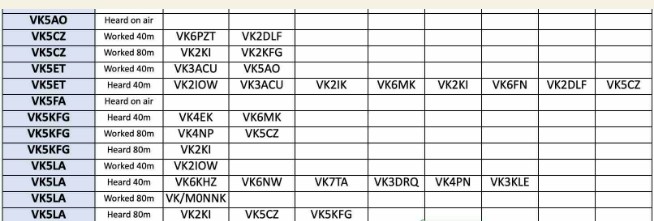
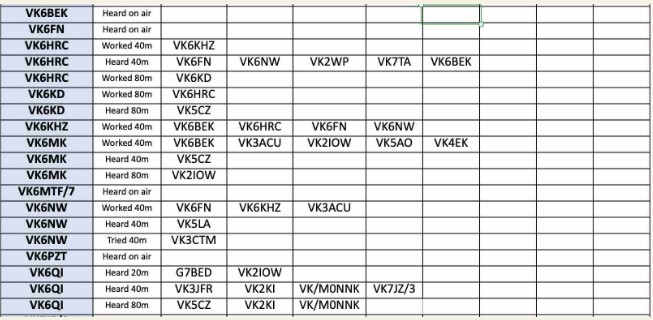
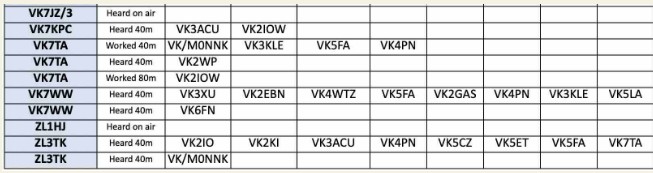
The spreadsheets above show the known stations on last Tuesday’s Group; the comments in the team members’ reports (Submitted via our webform bit.ly/CQQRSNET ) follow:
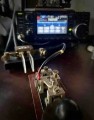
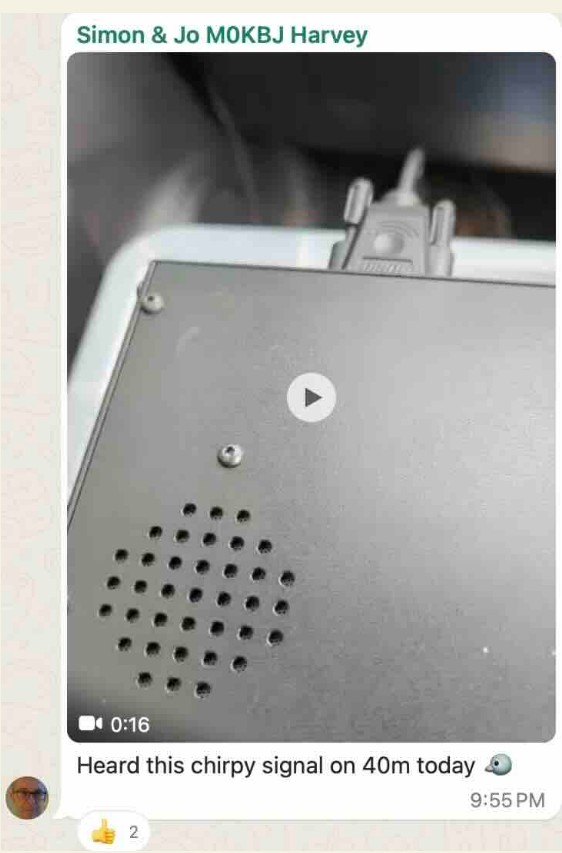
[40m] One day my plasma tv will die and I won’t have the same challenges – although there was something else nearby too earlier on hihi.
[80m] Six contacts on two bands made it a busy Tuesday morning for me so thanks to those guys who put up with my (sometimes) flakey radio – it’s on the other side of the globe so all I can do is “turn it off and turn it back on again”, which I did and that fixed the glitching.
I very much appreciate access to Summerland ARC’s ICOM-7300 so I’m not complaining – it’s a miracle of modern technology and a tribute to the club’s generous culture that I can use their radio in Lismore NSW to join in the Net from the UK.
It makes me very happy, so the odd glitch is a small price to pay..
[80m] First I tried 20m and NOTHING was on the frequency.
[40m] I had great difficulty to find someone on the band..
[80m] The chitchat on the WhatsApp QRS alerts and RagChew groups suggested there was more to be heard than what I could. My new QRM eliminator was delivered today but have not had a chance to connect it yet. Looking forward to sO noise in the future. 73s all..
[20m] Around 5pm I managed to have a DX QSO on 20m with Chris G7BED, though conditions were not great and I didn’t manage to QSO with Simon MOKBuJ.
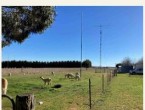
[40m] I haven’t been active for some time, dealing with farm issues, eg having to feed cattle over winter because of failure of autumn break. So had an enjoyable few hours, using my hacksaw blade sideswiper (cootie) key on both 40m and 80m.
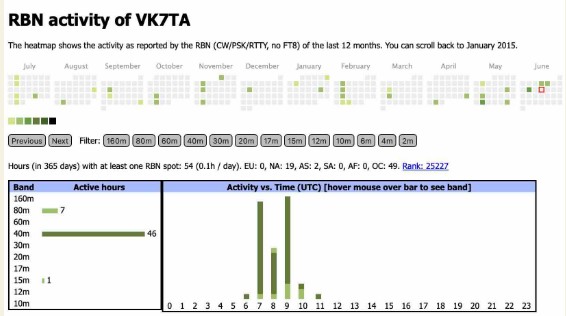
[80m] I had a long QSO with lan VK7TA who I understand improvised an 80m antenna by adding a loading coil to the base of his 40m vertical. I used my large horizontal loop antenna on both 40m and 80m.
It is 160M long, up 10 metres on 4 pipe masts, fed with ladderline to an MFJ tuner..
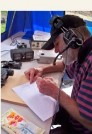
[40m] Most stations would have been workable but all signals weak suffering under typical auroral degradation. Such conditions will have no impact on the upcoming QRS International Flight Contest.
Participate can be entirely online should you wish, find details in Other News below.
[40m] Good to work a few VK6’s on 40m. I had AA4SN call me on 7.030, I was running 40WATTS at the time and was quite surprised as the band did not seem to be in the best shape. It was a very tricky contact but we managed it just.
[80m] Great to work Morgan on 80m es welcome to the QRS group mate, nice CW. Look forward to working vou aqain..
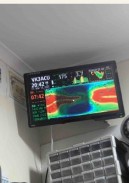
Now the rain has died off after a much needed 60MM I should be out and about a little more at lunch time. Look out on 20, 15, 10, 14.060 21.060 28.060 for a little QRP station by the salt water amplifier..
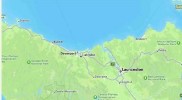
(40m) Not many stations heard but good signals from those that I did hear. Once again it seems that propagation is not good for nearby stations… [om] I added a base loading coil to my 40m vertical and got it matched OK.
Previously I had been heard by the RBN in VK8, so something is being radiated, but I called CQ for a while with no takers and heard no other cw stations. When I returned later I heard VK2IOW calling and conditions were good enough for a decent chat.
Sadly nothing else heard… =rom Stuart VK6MIK at Australind WA
[40m] Back after travelling 3 months in Europe. Amazing how rusty the CW can get when not using it regularly. Nice tio make some contacts
[80m] Pretty quiet on 80m . Not too many VK6’s I could hear tonight on 80m and noise floor was relativly low.
[40m] Sondx seemed quite good, Using 30 watts like a Novice of old, had a good chat with Pat, VK2IOW, ots of stations on..
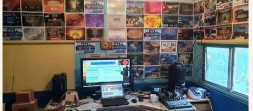
From your editor Mark VK2KI at Beautiful South Bowning NSW
[20m]. I could just hear Simon G7BED from Northamptonshire when he started calling, but befor long he disappeared into the ether. I was pleased to hear that Patrick VK1IOW up at Millthorpe was on air and was able to say g’day to Simon.
Patrick was only Q 3 with me (he’s about 200KM North of me – so in the skip-zone on 20m); Patrick was Q 5 into the VKS5PH KiwiSDRs at Ironstone Ridge and the VK6SEG one near Northam..
| knew Simon MOKBJ was on air from a soggy Cannock Chase North of his warm dry Wolverhampton home, because like Chris, Simon had let us know he was on via our WhatsApp Alert group, and I could also see him o1 the Reverse Beacon network.
Unfortunately, Simon’s far field electomagnetic radiation wasn’t fa
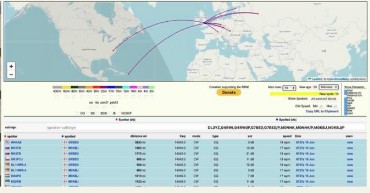
NOU HOU POMMAUUTT VWaort t far :nough for the long-path this time. Luckily, Simon had decided to do a shorter DXperiment rial this week, and then open the flood gates to have some early morning chats with the est of Europe..
[40m] ‘his week after coming back to earth from 20m I hooked up with James VK3JFR. James is ne of our new operators who sounds like he’s doing very well on CW already; James has I really good signal to me from Ararat – seemingly stronger than many other VK3S, but this veek he was down around RSN 541..
I then had a chat with Ross VK/MONNK who was using the Summerland Amateur Radio Club’s Remote station in Northern NSW, and we agreed to try to hook up on 80m later.
In parallel, I was pleased to hear Stuart VK6MK (the creator of our famous WhatsApp groups – thanks mate) chatting to another rare DX member, BobVK4EK up at Ipswich…
Later I saw James VK7JZ/3 at Lakes Entrance trying out a new end-fed half- wave antenna at his portable location. Nothing heard here but James was RSN 544 into the VK5PH Ironstone Range SDRs and 334 into WA..
(80m) Nice to hook up with lan VK5CZ at Clare who was back from a day of SOTA- ing, before chatting to Ross VK/MONNK who was about 1 S-point stronger than our earlier chat on 40m.
After discussing what Ross was having for lunch, he went on to chat to Andy VKSLA while went off to 40m to try a QSO with James VK7JZ/3…
On returning to 80m I hooked up with Morgan VK6MTF/7 who was camping in Northern Tasmania; Morgan’s signal was only around RSN 322 with QSB but I knew from a WhatsApp exchange with Jordan (VKSACU) that Morgan was new to CW and keen to join our mob; welcome Morgan…
[20m]. This week I cranked up three KiwiSDRs to watch the goings on on 20, 40 snd 80m; the VK1CM receiver in Canberra, one of Paul VK5PH‘s Ironstone Range receivers and the Southerr Electronics Group’s VK6SEG receiver at Hoddys Well near Northam..
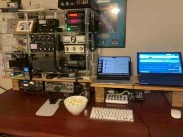
[40m] 40m was open across Australia by the time I came to listen at around 0800Z, despite the static crashes in both VK5 and VK6. However, later in the evening there was a strong mass of auroral buzz creeping up the band below around 7020..
(80m) When I slipped down to 80m around 1100Z, the band was open across Australia (albeit not strongly) but the static crashes were strong in both VK5 and VK6. Like 40m, I could see a strong auroral buzz cluster, again luckily below our 3540 – 3570KHZ segment.
In all, a nice night – with another strange hole in propagation between Southern NSW and the far South of Victoria. Looking North and West was better from here. I hope everyone who was on had fun though…
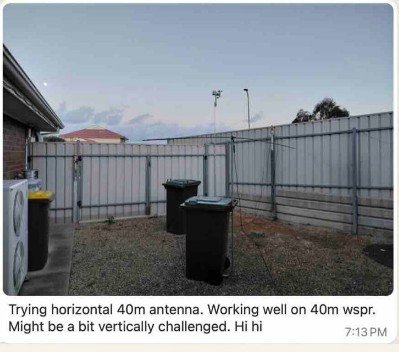
From Peter VK7KPC at Encounter Bay SA (40m) Experimenting with semi rotatable dipole using hamstick mobile whips.. WSPRing well o 40 m but I might need a tad more height. Watch this space.
From Richard VK6HRC Six on the South West AllStar net this morning : * VK6KD David + KA3BMS Hank * VK6QI Mark * VK6NW Wayne * VK6HRC + VK6MRB Mulligan swl and others.
David mostly monitored the QRS activity exploring a myriad of functions on his brand new Icom 7610. He also took delivery of a noise canceler so is going to be a busy lad getting all that set up.
Hank joined us and had a couple of questions regarding calculating ERP and what Morse keys we are using. Mark responded to the ERP question and will follow that up with Hank, the answer to the key question was paddles and straight keys of various brands.
Mark worked two on 40 Mx heard five, worked three on 80 Mx heard four and band conditions were not favourable on 20 Mx. Mark let us know he caught up with a new operator Morgan VK6MTF traveling in VK7 at this time.
Morgan has been added to our QRS WhatsApp group and has been busy posting alerts. Wayne worked three on 40 Mx in spite of an SES call-out and let us know how much enjoyed the Submarine special event at the weekend catching up with Mike DL8YZ and Oliver, a crew member when the vessel was in service.
I worked one on 40 Mx and one on 80 mx also made use of various Kiwi sdr nodes. At one stage was listening to Ross MZNNK utilizing a remote in VK and was treated to some good code, nearly caught me out the word geography though !
Post Morsum Report
Post Morsum – Part II
Max VK6FN was struggling to let the bed covers go on very chilly 3.8 degree morning in Manjimup but managed check in later and let me know that he had a great night on 40 Mx. Max worked four stations and then went into SWL mode.
A big thank you to all on last night and this morning. Stay safe Richard VK6HRC
Aneeded to attend to supporting my elderly parents in VK, and had a need for a vehicle, which I was going to acquire in VK1 from my son.
A few days of wriggle- room opened up an opportunity for some SOTA activity as well and I received some encouragement from the CQQRS group to put a bit of time on the paddle.
Over 4 days, 6, 7, 8, 9 June 2025 I visited VK1 and made a slow trip down through VK2 and into VK8 to Lakes Entrance. My vice in amateur radio is SOTA, but this year I committed to learning CW as an extra mode to help me out when conditions are tough.
In 2024 I worked two peaks and did not make the activation when CW would have got me there with the extra contacts. It’s frustrating when some peaks are hard to get to and then for just one or two more contacts I could have got across the line.
‘As someone who is new to CW I admit to some ‘paddle fright’. I am still slow and at a stage that I still need to write the characters down because once I move on to thinking about the next one, the first one fades off into memory – I know that more practice will get me there in head copying full overs.
| spent the Friday afternoon on the CBD summits and Saturday to the West of Canberra in the Brindabellas. On Sunday I made a curved kind of arc out past Queanbeyan, Captains Flat, and eventually into Cooma for the night.
Thanks to the encouragement of this group, and particularly Mark VK2KI who was also graciously helpful with a technical fix to the vehicle, I accepted the prompt to ‘get the paddle out Jim and go CW’.
Prior to Sunday I had only called CQ in CW mode from a summit once before when in VKT, and with every callsign that responded that day, my first reply was QRS PSE K.
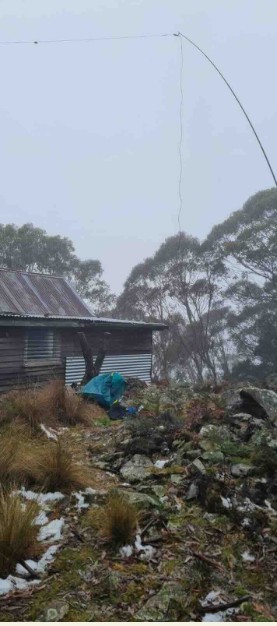
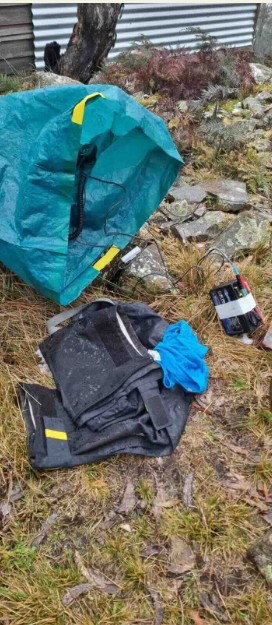
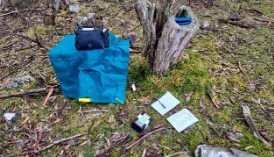
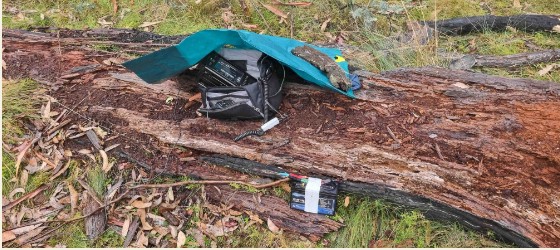
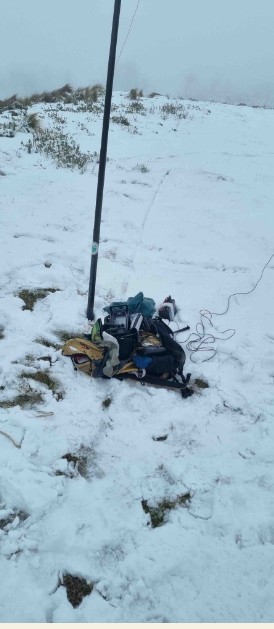
In this case Mount Cowangerong VK2/ST-001 at 1364 meters seemed to be the right place and weather to be bold and get that paddle out. The forecast was rubbish but when I got
There the conditions were no rain and occasional snow flurries, and a bit of falling ice when the wind blew; I think it was just working its way out of the tree tops.
I set up the squid pole tied around a tree stump, and found something at the other end to tie off the EFHW. I thought I was going to be the only person up there and so my EFHW was strung across part of the turning circle at the top and I got the worries up when a tall 4WD.
Showed up and I thought I was going to lose my antenna. The driver was pretty good about it, noticed the antenna, kept clear, and later remarked ‘I thought we would be the only ones up here.’ He and family asked lots of questions about amateur radio and was really surprised that people still do CW, I told him I was new kid on the block in that regard.
After exhausting the SSB contacts I decided to not ‘spot’ as I was unsure how I would deal with a pile up in CW and simply posted to the CQQRS WhatsApp Alerts group. What followed was 4 contacts and 30 minutes of CW fun (yes Ibe slow).
It was a bit of hard work for me at this learning stage, cold hands, a few mistakes but still massive fun and I was so pleased for having a go.
I was operating with an Icom IC-705 radio, a SOTAbeams Tactical Mini squid pole, and then a 40, 20, 15, 10 EFHW antenna with kit designed by K6ARK and built by me from parts (was my second build as I mucked up the first one).
I was using a pressure paddle designed by VKSIL which can be found at this link demonstrate the build.
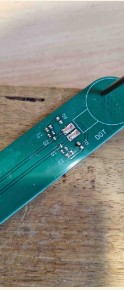
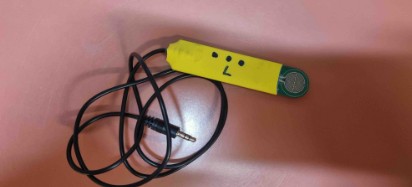
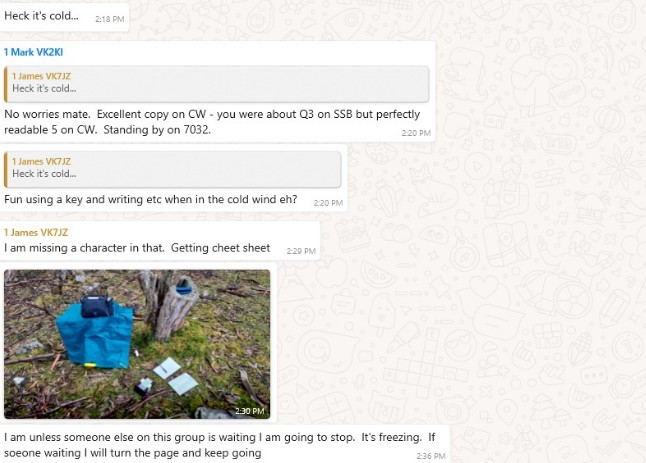
So operating CW from a summit, I had a blast. My hands were getting cold and I found that as I was losing dexterity, I was making mistakes, but those on the other end were most excellent in waiting when I sent dit, dit, dit, dit, then tried again with what my brain was thinking but the fingers were struggling.
I then moved on and later tried CW from Big Bajda Hill VK2/SM-059 in the dark and under a head torch. It was then bitterly cold with the wind sapping all dexterity from my fingers.
I made one QSO with VK5CZ, then I responded to VK2KI but was sending gibberish, gave up, packed up, and retreated to my vehicle.
The following day I got to The Peak VK2/SM-068 in the snow, it was a nice walk to the top in conditions I am accustomed to walking. But thinking on the lessons learned the night before I left the paddle in the bag this time.
I am not averse to walking in the snow or poor conditions, particularly when I have to walk out of some place in VK7 when the weather was just fine walking in, it’s all part of the fun.
The learning lesson from CW and this trip is I need to get some short- fingered gloves so I can keep operating when it gets particularly cold and I need to learn to head copy complete overs.
Soa new commitment from me, I am now going to try CW on every peak and every park. It’s going to be painful for my chasers/hunters but I will get better with practice.
So there, it was fun, I am a beginner, I encourage people to get out to the parks, and the peaks, and have a go.
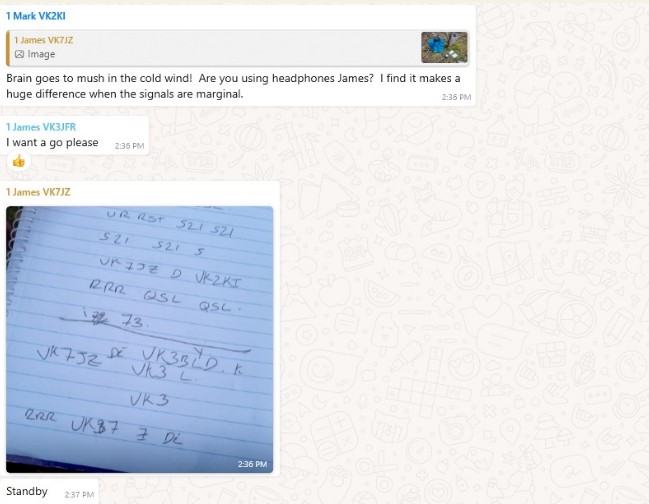
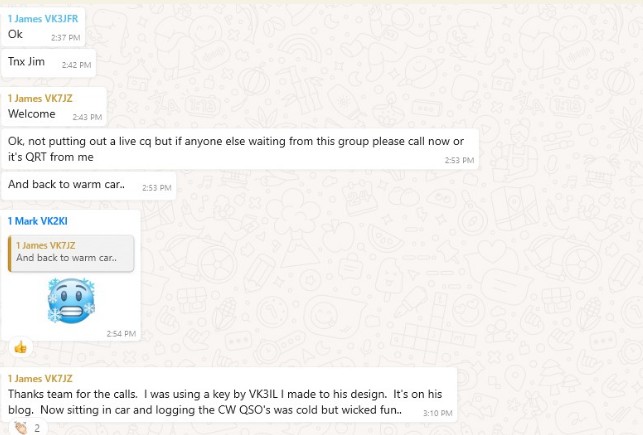
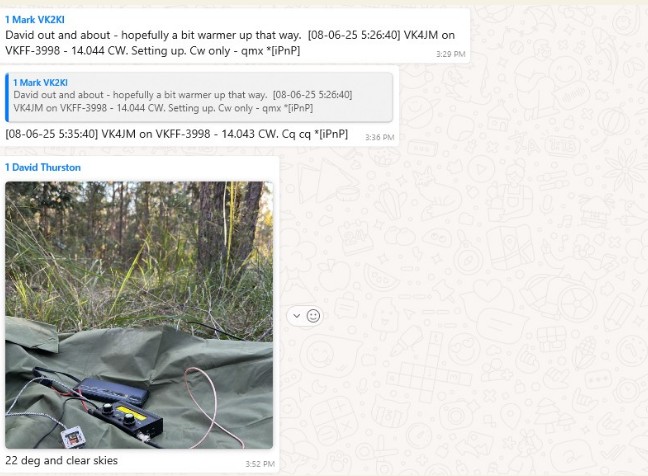
If you have an article or two that you think might be of interest to our readers, please let me know so we can share more thoughts and ideas; email to cqqrsnet@gmail.com

On My Workbench
40m Quarter Wave Vertical
SUIT GUdarter Wave Verlicadl From lan VK7TA I believe that the tallest antenna that one can erect here without council approval is 6m. Therefore this antenna is exactly 6m tall: and it is a 1/4 wave on 40m, amazing!
Well, that’s my story and I’m sticking to it. I am hoping that this antenna is so discreet that no-one will notice if I put
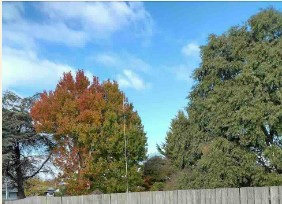
Up another Spiderpole near it. What’s that council, only one antenna you say? I had no idea! I am not sure whether to make an 80m vertical with some top loading, or use the pole for an 80m End-Fed Half-Wave in some sort of inverted Vee.
Configuration So back to the 40m vertical. I have a limited number of random length radials made from house wiring that has been replaced.
They were just lying on the ground; some have fallen victim to the lawn mower, but hopefully some are left under the grass. When trying to pin down radials I discovered an old concrete path buried beneath the grass and weeds.
It is nice to have the path, but it does limit the radials. Cheers, lan.
My New Shack
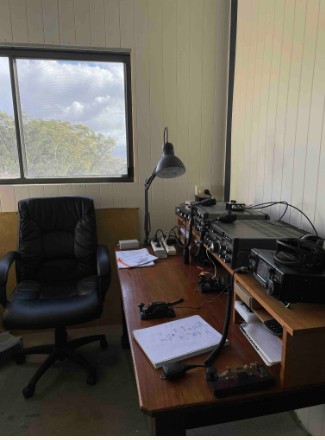
Boat Anchor Manual Library
My Birthday IC-7610 Lights Up
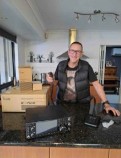
My new IC-7610 is up and running. Still lots of features to read about. Also arrived is my new QRM eliminator. Still trying to work out how to switch it off when I transmit. Hopefully will be sorted by the next QRS CW night. 73s David
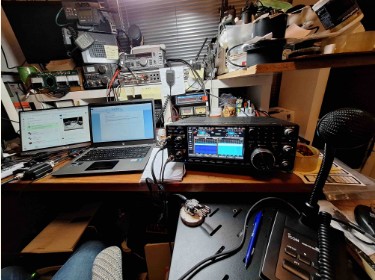
[Now it looks like ya need a bigger shack David!]
A Pretty Fancy Hacksaw Blade
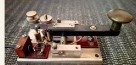
From Patrick VK2IOW: I enjoyed the net on Tuesday after an absence of some months. Here’s a photo of the sideswiper key I used yesterday evening. I bought it some years ago from Vizkey in USA. They kindly supplied it as a kit to reduce postage.
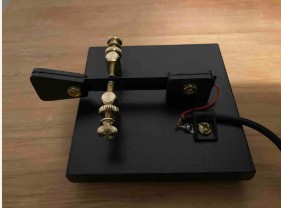
So I put it together on a steel base which I painted black. As you can see the hacksaw blade has silver contacts! Certainly deluxe for a hacksaw blade cootie! By the way, some ops can produce perfectly-weighted Morse on a sideswiper. I am not one of them.
So my Morse has a sideswiper ‘accent’, due to heavier weighting of the dots and dashes with shorter spacing between them. However people seem to be able to copy OK. 73 Patrick
Intermittent Antenna
Intermittent Antenna From lan VK7TA: By the way, my ‘bad connection’ was finally traced to exactly the same fault that mark showed inside a choke BALUN recently.
When removing and replacing the plug there was just enough movement of the pin tc make the connection, so it seemed as if it was a dodgy connection between plug and socket whereas it was actually the centre conductor of the coax inside the choke that had broken.
Other News
18 June.
The first of ten flights in the 11-week QRS International Flight Contest will be uploaded next Wednesday 18 June. For more background, see RagChew editio 22/2025.
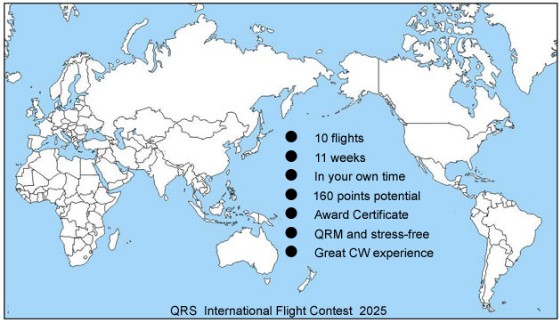
The home page with link to instructions and the sound files is at: https://bit.ly/qrsifc
Tech Museum Sinsheim U-17 Submarine on Air
Tech Museum Sinsheim U-17 Submarine on Air
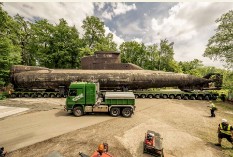
From David VK3DBD I was chuffed to work the DODVU stn both days during the Museum Ship Radio Weekend and will be sending a email / qsl to Mike DL3YZ.
| am not into all this fancy phone and links etc but great to have the photos of the sub on the low loader. The whole lot might have slowed a bit of traffic down when it was en route…. a Centipede on wheels. Whats the price of a set of tyres??
I Shudder to think! Hope get in a short session on Tues net. 73 David
Bletchley Park Code Breakers
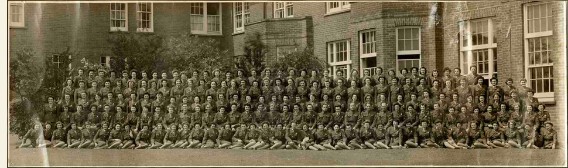
From Martin VK6ZMS via WAHAMS Something for a rainy Sunday – the Bletchley Park WWII radio code breaking network https:/Awww.youtube.com/watch?v=OY4ZTASF T4
What were the Y Stations? Who set them up? And where were they hidden? In this first episode of our new miniseries, we uncover the secret world of Britain’s Y Stations.
These stations were the ears of the intelligence network, feeding vital information to Bletchley Park. Run by a mix of military branches, civilian volunteers, and intelligence services, these stations operated quietly across the country…
Sometimes in plain sight. Want to know if one was near you? Visit our new online deep dive to explore our interactive Y Station map: https://bletchleypark.org.uk/y-stations/
Morse Training Net
Our team member Nic VK7WW runs an on-air Slow Morse training net every Wednesday at 7pm EDST on 3580 for 30 mins. He uses the callsign of the Northern Tasmania Amateur Radio Club VK7TAZ on that net.
Many of our team learned Morse code with the support of Nic, and the weekly training session comes highly recommended for anyone who wants to learn the Code, or simply brush up.
Everyone’s welcome – 3580KHZ at 7pm Eastern time every Wednesday; you’ll hear lots of the CQQRS team on that net. Jordan VK3ACU has recorded the complete set of lessons which you can now find here:
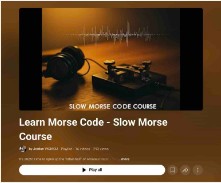
Https://www. youtube.com/playlist?list=PLHsQmZz6fBXO7swAfbT mutrbbEL17fUQL Contact Nic VK7WW for more info nicholaschantler@hotmail.com including how to join the NTARC DISCORD group to follow the action, or just come along and join in on Wednesdays.
From Morgan VK6MTF:
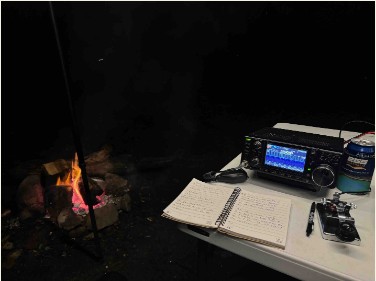
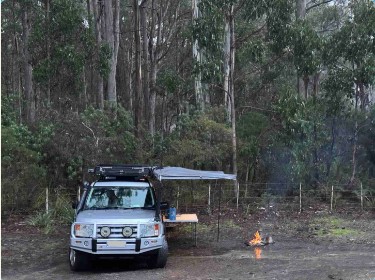
Hi Mark, Thanks for the great QSO tonight. I appreciate your service to beginner CW operators like myself.
Technik Museum Sinsheim U-17 Submarine
After the weekend’s World Museum Ship Radio Weekend activation of the U-17 submarine at the Technik Museum Sinsheim, the German national newspaper Rhein- Neckar-Zeitung published an article ‘The world of Amateur Radio on the Submarine U17′ which included material from an interview with our team mate Mike DL3YZ.
Unfortunately, the interviewer didn’t let the amateur operators know that he was a journalist and that the discussion and photos would be published.
Although the article was in the RagChew, formatted and ready to go, Mike has been forced to ask us to not re-publish the article. So stand-by for an article from Mike about the excitement over the weekend.
How one Team’s Experience can now be yours too.
From Stan ZL3TK Enigma was long obsolete when Unterseeboot S-196, a smaller, modern version of the WW2 U17, was launched from Howaldswerke at Kiel on the Baltic Sea in October 1972.
Designed for a crew of 22, never more than 30, she is a Type 206A vessel, which communicated on HF not by Morse, but by encrypted teleprinter, a modernized version of the WW2 Lorenz machine.
U17’s teletype machines were AROFLEX Mk 1, manufactured by Philips in the Netherlands for NATO, with an encryption module mounted beneath. We are told by our team of ex-operators that the encryption code was changed weekly.
Our 21% Century Reverse Beacon Network left no doubt about the impossibility of making a successful QSO on 20 m between Technik Museum Sinsheim and New Zealand, so we resorted to a Vail private room for CW, specifically the URL advertised in Mark’s emails, then used echolink for voice coordination.
Mike DL3YZ had done a grand job of rounding up three ex-radio operators, Oliver, Ludwig and Michael, who had served on this model UBoot in the Cold War era and beyond.
Everything went according to plan on the night; first a chat and exchange of questions followed by a message encrypted on a virtual Enigma machine configured with a reflector and 4-rotors, the same format demanded by Admiral Doenitz after he became suspicious of possible vulnerabilities presented by the 3-rotor Enigma machines deployed by the Wehrmacht and Luftwaffe.
Those with Bletchley in their blood (there are at least five of you) and indeed anyone else with an eye for a challenge, are now presented with an extraordinary opportunity.
The attached sound file contains the encrypted message sent to U17 on Saturday 7 June 25. Click on the image below to download the audio file.
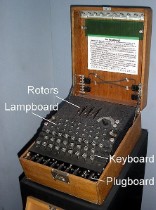
Your task is to discover its contents in exactly the same way as those unsung heroes in Hut 8 at Bletchley Park carried out their work, lead by the formidable and dedicated AlanTuring, with much assistance from Gordon Welchman from Hut 6 to upgrade and adapt the Bombes needed to discover the Stecker board jumpers and the rotor start positions for 4-rotor machines.
Your job is monumentally easier than theirs was. Hours or days of waiting to discover the keys experimentally have been eliminated by following the instructions and referring to the tables provided.
For authenticity, the message is not only encrypted but is also in German. Therefore after decryption it needs to be translated into English. Everything needed to decrypt successfully can be found by referring to the OPNOTE at the end of the message.
Choose your own online language translator, Google works fine. Email is imperfect, so if you do not receive an ACK to your emailed transtation within 48, hours, please send it again.
This should not be considered a simple, everyday task, it’s therefore most important that credit be given for each and every achievement. 73 de Stan
Head Copy Practice – Winnie the Pooh – Chapter 2


The idea is for those who would like to start doing some head-copy practice, use your phone to play the audio file at reduced speed to start the process of learning to recognise and assemble first letters, then entire words, then phrases in your head without writing.
Click on the images to download the audio file and the text for cross- checking.
QLF – “Are you sending with your left foot? Try sending with your left foot!” A humorously derogatory comment about the quality of a person’s sending, [211{22] QNB – QNB?
“How many buttons on your radio?” “QNB 100/5″ Means there are 100 and I know what 5 of them do. Expand Your Q Code Vocabulary department (courtesy Wikipedia) 10:08AM
Readable Five
Instant Recognition and Go With the Flow
From John VK2RU Nancy Kott’s article, Instant Recognition and Go With the Flow, offers a practical roadmap for amateur radio operators aiming to improve their Morse code (CW) proficiency.
Kott introduces the concept of “Instant Character Recognition” (ICR), emphasizing that true fluency in CW requires the ability to instantly recognize each character within a half-second of hearing it.
She argues that many operators plateau around 5-6 words per minute (WPM) because they haven’t fully internalized the alphabet to this level of automaticity.
Kott advises revisiting the basics and overlearning the alphabet, associating each Morse code character with its corresponding letter so intimately that they become second nature.
This approach leverages the psychological principle of the “Law of Contiguity,” where the mind links events that occur within a half-second of each other.
By reinforcing these associations through brief, focused practice sessions, operators can build a mental framework that supports faster and more confident CW operation.
The article is both accessible and motivational, making it a valuable resource for those seeking to overcome barriers in their CW journey.
It’s especially beneficial for operators who have reached a speed plateau and are looking for a structured method to break through it.
Download here – https://ewinnovations.net/wp-content/uploads/2022/05/Instant- Recognition-and-Go-With-the-Flow-Nancy-Kott.pdf Here’s the first part – Instant Recognition:
‘Some Hams are content to rag chew at slow speeds and don’t have a desire to go faster. This is fine! As long as you are getting on the air and having fun with Morse code, that is what is important. However, many frustrated Hams want to go faster.
“How can I increase my code speed?” is the most commonly asked question. After learning the alphabet, Hams seemingly reach a “plateau”, a period where they can’t make further progress.
Usually they can copy 5 or 6 WPM fairly well, but they go to pieces above 7 or 8 WPM. The answer is simple: they have not adequately learned the alphabet. They may deny this is true since they obviously must know the characters to copy 6 or 7 WPM.
However, to copy CW at higher speeds requires more than merely recognizing characters: the recognizing must be instantaneous. By instantaneous recognition I mean the ability to recognize a CW character within a half-second after hearing its completion.
Bill Pierpont, N6HFF, author of “The Art and Skill of Telegraphy,” puts it this way: “Associate the code signal with the printed letter so intimately that when you hear or think of one, the other immediately pops into mind.
Instant recognition is what we strive for. We must develop that patient, receptive state of mind that allows us to recognize each character instantly and accurately as soon as it has been completed.” How do you find out if you have instant recognition?
One way is to play a code practice program. As each letter plays, can you immediately say or write the letter? Or do you think “ummm…A” or “…dit dah…ummm…A”?
If there is a split second delay in your recognition of the letter, then you haven’t learned that letter to the point of instant recognition.
A split second may not seem like much; it’s not going to make much difference when you’re going 5 or 10 WPM but when you get to higher speeds it’s going to mess you up.
The time it takes you to think “…ummm’” before recognizing the letter will be long enough to make you miss the next letter after it. It will snowball to the point where you lose whole words.
You may get enough of it to make sense of the copy, but you will not feel comfortable chatting on the air. It might discourage you enough to make you want to give up because you feel you are practicing and practicing and aren’t making progress.
I’m sure you’ve heard the stories of legendary CW operators who can carry on a high speed chat on the air while drinking a cup of coffee and fielding questions from people in the room.
These operators are comfortable with the code because it’s so familiar they don’t have to think about what they’re copying. lrene, WO8E, feels she is at a plateau.
Even though she has passed the 20 WPM test and has her Extra class license she doesn’t feel comfortable carrying on a conversation at 20 WPM. We wondered if she had instant recognition, maybe she didn’t and this was holding her back.
She listened to the code characters one by one and sure enough there are a handful of characters that she has to think about before identifying them! Once you find you don’t have instant recognition, how do you acquire it?
There are two ways: the hard way and the easy way. The hard way is to proceed as you are doing, eventually instant recognition will come to you. With some people it may take years.
The simple way is to go back to the alphabet and leam it as it should have been done in the first place. Your first reaction is probably to think it would be a waste of time because you may feel you’ve already memorized the alphabet.
But, you’ve proved that you don’t really know the letters because you don’t have instant recognition of them yet. Once properly learned, the alphabet will produce faster speeds quickly and easily.
The key is to overlearn the alphabet so it becomes so ingrained in your brain that it’s second nature. In psychology there is a “Law of Continguity”, which says that if two events occur no more than one-half second apart, the mind associates the two events.
This means when a Morse code character is heard and it is followed within one-half second by a spoken letter of the alphabet, the mind will associate the Morse sound with the translation.
The association works automatically, as a workman thinks “lunch” when he hears the noon whistle blow. But we quickly forget things learned by this association method, s0 we need to “overlearn” them to make the code a part of our permanent memory.
Overlearning occurs when we continue to practice something we feel we have already learned. However, boredom soon sets in when we go over and over material we think we’ve already mastered.
This is why practice sessions should be short, two or three minutes at a time. Short, frequent practice sessions produce more results than fewer longer sessions. Concentrate, stay focused on your goal!
Determine what characters you don’t recognize immediately after they are played and concentrate on these. You should be able to say the name of the character as. the last dit or dah is heard. If you don’t, add it to your list.
You can relearn the alphabet by using basic code tapes, listening to slow code on the air or even whistling it to yourself. It would be ideal if you could make your own tape concentrating on your problem letters, but don’t omit the letters you already know.
Remember, our goal is to overlearn the code: all the reinforcement you can get is good for you. The key to success with this method is to say the letter within a half second of hearing it; hearing it and quickly saying it over and over and over.
The INSTANT you recognize the letter being played, say it out loud as fast as you can. Use spare moments during the day to whistle the code under your breath and quietly say the letter to yourself immediately afterwards.
Do it while driving, sitting at your desk at work (no one will even suspect!), during commercials while watching TV, anytime you think of it. Spending just a few minutes many times a day will work wonders.
By tapping out the letter with your finger as you say the letter aloud or whistle it, you involve more of your brain’s memory centers. This increases your learning efficiency by reinforcing instant recognition with what is called “motor memory”.
Doing a practice session right before you go to sleep has also been proven to help your brain commit material to memory. When you find that you have instant recognition with the letters, your code speed will increase effortlessly.
Then you will get to the point where you can work on having instant recognition with common words As always, I welcome your comments. Contact me at Nancy Kott, WZ8C, PO Box 47, Hadley MI 48440 or via Email at
If you’ve read something that you think might be of interest to our readers, please let me know so we can share more thoughts and ideas; email to cqqrsnet@gmail.com
I Hear Tell…
| know that some of us experienced the rapid fade-out on 40m on the previous Tuesday; I also hear tell that the same fade-out apparently extended to their submission of the weekly report for RagChew – brain fade! “I’m sure I sent it….. did |?” 😀 or
Heard recently on 7032KHZ – a rapid di-di-di-di-di-di-di-di-di-di-di-di-di-di-di-di-di- di-di-di-di-di-di-di- di-di-di-di-di-di-di-di- Someone who was monitoring the popular SOTA/PARKS/CQQRS frequency, but who’s moved something around in the shack – and activated their paddle perhaps?
Hopefully no finals were hurt in the process! Could have been worse… could have been a straight key! Ouch.
[If you have some intel about other team members… or even yourself… that’s worth sharing, please let me know cqqrsnet@gmail.com J
Di-dah-di-dah-dit
So back to the CQQRS Slow CW QSO practice net.
Next Tuesday’s Net
Our CQQRS Group will be on as always on Tuesday from around 0700Z until about 1300Z; see https://bit.ly/CQQRSWebsite and navigate to the Net Details page for details.
Doesn’t matter whether you’re brand new and want to try just exchanging callsigns and RST reports, or you’re ready for a good old rag chew. We’ll have fun.
There’s usually people around until after 1300Z – so keep calling in the segment of the band designated in the table below until you catch someone.
I should be on as usual from home in NSW or via the Remote at Bedfordale WA, and I’ll also be watching the proceedings using the VK6QS and Tecsun SDRs in WA and NSW respectively. Hope to hear you there.
Please let me know via our Reports form bit.ly/CQQRSNET who you work or hear on Tuesday’s Group. The report form closes at lunchtime (Eastern Australian time) on Thursday.
Post Morsum
Richard VK6HRC will run our phone Post Morsum on the South West AllStar net (via repeaters and hotspots all over WA) from 0600 WA time, then from 0700 WA time on 80m (8605 LSB).
See https://bit.ly/CQQRSWebsite and navigate to the Net Details page for details of how you can connect via Echolink or even possibly via your local FM repeater.
Teamwork
Thank you so much to our team of 36 contributors: MOKBJ, MONNK, VK2GAS, VK2IOW, VK2KI, VK2RU, VK2TIG, VK2WP, VK3ACU, VK3AE, VK3AFH, VK3CTM, VK3DBD, VK3DRQ, VK3FG, VK3JFR, VK3WOW, VK4JM, VK5CZ, VKSET, VKSKFG, VKSLA, VK6HRC, VK6KD, VK6KHZ, VK6MK, VK6MTF, VK6NW, VK6QI, VK6ZMS, VK7JZ, VK7KPC, VK7TA, VK7WW, WZ8C and ZL3TK.
And a special thank you to our editorial team, Nigel G4RWI (head of software development) for so quickly completing the software-rework request I set for him this week, John VK2RU (WhatsApp spy and research) and Richard VK6HRC (Post Morsition and spy).
Great work alll GUGW on tresday, Dit-dit mb. Mark Bosra VK2KI/ VK6QI Beautiful South Bowning NSW mark,bosma@icloud.com non impediti ratione cogitationis

About the CQ QRS Net
For the current schedule and more information about the CQQRS net, please go the the Net Details page on our website:

The opinions expressed in the RagChew newsletter are those of the individual contributors. The opinions do not necessarily reflect that of the editor or of the CQ QRS Group members.
Any material and images received by the editor or published on the CQQRS WhatsApp groups may be published in this newsletter unless specifically requested otherwise.