Below is a reconstruction of the 2025 22 CQ QRS RagChew newsletter designed to support full text searching. This reconstruction was built using OCR, and will contain errors.
To view the Mailchimp original, click here. To search the entire newsletter archive, click here.
Contents
- CQ QRS RagChew
- What On Earth Have I Bought?
- Last Tuesday’s Group
- Reports
- Website
- Reports & Comments
- Comments:
- Post Morsum Report
- This Week’s Topics of Interest
- Reality Check on Bad Habits
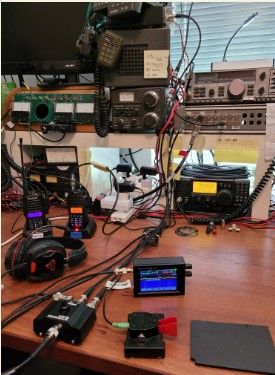
- On My Workbench
- The antennas are:
- Other News
- 80th Anniversary of Operation Manna
- Morse Training Net
- Andy VK5LA’s YouTube Channel
- Readable Five
- The CW Way of Life:
- K9AY Telegraph
- There’s No Such Thing…
- Answers:
- First from Carl VK5CT
- I Hear Tell…
- Di-dah-di-dah-dit
- Next Tuesday’s Net
- Post Morsum
- Teamwork
- About the CQ QRS Net
CQ QRS RagChew
Well well… another tertific Tuesday evening. Not as many people reported as last week (five dozen this week, six dozen last week would you believe?) but more people trying 80m again – which is great!
Interesting again how conditions were so variable – some reported hearing nothing, others heard back-to-back stations. I struggled last week to get the newsletter out in time…
I try to get it out on Thursdays, but last time it was the stroke of midnight on Monday! I use the MailChimp (spam-marketing) generator which is totally web-based – there’s no option to work off line, and of course for most of the previous three weeks, we were camping where there was no internet.
Being conscious of the effect of vehicle emissions on climate change, we were reluctant to drive the 50-odd kilometre each- way trip to the library in Forbes more than once for an editing session – and sitting all day in the car or in the rain somewhere where we had cellular internet coverage really wasn’t appealing – much nicer to spend our time camping!
Anyway, enough of my griping…. Thanks to those who sent a welfare check email to make sure everything was ok when the newsletter hadn’t arrived; much appreciated!
Next weekend June 7th & 8th is the world-wide Museum Ship Radio Weekend. Our European desk coordinator Mike DL3YZ will be teaming up with Edgar DO2EMR to put the German Submariners Association VDU and Technik-Museum Sinsheim’s new U-17 submarine on air using a special event callsign DLOVDU.
Mike will be arranging a couple of scheduled times for CW to VK/ZL, and will also be QRV using SSB / CW / FT-8 / RTTY / DMR and Echolink.
Mike will also be using Echolink and DMR to contact some VK and ZL 2m /70 cm repeaters, including the WA AllStar network via your editor’s VK2KI-L Echolink-to-AllStar node – and hopefully we’ll be able to post Alerts on the CQQRS WhatsApp group as well.
Any contacts or SWL reports with the submarine will be rewarded with a special event QSL card. More info to follow in next week’s RagChew and Mike’s website, and I’m hoping lots of our team will have a go – with CW on the higher HF bands, or if not, phone using Echolink.
But in the mean time, please enjoy Mike’s terrific article about the submarine below.
Don Edwards Memorial Slow Morse Contest Please don’t forget to submit your log to the St George ARC before midnight this Saturday (today)! Click here for the rules.
What On Earth Have I Bought?
Last week Ross MONNK asked about a mysterious key that he had bought; well one of our resident key restoration gurus Kees VK1KVS has done a wonderful job of responding to the plea for help – see Other News below…
And we’ll see what Ross’ key looks like after a bit of a clean-up as well! So back to this week’s RagChew; with thanks to our 36 other contributors, there’s lots of interesting stuff to read about; please enjoy.
Last Tuesday’s Group
Here’s the 59 stations heard by 43 members of our team on Tuesday:
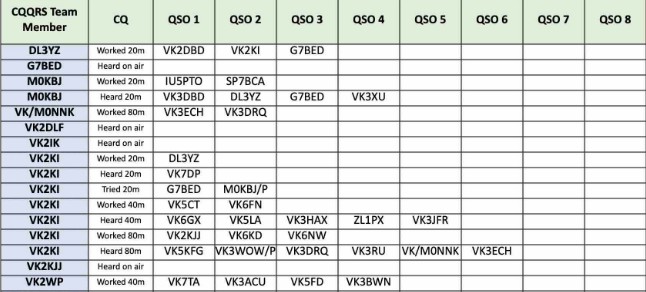
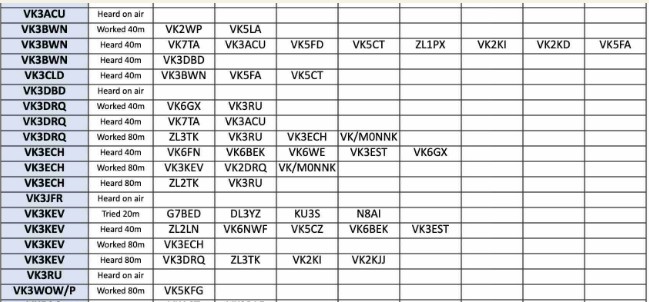
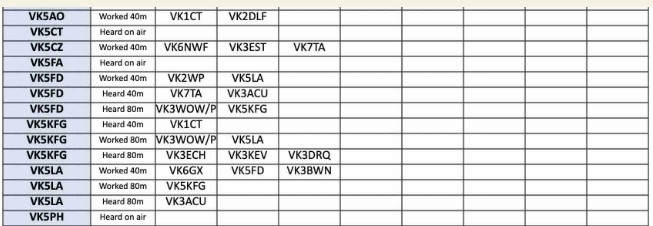
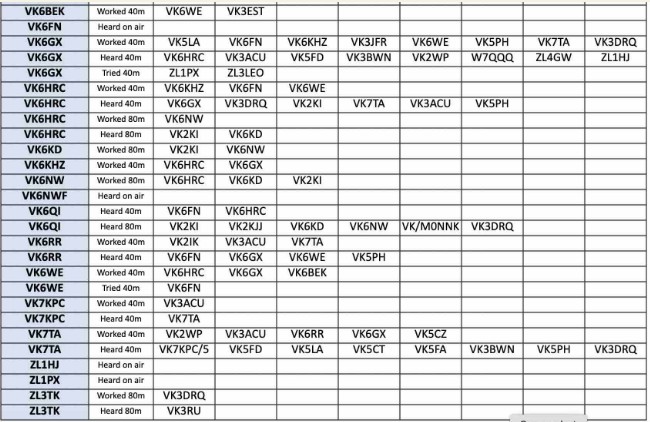
Welcome this week to Aaron ZL1AUN; Aaron lives at Pipiwai North West of Whangarei up the top end of the North Island and was introduced to the group by Stan ZL3TK. Welcome Aaron and I look forward to hearing you on Tuesdays.
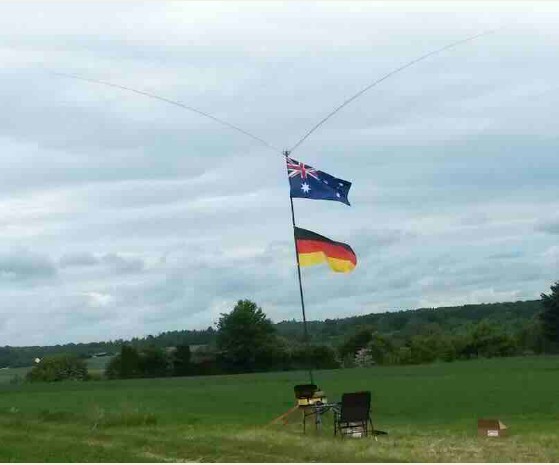
This week’s image is the cute 20m/15m/10m rabbit-ears antenna in use by Michae DL3YZ during the DXperiment part of our CQQRS Slow CW Practice QSO net on Tuesday. See On My Workbench below for more.
Reports
After next Tuesday’s Group, please send me a list of who you worked and / or who you heard using our web form here:

Please help attract new and old team members to have a go by submitting your repo! each week. Submissions close 1300 (Eastern Australian time) on Thursday.
Website
If you’d like to find out a bit about our net, or would like to pass information to others about our Tuesday get-togethers, here’s the link to our website.
Bit.ly/CQQRSWebsite Cheers, mb Mark Bosma VK2KI / VK6QI Beautiful South Bowning NSW mark.bosma@icloud.com non impsditi ratione cogitationis
Reports & Comments
The spreadsheets above show the known stations on last Tuesday’s Group; the comments distilled from the team members’ reports follow:
Comments:
[80m] + “Patience is a virtue”, they say and it was today. I listened to Rob VK3ECH and Manny VK3DRQ chatting for 30 minutes, waiting for them to finish. When they did, I jumped in and had nice QSOs with both of them. It made my day. Thanks, guys..
[20m] * Today I wanted to test two mobile antenna systems against each other on real life DX conditions. One is a 3 band full wave loop ona 12m HD fiberglass mast pape 4) oS
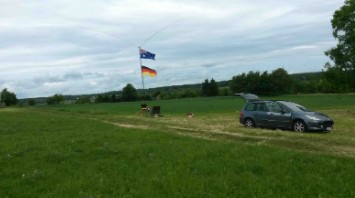
Spreaders. It has 3 loops, resonant for 10 m, 15m and 20 m. The other is a Y-shaped dipole made of telescopic whips with M10 treads. + Itrained during setup, but fortunately it went dry just in time for calling CQ.
+ First test was the loops, I heard myself at a solid S5 at the VK5PH Ironstone Range KiwiSDR on 20 m. Like always, stations here in Europe don’t mind if you call CQ VK or CQ OC, an so my first short QSO went to Greece HI.
+ Then I had the honour to chat with Mark/ VK2KI. During that time it was quite windy here, and all those wires got shaken badly. Maybe thats one reason for the QSB we had then 🙂 . Then David / VK3DBD was calling me, and he hada really strong signal up here.
These loops are excellent for RX. Thanks for the chat Mark and David. + After that, I tried my luck on the 15 m band. My signal on the great Ironstone SDF was very faint, and on the RBN and pskreporter I saw that 15 m is leading my signal to China and USA this day.
So I looked on the QRGs of my fellows here in Europe, and heard Chris, who was really busy ignoring all these European stations calling him with big signals, even if he called CQ OC.. I decided to say < quick hello and wish him GL DX.
+ After switching to the mobile dipole, which was deployed in only 6 minutes, I decided to follow Simons best practice and attach a flag to the pole.
But I thought it may help the radio waves to find their way to Australia if they also see the correct flag of the destination 😉 . My signal on the SDR was only about $3, which confirmed my previous experiments.
Maybe the DX window was already starting to close as well. So Ihad 3 more European contacts on the dipole, and then decided to leave this nice location. It was a fine sunny morning. + Have a great week, 73 – Mike.. [Great report Mike.
There’s something about those flags that I don’t remember from my studies!
[40m] + No luck on 40m this week. Better luck next week.
[80m] + 80m Band started to open up to vk5 for me around 10PM wst.. + Successful QSOs tonight were run at 100W. More than double than when I’m portable. (Usually 40w) Im glad Mark VK2KI and Wayne VK6NW were keeping an eye on the QRS alerts page.
It really does pay off sending a note to the chat group when calling ca. + Till next week, 73s…
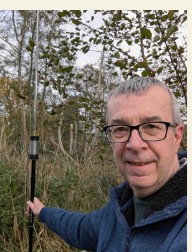
[20m] «| drove into Shropshire under threatening clouds so decided to work from inside the car. It was nice and comfortable but the phone signal was SO to $1 with QSB, which made hard to keep up with the WhatsApp chats..
+ I heard very clear QSO between Mike and David and a slightly less clear but perfectly readable QSO between Chris and Drew.. * Sadly, no one came my way apart from an Italian
Station who abruptly disappeared and Tom in Lodz, Poland. + Within moments of taking down the antenna, the rain started to fall, drawing play tc an early close.. [Ahhh!
No wonder you didn’t have as much luck as expected – I suspect the centre- loaded whip would work better outside the car Simon! Even if it gets a bit wet.] ey
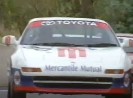
[40m] * Once again I didn’t hear much from vk2 and vks..
[80m] + I used a tuner in the shack to more or less match the 40m vertical (ie 10m long). I heard nothing and no-one heard me. Maybe not surprising..
+ By the way, my “bad connection” reported for the last two weeks was finally traced to exactly the same fault that Mark VK2KI showed inside his portable kit’s choke BALUN last week. When removing and replacing the
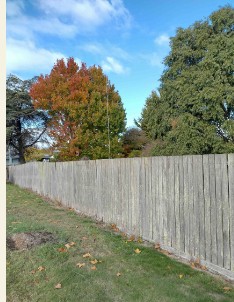
Plug there was just enough movement of the pin to make the connection, so it seemed as if it was a dodgy connection between plug and socket whereas it was actually the centre conductor of the coax inside the choke that had broken.
[Thanks lan – pesky things these BALUNs eh? Next week’s RagChew will feature more details about lan’s antenna work.]
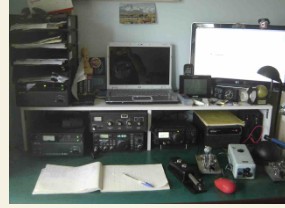
[20m] + Didn’t hear anything from our European branch this week..
[40m] * Good to meet up with Paul, VK2IK for our first QSO.
[40m] + It did sound like not many operator: were on this band..
[80m] – After missing last Tuesday due to a
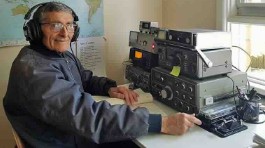
Meeting, I was glad to be back this week. Even though my energies were not fully with me, I did enjoy the six QSOs I managed. Thanks to all of those who helped me through..
+ It was nice to meet OM Ross all the way from ‘the UK’ through the remote station – I couldn’t be on the DX bands due to lack of time.. «| hope the waves were with you all..
From Simon G7BED at Northamptonshire * Thanks to those who tried to make contact on Tuesday. My apologies, but had some intermittent QRM that made it a little tricky. Click for a listen —->
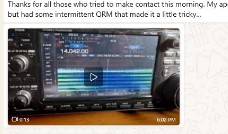
[40m] * Good to give the FT817 a test run with the recently acquired narrow 500 Hz CW
[80m] * Thanks to all on last night.. [The FT-817 narrow CW filters are just the ducks guts eh Richard? Amazing at knocking an S9 noise level down to nothing! Lucky find if you can get them!]
[80m] + Peter’s (VKS3WOW) QMX portable in the Grampians put a really good signal into Willunga. I have had a half built QMX Plus sitting on the bench for some time now.
Just one more coil to wind (there are quite a few); this should be the inspiration to finish it
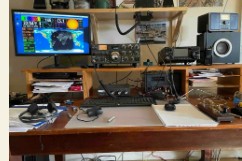
[40m] «| tried calling VA6FN when I tuned in for what I hoped would be a scheduled QSO but there was no reply. Turns out Max was on earlier; there is an element of luck when you don’t specify the time.
I did make three good contacts over two sessions and heard several weak signals but could
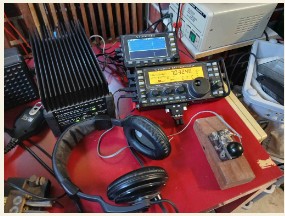
[40m] * Good propagation today. I was hearing ZL early and at good strength, but it’s difficult to get their attention from VK6 before my sunset. Winter should produce better results..
[80m] + I did my usual trick of doing an eyelid inspection after dinner, awaking
[40m] + Running only 5 watts into long wire. Called CQ for more than 40 minutes around 7035, 7032 but got no response.
[80m] + Amazed to get 599 report from Willunga on 80m when I couldn’t raise a soul on 40m. Oddities of propagation, perhaps? +1 think my long wire was 136 feet long – first use.
+ Realised later I was running my 12 Volt QMX on the 9 Volt battery outlet, so it would have been putting out a fair bit less than 5 Watts. Ant is pretty amazing – on the QMX it shows SWR under 1.4:1 on 80m, 40m and 20m – no tuner required.
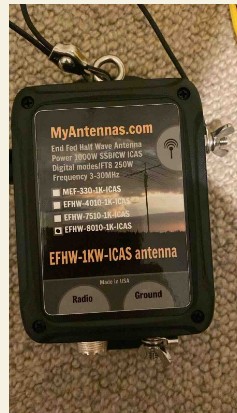
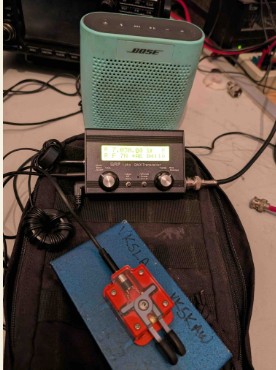
[40m] + All talk and no listening from me! Got on 40 and called CQ with 5 Watts from my QMX rig pretty much straight after work, and was answered by Phil, VK6GX. + QS’s with Allen SED and Ketut 3BWN before dinner…
[80m] + Hopped on 80m after the (SSB) Boat Anchor net and a great catch-up with Greg 5KFG before heading to bed. Condx seemed FBI. [See below for Andy’s YouTube video
[40m] « The band was pretty busy at one time. There were QSOs back-to-back every 1KHZ. It was nice to see all operators came out of the woodwork and participated in the net. I am sure that in itself is an attraction. Thanks
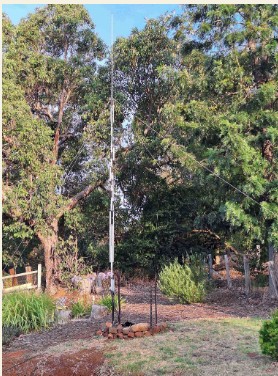
[20m]. * The DXperiment started well – Mike DL3YZ was coming through RSN 411 and I was amazed when he reported that I was RST 559; what really surprised me was that
Mike was out portable in a paddock, using just his small vertical loop antenna and 100 Watts. Chris G7BED was also coming through RSN 411 with his 100 Watts, but he could not hear me through the noise at his end. I did hear his QSOs with VK4DP and with Mike…
+ There was no sign at all of Simon MOKBJ at his favorite portable site again this week. I knew he was on because we were liaising via WhatsApp and I could see hin on the Reverse Beacon Network.
Better luck next time Simon, but I hope you had fun out in the early morning anyway..
[40m] + After the DXperiment fun on 20m I slipped down to 40, and heard Phil VK6GX coming through nicely chatting to Andy VKBLA.
Andy had a nice signal here despite the low power, and presumably Phil was using his 80m one wavelength loop on 40, which was working a treat.
+ Good hear Peter ZL1PX at Waluku just South West of Auckland on again this week, and I was really pleased to hook up with Carl VKSCT; for a number of reasons, Carl hasn’t been able to be on air on CW much of late – so our chat was a bonus for me..
+I then came across Max VK6EN in Manjimup chatting to Richard VK6HRC in Padbury. Telling tales out of school, but Max wasn’t having a good day on his racing-bearing equipped Begali straight key (look them up…
Eye- wateringl); sometimes you’re a windshield, sometimes you’re a bug Max. +I came across James VK3JFR with another big signal up my way, and was about to jump on to say g’day to our new operator, but Phil VK6GX beat me to the punch – better DX for James anyway….
Not to mention the nice keying of Phil, a retired professional CW operator.. + To round-out 40m, I had a nice chat to Max VKGEN, using his Flex Maestro / 6700 combination and his so-called temporary dipole.
[80m] + Wow – wasn’t it terrific to hear our team on 80m again this week? Greg VKSKFG at Willunga was having a nice long chat with Peter VK8WOW who was portable at Halls Gap; both had great signals into Southern NSW.
Unfortunately, Peter was about 10KHZ below the bottom of our net segment, so possibly missed other team callers who were unlikely to have tuned down that far – but terrific signal Peter..
• I hooked up with Joergen VK2KJJ 120KM away at Wagga with a big signal; great to have such a nice rag chew again Joe, and I hope I didn’t keep you up too late on a work day.
Next up David VK6KD at Ballajura and I struggled to exchange RSNs – 321 from me and 288 from David; great to hear of David’s radircral alhait
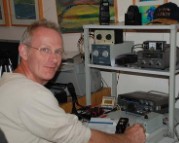
• xpensive longer-term strategy to reduce his noise level.. + Also good to hear Ross MONNK using the Summerland ARC’s remote station in Northern NSW which was putting in a great signal here as he chatted to Rob VK3ECH at Echuca and Manny VK3DRQ at Blackburn..
+ I rounded out the evening with a nice chat to Wayne VK6NW from Bridgetown, who reported my signals as RST 599 on his Barrett 4040 transceiver.
Wayne hasn’t been able to operate late in the evening because of the Tuesday evening training nights on Tuesdays – great to hear that he’s been able to adjust the training nights to give him more time on our net!.
Also from your editor Mark VK6QI at Beautiful South Bowning via the VA6SEG KiwiSDR at Hoddys Well
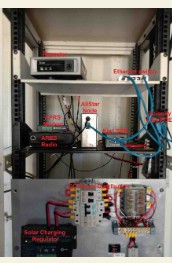
[80m] * So good to hear so many people on air with nice 80m signals into WA; I love Winter (chilblains aside) less solar radiation and an earlier ionospheric sunset means the D-layer dissolves earlier!. * Great fun on Tuesday night – thank you all!.
This report from David VK3DBD at Yakandandah was missed last week: The time and day of the fascinating and time consuming (well QRS is eh?) CQQRS net is not always convenient as meals have to take priority sometimes!
So on Tuesday I was on the ball at 0700Z switched on 20m and the first stn I heard a few secs afterward was G7BED calling CQ! Nice clean signal, quiet background and a genuine 579.
The call being distinctive to remember (!) rang a bell and I knew Ihad seen it listed on the QRS blog – so quickly fired off a reply and he came right back with 579 for me. As usual I was running the K3s and 100W to my 3 el Yagi.
We had an excellent chat for at least half an hour; a proper QSO and as Chris remarked, it was nice to have a real one – a change from the many rubber-stamp type that do so often happen.
I am sure my efforts at QRS are erratic as it is so easy to forget the efforts of QRS and get carried away during a chat,. But Chris I felt was likely more capable than I expected and he must have left the realms of the QRS fraternity in reality.
Having said that there is no substitute for adjusting speed to suit condx. All too often I work folk who are very capable of perhaps 25-30 wpm and continue at such speeds when their rx report is say 449 – not a good thing; itis so true:-” the price of doing a job twice is always more than doing it right in the first place”.
I think one serious mistake made by a few of the QRS fraternity is that they enjoy the QRS QSOs, but may fail to practice more by copying faster Morse in between times.
Just trying to copy faster code, even if not 100% successful will help speed things up so quickly. 73 David VK3DBD [Thanks David.
In next week’s RagChew newsletter, we’ll be discussing an interesting technique for practicing faster head-copy code in-use by several of the team mambere 7

Post Morsum Report
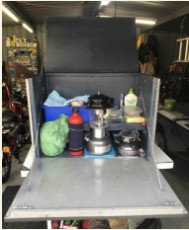
Frost Morsum nmeport from Richard VK6HRC Hello Mark Well it was a bit of a scramble to get organised on Wednesday morning due to a power outage! A quick trip to the shed to raid my away gear for a billy,
Oe batteries etc and and got set up just in time. My galley box goes in the back of my ute for away trips – and proved very usefull On the AllStar / Echolink and VK6RLM repeater South West network : * VK6FN Max * VK6NW Wayne * VK6QI Mark * VK6KD David * VK6HRC + VK6MRB Mulligan and our other SWLs Max had three contacts on 40 Mx then started battling with a temperamental key so went into listening mode.
No doubt we will hear how it was disciplined next time we work Max. Wayne was called out to attend to some SES work but managed to come up on 80 Mx later and get three contacts in the log.
He also checked Space Weather on the net earlier to see we were expecting disturbed conditions so it was good people got on and had a go anyway. Some good news from Wayne, his SES roster has changed to Monday night so it is more time for QRS on Tuesdays.
Mark had a pleasant evening from home this time after their well earned walkabout in rural NSW. Two contacts on 40 Mx and five heard, two contacts on 80 Mx also great to work some people that have been away for a while.
On the Northern Hemisphere front Mark worked Mike DL8YZ who was out portable testing antenna for the up- coming museum submarine radio activation, and was also doing the usual spotting on WhatsApp to let us know where to listen out.
David worked four on 40 Mx and two on 80 Mx, still battling the high noise level a noise canceling device is going to be fairly high on the to-do list.
More news from David and Pauline after their year away as grey nomads – they were thinking of relocating up into the Hills above Perth next year sometime with much less QRM hopefully!
Ihad three contacts on 40 Mx one on 80 Mx and made the most of listening in to some of the rag chews going on. Thanks to all last night and this morning, stay safe. Richard VKGHRC
This Week’s Topics of Interest
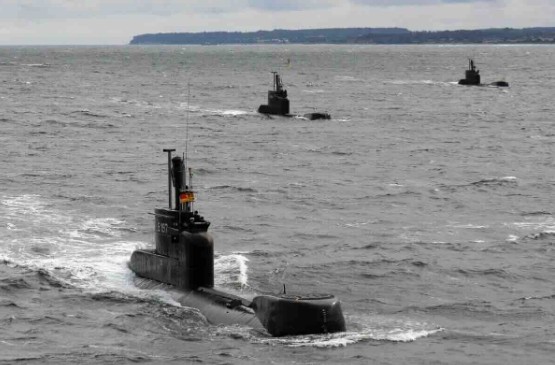
“What ??? No way!” you say. “Swabia is 500 km from any salt water. He must be dehydrated from being tied to the mast for too long.” Nope – we now have our very own submarine (designation code U17) down here in “the Landle” (as we like to call our area of Swabia, in southern Germany).
In a really outstanding logistics project, the German Submariners Association VDU and the Technik-Museum Sinsheim / Speyer have transported U-17, a fully grown German Navy submarine, to their site at the museum here in Sinsheim.
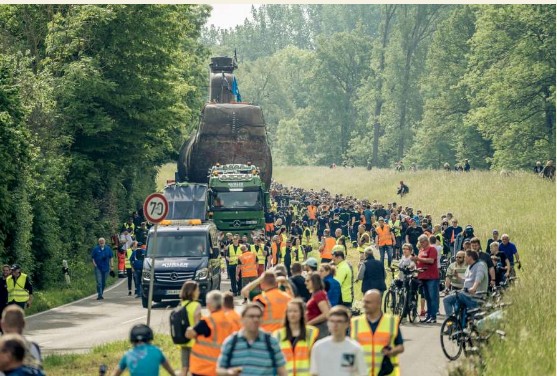
The submarine’s large dimensions made the transport really che ¢ Weight: abt. 500 tons. ¢ Length: 48.6 m ( 159.4 ft) ¢ Width: 4.6 m (15 ft) ¢ Height: 9 m (29.5 ft) Total cost of transport was 3,525,000 AUD / 2.000.000 EUR
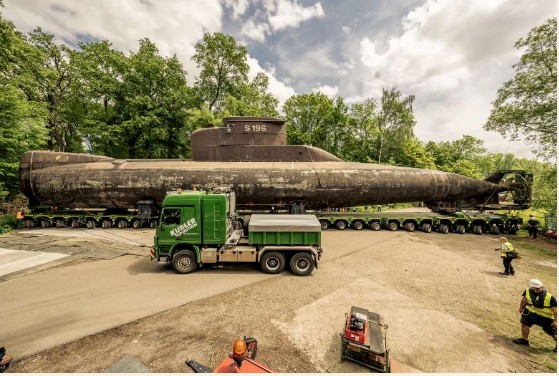
Sinsneim, you can watcn this great video https://www.youtube.com/watch?v=GGYQ7pjNt_c You may want to turn on English subtitles for a better understanding, and for some additional amusement.
It really was an extraordinary effort You can find out more about U17 (then and now) on the website https://u17.technik-museum.de/en/ Now, after years of planning, transport and restoration, the boat is ready to open its hatches to the public, with a big celebration by all those who have played a part in its last “voyage” from the ocean.
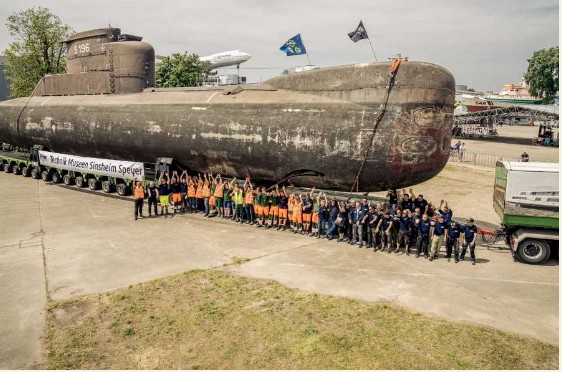
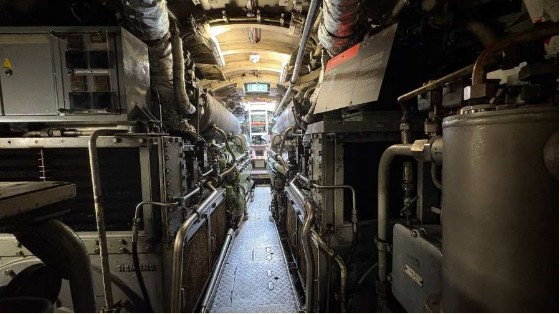
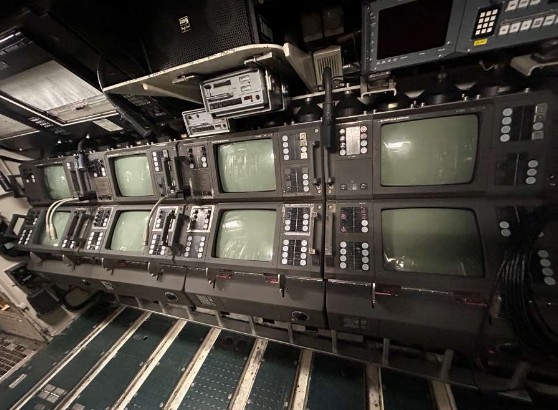
We want to welcome the submarine to its new location in a manner fitting for another thrilling worldwide sensation like the Museum’s supersonic passenger airplane Concorde and Tupolev TU-144, or the marvellous rocket car “Blue Flame”.
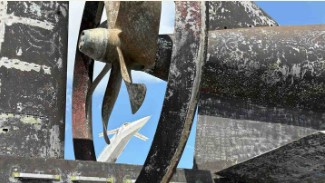
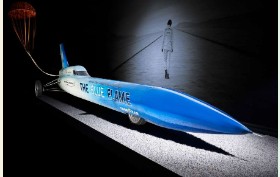
Accordingly, my friend Edgar DO2EMR and myself (Mike DL3YZ) will be holding radio Special Event from beside the submarine, here at the museum near the lov Blackwood Forest.
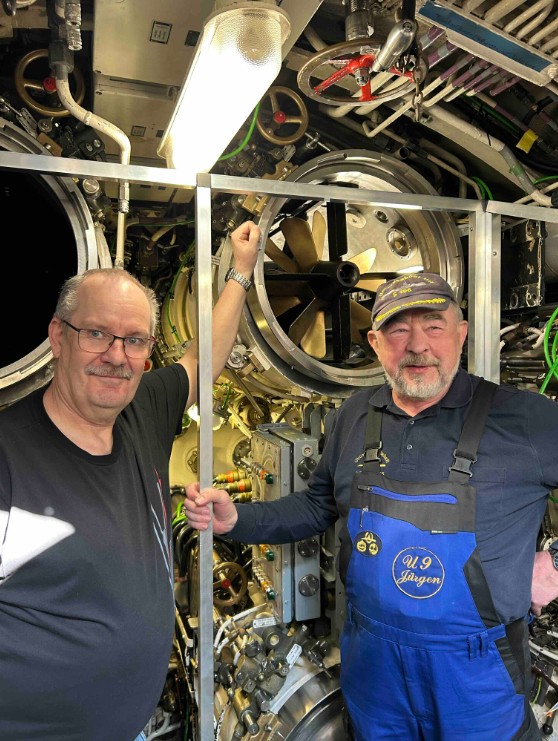
(Edi and Jurgen, one of the former commanders of U17 in front of the torpedo tubes. The torpedo-dummy you see behind Jiirgen was part of the German movie ‘Das Boot’ ) Some of the original German Navy radio operators of U-17 will be joining us to do some operating, and to have a good time around and inside the submarine.
We’ve also invited some OMs from the local radio club to help us so that we can be on the air as much as possible. Using the Special Event callsign DLOVDU, we will try to reach as many amateur radio stations as possible, as well as other museum ships around the world.
Three stations are planned: “One for 10-15-20 m using a 3 resonator diamond loop antenna (see On My Workbench) * Another for 40 -160 m, using a 32 m end fed wire antenna “ Also a station for the Eshail / QO-100 satellite operation, and for digital modes such as Echolink and DMR.
We’ll use Echolink and DMR to contact some VK and ZL 2m // 70 cm repeaters. We’ll be QRV using the modes SSB / CW / FT-8/ RTTY / DMR and Echolink. Every time we change band or mode, we’ll spot ourselves on the DX cluster using “DLOVDU”.
And we will put our Echolink ID, talkgroup and the current repeater we are connected to on our web page for the event: https://www.sandersinformatik.de/U17-on-air
A (friendly) contact with the retired Australian ‘Daring class destroyer HMAS Vampire II, which is currently located in the maritime museum at Sydney, will also be attempted.
Our valued VK QRS Net team mate Mark VK2DI is a member of the radio team on HMAS Vampire (station callsign VK2VMP ). So don’t forget rh
Contact Mark and his team as well during this worldwide Special Event weekend 🙂 If you would like to arrange a private sked with us, or just send a SWL report, please email: U17-on-air@sandersinformatik.de Of course, we will send nice Special Event DLOVDU QSL cards to all of the contacts that we make and to any SWLs who request them.
Thanks for your interest – I hope we’ll meet on air soon, Mike – DL3YZ [Wow! What a fantastic project Mike. If you have time, perhaps let us know when you’re scheduled to be operating the station so we can attempt some CW contacts between our team members and the station when the bands are predicted to be open to VK or ZL over the short or long path?
Similarly, if you’re on voice on Echolink, we’ll be easily able to connect you to the Western Australian AllStar network which a bunch of our team will be able to connect to (eg via Echolink) for a chat – and one of those nice QSL cards.
Thanks again for a terrific article mate.]
Reality Check on Bad Habits
NNeality UNeCCK ON Dad FiaDits by Stan ZL3TK It’s not just the bad habits, it’s the air of smugness and self-righteousness where neither have any right to exist.
This demonstrable flaw in human nature appears in all walks of life, not the least in amateur radio. One might think straight key CW operators would strive for perfection.
Some certainly did in the distant past, but today in nearly every field, mediocrity is the new excellence. Today, embracing the no-responsibility paradigm is all too common.
With respect to Morse, it is expressed in the platitude: if my code can be sort-of read, then it’s good enough. In far too many instances, such an attitude and the inevitable result is simply not good enough.
Let’s establish a baseline for this argument with a screen shot of the digit 7 sent ona straight key to show how all CW transmissions should sound when mandated fixed ratios are employed, which are well- known as_ 1:1 for dot-to-space and 1:3 for dot-to-dash.
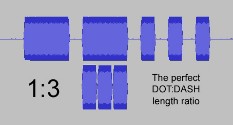
Go ahead, get out those vernier callipers and measure the individual bits, prove for yourself the presentation is accurate.
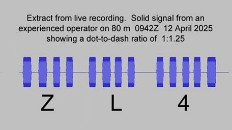
Now let’s examine a signal sent by an operator in the deep south of New Zealand, code he had convinced himself was ‘good enough’.
One can barely detect, either audibly or visually, those shrunken apologies for dashes. Most would find the call sign impossible to read, as indeed did |.
After three unsuccessful attempts to convince him to send properly, I gave my email address and asked him to contact me online.
That resulted in a constructive conversation during which a commitment was made to provide some practical help in the form of a sound file for him to use to retrain. That sound file is attached.
He claims to have worked on his technique once per day during the past month. I’ve noticed a marked return towards what he probably sounded like in the 1970S before he slowly descended into bad habits.
Thinking sideways to the CQ QRS FFA, another opportunity is presented to bring about better quality straight key sending. Two operators have the most obvious dot:dash ratio problems.
One sends in such a bad way, that he’s mostly unreadable, but few seem willing to say or do anything to help him. The other operator is not quite so bad, but one shouldn’t have to consciously reset one’s clock every time in order to copy him, as I often have to do.
This is a screen shot of the not-so-bad guy. He is a highly experienced VK old-timer, who exhibits two bad habits, undoubtedly accruing over the years.
It’s not just his impaired dot-to-dash ratio, but also he shows no respect for the long-established 1:1 dot-to- space ratio. This is the result, unabashed mediocrity. —->
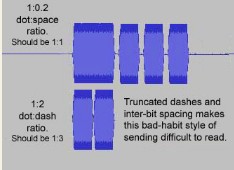
There’s no point in showing a screen shot of the appalling 1:1 dot-to-dash spacing, there’s nothing to learn from it. When heard on-air it obviously carries little to no intelligence.
Despite getting quite lot of calls, the paucity of contextual replies such sending receives is evidence enough and a meaningful ragchew is pretty much impossible. Yet few ever admit to the intrinsic problems such sending imposes for fear of causing offence.
To avoid embarrassment or some other aversion folk might have about receiving help from a live person, a sound file is attached as a tool for private retraining and practice.
The sound file does not contain any characters with a single Morse bit, or characters with only multiple instances of the same bit. All characters in the sound file have juxtaposed dots and dashes to provide a constant reminder of the reason for retraining.
How to use the sound file? Have a Morse practice oscillator, or side-tone from your transceiver ready, then play the sound file on your computer.
In the spaces between each character, repeat the last character on your key until your rendition sounds exactly the same as that heard in the sound file.
At first the exercise will need to be repeated regularly, as a learned OM in FDU describes it, to develop ‘muscle-memory’, then less frequently but often enough to keep skills polished and bad-habits at bay.
During QSOs, concentrate on sending slowly and with the correct 1:3 dot-to-dash and 1:1 dot-to-space ratios. Everyone, not least yourself, will always appreciate the replacement off bad habits with top quality sending.

If it’s any consolation, the wonderful Chinese, cheap and cheerful MX-K2 keyer which I have used for years, has a software dash weighting of +5 %, making the dot-to-dash ratio 1:3.15, a characteristic introduced unconsciously by many users of straight keys.
73 de Stan [If you’d like to contact Stan for one- on-one advice, please contact him by email: ZI3TK (at) qs! (dot) net .]
If you have an article or two that you think might be of interest to our readers, please let me know so we can share more thoughts and ideas; email to cqqrsnet@gmail.com
On My Workbench
A Three-Band Diamond Loop and 20m-6m Rabbit-Ears Antennas
From Michael DL3YZ The antennas I testing on Tuesday were made for the submarine / museum ship weekend which is running on 7/8TH of June as discussed above.
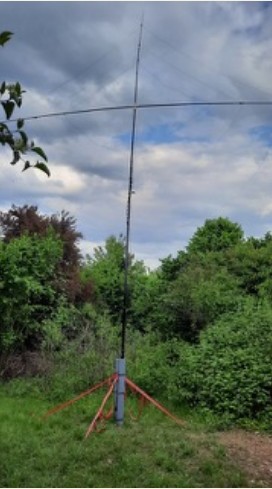
Le antennas are: ¢ A full wave 3 band diamond loop with three resonators (20 / 15/10M), ona heavy duty 12 m fiberglass mast with 4m spreaders. ¢ Apretty Y dipole made from cheap Chinese telescopic whips up 7 m.
I even ordered two whips more, I really need to try to set it up as a 2-element Yagi one day.
The antennas are:
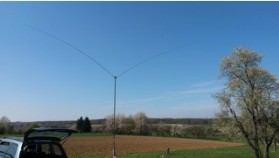
My QSO with VK2KI was on the 3-band full wave diamond loop; PWR was 100 W on my FT-891. The antenna has some dB directional gain (not many) and a low radiation angle.
Its on a 12m HD telescopic fibreglass mast with 4m spreaders, so the whole thing looks like a cross. The antenna has 45m of resonating wire in total Hi!
I got about the same TX results (half an S level less ) on the VK5PH KiwiSDR at Ironstone Range with that nice rabbit-ear antenna on my third shift later that day.
I had three more QSOs with it here in Europe and one to China with that antenna after my DXperiment shift. These telescopic whips are great fun and that Y-shaped dipole looks quite aesthetic too.
When I tested that antenna the first time on a sked with Ross MONNK, a little 5- year old blonde girl was coming along on a walk with het mom.
She immediately fell in love with the big antenna and watched me setting up the radio and beeping with Ross for more than 30 minutes. She told her mom she wants her to buy one, right the next day, for their garden.
That was so cute 🙂 She was really curious about Morse Code too. Both were completely stunned when Ross was calling me from UK at exact our scheduled time. Suddenly that strange box with all these knobs and wires suddenly started to beep.
And responded to my sendings in a magic musical language. Shiny eyes. I had to translate every Dit and Dah simultaneously from English Morse code to German! Good brain workout HI.
The antenna hosted on military plug-together fibreglass segments normally used for holding camouflage nets. So quite cheap military surplus. One 1.2 m segment is 6 – 8 EUR. But I think it should stay up on a sturdy telescopic mast as well.
Maybe not on the very upper parts. The whips have an metric M10 thread, so its easy to get nuts and stuff for this thread. They come in 5.25m and sometimes 5.40m lengths – and its said the whips can take 300 Watts.
No balun or tuner needed for this rabbit-ear (| like that term) configuration – its a resonant dipole. SWR is about 1.1:1.
I don’t think I should choke down eventual common mode currents, its RF I have paid for, and I want it to be emitted 😉 Ijust slide them shorter seamlessly for the higher bands, all bands are possible from 20 – 6 m.
There are coils available to get them down to 40 m, and even top loads to. bring the radiation angle down. Ross and I will continue running a series of tests and experiments using different configurations of these whips: + 1/4 wave vertical on ground, * elevated ground-plane at 5 m height, tuned radials * elevated rabbit-ear Y-dipole + 2-and 3-element parasitic vertical arrays + maybe a delta loop * and finally a 2-el horizontal yagi, using two rabbit ears in series more than 10 dB gain for less than 100 bucks.
There will be a article for RagChew about all the configurations we have tried out. Its about 60% finished already. So far that rabbit is my favourite too. We did a shootout, and it beat the JPC-12. But!
Had to switch to the FT-818 and turn down to 2 Watts before Ross really noticed an audible difference. So it was close. The rabbit-ear is up in 7 minutes, no ropes, radials or wires, great rx. Less ground losses than the vertical, no losses in coils.
Small erection footprint, which is great on crowded spots. Its hard to beat a good dipole… 73 Mike. [Thanks Mike – what fun!]
Other News
We justifiably blame old Sol for the state of the ionosphere, and there’s no end in sight. Instead of sitting around powerless while he erupts laughing, let’s adopt a terrestrial solution to continue improving CW competence by sending sound files over the internet.
On offer is an eleven week CW contest using only earth-bound resources, but still with options for RF if you wish. The contest proper kicks off on 18 June, however everything needed to become familiar with how it works is already available online.
Go to htips://bit.ly/qrsifce for a front-row seat. Even the greenest of newbies need not fear speed. Directions are provided to a clever facility capable of effecting up to 50 % speed reduction without any change of pitch.
Sound files may be cascaded to make it even slower. Really quick and easy compared to the likes of ‘Audacity’.
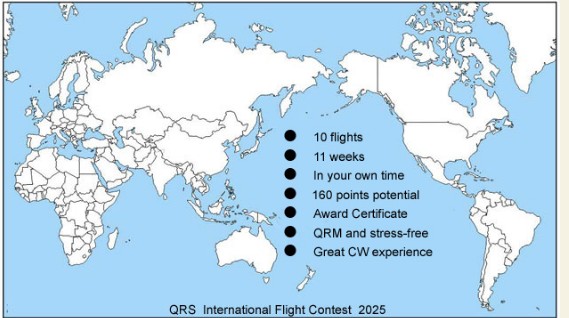
All entrants will receive a printable Certificate of Participation after the contest closes on 03 September. Questions to ZL3TK (at) qs! (dot) net
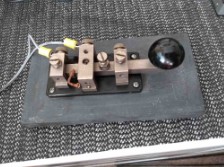
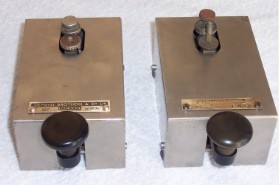
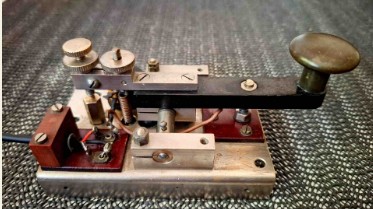
US TSS LE IESE Lay [PASSES] UY A ne) [nt oi Have I Bought?”. Yes, I am still around, just busy with too many ¢ Iattach the pictures of mine. The key is known as the W392E and made by Associated Electrical Industries Ltd.
Of Woolwich, as per the name plate on the cover. An identical version was badged by Siemens. but since Ross’ cover is seemingly missing, it is difficult to know which company label would have been on the pressed metal cover.
According to my seller: “The W392E Morse key was mainly used in coastal radio stations. This specific key was manufactured by AEI – Associated Electrical Industries Ltd. circa 1930. This model was also manufactured by Slemens Brothers & Co. Ltd.
Which was bought by AEl in 1955.” Asimilar key is at That website also states that the key is a “Siemens Ediswan W392E used in coastal radio station (circa 1930)” Siemens Ediswan as referenced here is a little curious as that company name only became established in 1957.
Possibly Siemens re-badged existing AEI stock, or manufacture of the key had a long life. Edited Wikipedia snippets indicate in summary the following corporate nomenclature: The Edison and Swan Electric Light Company Limited was formed in 1883 following the merger of the Swan United Electric Company and the Edison Electric Light Company.
In 1928, the company was acquired by Associated Electrical Industries. The company was renamed Siemens Ediswan following the takeover of Siemens Brothers by AEI in 1987. Also see: https:/en. wikipedia org/wiki/Edison and Swa n Electric Light Company.
As often with such company mergers and takeovers, establishing the ‘who, what and when’ around the history and manufacture of a Morse key can be rather befuddling! What I think we can say is that these are rare keys that do not often feature on eBay and at
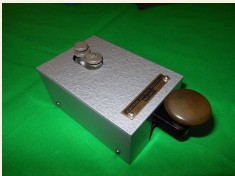
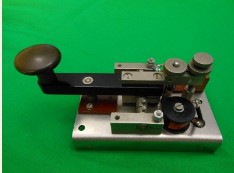
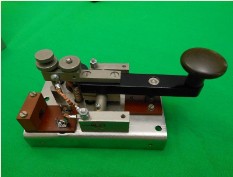
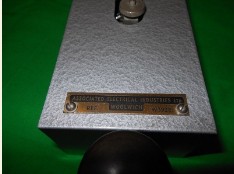
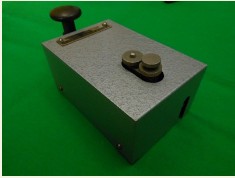
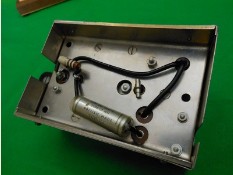
That price it would seem Ross has done well to find one, despite the missing cover. The quality of construction is very high which one might expect for coastal radio stations, where always the best keys available were used.
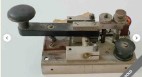
I attach a picture of the 1957 MV Karaghistan, with two such keys in its radio room. Also there, only the best! Picture from https://www.shipsnostalgia.com/media/radio- room-karaghistan.233975/.
For the vessel itself see https:/Avww.tynebuiltships.co.uk/K-Ships/karaghistan1957.html
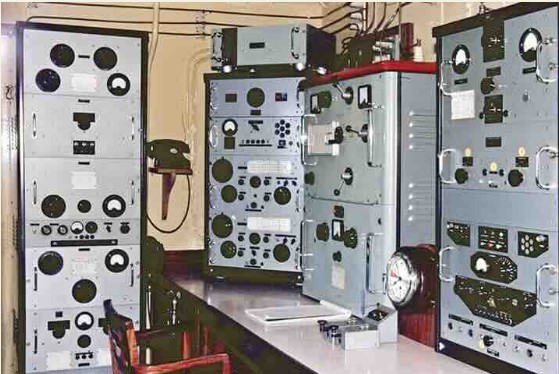
| also attach a picture from two such keys in the possession of a UK collector. Looking at the labels, one may assume that Siemens Brothers & Co Ltd.
Was already producing such keys alongside AEI before their takeover by AEI in 1957, although links between AEI and Siemens Brothers
Appear to go back well before that date, see https://en.wikipedia.org/wiki/Siemens Brothers I hope this helps. 73 Kees VK1KVS
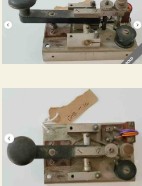
Wow, that’s a terrific amount of interesting information – than you Kees @)cb. I served in the Royal Navy so it’s great to know that I have another key with a maritime connection. Networking is a wonderful thing!
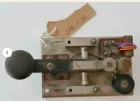
This key has now had a good clean anda new cable, and looks much better for it. I attach an image of it to adorn your article.
80th Anniversary of Operation Manna
Outn Anniversary of Operation Manna forwarded by Roy VK6RR Here’s a link to a report on the activities for the 80TH Anniversary of Operation Manna and Operation Chowhound during the last 10 days of the Second World War to drop vital food and humanitarian supplies into the occupied areas of The Netherlands.
Morse Training Net
Our team member Nic VK7WW runs an on-air Slow Morse training net every Wednesday at 7pm EDST on 3580 for 30 mins. He uses the callsign of the Northern Tasmania Amateur Radio Club VK7TAZ on that net.
Many of our team learned Morse code with the support of Nic, and the weekly training session comes highly recommended for anyone who wants to learn the Code, or simply brush up.
Everyone’s welcome – 3580KHZ at 7pm Eastern time every Wednesday; you’ll hear lots of the CQQRS team on that net. Jordan VK3ACU is recording this round of training lessons – you’ll find the link to the YouTube recordings on our website here:
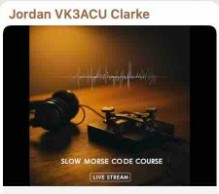
Bit.ly/CQQRSWebsite then navigate to: useful-resources-and-links Contact Nic VK7WW for more info nicholaschantler@hotmail.com including how to join the NTARC DISCORD group to follow the action, or just come along and join in on Wednesdays.
Andy VK5LA’s YouTube Channel
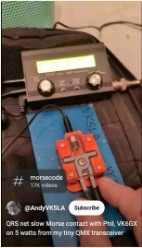
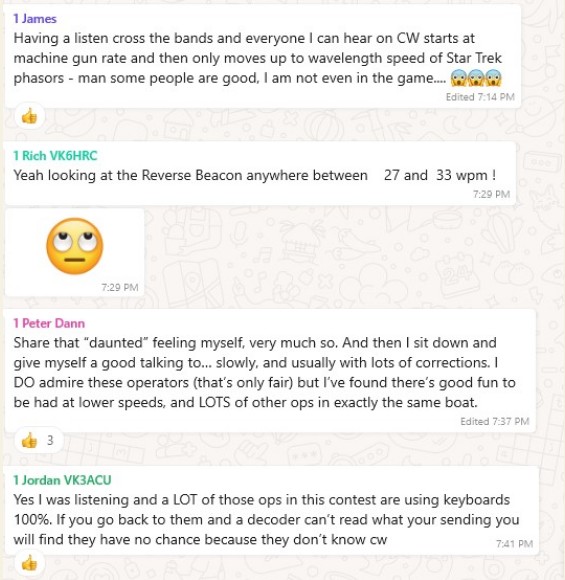
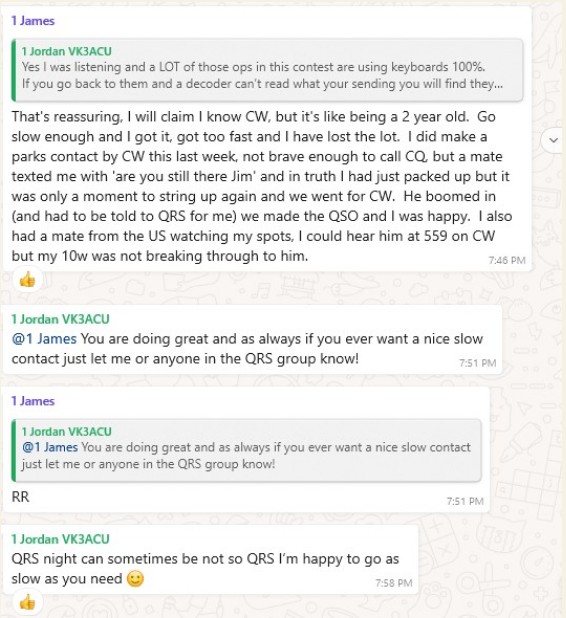
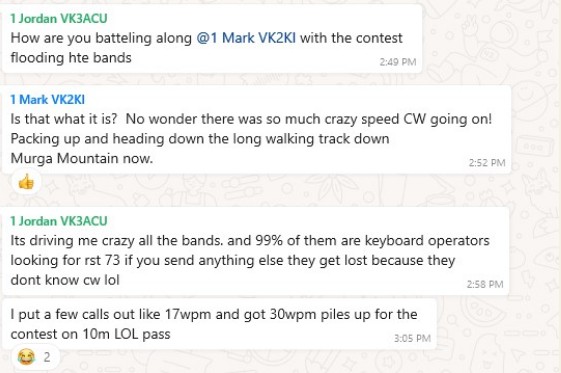
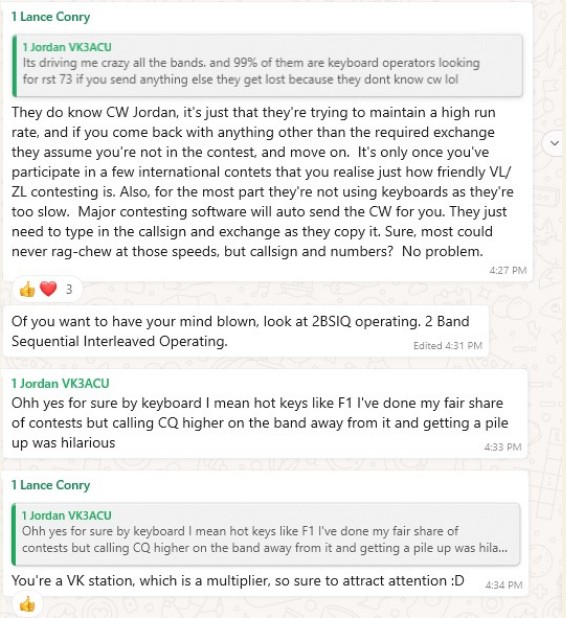
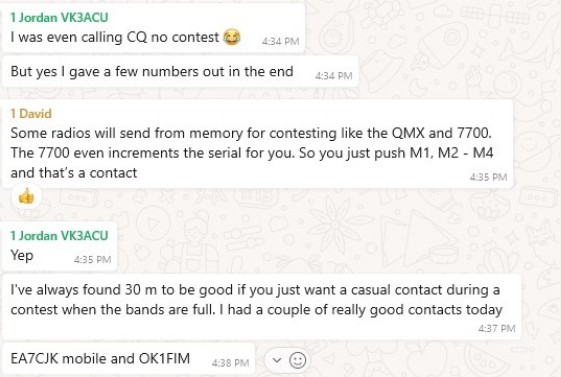
Inspired by Jordan’s YouTube videos in the RagChew newsletter, I’ve also started a YouTube channel – “Ham Radio Down Under” https://youtube.com/shorts/YchQMxuxtz0? si=Vh6HgvPMjLWIgSrG Cheers! Andy VK5LA

Readable Five
What have you been reading lately? Compiled on the track somewhere by John
What have you been reading lately? iled on the track somewhere by John VK2RU
The CW Way of Life:
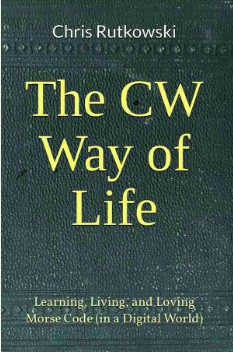
Ine UW Way OF Lite. By: Chris Rutkowski. 2023. Learning, Living, and Loving Morse Code (in a Digital World) Greg VK5KFG discussed this book in the CQQRS newsletter in the past 12 months – and Rob VK3ECH has also found it to be very interesting.
Le UY Way UF Lie. By: Chris Rutkowski. 2023. Learning, Living, and Loving Morse Code (in a Digital World)
Avery interesting and great read for fuelling the CW/Morse Code addiction! Published in 2023, It’s a modern insight into CW and Morse Code use today.
This book covers everything from the early days of the telegraph and the design of Morse code by Samuel Morse & Alfred Vaile, Marconi and all the way through to modern use today – and how it has been embraced by the Amateur Radio fraternity.
It goes into great detail on learning the code and how the brain engages with the structure of the code and the mechanisms within.
K9AY Telegraph
From Phil VK6GX Another CW related e-Zine I subscribe to is the K9AY Telegraph, it’s free too. www.k9ya.org Sample Issues – K9YA Robert F.
Heytow Memorial Radio Club and K9YA Telegraph hittp://www.k9ya.org/index.php/k9ya-telegraph/about Always a good read, enjoy! 73, Phil VK6GX.
If you’ve read something that you think might be of interest to our readers, please let me know so we can share more thoughts and ideas; email to cqqrsnet@gmail.com
There’s No Such Thing…
Inis weeks questions. I think the first lesson in Teachering 101 is to always tell students “There’s no such…” (I’m sure you know the rest) and “…the only dumb questions are the ones not asked”.
John VK2RU reckons that there’s lots of questions out there among both our new and our experienced operators – about CW, amateur radio operating and about theory.
So John didn’t step backwards quickly enough when asked to volunteer to compile readers’ questions; thanks mate. So here we go…
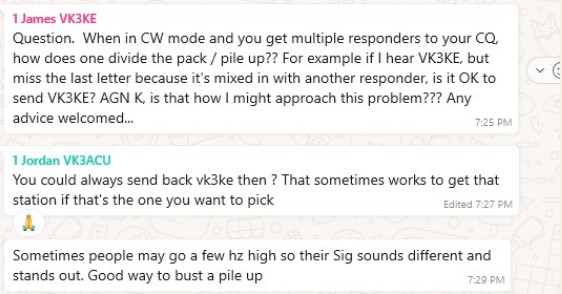
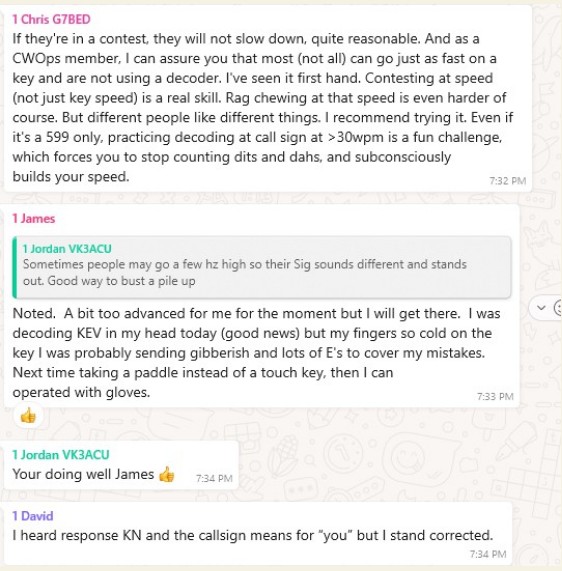
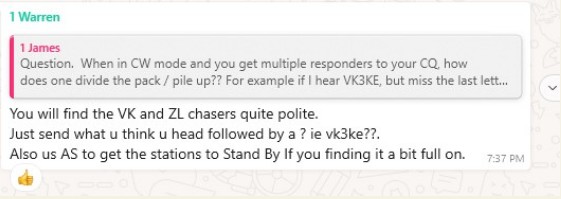
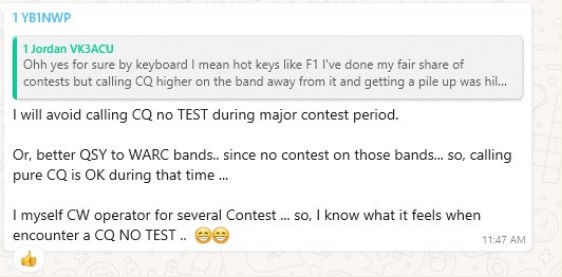
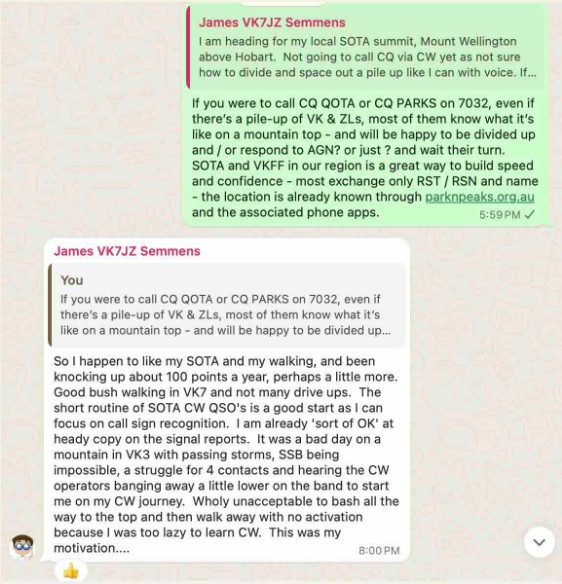
Question: I find from time to time that my straight keying goes to pot – the mind is willing but the wrist is not – and my sidetone tells me that my rhythm, spacing, dot/dash ratio etc have turned to mush.
What can I do to either correct this on the fly, or stop it from happening?
Answers:
CASED First from Stan ZL3TK: The phenomenon is a function of the human brain, it multi- tasks easily and is capable of wandering like an analogue TS-120 VFO… only worse because the brain changes bands as well.
Serious concentration is the only cure I know, bearing in mind the brain is already multi-tasking due to the act of send Morse.
For beginners this is solved by sending from a script, concentrating letter- by-letter, then brain-drift becomes much less of a problem.
Gradually one gets to hear subconsciously when something has gone awry and is able to respond immediately, instead of becoming aware of a problem only after the brain drifts back through zero beat causing one to wonder how long that jumble had been going on.
Next from your editor Mark VK2KI: You’re not alone! This happens to me regularly, and I hear others complaining of the same problem often – both old timers and new operators.
As Stan said, recognising it in my sidetone makes me wonder how long I’ve been sending like that for! For me the answer is to stop, re-orient the key, my fingers, wrist and elbow (with my standing desk, I use the floating elbow technique as opposed to the resting elbow version), and hold the base of the key with my other hand.
I’ve got no idea why the holding the base works – but it does for me… the so- called (and mis-named) muscle memory seems to suddenly cause my sending to improve (albeit slightly – Hl!)
[I think this is a question that many of our experienced and new operators could contribute to – please send me your thoughts to cqgrsnet@gmail.com |

Question: Many of our operators (including our editor) suffer from inflamitory or circulation ailments that affect their keying – arthritis, tendonitis, carpel tunnel syndrome, tennis elbow, golfer’s elbow, chilblains, etc.
What have our affected people done to help that? Answers: This is a tricky one – and we know what your GP will say! Plese send me your thoughts for future RagChews: cqarsnet@gmail.com
First from Carl VK5CT
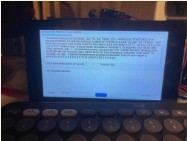
| have built a great CW decoder and BT keyboard that some of our people may be interested in. https://github.com/jmharvey1/ESP32S3 CW Machine I suffer from arthritis and sometimes resort to the keyboard and because I normally work CW around 19 to 20, I find that I make many more mistakes trying to send slower as funny as that sounds – so the keyboard helps.
[Do you have a question or two that are worth sharing? How about a discussion- starter? Please let me know cqgrsnet@gmail.com and I’ll pass them to John VK2RU for compilation each week.]
I Hear Tell…
Ok – who was the amateur who was struggling with the brain- key interface this week – and not recognising the callsign of the station who called – launched into the full name, QTH etc protocol… then realised it was someone he spoke to many times every week!

[If you have some intel about other team members… or even yourself… that’s worth sharing, please let me know cqqrsnet@gmail.com J
Di-dah-di-dah-dit
So back to the CQQRS Slow CW QSO practice net.
Next Tuesday’s Net
Our CQQRS Group will be on as always on Tuesday from around 0700Z until about 1300Z; see https://bit.ly/CQQRSWebsite and navigate to the Net Details page for details.
Doesn’t matter whether you’re brand new and want to try just exchanging callsigns and RST reports, or you’re ready for a good old rag chew. We’ll have fun.
There’s usually people around until after 1300Z – so keep calling in the segment of the band designated in the table below until you catch someone.
I should be on as usual from home in NSW or via the Remote at Bedfordale WA, and I’ll also be watching the proceedings using the VK6QS and Tecsun SDRs in WA and NSW respectively. Hope to hear you there.
Please let me know via our Reports form bit.ly/CQQRSNET who you work or hear on Tuesday’s Group. The report form closes at lunchtime (Eastern Australian time) on Thursday.
Post Morsum
Richard VK6HRC will run our phone Post Morsum on the South West AllStar net (via repeaters and hotspots all over WA) from 0600 WA time, then from 0700 WA time on 80m (8605 LSB).
See https://bit.ly/CQQRSWebsite and navigate to the Net Details page for details of how you can connect via Echolink or even possibly via your local FM repeater.
Teamwork
Thank you so much to our team of 36 contributors: DL3YZ, G7BED, MOKBJ, VK/MONNK, VK1KVS, VK2WP, VK3BWN, VK3BYD, VK3CLD, VK3DBD, VK3DRQ, VK3ECH, VK3JFR, VK3KEV, VK3RU, VK3WOW/P, VKBAO, VKSCT, VK5CZ, VK5ED, VKSKFG, VK5LA, VK6BEK, VK6GX, VK6HRC, VK6IS, VK6KD, VK6KHZ, VK6NW, VK6RR, VK6WE, VK7KPC, VK7TA, VK7TO, YBINWP and ZL3TK.
And a special thank you to our editorial team, Nigel G4RWI (head of software development), John VK2RU (WhatsApp spy and research) and Richard VK6HRC (Post Morsition and spy). Great work all! UY CW on Tuesday, mb.
Mark Bosra VK2KI/ VK6QI Beautiful South Bowning NSW mark,bosma@icloud.com non impediti ratione cogitationis

About the CQ QRS Net
For the current schedule and more information about the CQQRS net, please go the the Net Details page on our website:
The opinions expressed in the RagChew newsletter are those of the individual contributors. The opinions do not necessarily reflect that of the editor or of the CQ QRS Group members.
Any material and images received by the editor or published on the CQQRS WhatsApp groups may be published in this newsletter unless specifically requested otherwise.