Below is a reconstruction of the 2025 08 CQ QRS RagChew newsletter designed to support full text searching. This reconstruction was built using OCR, and will contain errors.
To view the Mailchimp original, click here. To search the entire newsletter archive, click here.
Contents
- CQ QRS RagChew
- Last Tuesday’s Group
- Masthead Image
- Reports
- Reports & Comments
- Comments:
- This Week’s Topic of Interest
- On My Workbench
- A Simple Active CW Filter
- Inverted L Antenna
- Common Mode Choke to Reduce Noise.
- Rick Hill
- Johnson Valiant Transmitter
- QRZ?
- This week – Peter VASWOW
- Peter Dann
- Other News
- Morse Training Net
- Many of our team learned Morse code with the support of Nic, and the weekly training session comes highly recommended for anyone who wants to learn the Code, or simply brush up. Everyone’s welcome – 3580kHz at 7pm Eastern time every Wednesday. The NTARC also feeds the CW live via the Discord phone / computer audio stream, and previous weeks’ recordings are available. Contact Nic VK7WW for more info nicholaschantler@hotmail.com – or just join in on Wednesdays.
- Joys of a Winter Morning
- Wouldn’t you know it!
- Wanted – An article on QRZ.com
- Di-dah-di-dah-dit
- Next Tuesday’s Net
- Post Morsum
- Teamwork
- About the CQ QRS Group
- Frequencies and Times
- QRL?
- Speed? Rhythm?
- Matching
- PSE QRS
- Landing Zone
- CW Tips
CQ QRS RagChew
Terrific to see our numbers on air increasing again this week. We had 41 reports from our team about our Tuesday net, and 57 stations heard.
The reports showed that most of us had fun on the afternoon / evening get-together – thank you one and all for making this such a great thing for everyone to enjoy.
Particularly nice to see so many people trying things, fixing things, building things, operating QRP etc – sure a bit different from what you might hear on the phone part of the bands; old technology is being used to rejuvenate amateur radio and give us all something to look forward to each week.
Last Tuesday’s Group
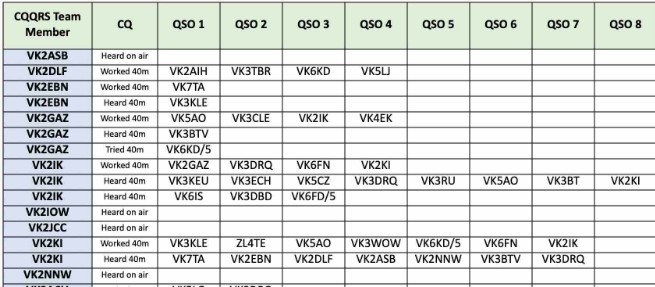
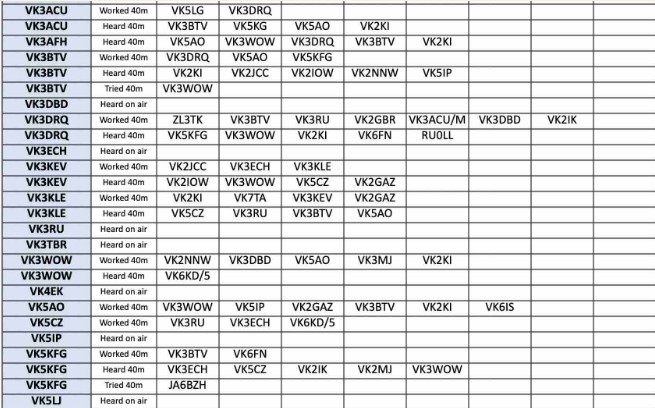
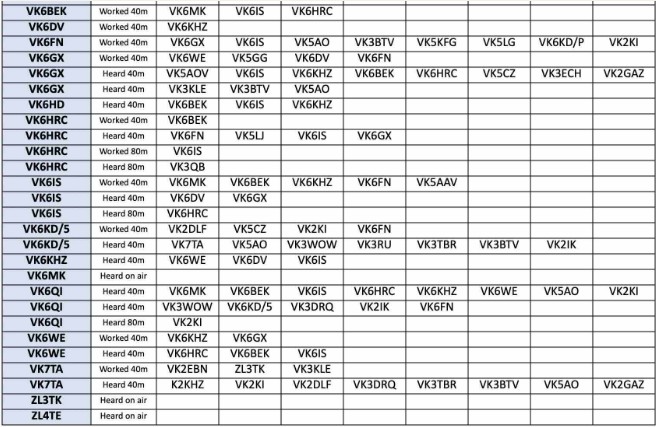
Here’s this week’s list of the 57 stations heard, thanks to our 41 CQQRS team stations who shared their report with us this week:
Masthead Image
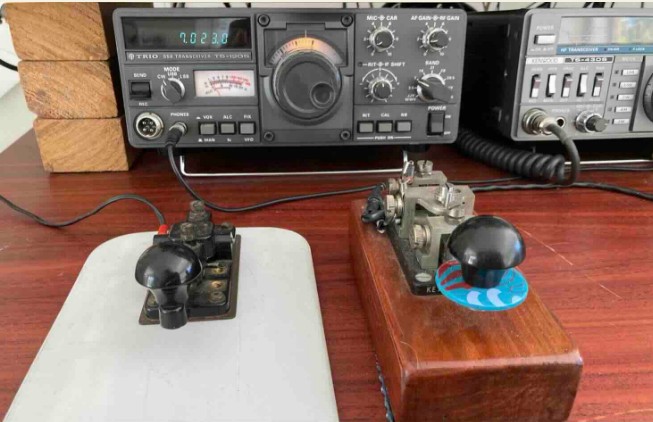
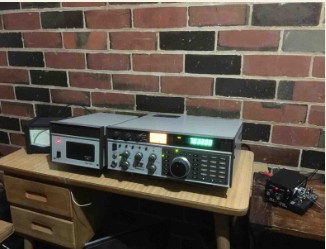
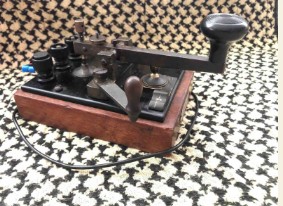
The image above is of my 45 year old Trio TS-50S transceiver and my WT 8 AMP No 2 keys. The key on the left is usually used portable with my FT-817 but has been pressed into service with the TS-120; the plastic piece allows the key to be used on my knee, and also provides a bit of a flat surface for logging.
The key on the right is used with a serial-to-USB interface for operating the West Australian Southern Electronics Group’s remote stations.
I found that key at a non-amateur swap meet held at the Wantirna drive-in theatre in Victoria in the early 80s, and some years later mounted it on a nice piece of Jarra that came in a pile of firewood when I lived in Edgewater WA.
Reports
After next Tuesday’s Group, please send me a list of who you worked and / or who you heard using our web form here:

Please help attract new and old team members to have a go by submitting your report each week. Submissions close lunch time (Eastern Australian time) on Thursday.
If you hear or work one of our team on a different band on Tuesday, please just use the 80m report area and use the instructions to annotate which bit applies to which band.
Cheers, mb Mark Bosma VK2KI / VK6QI Beautiful South Bowning NSW mark.bosma@icloud.com non impsditi ratione cogitationis
Reports & Comments
The spreadsheets above show the known stations on last Tuesday’s Group. Comments distilled from the reports I’ve received follow:
Comments:
[40m] + Started the evening a bit after 6pm edst with mark VK2KI on my Johnson valiant tx (using its internal tube vfo) with my Drake R4A Rx. Was a long QSO and very enjoyable. + After dinner and a short rest I used my Tentec Omni V for the rest of evening.
It’ 1990S rig and I have replaced most trimmer caps and electrolytic caps. They are
Reliable for 5000-1000 hrs at best spec. Yesterday I replaced the 9MHZ IF trap cap. Also some front end upgrades to the jfet J310S. It has very low background noise now without an antenna.
Looks good no smoke from latest work on the Tentec – straight from the work bench into a hot QRS QSO..
[40m] * Had a listen late while mobile on the way home from work. Also a quick contact with VK3DRQ and VK5LJ, apologies if I have noted any call signs incorrectly I was mobile, relying on memory and not concentrating heavily on the CW. Until next week 73.
[40m] * Another great night on 40m. I could hear many stations having QSOs..
[80m] «| extended my 5′ helically wound whip with a SS 5′ whip and my radio returned to not transmitting on 80m. More experimenting required. 73.
[40m] + 40M was in great shape this evening. Many stns heard. It was a good evening..
[40m] * THANK YOU, GOOD SIGNALS THIS EVENING AND ALSO VK6, MAINLY SWL, MANY CW STATION, QSB AND QRM TOWARDS LATE EVENING WITH VK6 SIGS, 73.
[40m] * Even though I finished past midnight, wasn’t happy with what I achieved. When I couldn’t hear any VKs or ZLs I could copy RUOLL. The joys of Radio!
• But, the real BIG JOY was to have used the just finished Noise Canceller from VK5TM. My thanks must go to all of you who insisted in having one, since my Noise level was hardly ever lower than S6. Special thank you to OM Stan and OM Mark.
Now I can copy without Noise at all!. * Highly recommended Unit.. * 73&77 Manny.
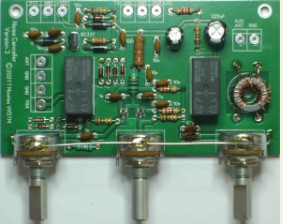
[Fantastic Manny! I’m really glad you have given the VK5TM noise canceller kit a go Manny. Once you get a good noise pick-up antenna (= simple short indoor whip – probably oriented parallel to your external antenna) and get used to the adjustments, they can make a huge difference.
Most of the time my S9 switch mode power supply This Week’s Ti f Interest 9 5 SUSIE ee noise level is down below S1. For those interested, see my article for details here:
Noise level is down below S1. For those interested, see my article for details here: https://mailchi.mp/f431ceee06bc/cq-qrs- ragchew-reminder-for-next-tuesdays-group- 103324907e=282909cbd8 |

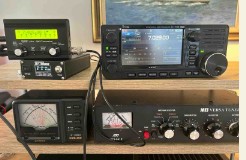
• I was pushing the odds as I was QRP (IC-705 and QMX) with a home brew magnetic loop sitting on my desk inside the home QTH “Faraday cage”. Heard a few stations about 1600-ish and then put out several calls on 7033, but no answer.
In an effort not to waste my time, I conducted a highly scientific N=1 experiment by switching between the IC705 and QMX.
With a consistent noise floor/QRM of about $2, due no doubt to the magical qualities of the loop :), I can report that the IC705 just picked up a few local stations, whilst the QMZ did not, which is hardly surprising… [And a slight relief I imagine mate!
Hint… know it may not be according to Hoyle, but posting an alert on WhatsApp when calling QRP may pay dividends! Backinmybox!]
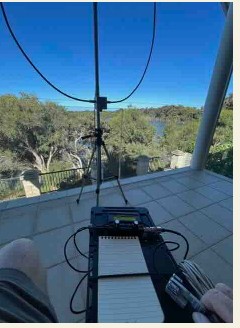
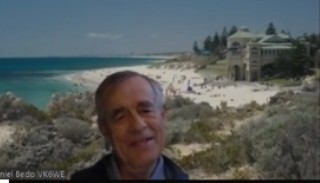
[40m] * Signals were good with several stations available. However my two contacts used the time I had available before setting off for an evening of fishing! You have to exploit the right conditions and the signals were great at the beach too..
[40m] + Felt awful after I managed to lose both my initial contacts of the evening in noise (Adam VK2NNW) and in an extremely sudden fadeout from 579 to 119 with David VK3DBD.
Very different operating in real radio conditions from working on VBAND or using the Morserino server. + Apart from my usual sending stumbles, my embarrassing moment de resistance was surely working VK2KI and completely failing to recognise that I was actually talking to Mark Bosma.
[Well! For a start Peter, your CW sounded very good to me – no stumbles heard from your end! A year ago you reported having your third CW contact in 40 years on the CQQRS net… sure didn’t sound like you’ve forgotten much of your keying experience.
And secondly – nearly every week I chat to people who have better things to do than try to remember peoples’ names. Rest assured that I can’t remember people’s names 1.5ms after they’ve told me face-to-face. On air is slightly better… but only just.
I use an electronic list on my phone of the names of the 200+ members of our wonderful QRS team!
[40m] * Conditions were pretty good. Not so much heard around 1830 local time, but things improved when I returned after dinner..
From Keiran (Bad Tempered Victorian) VK3BTV at Lilydale, Victoria
[40m] * Thanks Manny VK3DRQ, Mait VK5AO and Greg VK5KFG for putting up with my clumsy 10WPM – I really need to practice more [i.e. practice full stop 🙂 ]
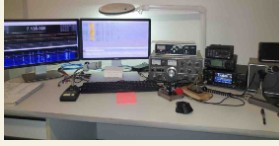
[40m] + the band was an little more active this week,. + then it got quite noisy later on. + with few ES stations heard..
[80m] * this band is usually fairly quiet. « & even during the week.
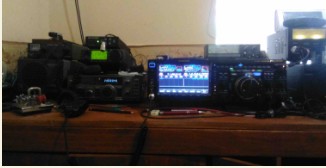
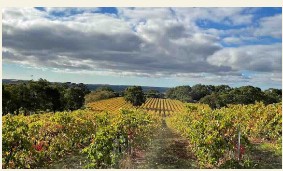
[40m] + JA6BZH was readability 5 and calling “CQ QRS PSE”. I was happy to oblige but did not quite make the return journey…
[40m] « Plenty of activity from both sides of the country and in between. Good propagation, but no ZL’s heard, even on the two Beveraaes..
From your editor Mark VK2KI at Beautiful South Bowning NSW
[40m] + At the start of the net I heard Paul VK3KLE at Stawell testing his now-so- stable Johnson Valiant transmitter, in combination with his Drake R4 receiver. lan VK7TA at Latrobe and I both tried calling Paul without luck.
Lan went on to chat to Brian VK2EBW at Newcastle, and I finally hooked up with Paul for a long relaxed chat about his modifications to his classic transmitter; now his transmitter was more stable than my drifty old Trio TS-120S..
• Next I was called by Pete ZL4TE near Hamilton; it was great to have a chat to a Kiwi on the net again; things have been pretty quiet across the Tasman on Tuesday evenings; conditions were marginal, but we had a nice chat.
Having had so much fun in Samoa last year, Pete was eyeing off Niue Island..
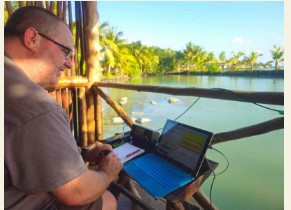
• After dinner I hooked up with Maity VKSAO using his sloping dipole up 13m at Banksia Park, then Peter VK3WOW at Blackburn – both nice long rag chews.
Peter had a nice signal into Southern NSW, and confirmed that he was now using an inverted-L antenna, versus the doublet in the ceiling that he used when he first joined the net.
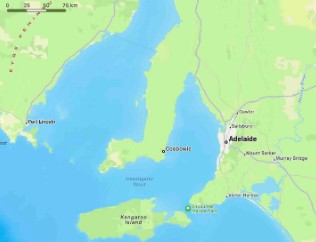
That QSO was followed by our nearly weekly tradition of chatting to David VK6KD portable – this time at Coobowie on the Easter side of the Yorke Peninsula…
+ After David, I was called by Max VK6EN at Manjimup; although Max and I chat regularly on the WA AllStar network (which comes out on a $20 70CM hand-held in my shack via my Raspberry Pi AllStar node), it had been over six months since we’d enjoyed a CW QSO.
To finish the evening I had a chat to my complement, Paul VK2IK 140KM ENE at Moss Vale. Paul had recently re- established his 40m antenna after losing it in one of the many recent storms…
+A tertific night – lots of stations and really nice rag chews; thank you one and all..
[80m] + After chatting to Paul, I had a quick look down on 80m. The VK1CM KiwiSDR showed that the band was quiet – and after a number of CQs, I confirmed that – eventually padding off to bed at around 12:30am to prepare mentally for the Post Morsum callback at 9am…
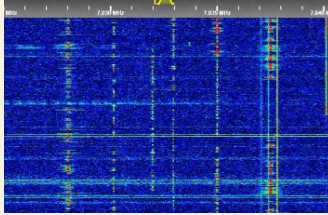
[40m] * Nice to hear a bit of activity via the VK6QS KiwiSDR near Brookton befor dinner here. The band started to ope to the East at around 0815Z with som weak signals appearing on the waterfall spectrum display..
+ Then after dinner at around 1000Z, I watched my QSOs from VK2 with Maity VK5AO, Peter VA8WOW, David
VAORU/O, Vax VAOFN and Faul Vein all coming througn nicely Into VVA..
[80m] * 80m was quiet when I finally slid down for a look. The band was open nicely across Australia though, with strong signals from my 50 Watts from |
As you have probably guessed I’m flat out with my new imaging clinic in Busselton at the mo, so I can only get on air about once every three weeks or cn.
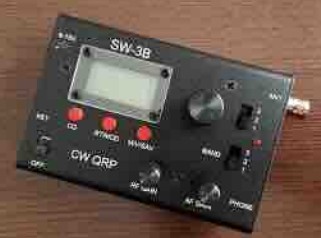
[40m] * VK6KHZ Ron – thanks for the QSO. QSB and local noise made it almost impossible sorry – glad we made it though. Using an SW-3B at 5W and a random-wire inverted L.. * Cheers, Nick VK6DV.
[40m] * Tuned in and heard VK3WOW. I struggled a bit at first but stuck with it and started copying and following the loong ragchew. I’m not sure I quite followed what the witches were up to, but minor details hihi.
+ Mark calling CQ was followed by a bunch of V’s and then VK5AO – was
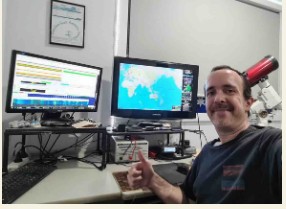
That just eagerly jumping in, getting Mark ready for what was coming, or a bit of both? Certainly made me pay attention!. [Heh heh – the witches’ conversation will remain a mystery by the sound of things.
The Vs you heard was probably me testing the NSW to WA path, as is my want!]
From Richard VK6HRC Well we managed to keep the AllStar / Echolink and linked SW repeaters busy for nearly one hour discussing CW, small farm activities and lots of other topics on Wednesday morning’s post morsum callback.
On this morning : VK6HD_ Geoff VK6QI = Mark VK6FN Max VK6KD/5_ David VK6HRC VK6MRB swil and others. Ganff called in diiring hie morning walk to let rie know that he tried a mannetic loann
Geoftt called in during his morning walk to let us Know that ne tried a magnetic loo} from inside the Faraday cage he calls home. He was doing a signal comparison between his IC-705 and QRP Labs QMX.
Was hearing signals on the 705, but the’ were not strong enough to work. Mark was busy feeding chickens and picking grapefruit in Edible Avenue and reported that from the East he logged seven long ragchews on forty and heard another seven stations; he also heard 13 stations via the VK6QS KiwiSDR in the West.
Max got the mighty Flex radio going nicely at last after sorting out last week’s embarrassing side-tone problem, and logged six contacts on forty with a good mi»
Of QRS and QRQ. David logged four contacts on forty but the gremlins returned on eighty so nothing logged there. Raa aon oo or fF ee oon oe

The discussion turned to netting (frequency matching) on CW, using the clarifier / receiver incremental tuning, and the standard use of USB versus LSB on receive for CW, irrespective of band.Thank you to all on Tuesday night and Wednesday morning. Stay safe
This Week’s Topic of Interest
Key-to-USB Interface Another VBand Interface by Ross MONNK
As some of you will know, I’m a big fan of the internet Morse code website VBand. In fact, I’m pounding the brass on there most (UK) mornings about 0800-0830 UTC if you want to have a QRS Morse chat with me.
You can just pound the square brackets keys or the CTRL key on your keyboard (or prod at a touch screen if you really must), but VBand is much better when you use a proper Morse key.
The VBand website owners sell a device that will allow you to connect your key to your computer, but they’re based in the USA and therefore shipping + custom charges can make it rather expensive.
My QRZ.com page gives details of how to convert an old computer mouse for this purpose – I think Richard VK6HRC has had a go at that. But Mike DL3YZ told me about Hjalmar Hansen’s device made with an Arduino Pro Micro microcontroller.
Http://oz1jhm.dk/content/hamradio-solutions-vband-interface Being a sad git, I just happened to have one of these Pro Micro microcontrollers, as well as an audio socket in my spares box.
So, the weather outside being horrible this morning, I knocked one up in the Man Cave.
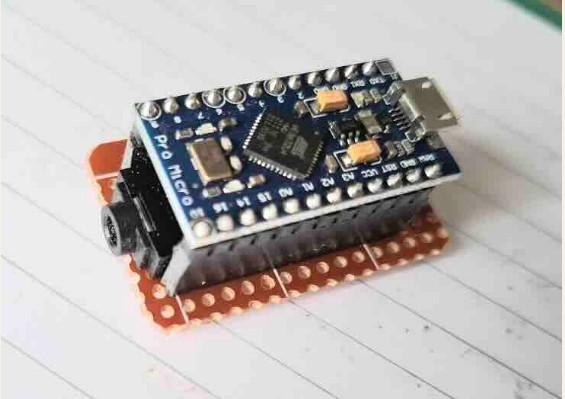
As you can see, they’re not complicated to build. I did make one small mistake with the soldering because I didn’t read the instructions properly(!). Being lazy, I just adjusted the code rather than re-solder a pin. It works great and is very compact.
I still think the mouse bodge is a quicker and simpler idea. But then I have this strange aversion to anything Arduino.
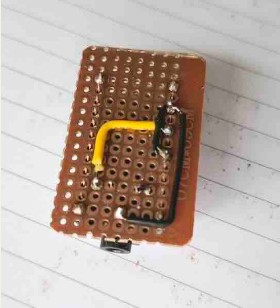
This is a cheap and enjoyable project for a morning or afternoon. Why not give it a go and give me a call on VBand – I’d love to hear your beeps from the other side of the world.
If you have an article or two that you think might be of interest to our readers, please let me know so we can share more thoughts and ideas; email to cqqrsnet@gmail.com

On My Workbench
A Simple Active CW Filter
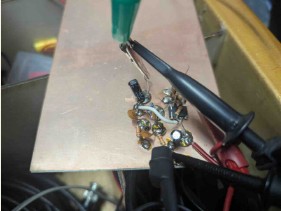
Experimenting with an active low pass CW filter using an LM741 op-amp, from a circuit sent by Nic VK7WW.
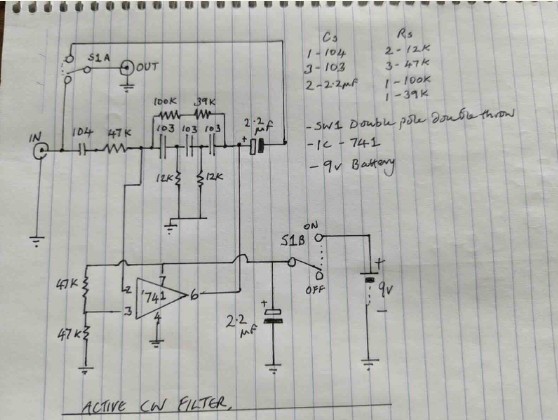
[Thanks Jordan and Nic. At less than $2, operational amplifiers like the LM741 are a snazzy way to create some really interesting analogue circuitry.
The opamps work on a differential input – one input produces an in-phase output, the other produces an out-of phase output and the opamp amplifies the difference in voltage between the two inputs.
The opamp has a very high gain which is controlled via negative feedback via external components from the output back to the inverting input.
In the filter, the output is fed back to the inverting input via the high pass filter (the three 0.01uF capacitors and the four resistors connected between pin 6 (output) and pin 2 (inverting input).
The higher frequencies are passed from output to input better than the lower frequencies, which means the higher frequencies produce more negative feedback – ie produce more gain reduction than the lower frequencies.
The difference in opamp gain between the low and high frequency feedback effectively amplifies the filtering effect of the feedback circuit – in other words, the simple broad high pass feedback makes the opamp produce a much sharper and deeper low pass filtering effect.
Really clever – thanks for sharing Jordan and Nic.]
Inverted L Antenna
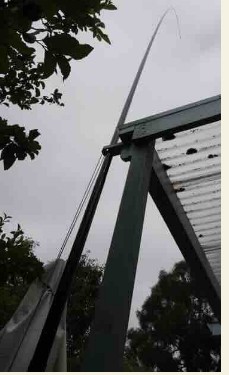
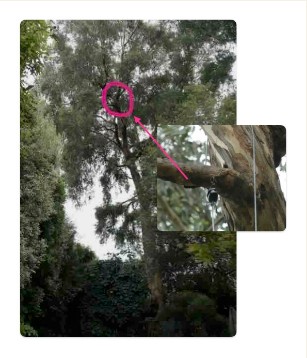
HIVOerteu kh PUILOrilicas from Peter VK3WOW Here are some photos showing how I’ve set up the end-fed inverted L antenna.
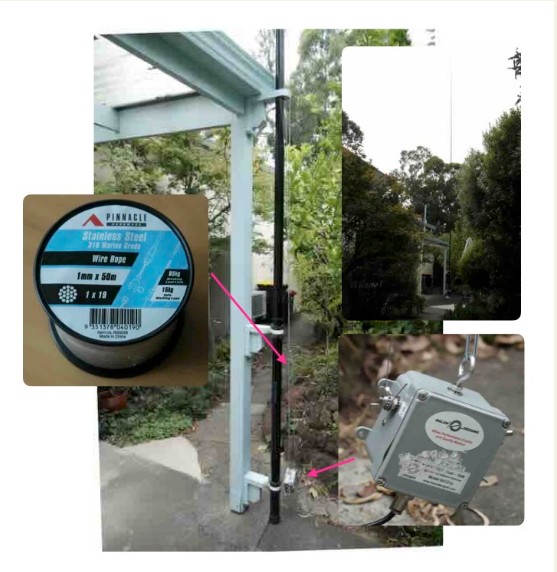
| found the key to making this setup viable was using the right sort of wire. I was originally trying to use JayCar hookup wire, and it was WAY too heavy.
As soon as I switched to using the much lighter stainless steel wire, the whole thing became much more practicable. The Inverted-L now effectively functions as a stealth antenna — easily raised and lowered. With best wishes, Peter VK3WOW
From Rick VK6XT Something we rarely think about is the outer braid of our coax fed antenna. It is a conductor stretching from the chassis of our rig to within inches of the antenna.
A common scenario is noise from the shack power supply and computer etc is induced onto the braid as a so called common mode current. Guess what happens when it reaches the end nearest the BALUN… picked up by the very sensitive receiver!
The reciprocal situation also happens where RF being radiated from the antenna is picked up by the braid and comes back into the shack possibly causing RF feedback on your microphone or squiggly lines on your monitor.
This should not happen if you have a perfect BALUN and the feed-line drops away at right angles from said antenna. Rarely do we have such a perfect set up.
Anyway cutting to the chase, one way to stop the nasty things happening is to insert an RF Choke onto the braid of the coax to disrupt this current.
Common Mode Choke to Reduce Noise.
| needed to do this and found an easy way that really works. The big electronic stores have split core ferrite chokes available.
The biggest one fits over a 12 mm cable…it was intended to go on Computer monitors to quiet the Hash that they radiate (old ones anyway).
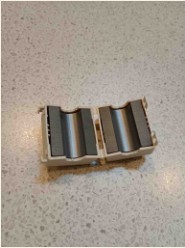
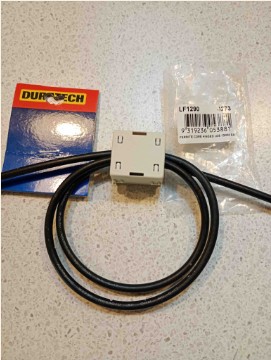
Experimenting with this I found that I could get three turns of RG58 through the hole. More experimentation with the placement of the choke followed. I ended up placing it just outside the building and about 6 metres below the antenna feed point.
Worth a try I reckon…the core cost only $12.95 and reduced my ambient noise level by two S points ! Rick Hill VK6XT
Rick Hill
Johnson Valiant Transmitter
From Paul VK3KLE Here is a CCT for Collins kw-1 . Find the 6AB6 vfo is similar to a 6AU6 in Johnson valiant. A receiver tube . Both screens and plates are VR tube regulated for the vfo tube and buffer tube.
The Johnson has a massive 6CL6 tube that’s high current – something like 40MA reg would be required .
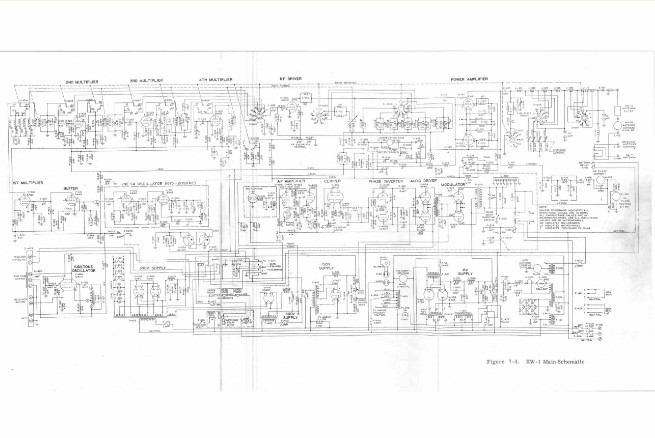
The Collins KW1 is a nice circuit, but before anyone gets too excited about getting one and putting it back on air I should provide some advice, care of my Elma Brian now sk from America.
Frequency multiplication on CW is now discouraged within USA CW circles due to unwanted harmonic products and our very crowded bands.
He advised the best idea these days with ancient transmitters is to run the chain straight through without multiplication, using a doubler at most; ie 80m VFO or crystal for 40m. Sounds fair enough to me.
The Johnson Valiant keys an 80m rock best on 80m and 40m and as per the manual, 40m crystals can be used for higher bands. It uses a series-tuned crystal oscillator dual purpose buffer with semi-tuned low Q plate output tank.
Recently, following advice from a local Elma I checked the buffer class. From the home builder or factory it had a 470 chm resistor on the 6CL6 cathode. Other drawings show no resistor here.
So I’ve put a low value hd 47 ohm resistor to the cathode to make the tube when used as a buffer in class A. There are other CCT varieties on various revisions including a 33k or 100K grid leak resistor. My set keys better with 100K.
So for those interested in old or new tube transmitters I’m quickly leaming every single element and component is of critical importance in these simple ccts.
I believe Brian said some builders have run new modifications with voltage regulation on everything up to the pa tube plate, including screen regulation. Now that’s a lot of additional circuitry.
Ideally no big value dropping resistors either; seperate transformer taps to get every voltage in the ball park for its seperate voltage regulation. I’ve yet to see a home brew tx built like that, but I’m sure they are about.
My improvement uses two 10w zener diodes providing a regulated VFO plate supply on the 6AU6 tube, which only needed two small chassis holes that I can live with.
A second 6AU6 or 6AB6 buffer would be very tight, would need a big hole and could be messy and tricky to do. The two 10w zener diodes are in series, giving 240DC to the plate of the VFO tube.
I reversed a previous mod on the buffer tube by reinstalling a 100K grid resistor in place of existing 33k ohm – it was loading the VFO causing some additional chirp.
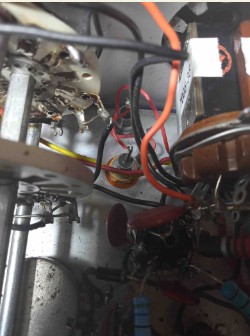
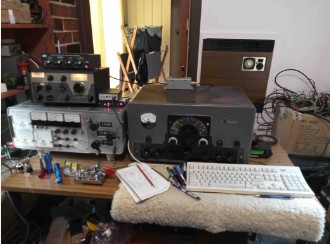
A couple of times in our QSO on Tuesday I nudged up the vfo, but overall using the ten tec omni as a monitor we didn’t vary that much.
Please keep in mind that this very old transmitter has the 1950 500PF mica caps and it’s original temperature compensating dog and bone ceramic Caps. So the temp stability we all are hearing is stock minus the new 240V
DC regulation of only one vfo 6AU6 tube. It’s has its own stock VR tube on the screen. That’s a fair effort for 1950 technology and longevity.
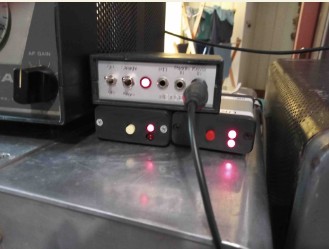
In Tuesday’s station setup I used a MFH noise preamp with relay ant switching and a vintage netcurtus CW keying sequencer. Not much clicking and semi qsk just from the key
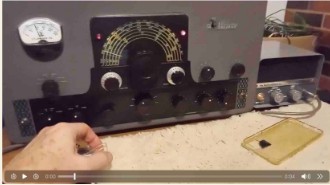
Also short video using my ten tec as a receiver of the dummy load signal from the Valiant. I’m showing off keying with my left hand for a laugh. Best Regards, Paul VK3KLE
QRZ?
This week – Peter VASWOW
In my work life, I made an intermittent living for a while writing TV police shows and soap operas (Bellbird, A Country Practice), plus some documentaries for Film Australia and some TV comedy writing for Max Gillies.
While all that was ‘fun’ (sort of) it didn’t really help pay off a mortgage, so I worked as a labourer, TV station operator, psychiatric nurse, taxi driver
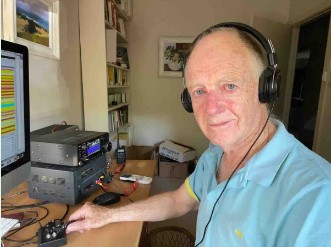
And taught history and English, before working for many years as a technical writer, working exclusively on software projects. Since retiring, I’ve turned my efforts to writing prose fiction, and particularly novels.
As it happens, the central character of my partly autobiographical novel 1961 (https:/Avww.peterdannauthor.com/19 61 novel) gets interested in radio/electronics as a twelve year old, inspired by his reading of “Radio, Television & Hobbies” (a magazine of that era) and by his contact with a radio/TV serviceman who lives next door, and takes him under his wing.
So, not a million miles away from my interests as a radio ham, you might say. I’m writing another novel now. I find it slow and challenging (out very interesting) work. I’m not, in any sense, trying to write genre fiction (detective

Novels, SF novels, etc), so that adds a level of difficulty — but at the same time, that’s where my interest lies. With best wishes, Peter Dann VK3WOW
Peter Dann
I’m really keen to share backgrounds of some of our team members – it’s really good to know who’s on the other end of the QSO.
If you’d like to share some thoughts about yourself either written or recorded on your phone note-taker application, please let me know: cqqrsnet@gmail.com Alternatively, lan VK1HF is keen to record and produce some short segments for RagChew if you’d like; send me an email and I’ll pass your details to lan.
Other News
Morse Training Net
Nic VK7WW runs a Slow Morse training net every Wednesday at 7pm EDST on 3580 for 30 mins. He uses the callsign of the Northern Tasmania Amateur Radio Club VK7TAZ on that net.
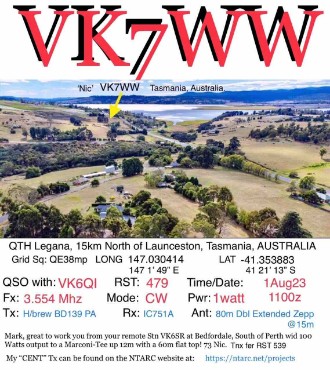
Many of our team learned Morse code with the support of Nic, and the weekly training session comes highly recommended for anyone who wants to learn the Code, or simply brush up. Everyone’s welcome – 3580kHz at 7pm Eastern time every Wednesday. The NTARC also feeds the CW live via the Discord phone / computer audio stream, and previous weeks’ recordings are available. Contact Nic VK7WW for more info nicholaschantler@hotmail.com – or just join in on Wednesdays.
Joys of a Winter Morning
JOYs Ol a Winter MONG from Ross MONNK It’s half past one in the morning in the UK, the Saturday of the Peel Amateur Radio Group’s PARGFEST 2025 and raffle. The invitation was issued by notice in the last Ragchew to call in on the Mandurah repeater.
VK6RMH-R is connected to the wider world by Echolink. So here I am, in my pyjamas and dressing gown, the house is quiet, the street outside is dark, and I’m in the Man Cave, hunched over my mobile phone. So far, I’ve called twice but without success.
I’ve checked on PARG’s website but there’s no indication that the event has been cancelled.
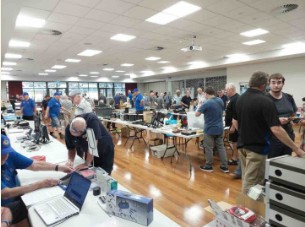
As a radio operator, one gets used to the vagaries of propagation and failed skeds. I shall try again shortly. If I’m not coming out in Western Australia, my best wishes go out to PARG and I hope that your get-together and raffle are a SUCCeSS.
For myself, I shall shortly be heading back to bed. Night night all.
140 visitors demonstrating that PARGFEST 2025 was a great success
[Wouldn’t you know it! In previous years, PARG set up the emergency coms trailer PARG1 outside the venue and rewarded by a constant supply of sausage rolls, one of the members manned the trailer and ran a talk-in. I don’t know if that happened this year.
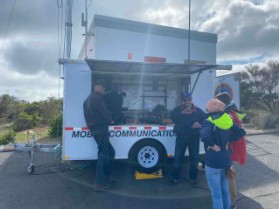
Wouldn’t you know it!
As it turned out, I was away on Friday and Saturday (and I hate to admit, actually forgot about PARGFEST) so I wasn’t listening in this year. If I had been home, you can bet your bippy that I would have answered Ross if I heard him.
Later that morning I was called by Rob VK6LD who had built most of the AllStar nodes on the WA network. Rob said that he happened to be visiting Mandurah but that the node didn’t appear to be connected to the network.
I had built the AllStar node as the repeater controller for PARG, so I was able access the node’s Supermon website, see what was going on and re-make the connection.
It turns out that at some stage in the morning, someone had accidentally or on purpose sent a bunch of random DTMF codes to the repeater, which managed to make it disconnect from the network.
So Ross was connected to the repeater (and would have been heard in the area), but the usual AllStar network wasn’t connected. Thanks for trying Ross – would have been nice to say g’day.]

Wanted – An article on QRZ.com
Page, especially if it espouses the joys of slow CW! Do you have a qrz.com page? If so, would you be interested in sharing how you created the page with others on the team?
If you’re able to help, please let me know first (in case there’s a flood of offers!), and then put together a few paragraphs (yeah, yeah, I know!) on how to do it…
Step-by- step, with some pictures of the steps used to go from go-to-whoa if possible (or I’m happy to help with the pictures if you don’t have a screenshot-type application to grab on-screen pixels). Please let me know if you’re interested: cqgrsnet@gmail.com
Di-dah-di-dah-dit
So back to the Slow CW QSO practice net.
Next Tuesday’s Net
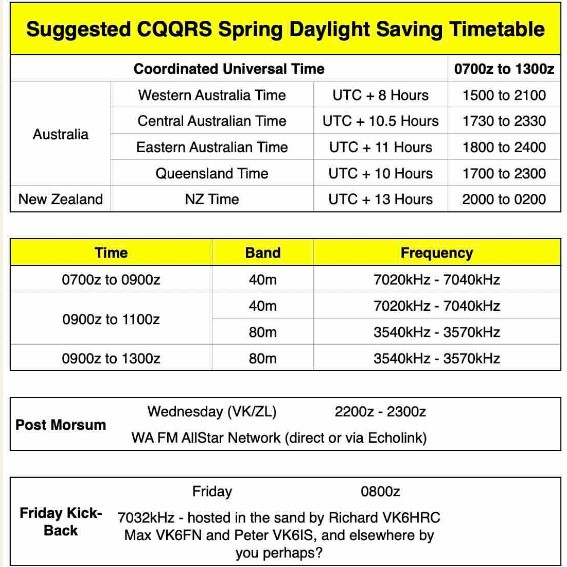
Our CQQRS Group will be on as always on Tuesday from around 0700Z until about 1300Z; see below for details. Doesn’t matter whether you’re brand new and want to try just exchanging callsigns and RST reports, or you’re ready for a good old rag chew.
We’ll have fun. There’s usually people around until after 1300Z – so keep calling in the segment of the band designated in the table below until you catch someone.
I should be on as usual from home in NSW or via the Remote at Bedfordale WA, and I’ll also be watching the proceedings using the VK6QS and Tecsun SDRs in WA and NSW respectively. Hope to hear you there.
Please let me know via our Reports form bit.ly/CQQRSNET who you work or hear on Tuesday’s Group. The report form closes at lunchtime (Eastern Australian time) on Thursday.
Post Morsum
Richard VK6HRC will run our phone Post Morsum on the South West AllStar net (via repeaters and hotspots all over WA) from 0600 WA time, then from 0700 WA time on 80m (3605 LSB).
For the 0600 (2200Z) net, if you’re in WA all you need is an FM 2m or 70CM transceiver and an AllStar node nearby. If you’re elsewhere in the world, if you have an AllStar node (or you may be able to connect your local AllStar-enabled repeater to the net via DTMF codes), connect to node 42482, 51077 or 42732 – these are the hubs that tie the network of repeaters and nodes together in WA.
If you don’t have access to AllStar, you can connect to the network via Echolink. On Echolink, search for one of the following Nodes: * VK2KI-L * *VK6-HUB* * VK6ZGN-L * VK6RMH-R- * VK6NRA-L When you connect to one of those stations on Echolink, you’ll be automatically connected to the WA AllStar network, and you should hear us on soon after the hour; let me know (cqarsnet@gmail.com) if I can help with connecting via AllStar or Echolink.
If you’re in WA and can’t connect, give Richard a call on 3605KHZ SSB from 0700 (23002).
Teamwork
Thank you so much to our team of 28 contributors: MONNK, VK2DLF, VK2EBN, VK2GAZ, VK2IK, VK3ACU, VK3AFH, VK3BTV, VK3DRQ, VK3KEV, VK3KLE, VK3WOW, VK5AO, VK5CZ, VK5KFG, VK6BEK, VK6DV, VK6FN, VK6GX, VK6HD, VK6HD, VK6HRC, VK6IS, VK6KD/5, VK6KHZ, VK6WE, VK6XT and VK7TA.
Thank you team. GU CW on Tuesday, mb Mark Bosma VK2KI / VK6QI Beautiful South Bowning NSW mark.bosma@icloud.com non impediti ratione cogitationis

About the CQ QRS Group
Frequencies and Times
QRL?
So tune around and call anyone you hear, or find yourself a quiet spot in the designated segment, send “QRL?” and if the frequency is quiet, start calling CQ QRS at about 75% of the speed you’re comfortable receiving at; hopefully responders will match (or send slower to their comfort level).
And if you are already having a QSO and someone sends “QRL?”, respond with “R”, “C”, “Y”, “YES” or QRL to let the caller know that the frequency is in use.
If we’re on 40m and you can hear that the band is open outside Australasia, perhaps consider calling 500HZ above each 1KHZ slot – to minimise the chance of having to copy our team through QRQ QRM that’s often dead-on the kHz markers.
Speed? Rhythm?
If you’re proficient at CW and can race along at 20 or 30WPM – terrific, but please remember, the Group’s aim is to encourage participation and learning, not show how fast you can hammer the key.
Please send slowly where you can and concentrate on rhythm – listen to your side-tone, get that wrist action going and make a special effort to make it sound like perfect CW; the longer we go with our Group, the more I understand just how many non-transmitting listeners we have – and they will most likely appreciate your QRS!
So, if you’re an experienced operator, please try to send nicely balanced slow CW to give them a chance to practice and gain confidence…. they’ll reward you one day by coming up on air to say g’day and thanks – how good is that?
And if you’re new or like me, just rusty…. ignore the above… just have a go – the lather of sweat will be worth it and there’s plenty of time to get the details sorted out as you practice.
Matching
And also for the oldies like me, when you hear someone new, please match their sending speed – or slower. The person you’re replying to may not be as deft on the decoding as you – it may be their first ever CW QSO – remember your first?
Lather of sweat, key that refuses to send that you tell it, brain that refuses to decode those complex letters that were right there half an hour ago, etc!
PSE QRS
And if someone is sending too fast to comfortably copy – “PSE RPT PSE QRS” or “AGN? PSE QRS’ will make life easier for everyone…. and might just encourage other listeners to have a go themselves.
The other thing to remember – most operators are writing down what they hear… so when you put it back to them, expect a delay while they read your words of wisdom, before replying.
The aim is to give everyone a go at contacting others – no-one owns their calling frequency in this Group. So unlike working DX, if you hear someone signing off – jump in and call – doesn’t matter who was first on the frequency – we really are all good mates in this Group….
And besides, at the speed we’re sending, after a QSO most of us will have forgotten who was first!
If you really want to move off frequency (eg because of a spurious switch mode power supply signal that’s just drifted into the conversation), you could try sending an abridged callsign of the person you’re after, followed by “UP 5” or “DN 5” then K: then call that person on the designated frequency and keep your fingers crossed, they may have understood you and followed…