Below is a reconstruction of the 2024 27 CQ QRS RagChew newsletter designed to support full text searching. This reconstruction was built using OCR, and will contain errors.
To view the Mailchimp original, click here. To search the entire newsletter archive, click here.
Contents
- Last Tuesday’s Net
- Reports
- Reports & Comments
- Comments:
- From Mike DL3YZ near Stuttgart Germany
- « From Jordan VK3ACU at Meredith
- » From Manny VK3DRQ at Blackburn
- Post Mortem Report from Dinkars /YOoCuUDsS
- Telstra 3G Network
- Landing Zone
- Checklist?
- Don’t Go Cheap & Nasty
- Be Comfortable
- Brain teaser
- Exam Questions:
- Answers from last week’s Quiz:
- How did you go?
- Di-dah-di-dah-dit
- Next Tuesday’s Net
- Post Mortem
- Teamwork
- Matching
- PSE QRS
- Late Night
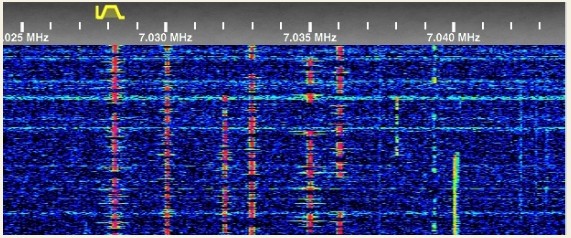
Last Tuesday’s Net
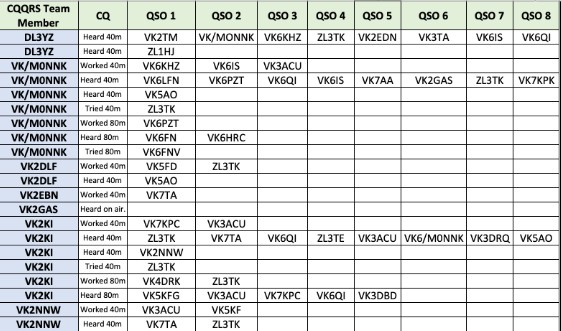
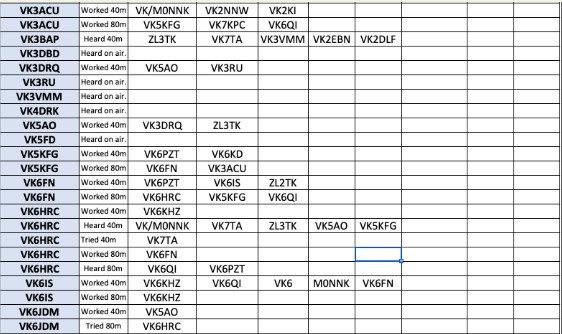
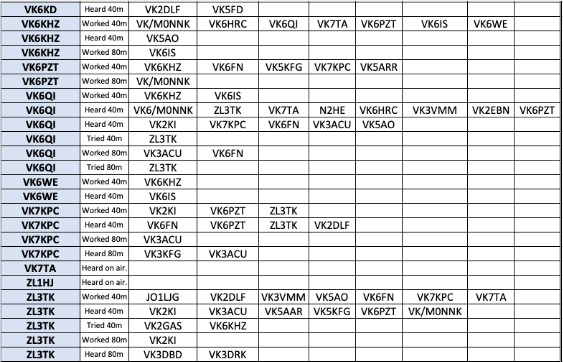
Here’s this week’s list of the 30 of our team stations heard – plus another 12 stations reported:
Reports
After next Tuesday’s net, please send me a list of who you worked and / or who you heard using our new web form here: bit.ly/CQQRSNET
Getting reports from stations and listeners is important to me – even if you listened and didn’t hear anyone or weren’t able to copy anything – the fact that you had a go needs to get recorded so we know that the net is working and attracting new and old team members to have a go.
For ideas, see the reports from last week below.
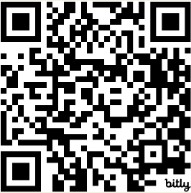
Thanks again to Nigel G4RWI for building the Google Report Form, the Python software back-end that does the processing, the link and the QR code.
Cheers, mb Mark Bosma VK2KI / VK6QI Beautiful South Bowning NSW mark.bosma@icloud.com non impsditi ratione cogitationis
Cheers, mb Mark Bosma VK2KI / VK6QI Beautiful South Bowning NSW mark.bosma@icloud.com non impsditi ratione cogitationis
Reports & Comments
The spreadsheets above show the known stations on last Tuesday’s net. Comments distilled from the reports I’ve received are below:
Comments:
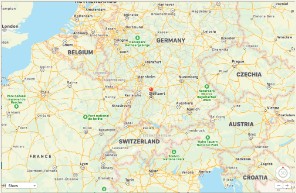
From Mike DL3YZ near Stuttgart Germany
[40m] * It was great fun hunting on the SDRs around the country, collecting calls and listening to different fists * You’ve got really FB OPs on your net, and it’s a great event * One beginner’s observation: I think it could be a good practice within a CQ call, to send the callsign at least 2 times (better 3 or 4), as its the most important part of the message * I heard some stations sending “CQ” a dozen times, and then sending their call just once
• Inat’s ok Tor DA, but I think It makes It hard on our net for a potential partner, that just hit the frequency, to copy the call on the first round + If he misses, he has to listen to the next dozens of “CQ’s till it comes around the next time + And if this round of CQs was your last one before you go QRT, you may end up with not having this guy in your log.
[You make a good point Mike. It’s an easy, almost sub-conscious learned motor skill to send CQ – but a bit harder to send your callsign. The fun part comes when you start to recognise peoples’ fists, even before you hear their callsigns.]
From Ross VK/MONNK near Exeter UK via VK6SR in Perth WA
[40m] * Quiet for the first hour then got busy * Very pleased to work my first non-VK6 station (VK3ACU Jordan) * There seemed to be plenty of chatty QSOs going on, not just “meat and three veg”, but that meant it took ages to wait for an opportunity to put ina call!
[80m] * Heard VK6FNV and started to respond to his CQ but then the VK6SR remote access radio went down * 30 minutes later tried calling CQ but the VK6SR fell over again * Third time lucky and I had a nice QSO with VK6PZT
« From Jordan VK3ACU at Meredith
» From Manny VK3DRQ at Blackburn
[40m] * A visitor came after 1030Z and that was the end of the show
[80m] + As usual on this band, noisy tonight ¢
From David VK6KD at Katherine caravan park NT (VK8)
[40m] * Many stations transmitting way too fast for me + I had a QSO with a VK5 but my battery went flat on my laptop and I lost record of the call * It’s like the fish which got away * No proof, hihi


• Running portable from Katherine caravan park NT + 73 from David VK6KD/8
[Don’t say we don’t do anything for you David…. the lucky VK5 was Greg VK5}h the beautiful McLaren Vale wine area at Willunga.]
[Don’t say we don’t do anything for you David…. the lucky VK5 was Greg VK5KFG in the beautiful McLaren Vale wine area at Willunga.]
[40m] * Hard work with consistently poor trans-Tasman conditions Plenty of Stateside stations heard though thanks to a tame contest of some sort, without ridiculous-speed keyboard jockeys for a change * Keep an ear out for newbie Japanese stations; learned from Sei-san JO1LJG they’re attracted by our CQ QRS and just as keen to make contacts as VKs & ZLs
[80m] * Nothing seen on 80 m waterfall and no response to extensive CQs, at least until 1130Z * Took a last look at 1245Z and surprise, surprise, there was a QSO in action + Jumped in when it finished but conditions precluded a ‘Today in History’ exchange
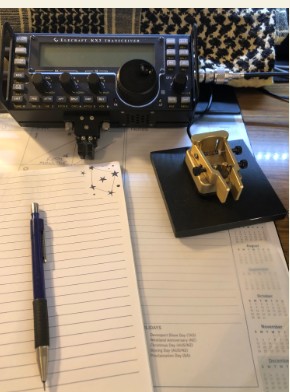
• Signals fairly weak into my station in the metro plus QSB so I mostly monitored + Ron VK6KHZ had a great signal though and according to Mark we managed to have the world record shortest exchange (another record for the net ).
[40m] * Caught some of Stan’s history bits about Stephen Hawking’s Brief History of Time with VK2DLF * Must have had a stray dah in QSO with Stan, he thought I had sent -30 for temperature, It was only -3
[80m] * 599 both ways with Jordan running 20W and me running 1W both using end- fed 1/2 wave.
[40m] * On Tuesday evening I used a 1.5m vertical indoor antenna for a change + My power was 10 – 15W
• There was a lot of noise about on 40m + I did manage to see the aurora Australis back in May, it was amazing seeing the shimmering red and white colours in the sky * Thanks to those who worked me Adam.
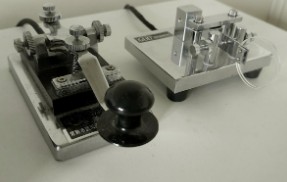
[Great to hear you on again Adam… and with a 1.5m indoor antenna! Pretty amazin. to see an aurora up your way just South of the Queensland border mate.]
[80m] * it’s still little local activity, here on 80m ¢
[80m] * Very confused re a UK station using a remote station in Perth * But I figured out the call sign eventually
• Another busy night with work meetings but I managed a quick listen on 40M and picked up a few stations + Heard ZL38TK & VK7TA doing what I assume was a “Today in History” * I managed to hear “1937 CENTRAL PACIFIC DURING TO FLY AROUND THE WORLD” but QSB was a bit strong so missed the rest.
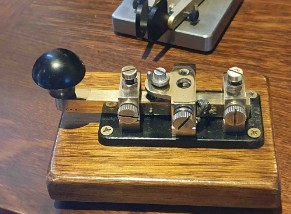
• From me VK6QI at via the VK6SR Remote and SDR at Bedfordale and the VK6QS KiwiSDR near Brookton.
[40m] + When I joined the net at 0700Z, the VK6QS KiwiSDR near Brookton was again full, so I joined the waiting queue while I listened on the Southern Electronics Group’s KiwiSDR being tested at Bedfordale + Ross VK6/MONNK‘s signal from a few metres away from the temporary antenna was obvious as he chatted to Ron VK6KHZ at Yangebup + I did manage to hear NSHE (non-QRS) calling CQ and Stan ZL3TK at Waitdrere working lan VK7TA at Latrobe + lalso noticed Mike DL3YZ at Stuttgart listening in on the VK6QS Remote that Ross was using + By the time I was allowed in to the VK6QS KiwiSDR I heard a very short QSO between Ron and Richard VK6HRC, then Stan chatting to Michael VK3VMM near Ballarat, while lan chatted to Brian VK2EBN at Newcastle + Things were a bit quiet, so Ross and Mike both decided to go and have some breakfast, so I used the Remote to have a QSO with Ron, then Peter VKéIS at Wundowie + I then listened to my QSO (as VK2KI) with Peter VK7KPC in Evandale; with just 3 Watts, Peter was romping-in to WA at RST 569 – three S-points stronger than he was to me in NSW + I then heard Richard VK6PZT at Dalyellup chatting to Max VK6FN at Manjimup, then Peter QRP from Evandale + Ialso heard Ross chatting to Jordan VK3ACU at Meredith + When Elizabeth arrived home, I could hear Stan ZL3TK calling me from the headphones on my desk; but by the time I came back in and called him, he had QSYed up the band to chat to Maitland VK5AO at Banksia Park + I then slipped down to 80m for a look around
[80m] + After dinner I had a QSO with Jordan VK3ACU at Meredith, then Max VK6FN at Manjimup using the VK6SR Remote HF station at Bedfordale + Awhile later I was working Stan ZL8TK at Waitarere Beach from my home station in NSW, and Stan was coming through to WA even better than NSW; however, the propagation appeared to be asymmetric and Stan could not pull my VK6 signal out of the noise.
[40m] + I was a bit late coming to the Tecsun KiwiSDR at Araluen NSW and my old (wide) Kenwood TS-120S, but I heard lan VK7TA at Latrobe chatting to Stan ZLSTK at Waitdrare Beach * Abit later I had a nice chat with Peter VK7KPC at Evandale who was running 5 Watts + At around 0915Z I heard Jordan VK3ACU at Meredith chatting to Ross VK6/MONNK who was using the VK6SR Remote at Bedfordale, although Ross was quite weak to me in VK2 + also listened in to Manny VK3DRQ at Blackburn chatting to Maitland VK5AO at Banksia Park + I was pleased to hear Adam VK2NNW up at Deepwater near Glen Innes back on air a bit later chatting to Jordan + I then had a chat to Jordan and threatened him with a Ping Pong CW exercise, which he gracefully declined + Elizabeth came home juat as Jordan and I finished.
I was rightfully distracted, but could hear Stan calling via my removed headphones; by the time I got back to Stan, he’d QSYed up the band, so I slipped down to 80m, re- adjusting both my antenna coupler and my phasing noise canceller of course
[80m] + On 80m I heard Greg VKSKFG at Willunga chatting to Jordan VK3ACU at Meredith, before Jordan went on to work Peter VK7KPC at Evandale + Later I had a late-night chat with Derek VK4DRK up near Toowoomba, before David VK3DBD at Yackandandah caught up with Derek + I was called by Stan ZL3TK at Waitdrere Beach, and we QSYed down SkHz (via a “DN 5 DN 5 OK?” request from me).
+ We were both struggling with the QSB as signals were only 1- to 2- S-points above the noise; Stan’s RSN (readability, signal strength, noise strength) reporting protocol made this easy to recognise, allowing us to immediately temper our QSO to match the conditions.
[80m] * Tried to have a QSO with VK5AO however had severe local interference from a second harmonic (5 year old grandson) who insisted on talking over the incoming signal adding to the difficulty of following a signal through troughs of QSB against some background static crashes * I heard VK6HRC but he did not hear me (I was only using 5 watts) and Richard is afflicted with urban noise I gather * I did not hear VK6KRC but clearly he would have been out there as he promised to be on the net * Bob (KRC) is aware that he could be at risk of severe reputational damage if his promises are not kept, though I have assured him that as a good mate I would have no part in such reputational damage
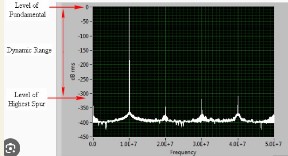
• Second harmonics will be suppressec next week (returned 700 km away) should do better then..
[40m] * When I tuned in late in the day there were several good signals to choose from * I worked Ron on VK6KHZ who I had tentatively contacted last week * With the QSO over the signals had gone so I called CQ for a while but there was no response + My guess is everyone stopped to have dinner as it was now rather dark after sunset!
Today in History Report for Tuesday 2 July 2024. by Stan ZL3TK It’s fair to say probably all three of Tuesday’s lucky recipients didn’t really need the exercise and could have returned their QTC near enough 100 % at a somewhat higher speed both ways, and two did so.
Since our raison d’etre is to ‘Elmer’ less experienced ops in their quest to become experts, we guarantee to match their speed whatever it may be. Can’t say fairer than that. NW A MESSAGE FOR YOU. PLEASE REPEAT IT BACK, OK? BK QTC TODAY IN HISTORY
AMERICAN AVIATOR AMELIA EARHART DISAPPEARED TODAY 1937 OVER, CENTRAL PACIFIC DURING HER ATTEMPT TO FLY AROUND THE WORLD. Sent to: VK7TA 2. LAKE CONSTANCE NEAR FRIEDRICHSHAVEN SAW FIRST FLIGHT OF A.
ZEPPELIN TODAY1900 WHEN AIRSHIP DEPARTED FLOATING HANGAR FOR 18. MINUTE FLIGHT. Sent to: VK5AO_ 3. THEORETICAL PHYSICIST STEPHEN HAWKING BROKE BRITISH PUBLISHING RECORD TODAY 1992 WITH HIS BESTSELLER BOOK A BRIEF HISTORY OF TIME. Sent to: VK2DLF
Post Mortem Report from Dinkars /YOoCuUDsS
QRP Lab Transceiver Practice Mode by Greg VKS5KFG In a previous two RagChew there was discussion about whether or not feedback to operators with less-than-perfect keying was appropriate for our net.
That reminded me about one of the helpful features of the remarkable QRP Labs CW Transceivers, which is CW decoding on both receive and transmit.
The transceiver has a practice option which is employed in the picture. The top line is the frequency setting. The P shows that it is in practice mode. The bottom line is the decoded message.
In this case I have sent the word “practice” followed by a full stop. Ifa character is botched, it is registered as an asterix, as appears in the picture.
If the spacing between letters in a word is too long, a space between letters appears, as again can be seen in the picture. Somehow the decoding program adjusts to whatever
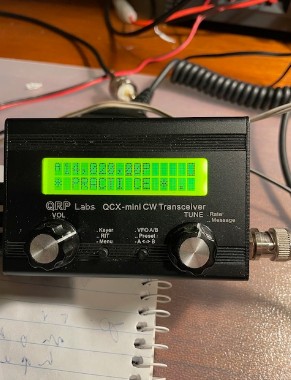
Speed you send and it works with straight keys and paddles. I’ve found that the practice feature is very helpful in practicing sending. Cheers Greg VK5KFG [Thanks Greg.
I see that the KiwiSDRs also have a multi-mode digital decoder which includes CW; it certainly lets you know if your keying isn’t perfectly timed!
As discussed last week – this isn’t at all important for brand new and rusty operators – o1 our net, it’s better to gain confidence by getting on air, having a go and having some fun among a group of supporting peers, rather than holding off until your keying is perfect.
But Greg, things like your decoder sure are great for finessing hand-keying; thanks for sharing.]
Size Matters by Nic VK7WW and Jordan VK3ACU After the Northern Tasmania Amateur Radio Club Slow CW training on Wednesday, Jordan VK3ACU tested a home brew, single transistor CW transmitter on 3580KHZ and had a contact with Nic VK7WW.
Nic sent RST 467, Jordan sent 599. So what is so interesting about that I hear you ask? Nic was running a RIDICULOUS 120 Watts output, but amazingly, Jordan was using a SUBLIME 5 milliwatts! That’s five-thousandths of a Watt…
AND the distance between them was over 460KMS! Jordan’s Morse Key was probably over 100 times the size of his transmitter… oh anc Jordan’s transmission was also heard by Peter VK7KPC.
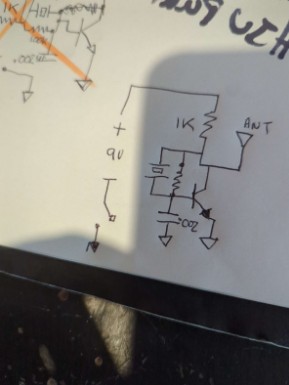
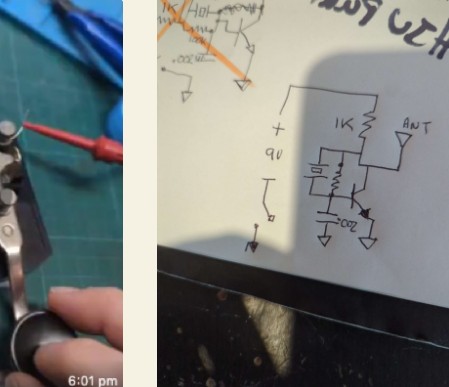
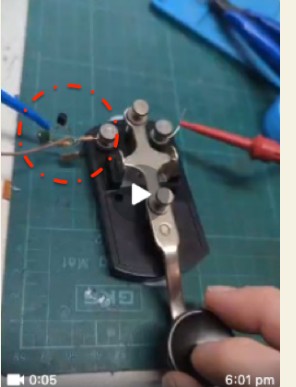
There’s more info on the NTARC’s DISCORD CHANNEL for June 26TH. Oh, if you don’t have access to DISCORD, please send an email to Phil VK7ZPD; you’ll find his email on QRZ.com.
By the way, you are welcome to test your home-brew CW tig during the tech session after every week’s CW training – even if you don’t know CW.
Come up on the Wednesday NTARC TechNet on 3567KHZ from about 1930 hours Eastern and identify yourself on voice and tell us what frequency you’ll transmit on; then go back to your CW transmitter and send a series of Vs (di di di dah. – that’s Beethoven’s Fifth).
We’ll tell you if we heard it! Perhaps we’ll see you on a Wednesday night? 73, Nick VK7WW” [Thanks Nic and Jordan; the true spirit of CW! Does this qualify for a kilometre per Watt award I wonder?
For more info on the Wednesday evening CW training net that’s open to everyone, see below]
When I was starting out in Morse Code, I faced two obstacles. The first was the code itself – the characters and punctuation… both copying and sending.
But the other obstacle was what I’ve come to call ‘The Lingo’; by that I mean, the abbreviations and codes frequently used in QSOs.
For instance: + CQ DE DR OM FB GL ES CUAGN SN GG NR CUD WUD SHUD UR RST TNX FER XYL 73 77 K QSO QTH QSB QRN QRM QAT QSY QRS; and + those pesky Prosigns which even some experienced operators don’t know how to send correctly
However, I recognised the utility of the various codes (even if they’re difficult to remember when at the key) but all too often I heard a string of abbreviations being sent entirely unnecessarily.
The other problem with abbreviations is that a single wrong character can render them unintelligible – unabbreviated English has a tremendous amount of redundancy built in and can carry its meaning despite the inevitable misspellings by Morse beginners and dyslexics.
Of course, I’ve come to see all of these abbreviations and codes as part of the
Rich culture of Morse. Yes, some of it derives from the past. Some of its use derives from a lack of proficiency with the English language.
Personally, these days, I get a buzz out of continuing the glorious tradition that the old operators in their smokey shacks have bequeathed us. But that’s Now.
My point is that Morse students and mentors concentrate single-mindedly on the Morse characters (for obvious reasons). But, even when I had some proficiency with them, it was a struggle to use ‘The Lingo’ to have a “FB QSO DR OM
Or am I, once again, in a minority of one?
Telstra 3G Network
In case you missed it – in Australia Telstra is closing the 3G cellular network on August 31ST. “So?” you sa; “my phone already shows 4G”. Well, that doesn’t mean your phone will continue to work…
The 4G network uses a Voice over IP system called VoLTE (Voice over Long-Term Evolution) which not all phones are compatible with (even many 4G phones).
To find out if your Telstra mobile phone is compatible, you could try to navigate to the VOIP setting to see if VoLTE is an option…
But more easily, send Telstra an SMS as follows: Use the phone number 3498 and send the number 3 by text; some time in the next 24 hours, Telstra will send you an SMS advising whether your current phone is compatible with VoLTE.
Ifnot, it’s time to look at options. I recommend a refurbished phone from a reputable organisation (at least, not from an unknown individual).
I replaced my old iPhone SE with an iPhone SE2 (or SE2020 version) which cost me only a couple of hundred dollars – configured with maximum memory capacity. For all intents and purposes it may have been brand new… and works way way better than my old one…
That was starting to have re-charging problems (too much farm crap in the power connector) despite battery replacement. Time for a birthday present? You’ll thank me after.
Landing Zone
Thanks for the positive feedback about monitoring the 7032KHZ (secondary 7028KHZ) or 3555KHZ landing zone frequencies outside of the net times, rather than listening to nothing.
In the Eastern States, there’s often SOTA / VKFF Parks activity during the week and certainly on weekends. And if you’re interested in listening to these and other portable activities, you can get an SMS from Allen VK3ARH’s www.parksnpeaks.org website whenever someone posts a CW Spot.
If I see a team member’s CW spot there I’ll try to copy/paste it to the CQQRS WhatsApp Alerts group if I can…. but of course, you’re better off getting the SMS direct. Let me know if you’d like to find out more: cqqrsnet@gmail.com
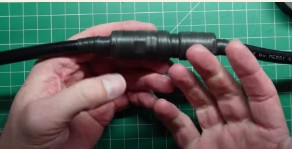
A YouTube video on correctly weather- proofing coax connections: https://Awww.youtube.com/watch? v=I5 w6iD3Lu0
Nic VK7WW runs a Slow Morse training net every Wednesday at 7pm EDST on 3580 for 30 mins. He uses the callsign of the Northern Tasmania Amateur Radio Club VK7TAZ on that net.
Many of our team learned Morse code with the support of Nic, and the weekly training session comes highly recommended for anyone who wants to learn the Code, or simply brush up. Everyone’s welcome – 3580KHZ at 7pm Eastern time every Wednesday.
The NTARC also feeds the CW live via the Discord phone / computer audio stream, and previous weeks’ recordings are available. Contact Nic VK7WW for more info nicholaschantler@hotmail.com – or just join in on Wednesdays.
An alternative view about operating portable? Well, a different view from all those YouTube videos anyway! The YouTube videos usually feature an expert CW operator either up a mountain or on a picnic table in the middle of a big empty urban park.
But that doesn’t look like my kind of portable operating, so here are a few of my thoughts. Operating portable from any kind of vehicle is simple – you just need to decide what sort of antenna system you’re going to use.
My kind of portable is where you drive there and then walk your kit into the operating site no more than a mile away from the car. So you have to be able to carry your kit a short distance.
Checklist?
It’s a damn nuisance when you’ve left something back at the car or, worse still, back at home. Pilots use checklists so they don’t forget stuff, so they’re nothing to be ashamed of (and who’s going to notice anyway?).
Don’t Go Cheap & Nasty
You put a lot of thought and effort into your shack so do the same with your portable set up. Use the best gear you can afford – just like in the shack, it’ll make operating easier and more enjoyable.
I ’m thinking particularly about paddles and straight keys here – this is your tool for creating Morse so have a good one.
Portable has enough challenges as it is. Portable sometimes (not always) means that you’re using a compromise antenna. A compromise antenna + QRP is a recipe for frustration. Leave it to the experts. Keep challenges to a minimum by using at least 10 watts.
20 watts is good. But 100 watts and more will mean you have to carry large heavy batteries.
• Don’t operate in a busy urban park – you’ll be disturbed by playful or aggressive dogs and by curious passers-by who will interrupt you in the middle of a QSO. ¢ Wear headphones or in-ear monitors (the ones that block out noise).
There’s a lot of subtle (and not-so-subtle) ambient noise out there which you’re not used to and that noise will take your attention away from your Morse. Cut yourself off from the distractions with headphones. ¢ Familiarise yourself with your gear at home…
Be Comfortable
This is really an extension of “Minimise Distractions”. ¢ Find somewhere out of the sun ¢ If there’s any chance of rain, don’t go – portable in the rain is for experts ¢ Use a folding chair (there are no handy picnic tables where I operate) ¢ Consider a small folding table so that you can reach your kit.
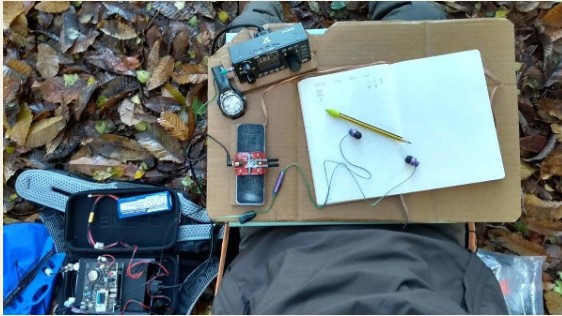
YouTubers love throwing lines up trees. In my experience, trees love snagging lines (and antennas) thrown into them. I use velcro straps to attach my mast to saplings. But fence posts are everywhere and form a strong stable base for a telescopic mast.
Sit under a tree (for the shade) and attach your mast to a fence post out in the sun. Tie the ends of your antenna to the fence (with suitable strain relief and insulation, of course).
The easy way to put up a mast in an open field is to first guy up a 1.5 metre length of plastic drain pipe. Then drop your telescopic mast into that. It’s far easier than trying to guy out the telescopic mast itself.
It doesn’t matter what sort of antenna you use as long as it’s easy to deploy and pack away. My favourite is a 42 ft random wire antenna. But then an EFHW is pretty simple too.
Personally, I’ve never used a dipole so I can’t comment on their suitability for portable use.
It doesn’t matter what radio you use provided it’s not too big and heavy. The best radio is one that you’re familiar with.
I like my Xiegu G90 because it has 20 watts, an antenna tuner that will cope with an non-resonant wire, an SWR scanner, a waterfall display, and a remote head unit.
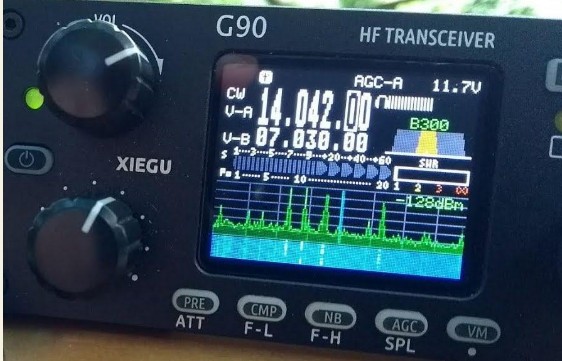
That’s a lot of functionality in one package (less wires to get tangled up) but, at 1 kg, it is a bit of a lump to carry. It consumes 1500 mAh per hour of CW operation, so my 5000 mAh battery will always outlast my stamina at the key!
I wouldn’t want to go much heavier though. For a lighter weight option, consider a small lightweight radio, a resonant antenna (eg dipole or EFHW), and a 2200 mAh LiPo battery (readily available from model plane shops).
You could use a QRP radio plus an amplifier but that’s just more kit and wires to set up and take down. This set-up works for me – and before the CQQRS net introduced me Remote HF systems, this was my normal mode of operation.
Others will have different ideas, but for me – simplicity and familiarity with the gear is the key to success. Ross MONNK If it’s not raining, I’m off portable somewhere.
[Thanks Ross – terrific article These days there’s so much switch mode power supply noise on the low bands, and very functional light-weight equipment is available quite cheaply – so more and more people are out there having fun.
In the East of Australia and in NZ, most days of the year there’s people out portable operating QRP on CW. It’s quite amazing how challenging such operation can be….
Especially on CW where you’re trying to write on soggy bits of paper in the cold wind, or worse, trying to make electronic logging etc work while copying CW! You’re so right about being familiar with your gear…
And don’t think from the get-go everything will work – electronic logging / copying in particular!
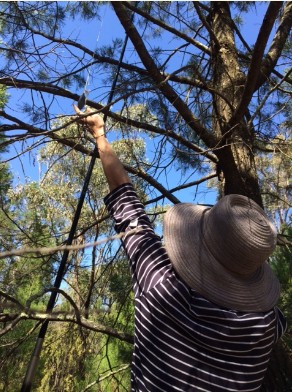
And I like your approach to antennas; I use the ZS6BKW doublet – which works really well…. but it’s a ropes-up-the-trees with a centre squid-pole arrangement. It takes me at least an hour to get on air every time…
Even with an arborist throw line and my handy-dandy rope retriever! I’m going to try something quicker in future.]
Thanks to Ross for yet another terrific article. If you’d like to have a go at putting something together for RagChew, please let me know so we can share more thoughts and ideas; email to cqqrsnet@gmail.com

Brain teaser
Jules Perrin JP VK3JFP has created a terrific resource to help guide learning for all levels of amateur radio licenses: https://Awww.julesworkshop.net/Amateur%20Radio.html With thanks to Baz VK6MU for he idea, and Jules for the good learning website, here’s this week’s quiz questions from Jules’ Workshop example test questions:
Exam Questions:
What is a signal bandwidth? Which of the following is a type of electrolytic capacitor? * plastic + mica * tantalum * ceramic The AGC system in an AM receiver works by sampling the level of the: * carrier * modulation * frequency * deviation How did you go?

Answers from last week’s Quiz:
What does “frequency deviation” mean in regard to an FM signal? ‘Answer: Frequency deviation is the amount the cartier wave changes in frequency with a modulated signal.
What type of modulation system changes the amplitude of an RF wave for the purpose of conveying information? * frequency modulation * phase modulation + amplitude-rectification modulation + amplitude modulation Answer: amplitude modulation The three electrodes of the Silicon Controlled Rectifier (SCR) are: * source, emitter and base * anode, cathode and grid * anode, cathode and gate * source, drain and gate Answer: anode, cathode and gate VK3NNN wishes to make a test with a new transmitter on 28.45 MHz.
Which procedure is correct? (a) Say the word “Test” three times and then leave the carrier running 10 minutes (b) Monitor the frequency, send the word “TEST” in Morse code, and send a series c “CQ” (c) Monitor the frequency, and announce the callsign every 10 minutes and state tha the transmission is a test (d) Announce “VK3NNN testing” three times and then let the transmitter run for 15 minutes Answer: (c) Monitor the frequency, announce the callsign every 10 minutes and state that the transmission is a test
How did you go?
Di-dah-di-dah-dit
So back to the Slow CW QSO practice net.
Next Tuesday’s Net
Our CQ QRS Net will be on as always on Tuesday from around 0700Z until about 1300Z; see below for details. Doesn’t matter whether you’re brand new and want to try just exchanging callsigns and RST reports, or you’re ready for a good old rag chew.
We’ll have fun. Reports Please let me know via our Reports form bit.ly/CQQRSNET who you work or hear on Tuesday’s net.
Our CQ QRS Net will be on as always on Tuesday from around 0700Z until about 1300Z; see below for details. Doesn’t matter whether you’re brand new and want to try just exchanging callsigns and RST reports, or you’re ready for a good old rag chew.
Post Mortem
Richard VK6HRC will run our Post Morsum on the South West AllStar net (via repeaters and hotspots all over WA) from 0600 WA time. If you’re in WA, all you need is an FM 2m or 70CM transceiver and an AllStar node nearby.
If you’re elsewhere in the world, you may be able to connect your local AllStar-enabled repeater to the net, or you can connect via Echolink. Let me know (cqqrsnet@gmail.com) if I can help with that.
Teamwork
Thank you so much to our team of 23 contributors: DL3YZ, VK/MONNK, VK2DLF, VK2EBN, VK2KI, VK2NNW, VK3ACU, VK3BAP, VK3DRQ, VK3JFP, VK5AO, VK5KFG, VK6FN, VK6HRC, VK6IS, VK6JDM, VK6KD, VK6KHZ, VK6PZT, VK6QI, VK6WE, VK6ZMS, VK7KPC, VK7WW, ZL3TK GU CW on Tuesday, mb Mark Bosma VK2KI / VK6QI Beautiful South Bowning NSW mark.bosma@icloud.com non impediti ratione cogitationis

An Ode to CW – thanks to David VK3RU: In days of old, when ops were bold, And sideband was not invented, Words were passed by pounding brass, And all were quite contented. – Unknown author
Matching
PSE QRS


As always, for newbies, operating suggestions are available from the operating hints link here: https://www.parg.org.au/_files/ugd/ebe236 3ca5ca08bb38429db4eee524bda2f97a. pdf.
Late Night
There’s usually people around until after 1300Z on Tuesday – so keep calling until you catch someone. I should be on as usual from home in NSW and via the Remote at Bedfordale WA, and I’ll also be watching the proceedings using the VK6QS and Tecsun SDRs in WA and NSW respectively.