Below is a reconstruction of the 2026 12 CQ QRS RagChew newsletter designed to support full text searching. This reconstruction was built using OCR, and will contain errors.
To view the Mailchimp original, click here. To search the entire newsletter archive, click here.
Contents
- CQ QRS RagChew
- New Team Members
- Website
- Post Morsum 18th March 2026
- Reporting
- Sideways Paddling
- On My Workbench
- Capacitors between 1nF and 1uF produce an oval shape, being circular at about
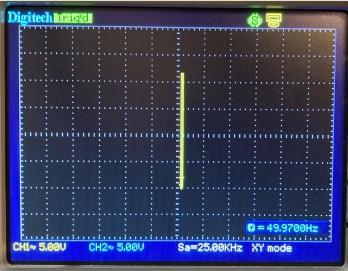
- The oval becomes flatter as capacitance increases, and becomes a vertical line at about 1uF. A low resistance or a short circuit.
- CW Practice
- Other News
- Band Plans
- Another On-Line CW Communicator
- Morse Training Net
- The Long Island CW Club
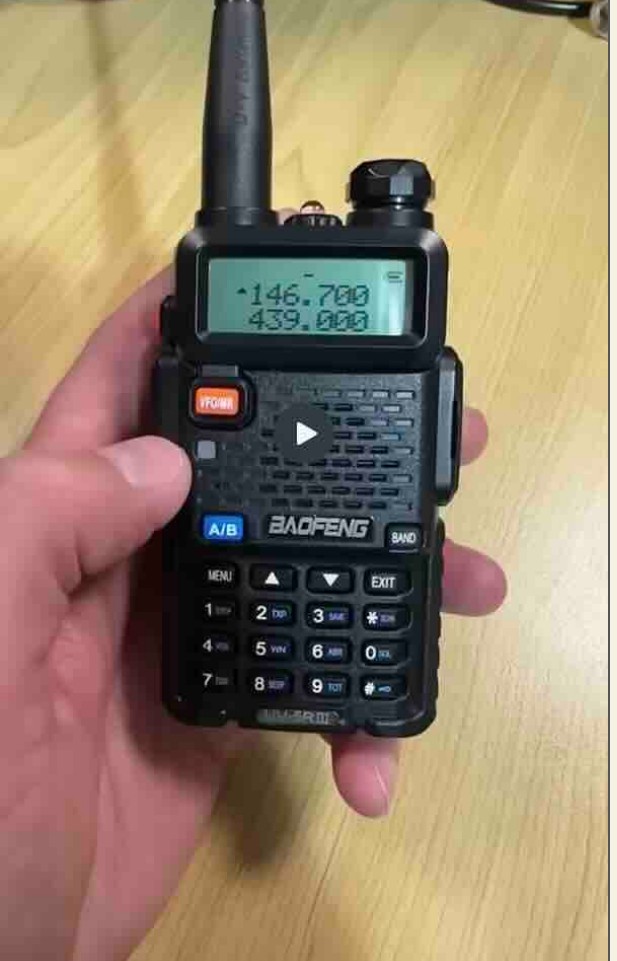
- Baofeng UV-5R – Monitoring Repeater Input Frequencies
- Dual Receivers
- John Moyle National Field Day Contest
- Not Quite Ready?
- Regards Paul, VKSKLE
- RandomGram
- There’s No Such Thing…
- Question:
- Answer:
- Question from RagChew 11/2026:
- Prosign/Character/Signal of the Month
- I Hear Tell…
- Di-dah-di-dah-dit
- Next Tuesday’s Net
- Reports & Photos
- Post Morsum
- Articles
- About the CQ QRS Net
CQ QRS RagChew
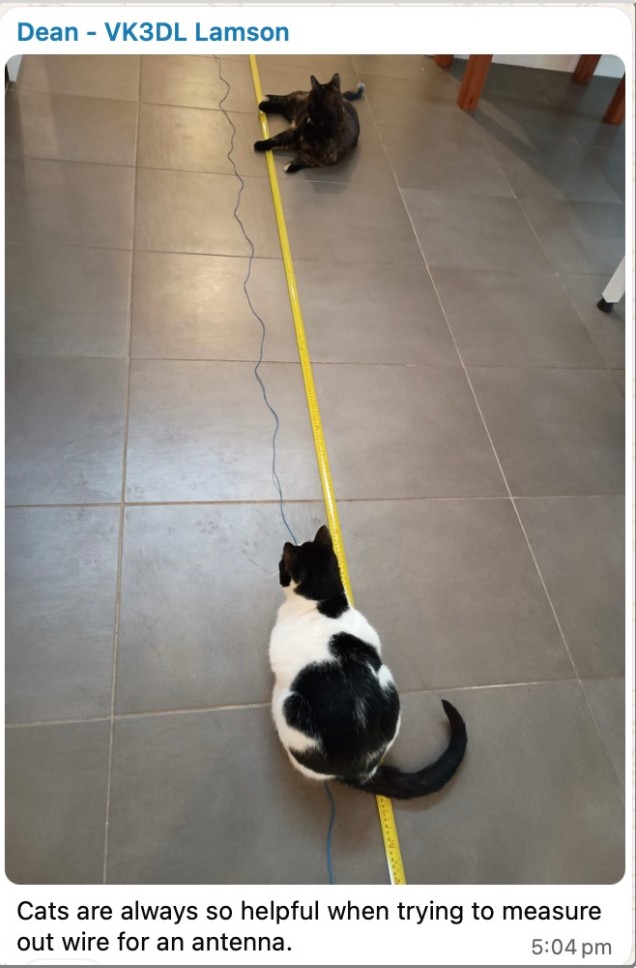
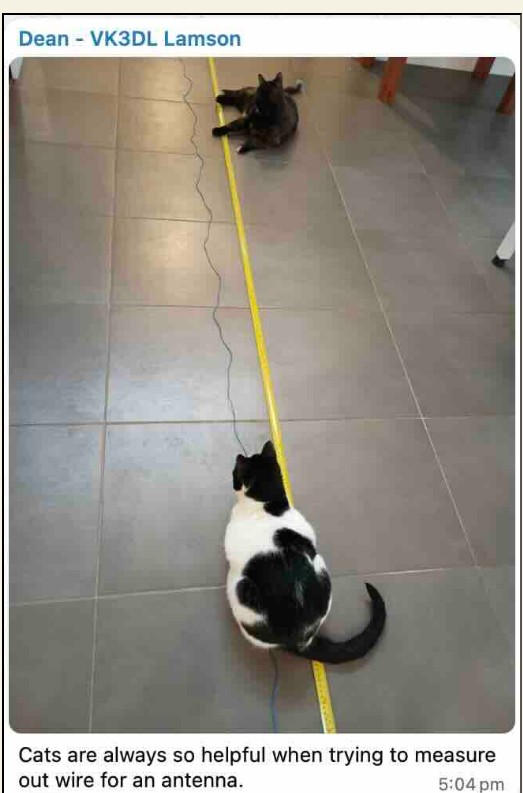
Thanks this week to Dean VK3DL from Geelong for this useful tiy
G’day from what Nigel G4RWI dubbed CQQRS HQ. Well it might be headquatered at Beautiful South Bowning, but in reality – CQQRS is about the 250+ operators and readers distributed world-wide.
I think most people enjoyed good conditions on last Tuesday’s CQQRS Slow CW Practice QSO Net…. the reports that readers contributed this week show that everyone had FUN!
I love going through the log spreadsheet compiled by John VK2RU and reading the reports compiled by Patrick VK2IOW – all from your contributions.
Thank you one and all – your work to send us a report after every net – and make them interesting – is just so good for keeping our team reading and returning when they can on a Tuesday.
So this week we had 75 stations heard or worked by at least 51 of our CQQRS family on Tuesday – isn’t that great? Thank you to the 40 people who contributed written material for this week’s RagChew as well – fabulous!
We have another thought-provoking article by Ross MONNK – this time about paddle orientation would you believe? We also have an interesting article about a very simple in-circuit component tester from my neighbour (and now SWL) Jack.
Stan ZL8TK tells us about another on-line CW communicator, we leam about the Long Island CW Club, a trick with the Baofeng UV-5R, and Paul VK3KLE tells us a bit about protecting the front-end of separate receivers used when on air.
Paul also provides a hint about pausing if needed when responding to a call. I’m also pleased to see another bundle of responses to some of our previous There’s No Such Thing questions, plus a new curly question – hopefully prompting advice from our trained and/or experienced operators out there; standing-by for advice on the new or older questions please.
So this weekend, the John Moyle National Field Day returns to Oceania. I’d love to see some of our QRS family out there having a go on CW… wouldn’t it be great if we could turn it around, and like SOTA and Parks, make CW de rigueur… and even, preferred!
CW contacts count for 2 points as well. I think many operators (et mois aussi) are turned off these events because of the log- submission requirements; the volunteers who run the contests have a life too – can you imaging manually reviewing the logs, especially where there are so many people who are serious about contests; so I don’t know what the answer is!
However, even if you aren’t going to have a go yourself (either in the field or from home), please help make it worth-while for the CW operators who do – by giving them a call if you hear them calling “CQ NFD” or “CQ TEST’ – all they need is your callsign, a three digit serial number (001, 002, etc) and “QSL” when you copy theirs.
The event is divided up into 8 three-hour blocks from 0100Z; you can re-work a station in each block… I expect things will get busy just before and just after 0400Z, 0700Z, etc.
And if you hear one of our people in the contest, please do not be tempted to post an Alert on our WhatsApp group – to do so could disqualify them – skeds etc are not allowed.
So the fun starts at mid-day (Eastern Australian Summer Time) on Saturday and goes for 24 hours – check it out. So enough hovering… let’s go – please enjoy the read (and let me know if you do or
New Team Members
Welcome this week to my neighbour Jack Child. Jack retired from NASA a while back and moved to Beautiful South Bowning NSW, next door to me.
He has been tinkering with electronics and radio since High School – having built and enjoyed AM broadcast and Short Wave receivers – but never quite made the leap into amateur radio.
These days he enjoys restoring antique radios, but recently bought a Short Wave receiver with a regenerative detector and BFO, and has started listening-in to our get-togethers.
So far, I haven’t heard any forward leakage from the regenerative detector (Donald VK6JDM gave a good account of regenerative receivers in last week’s RagChew in case you missed it)… luckily there’s some IF stages and a front- end in the way.
However, I fear for Jack’s sanity… he may have started learning the Code! So Jack has joined us in style – he’s already contributed his first article – see On My Workbench below. Thanks for the article Jack, and welcome… don’t say I didn’t warn you though!
Website
If you’d like to find out a bit about our net, or would like to pass information to others about our Tuesday get-togethers, here’s the link to our website. bit.ly/CQQRSWebsite So here we go – on behalf of the CQQRS Editorial team, please enjoy the newsletter.
Niall kh DOSITa VK2KI / VK6QI Patrick John Beautiful South Bowning VK2IOW VK2RU NSW Milthorpe NSW on a track somewhere cqqrsnet@gmail.com non impsditi ratione cogitationis Nigel Richard Lance G4RWI VK6HRC VK7TO our other grey nomad Padbury WA Margate TAS
With thanks to Nigel G4RWI’s clever software, and John VK2RU’s spreadsheet work, here’s the 75 stations heard by 51 members of our team on Tuesday:
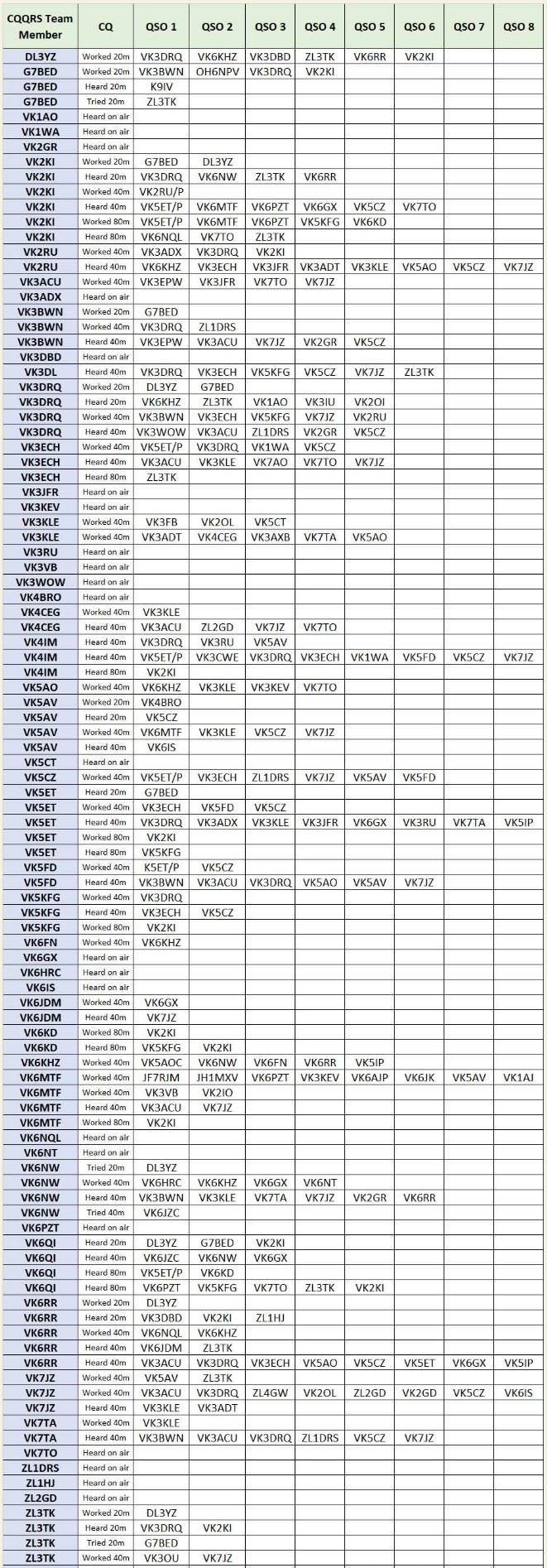
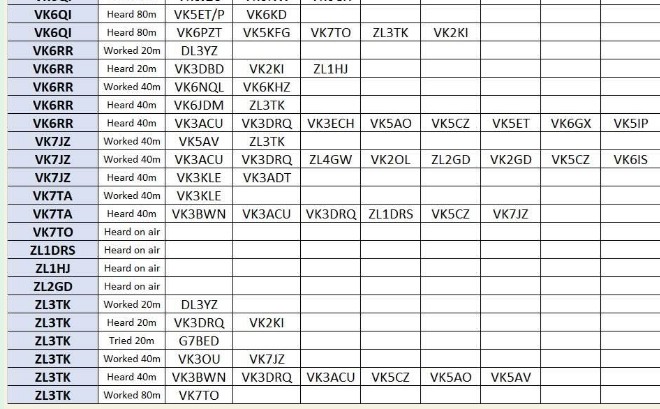
NEE EE SENSE Eke John’s spreadsheet above shows the known stations heard or worked on last Tuesday’s CQQRS Net; the comments in the team members’ reports (also submitted via our webform bit.ly/CQQRSNET ) follow.
The comments were compiled for us by the clever software built by Nigel G4RWI and the layout was perfected by Patrick VK2IOW. Thanks again to Nigel, Patrick and John for the work, and to every team member who submitted a report –
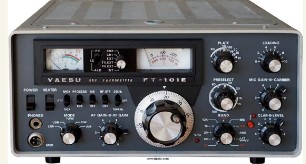
[80m] Hi fellow CW operators. This week I was using my vintage Yaesu FT101E with Drake second rec R4C. Key was a Vibroplex bug. I did send a few errors so apologies to any stations listening. My bug hand was rusty LOL. Most stations were medium strength, not |
[20m] Not great conditions here in the UK this morning, but workable stations were there and fun was had regardless. I started early watching the ‘huge’ pileup trying to work TXSEU on 40m, but thought the better of it.
Then I heard ZL3TK Stan calling me a number of times, but when I replied, somebody else decided to call him back (despite ies Stan, sadly some stations still don’t understand
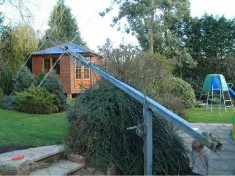
F TUT Sie is by Swat a eile bee basic radio manners. I then picked up ) Mark VK2KI via a WebSDR and had! a brief exchange. Mark was just about audible on my ICOM 7610, but in the end, the WebSDR had to do the leg work – good QSO regardless (thank you Mark).
Then Manuel VK3DROQ called with a great signal (as usual 🙂 and we had a nice OSO straight on the rig. Finally, a new VK call me for me, Ketut VK3BWN with another great signal into the UK. All in all, a good session for me on the straight key …
Something I’m not used to. Many thanks to you all, and Stan, I’ll get you next time hopefully. Best 73.
[20m] The band up here was more noisy than usual. But that didn’t stop us, and I was happy to work stations from ZL tc VK6 during my shift. Thanks for all the calls; it was a great pleasure.
At the end of the last shift, the DX window was already closing down and I was not able to copy the last station calling. Sorry for that. Hope we get better connection next time. Have a great week. M
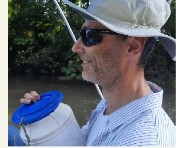
30m] adly, I don’t have an antenna for 80m so signals ere very low
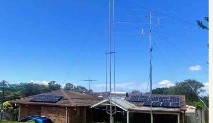
[40m] What a blast. 10 stations worked and 2 heard, all on 40 meters. I am confident this is my best ever turn-out for a Tuesday QRS night.
I think I have had more QSO’s perhaps on CW on an occasional summit activation, but those don’t involve a chat as well so are easier work.
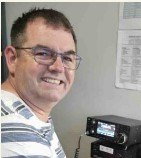
Given I am a regular complainer about my city QRM, really pleased with my QSO into VK6 from my QTH. Done it before from a noise free summit or a noise free park, but never before I don’t think from my QTH.
Thanks all for a really enjoyable night, it was hard work but I loved every stroke of the pen as it went down onto the page and I came away with an intelligible QSO for each one. 73 Jim
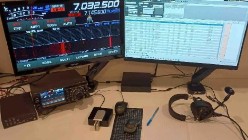
[20m] Two weeks in a row my signals into EU were reportedly better than signals coming south; I hope this isn’ta permanent trend. DL3YZ, Mike’s Live Station Monitor proved most useful to keep a track of things, especially to spot frequencies.
I heard Chris G7BED only well enough to ID him but then 42 QRQ station calling me Deed him out. Chris com BAP ONAN re ee eo ee ee ee een OP Are re.
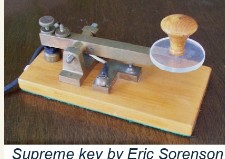
A a ON a Ne QRQ station calling me blotted him aut, Chris commented on the disrespect too; I sent QRL U2 to free up Chris’ channel, but the intruder didn’t ‘show his key’ again.
[40m] Apologies to those I failed to list; put it down to disorganization in the paperwork dept. this week. 40 m looked good early on then at ~ 0915Z went strangely dead.
The usual dead-band symptom of a noisy waterfall was all that could be seen for nearly an hour, then it slowly recovered and revealed a lot of lively intra-VK activity going on.
[40m] Found lots of strong stations across the 40m band, howeve most were not traditional morse with different long tone lengths. Perhaps serial packets in CW format.
[80m] I was getting into the VK4 (Townsville) SDR when self-
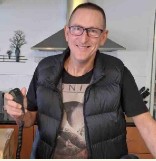
[40m] Conditions were the best I had heard for a while. On 20m I could just hear Mike DL3YZ but could not work him as signals were too weak. On 40m the band was alive and full of QRS net stations. It was hard to finda clear frequency.
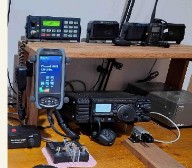
[20m] Conditions seemed to be OK this week, and no doubt the repaired feed-line on my 80m double-extended Zepp helped too. After many attempts, I hooked up with Chris G7BED, sending RSN 521 and receiving RST 229 – tough conditions over there.
A bit later I worked Mike DL3YZ, sending RSN 421 and received RSN 341 in return. I was
Pleased to hear that the hour they both spent listening for our weak signals was rewarded with a number of Oceania stations, stretching from ZL to VK6. Thanks to Chris and Mike for being on the other end of our experiment again.
[40m] kicked off the net with a nice long rag-chew with John VK2RU who was heading North for the Winter. We both enjoyed the good conditions on 40m this week.
Just before heading off for the 20m DXperiment, at 0720Z I noticed that the band was just starting to crack open to WA – Phil VK6GX ay Gidgegannup was working Wayne VIK6NW at Bridgetown and they were starting to trickle through over here.
After dinner I returned to 40m and enjoyed listening to the QSOs; when Lance VK7TO sent “QSY 80M”, I decided to go through the band-change process and had a listen there.
[80m] After lots of antenna coupler and noise canceller adjustments, I could hear both Lance VK7TO and Stan ZL3TK in QSO – both with nice RSN 572 signals.
I hada laugh when Lance sent
I sent a few CQQRS calls and was rewarded with a call from Richard VK6PZT at Bunbury; Richard was one of our founding members, and it’s always nice to chat to him, Being just after sunset on the WA coast, conditions weren’t favouring propagation in the West; we were both Q3, and I noticed that Richard’s signal into the VK6SEG KiwiSDR at Northam was still pretty marginal.
After Richard I had a chat to Morgan VK6MTF who was running 10W from his portable location near Albany I think, but conditions were on the improve because he reported that I was S7.
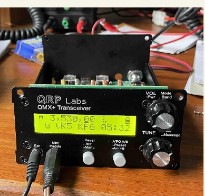
I enjoyed a nice rag-chew with Greg VK5KFG at Willunga (running 4 Watts from his QMxX-plus) who suggested that he might need help of some sort – having just started building yet another QRP-Labs transceiver kit!
After Greg, I had another long chat with John VKSET, who was operating PIMBY – portable in his back yard. John was a solid RSN 591, but he reported only RSN 444 in return. I had told Greg that it was time for zzzs, and told John the same…
But as I was packing up I heard David VK6KD calling CQ, RSN 542. The last time I’d hooked up with David was back in October – so I couldn’t miss the opportunity to have a quick chat.
I was marveling at how nice his IC-7610 sounded on CW; I think there’s some waveform shaping in that transmitter – the CW characters had a kind of soft sound – nice.
However when David had an over, the first half was completely unreadable – the signal had dropped considerably. A check of the Hoddys Well KiwiSDR showed a return of a problem he’s had before – he was emitting three carriers, one on frequency, and the other two 600HZ above and below.
The problem suddenly disappeared part way through, and his signal returned to Q5; looks like the problem he’s had before with his external phase-type noise canceller not solidly switching on transmit (possibly RF getting in?) had returned.
Well strangely, an over or two later while transmitting from here, my brand-new noise canceller also tumed up its toes! The bypass relay decided to stop activating when the PTT line from my transmitter went low – and I managed to let the smoke out of a second noise canceller in six weeks!
And this time, Nigel G4RWI was nowhere in sight – couldn’t blame him, considering he’d just arrived in Tasmania.
[20m] Good to hear that the band was open long-path into WA this week.
[80m] Terrific to hear more stations returning to 80m for the net again; band conditions were good across Australia and into New Zealand; roll-on the end of Daylight Saving!
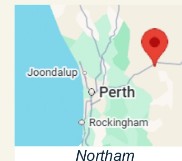
[40m] I had no noise with my first QSO with Mark, but later on with Merv and Manny the noise came back in and made it difficult to hear, but still good fun.
It was great to have three rag chews totaling 85 minutes, which is a bit more challenging than just a quick exchange of basic information.
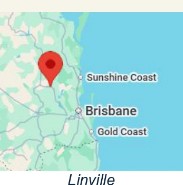
[80m] Plenty of good SSB sigs further up the band but no CW stations heard. I called on 3528 but no takers. The 80m band plan allocates 3535-3560 to SSB (as well as CW) so I would suggest moving QRS activity below this.
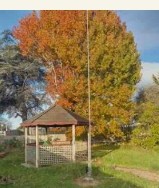
[80m] QRP tonight with the QMX+ running off an 8 AA NiMH battery pack providing (thereabouts) the required 9v supply. Output was just over 4w on 40 and not quite 5 on 80. Conditions were good. Great to hear Manny on 40 and Mark on 80.
Mark said that he had a QMX kit waiting to be built. I did warn our dear leader that these kits can be addictive. Thus far I have put together 5 of these kits and have a 6th underway. |
[80m] I didn’t get home until after half-past NZ midnight. I had a quick listen on 40m, but couldn’t hear anything I’d class as QRS. I plugged in my 80m antenna anc checked the band.
I could hear a good ORS transmission, but didn’t listen long I Pea mand HAIR a= HARA TG

[20m] Very surprised and happy to have worked Mike DL3YZ on 14.047 kHz just before 8.00 UTC.
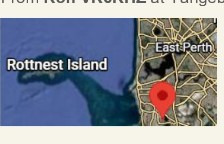
From Donald VK6JDM at 20 km west of Esperance
[40m] We had visitors coming to stay so did not have much time. Put out a 5 watt CQ and up popped Phil VK6GX. We had a QSO ata bit over 10 wpm which I managed to get 90% of, which is a great improvement on my past receiving ability or rather receiving disability.
Just as the QSO ended the visitors arrived and so I was able to slip out of the radio room and pretend I was a normal member of society; or so I thought.
The brother of one of our visitors, it turns out is a ham in Ireland, so questions arose as to the purpose of the towers which led to request to see the room. Now the room looks like a consequence of a deeply sick brain interacting with ele
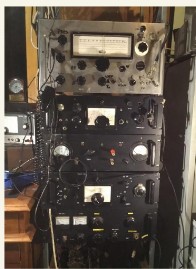
[40m] As always great hear everyone happily chatting away!
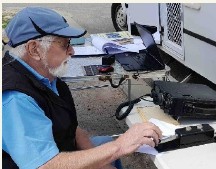
[20m] It was nice to be able to work the two OMs Mike and Chris on 20m. They both were RSN 331 QSB but while Mike gave me 531, Chris gave me just 339. Again, time well enjoyed.
[40m] It was another enjoyable time on QRS CW. Many nice OMs came throuach and even mace me fee| ie
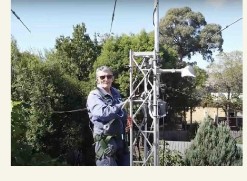
[40m] Great conditions tonight on 40 m with contacts all over the country. Great to work my first Japanese DX from a park with just 10w into an EFHW antenna. I was late setting up this week but very glad I made the effort in the end.
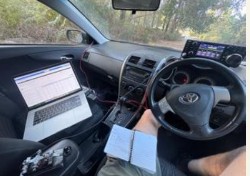
[20m] On VK5PH Ironstone Range KiwiSDR I managed to hear Chris, G7BED on 20m getting an early start, sending out CQs.
[40m] Heard other stations on 40m with good signals before going “Back Yard Portable” in tent. I did a bit of experimenting to see what and where to put the HF gear
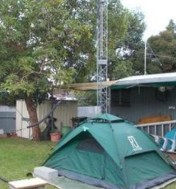
In the tent; a bit squeezy and not comfortable for long periods. There was a lot of hash noise most of the night, possibly due to the temporary feedline configuration.
[80m] On 80m I could only catch bits and pieces of Greg, VK5KFG talking to Mark, VK2KI, who was marginally better than Greg. Weird signals, great signal report from Mark, but he was weak to me???? Good QSO with lan, VK5CZ who had the strongest signal on 80m.
Good to catch up with Allen, VK5FD, who had a fair signal. Also had an interesting chat with Rob, VK3ECH about his callsign and using paddles; I am still learning to use my paddle. My old Clipsal straight key is my favourite. 73, John
Post Morsum 18th March 2026
From Richard VK6HRC. Seven on the VK6RLM rpir and AllStar/Echolink hub this morning.
NP EE NEE REN WANE Bee ZL38TK = Stan VK6KD David VK6NW Wayne VK6QI_ = Mark VK6BQQ Reg VK6HRC VK6MRB Mulligan swl.
At the top of the list this morning Stan let us know that the 20m slot was busy and made use of the status monitor maintained by Mike DL3YZ. On 40m busy at times and part of the way through vey quiet and then busy again, meal break or propagation ?
David had a great ragchew with Mark VK2KI on 80m, tuned across 40m and heard the QRM from multiple stations higher up the band seeming to be transmitting the same data. Stan let us know that it is wide FSK.
Wayne worked four on 40m enjoying the low noise and East West propagation, with a bonus very enjoyable ragchew with Phil VK6GX. He was just hearing Mike DL3YZ on 20m. Wayne is going off on a field trip so no QRS for a while.
Mark called in from a cool and overcast Beautiful South Bowning to report that he worked two on 20m heard four, heard eight on 40m and a sixty minute ragchew with John VK2RU whom is moving on soon. On eighty heard three had good ragchew with David VK6KD.
Reg was given a rundown of what we were up to, his experience of morse was during his time with Canadian Airforce reserve wing a while ago.
During the Post Morsum David mentioned that his noise canceler was not performing as it should and Mark let the smoke out of his new unit !
So Stan came to the rescue with a lot of good information about the cheaper units and recommended the locally available more expensive but better kits from VKB. A most enjoyable get together this morning, thank you. Richard IThanks for vour hard work mate.]
Reporting
After next Tuesday’s Group, please remember to send me a list of who you worked and / or who you heard using our web form here:
Even if you didn’t hear anyone, we’d still like to know that you had a go. And to make your report more interesting, please consider sending a photo to be attached.
If you have a photo (compressed if possible) that you’d be happy to include, please email it to: cqgrsnet@gmail.com So, please help attract new and old team members to have a go by submitting your report each week.
Submissions close 1300 (Eastern Australian Summer time)_on Thursdays.
Sideways Paddling
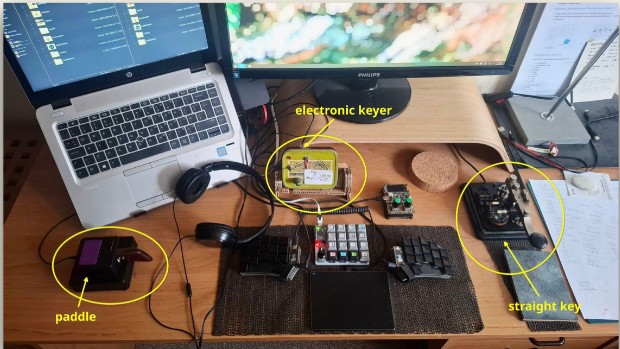
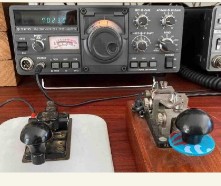
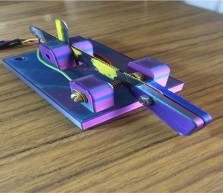
RagChew’s mobile-fiandly, long/narrow format doesn’t lend itself to busy photos but I hope the image above gives you some idea of the layout of my Shack Desk. “But where is your radio?’”, I hear the eagle-eyed amongst you ask.
The answer, given that I can’t operate radio from home, is that it’s sleeping in my shopping trolley, ready for its next Portable outing.
My Shack Desk, as you may therefore have guessed, is purely for Vband internet, Morse code, and so this is where my wonderful modern paddle and my much older straight key reside.
It’s also my main “work” desk (if a man who is retired can be said to do any workl) hence the rather unusual cluster of keyboards and input devices on the black mat in the centre.
The eagle-eyed will also have spotted (full marks for observation BTW) that the orientation of my paddle is at right-angles to my straight key, and we come (the clue is in the title above) to the subject of this article. I’m right-handed.
And that’s the reason why the straight key is on the right-hand side of my desk. My paddle, however, is on the left-hand side. Why so?
I know that 99.99% of radio operators have their paddle towards the upper right-hand side (if they’re right-handed) with the paddles pointing towards them.
But this has always felt awkward, requiring me to crank my upper arm, elbow and wrist around to an uncomfortable degree.
Also, in the days when I used a conventional computer mouse, the right-hand side of my desk was where that lived – another reason why that wasn’t a convenient location for my paddle. So I placed it on the left-hand side instead.
Now my right forearm and wrist lie comfortably across my body. I don’t find the forward and backward motion of my paddle wrist at all strange. It felt right, right from the start.
Given the cramped nature of my Portable lap desk, I’ve also started using this “cross
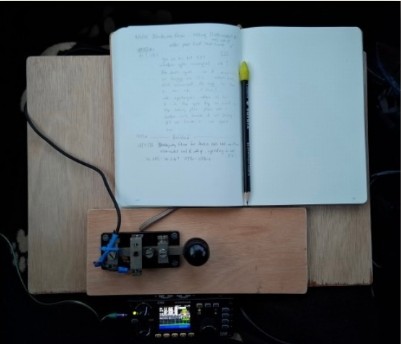
I’m not advocating this arrangement as a universal improvement for all operators (| doubt I’d get much buy-in anyway) but I’m offering it as an example of thinking about the ergonomics of your own operating environment and not just adopting the “received wisdom” coming out of the hobby.
Am I alone in arranging my shack desk (and now, my portable desk) in this way? Does anyone else find the “upper right” an awkward location for a Morse paddle? Answers on the back of an envelope addressed to the Editor.
I’d love to know that, for once, |’m not paddling along a lonely backwater.
If you have an article or two that you think might be of interest to our readers, please let me know so we can share more thoughts and ideas; for guidance on writing for RagChew, see Articles below. Please email material to Mark VK2KI: cqqrsnet@gmail.com
On My Workbench
An In-Circuit Component Tester ym SWL Jack Child – Mark VK2KI’s Neighbour
A few years ago I was repairing various electronics in a shop in Canberra and was wondering what the ‘component’ function on the CRO might be used for.
The owner, Claude Hastir (VK1TE), explained how it worked so I began using it to trouble-shoot solid state amplifiers. I was always curious as to how it worked. and recently did a little researching.
Turns out to be a very simple concept, so I’ve provided the details in the attached schematic.
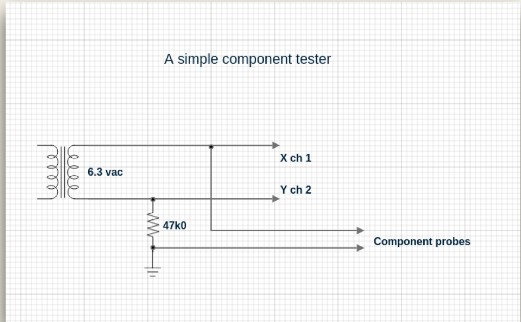
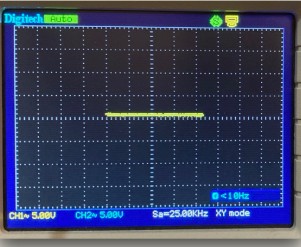
What’s most useful is the (limited) ability to test components while still in circuit. The patterns observed on my ‘scope are as follows: + Capacitors less than 1nF, high resistance or open circuits result in a flat horizontal line.
Capacitors between 1nF and 1uF produce an oval shape, being circular at about
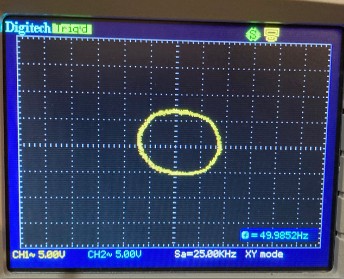
The oval becomes flatter as capacitance increases, and becomes a vertical line at about 1uF. A low resistance or a short circuit.
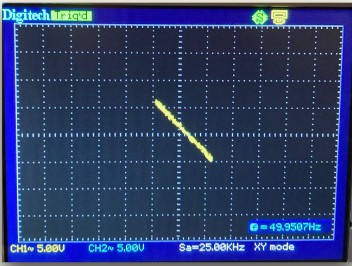
• Resistors greater than 4MEG result in a horizontal line, whereas low values (or shorts) show a vertical line. A slope becomes apparent at about 1k, rotating to 45 deg at 47k ohms
• Out-of-circuit diodes and transistor junctions exhibit an L-shape – vertical when conducting, horizontal when not. These shapes vary greatly when in-circuit but still can give a useful indication of the component being tested.
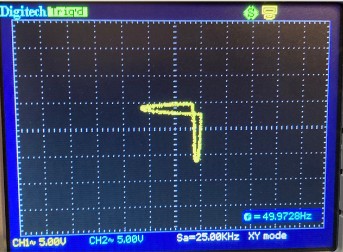
Please let me know if you find this useful. Email to Mark and he’ll pass your comments to me il SWL-Jack [As I said at the start, Jack retired from NASA JPL and moved to Beautiful South Bowning NSW, next door to me.
Jack has been tinkering with electronics and radio since High School – having built and enjoyed AM broadcast and Short Wave receivers.
These days he enjoys restoring antique radios, but recently bought a Short Wave receiver with a regenerative detector and BFO, and has started listening-in to our get-togethers. I fear for his sanity though – he may have started learning the Code!
Thanks for the article Jack, and welcome… don’t say I didn’t warn you thoughl]
What’s going on on your workbench? If you have an article or two that you think might be of interest to our readers, please let Mark VK2KI know; email to cqqrsnet@gmail.com For guidance on writing for RagChew, see Articles below.
CW Practice
This year we’re using Aesop’s Fables. These are short moral stories, often using talking animals, that illustrate simple truths about human behaviour and character.
‘Aesop’s Fables originated in ancient Greece, traditionally attributed to the storyteller ‘Aesop who is thought to have lived around the 6th century BCE.
The fables are generally smaller files of two to three hundred words that have been recorded at 15 wpm and run for about 15 minutes.
If 15 wpm is a bit quick for you, load it onto your phone and set the playback speed at 0.75 X or even 0.5 X- whatever works for you. 0.75 X will play the MP8 at a bit under 12 wpm. Itis suggested that you read the text file before listening to the audio file.
That will make it easier to follow the audio file and prepare you for any unusual words. Any punctuation that is not usually used with CW has been removed. This week’s fable is ‘The Hawk and the Nightingale’, and the MP3 and TXT files are attached here –


If you prefer a different speed or tone you can create your own MP3 files by converting the text file with the Ebook2CW app — https://fkurz.net/ham/ebook2cw.html.
You can either play the MP3 files in any media player, or load the text file into the Ditto CW: Morse Player app — https://dittocw.andro.io/.
Both options work well, however Ditto CW gives you complete control over all Morse settings, while a normal media player only allows changes to playback speed, and does that in steps (e.g. +1.25x, 1.5x, 1.75x).
Other News

Band Plans
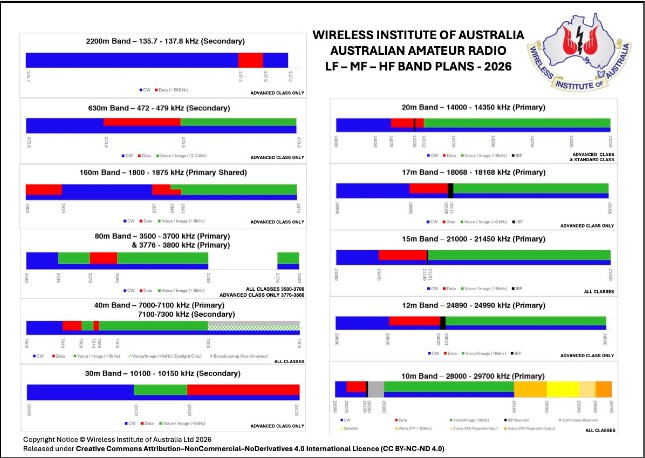
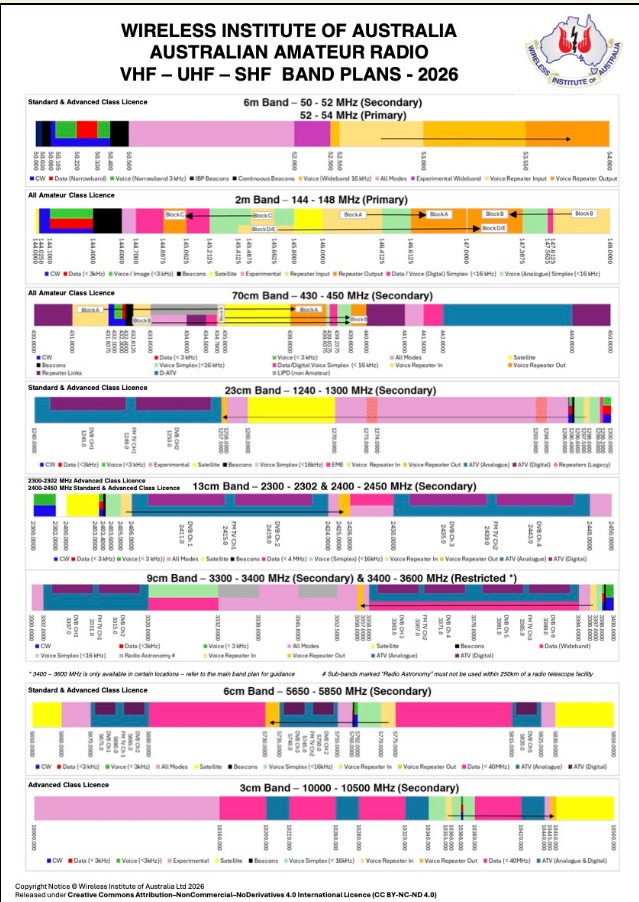
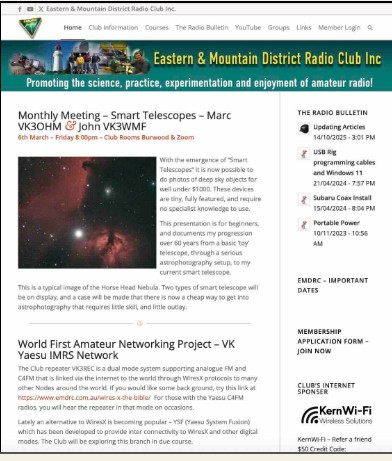
RagChew 10/2026 reported that the WIA Technical Advisory Committee had completed the latest band planning activity and published the results here: hitps://Awww.wia.org.au/members/bandplans/data/ Here’s the new downloadable Australian Band Plan Posters – click each to download:
Another On-Line CW Communicator
From Stan ZL3TK Created by Jingu JI1JDI, an online CW communicator with basic functionality equivalent to VBand and Vail, entered the field in 2021 but seems to have gone largely unnoticed.
Ditdah Chat has a clean-and-tidy presentation with a built-in choice of Japanese or English, should one wish to activate (Shinto forbid!) the decoder print-out field.
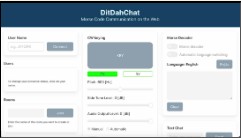
Create and name your own chat rooms, but unlike Vail, it seems they’re not private. In addition to the usual [modified] mouse keying, there is a built-in keyboard-style adapter for use with paddles. Here’s the surprise!
Connection for paddles can be via a standard Prolific RS282-to-USB converter cable using only two pins and ground of a DB-9 socket. A ubiquitous VBand adapter can also be used. Apologies, I may have missed some juicy details.
Google translate doesn’t do much of a job on the Japanese user manual, making it difficult to interpret the meaning of resulting fragmented English. There might be a better J-to-E translator somewhere.
Notwithstanding the language difficulties, Ditdah Chat is the place to go for online Japanese CW contacts, when operators with a knowledge of English are available.
It’s well worth a look because Js are seen infrequently online otherwise – goto – https://ditdah jp/ditdal 73 es 77 de Stan
Morse Training Net
Our team member Nic VK7WW runs an on-air Slow Morse training net every Wednesday at 7pm EDST on 3580 for 30 mins. He uses the callsign of the Northern Tasmania Amateur Radio Club VK7TAZ on that net.
Many of our team learned Morse code with the support of Nic, and the weekly training session comes highly recommended for anyone who wants to learn the Code, or simply brush up.
Everyone’s welcome – 3580KHZ at 7pm Eastern time every Wednesday; you’ll hear lots of the CQQRS team on that net. Jordan VK3ACU has recorded the complete set of lessons which you can now find here:
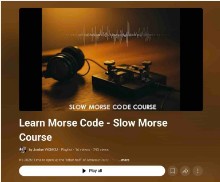
Https://www. youtube.com/playlist?list=PLHsQmZz6fBXO7swAfbT mutrbbEL17fUQL Contact Nic VK7WW for more info nicholaschantler@hotmail.com including how to join the NTARC DISCORD group to follow the action, or just come along and join in on Wednesdays.
The Long Island CW Club
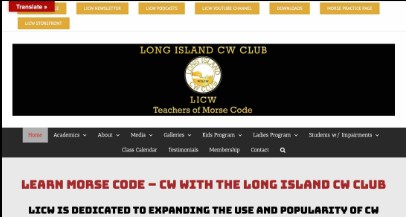
G’Day Mark, I understand CQQRS will be joining the International CW Council. I would like to also introduce you to the Long Island CW Club (LICW).
LICW is an online Morse code training community dedicated to helping everyday hams become confident, capable CW operators through structured instruction, strong mentoring, and a welcoming culture.
We offer a full progression of classes from beginner through advanced, supported by experienced instructors and an active community of learners.
We have approximately 8,000 members in 70 countries around the world, including approximately 100 in Australia and 9 in New Zealand. We conduct more than 180 classes per week, including Beginners classes at times that are convenient for Oceania.
Our teaching philosophy is grounded in real operating skill. We emphasize hand- sent, head-copied CW — learning to send with good rhythm and intent, and learning to receive by sound rather than through visual decoding or text dependence.
Our goal is not simply to help people get by with Morse code, but to help them become comfortable, fluent operators who can actually use CW on the air with confidence. That approach is reflected in our student body.
Roughly 60 percent of our active students are pursuing Intermediate and Advanced classes. In other words, LICW is not just introducing people to CW; we are helping them continue the journey toward real conversational head-copy proficiency at conversational operating speeds.
We also believe training should lead to operating. To that end, we have built strategic relationships with groups such as SKCC, POTA, and the QRQ Crew.
LICW provides the training foundation; those communities provide rich on-air opportunities and operating culture. We see that relationship as highly complementary, and we would be very interested in exploring a similar relationship with CQQRS.
If that is of interest, I would be glad to meet on Zoom to discuss how LICW operates,
How our classes are structured, and how we might better support operators in your part of the world. 73, Mike N1CC Long Island CW Club
Baofeng UV-5R – Monitoring Repeater Input Frequencies
Dual Receivers
From Paul VK3KLE at Stawell Have been running a very vintage setup this week. After more maintenance I’ve put a vintage FT101E on the bench with a Drake R4C second receiver.
Last night I discovered a cheap but surprisingly accurate DDS VFO I got of eBay works nicely into the inj port on the Drake. Running seperate RX and TX it’s very helpful if one of the two has precise frequency accuracy.
I did try the DDS VFO on the FT-101E TX side. Unfortunately it’s getting RF hum. Probably needs common mode decoupling. I tried a .01 uF ceramic cap without success, just in case there was a DC path.
Manufacturers use short path RF low level connections for a reason. can say it’s a very pleasant experience listening to your own recovered CW keying on a seperate mostly muted RX. A very different experience from an internal code oscillator.
It also allows you to check the netting of both stations. Some are so far apart in old equipment that hasn’t been checked, that they are 500 or more Hz away – practically working split.
The good ham practice of always having a reasonable station monitor receiver will of course pick this up. Just a short wire is all that’s needed. Strong hf stations will be heard too.
Areminder about using any modern rigs and surface mount PCB as a station monitor connected to a long antenna…. DON’T DO IT! The small resistors and tiny tracks on PCB can’t handle Watts of backward RF from the Tx tig => rig death very quickly.
I made up a duel back-to-back LED protector on a RCA plug that pops into my restored FT-901 in case I forget. The RX port LED and a shunt 50 ohm resistor dissipate 1 Watt of RF into the resistor without front end harm.
It plugs into the RX Out port on the FT- 901DM. A green led has a forward voltage drop of about 3 volts. A pair back to back
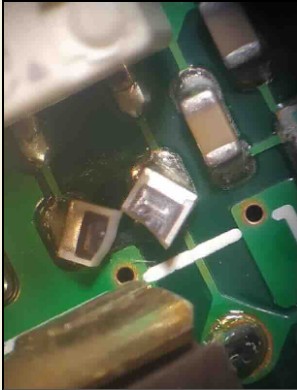
Smoke let out of a front-end attenuator resistor {source VK6LD).
Does dissipate a little RF without damage . Yes they definitely glow bright in my shack sometimes on 40m . I’ve measured RF input using a RF power meter on a dipole adjacent to a TX antenna – the RX antenna terminated with 50 ohms.
2-3 watts back RF is not unusual from a 100 Watt TX near field antenna. My QRO vintage TX probably a lot more, they could TX around 200 W. That I sq R heat will definitely blow a modern rig’s attenuation CCT to soot. The smoke will blow without any hesitation.
There-after is the first RF amp FET and first mixer, neither can dissipate 1 Watt of input RF. My TenTec Omni V has two sets of four U310 FETs in parallel in the front end.
The manufacturer advised it’s to try and dispute any high level RF the front end may get in service. There is no adjustable RF gain, just an attenuator to set the mixer level in range. The RF gain is actually IF gain and the AGC is audio-derived.
Ithas some temp drift hot to cold, no temp compensation on the local oscillator crystals. Overall it’s a good CW rig and it’s TX stability is ok for the era.
It’s nothing like my TS-580SG – which has practically no drift hot to cold into a good HP frequency counter. The Kenwood has zero front end protection. By the way my improved FT-901DM has sensitivity on all bands around 0.2uV.
That rig was more than 30 years ahead of technology when made, and is also a fine vintage CW rig. The one shot internal DM VFO is very stable for CW TX. The 3SK51dual gate MOSFET IF amp is probably the next best thing to tubes.
It has a car hifi audio amp producing decent level quality audio at the speaker. Also almost no headphone thumps TX to RX – zero if using the audio bandbass filter. By the way with your own vintage rig.
When you you get your soldering iron hot I’d recommend using 50v tantalum capacitors where you can. Most caps in DC rigs except for driver and pa are low voltage ie 12v. 50v is enough headroom.
For any 1uF coupling caps like audio path and IF board, go for wima metal poly film caps. Hope the rig tips info is of interest and a help to our readers in their shacks Regards Paul VK3KLE
John Moyle National Field Day Contest
Vonhn Moyle National Field Day Contest This weekend – March 20TH & 21ST The John Moyle National Field Day contest is on this weekend. I hope that many of our QRS team will get out there and have some fun – demonstrating the terrific come-back of CW in Oceania.
If you can’t get out into the paddock, park or mountain-top this weekend, perhaps you might support those CW operators who do, and have a listen to the CW segments between 0100Z on Saturday and 0100Z on Sunday for any CQ TEST or CQ NED calls.
Bands are: 160, 80, 40, 20, 15, and 10 meters on HF and 50MHZ to 241GHZ on VHF/UHF/SHF (no WARC bands). The event is divided up into 8 three-hour blocks from 0100Z; you can re-work a station in each block…
I expect things will get busy just before and just after 0400Z, 07002, etc. Just respond with your callsign then be prepared to receive a three digit serial number and reply with one of your own (starting with 001).
No need to send an RST or RSN – optional of course, but redundant for the field station’s purpose. If you’d like more information, the rules are here:
In last week’s RagChew 11/2026 we provided a helpful logging spreadsheet template for those of us who don’t have the patience for logging software.
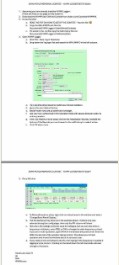
However, if you do use a logger, the WIA has published a how-to setup guide for the John Moyle Field Day logging programme N1MM. Click on the image to the left.
And from Bob VK6POP: I had issues..it cost me several hours today so: Install nimm, and not the update (yet) – when asked to nominate a folder, MAKE SURE IT’S NOT 4 ONEDRIVE folder. After you’ve completed the configuration, close N1MM and install the update.
Not Quite Ready?
From Paul VK3KLE at Stawell I do have a suggestion regarding how to commence a reply to a call, if caught not quite ready.
Then if you still need to tune, tweak or clean your key contacts, send a series of the letter V couple of rounds or so. This is an expected response.
Some operators are unsure and send broken characters or half sentences etc, then recover half-way into the over. With practice you’ll be able to send Vs with one hand without thinking, allowing a whole other hand to do what ever else is distracting you.
After sending your couple of rounds of letters V then begin with call sign exchanges, ending with AR then KN to indicate which station is to respond. As long as you have initiated a response a few short carriers for tuning is also expected.
However random bits and bobs isn’t that good at the receiving station end. Another reply might be “pls QRX for tuning” (or
Regards Paul, VKSKLE
RandomGram
RandomGram has come around again this weekend. It’s event # 41 in the greate: scheme of things. Hopefully more from Oceania will be on than ever before. RG #41 starts March 21 @ 22:00 UTC.
That is Saturday evening through Sunday fo most (Sunday morning in Oceania). Code lists are available now. You can request a list by replying to this email or to RG+owner@groups.io This will be a 24-hour event with five-character alphanumeric groups.
See the full description at https://groups.io/g/RandomGram/message/657 73, Drew/AF2Z RG Event Mgr
If you’ve read something that you think might be of interest to our readers, please let me know. For guidance on writing for RagChew, see Articles below. Please email material to Mark VK2KI: cqqrsnet@gmail.com
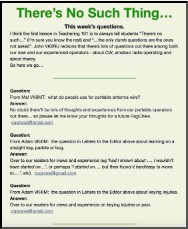
There’s No Such Thing…
Pho WEEN 2 YMC UlIViios I think the first lesson in Teachering 101 is to always tell students “There’s no such…” (I’m sure you know the rest) and “…the only dumb questions are the ones not asked”.
John VK2RU reckons that there’s lots of questions out there among bot our new and our experienced operators – about CW, amateur radio operating and about theory. So here we go…
Question:
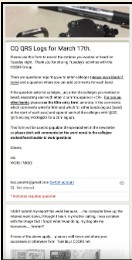
MIUCSUUT, I am trying to fill up my results from yesterday but when I open your reporting page to do so, the page is still with the information I provided last week !!! Please, can you help? Manny VK3DRQ
Answer:
ATISWECT. You’ve discovered one of the Google Forms undocumented features – previously cached data from your computer may populate a new form. © @@
• Please try closing the web browser tab completely, then re-opening a new one from bit.ly/CQQRSNET. * If that doesn’t work you could try to ‘clear the caches’ in your computer – the machine remembers what you entered last time, and is trying to be helpful by re-loading that material!
To clear the caches, the best approach is to do a Google Search on ‘Clearing Caches in a PC running Windows version …, MacOS version… etc’. * Iffor some reason that doesn’t work, you may have to close the Webform window, then shut the PC down and re-start.
The Google Webform sometimes also replicates previous weeks! entries in the database – but you don’t get to see it! Patrick VK2IOW and John VK2RU then find it when we do the download and processing – which is a real challenge – what’s old and what’s new?!
Painful right? Please let me know how you went. By the way, our reports wrangler Nigel G4RWI (currently in VK7) is working on some delightful upgrades to our system of reporting (the things we do when on holiday)… who says they don’t like software updates?
You, me and everyone else! However, t’s exciting and of course – it’ll make reporting and publishing much nicer for everyone.
Wuesuon. After an existing QSO has ended, if I want to call one of the stations, can I only senc MY call sign followed by K to get his attention? Or should I send the callsign of station I want to QSO with, then my callsign? John VK5ET
nswer: 300D question John. I think this is an it depends’ situation. Here’s my take on it: + if you know that the station you’re after was on the frequency and calling CQ, but was answered by the second station, the gentlemens’ (gentlepersons?) protocol is that the first station has the frequency – if you send your callsign, ideally, the ‘frequency-owning’ should respond.
!f not, try again with ‘VKnAA de
They may or may not have heard or understood you… $0 you might need to drop back and try again after a few calls (unless someone else has started on the original frequency of course).
Note, if the ‘owning’ station is very strong with you, I’d go up further than 2KHZ – so that you’re outside of their USB passband if they don’t have a narrow receiver. + Now, what if you’ve come across the QSO, and don’t know who was there first?
I think I’d treat the wanted station as if they were not the ‘owner’; go with the ‘NBB UP 2 UP 2’. + Now what if you were VKnBB, happily finishing a QSO with VKnAA who ‘owned’ the frequency, and someone callled you but didn’t use the ‘UP2’ protocol?
Outside of our training environment, it would be bad form for you to respond and take over the frequency. I think the best thing would be for you to send ‘UP2 UP2’ to the caller then move up and call the caller or ‘QRZ DE VKnBB’.
* Of course, our Tuesday evening CQQRS Slow CW Practice QSO Net is for both experienced and new operators – so no-one is allowed to get their nose out of joint if someone gets it wrong. Nevertheless, it’s probably a good place to practice the right way.
* And the situation is a bit different on the 20m DXperiment part of our net. Our European operators are in a very QRM-rich (and probably bad-manner-rich) environment; threat them as ‘owning’ their designated sked frequencies please.
It’s bad manners and puts VK and ZL operators in a bad light if people at the Oceania end start a QSO on the one of the designated DXperiment sked frequencies. We don’t want to make things any harder for our mates on the cold side.
Jow all of this is just my own thinking; I’m sure those who, unlike me, were either rained properly or have a life-time of CW experience will have different opinions. I’m een to hear others’ thoughts on this possibly delicate question!
Question from RagChew 11/2026:
From Mal VK8MT: what do people use for portable antenna wire?
From Mal VK8MT: what do people use for portable antenna wire? Answer from Craig VK3CLD at Alexandra: Jaycar speaker wire. Actually I use this same wire for my 20m vertical EFHW at 400W at my QTH.
Answer from Dean VK3DL at Geelong: use Jaycar’s light duty hook-up wire. It’s stranded 13 x 0.12 mm (26 AWG) with PVC insulation. I use it as it is locally available for me, it’s cheap, light, flexible and sufficiently durable for portable use.
Antennas made with this wire have survived many portable operations with routine repairs of terminations along the way. Rolls of 25 m length are currently $5.95 and packs of eight rolls are $39.95.
It’s one of the few things at Jaycar that is cheaper than equivalent options elsewhere. I think it is also available in rolls of 100 m length but the per metre cost is higher for some reason.
You want to avoid anything too heavy even if you’re not carrying it far as you’ll want to throw a line into a tree or hang it from a squid pole.
You also don’t want wire that is too thin/ight – you’ll soon learn how many things there are in the bush for your wire to catch on. For portable use choose brighter colours like yellow, orange or white as they are more easily seen on the ground or in trees.
Save colours like black, brown or green for antennas used at home. If operating portable you’ll be doing lots of winding and unwinding of that wire. Use figure-of-eight winding on a suitable winder.
From Adam VK4IM: the question in Letters to the Editor above about learning on a straight key, paddle or bug. Answer from Dean VK6DL: I’m far from an expert but I think too much is made of this decision.
There is an argument that learning on a straight key helps build the patterns in your mind due to the conscious physical effort required but there is another argument that learning on a paddle means greater early exposure to better formed code.
Both of those arguments sound reasonable. earned first on a straight key and thought that getting used to iambic sending on a paddle would be quite challenging. It wasn’t – a bit of practice over a week or so was enough to feel confident.
At the end of the day sending is relatively easy, copying is relatively hard. How you send just doesn’t matter that much when it comes to your own CW learning. Ihave never used a bug. Each to their own but I doubt that it would be the best way to get started.
I can’t imagine a CW beginner could send pleasing code with one. Apparently some experienced operators can send pleasing code with a bug.
[Do you have a question or two that are worth sharing? How about a discussion- starter? Please let me know cqgrsnet@gmail.com and I’ll pass them to John VK2RU for compilation each week.]
Prosign/Character/Signal of the Month
Frosign: <9AK> go Meaning: End of Contact
[Suggestion – put it on a sticky note near your key as a reminder for Tuesday…. and tell us how you went]
I Hear Tell…
Who was it that had to pause mid-QSO on Tuesday to clear the cat fur from the transceiver? Must have been quite a fur-ball – I wonder how big the cat was?
[If you have some intel about other team members… or even yourself… that’s worth sharing, please let me know cqqrsnet@gmail.com J
Di-dah-di-dah-dit
Next Tuesday’s Net
Our CQQRS Group will be on as always on Tuesday from around 0600Z until about 12002; see https://bit.ly/CQQRSWebsite and navigate to the Net Details page for details.
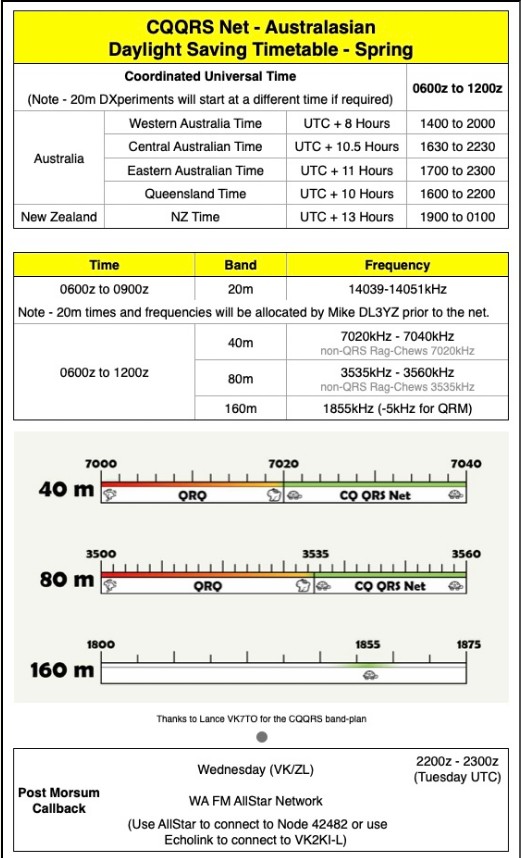
Doesn’t matter whether you’re brand new and want to try just exchanging callsigns and RST reports, or you’re ready for a good old rag chew. We’ll have fun.
There’s usually people around until after 1200Z – so keep calling in the segment of the band designated in the table below until you catch someone. I should be on as usual from home in NSW or via some of the internet’s KiwiSDRs around Australia.
Reports & Photos
Please let us know via our Reports form bit.ly/CQQRSNET who you work or hear on Tuesday’s Group. The report form closes at lunchtime (Eastern Australian time) on Thursday. ‘And how about helping to make the reports even more interesting by sending a photo?
If you have a photo that you’d be happy to include, please email it to: cgarsnet@gmail.com And of course, I’m always on the lookout for more photos for the newsletter, so if you have something that might be of interest aside from the reports, please send it through as well – I always enjoy the photos that our readers send – and I’m sure our readers do too.
Email them to cqqrsnet@gmail.com please. Oh and by the way, I recommend that you don’t keep the Reports Form website open between submission of reports from one week to the next.
If you’re unlucky, there’s an undocumented feature in the software that could cause your current week’s report to be combined with your previous report – it’s happened to your editor several times – much to the chagrin of our Reports editor 🙂
Post Morsum
Richard VK6HRC will run our phone Post Morsum on the South West AllStar net (via repeaters and hotspots all over WA) from 0600 WA time, then from 0700 WA time on 80m (8605 LSB).
See https://bit.ly/CQQRSWebsite and navigate to the Net Details page for details of how you can connect via Echolink or even possibly via your local FM repeater.
Articles
The newsletter is interesting to readers because of the material contributed by so many people – be it the reports each week or the various articles. Could you write a short article or articles for RagChew? You bet! Writing not your strong point?
Don’t worry, I’m very happy to help as much or as little as needed. You can find out more about how to write an article (perhaps even try using an Artificial Intelligence tool?) on the Newsletter page on our website bit.ly/CQQRSWebsite.
Oh, and one more thing (actually two) – copyright material: * please use your own images – don’t use images copied from the internet unless you have the producer’s permission, or they’re marked ‘Creative Commons’ or similar; * if you include other peoples’ written material, unless you have permission, you may only include small snippets (unless it’s marked ‘Creative Commons’ or similar), and you’ll need to site the source and author.
For more guidance on writing for the RagChew newsletter (including how you might even try using an Artificial Intelligence tool?), head to our website bit.ly/CQQRSWebsite then click the menu on the top right and then click RagChew Newsletter.
A reminder; if you send me any information by email, our report form or WhatsApp unless you specifically state that material is not to be published, I’ll assume that you’re happy to see your thoughts in the RagChew newsletter.
Thank you so much to our team of 40 contributors this week: AF2Z, DL3YZ, G7BED, MONNK, N1CC, SWL-Jack, VK2RU, VK3ACU, VK3BWN, VK3CLD, VK3DL, VK3DRQ, VK3ECH, VK3KLE, VK3KLE, VK4CEG, VK4IM, VK4SN, VK5AO, VK5AV, VK5CZ, VKS5ET, VK5FD, VK5KFG, VK6FN, VK6JDM, VK6KD, VK6KHZ, VK6MMM, VK6MTF, VK6NW, VK6POP, VK6RR, VK6ZMS, VK7HH, VK7JZ, VK7TA, VK8MT, ZL3ABX and ZL3TK.
And a special thank you to our editorial team, Nigel G4RWI (head of software development), Patrick VK2IOW (reports coordinator), John VK2RU (spreadsheet pilot), Richard VK6HRC (Post Morsition) and Lance VK7TO (archiving bit wrangler). Great work all!
Thank you so much to our team of 40 contributors this week: AF2Z, DL8YZ, G7BED, MONNK, N1CC, SWL-Jack, VK2RU, VK3ACU, VK3BWN, VK3CLD, VK3DL, VK3DRQ, VK3ECH, VK3KLE, VK3KLE, VK4CEG, VK4IM, VKASN, VK5AO, VKSAV, VK5CZ, VKSET, VK5FD, VKSKFG, VK6FN, VK6JDM, VK6KD, VK6KHZ, VK6MMM, VK6MTF, VK6NW, VK6POP, VK6RR, VK6ZMS, VK7HH, VK7JZ, VK7TA, VK8MT, ZL3ABX and ZL8TK.
And a special thank you to our editorial team, Nigel G4RWI (head of software development), Patrick VK2IOW (reports coordinator), John VK2RU (spreadsheet pilot), Richard VK6HRC (Post Morsition) and Lance VK7TO (archiving bit wrangler). Great work all!
UY CW on Tuesday, mb Mark Bosna VK2KI/ VKEQI Beautiful South Bowning NSW ‘eqarsnet@gmail.com non impedit ratione cogitationis

About the CQ QRS Net
For the current schedule and more information about the CQQRS net, please go the the Net Details page on our website:
The opinions expressed in the RagChew newsletter are those of the individual contributors. The opinions do not necessarily reflect that of the editor or of the CQQRS Group members.
Any material and images received from members by the editor or published on the CQQRS WhatsApp groups may be published in this newsletter unless specifically requested otherwise.
The RagChew newsletter is considered to be exempt from the Australian Government’s ban on social media for under 16 year olds because it is a service that has the primary purpose of enabling users to share information about products or services, engage in professional networking or professional development services or of supporting the education of users per the Australian Government eSafety Commissioner FAQ webpage “Which platforms have been excluded from the age restrictions” dated 10DEC25.
The values, doctrine and guidelines for the Group and for the newsletter are published on the Principles page of the group’s website https://bit.ly/CQQRSWebsite