Below is a reconstruction of the 2026 06 CQ QRS RagChew newsletter designed to support full text searching. This reconstruction was built using OCR, and will contain errors.
To view the Mailchimp original, click here. To search the entire newsletter archive, click here.
Contents
- CQ QRS RagChew
- New Team Members
- Website
- Reporting
- Post Morsum 4th February 2026
- This Week’s Topics of Interest
- HamClock no more?
- Head Copy, or write it down?
- CW Practice
- Other News
- Dick Smith on Fly Podcast
- Future Shock?
- Dirk Hartog Island VK6DHI (2005)
- Woody Island VK6WDI (2012)
- Houtman Abrolhos VK6IOA (2010)
- Morse Training Net
- Mobile One Founder Greg Ackman – Silent Key
- Mind The Gap – Continued
- And More Mind The Gap – Continued
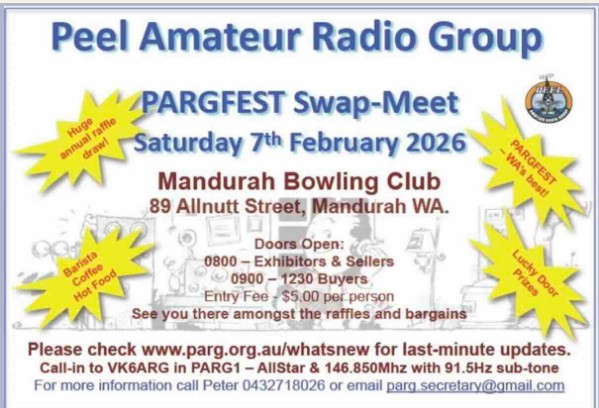
- How will you be celebrating?
- A Step in the Right Direction
- James VK7JZ’s First Straight Key QSO
- There’s No Such Thing…
- V Band
- This is V Band
- Y Band Part 1
- Prosign/Character/Signal of the Month
- I Hear Tell…
- No Names, No Pack Drill
- Di-dah-di-dah-dit
- Next Tuesday’s Net
- Reports & Photos
- Articles
- Material
- About the CQ QRS Net
CQ QRS RagChew
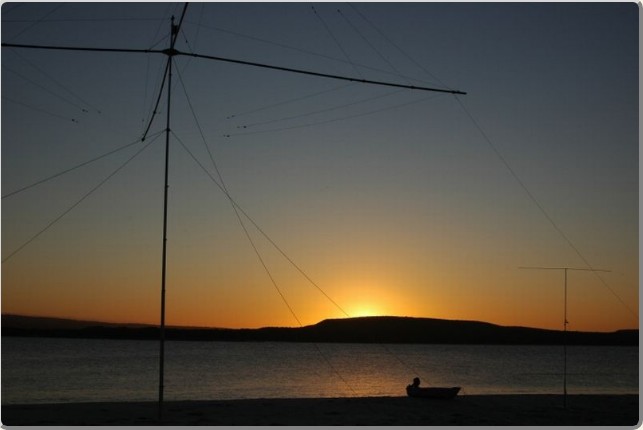
Thanks this week to Nigel VK6NI who has responded to my request for non-copyright images. This one from his Cheyne Island 2007 Islands On The Air expedition.
Great to see conditions returning to whatever Normal is at the moment on Tuesday’s CQQRS Slow CW Practice QSO Net. This week we had 66 stations heard or worked by 45 of our team members; amazing work everyone!
Also this week Elizabeth and I had the pleasure of the company of Nigel G4RWI CEL (Custodian of the English Language and future film and television producer) and Lady Jo, who interrupted their Australian journeys to come say hello again.
Anyway, Nigel set up his IC-706 in my shack and under adult supervision, enjoyed the net from my standing desk on Tuesday.
I say adult supervision because although technically he did blow up my phasing noise canceller by transmitting into it, I have to admit I did the cabling configuration… which cleverly included my Pi Coupler and ‘SWR bridge…
And the noise canceller (which is usually controlled by my transceiver which tells it to bypass when I’m transmitting). But we had fun anyway, and now I have a nice case to build the proper VK5TM noise canceller that’s been waiting patiently in it’s kit form for a miracle to occur.
Let’s hope the minor repairs to their motorhome that I’ve been involved in are a bit better. Nigel, Jo, Elizabeth and I also travelled down to Canberra on the weekend and had dinner with James VK7JZ, Hillary and Robin who were visiting.
Very little CW was discussed of course – we were all under strict instructions about gentlemanly behaviour in the restaurant. Anyway, back to this newsletter.
Once again our 42 contributors have excelled – I know you’ll find the newsletter a really interesting read again this week – huge thank you to our contributors.
That said, I’d love to get more – if you’d like to have a go at penning something – please drop me a line. cgarsnet@gmail.com You’ll find information toward the end of the newsletter and our website about how to go about it.
New Team Members
Thanks to the efforts of several of our team members, we’ve had a jump in new subscribers – however, I haven’t yet had time to process the requests – so next week I’ll introduce them to you.
Website
If you’d like to find out a bit about our net, or would like to pass information to others about our Tuesday get-togethers, here’s the link to our website. bit.ly/CQQRSWebsite So here we go – on behalf of the CQQRS Editorial team, please enjoy the newsletter.
Niall kh DOSITa VK2KI / VK6QI Patrick John Beautiful South Bowning VK2IOW VK2RU NSW Milthorpe NSW on a track somewhere cqqrsnet@gmail.com non impsditi ratione cogitationis Nigel Richard Lance G4RWI VK6HRX VK7TO our other grey nomad Padbury WA Margate TAS
With thanks to Nigel G4RWI’s clever software, and John VK2RU’s clever spreadsheet work, here’s the 66 stations heard by 45 members of our team on Tuesday:
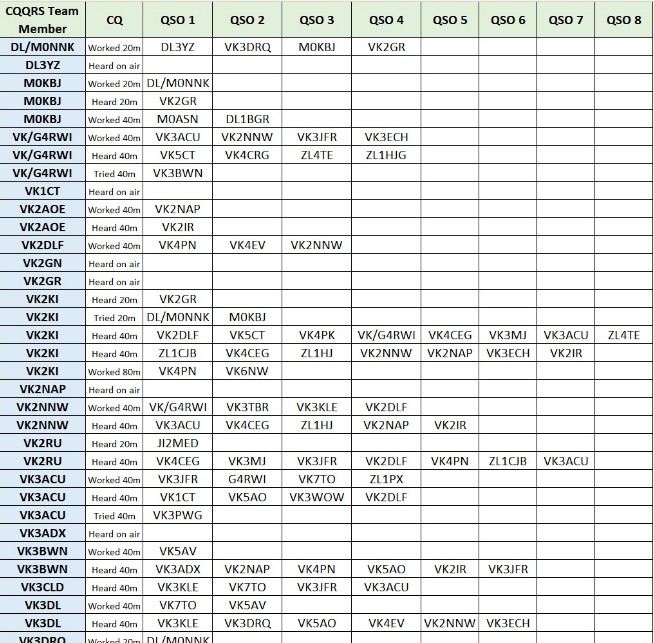
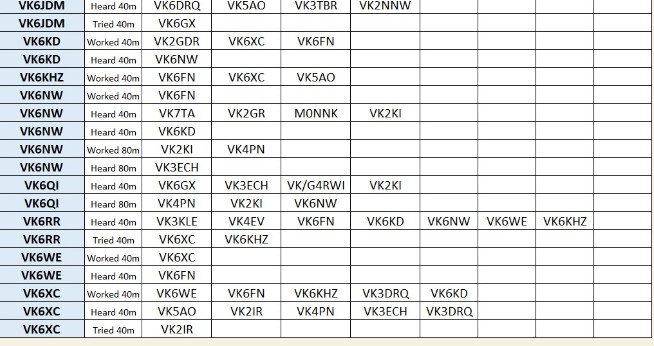
The spreadsheets above show the known stations heard or worked on last Tuesday’s CQQRS Net; the comments in the team members’ reports (submitted via our webform bit.ly/CQQRSNET ) follow.
The comments were compiled for us by the clever software built by Nigel G4RWI and the layout was perfected by Patrick VK2IOW. Thanks again to Nigel, Patrick and John for the work, and to every team mamhar whn ciihmittad 4 rannrt —
From ROSS UL/MUNNKA at cxeter UK Via ofullg
[20m] I was using Mike’s radio in Germany over an internet connection. The first response to my “CQ VK” calls was so strong it overloaded the receiver and I had to turn the RF Gain right down.
It was Mike DL3YZ calling QRP from — _—» 4» gp sig pn pp pop pa 2… ….._ pep
Only 1 km away! HI HI. Next up was Manny VK3DRQ, very weak but I managed to copy every word so his Morse must be excellent. Thanks, Manny. Then another really strong station.
More whirling of the RF Gain knob revealed it to be Simon MOKBy, an old friend of the DXpedition. To round off a good morning’s work, I once again had to reduce the RF Gain for Allan VK2GR.
His Yagi antenna really sends his signal booming around the world – you would think he was in Europe!
[40m] High level of QSB was found around stations from VK2 making QSOs challenging. Even local stations in WA were being affected by QSB. Great to at last get some QSOs onto my 2026 log.
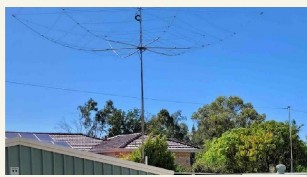
From Donald VK6JDM at 20 km west of Esperance
[80m] I set out to copy MONNK on 20 metres. I could hear a weak but unreadable signal soon after 0800 UTC. By 0900 UTC I could hear the signal during its QSB peaks and over several cycles of the transmission could put together that the station was calling “CQ VK de MONNK”.
The signal by 0900 was readability 4. I concluded the 20 metre transceiver is able to receive M
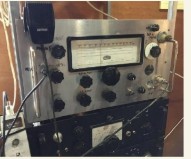
[40m] Conditions seemed to be good with signals received at good strength. There was some QSB on the QSO with ZL1PX. I was running about 60 Watts from the IC 7300. All told a very enjoyable evening of radio.
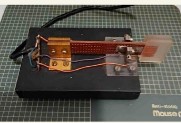
[40m] A very interesting experience, operating from CQQRS HQ in Bowning. My IC705 looked somewhat out of place against, shall we say, the more “mature” transceivers in the HQ shack. Conditions quite good on 40m, once the band had fully woken up.
My unbroken run of confusing at least one person with the /in my VK/G4RWI callsign continued 🙂
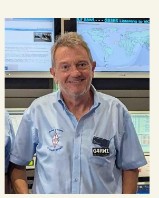
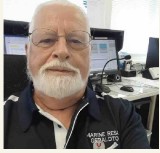
[40m] There were several stations active when I tuned in; all of them busy conversing. I sent out CQ and shortly got a reply from Ben. This was pleasing as it was a new contact for me.
After our exchange of details, extended due to my slow sending, the other signals had gone and I didn’t get any response from further CQs. It was stilla satisfving session.
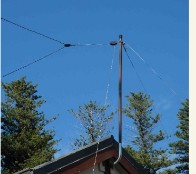
Ei at MOve valley [15 & 20m] Mainly listened tonight, Ironstone Range SDR and my FT891. Plenty of noise my way. Did not hear anyone on 15m. On 20, heard Ross calling CQ multiple times, heard Manny’s name mentioned with sig report.
Also Simon (callsign not heard) came on with Ross, Simon had lower signal compared to Ross. After that VK2GR, Allan had a chat with Ross

[40m] I was a little late on the QRS Net after a day out fishing and was surprised to find outstanding conditions, on the 40M band here at Echuca, excellent signals and S zero noise floor.
I had a really nice QSO with Manny and great signal from his station, then heard Tommy VK2IR calling CQ and had a quick chat and good copy from him. Then Nigel VK/G4RWI called in with a great signal and had a nice OSO
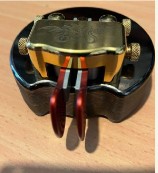
[15m] Unfortunately, nothing heard from Edi DO2EMR on 15m this week.
[20m] Our avid readers (er, reader?) may have identified from previous weeks’ reports, that I have some sort of strange condition that makes me miss the start of the DXperiment – alf an hour late… boy life can be so
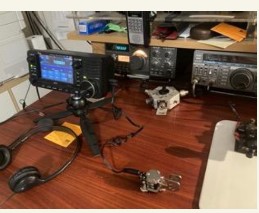
Complicated! Well this week – I have a terrific excuse – sorry – reason for being 45 minutes late We had the pleasure of the company of Nigel G4RWI and Lady Jo who were staying for a week or two while working on some motorhome maintenance.
So irrespective of the hows and whys, and despite any protests you may hear – I’m going to blame Nigel Never-the-less, when I listened in on the Snowline KiwiSDR Ross MONNK was coming through weakly from Mike DL3YZ‘s station remotely controlled, and Simon MOKB was there, but very weak; great to hear Simon again.
Conditions improved slightly and Ross came up to RSN 311 here, but couldn’t hear me. I also tried to catch Simon; he was RSN 411 on the SDR, but there was no sign of him here. Thanks for trying guys.
[40m] Ilistened early either over Nigel’s shoulder on his IC-705, or via the Snowline KiwiSDR. We heard Georg VK2DLF calling CQ but by the time we’d adjusted the pi- coupler and given up trying to get the broken phasing noise canceller to work (there’s a story there), Georg had packed up and gone.
We heard Pete ZL4TE near Hamilton but with more adjusting of things that didn’t want to be adjusted, we missed him despite twisting his arm via WhatsApp to sacrifice his planned beer and come back on air.
Finally after much fiddling around Nigel had a chat to Jordan VK3ACU at Meredith, then Adam VK2NNW up at Deepwater; great to hear Adam on again.
By around 1100Z, the band was starting to open to WA so we did the big swap-over and my mighty (mighty old) Trio TS-120S was pressed into service. Lots of CQs…. not a sausage. Oh well – c’est la vie!
[80m] I slipped down to 80m at around 1200Z and was pleased to hook up with Sava VK4PN. Sava was suffering from a high noise level so his RSN 389 report meant the exchange was relatively short.
My plaintive CQ calls were answered again this week by Wayne VK6NW at Bridgetown; the band was nicely open but Wayne sent me RSN 439.
I checked back in my log and noticed that his previous reports were RSTs – so ok, there’s a nice CW challenge for us both, let’s see if we can clarify whether he intended it to be an RSN or an RST report.
Well done Rob in picking up immediately what I was asking; so despite his confirmed S9 noise level and my mediocre strength three signal, we got it sorted; great fun!
I listened in to Wayne and Sava’s QSO before heading North East; pretty good that two gents with $9 noise levels could chat on 80m so far apart across the Australian mainland,
[40m] At the start of the net I cranked up the Southern Electronics Group’s KiwiSDR at Hoddys Well near Northam. Phil VK6GXX was calling, calling, calling CQ, no doubt swapping from straight key to straight key as he’d done last week.
However, all in vain I suspect – no-one was talking to him. In hindsight, I realise that I should have jumped on the Southern electronics Group’s Remote at Jandakot, while Nigel operated from my shack on his IC-705.
Why didn’t I think of that at the time – who knows? Sorry mate – next time I hope my brain is fully functioning!
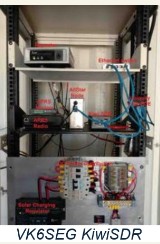
Around 1100Z the D-layer faded and 40 opened up nicely to WA from here in VK2. Hopefully there were fruitful QSOs as a result.
[80m] At 1200Z, 80m was starting to support East-West propagation – all dressed-up but no bananas, apart from Sava, Wayne and me (B1, B2 and B3 perhaps… or perhaps I’m taking the mixed metaphors a tad beyond the Black Stump?).
Wath Pent Daath f 40m] I was busy building the transmitter section of a new 40m “Frankenstein’s monster” homebrew ‘ig. As it was a school night I was retiring early out thought “why not see who is out there” and lo and behold Chris VK2NAP was busy with some CW aided by 300% ABV ginger beer.

[20m] After working a couple of stations on 40m I glanced at the clock and thought about my VK friends, so moved up to 20m to hear Ross DL/MONNK calling without replies. I jumped on and we had our first QSO (nice fist Ross).
After I finished, I waited to see if Ross picked up any others and I was delighted to hear Allan VK2GR with the clearest signal I’ve ever received at m’ home QTH from Australia. I tried puttina out a CO call !
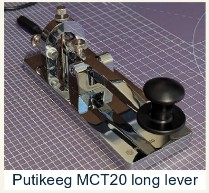
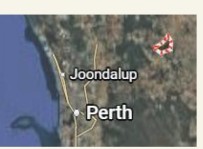
[40m] Tough condx. A temporary slip into an alternate Earth. No sigs at all. But then I was back with you. Then at O600Z, I managed to bag Jordan VK3ACU. A right gentleman he was.
He offered me his previous QSO buddy, Chris VK1CT, but Chris had gone or wasn’t hearing me. Back to an alternate reality again…
[40m] Better conditions this week. There were plenty of stations on air which were easy to work with. Propagation faded later in evening from VK2 to VK3.
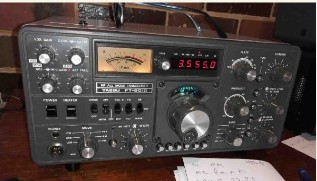
From Sava VK4PN at Mount Ommaney Brisbane
[15m] After checking the Rag Chew for EU DXperiment frequencies I went straight to 15m. Band was almost empty, a few feeble JA stations barely readable.
Regardless I was calling numerous CQs close to advertised frequencies but no trace of our EU contingent, RBN reported just one decode somewhere in Japan with a fairly poor SN ratio. 15m was obviol normally work EU much later in the evening around 11 UTC.
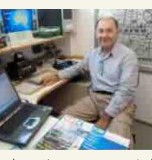
20m seemed a bit more active but I couldn’t hear anyone working or calling in the ORS slot. I did however hear VK3WOW calling CQ DX much lower in frequency as well as VK3DBD/ZL working a booming Italian station.
Still nothing in the QRS segment so I just kept calling CQ. RBN did not return any decodes for quite a while and then it lit up codes all over EU. A number of EU DX came back but none . Iam not sure which long path was being used.
I have no hichever way it goes. By RBN reports I must have been
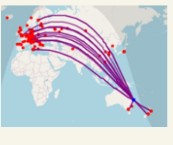
Directional antenna so whichever way it goes. By RBN reports I must have been going over the north pole as distance to decode in Finland was just over 14000 km and the decode in Italy was Just over 16000 km.
[40m] This time I decided to spend a bit more time on 40m, QRP of course. Well it paid off with a total of 5 QSOs for the evening. Two stand out though. VK2IR had a massive signal into Brisbane and also gave me a 599 report so I enquired as to his rig.
Well he came back with 400W and 13 element Yagil! I asked him if he was kidding but he said he wasn’t. To my comment Yagi must be awfully big he replied you should see my 80m vertical. I would definitely like to see both (Tom should post some pictures).
QSO with Tim VK3TBR was also interesting, I was very happy with 449 from him for my puny 5 W but he went QRP as well and to my surprise he was 367 at my end. Buried in noise but readable.
I am also grateful to Z_1CJB, VK2DLF and VK3ADX who made an effort to dig me out of the noise.
[80m] Slim pickings on 80 again just the regulars VK2KI and VK6NW. My noise level on 80 (and 40) is just off the scale but this Tuesday I observed something strange which I have to think about.
QSO with Mark was a usual struggle, I gave him RSN 389 but by the S meter it should have been N9 + 10DB. I copied my RSN and a few words but it was hopeless.
So the QSO was not too long and after we finished Wayne called Mark and I stayed on frequency struggling to copy Wayne. He was way down in noise.
For whatever reason I disconnected one leg of my balanced feeder and the noise dropped to S7 and I could copy both Mark and Wayne quite well. I knew that I can use either side of my OCF as an end-fed long wire but did not pay attention to noise.
After adjusting the tuner for minimum reflected power noise did come up a bit but both signals were readable. The night finished with another QSO with Wayne well after 11 UTC.
So I need to do some work on my antenna before next Tuesday, it will be pulled down this weekend.
[40m] After being away for the past five weeks, it was nice to be back operating from home again, but di miss the SO noise floor whilst on holiday across numerous national parks.
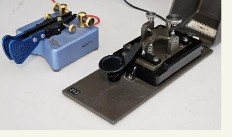
Reporting
After next Tuesday’s Group, please remember to send me a list of who you worked and / or who you heard using our web form here:
Even if you didn’t hear anyone, we’d still like to know that you had a go. And to make your report more interesting, please consider sending a photo to be attached.
If you have a photo (compressed if possible) that you’d be happy to include, please email it to: cqgrsnet@gmail.com So, please help attract new and old team members to have a go by submitting your report each week.
Submissions close 1300 (Eastern Australian Summer time) on Thursdays.
Post Morsum 4th February 2026
From Richard VK6HRC. Six on the Echolink hub this morning. ( AllStar link down )
VK6NW Wayne VK6FN Max VK6QI Mark VK6KD David VK/G4RWI Nigel VK6HRC
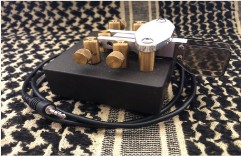
Wayne caught up with Max on 40m, monitored 20m for a while and heard Ross and Mark. Worked Mark on 80m, not an hour long session this time ! Max enjoying the better conditions worked Wayne VK6NW David VK6KD and Ron VK6KHZ before going into sw! mode.
Mark was only just hearing Ross on 20m, nothing of Edi on 15m and heard fifteen on 40m. On 80m worked Sava and Wayne not a bad score considering he was sharing his antenna with his visitor Nigel.
David now retired managed to get on earlier had a contact with Max and Wayne on 40m. As conditions improved to the East managed to get some decoding practise in from the stations over there.
Nigel had a fun evening in Mark’s shack but has to get busy sorting a few issues on the motorhome before continuing the walkabout.
I got on fairly late in the session hearing locals to start with and as conditions improved signals from the East started coming in. Thank you to all on last night and this morning.
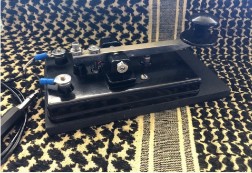
This Week’s Topics of Interest
From Nigel G4RWI Hamclock, is a popular, highly customizable, open-source dashboard for amateur radio operators that provides real-time, kiosk-style data, including space weather, propagation models (VOACAP), satellite tracking, and solar information.
It is designed to run on a Raspberry Pi or other devices, often displayed on a dedicated monitor. As of late January 2026, the original developer has passed away, and the supportin data servers are expected to shut down in June 2026.
So if you use this, or are planning to use this, it may well stop working later this year There is a very active, community driven and open source project to provide an alternative.
OpenHamclock is a reinterpretation of the original Hamclock using modern web standards. It can run on a wide range of platforms, including a raspberry pi. The display is via your browser. It is entirely free.
You can try it here https:/openhamelock.com/ You will need to enter your callsign and location. All the settings are stored in your browser, so as long as you return with the same browser, it will remember you.
HamClock no more?
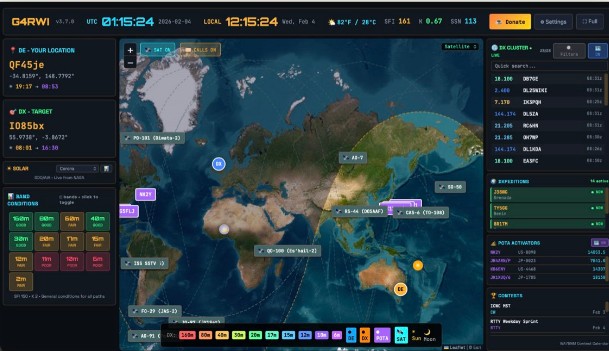
If you want to run/customise it yourself, everything you need to know is here https:// github.com/accius/openhamclock
Head Copy, or write it down?
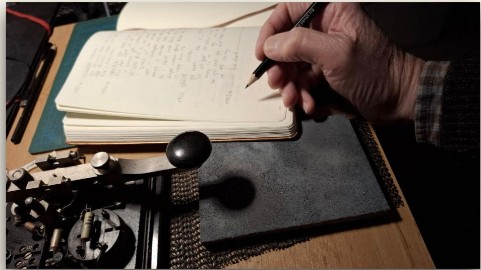
I have a bicycle – a small, wobbly folder. But I’m not much of a cyclist. Being the wrong side of sixty and terribly unfit, whenever the path is rough, slippery or steep, I get off and push. Life is just easier and safer that way, albeit less exciting.
My Morse is like that too. When conditions are good and the sender is slow, standard and accurate, it’s very pleasant to stare out of the window and let the code spool across my mind.
But when a bad learner is making a right hash of things – stopping in the middle of words, making lots of mistakes and sending those damn EEEEEEEE strings – I have to resort to the decoder for some assistance. It’s the same on radio.
In my experience, conditions are rarely good, especially on the DXpeditions. And European operators often either have poor English; send too fast and won’t slow down; or else send ‘characterful’ Morse which is hard to copy.
So I almost always write it down, and then try to make some sense of the scattered letters at the end of the over. It’s all part of The Guessing Game. Head Copy is a wonderful skill but it’s best not to cling to it out of some pointless sense of pride.
Sometimes it’s just easier and safer to get off and push.
If you have an article or two that you think might be of interest to our readers, please let me know so we can share more thoughts and ideas. And what’s going on on your workbench?
If you have an article or two that you think might be of interest to our readers, please let Mark VK2KI know; email to cqqrsnet@gmail.com For guidance on writing for RagChew, see Articles below.
CW Practice
This year we’re using Aesop’s Fables. These are short moral stories, often using talking animals, that illustrate simple truths about human behaviour and character.
‘Aesop’s Fables originated in ancient Greece, traditionally attributed to the storyteller ‘Aesop who is thought to have lived around the 6th century BCE.
The fables are generally smaller files of two to three hundred words that have been recorded at 15 wpm and run for about 15 minutes.
If 15 wpm is a bit quick for you, load it onto your phone and set the playback speed at 0.75 X or even 0.5 X- whatever works for you. 0.75 X will play the MP8 at a bit under 12 wpm. Itis suggested that you read the text file before listening to the audio file.
That will make it easier to follow the audio file and prepare you for any unusual words. Any punctuation that is not usually used with CW has been removed. This week’s fable is ‘The Wolf and the Crane’, and the MP3 and TXT files are attached here –

If you prefer a different speed or tone you can create your own MP3 files by converting the text file with the Ebook2CW app — https://fkurz.net/ham/ebook2cw.html.
You can either play the MP3 files in any media player, or load the text file into the Ditto CW: Morse Player app — https://dittocw.andro.io/.
Both options work well, however Ditto CW gives you complete control over all Morse settings, while a normal media player only allows changes to playback speed, and does that in steps (e.g. +1.25x, 1.5x, 1.75x).
Other News
Dick Smith on Fly Podcast
From Rob VK6LD in Albany I’ve been doing a bit of driving the last couple of days and liste podcasts on my travels. An interesting one was with Dick Smith, who spoke quite a bit on some of his business ventures and riskier flying adventures in his life.
Definitely worth a listen if podcasts are part of your day. The podcast is titled Fly and is hosted by Richard De Crespigny, a former air force and Qantas pilot, who landed an almost disabled Qantas A380 Airbus QF32, after one of the jet engines blew up shortly after take off from Singapore in 2010.
An interesting one was with Dick Smith, who spoke quite a bit on some of his business ventures and riskier flying adventures in his life. Definitely worth a listen if podcasts are part of your day.
The podcast is titled Fly and is hosted by Richard De Crespigny, a former air force and Qantas pilot, who landed an almost disabled Qantas A380 Airbus QF32, after one of the jet engines blew up shortly after take off from Singapore in lolaknal
Slightly amateur radio related, as Dick Smith holds an AR licence and Dick Smith Electronics used to stock Yaesu. ©)
Future Shock?
From Will VK6UU Hello all… This from AR magazine 1936. In the age of FT8 etc etc. about amateur radio in 2036. this was a prediction Just happened sooner.
“Everything is in the one unit now.” said VKK2, etc.; “it’s all auto- matic, and controlled from this ? said Jim. “How different from my old rig. Now how about some technical details?
Tube Iue- up and all that kind of thing.” “As a matter of fact, I don’t know what’s inside the box. It’s sealed down, and can only be opened by an Amateur Station Service man, in the employ of the World Government.” He pressed the buttons, “The call is going out now with a thousand kilos behind it.
It lasts about 13 seconds, and the transmitter auto- matically switches over to the receiver as it signs “K” at the end of the call. See that light that just switched on at the bottom of the panel? That means an BA station has answered.
The receiver swings around the band until it finds a sta- tion calling us. Now you’ll notice the light has gone out; that means he’s over and we’re getting back to him. By pulling the switch we give him an over.”
From Nigel VK6NI from Denmark I read your plea for photos in the latest newsletter and attach some. They are pictures from the various IOTAs I did with Wally VK6YS (SK) and others. Not being a CW operator I stuck with SSB but Wally was a keen CW operator.
He usually did not use a key, preferring to receive by ear but send from the keyboard. It helped with logging and it was often difficult to get a stable surface to put a key on when camping in a remote spot. The expeditions were as follows:
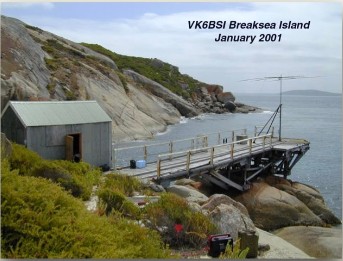
Breaksea Island VAOBo! (
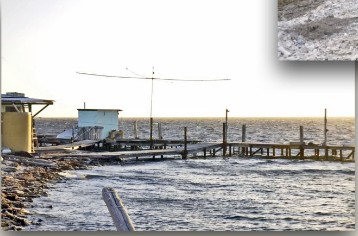
We spent the weekend sharing the hut on the jetty with large native skinks, harmless but a bit unnerving when they appeared next to the operating position. TH3 Junior lashed to the end of the jetty was the main antenna.
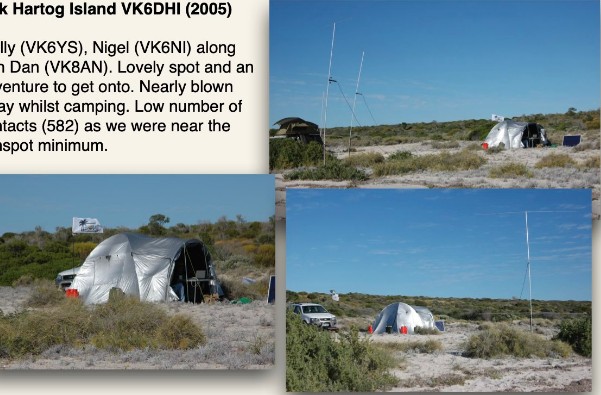
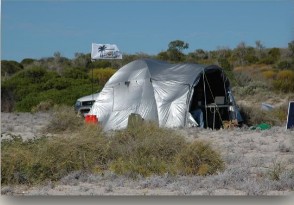
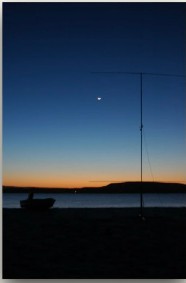
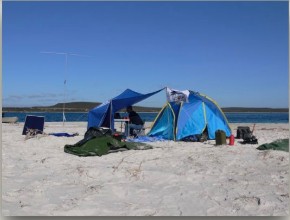
Dirk Hartog Island VK6DHI (2005)
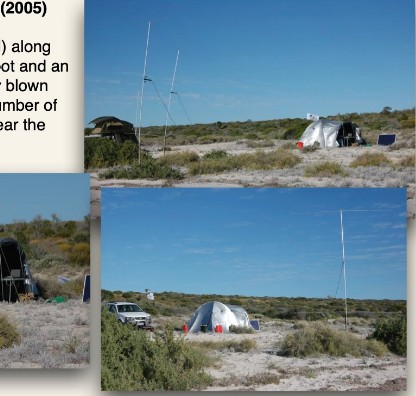
Wally (VK6YS), Nigel (VK6NI) along with Dan (VK8AN). Lovely spot and ai adventure to get onto. Nearly blown away whilst camping. Low number of contacts (582) as we were near the sunspot minimum.
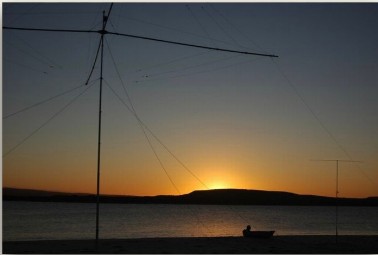
Wally (VK6YS), Nigel (VK6NI) along with Bruce (KD6WW). A small island off the WA south coast. A nice location and with easy access by small boat. Spiderbeam and Force 12 Sigma 5 band vertical.
Woody Island VK6WDI (2012)
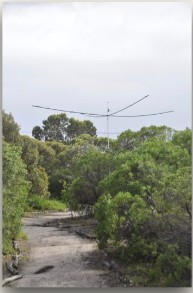
Wally (VK6YS), Nigel (VK6NI) and Reinhard (DF4TD) assisted by Nigel’s XYL Jane (VK6FJPD). Off the coast near Esperance, WA. Erecting the Spiderbeam in the bush was fun! Every wire seemed to snag on branches as we tried to put it up!
Houtman Abrolhos VK6IOA (2010)
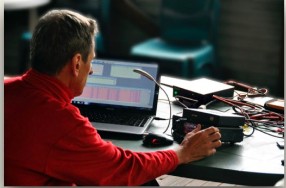
Wally (VK6YS) and myself (VK6NI) along with Bruce (KD6WW) spent the weekend on the Abrolhos (off the coast at Geraldton, WA) and nearly got blown away again. 3200 contacts with half of them CW.
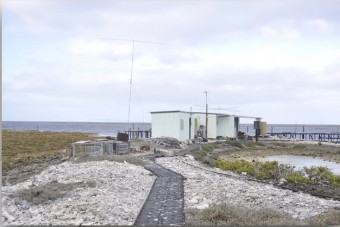
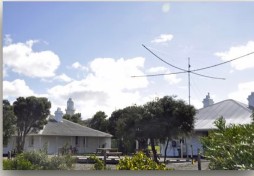
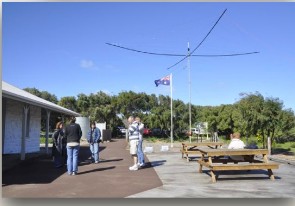
We (VK6NI and VK6FJPD) also regularly spend the Lighthouse Weekend in August at Cape Naturaliste (near Dunsborough, WA) along with Michael (VK6TU). It is more a meet the public and explain what AR is about than a contest or contact gathering exercise.
In the early days we used the Spiderbeam with lots of queries about “what’s the oversized Hills Hoist for?”
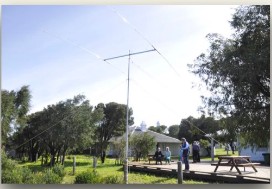
In line with the article, Copyright for the Photos remains with me but you are free to use them for our newsletter © Cheers, Nigel VK6NI
Morse Training Net
Our team member Nic VK7WW runs an on-air Slow Morse training net every Wednesday at 7pm EDST on 3580 for 30 mins. He uses the callsign of the Northern Tasmania Amateur Radio Club VK7TAZ on that net.
Many of our team learned Morse code with the support of Nic, and the weekly training session comes highly recommended for anyone who wants to learn the Code, or simply brush up.
Everyone’s welcome – 3580KHZ at 7pm Eastern time every Wednesday; you’ll hear lots of the CQQRS team on that net. Jordan VK3ACU has recorded the complete set of lessons which you can now find here:
Https://www. youtube.com/playlist?list=PLHsQmZz6fBXO7swAfbT mutrbbEL17fUQL Contact Nic VK7WW for more info nicholaschantler@hotmail.com including how to join the NTARC DISCORD group to follow the action, or just come along and join in on Wednesdays.
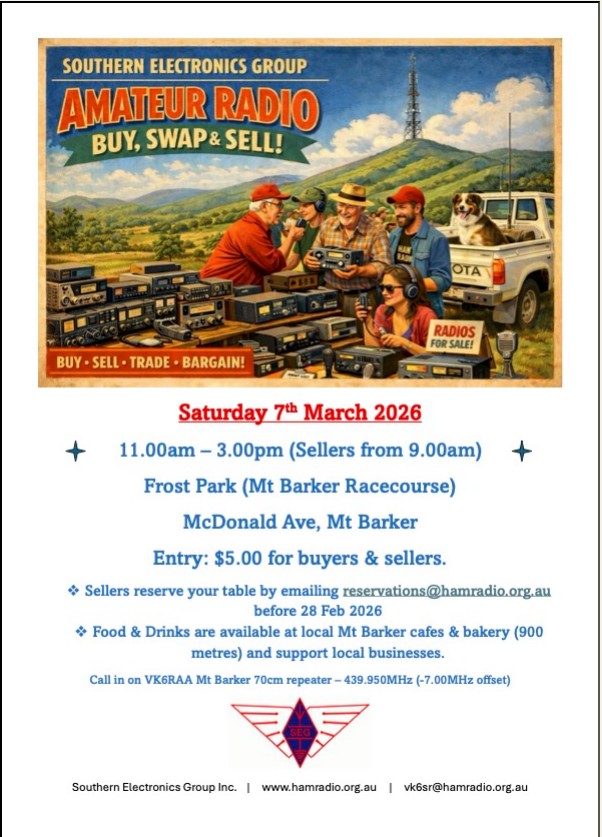
Just a brief update on the upcoming Mt Barker Car Boot Sale. Seller registrations are starting to come through and thank you to those who have registered.
If you’re planning on having a table to sell, please register by email to reservations@hamradio.org.au as soon as you can. Steve VK6SJ from Comtek Radio (https://comtekradio.com.au/) will be attending, including Flex Radio & TET-Emtron products.
Tables & chairs will be available for sellers and the venue is under cover, so we can proceed no matter what the weather throws at us. There is plenty of parking at the venue. Sellers will be able to park 25M — 50M from the undercover area.
Tea, coffee & water will be available at the Car Boot Sale. Food is available at local Mt Barker cafes & the famous Mt Barker Country Bakery, just a short distance away. Please no selling before the 11.00am start time, to be fair to everybody attending.
On the day, please monitor VK6RAA Mt Barker 70CM repeater on 439.950MHz for any information or updates. Southern Electronics Group looks forward to seeing you there. Regards, Rob… VK6LD
Mobile One Founder Greg Ackman – Silent Key
Wiopiie Une rounder ureg AcKMman – ollent Key From the Wireless Institute of Australia via the WAHAMS email group. Two men died in a light plane crash north of the Gold Coast shortly after taking off from a private airstrip at about 6am on Tuesday en route to a small town near Tamworth in NSW.
Police have confirmed the 73-year-old pilot from Beenleigh and his male passenger, believed to be from Sydney, died at the scene.
They were the only occupants of the plane which came down just after take-off in bushland in Jacobs Well, near the Heck Field Airstrip, shortly before 6am on Tuesday last week. The Pilot? VK4BBX Greg Ackman Greg was founder of Mobile One antennas.
He built the business from a garage- based operation during the 1970S. He became a ham late 2021, VK4BBX was a familiar face in the Australian amateur radio community, often showcasing Mobile One products at field days and events.

Mind The Gap – Continued
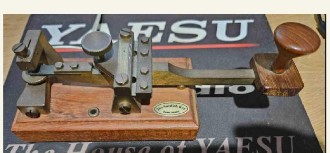
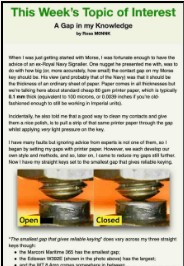
From Mike DL3YZ Hi Ross, Just read your gap article, and its funny how our personal preferences differ. I measured my preferred gap to be 3 pieces of paper, so about 0,3 mm. Too tight feels strange for me.
‘Some months ago I restored a German military version of a Junker key. It was surplus from the trash-bin. The condition was very poor for the price paid. It was from a friend who wanted to start CW but never did (so far).
After bringing it back to life, I really liked it. Finally I found a normal (ie not military) one in grey on an amateur radio flea market, and couldn’t resist to get one for myself…
OK, now comes the interesting part : The difference between these keys (besides the colour) is that the military version has the range of that specific gap-adjust screw limited in movement. They even did quite some mechanical effort with this topic.
The military adjustment add-on includes a little ball and and a spring, as well as slots on the under side of the thumbscrew to have defined ‘clicks’ within that one-turn range.
So there seems to be a ‘military acceptable’ gap range within which the operator has the possibility to have his or her own personal click setting. They must have taken into account that it’s a personal thing they have to allow.
Within a certain range, that is accepted by every OP. It seemed so important to the military that they have specified for the Junker company to add this feature… and surely pay more for the key. Unfortunately I didn’t measure that original gap.
On my restaoration back then, I had to disassemble the whole key for replacing the rotten (FUBAR) contact. A spare contact is in fact build-in and comes with the key – lused the secondary release contact instead – Hl.
After that, the blocking feature kept constantly falling apart and I decided to free that key from any military restrictions. So I’m sorry I can’t provide a photo. 73 Mike.
And More Mind The Gap – Continued
Sorry for my lack of participation in recent times, too much other stuff getting in the way! Re Ross’s (MONNK) article about setting straight key contact gaps, I agree with him, the smallest gap for reliable operation – for experienced
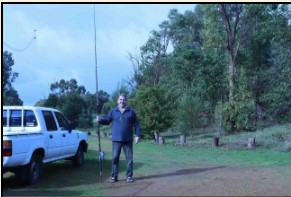
Operators that is. Newer operators will probably prefer a wider contact gap, but reduce it as they progress to higher speeds.
As well as cleaning contacts by pulling a strip of printer paper through the contacts, under light tension, some key contacts benefit from being cleaned with a strip of thin cardboard, impregnated with a drop or two of inox MX3, or similar lubricants such as CRC 5.56, Selleys RP7 or WD40.
It reduces oxidisation and lengthens contact cleaning intervals. Begali set their straight keys tension with a 100G weight on the knob, so that it just causes the contacts to close.
I have set up all my keys using that method, as I found that it equates very closely to my preferred tension. I made my 100G weight with a stack of AU coins, which according to my XYL’s digital kitchen scales, AU$4.30, consisting of 3 x 50c, 4 x 20c and a $2 coin taped together = exactly 100G, or for our imperial measure friends, a fraction over 3-1/2 ounces.
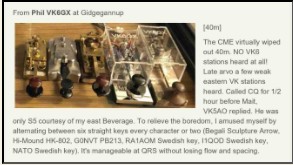
| mentioned entertaining myself a few weeks ago, whilst sending CQ QRS to no avail for 1/2 hour on 40m, during the big geomagnetic storm. I was using my TS-8908S, which currently has six straight keys attached and as I was sending at about 10 – 12 WPM, I could

How will you be celebrating?
A Step in the Right Direction
Hi Mark lam testing the CW setup for the next camping trip. The radio will be the Barrett 4050 in the vehicle and the antenna will be (at this stage) a mobile whip.
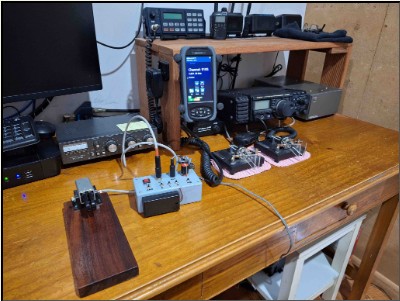
The CW setup is a K10 keyer kit I built from a kit sourced from K1EL about 20 years ago and Galbraith GK11 paddle that I have also had for many years. Thanks for the newsletter, greatly appreciated. Regards Wayne Douglass VK6NW
James VK7JZ’s First Straight Key QSO
My station for the first straight key CW contact with James VK7UZ. I tried many kind of different antennas with the Elecraft KX1, but it works best with the wire antenna and counterpoise and build-in antenna tuner.
The lengths for counterpoise and antenna wire are given in the manual. With the good conditions we have in the moment I can work all over Australia. You can use one length of antenna wire for all three bands also the length of the counterpoise is not altered.
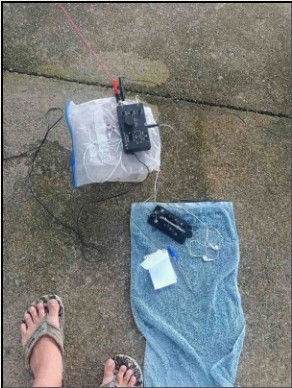
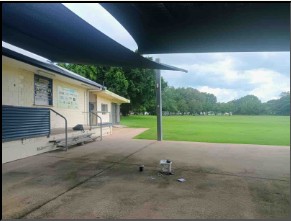
Makes it very easy to set up. I use a5 m fishing pole to get the antenna in the air. The transceiver is a little bit higher on a brick to avoid the antenna wire touching the ground. This might be interesting to think through.
We all agree a resonant antenna works well for QRP BUT a
Concept with an automatic antenna tuneris that it can calculate all the factors ina mobile setup automatically. You end up with the optimal setup any time regarding the place you setup your antenna. Interesting question!
I heard good feedback from users of the Elecraft product line but the transceivers are expensive. The bands are 20, 30 and 40 m. In my experience this bands are very popular for QRP because it will work day and night. QRP and CW is a good combination.
Concept with an automatic antenna tuneris that it can calculate all the factors ina mobile setup automatically. You end up with the optimal setup any time regarding the place you setup your antenna. Interesting question!
I heard good feedback from users of the Elecraft product line but the transceivers are expensive. The bands are 20, 30 and 40 m. In my experience this bands are very popular for QRP because it will work day and night. QRP and CW is a good combination.
If you’ve read something that you think might be of interest to our readers, please let me know. For guidance on writing for RagChew, see Articles below. Please email material to Mark VK2KI: cqqrsnet@gmail.com
There’s No Such Thing…
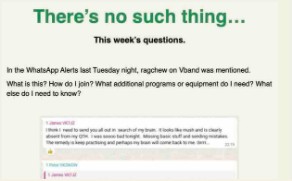
Fills WOUR o YUCOLVIlS. I think the first lesson in Teachering 101 is to always tell students “There’s no such…” (I’m sure you know the rest) and “…the only dumb questions are the ones not asked”.
John VK2RU reckons that there’s lots of questions out there among both our new and our experienced operators – about CW, amateur radio operating and about theory.
So John didn’t step backwards quickly enough when asked to volunteer to compile readers’ questions; thanks mate. So here we go…
V Band
In a previous RagChew, a reader asked about VBand – what it was and how is it accessed. We’ve been flooded with responses… well, two actually. So over to those with knowledge.
This is V Band
From Dave VK5PL VBand is a way of sending CW over the internet. You can talk to anyone anywhere in the world if they are on the same VBand channel as you. You don’t even need a radio or even a licence.
Go here hittps://hamradio.solutions/vband/ to find out about it.
Y Band Part 1
From Ross MONNK e If you’re a radio operator who does Morse code, raise your left hand. e If you’re a Morse lover who does radio, raise your right hand. Thank you for participating.
All those of you with just your left hand raised are strongly advised to leave the room now as you may find the following article uncomfortable reading and possibly offensive.
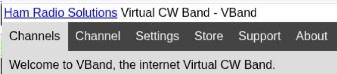
Now that those chaps/YLs have left, I can safely state the blindingly obvious – VBand is not radio. VBand is a website https:/hamradiio.solutions/vband/ where chaps and YLs who love Morse cade can chat with fellow Morse code lovers. using Morse code.
The radio operators (who have now left the room) might call this “ragchewing”, but that is a radio term and VBand is not radio so I won’t use it here.
In the early days of Morse code, its use was split more-or-less equally between radio and wires (with lots of enthusiastic lamp signalling by the Navies of the world).
The modern equivalent of wires is fibre optic cable, so internet Morse code has a direct lineage from the telegraph networks of old. Thus, there’s no need to feel ashamed of doing Morse over the internet (if that was a concern).
Anyway, at a molecular level, it’s all electro-magnetic radiation whether it goes down a wire, through a cable, or bounces off the temperamental lonosphere.
Before I get into how to use VBand, here are a couple of interesting things about it: Firstly, while there are plenty of amateur radio operators on there – they typically identify themselves with their radio callsign so they can be looked up on QRZ.com – there are also lots of other users, some of whom are very competent (they identify themselves with some sort of made-up “handle”, akin to the CB radio operators).
The level of competency does vary greatly, from the teenager in their bedroom who wants to have a go because it sounds cool and, hey, how difficult can it be; to the “ham” ‘who’s struggling to get past 10 wpm; to the ex-professional getting back into Morse; to the keen enthusiast who wants to give something back to the mode he’s spent half a lifetime enjoying.
Me? I just enjoy chatting using Morse. And, fortunately, so do all the other VBand users. Secondly, there are no rules and no stated protocols on VBand. In theory, it’s a Free- for-All.
But Morse would be terribly confusing if there weren’t some agreed methods of working. Radio worked out those methods long ago and the radio operators on ‘Band encourage the use of a few af the basic ones purely because it’s sensible and avoids anarchy.
VBand is not radio so there’s no messing about with callsigns each over (use first names if you want to address someone directly), and there’s no messing about with meaningless signal reports either (propagation is always 599 on the internet!).
But
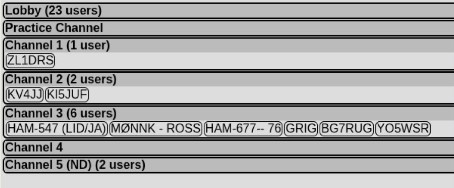
‘These are spontaneous and occur frequently. Being ad-hoc, they never have a “Net Controller’ – it’s understood that each participant will get their tum (some just want to listen), but if the conversation naturally bounces between two people for a few overs then that’s fine too.
This system works because VBand users are polite and sensitive to the needs (and weaknesses) of athers. Yes, believe it or not in this day and age, it’s not like typical Social Media – almost all VBand users are polite and sensitive despite the many cultural differences on this world-spanning platform.
I hope that’s given you a feeling for what VBand is. Why not have a look at the website? There’s no registration and no log in. You will automatically be allocated an anonymous default callsign(for example, HAM-753), so no-one will know who you are.
There’s a lot to be said for just listening to what’s going on (like an SWL on radio). Til be back soon with some practical advice on how to be active on VBand. [Thank you so much to Dave and Ross for filing in the gaps.
I suspect Ross has identified that some of us don’t actually have Morse keys or even paddles built in to our computers… so I’m hoping that he has a/some solution/solutions.
Ditto, some of us use Macs, LINUX, RaspberryP, etc in preference to PCs, and indeed some have tablets and phones only… so is life destined to be sad for those of us in those categories I wonder?
I’m looking forward to learning more from Dave, Ross and some of our many other VBand users.]
[Do you have a question or two that are worth sharing? How about a discussion- starter? Please let me know cqgrsnet@gmail.com and I’ll pass them to John VK2RU for compilation each week.]
Prosign/Character/Signal of the Month
[Suggestion – put it on a sticky note near your key as a reminder for Tuesday. Tell us how you went!]
I Hear Tell…
No Names, No Pack Drill
G’day Mark, no wonder I didn’t hear anything. Please disregard my log…. wrong day, will try TOMORROW, TUESDAY….. Dohhh 73’s [name and callsign provided] [Makes me feel a little better about my DXperiment timing!]
[If you have some intel about other team members… or even yourself… that’s worth sharing, please let me know cqqrsnet@gmail.com J
Di-dah-di-dah-dit
So back to the CQQRS Slow CW QSO practice net.
Next Tuesday’s Net
Our CQQRS Group will be on as always on Tuesday from around 0600Z until about 12002; see https://bit.ly/CQQRSWebsite and navigate to the Net Details page for details.
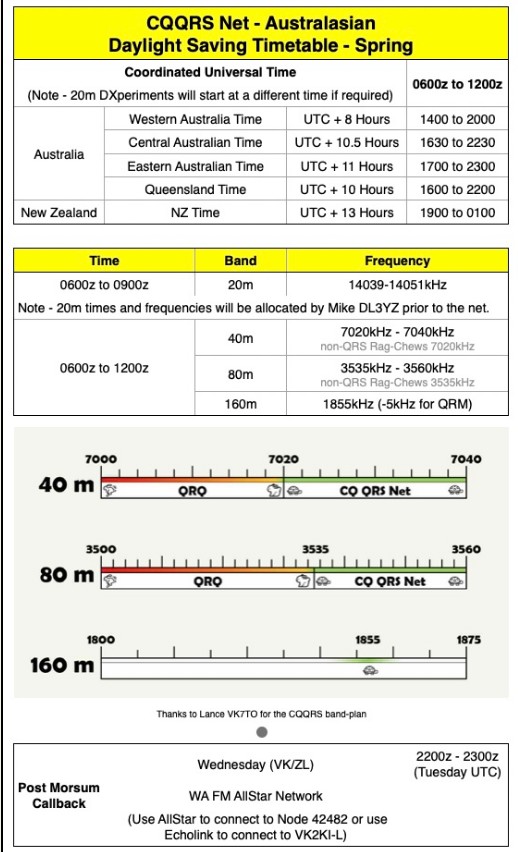
Doesn’t matter whether you’re brand new and want to try just exchanging callsigns and RST reports, or you’re ready for a good old rag chew. We’ll have fun.
There’s usually people around until after 1200Z – so keep calling in the segment of the band designated in the table below until you catch someone.
I should be on as usual from home in NSW or via the Remote at Bedfordale WA, and I’ll also be watching the proceedings using the VK6QS and Tecsun SDRs in WA and NSW respectively. Hope to hear you there.
Reports & Photos
Please let us know via our Reports form bit.Jy/GQQRSNET who you work or hear on Tuesday’s Group. The report form closes at lunchtime (Eastern Australian time) on Thursday. ‘And how about helping to make the reports even more interesting by sending a photo?
If you have a photo that you’d be happy to include, please email it to: eqqrsnet@gmail.com To make it even easier for our Reports editor Patrick VK2IOW, see if you can reduce the size of the image (to less than 100KB file size by preference).
No problems if your computer or phone can’t do that – just send it through anyway please. And of course, I’m always on the lookout for more photos for the newsletter, so if you have something that might be of interest aside from the reports, please send it through as well – I always enjoy the photos that our readers send – and I’m sure our readers do too.
Email them to cqqrsnet@gmail.com please (reduced size if possible – but whatever you send will be great). Oh and by the way, I recommend that you don’t keep the Reports Form website open between submission of reports from one week to the next.
If you’re unlucky, there’s an undocumented feature in the software that could cause your current week’s report to be combined with your previous report – it’s happened to your editor several times – much to the chagrin of our Reports editor 🙂
Richard VK6HRC will run our phone Post Morsum on the South West AllStar net (via repeaters and hotspots all over WA) from 0600 WA time, then from 0700 WA time on 80m (8605 LSB).
See https://bit.ly/CQQRSWebsite and navigate to the Net Details page for details of how you can connect via Echolink or even possibly via your local FM repeater.
Articles
The newsletter is interesting to readers because of the material contributed by so many people – be it the reports each week or the various articles. Could you write a short article or articles for RagChew? You bet! Writing not your strong point?
Don’t worry, I’m very happy to help as much or as little as needed. Here’s a thought – although our readers will much prefer your own writing, perhaps have a go at using a Large Language Model Artificial Intelligence tool such as ChatGPT, Microsoft Copilot or Google Gemini to check your writing or even to actually draft the whole article in a relaxed easy-to-read manner!
You can find out more about how to do that on the Newsletter page on our website bit.ly/CQQRSWebsite. Our website also includes a suitable prompt (the command you feed to the Al to make it do what you want).
Please remember though – you must fact-check anything that an Al tool drafts for you because Als ‘hallucinate’ – ie if an Al can’t find what you’re looking for, it will make up an answer and present it as afact!
This is one of the dangers of using Als – it’s quite probable that the tool will create a very readable and convincing draft that is 100% wrong! You as the submitter are responsible for fact-checking.
But it’s a learning experience – please let us know how you went if you had a go with this new generation of tool. And by the way – lam very concerned about our future in a world of Al – but I’m pleased to see that school and university curriculums now focus on understanding the risks – for instance, kids are now learning critical thinking something that used to be taught mostly at post-graduate level.
When the typewriter was invented, people predicted the downfall of handwriting; when the word processor was invented, the art of writing was thought to be on the way out – ditto for the spreadsheet and arithmetic, AM, SSB and FT-8 for amateur radio etc.
We can ignore Al and hope that it just goes away… or we can learn to handle it through experimentation and use. Oh, and one more thing (actually two) – copyright material: * please use your own images – don’t use images copied from the internet unless you have the producer’s permission, or they’re marked ‘Creative Commons’ or similar; * if you include other peoples’ written material, unless you have permission, you may only include small snippets (unless it’s marked ‘Creative Commons’ or similar), and you’ll need to site the source and author.
For more guidance on writing for the RagChew newsletter (including help with using an Al), head to our website bit.ly/CQQRSWebsite then click the menu on the top right and then click RagChew Newsletter.
Material
A reminder; if you send me any information by email, our report form or WhatsApp unless you specifically state that material is not to be published, I’ll assume that you’re happy to see your thoughts in the RagChew newsletter.
Thank you so much to our team of 42 contributors: DL3YZ, G4RWI, MOKBJ, MONNK, VK2A0E, VK2DLF, VK6HRC, VK2NNW, VK2RU, VK3ACU, VK3BWN, VK3CLD, VK3DL, VK3DRQ, VK3ECH, VK3KLE, VK3WOW, VK4AW, VK4AW, VK4EV, VK4PE, VK4PN, VK5AO, VKSAV, VKSET, VKSET, VKSFD, VKSPL, VK6EN, VK6GX, VK6JDM, VK6KD, VK6KHZ, VK6LD, VKENI, VK6NW, VK6RR, VK6UU, VK6WE, VKEXC, VK7TO, and ZL1PX.
And a special thank you to our editorial team, Nigel G4RWI (head of software development), Patrick VK2IOW (reports coordinator), John VK2RU (researcher), Richard VK6HRC (Post Morsition) and Lance VK7TO (technical editor and bit wrangler).
Great work alll UY CW on Tuesday, mb Mark Bosna VK2KI/ VKEQI Beautiful South Bowning NSW ‘eqarsnet@gmail.com impediti ratione cogttationis,
About the CQ QRS Net
For the current schedule and more information about the CQQRS net, please go the the Net Details page on our website:

The opinions expressed in the RagChew newsletter are those of the individual contributors. The opinions do not necessarily reflect that of the editor or of the CQQRS Group members.
Any material and images received from members by the editor or published on the CQQRS WhatsApp groups may be published in this newsletter unless specifically requested otherwise.
The RagChew newsletter is considered to be exempt from the Australian Government’s ban on social media for under 16 year olds because it is a service that has the primary purpose of enabling users to share information about products or services, engage in professional networking or professional development services or of supporting the education of users per the Australian Government eSafety Commissioner FAQ webpage “Which platforms have been excluded from the age restrictions” dated 10DEC25.
The values, doctrine and guidelines for the Group and for the newsletter are published on the Principles page of the group’s website https://bit.ly/CQQRSWebsite